
Making the Most of Roth Conversions, Donor-Advised Funds, and Bond Funds
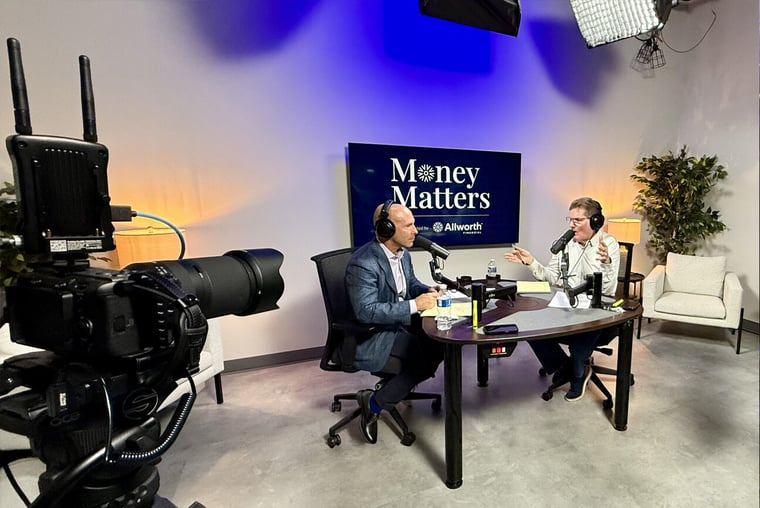
In this episode of Money Matters, Scott and Pat explore three of the most underappreciated but powerful financial planning tools: Roth conversions, donor-advised funds, and bond funds. They break down when and how to use each of them—especially before year-end—to reduce taxes, improve portfolio efficiency, and boost long-term flexibility.
You’ll hear real stories from listeners making million-dollar decisions, like whether to hire a financial advisor, how to prepare your spouse to take over financial responsibilities, and how to structure your retirement income when you’re asset-rich but cash-flow light.
From strategic charitable giving to the surprising risks of individual bonds, this episode is packed with actionable insights. And if you think Roth conversions don’t apply to you… think again.
Join Money Matters: Get your most pressing financial questions answered by Allworth's co-founders Scott Hanson and Pat McClain live on-air! Call 833-99-WORTH. Or ask a question by clicking here. You can also be on the air by emailing Scott and Pat at questions@moneymatters.com.
Scott: Welcome to Allworth's "Money Matters", Scott Hanson.
Pat: Pat McClain. Thanks for joining us.
Scott: Yep, here we are, middle of December.
Pat: Yes.
Scott: The year is winding down.
Pat: Oh, let's...
Scott: Talk about financial matters. We'll talk about a few year-end stuff, because there's still time.
Pat: Let's talk about the things that you should do between now and then. A couple things. And we beat on this every year.
Scott: Hopefully... I have personally already done the stuff, met with my accountants a couple weeks back. I'm a financial advisor, so I don't have to meet with a financial advisor. Although there are times, Pat, I actually think about, maybe I should get my own financial advisor, but I haven't. Part of it is... I don't know. I have not done that.
Pat: Well, the accountant thing is a big deal. Especially, I've got emails coming in and out between clients about Roth conversions. Do we know all your income coming in for the year? And then, you know, loss carry forwards? Just anything... Should we recognize losses? Should we recognize gains?
Scott: Well, hopefully we've been doing this, like, people have been doing this throughout the year. That's your hope.
Pat: Well, we beat on it enough. So, if you're a regular listener and you haven't done it, you have very little respect for this show.
Scott: Although I must say, I was out walking my dog yesterday, and...
Pat: That little white one?
Scott: Which little white one are you referring to? Because we've had more than one little white one. The current little white one, Kobe, doesn't bark. Because you probably remember the barker.
Pat: Oh, because I hated that dog.
Scott: Hey.
Pat: You go to your house and it would just, dip, dip, dip, dip. Okay, so Kobe. Kobe?
Scott: Kobe. A little white dog. When I was walking with him anyway, my neighbor, I bumped into a neighbor of mine that I know from the neighborhood. I don't know her well. And she says, "Hey, my daughter turned me on to this podcast I listen to." And she says, "I listen to the podcast." And she's lived in the Northern California region forever. I said, "I've only been doing it 30 years." She discovered it.
Pat: I want to talk more about the dog. I just can't imagine you... It's been really foggy. So, do you have your running clothes on and you're walking this little, white dog around? Do you carry the bags to pick up the poop?
Scott: You haven't had a dog in 35 years, have you?
Pat: I have not had a dog.
Scott: I remember you had two dogs when I first met you.
Pat: I did. Two Border Collies. It's been a long time.
Scott: Yes, I carry the dog's poop. And then my oldest daughter, when she comes, likes to bring her lab mix rescue dog, which is a giant pit bull, essentially. Super sweet. I got to pick up that dog's poo, too. What has my life become?
Pat: That is your love. You're picking up your kids' dogs' poo.
Scott: Oh, Pat. There's a lot of stories I can tell you...
Pat: That's pure love.
Scott: ...about my daughter's dog and the damages she's done.
Pat: Don't want to hear any of them. I don't have any dogs. No living plants inside the house either. I'm pretty proud of myself.
Scott: And no fresh food. All packaged. Canned.
Pat: We're ready for...
Scott: Eating like in the '70s. Everything's prepared ahead of time.
Pat: Armageddon TV trays right there. Anyway, let's move on.
Scott: If you want to be part of our program, you want to join us with your questions regarding your finances, the best way is send us an email, questions@moneymatters.com. Again, questions@moneymatters.com. Let's start off here in Montana talking with Chance. Chance, you're with Allworth's "Money Matters".
Chance: Good morning, gentlemen. My situation is as follows.
Scott: Real quick. Where in Montana are you in December?
Chance: I live in Bozeman, Montana.
Scott: Oh, nice. Beautiful. Good.
Chance: All right. We're two retirees, age of 69 and 60. Up until now, we've been do-it-yourself investors thinking about possibly transitioning to an advisor. And I'm a little confused about the best way to pay the advisor. I understand the different ways to pay, but I don't know what would be best for us in our situation.
Pat: Well, tell us a little bit about your situation.
Chance: Our portfolio is $3.2 million of which $1.3 is in a traditional IRA, $1.7 in a Roth and $200,000 in a brokerage. Cash on the sidelines. Outside of the investments is $150,000. So, net worth of about...excuse me, the investments valued at about $3.4 million plus the house and other assorted assets. So, what would you advise me to do?
Scott: You've got quite a bit in Roth.
Pat: Yeah. So, who's been advising you on the conversion, or do you run a pro forma for yourself every year?
Chance: Well, 65, I retired, and we've been doing annual conversions to just top off the 24% tax bracket. And this next tax year will be the last one. And then I think we're going to start Social Security at 70 and the pension at age 70 as well.
Scott: And how much will your pension be?
Chance: Pension will be about $55,000 a year and a combined Social Security about $62,000 a year. So, that won't be enough to live on. We're going to have to draw from our portfolio.
Scott: And will your spouse start Social Security as well at that time?
Chance: Yes, that's a combined amount.
Pat: And you're the 69-year-old?
Chance: Yes.
Pat: You've done a great job.
Scott: Yeah. And how are your dollars allocated? What's the kind of percentage mix of...?
Chance: Well, right, 50% equities and 50% fixed income. Been that way for about the last five years now.
Scott: And do you have more equities in the Roth or less? What's your thought on...?
Pat: On the allocation, inside the allocation in terms of the vehicles?
Chance: Yeah, that's another question for another day, I suppose. The asset location is not quite where it needs to be, just because of the way the different vehicles have grown. So, I don't have a real good handle on that. So, that's what I'm hoping the advisor can assist me with.
Pat: And who primarily does the management of the assets in the family, you or your spouse?
Chance: Me, entirely.
Pat: Entirely. So, this is key.
Scott: We had a call, I think was July of this year. Someone had called, just like your situation. He might have been a few years older. Good health. He always did it 100%. His spouse never... And it seem like he did a good job. But he was like... And we said, "I think you need somebody that your spouse can get to know should something happen to you or when something happens to you." Well, two weeks later, he died. Two weeks later. And another client knew who it was, and was forwarded. Anyway, I got an email. I don't know if I told you this story, Pat.
Pat: You didn't.
Scott: Yeah, the guy dies.
Pat: Two weeks later.
Scott: And so, they came and saw our firm. I don't know what happened. I mean, I don't know the rest of the story. But it was one of those things that just kind of... No one gets out of here alive, right? We're all going to, at some point, die. You got nine years spread between you and your wife.
Pat: So, he recognizes the need for an advisor. The question is...
Scott: It's not just an advisor, one that your wife gets to know and feels comfortable with.
Pat: Which is key. And you probably want someone on the younger side.
Chance: Not you guys, then?
Pat: No, absolutely not us. Well, I mean, typically...
Scott: No, but we pair with younger advisors.
Pat: Yeah, yeah, for sure. I mean, kind of we pair with a younger advisor in the firm. Typically, they'll have a couple advisors assigned.
Scott: When I was young start and I would say, "I'm the perfect age for you because I'm going to be around to your dying day." And now that I'm an old guy, I'm like, "I'm the perfect age. I have all this wisdom, experience." So, they...
Chance: From a continuity standpoint, it makes perfect sense. It's just I struggle with, the fees are quite a bit more than I'm paying now, which is nothing. So, that's kind of where the struggle is right now.
Pat: So, the question is, you actually probably don't have a problem with the fees. It's the value for the fees. And are they going to add value? So, most people don't have a problem with the fees as much as like, "Do I actually need to pay a fee? Is there value add in this situation?"
Scott: And the less good a job you do yourself, the more value that add and the more proficient you are at drone planning.
Pat: Yes, but what did you do for a living?
Chance: Airline pilot.
Pat: Okay.
Scott: That makes sense.
Pat: Why are you waiting to take the pension till 70?
Chance: Because it's...
Scott: Roth conversions.
Chance: Partially, but it grows every year up until age 70 at which time it stops growing.
Pat: I understand that. And the reason I ask is, the right answer you should have said, "We optimize based on a normal life expectancy what the overall net worth would be by starting the pensions earlier and not living off any of the distributions." That would have been the right answer.
Chance: Okay, well, I failed that one. Water under the bridge, I suppose.
Scott: And pilots, by the way, pilots, you guys are all known for being a little cheap. So, that's just a...
Pat: Yeah, that's...
Chance: Frugal. We like to call it frugal.
Scott: Frugal, sorry, my...
Pat: Yes, yes. Well, you can pay them anything you want, right? So, the most important thing is that you create a relationship with that advisor.
Scott: Or have them manage one account.
Pat: Or have them...
Scott: Because here's the reality, right, so here's what you're looking at. Like, most advisors want to manage your money and charge a fee for it. You have $3 million. The fee is going to be, I don't know, point seven or point eight or somewhere in less than a percent. But still, it ends up being some money. And you're thinking, "Why do I need to pay somebody that? Maybe I should use for someone who just charges me by the hour?" The reality is, there's very few advisors who just charge by the hour because good advisors say, "Why do I need to charge by the hour when there's other people that are willing to hire me to do the full thing? And I could..."
Pat: And you don't have to give all the assets to the advisor. So, what you want is...
Chance: Okay, it's kind of an all or nothing changes. That makes sense, okay.
Pat: No, no.
Scott: Well, no. I mean, here's a...
Pat: Well, first of all, the advisor might need to prove themselves. So, I'll tell a story from years ago. So, this guy came in. He was a rocket scientist. This is about 25 years ago.
Scott: That'd be a little intimidating.
Pat: He's a rocket scientist, worked at Aerojet-General. And he said, "Look, I don't really need you, but my friends have told me what a great job you do." And so, he said, "I'm just going to give you this little bit of money to manage." So, I'm managing the money. And I'm like, "Well, we should do this and this and this." And I remember he said, "That makes complete sense. Why didn't I do that?" And I said to him, "How would I know why you didn't do that? I don't know what you know or don't know. I'm just telling you what I think you should do." And after three years, he turned over all his money to me to me to manage.
Scott: Because he saw the value at that point.
Pat: Because he saw the value at that point, right?
Scott: So, I think...
Pat: And when he died, I mean, we managed the money for years and years and years for his wife. So, you want a relationship because you're the one that's flying. Look at me. This analogy. You're the one flying the plane on this portfolio.
Chance: I'm certainly going to pass before my wife. And she is clueless here. So, for that reason alone, I need somebody else to add a right on this and help her out.
Scott: I would, just with one of the accounts...
Pat: Just take one of the...
Scott: And just be able to have a straightforward conversation with an advisor. This is not unusual. Your situation is not unusual. And a good advisor, particularly someone on the younger side, is going to look at it like, "That's fine. I'll just..." Could be a long-term relationship.
Pat: Sometimes you can even ask, you know, "Would you do this for a flat fee?" Yeah, I've done it.
Chance: All right. Well, those are all great tips. Thanks a lot. I'll...
Pat: But the most important thing is your wife needs to actually sit down with that advisor...
Scott: And get comfortable.
Pat: ...and get comfortable with that advisor, be it male or female, someone that they can actually relate to. Because that's what you're doing, is you're picking a firm for the next twenty five years.
Scott: And I know I've told the story on the show before, but I'm going to tell it again. So, this is a long time ago. I had a client. Let's call them Bill and Mary. And Bill would never bring Mary. And I'd say like, "You need to bring Mary in sometime." "Yeah, yeah." Well, he finally brings her in one day. He's doing horrible. And she calls me afterwards and says, "He's got this illness." He passes away about six months later, relatively young. I think he was early 60s, maybe late 50s. And so, she comes in with her sister. Because she didn't feel confident, she wasn't comfortable coming alone to the financial guy that she didn't know very well. And so, I'm sitting there and her sister says, "Yeah, well, I told her she needs to get a rental for the tax deduction."
Pat: Oh, my.
Scott: And now, I'm sitting there trying to have this argument of like, why she should not buy a rental. Like, the last thing this poor widow needs, just lost her husband, is to deal with a tenant, for crying out loud, right? And I remember just thinking, this is on me. I should have demanded it. I should have demanded that I'm not going to talk to him without a spouse.
Pat: That's what you need to do when you're in mourning after a long term relationship is introduce a bunch of real estate people into your life.
Scott: Oh, my gosh.
Pat: But start the process. I would interview three different firms. I got to tell you, you're looking for some depth in the firm. And 20 years ago, there weren't many large firms that had great depth. There are...
Scott: Estate planning and tax planning, all that.
Pat: I could I could list 30 firms...
Scott: Thirty?
Pat: Yeah, 30. That have... Maybe not 30.
Scott: Maybe not 30.
Pat: They're all going that direction
Scott: But you look at the 20 largest, independent wealth advisors, they offer...maybe not all of them, 90% of them offer estate planning, tax planning, insurance planning.
Pat: Insurance planning.
Scott: The whole thing.
Pat: And you want to stick to that.
Scott: And the financial plannings and all that other stuff and the investment management plan.
Pat: And then you're not relying on a particular individual. You've got contact with the person, but the person is supported by a large firm. So, you're all right.
Chance: Okay, great advice. Thank you. I appreciate it.
Pat: And by the way, in Bozeman, there's a couple of great firms.
Scott: Are there?
Chance: Okay.
Pat: Yeah, there are. I was there not too long ago. I've talked to a number of firms there.
Scott: Well, I mean, this day and age, you could be...
Pat: It doesn't matter where you're at.
Scott: It doesn't really matter. I appreciate.
Pat: Yeah, appreciate the call, Chance.
Scott: And by the way. It's not always the male that handles the finances and the female that doesn't. Sometimes it's the reverse of that.
Pat: Yes. And sometimes, it's a combination of the two.
Scott: Yeah, oftentimes combination of the two. My own wife has a degree in finance. If I asked her today where the Dow was, she would have not a clue. Price, oil, none of that. Shouldn't pay attention to any of that. If I asked her where our money was, she wouldn't have a clue. And once a year, I sit her down and I'm like, "Here's where things are." And she's like, "Okay, that's fine. I'll just call Pat," I think she said one time.
Pat: It's a much different. My wife is an accountant, so she knows where everything is. Everything.
Scott: I know. It's fantastic.
Pat: I told you the story about her taking away my ATM card years ago.
Scott: When.
Pat: I never told you the story where she took my ATM card away from me?
Scott: You have, but it's a good story, so I want to hear again.
Pat: It's a good story. So, this is, like, 20 years ago. My wife's an accountant. And so, you know, once every couple of months, I'd go to the bank, and I'd take $500 out so that I'd have some money for whatever. And she'd say, "Okay, give me the receipt." So, sometimes I forget. And so, one day I go to the bank and open my wallet, the ATM card's missing. So, I call her and I'm like, "I lost my ATM card." She said, "No, you didn't lose it. I took it away." "Thanks, mom." I said, "Why did you take it away from me?" She said, "Because you wouldn't give me the receipts." And I said, "Oh, I didn't think it was that big of a deal. Who else do you think was taking the money out of the bank?" She said, "I didn't know, but you didn't give me the receipts, so you're not responsible enough to keep the ATM card." I said, "What if I need money?" She said, "You let me know, and I will get you money." And so, whenever I needed cash, I would just say to her and then next, within a couple days, it would end up...
Scott: In a nightstand or something?
Pat: ...in the door where I keep my keys. And finally, I asked her one time, she goes, "You know what a hassle is getting the money out of the ATM." I said, "I can appreciate your plight, but it's not nearly as difficult as getting it in." I said, "I spent a tremendous amount of time trying to get money in the thing."
Scott: Trying to get the money into that ATM.
Pat: Into that ATM. So now, what I do is... She gave it back to me. Actually, she never gave it back. I went into the bank one day and got my own.
Scott: Got your own.
Pat: But now what happens is, I did it this morning, I took a picture of the receipt and texted it over to her. And that way, I don't have to actually physically give her the receipt. Do you think she'll worry about being robbed or something?
Scott: No, I just think it's funny that, can't she just glance at the...? Does she still, like, balance the checkbook to the penny?
Pat: Oh, to the penny.
Scott: Like, keeps her running total?
Pat: Oh, yeah. She's an accountant. It's great, Scott.
Scott: I just glance at the thing and make sure everything's accounted for properly.
Pat: Oh, listen, I love the fact I married an accountant.
Scott: You don't have to worry about anything.
Pat: Tax prep, puts it all together. It's great. It's credible. It's incredible. All right. Anyway. And I love her. Forty years married next month.
Scott: Oh, congratulations on that. Hey, we said we're going to talk about some year-end planning stuff. There's still a couple of weeks left in the year, so there's still some time to do some things. Obviously, some of the easier ones. The Roth conversion, not too late to do a Roth conversion. Yes, absolutely. If it makes sense. And right now is a good time to do it because you should know what your income is. Also, there might be a chance to take advantage of triggering some capital gains. Like maybe your income is relatively low, and you could be at a zero or a low capital gain tax rate. So, you might want to consider selling something to trigger the capital gains.
Pat: Yeah, to recognize the gain.
Scott: Yeah, and you could repurchase the same security if you wanted to, but just to recognize, odds are you wouldn't. Like some area that you may be a little overweighted could be...
Pat: Maybe at that time.
Scott: Or if there's something that you can take a loss on.
Pat: Why wouldn't you take a loss?
Scott: Well, because you have to sit out for 30 days, 31 days, otherwise you can't repurchase it for a month. So, there are times. Or if it's a privately-held thing or something like that, you might not be able to take a loss.
Pat: You can't do that, but it makes sense to consider.
Scott: For sure, consider before the end of the year. Also, if you are a...let's say you're self-employed or self-employed, the easiest, you can establish a solo-K before the end of the year. Put a buck in it, 100 bucks, whatever. You don't have to fully fund it until you file your taxes and take a deduction.
Pat: But you have to establish it before year-end.
Scott: Yes, you have to establish it before year-end.
Pat: It's not like an IRA or SEP-IRA.
Scott: No. And any other sort of pension plan for that matter. Maybe you have a couple employees and a solo-K doesn't work. But I mean, if this has been like a banner year for you, for your business, small business, it might make tremendous sense to do a solo-K or some sort of pension plan that you can establish.
Pat: Pension plan.
Scott: Even if it's... Well, if it's a banner year, you're not going to want to do the Roth option probably, but you probably want to take the deduction. But it'd be a great time to do it this year.
Pat: Also, your health savings accounts.
Scott: Make sure those are maxed out. Charitable giving, this is the time. And if you don't know where to give the money, put it in donor advice funds.
Pat: Donor advice funds. Exactly. Especially if you've got a highly appreciated stock.
Scott: And maybe you've already gifted some this year and you're like, "Well, I'm not even going to be able to take advantage of the tax deduction, maybe because the SALT thing. Still, you're not going to be able to do an itemized deduction. Maybe you want to contribute next year's giving into put it in this tax year by doing a donor advice fund, bunching them.
Pat: Which is, the bunching it because of the SALT provisions, right, it makes more sense to actually bunch your giving with the donor advice fund.
Scott: Particularly if you're retired and you're maybe you've got assets, but your income's not all that high compared to what it would be otherwise.
Pat: It's easy.
Scott: And you don't have a mortgage payment, mortgage deduction.
Pat: I have recommended that donor advice funds to dozens and dozens of people. And without exception, and when I ask them...
Scott: No one's ever come back and said, "Pat, this is a bad idea. I regret doing it."
Pat: Well, most of them, I asked him, "How did it go?" They said, "It's so easy. It's so easy."
Scott: It's so easy, yeah. Anyway, let's go over to take some calls here. We are in California talking with Jane. Jane, you're with Allworth's "Money Matters".
Jane: Wow. Hello.
Scott: Wow.
Jane: I can't believe. You're like celebrities to me.
Scott: Have you called before?
Jane: And I get to get...
Pat: Oh, wait, hold one second. Hold one second. The paparazzi is trying to get in the room.
Jane: You guys are the closest thing to celebrities I know.
Scott: Okay. Well, there you go.
Pat: You need to get out. You need to get out more often.
Scott: We're fresh with greatness right now.
Pat: You need to get out more often. What can we do to help other than the fact that you get to bask in our glory?
Jane: I've been listening to you guys for a year. I heard you advertised on another podcast or radio or something. So, the first thing I did, I had to vet you. And so, I did that by going to 2020 in January. And then I went through the podcast through the pandemic. I wanted to see what you said.
Pat: Oh, you went all the way back and listened to us. Holy smokes.
Jane: Oh, yeah.
Scott: Now, I'm interested to continue on.
Pat: No, no, you really need to get out. So, what can we do? So, now that we've been vetted and we're apparently up to your standards, what can we do to help?
Scott: Well, I'm going to just really... I'm quite proud of the way we acted during the pandemic and the lockdowns.
Jane: When the market hit, like, $19,000, you know, that's the low. I really wanted to hear what you had to say. And what made me decide to listen to you is you mentioned that for some of you who never who aren't able to convert to a Roth, you might be able to now. And I did that.
Pat: Oh, good.
Jane: So, it was very painful, very painful because I knew I was going to have to come up with $38,000 cash. And, yeah, that that was a tough time. But I just, like, kept putting money in as it went down and it was scary and painful, but the fear of not doing it was greater.
Pat: That's right.
Scott: Oh, good for you.
Jane: And I always do the least worse.
Pat: I understand. Well, thank you for being a new, but loyal listener. How can we help?
Jane: Okay, so I'm 64. I've had my retirement accounts always invested in all stocks, like, 95%. And now, you know, a year ago, I bought some individual bonds. And I didn't buy bond funds because I didn't really understand them. I kind of know, you know, it's a basket of bonds, but I picked a bunch of stocks with the help of someone I pay. But now, my question is, is now a, like, particularly good time to buy a bond fund?
Pat: Well...
Scott: I don't know if now is...
Pat: ...what's the objective of buying the bond fund?
Jane: Well, I was in, like, 95% stocks and I'm 64 years old.
Pat: So, having some fixed income in your portfolio.
Scott: Well, maybe or maybe not.
Pat: Well, yes, she's going to want some fixed income in her portfolio, not 100% stocks.
Jane: Yeah, I did buy some new treasuries. Looked good, so I bought a little bit of that.
Pat: How big is this investable amount of dollars?
Jane: Well, right now, I did buy some bonds. The investable dollars, I mean, I can put as much as I want. I have...
Pat: Is it $10 million? Is it $20 million? Is it $50 million? Is it a million?
Jane: Well, my retirement accounts, $1.9 million. And I have like 350k in bonds right now, U.S. treasuries. And then I, you know, picked a few bonds. But so, I'm 72% stocks and 28% bonds right now. And I'm comfortable with that.
Pat: I'm comfortable with that.
Jane: But I'm actually almost a little uncomfortable because I'm so used to being a 95% stocks. But, yeah, so...
Scott: I'm a fan of holding treasuries individually, so government bonds. I personally am not a fan of owning individual corporate bonds. And maybe it's my own personal bias, because we used to build bond ladders for clients. And during the financial crisis, Ford Motor Company...
Pat: What year was that?
Scott: 2008 or 2009. Ford Motor Company went bankrupt, right? Remember that? I had a client who had a Ford bond in his portfolio. It was AAA-rated when we bought it. And I remember the conversation, the fear he had at the time. And then I remember afterwards thinking, "What's the point? What's the point?" Because it's really difficult to get... You have to own so many bonds to get enough diversification that you're better off just having a bond fund.
Pat: Yeah. And so, the idea is, well, people will say, "Yes, but they cost you more to own the individual bond."
Scott: Not much.
Pat: Not much, because look, an institution isn't going to trade the same way you're going to trade on a bond in terms of the bid and the ask. So, they're going to get a bond less expensively than you are.
Scott: That's right.
Pat: Number one. Number two, there's less friction. Does it cost a little bit more? Yeah, but so does diversification.
Scott: Yeah. But you're probably going to get... I mean, it's very difficult to outperform the broad stock markets. The bond markets are different. It's not efficient like the stock market is, particularly some of these more obscure bonds. Like we're big fans of having...
Pat: I would not own... Unless they were treasuries. If you can own any corporates or even Municipalities for that reason. You want a fund. If that was the question you're asking.
Jane: It is. And I know there's short bond funds or intermediate bond funds, and I don't know what the time range is on those.
Pat: Well, it will tell you. The fund itself will explain what the average maturity on the bond duration.
Scott: Duration.
Jane: Okay, okay, I'll have to start trolling around more on that.
Pat: Out of curiosity, why did you decide individual stocks versus mutual funds or a combination of the two?
Jane: Oh, so bonds, you mean?
Pat: I thought you said that you owned...
Scott: I think she misspoke. The bonds, someone helped to pick the bonds.
Pat: Oh, got it. I thought you said that you owned individual stocks.
Jane: Oh, I, maybe I did. I own individual bonds.
Pat: Okay. Yeah, there's no... No, treasuries are fine, but I wouldn't.
Scott: It's a lot of work, too. You gotta wait for the maturities, and it matures, and then you gotta go find another bond.
Jane: Right. But, yeah, and I'm paying someone to advise me when to do that. And it's...
Scott: Wait, why?
Jane: Because for me to pick individual bonds, I don't have the knowledge to do so.
Scott: So, if you're paying someone to pick individual bonds, why don't you just buy a bond fund. And then you're paying someone to pick individual bonds.
Pat: It's much less expensive.
Scott: Than paying that one person.
Jane: What you say makes sense. And I may end up doing that the next year because I have to pay this guy once a year, 800 bucks. And so, if I...
Scott: You might be getting your money's worth.
Pat: Is he conducting the trades for you?
Jane: No.
Pat: And is he giving you any feedback on the bonds, like the credit ratings or anything like that on an ongoing basis?
Jane: Yes, quarterly. Sometimes more.
Scott: They're making money on the spread.
Pat: Yeah. Is he is the account with him, or is it somewhere else?
Jane: He's just an advisor. He's not a... I do my own trades within my brokerage account.
Scott: And he's charging you $800 a year?
Pat: Is he not involved in your brokerage account?
Jane: No. Oh, no, no, I do my own.
Pat: Jane, Jane, you're making this much more difficult than it needs to be.
Scott: You are. And you're getting what you pay for. You're paying...
Pat: $800? For the risk he's taking on, something goes south, and he's responsible?
Jane: No, he's not. I'm responsible.
Scott: Okay, all right.
Pat: Okay. You're making it much more difficult than it needs to be.
Scott: You really are.
Jane: I understand that. That's why I'm now wondering more about bond funds.
Pat: Yes, you want bond funds.
Scott: You really want bond funds.
Pat: You absolutely want bond funds. And you're going to miss this guy.
Scott: You're either going to have to take the time and learn and educate yourself or find an advisor that you really trust to build the right kind of bond portfolio for you.
Pat: That's it.
Scott: Anyway, I'm glad you are a big fan of the show and we appreciate you calling. We're in Missouri now with Vince. Vince, you're with Allworth's "Money Matters".
Vince: Hey, Scott. Pat, how are you guys doing?
Scott: We're good. How are you doing, Vince?
Vince: Doing great. Wife and I are out on the RV driving down to Alabama. And we love your show. We always listen to your show as we're driving and it's a favorite podcast. We love it very much.
Scott: Oh, well, thank you.
Pat: Thank you.
Scott: Your wife, you both like it equally, or one tolerates?
Vince: Oh, no, she loves it just as much as I do.
Scott: Okay. Oh, good.
Vince: So, my question is... We're in a pretty good situation. My wife retired a couple of years ago. She has one of those executive deferred comp plans, a non-qualified plan, and she has about $2.6 million in it. And she gets it paid out. It was over 10 to 15 year period. She has about 11 total years still to go on that. So, she's getting about $265,000 a year on that plan. And I'm still working, but we're both going to be 60. I'm still working, but I'm kind of wanting to retire. And we're...
Scott: What kind of work are you doing?
Vince: Well, I'm an accountant.
Scott: Okay.
Vince: And I'm working one day in the office and four days from home. And so, it's a pretty good setup and I can probably keep working, but that does kind of crimp our travel.
Scott: It sounds terrible.
Vince: So, that's where we are. We're thinking... Yeah, so that's why we're checking.
Scott: I'm joking. I'm looking at you like, "What are you talking about?"
Vince: Yeah, I'll be retiring completely. And so, my question is, so when I retire, I won't have any kind of pension. Well, let me back up. I have a SEP plan, so I don't have to take that until I'm 73. So, I won't have any form pension.
Scott: Are you self-employed.
Vince: No, I'm not. I work for a quasi governmental entity. And so, when I retire, I won't have any income at all. And she will have that deferred comp plan of $265,000 a year. And we were talking about, wondering if we could maybe file separately and then I could...we have a bunch of money and the SEP plan, IRAs, and different kind of POTS. And thinking if we file separately and she closed that money and I don't claim any money and I can convert all my IRAs into a Roth, then I'm...
Pat: And how much do you have in all these IRAs?
Vince: Oh, gosh, I have, SEP plan is $1.4 million. I have a 457(b) plan is about $900,000.
Scott: It made it sound like at first, Vince, like you had nothing saved and your wife had all the money.
Vince: No, no, she's definitely the breadwinner, the family, but I held my own a little bit in the marriage.
Pat: So, $900,000 and a 457, $1.4 million in the SEP. What else?
Vince: I have an inherited IRA of $140, traditional non-deductible IRA of about $200. And then, you know, she has rollover IRA of $1.3 million. She has a Roth IRA of $400,000. We did that backdoor Roth 12 years ago when they first kind of became a thing. And so, we just been putting that into her Roth. So, she has a Roth, but I don't have any kind of Roth because I had that SEP plan and it kind of prevented me from investing into that. So, I'm just...
Pat: And when was the last time you made a contribution to the SEP plan?
Vince: I don't actually make the contribution. The company makes it.
Pat: The company does. Okay.
Vince: They pay, they pay 20% of my salary into the SEP plan.
Pat: Okay. Well, first of all, just for housekeeping, just for housekeeping, you should start with... You listed at least three qualified plans that you have everywhere. After age 59 and a half, you can roll them all into a thing.
Scott: Except for the beneficiary.
Pat: Except for the beneficiary, but the rest of them, you should be able to roll into a self-directed IRA. And just for bookkeeping, you want to do that. But you are an accountant and maybe you like things more complicated than they need to be because it's easy for you to keep track of anyway, right? But for bookkeeping...
Vince: Yes.
Pat: Yeah. So, I would just for booking. And you're going to have the same menu of investments across the board, whether it's in multiple...
Scott: I would be highly suspect that married filing jointly is going to be better for you. I mean, the best way to determine it, obviously, is to run the numbers. But 98% of the time, it is better to file married filing jointly. And typically, what I've seen in, at least over my career, is the times when it's married filing separately, it's oftentimes those couples that really want to keep their finances separate. Sometimes it's a second marriage and like, "My finances are none of your business," and they file separately. But just the way the tax rates work, it's kind of punishing to people on the married filing separately. But...
Pat: You'd have to do the numbers, but I wouldn't. If it was me, I wouldn't even go through the exercise of doing the numbers. It's how confident I am it's not going to be good for you.
Scott: I was thinking the same thing, yeah.
Pat: Right? It isn't. What's that?
Vince: So, then we wouldn't be able to convert any of our money into the Roth because we're in such a high tax bracket. So, we're just going to have to lose that option.
Pat: Well, I mean, I...
Scott: You'd have to do it.
Pat: I mean, looking at where your retirement accounts could be 11 years now, right? So, I think the plan is not going to spend any other of your assets. You've got the 265 coming off the deferred comp, I guess, is that's what you're planning on living on over the next 11 years. And let those retirement accounts...
Scott: You've got about $4 million in accounts and maybe more.
Pat: Yeah. Then the Required Minimum Distributions are going to be less than $265, even at...
Scott: Your income is probably going to be much lower 11 years out.
Pat: Yeah. Even if these doubled.
Scott: That's correct.
Pat: Even if they doubled.
Scott: Which good chance they could.
Vince: Well, so you're saying that I can do the convert into Roth once we turn 70, once there's the deferred comp plan?
Scott: No, I think there's a good chance you'll be in a lower tax bracket. Your income will be lower. 12, 13, 14, 15 years then.
Pat: Now, we're equivalent. We're equivalent.
Vince: Because [inaudible 00:39:01.537].
Pat: So, it's 3% of $800 million or 3% of $8 million, right around there. Yeah.
Vince: Okay, will that...?
Pat: You can do the pro-forma and see, you know. You're an accountant. Just do a joint tax return, and then do...
Scott: Yeah. And then just break it apart and do married filing separately. I'm sure you can do... Probably some free tax service can do a rudimentary one for you online in probably 30 minutes.
Pat: Yeah. And then see where it is, but I doubt it's going to do the... And quite frankly, it's probably never going to make sense for you to convert to a Roth IRA.
Vince: One last question I have, if we take Social Security at 62, does her deferred comp plan, would that reduce the Social Security benefits?
Scott: No.
Pat: Nothing to do with it.
Vince: Okay.
Pat: Nothing to do.
Vince: Wonderful.
Pat: Nothing to do with it. And by the way, if I were you, I'd probably take it earlier rather than later...
Scott: Yeah, I would.
Pat: ...just because based on your net worth.
Vince: Yeah. That's what we're thinking of doing it at 62 based on years of listening to you guys. That's why I wanted to just confirm these answers. So, those are good answers I was looking for.
Scott: Vince, how did you find our program in Missouri?
Vince: Oh, I just was googling financial podcast years ago, gosh, seven, eight years ago and came upon your podcast. And I think I might've listened to every podcast. We have some property down at the Lake of the Ozarks here in Missouri, so we'd have a three hour drive back and forth. And I got my wife listening to it, and she became hooked on it. So, we look forward to listening to your podcast. So, we feel like we're cheating on each other if one of us listens to it before the two of us are together in the cars. So, we try to save them and listen the whole way down to the lake.
Pat: Oh, perfect, perfect. Well, I appreciate that. And by the way, I started by saying, just for bookkeeping, ease of management, combine that SEP, 457. And by the way, that deferred compensation, and it may not be a big deal, but a 457 plan is not your money. It is technically that municipality's money. It is not the same as an IRA.
Vince: Yeah. I think on my particular one, it is mine. It used to be on our company's financials, but quite a few years ago, it got moved off of their financials and balance sheet and individually into our own.
Pat: I understand. But if it's a 457, it's still considered an asset of that particular organization.
Scott: That's right.
Pat: Regardless of how you're looking at it, a 457... And by the way...
Scott: Different than 401(k). So, 401(k), let's call it like a trust, there's a separate account outside of a company that is designed for the participants, those who contribute.
Pat: And has nothing to do.
Scott: The company can go bankrupt. So, like when Enron went bankrupt and people were talking about how they lost their life savings, they didn't lose anything that was in their 401(k). They just happened to have the majority of their money in Enron stock that went to almost nothing.
Vince: Right. But I thought you were talking about my deferred comp plan.
Pat: No, I am talking about your deferred comp. Your 457 plan is considered an asset of that... I assume it was a governmental organization of some sort.
Vince: Yes.
Pat: Okay.
Vince: Quasi governmental, yeah.
Pat: It is considered an asset of that particular organization. That is, look, I've never seen one blow up. I've heard of one blowing up.
Scott: Yeah, you never had a client.
Pat: But I've never seen it personally. But why take the risk? I mean, what's the point? There's no reason.
Vince: I'm sorry. What are you suggesting that I do?
Pat: Move it to an IRA, fast. You have a black Swan event sitting out there. Look, if they file bankruptcy, do whatever.
Scott: Something very unexpected, right? It's not something we can fathom. It's something outside of the...
Pat: Yeah. The creditors could come back and actually claim your 457.
Vince: Okay. Do I have to wait until I'm retired to move it to IRA?
Pat: No, you move it to an IRA.
Scott: You're at 59 and a half years.
Pat: You're 59 and a half. You can move it.
Vince: Okay. And I can move that into my non-deductible traditional IRA.
Pat: That's correct. That's correct.
Scott: Yep. You combine a roll over in that.
Pat: Yep, yep. Just easy, easy.
Vince: All right. I will do that.
Scott: In one of those accounts.
Vince: Thank you for that advice.
Scott: All right, Vince. We wish you well. And Pat, default continue up on that. So, with the 457s, there are some times it makes sense to keep the money there.
Pat: Absolutely.
Scott: Right? Because if you're under 59 and a half and you separate service, regardless of your age under 59 and a half, you have access to those dollars. In a 457, not a 401(k). Not a 401(k). You're 53. You leave your employer. If you have a 457, you could access whatever you want out of that. If it's a 401(k) or a 403(b) for that matter, you gotta wait till 59 and a half unless you do some...there's a couple of ways to that.
Pat: A couple of things. And you're age 55 or older in the year in which you separate service. But this show isn't long enough to go through all the minutia.
Scott: Yeah. But if you separate from your employer at 55 or older, you have access to your 401(k), but not an IRA.
Pat: But not an IRA. So, if you retire or leave your employer between the ages of 55 through 59 and a half...
Scott: It may make sense.
Pat: ...there's a good chance it's still going to make sense for you to move it to an IRA. But when you do move it to an IRA, you're going to lose your ability to take withdrawals from that without any restrictions. I should say, the only restrictions that your employer's plan may have. So, in saying that, you're like, "Well, why are you getting into this?" Well, I've had clients that have retired from their careers at 56 or 57.
Scott: Where the majority of their assets are in their 401(k) plan. And so, let's say there's a $2 million in the 401(k), I might leave...
Scott: They got $2 million bucks in the 401(k), they got 60 grand on bank, and $120,000 in stocks or something, right?
Pat: Yeah.
Scott: That's not uncommon.
Pat: So, I might leave $200,000 or $300,000 behind in the 401(k), move the rest into an IRA and manage it, but still manage the money on the 401(k). But we can take distributions with them pretty much depending upon the plan, willy nilly, once a year, once a month, once every six months. So, that's why it matters.
Scott: Yeah. And another way someone could accomplish that is by doing what's called the 72(t) distribution. Where you set up a distribution that's designed to last you to your dying day, which we saw a lot of, like, in the '90s, early two 2000s when people were trying to retire as early as possible.
Pat: Again, this is just some of the stupidest garbage I think that I have had. All these different rules about the things that do the same thing.
Scott: Yeah, it keeps us employed. I'm joking.
Pat: It's just dumb.
Scott: That's all the time we've got this week. It's been great being with you. This has been Scott Hanson and Pat McClain of Allworth's "Money Matters".
Automated Voice: This program has been brought to you by Allworth Financial, a registered investment advisory firm. Any ideas presented during this program are not intended to provide specific financial advice. You should consult your own financial advisor, tax consultant, or a state-planning attorney to conduct your own due diligence.