
Roth Conversions, Annuities, and Smart Tax Moves for Million-Dollar Portfolios
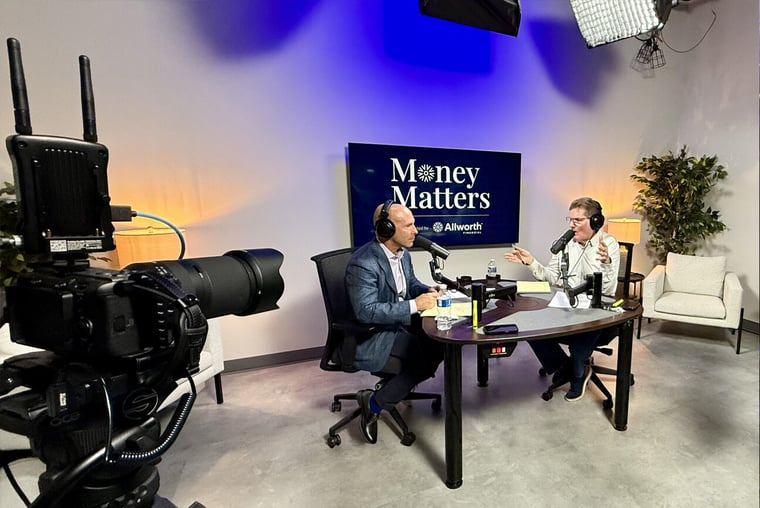
In this episode of Money Matters, Scott and Pat talk to two millionaires at different financial stages — one caller with $8 million asking about Roth conversions and tax strategy, and another navigating retirement planning with a $1.4 million portfolio. Scott and Pat break down how Roth conversions can optimize long-term savings, where annuities fit into today’s market, and how both investors are managing wealth amid rising volatility. If you're exploring Roth conversions or simply looking to protect and grow your nest egg, this episode is packed with actionable advice.
Join Money Matters: Get your most pressing financial questions answered by Allworth's co-founders Scott Hanson and Pat McClain live on-air! Call 833-99-WORTH. Or ask a question by clicking here. You can also be on the air by emailing Scott and Pat at questions@moneymatters.com.
Scott: Welcome to Allworth's "Money Matters". Scott Hanson.
Pat: Pat McClain. Thanks for joining us.
Scott: Glad to have you with us as we talk about financial planning, investment advice, all that kind of good stuff. And it's funny, Pat, I chatted with a buddy of mine yesterday who I've known for 40 years, maybe 35, long-time, long-time friend. And he says to me, "I listened to your podcast. I listened to a few of your podcasts. That was great. I learned a lot. You guys are really funny." And I said, "Is that the first time he listened to the show?" He says, "Well, 30 years." I think he was in the studio, like, 20 years ago to watch us live, but I guess it didn't stick. It didn't feel like he was there.
Pat: Well, there are lots of podcasts that you use.
Scott: There are lots of financial ones.
Pat: Oh, yes. Yes, yes, yes, lots and lots of them. But so, thank you for listening to ours.
Scott: I know, we appreciate it. And hopefully, you can learn something as we talk about the financial markets. And we don't talk too much about the financial markets. We talk more about...
Pat: Financial planning.
Scott: Financial planning, wealth management.
Pat: The financial markets are the financial markets. And every week, it's just like, wow, wow.
Scott: I know. I don't think we're the only ones saying that. But I've been a little bit of wow for a long time. I mean, last year, we saw corporate earnings do really well, which is... Long-term, if corporate earnings don't go up and the stock market goes up, that's called a problem.
Pat: Yes, yes, yes. If one gets too far, everything reverts to its mean.
Scott: Yes. So, if people continue to pay more and more and more for the same amount of earnings, eventually, that's a little dangerous as opposed to, let's have earnings increase.
Pat: And therefore stock prices increase along with earnings.
Scott: The perfect situation is an area where you've got earnings increases increasing in stock prices, flat or stagnant, giving an opportunity to buy in more as current companies. But, yes. So, anyway, last year was...
Pat: But we're seeing that. I mean, there's a rotation in the marketplace taking place. I mean, the Big Seven, Mighty Seven, Magnificent Seven.
Scott: The magnificent ones... As a matter of fact, of those seven stocks, only two outperformed the S&P 500 last year.
Pat: Which I thought was a great sign. Which is a great sign.
Scott: Well, those seven comprise what, 34%, 35% of the stock market index?
Pat: Yes. Those seven of the S&P 500.
Scott: Yeah, thank you. Of the 500... Not necessarily the largest company, but essentially, the largest companies in the United States. Of those 500, seven of them comprise a third of the value.
Pat: Which so goes the seven goes the market.
Scott: Correct, obviously. Yeah. I mean, you can't have those two horrible...
Pat: But so, other companies, actually, their earnings increased, but their stock prices didn't increase, which now it's happening.
Scott: Correct. And we've finally seen small cap stocks hit a new high, Russell 2000 or whatever.
Pat: Yeah, finally.
Scott: You know, I was reading an interesting article about, there's been many advisors that have been big into small cap stocks, small cap value particularly. They say, weight your portfolio to small cap value. And I'm not going to mention any names, but there's a whole school of thought out there that this is... And I read this study talking about, first of all...
Pat: Before you go on to that, are you going to explain why they have this thesis?
Scott: Well, because historically they've outperformed.
Pat: Historically?
Scott: Historically, they've outperformed. But there's three periods of time in the last, say, 75 years, where their outperformance... Maybe it's not fair to try to take that out because that's reality, right? But anyway, there's three periods of time that they had such dramatic outperformance that it helped lift that long-term average above that of the rate of the S&P 500, let's say. And I don't know if the last time I looked, it was one and a half percent better or something like that over the long-term small cap stocks. But we haven't seen that the last 20 years.
Pat: Twenty years.
Scott: Maybe longer. And a lot of it might be that these companies just...
Pat: They don't come to market.
Scott: ...they don't come to market. Or if they're on the market, they go private.
Pat: That's right.
Scott: How many companies do you see, public companies go private?
Pat: Look, Scott, at our company, we have a friend that took his company public 25 years ago.
Scott: Yeah, I know who you're talking about. Maybe a little longer than that, almost 30 years ago.
Pat: Thirty years ago. And if you had the conversation with him today, he'd say, "We would have never gone public. We would have gone to the private..."
Scott: Not in this market. You wouldn't need to in this market.
Pat: Yeah. "We would have gone to the private markets. We would have gone to the private markets." And so...
Scott: There's multi-billion dollar companies that are private, tens of... Even larger than that, that are private.
Pat: Well, non-family owned, small, upcoming companies. There's big, big companies that are massive, but they're not small cap. They're...
Scott: Fidelity is privately owned, family owned.
Pat: That's right, yeah. And what does that...
Scott: As opposed to, say, Charles Schwab, which is a public company.
Pat: Correct. Correct. So, you wonder in this regulatory environment, I have a thesis that actually they're loosening the regulatory environment on corporations to the point that private companies will now start going public.
Scott: Well, there's some loopholes now that some companies have kind of driven a truck through to get smaller investors where they don't go quite public, which is contrary to what I just said.
Pat: But they're almost public. They're trading. The stocks are trading. They're just not trading on a public exchange.
Scott: Fair. There's private exchanges now. You can buy shares in a lot of these private companies.
Pat: Which is a loophole around the SEC regulatory...
Scott: Because the regulatory... I had a friend of mine. This is 15 years ago. He took his company. He was public. They actually bought a public company, rolled his company, and then they took that private. This was maybe 15 years ago. He said the compliance costs... This was 15 years ago. Small company. It was about $7 million a year just to comply with the regulations to be a public company.
Pat: And what do you think their earnings were, $50?
Scott: Maybe less than that. Now, I think about it.
Pat: So, if you look at a percentage...
Scott: I think it might have been less than that. It was massive.
Pat: If you are looking at a percentage of earnings that go to the regulatory or the compliance. So, do you wonder...
Scott: Let's say they're trading at 20 times earnings, it's $50 million. That's a billion-dollar company. But if you're paying $7 million of your $50 million in profit just to stay in compliance, it's significant.
Pat: What, 17%, 18%?
Scott: I would certainly love to see a loosening of the regulatory environment for public companies.
Pat: But is the private markets exchanges, aren't they just recreating a public market exchange in the private?
Scott: Yeah, but one of the beauties of the public markets is you can buy an almost zero-cost ETF. From an investment standpoint, your cost of investment can be so inexpensive. And the further you are removed from the large public markets, the more friction there is, i.e., the more cost there is. I'll give you that.
Pat: Yeah. I hear the ads where you could buy meta and...
Scott: You can buy ads?
Pat: Well, you can buy private companies. I hear ads saying you can get into the big stuff just like private equity. And they're private exchanges. But they're expensive.
Scott: They're expensive. And who knows if you're getting the right kind of... I mean, there's two costs. One is the transaction cost, the commission. The other is the spread.
Pat: Yeah, and liquidity. Interesting.
Scott: Anyway, it's interesting. I find that following that is just more interesting than following where the exchanges go on a daily basis because that's just kind of noise. And if your goal is to try to outsmart the markets, good luck.
Pat: All the more power to you.
Scott: Why don't we hit the phones here? And as usual, we love taking your calls. If you want to join us with a question, just send us an email, questions@moneymatters.com. We are talking with David. David, you're with Allworth's "Money Matters".
David: Hey, Scott and Pat. How you doing?
Scott: Fantastic.
David: Oh, that's good. I have a question. I have an annuity, and it's worth about $235,000. And the cost basis was $25,000.
Scott: You've had this 30 years or so?
David: Yeah. I think it was from the '90s maybe.
Scott: Well, look, back then... I mean, I think of a client who's actually got something similar to this because back then when capital gain tax rates were equivalent to the income tax rates, they made more sense, tax-deferred annuities than they make today. So, continue on. So, you have this annuity, $235,000 with almost 100% of it is taxable.
David: Yeah. And I really don't want to annuitize, and I just want to know what my options were.
Pat: What's this look like as a percentage of your overall investment assets?
David: Probably about 3%.
Pat: So, your investment assets are, just based on that math, $8 million, $9 million?
David: Yep.
Pat: And how old are you, David?
David: 69. Married. About half in 401 and half in brokerage accounts.
Pat: This is interesting.
Scott: And if you and your wife were to both pass away today, whether your trust's up to date or not, where would you like all your dollars to go?
David: To two kids.
Scott: Any charities in there?
David: No.
Scott: Okay. And the reason we... I mean, if you said 3% to charity, would say, this is the perfect vehicle for it because you could pass that onto a charity. They would avoid all that income tax on that, but that's not the case.
Pat: But you did the IRA before then.
Scott: That's fair.
Pat: Even though it's de minimis because it's $25,000 versus $235,000.
Scott: So, this will be either, you're going to pay the tax or your kids are going to pay the tax on this.
David: Okay. So, when they inherited it, the cost basis doesn't recalibrate.
Scott: That's correct.
Pat: No, does not receive a step up basis.
Scott: And why don't you want to annuitize it? Why would he want to annuitize it now? He's got the Required Minimum Distributions that are going to be kicking in here in a few years.
Pat: Five years. So, why wouldn't you annuitize it now over a five-year period? What's your income like?
David: Dividends and Social Security?
Pat: Yeah.
Scott: What is your tax? What's your adjusted gross income?
David: About $200,000.
Scott: And what is the income of your children? All part.
David: My daughter probably makes about $200,000, my son a lot less.
Scott: Are you doing any Roth conversions?
David: No, I haven't because I had some deferred income after I retired.
Pat: In a non-qualified deferred compensation?
David: Yeah.
Pat: And does that run out?
David: Yeah.
Pat: When did it run out?
David: Last year.
Scott: Are you considering Roth conversions this year?
David: I haven't.
Scott: So, the question, Pat, is like, what are we better off deferring? The tax deferred annuity or the IRA?
Pat: Oh, I would...
Scott: What state do you live in?
David: Florida.
Scott: And what about your children? Where do they live?
David: Pennsylvania and Maryland.
Scott: Okay. Wow. So, there's some... They have state income... I don't know what the tax is, but I know both those states are taxable. They have state income tax there. In Florida, you do not. Are you giving any money to charity?
David: We haven't yet, but we're thinking about, you know, donating, leaving some... If I gave that to charity, nobody would pay taxes.
Pat: At death. Not during your life.
David: At death. At death, yeah.
Pat: At death. Well...
Scott: The question is, could he transfer to... I mean, here are your options. You can ignore it, let it continue to grow. So, if it grew 10 X in the last 30 years. You know, maybe in the next 25, 30 years, it's going to go another 10 X. Who knows? But let's assume, maybe it could be worth a million, 2 million bucks down the road by the time both you and your wife pass on, which is going to be all taxable as ordinary income. But our issue is, if you withdrew the money now, you're going to have to put it in something taxable. And secondly, you've got roughly $4 million, it sounds like, in qualified 401(k) type assets that you're going to have Required Minimum Distributions on. So, yeah, you called us with the wrong question. Because you've got... As at 74, I believe, is when your Required Minimum Distributions kicking for you, if I'm not mistaken.
David: Yeah, 73, yeah.
Scott: And you're going to have to take out roughly 4%.
Pat: So, here's what... I would ignore the annuity.
Scott: I would just keep letting it grow tax deferred.
Pat: What kind of annuity is...? What's the name of the company it's in?
David: It's from Fidelity.
Scott: And it's a variable annuity, I'm assuming, based on the growth.
David: Yeah.
Scott: Yeah. And I imagine it's pretty low cost. They have some very low cost annuities out there. So...
Pat: I would start on the Roth conversions right now. And I would consider gifting. Do you have a lot of money in cash or bonds?
David: A fair amount.
Pat: You're not spending this money in your lifetime.
David: Yeah, probably not.
Pat: Well, if you've planned on spending your lifetime, you're not doing a very good job of it.
Scott: When did she retire, David?
David: Seven years ago.
Scott: Okay, it's been a while.
Pat: And do you have any highly concentrated stock positions in your brokerage account?
David: Yeah, I have LLY.
Pat: From the company.
David: LLY.
Pat: Do you have any highly concentrated stock positions from the company you retired from?
David: Oh, no, no.
Scott: Okay. There's a lot of planning opportunities here, but a lot of it comes down to, what is your ultimate objective with these dollars? And it's not that uncommon, right? So, I imagine you and your wife, when you were first married, you didn't have two necklaces rubbed together. You worked your tail off, grew in the organization, and here you are...
David: It's our second marriages, so we're...
Scott: Okay, well, then my story's completely wrong.
Pat: Well, you should start Roth conversions.
Scott: Do you have children from previous marriages?
David: I have two and she doesn't have any.
Scott: Okay. And do you have a life estate set for her in terms of the trust?
David: Well, right now we have it, if I pass, my kids get half, and she gets half of mine because we have about equal estates.
Scott: Okay. All right. I mean, the reason we're asking is because sometimes we see kids get disinherited by accident and... So, I would ignore this annuity and I'd start on Roth conversions.
Pat: I would do some Roth conversions. And I would do some planning to see where this estate looks five years from now, 10 years from now, 15 years from now, 20 years from now. And, I mean, you can just let the estate continue to grow and grow and grow, and then your kids get this massive inheritance upon your death. Or you can do something else.
David: Yeah, but probably once it grows, we're gonna have some donated. And that's how much I need, really.
Pat: Yeah, or gift to your children. Yeah, but I would ignore the annuity.
Scott: I would ignore it, too.
Pat: And then start on the Roth conversions.
Scott: I'd start the...
Pat: Because you've got that...
Scott: You've got this window.
Pat: That $4 million is going to have Required Minimum Distributions. It won't be ever fully distributed in your lifetime because the way the formula works, the denominator keeps getting...it adds a little to it each year you live, subtracting a year. But you're always going to have that Required Minimum Distribution issue during your lifetime, and it'll continue on after you pass away, for that matter. But this annuity, we don't have to deal with it until your death. And let's assume you left that annuity to your kids and you died today, they each can make an option on how they want to receive that, either in a lump sum, have it paid out over 5 years, have it paid out over 10 years, and then it's only taxable to them in the year in which they receive that distribution. So, they do have that opportunity to spread it out. But given everything else you have, they would have that along with this massive IRA that they're gonna have to distribute in 10 years.
David: Yeah. So, I guess, would you put the annuity in 100% equities, I guess?
Scott: Oh, yeah, yeah.
Pat: Oh, yeah, yeah, yeah, 100%. I wouldn't think anything other than that. But right now, we appreciate the call, but the Roth conversions, you've got this window. I mean, we can deal with this annuity in five or six years, but what you don't want to do is actually use up any of those tax brackets for an annuitization here.
Scott: Particularly in Florida.
Pat: Yeah. And by the way, I mean, your kids, because of the state they live in, assuming they live in the states when you die, are so much better off inheriting a Roth IRA than they are a regular IRA.
Scott: Yes, because you have an opportunity...
David: So, then they don't have to get rid of it in 10 years, or...?
Pat: Well, yeah, but they have to pay taxes on the state in which they live, not in the state in which you lived. So, because you're in Florida, there's no state income tax, right? So, think about this. In Pennsylvania, I think the tax rates in Pennsylvania are relatively high. Let's say it's 9% or 10%, right? Every dollar that you convert to a Roth...
Scott: No, it's a flat tax rate of 3.07 according to...
Pat: Where, in Pennsylvania?
Scott: Yeah, for individuals.
Pat: Wow. Oh, okay.
Scott: I'm moving. I'm in California.
Pat: But still, it's over a 3% savings for every dollar you convert to Roth in Florida versus the state of Pennsylvania, where they inherit it, and have to take the money out. So, if we did a timeline over the next 30 years and said, "Okay, when David dies..."
Scott: They have an inheritance tax, Pennsylvania.
Pat: If you die in the state of Pennsylvania, you receive it in the state of Pennsylvania?
Scott: I don't know. I'm not an expert on Pennsylvania.
Pat: So, the idea being is that you're in a zero-cost state income, and every dollar that you take out and convert now it saves them whatever the marginal tax rate is in the particular state in which they live and inherit the money. So, if we were to draw a timeline over 30 years and say, we want to keep as much of this money as possible and less to the tax man, you would say, "Oh, Roth conversion absolutely makes sense." And then after that, we can deal with the... You know, until you start Required Minimum Distributions, I'd kick this annuity down the...
Scott: Indefinitely.
Pat: Yeah. I wouldn't worry about it.
David: Okay. All right. Sounds good.
Scott: All right, David.
Pat: And how is Florida? I read an article last week that people are actually moving out of Florida.
Scott: Who's moving out of Florida?
Pat: People.
Scott: Based on the weather?
David: Yeah, the hurricanes.
Scott: Insurance.
David: And it's pretty expensive to live there.
Scott: Yeah. That's what they said.
David: And the politics, the whole bunch of stuff.
Pat: Well, we don't have any political problems out here in California, fortunately.
Scott: No. Appreciate the call, David.
Pat: We don't have a governor running for president.
Scott: I like to say I came to California for the values and I stay for the taxes. You know, it's interesting though, he made some comment about expensive to live there and tax. And I know, like, a lot of people left California due to the taxes and I get it. The top rate here is 13.3%. You have some guy who's worked 20 years building a business, he sells it, the state of California takes 13.3% of it. And without the itemized deduction, it's no longer subsidized by the Fed. So, it ends up being a pretty big tax bite. And you say, "If I'm in a different state, I can avoid that."
Pat: But, like, one of the things about having some money accumulating some wealth is to give you options.
Scott: You decide. Isn't that... I mean, it's really... I think some people's pursuit of money is not really about money, it's more about having some freedom. So, if you have enough money to choose where you want to live, maybe you're gonna choose to stay in that state with the high taxes. My wife and I went through this about 10 years ago, because I was frustrated, and about ready to leave.
Pat: And where were you going to go?
Scott: I don't know. I don't know. That's the problem. I love where I live. I've been in the same community 30 years.
Pat: But if you think about Florida, in Florida, the supply and demand actually says that at some point in time, prices were gonna go up there.
Scott: Homes are still much less expensive for most parts of Florida, unless you wanna get one of those mansions on the water or something. Which I don't. It's interesting, this last card, David, a couple of things came to mind. One is, if you have an old annuity like this sitting around, there are some no-load type annuities out there available. And there are some that you can have an advisor help you with and manage this. So, there's options. You can do it. It's called a 1035 tax-free exchange, exchange it into something newer.
Pat: Without tax implications.
Scott: Without any tax implications.
Pat: So, we're tax-free exchange.
Scott: And so, sometimes you see these old policies that were sold, they have really high expenses in them. It gives you an opportunity to move them into something lower cost.
Pat: And you can move an old life insurance policy into an annuity as well.
Scott: You can. You can. So, anyway, I always find it... I think of someone like that, his largest state, sounds like he's done everything on his own over the years. And from a financial planning standpoint, you just look at it like there's so many different planning options.
Pat: Your head spins. You wonder if the brokerage account is tax efficient. My guess is...
Scott: Not as tax efficient as it could be. Yeah, my guess is. Well, there's a lot of opportunities now to do some...
Pat: Yeah. Where most of his bonds should be in the IRA, most of his equity should be in the brokerage account, especially easy if you've got a portfolio that's half and a half. He's got $4 million in his IRAs and $4 million in his brokerage account, there's lots of ways to room.
Scott: And even if you say you want to spend it... I worked with somebody last year, nervous about the market, they had a huge amount in their 401(k), and they had a large-sized brokerage account, but not a lot of cash, and they wanted to have a little more cash. So, I said, "Why don't we just sell off a little bit of stock in your 401(k), keep that in cash. And then if the market's tank and you need the cash, you've got options." "Well, then I have to pay tax, pull it out of the 401(k)." Said, "No," I said, "At that time, what we do is we simply sell some stock in your brokerage account..."
Pat: Replicate it.
Scott: "...and replicate it in your 401(k). In the exact same day, we've sold nothing."
Pat: So, it's the difference between asset allocation and asset location.
Scott: Location.
Pat: And so, people spend all kinds of time on asset allocation and very little time on asset location. And asset location is where you get the tax alpha. It's where... There's so much tax alpha.
Scott: A lot of the value that we add is in that tax alpha. That's good advisors.
Pat: Scott, before this show's over, I want to talk about this study I read from BlackRock that talked about the services advisors are offering their clients today versus years ago.
Scott: Well, I can't wait for that.
Pat: If you're not staying tuned for that, that should just tease them all the way through the show.
Scott: All right, let's continue on. Let's talk with Rhonda. Rhonda, you're with Allworth's "Money Matters".
Rhonda: Yes. I had a question. As a general rule, is it better to take from the Roth IRA or traditional for supplemental retirement income?
Scott: Traditional.
Pat: Maybe.
Scott: As a general rule, she said.
Pat: Okay, as a general rule. As a general rule.
Scott: You're not even able to think about it.
Pat: Yes, I agree. As a general rule...
Scott: But it depends. It depends on where your tax brackets lie. It depends on where your income is.
Rhonda: What if one spouse will be reaching retirement, retiring at 70, and the other spouse working probably about 58. I'll probably be about 58 by then. And we'll still be supplementing children. I know one, possibly two. One will be in college and the other one, I'm not sure, you know, that point. We might still be helping that one.
Pat: So, your spouse is 70 and you're 58. Did I get that one right?
Scott: Do you mind sharing some of your finances? Because that's what's going to drive this.
Rhonda: Yeah. Well, I'm saying, the plan is for him to retire at 70 because of the age difference. We have about 13 years difference in age. So, that whenever I retire, obviously, I would have the higher take, the higher amount because he does make more money than I do. I work part-time. Right now, he probably makes about $115. He will have a military retirement as well. He and I both occupational therapist. I work part-time, maybe make around $72,000, $75,000 a year. He has, so far, probably about $1.3 saves so far.
Pat: I'm sorry, Rhonda, is that in IRAs?
Rhonda: So, that would be 50/50 Roth in IRA. It's pretty much split up. And then I have probably about $850 saved so far, $850,000 saved so far.
Pat: And how is yours allocated in terms of Roth phrases?
Rhonda: Mine's now 50/50. And pretty much, we both do like index, Vanguard, Fidelity type funds. And then also, we have a brokerage account that we have, I think about $500 in.
Scott: And historically, have you contributed to your 401(k), half pre-tax, half Roth? Is that how you've gotten to this 50/50 split?
Rhonda: Well, they just started offering within the last year or so. So, I've been switching it out because I felt like it would be better to have more of the Roth, so just converting.
Scott: So, how did you end up with this large...? Yeah, you converted. You converted over the years.
Rhonda: Yes, yes, right.
Scott: And how much ballpark did you convert per year?
Rhonda: I have no idea. I know I have a roughly about, there may be not quite half, but getting there.
Scott: So, historically, your income just on your wages have been about $200,000 a year. I'm assuming the military pension's been coming in over the years on top of that. And then you've converted to a Roth during that income period. Now, you're moving into a period where your income is going to be $115,000 less.
Rhonda: Right.
Scott: So, you'd come to the opposite conclusion. I mean, I don't know. The thought process...
Pat: So, yeah, what was the driver to convert to Roth? Was it just a feeling?
Rhonda: No. My brother, financial, just advised. He suggested that we switch more towards the Roth.
Pat: Did you run a pro forma tax return to see what the marginal rate was that you were paying on the Roth conversion versus not? Yes and no.
Rhonda: No, we did not.
Scott: Because if you take out a Roth IRA, take money from your Roth IRA today, what you've essentially have done is have voluntarily paid the IRS more than you needed to on those dollars because you converted in years when you had higher income and chose to pay tax at a higher rate. And now in retirement, the choice would be to take income at a lower rate.
Pat: So, so the answer...
Rhonda: So, shot myself in the foot.
Scott: Yeah, but if you...
Pat: No, no, no. It's probably a push. It might be a little bit. We're going to be as optimistic as we can here, Scott.
Scott: Do not take any money from the Roth.
Pat: That's right. And don't do any more Roth conversions.
Rhonda: Okay, gotcha.
Pat: All right. Don't, because they're going to be taking income.
Scott: Yeah, yeah, yeah. And there's not that much lose as the...
Pat: And how much is the military pension?
Rhonda: It's not a lot. It's like only, maybe about $2,500, $3,000 a month.
Pat: Okay, $36,000 a year.
Scott: $30,000 a year.
Pat: And then how much, and I assume your spouse is taking Social Security now, he's 70.
Rhonda: So, no, he, I'm talking about hypothetically when he does turn 70. When he is 70, I think it will be based on what I looked at, it said about $4,000 a month.
Pat: And when's he turned 70?
Rhonda: So, he still has six more years to go.
Pat: Oh, wait a minute. Now, I'm confused. You're 52. You're 52.
Rhonda: Yes.
Pat: Okay. All right. Okay.
Rhonda: I'm thinking about the future. I'm thinking about future.
Pat: Got it. Got it. Got it. Well, you are a planner.
Scott: We were both thought you turned 70 today. That's everything we've been going on.
Pat: Yeah. So, here's what you want to do, is don't do any more Roth conversions. And I actually wouldn't make any more Roth contributions.
Scott: I'd run the numbers.
Pat: You got to run the numbers. It's a general rule of thumb based on...
Scott: Correct. The numbers are probably...
Pat: If you're calling a talk show with someone that just knows obviously very little about you.
Scott: And we're not running the numbers in front of us either.
Pat: But my guess is that you would be better off not making any more... You have enough in the
Scott: That will be my guess as well. Because you're in a pretty high tax bracket, relatively. What state are you in?
Rhonda: South Carolina.
Scott: And are you going to stay in South Carolina?
Rhonda: I'm trying to talk my husband into moving to Georgia to the lake. So, we'll see.
Scott: And where do your...? Well, who knows where your kids are...? Once done college and still young, so you don't know where they'll settle to.
Rhonda: Yeah, who knows.
Pat: Yeah. So, no more Roth conversions. And make a hundred percent of your contributions into your 401(k)s or 403(b)s or 457s, whatever you may have. In fact, you said you're an occupational therapist. Do you work for a nonprofit?
Rhonda: No, I don't.
Pat: You work for a hospital?
Rhonda: I work for a home care agency.
Pat: Okay. All right. I was looking to see if we could double up on our contributions. So, yes, so make them all pre-tax contributions to your 401(k). No more Roth conversions.
Scott: Yeah, because the way you're structured now, you will actually be in a lower tax bracket at retirement. And you've already got a lot in Roth.
Pat: And the answer to your original question is, is general rule of thumb, you take money from the IRAs first.
Scott: General rule of thumb.
Pat: Rule of thumb. But you've got a lot of ...
Scott: Money that you're going to spend.
Pat: Yeah, yeah. You've got plenty of room. You've got for six years out. You've got plenty of room for this to grow. And I assume you have no mortgage on your house.
Rhonda: No, our cars are paid off. Our house is paid off. We also have some land in Florida that I'm hoping that we can sell it and do a...
Pat: An exchange?
Rhonda: Yes. An exchange to buy the lake property, is what I'm hoping, to rent out before we retire. Hopefully there.
Scott: Great idea.
Pat: That's a great idea.
Scott: Great idea. Technically, you can't have the intent for personal use, but you can exchange for the lake house to rent it, and then have it change...
Pat: Convert it to primary.
Scott: Yeah. And then rent it part time and use it part time. And I think that's a brilliant idea before you go to retire to see this, so you can see if this is really where you want to retire.
Rhonda: Right, right. Okay, okay.
Pat: Yes. And you said you were pushing your husband to get that place in Georgia. Have him listen to this. Tell him how brilliant we thought you were.
Scott: He'd be foolish not to. I'm joking.
Rhonda: I'll have him listen to you all.
Scott: With what we know about your situation and considering you've got this rental, it sounds like a good plan to me.
Rhonda: Okay.
Scott: All righty.
Rhonda: Well, I appreciate y'all so much. Y'all give a wealth of knowledge.
Pat: All right. Well, thank you, Rhonda.
Scott: Thank you kindly, Rhonda.
Rhonda: Thank you so much.
Scott: I appreciate it. Why are the women in the South always so polite?
Pat: Bless your heart. You know, it's interesting, she talked about...
Scott: That's to a point that the rest of the country, they're not.
Pat: That was the implication.
Scott: Yes. Okay. As a general rule. We were talking about general rules. That's who she started with. As a general rule. It's interesting what she was talking about how she wants to retire on the lake. And Pat and I have been in this industry 30, almost 35 years. 35 years of helping people. And a lot of it is helping people accumulate enough dollars to work as an option. Then you see people go into retirement. And I can't tell you how many times I've seen people move. They've got this dream of living on the lake, living in the mountains, living near the beach, living somewhere better than where they are. They move as soon as they retire. And two years later, they're back.
Pat: Oh, yes. Oh, Scott, I have a house in the mountains next to a lake, fortunately, I mean. And it's in Nevada, which is a... And people ask me, "Why don't you live in Nevada?" And I said, "Because it would be like me spending the winter up there with my wife. Would be like "The Shining". It would be like Jack Nicholson. And we don't have a big house like that, but it made it even worse.
Scott: What was the movie when the writer got in the accident in... Anyway, the mountains.
Pat: Yeah, it wouldn't... And I love her dearly, and our marriage is 40 years. By the way, this last weekend, we celebrated 40 years. I got her some flowers at Safeway. Because I'm a hitter.
Scott: Well, because you know that buying her some $300 bouquet would not... She'd be like, "Why'd you waste so much money on the flowers?"
Pat: That's correct. That's correct. That is correct. But people have these images and then they get there and it's just not...
Scott: And so, we're not encouraging people to go buy a second home before they... Unless your finances... Vacation homes tend not to be the best investments, even if you rent them out. They just tend not to be the best investments. But if your thought is, "Hey, this is our dream place we want to go." Maybe you rent somewhere. Maybe you lease a house for a couple of years. Spend some time there.
Pat: Try it on.
Scott: Because life is so much about relationship. Unless you're very much a loner, life is about relationships. And you go somewhere else and it's all new relationships. Maybe it's great for you, but...
Pat: Yeah, you're a loner and you want to be a loner. A lot of loners don't really want to be loners, but might things turn out. That's right, so...
Scott: We have got... Pat and I are sitting this, taking a few hours and having a call bank session, whatever you want to call it. And what this is really designed for, for those with a million dollars or more in assets, we are setting aside a couple hours in the studio just to take calls. Just nothing, but calls. Not so much banter. Just let's just get to the facts, take some calls. So, if you would like to join us for that, it's February 5th from noon to two Pacific time. So, you can figure it out based on your time zone. If you can't figure it out, maybe don't call. Noon to 2 Pacific time, Thursday, February 5th. And again, this is a time when you can call, talk to Scott and Pat, get our opinion on something. To sign up, send an email at questions@moneymatters.com, again, questions@moneymatters.com. Or you can call 833-99-WORTH, that's 833-99-WORTH. All right, let's talk now with Lily. Lily, you're with Allworth's "Money Matters".
Lily: Hi, there. Thank you for taking my call.
Scott: Yes. How can we help today, Lily?
Lily: Okay, I have a few questions, but I'll get started. In the last few years, I've changed jobs a couple times. And each time, I've just rolled over my 401(k) into the new company's plan. Should I keep doing that when I change jobs, or should I be rolling it into an IRA?
Pat: How old are you?
Scott: How old are you?
Lily: 24.
Pat: And how much money do you have in 401(k)s?
Lily: $17,000.
Pat: Okay.
Scott: I would just roll it over to the next 401(k).
Pat: Yeah, I would, too. For just for the ease of it. Don't leave it at your previous employer because then you forget about them, and then next thing you know, you're 40 and like...
Pat: And there's actually a whole industry behind taking abandoned 401(k)s and moving them to third-party trust companies that actually have high fees.
Scott: Yeah, I would probably just keep rolling them over.
Pat: I would.
Scott: You've done a nice job at age 24...
Pat: 24.
Scott: ...to have $17,000 in retirement.
Pat: And one of the things that you actually have the benefit of is most 401(k)s have a borrow provision on it, where you can borrow up to 50% of the account balance of need being. And we're not saying you should, but you're 24, so who knows?
Lily: Okay. And then I have... So, like right now at my current job, I put 9% into my 401(k). And then this year I maxed out. I have a Roth IRA. And so, I maxed that out. Which one should I have more focus on?
Scott: What's your salary? Total income. What do you make?
Lily: About $82,000.
Pat: Yeah, and so, I was going to actually circle back on this. Why not put 15% of your income into your 401(k)? Why 9%? Why did you decide that?
Lily: I think that's just the number I picked. I could increase it to $15. Right now, I'm kind of trying to save for a house. So, the extra cash I'm putting towards saving for a house, but I could increase it.
Scott: Where are you putting the money for the house savings?
Lily: So, I have a CD and I have a money market account, and then I also have brokerage. And so, that was going to be my third question was, where should the focus...?
Scott: What did you study in college? Come hang out with my kids for a weekend, would you please?
Lily: Yes. My degree is actually in hospitality. So, nothing...
Scott: Do you work in the hospitality industry now?
Lily: I do, yes.
Scott: By the way, my children, if you, for chance are listening, which I highly doubt you are, I meant no disrespect on that comment.
Pat: Okay, Scott. So, here's what...
Scott: How much do you have saved in the house fund?
Lily: A little bit over $100,000.
Scott: Holy smokes! And you saved all that. Did you inherit some of this or gift from your grandma or anything?
Lily: No, so that account, it was always the joke. My mom would, every birthday Christmas, she would take the money. We never got the money. And it was always kind of the funny thing that she should put that money aside for us and started from a young age. So, that account's been saving since I was a kid from holiday and Christmas.
Pat: And how close are you to buying a home?
Lily: I would say probably the goal would be three years.
Pat: You know, so here's what I think. My gosh, I think you should just put 10% into your Roth 401(k) and save everything else towards a home. And then I would go to bankrate.com and see what the highest yielding money market is. And I'll put all the money is.
Scott: But she's at $82,000. For a single person, the tax rate goes from 12% to 22% at taxable income of $50,000. Their standard deduction is about 20% or so. Or is it 15%? What is the standard deduction? So, some of it, she's at a 22%. The question is, I mean, you're still young. What's your tax rate going to be?
Pat: I like the idea of putting it in the Roth. She's so young it'll be tax free when she's old.
Scott: She's going to be in a higher margin of tax based on this.
Pat:. Yeah, you're exactly...
Scott: I mean, just based on the conversation.
Pat: And you're in hospital...
Scott: Do you work in a restaurant or a hotel?
Lily: No, I used to work in hotels, and now, I work for a venture capital firm.
Scott: Oh, gosh, stop it.
Pat: Definitely a Roth. Absolutely a Roth. Absolutely a Roth. Oh my. Oh, my. Good for you. Are you doing roll-ups, or...?
Lily: What does that mean?
Scott: VC, she says startups.
Pat: Oh, she's a VC, not private equity. You're doing startups.
Lily: No, no, no. I'm a venture capital.
Pat: Got it. You're doing like the sweet greens of the world.
Scott: Or the most that you never hear them that don't survive.
Pat: Or the Kavas or that sort of thing, I assume.
Scott: Yeah, do the Roth.
Pat: Yeah. And I'd put 10% in, and then any liquid cash I'd continue to save towards a home. And I would...
Scott: I'd use a money market or CD.
Pat: Or go to bankrate.com and see what the highest yielding money market.
Scott: You want it secure because...
Pat: You want FDI insurance.
Scott: The last thing you want to do is invest somewhere that's going to fluctuate in value. Suddenly you're at the right time in your career to buy a house. The house prices are the right time. Everything's green, and then, "Oh, oh, my account's down." That makes no sense, right? So, you want it in cash. Cash is king when it comes time to buy a home.
Pat: Yeah, and I would no longer be making IRA contributions for right now. I would just do the 401(k). What?
Scott: Well, she can make them into the Roth, and then if she doesn't need it, she can leave them in the Roth. I would disagree with you on that one.
Pat: You mean, just make the Roth...
Scott: Keep maximizing the Roth.
Pat: Oh, so you can draw back the basis if you need to.
Scott: Correct. You can draw the basis out.
Pat: I stand corrected.
Lily: Okay. And then, so for the money market, the online banking, do you guys recommend those?
Pat: Oh, absolutely.
Scott: Yeah, yeah, yeah.
Pat: So, if you go to bankrate.com, it will give you the highest yielding money market. The name of the bank could be Ditchwater Bank. As long as it's FDIC insured, who cares? It doesn't matter. It doesn't matter. And so...
Scott: And you're below the limit.
Pat: Which she is. So, just go to bankrate.com and see who have the highest yielding money market. What's the firm we use?
Scott: I don't know.
Pat: Is it Wealthfront?
Scott: I don't know. I don't know.
Lily: And then my CD, should I keep that in a CD or do you think I can move that...
Scott: No, I'd move it. I'd move it. Whatever the highest yield is.
Pat: Whenever the highest yield is. But I would still keep it. I wouldn't do a CD because your time frame might be less than three years. It could be two years. Maybe you hit something big on the venture capital front and you get a windfall.
Lily: Okay. Okay, guys.
Pat: Where'd you go to school? Is that okay to ask?
Lily: Yeah, absolutely. I went to San Jose State.
Pat: Very nice. San Jose State. I love it. I went to Chico State.
Scott: I hope your parent I hope your parents are proud of you.
Lily: Yes, they did very well setting me up for success.
Pat: Well, I mean you're working in a little VC.
Scott: I have a Lily by the way. She's 18, not 24. So, great name. So, nice talking to you, Lily. Wish you well. You're on a great start.
Pat: Thanks. So, I posted on Facebook. They did a little article on my son Tom in San Diego about his...
Scott: Who's they?
Pat: Some San Diego local newspaper about his portable toilet business.
Scott: Oh, you're kidding.
Pat: And so...
Scott: Is that where he's living? I can't keep track.
Pat: San Diego, he...
Scott: Which son?
Pat: Tom, my third. He worked as private equity as an analyst and left that.
Scott: I love the story by the way.
Pat: Left that to start his own, from scratch, portable toilet business. Like could you... This is like, "Oh, you work for..." Like his friends are like... He goes, "Yeah, it's a little hard explaining to my friends why I left private equity to open a toilet business."
Scott: Why? He has freedom of his life. Freedom of his time.
Pat: Yeah, and his capital. And he saved a ton of money to do it. I mean. it wasn't... Yeah, it's interesting.
Scott: He probably works hard, but it's probably...
Pat: Oh, I tell him all the time, it's half time job.
Scott: It's funny, I listen to...
Pat: You can work any 12 hours of the day you want.
Scott: I listened to this podcast the other day. The title was something about dirty jobs, and these businesses that are non-sexy businesses. That there's a lot of opportunity.
Pat: I think he's got eight... For like weddings, that sort of thing.
Scott: Those trailers?
Pat: Yeah, the trailers.
Scott: He doesn't do normal porta potties as well?
Pat: Not yet.
Scott: Not yet.
Pat: But I think he has eight trailers now.
Scott: My guess is there's been a roll up in that industry as well.
Pat: There has.
Scott: That're probably in every other industry. Private equity is buying up those industries as well.
Pat: There has.
Scott: There's ditch diggers that have been rolled up. We're going to get eight ditch diggers together. We're going to create a company. We're going to merge it with another eight ditch diggers. The next thing you know we have 400 ditch diggers and it's an enterprise.
Pat: Actually, our pest service got rolled up that we use at home, was rolled up. A pool service...
Scott: But oftentimes, you get better service.
Pat: Oh, from the roll up?
Scott: Yeah, sometimes. Not always.
Pat: It's been a push. It's been a push. It's been a push. But the pool service one...
Scott: Now, you're just bragging. You get a place in the mountains. You've got a swimming pool.
Pat: Okay. All right, that's fair enough. I worked at a pool store when I was in high school testing the water and moving chlorine. I'm a lot of... Yes. Yes, I was a pool guy at one point in time. I now have someone else to do that.
Scott: When we were first married, we had a pool. In 1992, we bought a house two weeks after. That was when you go buy a house for $200,000 and some. I borrowed 10% from my parents. Paid them back in a few years. But it was a used house. Had a swimming pool. We bought our house for less than what the original owner had bought it for. We sold it three years later for less than what we had paid. Which was a good lesson as a young person because you learn that real estate prices don't always go straight up. But my point is I tried... I could never figure out that whole chemical thing. And my wife would laugh at me because I'd be outside looking at the thing, shaking it, and trying to look at the colors and all that. And she's the one that said, "Can we please just get a pool service because Scott's colorblind and he can't see colors."
Pat: You're never going to figure it out. Anyway, hey, before we go, I wanted to talk a little bit about this article that came out. I had mentioned it earlier. This was in wealth management, which is an industry periodical, but it was a survey that BlackRock, which is an asset management firm that sells services to people like ourselves as well as many other things, but they do sell services. And it talked about the percentage of investment advisory firms that are now offering tax services to the clients, especially high net worth clients, and estate planning. And it was interesting that the vast majority of advisors, 92% say, high net worth clients often ask them about tax planning. Only 17% view their primary driver as tax and portfolio construction. And it's what we talked about earlier, which is, there's asset allocation and asset location.
Scott: That's one piece.
Pat: That's one driver. High net worth investors tend to be concerned about capital gains taxes, estate planning, tax efficient investment, income tax liability.
Scott: As they should. Of course, they should be concerned with those things.
Pat: Among other related tax issues. Well, 80% of surveyed advisors use tax loss harvesting, which 100% should be. Fewer than 63% use things like tax efficient vehicles and taxable accounts as well as tax exempt investments.
Scott: You understand. I mean, a lot of these big wire houses, the big bank, they state right on the thing, "We do not provide tax advice."
Pat: But this leads me to what you and I have been talking about for 10-plus years. There will be a time that these services, tax and estate planning, were only offered in what they call family offices. And now, they're being offered in high net worth clients. But firms like ours and a number of others are bringing estate planning and tax planning in-house with their own estate planning attorneys. And sometimes they charge for it. So, there are certain clients that we will charge for taxes, and depending upon count size.
Scott: Nothing's free.
Pat: And estate planning as well. I would make the prediction, in 10 years from now, that the well-matured investment advisory firms in the United States will all offer tax and estate planning under...
Scott: Yep, it's all part of it.
Pat: ...one roof.
Scott: Well, here's what changed. I saw this article the other day, Pat, and my numbers are gonna be slightly off, but it was roughly... And so, we're talking about independent wealth management firms, okay? So, these are not the ones that are affiliated with the big banks. These are investment advisors that are independent. And we've seen this shift. Like we started as that registered investment advisory firm in 1993, where we were pretty early in the game. We used to be mocked because we weren't part of the big banks, right? But we're at a point today where over half of wealth management relationships are with independence. So, there's been this massive shift, migration, because people like the concept of the fiduciary responsibility, the independence so you're not pushing your own products, that sort of thing. But these independents today was roughly 82% of all the assets at wealth management firms are with firms that are have 10 billion or more under management.
Pat: The vast majority of the market place.
Scott: Even though the majority of independent firms have less than $100 million under management. So, what we're seeing is, just like with Allworth, we've had all these great partnerships, 40 some odd partnerships that have become part of Allworth. This is the best way to get talent, right? We've got phenomenal advisors all under one... And there's roughly 15 or 20 firms like Allworth today. There's a lot of great... What I'm really pleased about, it's just seeing where the market's going, right? Because, to your point, it used to be just the family office. Okay, you had $500 million. Great, you can get all these services. Then it was $100 million. Then it was $50 million. Now it's $5 million.
Pat: That's right. And you can get it for less than that, right, from certain firms, they're just going to charge you for it. But the point being is, if you're working with a firm that isn't offering this integrated approach...
Scott: We're not trying to pitch Allworth.
Pat: No, 100%.
Scott: That's why I said there's 15 or 20 of us out there.
Pat: No, I'm 100% pitching Allworth.
Scott: Oh, okay.
Pat: Let's not get this wrong. There are other firms out there, but this is the one I know.
Scott: Fair enough.
Pat: And so, if you're working with a firm that isn't offering an integrated approach to your wealth management, consider it, a tax efficient investing, tax preparation, high network services, alternatives, estate planning, the whole bed, charitable giving is the big thing too.
Scott: Yeah. This has been Scott Hanson and Pat McClain of Allworth's "Money Matters". We'll see you next week.
Automated Voice: This program has been brought to you by Allworth Financial, a registered investment advisory firm. Any ideas presented during this program are not intended to provide specific financial advice. You should consult your own financial advisor, tax consultant, or a state-planning attorney to conduct your own due diligence.