
What Two Trading Days Exposed About Investor Behavior
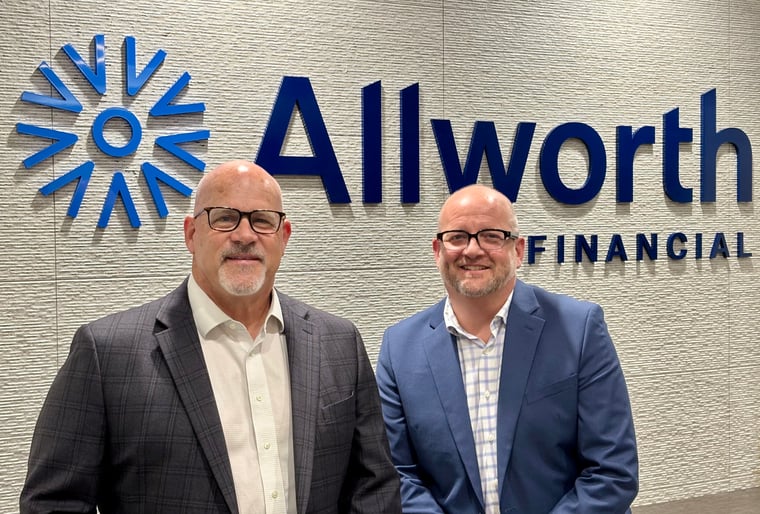
On this episode of Simply Money presented by Allworth Financial, Bob and Brian break down how just two trading days over the past year could have dramatically impacted your portfolio—and why trying to time the market based on fear can cost you millions over time. They also cover the risks of having multiple old 401(k)s, smart strategies for Roth conversions and tax-efficient charitable giving, how to approach estate planning conversations with aging parents, the importance of pre-planning end-of-life decisions, and when advanced strategies like direct indexing actually make sense for higher-net-worth investors.
Download and rate our podcast here.
Bob: Well, here we are in April, and this is the time of year where you can finally look back and start to make sense of what the past 12 months have been in the market and what the market actually delivered, factoring in a lot of volatility we've had over the last 12 years, Brian, we actually crunched the numbers. And really hope you remain fully invested over the past year, not because of the losses you would have endured, because of the gains you would have missed out on if you tried to time this market for whatever reason.
Brian: Well, Bob, we're approaching, and we're basically at the 12 month anniversary, the one year anniversary of the last truly crazy time we had in the market. I'm not talking about the headlines necessarily, I'm talking about how the market reacted to things. It started April 2nd, 2025. This was a day that went down in history as Liberation Day when President Trump held up that giant poster thing saying, "Here's the countries that are going to get tariffed and how much," and so forth. He waited of course until 4 p.m. after the market had closed for the day because he knew it would have a pretty big impact on stocks and didn't want to do that while...give the market a chance to kind of absorb that information before actually reacting to it.
Next couple days, the 3rd and the 4th, apparently, people did freak out about it, so the market's dropped about 10.5% over the next two days. And again, this was just a year ago. Seems like ancient history now. Two key days out of the year, that was a fork in the road for you. That was a chance where you could have said, "You know what? I'm out. I don't want to deal with this anymore. I'm going to go to cash." And some people did, for sure. That's literally what's happening. People are selling stocks when the market moves like that. Or you could have stayed in and said, "Well, this stinks. I don't like this. I don't understand it. Doesn't make any sense. But at the same time, the pendulum swings back the other way eventually and I'll just ignore it and ride out the waves." Well, I think we're looking okay for those who chose that path, right, Bob?
Bob: Yeah, and in spite of these numbers, I mean, let's go back and look at what happened. Since that decline, the S&P bounced back an amazing 31% off those lows. So, we talk about this over and over and over again. We give history lesson after history lesson on how the market recovers. Again, we're not talking about short-term money that you need to buy groceries with or a car with or repave your driveway with. We're talking about long-term investment capital. And it really costs people thousands, if not millions of dollars if you try to time this market and get spooked by market headlines, yet people continue to do it.
Brian, I had somebody email me early this morning, you know, worried about what might happen tonight, you know, with potential bombings in Iran that wants to get out today of everything because they don't like what might happen. And this is after an hour and a half conversation about the advice of not doing this just about a week ago. So, people will continue to get spooked by headlines or just ideology or what have you and make massive moves in their portfolio. And unfortunately, despite the history lessons in the market behavior over decades upon decades, people still do this to their own detriment. And this is what we're trying to talk people out of doing.
Brian: Yeah. And so, I think there's a lot of history to look at to understand that we have been through some really scary times. We always convince ourselves, just psychologically, that whatever we're going through right now is the scariest thing we've ever seen, and therefore, I have to react to this one. All the other things that have happened in the past were a joke compared to what we're currently going through. So, I'm looking at a chart that Andy Stout, our chief investment officer, puts together for us, because nothing makes better radio than describing charts, right, Bob? One of my favorite things to do. And Andy keeps this...
Bob: Describing visuals over the radio. Yeah. Highly productive exercise.
Brian: Makes for great radio. We know this, right? But he puts together a great... It's an overlay of the S&P 500, which hopefully, doesn't come as a shock to anybody that over the long-term, it goes up, not down. But he's highlighted the exact points of all the scary headlines that occurred on that day. And I'm going back through. Of course, it contains the Great Depression, World War II, the Korean War, Cuban Missile Crisis. I still feel like the Cuban Missile Crisis has to be among the scariest things we've ever been through, even though that's just a history book analogy for many people around today.
But a lot of us think... The removal of the gold standard, right? That was 1971. And a lot of people thought the world was going to end when we stopped relying on gold to back the U.S. dollar. We had the Tiananmen Square, 9/11, Great Recession, COVID-19, the tech bubble bursting, a couple wars in the Gulf, and so forth. We had 1987. All of these things were terrifying headlines, but ended up not being all that impactful over the long haul. Short run? Absolutely. Sometimes it rains and we just got to deal with it. But over the longer haul, this is still how you beat inflation. You beat inflation by not letting yourself panic during the scary times so you can benefit from the uptimes. You take inflation on the chin if you react to the scary headlines.
Bob: Yeah. And I think a lot of people out there know already what we're going to say. And this is talked about a lot, especially with people that have financial advisors that provide any sort of education. People talk about, "Hey, if you miss the best 10 days in the market over a 10, 20, 30, 40-year period of time, here's what happens to your portfolio." I think people understand that, but they also think they're smart enough to say, "Well, what if I can get out in front of this and miss the 10 worst days, and then pick the best couple of days to get back in? I can outsmart everybody that just stays fully invested."
But let's run through the numbers. Going back again, if you took a million dollars and just put it in an S&P 500 index fund on January 1st of 2025, what ,a little over 20 years ago, and did nothing for 20 years, nothing, your $1 million would be worth more than $7 million today. That's not market timing. That's not stock picking. That's not worrying about direct indexing or buffered ETFs or all these exotic strategies that we talk about on this show every day. It's just investing with the long-term, with long term money, doing nothing, riding it out, $1 million turns into $7 million over 20 years.
Brian: And it can be even more, Bob, if you take advantage of those little things that you just mentioned, the tax loss harvesting and the buffered ETFs and all that kind of stuff. We're just keeping this very, very simple. You're Rip Van Winkle, you invested once, and slept for 20 years.
Bob: Now, if you miss just the 10 best days over that same 20-year span of time, that million dollars, it still grew, but it only grew to $3 million. Now, I say only, $3 million is a lot of money, but you've given up more than half the gains on that million dollars. That's significant. $4 million over a 20-year period of time. If you miss the best 20 days, well, that million dollars would drop to $1.8 million. So, I think you get the point. In the $1.8 million, I will hazard a guess here and say, that return probably did not even outpace the rate of inflation over 20 years. So, trying to time this market in and out is a costly exercise.
Brian: I want to put some other numbers to what you... Because we use these examples all the time, but I'm not sure it always sinks in. We're literally talking for that 20-year period. So, there's maybe 4,000 trading days in a 20-year period. Something like that. We're talking, literally, if you step out of the market for 20 of those 4,000 trading days, that's how impactful those 20 days are. That's what Bob is trying to say here. The market normally does nothing. It goes up a little bit, it goes down a little bit. It's the big days that make a year. And if you miss a handful of those big days, you can leave an enormous amount of return because of the way the snowball works because of the way compounding works. That's what Bob is trying to say. And I think it's really, really important for people to understand that.
So, I want to pivot here and talk a little bit about, okay, so fine, what do I do when it gets scary, Bob? What does the market do? How does it recover from these scary times? So, again, thankful we have Andy Stout, our chief investment officer to help us keep on top of all this history and all those kinds of things because as you know, I love my history. So, let's take some examples, again, of the S&P 500. When the scary times happen, what's the reaction?
So, for example, let's talk about when the market drops 20%. This is real historical data going back to 1949. When the market drops 20%, which again, that happened exactly a year ago, this is how we reacted to the original Liberation Day announcement about the tariffs. When the market drops 20%, in the next six months, on average, it's up about 6%. Again, that's positive, but that's nothing to get excited about. In the next year, it's up 19%, the next three years, up 48%. Over the next 5 years, it's close to 80%.
So, what we're looking at is, what does the market do from the bottom to the top? And so, the point of all this is, historically speaking, not only have the returns been positive, they've been significantly positive. So, the last thing you should do when the market takes a hit and pulls back a little bit is sell out and miss out on that upswing, which comes quickly, Bob. Nobody gets the chance to react to it. The market will give many, many head fakes. It'll go up a good chunk, and then it'll pull back again. That'll happen three, four times before we get the one that counts. So, don't bite on any of them. Stay through the whole thing.
Bob: Yeah. And that's good. And it's very important to study history. And a lot of the talking heads on TV and in some of the financial press, they never talk about these things that you just covered. They just don't do it because what sells and gets clicks is what's going on today for the next three or four hours or the next three days. People do not study history anymore. And it's really kind of sad.
So, a couple other points I want to make. I want to be clear to folks that listen to this show. I mean, Brian, I'm sure you're in the same boat, our phones are not ringing off the hook over here at Allworth with our clients wanting to go to cash or panicking or whatever. I mean, I've been pleased that our phones are relatively quiet and it's because we're eating our own cooking over here. We're doing regular, comprehensive financial planning reviews with clients. We're allowing them to understand the history that you've already covered. And most importantly, we're helping them build financial plans, which leads to my second point.
I am not trying to make light of market volatility or uncertainty with geopolitical events at all. It is scary. It is uncertain. We're going through some very uncertain times right now. But the reminder here, and I think the point we're trying to make is, long-term money should stay invested for the long term. Should we build a short-term emergency fund? Absolutely. In some of these big market declines that we've had, and you've cited several of them where the stock market can go down 50% to 60%. And if you need that money, the recovery oftentimes has taken three or four years. That's the money that you get out of the market altogether.
It's totally appropriate to have certain buckets of money to do certain things for you financially at certain points in time. What we're trying to talk about today is just this wholesale, fear-based, headline-driven urge to try to time this market and go to cash, and then wait until "everything feels better". Those people usually leave hundreds of thousands, and in some cases, millions of dollars on the table. Here's the Allworth advise...
Brian: Hey, Bob, I want to point out one quick thing.
Bob: Please, please.
Brian: This sort of panic reaction doesn't just apply to human beings, it also applies to our animal friends out there. From my vantage point where I'm sitting, there is a Robin trying desperately to get into Andy Stout's office through his window. So, I'm sure that this Robin has been reading the headlines and is desperately worried and really wants to know what he should do with his 401(k). But Andy's not in there at the moment. He's okay, the Robin is okay. He's a little dazed, but he's having a rough morning.
Bob: Here's the Allworth advice, you don't lose the most money during market drops, you lose it when you miss the recovery that ultimately follows. Coming up next, a common mistake people make with their 401(k)s that we'll help you, hopefully, avoid. You're listening to "Simply Money", presented by Allworth Financial on 55KRC, THE Talk Station.
You're listening to "Simply Money", presented by Allworth Financial. I'm Bob Sponseller along with Brian James. From big, charitable giving strategies to helping aging parents, navigating a temporary, low-income window, and knowing when direct indexing actually does make sense. Are you making the smartest moves with your wealth right now? We'll hopefully answer all those questions for you coming up straight ahead.
There's a new statistic out there that should make a lot of people pause, especially if you've had a long career, maybe change jobs several times. And this is no surprise, we've talked about this often, the average American has worked for six employers over their lifetime. And here's the kicker, about a quarter of people with retirement accounts still have multiple 401(k) accounts lingering around out there. Brian, let's get into some of the potential pitfalls of allowing that situation to persist over time.
Brian: Right. Well, this is a common scenario, and if you recognize yourself in this situation, rest assured this happens all the time. I think just about every new client I bring on, that's one of the triggers that brought them in, is, "Not only do I need to know my financial plan, what my trajectory is, am I doing okay, and all that? But I've just got stuff everywhere, and I don't have the time to manage six or seven different 401(k)s." As Bob just said, that's the average amount that's out there. Yeah, I can say, when we do consolidate accounts for people, that's about the number, three, four, five, six things out there that need to all land in one place so that somebody can get their arms around the whole thing.
So, why is this dangerous? Well, it's not a big deal in your 40s, 50s, maybe not so much. Monitoring your assets is really never a good thing, and I don't really believe that people are truly, actively monitoring all five or six 401(k)s, having no control over the changes of the funds that go in there. The 401(k) investment committees handle all that. Most people just kind of lose track of it. But fast forward to your 70s, now you've got a real problem because that's when Required Minimum Distributions kick in at age 73, for some it'll be 75. But the thing here is, if you have those types of accounts, those tax advantaged, pre-tax, traditional 401(k)s and IRAs scattered everywhere, then that means it is up to you to make sure you have taken care of those Required Minimum Distribution obligations so that the IRS doesn't come knocking at your door.
You can calculate each one of these, but pull from one account if you are in this situation. The IRS could care less which account you draw off of, but you have to do the math based off of the year-end balances of all of those accounts. So, the math itself, not complicated. There are calculators out there to do that, but you do have to decide what is the dollar amount? Which account am I going to get it from? How am I going to handle withholding? How does this affect my other...? This RMD question, oftentimes it affects other things out there as well related to your financial plan. So, that's, again, why I always want to drag people back from that one tree they're staring at so we can see the whole forest and understand how these different decisions interact with each other.
Bob: Well, and speaking of these Required Minimum Distributions, Vanguard did an exhaustive study on what's going on out there with some of these 401(k) plans and they said nearly 7% of Vanguard IRA investors missed their RMDs in 2024. And the average penalty that had to be paid for missing those RMDs was over $1,100. That's not pocket change. And those are just the people that the IRS caught. So, there's a lot of people out there that have no clue that they even need to take RMDs from these old 401(k) plans out there.
Now, there's a couple other reasons to have these old 401(k)s looked at, and I run across this often. I mean, you know, let's just take risk and asset allocation. I'm thinking of one couple, in particular, that I started working with a few years ago. They sold a business. Are very comfortable. Sold it for a lot of money. But they still had... And this wasn't a small account, about $600,000 sitting out there in an old 401(k). And I asked them, you know, "Should we look at this?" "Yeah, you can take a look at it, but I want to know what the fees are, yada, yada, yada."
These are very risk-averse people. I looked under the hood, this thing was 100% invested in stocks. And these are people that wanted, virtually, you know, no more than 20% of their money invested in stocks. So, you know, you could quibble about, you know, eight basis points of fees on mutual funds, but the elephant in the room here is investment risk if your old 401(k) is misallocated with what you want currently in your financial plan. So, we were able to take care of that situation.
There's other times out there where it does make sense to leave some of this money in an old 401(k) for a period of time, and that's for people that want to take advantage of that net unrealized appreciation situation where you do have company stock embedded in that 401(k) plan. So, the point here is, it's good to sit down and have these old 401(k) plans, you know, bed-tailed with an overall financial plan with a good fiduciary financial advisor to come up with an actual strategy to make things simpler from an administrative standpoint, get things overall from an investment standpoint aligned with your true investment risk, and then take advantage of some of these tax planning strategies that are out there for people that are willing to take a look.
Brian: Yeah, and I want to tack a couple thoughts onto that, you know, the temptation to do the horse race under the guise of, "This is diversification if I have two advisors." We're not the only fiduciary financial planning office based out there. There are plenty of good advisors. There are a lot more mediocre to terrible advisors who are truly just selling product out there. But sometimes, I run across situations where people do have that financial plan in place and I can see that somebody is managing their dollars from a fiduciary standpoint. And I'll be honest here, I would much rather somebody pick another firm entirely rather than pretend that two, otherwise identical, portfolios are going to do anything different. All you do is wind up spinning your wheels.
I have a handful of clients in the situation where they've got another advisor who kind of functions and thinks like me, and it's funny, they tend to not listen to either one of us. Because I'll say, "What'd your other guy tell you about this?" And they say, "Well, kind of same thing you did. Maybe a Roth conversion. Yeah, they said I should do that, too." "Okay, cool. Have you done it?" "No." And so, it just kind of seems to stop it, too much information, paralysis by analysis, pick your horse and ride it till the end.
Bob: Here's the Allworth advice, simplified down, because the more scattered your accounts are, the more expensive your mistakes will probably become later. Next, we're going to take a deep dive into the cost or planning for end of life from somebody who actually helps families deal with this exact topic every single day. You're listening to "Simply Money", presented by Allworth Financial on 55KRC, THE Talk Station.
You're listening to "Simply Money", presented by Allworth Financial. I'm Bob Sponseller along with Brian James, joined tonight by Jeanne Young, who's the family services advisor for the Gate of Heaven Cemetery. I think most of us have heard of that, a huge Sema day cemetery over in the Montgomery area right off of 275. Jeanne, thank you for, you know, budgeting to spend some time with us tonight. This is a very important topic that, you know, I know Brian and I see come up often with our clients. So, we thought it best to talk to somebody that actually does this all day, every day, serving families in the area of end of life families. So, let's start with this, you know, when people come in to see you, what stage of life are they generally in? When do you start talking to families about some of these important end of life decisions? And along with that, the cost of end of end of life planning?
Jeanne: Well, this is a great question, because obviously, everybody doesn't want to talk about this subject. But I talked to families, people are at various ages, they could be 30 years old, they could be 50 plus. Some people start making their plans when they're looking at their retirement. But the recommendation is, the sooner the better. Unfortunately, this is a club we're all going to join, sinner, saint, richer, poor, unfortunately, we're all going to die. If you pre-plan, you come in, it's a relaxed environment, you're able to make the right decision, your wishes are going to become a reality, and you're going to be paying today's cost. You may not use them for 40 years, but you're going to be paying today's cost.
I recently worked with a gentleman who had a wife that had passed. And they had purchased their plots when they were in their 30s. And he was kind of giggling to myself, he goes, "We just didn't even know what we were doing. We just figured it was the right thing to do." And then when I took him out to find where his wife was going to be laid to rest, it was actually in front of a shrine of Jesus. And he kind of looked at me and he goes, "Well, we're not here because of me, she's the saint." So, it's just very important to pre-plan.
The other thing that people don't consider or even think about is that you never know what's going to be going on when somebody passes. Another family came in, everything was pre-planned. There was three brothers. And we kind of just, you know, got finished planning the time of their service for their mom, and I said, "What a gift. This was all pre-planned." And they looked at each other and said, "You have no idea. Mom was the caretaker. And for two weeks, we were scrambling when she was in the hospital to take care of our dad until we found somewhere to place him." So, again, the sooner the better, because you just don't know what may be going on.
Brian: Yeah, Jeanne, that's a great story. Because obviously, you know, you can pre-plan everything, but apparently, it didn't occur to that family as it wouldn't for many. I'm not sure I'd have thought of that. We're thinking about end of life, you know, issues, not thinking about the people left behind that are supported by the person who can't provide that support anymore. And that actually brings up a question, can you tell us some stories? So, yeah, pre-planning is important, obviously. Bob and I are big believers in that, too. But at the same time, what happens when it goes the other direction, when people come to you having done nothing? How does that look? And what are the challenges that come along with that?
Jeanne: Well, I don't think people realize, when somebody passes and you have made no plans, you're looking at 60 to 75 decisions to be made. So, think of, which funeral home? Which cemetery? Is it going to be traditionally buried? Or are they going to be cremated? Are we going to have a service? Are we going to have pictures? Who's going to do those pictures? Who's going to sing at the service? Who's going to read at the service? What readings are there? Where are you going to have lunch?
So, you can kind of get the idea of everything that has to be planned. But the problem is you just woke up and you just lost somebody you love very dearly. And then you get to make these decisions. And then your family shows up and everybody's just emotionally raw. So, I've actually had a family come in. It was a mother and a daughter and they had not pre-planned. And the mom wanted to take dad's cremated remains and bury them. And the daughter wanted to do something different. And they're in my office arguing with each other when they really should have been there to support each other. And if they had pre-planned, it just would have been set according to what their dad wanted to do, what the man wanted to do. So, again, you know...
Brian: His opinion wasn't in that room either. So, yeah, that's a great point.
Jeanne: No, no, his opinion wasn't there. And so, instead of supporting each other, now they're all getting wrapped up and what should have been done and what dad wanted. "No, dad wanted this." "No, your dad wanted that." So, it really, you know, again, everybody's just emotionally raw. Some people are like a deer in headlights. I had another person come in. and thank God he had his brother with him. He could say yes, no, and fine. And that's as far as he got. So, those are very difficult and hard meetings to have.
Bob: Jeanne, and to make matters worse, I mean, we obviously don't know the timing of when our loved one passes away. I'm thinking back to when my father passed away back in '07, and without getting into a bunch of detail, I mean, there was no illness. You know, he just dropped dead of a heart attack, gone. And then you listed you listed all these things, decisions that had to be made. And being the oldest child that fell on me. And you rattled off all the things that had to be done, had to be done in about 48 to 72 hours.
And, yeah, personally, thankfully, I get along fine with my siblings, my mom, everything was fine. They're like, "Bob, handle it." And I checked with them. But, yeah, there's umpteen different decisions that have to be made. And you're planning and planning and planning. And there was no time to just grieve the sudden loss of my dad. And so, pre-planning would have made things a bit easier in that situation. So, I think you make a great point. Hey, in the minute and a half or so we've got left, what are some common mistakes you encounter with families that we need to counsel, Brian and I, you know, folks out there listening, that we really need to avoid making as we consider this entire topic?
Jeanne: So, some of the common mistakes people make are usually because we don't pre-plan. Somebody they love very dearly passes away. And this is the last thing they're going to do for them. So, they come in or they go, you know, to the funeral home, and they buy the best of the best, "Hey, let's get the gold-coated cascade," and, "Let's have a lunch afterwards at the big steakhouse." And they don't understand, you know, you're spending money that they didn't need to spend. And maybe it wasn't what that person wished.
The other thing is when you pre-plan, you are able to look at the whole everything. And like you said, you don't have the 70, you have longer than 72 hours to get everything set up, and therefore, you're not leaving your family with any doubt. You can choose a place, like for example, Gate of Heaven. We offer a lot of things to our families, like a monthly grief support group. We have a monthly remembrance mass. We have different activities throughout the year. So, these are things that you can pick ahead and you don't make the mistake of leaving your family with doubt.
Bob: That's fantastic advice. Thank you for joining us tonight, Jeanne. You're listening to "Simply Money", presented by Allworth Financial on 55KRC, THE Talk Station.
You're listening to "Simply Money", presented by Allworth Financial. I'm Bob Sponseller along with Brian James. Do you have a financial question you'd like for us to answer? There is a red button you could click while you're listening to the show if you're listening on the iHeart app. Simply record your question and it will come straight to us. Mark and Lisa in Kenwood lead us off tonight. Brian, they say, "We're both 62 with about $4 million in pre-tax retirement accounts. We're concerned about future Required Minimum Distributions creating a huge tax burden down the road. Should we be aggressively doing Roth conversions right now?" Brian, what say you?
Brian: Well, let's talk through it. But the thing you've nailed is that, yeah, this is the window. This is that golden window for Roth conversion. So, right now, you're in control of your tax bracket. Once these Required Minimum Distributions kick in at age 73, actually, for you guys, it will be 75, the IRS is in control. And when $4 million in these pre-tax accounts, those RMDs are easily going to push into higher brackets. With that dollar amount, you're probably looking at a couple hundred thousand dollars, somewhere in that ballpark, of what you'll need to pull out.
And remember, it's $4 million right now, then it's going to be, you are 62, we're talking another 10 years, it could easily be $7 million or $8 million by that time, depending on how you got invested. So, now, you're talking $300,000 or $400,000 worth of taxable distributions. That's going to push you into higher brackets, increase those Medicare premiums, and even impact the taxation of your Social Security. So, strategic Roth conversions make a lot of sense.
Map out these tax brackets as a first step. Don't convert just blindly. You want to make sure that there's really two things you're looking for. What's the ceiling of the bracket that I'm comfortable with? For many people, it's 22%. Other people, it can be the 24% bracket. That is hundreds of thousands of dollars' worth of income. The more you convert, of course, the bigger and fatter that IRS check gets. It's a voluntary check that you yourself will be writing and signing. That's the hard part people have to struggle with. It's not the understanding of the math, it's the writing of the check. And so, just make sure you're comfortable with that dollar amount.
Again, for this pile of money, you're really looking at a significant impact, so this is the very perfect time to learn about Roth conversions. Don't worry about whether you're going to do it. Take this time to learn. You've still got time. Talk to your professional, talk to your accountant, and understand how that math might work. Jim in Mount Lookout says that he'd normally give about $50,000 to $75,000 per year to charities. And he's wondering, is a donor advised fund something that can be more tax efficient? Or are there any other thoughts that we might have about how to make that a better deal for him?
Bob: Hey, great question, Jim. A couple of numbers to throw out there. At a $50,000 to $75,000 a year gift to charity, we want to take a look at, you're obviously able to itemize if you're giving cash gifts to charities at that dollar amount. Just as a reminder, for a married couple filing joint, the standard deduction is $32,200 in 2026. So, depending on what other itemized deductions you have, for most people, their biggest, other itemized deduction is their property taxes on their home. You're probably able to itemize some of these charitable giving, but not all of it. So, here's where that donor advised fund could make some sense.
And again, I don't know what your asset base is made up of, but the reason people use donor advised funds is twofold. If you've got some appreciated securities out there where you're trying to rebalance your portfolio and avoid capital gains taxes on positions, whether they be mutual funds, ETFs, individual stocks that have gone up in value, that's a reason to use a donor advised fund. The other thing to consider in the area of tax efficiency, I don't know how old you are, but beginning at age 70 and a half, and if you've got IRA balances, you can start to give money directly from your IRA to charities. That's called a qualified charitable distribution. And everything that you give out of that IRA does not hit your tax return whatsoever. So, I think it makes sense to sit down and look at what your total asset base is, dovetail that with your overall charitable strategy, and there might be some opportunities out there to be more tax efficient.
Brian: Hey, Bob, I want to tack on one thing that comes up all the time when we're talking about QCDs.
Bob: Please, please, yeah.
Brian: So, I think this doesn't quite sink in. Most people get the concept that, yeah, if I give money to charity, it's going to be a deduction or some kind of tax benefit for you. And that is definitely true with QCDs. You're offsetting that Required Minimum Distribution. But the other thing, I want to make sure this is very clear, that money isn't even hitting your bracket. In other words, it's not pushing your dollar, your other taxable income into higher brackets. It's almost like it doesn't exist for the purposes of the cash flow on your tax returns. So, make sure you understand that.
Bob: I said that, but you're putting the literal fist to the countertop here to drive that point home, which is a great point that a lot of people miss. All right, Seth in Hamilton, Brian, says, "My parents are in their late 70s with a sizable estate, but no clear plan whatsoever. How do I even begin that conversation without it feeling intrusive to my parents?" This is a wonderful question.
Brian: It is. And these are tough conversations to have, of course, because you're having a conversation with someone you love and trust and, basically, raised you, made you the people that you are. And they'll know, somebody in the room is going to know that we're having this conversation because somebody is concerned that maybe we need to start making decisions a little more proactively on behalf of mom and dad in just being a little more involved. So, much more of a family dynamics and timing question. And it's really not about money at all.
So, the mistake most people make is leading with the money. That makes it feel intrusive. Better approach, start with the care, the clarity, and reducing the future stress. That's really what this is all about. It's not about a pile of dollars. It's about, how do we avoid an unforced error in the future that's going to cause an enormous amount of stress for everybody? So, anchored around them, not you. Instead of, "We need to talk about your estate," how about something like this? "I've been thinking about how families sometimes struggle when there isn't a clear plan, and I'd love to make sure whatever you want actually happens, and things are easy on everyone, including you. So, I need to know what it is that you want to happen, then we can figure out how to make sure that that occurs."
Real world triggers, I think, can be a good way to do this. These conversations go a lot better when they don't come out of nowhere. Maybe you can reference a friend who's dealing with a messy estate. Lots of stories like that out there. Stories in the news, your own planning process if you're going through this. Start narrow, not big. Don't start with, "What's the net worth?" Start with, "Is there a will or trust? Where are the documents in case we need them? Is everything organized?" And so forth. So, hopefully, these are some steps that can make this conversation happen a little easier for you.
Bob: All right, coming up next, I've got my two cents on this whole topic of a direct indexing strategy. In other words, does that strategy even make sense? And at what portfolio size after you factor in all the complexity of it and potential fees. You're listening to "Simply Money", presented by Allworth Financial on 55KRC, THE Talk Station.
You're listening to "Simply Money", presented by Allworth Financial. I'm Bob Sponseller along with Brian James. Brian, let's spend a few minutes on this whole topic we bring up frequently on the show, but rarely take a deep dive into, and that's just direct indexing. You know, I think people are obviously familiar with ETFs and some of the tax advantages of investing in ETFs rather than mutual funds. But this direct indexing approach takes it a step further where you actually own the individual stocks in your so-called index portfolio. And a lot of times people wonder, "Hey, is it really worth it to go to that extent to have all these individual stocks? I have my statement filled up with all these different line items. When does it make sense? When does it not make sense?"
Here's a couple of thoughts on that. Sometimes people just love owning individual stocks. They want to see how every stock performs. They love to track it. You know, they eat, sleep, and drink all this stuff. That's an interesting phenomenon, but that's not really a reason to do this. The main reason to do this is another layer of tax control. Because let's face it, within an index, say, the S&P 500 stocks, at any point in time, and right now is a great example, you're going to have different sectors outperforming, and you're going to have other sectors dropping a lot. And that's what opens up this opportunity to do some really proactive tax loss harvesting.
So, rather than waiting for the whole index to fall, you know, the individual components of that index move around. And that's the attraction of this. And then for people that are charitably inclined, that also opens up other opportunities to, like we talked about earlier in the show, use your donor advised fund to give shares of appreciated stocks within this index portfolio directly to your donor advised fund and get some added tax advantages.
And then I'd say a third reason to get involved in a direct indexing strategy is sometimes we use this strategy to over time, and in a tax responsible manner, unwind a large, concentrated stock position that maybe you want to bring over and incorporate that into a more diversified planning strategy. So, those are the reasons that you want to consider a strategy like this. And the fees, you know, in today's day and age are not nearly what they used to be. And we're finding, you know, in most cases, the potential benefits, if used correctly, far outweigh the costs involved in getting involved with something like this. Brian, you have any additional thoughts on it?
Brian: I agree with everything you said. The only thing I'll tack onto that is, if you are still someone who is in love with paper statements in a mail and you're going to pursue direct indexing, switch to electronic, because you're going to get a phone book in the mail because of all those individual positions. Fantastic tax benefits, but lots of positions.
Bob: Either that or buy a new shredder, right, Brian? Get a big, industrial...
Brian: Buy a bigger shredder. Yes, industrial.
Bob: Yeah. All right. Thanks for listening tonight. You've been listening to "Simply Money", presented by Allworth Financial on 55KRC, THE Talk Station.
Insights for Complex Wealth Decisions
Join our email list for exclusive commentary from our Chief Investment Officer, early access to expert-led webinars, and your complimentary Wealth Planning Checklist for Complex Portfolios.
We take your privacy seriously and respect your privacy choices. By submitting this information you agree to our Terms of Use Agreement, Privacy Policy, and to receive important notices and other communications electronically.