
The Biggest Stock Market Mistakes Investors Still Make
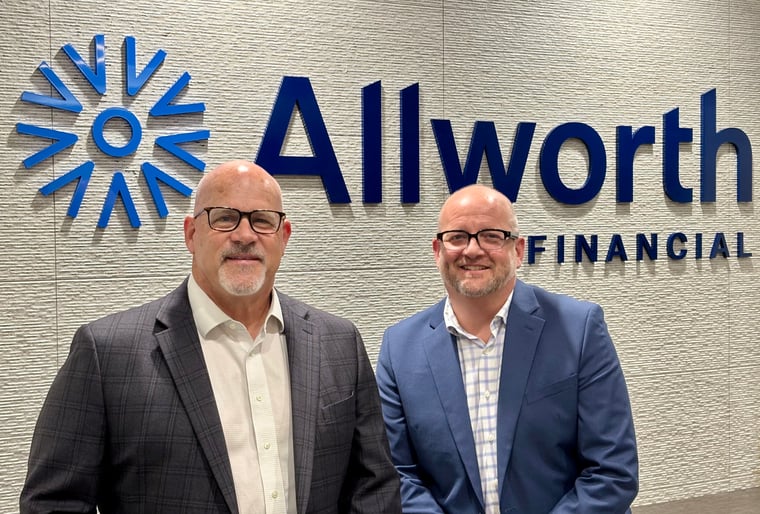
On this episode of Simply Money, Bob and Brian break down the biggest stock market mistakes investors still make—even as more Americans than ever are participating in the market. They discuss the shift from pensions to 401(k)s, why younger investors may be taking too little risk, and how to properly align your portfolio with your financial plan instead of your age.
Plus, a deep dive into the Rule of 55 and how it can help unlock early retirement, smart strategies for handling required minimum distributions if you don’t need the income, and how life insurance can evolve from basic protection into a powerful estate and legacy planning tool for high-net-worth families.
Download and rate our podcast here.
Brian, let's start with a statistic that is actually encouraging. Sixty-two percent of all Americans own stock now, according to some recent data from Gallup. That means, more people than ever are participating in the stock market, building wealth, and taking advantage of long-term net worth growth.
Brian: Yeah, I think this is something that...this is new for these last couple generations. And we've talked about this before. I think about this a lot, that for the silent generation and the early, early baby boomers, maybe even before that, that was when you retired into a pension type of a situation. If you work for us for a long enough time, stay loyal, show up to work every day, do a good job, and then we will provide you with retirement income well beyond your working years. That was the pension era. And that started to die out in about the '70s, when the IRS changed the tax code to allow for the ability to save in what we now know as 401(k)s. By the way, that name comes from the literal section of the tax code that provides the ability to set up retirement plans.
That changed the focus from, "I'm just going to work, work, work, and I'll continue to get a paycheck even when I'm not work, work, working anymore," to, "I can take money and I can get a tax benefit to throw my own dollars, take my own responsibility for my investments, throw them into the investment world." That started in the '70s, and then slowly that began unwinding the pension type of situation. And to me, that gave us the stock market of the '80s, which I think close to 50 years later is what we come to believe is the main source of wealth for most average people.
And that's what we're talking about today. So, as you mentioned, 62% of Americans own stocks. This is indirectly through a mutual fund. There's so many ways to do it anymore. An index fund, retirement accounts such as 401(k)s. You know, a smaller percentage actually owns stocks directly, meaning they have a brokerage account, they own individual stocks, rather than owning it through an intermediary like a mutual fund or exchange traded fund. That has actually reached pre-2008 levels, and a total stock ownership, including mutual funds has surpassed that level.
So, in other words, even though we go through the crazy times, the 2008s, and so forth, I think people have kind of realized that looking at all their different options, the best thing to do usually is invest in the thing that goes up the most. There are other things out there, other strategies, lots of different ways you can generate retirement income, or plan for the future. But since growth is such an important component of it, I think people look at all those things, and they go, "No, I'll take all the stuff I love and don't love about the stock market because, at least, it tends to be there over time."
Bob: Yeah, Brian, and so much money, to your point, has piled into these 401(k) plans out of necessity. As you've already stated, this is how retirement has changed over the last 50 years. And over the course of that 50-year time period, it does take some time to get everybody to adjust to moving from that pension, and you like to say, streams of income world, to piles of money world. We're all responsible for building our own pile of money. And, you know, this recent data that's come out is showing that people have gotten the message, they've invested for the long-term in the stock market. And obviously, you know, despite all the ups and downs, which we're going to talk about here in a couple minutes, you know, stocks continue to return like they always have returned over the long-term, since the mid-1920s. And that is allowing people to build wealth.
An interesting thing that I have found, you know, in just working with folks that have 401(k) retirement plans, I don't know about you, Brian, but very rarely do I ever have a client come in for an annual review. And they have tried to time the market or move money out of the stock market to say, you know, "Let's wait until things 'feel better out there.'" For folks that get involved in 401(k) plans with diversified portfolios, heavily weighted to stocks, they tend to stay in for the long haul, because they're taking advantage of that, you know, monthly or, you know, every other week, paycheck, dollar cost averaging in, and they've seen the benefits of that, continuing to put money in, taking advantage of the company match. And in spite a little bit of volatility along the way, when you're putting more money in on a regular basis, that account balance does not vacillate very much. And over the long-term, it always ends up moving higher.
Another key point, you know, that's been interesting to me is, because we've gone through some volatility here with COVID, the housing crisis, things where we've had wild swings in the markets, sometimes when I work with some younger folks, they're just starting out, people in the late 20s, early 30s, I'm oftentimes surprised at how little risk they want to take, because they're used to all this headline news of the market whip sawing around. And some people say, "Hey, I don't want any part of that." And sometimes we have to educate them on the merits of dollar cost averaging, allocating to stocks, and not worrying about what those ETFs or mutual funds or whatever you're going to own in your 401(k), whatever that's worth from day-to-day, play the long game here. Are you having similar kind of discussions with younger folks that are getting starting out, Brian?
Brian: Oh, absolutely. And this is where, you know, I think, you know, at least one is curious about, "Well, I know there's complicated things out there that maybe I don't understand, and maybe that's the answer for me to work towards something that can someday be a guaranteed stream of income." And there's nothing wrong with that approach. But anything that has those types of features will necessarily sacrifice on the growth side.
So, I've kind of come to believe, and here's a conversation I have more and more often, a lot of people come in with sort of, tell me if you notice this too, an assumption that I'm going to tell them that because they're in their early-60s, mid-60s, whatever, that I'm going to tell them they must have bonds in their portfolio. And that's rarely the case. You know, nobody must have anything. And what happened based on their age, what this is based on is, what do you need? And the way I would phrase it is, "I don't care how old you are. And I don't care whether you're retired or still working or whatever, how soon do you need these dollars?" And then we're going to carve up different piles of money. The dollars you need in the next 12 to 24 months, probably isn't going to be even that close to the bond market. We're going to do something pretty conservative there, because we know those bills are coming due.
Then the other end of the spectrum, the longer-term stuff, that's going to be almost, if not all, stocks. The littlest, old widow, and the youngest orphan needs something that's going to grow over time, because there just isn't anything that can keep up with inflation like the stock market can. So, the decision is not based on, you are this age, therefore... You know, this is not a machine. A plus B must equal C at all at all times. It's much more complicated than that, based on what someone's sources of income are, what's the timing of the event that will require them to need an income stream? And that can be way out there. And sometimes, there isn't even any timing. We just don't know. It's not today, and it's not going to be for a good, long time.
So, I'm perfectly fine with... You know, and I've shared the story before. I have my 78-year-old client who is 100% stocks. And the reason for that is because I know her big picture. She's got her conservative investments. It happens to be the death benefit of life insurance policy that insurance company is giving her because it came to her via death benefit. She's getting something like 4.5%, 5% on the income stream just from that money having been left behind in the death benefit account. That's a fantastic rate. And it was that way well before interest rates spiked as they have most recently.
So, why do I have my little, old, lady client in...and it's not really that old, but in all stock portfolio, because her big picture asset allocation is roughly 60/40 because I know where her other assets are. That's the point of financial planning and making educated decisions, not owning your age in bonds in terms of a percentage. Can you imagine, Bob, if you and I did that, followed that rule from 30 years ago, own your age in bonds, if we followed that for the last several decades, it would not have ended well.
Bob: Yeah, like you said, this is not a black box kind of situation where you just dial up an allocation based on what some magazine article says. And what you just described are all the benefits of actually having a financial plan and a good fiduciary advisor. And as you hear me say all the time, you know, a big part of financial planning is telling your money what it needs to do for you and when in advance. And that dictates that asset allocation strategy, the exposure to the stock market and risk and all that. And everybody makes different decisions based on what their actual financial plan looks like.
Let's dive into some of this Gallup data a little bit deeper. Not surprisingly, this will not surprise anybody, baby boomers still have the largest share of stock ownership, and they're not letting go. Kind of to your point, Brian, they hold 53% of all the stocks out there, the baby boom generation close to their highest share on record. As of the fourth quarter of 2025, the value of stocks held by baby boomers, get this, is almost $31 trillion, according to the Federal Reserve. And on top of that, Brian, I just heard as recently as last week, there's between $7 trillion and $8 trillion still sitting in cash and cash equivalent money market accounts.
So, in spite of this vast amount of stock ownership, there's still a lot of, what I like to call, dry powder on the sidelines here, waiting to pounce on any opportunity. Brian, let's go back to where things can get off the rails here. You know, case in point, people that got spooked by that 2007 to 2009 housing crisis, when that's the last time stock ownership really dropped in this country. What did people do? And what lesson should we have learned and continue to need to learn to not let that kind of a situation spook us and throw us off course here heading into the future?
Brian: Well, I feel like you're leading me to an answer that you and I already know. We know what happens when markets get that scary, people tend to panic, we have an urge, it's a human reaction, we have an urge to protect. And that usually works in most other places. If I put my hand in a fire, and I get burned, it's probably a good idea to pull my hand back out of the fire. Stock market actually works the exact opposite. Because if you look over history, there is always something that spooks the herd, always, always, always. Wasn't that long ago that originally it was tariffs. Literally a year ago, now we were sitting in the middle of about a 20% decline, because the tariffs spooked the herd. And we were worried that that was going to permanently damage the market. And it shuffled some things around.
But the important thing to remember is that no matter what happens, money has got to continue moving in a circle. These are things that cannot go poof. They're not going to go poof overnight. People will come in and worry, "Well, if the market hits the skids, or if the stock market goes away, how am I going to pay for my groceries?" Well, the answer is you won't because Kroger doesn't exist anymore. So, that's an extreme outcome. That really cannot happen at all because money, again, has got to keep moving in a circle. It will go where it's treated best, as you like to say. But at the same time, it's going to go somewhere. It never just goes poof. And we've got hundreds of years of history to explain that.
Bob: Yeah, Brian, to your point, can you believe as of the last night's close the stock market for 2026 is back at a level above which it was at prior to this whole Iran crisis. Nobody would have thought that.
Brian: Green numbers.
Bob: Yeah, green numbers. All right, that's not an implied guarantee of where it's going to be next week or next month. But, hey, we're in the plus category here in the in the middle of April, in spite of a lot of volatility in the oil markets. Here's the Allworth advice, long-term success is not about getting in and out of the markets, it's about staying in through the moments that could sometimes feel the hardest. Coming up next, a deep dive into the rule of 55 and whether it makes sense for you. You're listening to "Simply Money", presented by Allworth Financial on 55KRC, THE Talk Station.
You're listening to "Simply Money", presented by Allworth Financial. I'm Bob Sponseller along with Brian James. What should you do if you don't actually need your Required Minimum Distributions? And how do you know if your umbrella insurance policy truly protects a high, multi-million dollar net worth? We'll try to answer those questions and more straight ahead. Well, let's say you've been working hard for decades, and aggressively saved so that you can retire early. Your investments have done well. You're starting to think, "Hey, I might be able to retire as early as 50, or at the very least, age 55. There's only one issue out there, the vast majority of your savings might be in pre-tax retirement accounts, in other words, funds you cannot access without a 10% penalty until you turn age 59 and a half. So, is your early retirement dream dead in the water? Not necessarily. And Brian's going to talk a little bit about why.
Brian: So, there are a lot of ages that are milestones with regard to retirement. So, let's start with some other ones. Seventy-three, that's when Required Minimum Distributions kick in or could be seventy-five. I'm kind of going backwards chronologically here. And then we get down to 67, which for most people, just about everybody, I think, nowadays, is considered full retirement age for Social Security, at which point, you get a few extra benefits and so forth. Sixty-two is the earliest you can file for Social Security. Oh, I skipped one, 70 is the latest you should wait to file for Social Security. That's the most you'll ever get. Doesn't go up anymore after that, other than the cost of living stuff that everybody gets. And then, so that left us at 62, and then 59 and a half. That is when you are able to access your retirement plans without paying any penalties, your pre-tax retirement plans. Andrew Roth, frankly, you won't pay a 10% early withdrawal penalty on those assets that are pre-tax.
Now, most people know that, right? That 59 and a half age, people are generally familiar that that's a thing. But we want to talk today about something called the rule of 55, which is...that's kind of a dumb word for it, but that's what we call it, it's really the age of 55. So, what's happening here is that there is a... And this isn't new. This is just the way the rules have always worked for 401(k)s. You are able to access your 401(k) dollars penalty-free if you are, at least, 55 and you're retiring from that job. So, you have to separate from your employer, right? You have to quit, retire, be laid off or whatever. So, if you're still working there in any capacity, the rule just doesn't apply to you. It's only your current employer's 401(k), not any old 401(k)s, not IRAs, not plans from previous jobs or anything like that.
Now, here's a question I don't think the IRS has truly ever answered, "So, what if I do have my current employer and I've got three or four old 401(k)s? If I take those dollars and I dump them into my current employer's 401(k), can I access all of them?" I don't think it is written in that you can do this, but I don't think it's written in that you can't either. It would take a lot of actuarial work for somebody to figure out that you're using these dollars, not those dollars when they're all coming from the same account. But again, this is very important, it's from your current employer only, and you're separating from service not to work again. Then you also have to turn 55 in that same calendar year. If you leave at age 54, no, you won't be able to wait until next year, then tap into it. You have to, at least, leave the year you turn 55 or more.
Bob: Yeah, Brian, I mean, we talk about this often, I mean, in terms of the IRS. And believe me, I try to be as squeaky clean as I can be here. Correct me if I'm wrong, Brian, but if the IRS allows you to consolidate these old 401(k) plans into your current employer's 401(k) plan, it would seem to me that there's no limitation to tap those funds at age 55 if you've done all that pre-planning and got all those old 401(k)s consolidated into the current employer's plan. If the government allows you to consolidate that, to me, that falls into the category of, you know, ask for forgiveness, not permission. And I've never seen anybody get audited that's used this rule of 55 saying, "Hey, did you roll over any 401(k) plans from prior employers in the last year and a half, two, three years? I've never seen that happen, have you?
Brian: I have not. I'm just saying the IRS is the IRS. And if they decide they want to look at something, then darn it, they're going to look at it. I wouldn't lose sleep over that, but, yeah.
Bob: So, just to cover our rear ends here, this would be something, if you're going to roll them all up and really take advantage of this rule, this would be one of many reasons to check in with a good CPA before you deploy this strategy. How about that, Brian, since you and I are not professionally qualified to give specific tax advice?
Brian: Yeah, exactly. That is a great call out. That is not... If a CPA says something different than what Bob and...
Bob: We love our CPA friends.
Brian: If they say something different than what Bob and Brian said, then they're going to win that game. But we know what we know. As financial planners, we are quarterbacks. We are a mile wide and an inch deep. And we know who to go to when it's time for somebody who's an inch wide and a mile deep. We've got to kind of reiterate here, let's hit the... Because it's not simply, "Hey, cool. I can go at 55 and that's all the end of it." Remember, all you're avoiding is the 10% early withdrawal penalty. You're still paying ordinary income tax on your traditional or pre-tax 401(k)s. This has nothing to do with IRA, squat to do with IRAs.
The way to think about this is if you are somebody who's thinking about retiring and at this age, don't automatically think, "Well, as soon as I retire, I'm going to roll stuff into an IRA." Well, now, you've lost that opportunity. And I know people that did this before they came to talk to us thinking that they were able to take advantage of that rule of 55. They retired, rolled to an IRA, and then brought us the IRA to manage hoping to take advantage of that rule, 55 can't do that. So, you might want to hold off. Just because you've retired does not mean you have to have that 401(k) rolled over to an IRA. Matter of fact, in this particular case, you don't want to, if you're going to need to rely on it.
Now, it's also not the world's greatest opportunity, right? It's just an option. You may have other alternatives that permit you to retire a little earlier, and maybe you don't have to pay any ordinary income tax at all, because you've got taxable investments that are not subject to ordinary income tax. All part of a big financial plan, put your puzzle pieces on the table, figure out how they fit together with the help of a fiduciary planner.
Bob: Here's the Allworth advice, if you are considering retiring before you turn 59 and a half, talk to your advisors so you can begin working through which options and strategies bet best fit your needs. And, of course, doing otherwise may put your whole retirement plan in jeopardy or at risk before it even begins. When does life insurance shift from pure protection to advanced planning strategies, and how are successful families misusing their current life insurance policies, perhaps without even realizing it? We'll ask our in-house expert next. You're listening to "Simply Money", presented by Allworth Financial on 55KRC, THE Talk Station.
You're listening "Simply Money", presented by Allworth Financial. I'm Bob Sponseller along with Brian James, joined tonight by our in-house insurance expert here at Allworth, Jodee Deutsch. Jodee is the director of insurance nationally for Allworth Financial, and we happen to be blessed to have her right here in our Cincinnati office. And she's sitting right across from me. Jodee, thank you so much for making time for us tonight. And before she starts, I'm just gonna say how fortunate we are to have her on our team here. She has bailed us out of so many situations. She has a ton of industry knowledge and does a great job in the whole area of insurance. So, Jodee, thanks for being with us. Let's get into it tonight. We wanna talk about, you know, when life insurance can shift from just protection, you know, why people bought it years and years ago, to using it for more advanced planning strategies. Walk us through what some of those scenarios might look like.
Jodee: Well, thanks for having me, Bob. I think it's really the difference between thinking about, "I need to have life insurance so my family can survive," number one. And then how does that transition to, "How do I optimize what I leave behind for my family as a legacy, for a charity?" And that happens when you no longer need to replace your income. You've funded the things that you wanna fund. You have an estate that's large enough to create some type of tax exposure, whether that's federal income tax, federal estate tax. You may have a business that you wanna leave behind, so there's some type of business succession. And you want to equalize inheritances.
You spoke about this earlier. How do you share properly with kids when you're living and when you've passed away and, possibly, with your grandkids and great grandkids? And if you have a charitable intent, you need to plan for that before you leave this earth so that we can make sure to take care of things. So, the transition at your lifetime, instead of life insurance being protection, it is provided to create liquidity, help manage your taxes, and become a strategy for that, equalize your estate, and ultimately, be a legacy planning vehicle.
Brian: So, Jodee, can you talk about some times where... Frequently, what happens is people come in with a policy they bought, you know, 20 and 30 years ago, and the situation has obviously changed. You know, they're sitting in front of us, so darn it all, they didn't die. They didn't need the death benefit. But so, what do you do in those cases when people come in saying, "I've got these old policies?" I always describe it as I have a black and white TV. It still shows me TV shows, but maybe there's a better solution nowadays. How do you take people through those types of situations?
Jodee: Brian, that's a great question. We look at how their goals have changed, and we discuss options for, do you keep the policy? Do you make changes to it? Do you walk away from it? Or do you, perhaps, reposition the cash that's in the policy into a different type of policy that might have some long-term care benefits? Every policy is different, every client is different, but there are options. The key piece is to take the time to review the policy and do the analysis instead of ignoring it and just waiting for it to pay out when you die, assuming that it's still in force.
Bob: Jodee, correct me if I'm wrong here, but one of the major benefits of life insurance is it's tax free. The death benefit is tax free. And that opens up a ton of planning opportunities. You already kind of listed some of them off. If the family's, you know, charitable, inclinations or intentions have changed, or if we need to equalize the estate, if shares of a business are going to one child, and you wanna equalize with liquid assets to another. Just a simple change of beneficiary on an existing life insurance policy that's working really well can really balance the scales and help update an overall estate plan. Am I correct there?
Jodee: Absolutely. I think the insurance is the tool, but we have to review how it is coordinated with all the estate planning. Beneficiary changes, ownership structures, do you have trust planning? Because you can make changes to an enforced policy to really fit the needs that you are feeling now, and that your goals are in the future, not just when you bought the policy 20 years ago.
Brian: Jodee, one thing that comes up frequently when we've got people who are considering insurance solutions like what we're describing, some people, you know, they'll say, "Well, that's a great idea, but there's just no way I'm insurable because of X, Y, Z," because they all kind of know their family history and those kind of thing. Can you talk a little bit about the kind of things that are deal breakers right away where we know, if you have this in your history, that you probably shouldn't even bother applying, versus things that might surprise you, that might seem like you should be uninsurable, but you still might be able to do it?
Jodee: Well, that's a good question, Brian. And you've sat in enough client meetings with me to know, we need to know the details. If someone is currently going through cancer treatment, they're not going to be insurable. We typically need to wait until they're clean for five years. But in this day and age, there are so many things that you might think are uninsurable that are not. Parkinson's, for example. We just worked with a client who has Parkinson's and was able to get him a standard offer. And he came to me because he thought he was uninsurable. So, I think the key is not to make assumptions, and to ask the questions and to dig a little bit deeper. Because it you may be uninsurable, but we want to try to figure out why, or what if we wait two years? Maybe you'll be insurable at that point.
Brian: So, is it...?
Bob: And Jodee, isn't...? Go ahead, Brian.
Brian: Yeah. I was just gonna ask, is that a difference between insurance companies? In other words, your knowledge of the industry, one insurance company might treat one risk a different way than another. Is that where the differences are?
Jodee: Yes. There are certain things that every insurance company is going to think are uninsurable, but there are other things that insurance companies will look at differently. Cancer is one of those. Marijuana usage is one of those. The way that, build, height, and weight, different insurance companies handle things differently. And understanding the medical history of the client can really help to determine what insurance company might be a fit for them.
Bob: Yeah, Brian, you asked the same question I was gonna ask, and that leads to...
Brian: Beat you.
Bob: ...you know, the point we wanna make here, is it's really important to be working with an insurance professional who can go out to 50, 60 different companies with no axe to grind, no captive agency thing, where they can only represent one company. Because literally, depending on the situation, different insurance companies underwrite these situations differently. And you wanna have all the tools in your quiver here to go out and get the best possible underwriting result that you can. We're gonna have to leave it there tonight, Jodee. Thanks so much for joining us. Can't wait to have you back on future shows. You're listening to "Simply Money", presented by Allworth Financial on 55KRC, THE Talk Station.
You're listening to "Simply Money", presented by Allworth Financial. I'm Bob Sponseller along with Brian James. Do you have a financial question you'd like for us to answer? There is a red button you could click while you're listening to the show if, of course, you're listening on the iHeart app. Simply record your question and it will come straight to us. Brian, Ted in Madeira says, "I'm 62. I just got an unsolicited offer to buy my company. How do you know if this is the right time to sell or if I should wait?"
Brian: So, I can tell right away, Ted, that this apparently is not a lowball offer because it's gotten your attention enough to start seeking out information. Maybe, you know, it doesn't sound like you got out of bed the morning you got that offer thinking, "It's time to sell my company, but wow, this is actually a pretty decent offer, I think." But then you go, "Is it? I have no idea because I haven't sat around and figured out what my company's worth." So, start figuring... I would say, from a financial planning standpoint, think of it this way. What is enough? Set aside the business. What is enough for you? And we don't know if Ted's married or what the deal is, but your situation, how much do I need? This is the same financial plan that absolutely anybody has to do.
You simply have a different resource than a lot of people in that a lot of your wealth is consolidated into one business that you've built through your own blood, sweat, and tears. And there are financial components to that. There are, and I'll say these are even bigger, psychological components to parting with that business because it's a baby. I'm sure it feels like one of your children these days. And you weren't thinking about this anyway, so it's going to be real hard to make that decision.
You know, another way to think about this is to figure out your concentration risk from a standpoint of, how much of your wealth is tied up in that one business? Obviously, your balance sheet is pretty significantly tied up there. But also remember, your paycheck comes from there as well. So, you may want to take the step to move away from that if the business is in a good position and the economy's in a good position. And then just make sure that it's the right move for you. You'll know when you reach a point where you're thinking more and more about, what is this business worth? And it's harder and harder to get your feet on the floor to go to it, just like any other job out there. Hope that helps. Julie in Lebanon. Julie says, "We don't need our Required Minimum Distributions. So, what is the most tax efficient way to handle these?" Bob?
Bob: Well, Julie, first of all, congratulations for being in a position where you really don't need all the money that you've accumulated. That's a great place to be in. And that also gives you choices and options, which is fantastic. I can't tell from your question whether you're already at a Required Minimum Distribution age now where you're already receiving them, or whether you're in this period of time where you've got some planning opportunities. So, let's talk about first, if you're not at RMD age yet, this is a golden opportunity to sit down with your financial advisor, dovetail that with your CPA, and say, "Are we a great candidate for some Roth conversions?" In other words, between the time that we retire and when those Required Minimum Distributions start, is there that window of time where our marginal tax bracket is really, really low and we can turn on some taxable income now and do Roth conversions and build that wealth long-term, completely tax free for our chosen heirs.
If you are already at Required Minimum Distribution age and don't need the income, one of my first questions always is, are you charitably inclined? Are you already giving to charities? Is that an important part of what you do with your money every year? And if the answer to that's yes, it's a wonderful opportunity to use something called a Qualified Charitable Distribution. And you could begin doing those at age 70 and a half, which is actually before the Required Minimum Distributions kick in.
And just real simply the way that works, as long as you pull money out of your IRA and send it directly to a 501(c)(3) charity of your choosing, that money that goes from the IRA to the charity, you don't get a deduction for that gift, but it doesn't even hit your tax return in the way of taxable income. And Brian and I both find, you know, we're surprised sometimes people don't know about how this works. And again, for people that are charitably inclined, it's a wonderful opportunity to be extremely tax efficient and give to the charities and causes that mean a lot to you. Hope that helps, Julie. All right, let's go to Robert in Blue Ash. He says, "How do we evaluate whether umbrella insurance coverage, liability coverage is sufficient for our net worth? How much of that umbrella coverage do we really need?" Brian?
Brian: Yeah, umbrella coverage, again, this is something you would get through your property and casualty provider. And it might be $300, $400, maybe some probably under $1,000. And the reason, you know, it's so cheap is because these are low probability exposures, right? These aren't things that are likely to happen. But heaven forbid, if they do, these are the kinds of things that become the talk of the neighborhood. Low probability, but high severity, meaning very spendy if you are victimized by one of these, if something happens.
So, here's the way to think about it though, remember, figure out what's actually at risk. What we're ultimately talking about here is a lawsuit, somebody coming after you for some legal reason, right? That could be anything, you know, in any given situation. But your real exposure is not just your net worth, it's also your future earning power. So, you know, this is why we hear the headlines so much about, we don't we don't hear about poor people getting sued, we hear about rich people getting sued, because that's where the money is. Not to be too insensitive there. But that's just the reality. Look at the headlines, you can see it.
So, you're a more attractive litigation target if you've already got a significant net worth, plus that's likely to grow. Plaintiff attorneys are very aware of this. And they, of course, get to keep a significant chunk of that money if they win a lawsuit against you. So, the real question is, what size judgment could realistically be pursued in somebody who's in my position? So, these are things like auto accidents, you know, swimming pool incident, dog bites, slipping on the ice out in front of your property, you know, rental properties, if that's if that's a thing for you. It's not the frequency, right? You might have many of these places, but it's the severity.
Seven figure claims are pretty common nowadays. So, make sure that you think about this logically. So, a $1 million to $2 million net worth, probably a $2 million to $3 million umbrella, $3 million to $5 million, maybe you keep that equivalent. $5 million to $10 million, make sure you get a $5 million to $10 million umbrella policy out there. But, again, think about how you're exposed. And don't only look at your bank accounts, think about your future earnings probability too, because that's what somebody might go after.
Bob: Coming up next, I've got my two cents on how to handle your estate planning situation when maybe one of your children is financially responsibly, and the other child, maybe not so much. You're listening to "Simply Money", presented by Allworth Financial on 55KRC, THE Talk Station.
You're listening to "Simply Money", presented by Allworth Financial. I'm Bob Sponseller along with Brian James. Brian, I know you and I both come across this situation from time to time, you know, in today's day and age, maybe more often than used to come up. And that's a family where, you know, they have, you know, couple three, four children, and invariably, one or two of the kids is very financially responsible. The parents have no concerns whatsoever about leaving their entire state to them with no strings attached after they pass away. And then they bring up the other child, or maybe two children that just are not prepared to handle a lot of money, you know, in a lump sum after parents pass away because, they talk about, they're even having trouble, you know, handling money to now. And so, the question comes up, how do we handle that in our estate planning?
Two things that I usually talk about Brian, and feel free to jump in here. One is, never give up on any of your children. And, you know, my wife and I are going through that right now. We've got three sons, you know, ages range from mid-20s to early-30s. And, you know, people mature, grow into the ability to handle money at different rates and different times. And, you know, I'm going through this. None of my children are making huge mistakes. But, you know, by the same token, they're making different decisions, and doing varying levels of planning right now. And I'm keeping my eyes on that, you know, as a financial advisor. Are my kids going to be ready to handle money that they inherit down the road?
So, you know, my first advice is, you're still in the education phase with your kids, even though they're now adults. And personally what I've done is I've encouraged all of them to get a good fiduciary advisory to work with, somebody other than me, so I can just continue to be dad, but they've got some accountability and planning in place. Now, if we've got somebody that has an alcohol addiction or gambling addiction, or just really, we know things have gone completely off the rails, that's where you can incorporate things like a trust, where you can put some protection in for that child. Have a corporate trustee or a family member trustee involved so you can, you know, protect that money, still give them an income stream, and not allow them to go off the reservation here and just really blow and squander that money. Anything else to add there, Brian?
Brian: Yeah, I want to throw out that this is not uncommon, right? So, if you have a child that you have some concerns about, you are not alone. I'm going to go out on a limb here. This is very unscientific. I'm just going with my gut, but I'm going to say, probably two out of every three families that I meet with will express some concern of maybe one or more of their children maybe they have to think a little differently about. Put differently, only about a third of the clients that I work with say, "Hey, yeah, we got three kids and they're all fine. I'm not worried about them at all. They're doing great. They're making more money than I ever had. They don't have any problems at all." So, you are not alone if you're in that situation, but you should think logically and clearly and be communicative with your spouse and the rest of the family over your concerns so that this doesn't blindside anybody.
Bob: Yeah, good advice. Thanks for listening, everyone, tonight. You've been listening to "Simply Money", presented by Allworth Financial on 55KRC, THE Talk Station.
Insights for Complex Wealth Decisions
Join our email list for exclusive commentary from our Chief Investment Officer, early access to expert-led webinars, and your complimentary Wealth Planning Checklist for Complex Portfolios.
We take your privacy seriously and respect your privacy choices. By submitting this information you agree to our Terms of Use Agreement, Privacy Policy, and to receive important notices and other communications electronically.