
Diversification Matters: What the Latest Market Rally Is Really Telling Investors
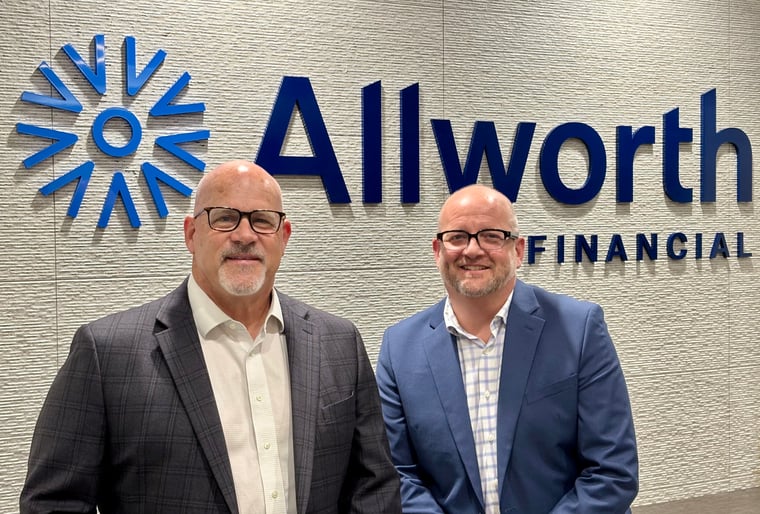
On this episode of Simply Money, Bob and Brian explain why the market rebounded sharply despite global conflict, highlighting how one company—Micron Technology—is driving a surprising share of earnings growth expectations and what that means for diversification and long-term investors. They also discuss the risks of relying on headline-making company CEOs, answer listener questions on direct indexing, tax planning in retirement, and concentrated stock positions, and wrap up with smart, flexible strategies for funding grandchildren’s education using tools like 529 plans.
Download and rate our podcast here.
Well, on the surface, things look pretty darn good right now. Markets bounced hard last week to the upside, and as Allworth's chief investment officer Andy Stout told us yesterday, it took just 11 days from the March 30 lows in the overall market for the S&P 500 to hit a fresh record high. But when you peel back the layers, it's the foundation of this most recent rally that's very interesting, Brian.
Brian: Yeah, so according to Goldman Sachs, this is one company, one single company right now, Micron Technology, they're a memory chip company, and they're responsible for about 51% of the increase in earning expectations for the entire S&P 500 since the Iran conflict started, one company. Now, let's be clear, we're not talking about the S&P 500 performance. We're talking about earnings expectations. So, what we're talking about here is earnings per share.
Let's level set on what that is. Always like to remind on definitions every now and then. This is one of those terms that gets thrown around all the time. At its very simplest is, earnings per share is a company's profit divided by how many shares of stock exists. And so, in other words, if a company earns a billion dollars and has $100 million shares outstanding, that's $10 in earnings per share. So, this is important because this is how you value what you own. At the end of the day, I think we lose sight of the fact that there are companies underneath the stock market and it matters whether they make profits or not. If you were considering buying a company that's not publicly traded, just some business you would take over, you would want to know exactly what does it earn at the end of the day. After all the expenses and everything is gone, what's the net profit to the bottom line? That's ultimately earnings per share. And this is a way to measure companies and compare them to each other.
So, again, this also has to do with... This is what analysts are talking about. When they say, "We talked about revising earnings expectations," they are talking about that earnings per share number. And remember, it's not what the company does, it's whether they beat what the analysts thought it was going to do. That's just how we operate nowadays. So, back to Micron, why we're talking about this in the first place. One company driving the bus. What do memory chips have to do with a conflict in the Middle East? The answer is, well, not a whole lot directly. This isn't about the war boosting Micron. It's about where investors are hiding during uncertainty.
Bob: Yeah, and this comes back to, Brian, the theme that we talk about all the time here is why for long-term investors, you want to stay invested long-term, because markets turn on a dime and in Micron technology, I'll go ahead and say it, has nothing to do with the Iran war. I've got a chart of Micron up right in front of me right now. And people can put these narratives out all the time, and I'm not disputing what Goldman Sachs is saying, but if you take a look at Micron technology, as you said, it is a storage chip stock. And let's start here, since the beginning of this year, the valuations on all these AI chips, Mag Seven stocks and all that have got incredibly rich, so people have been pivoting to other asset classes.
We've talked about, all the time, the wonderful performance of international stocks in 2024 that are continuing in 2025. The main reason for that is valuation, and you hit on it a few minutes ago. People are always looking at, "Hey, what do I got to pay for some growth?" And when these ratios get out of whack in terms of the expected earnings gross with the PE ratio of the stock, sometimes those valuations get very rich and people are going to look for other areas to invest their money. And that's a main reason why international stocks not only did so well last year, but they're doing so well this year, too.
But back to Micron, if you look at a chart at Micron, the stock has basically dropped 33% from the middle of March to the end of March when this whole conflict started. And then what did it do? It went right back up to the price that it was sitting at in the middle of March. So, the point here is, most investors are not going to want that kind of volatility from single stock risk. Meaning, yeah, the stock dropped 33%, a third of its value in two weeks. That's a little more of a roller coaster ride than most people are expecting. But Micron, I follow this stock. I've actually owned this stock. I own it right now in my personal portfolio. It's a great company because it is not an overvalued stock. The projected growth on that stock is very good relative to its price earnings ratio.
This is not a recommendation to go out and buy Micron. It just goes back to diversifying your portfolio in different companies in different sectors. Because when the markets sell off, for whatever reason, fear about the war, liquidity needs, or whatever, sometimes fund managers and investors will literally throw the baby out with the bathwater. Markets tend to get oversold at the bottom and overbought at the top. And I think Micron is a wonderful example here of why you want to own good, fundamentally sound companies with good, forward-looking earnings at a reasonable price. These are the companies that tend to hang in there and do well over the long term.
Brian: Yeah, and I was just digging into, why did Micron wait if this is related to memory chips? We all know why memory chips are important right now. It's because of the big AI boom that most people are pretty much aware of, whether they understand it or not. But my question was, why did it take so long for Micron to wake up? So, Micron hit a bottom in, when would this have been, about a year ago, last April, and has gone to the moon ever since. And back then it was, I don't know, 20 bucks a share or something like that. Now, it's $450 after a brief sojourn down to $320 or something, like you said. Starting to get used to this every April, we're going to panic about something, right? Last year it was tariffs, this year it was the Iran war, like, clockwork.
Anyway, so the reason is, I think these are interesting stories to look at to understand why the market does what it does and what investors look for. Micron did not participate in the initial AI boom, it kind of sat kind of flat. Reason for that is because when we were originally building things, it was all about being able to compute the results here, right? It was all about making it happen, which that was what we needed the graphical processing chips for. That was all NVIDIA and then networking, getting it to move around and Broadcom and all that. Now that we've got it up and running, we need places to store this information.
That's Micron, right? They do memory. After something is created, they can remember it. That's what they do. So, the memory was coming out of a severe glut. We had prices falling. This is at the beginning of the AI boom, right? We didn't care about memory, we cared about the graphical processors. Inventory was really high. Micron themselves was cutting production a few years ago. And so, basically, it's classic semiconductor behavior where demand can improve, but prices and stocks don't actually move until that supply tightens up. So, just an interesting business story, in my opinion. It's neat to look at how these things kind of come to be.
Bob: No, it's very interesting. In the polar opposite of Micron would be a stock like NVIDIA that we talk about all the time. They're more in the processing game, you know, getting this AI information processed. And that's been the beginning of this AI game. That's where everybody wanted to be. And let's face it, NVIDIA is not so overvalued right now either, as long as they're earnings growth continues. But, yeah, you get a pivot from time to time to different sectors of the market. And that is case in point, why you want to be diversified. Diversified because nobody can predict in advance when this stuff is going to turn on a dime.
And this single stock risk, this short-term volatility can be very violent. And that's why when you build a diversified portfolio, not only in the chip sector, but in every sector, whether it be banks, you know, energy, consumer cyclicals, all that, you're going to have a little piece of everything moving in the economy at different times for different reasons. And that's why these diversified portfolios are what allow people to sleep at night without a tremendous amount of volatility, and then sit there and get these 8%, 9%, 10%, 12% average annual rates of return in the overall market that people do enjoy over the long term when they don't panic on these short-term geopolitical events or economic events.
Brian: So, Bob, I want to spread this out to the larger market, right? Because as we are both certified financial planners, we very rarely look at one individual stock except when we think it's a cool business story. But otherwise, we're just trying to make sure that people's financial plans work with regard to combining resources with goals. And so, kind of a bigger picture. So, great, Micron has a cool, interesting story right now for a few days. What else does this mean to me? Well, I think that the point to take from the broader market is that we do have a rally happening here, right? We've been we've exploded for about the better part of the last week, maybe a little more than that.
And as we mentioned, one company Micron accounts for 51% of that, that's the of the earnings revision, and throw in Exxon, Chevron, and Conoco, those are oil companies, give you one guess why their earnings are a little bit up. They make they make up about 30% of it. And then Broadcom, which is also in the mix for this AI boom, that's about 10%. So, a tiny handful of companies are driving about all the good news and earnings expectations, right? We're talking about earnings expectations, not the index itself. Let's be careful. We're not, you know, assigning too much to one thing.
But what this tells us, depending on the mood you're in, you can interpret it two different ways. The point is, it's coming from a few players in the market. If you are a bear, if you're a grumpy person, and you're thinking it's about to call collapse, then you might look at this and say, "Well, this is a fragile rally, because there's only a few participants in it." If a few of these leaders stumble, the whole thing could come crashing down. And historically, narrow rallies often don't last. If you're in a good mood, if you're a bull, you might look at this and say that the S&P 500 price to earnings ratio has actually fallen about 5% since January. That's a good thing.
What that means is that valuations are not getting are not getting stretched out, and earnings growth is real, it's not simply based off of speculation. So, as the market goes up, we have room to run. Again, there's two points you can look at depending on the mood you're in. But regardless, if you are a person who believes in the overall growth of economies and stock markets and so forth, then this should just be good news for you to take a breath and continue to be hands off if you've got somebody managing your portfolio.
Bob: Yeah, and I'm less interested in moods, and I know you are too, Brian, I think that's the point you're making. Too many investors make big time decisions at certain points in time based on their mood and based on their feeling. When you look under the hood, the economy, yeah, we got to get this thing solved over in Iran because of the tremendous impact that petroleum and natural gas has for the overall economy. I'm not making breaking news by saying that. That's just a fact.
But if you look at how earnings have come out so far and we're early on in earnings season, but the bank earnings came out last week, very solid. Most of them beat expectations and the guidance was very good. Take a look at GE Aerospace, which reported earnings before the open this morning. Not only did they beat, expectations are up, they've got a huge backlog in orders. So, there's a lot of places in this economy where not only were the recent quarterly number is good, but the forward guidance was good too. This economy is growing and I think it's going to grow pretty darn nicely if and when we can get this situation in Iran under control.
Here's the Allworth advice, if your portfolio success depends on just a handful of companies getting everything right, and that's really our point here in this segment, it's time to revisit your diversification because narrow markets can turn very quickly. And staying with this theme, there's another reason to stay diversified, even if the company is rock solid, and it has nothing to do with the numbers. You're listening to "Simply Money", presented by Allworth Financial on 55KRC, THE Talk Station.
You're listening to "Simply Money", presented by Allworth Financial. I'm Bob Sponseller along with Brian James. If you can't listen to "Simply Money" live every night, subscribe and get our daily podcasts. Just search "Simply Money" on the iHeart app or wherever you go to find your favorite podcasts. Straight ahead, what to do with a concentrated stock position, how to handle an inherited IRA the right way, and smart ways to help the grandkids with college without hurting your own financial plan. Well, Brian, Netflix co-founder Reed Hastings is stepping down and the move is somewhat spooking investors. Netflix is an awesome company, so who cares if the founder is leaving? And what we want to cover in this segment, Brian, sometimes the most popular companies are dangerous to go all in on because the people in charge make more headlines oftentimes than the companies and their fundamentals themselves.
Brian: Yeah, and reading through all this stuff, this is almost like traveling back in time because I'm seeing names in these stories that we don't hear about quite as much. Reed Hastings was a huge name a while ago and he's built a huge company, but for whatever reason, he's not as visible as some of your other leaders such as Elon Musk, Mark Zuckerberg, Jeff Bezos, and so forth. But Netflix is obviously a great story. I don't know if anybody remembers what it was. Back in the day, you were receiving mail order DVDs. You would just have a list of them that you would check off, "Here's the one I want you to send me," and they would send it to you. You keep it until you watch it, you send it back, and they would send you the next one. That's where Netflix got their beginning, and is now...
Bob: Brian, I'm old enough to miss going to Blockbuster Video. I loved going there.
Brian: I'm sure you did. There is one left out there. You should make a trip. It's out there in the West somewhere. There's a Blockbuster out there if you want to revisit young Bob and his fabulous lifestyle.
Bob: In the Western United States?
Brian: Somewhere, yeah. There is literally one Blockbuster. I believe Blockbuster, the corporate entity, I think sold the logo and all that other stuff.
Bob: Maybe I'll make that trip and go look at the world's largest ball of twine while I'm at it.
Brian: I believe it's right next door. It's right across the street.
Bob: All right, sounds great.
Brian: But in any case, yeah, so we're talking about visionary leaders, the ones who create it, and what happens when they step down. Well, let's talk first, probably the biggest, best-known story in this category is Steve Jobs and Apple. So, when Steve Jobs came back to Apple in the late '90s, Apple was basically just about ready to shut the doors because it just hadn't kept up. It had been trounced by Microsoft Windows, and just wasn't a big player at that point. But he came along and his vision wasn't just about the products, it was about the entire company's identity in terms of building things, customized things that are easy to use, easy to understand, and so forth. So, we got the iPhone, the iPad, the whole ecosystem, the iTunes, the whole app store was Apple's original idea. All of that came from Steve Jobs when he recognized exactly how this could work when technology had gotten so small you could shove it in your pocket, but still have access to basically the entire world.
So, what happened, he of course had the health issues, that stock had real volatility when he had to step down because investors were, you know, "Is Apple really just Steve Jobs? Can it move on without it?" Now, obviously, we know that's not the case anymore. Tim Cook stepped in. As a matter of fact, he's in the headlines, too. He just announced the other day, he's going to be stepping down himself. Tim Cook has been at the helm for 15 years now. That's another thing that makes me feel old, Bob. I feel like Steve Jobs passed away five, six years ago, and that was a while ago.
Bob: Same, yep.
Brian: But, yeah, like I said, trip down memory lane. Tell us about some of these other leaders, Bob.
Bob: Well, obviously, there's Warren Buffett. Berkshire Hathaway is essentially a reflection of Buffett's long-term discipline and philosophy. And for decades, investors have trusted him to allocate capital really better than almost anyone in history and for long-term investors. And the biggest question hanging over Berkshire today is succession plan. Now, Mr. Buffett had a wonderful succession plan in place that is ongoing to this day. But let's face it, Buffett is still the brand, and I think a lot of people are still getting used to him not being at the helm.
Then there's our good friend Elon Musk. Tesla, you know, everybody fell in love with Tesla, got enamored with the cars, and whatever. I mean, let's make no mistake about it here. Tesla is really a power in robotics company, but we've got SpaceX, which will probably have an IPO coming later this year. So, we have social media presence with what used to be Twitter and now is X. Mr. Musk got involved in Doge within the federal government earlier. So, he makes headlines all the time on X, and then he makes a lot of comments out there about how the world should work. And he's a bit of a phenomenon, a personality. And sometimes people will trade based on that. But I go back to more of the Warren Buffett approach here, fundamentals matter. You got to have, at the end of the day, you got to execute a company that grows earnings and does it consistently.
Somebody else that's done a good job of that is Mark Zuckerberg, Jeff Bezos, you've already mentioned, and then in the banking sector, Jamie Dimon. What an operator that man has been for decades. I think he's one of the most well-respected managers, CEOs, risk managers really in the entire world. And during crisis, you see all the media flock to Mr. Dimon because he has a level head about him. He's very honest. He's very straightforward. People trust him because he's a great leader. So, those are another few examples. You probably have a couple more, Brian.
Brian: Yeah, well, I like that we're including... Because when we think of visionaries in the publicly traded space, we just tend to think of technology because that's just been what it's been for decades now. That's just been the industry that's driving things. But again, you mentioned Jamie Dimon, and a lot of respect for him too. I believe personally, when Warren Buffett passes on, which we certainly hope we get as much of Warren as we possibly can, but at some point, there will be no Warren. And I think Jamie Dimon will play a role in filling the space that Warren does because Jamie does tend to show up with sometimes, calming commentary, and sometimes, things that get our attention. He's the one who speaks like an adult. I don't love everything he's ever done, but I do appreciate what he has to say.
Bob: We can use a little more calm and just fundamental sound management in this world, right?
Brian: Absolutely.
Bob: So, I think it's great. All right. I think your estate plan is good to go. Next, what the pros tend to check in terms of your estate plan that you might not tend to check on a very frequent basis. You're listening to "Simply Money", presented by Allworth Financial on 55KRC, THE Talk Station.
You're listening to "Simply Money", presented by Allworth Financial. I'm Bob Sponseller along with Brian James, joined tonight by our senior estate planner and Allworth's private client group, Mr. Paul Schwartz. Paul, thank you for making some time for us tonight. We want to talk about something called an estate planning audit. And what we really want to hit on right now is occasionally, Brian and I come across clients. We ask them about their estate plan all the time in meetings and they say, "Yeah, we got that done. That box is checked." And then when we kind of start to ask some follow up questions, things often aren't as buttoned up as people think they are. So, what we're going to talk about is something called an estate planning audit. What exactly does a competent estate planning audit look like? And what do you tend to find when you do those audits, Paul?
Paul: Well, thanks for having me. An audit is basically just, it's a full review of whether your estate planning documents still match your intent and goals if something were to happen to you tomorrow. And it's less about rewriting everything, but more about spotting gaps, outdated choices, or inconsistencies. So, what we're going to do is we're going to look at all of your estate planning documents in depth. Your wills and trusts, your durable power of attorneys, your healthcare power of attorneys, your living wills. If you own a business, we're going to look at your business documents. And just as important, we're going to look at asset ownership and titling and beneficiary designations, payable on debt designations and transfer on debt designations. And we're going to make sure that any review is going to align with your will and trust.
Brian: Paul, can you walk through what does it look like when somebody... I'm sure you've got some horrific war stories. What does it look like when this goes sideways, and people haven't done these things, and then a death occurs unexpectedly? What can you do to help after the fact?
Paul: Well, there's not a lot you can do to help after the fact because things didn't go as planned. So, what I usually see in those situations is they've put all these documents together to avoid probate. And then when somebody passes away, they didn't really have the proper documentation or the proper titling of the assets. And some of the assets are going to go through probate, which is just going to cause some extra money in terms of the attorney fees and some delays with going through probate because that usually takes anywhere from about six months to a year.
Bob: Hey, Paul, we hear an awful lot about trust. I mean, people are out there marketing trust in seminars and webinars. And I think there's a lot of confusion out there about trust. Are they needed? How are they best used? How common is it that people spend a lot of money to get one of these trusts done, and then we come to find out that they're either outdated, or in a lot of cases, never even properly funded in terms of asset titling?
Paul: Back in the old days, we used to do a lot of trust, and we used to do a lot of them to save on estate taxes with the federal exemption amount at $15 million and the tri-state, Ohio, Indiana, and Kentucky not having an estate tax. They're a little bit less common today. What most people want to do with the trust is either avoid probate, they want them for privacy, or they want to control the funds from the grave, and they want to control them from creditors. So, we don't see them as much nowadays as we did back in the old days. There are still a lot of ways to avoid probate and that goes through the asset titling. It also goes through the beneficiary designations that you put on life insurance, annuities, any type of retirement accounts. Bank accounts can have a payable on death to beneficiaries, and then your brokerage accounts can also have a transfer on death to avoid probate. And they're all going to pass by contract and not pursuant to the terms of your will.
Brian: So, here's my non-lawyer observation. Not being a lawyer, and glad you're on staff so I can say, "If Paul tells you something else, he's smarter than me," whatever. Most people have a fairly simple situation. Seventy, eighty percent, I'm making this up, of the clients I meet with, they've got their assets, and their kids are doing okay. Their adult children are doing well enough, and they're not really concerned about doing anything other than just making sure this passes efficiently and simply to my children. Which as you mentioned, is really as simple as just naming beneficiaries on everything, either through beneficiary designations or POD, TOD arrangements at banks.
But that said, the one you can't do that very easily with is the house. And this is where, over the past few years, I've come a little more around to. Now that it's relatively inexpensive to set up a simple trust, it does seem, am I correct here, am I wrong, is setting up a simple trust and not spending tens of thousands of dollars to an overpriced attorney. No offense, that's not you, but there are some out there. Is that the easiest way to get a house to pass, or are there easier ways through the... I know it's not easy to name a beneficiary, so is it easier to just change the ownership to a trust to cover the house?
Paul: There's two different ways to do it, Brian. And the first is, yes, you could create a trust and then you can transfer title into the name of the trust. The other way is a lot of states, I think over 30 of them, have enacted a transfer on death, deed, or a transfer on death affidavit. So, it's usually about a two page document that gets filed in the counter recorder that you can just transfer your real property without going through the probate process. Either one works and it works well.
Brian: Go ahead, Bob.
Bob: All right, I got one last one for you. Oftentimes, Paul, we see great documents drafted. Everything appears to be buttoned up and whatever, but there's something called family dynamics, let's spit that out, that always enters the equation. You can have the best documents known to man, but this is still impacting people at the end of the day. What are the biggest issues you run into just in dealing with heirs, clients, family dynamics that we got to get out in front of so that this estate plan, at the end of the day, really is going to accomplish what folks want it to accomplish?
Paul: Well, as you both know, life happens, and whether that's children getting married, whether that's the person who drew up the documents, they get a divorce, whether it's maybe a new grandchild, whether it's moving to another state to retire, all of these things can trigger, possibly, reviewing your documents because things aren't going to pass according to your intent. So, there's a lot of different triggers to look at for an update, and that's why we always recommend clients take a look at their documents every two to five years just to make sure that it follows their intent and goals.
Bob: All right, great stuff as always tonight, Paul. Thank you for carving out time to join us. You're listening to "Simply Money", presented by Allworth Financial on 55KRC, THE Talk Station.
You're listening to "Simply Money", presented by Allworth Financial. I'm Bob Sponseller along with Brian James. You have a financial question you'd like for us to answer, there's a red button you could click while you're listening to the show if you're listening on the iHeart app. Simply record your question there, and it will come straight to us. All right, Brian, get ready for Ken in blue ash. Ken says, "We've built up around a $3 million portfolio, but it's in a taxable brokerage account, mostly in ETFs. Should we be doing anything more sophisticated like direct indexing, or is that overkill at our net worth level?"
Brian: Yeah, I don't think it's overkill for really anybody as long as you can find a cost-effective way to do it because tax loss harvesting isn't a bad thing for anybody on the face of the earth. So, $3 million, absolutely, that's wheelhouse money. I guess I really start to think about it maybe a half million and above, but you can make a case below that. You just have to worry about the costs that are involved in the whole structure. So, here's why. Let's start with what direct indexing actually does. Instead of owning that ETF, you own the individual stocks inside the index, which gives you the ability to harvest losses at the individual stock level. You can't do that with the 500 securities that are all locked up inside of an ETF.
And so, over time, that can create a steady stream of tax losses. You use those to offset gains, rebalance your portfolio if you need, and then reduce taxes on future withdrawals because you're stockpiling losses that you can use in the future. If you've ever wondered what your accountant is talking about when he or she asks you, "Hey, do you have any loss carry forwards from last year?" And you go, "I don't even know what that is." That's what this would do. You're basically looking proactively for losses to go ahead and incur, and then you get to take $3,000 of those directly against your ordinary income, and then an unlimited amount you get to keep until you can offset it with capital gains.
So, here's the challenge, Ken, you're going to have. I'm assuming this $3 million is not sitting in a loss position right now. So, if you've got a bunch of ETFs, they're probably at significant gains. So, yes, I can make a strong, strong case for how it will be beneficial for you, over the next several decades, to move to a direct indexing process. But also, I can make a strong case for, you're not going to be happy about what you have to do to get there because you're going to have to incur taxes in the first place. So, this would be very, very much be some short-term pain in exchange for long-term, really strong gain. Very much worth it, but just be prepared for what it's going to take to get there. I would continue to learn. Talk to your advisor, and be sure that you understand what the different positions are. And it will take probably several years to get to the point where this is really beneficial. But again, it will be super beneficial for you.
Nate in Anderson, Nate is 62 and planning to retire in just a couple years. Between deferred comp and his IRAs, he's worried about a spike in taxes, and he's wondering, what do you do about that? When you get that deferred comp that drops out of the sky, and I got to start paying ordinary income on IRAs distributions. How do you unwind all that, Bob?
Bob: Well, Brian, you mentioned the word wheelhouse when you started to answer Ken's question. And I think the word wheelhouse applies here as well. This time period between age 62 and when Required Minimum Distributions start, that is a wheelhouse period of time to do some proactive tax planning. So, you're looking at, Ken, over the next 10, 12, 14 years having RMDs happen, starting Social Security. There's things that are going to happen if you don't take action proactively to mitigate some of the taxes. And I think that's why you're asking the question.
So, this runway in between now in the next say 10 years or so, that's when you can really do some proactive tax planning. Roth conversions are always an option. If a lot of your money is concentrated in IRA accounts and you're needing money to live on between now and when Social Security starts, there's nothing wrong with just paying taxes at a lower rate and use that money to live on. Just use it for some of your expenses. The key here is to proactively manage your marginal and effective tax rate by picking where you take your income from, whether it's Roth IRA accounts, regular IRA accounts, Social Security, taxable accounts, a combination of all of those things.
And then we also want to be on the lookout for keeping your taxable income hopefully at a level where we don't creep up too high and have to pay those Irma taxes on your Medicare down the road. So, there's a lot of things to look at. A good fiduciary advisor can model out different scenarios, and hopefully, have you feel comfortable about having an income strategy and a tax strategy rather than just leaving it to chance. Hope that helps, Nate. Laura in Hebron, Brian, says, "I've got a concentrated position from stock options at my company. What's the smartest way to unwind that without triggering a massive tax bill?"
Brian: Well, Laura, first off, hats off for you first of all, obviously, being successful enough in your career that you've got this opportunity to begin with, and a second hat off for noticing that, Hey, this could become a tax problem." Some people pull the trigger and having experienced this, you know, just experiencing it for the first time. And they'll just assume, "Taxes are a thing I sort out in April." Well, yes, you're very correct to be on top of this because taxes are going to be significant. Also, they're unavoidable. We're going to pay them at some point. But you also need to make sure that you are making estimated payments too if you're going to pull the trigger on this and just make sure, you know, so you don't get caught with an underpayment.
But that's not the question you asked. What you asked is how do we... I'm just saying, here's the stuff that comes up along with the question. Just I've been around a bit, so I know all the questions are connected. Big thing. Don't let the tax tail wag the dog. Your concentration risk is a far bigger deal than taxes. Taxes are unavoidable. They are coming due. Far too many people refuse to address things in their financial plan that could be easily addressed because they are absolutely terrified that they're going to somehow accidentally trigger taxes that they shouldn't have. And so, I'll see people with $2 million in one stock or something that they've inherited, and they're absolutely terrified to touch it. And I have to tell them, "Look, if we're ruling out using those assets for your financial plan, then you do not have $2 million. That is a piece of artwork hanging on the wall if you refuse to use it for your life.
So, anyway. So, what you want to do with here is have a staged selling plan. Don't dump it all at once and spike that tax bracket. Spread it over multiple years if you have that ability. So, we're a third or fourth of the way through the year, something like that. And so, we're only nine months from now, you can be in two tax years. Do something now, then do something else immediately in January. And then tax loss harvesting. Go look at your other investments. If you have anything at all that has an unrealized loss, this is a great time to sell it. Go incur that loss, get it on the books, and you'll be able to offset some things. And then the third one is charity. If you are a charitably-inclined person, look to donate some of these appreciated shares, even significant amounts if you can.
Bob: Coming up next, I'm going to answer, try to answer a great listener question we received recently about the best way to fund grandchildren's education costs. You're listening to "Simply Money", presented by Allworth Financial on 55KRC, THE Talk Station.
You're listening to "Simply Money", presented by Allworth Financial. I'm Bob Sponseller along with Brian James. Brian, we got a great question from a listener the other day that was just saying, "Hey, we want to help fund our grandchildren's education costs down the road. Should we be using 529 plans, trust, something more exotic, something more flexible?" And it just got me thinking here. A lot of people, I don't think, realize the power and flexibility of these 529 plans. They really are awesome because, as a reminder, you put money in after taxes, but then if used properly, all the growth on these things is tax free as long as you use the money appropriately. And I think people forget about some of the ways and flexible opportunities, things you can fund with 529 plans.
I think everybody's familiar with just the good old college and higher education costs, tuition and fees, book supplies, equipment, computer software, room and board. Those are the things most people know about. A lot of people don't know that you can also use 529 plans for up to $10,000 per year per student for K through 12 tuition. A lot of people are using private schools now, up to and before kids even go to college, you can use some money for that too. The other thing out there is apprentice programs. Any kind of program out there that is registered with the U.S. Department of Labor, and we're talking about trades, more people are going into welding, electrician, a lot of the things that they're building into this whole AI data center boom, you can use 529 plans to pay for fees, books, supplies, and equipment for those programs as well. You can even use 529 plan assets to pay off some student loan debt. Up to $10,000 per beneficiary over a lifetime can be used towards student loan balances.
And then, Brian, we get the question all the time and feel free to jump in here. What if my kids don't go to college? Or what if they get a full scholarship? There's a newer rule out there that up to $35,000 over a lifetime for a beneficiary. Once that 529 account has been open for at least 15 years, you can do up to $35,000. Basically, roll it over to a Roth IRA and then really let that thing grow and accumulate. There is a lot of flexibilities with these 529 plans. And rather than getting into some of these exotic trust and more complex things, sometimes simpler is better, Brian. And there's few, better things out there in my view than 529 plans if used properly. I know you deal with this stuff all the time, too. Anything to add there, or what would you say about this?
Brian: One interesting strategy I've talked about because people will hesitate, "This kid may not go to school. I don't know. I'm holding a newborn baby. Who knows what's going to happen in 18 years?" Well, think of it this way. You could write a check for $10,000 now if it gains 7% every year, that's an average rate of return, it'll be $35,000 by the time they're 18 and they're working. And now, you have pre-funded their first four or five years' worth of Roth contributions with an initial $10,000 investment. Thanks for listening tonight. You've been listening to "Simply Money", presented by Allworth Financial on 55KRC, THE Talk Station.
Insights for Complex Wealth Decisions
Join our email list for exclusive commentary from our Chief Investment Officer, early access to expert-led webinars, and your complimentary Wealth Planning Checklist for Complex Portfolios.
We take your privacy seriously and respect your privacy choices. By submitting this information you agree to our Terms of Use Agreement, Privacy Policy, and to receive important notices and other communications electronically.