
Why More Money Doesn’t Always Mean More Security
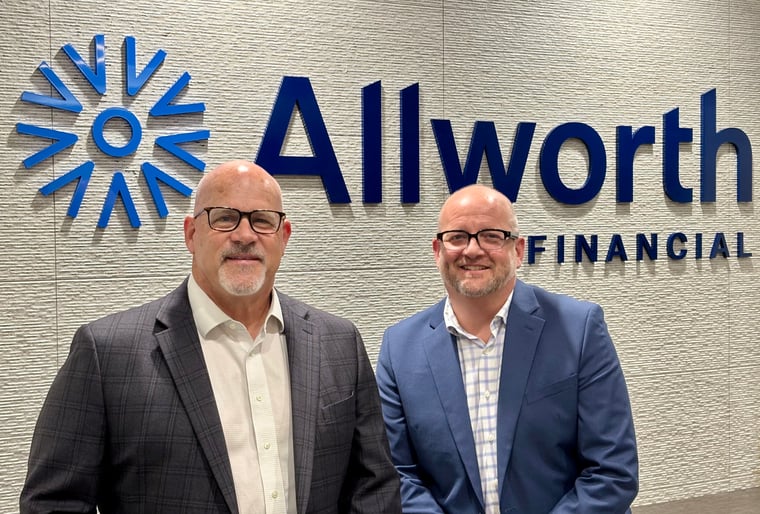
On this episode of Simply Money, Bob and Brian explain why having more money doesn’t always mean feeling more financially secure, reveal the overlooked portfolio number that could trigger a major tax bill, and discuss why some retirees may be waiting too long to enjoy the wealth they’ve built. Plus, how to navigate wealth differences with friends, plan for valuable collectibles, and recognize three phrases that should immediately put you on alert for a scam.
Download and rate our podcast here.
Well, here's a question. If you have $10 million, do you feel 5 times more financially secure than someone who has $2 million? You'd think the answer would obviously be yes. Brian, I think the answer is yes, but I'm not sure it always works that way. So, tonight, let's walk through those different levels of wealth and ask a bigger question. What actually changes and what do you need to be thinking about maybe a little differently as those numbers on the net worth statement continue to climb?
Brian: Yeah, I think this is an interesting topic because we all want to compare ourselves to others, and we all assume that if I just had a few more dollars, that all my problems would go away, and that's really not the case. So, apologies to my English teacher. The wealthier you get, the different the problems become. They don't become fewer, they just become different and slightly more complicated. So, a little caveat here, we're going to talk in generalities here because everybody's situation is unique. It's not only about the amount of dollars or how big your pile of money is, it has everything to do with, of course, all the other moving parts to any human being situation.
Let's talk about somebody who's got, say, a million dollars. You've got options, but not unlimited ones. This is a great point to get to. And 30 years ago, you were an oligarch if you had a million dollars. We always thought the millionaire was Scrooge McDuck or the guy on the monopoly board. Nowadays it's kind of almost just about table stakes to get to a point where you might have a little control over your life. And so, context is really important. A 45-year-old with a million dollars is in a very different position from a 68-year-old with a million dollars because of the time to let that snowball continue to work.
Net worth is important in this mix, right? Having a million dollars in an asset doesn't mean you've got a net worth of a million dollars. Maybe that net worth is only $700,000 because a bunch of it is tied up in your house. That's a lot different from having a million dollars invested that are liquid. But let's assume we're talking about a million dollars of somewhat liquid investable assets. That's a significant accomplishment. You've given yourself options. Probably don't have the ability to make repeated six-figure mistakes without consequences, but you do have the option to make a few here and there. So, at this level, well, the fundamentals, those are still extremely important. How much are you spending? When are you going to retire? When are you going to take Social Security? What's that asset allocation look like? How much debt do you have? Those decisions, they can materially change the outcome, even though you've got two commas on the asset side of your balance sheet.
Bob: Yeah, and that's the case with all of these scenarios we're going to talk through as well. I mean, having a pension or not having a pension matters a lot, too. And this is where, you know, we kind of, Brian, Pope fun at the oversimplifying that 4% rule, you know, occasionally on the show saying, "Hey, whatever you have, multiply it times 4%. And that's the amount you can afford to spend every year." That number does make some sense as a starting point for people sitting down, as you said, looking at what your actual liquid or investable net worth is rather than just your total net worth. Multiply that times 4% and say, "Can I live on that cash flow every year?"
And yes, Social Security and a pension does matter. You got to factor all that into as well. And, you know, let's face it, a bear market matters as well for all these scenarios we're going to talk about. You know, suppose you retire with a million dollars and you're feeling real comfortable right now, but if the markets take a dip 15%, 20%, 25%, and you're maybe overly, aggressively invested and really hadn't planned for that, or have too many things concentrated in tech stocks or PNG stock or any one stock where you're hanging out there with a little too much risk exposure in one position during a bear market, that can change the whole equation quickly. So, a lot of things to think about no matter what your net worth is, but that's just a starting point here for the $1 million investable net worth kind of client. Let's talk about someone with $3 million. What starts changing with that whole conversation, Brian?
Brian: Well, at $3 million, I think things start getting a little more interesting because now, you've got a lot more options, right? So, you're probably beyond simply asking, "Can I retire?" You're now becoming...you know, the questions get a little more detailed, a little more nuanced, "How do I retire efficiently?" That's the big difference. It's not about success and failure. It's not black and white anymore, "This will bankrupt me. This will have me on the path of financial success." Those are black and white decisions. When you're in your 20s and 30s, if you're saving a bunch of money and you're keeping your credit under control and you're not panicking when the market wobbles, you're going to be fine.
You are not, however, making big decisions about efficiency. Those are black and white success versus failure decision. Now, when we're reaching the $3 million and up, you've kind of won the game. You've probably got enough to at least, you know, live a pretty comfortable lifestyle in various outcomes no matter what happens. So, now, it becomes a question of efficiency, which is much more complicated, "How much risk do I actually need to take in this portfolio? How do I manage taxes? Well, how much can I spend? Maybe I should start giving money away. Is that going to help me with my tax situation as well as maybe my IRA to prevent a future RMDs from getting out of control." $3 million is also where somebody can look very wealthy on paper, but still not feel wealthy. Because a lot of that, it's not like it's sitting in a checking account, right? It's just a balance sheet there.
If somebody is living a, an expensive lifestyle, $3 million supporting $100,000 of annual spending is one thing, but a $250,000 annual spend, that's something entirely different. So, that's why net worth itself tells us almost nothing about financial security. It's not how big your pile is. It's about the stream of income that needs to come out of it to support your lifestyle. So, that person with $3 million and very low fixed expenses may actually have more freedom than the $6 millionaire who needs $300,000 just to maintain the lifestyle, let alone deal with the inflation on that lifestyle. So, financial security, well, it's not just about the assets, it's about the relationship between the assets and your obligations. Some of which you have control over and some of which you don't.
Bob: Yeah, Brian, and this $3 million level seems to me, you know, just from doing these meetings for decades now, where we start to run into the whole lifestyle creep discussion. Because people feel wealthy when they're looking at a $3 million balance sheet or account statement in terms of investments. But when you look under the hood, and as you've already mentioned, and start looking at, "Well, how much are you needing or wanting to spend every year?" That's where a lot of times the person with $3 million on paper isn't quite as wealthy as the person with $1 million because they've developed a lifestyle that is dependent upon much more income coming out of those investment accounts than what those investment accounts may be able to support long term.
And as you already said, from an efficiency standpoint, when you factor in the taxes that you're going to have to pay, depending on what the composition of that $3 million is, Roth, pre-tax IRAs, taxable accounts, that could change the game considerably, too. And I know I say this all the time on this show, but I remain shocked sometimes at how many people come into the office and they have no idea what they actually spend every year or plan to spend, and they're sitting there looking at retiring in two or three years. This is the category of people, these $3 million folks where the meetings tend to get a little more, I won't say tense, but surprising at times. I'll just leave it at that. Do you have similar experiences with folks maybe in this category?
Brian: Oh, for sure. I mean, it really is interesting when people hit a point where they sort of kind of know they're okay, but they're still suspicious that, you know, "Maybe we got to think about things a little bit differently than we have." And honestly, that's where there's meat on the bone for an advisor anyway. Those are fun conversations because I get to educate people on the pros and cons. That's what I feel like our roles are as financial advisors. It's not about just telling people what to do because there's pros and cons. It's about educating them on the differences between the paths they can take and making sure that they understand all the different things, the different pros and cons of every option that they have so that they can choose and we can help them execute.
So, let's move on to another level here. Let's go on to the $5 million space. So, you know, the question eventually now becomes, what is this money for? We get to a point where we know we've got more than enough. So, what does it mean to have more than enough? You know, assuming the spending is reasonable, you might be shifting from, "Well, will we have enough toward, what do we want this wealth to accomplish?" That is a huge psychological shift because 30, 40 years ago, earlier in your life, the answer was easy. Make that pile bigger. That was it. That meant save more, spend less, and so on. Do that for 30, 40 years. Then you have all these wonderfully confusing problems of, "What do I do with all of it?"
So, now, making the pile bigger isn't the most important goal, because at $5 million, depending on that lifestyle, you have a lot of options. You could take less investment risk, "Maybe I don't need to ride the roller coaster as much as I have that got me here in the first place." That could be kind of counterintuitive. People think, "Well, I'm wealthier now on the other side, so I can afford to take more risk because I can afford these hits." And that's technically probably true, but you have to decide if you want that or not.
If you're already sitting here wondering what you're going to do with all the money, then is creating more of it really...? And I realize there's a lot of people out there screaming at the windshield right now saying, "Hey, that's not my problem. I don't have enough." And that's a concern, too. But for those who have a larger net worth, a larger nest egg, eventually you have to choose between, "Do I want to keep riding the roller coaster, or is it time to just take the foot off the gas a little bit and eliminate some stress in my life of the headlines in the overall markets?"
Bob: Yeah, at any of these net worth levels, 1, 3, 5, 10, and up, estate planning is critical, especially if part of your goals are to make life a little easier for your loved ones, kids, grandkids, nieces, and nephews at some point, when you've got what you need or you pass away, making sure we create a legacy with this money. I know that is a critically important goal for so many people that we work with. And estate planning really needs to be a part of this, not just drafting the documents, but actually having conversations with your family and making sure they're prepared to inherit, and sometimes, a large sum of money.
Should they get it all at once? Do we need to protect that money from potential divorce or other things going on in their life? And are they just equipped? Are these people equipped to handle a large chunk of money? Do they have a financial plan in place? Do they have an advisor that can help them walk through being a good steward of this money for the next 50 or 60 years? All of that comes into play, and sometimes people just do not think about that until it's too late. Brian, anything to add about the whole estate planning and family legacy part of all this?
Brian: It's more than just about, "Do we have a trust? Do we have a will?" That kind of thing. Because at these dollar levels we're talking about, you really have to think about the moving parts that are going to come down the pipe. There's a lot of money that's going to move around somehow, someway, after you have passed on well beyond when you have the ability to do anything about it. And you could get some unexpected outcomes. So, really, really think through it. I'm not talking about the financial outcomes. I'm talking about the family relationship dynamic outcomes. You may think that people understand your situation a certain way, but that may not be true. And they may get completely sideways when something unexpected happens as to who gets what. So, be very, very thoughtful and don't be concerned about... Be open to the idea of having a deep conversation with your beneficiaries as to how things might work in the future.
Bob: Here's the Allworth advice, financial security isn't determined by how many millions of dollars you have. It's having enough flexibility so that markets, taxes, and life's surprises don't dictate how you live your life. Coming up next, the most expensive number in your portfolio that you might be ignoring. You're listening to "Simply Money", presented by Allworth Financial on 55KRC, THE Talk Station.
You're listening to "Simply Money", presented by Allworth Financial. I'm Bob Sponseller along with Brian James. If you can't listen to "Simply Money" live on the radio every night, subscribe and get our daily podcast. Just search Simply Money on the iHeart app or wherever you find your favorite podcast. Straight ahead, how to handle having more wealth than maybe your friends have, and whether a divorce should put a family gift on hold, and more. Those all come down the pike here in your listener questions. Well, there's probably a handful of numbers you pay attention to every time you look at your investment accounts. For example, "What's the account worth today? How much am I up this year? How much did I make last year?" But there's another number sitting somewhere on that statement most likely that you might be completely ignoring, Brian.
Brian: Yeah, and we need to of course be on our toes and make sure that we're paying attention to where things are. So, we're talking about cost basis here. This might be the least exciting thing we've ever used to try to keep somebody from changing the station here. Nobody is driving down I-71 thinking, "I hope these guys tell me about cost basis and taxes." So, take your hand off that dial. We're going to talk like adults here for a little bit. These are things people need to understand.
So, if you've built significant wealth in a taxable investment account, then understanding what cost basis is can dramatically change the way you think about selling investments, especially if you have stocks you've owned for decades. So, maybe you work for, let's say, a Cincinnati company. I'm talking to my Procter & Gamble folks, Kroger folks, and so forth. And you've accumulated company stock throughout that benefits package over your career. Or maybe you bought a mutual fund 25 years ago and haven't touched it, just let it reinvest, and just kind of let it sit there. Or maybe more recently, you bought a stock for $50,000 and now it's worth $300,000. Your NVIDIAs and those kinds of things in the world.
Now, all of a sudden, this is where cost basis gets very, very interesting. So, the whole point of cost basis in its most basic form is, basically, what the IRS will deem that you put into an asset. Now, it's one, I gave that example of putting $50,000 into a stock that's now worth $300,000. That's easy to understand. I wrote a check for $50,000 and I have an asset worth $300,000. If I sell it, I got a gain of $250,000. That's not super complicated. Let's contrast that though with that company stock that's been out there forever or that mutual fund that could be 30, 40 years old. There was an initial purchase made. You may or may not have those records based on when that happened, and the company that bought it for you may no longer exist. But you also reinvested dividends and capital gains.
So, a mutual fund for example, generally will pay some kind of a dividend on a quarterly basis. Not all of them do, but most of them. And most of the time when people are in growth mode, we want those assets to just keep reinvesting. And so, every little reinvestment, right, that 200 bucks here, $130 there, and all that, if it's set to reinvest, that gets added to your initial purchase. And in addition, this is where we don't like them much, mutual funds are required to spit out any capital gains that they have generated during the year. That usually happens in December. Some years, those can be really, really significant.
But all of those little ejections of capital that are put right back into the fund, each and every one of them add up to make up your full cost basis. So, if you've been reinvesting dividends and capital gains, then it is incorrect to say, "My cost base is only what I put into it to begin with." That's not true. That's going to cost you in taxes. You need to add up all those little transactions, and then figure out what you're going to sell it for. And that will tell you what your actual taxable gain will be.
Bob: Brian, I can think of stories when somebody walked into the office and I'm asking the cost basis question. And this was somebody that owned mutual funds for the last 30, 40, 50 years. And I explained things just like the way you did. And what I get the next week is a shoebox with statements showing all the reinvested dividends and capital gains. And this is prior to the point where the investment companies used to automatically calculate those things. And they drop that shoebox on my desk or on the conference room table and say, "Here, figure it out." And that's a nice little math project to go through.
But all joking aside, depending on what your goals are for this money, you really do need to know what your cost basis is, especially if you want to turn some of that pile of money into cash flow because people sometimes don't even know or have never thought about what it is. And that's why you want to work with a good fiduciary advisor or CPA to have all your ducks in a row here on cost basis, whether it be old mutual funds or company stock or stock, purchase plans, anything like that. Brian, that being said, the tax tale really shouldn't wag the dog here when we're talking about financial planning. Talk about when people want to do certain things or they have certain goals where irrespective of taxes, we just need to do it. We need to take care of it, and not just have the goal be to never pay the IRS anything in taxes.
Brian: Yeah. And so, you and I just had this meeting, I think, a week or so ago with the situation. Somebody's got $4 million in an overall investment portfolio, and a million and a half is in one stock that they've just had forever. There are people out there who bought Apple in the mid-80s. That's a real thing. And there are significant gains stacked up in these things. And they understand, people tend to understand, "Yeah, I got way too much of it, but oh, my gosh, I can't stomach the idea of paying the taxes. So, I'm just not going to do anything with it. We'll just hang on to it and I'll pass it to my kids capital gains free using the step up in cost basis when my estate sells." That's all great, but that basically means I can't plan for you having $4 million. I got to make your plan work with $2.5 million dollars because you've told me that this is locked in a vault and you'll never touch it because of the taxes.
So, it really is going to limit what you can do with your financial plan. And usually, Bob, it ends up being because people simply don't understand what the impact is. Just all taxes are evil and therefore to be avoided and let's not do anything. It's almost the same argument as, "I don't want to touch my IRA and spend any of those dollars because it might push my Medicare premiums up a couple of years from now, a couple hundred dollars. So, let's ignore the millions I spent my life putting in there and poke the government in the eye." So, it's just a different mindset there, I think.
Bob: Here's the Allworth advice, before selling a highly appreciated investment, understand not only what it's worth, but what selling it could or will really cost you in the form of taxes. Well, how much is really enough to retire comfortably, and have we become so focused on what could go wrong that we're afraid to enjoy what we've actually built? We'll discuss that next. You're listening to "Simply Money", presented by Allworth Financial on 55KRC, THE Talk Station.
You're listening "Simply Money", presented by Allworth Financial. I'm Bob Sponseller along with Brian James. If you can't listen to "Simply Money" live every night, subscribe and get our daily podcast. Just search Simply Money on the iHeart app or wherever you find your favorite podcast. Has retirement become too expensive to do comfortably? We're told we need a million dollars, maybe two, maybe three, maybe six to cover healthcare, inflation, longevity, and long-term care. But have we set the bar so high that even people with plenty of money no longer feel like they can even afford to retire, Brian? This is something that I don't know that being able to afford to retire comes up, but a lot of times, Brian, people that have a bunch of money are just afraid to spend any of it or enjoy it because of that fear factor, right?
Brian: Yeah, and a lot of this just has to do with, things have changed since our notions of financial success were kind of set as we were growing up and watching our parents and grandparents, listening to them talk about money and things. So, years ago, it was pretty straightforward. Get the house paid off, have a little bit in the bank, turn on your Social Security spigot. Maybe you got a pension, if you had that kind of a job, and you're all set. Today though, people are hearing these enormous retirement numbers and they're thinking, "There's just no way I'm ready." Because they're hearing the relatives talking about millions of dollars, "Heck, we do it." We talk about people, your average Joe walking down the street with $2, $3, $4, $5 million.
And that's true. The piles of money are bigger, but there are still people out there that aren't comfortable with that notion because they were raised by people who focused on an income stream as opposed to a pile of money. That's just not really the option anymore. So, that pension is really the difference. In the '70s, we basically started to move away from pensions as a retirement asset because companies complained that it was too expensive, they couldn't maintain them, and so forth. And so, IRS and Congress said, "Okay, fine, here's a 401(k), let's put it on the workers, give them some tax benefits, and maybe do a profit sharing match or whatever so the company still has some skin in the game," but that takes the burden off the companies and opens it up to the stock market.
So, ever since the '70s, we've been throwing money in every pay period of the stock market. Just about every worker out there, we have 401(k)s, 403(b)s, IRAs, and all that other stuff and buying investment funds. That has propped up the market and driven us to these heights that we have now. It's played a big role in it. But that means people are still looking at this saying, "Wait, I thought I was supposed to retire off of a stream of income, but I don't see that in my future. I just see this big pile of money that I don't quite understand how it's going to generate income for me."
Bob: Yeah, in the mindset, you know, we see all the time, you know, someone coming in in their late 50s, early 60s, wanted to say, "Hey, I'm ready to retire in the next two to three years. Let's start to build a plan." And I think it really is a paradigm shift for people because, while we're working, you know, that mantra is just keep shoveling that money away. You know, maximize the company, match, save, save, say, look at Roth versus regular contributions. It's all about accumulate, accumulate, accumulate. And then when that retirement date comes, we're staring at this big pile of money, and now we have to tell them, "Okay, it's time to turn that big pile of money into a paycheck."
And it really is a psychological shift for people because, you know, now we're no longer putting money in, and God forbid the market should go down 3%, 4%, or 5%. That really changes things psychologically for people. And that's why having a good financial plan that is stress tested, you know, based on tax law changes, market volatility, getting a real good assessment of what your true investment risk tolerance is, you know, Brian, because that can sometimes change after somebody retires versus while they're working. You really don't care about market declines at that point because, let's face it, if you just keep saving, saving, piling it in, you know, dollar cost averaging in, people inherently know the market's always going to go up over time. But, boy, when you got to turn that pile into a paycheck, psychologically, you know, it really is a paradigm shift for a lot of folks.
Brian: Yeah. And then when people are getting started learning about this, I always kind of say that you really need almost four or five years to truly understand a full market cycle. And I'm thinking back to, my daughter started funding her Roth IRA, I think in 2017, 2018 or something like that when she was in high school. And she put money in a little bit here and there as she could when she was working. And then all of a sudden, '22 came around and kicked her right in the teeth and she's looking at it going, "Dad, I went back to where I started. What was the point of this? Why did you have me do this?" And the answer, of course, as it always is, is because this is the way it works. We need to let the pendulum swing back, because when it does swing back, it will go quickly.
And that's precisely what happened after '22. Now, we've been through '23, '24, '25, and she's, you know, now in her our mid-20s, and she says, "I get it. I understand now because I saw it go three steps forward, two giant steps back, and then really almost four steps forward." So, that's the full cycle. And it takes a while for people to get there. So, you know, nobody really puts this into a spreadsheet, right? The risk that we perceive here, we're really good at talking about retiring too early, but there is another risk that we don't talk about enough. What if you hang around too long? That's the other side of it. What if you work until age 68 because you were fixated.
You know, this happens to people when you got $2.7, $2.8 million, "Well, let's just get it to $3, one more year." I have a client that this happened to. He got right up underneath $3 million and decided to...he wanted to squeeze one more year at just a little bit longer. That was in 2021. Then the market took a giant step back, which really didn't have an impact on his plan. We had talked a long time about, he had way more money than he needed. But it really had an impact on his retirement decision, because at that point, then he decided, "You know what? I still don't need these dollars. I can let them recover. But the heck with it, it's just not worth going to all these meetings just to see a different number on the front end of my asset sheet when it doesn't change my financial plan anyway."
So, you know, that five year period that you might've put in extra for that additional financial security, well, that doesn't come back. That is not only time in the market for your investments, it's also time not spent with your grandkids or your spouse and doing the things you want to do while you're physically able to do them.
Bob: Yeah. You literally almost took the words out of my mouth because I want to address something, Brian, I know you and I deal with all the time. The couple that comes in in their late 60s, 70s, early to mid-80s, they've lived during retirement through good markets and bad. They know their plan is going to work, but they're still afraid to take that family trip with the grandkids or take that, you know, cruise over in Europe that they've always dreamed about because they're afraid of something.
And sometimes when we ask them, you know, what are you trying to protect yourself from? And they will articulate that, and we can model that out for them, you know, with some good software on the, "Hey, let's pretend this does happen and you still take that family cruise, you're still going to be okay." Those are fun meetings where we can allow, you know, give people the psychological permission to spend that money or some of it that they've worked 35, 40, 50 years to accumulate and really, you know, create some memories for their family. It all comes down to planning and having honest discussions about those two words that always apply to investing, fear in greed.
Here's the Allworth advice, a comfortable retirement isn't about reaching somebody else's magic number. It's knowing what your life actually costs, building a plan around it, and recognizing that your time and your memories are an asset as well. Coming up next, your questions about navigating friendships. Spiritual life may look very different to your friend or neighbor. And why a major family gift may need to wait when divorce potentially enters the picture. You're listening to "Simply Money", presented by Allworth Financial on 55KRC, THE Talk Station.
You're listening to "Simply Money", presented by Allworth Financial. I'm Bob Sponseller along with Brian James. Do you have a financial question you'd like for us to answer? There's a red button you could click while you're listening to the show if you're listening on the iHeart app. Simply record your question there and it will come straight to us. Steve and Sherry, Brian, say, "We have more money than we ever expected, but almost all of our friends have considerably less. We're finding ourselves hiding what we spend and where we travel. Is there actually a financial planning side to navigating wealth from a social standpoint?"
Brian: Yeah, this is a topic that probably doesn't get discussed as much as it should, and honestly, by us. I don't know that we brought this up very often. Just when you are fine, but those around you might not necessarily be struggling, but might have a little more stress financially than you do, then how do you live your life the way you want, the way you've built it, but also, be respectful and mindful of those? So, the planning side is a lot less about hiding that wealth and it's much more about deciding together with your spouse, what role do you want to play in your relationships?
A good plan is going to make room for enjoying travel, homes, generosity, and all that stuff, experiences without turning every invitation into an uncomfortable comparison. It seems like on paper, "I'm a nice person. I want to help my friends and family. I want them to benefit from this too. These are fun people. I want them to come do the thing. I don't mind paying for it." That's fine, but if you're on the receiving end of that, that's not received necessarily the same way. So, I think the right thing is to talk with your spouse, decide what financial details are truly private, agree on when you're going to treat your friends and family and when you won't, and not letting guilt dictate spending or generosity. You can travel well without giving anybody a full accounting of it. You don't owe nobody nothing.
And you can be generous in ways that do preserve everybody's dignity. Maybe picking up dinner here and there. Try to attach a specific reason to it if you can, "Hey, it's your anniversary. We want to buy dinner for you," or whatever. Not, "We think you're poor. Here's dinner." Inviting people along to something with, you know, no expectation of reciprocation. "Hey, we got these extra tickets. We'd love to have you come with us," or whatever. Supporting causes you share rather than creating that ongoing dependence or obligation.
And it's also worth bringing this up with whoever your planner is and make sure that they understand it's not just about math for you, it's about the moving parts that come along with human relationships and a big pile of money. So, I hope that helps. That is an interesting topic, and maybe that's something we should revisit here, rather than, focusing so much on the nuts and bolts like we normally do.
Okay, so we're gonna move on to, Andy in Mainville. Andy in Mainville has a collection of classic cars worth close to a million dollars. This is a more and more common thing I'm hearing, too. Kids don't want them. They know there's money in them, but they don't really wanna deal with maintaining or maintaining the warehouse they're sitting in or the oil leaks on the floor or whatever. So, he's wondering, is there anything he should be doing now from an estate, insurance, or tax standpoint rather than just leaving them to a giant headache? Oh, I got a story I can share with this, but, Bob, go ahead.
Bob: All right, well, I'll go quick, and if we have time, you can share your story. Andy, I have not walked a mile in your shoes. I don't own a classic car collection, but I have a couple of friends that do have them, so I'll give you the best advice I have. First, I don't know how old you are, Andy. I'm assuming that you have these classic cars because you enjoy them. It's part of your lifestyle, it's part of your social network. So, I'd take a look at, you know, whatever stage in life you're in and your age and say, "How many of these cars do I really enjoy, and how much of this do I want to be a part of my life right now?" And if the answer to that is changing nothing, then change nothing. But if you've got an extra, four, six, seven cars sitting in a barn somewhere that you're not taking to shows, you're not enjoying, that's the time to get them evaluated or valued and maybe start thinning the herd a little bit, you now, shrinking down that collection and turning those cars into money.
As you start to advance in age, and maybe the opportunity to enjoy these cars, go to the car shows, travel with your friends to car shows, you start to see that window close, that's where you got a few decisions to make. Because if your kids don't want those cars anymore... They're all gonna want the money. They're gonna want the liquid money. That's where I think you wanna start to create a network of, you know, someone who can value them, someone who can market them. And I have to think, you know, from talking to your network, Andy, there's people that can help do that. Build that into your estate plan. Make sure there's something in writing that says, "Hey, if I pass away today, here's the next step, family, that I want you to take to handle this collection of cars responsibly. Here's the valuation expert. Here's the person that can sell them." Maybe compensate that person fairly to act on your behalf, and responsibly turn that classic car collection into liquid assets and make it a smoother transition, you know, for the family. Brian, you got about 30 seconds left. I've saved you a little bit of time here.
Brian: I wanna just go through something I just went through on the receiving end of this as a buyer, so I'll answer your question directly. The very first thing I want you to do is go make a copy of all of those keys and get them somewhere out of your house. Give them to somebody that you trust so that there's a second set somewhere. You're gonna eventually wanna sell this or your kids are gonna sell it, and they're gonna have to deal with missing keys and titles. I just went through this with my son and I when we restored an old Corvette. He had to figure out how to drill out the steering column because the keys were just gone. The thought was that, "Dad wanted to be protective. And let's hide these titles and the keys somewhere." And in his state of mind at that time, he couldn't remember where they were, and nobody knew, so we had to start from scratch. Get the keys.
Bob: Great advice. You're listening to "Simply Money", presented by Allworth Financial on 55KRC, THE Talk Station.
You're listening to "Simply Money", presented by Allworth Financial. I'm Bob Sponseller along with Brian James. Well, financial scams keep getting more and more sophisticated, but the language scammers use really hasn't changed all that much. So, I know we talk about scams all the time on this show, Brian, with our cybersecurity folks, Better Business Bureau, all that, but I think we boiled this down to maybe three phrases that should immediately make you suspicious if and when you hear them.
Brian: "You need to act immediately. Your bank account's been compromised. There's a warrant out for your arrest. Oh, your grandson's in jail. Somebody just charged $4,000 to your credit card." Whatever that story is, the message is always the same. You don't have time to think. You must react now, now, now. This is the one that I hear most often. I've had my family members go through this, too, where there's a sense of panic out there. But the thing you gotta remember here is, even if these things have actually happened, none of them require you to react right this second. You have got the ability and the time to take a breath and figure out what's really happening.
Call somebody else and verify whatever it is that you're hearing. Call the credit card company directly, not with whatever number you've been emailed or whatever somebody's telling you on the phone. Call the police department directly if it's that scam. Call your bank on their customer service line, or log in and just look at the account, see if there's anything actually there. So, don't trust anybody who says you have to deal with this right now, right this second.
Bob: Phrase number two, if you ever hear the words, "Don't tell anyone," that should set off an alarm every time. Maybe the person on the phone says, "Don't tell the bank teller why you're withdrawing the money," or, "Don't tell your family because this investigation is confidential." Or even sometimes they'll say, "Your financial advisor won't understand this investment that we're trying to pawn off on you, so don't even discuss it with them." That, "don't tell anyone," phrase should set off a lot of alarm bells. Brian, we should probably go back to the best advice ever. Don't even get on the phone with somebody you don't know, and you can avoid all these conversations in the first place. But, hey, let's move on to phrase number three.
Brian: "There's only one way you can pay us. You have to pay us with gift cards or cryptocurrency. That's it. Or maybe we'll accept a wire transfer. Yeah, that's okay, too." No legitimate business, no legitimate person is only going to allow you to pay them this way, right? "Meet me in a parking lot and I'll pay you cash if this is legit." That's not gonna happen, right? Sometimes they'll say, "You need to go withdraw this large pile of cash." And that's where this combination of fear and urgency becomes really, really dangerous. "That account's been compromised. There's your urgency. Don't tell anybody because we're investigating an employee at your bank." That's not your problem anyway. That's secrecy. "Now move $50,000 into this account so we can protect it." Your bank has plenty of dollars lying around that if they need to test something, they can do so. And actually, they actually do that. They're not gonna use customer dollars for that. That's an unusual payment request. So, those kinds of things should smell funny, react accordingly.
Bob: And here's just one final simple rule you can follow. My wife, by the way, is really good at this. If she gets on the phone with somebody she didn't want to get on the phone with, she just hangs up. You can always just hang up. I know it feels rude, it seems rude, but if you're uncomfortable, just hang up the phone. Here's the Allworth advice, urgency, secrecy, and unusual payment instructions are three giant scam red flags. When you hear them, stop the conversation before you begin to move a penny. Thanks for listening tonight. You've been listening to "Simply Money", presented by Allworth Financial on 55KRC, THE Talk Station.
Insights for Complex Wealth Decisions
Join our email list for exclusive commentary from our Chief Investment Officer, early access to expert-led webinars, and your complimentary Wealth Planning Checklist for Complex Portfolios.
We take your privacy seriously and respect your privacy choices. By submitting this information you agree to our Terms of Use Agreement, Privacy Policy, and to receive important notices and other communications electronically.