
Is Your Financial Advisor Playing Offense or Just Killing Clock?
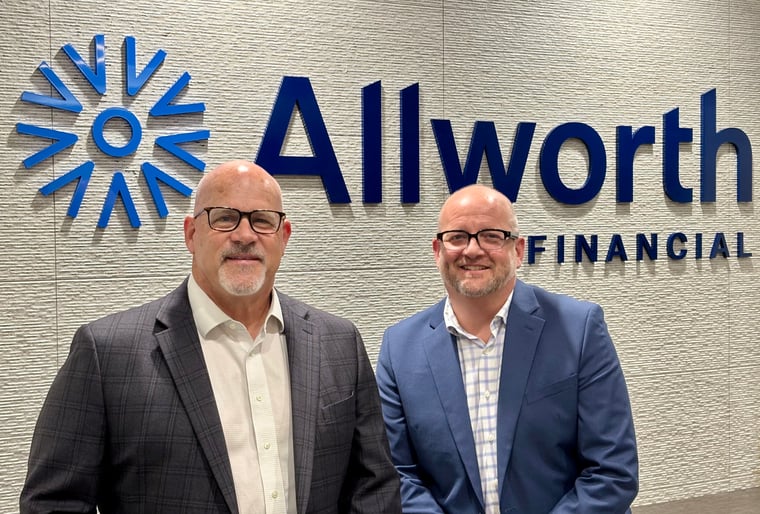
On this week’s Best of Simply Money podcast, Bob and Brian uncover the crucial differences between financial advisors who are just going through the motions and those truly playing offense—actively helping high-net-worth clients reduce taxes, build legacy plans, and take control of their financial futures. Learn the red flags that suggest your advisor may be stuck in the past and the proactive strategies—like Roth conversions and tax-efficient income planning—that can dramatically improve your long-term outcomes.
Plus, find out what Vanguard is doing that could make your 401(k) feel more like a pension, when it makes sense to start financially helping your kids now, and how to plan your estate beyond just taxes and probate. It’s a jam-packed show for anyone who wants to stay sharp and plan smarter.
Download and rate our podcast here.
Here's a question most people with real money rarely stop to ask. Is my advisor really earning his or her keep? Think about it. Maybe they helped you get to where you are. You've built up maybe $3 million, $5 million, maybe even more. But now that you're there, is your advisor evolving with you or just babysitting your portfolio? Brian, there's a few things to evaluate here. Let's get into some of these telltale signs of what good advisors should be doing for their clients on a regular basis.
Brian: Yeah. And so, here's how this commonly goes down, Bob. Once you hit those big milestones, that $3 million, $5 million figure you were referring to, sometimes the planning can get lazy. Meetings become routine. And I'll be honest, this goes both directions. Sometimes we hear stories about the advisor having gotten bored with the whole process. Sometimes the clients check out because we just don't want to talk about these heavier duty things, right?
Bob: That's a good point. Yeah.
Brian: And these are often things where the decisions, the planning decisions are much more about being efficient, not more about the difference between success and failure. Once we've hit these milestones, usually means you've kind of won the game. You're in really good shape for the road forward, obviously barring individual situations. And all these other things become, again, like I said, more about efficiency, less about, "You've got to do this," or it's a huge sacrifice.
So, here's the trap, though. If you've got an advisor in this situation, you're still kind of paying for that advice. But if that advisor is stuck in the mud just talking about last quarter's returns, that's not planning. That's just investment management. They're just reporting to you what happened last quarter, what happened this quarter. They're not talking about whether that matters to you. Does that have an impact on your plan? Do things need to change? Do you need to change your expectations? Those kinds of things. So, again, we're going to focus tonight about the difference between an advisor who is playing defense and one who is actually on offense looking for opportunities.
Bob: All right. Well, let's give a couple of examples here. Here's one of what we'll call a defensive advisor. You've had the same portfolio mix for, say, the last 5 or 10 years. You're stuck in that 60/40, 70/30 allocation. Maybe there's been a little bit of rebalancing. But have things changed at all as you've gotten older? Have any questions been asked about your current risk tolerance or income needs or gifting strategies? Anything like that that might or should impact the composition of your portfolio. And here's a big one. And we see this all the time, especially as the dollar amounts get larger, folks start Social Security early, but their advisor never mentions the idea of even possibly waiting until age 70 to take Social Security. Why? Because that would have required doing some planning, a full income plan, not just an investment plan. In other words, and you've already made the point one time, Brian, the advisor is just reporting past investment returns, not focusing on an income strategy and on tax efficiency.
Brian: Yeah, and I want to add a point to that, too. So, it's not a bad thing necessarily if you've had the same mix for the last five years. We're definitely not advocates... That kind of speaks to what I talk about all the time of when I started in this industry, the rule of thumb, "was your age in bonds", which is ridiculous in my mind. But your age is irrelevant. Your plan is what matters. When do you need this particular pile of dollars? So, perhaps you set that allocation up 5, 6, 7, 8, even 10 years ago. It may still be appropriate. So, it's not the idea that you must change your allocation as time has passed. The idea would be, make sure you're having a conversation with it because your life will have changed. You will have evolved. Your financial situation will have evolved. And that may drive some need to change the asset allocation. But the important thing is that that conversation be occurring not once a decade, but at least, once a year just to kind of make sure that whatever tools are being employed are still appropriate.
So, let's move on to the other side of this, the proactive, offensive advisor. If we're going to say that the defensive side might have some weaknesses, well, what are we actually looking for? So, here's an example. Let's take a couple, both retired, age 65. They got $4 million across a few different things. Maybe half of it's in IRAs, retirement plans, about $1.2 on the brokerage taxable side, $800,000 or so in cash and Roth accounts. And that advisor says, "Well, let's do some tax projections from now to age 75. We've got a 10 year window." Remember, they're 65 years old, so they've got 10 years until Required Minimum Distributions kick in at their full breadth.
And so, what if we do these partial Roth conversions every year, say, $100,000 while staying in that 24% tax bracket? So, what that means is that they'd be paying... You know, 24% bracket, that means they might be blending together around $20. So, in other words, what the advisor is challenging them to do is to consider writing a check voluntarily for approximately $20,000 to the IRS, and, yes, maybe some to the state, depending on where these big people live, in exchange for converting a million dollars over a 10-year time period. It's not sexy, right? This is the opposite of sexy. We're voluntarily giving money to the IRS, nobody like that. But over 10 years, now suddenly, we've got a million dollars that's going to grow tax free forever. No Required Minimum Distributions on that chunk, no tax bill later for their heirs. And as a special bonus, those heirs get another 10 years of tax free growth beyond the death of the owner of the Roth IRA. That's offense, and that is value among an advisor.
Bob: Yeah, and it's a great point. And to the point you made at the beginning of the segment, I mean, this is a two way street. It requires some work. It requires a little bit of mental energy and time on the part of the advisor and the client. Meaning, you know, and Brian, you and I have meetings like this all the time with folks, you actually run different scenarios, you discuss different assumptions, you run some numbers in some sophisticated tax software, and you can, you know, generate a projection on the impact of making some of these changes. And, yes, it can sometimes be assumption-based, but that's where you have a dialogue with the client. You discuss the pros and cons. Everybody's on the same page as far as what we want to do and why, and that's playing offense. But, yeah, it does require a little bit of time and effort to come in and sit down and talk about this stuff. But man, it can make a huge difference, you know, over the next 10 to 20 years, not only for you, but for your kids and grandkids if you get a little proactive and have a strategy in place.
Brian: Yeah, and I'll add, you know, before we came on the air tonight, like literally just before, I sent an email to a client who has been really struggling with whether they want to perform a Roth conversion here in the waning weeks of this year. And the conclusion I gave him was, "Look, if it's causing this much stress, whether you want to pull the trigger on it, then that's a no for me because it shouldn't be." You know, these types of strategies are no brainers, right? They're not appropriate for everybody. They definitely even involve sacrifice in exchange for a benefit down the road. For some people that is ideal and it makes all the sense in the world to make that sacrifice. But for other people, it's too much of a sacrifice, and they simply won't be comfortable having pulled the trigger.
Either way is fine. The goal is not to get everyone to pursue, you know, option A or B or C. It's to make sure that everybody understands the pros and cons of those options, and then they can make a decision for themselves. So, this particular client, we said, "You know what? This is not the last year you'll ever be able to do one. You got a few more years till Required Minimum Distributions kick in. We've had a long conversation all through Q4 this year. Now, we know the basics. Let's re-gather ourselves next year sometime, and you'll have a cleaner conversation about it." So, that's okay. It's not a bad thing to not pull the trigger on these types of things.
Bob: Yeah, and I've got a few clients like that, Brian, that I've worked with for over 30 years, and they've told me year-after-year, "I just want to keep this simple." And they know they have enough money. They know they're never going to spend all the money that they have. And they just frankly don't want to go through all these gyrations of running all these numbers. And to the extent that we try to force them to do it, you know, to the point you just made, that's going to create stress in their life and keep them up at night thinking about things they don't even want to think about. So, yeah, it's a two-way street, and you got to find out where people's comfort level is or isn't with respect to looking into some of these things. But at least, an advisor should be proactive enough to tee up the topics, give people an option of engaging about it, and then you go from there.
And I guess that leads to the last point we want to make here is, is your plan stale? Meaning, if you've never had a deep conversation about how your goals have changed and evolved over 5, 10, 15, 20 years with your advisor, there might be some real missed opportunities. And it might have less to do with taxes, but just planning for your legacy and your family, maybe charities, you know, really putting this money to work in ways that could be meaningful to you if your advisor sits down and gives you some options. I come up against this all the time, Brian, where, you know, people just have never been asked questions that should be asked about how they want their money or their wealth to be utilized.
Brian: Yeah. And then most people just stare at the pile and watch it grow bigger. For a lot of people, that's the financial plan. And that's not terrible. I mean, usually what that means is those are people who wind up sacrificing a lot more than they had to. They wind up invested too aggressively because that's just what the growth... They stay in growth mode for throughout their retirement years, or they wind up, since they've never looked at what that pile can do for them, they only focus on the size of it, then they end up working too long. So, that's the whole point of making sure that, you know, like Bob says, is your plan stale? Well, just make sure it's relevant to the topics you are discussing now. When you're 20, 30, 40s, then yeah, you're thinking about growth. Grow the pile. That's a pretty easy answer. But as you hit your 50s and 60s, obviously, we want to figure out, what did we do all this for in the first place? What can this machine do that I have actually built? And how do I even know how to turn it on?
Bob: All right, well, now, let's get into some questions that folks out there who have the time and the inclination to want to get involved in some of this planning and want an advisor who's going to help them do it. Here's some of the questions that you should be asking your advisor, just as an example. Number one, what's your strategy for reducing my lifetime tax burden? How are we preparing for taxes in 2026? Have you modeled my income plan with different Social Security claiming strategies? Can you show me how my investments are aligned with my cash flow needs over the next 5 to 10 years? If your advisor dodges those questions or gives you kind of a deer in the headlights look, you're not getting customized planning at all. You're just getting an off-the-shelf portfolio, and most likely, overpaying for investment management.
Brian: Yeah. And I would also say that there are no blanket answers, right? There are very, very, very few topics that have a quick yes or no answer. So, if your advisor is saying things like, "Well, age 70 is going to give you the most income you can possibly have, so just do that." Well, that's not advice. That's rules of thumb, and you can find those on the internet, anywhere you want to look. So, a real advisor is going to help you understand, like I said before, the pros and cons of each, educating, not dictating. So, therefore, that rules out completely those rules of thumb that are intended to be black and white, "Just do this and never worry about it again." No, you need to make decisions. You need to be equipped to make decisions that are going to affect you and your family and your loved ones for the rest of your life. And a lot of those, you only get one chance at. So, make sure you understand it from all standpoints before you pull the trigger.
Bob: Here's the Allworth advice, a good advisor keeps you safe. A great advisor keeps you sharp. Coming up next, how Vanguard's latest plan could start treating your retirement account kind of like a pension plan. You're listening to "Simply Money", presented by Allworth Financial on 55KRC, THE Talk Station.
You're listening to "Simply Money", presented by Allworth Financial. I'm Bob Sponseller along with Brian James. If you can't listen to "Simply Money" every night, subscribe and get our daily podcast. Just search Simply Money on the iHeart app or wherever you find your podcast. Straight ahead at 6:43, we tackle some high-level listener questions that any savvy investor should be probably thinking about. All right, Brian, what if your 401(k) could start acting more like a pension with predictable monthly income without you having to buy a separate annuity of any kind? This will pique some interest because let's face it, a lot of folks out there love the concept of "guaranteed income". Those are big buzzwords that get a lot of attention from folks. Let's dig into what Vanguard is up to starting in 2026, Brian.
Brian: So, yeah, Vanguard has been putting some new features into their 401(k)s. They're going to offer a 401(k) target date fund that has a built in regular payout functionality. So, if you're a 401(k) participant, this means you might have access to an annuity-type income stream right inside your 401(k) workplace retirement plan. So, this is going to be called the Vanguard Target Retirement Lifetime Income Trust. And here's how it works, Bob, as you approach retirement...
Bob: Say that three times fast.
Brian: Let me do an acronym out of that. V-T-R-L-I-T, VTRLIT. We're going to go with VTRLIT from now on.
Bob: That's even worse.
Brian: I know, but I'm going to say it a lot. All right, so speaking of VTRLIT, as you approach retirement age 65, you can have about 25% of your 401(k) balance moved into a contract with a well-known insurance provider, TIAA, which is a big, big huge insurance company out there, more prevalent in the government, public spaces, education spaces, that kind of thing, but certainly not a newcomer to the industry. And that portion, again, up to 25%, that becomes a guaranteed income stream, kind of like a pension or a steady monthly paycheck. The rest of your 401(k) stays the same way as always, stocks, bonds, whatever you've chosen via those mutual funds in there.
So, let's take an example here, Bob. If I'm 65 and I've got a million dollars and I'll put 25% into that option, so that's about a quarter million dollars, that could generate something like $1,670 per month pre-tax. Remember, you're still going to be impacted by whether you've chosen traditional or Roth off of this. And that calculation, just like any other pension, is dependent on interest rates and the terms of the annuity. But at some point, you will be committing to some kind of payout, where you're going to sign your name on the dotted line and that payout is what it is, which can be a good thing. That's the whole point of guaranteed, but also, not necessarily flexible, but it's important to remember, that's why you can only put about a quarter into this anyway. This is not the panacea. This is not the, "I never have to worry about money solution ever again." Nothing, no such thing exists. But this is a new tool for people out there who are kind of keeping their own money under their own control and want to stay inside that 401(k).
Bob: Well, I kind of like the idea. I mean, as I've talked about several times on this show, I used to be the advisor for a few very large 401(k) plans and I'd go in and do those participant meetings. And for a lot of folks in 401(k) plans, they're not getting any investment advice whatsoever. And when you start to talk about these kinds of things, you do get that deer in the headlights look. And let's face it, everybody needs a chunk of guaranteed income in their life, especially when they retire. So, I think this is a good thing, along with a lot of things we talk about here, options and choices are great.
I'm going to make one prediction on how some of this could go haywire here because anytime you get into any kind of an annuity arrangement, you're going to be attracted by the highest possible monthly paycheck, and you might forget to think about, "What does my survivor benefit look like?" If you just take a life-only annuity for yourself, and forget about the fact that if you die, your spouse would get nothing, that could really create a problem. And a lot of these annuity decisions, just like pension decisions would folks retire, there's no do overs here. You know, it is an irrevocable decision. So, you know, choices are good, but we say it all the time, you know, you got to get a little bit of advice and have somebody that knows what they're doing sit down with you. And Brian, for a lot of folks, that rarely happens to help them make these decisions before you make, you know, pull an irrevocable trigger.
Brian: Yeah. And I don't want this headline, you know, to get people to conclude that, "Oh, my gosh, finally, something that works for me." There's nothing new going on here. There's really... Because remember, we're talking about people who are effectively retired. You don't want this if you're still working because you're wanting to grow your money and leave it invested in a growth mode. So, this is for somebody who is retired and is actively looking to have money spit into their checking account to pay the bills. There's nothing stopping anybody from doing that right now or for the past five decades because you could roll your money to an IRA and put it in an annuity and annuitize the income stream.
Annuities do get a bit of a bad rap because of the commission-based thing. That's a little bit of a different scenario. This is annuity for its core purpose, which is to generate a stream of income. That's all the word annuity means. So, it's not a bad thing, but it's not a new thing either. So, I feel like this is sort of a solution in search of a problem. Because, again, this does not create anything I couldn't have done before. Great, I can do it in my 401(k), but I can do it outside in an IRA, you know, for a lot of other reasons. There are reasons to maintain only a 401(k), but those are very specific types of situations. So, anyway, like you said, choice is good, but this isn't the shining panacea that some might view of that it is.
Bob: Yeah, if we look across the whole landscape of 401(k) retirement plan, only about 4% of 401(k) plans now offer such an option, you know, like the one we're talking about. Vanguard's rivals, including State Street, JP Morgan Asset Management and BlackRock are also going to introduce some version of this annuity-based thing. Interestingly enough, Brian, Fidelity Investments, the second largest manager of target date funds says they have no immediate plans to incorporate annuities into these products. I'm curious as to know why. Hopefully, there's good reasons behind that.
And, again, not to beat a dead horse here, but you got to watch out for fees. You got to look at your overall income plan, make sure you've got inflation protection because once you put money in one of these annuities, you're going to give up some growth. And the point we already made is it's irreversible. Once you pull the trigger on this thing, you can't go back, you can't undo it. And, yeah, we're just calling it out that these options are going to start to come down the pike for folks retiring. Good to have these options, but in situations, if at all possible, get some help from a good fiduciary advisor to make sure you thoroughly evaluate these options and pick one that makes sense for you.
Here's the Allworth advice, by locking in any kind of guaranteed income, before you do that, talk to a fiduciary advisor about how annuitizing part of your portfolio fits or doesn't fit with your overall retirement strategy, tax picture, and long-term goals. Next, we'll break down the smart way to help your kids now without creating lifelong dependency or blowing up your own retirement plan in the process. You're listening to "Simply Money", presented by Allworth Financial on 55KRC, THE Talk Station.
You're listening to "Simply Money", presented by Allworth Financial. I'm Bob Sponseller along with Brian James. If you're like a lot of successful families, you've built a strong nest egg, and now, you might be asking a big question, "Should I start helping my kids financially now, or possibly, even grandkids, instead of waiting until after I pass away?" Brian, this is a discussion that's coming up more and more often and it's something we're bringing up with clients. I think, especially in this era we're living in now with this seemingly large affordability gap between the baby boom generation and younger generations, I love this topic. And I think it's something that should be talked about as part of everyone's financial plan, doing more multi-generational planning. Because you can really make a sizable impact in a young person or young people's life if they get a little bit of help in their 30s rather than waiting until they're in their 60s to inherit a big chunk of money. And after that it's going to have less impact on their life in a positive way than what otherwise could be achieved.
Brian: Like you said, I'm hearing the same thing from people with life expectancy being a lot longer than it was in earlier generations. People are saying, "You know what? I'm doing fine now. I don't really feel like I'm going to need all of this." And I understand the concept of step up in cost basis and all those kinds of things. Maybe it is more efficient to wait. And that's true for some assets, but for other assets, why not just help them out now when they're trying to get families started, because people remember those were the more stressful times and they want to help out their kids at this point. So, there's of course, pros and cons to this, there's tax rules involved here, so let's get into the mechanics of that.
he IRS allows you to give up to $19,000 per person per year. Doesn't have to be related. Anybody walking down the street, you can give them a check for $19,000, no harm, no foul, without filing even a gift tax return. So, you can literally write a check, you're done with it. If you're married, you can double that, $38,000 to each child or grandchild. If those children are married and you trust that in-law, then you can each give $19,000 in four gifts, right? So, spouse one gives $19,000 to their own child, and then the spouse of that child, and then spouse two does the same thing. So, that's $76,000 that can be handed down right now, today, without worrying about gift taxes.
Now, there's also something called a lifetime gift exemption. And that's the total amount above and beyond that $19,000 per kid that you can give away during life or pass that death before the federal and state gift tax applies. That currently in 2026, that's $15 million per individual in '26. Now, that is, you have to report those, that's how it's tracked. That's kind of the difference, but it doesn't mean that taxes are going to apply. Reporting and taxation are two different things.
Bob: Yeah, and the numbers work here, and it's very easy as Brian just outlined. It's very easy to move around a lot of money very quickly without falling into any gift tax problems. I don't think that's the issue. I think the issue is, are these kids ready? Have they been prepared to handle receiving a chunk of money responsibly? And that's where I see more and more of a gap sometimes is, people just don't talk about financial planning with their kids. And if there are behaviors going on that the next generation is handling money differently than the parents or not managing it very well at all, I think that's why some parents are just reticent to start giving money to them because they're not sure how it's going to be handled. And I think that's why these discussions have to take place.
You don't want to run your kid's life, but you do I think have a responsibility to be a good steward of this money and, at least, make sure some good habits are in place. Does it have to be perfect? No. Are kids going to make some mistakes? Absolutely. Just like everyone's made some mistakes when they were younger and less experienced. But I think handling money, having a good dialogue, and getting some good habits in place and some good dialogue and discussion going on with family members, I think that's going to help everybody feel more confident and comfortable with deploying some assets in ways, again, that could make some huge benefits to the next generation. But it involves communication and being proactive. And Brian, a lot of people just aren't willing to sit down and have those conversations.
Brian: All right, so let's get into some of the mechanics. If I'm going to do this, if I believe in this, what are the things that I can be looking at? Well, first and foremost, one of my favorite things to help people understand is 529 plans. So, you can fund a 529 plan and front load five years' worth of these gifts, right? So, we just got done saying, $19,000 per year. Well, if you're going to do it through a 529, well, now you can do $95,000 per beneficiary in a single year, but you can still do the reporting over those five years, no harm, no foul, and not too burdensome. So, a married couple of course can double that $190,000. Those are gift tax free as long as no additional gifts to that same person are made in the following four years. That's important to remember.
Now, a lot of people get hung up on the idea that, "Well, 529, that's for college. I don't know that I want to fund this for that because maybe that's just not in the picture. We just don't know." Well, they changed the rules over the last couple of years. Now, any unused amounts... Well, not any. Up to $35,000 of an unused amount left over in a 529 can now become a Roth contribution for that individual. So, in other words, the annual contribution is, depending on their age, $7,500, $8,500, and they can put those into the Roth IRA using those 529 dollars. There's caveats to this. It has to have sat there for 15 years. But the point is it can be tax free growth for a very, very, very long time. I really would look strongly at the 529 plan for that. Beyond that, we can look into family trusts. You can gift into an irrevocable trust and leave clear rules on how and when those funds are being distributed, and you can still control it after your death, that's the point of a trust, and keep it out of your estate.
Bob: All right, good stuff there. Here's the Allworth advice, before you write that check, talk to a fiduciary advisor about how gifting fits into your financial plan and your family dynamic. The smartest gifts are the ones that support your kids without undermining their independence. Next, Aaron's riding high on investment gains and Sandy's digging into Roth conversion strategies. If you're sitting on a solid nest egg, these are the kind of questions or decisions you need to make that you are probably facing, too. We're going to try to tackle all of them coming up next. You're listening to "Simply Money", presented by Allworth Financial on 55KRC, THE Talk Station.
You're listening to "Simply Money", presented by Allworth Financial. I'm Bob Sponseller along with Brian James. Do you have a financial question you'd like for us to answer? There's a red button you can click while you're listening to the show right there on the iHeart app. Simply record your question and it will come straight to us. John in Terrace Park says, "We're running into a situation where our taxable portfolio is throwing off way more gains than we spend. How do you restructure your investment portfolio so your tax bill isn't dictating your entire withdrawal strategy?" Brian, Here's a guy that wants to do some proactive planning. I love this question.
Brian: Yeah, to me, this is where it gets fun. This is kind of where the rubber meets the road, where you have more meat on the bone in the financial planning process. And I can tell that John's been paying attention to how stuff works over the years because when we're younger, we're just growing a big pile of money, then you don't really pay attention to these things. But obviously, he's been around the block a time or two, and he's kind of wondering how to make things more efficient. So, the real issue here is that we want to be careful that the tax tail doesn't start wagging the retirement income dog. The goal here is to rebuild that portfolio so that that withdrawal strategy when it's time for it to kick in is driven by the needs of your lifestyle, not IRS distribution. So, let's think of this in three steps.
First figure out where your tax drag is coming from in the first place. Historically, the biggest culprits there are those legacy mutual funds that have big turnover. This time of year is when we see those big capital gains. Maybe you've got individual positions with huge, embedded gains. Every time you sell anything, all of a sudden, you've got a big tax bill. And then the second step, you want to start to sort of manage transition rather than a wholesale reset. We're not starting from scratch. Harvest those losses when they're available. Peel back over weight positions slowly by offsetting those gains with the losses you just set up, and then redirect all your future cash flows to that newly organized portfolio.
And then third, finally, build that withdrawal strategy that's going to deliberately separate your cash flow from your tax events. That means you're going to sit down and think about it and you're going to set up a spending policy. Maybe it's 3% to 4% percent of that taxable accounts value. Raise that cash for once or twice a year by trimming those lowest gain lots first and in spending those down to pay the bills. Over time, this is going to get you to a structure where that portfolio behaves the way you spend, and it doesn't just sit there and spit out tax obligations when you didn't necessarily need that distribution in the first place. So, hope that helps.
We'll move on to now to Trevor and Hyde Park. Trevor says that their adviser has mentioned that their portfolio isn't quite liquid enough and it lacks liquidity staging. And so, he's wondering, how do you set up these multiple liquidity tiers, cash, the short-term bonds and growth? I think, Bob, we call these buckets often. So that their portfolio supports these different time horizons. What would you say?
Bob: Well, first of all, Trevor, it sounds like you've got a good adviser that's thinking ahead for you and doing some proactive planning, so that's great. I think what he or she is talking about here is you got to take a look at how your portfolio is structured to make sure that the money is there and in a low-enough risk situation to support what you need it to do. And I'll give you a couple of examples that I run into sometimes. Folks with these higher interest rate savings accounts and CDs, sometimes people lock up their CDs for five years. And it's great that you're getting that higher interest, or were getting it one or two years ago, but that money's tied up. So, if the new car purchase comes up or the cruise comes up, you got to go find some money to come up with to support these things that you want to do in your life. And that might involve having to go sell something and create a tax burden, whether that's pulling money out of an IRA or selling stocks with capital gains. So, I think that's, Trevor, what your adviser is talking about here, is let's sit down and look at what your goals are, and then making sure we've got liquid assets available at the right time to meet those goals.
I'll give you an example that just came up yesterday of how this works well. This is a client, and I know this couple listens to this show every night, so this is a shout out to them. We had their annual review meeting back in September, and they talked about what they had coming down the pike. They were looking at maybe moving to a different home and how much money that was going to involve and maybe buying a custom car because this gentleman just retired. We put those dollar amounts into the plan. And then he called me yesterday and said, "Hey, remember that conversation back in September? Some things have changed. I'm going to take a custom car off the table here because the amount that we think we're likely going to spend on this change in homes has gone up a little bit. Just wanted you to know about that." And that, I love that because that allows me to update their plan, take a look at things, and we're staying in contact with one another and being proactive, so when the time comes to pull the trigger on some of these things, we know exactly which bucket, to Bryant's point, that money's going to come out of and we could try to minimize the tax burden in the process. So, that's what we're talking about here in terms of liquidity tiers.
All right, Aaron in Addison says, our investments have grown nicely, but I'm realizing our tax exposure has seemingly grown even faster. How do you run forward-looking tax projections, Brian, so you're managing future brackets, not just current ones?
Brian: Well, a lot of advisors kind of hit this point where the portfolio starts growing faster than your ability to do the tax planning for it, and all of a sudden, you're reacting to tax surprises and then instead of managing those future brackets. So, the real discipline is shifting from, "What's my tax bill this year?" To, "What does my lifetime tax bill look like? What can I be doing now to change things in the future?" So, here's three steps to kind of start looking forward there. Figure out that trajectory is the first step. So, tax exposure will tend to spike in two places. When wages fall and require minimum distribution start. This is that window after you've retired, and you'll start to need to draw off of your investments in generating different taxes than those to which you are accustomed. And then when you hit age 73 or 75 and Require Minimum Distribution start to kick in. So, project that income year over year, earned income, dividends, capital gains, wherever it's all coming from. Even a rough assumption is better than nothing. That'll help you see if your current 22% bracket, for example, might spike to 32 once those RMDs kick in.
Second, just like in the financial planning process, we're going to use scenario modeling to compare these strategic moves, make sure that different outcomes can be handled by different strategies. But the whole point is run the numbers and see what it actually looks like, and then use different tax brackets. We don't know where taxes are going to go based on the various administrations that could come. Finally, what is your annual tax budget? Instead of just letting these gains or conversions happen accidentally, decide how much you're willing to recognize every year to keep your long-term bracket in a healthy range. This could mean figuring out how fat of a check you're willing to write to the IRS voluntarily now to control your traditional IRA Required Minimum Distributions by converting into a Roth. All good things to look at and hope that helps.
Bob: Coming up next, I've got my two cents on some possible year-end estate planning discussions you might want to have with your kids as families start to gather together to celebrate the holidays. You're listening to "Simply Money", presented by Allworth Financial on 55KRC, THE Talk Station.
You're listening to "Simply Money", presented by Allworth Financial. I'm Bob Sponseller along with Brian James. Well, Brian, I had a meeting with a client last week. This is somebody I've worked with for over 30 years. And this gentleman came in loaded for bear with all kinds of questions about his estate plan. And he was wanting to talk about tax avoidance and probate avoidance and all that. And after five minutes, I was able to tell him, I'm like, "Hey, we've had all this stuff taken care of for 25 years. You're not paying any taxes. Everything's protected by probate. We're good." But we got into some other discussions about personal property. And he had shared a couple stories about some struggles a couple of his kids are having and just relational dynamics with kids and spouses and all that. And again, these legal documents have been drafted in his case probably 10 to 15 years ago.
Here's my point. I started to ask him just, "Have you made provisions about some of your personal property items that might have sentimental value to your kids? Things like jewelry, tools, maybe a piece of furniture, something like that where one of your kids, it would definitely mean the world to them to receive that item, and to the other kid, not so much." And that launched into a wonderful conversation. And he shared some regrets that he had when unfortunately, his wife died several years ago, and he quickly gave all her jewelry to one of the daughters-in-laws. And he regretted that because some people got a little bent out of shape about that.
So, here's my point is, sometimes the simplest things are the most impactful things. And even if you've got a trust and you've got everything tied up with IRA beneficiaries and all that to avoid probate, you still got to, or I would encourage you to think about some of those personal property items. And a lot of attorneys will agree with what I'm going to say right here. You don't have to redo your will, simply write down what some of these personal property items are, to whom you want them to go, sign it, and date it, attach it to your will. And that way, it's in writing, it's documented, and your executor can take care of things accordingly. I think that's a great conversation to maybe have with kids as you gather for the holidays. Just get a pulse beat on, is there anything out there that I want to be proactive about to leave to certain kids for a certain reason? Brian, do you ever run into this topic at all?
Brian: Yeah, more and more these days. And I want to encourage people to give your kids credit. They may be more ready to have these conversations than you've been thinking. If you've got younger kids, maybe late high school, early college age, and you've noticed they're starting to pay attention to money a little bit, that's a good sign. And it can be okay to give them. Let them peek at the vault. You know, show them where you are and how you got there. And then that starts a conversation that maybe over the next 5, 7, 10 years, you can start to have these more in-depth planning conversations for, you know, "What really do you guys want to happen when mom and dad are gone?" You know, for those of you with older kids, then perhaps you've gotten them to that point. But again, it's okay. For whatever reason in this country, it's taboo to talk about these things. I'm here to tell you that I have done this with my own family and I've seen clients do it too, and it doesn't cause the problems that we've been raised to think it does. Be open.
Bob: Excellent point. All right, thank you for listening tonight. You've been listening to "Simply Money", presented by Allworth Financial on 55KRC, THE Talk Station.
Insights for Complex Wealth Decisions
Join our email list for exclusive commentary from our Chief Investment Officer, early access to expert-led webinars, and your complimentary Wealth Planning Checklist for Complex Portfolios.
We take your privacy seriously and respect your privacy choices. By submitting this information you agree to our Terms of Use Agreement, Privacy Policy, and to receive important notices and other communications electronically.