
Is the AI Boom a Bubble — and What Should Your Financial Plan Look Like if It Pops in 2026?
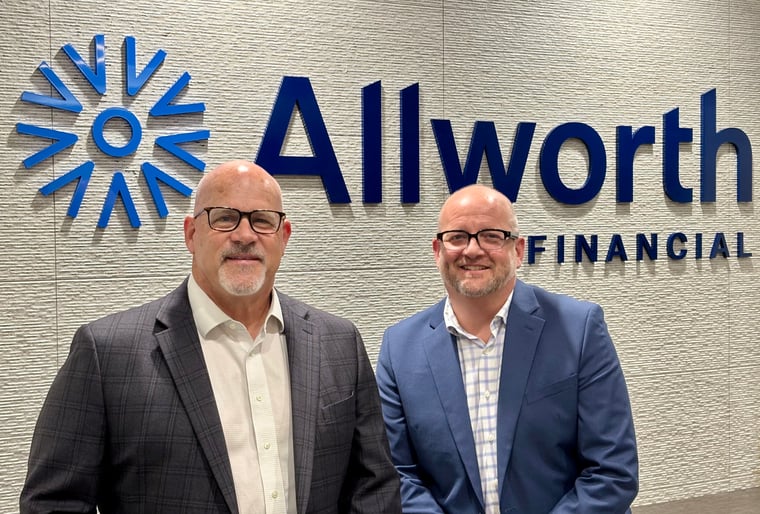
On this week’s Best of Simply Money podcast, Bob and Brian explore whether we’re living through another tech bubble — this time fueled by artificial intelligence. Is the massive investment in AI setting us up for a painful correction in 2026? They dig into market concentration, inflated valuations, and why companies like Nvidia, Oracle, and OpenAI are raising red flags for some investors.
You’ll also hear why now is a smart time to rebalance your portfolio — but not the old way — and how high-net-worth investors are using buffered ETFs and direct indexing to level up their financial strategy. Plus, estate planning mistakes that can cost your heirs big time, and real answers in the Ask the Advisor segment — from embedded portfolio risk to downsizing dilemmas.
Download and rate our podcast here.
But Brian, before we get into talking about money, which is really the purpose of this show, I've got to ask, how was SantaCon? I heard you had an elaborate costume all planned out. You spent the whole afternoon trudging around in 6 inches of snow in downtown Cincinnati. Tell us about SantaCon. How did it go?
Brian: I was incognito. I went as Mrs. Claus just to kind of change things up a little bit. So, I don't believe anybody spotted me though.
Bob: So, you actually did go?
Brian: No, I did not go. I don't even know what you're talking about. I'm not that interesting a person.
Bob: Come on, Brian.
Brian: I know you're taking shots at me. I have no idea what you're talking about so you should take shots at me beyond that.
Bob: All right, we'll move on. Okay. All right. Let's get back to talking about AI and a possible tech bubble in 2026. It is a question that's coming up in certain media circles. You know, fund managers are talking about rebalancing for 2026. People just want to know, hey, is this bubble going to pop? You know, we've talked about this all year long, Brian, the concentration of returns so far in 2026, and just these handful of big-cap tech companies that have really driven the overall performance of the Nasdaq and S&P 500 this year. Is it time to just pull the plug on AI and move elsewhere?
Brian: Well, you know, I don't know that we could ever get to definitively say anything like that on just any particular topic. We're all just guessing. But the reason we're talking about this, the current state of affairs is that we've been on quite a run since 2022. 2022 was one of the ugliest years we've ever had in the stock market, and the last three have been some pretty good years. So, about $30 trillion has been driven by the world's biggest tech companies since then. Alphabet, which is Google, and Microsoft, and firms that are benefiting from spending on all this AI stuff. The names you hear a lot, NVIDIA, Broadcom, electricity providers such as Constellation Energy, Oracle is back in the mix. That's an old name from the original internet bubble way back when in the late '90s. Oracle was part of all that.
But now, we've seen, you know, late last week we had a selloff in NVIDIA, which has been a darling of the stock market for the last several years, and Oracle shares after they reported exactly how much money they're spending on AI. And then investors are just getting to the point where they're saying, "Wait, where are the returns?" You know, some of this is starting to smell a little bit like when we came to the realization that the original internet companies weren't necessarily all going to survive and there was kind of a reordering of things in the '01, '02 stock market bubble. And then when that burst, we had the survivors and the ones that didn't quite make it. And it's starting to smell a little bit, Bob, like that's what we're headed toward here with AI.
Bob: Yeah, I think the key point here is valuation. You got to look at the valuation of these companies. And by valuation, I mean a price earnings ratio. And what a lot of people are starting to ask is, "Yep, we've spent trillions and trillions of dollars building out or investing in this coming growth in AI and the infrastructure that goes into it. When are we going to see actual earnings that justify the cost of all this infrastructure spending?" And Brian, you go through some of those companies that you listed off, there is a tremendous difference in PE ratio between these various tech companies.
And I think that's what people are starting to talk about and look at and to say nothing of the debt structure. You look at a company like OpenAI, the creator of ChatGPT, they have never had positive earnings, profits, positive cash flow of any kind. They continue to hemorrhage money, and they're funding this future on-the-come growth based on debt. At some point, people are going to want to see a return on investment in the form of positive earnings and positive cash flow. And I think that's what people are starting to talk about here heading into 2026, because there are going to be some winners and losers and probably, some elevated volatility as we turn flip the calendar to 2026.
Brian: That and the competition is heating up, too. So, Alphabet is Google and they've got their own Gemini model for AI, and OpenAI themselves, they're planning to spend $1.4 trillion in the coming years. So, the concerns there and OpenAI is kind of the bellwether. That's ChatGPT. That's the company behind ChatGPT, which is the most well-known name, I think, in all of this. But that company expects to burn about $115 billion over the next four or five years before generating actual green profits in 2030, which that came from a report back in September. But right now, they're generating way less revenue than their operating costs are coming in.
They haven't had any problem, though, generating that excitement. The stock market does love a bubble. We love something to get super wound up about. So, they collected more recently $40 billion from an investment group out of Japan called SoftBank and some other investors earlier this year. NVIDIA, as for their part, they pledge to invest as much as $100 billion in September. So, remember, NVIDIA makes the hardware that OpenAI uses to create the artificial intelligence and bring that to end users. So, NVIDIA, obviously, has a vested interest in this doing well. And they've been throwing money at the companies that are bridging the gap between the end user and the hardware. And so, there are some concerns that maybe they're throwing a little bit too much money out there across too many different players, and that could create some circular financing out there in the industry, though.
Bob: Yeah, I think one thing to look at going into 2026 is, you know, AI is starting to become ubiquitous everywhere. You don't have to be in an AI or chip company to benefit from the whole topic of AI. What I mean there is, you're going to start to see companies who invested properly and wisely in AI... And I don't care what sector they're in. Hopefully, you're going to start to see these companies benefit from that in the way of productivity. And if you have interest rates continuing to come down, you know, you're starting to see financial companies benefit. You're starting to see small-cap companies benefit. There's going to be some profits made from this, and the profits might come in unsuspecting places in 2026.
And I think the real message we're trying to send home here, and Brian, you and I have been talking about this for weeks now, is make sure you're diversified. Make sure you trim some of these gains when you've had them, and position yourself accordingly to maybe bring down the overall valuation of your portfolio, because there will be some good values here coming in 2026. You know, as we have interest rates come down, regulation come down, that can all be a great environment for stocks as long as you don't pay up too much for earnings. And that's really the message of this segment, is some of these things have gotten way out of whack in terms of, you know, forward-looking PE, and diversification needs to take place here if you haven't done it already, or don't have a good fiduciary financial advisor that's doing this on an ongoing basis. You know, just rebalancing and looking for value in good places to invest moving forward.
Brian: Yeah, and I think we're starting to see that happening at the business level of this industry as well. So, the reason Oracle is in the position it's been in is because they made a huge pivot to cloud computing, kind of seeing this coming. What their goal was, was to rely on the infrastructure that they had already built over decades and build these cloud computing services. Because AI, of course, isn't something that lives inside your laptop you've got on your desk, it lives elsewhere, and that's where the data processing happens. So, Oracle was building up that sort of infrastructure to do that out there. And so, of course, they need to build a lot more data centers that's going to require a lot of money.
Then Oracle is financing that by selling bonds. Selling a bond is debt if you're a company that's basically borrowing money from investors. So, that's going to put pressure on any company, because now, the bondholders have to be paid interest on a schedule, unlike equity investors who, basically, hope to throw a bunch of money in on the ground floor, and then get back out, you know, get out of the elevator when it's on the hundredth floor or something like that, versus debt, which will require cash flow to pay the interest on. So, part of that is the reason that Oracle stock took a hit last week after they reported significantly higher capital expenditures than were expected because of these types of investments. So, Oracle is making a big bet on AI. They think that's where everything's going to be, but they are doing it in a way that's going to require their customers to be cash flow positive a lot sooner than we were really anticipating.
Bob: Yeah. And we want to reiterate here, this is not the same thing as the dot-com bubble we saw back in the late '90s, early 2000s. Even today, big tech valuations, they're high, but the magnitude of these gains from AI are nothing like what happened during the development of the internet. And so, to make a decent point, if you take a look at the tech-heavy Nasdaq 100 index right now, it's priced at about 26 times projected profits, according to the last research and data we looked at from Bloomberg. Going back to the early 2000s, we got to an 80 times PE multiple of the Nasdaq 100 before the whole thing came crashing down during the dot-com bubble. So, we're speaking in broad brushes here.
Overall, if you look at it, I don't think this market is really super inflated. I think you just got to be choosing in what you look at. For example, you look at a company like Palantir Technologies, this thing is trading at 180 times estimated profits right now. You can find much better value elsewhere. Even NVIDIA, Alphabet, Microsoft, companies that you've already talked about in this segment, Brian, they're all trading at multiples below 30 times earnings. That's not cheap, but it's not nearly at bubble-type valuations that we saw back before the tech bubble in the early 2000s. So, again, you got to kind of do some stock picking here, and that's what you rely on good managers to do. We're just calling out here, as an overall reallocation, don't let your portfolio get hitched to these wagons that have been going straight up in 2025, and assume that's going to go on forever because you might be in for a rude awakening if and when we get a little pullback here in the overall market.
Brian: Yeah, I think the other interesting thing that's happening is these companies are investing in infrastructure. You also have the rising depreciation expenses. So, you build these data centers and, of course, everything depreciates, and that does result in an expense that, ultimately, does hit the income statement. So, put some numbers behind that. Google, Microsoft and Meta, which is Facebook, they combined for about $10 billion in depreciation costs in the final quarter of 2023. And then that went to $22 billion in the quarter that just ended here in this past September. That's expected to be about $30 billion by this time next year.
And so, what happens, the end result of all of that is that puts pressure on buybacks and dividends because the stockholders are going to want their cash back to reflect that reality. So, in 2026, both Facebook and Microsoft are expected to have negative free cash flow once they've accounted for their shareholder returns. Google might break even on this, but regardless, that could be a little bit of a breather for all of this based on the growth we've seen over the last 10 years.
Bob: Here's the Allworth advice, AI isn't going anywhere, but heading into 2026, make sure your portfolio is nice and diversified so it can capitalize on that future growth and be protected from any potential downturn. Coming up next, why worldwide portfolio growth might be hiding some risks, and why now's the time to check in on your personal financial plan. You're listening to "Simply Money", presented by Allworth Financial on 55KRC, THE Talk Station.
You're listening to "Simply Money", presented by Allworth Financial. I'm Bob Sponseller along with Brian James. From emotions clouding downsizing decisions to high income investors eyeing tax efficiency to cash flow rental properties in Northern Kentucky. We're going to try to tackle all of that and more straight ahead at 6:43. There's a stat that caught our eye here recently. Global assets under management. That's all the money managed by investment firms has hit a record high of $147 trillion. And that's trillion with a T, Brian. It stands to reason to me, at least, you know, the market's at all-time highs. So, maybe assets under management should be at all-time highs as well. Is there anything to worry about here, Brian?
Brian: Well, there's always another side to every story we look at, right? So, on the surface, that looks like a win for everybody. That means portfolios are up. Our 401(k)s are growing. Markets, basically, at an all-time high. The AI fuel tech rally has lifted a lot of boats. But here's the other side of this, the surge in assets under management, that's not really just about the market performance, it also reflects how much money is chasing returns right now. We see this every time the market does hit a new high, people assume that it's going to continue on forever. And you know, that was right two years ago, was right one year ago. We're going to be seeing what will happen now. But that is a human reaction. We do see more money flowing in. It sort of becomes a self-fulfilling prophecy. But that introduces risk, especially if you're not regularly rebalancing or revisiting that financial plan.
Bob: You know, going off topic here a little bit, I'm always interested in how this "assets under management" number is even calculated. Case in point, if you've got a, you know, fiduciary financial advisor that manages client assets, they're going to count up the assets they manage. Well, they put those assets into ETFs or mutual funds or annuity sub accounts. And those firms all count those assets as assets under management. So, Brian, don't you think this $147 trillion represents assets that are maybe double or triple counted? Because everyone wants to talk about how much money they manage or assets under management. Everybody wants to rack up that number and talk about how big it is. Am I off base there?
Brian: That's a great point. Yeah, because we manage assets for people. We sometimes use exchange traded funds, and those are run by asset managers. So, yeah, it's potentially could be double counting some things out there. I hadn't thought about it that way. I think that's a great thought worth poking around at. But I think the larger point remains the same, which is, we know that when the market hits an all-time high several years in a row, more and more money just tends to flow into it right up until it's time to take a step back. And, you know, we don't see anything on the horizon imminent. But at the same time, the whole point is, we never really see it on the horizon. That doesn't work that way. We have to be prepared for what the market's going to give us when it decides it wants to take a pullback. And that does not entail, let's try to dodge the oncoming train. Things don't work that way.
Bob: Yeah, let's get back to some practical advice here. What we're really talking about is, revisit your financial plan. Look at what your cash flow needs and wants are, what your money needs to do for you, and when. And just make sure you have a strategy heading into 2026 that accomplishes that even if and when we get a little bit of portfolio volatility. Let's talk about some ways to do that, Brian. What are some practical steps here heading into the new year to make sure our financial plan is up to date, regardless of what happens in the short-term with market volatility?
Brian: Well, rebalancing, it's like a drumbeat around here. We say this all the time. But when that market gives you gains, that smart move is to rebalance. Treat that as a non-optional thing you have to do. So, the whole point of that is trimming back what has grown too fast and then taking those dollars and putting them into areas that haven't grown as much. So, basically, what you're literally doing there is you're selling at the high and buying at the low, moving across those different asset classes. It's really all a rebalance is.
But if you don't do it, then you're just simply allowing your portfolio to run itself. Your portfolio, maybe 3 or 4 years ago might have been 60/40, but there's a 60% stocks and 40% bonds. There's a good chance, with this rally, that you might be more like 75/25 now. You didn't choose to make your portfolio more aggressive, but that's the way the asset allocation drove it. And so, that might be too much of a roller coaster for you. And the thought against that sometimes is, "Well, this is winning. I don't want to sell what's winning." And that makes sense. But now, you're thinking with emotion. You're not planning for things.
The one guarantee that we can give, one of the very few guarantees that we get to give ever is that the market is going to step back. We will, will, will, lose money at some point. That's going to happen. And it's going to hurt a lot more if you felt like we had somehow exited the risk of that and that wasn't a problem anymore, versus anticipating it and being ready to pivot when that happens. So, now is the time to go ahead and take some of the risk off the table. Take it out while it's there. The market is at an all-time high. This is the time to rebalance if you have not done so recently.
Bob: Yeah, let's face it, behavior here still matters, and recency bias is a real thing. In other words, people look at their statements heading into the end of the year, and maybe things that they've owned, to your point in the prior segment, going back to, you know, 2022, we've had a heck of a run in a lot of these companies, and people are very reticent to make any change. And they just assume that what has worked over the last three years is just going to keep on humming along unabated. And that's really what we're calling out here. It never works that way, Brian. There's always kind of a reversion to the mean. And that's why you might want to not only rebalance, but maybe look at some asset classes that you had not considered in the past.
A good example of that is international stocks. Nobody wanted to talk about that, you know, for probably 5 years heading into 2025. Lo and behold, that's been the best performing asset class this year. Some other things that we talked to folks about, maybe consider some private equity, some private credit, some buffered strategies, things like that that are kind of not front and center here and haven't been talked about in the financial media, but can make an awful lot of sense to building a truly diversified and protected portfolio, you know, heading into the new year.
Brian: Yeah, I couldn't agree more. I think this is really a great time of year to take stock of all these different things and make sure that you're doing what you need to do.
Bob: Here's the Allworth advice, a rising portfolio can create hidden risks. Smart planning keeps your goals ahead of the headlines. Coming up next, why just rebalancing could be holding your portfolio back. You're listening to "Simply Money", presented by Allworth Financial on 55KRC, THE Talk Station.
You're listening to "Simply Money", presented by Allworth Financial. I'm Bob Sponseller along with Brian James. Well, you've probably heard it before. In fact, we just talked about it a few minutes ago. Make sure you rebalance your portfolio once or twice a year and you'll be fine. And for the average investor, that's usually decent advice. But if you've got a little bit more money here and you've got specific tax plans or liquidity needs or what have you coming up in 2026, rebalancing is just maintenance. It might not be the optimal strategy. And while it keeps your portfolio aligned to your risk target allocation, it doesn't help you adapt to new tools, new risks, new ways to be more tax efficient. And that's what we want to get into here, Brian, the nuances on how to rebalance, how to restructure your portfolio.
Brian: Let's talk about what rebalancing does and doesn't do. So, first, we've got to give it some credit. So, rebalancing does prevent you from taking on way too much risk when the market runs, because when stocks go way up, it nudges you back toward that original mix as you're taking profits out of one area and putting it into areas that haven't done as well. That's just good discipline, but it's also reactive. It's based on what already happened. You're looking at the past and saying, "This thing has grown too big and this thing is not enough." So, what it doesn't do is help you take advantage of today's landscape, or plan for what's coming next.
So, let's talk about the tools. What can we do about this? What resources do we have now that maybe we didn't have in the past? So, the portfolio has evolved. There are new options out there. If all you're really doing is rebalancing a 60/40 portfolio with the goal of reducing the level of risk and reducing the volatility to something you're more comfortable with, then perhaps buffered ETFs could be a better example for you. These are things that are designed to let you participate in equity growth, but have some built in downside protection in terms of mitigating some of the roller coaster ride that the stock market can be.
Or better yet, this one, one of my favorite things to think about is direct indexing. That's huge right now for high net-worth investors. So, instead of buying a single exchange traded fund or mutual fund, you literally hold hundreds of individual stocks that represent whatever index a given fund or ETF might be following as well. So, this gives you the ability to harvest tax losses at the individual security level because you literally have all these individual securities in your account. You can customize the exposure and you can be a lot more strategic about the holdings. This used to be very labor intensive, and there's nothing magical that wasn't happening before. But it's something that can be delivered at scale now nowadays, as opposed to in the past when it was a lot more work and just way too expensive for any company to kind of keep track of all the different accounts with that many positions sitting in there.
Bob: Yeah, Brian, let's dig into that a little further here, because this literally is an evolution in the asset management business over the last several years. Gone are the days where we just rebalance a 60/40 mutual fund portfolio because, you know, and we talk about this all the time, you lose a lot of tax control by just sitting there in a mutual fund portfolio, even if you do rebalance. The name of the game here is to have some tax loss harvesting going on behind the scenes in your taxable accounts. Using an ETF portfolio is one way to do that. But to the point you just made, if you get into a direct indexing situation, you can do tax loss harvesting literally on steroids by owning the individual stock positions in that portfolio. And, you know, by having all those things going on in the background, it can add something we call tax alpha to a portfolio that has nothing to do with the actual return of the stock market or the individual stocks in the portfolio. It's just taking advantage of the tax code in a very proactive way. And that is a huge evolution from just setting a calendar-based, you know, quarterly or semi-annual rebalancing situation on your old mutual fund account that you've owned for 40 years.
Brian: So, let's take a real life example through this. So, let's picture somebody worth maybe about $6 million rebalancing like clockwork, every six months, just staying disciplined and doing what they were taught to do over the years. But they feel like that wasn't helping them reduce volatility or increase income in retirement, not to mention the tax burden kept going up as well. Obviously, not really having the impact that they want. So, what they could do there is use that custom index portfolio to generate the tax losses to offset gains they're having elsewhere. That would help with the tax burden. And reallocating to those buffered ETFs could protect them better when the market ultimately turns down eventually. That's not just rebalancing. That's a conscious, educated decision to put a strategy in place that will directly address some of the bigger concerns that they've had.
So, let's talk about, when can rebalancing work against us? Well, let's not forget rebalancing, of course, what we're doing is we're selling something that has done well. Well, guess what? If it's a taxable account, that means we're going to pay a little bit taxes. So, that's why we need to be smart about how and when we do this. So, timing matters and you can combine different goals. For example, if you are planning a large charitable gift or maybe a donor advised contribution, that might be a better time to pair that with a sale of some of these appreciated positions. If you don't donate the appreciated positions themselves outright, rebalancing before that and not having an offsetting tax-type of a transaction may cost you a lot of money unnecessarily. So, make sure you understand how all these different strategies work together, charitable donations and portfolio rebalancing, and you can do it almost for free with the right type of situation.
Bob: No, great point. Here's the Allworth advice, rebalancing keeps you honest. Rebalancing with an actual strategy keeps you ahead of the game. Coming up next, our ever popular Ask the Advisor segment. You're listening to "Simply Money", presented by Allworth Financial on 55KRC, THE Talk Station.
You're listening to "Simply Money", presented by Allworth Financial. I'm Bob Sponseller along with Brian James. You have a financial question you'd like for us to answer? There is a red button you can click. If you're listening to the show on the iHeart app, simply record your question and it will come straight to us. All right, Brian, leading us off tonight is Tom from Marymount. He says, "Our advisor said we have 'embedded risk' in funds that look diversified. How do you uncover those risks that don't show up until the market drops?" Great question from Tom.
Brian: Yeah, so when an advisor says there is embedded risk in a portfolio, they're referring to something that looks diversified on paper, but behaves very differently when markets fall. And so, here's how you can spot that, these risks that only show up during the bad times under stress. So, first off, look at factor exposure, not just tickers. These two funds with different names may both load up heavily on the same risk factors. They could be all growth, all tech, or all small cap, or something like that. In 2022, for example, investors learned that a lot of "diversified growth funds" were effectively the same trade. And if you looked at the factors underneath them, you would have seen that these funds would really move basically in the same direction.
So, look at the correlations in down markets, too, not just average correlations. Things that seem uncorrelated in normal times often snap together and all move the same direction whenever the panic hits. So, I would look at historical stress tests using periods like 2000 to 2002. That was the internet bubble, '08, and then March of 2020. And just understand what that portfolio did in those types of timeframes. And that'll give you a much better feel for whether it's really going to provide you the diversification that you're seeking there.
All right. So, let's move on to Brian in Fort Thomas. Brian says, "We finally added bonds back to our portfolio after, I guess, a long period of sitting out on the sidelines there." But he's concerned about credit risk versus interest rate risk. Bob, how do you balance the two without guessing at that?
Bob: Well, two totally different things. And let's get into it, you know, because a lot of folks continue to be confused about how bonds work. So, credit risk, Brian, is basically, just the risk that the company or the government entity is not going to be able to make their interest payments. So, you do want to look at credit quality of the underlying bonds in your portfolio. Hopefully, you have a good fiduciary advisor helping you do that. That's really what credit risk is. And if you get attracted too much to the yield on these corporate bonds and don't look at the underlying credit rating, you know, you could be in for a surprise, you know, because sometimes these high yield bonds can act more like stocks than bonds in the less volatile asset class that I think you're seeking. You know, people tend to go into bonds because they want less volatility and they like that yield on that regular interest payments. So, that's what we're talking about with credit risk.
The interest rate risk, that is a function of the movement up or down of interest rates, which all of us have far less control over. So, my advice there is to... You know, this is where you'll hear the term laddering a bond portfolio. Don't put all your eggs in one basket and guess which way interest rates are going to move in the short-term, because as a reminder, the price of bonds moves inversely to the movement of interest rates. And that's why people like to use a laddered bond approach, spread out your interest rate risk over time, have a little short-term, have a little intermediate term, have a little longer term debt. And the yield will change a little bit with, you know, how you position that bond portfolio. And then you've got a kind of revolving maturity of those bonds over time. And that helps spread out that interest rate risk. And hopefully, that helps define the terms here that we're dealing with. And again, bond portfolios, if you get into bonds, make sure you have somebody helping you here so you don't get whipsawed around and buy something or too much of one thing that might create more volatility, which is what most people are trying to avoid in the first place by venturing into bonds. Hope that helps.
All right. David in Hamilton, Brian, he says, "We're thinking of downsizing, but the emotional attachment to our home is very strong. How do you weigh the lifestyle shift against the financial benefit of downsizing?" Brian?
Brian: Well, yeah, that's a that's a great question. I think all of us will go through this at some point. So, yeah, what you're running into is, I think, a lot of us function from, you know, without stopping to think, that we operate from the assumption that, "Well, I could save a little money if we downsize the house." And that is almost never, ever true. But regardless, you know, here's the components that go into this decision, having walked a lot of people through it, and really just kind of listened as they talk themselves through it, that's rarely about square footage. And a lot of it can be about identity, the routine, the memories you have. So, it can be challenging to separate the emotional value from the economic value that moves. So, having a structured approach really helps with it. Figure out, what do you want your lifestyle to be like? But a lot of times, that starts with, what is my lifestyle like now? And then figure out what the next 10 and 15 years look like. Mobility. Do you need to be close to family? What are your travel plans going to be? How much tolerance do you have for mowing the lawn and fixing stuff around the house and so forth? You know, because a house that once fit a family lifestyle may not match that next chapter you've got coming up.
So, the second now that you know what you're shooting for, quantify the true cost of living that way in the same house that you're in. So, you're talking about property taxes, insurance, maintenance, utilities, and all that kind of stuff. The capital you've got tied up in the house. A lot of owners underestimate how much liquidity and annual cash flow are locked in those four walls of that house, turning a $600,000 to $800,000 house into investable capital. Investable capital sometimes can be a good move if you can truly find a way to maintain the lifestyle that you want and have less invested in the home that you're living in. And then finally, run that suspending sustainability test. Figure out two scenarios. Staying in my current home versus unlocking that equity, lowering the ongoing expenses, and so forth. Because in a lot of cases, downsizing can extend your portfolio longevity by many years, but particularly when future health care or long term care costs are included. So, lots of things to think about. But that's a challenging question that many of us are going to run across.
Paul in Anderson. Paul says they're in a high tax bracket and their investments are generating more income than they thought it would. So, how do you build a strategy that keeps those returns high but those taxes low, Bob?
Bob: Well, Paul, first of all, if your investments are generating more income than you expected, that's, on the surface, a good thing. It means you're making money, and we should never complain about making money. But I think getting into the whole tax efficiency topic, you know, it's hard to tell from your question where the income is coming from. It could be coming from, you know, Required Minimum Distributions. It could be coming from taxable bonds. It could be coming from capital gain distributions, from mutual funds that we can't always control or rarely control. So, I think we've got to identify where that income is coming from first, and then make some gradual adjustments to, you know, increase the after-tax return of your portfolio.
And like I said, it could be coming from a lot of different ways. If it is an RMD issue, you know, consider if you are charitably inclined and give money to charities every year, use some of those RMDs to give money directly to the charities, and that could lower your tax bill. If it's a bond situation, you know, evaluate the after tax return of taxable bonds versus municipal bonds. And if it is capital gains from mutual funds, look at gradually adjusting that taxable portfolio into more tax efficient ETFs or direct indexing strategies like ones we've talked about earlier in the show today. Hope that helps.
If something happened to you tomorrow, would your family know exactly what to do with your estate planning documents? This is an important topic that we're going to talk about next. Because some families have all the right stuff in place, but their heirs don't know where to find the documents that they had prepared. We're going to cover all that next. You're listening to "Simply Money", presented by Allworth Financial on 55KRC, THE Talk Station.
You're listening to "Simply Money", presented by Allworth Financial. I'm Bob Sponseller along with Brian James. Now, as we wrap up tonight, just a reminder, sometimes the smallest details in your financial life are the ones that create the biggest headaches, especially for those you love. Tonight's overlooked detail, do your adult children actually know how to access your estate planning documents if something were to happen to you?
Brian, we try to have this conversation with folks all the time. Some people listen, some people just put it off, or don't listen at all. But it really is a thing out there. You've got to make sure that people know where to find your stuff when the day comes where the estate actually has to be settled and assets need to be distributed to heirs. It's a very important topic to cover. And with the holidays coming up and families getting together here over the holidays, now's a great time to make sure you have this topic covered with your family.
Brian: Yeah. So, at the end of the day, a lot of people are really worried about, "I want to make sure I get my estate plan set up, get all my documents, my will, my trust, my power of attorney, all that kind of stuff. Want to get that in place." But tend to forget the idea that these are just pieces of paper. So, you need to know where these things live. Because somebody is going to have to go track down that information so that they can settle your state and take care of the things the way that you wanted them.
But so what do we do here? So, here's a quick example, real story from somebody that we know. This client passed away very suddenly, had everything all buttoned up legally like I just described. But the kids didn't know the name of the law firm that was sitting on the on the paperwork. And it took about six months to sort out who, what the basic access was, because the law firm did not was not aware that this person had passed away. It wasn't a bad plan, but no one had talked about it. There wasn't a folder that says, "Call the A, B, C law firm because they will be the ones to act as the go-between between the documentation and those heirs." But another case we had where an executor knew exactly where the documents were, which is a good thing, but didn't know the passwords to the financial accounts. So, tens of thousands of assets just sitting there kind of locked up while probate played out. And because of some things that weren't retitled had to go through probate, which means the bank won't talk to the heirs until the probate process has approved who gets what.
So, how do we avoid this? Well, here's the next move you should make. Set a meeting, or maybe even just a casual conversation with your adult children who are especially whoever your executor is, because they're the ones who will be communicating anyway on your behalf. Let them know where things are, who the key contacts are, and what you want them to understand, even putting together a letter of instruction that lays all this stuff out, "The documents are here in the safe deposit box," or, "They are in this this firebox in the basement," or whatever, where the financial accounts are, the names of the professionals and organizations that you're working with, CPAs, financial advisors, and so forth. All that can be much more helpful than the trust document itself. Because more often than not, at least one of those people has a copy of the document as well. So, that can be enormously helpful to getting things settled when that time comes.
Bob: Yeah, Brian, and you know this well, I mean, for a lot of our clients that we work with, they have us manage a lot of their assets, but some people manage some assets themselves. They've got some accounts. You know, they're set up with online brokerage firms or mutual fund firms that they've owned forever. And there's passwords that are necessary to get into those documents. We don't have those passwords. We're not allowed to have them. But you better make sure your family has them. So, as to your point that you just made, those assets don't just sit there for months and months while people figure out how to find access to the accounts so they can be properly administered. Here's the Allworth advice, your legacy depends on more than just your money, it depends on your proactive communication. Thanks for listening tonight. You've been listening to "Simply Money", presented by Allworth Financial on 55KRC, THE Talk Station.
Insights for Complex Wealth Decisions
Join our email list for exclusive commentary from our Chief Investment Officer, early access to expert-led webinars, and your complimentary Wealth Planning Checklist for Complex Portfolios.
We take your privacy seriously and respect your privacy choices. By submitting this information you agree to our Terms of Use Agreement, Privacy Policy, and to receive important notices and other communications electronically.