
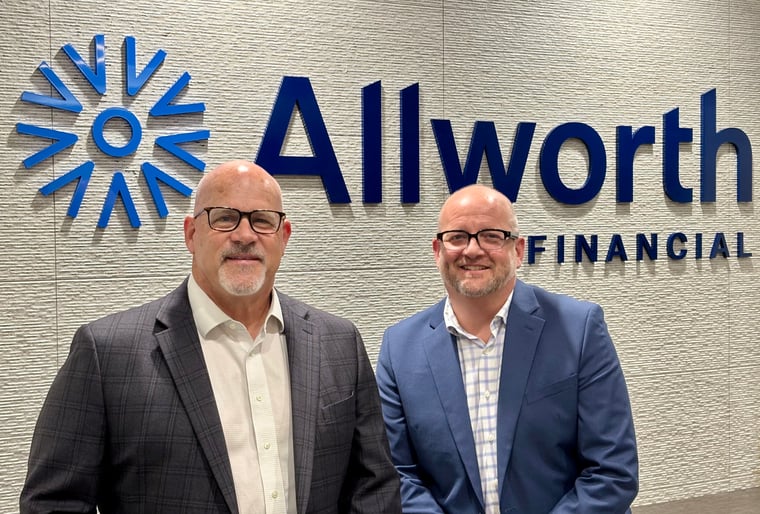
Big Wealth, Small Mistakes: The Decisions That Matter Most
On this episode of Simply Money, Bob and Brian break down why the financial decisions that feel boring or easy to postpone often have the biggest impact on long-term success. From overlooked beneficiary designations and withdrawal strategies to missed tax-planning windows and life risks that don’t show up in market charts, they explain how successful families can do everything “right” and still run into avoidable problems.
The conversation highlights why planning for taxes, longevity, healthcare, control, and flexibility matters just as much as investment returns—especially as net worth grows—and how proactive, thoughtful decisions today can protect both your lifestyle and your legacy.
Download and rate our podcast here.
Well, when people think about financial success, they usually think big picture items and exciting decisions. But after years of working with families, Brian, and I know you and I have both been doing this for decades now, especially with successful families, we've learned something, these decisions that actually matter the most are always the ones that seem kind of boring on the surface. And what's interesting is this becomes even a bigger issue as net worth actually grows. And we're gonna illustrate this tonight with a few hypothetical situations as we always say, the names have been hidden to protect the innocent. But let's walk through a couple hypothetical situations on what we're talking about here, Brian.
Brian: Yeah. I think the point of this whole segment here is that championships are won in the off season in the weight room, not when we're staring at the market every day, you know, wondering what's coming next here. So, let's go through some examples. Hypothetical number one here is the great investor, bad outcome family. So, let's picture somebody in their early 60s. Done everything right. They're great savers. Invested consistently. Maybe they've built $4.5 million over retirement accounts, brokerage accounts, some company stock. So, that means that means they look fantastic on paper, right?
And anybody would be envious of this situation. But here's the boring decision they never revisited that comes back to haunt them, beneficiaries. Their 401(k), well, that still names each other and no contingent beneficiaries, so they got that one halfway right. Their old IRA, well, that has a trust that was replaced years ago. One account still has an adult child listed from decades earlier. Now, just imagine something happens suddenly. Then this had nothing to do with the investment strategy. That's the part they focused on. That's what I was saying. You know, these are the little things.
Now, they've got a mess where assets went to family members that they didn't intend. It was not balanced. It wasn't spread out the way that they wanted. That trust had different beneficiaries listed on it. It had some charities they were no longer interested in, so that one account went the wrong direction. And there's really no way to explain to your heirs why this happened because it wasn't intentional, and you aren't around to clear it up. So, this was a paperwork problem, not an investment problem.
Bob: And, Brian, I'm gonna give you credit where credit is due here. You and I were actually in a meeting last week that, you know, this exact topic, you know, resurfaced. And it's a client that that I've worked with for several years. We update the plan every year. We ask about beneficiaries every year. But this year, for some reason, things changed in their family. And I'll give credit to you, you asked the right questions, and it brought to the surface some things that needed to be addressed in regards to beneficiaries, whether to use the trust or not use the trust, versus leave money directly to the kids. It spawned a wonderful conversation that would never have happened, and things would never have gotten executed according to what the family's wishes, you know, updated for 2026 are had you not asked a couple of, you know, great, you know, pointed questions.
So, yeah, I I'm always surprised at how much this actually comes up. We're worried about taxes, returns, you know, talking about different investment products and strategies. That's all the sexy, exciting stuff. But, boy, just forgetting to talk about where and how you wanna leave this money to your heirs after you're gone, that tends to get ignored and swept under the rug.
Brian: Yeah. And I think another one that comes up from time to time is the remarried couple. You know, with accounts spread all over the place, two people who have had long careers, divorced later in life, and then maybe remarried, never think about those beneficiaries. Well, that's gonna be a super awkward conversation when all of the assets go to the ex-spouse when it was all supposed to have been split up years ago. So, you need to make sure that all that stuff says what you want it to say.
And the reason we do this, this is kinda human nature. This isn't fun. These are boring decisions. That's why we're talking about these boring hypotheticals here. No immediate feedback. No immediate gratification. And God knows in this country, we love our instant gratification. Doesn't feel like you're doing anything. Nobody leaves these meetings excited because they made a big decision or moving on in a big way. But these still are, obviously, very, very important decisions. They may not feel important at the time, but when things change quickly, they will become the most important decision in the room.
Bob: All right. Well, let's get into a hypothetical situation number two. And we'll talk about, you know, two couples with the same net worth, but possibly, two very different retirement outcomes based on their withdrawal strategy. You know, let's say these folks retire at 62, we'll throw out a net worth of, say, $5 million. Couple A focuses solely on investment returns. They wanna come in and talk about performance all the time, and that's all they are worried about. How did everything perform from a gross return standpoint? Couple B focuses on their withdrawal strategy. They ask, "Hey, which account should we spend from first? How do we actually manage taxes between now and age 73 when those Required Minimum Distributions are gonna crop up? And how do we create a steady income without getting into a situation where we start to panic if we see market volatility.'
So, again, a difference between these two families, one is doing some, you know, often what can seem like boring discussions, you know. When it comes to taxes, nobody wants to talk about taxes. But, man, you fast forward 10 years later, couple B will feel much calmer even if their returns were identical on a gross basis, or maybe even slightly less than couple A because they were tax smart in how they planned for their withdrawal strategy. It makes a big difference, but you gotta have the conversation and you gotta do the planning.
Brian: Yeah. Bob, I'm working with a case right now where we've got, this is later in life, one deceased spouse who had an IRA, took all of it, and threw it in one stock at some point, unbeknownst to the rest of the family. This is before we ended up working with these particular assets, and then passed away. And I had to scramble to get a Required Minimum Distribution out because the surviving spouse was never involved in any of these decisions, didn't know what to do, and the company holding the account was just not any help at all whatsoever. So, we had scrambled, get that done.
And then we noticed along the way that, and this is a lot of money, by the way, we started off a little over a million dollars in IRA, that one stock during last year actually doubled. This is a lucky story, but a white-knuckle story too. So, now, what they're looking at is that the RMD that the surviving spouse just got used to from having done it once, it's now twice as much because that stock doubled. So, we got a couple problems here. We got a gigantic tax obligation. We did have a million dollars drop out of the sky, so that's not a bad thing at all. But it's gonna kinda...
Bob: Yeah, not a bad problem to have.
Brian: Exactly. As problems go, one of the good ones. But anyway, still a lot of whiplashes. The surviving spouse lost, of course, their beloved spouse, and has to get used to all of this crazy. And it's just scary as all get out for, you know, people to look at these numbers, especially in this case. This person is not an aggressive investor. They never would have invested on their own like this. However, that's what they've been handed, and we're literally talking, as we speak, about how to go forward, what's the right path going forward now that it's just a single spouse situation? So, anyway, lots to pay attention to there.
Bob: All right. Let's jump into hypothetical situation number three, and we'll call this the tax window a lot of people, unfortunately, miss, or don't even wanna talk about. And this is a big one, Brian, we see all the time. Imagine someone retiring at eight 60, and they have a large 401(k) balance and some modest taxable savings. They haven't started taking Social Security, yet. And this is a golden tax window if you take advantage of it. Your income is lower because you just retired. Flexibility is sky high, but instead of planning, a lot of folks will say, "Hey, we'll deal with taxes later." Or they celebrate because they're paying next to nothing in income taxes, you know, right now.
They're spiking the football where, you know, looming in the background here is fast forward to their mid-70s when these RMDs kick in. You know, that's gonna jump them up a tax bracket. It's gonna create, you know, IRMAA surtaxes on their Social Security, meaning Medicare premiums jump. And suddenly, taxes are higher in retirement years than the last couple years they were working. So, it could be a very boring decision to come in and do some proactive tax planning, and that would have changed everything. Brian, we see this happen way too many times. People aren't aware of, you know, we'll call that golden window between, say, age 60 or 62, and age 73 to 75. There's a lot of opportunity there to be very efficient when it comes to taxes and your withdrawal strategy.
Brian: That's right. But you gotta understand how it works, right? Spiking the football and celebrating a 0% or 10% effective tax rate during this gold window period, that is not something to celebrate, that's a missed opportunity. These are the years where you really ought to be thinking about Roth IRA conversions, you know, maybe some charitable things, donor-advised funds, those types of things, to buy yourself some tax efficiency in the future. Not taking advantage of this opportunity never means that you've won the game, because all you're doing is you're just deferring. Taxes are gonna come due the way they are. There are ways to mitigate and reduce, but you're not gonna eliminate anything. If you're paying 0% taxes in these years from retirement to their RMD window, then that means you're gonna pay significant taxes once you hit age 73 or 75 when those Required Minimum Distributions kick in. So, go ahead. You look like you wanna respond to that. I'll say that...
Bob: No, I'm just gonna say, you know, this reminds me of a few meetings I've had over the years where, you know, people come in and they do. They have that $4 or $5, $6 million, you know, portfolio balance, and they know that they have enough money. You know, that's not the issue. And I tell them straight up. I'm saying, "You don't need a financial adviser to not outlive your money. You won. You could do that whether you work with us or not. You don't need a financial advisor. And I recognize nothing feels broken. The markets are good. Life is good. Money is coming in. You might want a financial advisor from the standpoint of an efficiency standpoint managing these taxes and really getting strategic on how you use your money." And then people have a decision to make whether they want to engage in those kind of discussions and that kind of planning. Most of the time, people do. Sometimes they're like, "Hey, I don't want to deal with it. I just would rather go play golf and watch Netflix," or whatever. But there's a lot of opportunities out there if you're willing to do a little bit of planning and work with a good fiduciary advisor.
Brian: Yeah, I think there's a lot to be said for the idea of sitting down and figuring out, realizing that sometimes the best thing to do for tax planning is actually to pay a little more. This sounds stupid. But again, in that window where you're in the lowest tax bracket you've seen in decades, it may very well make some sense to go ahead and voluntarily put yourself in a higher bracket with some of these techniques we're talking about, because that will reduce the bracket you're going to be dealing with in the future there. And more importantly, it'll reduce the bracket your heirs will deal with rather than just continuing to let it pile up and up and up and up.
Bob: Here's the Allworth advice, the boring financial decisions don't feel very important today, but they're the ones that can really impact your future down the road. Coming up next, we move on to the financial risks no one tends to talk about. You're listening to "Simply Money", presented by Allworth Financial on 55KRC, THE Talk Station.
You're listening to "Simply Money", presented by Allworth Financial. I'm Bob Sponseller along with Brian James. If you can't listen to "Simply Money" live every night, subscribe, and get our daily podcast. Just search "Simply Money" on the iHeart app or wherever you find your podcast. Straight ahead at 6:43, we're tackling asset location myths, early planning moves that can pay off for decades, and why managing risk is often about behavior, not which products you use.
All right, Brian, we spend a lot of time talking on this show about markets, returns, volatility, interest rates. But here's the truth, for most successful families, markets are not the biggest risk to their financial plan. The risks that actually derail good plans are the ones people don't like to talk about because they're uncomfortable, they're personal, and they don't show up on a chart or a graph. Let's get into some of those tonight, Brian.
Brian: Well, the first one, this one would seem to be a good thing, right? Living longer than expected. We have all the time, as we're walking people through their potential financial outcomes throughout retirement, lots of people will look at us. We usually budget into mid-90s or so. And people will say, "Well, no, I'm never going to live that long." And then we get the laundry list of, "Uncle Charlie died here. And here's when my Aunt Betty died, and my mom and dad," and all this stuff. And all that's great. That's valuable information. But at the same time, you can have the problem that we're about to discuss right now. What happens if it doesn't work that way?
Lots of people have plenty of money to die young. That's not the challenge. As an advisor, I'm worried that we've got the ability to finish the race. So, let's talk about, you know, imagine a couple retiring at 62 with, say, $4.5 million. They feel confident. They've built up this machine that can pay them for a long time. They plan for 25 years' worth of retirement. One of them lives in their mid-90s. Suddenly, retirement isn't 25 years. It's 33 years. Nothing went wrong. They didn't overspend. This didn't sneak up on them. They just didn't die. The market didn't collapse. None of these crazy things happened to them. They just lived longer than expected. So, longevity risk, well, that's not scary at 62, but try thinking about it at 88 when resources may be dwindling.
Bob: Yeah, and I do think this longevity risk is a real thing. I mean, just with healthcare technology and people being healthier and having access to more medications and healthcare remedies, people are living longer. I mean, just anecdotally, Brian, I don't know about you, but for the clients that I've worked with for decades now, if someone does not have some kind of debilitating illness, say cancer or heart disease or something like that, I'm seeing people live easily into their late 80s, if not early 90s, and that's different. The generation prior to that most of the time did not live that long.
And, yeah, I agree with you. Some people want to hear that and some people don't, but you better plan for it. Because just living that extra six, seven, eight years, or even if you don't live that long, your spouse lives that extra five, six, seven, eight years, it can really make a huge difference down the road to how things work from a financial standpoint. And if you don't plan for it, then unfortunately, you're relying on your kids and other relatives to come in, and that opens up a whole other potential hornet's nest of issues and problems. So, longevity risk is real and it needs to be addressed in a financial plan. And the good thing is you can adjust that every year like we do every other assumption in a financial plan if you do update your plan every year.
All right, let's get into hypothetical number two. and this kind of goes along with what we just talked about, that healthcare gap before Medicare. And here, Brian, we're talking about people that step away from work maybe in their late 50s, early 60s, and they got a little bit of time before they can go on Medicare. And I think people sometimes get sticker shock here on what it actually costs to pay for medical insurance in those intervening years.
Brian: Yeah, that's right. The number we often use is about $300,000. It can cost $300,000 over the remaining life during that three-decade retirement period. And that's just your normal out-of-pocket costs on Medicare premiums and a supplemental policy and different procedures, office visits, co-pays, those kinds of things. That is not long-term care. That sounds like a huge amount of money, but we tell people to budget, a married couple, for example, $10,000 to $12,000 for healthcare expense, just routine annual healthcare expenses, including Medicare premiums. Cut that in half for a single person. Well, there's your $300,000 right there. If long-term care kicks in, then that's an even different situation, especially looking at the kind of situations you may have in a long-term care situation. Alzheimer's, Parkinson's, those kinds of things that are very different than the normal, "I need help with my activities of daily living."
So, we need to make sure that we understand what that actually looks like. If we're going to spend a bunch of money early on in retirement because we've retired early, first of all, I'm all for it. We don't have to wait. There's no rule that says you must wait until Medicare. That is not a hard and fast rule. You have to understand what the expenses are, and most importantly, be willing to write that check. You can buy insurance off the rack. It might cost you $10,000 a year apiece, something like that, before Medicare, but that doesn't mean you can't afford it. Liking writing the check is very different than your ability to pay for it. But understand what that forecast means and what that really looks like and what the impact will be down the line, and you can be okay doing these things. But again, planning is key. Make sure you know what to expect.
Bob: A third hypothetical that I think is critical we get into tonight, Brian, is the one involving cognitive decline. Here's a risk no one wants to think about, no one wants to talk about. Imagine a very financially-savvy spouse who's always handled all the money. They're smart, they're engaged, they're detail-oriented, and then slowly, decision-making gets harder. Small bills are missed, accounts get confusing, mistakes start happening. The money didn't change at all, the strategy didn't change, the plan didn't change, but the person managing it did. And if there's no system, no delegation, no accountability structure in place, and no backup, this risk can really snowball fast.
And unfortunately, Brian, I've run into this situation more than a few times over the last three or four years. And no situation is the same. There's no playbook or handbook on how to manage it, other than to say, we got to get out in front of it with the other spouse and with family members, and just help navigate this family through this when that...especially in a situation where the primary spouse that had been handling all the money is sometimes rapidly entering into a situation where they just simply can't manage it anymore.
Brian: This is what powers of attorney are for, and they should be set up when you and your loved ones are all of sound mind and ready to have a good conversation. "Here's the decisions I want you to make for me. And tell me what you want me to do for you," and so on and so forth. And then get all this stuff documented so that when the time comes, you're ready to move on it.
Bob: Here's the Allworth advice, the biggest threats to your financial plan often aren't market swings, they're the life risks you don't prepare for. Coming up next, remodeling projects that offer the best return on investments, and we're not just talking about kitchens and bathrooms here. You're listening to "Simply Money", presented by Allworth Financial on 55KRC, THE Talk Station.
You're listening to "Simply Money", presented by Allworth Financial. I'm Bob Sponseller along with Brian James, joined tonight by our good friend and real estate expert, Michelle Sloan, owner of RE/MAX Time. Michelle, great as always to be with you tonight. And I know you want to talk about, tonight, what are some of the, what we'll call, high-return remodeling or home fix-up things, you know, maybe even aside from the traditional kitchen and bath remodel that really does bring value to the table as people fix up their homes and want to get their money out of it when they sell?
Michelle: Absolutely. So, now is a great time to take a look around your house and see what is old and dingy and what needs to be remodeled. A lot of people will always tell you, kitchens and baths will sell your home. And that is not wrong. That is absolutely correct. You want to make sure that your kitchen and bath is looking great. But at the same time, there are a number of other things that you could be doing around the house and that you can get quotes for right now. Because a lot of these are not as sexy as a kitchen and bathroom remodel.
Kitchens and baths are very important, and you can spend thousands of dollars on doing those updates. But at the same time, you could... Let's just say, how old is your front door? What does your front door look like? That's that curb appeal. You know, a new steel front door will give you 100% return on that investment. And a lot of people are like, "Wow." So, maybe a thousand dollars or less, you can get a new front door. Now, if you're going to get something super fancy with lights and windows and all that kind of thing, it could be more than that. But that front door really says a lot about your home. So, whether it's a steel front door or a fiberglass front door, you're going to get most of that back when you go to sell your house.
Brian: So, I have a question about this. Because as I've gone through life, you're in different people's houses and you can see who has updated and looks pretty nice and looks like modern colors. And then there's the pink bathroom tile with the pink toilet with the pink shower cap carpet thing on the... You know, I haven't seen one of those in a long time, but they still exist.
Michelle: They do.
Brian: How jarring is that to see that '60s, '70s bathroom? Do I really have to rip out the tile of the avocado, the pink stuff, or the all yellow bathroom? Do people actually do that?
Michelle: Well...
Bob: Michelle, what Brian's really trying to ask you here, is it still okay that he has a purple front door? Is that going to negatively impact his resale?
Michelle: Yeah, the purple front door has got to go. At the very least, we need to paint that. And that's the one thing, you want to connect with your real estate agent who knows and has the pulse of the market. Now, I will tell you, those '60s and '70s bathrooms with the pink tile or the yellow tile, to me, they're retro and they are sort of back in style. So, you can do some updates in that bathroom. And the other thing is too, those bathrooms when they were installed, the tile on the floors and on the walls of that tub are on there. I mean, they are stuck so hard.
Brian: Those are fortresses, yeah.
Michelle: The craftsmanship...
Brian: And so is the 40-year-old mold in the corner of the tile. That's my pink fortress of solitude, Bob. Don't insult me.
Michelle: That pink bathroom. Honestly, you know, when I go into homes and I see so many homes around the Cincinnati area that are older and they have the pink or the yellow or maybe the baby blue tile, and a lot of times if the tile is in good shape and they're not cracked, I tell people to leave it and just paint around it, not on the tile, but paint the rest of the room as sort of an homage to the past. And so...
Brian: Maybe some velvet rope across the door.
Michelle: Exactly.
Brian: A little plaque on the wall.
Michelle: Yeah, it's not something that you have to change. Again, it depends on the condition of the tile. If the tile is cracked on the floor, absolutely. If the tile is cracked in the tub or maybe the tub, those faucets don't work or whatever, then, yes, it's time to go ahead and spend the money and update that. There's so many ways that you can update a bathroom. So, you want to just look at all of your options. And like I said, it's important because if you're working with me or another agent who's been in the business for a long time, we're going to put together a list. And in that list, it's going to be the most important all the way down to, if you have time and you've got a little extra money, go ahead and do it. So, we're going to prioritize that list.
Here's another great idea. If you have hardwood flooring, real hardwood in your home, and if you want to get that refinished, a lot of times hardwood really it can take a beating. And over the years it may fade, it may have scratches from dogs and kids, and all of those things. If it's real hardwood and you get the hardwood floors refinished, you can recover, now, this is a big number, it's the biggest number, 140% return on investment on that refinish of the hardwood floors. So, that one is really a good one. Now, it's a messy job. You have to hire someone to do it, because if somebody who doesn't know what they're doing does a really bad job on your hardwood floors, then that's going to be worse than doing it at all. So, you have to...
Brian: Can you give us an estimate of the expense of that?
Michelle: Well, it depends on the square footage, right? So, it's going to be based on, if it's just a hallway or maybe a hallway into a kitchen, it's going to be maybe $4,000 or $5,000. Again, it really depends on how bad and how far they have to sand what you're planning on doing as far as color on the top of that refinish. So, it's something that you really want to get a couple of quotes on, and see the work that the contractors are doing before you give them any money or before you give them okay to get started.
Bob: All right, Michelle, we have time for maybe one more quick one. You've talked about the front door investment. You talked about the hardwood investment. What would be another third one at the top of your list in terms of rate of return on investment?
Michelle: Again, I told you it's not sexy, but I'll tell you what, insulation, upgrading your insulation, especially in your walls, in your attic, making your house more energy efficient. You can't see it, it's not going to be that visual, but if you have it, and then you can prove that your Duke bill is lower, people are going to appreciate that. So, insulation upgrades is a huge addition to a home. The other thing, one more, is a garage door, front door garage, just like your front doors.
Brian: Curb appeal.
Michelle: Garage doors are big.
Bob: All right, good stuff as always, Michelle. Thanks for joining us tonight. You're listening to "Simply Money", presented by Allworth Financial on 55KRC, THE Talk Station.
You're listening to "Simply Money", presented by Allworth Financial. I'm Bob Sponseller along with Brian James. Do you have a financial question you'd like for us to answer? There's a red button you could click while you're listening to the show if you're listening on the iHeart app. Simply record your question and it will come straight to us. All right, Brian, get ready for Terry in Madeira. He says, "We've always focused on net worth, but lately, I'm more interested in how much control we actually have over our money. How do you plan for control, not just growth?"
Brian: Yeah, this is pretty common because most of us, we spend time focusing on net worth. We spend decades focusing on net worth, because when we get started, we have zero net worth, so that becomes... You can't make any big decisions until you've got something to care about, so you have to focus on that first. But eventually, as Terry has experienced, you get to a point where the decisions change because now you have net worth. So, I think that the suggestion here is to separate wealth from access. So, a high net worth tied up in retirement accounts, real estate, private investments, and other business opportunities, that might grow nicely, but it limits when, how, and at what tax cost you can do anything with it. So, control comes from having assets that are available on your timeline, not the IRS's or the markets. So, make sure you understand those different changes across your assets.
And second, think in terms of the optionality you have. So, if something changed next year, ask yourself this, maybe job loss, health issue, opportunity, "How many choices do we have before we are forced into a bad tax or a bad market decision?" Meaning, got to eat a bunch of taxes or the market's not cooperating, but this thing happens, so we got to deal with it, therefor, we're going to sell a loss. So, that means maintaining taxable assets alongside retirement accounts. It is okay and fairly common for people to back off on 401(k) contributions later in life once they realize that they've got nothing, but pre-tax dollars in their 401(k) because that's all they've done for decades. You're allowed to change that around. Just don't give away the free money. At least be putting enough in there to get the match and all that kind of stuff. But it's okay to invest in taxable accounts to give yourself more flexibility.
Liquidity buffers that cover multiple years of spending. Figure out what your goals are. When is what pile of money going to be required? Maybe there's a balloon payment on the mortgage or you've got a wedding coming up or you know you've got to buy a car or something. Make sure that you're well aware of that well before it happens so that you can time those investment-type decisions. So, the bottom line here is growth builds wealth, but control protects your freedom. That strong plan is going to optimize both of them, but in later stages, control is often harder to get to if you don't plan properly. Mark in Indian Hill, Bob. Mark says that he's heard that taxable accounts should be invested differently than retirement accounts. But how different are we really talking?
Bob: Well, Mark, like a lot of answers to these financial questions, I'm going to throw out the standard, it depends, answer. Because it depends on what your assets need to do for you and when. Allow me to explain. We've got some folks that, you know, in their taxable accounts, they know that they've got enough money coming in from other sources, say, Required Minimum Distribution, Social Security, maybe a pension. They never need to spend any of that taxable account money. And that's money that has been compounding for years and has a lot of embedded capital gains in the portfolio.
So, you could take advantage of long-term capital gain rates, and just as importantly, a stepped up basis at death by just staying growth oriented in that taxable account, you know, especially if you never think you're going to need or want to touch it. So, that's a scenario where, hey, you might want to go, you know, more extreme growth in the taxable accounts for the reasons I've already mentioned, and then be a little more conservative with the retirement accounts that are actually paying the bills every month. Another situation, however, is this is where you get into, you know, some proactive tax analysis on, what's the most efficient way to generate a retirement income, you know, cash flow? And you might be surprised to know that, as Brian talked about in an earlier segment, it's not a sin to pay some taxes now and then, especially if you can pay them at a lower rate.
So, you know, I think those are two scenarios where you want to look at it. And depending on what you need to do, what you need your money to do for you and when and why, that might dictate some slightly different investment strategies for taxable versus nontaxable accounts. Or it might not. It depends on your situation. All right. Mary in Villa Hill says, "Our advisor mentioned that early decisions matter more than later ones. Which decisions, Brian, are the ones that really have long term consequences, and therefore, need to be made earlier?"
Brian: Well, I happen to agree with that advisor, and that sounds like something we would say, Bob. So, the reason is the subject that comes up all the time and you kind of just talked about it, and it's compounding of investments in time, really. So, some decisions compound restraints, not just returns. Once those constraints are locked in, later optimization just doesn't help as much. So, you know, the big one here is account structure earlier in your career. Where you save often matters more than how you invest. Over concentrating in tax deferred accounts, for example, like 401(k), that can look really efficient at 40. But at age 70, it can be much higher income, forced income taxes, higher Medicare premiums, and limited flexibility. Because once you hit that Required Minimum Distribution age, you've kind of lost control over your income streams, and you're going to pay taxes at whatever rate. And there's no magic that fixes that.
We'll have people come in and they'll say, "I want to minimize my income so I can avoid these Medicare premium hikes via IRMAA." And the answer to that is that's something you should have done 10, 15 years ago, rather than continuing to plow money into the pre-tax side of your 401(k), Roth conversion, so on, and so forth. Not a ton that can be done after the fact. That's not nothing, but at the same time, it's something you have to remember that once the horse is out of the barn, there's not a whole lot you can do.
One more here. And we'll move on to Sam in Montgomery. And Sam says he owns a mix of bond funds and individual bonds. He's not totally sure what the purpose of them are, what each one's supposed to be doing. And he says, "How do I figure out if they're overlapping or actually complementing each other?"
Bob: Well, Sam, I would say this, first of all, you know, there's usually two reasons why people have bonds at all in their portfolio. One is to generate income on a relatively safe basis, consistent cash flow and income that the person plans to spend. Another reason to own bonds or bond funds is a non-correlated asset class that tends to be less volatile than the stock market. You know, again, as a hedge against risk. So, I think you need to be asking your why in terms of why you own these bonds in the first place. What are they supposed to be doing for you, and when? And then, you know, layer that into your overall retirement cash flow strategy.
And once you've figured out the answers to those questions, then you could start to take a look at, you know, if we look at your bond funds and individual bonds, is there overlap? And is the composition of those bond funds and bonds really doing what you want it to do based on your why on, you know, why you have these in the portfolio in the first place? So, you know, that's what a financial plan and an investment strategy is really meant to do. Be proactive about why you own these things in the portfolio and make sure they're doing for you exactly what they're meant to do at all times. Coming up next, I've got my two cents on another, what I'll call risk, you know, involving decisions that people just tend to avoid and not want to talk about. They can really potentially derail a long term financial plan. You're listening to "Simply Money", presented by Allworth Financial on 55KRC, THE Talk Station.
You're listening to "Simply Money", presented by Allworth Financial. I'm Bob Sponseller along with Brian James. Well, Brian, earlier in the show tonight, we talked about some of these risks that people tend to avoid and not address, you know, apart from market risk, things like that that everybody wants to talk about, and the risks that can really throw a financial plan off in the long term. And I want to bring up one more that I feel very strongly about. And maybe I talk about it too much on the show, but it just has to do with preparing our heirs to actually handle money, you know, when it comes time to handle an inheritance down the road.
And I'm just speaking from personal experience now. You know, my wife and I have three adult sons, you know, early 30s down to mid-20s. And so, we're watching them, you know, grow up and move into adulthood. They're getting married. They're buying homes. They're starting their adult life. And, you know, it's interesting, as we all know, all of our kids are different. And that's okay. You know, one of our sons, they want me to be their financial adviser. He and his wife are very diligent about it. They have regular meetings. You have another kid who does not want to talk to dad about the money. You know, and maybe they're worried I'm going to make comments or what have you. We've all been there.
But here's where I put a stake in the ground, is I want to make sure all of my kids, at least, have a financial adviser where they're building a financial plan and they're learning how to budget and handle money. Because if they don't do that in their 20s and 30s... And my wife and I have not talked to them about what they might inherit someday. But I want to make sure, you know, even if that number is zero, I want to make sure that they're prepared to be responsible citizens handling their money. And then if they're fortunate enough or blessed to have some money fall into their lap here, maybe in their late 60s, you know, that's all the more reason to have a financial plan in place and be on the road to being financially responsible.
And Brian, I don't know about you, but I find all too often, this is just a topic that gets ignored, you know, within families. It's almost a taboo thing to even talk about money. And I think that's unfortunately, especially when we see people that have worked decades to build a fairly large net worth, and then kind of leave it all to chance after they die on whether the money is just going to evaporate because people weren't prepared to handle it.
Brian: Yeah. And I think this is something I've been thinking about a lot lately, because I have a lot of situations where it has occurred to me that the people I'm talking to, the ones with the wealth, are a little surprised by what they've built. And in fact, this is just about every meeting I have. People look at their net worth and what they've managed to build in their retirement accounts and so forth, and they seem a little bewildered. And what I've realized over the last several years is that they were raised by people who did not have that situation, because that prior generation didn't build money in the stock market. They worked toward pensions and so forth. And of course, we never talk about money in this country anyway, so nobody ever talked about anything. But now, you've got two groups of people who grew up in very different environments. So, yes, talk to your kids. Talk to your kids about how you built it, how you got it where it is, and how they can follow your path too so that they make the right decisions early on in their lives.
Bob: Thanks for listening tonight. You've been listening to "Simply Money", presented by Allworth Financial on 55KRC, THE Talk Station.
Insights for Complex Wealth Decisions
Join our email list for exclusive commentary from our Chief Investment Officer, early access to expert-led webinars, and your complimentary Wealth Planning Checklist for Complex Portfolios.
We take your privacy seriously and respect your privacy choices. By submitting this information you agree to our Terms of Use Agreement, Privacy Policy, and to receive important notices and other communications electronically.