
The “We’re Fine” Trap: Withdrawal Rates, Wealth Gaps &Planning That Actually Works
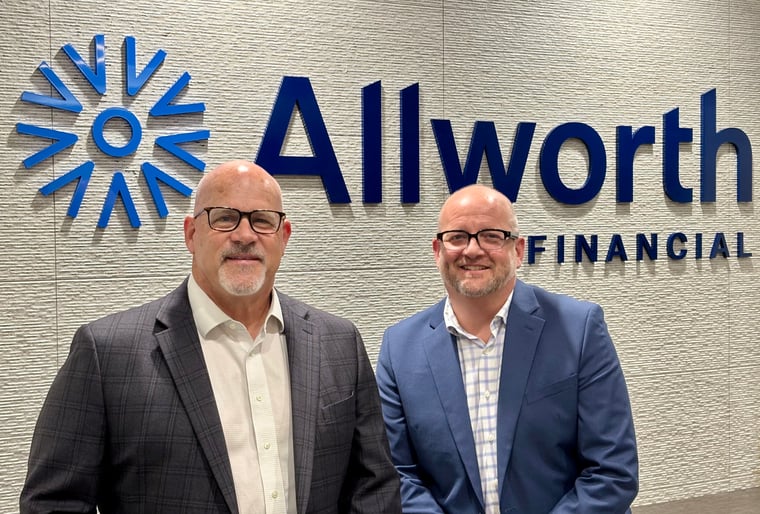
On this episode of Simply Money, Bob and Brian break down the most expensive lies couples tell themselves about money—especially the dangerous comfort of saying “we’re fine” —and explain how a lack of communication around retirement timing, estate plans, and financial roles can cost families millions and fracture relationships. They also dig into why a single withdrawal rate like the traditional 4% rule isn’t enough, exploring sequence of returns risk, bucket strategies, flexible spending guardrails, and how small tweaks in Monte Carlo assumptions can dramatically change your plan’s success rate. Plus, Allworth’s in-house insurance expert, Jodee Deutsch, joins the show to discuss when life insurance shifts from simple protection to advanced estate and legacy planning, and how high-net-worth families can better align their wealth with their long-term goals.
Download and rate our podcast here.
Well, we see it all the time, folks build up a ton of success, a large net worth, and we all tend to think we're doing everything right, but then there's one conversations a lot of successful couples still are not having, and it's the one that could cost you or your family millions. And tonight, we're talking about what we'll call the "we are fine" problem. Brian, let's get into it.
Brian: We are fine. Well, this sounds good, but this usually means, "We have enough money. We don't argue about finances. The accounts are growing. Our adviser sends us statements. And the will was done at some point. It's around here somewhere probably." Well, that's a little bit of a problem because does mean we have our eyes off of certain things. And so, let's go through some through some hypotheticals here.
So, the first one here is, let's call it the disengaged spouse. So, this is Tom and Lisa. As always, from the files of All Worth Financial, names are changed to protect the innocent, but these are common stories we hear basically all day every day. Tom and Lisa are in mid-60s, live in Indian Hills, $6.5 million net worth. Tom ran a manufacturing business. Lisa raised the kids, did some nonprofit work. And Tom's always been the money guy. He's handled everything, investments, taxes, estate planning, insurance, passwords, relationships with advisors. And Lisa always says, "Well, he's got it. We're fine. I'm not interested in it. I'd rather just know he's dealing with it," and so forth.
Bob: So, in other words, this is kinda like the Fred Flintstone family, right?
Brian: I would say, pretty similar to that, yeah. But, Tom says, "Yeah, if anything happens to me, she'll be taken care of." He's not worried about it. Well, here's the problem, and this stuff doesn't surface until it's too late, Lisa has never met the CPA. She doesn't know what accounts are taxable versus an IRA. Doesn't have much of a concept of what the differences of those two are. Doesn't know where the estate documents are, which assets are illiquid. No idea how their withdrawal strategy works. This is not fine. This this is one unexpected event away from absolute chaos. And, Bob, I suspect you're gonna wanna tell us a story of the recently widowed spouse who wanted to know if she could go buy milk the day after her husband passed away.
Bob: I've told that story a half dozen times on this show. I think people are tired of hearing it. But today, Brian, if you fast forward to 2026, this is not just a husband running everything and the wife/housewife coming in being clueless. I'm seeing this happen the other way, too. So, you know, it just people are busy. We're building a career. We're running a business. We're raising kids. We're driving kids to, you know, select baseball practice. It's kind of a divide and conquer type of mindset when it comes to, you know, growing a net worth, raising a family, running life these days, and we tend to get into our siloed roles, and we don't communicate. And I think that's the point of what we're trying to drive home here is, you know, you gotta step back and take a look at, "Why did we do all this in the first place in terms of building this healthy net worth to retire off of and then leave to our heirs." And if there's not communication going on, things can really get broken.
And I don't care whether we're talking about the husband or the wife or what have you. You know, I'll go back to many meetings that I've had where, in this case, the wife has not wanted to be super, super involved in all the details. But I could tell you what, she knows she knows exactly how she wants to answer the real, important questions. And you gotta have her in the room and listen to her and make sure she understands. You know, the phrase I like to use is a lot of people, if you open up the back of the TV, they don't care how the TV works, but they darn sure know how the remote control works. And the advisers better explain to both spouses, and both spouses need to be involved. Because there will come a day where there's just one of them left, and now, you're left to really answer the question, "Did we have a financial plan that's gonna carry this family through both spouses into the next generation."
Brian: Yeah. And I think it's fine for there to be a separation of duties because if everybody is neck deep in all the decisions, then nothing's gonna get done. But we can't have a situation where one side has absolutely no clue what's happening. Yeah, and you're right, this goes both ways these days. But very frequently, there is one spouse who knows more than the other because they've done the heavy lifting, and the other spouse is an arm's length away. But I still wanna see both of them, you know, at a minimum, for an annual review just everybody can kinda see the big picture, and so, nobody is surprised by anything that might come up.
Bob: Absolutely.
Brian: So, let's move on to another example here. This is the silent retirement gap. A little different situation. Mark and Jennifer, they're in their early 50s, maybe $4 Million or so. Mark wants to retire at 58. Jennifer is assuming he's gonna work until 65, but so, obviously, we're not having these dinner table conversations apparently. They've never actually modeled it together, and that's a pretty wide gap between what one person wants to do and what the other person thinks is gonna happen. So, Mark is running these Monte Carlo simulations in his head. That's the kind of thing where we determine what somebody's resources are, what their goals are, what they need to do with it, and taking into account the ups and downs of the market because that's the one element we really can't control, and then figuring out what's the statistical likelihood of financial success. That's what Monte Carlo is, and that's what Mark's been doing.
So, Jennifer is thinking about, she's fixated on college tuition for their youngest. He thinks they're financially independent already. She thinks they're still building. Sounds like we've got a disagreement in terms of what the goals really are. They've never defined what that future really looks like. That's the "we're fine" problem. You know, "It's fine. We don't have any problems right now. Therefore, everything must be okay." And so, financial misalignment rarely explodes loudly in these cases. It just drifts quietly until, at some point, they'll realize that they're just playing not on the same page, and that can be a bumpy ride when that time comes.
Bob: Brian, I've seen this one happen a few times, too. I mean, look, if Jennifer has a seven-year difference in assumptions on when her husband's gonna retire, that's not a Monte Carlo simulation problem, that's a communication problem. Again, getting people in the same room, talking about goals, and I just have to hazard a guess here. If Mark is running Monte Carlo simulations in his head, he is trying to rationalize how he can retire ASAP. He's done. He wants out.
Jennifer's probably thinking, "Hey, what about paying for our kids' college education?" Perhaps Mark in the back of his mind is like, "Yeah, that'll all work out. I'm I can't wait to get on the golf course and stop working." So, again, it comes down to communication and having a realistic plan. And that's really kind of the theme of this whole segment, is spouses communicating in advance, building a plan together, and where appropriate, using an advisor or set of advisors to have an objective second or third set of eyes on this thing to make sure people are making rational decisions before they just pull the rip cord and hope it works out because after all, "We're fine."
Brian: Yeah. And, again, the running theme here is that assumption that everything is okay, "Because there's nothing burning down in front of my face, everything must be okay." So, let's look at a third example here. This is David and Karen. About $9 million. A little more money to work with. They've got two adult children. One of them financially responsible. The other one, yeah, maybe not so much. This is not all that uncommon. They have estate documents that were drafted 12 years ago, but there weren't any trust provisions updated. They haven't talked with the kids about anything. Karen is simply assuming an equal inheritance, and David is probably thinking that struggling child should start to receive money, over time, meaning while David and Karen are still around, not after death. They've never talked about this clearly. They each clearly have very different goals for their children.
Now, imagine if something happens unexpectedly and the whole family is grieving. And simultaneously, Karen realizes that structural inequality that she didn't understand. This is how wealth fractures families because there was no provision, of course, for a trust where that struggling child was gonna receive distributions a little more ongoing, and that other child was gonna receive their distribution right up front. And, again, this usually starts with, "We're fine. Everything's great. We'll worry about all that stuff later," until somebody gets hit by a bus, then it all comes out.
Bob: Yeah. And we can think, "We're fine because on paper, we're worth $9 million." But if you just follow the scenario you just described, depending on what the communication or lack thereof is between spouses and between both spouses and the kids, and if kids start to get treated unequally, that $9 million means nothing, you know, if it results in absolute discord among the spouses and you get family division, which can really linger and fester and become a problem down the road. And, again, you know, most people I know would trade $9 million and reduce that to $3 million if they knew their family was all gonna get along, and this money was deployed in a way that brings peace and harmony to the family, and everybody knows where they stand and how it's gonna work. Again, it comes down to that big C word, communication.
Brian: For sure. For sure. So, let's step back a little bit and look at the high level of all this. So, you know, why does this happen often to the high net worth couples? You know, the irony here is the more we have, the easier it is to hide behind this whole "we're fine" thing, and this becomes emotional, right? So, for a lot of couples, we have to get to a point where one spouse becomes the CFO, the chief financial officer for the company, and the other is the chief operating officer. That division works right up until it doesn't because nobody's sitting on top of the entire pile making all the decisions. And sometimes two couples can do that, sometimes they can't. But that CFO and the COO don't necessarily have to meet ever to make things work. So, it can be a little bumpy when the communication isn't actually occurring the right way.
Bob: Yeah. And I think we've kinda already beaten that one to death. You know, the question we have to always ask ourselves, you know, if we're being responsible and not selfish with our money is, "What if something happens to me today, tonight? What happens? Who's gonna run this plan? Who's gonna make sure it works? Have I communicated effectively with everyone that needs to be involved? Does my spouse even know who to call, who to contact, who to work with?" That's the question we all have to ask. Not to overcomplicate this at all. It's a simple question, "What if something happens to me tonight? Are all our ducks in a row? And have all my loved ones been communicated with?" That's really the question to ask.
Brian: Yeah. And then so, I think overdue for a sit down with a spouse and make sure to ask those questions, and just make sure everybody have an opinion. This is one to carve out some time for if you recognize yourself in any of these descriptions. Find some time and ask these blunt questions. And look each other in the eye when you're answering, not while you're doing the dishes, not while you're doing other things. And just make sure you know exactly where the situation is for each of you, what your dreams are for what you want out of all this, and be clear with what needs to happen next.
Bob: Yeah. I think the last one, you know, along with that, Brian, is, you know, as the net worth grows, I think another important question to look each other in the eye and answer is, what is all this money actually for? Meaning, what does our an annual spending profile look like? How much travel are we or are we not gonna do? Do we wanna give to kids during our lifetime or not? What are our charitable goals? Are we staying in Cincinnati or Northern Kentucky or planning on relocating? You know, you have to ask all those questions in advance and maybe sit down and run some numbers, again, not just sue assuming that it's all gonna work out. Here's the Allworth advice, love your spouse and your family enough to make them your financial equal, because "we're fine" is not a financial plan. Coming up next, why a single withdrawal rate isn't enough in most circumstances and what to do instead. You're listening to "Simply Money", presented by Allworth Financial on 55KRC, THE Talk Station.
You're listening to "Simply Money", presented by Allworth Financial. I'm Bob Sponseller along with Brian James. Hey, if you can't listen to "Simply Money" live every night, subscribe to get our daily podcast. Just search "Simply Money" on the iHeart app or wherever you find your podcast. Can you split retirement into a must-pay column and a nice-to-have column? Plus, how small assumption tweaks in your plan can wreck your plan or actually make it work better, and the real way to compare withdrawal strategies. All of that and more coming up straight ahead at 6:43. One of the most common questions we hear from people approaching or living in retirement is deceptively simple, how much can I safely withdraw each year? Simple question, but it can sometimes be a complicated answer, Brian. Let's get into what we mean by that.
Brian: Right. Well, withdrawal rate shouldn't be something to be carved in stone. It's just a starting point. It's not a promise, certainly not a guarantee. It's just a roughly, how much can I expect to pull out of my portfolio and not have to worry about running out of money? So, most people, at this point, have heard of the 4% rule. And that came from a study that was done over 30 year periods, basically saying, you know, encompassing actual, real, historical data, what percentage could I have pulled out over every 30-year period going back to, I believe, the 1930s? What can I pull out and still be okay, you know, not running out of money? And the answer to that was 4%. So, the whole idea is that if you withdraw roughly 4% of your portfolio each year adjusted for inflation, your money has a reasonable chance of lasting through retirement because, historically, that's what would have worked.
So, if used properly, a withdrawal rate is a planning tool. It gives you somewhere to start so you can understand what might be coming in, and then you can kinda budget out with your other sources of income, all those spending goals that you have. However, used improperly, it becomes a false sense of security. For example, let's say somebody is convinced, you know, that they wanna keep all their money liquid and nice and safe in the bank and they get an average of maybe 2% rate of return. Well, now, all of a sudden, the 4% rule is not necessarily gonna work because the rate of return is not gonna keep up with it. Nobody actually retires into an average market, right? We always talk about the average rates of return on the stock market in 6% to 8%, but that, of course, doesn't happen. Returns are uneven. That is the sequence of returns risk, meaning when do the bad times happen? If they happen early in retirement, that's gonna have a significant impact on my financial stability. If it happens later in retirement, that's no fun, but it probably has less of an impact.
And, you know, think about anybody who retired in 2021, and then was immediately smacked in the face with the 2022 market, which was one of the five worst market years we ever had. So, these are the things that need to be planned for. That withdrawal rate of 4%, that's a good thing to think about. It's a good framework to build off of. But then on top of that, you need to layer some other stress testing, such as, what does it all look like if I lose a chunk right up front early in retirement, for example?
Bob: Yeah. And that 4%, you know, rule, just going back on how that was, you know, likely established. I mean, you're taking a certain rate of return. You're factoring in taxes, you're factoring in inflation, and you're saying, "Hey, this is what you can withdraw," if you're giving a gross return of, say, 7% to 7.5% on your money. But to the point you've already made, not everybody wants to invest, you know, all of their money with a risk exposure necessary to get a gross 7% to 8% on their money. So, that gets into what we're gonna get into tonight, is kind of more of a bucket approach, or segregating your money into certain pots based on what your money needs to do for you and when. So, let's get into that.
And we talk about this often with clients, Brian, that, you know, this bucket approach, the money that is there to take care of things from, say, today through the next two years, you know, this will help you cushion the blow of any short term market volatility, and this is where you wanna use some cash, cash equivalents, treasury bills, money markets, things that you can get to on a liquid basis very short-term that are not gonna be very volatile. And then you could stage some money out into, say, a three to five-year bucket.
And this is where we'll add some bonds, maybe a little bit of stocks. Again, cushioning the volatility in the short-term, but giving us enough return to, you know, have our money, hopefully, out turn taxes and inflation. And then you've got those 6 to 10-year, or 10-year and beyond buckets, the longer-term money where even in a short-term market decline, we're not gonna use those buckets from which to generate monthly cash flow. Therefore, it can ride out short-term market volatility and stay fully invested to take advantage of what the stock market, historically, has always given us on every average, you know, 7 to 10-year holding period, you know, going back to the early 20s. That's kinda what we're talking about here.
Brian: Right. So, let's throw some risk into that. So, let's say we've got this bucket strategy going, and now, we have a 20% market drop. So, if I had a million bucks with a 4% withdrawal rate, that means I'm pulling out $40,000 a year just to pay my bills. And now, let's assume that we lose that 20%. We got $800,000 left. So, that same $40,000 withdrawal is now a 5% withdrawal rate on the reduced balance. That doesn't sound dramatic, but compounding works both ways, right? We talk about that snowball effect on the way up, but it also happens on the way down. Higher withdrawals from a lower base increase the risk of a long-term shortfall.
So, here's how the bucket will help that. If you have two-years' worth of income, let's say, that's $80,000 sitting in that bucket one, that money is largely unaffected by the market drop. Your income for the next two years is already funded. You're not selling stocks after a 20% decline. You're buying time. You protected your first two years' worth of expenses. They were not impacted by the market. Now, of course, the flip side of that was if the market goes great guns for those couple years, yeah, you missed a little bit of return. But what Bob and I can tell everyone from experience is that missing out on gains is not nearly as painful as losing money you were gonna need in the short-run. People get much more upset about knowing they need to pay a bill, but their accounts came down. So, that's why those first couple buckets are really, really important.
Bob: Yeah. And sometimes people are surprised when they see this sequence of return scenario actually play out. Because, let's face it, when we're in the accumulation stage of our life just shoveling money into our 401(k) every month, we really don't care about short-term market volatility because we're not gonna spend any of the money right now. Sometimes people are surprised to see, you know, even if you get a 7% to 8% average rate of return, if you're pulling money out during periods of market volatility, the plan still might not work because of how much you're pulling out during down markets. And that's why that bucket approach can tend to work much better.
Here's the Allworth advice, withdrawal rates matter, but portfolio design matters more. When those two work together, retirement becomes less about reacting and more about just living your life. When does life insurance shift from pure protection to advanced planning, and how are successful families, perhaps, misusing their insurance without even realizing it? We'll ask our in house expert next. You're listening to "Simply Money", presented by Allworth Financial on 55KRC, THE Talk Station.
You're listening "Simply Money", presented by Allworth Financial. I'm Bob Sponseller along with Brian James, joined tonight by our in house insurance expert here at Allworth, Jodee Deutsch. Jodee is the director of insurance nationally for Allworth Financial, and we happen to be blessed to have her right here in our Cincinnati office. And she's sitting right across from me. Jodee, thank you so much for making time for us tonight. And before she starts, I'm just gonna say how fortunate we are to have her on our team here. She has bailed us out of so many situations. She has a ton of industry knowledge and does a great job in the whole area of insurance. So, Jodee, thanks for being with us. Let's get into it tonight. We wanna talk about, you know, when life insurance can shift from just protection, you know, why people bought it years and years ago, to using it for more advanced planning strategies. Walk us through what some of those scenarios might look like.
Jodee: Well, thanks for having me, Bob. I think it's really the difference between thinking about, "I need to have life insurance so my family can survive," number one. And then how does that transition to, "How do I optimize what I leave behind for my family as a legacy for a charity?" And that happens when you no longer need to replace your income. You've funded the things that you wanna fund. You have an estate that's large enough to create some type of tax exposure, whether that's federal income tax, federal estate tax. You may have a business that you wanna leave behind, so there's some type of business succession. And you want to equalize inheritances.
You spoke about this earlier. How do you share properly with kids when you're living and when you've passed away and, possibly, with your grandkids and great grandkids? And if you have a charitable intent, you need to plan for that before you leave this earth so that we can make sure to take care of things. So, the transition at your lifetime, instead of life insurance being protection, it is provided to create liquidity, help manage your taxes, and become a strategy for that, equalize your estate, and ultimately, be a legacy planning vehicle.
Brian: So, Jodee, can you talk about some times where... Because, like, frequently, what happens is people come in with a policy they bought, you know, 20 and 30 years ago, and the situation has obviously changed. You know, they're sitting in front of us, so darn it all. They didn't die. They didn't need the death benefit. But so, what do you do in those cases when people come in saying, "I've got these old policies?" It's kinda like I always describe it as I have a black and white TV. It still shows me TV shows, but maybe there's a better solution nowadays. How do you take people through those types of situations?
Jodee: Brian, that's a great question. We look at how their goals have changed, and we discuss options for, do you keep the policy? Do you make changes to it? Do you walk away from it? Or do you, perhaps, reposition the cash that's in the policy into a different type of policy that might have some long-term care benefits? Every policy is different, every client is different, but there are options. The key piece is to take the time to review the policy and do the analysis instead of ignoring it and just waiting for it to pay out when you die, assuming that it's still in force.
Bob: Jodee, correct me if I'm wrong here, but one of the major benefits of life insurance is it's tax free. The death benefit is tax free. And that opens up a ton of planning opportunities. You already kinda listed some of them off. If the family's, you know, charitable, inclinations or intentions have changed, or if we need to equalize the estate, if shares of a business are going to one child, and you wanna equalize with liquid assets to another. Just a simple change of beneficiary on an existing life insurance policy that's working really well can really balance the scales and help update an overall estate plan. Am I correct there?
Jodee: Absolutely. I think the insurance is the tool, but we have to review how it is coordinated with all the estate planning. Beneficiary changes, ownership structures, do you have trust planning? Because you can make changes to an enforced policy to really fit the needs that you are feeling now, and that your goals are in the future, not just when you bought the policy 20 years ago.
Brian: Jodee, one thing that comes up frequently when we've got people who are considering insurance solutions like what we're describing, some people, you know, they'll say, "Well, that's a great idea, but there's just no way I'm insurable because of X, Y, Z," because they all kinda know their family history and those kind of thing. Can you talk a little bit about the kind of things that are deal breakers right away where we know, if you have this in your history, that you probably shouldn't even bother applying, versus things that might surprise you, that might seem like you should be uninsurable, but you still might be able to do it?
Jodee: Well, that's a good question, Brian. And you've sat in enough client meetings with me to know, we need to know the details. If someone is currently going through cancer treatment, they're not going to be insurable. We typically need to wait until they're clean for five years. But in this day and age, there are so many things that you might think are uninsurable that are not. Parkinson's, for example. We just worked with a client who has Parkinson's and was able to get him a standard offer. And he came to me because he thought he was uninsurable. So, I think the key is not to make assumptions, and to ask the questions and to dig a little bit deeper. Because it you may be uninsurable, but we want to try to figure out why, or what if we wait two years? Maybe you'll be insurable at that point.
Brian: So, is it...
Bob: And Jodee, isn't... Go ahead, Brian.
Brian: Yeah. I was just gonna ask, is that a difference between insurance companies? In other words, your knowledge of the industry, one insurance company might treat one risk a different way than another. Is that where the differences are?
Jodee: Yes. There are certain things that every insurance company is going to think are uninsurable, but there are other things that insurance companies will look at differently. Cancer is one of those. Marijuana usage is one of those. The way that, build, height, and weight, different insurance companies handle things differently. And understanding the medical history of the client can really help to determine what insurance company might be a fit for them.
Bob: Yeah. Brian, you asked the same question I was gonna ask, and that leads to, you know, the point we wanna make here, is it's really important to be working with an insurance professional who can go out to 50, 60 different companies with no axe to grind, no captive agency thing, where they can only represent one company. Because literally, depending on the situation, different insurance companies underwrite these situations differently, and you wanna have all the tools in your quiver here to go out and get the best possible underwriting result that you can. We're gonna have to leave it there tonight. Jodee, thanks so much for joining us. Can't wait to have you back on future shows. You're listening to "Simply Money", presented by Allworth Financial on 55KRC, THE Talk Station.
You're listening to "Simply Money", presented by Allworth Financial. I'm Bob Sponseller along with Brian James. If you have a financial question you'd like for us to cover tonight, there is a red button you can click while you're listening to the show. If you're listening to the show on the iHeart app, simply record your question, and it will come straight to us. Joe in Fort Mitchell leads us off tonight, Brian. He says, "When you test a portfolio, do you look at maximum drawdown alone, or do you also look at a potential time to recovery from a down market?" Which one matters more for a retiree?" I love this question.
Brian: It's a great question. And, obviously, Joe likes to get into the nitty gritty of how to think about this stuff. And I'm glad that Joe has let go of the idea that we can control the rates of return by being in the right investments at the right time. Now, a lot of times that's something that people get hung up on. But, anyway, to answer the question, when we stress test a retirement portfolio looking at maximum drawdown alone, that's not complete, as Joe has already picked up on. You gotta pair that with time to recovery. Because for a retiree, that path matters just as much as the depth of the return.
So, historically, let's look at this. In 2020, during the pandemic, we had a sharp drop of 34%, but that recovery was really fast. We weren't even paying attention to it. Most people didn't notice how far the market had come down because we were all hiding in our basements thinking we were gonna die, at the very early part of that when we all first went home from the office. But we had it all back by June after the dust kinda settled. 2000, 2002, that was very, very different. There was a much smaller peak to trough downturn than in 2008, but recovery took a lot longer to get back out of that one. 2008, we had a very deep drawdown, almost 50% in equities, and it took about 4 to 5 years to come to completely recover from that.
So, yeah. So, which matters more? Time to recovery often matters more than maximum drawdown because longevity for retirees plus withdrawals turn that duration into the real threat. So, we just wanna make sure, can you tolerate the worst year psychologically? How long are you underwater? And can your spending continue without selling equities at distressed levels? So, the goal is not to eliminate these drawdowns because that would eliminate the growth, too. That's impossible, right? So, the goal is designing the portfolio and the withdrawal strategies so that a bad sequence doesn't force permanent damage before that recovery has chance to complete. So, let's move on to Mark and Madeira. Mark is looking at his plan and he says, "Can you separate this plan into must-pay expenses and nice-to-haves and model them differently? I wanna see what happens if only discretionary spending flexes."
Bob: Well, Mark, I think you're approaching this exactly correctly. Good for you. And, yes, your plan should include exactly what you just said. You know, there's the keeping the lights on scenario, you know, the must haves, the things that we gotta have just to live and function. And then a lot of the other things, as you said, are discretionary, and they can adjust up or down or get eliminated altogether depending on what happens to the economy and the world over time. So, yes, your plan can take into account, and we would argue, should take into account both of those. And that opens up wonderful conversations for you and your wife during reviews with your financial adviser because we literally do exactly what you're talking about here.
We show you how the plan is working, you know, with the must-pay stuff, and most of the time, that's working absolutely fine. And then we can shift over to dreaming a little bit. Do we give our grandkids a little bit more this year? Do we take two cruises instead of one cruise? You know, do we, you know, re-outfit the bathroom this year or next year? And how much money do we spend? So, yep, you're looking at this exactly right. And it's exactly what we do when people come in to do a review of their financial plan. You wanna have options and you wanna know what the guardrails are, you know, up or down on your spending. So, great question, Mark. All right. Ron in Lebanon, he says, "I've noticed that if we tweak the return or inflation number in our Monte Carlo analysis even a little, the success rate changes. How do you figure out which assumptions really matter?" Brian?
Brian: Well, it sounds like all the cool kids are doing Monte Carlo analysis these days. They're pretty common questions now as these tools are getting out there. So, yeah, that's really sharp observation, and it does tell you that Monte Carlo can be highly sensitive to certain inputs. But so, what you're really getting out of this question is, what are the things that are cosmetic versus actual, structural drivers? And it might surprise you what really moves the needle.
First of all, one of the big things is your real return. And I'm not talking about just that return number you're plugging in there, your real return, which is whatever assumption you wanna use, 6%, 7%, 8% maybe, minus inflation. So, the spread over inflation is what's driving a lot of that Monte Carlo analysis. Because remember, those inflation, whatever factor you're using for inflation, is driving your spending upward. And the closer that is to your rate of return, the less successful your Monte Carlo analysis is gonna be. The wider that spread is, if you got a rate of return that is increasing more rapidly than the spending, then you're gonna have a much better outcome.
So, also, sequence of returns is also extremely important. So, what happens in the first 5 to 10 years is extremely important, and I'd say, much more important than what happens in the last 5 to 10 years. So, if those early returns are weak while withdrawals are high, that probability drops quickly, you know, because... And we have to factor in, you know, be honest with yourself. If you're somebody who's gonna wanna hit the road and do all those once in a lifetime trips immediately after you retire and that comes along with a less than a desirable market, that's gonna have a significant impact on your Monte Carlo results. That doesn't mean don't do these things, but this is why we run those simulations so that you can make sure that if this does happen to you, your plan can withstand any outcomes that might happen along the way. All right. So, let's move on to Robert in Milford. Robert says, "When you build a guardrail strategy, what are you really anchoring it to? The portfolio value, the returns, probability, or something more practical?" What do you think, Bob?
Bob: Well, we're throwing around a lot of terms here, and I think we're all talking about kind of the same thing. It's a great question, you know, from Robert. You know, when he talks about guardrails, he's trying to stress test his financial plan. So, you know, when we build a plan, we're looking at a lot of different things. I will tell you, the most important thing, or the thing that's gonna move your result or probability of success the most is how much you spend. The other things to consider are the assumed inflation rate, the assumed tax rates, and then what your assumed rate of return's gonna be for your portfolio, and that's based on how much risk you do or do not wanna take with your portfolio.
So, you know, I don't know what you mean by guardrails here. I think, you know, you move all those different levels. To me, that's what guardrails mean. And I think, you know, people sometimes wanna play the what if game. What if I, you know, up upgrade or downgrade my spending? What if I take more or less risk? What if I assume the worst from a tax rate standpoint or inflation standpoint? And, basically, everybody's looking for the same thing. You know, in my personal worst case scenario, is my plan still gonna work? And more importantly, are you guys building a plan to be able to weather whatever storm comes down the pike to make sure that plan stays within, to use your words, Robert, guardrails? And that's what real financial planning is all about. So, a lot of great questions tonight. You know, our listeners are asking the right kind of things, and that's a good thing to hear for us, Brian. All right. Coming up next, I've got my two cents just talking about why perfection is overrated. You're listening to "Simply Money", presented by Allworth Financial on 55KRC, THE Talk Station.
You're listening to "Simply Money", presented by Allworth Financial. I'm Bob Sponseller along with Brian James. Brian, I'm gonna call this segment tonight Perfection is Overrated. And here's what I mean by that. I mean, just from tonight's show alone, we've talked about all these different planning scenarios from how to use life insurance, and we talk all the time about, you know, Social Security claiming strategies, when and how to do Roth conversions. And the point that I wanna make here is that your financial plan, it's not engraved in stone, and it can't be simplified down to just one thing works right all the time in every situation.
And the analogy I wanna use is just, you know, going back to our political environment right now. Depending on which news source different people look at, they think there's one black and white answer to everything, and any difference of opinion or different approach is by definition wrong. And like with a lot of things in life and financial planning included, there are a lot of nuances. And you gotta look at options. You gotta look at the details behind it. And more importantly, things change. This whole retirement thing is a journey. It's kinda like going on a three-month trip across the country. You might have the whole thing planned out before you pull out of the driveway, and things can happen. The weather can change. Your car can break down. You might decide to stay in a location that you really like for more than three days. You might stay there three weeks.
Point is it's important to have an updated financial plan every year, and sit down with a fiduciary adviser who can actually run all these scenarios like a lot of the great questions we got from actual listeners. And that's what the whole financial planning process and journey is all about. Looking at what the limitations of your options are, looking at, yes, at some of the technical strategies that are out there. But don't allow perfection to weigh you down or feel like if you make one decision in one year, you know, even if it proves to not be the best ideal decision on paper based on a 30-year spreadsheet, that you've done something wrong. Any thoughts on that?
Brian: No. I think that's great. I mean, you're simply pointing out the idea that not to wait until things are absolutely ideally perfect because that can cost you years off your life.
Bob: Thanks for listening tonight. You've been listening to "Simply Money", presented by Allworth Financial on 55KRC, THE Talk Station.
Insights for Complex Wealth Decisions
Join our email list for exclusive commentary from our Chief Investment Officer, early access to expert-led webinars, and your complimentary Wealth Planning Checklist for Complex Portfolios.
We take your privacy seriously and respect your privacy choices. By submitting this information you agree to our Terms of Use Agreement, Privacy Policy, and to receive important notices and other communications electronically.