
What Would You Actually Do in a 20% Market Drop?
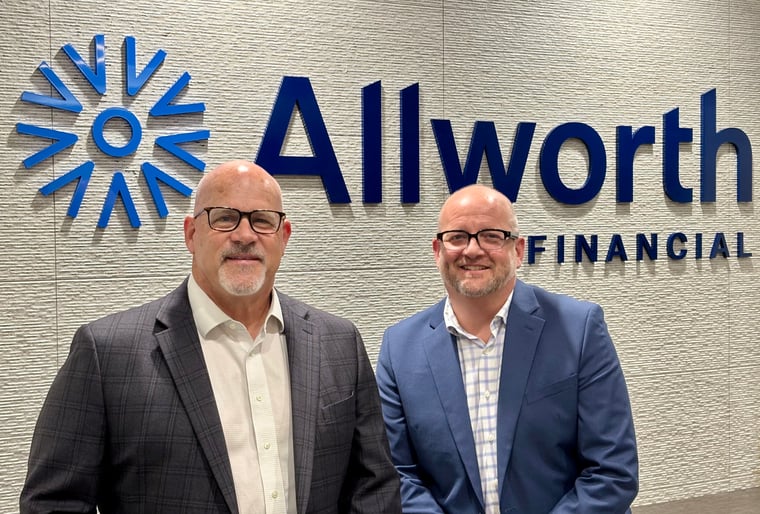
On this episode of Simply Money, Bob and Brian tackle a question that hits differently when you’ve built real wealth: if the market dropped 20% tomorrow, what would you actually do? They walk through the emotional and mathematical realities of managing a $2–10 million portfolio, why risk tolerance and plan design don’t always align, and how shifting from accumulation to preservation changes everything. You’ll also hear strategies around sequence of returns risk, separating income streams from piles of money, and why diversification today may mean more than just a 60/40 portfolio. Plus, the guys explain why bonds weren’t the “safe haven” many expected in 2022, how to think strategically about 401(k) contributions across pre-tax, Roth, and after-tax buckets, and answer listener questions on retirement withdrawals, dividend income, and spending in early retirement.
Download and rate our podcast here.
It's a simple question and not so much a simple answer. We're not asking what you should do, not what your advisor says you'd do, not even what you did in 2020, let's say. We're asking tonight, what would you actually do if we got a 20% decline in the stock market right now? Brian, this is an interesting question and we get a lot of different and interesting answers when we interact with clients about this question.
Brian: Yeah, of course, this drives a lot of financial planning conversations because when we build a plan, that's usually the one variable we just don't know. We don't get to know what the market does, right? That's the mystery. We have to build the plan around not knowing. So, that has a lot to do with understanding what somebody's stress tolerance is, and really understanding their overall financial situation in the first place to figure out what they can tolerate, not only what they can tolerate, what the plan can tolerate. We had one in April of 2025 when there was an initial panic about the tariffs.
But a $5 million portfolio, well, that's down a million dollars. That number, well, that screws with your head, even very successful, rational people. So, we work with a lot of families here in Cincinnati. These are executives at P&G, Cintas, Fifth Third, business owners, maybe you had a liquidity event. Here's what's fascinating. That stress level, that's rarely proportional to the math. Somebody with $800,000 invested may stay calm. Somebody with $6 million, they lose sleep. One lost six digits, the other one lost seven. Because once you've built that serious pile of money, it feels like something to protect. You're not trying to get rich anymore because you already are. You're trying not to mess it up. That shift from accumulation to preservation, that's where design flaws start to show up.
Bob: Yeah, Brian, and I think a lot of times people look at the Dow and they look at the amount of points drop in the Dow and they get freaked out about that. And then let's face it, we're not making light of it. In your example of $5 million, you lose a million dollars on paper. Yeah, it's going to get your attention and it probably should. What I tend to talk about all the time with clients, and I know you do something very similar, is just, hopefully, illustrate the point that, look, there's two factors here to how we should set a portfolio risk. One is, as you've already alluded to, what is going to be required to make the plan work, have a high probability of success of meeting all your long-term goals. And then second is the emotional risk tolerance.
And sometimes those two, they do not work in tandem, and that's where we've got to have a little bit of a conversation to make sure people do not lose sleep at night. Because what I always say is, if a 20% market drop is going to cause you to change your life or make drastic decisions in the moment, you really don't have a good plan in place. And if you have an advisor at all, your advisor really isn't doing his or her job because these are all guardrails and discussions that should have been put in place ahead of time in anticipation of events like this. Because as you've already alluded to, it's not a matter of if we're going to get a decline like this, it's when, and they happen all the time, they happen all the time. So, you got to make sure you've got a plan built for this ahead of time so we don't get these emotionally-driven decisions that can really drastically impact your plan and your life if handled incorrectly.
Brian: Yeah, that's one of the few guarantees we get to give in this industry. I guarantee you're going to lose money at some point. It's going to happen. It's just the way it is. It also might rain tomorrow. That's just the way it is. And the point is not to try to avoid it. Don't design something that is purportedly intended to avoid those downturns. That doesn't exist. But there are a lot of people who exist who will tell you that it does. You want to avoid that like the plague. But again, figure out what you actually need. For example, if you've got somewhere between $2 million and $10 million, you probably don't really need 12% in your returns anymore. So, why continue to swing for the fences when those downturns are going to hurt a heck of a lot more than the upsides feel good? You'll still need growth to fight off inflation and taxes, but that doesn't mean you need to have the whole pile dumped in the stock market.
Now, that said, if you truly understand the ups and downs and the volatility and you are of a mindset where you are stewarding assets that are going to go for your family for generations, then, yeah. If you understand the ups and downs of the market, then do it. There's nothing wrong with staying in a hardcore growth mode. But if you're somebody who will feel a little skittish, you will feel irresponsible if a major loss happens, then leaving yourself completely exposed to the stock market, well, that's a bad idea. You've done that by choice. So, figure out a better strategy. And that doesn't have to mean burying in the backyard. There are middle steps you can take.
Simply reallocating more to fix income or more of a direct indexing approach, tax loss harvesting. There's plenty of things you can do beyond just sitting there in easy chair and watching the market do whatever it wants to do to you. At that range, if you've built that level of wealth, you're no longer just on offense. You've got to play offense and defense, right? When you're in your 20s and your 30s, swing for the fences, be aggressive with it. But later when you've built a pile, that's worth protecting. And it's going to hurt a lot more when it takes a step back, then it will feel good when it goes up. However, lots of portfolios are still set from the last time we ever talked about it. If I'm 60 and I reset my portfolio at when I was 42, well, that's time to go take another look at it and make sure it still makes sense for my life at this point.
Bob: Yeah, Brian, speaking of swinging for the fences, it comes down to, where does your monthly income, where's it going to come from? And make sure you identify that. And what I'm talking about here... And I've heard you talk to clients about this, and you do a wonderful job of it. I've been in the room watching you do it. And the phrases you use, which I think are great ones, is we've got to separate streams of income from piles of money. A lot of people that will just set a 90% stock portfolio and just let it go, our phones aren't ringing when the market goes down 10%, 20%, 30%, 40% because they have streams of income in place of pension and social Security that they live off of. And they're not worried about it. They're not worried about volatility because they don't ever intend to touch the money. They'll just let it recover. They know it usually and always does recover. And they're just worried about leaving those growth assets to kids with a stepped up cost basis.
That's an entirely different scenario than the one that we deal with more predominantly now where people are coming in because, let's face it, fixed income pensions are quickly becoming a thing of the past. Now, we're dealing with people with piles of money. And those piles of money have to be segregated. They've got to be strategically allocated to make sure we deliver that income stream from a mix of asset classes that are subject to volatility. Volatility can be a good or a bad thing depending on how everything is structured and arranged and managed. But it does make things more complex. And that's why risk management is extremely important. Because I'm a firm believer in you only need to get rich once. Losing a lot of money and then having to get rich for a second or third time, that is highly stressful and can really take the wind out of people's sails. And we try to avoid those situations.
Brian: Yeah. And I would say, a lot of people who are facing this piles of money versus streams of income retirement approach were probably raised by people who only, primarily, had the streams of income approach. And people who are reaching retirement age now, their parents probably retired with a pension and a couple of Social Security checks in case of a marriage, a nest egg for sure. But now, the pendulum has swung the other way. It's all about piles of money. 401(k)s and those types of retirement portfolios, that's been the soup of the day since the late '70s, which represents the long working career of the people who are considering retirement now.
So, we have to think differently about, how do I manage a pile of money versus simply accepting that pension check that comes in reliably every month. It provides opportunity, right? So, this has happened during the greatest bull market in the history of the world going back for the last 40 some years. Now, that is definitely related of course. All that money flowing into retirement plans, that's gone right into the stock market for the most part. So, ironically, one thing begat the other. So, we kind of chose this as a society. That said, it is a different mindset and it leads to a lot of the questions that we help clients through now.
So, let's talk a little bit about that withdrawal strategy because that's the difference. I got to create a stream of income out of this somehow. If you're retired or you're close to it, the bigger risk isn't that drop that's going to happen. We know this. We've seen it several times just over the past decade. It's a sequence of returns risk. If you're pulling $250,000 a year from a $6 million portfolio, and that market drops 20% early in retirement, well that order of returns matters significantly. So, just make sure. Ask yourself, do I have two to three years' worth of spending and safer assets? If so, that means I've covered the downturn and the ensuing upturn that we've always seen, and therefore, I won't have to dip into those assets that maybe have taken that hit. Do I have my guardrails in place? Could I adjust my withdrawals temporarily? This is where the bucket comes in, right? So, let's figure out, what money do I need now, cut one, two, three years from now? What money do I need maybe in five or six years, and what money does it really have a time limit on?
Bob: Another thing to discuss in approach, and we run into this sometimes, Brian, is just what we'll call emotional overexposure to risk. And here's what we mean there. We talked to a lot of folks that work for local companies where they have highly concentrated stock positions. And these are wonderful companies, great stocks. They've made people a ton of money. But the reality is if you're sitting with 30%, 40%, 50% of your net worth tied up in any one company, I don't care how great it is, you are not getting fairly compensated for the amount of risk that's embedded in that portfolio if something really bad changes or just volatility happens.
And so, you got to look at reasonable ways to unwind that emotional risk from a tax standpoint and just gradually get into a situation where we eliminate that embedded, financial risk in your portfolio because you just can't let go of your company stock because you're loyal to the company and for good reason and all that. But that's an emotional-driven decision that is just putting too much risk into your overall life. We got to work through that. And Brian, I know you got a couple other things we walk through with clients.
Brian: So, what do we do before the drop? The time to think about it is before it actually happens. That way, you can prepare yourself psychologically and emotionally for what we know is coming because the cycle is the cycle. The pendulum swings back and forth. Rebalance proactively. When markets hit highs, trim back. Take some gains where they're available, and reinvest those in some things that maybe haven't done so well. Because when the pendulum swings the other direction, we will usually see that rotation into the assets that have been less favored. You're not doing this because you're predicting doom, but because risk drifts upward. The word risk, it only has a negative connotation, but it really just means volatility. Stuff goes up and down somewhat unpredictably. That's risk. But risk also moves upward too. So, the more you have, sometimes the riskier it can be because it will feel a lot more impactful when it takes a step back.
Strategic loss harvesting. That's the thing. Direct indexing is what we want to be looking at there. That's the silver lining. We will take losses from time to time. And the good thing is you can get some tax benefits out of it if you've got a taxable account that might have experienced some losses. So, always, always make sure you understand your spending flexibility and know what's fixed. What does it take to keep your ship afloat to begin with, and then know what's adjustable. That knowledge alone keeps people from panicking. Just understanding your own situation adds a lot of comfort to those bumpy market times.
Bob: Here's the Allworth advice, if a 20% market drop would dramatically change your behavior, your portfolio probably isn't built for reality, your real life, and you probably got some work to do. You're listening to "Simply Money", presented by Allworth Financial on 55KRC, THE Talk Station.
You're listening to "Simply Money", presented by Allworth Financial. I'm Bob Sponseller along with Brian James. If you can't listen to "Simply Money" live every night, subscribe and get our daily podcast. Just search "Simply Money" on the iHeart app or wherever you find your podcasts. Spending more in retirement than maybe you planned? Do you need income instead of reinvesting those dividends? What's the smartest tax move? We're gonna address all of that and more in our Ask the Advisor segment straight ahead at 6:43.
If we asked you how to explain your bond portfolio and how it works, could you do it? Most people can't. Even very successful, very intelligent investors, engineers, executives, business owners, they all struggle to really explain how bonds actually work. They just know they're supposed to be the, "safe part" of a portfolio. And we only need to look back to 2022 to realize that, you know, in certain years, the safe part can go down, too. Brian, this is an important topic to cover tonight. Let's dig into some of the meat and potatoes here.
Brian: All right. Well, so we had a situation where starting from the early '80s, interest rates began to drop and that just continued for about 40 years. Now, going back to the very beginning, remember this is when mortgages were in the 15%, 16% range. So, we're a long, long, long way away from that, but that's where we started from. And we had a more natural relationship. When stocks fell, bonds often went up. We had an inverse relationship there. And that's why diversification was a lot more helpful.
Back in those days, that 60/40 portfolio worked perfectly. But then 2022 hit. Stocks came down and bonds came down. Balanced portfolios were down double digits. Suddenly, people were looking at these $5 million portfolios and going, "Wait, I thought bonds were supposed to protect me." But here's the problem, bonds aren't "safe", they're sensitive, very, very sensitive to interest rates. And that was a time when we had interest rates hit the floor. Remember the period before that where it was all the cool kids were refinancing their mortgages three, four times a year because interest rates were down so low. Well, we kind of hit a point where there just wasn't any more ability for bond prices to behave normally because they kept bumping along the bottom close to zero, and it just didn't help at all.
Bob: Well, and again, going back longer term, I'm talking about the late '70s, you know, looking at a line all the way to the early '20s. I mean, people complain about 5.5% mortgage rates. I mean, I don't have to remind people that had mortgages...
Brian: We're spoiled, Bob, we're spoiled.
Bob: I know. So, the point is, we did have a decades-long general decline in interest rates. And when the economy occasionally hit a recession, you know, the Fed steps in and lowers rates to put a floor into the economy and bonds recover. You know, in 2022, as you pointed out, bonds were low. And then we did have this thing called the pandemic, and trillions of dollars of money got injected into the economy to keep it afloat. And that's why we had the short-term, you know, 9%-plus inflation, you know, hit us, and that needed to get unwound. And that's what happened. You raise interest rates and we got 7 interest rate rises in 2022, and that is going to kill the bond market.
You know, things like that don't happen very often. But I think structurally here, there's not a whole lot of room for interest rates to continue to come down. And I think that's the point you were making. So, we have to manage how these bond portfolios are structured to not just count on at the long end of the curve rates coming down, and that being the only cushion we have in our portfolio. Because quite frankly, that's probably not going to work over the next 5 to 10 years.
Brian: Yeah. So, let's talk about the role that bonds play in a portfolio nowadays, and the way that people get access to them because there's hidden risk in these things. This often confuses people. Individual bonds and bond funds are very, very different animals. If you have an individual bond and you hold it to maturity, you know exactly what you're going to get and the date you're going to get it. That's the point of an individual bond. It's a loan to a government or a company that will come due at a certain date.
But if you own a bond fund, all those things are inside of it. But that fund itself does not have a maturity date. It's constantly rolling bonds in and out, which means, you don't have a guaranteed return. It's not going to be as volatile as the stock market or a stock-based fund. That net asset value that moves every single day. There's always duration in the mix. Many high-net-worth families assume bond funds behave like CDs, but they don't. They're very, very different. Bonds still matter though, because stability is still much more reliable there than on the equity markets. Income generation, that's important too for retirees. Liquidity during times of market stress, you can get in and out of them a little less painfully than the stock market frequently. Sequence of returns protection, that's extremely important in retirement.
Bob: Yeah, and going back to those bond funds, I mean, yeah, if the fund manager holds every bond in that portfolio to maturity, yeah, they're going to get principal back. But when you're in a bond mutual fund, you are mutually participating with a whole bunch of investors that might have completely different goals and liquidity needs than you do. And those bond fund managers have to react to that. If people want their money cashing out shares, they got to go raise that money from somewhere. And that's why laddered individual bond portfolios can make a lot of sense for people that want a little more certainty in their bond portfolio.
One other thing that I think is worth calling out here in an environment where, let's face it, people just search for yield any way they can get it, we got to constantly remind people that going out on those high-yield bonds or certain things, even high dividend paying stocks, you can get whacked here. Because if a company lowers their dividend yield, that stock's going to get whacked. And high yield bond funds, high yield bonds in general, can often be just as volatile as stocks. So, chasing yield, even though it's "a bond" and it's paying a dividend yield is not nearly as safe as some people think it is.
Here's the Allworth advice, bonds aren't categorically safe. They are a strategic part of your portfolio. And if you don't understand how your portfolios work, sit down and have somebody help work through that with you so you don't get some surprises along the way. Ever wonder whether you should contribute your money to the after tax part of your 401(k)? What about the Roth portion? We're talking strategy on how to allocate 401(k) contributions next. You're listening to "Simply Money", presented by Allworth Financial on 55KRC, THE Talk Station.
You're listening to Simply Money", presented by Allworth Financial. I'm Bob Sponseller along with Brian James. If you've ever sat through an HR benefits meeting and thought, "Man, I should probably understand this better," well, you're in good company. Few decisions inside your 401(k) are more important than how you contribute, not necessarily how much. How? Pre-tax, Roth or after tax dollars each come with different rules and very different long-term tax treatment. Choosing between how to contribute is less about right versus wrong and more about being strategic. Brian, a lot of moving parts here, a lot of ways to bake the cake, so to speak. Let's get into some of the decisions that we have before us because the nice thing is we do have options, we do have flexibility, but with that can come some confusion and sometimes some analysis paralysis.
Brian: Yep. And I think what people get hung up a lot on here is, how do I avoid taxes? I don't want to pay taxes. Well, that's great, but that's really not reality. You're not choosing whether to pay taxes. You're choosing when. So, let's talk about, first start with the structure that's been in place for decades now. That's a tax break now, but taxes later. In 2026, well, you can contribute up to $24,500 to your 401(k) or 403(b) or other similar plans. If you're over 50, you can add up to another $8,000 in the form of the catch up. So, that's a total of $32,500.
So, here's how this works from a tax frame standpoint. You contribute before those income taxes are applied. So, it's the top of your pay stub, not the bottom. Your investments grow inside their tax deferred, withdrawals in retirement, those are taxed as ordinary income. So, we don't know what the percentage tax is going to be. It gets lumped onto whatever your other income sources are in that year. You might have Social Security pension, maybe there's rental income or whatever. This is a certain flavor of income that is taxed against whatever leaves that 401(k) and IRA and lands in your pocket.
And then eventually, you'll hit what are called Required Minimum Distributions or RMDs. And that'll be either age 73 or 75, depending on when you were born. So, here's an example. Let's say you earn $100,000. That's your salary. You're going to put 10% in or $10,000 pre-tax. That's great. You've got to keep that $10,000. It's squirreled away into a retirement account and bonus. You only got taxed on $90,000 worth of income. That $10, if it grows to $100,000 by retirement, now, the full $100 is taxable as ordinary income if you withdraw it completely. So, those pre-tax contributions, they're often really appealing if you're in a high tax bracket now and expect to be in a lower one later.
But just be careful, if you do that for decades upon decades, you'll probably wind up with some significant Required Minimum Distributions. There's probably a lot of people listening to this right now who are saying, "Yeah, that's been great. But now, I understand what a Required Minimum Distribution is. And that looks mathematically kind of spendy in terms of the taxes I'm going to have to pay in my mid-70s." So, that leads us to another option, Bob.
Bob: The other option is to go Roth. Pay the taxes now. Get it out of the way. And then presumably, you're in a tax free situation later. And people love the idea that, "Hey, let's take the pain now. Never pay taxes again. Compounded tax-free growth forever and withdraws tax-free forever." No RMDs, you know, during your lifetime once that money is in that Roth category. So, in 2026, the Roth contribution limit is the same as the pre-tax limit. There's no difference.
Now, one important detail, employer matching contributions are almost always required to go into the pre-tax category, even if your contributions go into Roth. Your plan administrator can confirm how your match is handled, but that's usually the way it works. So, for example, you earn that same $100,000 and you contribute $10,000 as a Roth contribution, well, you're fully taxed on that whole $100,000 this year. And if that $10,000 grows to the same $100,000 that Brian just alluded to in the prior example and you withdraw it after age 59,5 and you have, at least, 5 years after your first Roth contribution that the money's been in there, you owe 0 taxes on that withdrawal. That is very appealing to a lot of people.
Roth contributions often make sense if you expect to be in a higher tax bracket later, or as some people believe, tax rates eventually are going to go up, you know, the marginal tax rates. So, they want to get these taxes out of the way now and not be exposed to maybe future income tax rates. So, again, going with Roth, even if you're a high income earner, you're essentially locking in today's rate and saying, "Fine, I'll pay it now and then I don't have to worry about it down the road."
Brian: And that leads us to the third lesser known tax flavor inside of a 401(k), and that is after tax contributions. This is something that existed a long time ago, right? Every now and then, we'll see somebody roll over a 401(k) that has something called after tax contributions. And it goes back decades to some more obscure tax rules that don't exist. However, this is now resurfaced in the form of a new rule that, at the end of the day, allows you to put away a total, a total of all the sources of up to maybe $72,000 if your plan allows it.
So, after tax, that sounds a little bit like Roth, right? Bob just got done explaining how we pay taxes on these dollars and we can invest them on the Roth side and they'll never be taxed again. But that's not quite what this is. After tax contributions go in, again, after tax. Of course, you're not deducting these. The growth that occurs happens on the pre-tax side, right? So, that's bad. If you just make an after tax contribution and then ignore it, well, you've made a mistake. Now you're taxing yourself two times with the least favorable taxes we have. There's a second step you need to follow here, again, if your plan allows it.
IRS regulations changed in 2015 to allow after tax contributions to be rolled over into a Roth situation that can be either the Roth 401(k) itself if your plan allows it, or outside into some Roth IRA anywhere. So, the idea here is you make these after tax contributions. And again, that can push your limit all the way up to $72,000, believe it or not. And then as quickly as possible, roll those after tax contributions to some Roth situation, and then get them invested. And again, literally you could be putting $72,000 away that can grow tax free forever.
Now, that's $72,000, that includes all sources. It includes the standard $24,500 or $32,500 that we just got done talking about. Everybody can do that. Your employer may put profit sharing or matches or things like that in there as well. So, that gets added up. And then anything between the sum of those two items and $72,000 can be done as after tax contributions. So, see if your plan allows it. It may allow you to build up a really, really solid pile of Roth money in the future with some hoop jumping.
Bob: Lot of things to consider here. Here's the Allworth advice, saving consistently is the foundation. Saving strategically is where the real advantage begins. Are your upcoming RMDs bigger than you expected? Plus how do you know if you're really ready to retire when healthcare costs are the wild card? We'll tackle those questions and more coming up next. You're listening to "Simply Money", presented by Allworth Financial on 55KRC, THE Talk Station.
You're listening to Simply Money", presented by Allworth Financial. I'm Bob Sponseller along with Brian James. Do you have a financial question you'd like for us to answer? There is a red button you can click while you're listening to the show if you are listening on the iHeart app. Simply record your question and it will come straight to us. We'll start off tonight with Rick in Addison. He says, "We've got roughly $600,000 sitting in a brokerage account and I'm not sure how aggressively that should be invested now that retirement is just a few years away. Do we treat that money differently," Brian? And I'm presuming he's talking about differently than maybe how his 401(k) is being invested.
Brian: Right. So, if retirement is only a few years away, I think the key question isn't, how aggressive should we make this account? It's what job does this specific pile of $600,000 need to do? Well, first step is define its purpose. So, in most of these pre-retirement plans, taxable brokerage assets become that bridge asset. Any taxable account, probably, what you're going to want to tap into first. If you happen to have an abundance of cash, because you might have built up...maybe you're in a stage where you don't need as much in the emergency fund. Perhaps you were living off 12 months while the kids were in the nest, but now they're up and out and they're on their own and the mortgage is paid off. You may not have as much need for emergency funds. Maybe you can drop down to a six-month pile, and then that means you can spend that cash. That's the most efficient money to spend at all because you're not generating any kind of taxable activity there.
And then if you have a taxable investment account, that might be the second place you hit. What we're trying to do is keep you in a low tax bracket in those first few years. So, years one through three of these expected withdrawals, you're going to want to rely on very stable assets, high quality, short-term bonds, cash, treasury, money markets, those kinds of things. Years 4 through 10, your more conservative balance type of portfolios. Beyond 10 years, those are the buckets of money that you've been focused on for so long. That's the growth stuff. That's the stuff you want out there growing for a long time.
So, if you're planning on saying, pulling out $80,000 a year from investments in early retirement, that says maybe $240,000 could be positioned conservatively to protect against sequence of returns risk. That's I retired today and the market punches me in the mouth tomorrow. Let's make sure we've got cash set aside, as Bob and I always say, to make sure that we can cover those needs. That's the way to be thinking about those particular assets. Gary in Fort Thomas, Gary says they're spending more in the first year of retirement than we projected. Well, that's a shocker. When's the last time we ever heard that? How long do you let that ride before deciding it's a problem?
Bob: Well, this is a topic that comes up often and it should. And I appreciate you bringing it to our attention, Gary. Here's what we see happen a lot. People retire, and now, they've got time to do some of these things that they've been wanting to do for years. Maybe celebrate that retirement by taking a cruise or an expensive family vacation, or maybe now that you have time to kind of play subcontractor and actually manage the proper remodeling of a kitchen, let's say, we're going to spend money on that. So, I think the important thing to do in your financial plan, and we do this all the time, is we segregate out the different spending goals. What are we spending, and when are we going to be spending it? And there's nothing wrong with spending a little money in the first few years of retirement for those kind of things that I just mentioned, but you need to model those things out and see how it impacts the long-term financial plan.
Healthcare is another thing. We tend to segregate that out as a separate category. Because healthcare, over time, has had a tendency and probably will continue, those costs will continue to rise at higher than the CPI or regular inflation rate. So, the important thing is to look at what you're planning to spend, and for how long those spending goals are going to happen. Usually, when we sit down and run people through that scenario, that gives people a peace of mind to say, "Hey, it's okay to do some of these things that we've always wanted to do in the first few years of retirement without blowing up our plan. What we can't afford to do is just let this lifestyle creep on everything spending wise, and then put ourselves into jeopardy long-term." All right, Brian, Emily in Loveland says, "We've always reinvested our dividends. Now that we're retired, should we let those pay the bills instead of selling shares of the underlying stocks or funds?"
Brian: Yeah, and this is one of the most common mindset shifts that have to happen in retirement. It's really important to separate the psychology from the math here. First off, understand, make sure you understand that dividends are not extra return, right? It doesn't really matter whether you spend them or spend the principal. I think a lot of people get hung up on the notion that, "I want to put something away and leave my principal alone and only spend the dividends. That way my principal would be protected." Well, the fact that you're looking for something that has dividends to begin with, you are choosing to sacrifice the principal. The stock market underneath that, that goes up and down no matter what you do.
So, yeah, you could define that, "Well, our principal is intact. We've never spent the principal, only the dividends." Well, the principal is wandering up and down anyway because it's invested in the stock market. So, it's not necessarily protecting anything more. I don't really find it particularly, honestly, all that valuable to say, "I'm only going to spend the dividends," especially when most people have their assets coming out of IRAs. It really makes no difference. You've got a pile of money. You're not affecting the taxes at all by choosing one source of income versus the other. The taxation happens as soon as any dollar, no matter its flavor, crosses the line and lands in your checking account.
But if you're going to pursue this, make sure that dividend matches your spending need. If your portfolio is only yielding 2.5%, 3%, you need 4%, well, dividends aren't going to cut it anyway. You're still going to have to sell those shares. And this isn't a failure. Don't think of it like that. This is not the '60s and '70s where you could maybe get a more reliable 4% to 5% dividend from a still balanced portfolio. We have changed in this country to focus much more on the growth, raise the value of something versus have it spit out dividend income. CEOs boards are incented to raise the share price, not the dividend nowadays. So, that's why dividends are lower now than they used to be from what you might be hearing from people who retired ahead of you. So, just understand the difference between what you can count of out of dividend income and what you might need to pay your bills. You may have to sell shares anyway, and that's not a bad thing, necessarily.
Bob: Coming up next, I've got my two cents on this whole 401(k) contribution decision, and that has to do with how charitably inclined you really are, and whether charitable planning should be a part of your retirement strategy in helping to make decisions on where to put your 401(k) money now. You're listening to "Simply Money", presented by Allworth Financial on 55KRC, THE Talk Station.
You're listening to Simply Money", presented by Allworth Financial. I'm Bob Sponseller along with Brian James. Well, Brian, let's collaborate on this one a little bit. I want to spend a few more minutes on this 401(k) contribution topic. And I'm drawing on a situation I'm working through right now, and it's a fun one to work on. This is a husband and wife. The wife's actually a CPA. The husband is in his peak earning years, and he's ready to retire in, let's say, three years. And they're right now putting all the 401(k) contributions into Roth. They've been really aggressive in that area doing a lot of Roth conversions now. They've been believers in, "Hey, pay the taxes now."
And I'm running different scenarios for them saying, "Hey, maybe for the next two to three years here," because he's got some restricted stock and he's already earning a high salary, "maybe we want to save some taxes now." One of the things that's coming up in that conversation... Because I already know these people are very charitably inclined. They're regular tithers, and charitable giving is a big part of what they do as a family. So, one thing that I'm introducing here to the conversation... And thanks to the miracle of financial planning and tax planning software, we can run these scenarios out based on a client's individual goals. So, what I'm talking about here is we do need to factor in, if we already know we're going to be charitably inclined, this whole qualified charitable distribution strategy.
Because a lot of times people that just force money into these Roth, 401(k)s, and want to pay the taxes now, they forget that once you're age 70.5, up to $100,000 a year, you can shovel money to charities and pay no taxes. And I think that can change the game here in terms of some of the decisions you make now. And the result can be, not only do we defer and not pay any taxes on the money going in, meaning a pre-tax contribution, if handled properly, you never pay the taxes if some of this money is going to be going to charity. So, it's just one other thing to factor in here as you build your long-term financial plan.
Brian: Yeah, I think those are huge opportunities, especially if you're already doing this. If you're not charitably inclined and you haven't been making charitable contributions, this isn't really going to help you. Doesn't mean don't make charitable contributions, but it's not really going to help you because it's just an expense you're not currently incurring. But if you are charitably inclined and you're making these contributions, then that's part of your budget now. And you can do it in a much more tax efficient manner by using these qualified charitable deductions when you return age 70.5 to offset your RMDs, as well as using donor advised funds, using other assets, these types of things.
So, again, if you are charitably inclined and you have assets spread out across a lot of different tax treatments, make sure you understand what the impact is. If you're writing checks in that situation, you are missing a massive busload of opportunities. You want to be thinking much more about, currently, if you are pre-RMD age, you want to be thinking more about donating appreciated securities. Find something in your portfolio that you would have to pay taxes on if you liquidate it, but don't liquidate it, right? Send the shares. These charities you're working with know very well how to do this. They all have brokerage accounts out there. They're going to give you something called a DTC number, and then you just instruct your custodian to send those shares to that DTC number. You avoid the capital gains. When you hit IRA, RMD age, now, you've got even bigger opportunities with qualified charitable deductions.
Bob: Thanks for listening tonight. You've been listening to "Simply Money", presented by Allworth Financial on 55KRC, THE Talk Station.
Insights for Complex Wealth Decisions
Join our email list for exclusive commentary from our Chief Investment Officer, early access to expert-led webinars, and your complimentary Wealth Planning Checklist for Complex Portfolios.
We take your privacy seriously and respect your privacy choices. By submitting this information you agree to our Terms of Use Agreement, Privacy Policy, and to receive important notices and other communications electronically.