
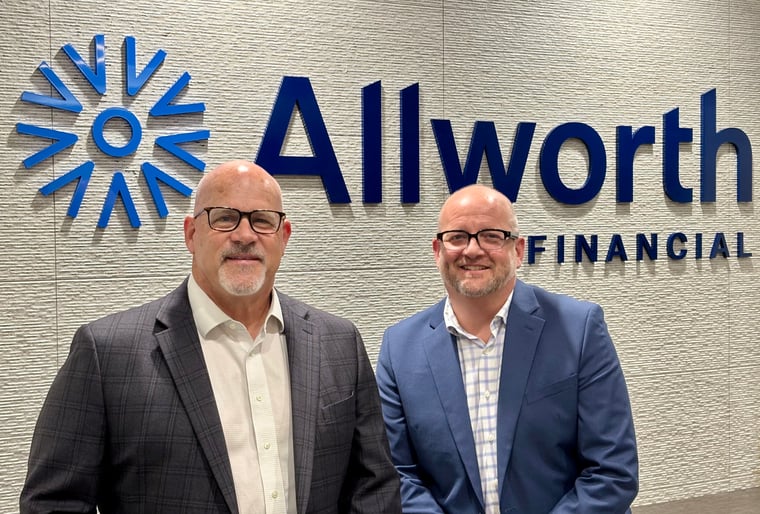
2025 in Review: The Headlines Were Loud, But Our Advice Was Right
On this week’s Best of Simply Money podcast, Bob and Brian take a deep dive into what really happened in 2025 — and why the investing fundamentals they shared all year long held up once again. From President Trump’s return and a new wave of tariffs, to a Federal Reserve caught between inflation and politics, to a stock market rally that rewarded patient investors — they told you what to expect, and they were right. Hear what mattered most, what moved the markets, and what lessons investors should take into 2026. Plus, the rise of real financial resolutions, how to measure if your money actually did its job this year, and your smart money questions answered.
Download and rate our podcast here.
Well, 2025 started with a new presidential administration, a trade war that shook markets a bit in April, a Federal Reserve trying to calibrate inflation and growth, and a rally that tested investor confidence. We're going to break it all down, what moved markets this year, what mattered most to your portfolio, and more importantly, what you should take with you into 2026. Brian, take us through the beginning of a walkthrough, 2025.
Brian: Well, it's hard not to start with this administration. So, let's start with Trump and tariffs. 2025 first kicked off with, of course, the return of Donald Trump for his second term to the White House back in January. And this definitely, of course, wasn't just a political headline. The markets felt it, markets moved with the kind of the changing winds of a new administration. So, America first early on, and that turned into tariffs in April that hit our trading partners, and that shifted a whole lot of economic expectations around the world, it wasn't just here. Basically, reshuffled a lot of relationships that had existed for a long time, kind of with the assumption that nothing would ever change. So, we saw tariffs slapped on goods from India, other countries, and then April 2nd, remember Liberation Day? Well, that was the...
Bob: Yeah, I remember.
Brian: It was kind of a big headline and we may or may not have answered a few questions from the clients who were worried about the market activity there. Global markets were rattled, and markets were hit pretty hard at that time.
Bob: Well, and let's go back to what we were talking about at that time. I mean, shoot, people were talking about all kinds of things, going back to a history lesson on the Smoot-Hawley Tariff, thinking that this was going to be economic Armageddon. And, yes, it was certainly unsettling there for a few days and weeks, but what we preached at the time, and it has, at least, to now borne out to be true, that the president used this as a negotiating tactic, as he often does and has done. The markets, as we all know, they hate uncertainty. They didn't know what to think of that big long list of the tariff board and the percentages and all that. And when the market is uncertain, when people don't know what to expect, the impulse is to just sell, sell, sell and wait for things to "calm down". And Brian, for folks that did that, sell first, and not stick with a long-term, diversified, well-constructed plan, they paid a price here because markets recovered as they always do, irrespective of which party is in the White House and all that. Because at the end of the day, corporate growth profits is the mother's milk of the stock market, and it has proven that yet again to be the case in 2025.
Brian: Yeah. And I feel like we have so many examples of that over the last several decades. My feeling, Bob, after all of this... I've been doing this since the late '90s. And the market period that I was raised on was more like the '80s and '90s when I was a kid, paying attention to what my grandparents and my parents were doing with investments and things. And to me, the '80s and the '90s, that was a period where really nothing bad happened. And I think a lot of people got to the point where we assumed that that was the norm, that really nothing bad is ever supposed to happen. And we just go on and things grow and we don't have to worry about anything. And then all of a sudden, we got slapped in the face with the original internet bubble bursting, 9-11, the recession related to that, and so forth.
And then ever since then, every few years, it's been some kind of absolutely chaotic situation. With 2008, and then we had COVID, and a lot of other things in between there. But it was very, very different from the '80s and the '90s. I think the last several decades have just been a reminder that there is going to be chaos. The market can handle it. So, even over the shorter-term periods during those years, the right thing was never to go run away and hide. Because that's a two-step transaction. If you're going to try to time it, you got to get out at the right time, but then you got to get back in.
So, you basically got to be batting a thousand on those decisions. Otherwise, you wind up wasting your time. And that's what happened to anybody who panicked in April when we had this new regime come in and new thoughts on tariffs, good, bad, or indifferent, and the world had to get used to that idea. The market immediately took about a 15% hit very, very quickly, very hard. And eventually, the dust settled.
And this reminds me a little bit of COVID because COVID came out of the blue in February of 2020. It came completely out of left field and had everybody panicked, but nobody's really paying attention to the market. But then the market took the biggest hit over the shortest period of time that it ever had. But obviously, eventually, the dust settled and people calmed down and realized that at the end of the day, profits still matter and the world still turns and I still have to run to the grocery store at the end of the day. And those grocery store workers are going to get paid because I was there. They're going to go deal with their families and things that they need to do. And dollars keep moving in a circle and the market and the economy keep moving forward.
Bob: Now, that's an excellent historical perspective. I mean, going back to the '80s and '90s too, remember, that interest rates were just in a nice, steady drop for 20 to 30 years. There was really no disruption there to speak of, and that game has certainly changed. We've had movements up in rates, and then now, we're moving back down. A lot of that in response to COVID and other shocks to the system. So, yeah, corporate profits always find a way. The way capital gets injected into the market is always a little bit different. Sometimes it's government stimulus, sometimes it's cheap money, sometimes it's speculation.
But just a couple of other historical points, and this is stuff we drive home all the time, Brian. Going back to 1926, these are for folks on either side of the aisle that think that one party or another is going to absolutely destroy this economy. Going back to 1926, Republicans have had control of the White House and Congress in 13 of those years. The Democratic Party has had total control, again, White House, both houses of Congress for 34 years. Which party coincided with greater returns from the S&P 500? Neither.
And according to Dimensional Fund Advisors who does this research and updates it every year, average returns when either party has complete control of the government is about 14% average rate of returns for both scenarios. And the lesson here is we got to leave our politics at the door whether or not we agree with certain policy decisions. As you've already stated and stated very well, Brian, the markets always find a way, human beings find a way. We continue to grow, we continue to work, and the economy marches on. And 2025 was yet another example of that happening in spades.
Brian: Yeah, publicly traded companies have a red playbook and a blue playbook. They don't care who is in office. They just want to know what place to run. And I think back to the inauguration, and looking right behind President Trump and who was sitting there in the front row. It was all the leaders of the tech companies which are the drivers of the universe's economy right now. And all of which had been labeled for a long time to be rather left leaning and only supporting of democratic presidents and so forth. And that's obviously not true. They support themselves. Let's just be super cynical about this and realize that they are there to support their companies and they're there to find opportunities. "What's the best thing we can do? Well if it's a Republican president, good, let's go kiss his butt for a while and we'll get what we need. And then if we got to pull out the blue playbook after the midterms, so be it. That's what we'll do." I don't like that, but that is how things run, and that helps me sleep at night and exhale when the market gets a little crazy.
Bob: That's exactly right. All right, well let's talk about the Federal Reserve. A whole lot of discussion about the Federal Reserve in 2025. In this ongoing discussion about Fed independence and dual mandate between inflation and growth, the Fed, obviously, is always trying to do something that's never easy, and that's balance inflation or bring inflation down, and then also look at employment numbers. And with tariff uncertainty, policy uncertainty, they just really didn't know. Speaking of having a playbook, they really hadn't had a playbook to go off of in a scenario with these ongoing trade negotiations for decades. And they sat on their hands a little bit and for good reason. They try to be data dependent, they try to make decisions based on data. And when you don't know what data is coming around the corner, it's awfully hard to make Fed decisions about interest rates. It was an interesting year in Fed land.
Brian: For sure. And it almost always is anymore. But this was interesting because the Fed, and kind of is, almost became the enemy of the White House. And we've seen a lot of arguments play out in the media as things got very political. That's a new situation that we hadn't seen before. Let's go over, what we're talking about in 2025 as it relates to inflation. So, really can't say how many times we've talked about emergency funds. Make sure you've got emergency savings in a high-yield savings account. Interest rates are still higher than they've been in decades. Yes, they've pulled back a little bit, but just make sure you've got a pile. You have oil in the engine. There needs to be cash out there. Should something come out of the blue and affect you, your family, a job loss or healthcare expenses, that kind of thing, then you don't want that money invested because the market can do anything at once at any given time, and you want to make sure you've got that out there.
And again, that high-yield savings account, maybe you were getting 4.5%, even close to 5% for a brief period there, it's now might be under four because of where interest rates have moved since then. That is still better, but regardless, don't worry about where that money sits. As long as you're getting some kind of interest rate in it, it does not need to be invested. It should not be invested like your longer-term investments as well.
Bob: No, excellent point. And going back to your prior points about just the volatility during 2025, we know we're going to have a return to volatility at some point for some reason. We just don't know when and we don't know the fundamental cause. And as a reminder, this is a midterm election year. We have threats of another government shutdown, potentially, coming in less than 60 days. So, there's always a reason, to your point, Brian, have fresh oil in the tank here to allow yourself the time and the flexibility to get through a period of short-term volatility so you're not having to make decisions based on fear or greed. And, yeah, whether the interest rate on your safe money is 3.7% or 4.1%, it's really immaterial. What we're talking about here is the fundamental financial planning point of making sure that emergency fund is filled for whatever your short term cash flow needs and wants are in the event that we do get some volatility in the markets. Because as we talk about all the time, Brian, it's not a matter of if, it's a matter of when.
Brian: Exactly. So, let's always talk about the market, of course, to kind of wrap this up. So, barring a catastrophe here in the next couple of days, the S&P 500 is going to finish up for the third year in a row. If you stayed in the market after 2022, which was one of the five worst years we've ever had, well, congratulations. If you were able to ride that out, then you've seen just about the worst the market can behave. Matter of fact, the last five years have been a microcosm of the best of times and the worst of times in terms of the market getting hammered and then recovering. So, you should be sitting at the highest level of net worth that you've ever had in your life. So, we always will offer this word of caution, right? Let's never get comfortable. There will be recessions. There will be another market downturn. This stuff is coming. We just don't know when. This is why you need to financial plan and you need to have stress tested it. "Here's what it looks like if nothing bad ever happens," again, "Here's what it looks like if I take a 20% shot to the mouth here in the next few months. Is my plan still okay?"
Bob: Here's the Allworth advice, the headlines will always change, but long-term market growth stays remarkably consistent. Stay invested, stay disciplined, and trust the power of compounding economic growth over the pull of short-term emotion. As we look toward 2026, more people are making financial resolutions, and this year, it doesn't appear to just be talk. We'll explain that next. You're listening to "Simply Money", presented by Allworth Financial on 55KRC, THE Talk Station.
You're listening to "Simply Money", presented by Allworth Financial. I'm Bob Sponseller along with Brian James. If you can't listen to "Simply Money" live every night, subscribe and get our daily podcast. Just search "Simply Money" on the iHeart app or wherever you find your podcast. Retiring in stages, turning off dividend reinvestments, and a do-it-yourself investor wondering if it's time to maybe get a little bit of help. Your questions, our answers, straight ahead at 6"43. Well, Brian, this is the time of year where everybody starts thinking about New Year's resolutions, but here's what's interesting. This year, financial resolutions are surging according to a recent survey or annual study done by our good friends at Fidelity.
Brian: Growing number of Americans, Bob. About 64% are contemplating a financial resolution for 2026. That's not shocking. Of course, we're going to talk about resolutions. It's pretty much New Year's. That's the next holiday coming up. That's up compared with last year, but the difference is, they're not just saying, "I want to manage money better." They're really starting to think intentionally about what that means. And so, Vanguard has noticed this too, they're calling it a financial resolution rebound because a lot of folks fell short in 2025. Inflation hung around. People's spending habits slipped. Maybe we weren't sticking to that budget from our prior resolution, but instead of giving up, they're now coming into 2026 with a purpose and a plan, at least, according to Vanguard and Fidelity. Even for individuals earning more than a quarter million dollars or with significant portfolios, this focus on intentional plans really echoes what we've been preaching for decades now.
Formally identified financial goals drive real behavior. If I know the target that I'm shooting at, I know exactly how to load my weapon. And so, what are these people focusing on? For a lot of people, according to this survey, it's just the basics. These aren't shocking things. Emergency savings. Making sure I've got my 6, 9, maybe 12 months' worth of expenses saved up in a bank account, liquid investing, and budgeting. All this stuff matters at every wealth level, especially budgeting. It's not just for getting by. It's for keeping that margin in your plan, making sure you've got room for error, room for things to happen that affect everybody, like the economy and the market not cooperating, or things that might happen just to you and your family. We've got to make sure we've got that buffer zone in there while still accomplishing all those goals. And that's why it's great to hear that these people are putting these resolutions in place to really finally put some skin in the game, really, to make sure their plans go the way they want.
Bob: Brian, you want to talk about starting with the basics, just basic blocking and tackling. I'll give you a story that happened yesterday at a little Christmas family gathering. One of my nephews, if you saw, you would not think this guy had the least bit of interest in the stock market whatsoever. Plays in a rock and roll band, works odd jobs to kind of support himself so he can chase his dreams musically. And he walks up to me and says, "Uncle Bob, I'm thinking about getting started with some investing." He starts talking about day trading and crypto and all that. And I'm like, "Dude, let's focus on just a broad, diversified ETF, exchange traded fund." Explain to him in about 30 seconds what that is. And then I explained to him in another 30 seconds what a Roth IRA is.
And I said, "Just put some money in a broad-based, 100% stock ETF, broadly diversified, and learn about what a Roth IRA is and keep doing that for about 30 years and you'll thank me later." And he looked at me and he says, "That sounds like great advice. I'm going to do that." So, you know, to the point we're bringing up, people are looking at this stuff, and I think it's good that folks are starting to get educated. And to your point, if they actually sit down and do a financial plan and attach some meaningful goals to what they're trying to do, and as we talk about all the time, know your why. If you know your why, you're more prone to follow a more disciplined approach. So, there's a little anecdotal evidence for yesterday of just a conversation I had with a young lad at a Christmas party.
Brian: And I have a feeling you're not the only one, because obviously, lots of families are spending time together over the holiday season and these topics come up at the dinner table and they come up just in the course of normal conversation. I did have a meeting myself with a young lady last week who was the college-age daughter of a client of mine. And it was just time for her to start. She had some investments they had set up for a while ago for her, but she's caught wind of Roth IRAs. And maybe that's a good idea now that she's got earned income sporadically throughout the year as she's in school, of course. But we had a long conversation about why is Roth important and why. One of the things I told her was, "You probably should banish the notion of doing anything but Roth in your retirement plans for, at least probably, the first 10 years of your career. Hopefully, you get to a point where you're in an income tax bracket where it becomes prohibitive. I hope that happens for you. But I'm going to throw out there that doesn't kick in really until you're making a quarter million dollars a year, if I'm being honest." That's kind of a pulled out of the air number.
But the point is, it's a lot higher than people think. When you're talking about somebody who's in their 20s with 40 years of potential tax-free growth, I'd be plowing money into that Roth IRA. This is what I told her, "Even if you never do it again, maybe once you hit 30, you're married, you're both making a high income, maybe you're kind of forced to do pre-tax. Well, you will have spent your 20s, that entire decade building up a core of tax-free money that's never going to be taxed again. And you may never put another dime into that, but that money will grow for 40 years, and that's going to put you in a great position." And she did go down the path, of course, and I understand why, she went down briefly the path of crypto and all this speculative stuff. It's hard to get away from it. It really does seem like I can take a small pile of money and turn it into a giant pile of money very quickly.
Bob: Let's face it, because just like weight loss or Ozempic drugs or anything else, that's all these kids see on social media. They see quick hits, quick results, get me there tomorrow. And when in reality, it's just spend less than you make, do it for several years. And the great thing about the evolution of our industry, Brian, is people can put money into broadly diversified funds with very low fees and expenses, and to your point, really leverage the you-know-what out of those Roth IRAs and get a great early start and really accumulate some serious wealth in a pretty short period of time.
Brian: Yeah, that's absolutely true. Now, the thing I did find encouraging about this too, though, and I've had a couple interactions like this, young people come in talking about that stuff for the reasons you mentioned, but it doesn't take much. A lot of them are coming in going, "This doesn't smell right. Please explain to me why it doesn't." I'm not saying crypto is a bad investment. It's a real thing. It's out there. It just doesn't have a clear place in a predictable portfolio type of a thing. So, build the core, play with that stuff on the outside.
Bob: Here's the Allworth advice, resolutions fade, real plans stick. Start the year not with wishful thinking, but with a measurable, intentional financial strategy. Did your money do what it needed to do in 2025? We'll explore that question next. You're listening to "Simply Money", presented by Allworth Financial on 55KRC, THE Talk Station.
You're listening to "Simply Money", presented by Allworth Financial. I'm Bob Sponseller along with Brian James. Well, most people, especially folks in the media, look back at 2025 and say, "How did the market perform?" But here's a better question, how did your money perform? Because unless you're 100% invested in the S&P 500 and living off of headlines, your money has a job to do. Maybe that's income. Maybe that's growth. Maybe that's a balance of both. Maybe it's protection, charitable giving or setting up the next generation for success. And this comes back to focusing on your financial plan, not just data spewed out from the financial media. So, Brian, let's talk about it. How do we evaluate if our portfolio actually delivered what it needed to in 2025?
Brian: Yeah, a lot of people get hung up as we spend 30, 40 years of our working careers wanting to watch the pile grow because we haven't planned on tapping into it, yet. It's just not that time of life. And so, we get ingrained in us that it's all about growth, growth, growth. That's all that ever matters. Well, people who are retired will start to think about that a little bit differently. And the question is, did my portfolio deliver the income I needed? So, let's kind of start with something basic, but often gets overlooked, which is just income. That's what we're trying to do here in the first place.
And in the first place, I would also say, do you know what you need to begin with? A lot of people don't even have that idea of what their budget is, what their actual expenses are. So, they can't really tell whether their portfolio is going to do what they needed to do. They just know whether it got bigger or smaller. So, if you are in retirement or close to it, the goal, of course, isn't just returns, it's reliability of that stream of income. Did you get the income you need? Did you get the income you planned for? And again, I'll go back to, did you plan for it in the first place.
So, finally this year, we're talking about bond yields again. It's been decades since that was a thing. But bond yields finally gave investors a chance to earn actual real interest off actual real bonds and CDs that they could look at and go, "All right, this doesn't stink anymore." It used to be that we ignored these things for a very long time. When I started in this industry in the late '90s, you could get 6.5% on a money market fund. And that was something you could actually build. So, if I got a couple hundred thousand dollars, I can generate $12,000 bucks a month off just an income stream, that I don't have to really worry about the ups and downs. But the problem is you might've been sitting in outdated funds or maybe too much cash because you're accustomed to, well, we just can't earn money on cash. It just sits there. Then you might've missed an opportunity. So, maybe that's something to take a look at. Make sure that your portfolio is set for the interest rates we currently have, not the ones we had 10 years ago.
Bob: Yeah, Brian, when you were getting that 9.65%, I mean, inflation had to be pretty close to that, right? And I think that's what a lot of people fail to realize, is these interest rates tend to move up and down based on the inflation rate. So, you got to look at real rates of return, meaning gross minus the inflation rate to see if your money's moving forward at all. And that's even before we factor in taxes. But as I look here at the Bloomberg Aggregate Bond Index for 2025, now, this is total return, not just yield, I mean, we're up over 7%, which is roughly twice the inflation rate for 2025. So, Bond Investor did pretty well this year. And that's after a rough couple of years.
Brian: And that's been a long time since we could say that for Bond Investors. Actually, it was a good year to be in bonds for once. We remember why we own them.
Bob: Yeah. And I think the overall point you're making, and it's a good one, is you got to ask yourself, does your financial plan still fit your life in 2025 and in 2026? A plan made back in 2021 or 2011 or what have you might be totally outdated now because, let's face it, and we've already talked about this a lot today, a lot has changed. Did you switch jobs? Did you sell a business? Did your kids move out or move back in? Did you use more money than you thought you were going to use? And are you sitting on a lot of extra cash that you don't need? And the point here is your plan should evolve with your life, and your money should move with it. And that could mean anything from rebalancing, checking the overall risk level of your portfolio, maybe doing some slight shifting from growth to income, whatever matches your phase of life. And that's really what, at least, an annual review of your comprehensive financial plan should help dictate moving forward.
Brian: Yeah. And again, that's why this is a great time of year. Don't spend a couple of weeks of lessened activity watching old Hallmark Christmas movies. Stop and think about, what did we accomplish this year? And really where do I want to go next year? This doesn't have to be a huge production. If nothing else, if you're married, then sit down with your spouse and just go over the big picture. Because every now and then, we just have to review, make sure everybody knows, all the players know exactly where the stuff is. And are we on a good path? Are we not on a good path? And then what do we want going forward? Set aside... What is actually happening may be different than what we want. And are we taking the right steps now to get where we need? So, your plan should be moving with your life and it should be looking forward in terms of, where do we want to go with this?
And then for now, another question to be looking at for this past year, did we leave any money on the table from a tax perspective? This one is huge, and you've pretty much got about 48 hours to do anything about it, which is not a lot of time for this current tax year. But if you're a high earner, you're an investor with a large taxable account, there are tools out there that will help you reduce that tax burden. So, we're talking about Roth conversions. When the market fell apart in April, that should be a trigger. Let this be a lesson. If it didn't occur to you, if you're somebody who you're a turtle who pulled your head in your shell and just ignored the market, first of all, that's good, at least, you didn't panic, but remember, there are opportunities.
The silver lining to a down market is an opportunity, for example, in the Roth conversion space. If I'm going to do a Roth conversion, best time of year, there is no seasonality, it's when the market is down because we know the market is going to recover as it always has. So, when it comes down, do the Roth conversion then. And then when the recovery does occur, that'll be happening in a tax free space. But you got to do the math. You got to do the numbers. Learn about it now so that you're prepared to pull the trigger. You're not going to get two, three weeks to think and learn when that moment actually happens.
Another one is tax loss harvesting. If you have positions in the red, then there are charitable giving strategies out there like donor advised funds. In addition, you can take those losses, just sell them. On the other hand, if you have gains, you can also move those dollars of appreciated securities into donor advised funds. You're really under the gun if you're going to try to do this by the end of this tax year and you don't already have an account set up. That's been a scramble for us for these last couple of years, as it always is. The holidays are donor advised funds season. We end up setting those up the second half of December. It seems like every single year.
If you're over 70 and a half, you can do something called a qualified charitable distribution out of your IRA. This will cover your RMD. Yes, as we always say, these ages don't match up. You're eligible to do a qualified charitable distribution at the age of 70 and a half, even though nowadays the RMD age is now 73. But regardless, either way, if there are charities that you support out there, there are ways to do it. And the neatest thing about a QCD, it does not factor into your overall income. I know that's hard to grasp, but it does not push you. Even though you took those net money out, you get the deduction, but it also doesn't count towards your income in terms of pushing you into higher brackets.
Bob: Yeah, and unfortunately, Brian, that qualified charitable distribution is a strategy I see way too many people not use and not even be aware of. And it's something we continue to talk about with clients and get them off that habit, folks over 70 and a half, of just writing a check and putting it in the offering plate at church, there's a way more strategic and tax efficient way to go about it. Here's the Allworth advice, the market doesn't know what you need from your money, but your plan should. Don't just measure performance in percentages in terms of market returns, measure it in how well your money served your goals. Well, from part-time retirement to buffered ETFs, we're tackling your smart money questions from across the tri-state, and it's coming up next. You're listening to "Simply Money", presented by Allworth Financial on 55KRC, THE Talk Station.
You are listening to "Simply Money", presented by Allworth Financial. I'm Bob Sponseller along with Brian James. If you have a financial question you'd like for us to answer, there's a red button you can click while you're listening to the show if you're listening to the show on the iHeart app. Simply record your question, and it will come straight to us. Brad in Milford leads us off tonight. Brian, he says, "We've always focused on returns, but lately, I'm worried about how those returns show up. They come from dividends, interest, capital gains. How do you design a portfolio around after-tax cash flow instead of just headline gross performance?" Great question.
Brian: Well, yeah, this is a great question, and it's an important one for a lot of people to understand. So, designing that portfolio around the after-tax cash flow, that requires... We're kind of flipping the script here a little bit in terms of thinking about performance. In terms of thinking, what did I earn? The question really should be, what did I keep? And when did the IRS get paid on this? There's really four components here to a disciplined framework for this. So, first off, classify your income by tax treatment, not asset class. There's really three flavors. There's pre-tax income, meaning you're going to pay ordinary taxes on it. You got tax-free, that's your Roth. And then anything else might be capital gains, which you might be paying 15%, maybe 20% if you're a high-income earner.
The next thing is intentional asset locations. So, now that we've talked about the different types of tax treatment, figure out what types of assets you have that are subject to those different treatments. If you've got tax-efficient growth assets, such as low turnover equities, exchange-traded funds, those kinds of things, then those, you can safely put in a taxable account. If you have some investments out there that are much more active, then we'll need to make sure that we've got that in a sheltered account, such as a Roth or a traditional IRA where that activity is not taxed. Also, separate in your mind cash flow generation from total return. We usually have spent 30, 40 years just looking at my pile of money. Did my pile grow? Did my pile grow? When we're going to start switching to income-based investments, then you need to kind of change your expectations and understand that I'm not trying to grow my pile anymore, I'm trying to use it to pay the bills. That just changes the overall goals.
And then finally, figure out the timing, not just the level of income. What time of year do these things need to happen? When should I take out that money? The answer is usually, if it's a lump sum, let's try to do it when the market's at a peak. But as Bob and I always say, if we know bills are coming due and the market's at a peak, carve it out, protect it from the market, and worry about the distribution later. But if we're at a time where the market is cooperating and we know we've got to pay that bill in the next 6 to 12 months, pull the trigger and get it out.
Now, we're going to move on to Ron in Florence. So, Ron says, they're planning to retire in stages, first some part-time work and then fully retire. "So, how do we adjust investment risk when that income fades gradually instead of stopping all at once?" That's a great question. They're very thoughtful of Ron.
Bob: No, it's a good one. And Ron, My first answer is listen closely to Brian's answer to Brad's question that he just gave because he gave a lot of good points there to consider when doing portfolio construction. But your question, specifically, I think relates to risk. Again, it comes back to when you need that money. I love the fact that you're retiring in stages, part-time work, all that. I think it's important to just have a good cash flow plan in place. Make sure you and your spouse are aware of what your income needs and wants are and when. And then factor in as much as you can, you know, what your part-time income's going to be. And then adjust that emergency fund accordingly, and then to the extent that that portfolio needs to deliver regular monthly return or income.
Even if that income is going to change and adjust in stages, make sure that the asset allocation is adjusted as well. Because what I think you're talking about here without seeing your entire picture is it's time to just gradually take the gas off a little bit in terms of being 100% in accumulation mode and start to shift things a little bit to some things that can both serve as an emergency fund and deliver some consistent monthly income without being subjected to huge market volatility. Hope that helps. Sam in Batesville, Indiana says, "Brian, we've always reinvested dividends automatically. At what point does it make sense to start using portfolio income instead?"
Brian: Well, I think that all of a sudden, this is a theme, with all these questions
Bob: A lot of income questions tonight. A lot of income...
Brian:. Everybody is thinking about income. I wonder if these people all meet for breakfast at a Bob Evans somewhere and agree, "What questions are we sending in today?" Anyway, first off, I would say, you don't have to. Just because you need a steady stream of injection into your checking account to pay the bills, you've reached that point, it doesn't have to come from dividends, and at least, not right away. I would say, the point is when you need to pay the bills. When you get to a point where you say, "I'm backing off on my work, and I'm therefore going to need to come up with another income stream." I would look at it as an option. First option is, "Okay, what if I leave everything alone?" As Sam mentions, I simply stop reinvesting my dividends and have them sent directly electronically to my checking account. That is a function that your broker should be able to handle for you, which simply means flipping a couple switches inside your account to squirt it over into your checking account whenever those dividends pay. It might be monthly, it might be quarterly, but whatever. See if that will pay the bills.
Some people do that, at least, in the first year or two of retirement, especially when maybe I'm not fully retired, but I've just backed off a little bit. I'm working less, or whatever, and I need to fill a gap for a little while. It might be as easy as just having that extra bit of injection of cash into the account. Try that for a while, and then beyond that, you can start to look at systematic sales of investments because you may need that when you completely... Probably will at some point. That allows you to maintain a little bit of a growth stance, but also taking advantage of dividends. So, let's see if David in Zenia has a question about income. He's talking about, he's a DIY investor, but the decisions are getting bigger. So, Bob, how do you know when complexity has crossed the line from being manageable in a DIY space to kind of risky because the questions got bigger?
Bob: Well, David, and I'll say, Brian as well, I don't know about you, but over the years, folks that are successful do-it-yourself investors, they tend to come in looking for some help under either one or both scenarios. One is they know their portfolio is really growth-oriented because that's what's fueled the tremendous growth in wealth, and they don't have the means or the way to do a good stress test of the risk of their portfolio. That tends to be one reason people come in. And then they know that if they just start turning over pieces of their portfolio, they're just going to expose their portfolio to capital gains.
The other reason people come in is when they, perhaps they listen to the show and we talk all the time about some of these tax strategies, and they're sitting there thinking, "I've never done any of that. I've not even thought of that. I'm probably missing the boat in terms of tax efficiency." So, those would be the two things. The overall risk exposure of your portfolio, and then really taking maximum advantage of some of the tax strategies that are out there. All right, coming up next, I've got my two cents, a couple factoids about gold. You're listening to "Simply Money", presented by Allworth Financial on 55KRC, THE Talk Station.
You're listening to "Simply Money", presented by Allworth Financial. I'm Bob Sponseller along with Brian James. Well, Brian, I know you're a bit of a history buff and I am as well. I came across a couple of fun facts here about gold. I mean, let's face it, gold's been in the headlines this year. It's up almost 70% here in 2025. But I thought it'd be interesting to take a look at, what does that actually mean when we take a look at our national debt? As we all know, we're about $38 trillion in debt in the United States and that number never seem...
Brian: Wait, what? We're in debt? We owe money? Wait, what?
Bob: Yeah, we do. It's up to you to pay it. But anyway, I found this a little bit interesting. And this is assuming that we're able to track where all the gold is, but supposedly, the US government is sitting on almost 262 million Troy ounces of gold. We're the largest gold holder by a bunch of any country in the world. Next is Germany, which holds less than half as much gold as the United States does. But here's the point I want to make, due to a statutory law going back to 1973, the government has to value the book value of that gold at only $42.22 an ounce. Meaning that I just found a trillion dollars, Brian. If you value our current gold holdings, it's worth over a trillion dollars when the government's only carrying at a book value of $42 billion. We just reduced the national debt by over a trillion dollars, Brian.
Brian: Look at you go.
Bob: How's that for some great news going into 2026?
Brian: It's only Monday too, Bob. Good job.
Bob: What?
Brian: It's only Monday. You're early in the week.
Bob: I'm just trying to...
Brian: Quick, little notice.
Bob: Yeah, go ahead.
Brian: The federal government has to value it at $42 per ounce. That translates to $4,500, which is the actual price about now. So, we are well, well, well under in terms of how we value that. Now, why this isn't a bigger headline, maybe it will be after Bob mentioned it.
Bob: Thanks for listening tonight. Tomorrow, we help you ensure that you own your money and not the other way around. You've been listening to "Simply Money", presented by Allworth Financial on 55KRC, THE Talk Station.
Insights for Complex Wealth Decisions
Join our email list for exclusive commentary from our Chief Investment Officer, early access to expert-led webinars, and your complimentary Wealth Planning Checklist for Complex Portfolios.
We take your privacy seriously and respect your privacy choices. By submitting this information you agree to our Terms of Use Agreement, Privacy Policy, and to receive important notices and other communications electronically.