
High-Net-Worth Playbook: January Moves to Grow and Protect Your Wealth
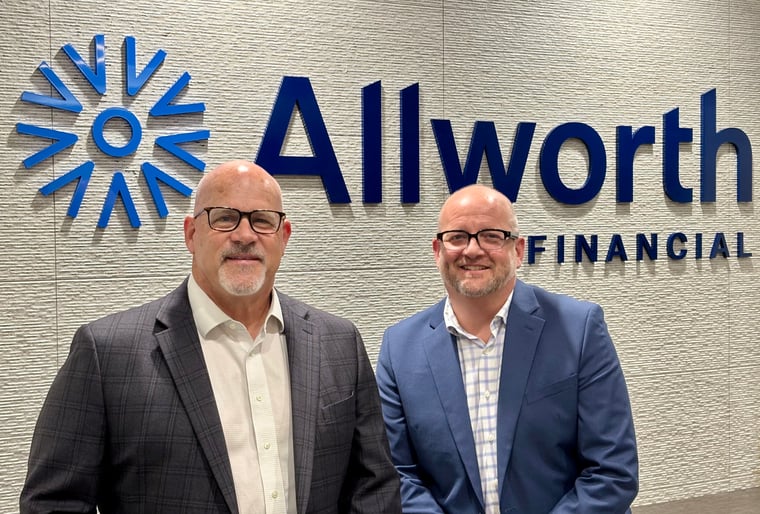
On this week’s Best of Simply Money podcast, Bob and Brian reveal why January is the most strategic money month of the year. From harvesting capital gains and revisiting direct indexing strategies to maximizing donor-advised funds and managing idle cash, they break down the smartest financial moves you can make right now. Plus, they discuss why a bigger tax refund isn't necessarily a good thing, how poor timing can erode your investment returns, and how to prepare emotionally and financially for long-term care decisions. Later, they answer listener questions about tax alpha, inherited IRAs, and consolidating retirement accounts.
Download and rate our podcast here.
Well, it's the first Monday of 2026, and if you're like most people, you probably kicked off the year with a couple of resolutions. Maybe it's get in shape or cut back on screen time. But if you're sitting on a few million dollars or more in net worth, there are much smarter moves to make right now, and those involve your finances. Brian, let's get into a couple moves that people should be considering here in the new year.
Brian: Yeah, well, this first one here we've talked about before. This is a typical annual tax planning types of things. But now, we're going to look at the timing a little more closely here. So, move number one, harvest those capital gains and reset your cost basis. So, December is usually when people talk about tax loss harvesting, and the reason for that is because by this time of year, we usually have a pretty clear picture, or as clear as it's going to be, what our tax situation is going to look like when it comes time to do taxes here in the next few months. But in January, well, that's when savvy investors start to harvest gains. You can sell some appreciated assets, realize those long-term gains, and immediately buy them back to reset your cost basis as long as you're careful.
Now, what we mean by that is something called a wash sale. If you're going to harvest gains there, then you can go ahead and do that, and that will not create a wash sale. So, I want to avoid confusion here among anybody. But at the same time, on the other end of this, if you are going to sell out of some assets and buy them back in, you know, a lot of people might want to harvest a loss there, you have to stay out of that security for 30 days, or the IRS will deem that sale as not to have occurred for tax purposes. So, just be careful you understand the wash sale rules.
But this can be especially smart if you had some lower income last year or maybe you're early in retirement and you're managing your bracket level. So, that gain could be taxed at 15%, believe it or not, even 0%. There is a certain level of income for single or married taxpayers where you may not pay any capital gains at all. Now, remember, here's the confusing part, that is not only an income bracket. That capital gain that you would be generating is itself part of the calculation. So, you really have to have some pretty low-income years to generate a zero percent capital gain-type situation. But it's not as hard as you might think. There are rules out there that put that in place. What's another move we can be thinking about, Bob?
Bob: Well, move number two, and I think it kind of dovetails with what you just talked about, and that's revisit your direct indexing strategy. And we're talking now about taxable accounts where we're taking full advantage of these direct indexing or tax loss harvesting strategies with individual positions. And if you started using a strategy like that in 2025, and a lot of people probably did, now's the time to clean that up. Back to Brian's prior point, December, if you did some things to do some tax planning going into the end of the year, December likely left you with some temporary, uninvested positions from watch sales.
January is when you want to reestablish your full market exposure, stay fully invested, but tweak the customization for the coming year. It means you don't have to go right back into the same sector or even the same stock that you sold in 2025. Now's a good opportunity, as part of your direct indexing strategy, to maybe tilt towards some other asset classes. Things like small cap value, small cap growth, maybe some dividend strategies, some things that maybe diversify the portfolio, do it on a tax efficient basis and get that portfolio position so that we're not so concentrated in big cap tech stocks in 2026 and get you to some other asset classes and strategies, but do it on a tax-efficient basis.
Brian, talk about charitable giving, move number three that we want to cover. And you've done a great job of covering this throughout the third and fourth quarter of 2025, talking about taking full advantage of that standard deduction, but by maybe lumping some charitable giving into two tax years instead of one. It's a great idea. You've covered it well. Let's touch on what we mean here in 2026 so that we don't forget about what maybe some folks plan to do or started to do in 2025.
Brian: Well, tis the season, Bob, to be thinking about this anyway. It's the holidays, we're in a giving mood, so let's make sure we understand the tax benefits we can get if we handle things correctly. So, front loading your giving in January can have some huge advantages. If you fund a donor-advised fund now, you can get the deduction for this year, and then give yourself 12 months of potential tax-free growth on that money, and which can give you that much more to benefit from that charity.
And remember, you're taking that deduction. What you're doing is you're lumping several years' worth of donations all into one year. So, for example, if you know you're going to give your church or your charity or whoever you have in mind, $10,000 a year for the next five years, well, that's $50,000, none of that is large enough to get you a tax deduction because you probably will not be clearing the standard deduction anyway. But if you lump it all into one year and use a donor-advised fund, you can take $50,000 in one year. So, the ideal time to do this would be when you know it's going to be a big tax year anyway, and then you can turn around and dole it out from the donor-advised fund. It's no longer your money and you can't get it back, but you still control, to some extent, how it's distributed and when, more importantly, to that ultimate charity.
But they don't know the difference. They just know that you're giving the same amount that you gave all along, but you will have lumped it all into one year to have gotten a better tax advantage for yourself. So, this will give you a calmer, more deliberate giving plan. No more last minute scrambles in December if you do this year at the beginning of the year. And if you have a strong income year, maybe you sold a business in '25, well, this is one of the best tools you can use to offset some of that tax hit that you're about to take. What about...
Bob: Brian, well, just to belabor that point a little bit or talk about a point that you made, you talked about having 12 months' worth of potential tax-free growth on that money. We're talking about the growth on the money once it gets into that donor-advised fund because once it's in there, it's a charitable fund. There are no taxes being paid on the growth. So, to Brian's point, if you can get out in front of this and be strategic early in the year... Let's face it, we had a real healthy stock market year in 2025. Now's the time where you can avoid those capital gains taxes on what you want to give away, get the tax deduction now, get it in that donor-advised fund, get it diversified. Even if you're not going to part ways with the money right now, you still have control over it. Correct me if I'm wrong, Brian, that's what you're talking about here with giving yourself 12 tax-free months of potential tax-free growth once it's in the donor-advised fund, right?
Brian: Right. Because when you're using a donor-advised fund, the whole intent of a donor-advised fund is to stretch out the ultimate distribution of these assets to the charity, but lump into one year the contribution of the fund in the first place. So, since we know there's time involved, there's going to be time involved in stretching out those ultimate distributions, then that money has to sit somewhere, and that gives you the ability to invest. Even if you want to be conservative, you might keep it in a money market or CDs at 4% or 5%. Well, that is going to result in that much more money available to go to that charity, which may reduce. That could eliminate the need for you to reconsider this any sooner because those funds will, again, create more to create future contributions from you to those charities ultimately. What about cash, Bob? What if you got idle cash? What would you do there?
Bob: Well, people have money in idle cash for a number of reasons. Maybe you sold a business. Maybe you inherited some money. Some people just neglect to monitor the maturity of their treasuries or their CDs, or they've neglected money market accounts that maybe have gone down in terms of yield. Especially now in today's day and age, you've got to manage your cash just like any other stock or bond portfolio. So, take a look at your overall financial plan. What are your goals? What are your needs and wants from your cash assets? And make sure you get those assets deployed strategically here in 2026, both from a yield standpoint and from a tax efficiency standpoint.
Now's a good time to evaluate maybe whether a laddered municipal bond portfolio might make some sense, to add some tax alpha to that cash. Spread out the maturity of those money market treasuries and CDs. Don't just buy and let the bank renew a five-year CD at very low rates. You might be passing up on some opportunity here down the road. So, make sure you sit down and manage your cash, money sitting idly in the bank. Another thing, Brian, is start your tax planning early. And we emphasize this all the time. Talk about what we mean there by tax planning early. I mean, nobody wants to talk about taxes coming right out of the holidays, but this is the opportune time to develop an actual tax strategy.
Brian: Well, if your CPA is hearing from you normally for the first time in a given year in October, well then you're already a little bit behind. So, January is really when you want to get an idea. At least run some kind of a projection because now, you can start to get a handle around the rules that may have changed. There was an enormous amount of little things from The One Big Beautiful Bill that are kicking in over time. So, I would recommend sitting down with your CPA to make sure that you understand what those new rules are going to be for this year here in 2026 and see if you should be making adjustments now to take advantage of those things or to protect yourself from them. The sooner you do that, the more time you're going to have to move the puzzle pieces around to be sure that you minimize the impact of those things or maximize the opportunities as they exist.
This will affect things like Roth conversions, big gifts you might want to make, timing distributions from a business or if you're going to sell a business, those kinds of things. The big thing here, Bob, is flexibility. That means you've got 12 months. If you do these types of analysis now, you'll have a full year here to make any decisions and move these things around. But if you wait too long, you might be stuck toward the end of the year trying to do things that just can't be done.
Bob: All right. Well, speaking of maintaining flexibility, now is a great time to start your estate planning now. If you're somebody that has some plans to do some gifting or maybe some more nuanced or intricate estate planning strategies, sit down and book a meeting with your financial advisor and your estate planning attorney now. We're talking about gifting strategies, trust. All this stuff takes time to get set up, and you want to run some numbers and be out in front of what you're actually going to strategically be doing, especially when it gets into gifting. Don't wait until the fourth quarter of 2026 where every estate planning attorney is slammed, and you just got to get in line and hope they can get to you before the end of the year. That's not a knock on attorneys at all. It's just reality. People only have a limited number of hours. So, get out in front of this early in the year because people tend to think about their estate planning strategies late in the year. And just a reminder, it takes time to do this stuff correctly.
Here's the Allworth advice, start your year not just with resolutions but with real financial action. January can be your most strategic money month if you get out in front of this now. Coming up next, why some taxpayers will see bigger refunds and why that's not necessarily a good thing. Plus why some are earning less than their investments are actually making. You're listening to "Simply Money", presented by Allworth Financial on 55KRC, THE Talk Station.
You're listening to "Simply Money", presented by Allworth Financial. I'm Bob Sponseller along with Brian James. If you can't listen to "Simply Money" live every night, subscribe and get our daily podcast. You can listen the following morning during your commute or at the gym. And if you think your friends or family could use some financial advice, tell them about us as well. Just search "Simply Money" on the iHeart app or wherever you find your podcast. Straight ahead, too many retirement accounts, new secure act rules, and a long, neglected health savings account. We're going to break all that down and more what smart investors should be doing in each of those cases. The IRS has announced delays in how it's handling certain tax season tasks. But here's the surprising part. Some people are going to end up with bigger refunds because of it. What's going on here, Brian?
Brian: Well, who's likely to see a higher refund? Well, people with multiple deductions, credits, if you added a child, paid for education, maybe there's a big charitable donation, or if you took advantages of some tax breaks like the clean vehicle credit or energy efficient home upgrades, all those things can boost your refund. So, if you've considered those projects, make sure you're taking that into account. That can help them pay for themselves.
If you over withheld from your paycheck, maybe you didn't adjust that withholding after a job change or after a raise, or you might want to be making sure if you've switched from Roth to traditional 401(k) contributions, make sure your withholding is still in line to keep you where you need to be. But you could have sent too much to the IRS this year. So, that overpayment, of course, comes back to you as a refund. For business owners, real estate investors, maybe your income dropped this year. If you took some losses, your taxable income could have dropped. That might result in a larger refund, especially if you continue to pay quarterly estimates, assuming that your income was the same as last year.
Bob: Yeah, it feels like this entire show might end up being the importance of working with a good CPA and a fiduciary financial advisor. Brian, to me, this comes down to proactive communication. And a lot of times, people just don't take the time to communicate with their tax professional. Here's what I mean. If you're somebody where... To your point, some of these credits happened last year and aren't going to happen this year or vice versa, or you do own a business and your income fluctuates quite a bit, you've got to communicate that stuff to the person that does your taxes, especially if you're filing quarterly estimates, because you don't want to run into a situation where you've got to write a huge check at the end of the year or next April or what we're talking about tonight, getting a huge check back next April.
I mean, let's face it, would you give a bank $20,000 of your own money to hold for 12 months and they give it back to you with no interest next April? Probably not. We see people calling us, emailing us all the time. They're going and shopping for different savings accounts rates. They're quibbling over 10 basis points on a savings account interest rate, but yet they think nothing of having their money tied up with the IRS for an entire year earning nothing, zero. So...
Brian: People who get excited about that, "Hey, I got a big refund coming in April." Well, that's great, except you're leaving some opportunity on the table here.
Bob: You're listening to "Simply Money", presented by Allworth Financial. I'm Bob Sponseller along with Brian James. Here's something that might surprise you, even if you're invested in a solid mutual fund or ETF, a real, well-performing fund, there is a very good chance you're not actually earning the returns that are reported by that fund every year. It's called the behavior gap. Brian, get into this. This is really important. We see this often as well.
Brian: So, yeah, the status coming from Morningstar. New research shows that investors on average are earning less than the funds that they invest in. Which that sounds kind of strange, right? If I own a fund, I get whatever returns, don't I? Well, over the past 10 years, here's the numbers behind it. The average investor earned about 6.3% a year, but of the funds that Morningstar looked at in this study, those were averaging about 7.3%. So, some people are going, "Well, there must be fees. They're giving that back in fees." No, they're not. That's not the point. Where did that missing 1% go? It was lost in timing.
People tend to jump into these funds after they've had a good run. I just had a conversation yesterday with somebody who was looking at their retirement plan and asked me to look at it. And he said, "Yeah, you know what? Don't worry about it. I'm just going to take a look at what happened last year, two years ago, and then I'll just pick those funds." And I said, "Wait a minute. Bengals went to the Super Bowl in 2021. Does that mean they were going to win in '22 and '23?"
Bob: Please don't talk about the Bengals. I'm still trying to pull myself out of the depression state. But, no, finish your point.
Brian: Yeah. So, again, Morningstar looked at both. This isn't just a handful of funds. They looked at both mutual funds and exchange traded funds. These ETFs are even easier to jump in and out of. Index funds, these low-cost, passively-managed funds did a little bit better. But even then, the average investor still underperforms the fund. And it has to do with behavior, you know, stalling on making that decision. Maybe if somebody thought about this earlier this year in April and thought about how the market's kind of bumpy, "I don't want to invest," and decided to wait until June, well, money was left on the table. So, when we look at the returns that mutual funds have had or any investment, frankly, you are looking at an agnostic, year-over-year type of return scenario, not, when did somebody out there get the guts to go ahead and invest and not read the headlines anymore? So, those numbers on that piece of paper you're looking at have nothing to do with the human element of all these different things.
Bob: The flip side of this, Brian, and we talk about this often on this show is some people, not all, but some people use their growth mutual funds like your savings account. Here's what I mean. If people know they're going to remodel their bathroom or buy a car or take a cruise or something like that or an expensive vacation, they want to pull the money out of that high-growth fund whenever the bill is due for that particular spending event that's going to happen. Talk to your advisor ahead of time because it makes sense to get that money out of harm's way, get it out of the market with enough time to prevent some type of market correction or just a temporary drop due to a news event, something like that. Again, it comes down to communication with your advisor to try to... You know, we're not trying to day trade this stuff or get into an extensive market timing, but there is some common sense involved here. I mean, if the market's at an all-time high and you know you're going to be doing something over the next two to three months, it might make sense to take a little money off the table.
Here's the Allworth advice, even great funds can't protect you from poor timing. The best way to grow wealth isn't chasing returns, it's avoiding the costly mistakes that could keep you from earning what your investments are already providing to you. Coming up next, assisted living, nursing homes, or staying home. What's the right move for your parents or for you? These are tough, costly decisions. Will help you plan before the situation becomes urgent, coming up next. You're listening to "Simply Money", presented by Allworth Financial on 55KRC, THE Talk Station.
You're listening to "Simply Money", presented by Allworth Financial. I'm Bob Sponseller along with Brian James. It's one of the hardest decisions a family has to make and it never feels like there's a perfect answer. Brian, I know this is definitely more of an art than a science. We're talking about senior living, whether to do assisted living, nursing homes, in-home care, or just trying to keep mom and dad at home. The truth is these decisions are as emotional as they are financial. Let's start by laying out what the options even are and what the typical cost is for each of these options.
Brian: And this can be a little bit of alphabet soup. You're looking at a lot of different words that are going to sound familiar, but they're all going to run together. So, we'll start with the different flavors of the types of care you can have. So, first off is independent living. This is more like senior apartments. No real care is provided, but it's kind of ready at hand if something is needed. You're in a community of people, kind of your own age and a lot of commonalities there. That runs about $3,000 a month for just that kind of bare minimum with help nearby, but not necessarily right up in your face every day.
That next step up though, Bob, is assisted living. This is going to include help with meals, medication, and just daily tasks of keeping the household in shape and taking care of the things you need to. That'll run anywhere from $4,500 to $7,000 monthly. Again, you're still kind of independent, but you've got somebody hanging around that can help with those daily routines. Then where we get into the bigger ones is really memory care. A lot of people go through this. It can be very challenging, of course, aside from the finances. But so, of course, we're talking about Alzheimer's, dementia, Parkinson's, those kinds of things. You're looking at $6,000 to $10,000 per month for that level of care. And then one more step up from that, when we've got nursing home care, this is really, really where we're getting to where we've got a lot of medical issues and kind of really end-of-life type care. Full medical care runs about $9,000 to $12,000 a month for a situation like that.
But the thing I want to point out here, Bob, is a lot of people will do a financial plan for people who are young and healthy, maybe just retired, 60s, maybe early 70s, and they'll start to look at these numbers and they'll say, "Okay, I have got to be able to take this plan that we just built and layer on an extra $10,000 a month for one of these days. That is not the case. Remember, when you're in one of these more elaborate, more expensive type homes, you're not traveling anymore. You're not running to the grocery store anymore. There's a lot of bills that are being covered for you in that $10,000 a month. So, it might be more than you're actually spending currently to run your lives, but it's not a complete extra expense added onto the top. Be careful not to go too far down that rabbit hole of how scary it will be to go through this type of thing. It's expensive for sure, but it's not as terrifying as it might seem.
Bob: Yeah. The flip side of that, Brian, and I'm living through this right now with an actual client, I mean, it is a little bit terrifying. And here's what I mean. This person is recently widowed. She wants to stay in her home, and she has multiple in-home caregivers coming in for a variety of reasons. So, when you layer on some of these in-home care folks, depending on what they provide, I mean, in this one case, and I'm talking about one, this particular lady is spending upwards of $20,000 a month to stay in her home and have all these people come in and provide all these services. So, thankfully, she's in a situation where she can, at least now, afford all that, but boy, that's a lot of money.
And I guess that leads to the point that really makes this difficult is, emotionally, everybody, Brian, everybody wants to stay in their home as long as they can. And you got two things you got to look at here. And I'm in the middle of dealing with this also with multiple families. There's communication needs that need to go on between the siblings and the kids. Who's going to provide this kind of care to enable mom or dad or both to stay at home? And then financially, what does this all mean? Because again, the default is, "I want to stay in my home. I want to stay in my home. I want to be where I am," but it costs money, time, effort, angst on the part of the family that you're having come in to help you. And these communications and discussions need to take place sooner rather than later so that you don't disrupt multiple families on top of all the money decisions to make all this work. It could get very, very difficult.
Brian: So, yeah, we want to be paying attention to a lot of these things, and it can be very, very stressful. So, what should you be doing? Well, think about your own future here. What do you want? And again, this may help you think about what you're... And even if you're doing this early, maybe you feel too early, but you might be helping your parents and other relatives simply by you thinking about it and you can have better conversations with them. Is it important to you to age at home? Could your house even handle that, right? Are there a lot of steps? Are there a lot of things that are going to make it tough for somebody who's a little bit limited with mobility? Do you have long-term care insurance? Or have you looked into asset-based policies that might give you some flexibility?
One of my all-time favorite things to do for people is if we've got a life insurance policy, for example, that was purchased when the kids were new or maybe even before the kids were around and now those kids have kids, then sometimes, those policies can have cash values built up in them and we really no longer need the death benefits. Well, one of the things that can be done, you can, of course, cash it out and run away and pay taxes and all that. That's always a choice. But a lot of times what you can do is convert that into something that, yes, has a minimal death benefit, which is kind of necessary to make this work, but instead of focusing on that, it also provides primarily, a long-term care benefit. So, all you're doing in that case is read a bunch of paperwork and some testing and redeploying a pile of money from a need you don't have, which is death benefit, to a need that you do, which is now long-term care. That's called a 1035 exchange. It's a tax-free type of a thing. If you have that situation and you don't need death benefit, you might consider that.
Bob: Brian, another thing to consider, and I'd love to get your perspective on this, even if you don't agree with me, a lot of times I've had people that have had life insurance policies for years with this built up cash value in it. And when you run the actuarial probability of dying, which is, last time I checked, was 100%, versus needing long-term care coverage, which is around 50%, sometimes you can afford, if you build your plan properly, to just spend down some of your assets knowing that the life insurance is going to come in and backfill those assets that you spent down. That can end up being a pretty good scenario because, at least, you know you're going to get some bang for your buck out of your insurance. What do you think about that idea?
Brian: I think that's really something to look into and make sure you've got all these moving parts covered from a standpoint of. It's complicated, but if we think ahead, then we can control the future a little bit as long as we plan.
Bob: Here's the Allworth advice, planning for long-term care isn't just smart. It is a gift to your family. You're saving them from crisis, conflict, and potentially, years of stress. Coming up next, from tangled IRAs to secure 2.0 confusion and even some hidden gems in your health savings account. We'll tackle the questions you've been meaning to ask, coming up next. You're listening to "Simply Money", presented by Allworth Financial on 55KRC, THE Talk Station.
You're listening to "Simply Money", presented by Allworth Financial. I'm Bob Sponseller along with Brian James. Do you have a financial question you'd like for us to answer? There is a red button you can click if you're listening to the show from the iHeart app. Simply record your question and it will come straight to us. All right, Karen in Hyde Park leads us off tonight. Brian, she says, "We've heard about something called tax alpha, the idea that good planning can add as much value as investment performance." I don't know about that, "But how do you measure tax alpha?" Talk about what that is and help Karen understand the difference between that and just plain on investment performance.
Brian: Yeah. I actually like the way she phrased that. That makes a lot of sense. And I think there's a lot of benefit to this. So, what is tax alpha? Tax alpha is the extra value you can get by focusing on the tax efficiency of your investments rather than simply looking at a pile of different investment options and watching how they go up and down over the years. So, really what this means is, what has my portfolio done after taxes? So, for example, if I'm doing something and somehow I've got some kind of heavy trading strategy that is generating a lot of short-term gains, well, those gains are going to be taxed to me as income. If I'm in a 30% bracket, well, then I'm giving away a third of my return in my short-term trading program. That's why a lot of people don't do this kind of thing or, at least, if they're doing it, they're doing it in an IRA maybe.
So, how do you measure it? Because the only way you can really know, you can't open a brochure and see what some investment strategies after tax performances have been because taxes are an individual thing. Everybody's in a different bracket with a different situation. So, the after tax performance is going to be different for everybody. Best thing you can do there is establish some kind of a benchmark that matches what it does, and then figure out what your own pre-tax returns have been. What did that portfolio earn before taxes? This is usually pretty easy to get to. What did the benchmark earn? That's pre-tax alpha. And then figure out your after tax returns.
This is where you're often you're looking at your Schedule B, your 1099-B and looking for the capital gains and losses that were generated. This isn't a perfect comparison, Karen, but if you had this money in some kind of a portfolio prior to moving to the tax alpha strategy, then what you can do is look for more. There should be more activity generating more losses in those kinds of things. And so, see if you can find a way to compare those older returns with the newer ones, with that strategy in place. Now, granted, you'd be talking about two different market periods. It is not perfect by any stretch, but you should be seeing more activity trickling through your tax return in the sense of realizing gains that are offset, therefore not being taxed, or giving you up to $3,000 in a straight up deduction if there's any losses over and above the gains that are generated. So, hope that helps. That's a slippery slope. I'm a big believer in tax alpha, but it does take some understanding.
All right, so we're going to move on to Aaron and Kenwood. Aaron says they feel good about their net worth. They look great on paper. But they feel like lots of it is illiquid. They've got a bunch of stuff everywhere, real estate, retirement accounts, some stakes in businesses. And he's wondering, how do you build up liquidity without blowing up the plan, Bob?
Bob: Well, the words that stand out to me in this question is blowing up the plan. And here's what I mean, Aaron. The plan needs to include a gradual transition of some of these illiquid assets and accounts into something that can create liquid income. So, I think the plan needs to be reexamined. And the big thing that I tell folks all the time is, you don't have to make wholesale decisions and movements in one fell swoop in one year, because if you do that, that will blow up your tax return in the way of unnecessary taxation. So, I think you've got to sit down, especially as it relates to illiquid assets such as real estate or a business. There's a process, there's a timeline that you've got to develop that matches your desire for liquidity with your personal desires in retirement, and craft a gradual strategy to transition your net worth into something that's going to meet your needs when you no longer want to work. I hope that helps.
All right, Ron in Mason says, "We've got multiple IRAs and 401(k)s spread across different institutions. What's the cleanest way to consolidate them without losing cost basis data or protection?" Fortunately, this is a relatively easy one, Brian.
Brian: Yeah, softball for me. So, the way to handle the cost basis of an IRA or a 401(k) is to ignore it entirely because it doesn't mean anything at all. I mean, unless you're in a situation where maybe you work for Procter & Gamble, if you're looking at something called a net unrealized appreciation type of a transaction, yes, then then the cost basis will matter. But most people simply have mutual funds or exchange traded funds in those types of retirement plans, and so therefore, the cost basis is irrelevant. The tax treatment of the account, if it's pre-tax, then that simply means that our traditional IRA or 401(k), that simply means that any nickel that comes out of it is going to get taxed as income to you.
If it's Roth, then it's not going to be taxed at all as long as you've met a couple simple rules with regard to timing and some other things that are relatively simple to get passed. So, you can consolidate all those into one account without really losing any information. Not to mention, let's say you're not talking about an IRA, cost basis only is relevant in a taxable account. If the custodian has that information, it will transfer over from one financial institution to another. Sometimes it takes a week or two to get it all there, but they do have to communicate that. If they have it, if you handed them a certificate 30 years ago that represented some stock, then they don't know either what you paid for it. So, hope that helps.
One more question here and we're going to move on to Paul in Anderson. This is not a softball. Paul says, his CPA mentioned the secure 2.0 rules for inherited IRAs, Bob. And he's asking, does the 10-year rule mean equal withdrawals or can you still manage the time? I guess this one's not too bad, but could be a bit of a rabbit hole. Bob?
Bob: Yeah, there's a couple of different rules to consider here, Paul. And I'm going to assume we're talking about a non-spouse beneficiary. So, the first thing to know is, when does the proverbial clock start running? That 10-year clock starts running the year following the death of the original IRA owner. That's the first thing to keep in mind. After that, it comes down to, was the person that passed away already in their Required Minimum Distribution stage? Were they already taking annual RMDs? If so, then you are required to stay on that same schedule based on the decedent's age and that whole formula. And then in addition to that, the whole thing needs to be paid out completely in 10 years.
So, what that situation can end up looking like is you got to take a little bit out every year, and then if you do not manage it, in year 10, you might get a bigger lump sum coming out and a bigger tax bill than you might want to see. The other option is, if the person that passed away had not started annual RMDs, well, then you got a ton of flexibility as long as you meet that 10-year rule. You don't have to take anything out until year 10 if you don't want to, but then in year 10, you got to pull the whole thing out. It's all taxable income. You owe all the taxes. So, depending on what your situation is, that's where you want to sit down with your advisor and your CPA and map out an income strategy to make this withdrawal situation as tax efficient as possible. There are a lot of moving parts there, but if you understand what you're dealing with from the get go, you can manage the situation without a whole lot of complexity. Coming up next, I've got my two cents and some additional thoughts on the whole long-term care planning discussion we had a little bit earlier. You're listening to "Simply Money", presented by Allworth Financial on 55KRC, THE Talk Station.
You're listening to "Simply Money", presented by Allworth Financial. I'm Bob Sponseller along with Brian James. Brian, I want to I want to talk a little bit more, you know, just piggybacking on our prior discussion about this whole long-term care planning process. And what I want to talk about here is, assuming we get to the point where it is time to start looking at a long-term care facility, moving into a facility, there's some important considerations to factor in and some important questions to ask. And a couple of those questions, and I think these are good ones, what's the staff to resident ratio at night? Because look, if you just schedule a tour and go in there, it's like any other tour you go on. They're going to put their best face on the whole situation, "The things fully staffed, it's been cleaned, it's all that." You want to talk about, you know, what are things looking like at night when a lot of this care is really needed. So, staff to resident ratio at night.
And then also, what's the staff turnover rate? They should be willing to share that kind of information with you. Because if the staff is moving in and out and it's a constant turnover, I don't think that's good. I think our loved one wants to know who they're dealing with, develop a relationship. They need to get to know what the ins and outs of what the needs really are for our loved one. So that if the staff's turning over at a breakneck pace, that's not a really good thing. And then I would also say, are they doing background checks on all of their caregivers at the facility? I know you want to jump in here as well.
Brian: Yeah. So, I think this is probably one of the most important places where word of mouth feedback is the most valuable. The brochures are lovely, but they're not going to not be lovely. So, look under every stone for stories. I would be looking on social media and just search for the name of the facility. And bear in mind, obviously, you're going to see stories. People who are super happy don't tend to talk about it very much versus people who are raging over something that could come up there. But again, just look under every stone. Find people who live there. You might even catch somebody who perhaps looks younger walking out of the facility. Perhaps this is the adult child of someone who lives there. Stop them in the parking lot and just ask how it's gone. This is an extremely important one. So, I think you look under every stone for every piece of information you can possibly get.
Bob: Or just network around with your friends and folks. I mean, everybody knows someone who has needed this kind of care. Don't just rely on the internet and online reviews. Get out there and talk to somebody. Because the sad truth is, you can spend a fortune and still get poor care if you have not vetted this situation carefully. Thanks for listening tonight. You've been listening to "Simply Money", presented by Allworth Financial on 55KRC, THE Talk Station.
Insights for Complex Wealth Decisions
Join our email list for exclusive commentary from our Chief Investment Officer, early access to expert-led webinars, and your complimentary Wealth Planning Checklist for Complex Portfolios.
We take your privacy seriously and respect your privacy choices. By submitting this information you agree to our Terms of Use Agreement, Privacy Policy, and to receive important notices and other communications electronically.