
The Stock Market's Next Test—and How Much Cash You Really Need
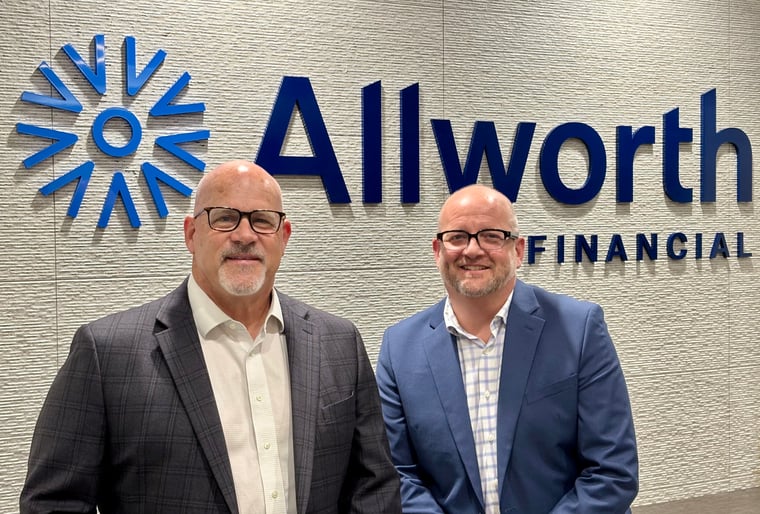
On this episode of Simply Money presented by Allworth Financial, Bob and Brian explain why this earnings season could be one of the biggest tests for the stock market in years—and what investors should really be watching beyond the headlines. They also discuss how much cash you actually need, why too much liquidity can quietly hurt your long-term wealth, practical ways to protect your finances from growing cybersecurity threats, and answer listener questions on helping adult children fairly, qualified charitable distributions, stock option taxes, and tax-smart investing strategies.
Download and rate our podcast here.
One of the biggest surprises in the stock market right now could have nothing to do with tariffs, AI, or the Federal Reserve, Brian. It's this corporate earnings season which is kicking off in earnest here this week.
Brian: Report card season is what we call this, and we're certainly hoping that we get some good grades from our big publicly-traded companies out there. So, the expectations, Wall Street now expects companies in the S&P 500 to be earning about $373 per share over the next 12 months. That's, of course, the sum total of all the earnings expectations for every company, all 500 companies in the S&P 500. That's about 32% higher than analysts were expecting just a year ago.
And here's why that's unusual though, Bob, because normally, when you see earnings expectations move this way to explode higher like this, it's usually because we're digging out of a hole. So, going back to 2009 after the financial crisis or 2021 after the pandemic, pullback, and all that, those kinds of events drive corporate profits through the floor, of course, and sometimes generate losses. And at some point, we have to have an upswing back from that because we have expectations get slashed. And when the economy recovers, that, of course, trickles through to these individual companies, people start spending again, things get off the mat, and earnings bounce back dramatically.
It looks crazy to have that kind of earnings growth at a year-over-year basis, but you got to remember, in those types of cases, we had an earnings decline. And so, digging back out of that hole makes the numbers look very dramatic. Now, this time though, that's not what's going on. We didn't have a collapse a year ago that's driving these now. So, this goes all the way back to '22. The S&P dropped about 25% because we were worried about inflation and rapidly rising interest rates. It was really kind of the unwinding of all of the COVID craziness, of all the psychological stuff that built up during that period. A lot of people assumed corporate America was just about to go through this ridiculous earnings recession and things were going to pull way back, but it didn't happen. Did it, Bob?
Bob: No. And let's go back and remember, we got seven Federal Reserve interest rate increases in 2022, as you said, coming out of the COVID pandemic and a lot of stimulus money being put into the economy and the Federal Reserve correctly needed to raise interest rates to control inflation because inflation was getting out of hand. So, it was a bit of a unique time to say the least. The company profits during that time barely flinched. Analysts only reduced earnings expectations by about 6%. That's pretty mild as you've already pointed out. That's nothing like a recession. I remember hearing that R word a couple times during 2022. And I don't know, based on the technical definition, we might've had a little bit of a recession, but nothing to really speak about.
So, if earnings didn't collapse, why did stocks fall so much? And it's because the market adjusted in a different way. Instead of companies becoming less profitable, investors simply became less willing to pay premium prices for those profits. And Brian, I'm just going to put one assumption out there as to why that happened. When the cost of money goes up, when the cost of borrowing goes up, let's face it, a lot of people buy stocks on leverage. They're borrowing money at an interest rate that they deem acceptable to go take risk with. Same thing with companies investing in new ventures or whatever. When the cost of money goes up appreciably like it did in 2022, that's going to lower people's appetite for investment risk. And I think that's really what happened in 2022. But I know you've got a good analogy to cover here in terms of how to look at this longer term.
Brian: Yeah, I think people struggle with the idea that why is P&G or Kroger or pick your favorite stock out there, why is it suddenly worth 10%, 15% when the entire world goes through one of these events. Why would it take that kind of a loss? All of a sudden, it's just not worth as much. And you're exactly right. That decline comes from the idea that it's just more expensive to make money. It takes money to make money. And when interest rates go up, money is expensive. So, let's talk about.
Let's pretend you've got a house worth $500,000, for example. Nothing changes. You didn't pick up the house and move it to a different neighborhood to a worse, or do something to the condition of it. Nothing changes about the house at all. But if mortgage rates suddenly jumped from 3% to 7%, while that doesn't impact the house itself, it does impact the buyers who may be interested in it, because that will knock off half your buyers, half your potential people willing to come look at it because they look at the dollar amount that they're going to be required to come up with on a monthly basis for that mortgage. And it's gotten so much higher that they're now out of budget. Nothing changed to the house. Nothing happened to the house, but something big happened to the potential buyers.
So, that's the same thing that happens with earnings, right? The value that investors place after these... Remember, we're talking about good news right now. I feel like we're beating to death the bad side of this, but this is just to kind of compare and contrast what's going on now with what happens when the market does take a step back. So, the value that investors place on future earnings comes down. Whenever we feel like, "Oop, things are getting a little crazy, it's going to be hard for companies to make money," that next dollar of earnings is not worth as much to an investor as it used to be, just like that house is not worth as much to a buyer as it used to be.
Bob: Yeah, and that brings us to this earnings season that we're currently in. And, yeah, 32% expected year-over-year earnings is just fantastic. And I think there's a lot of reasons for that. I mean, under the Big Beautiful Bill or whatever you want to call it, the recent tax legislation, there was a lot in there for businesses. Better depreciation rules, which incentivize businesses to invest money and write those expenses off quicker. We've had a little lower regulation under the Trump administration, which helps.
And let's face it, this AI thing, as we talk about all the time, this is a generational productivity boom that is in its infancy. So, you're seeing a lot of earnings growth and productivity come forward for all those reasons I just mentioned. But at some point, and anybody that's invested for any period of time knows that the S&P is not going to grow earnings by 32% year-over-year forever. And I guess that's really the point we're trying to make here. We're not calling for a bear market. We're not saying, "Sell all your stocks." But just be aware here, because stocks move not based on what the report card was for the last quarter, it's what companies are expecting for the next quarter too moving forward. And I think that's what investors are looking for here as we enter earnings season, is this level of growth going to be able to continue? And that's why we're calling out some of the potential volatility in this segment today.
Brian: Yeah, and I think it bears mentioning that if you've enjoyed the last three years of the stock market, then a lot of that has to do with the earnings that they were putting up at the time. So, what we're seeing right now, the market ran up because it anticipated these earnings reports that we're talking about right now.
Bob: Yes.
Brian: That's why we're where we are. The market does not care about what's happened in the past. It's looking to the future. So, if we do see a pullback, that's not people saying that, "Hey, last quarter was bad," that means it's not worth as much. What they're saying is, "We are worried about the next several quarters. And so, we think those earnings dollars are going to be harder to come by."
So now, that said, let's compare this to... A lot of people want to look at the technology side of things. The technology beats a very loud drum, of course, and it has for decades. That's just been the industry for the last half century, really, that we paid most attention to. And some people want to say that there's a bubble. And sometimes that happens. But the good thing that's going on right now is it's not just the Magnificent Seven. I'm kind of glad that we're not talking specifically about them for once, although I guess I'm about to. But anyway, technology is, of course, doing well. Technology earnings are expected to grow more than 80%, but that's not it.
The really encouraging part is that all 11 sectors of the S&P 500 are expected to grow earnings. Not just one, not just two. This isn't just happening in a couple little places of the market. All 11. Eight of those are expected to post double digit growth, and that's actually healthier than we've seen in quite a while. So, on one hand, well, there's a lot of crazy out there. The headlines are positively terrifying. But always step back and remember that there's a lot of people who make a lot of money and gain a lot of power by keeping you good and terrified. I don't think we'll ever see calm headlines again.
You know, I look at, just in terms of the era that we're in, I think we're fortunate to be living in an era where we are able to invest in the things that are driving economic growth. And I would compare that with the '70s. The '70s had all kinds of the opposite. There was stagnation. There were no innovative things like AI to act as a catalyst. And we had all kinds of... You know, we had interest rate issues and inflation and all those kinds of things going on. We have some of those now, but it's offset by the fact that we've got a good amount of economic growth coming out of sectors that are finding ways to innovate and make more money. So, on one hand, hang on, buckle, enjoy the ride. But on the other hand, just be thankful that we're living in an era right now that despite all of the crazy, puts you in a position where if you handle it the right way, you can increase your wealth for your friends and for your family and your loved ones.
Bob: Yeah, for sure. And to put it in another way, what we're talking about here is the potential for short term volatility based on stocks in general and in certain sectors like technology, basically, being priced for perfection right now. So, you know, we're probably going to see some volatility here in certain sectors of the market. But long term, Brian, you know, whether we get 32% growth or even 18% to 23% growth, you know, over a reasonable period of time, 5, 7-year, 10-year window of time, I will still make the argument that you're better off in a diversified portfolio of stocks than any other asset class out there right now.
I mean, bonds have done, basically, nothing this year as the Federal Reserve continues to kick around, what's the next direction of inflation in interest rates? So, you know, we're talking about here, you know, about short term potential volatility and how to plan for that in your portfolio versus keeping long-term money invested for the long term because the economy is humming along pretty well or getting very healthy earnings growth for stocks in general, which is expected to continue.
Brian: Yeah. And I think that's a great thing. And it's a good thing to always step back and make sure you're positioned the right way. And I've had some conversations lately with people who you would normally consider to be very conservative investors. And again, as I say, I think just about every day, piles of money versus streams of income. People are changing how they think about things. Like Bob just said, bonds are doing pretty much nothing. And that's been a large or a repeating theme for many years now, really. And I'm not poo pooing bonds, but people are looking at them and kind of saying, "What is the point of dealing with this, of letting that do nothing so that it can steady my portfolio when I know there's going to be chaos anyway?"
So, I do have people who consider themselves to be more conservative looking at, you know, we're having more and more conversations about, if I make my portfolio more aggressive, move it more to the stock side. What kind of roller coaster ride is that going to be? And more importantly, am I really going to care? As people kind of mature and learn and have that experience ongoing, they'll tend to kind of change their thoughts on that.
Bob: Here's the Allworth advice, the biggest story this earnings season probably won't be what companies just earned, it's whether they could convince investors that the growth engine can continue. And that's why long-term investors should stay disciplined and stay long-term investors instead of reacting to every single headline. Coming up next, we're talking about how much liquidity you actually need and how keeping too much cash could quietly cost you hundreds of thousands of dollars over time. You're listening to "Simply Money", presented by Allworth Financial on 55KRC, THE Talk Station.
You're listening to "Simply Money", presented by Allworth Financial. I'm Bob Sponseller along with Brian James. How do you help your kids financially without creating resentment? Can a qualified charitable distribution save you money compared to just writing a check to your chosen charity? And if you have stock options through work, could the timing of when you exercise those stock options be quietly driving up your tax bill? We've got answers to all of those questions straight ahead.
One of the questions we hear all the time is how much cash should I keep on hand? The answer certainly is at zero. Cash has a job to do within anyone's financial plan. It covers emergencies, helps you sleep at night, and keeps you from having to sell investments when the market is down. But cash can also have a downside, too, Brian, if too much is allowed to accumulate and just sit there being lazy, you know, over a reasonable period of time.
Brian: Yeah, and I think a lot of times this happens. People tend to kind of hoard cash sort of unintentionally. And I think it happens frequently after there's a windfall. So, maybe I inherit a quarter million dollars, half million dollars' worth of cash from somebody who has passed on, or sell a business, sell some asset or something like that. And people will say, "Okay, that's cash. That therefore now has the label of being my emergency fund." And they don't step back to figure out what that windfall means. Is that the right dollar amount? Is it too much? It just usually happens to be, "Well, we're just going to label this account the emergency fund," and it's got really 5 to 10 times as much as they actually need for an emergency fund.
Liquidity is not the same as safety. So, that's one mistake people tend to make is combining those two things. Liquidity, all that means is that you can access your money quickly. Safety means the money isn't likely to lose value. Those are two different things. Sometimes you can combine them in money market funds, high-yield savings accounts, those kinds of things. Those are the things that are appropriate for an emergency fund. But again, stocks are liquid. They're just not safe. I can sell all my stocks today and probably get it in my checking account by tomorrow. That's liquid, but is it safe? Absolutely not, because the market's going to do whatever it darn well pleases with me in the short run.
Now, most of the time, that's fairly innocuous. The market usually spends its time going up a half big swings as we often talk about when we have Andy Stout on the horn here with us, talking about how over a 20-year period, how few days it actually takes. It's a microscopic number of trading days. Those days happen to be the ones where we have those massive swings. That drives what the market does. Not the same thing as the market wandering up and down a little bit. So, checking accounts, obviously perfectly liquid. That's safe. Money market fund, very liquid, very safe. Treasury bills, also pretty liquid. Even a broker's account invested in broad index funds is pretty liquid. You can sell that and get out pretty quickly.
But that problem is when people decide, "We need way too much money sitting in cash." And again, it has little to do with, "Here's an educated, calculated guess." It's simply, "Here's a bank account with my name on it that has a bunch of cash. Boom, that is there for my emergency fund." And we run into occasionally where people aren't aware that they can invest those dollars. Some people who work for big companies have 401(k)s assume that that's the only way you can invest in things, by having some kind of retirement plan. But no, you can, of course, do a taxable type account.
Bob: Brian, don't you think this whole cash discussion oftentimes comes down to psychology, just how people are feeling about their money? Meaning, people that look and assign a job to do for each pile of money, as you like to say, if you're going to repave your driveway or buy a new car or whatever, those are intentional decisions to get liquid and get safe within a short period of time to make a major purchase. And that's a good thing because you don't want to go and pick up your car and have to write a big check on a day that the market's down 2%, 3%, or 4%.
But a lot of people, you know, I'll say, some people we deal with and have come in, they walk in and they got a large portfolio and they just have boards and hoards of cash sitting around because it makes them feel better or they're worried about something. Do you find that to be the case as you work with your clients? This whole cash decision oftentimes just has more to do with how people are feeling about the world today and having a sense that they're safe, having a bunch of money sitting around, even if it's losing money after taxes and inflation?
Brian: Yeah, for sure. And I think that can be an indicator sometimes from a very high level of what the market might do next, what the overall attitude is. So, if people are wanting to hoard cash, what that means is that they're scared. And that usually is a sign that we're about to approach a turnaround because we get to the point where the masses are saying, "Hey, the world is ending. I want to be more conservative." That is usually when the market zigs, when we expect it to zag. And the opposite is true.
So, when the market's going great guns and everything seems wonderful, that's when we'll start hearing from people going... It's almost like I start to wait for it. It's almost like that first robin of the season of the spring, when you get that first call from somebody saying, "Hey, the market's great. I really want to borrow against my house. I want to take out a home equity line of credit and invest that in the market." That is that first robin of spring telling us that things are going to get a little bumpy because we're getting a little too overly confident.
But again, people, I think we just want to keep things simple. We're human beings. I want to understand it. I don't want to have a bunch of stress about figuring it out. Therefore, I want to label, "This account is for that purpose. This income stream is for that purpose." We've often had, I'll have people come to me and they'll say, "Well, my mortgage doesn't need to factor into my financial plan at all because it's roughly the same amount as my Social Security check. So, those two things cancel out, therefore, they're not a question." And that's obviously not the right way to think about it because that mortgage is going to go away pretty soon, and then that Social Security payment is going to be free to do other things. So, by just not paying attention to those two things and assuming they combine together forever and ever, you're missing an opportunity to find more efficiency, for example. But we human beings love our labels. We love to keep it simple.
Bob: Well, speaking of labels and keeping it simple, one way to go about this, and I've got several clients that love this whole strategy, we call a bucket strategy. Let's face it, if you look back historically, even in market downturns, severe downturns, the market typically recovers within three to four years and gets back to where it was, if not a little bit higher. So, have enough cash to get you through that intervening three years or so of cash flow needs. If and when a market decline happens, you know you've got fresh, dry powder that you're not worried about the market. Have that kind of money sitting in cash to pay the bills every month, and then people can leave a higher percentage of their longer-term money invested longer term. That tends to work well economically and emotionally for a lot of people, Brian.
Here's the Allworth advice, keep enough cash to handle life surprises and protect your financial plan, but don't let fear keep too much of your wealth from working for your longer-term future. Well, you may be financially secure, but is your digital life a complete disaster? Coming up next, the biggest mistakes even affluent families are making in terms of their online behavior. You're listening to "Simply Money", presented by Allworth Financial on 55KRC, THE Talk Station.
You're listening to "Simply Money", presented by Allworth Financial. I'm Bob Sponseller along with Brian James, joined tonight by our great friend, our tech and cybersecurity expert, Mr. Dave Hatter. Dave, thanks as always for carving out some time for us tonight. I love this topic we're going to get into tonight because Brian and I talk all day every day to people that literally obsess over their net worth, how their investment returns are going, tax strategies, all that. But when you ask them anything about how they're protecting their data, their computer, their phones, we often get a deer in the headlights look. So, talk to us about what folks need to be doing to protect themselves with all their technology and because people don't seem to be spending enough time on this. I think it's a really critical topic that we're going to get into tonight, Dave. Thanks for being with us.
Dave: Yeah, my pleasure, guys. And as always, thanks for having me on. And I think you're right on the money. And you don't have to take my word for it. You can go see what government agencies like the FTC or the FBI are saying, right? So, for example, the FTC just put out a new report. Here's a headline, "New FTC data show people have lost billions to social media scams. Social media was the costliest fraud contact method in 2025. Reported losses increased eightfold since 2020." Now, keep in mind that's just losses related to social media, scams that are being perpetrated on social media.
And that's a broad term, you know, Facebook, TikTok, Discord. But the real killer is when you look at what the FBI says. So, every year, the FBI puts out this cyber-crime report. They've done it for a long time. It's really valuable. I encourage folks to go read it themselves. You can get it from ic3.gov, Internet Crime Complaint Center, which is hosted by the FBI. In addition to lots of PSAs and information like what I'm about to share here, you can also report any crimes you might think you're a victim of. So, again, guys, don't take your word for it. Don't take my word for it. Don't even take the FTC's word for it, "The FBI reports cyber threats to critical infrastructure." That's not the right headline. Sorry. The cyber-crime is up to 21 billion in losses in 2025, okay?
Sorry, I got my wrong headline here. They're talking about critical infrastructure, which is its own separate problem. $21 billion in losses in one year. And I also want to point out, remember, most states do not have any kind of reporting requirement. Companies may or may not report this sort of crime. So, when you see that number, $21 billion, that's only what was reported. If someone or some organization doesn't report the crime, it's unknown to the FBI. So, you can bet the number is a lot bigger than $21 billion. So, you're right on the money. People need to be focused on this. I hate it, but they got to think about this to protect their retirement assets and their assets in general.
Brian: Yeah. You know, Dave, the scary thing about this to me, having experienced it in my own family, as well as hearing from clients that go through it as well, it's mind boggling to me and depressing when I think of, "Okay, these are the cases that someone thought twice about and raised a flag." And that's got to be a small fraction of the ones that just, you know, somebody gets duped and either never knows that they were duped, doesn't comprehend what happened, or simply, and probably more likely and humanly isn't going to tell anybody because they're embarrassed about it. So, that's got to be a huge... How would you suggest that we get these conversations going in advance? Because it just seems like it's a matter of time for that loved one that maybe you're worried about them physically getting around the house. Well, what's happening when they're sitting in front of the computer and, you know, things aren't firing there either? How would you suggest we start those conversations?
Dave: Well, I think it's important to show these examples. You know, most people think, "Well, I'm just one person. I don't have much money to steal. Why would someone target me? This will never happen to me." And usually what I find is people are more responsive when I can show them examples like what the FBI is saying here or tell real world stories I have firsthand experience with. Unfortunately, like you, Brian, I know people within my family. I know people personally that have been victims of these sorts of scams. And, you know, it might start out as a romance scam. It might start out as a tech support scam.
I want to remind your listeners it is trivially easy to send an email that looks like it came from a legitimate source. You know, it's called spoofing in the business, right? It's trivially easy to spoof a phone number, whether it's a voice call or a text message. The number that shows up on your screen, the email address that shows up on your screen may not be where the phone call, the text or the email originated from. Spoofing, unfortunately, makes it easy for the bad guys to send you things that look legitimate. You get a call from someone that claims to be from Microsoft or Apple, the tech support scam, there's a problem with your phone, your computer, whatever it is, right? It looks like Apple's phone number. It looks like your bank's phone number.
I think I've told you guys this story before. I've been sitting on the couch with my wife. She gets a call that appears to be from our bank, USAA, claiming there's fraud on our account. Now, fortunately, you know, as soon as they started asking questions and she's not quite as tinfoil hat-ish as me, but almost there because of the, you know, three decades of me constantly talking about these things and trying to reinforce it, it was obviously a scam. So, you know, trying to tell these stories, trying to show people that, again, it's not just Microsoft or Google trying to sell you something.
See what the FBI says. Tell these stories. You know, get folks to focus on, "Yes, I am a target." It's not that they're thinking, "Well, today is the day I'm going to attack Dave Hatter or Cindy Lou Who or Joe Doakes. They want to steal your money. They want to steal your data because the data will get them to money if they can't get the money up front. And it's getting people to have a healthy dose of skepticism, understand these kinds of scams and fraud are everywhere. And that at the very least, you should always stop, take a breath, and think about what you're being asked to do, and then verify it some external way before you make a mistake that ultimately leads to some or all of your money being stolen.
Brian: Yeah. So, I think one of the scariest ones I saw, Dave, was how simple it was, was an email. So, I have a tendency. When I'm using my computer, I have a tendency to, you know, when I'm bouncing between windows, I click on the window just to activate it so I can scroll and whatever. I'm not necessarily clicking a link or whatever. And this got this got me dragged into training because I didn't catch it. But one of them, the entire email, it was pretty clearly it was a scam. I just wanted to go delete it. But I did what I normally do. And I clicked on it to activate the window so I could push the buttons and do the things.
The whole email was a clickable image. It looked like just type text, but the entire email was an image. So, as soon as I clicked it... And unfortunately, it was just a test. So, it came up and said, "Hey, you're an idiot. Pay attention to these things." And I normally I consider myself pretty sharp. And I was insulted and I was a little ashamed of myself for getting sucked into that. But then I thought, "Darn, that is a good idea." It looked like just normal type text, but it was a clickable image and I just could not see it at all.
Dave: I mean, that's a great point. And I'd also throw out there QR codes are increasingly used in scams. Because you can't look at a QR code with the naked eye and know what it does. Bad guys notice. They know that they can slip through even advanced like email or text scanning systems. So, they will send a QR code. It looks innocuous. People are interfacing with QR codes all the time now. They know that folks might scan that thing, and then it takes them to some malicious sites.
So, folks have to understand, they want to steal your money. And if I can steal $1,000 from you and I can do that 10 times a day, I'm living really well wherever I am perpetrating these scams. The likelihood of me getting caught is almost zero. You know, so the incentives to perpetrate this kind of crime are high. The disincentives are very low in most cases. They want to steal your money. If you make it easy, they will. Again, skepticism, awareness, absolutely key.
The other thing I want to throw out there before we run out of time is folks have to understand how critical it is to protect your email account or accounts. If your email accounts are connected to your finances, and they most are, right? Like how do you do a password reset? Well, I can't remember how to log into my, you know, Fidelity account or whatever it is. It typically sends an email to your email account. You log into that, you click the link, you reset your password. If I can get into your email account guys, because you have a bad password, you don't have multi-factor authentication turned on, if I can get in there, I can figure out everyone you've ever done business with. I can reset all your passwords. Once I do that, I reset the password on your email account, I've locked you out of your email, I've locked you out of all your accounts, and I own you at that point. I literally own you.
It is absolutely critical. Because I'll hear all the time people say, "Well, I don't care if someone reads my email. I don't have anything to hide." If your whole life is connected to your email in most cases now, you must, must, must protect your email accounts. You must have strong, unique passwords on any sensitive account. You need to use multi-factor authentication, aka two-factor authentication. Just doing those things coupled with a healthy dose of skepticism. And realizing that scams are everywhere. Thanks to AI, they're increasingly sophisticated and more legitimate looking. You will be much better off than the average person.
Bob: All right, we'll have to leave it there for tonight, Dave. As always, thank you for your time. And more importantly, thank you for all the great advice that you continue to give to us and our listeners. You're listening to "Simply Money", presented by Allworth Financial on 55KRC, THE Talk Station.
You're listening to "Simply Money", presented by Allworth Financial. I'm Bob Sponseller along with Brian James. Do you have a financial question you'd like for us to answer? There's a red button you could click while you're listening to the show if you're listening on the iHeart app. Simply record your question there and it will come straight to us. Ben in Fort Thomas kicks us off tonight, Brian. He says, "My daughter is a physician and my son owns a small business. We'd like to help both of them financially, but we do not want one child to receive substantially more than the other over time. What's the best way to keep things equitable without making everything exactly equal?" This is a question that comes up often, Brian.
Brian: Yeah, exactly, because, of course, we want to help our kids get on their feet, and some of them need more help than others based on whatever circumstances are. And so, it kind of creates a conflict between, one is doing fine and isn't experiencing a lot of financial stress. The other is under enormous stress. And I want everybody to be happy and healthy and whatever, but I don't want them, in the future, to have decided that I favored one versus the other.
You know, it depends. This is all philosophical, Bob. But I think that one way to think about it is that the goal should be equitable support based on each kid's circumstances, not just necessarily writing identical checks at identical times. Unless you just want to keep it that pure. Some people think of life in terms of a spreadsheet, and that's fine. There's nothing wrong with it. There's no right or wrong way to do this. But one way to think about it, figure out, what might be a true gift? Something that is given to them with no expectation of return counts toward each child's lifetime support, you know, versus something that might be a loan or investment.
So, you mentioned your son has a business. Have you invested money in that business? That's kind of a gift sort of. You're still supporting him. But if it's truly an investment, then that means you're anticipating a return at some point. And that means that wasn't a gift. It was simply an investment. So now, if it was a loan, a lot of families will do this, "Well, we'll arrange a loan at 5% interest rate," or something like that. And then five, six, seven years down the line, it's just forgiven. That has now become a gift. And that's not something that went to the other, you know, the one who's the physician.
So, I think it's a tough question to answer based on your overall views of how to do this. Some people want to split up down to the penny, that everybody gets the exact same pile of pennies. Other people want to react to the idea that, "Well, this, my younger child with more kids in the house trying to get a business started and all that is going to need more than the one who's got W-2 reliable income." So, look at it a lot of different ways. Think about what's more important to you. Is it more important to make sure everybody has got their nose above the waves, or is it more important to make sure that everybody gets the exact same pile of pennies? So, that's a, that's a tough one. Check back with us and let us know how that works out for you.
Karen and Anderson. Karen's got a birthday coming up. She's turning 73. Happy birthday. And her required minimum distributions are a little bigger than she actually needs to live on, "unfortunately." She says she's heard about qualified charitable distributions and she's wondering to how they compare to simply taking that distribution and then writing a check to charity. Why do I need to go through all these IRS acronyms? Can I just give money to my charity of choice? Rob?
Bob: Well, Karen, depending on what your itemized deduction situation looks like, which for most people and most couples, you know, the standard deduction eclipses now what most people can write off if they itemized the qualified charitable distributions make a ton of sense and make a big difference. Here's why. For people that just write those checks to charity, they are an itemized deduction that you can't use. In other words, even if it's "deductible" and you can't use the deduction, you're getting no tax benefit from making gifts to charity.
If you use the qualified charitable distribution method, that money goes directly from your IRA to the charity and the benefit here is that, you know, income that comes out of that IRA never hits your tax return, therefore it's never subject to taxation. It makes a big difference and you don't need to deduct anything because the amount of money that you gave to charity, if you use the qualified charitable distribution, again, was not even treated as taxable income. So, depending on your situation, this could make a big difference.
And I've coached a lot of clients over the years, you know, getting on board with this strategy and they thanked me later. It typically takes people a few years to figure out how and why this actually makes sense. But once the light bulb goes off, they're big believers and they understand it fully and they like it. Hope that helps, Karen. We got time for one more. Joe out in Liberty Township says, "I exercise stock options every year through my employer, but I've never really coordinated those decisions with my financial plan. Could poor timing on stock option exercises be costing me more money in taxes than I realized?" Brian?
Brian: Well, yeah. So, this is this is an important decision. So, the timing of that exercise can materially affect both your tax bill and the amount of company stock that you wind up taking the risk on for. So, really the first question is, are these nonqualified stock options or incentive stock options, ISOs or NQSOs? With nonqualified, the spread between that stock price and your exercise price is generally treated like W-2 income when you exercise incentive stock options.
That exercising doesn't create regular taxable income immediately, but the spread can count toward the alternative minimum tax if you hold those shares beyond year end. So, that can spit out a pretty substantial tax bill that you won't see coming until April or so. So, the mistake here is treating this exercise like its own isolated annual transaction. A better process, figure out a multiyear schedule so you know what's coming and when. And definitely, bring a CPA and to get your taxes done for these years. Contact that CPA in May and have them do some planning for you.
Bob: Coming up next, Brian and I talk often about these tax-managed investment accounts. But what are the differences between certain investment platforms that focus on tax management? We're going to get into all that coming up next. You're listening to "Simply Money", presented by Allworth Financial on 55KRC, THE Talk Station.
You're listening to "Simply Money", presented by Allworth Financial. I'm Bob Sponseller along with Brian James. Well, Brian, you and I talk often on this show about tax smart or tax managed. You know, these investment strategies out there to manage the taxability of brokerage accounts, meaning non-IRA accounts. And the benefits to these things are many. And we're seeing more and more people interested into employing these strategies or deploying these strategies and they're benefiting from it. We'll spend a few minutes tonight talking about the differences between some of these tax managed or tax smart investing strategies.
I'll start with just the cash option. I mean, even if you aren't bringing, you know, appreciated individual stock shares or ETFs to the table, just investing cash in one of these strategies can have this tax loss algorithm running, where you can balance some short term gains and losses and really make a taxable account be pretty darn tax efficient. I've used these for several years now, and my clients have been really happy with the... You know, you get the same kind of return. You're investing in stocks and bonds in a diversified portfolio, but you're not getting handed this big tax bill at the end of the year like folks are getting handed when they just sit in these mutual funds that they've owned for 30 or 40 years. That's one simple way to go about it. I know you've done some work in terms of research and actually working with actual clients in a little more nuanced or complex situations involving managing appreciated stock shares and ETFs. What are some of the other strategies out there in the tax-managed space?
Brian: Well, Bob, I kind of think of it in three different levels. The first level is really just a passive indexing, which means you own some index funds or ETFs that track an index and that's kind of the end of it. Those don't have a lot of activity, therefore no scary pass throughs in December as opposed to an actively-managed fund. The next level from that is moving away from the fund approach, the thing that owns a bunch of other things to a direct indexing approach. This simply means that instead of owning an S&P 500 index fund, now I own all 500 stocks or some semblance of those 500 individual stocks. That gives me the ability in a taxable account, non-IRA, to incur losses where they occur and stack up those losses to use against future gains or to take a deduction this year.
And then another level of it would be a long-short, tax-managed strategy where you're actually...this is a little bit out there for some folks, but you're actually borrowing against the portfolio, some portion of it, and you're making a decision based off of whatever index you're following. These stocks we think are going to go up, these stocks we think are going to go down, and then doing the tax loss harvesting along the way. So, that can get a little bit complicated, but for those looking for something more sophisticated, I would start learning about those types of strategies.
Bob: A lot of different options out there. Thanks for listening tonight. You've been listening to "Simply Money", presented by Allworth Financial on 55KRC, THE Talk Station.
Insights for Complex Wealth Decisions
Join our email list for exclusive commentary from our Chief Investment Officer, early access to expert-led webinars, and your complimentary Wealth Planning Checklist for Complex Portfolios.
We take your privacy seriously and respect your privacy choices. By submitting this information you agree to our Terms of Use Agreement, Privacy Policy, and to receive important notices and other communications electronically.