
The Hidden Risk in Your “Diversified” Portfolio
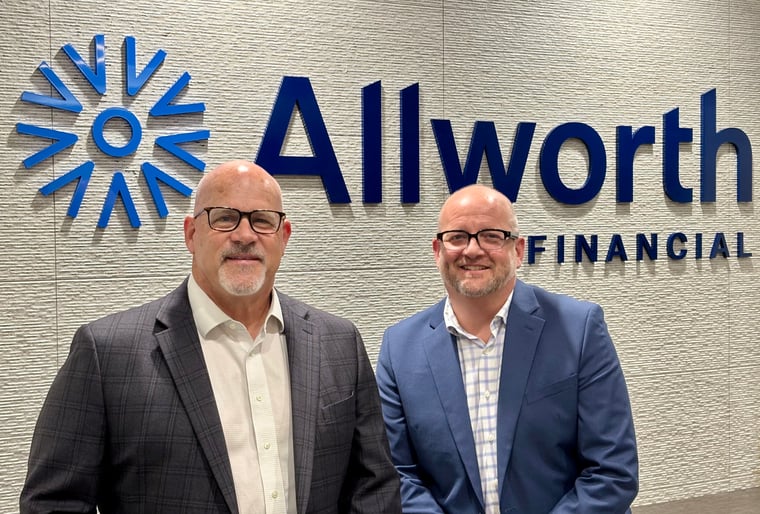
On this episode of Simply Money presented by Allworth Financial, Bob and Brian explain why many investors who think they’re diversified may actually have far more exposure to AI and semiconductor stocks than they realize, how concentration risk has shown up throughout market history, and what wealthy investors can do to protect against it. They also break down the recent pullback in private credit funds, the dangers of relying on active managers to pick the next market winners, why your portfolio’s purpose matters more than its returns, and answer listener questions on direct indexing, family business inheritance planning, Roth conversions, and the new Trump Accounts for children.
Download and rate our podcast here.
Well, if you own an S&P 500 index fund, you probably think you're diversified. After all, what could be wrong with owning 500 different companies? But what if we told you nearly $1 out of every $5 in that portfolio or index fund is now tied to semiconductor stocks? Tonight, we're looking at how America's favorite investments have pivoted and changed over the last century, and what that means for your portfolio literally right now, Brian. Walk us through a history lesson of how this index has pivoted and gotten a little over concentrated over time.
Brian: Well, let's first talk about why we're talking about this history lesson today, because these last couple of days, semiconductor stocks have gotten hammered. Doesn't mean that the industry is collapsing or anything like that, but investors are finally looking and saying, "Hey, maybe I'm going to take some of these profits off the table." There are some concerns about, this is just part of the cycle of any sector that heats up and people get excited about. Investors, the last couple of days, have been questioning whether the growth can continue, whether this AI-related spending can stay at the pace that it's been at.
And again, this isn't sounding the alarms or anything like that. It's just moving the needle pretty significantly for the S&P 500, because these semiconductor stocks now make up about 20% of the S&P 500. So, when you're looking at all these other larger ones, not just the big ones we always talk about, we're talking about inclusive of NVIDIA, AMD, Broadcom, Micron, Intel, Marvell, Taiwan Semiconductor, all those types of stocks, are getting dragged down right now and pulling down on the S&P.
So, what we wanted to look at is, is this unusual, right? It's the bubble of the minute right now, if you want to call it a bubble, maybe it is, maybe it isn't, but it's the one we're talking about. So, is it different than what the types of bubbles that we've had in the past? Because over the past centuries, we've always been excited about things. So, let's go back through time and see how far back we can go and identify similar situations. So, not that long ago, let's go back to the 2010s. The 2010s were all about Apple, Amazon, Google, Meta, which is now Facebook, other way around, Facebook, now Meta, Microsoft. It was all about data, software, digital platforms, all those kinds of things. And those were the story of the minute, when we all switched to social media and digital devices, handheld devices, all those kinds of things. That was the bubble at that time. And those stocks made up a huge chunk back in those days, you know, about the same percentage. So, that's not all that crazy. Go back a little before that.
Bob: Brian, this is the period where you launched your side gig as a social media influencer, right? I mean, everything was rolling.
Brian: Yeah, except for that never happened. Yeah, all of that. That's when I started doing my TikTok videos and my little dances and all that crap. No, but before that... And that's not limited, right? We think technology is the only thing that's ever been out there, right? Because it's the loudest and it's been the most recent for the past several decades. Prior to that was financials. Let's not forget this era. Before the financial crisis, before 2008, banks, of course, were the market's dominant sector. Housing was exploding. Credit was flowing. These were the easy money days, low interest rates, even lower underwriting standards. So, it was pretty easy to get these extremely cheap loans. Wall Street loved it because money was rolling in hand over fist in terms of profit margin. And the belief was that modern finance made the economy safer and more efficient. Then, of course, as we know, 2008. But up until that run up, finance reached about 20 percent of the U.S. market cap in 2008. So, again, this is not the first time we see that. And I can go back further if you want some more history, Bob. What do you think?
Bob: No, when you mentioned the financials, you know, we all remember what happened to General Electric, good, old General Electric. They went from a stalwart industrial company, you know, jet engines, all of that, and they decided because of all this free flowing capital, you know, we had the division of GE Financial, GE Capital. And we all know how that story ended. Everybody wanted to be in the capital markets because, as you said, money was cheap. It was a leverage point. Let's borrow money cheap and invest it somewhere. And who could who could lose money? Well, a lot of people did.
But, yeah, we'll go back to the 1990s leading up to the tech bubble, Cisco, Intel, Microsoft. The market became convinced technology would change the world. And of course, it did. The market was right. But the thing that we got to remember is, at what price? And that's where all this innovation is always wonderful for our lifestyle and for the market. And a lot of money is made, certainly has been made over decades, if not centuries. But it always comes down to what you're paying for a dollar's worth of earnings. And that's what can change on a dime. And we all know what happened in the tech bubble when we had a little too much of a good thing.
Brian: Yeah. And I remember the '90s where when I really first started paying attention to how business worked and how all this stuff worked, why it all mattered, that kind of thing. Actually, I was in college and I was working for UPS. And if there's any UPS drivers or FedEx or any of those types of people from back in those era listening right now, you'll remember those gateway boxes. This was before monitors were flat rectangles. The that box could be 3 feet by 3 feet for a gigantic monitor. And they were all painted like cows. And everybody had to have one that Christmas, whenever that was, about '96, maybe '97, somewhere around there. Everybody had a gateway computer and it took like four gigantic boxes to the top floor of an apartment building. That was the hardware era. But I remember back even...
Bob: Your biceps were just bulging at that point, Brian. Your shirt couldn't contain them.
Brian: Yeah. I've let them atrophy since now that I sit on my rear end and talk at screens and talk to clients all day long. Yeah, a little different era now. But let's go back even further, right? Bubbles are not always technology. That's just what we've been kind of beaten over our heads for the last couple of decades. If you go all the way back to the late 1800s, early 1900s, it was railroads. Railroads used to be the cool, sexy technology of the day. Now, they're quite the opposite. But at that point, railroads and transportation companies made up about 50% of the U.S. market cap. Over 80% of the New York Stock Exchange at that time was trading in those types of stocks because that was the big thing.
We were still expanding across the country. Only one way to do that. You got to find a way to drag stuff all the way across the mountains and over the rivers and all that. And that, of course, was the railroads that made us what we are today. But at that point, that was literally for a brief period, that was literally half of the stock market moving around, companies that were building those transportation networks. And so, that that is far larger than the impact that the semiconductors are having right now on. We still consider that a big swing and it is going to drive the market. But back in the day, half the market was all railroads.
Bob: Yeah, and all that history is wonderful and it is helpful to go back and look at how the market and the concentration of stocks in a broadly diversified index has really gotten concentrated over time. But what's the story here? What are we trying to convey, you know, moving the needle forward here to 2026? Is that for a lot of times, there can be, and we would say, might be today, a little bit of hidden concentration risks in everyone's portfolio if you're just sitting with everything in an S&P 500 fund or a NASDAQ 100 fund. You know, you feel like you're diversified, and you are from the number of companies that you own, but from a sector or industry standpoint, things can and have, over time, gotten fairly concentrated. So, what do we do about it, Brian?
Brian: Well, we just need to make sure we're exposed if you're somebody who has thrown a lot of money and made a bunch of money on these semiconductor stocks in the past several years. Remember, again, this started with crypto. Crypto is a little different than AI, but it uses the same hardware. So, this has been going on for a little while now and a lot of money has been made. If that's the case, and you've got an overweight to those positions... And some people have literally millions of dollars that have exploded out of these different stocks. Well, easy come, easy go. So, depending on how you've got that arranged, you're going to ride a roller coaster.
And even in your diversified portfolio, you probably have some exposure to the same stocks in your 401(k). You know, if you've got funds and things that are tracking indexes, then those indexes, of course, that's what we're talking about, those indexes themselves, even though you can't see it, but under the hood is those same companies. So, you probably have a little more even than you think you have if you've got one of those large concentrated positions. So, you should take a look at, exactly how much of that are you exposed to? And what could happen to your overall financial plan if, God forbid, one of those gets cut by 20%, 30%, 50% because the market finds a shinier object? That can and does happen. You don't have to look too far through history to find it.
So, you might want to look at, you know, there are things called exchange funds, where you can move a giant position into one fund in exchange for a share of everybody else's giant position. So, at least that's a slightly more diversified portfolio. And that's something you can do without incurring any taxes because you haven't sold anything. You've simply exchanged it for a share of a different portfolio. That's one trick you can do with it.
If you want to keep it simpler than that, you can put collars on it. You can put options above and below the current price of the stock that'll collar it. So, it can only go down so far, can only go up so far. But at least, you will have kind of locked that range in. If these are new things to you, but you're sitting on a gigantic position, time to learn something new. Go figure out the ways that you can hedge these bets to protect yourself and the wealth you've built. At some point, it needs to no longer be about growth, growth, growth. And you've got to protect something if you're overexposed this way.
Bob: Yeah, another way to look at it too, you know, you talk about concentrated stock positions, but just as we're talking about, you know, people that have huge concentration positions in just these broad, simple, low-cost index funds, history has taught us, as we just outlined, diversification always feels unnecessary when the winning sector is winning. In other words, nobody worried about owning too much energy in 1980, nobody worried about having too much technology back in 1999, and nobody worried about owning too many financial stocks in 2007. Everything feels great until it doesn't when the bubble bursts a little bit.
We're not sounding the alarm calling for a bear market here. We're just saying now's a great time to make sure you understand what you own and make sure you have a truly diversified portfolio, because there are other asset classes out there. Brian, you know, you and I've talked about how international stocks have done over the last couple of years. That's it. That was an asset class left for dead here, you know, four or five years ago. You know, things like emerging markets, small caps. There are ways to participate in things where you can get growth at a more reasonable price. I think that's what we're really trying to point out here.
Brian: And again, this is not... You know, whenever we have a bubble... And again, bubble is a sensitive word, it might be a bubble, might not be, but it's clearly one sector outrunning the rest of the market. That's not new. I want to stress that. And again, the other cool story I remember here is from the '20s. In the '20s, everybody talked about those sexy utility companies. You know, you're at your great Gatsby looking party and you're talking to people about what Con Ed is doing. And, you know, all the different companies that were building networks of electrical lines across the country to, again, bring us all together. That was the sexy company in the '20s. Now people never talk about your Duke Energies and your old synergy and CG and ease from back in the day. So, we always have bubbles. We always will. Just make sure you understand, the risk is not as often not owning that bubble, it's having no idea how much is exposed to that particular sector. That's where most people are exposed.
Bob: Here's the Allworth advice, before you worry about what's next for AI, take inventory of how much your portfolio is already riding on it. The most dangerous concentration risks are often the ones hiding in plain sight. You want to know what else is dangerous? Paying an active money manager to find the market's next winners, and then watch them miss one of the biggest ones of all. We'll explain what we're talking about there next. You're listening to "Simply Money", presented by Allworth Financial on 55KRC, THE Talk Station.
You're listening to "Simply Money", presented by Allworth Financial. I'm Bob Sponseller along with Brian James. Straight ahead, we tackle whether a child who works in the family business should inherit differently than siblings who don't, and how to weigh the tax benefits of large Roth conversions against higher Medicare premiums. And also, when a donor-advised fund may no longer be the best charitable giving vehicle. Well, Brian, surprise, surprise, investors are pulling money out of private credit funds at a faster pace, creating new challenges for an industry that had been one of Wall Street's hottest money destinations here recently. Let's talk about what's gone on with private credit just so far in the second quarter of 2026.
Brian: Yeah, there's that word private again. Normally, when we talk about these private type investments, the primary focus is private equity, where you're investing in a business that doesn't happen to be traded on a public stock exchange. This is private credit. So, now, we're basically talking about bonds kind of sort of that aren't traded on public exchanges. These are loans that you're making directly to companies as opposed to, again, buying on public exchanges.
So far in the second quarter, we've seen a lot of outflows. That's why we're talking about this, investors in four of these large credit funds, including some of these are managed by Blackstone, one of the largest financial institutions and manufacturers of financial products on the face of the earth. Investors in these four funds have requested to redeem about $12 billion so far in the second quarter. That's up from $7.7 billion in the previous quarter. And this is data coming from Robert Stanger Investment Bank Company, who tracks all these kinds of things.
So, we've got some more reports coming from Apollo Global Management, ARES, Blue Owl Capital, some of the other big names. They'll be tallying and reporting their requests from their shareholders later this month. For their part, BlackRock says no big deal. And I'm going to quote here BlackRock's President Jonathan Gray said, and I quote, "I think the town criers of private credit doom are going to be disappointed." He's basically saying that no financial crisis is imminent and some funds will take losses. Investor demand is going to remain strong because returns are higher than in public debt markets, is the point that he's making here, which is true, but they also come with different risks as well.
Bob: They come with different risks and they come with different lockup periods. And sometimes, Brian, as I think what we're seeing now, there can be a mismatch from time to time between what investor goals are and needs are versus what these instruments are designed to do and over what period of time they're designed to do them. And I'm not going to disagree with Blackstone's president. I'm sure a lot of these investments will work out. But I do know this, when these redemptions go up and you've got to raise money and give it back to shareholders, you've got to go sell something.
And the run on liquidity can hurt these other investors who might not want to... Yeah, they might want to be in it for 7, 8, 10 years, but they might not want to endure the kind of volatility that might be going on right now in some of these funds. It's just an interesting thing to watch unfold. And it's something you and I have been talking about, I think for about a year now. All right, pivoting to professional money management. Professional money managers, a lot of people look at them as these expert stock pickers. In other words, you're supposed to go out and buy for me the next big thing before anyone else knows about it and make me a ton of money. We're going to highlight one investment firm that learned a painful lesson after betting against NVIDIA of all companies. And it could be a reminder of why stock picking can be so difficult, especially in these professionally managed funds.
Brian: Absolutely. There's a reason we say that active managers rarely keep up and/or beat the S&P 500. Even those that do don't tend to do it for very many years in a row. So, this is really kind of a poster child of where the risks are here. And so, obviously, we all know about NVIDIA and the AI boom. We've been talking it to death here. Well, there was an investment firm out there that decided to go the other direction. Poland Capital decided that NVIDIA was a little too pricey. And they were looking at some of the older companies from the prior boom, like Adobe, Salesforce, ServiceNow, those kinds of things. And they placed more money over there rather than get into the semiconductors and all the stocks that are supported by the AI boom.
So, on the surface, that's what we're paying an active manager to do. If you're hiring an active manager, you're saying this person has a brain that will know better than the overall market what to buy and what to sell. They make judgments. They look for stocks they feel are undervalued and they avoid stocks they think are overvalued, which is exactly what they did here. Sometimes they look brilliant and sometimes they're spectacularly wrong. And that's what happened here.
Poland runs very fairly concentrated portfolios. And they didn't miss out on just a just a winner among other winners. They missed out on the winner, meaning NVIDIA. So, obviously, significant consequences to this move. A couple of years ago, the firm had more than $80 billion. Today, Bob, that number is closer to $30 billion. Clients left, pulled their assets. That flagship growth fund they have went from being a top performer to one of the worst performing funds in its category. Worse performing doesn't mean that it lost money. It just means it didn't grow anywhere near other choices in that same category, all because they got one of the biggest investment calls of this decade wrong. Somebody is going to be crying into a drink over the next few years remembering that decision.
Bob: Well, there's a lot to unpack with situations like this. Brian, you and I have been doing this long enough now to know that, hey, you know, when you get into the institutional money management space, people will hold themselves out as either growth managers or value managers. They want to be on everybody's platform. And then the people that build portfolios, they are looking, you know, for you to be what you say you're going to be. And they track things like tracking error and all that. So, there are very few of these managers that can all of a sudden pivot from a growth manager to a value manager and back and forth and do it successfully because they've got some constraints on what they are holding out to institutional investors that they do. It's a very complex business out there. And this is just one example of, you know, yeah, this firm lost over half of their assets under management. Pretty rough time to be Poland Capital management.
All right. Here's the Allworth advice, the biggest investing winners often drive a disproportionate share of market returns. That's one reason why broad diversification and low-cost index investing remains so difficult for active managers to beat over time. Coming up next, the specific reasons why returns themselves should not lead your portfolio strategy. You're listening to "Simply Money", presented by Allworth Financial on 55KRC, THE Talk Station.
You're listening to "Simply Money", presented by Allworth Financial. I'm Bob Sponseller along with Brian James. If you can't listen to "Simply Money" live every night on the radio, subscribe and get our daily podcast. Just search "Simply Money" on the iHeart app or wherever you find your favorite podcasts. Well, many investors focus on one question, how well did my portfolio do? But for those with significant wealth, the more important question should be, what is my portfolio actually for? And that answer should drive every single investment decision. Brian, like a lot of things in life, it's very important to know your why.
Brian: Exactly. You know, and we talk about this all the time, making sure that we understand, why did we do what we do? Because decisions that we make are going to have consequences, both positive and negative. That's unavoidable. And we can't simply look at the negative and go, "Well, that was a bad thing," right? That's like I should never go outside again because it rained today. Stuff is going to happen and we can cope with it better if we understand why we did whatever we did in the first place.
So, let's talk about, how important are returns? Obviously, portfolio returns are very important. There's no point in investing if we're not looking for returns. That's how a portfolio is measured, though, not what it's for. And what I mean by that is we cannot control that. That's the one part of a financial plan that we have to work around because nobody gets to dictate what the market's going to do, what the investments are going to do. There's a reason that performance so easily dominates a conversation. We know what the returns are, right? I can see the numbers. I see them with my name and a dollar sign attached to them. I know whether I have more or less money than I did a year ago. And that gives me the ability to compare, what have I done? Versus what are other options? I can compare two, you know, projected possible other things I could do going forward.
And of course, there's a little ego involved in this, too, Bob. We all want to be the one that had the winner, and we all want to be the one at the at the cocktail party that gets to tell everybody about that home run we hit and so on and so forth. You know, that's just human nature, but it does drive us to make decisions in a certain way. So, tracking returns, that makes us feel productive because we feel like, if I know exactly what I earned, then I somehow have control over the situation. But it doesn't necessarily always work that way.
That pool is completely understandable. But at the same time, it's worth examining why you're looking at it. Why are the returns positive or negative so important to you? Because we need to understand how that fits in the plan. Why does it matter that you earned a certain return when you could have gotten another level of return? The reason is because a portfolio that's optimized only for performance can work against some of your larger financial goals. That's why we have to step way back and look at the big picture. A quick example of that is, I got an emergency fund. I'm tired of it earning nothing. I'm going to throw it all in the stock market. It's had a good run. That usually ends badly.
Bob: Yeah, think about this like other complex instruments you may have in your life, like a business, a team, a piece of infrastructure. You wouldn't evaluate any of them purely on output without first asking what they are built to accomplish. After all, a manufacturing operation that's solely optimized for speed at the expense of quality or durability isn't well run, it's just fast. And sometimes things that are just optimized for speed and speed alone, they could break down just when you need them to work at maximum efficiency. Brian, walk through a hypothetical here.
Brian: Okay, so this is a couple of profiles we put together, and these are typical conversations we have. We've got two investors here who, let's say, they each have $5 million and different intents. One of them needs that portfolio to generate income now to support retirement. The other doesn't really need it at all. And the plan is to leave most of the money to the children and some charities just decades from now. These are common scenarios. That sounds like a lot of money. It is a lot of money. But in a lot of cases, there are times where people have built in more than they need.
You know, I go back to that thing I always talk about, about we are still learning how to retire off of a pile of money. And there are a good amount of people in the fortunate situation of having too much. That's how the situation works. So, if both of these people are chasing that same benchmark, using the same investment strategy, one of them is probably taking the wrong approach because we have a different set of goals here. So, before asking how a portfolio performed, it's worth asking, what is the portfolio actually supposed to do? If it's supposed to generate a steady income stream, that's going to require a certain set of components that is very different from a portfolio that is supposed to grow over time.
If I want a growth portfolio, if my end goal is to say, I want this pile of money to be a bigger pile of money, 5, 10, 15, 20 years from now, then I don't necessarily want to focus too much on dividends because those are companies that aren't as quite as growth oriented. And now, I have a little bit more of a tax drag on that portfolio for an income source they didn't need. On the other hand, if I am an income investor and I and I have a bunch of growth stocks in my portfolio, then that's sort of okay-ish, except for I'm not going to get a steady income stream. I am required, in that case, to literally sell off chunks of the portfolio on a periodic basis to generate the income that I otherwise could have gotten from securities that are designed for that exact goal. So, again, two piles of $5 million, but very, very different goals result in very different recommendations.
Bob: Yeah, and that concept that you're highlighting here, Brian, is what we call all the time sequence of return risk. And it's just a baffling mathematical fact, you know, where you actually inject real world volatility into a portfolio that does have to create some periodic distributions in income. You could have two portfolios that, on a gross basis over a long period of time, earn the same exact rate of return. But, boy, when you factor in taking withdrawals from that portfolio and the volatility in the intervening years, it could really have a massive impact on the long term result.
And that's, again, why, you know, when you sit down and build an actual investment strategy, you really have to know your why. In other words, what is this money meant to do for you and when? And there can be multiple objectives over multiple different time frames that you should be considering. Here's the Allworth advice, the investors who navigate complexity most successfully tend to arrive at a different first question, not just, how is my portfolio doing? But rather, is it built to do what we actually need now and 10 years from now? All right, you got questions, we've got answers. The world famous Ask the Advisors segment is coming up next. You're listening to "Simply Money", presented by Allworth Financial on 55KRC, THE Talk Station.
You're listening to "Simply Money", presented by Allworth Financial. I'm Bob Sponseller along with Brian James. Do you have a financial question you'd like for us to answer? There's a red button you could click while you're listening to the show right there on the iHeart app. Simply record your question and it will come straight to us. Alex in Columbia, Tusculum leads us off tonight, Brian. He says, "Yesterday I heard you guys talk about how many will soon own SpaceX. What if I don't want to own SpaceX? I am not an Elon Musk fan. Is this what direct indexing is for?"
Brian: Yeah, Alex, actually the answer to your question, now, you've already given this, is precisely what direct indexing can do for you. Usually, when we talk about direct indexing, we're focused on the benefits of tax loss harvesting. And that is definitely a true thing if we're talking about a taxable account here. But the point of direct indexing is owning the actual individual component securities of an index such as the S&P 500. That means you're seeing those individual positions inside of your portfolio, actual shares of those specific companies. But that also means that you can customize the portfolio, and basically, instruct whoever's managing that for you to avoid certain stocks.
You can tell them, "I don't want SpaceX," or, "I don't want companies that are ESG," or, "I don't want Sin stocks, those kinds of things. That's not a new iteration. That's always been available with direct indexing. And that is one of the major benefits of it. So, yes, a very good solution to that could be direct indexing. There are minimums to those types of accounts. You're going to need to find a solution that fits what you're looking for. Going to be a little tough to do this with a few thousand bucks. But if you've got usually a quarter million and above that you could expose to this, then that will be a good solution for you.
We'll move on to Bob and Zinnia. Bob says they've got three children. One of them works in the family business and two of them don't. They're concerned. This is a common concern. "We want equal treatment, but not necessarily equal assets. One of them is going to drive the business on a day-to- day basis. The other just benefit from the value of it." So, he's asking, Bob, what's the best way to think about fairness versus equality in a situation like this?
Bob: Yeah, Bob, this is a loaded topic and one that I've had to deal with more than a few times over the course of my career. And it can be not fun at times. I think you and your wife, first of all, good for you for getting out in front of this. I think that the key thing here is communication. And fairness does not have to equal equal. Sometimes, as you said, one child works in the business and that could be a good thing. You're giving them an opportunity to take over the business. I don't know whether they're going to buy the business from you and your wife or not, but I've seen this creep into this sometimes.
You know, this kid that's working in the business can at a certain point feel entitled like, "Hey, I'm the one that's making this thing run and grow. Therefore, I deserve more than the other kids." And they don't really want to count any of that equity growth in the business or the paycheck or income that that business is generating in any way, shape, or form part of their inheritance. And that's where resentment between that kid and the parents or that kid and their siblings can arise. So, it's real important to just be realistic with everyone about what everyone's bringing to the table here. Sometimes we've had to have parents remind this kid in the business that, "Hey, if mom and I hadn't started this business and grown it for 30 years, you wouldn't even have this opportunity. So, you know, pump the brakes here on everything you've 'done' to build it."
But anyway, it requires ongoing conversations, and hopefully, proactive communication built into your estate plan, where everyone can feel like they're at least being treated fairly and you don't have any family discord at the end. It's not an easy thing to accomplish. Good for you for getting out in front of it. All right, we've got time for one more. Juan in Cold Spring, Kentucky, says, "I delayed Social Security until late 70, but now, I'm considering large Roth conversions." Brian, how do you evaluate whether the future tax savings justify those higher Medicare premiums today if I escalate or inflate my income to do the Roth conversions?
Brian: Well, this is, again, one of those things that keeps us employed, because what you're noticing here is that some things, some strategies you want to employ, obviously, that those strategies have benefits, but they all involve sacrifices. And this is one of the big ones here. You know, the benefit of a Roth conversion, well, I can pay some taxes now when I'm in a lower bracket. As you said, you've delayed Social Security, so you do not have that income stream coming in. And we don't know, yet. I assume you're not at a required minimum distribution age, yet. So, you're probably in the lowest bracket you're ever going to be in for the rest of your life. That's a good window to do Roth conversions.
However, whatever income you generate right now in 2026 is going to come back and affect what your Medicare premiums will be in 2028. So, that IRMAA surcharge is always based off of your income from two years ago. And that does include income that you consciously chose to take via a Roth conversion. So, you basically have to think of the idea of what is most important to you. Is it most important to make sure your Medicare premium stays as cheap as possible? Then you're going to want to avoid any ordinary income wherever you can.
But I'm also going to throw out there that I personally will not want the Medicare premium tail to wag the dog. I'm going to live my life. If you have significant assets built up in a traditional IRA, pre-tax 401(k), those kinds of things, then you're going to be in a certain income bracket. And it may be pretty tough to choose between worrying about Medicare premium surcharges and living your life the way you want. Unfortunately, with those pre-tax IRAs, we're kind of painted into a corner, and whatever income we generate will affect that Medicare premium. So, think about what's more important, a few hundred dollars a month, an extra Medicare premium, or possibly a few hundred thousand or millions 30 years from now passing on to your heirs tax free. I don't worry too much about IRMAA, but as long as we understand the sacrifice, we can benefit from the gains of a strategy like that.
Bob: Coming up next, we're going to do a very quick overview between these brand new Trump accounts for the youngsters out there versus the more traditional 529 college savings accounts. You're listening to "Simply Money", presented by Allworth Financial on 55KRC, THE Talk Station.
You're listening to "Simply Money", presented by Allworth Financial. I'm Bob Sponseller along with Brian James. Brian, I've started to get a few questions from clients, you know, grandparents out there, "Bob, what about these new Trump accounts out there that are starting to come into play here?" Brian, I look at this I don't look at it as a bad thing. I generally don't like these kind of gimmicky, short-term types of things. I look at these as kind of stimulus checks for infants and toddlers. Here's what I mean, for any child born between January 1st of 2025 and December 31st of 2028, so we're looking at a very narrow four year window, you can open a new account for this youngster at, you know, I think it's trumpaccounts.gov is the website. And the key allure here is to get youngsters started in building an investment account and have that money grow and compound over time.
I like the concept of getting people involved early in the markets and having an account they can watch and grow. The kicker here, and this is the big allure of it, is you get a $1,000 federal seed money deposit into these accounts. Again, it's only for children born between January 1st of 2025 and December 31st of 2028. The money can go into low-cost index funds and grow tax deferred. Once the child turns 18, they basically turn into IRA accounts, where if you pull the money out, you got to pay the taxes.
But I like the concept. I like the idea of getting people involved in investing and compounding and seeing the benefits of this. I don't like this very short term runway, you know, the complexity at the back end on, how do you unwind one of these things? You know, it adds more complexity over time. But, hey, $1,000 is $1,000. It's not going to really move the needle financially. But for those that take advantage of it and throw a little money in it, I do think it would be great to show this kid when they're 12, 13, 15, "Hey, here's what starting with a very low dollar amount did over 15, 20 years," to hopefully educate the kids on participating in the financial markets over time. It's not going to totally fund a college education, you know, because the contribution limits are way less than 529 plans, to say nothing of the tax benefits of 529 plans. But, hey, 1,000 bucks is 1,000 bucks. What do you think about these things, Brian?
Brian: Yeah, I mean, and I guess I'm glad they exist for the $1,000, but it's a short window of time. It's basically for this this current administration, and then for kids born within these current four years. And so, you know, 1,000 bucks, like you said, is 1,000 bucks. I still lean toward the 529. If you're serious about helping your kid, then because remember, that's not just education anymore. 529 accounts can become Roth IRA contributions. So, even if the kid doesn't need it, gets a full ride or whatever, you can still pull that out, turn it into a Roth. Trump accounts, they do get control at a younger age, and that may or may not be something that you want them to have. So, I don't know that we all made intelligent decisions at those earlier ages. But not a bad thing. Something to learn about.
Bob: Thanks for listening tonight. You've been listening to "Simply Money", presented by Allworth Financial on 55KRC, THE Talk Station.
Insights for Complex Wealth Decisions
Join our email list for exclusive commentary from our Chief Investment Officer, early access to expert-led webinars, and your complimentary Wealth Planning Checklist for Complex Portfolios.
We take your privacy seriously and respect your privacy choices. By submitting this information you agree to our Terms of Use Agreement, Privacy Policy, and to receive important notices and other communications electronically.