
The Hidden Risks That Can Derail Your Financial Plan
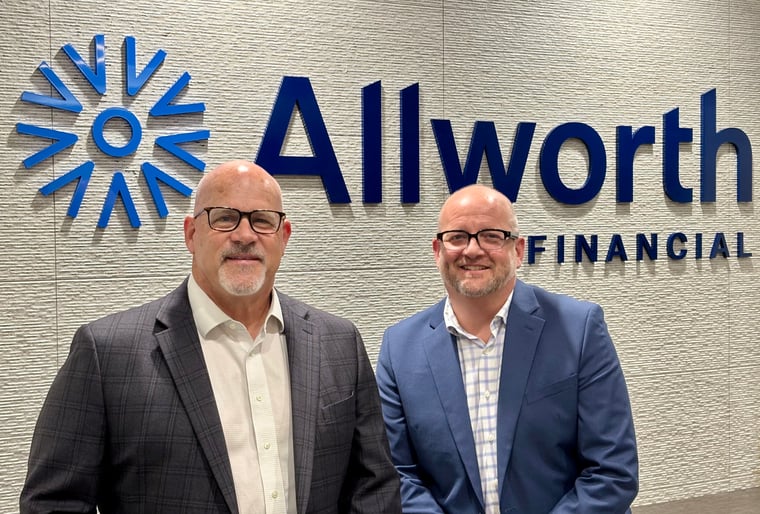
On this episode of Simply Money presented by Allworth Financial, Bob and Brian explain why the first five years of retirement can make or break even a $5 million portfolio. They break down sequence of returns risk, walk through real-world examples of how early market drops can permanently impact your plan, and share strategies like liquidity buckets and disciplined rebalancing to protect your future.
Plus, common 401(k) mistakes successful investors make, how to prevent concentrated stock from quietly dominating your portfolio, what to do if your financial life is split across multiple advisors, and how to safeguard your finances if a spouse becomes cognitively impaired.
Download and rate our podcast here.
If you're within five years of retirement or maybe you just stepped into retirement recently, market volatility matters more to you than at any other time in your life. And tonight, we're going to explain why those first five years can literally make or break a retirement plan and what smart investors do to protect themselves. Brian, let's get into this.
Brian: Well, Bob, we're talking about setting a pattern here. Whatever you do in your first five years may or may not match the remaining years of your life, but they can be very, very different. So, even at the start of retirement, things are just different because you're going to be spending time differently. You have more time than you've had. Just different. Not really necessarily emotionally different, not philosophically or mathematically different, but just different because you've been in a groove for a very long time.
So, if you're in that window, if you've just retired or you're about to hang it up or you have, you're somewhere within the five years, then volatility is really important to you. It's going to matter a lot more than it did when you were 45. And the reason behind this is something we talk about frequently called sequence of returns risk. But I'm going to go ahead and say that there's a bigger reason, which is now, not only do you have the time to pay more attention to it, you also will feel that loss a lot more.
This is huge. When people retire and they've got time, all of a sudden, things that have been happening for decades suddenly become the focus of the daily headlines. And in the past, when the market would take a pullback, people would say, "Well, no big deal. I'm going to throw more money in my 401(k). I'm just buying at the low. And this is just part of the cycle. No big deal. And I've got other stuff to do today, so I'm moving on." But suddenly, when we're faced with a vacuum of time, we tend to fill that vacuum with spending and worry. So, therefore, this can become a real issue.
But the reason, mathematically speaking, sequence of returns risk, that basically means, when do the bad markets happen? Do they happen early in my retirement, or do they happen later? When you're in accumulation stage, this is 30s, 40s, 50s, this is basically the bulk of your adult life, the order of returns doesn't really matter all that much. So, like I said, if the markets drop 20%, you just keep buying. That next 401(k) contribution is going to go in at a lower market. That works out well for you. Matter of fact, you might have even noticed this.
Some people start to root for it, "Cool, the market's down 20%. That means I'm going to get that slingshot effect in about a year, year and a half as that market recovers because it usually happens quickly." Time is your ally at that point. But once you retire, now, you're withdrawing. Now, that order of returns really, really matters. Because if you get those bad returns early, which does happen to some people, if that happens while you're pulling money out, you may permanently impair the portfolio because you got to take out that 4% or 5% distribution just to pay your bills. And then the market might take away 10%, 12%, 15%, or even more.
Bob: Yeah, Brian, as I sit here and listen to you explain sequence of return risk, I can picture people out there, including some of our clients that are very analytical. And to your point, when people are retired and they got more time on their hands and they're looking for something to do to maintain some control, and I'll just say, intellectually curious about learning more about how all this works, we can get sped up in a hurry and start running numbers. So, the thing that I want to highlight here too is, there's an emotional component to this as well. And sometimes, that can far outweigh these mathematical calculations that we always do and simulations and Monte Carlo analysis and all that. So, for folks that are just getting ready to retire or have just retired, keep that in mind, as Brian said, now that you've got that time on your hands.
And let's face it, if you've built a nice net worth, that didn't happen on accident. You worked very hard. You were probably a leader in an organization or maybe owned a business. You're very intelligent. You're used to running things, controlling things, and measuring outcomes. And the danger here is, you know, you move quickly into emotionally trying to outguess the market's next move. And that can really derail you and cost you hundreds of thousands of dollars if you, like I said, get a little sped up here and let emotions dictate your decisions. Let's get into a couple of hypothetical situations of what we're exactly talking about here, Brian, with real numbers and some real case examples.
Brian: Yeah, Bob, I think it can be easier to understand, like you said, with real numbers because people can relate to their own situation. So, let's pretend we've got Mark and Susan, their early 60s, just retired with $5 million, and they spend about $250,000 a year. That's about a 5% withdrawal rate if they didn't have any of the resources off their $5 million. So, they're well diversified investment wise. The plan works. They retire, and then all of a sudden, six months later, the market drops about 25%. Now, what we're describing here is somebody who retired in 2021 because this is pretty much what happened in '22.
So, now, that $5 million is suddenly $3.75 million. Still a good chunk of change and a good product of a life well lived. But they still need that $250,000. That 5%, I hinted at earlier, is now 6% to 7%. Well, now, what do we do? Now, we're withdrawing a larger percentage from a smaller portfolio, and that makes compounding work in the opposite direction. That's not a good thing. Even if Marks recover later, as they do inevitably, the damage from those early withdrawals during that downturn may never come back. That's the sequence risk. It's not about average returns. It's about timing. That doesn't mean their ship has sunk. It does mean that maybe it can't work out quite exactly the way they planned.
Now, the important thing to remember here is, like I said, I used a real example. This happened to anybody in 2021 who went through 2022. But that doesn't mean that their ship has sunk and everybody else is okay and they're screwed. That's not the case. It just simply means that we have to be paying attention and realizing that these things can happen and do happen to people. And you should prepare to make sure that you don't take it fully on the chin. Now, a lot of people will pivot, right? So, let's find a way not to spend money.
People naturally will say, "You know what? We said we were going to do the roof and we were going to take the big, well, around the world trip to celebrate retirement. Let's not do any of that. And we are simply going to pull in during this slightly scary time and just spend less." That's the human reaction. The Monte Carlo analysis and the things your financial planning advisors will show you will assume that you don't change any of that. So, remember, there are a lot of levers to pull if this does happen to you and it does not have to be a ship sinker, but it really should be something that you should be prepared to experience just in case it does happen to you. Doesn't happen that often, but that doesn't mean never.
Bob: And then just to drive this whole sequence of return risk point home even more, let's talk about hypothetical number two, which we'll call the lucky retiree. Let's flip this past script that you just went through. Same couple, same $5 million, same $250,000 of annual spending, but instead of a drop earlier in their retirement years, markets go up by 20% in the first two years. Now, they're sitting on $6 million. They built a cushion, and then volatility hits in year three. They're drawing from strength, not weakness, exact same long-term average return, but a completely different outcome all because of the sequence or luck or chance.
And that's why these first 5 years matter more than the next 20. And Brian, it's next to impossible to predict or time the market with huge chunks of your portfolio. And that's why we need to build a financial plan to anticipate volatility, not be surprised when it happens, and then react in the rear view mirror. So, let's get into what we should actually be doing, whether we think the markets are unhealthy or whether we're in the middle of a roaring bull market.
Brian: And Bob, I want to point out that what you just described, that second example is somebody who retired at the end of 2024. So, perhaps their portfolio took a hit in '22, big swing back upward in '23 and '24. That's the position of strength in which they are retiring. So, that can happen, too. So, I don't want to... You know, we all tend to focus much more on the negative than the positive. We're simply suggesting you should understand what the impact might be if you happen to retire at a time... You know, because we don't get to control any of this. If you happen to retire in one of these more negative times, it doesn't mean you made a mistake and you really shouldn't stress yourself too much over it. However, when you're in the planning stage, you really should understand it, understand what it could look like.
So, let's talk about what you should actually do. So, what are steps you can take? So, first off, we're going to talk about that cash and that short-term bond bucket. If you're within maybe five years of retirement, well, you really shouldn't be relying on stocks to pay next year's bills. Even if the market is going great guns, as we've had the last several years, the stock market should not be our checking account. End of story. We usually want to see maybe two to three years of spending in cash or short-term fixed income or maybe laddered CDs. If you know you need to spend, say, $500,000 in the first couple of years of retirement, well, then maybe, and I just made the math hard for myself, but let's figure out what that is on a monthly basis and put it in CDs that mature every single month over the next two or three years. That way, you know for sure that whatever happens to the market is not affecting your ability to pay those bills because that's sitting in a CD that's going to come due next month, two months from now, three months from now, and that's locked in at whatever it is.
So, let's take our Mark and Susan example. If they had $750,000 of that $5 million in safe assets, they're not touching those stocks during that 25% drop. They can then let the market recover, and then go on to greater heights, as it tends to do. That single structural decision, Bob, that dramatically reduces sequence risk. Cash isn't laziness, cash isn't irresponsibility, it gives you optionality. It's oil in the engine to keep things running smoothly.
Bob: Well, and just to piggyback on that point, why do we say two to three years? Because if you go back and look historically, even at some of the huge market declines we've experienced, I mean, just since the year 2000, inevitably, after a three-year holding period, markets almost always fully recover or even higher after the severe volatility. So, having that cushion in place allows you to emotionally calm down a little bit. You're still going to see a big part of your portfolio go down in value, and that can be unsettling for people emotionally, and that's the job of a financial advisor to keep you off the ledge and keep you calm. But economically, if you've got those three years of cushion in place, you financially do not put yourself in a bad light. That's why that two to three years makes a lot of sense.
Brian, there's other strategies out there called a guardrail strategy where, you know, if markets are strong, you increase your distribution slightly, and if markets are weak, you pull back on your spending. I don't know about you, but in my 35-year career, I've never had a retiree come in and say, "Well, the market's down a little bit. I think we're going to lower our cost of living a little bit until markets recover." I try to avoid that situation. How about you?
Brian: Yeah, and if we've done our job correctly, we've already modeled this out. We've done the stress testing upfront, and it may indicate that, yeah, you know what? If this happens to you, it will just suck. It doesn't mean you have to change anything. You're just going to be grumpy for a little while reading bad headlines. But if we've modeled this correctly, it shouldn't be making you change how you expect to spend.
Another point I want to make here is rebalancing. We talk about this all the time. Rebalancing versus reacting. So, let's say you're 70% stocks and the markets surge from there, and now, you're 80/20. Cool. That's a good thing. You've got more money. Rebalance though. Lock in those gains and get it back down to 70/30. It works in the opposite direction, too. If markets fall and your stock allocation drops from 70% to 60%, okay, that stinks, no fun. But let's go ahead and rebalance. That means we're going to sell some of the bond side and buy some of the stock side, which are down. That's how we got down to 60%.
So, a lot of people have kind of forgotten about rebalancing because for most of our working careers, we're looking at our 401(k)s. 401(k)s tend to stay pretty well in balance because there is always cash flowing into them. And so, they just don't get that far out of whack. That means we spent 30 years being told, "Hey, you got to rebalance." And then looking at our accounts and mostly realizing that we kind of don't really have to. Well, once you've got a fixed pile of money, that will need to be rebalanced on occasion because you'll start to notice it gets out of whack as the market does what it does because we don't have that inflow of cash anymore.
Bob: Here's the Allworth advice, the first five years of retirement are when having a structure in place matters the most. Build liquidity and flexibility before a volatility event tests you both economically and emotionally. Coming up next, how to make sure your 401(k) actually dovetails with your overall wealth management plan and strategy. You're listening to "Simply Money", presented by Allworth Financial on 55KRC, THE Talk Station.
You're listening to "Simply Money", presented by Allworth Financial. I'm Bob Sponseller along with Brian James. If you can't listen to "Simply Money" live every night, subscribe and get our daily podcast. Just search "Simply Money" on the iHeart app or wherever you find your podcast. If you get in a situation where you just simply couldn't handle financial decisions tomorrow, would your plan hold up, especially if you've got some complicated things going on like concentrated stock positions, complex titling, and private investments in the mix? We'll talk about that straight ahead. If headlines out of the Middle East have you suddenly logging into your 401(k) maybe three, four, five times a day, you're not alone. But before you start moving money based on a performance chart, there are a few mistakes that even very successful investors often make inside their workplace retirement plan, Brian.
Brian: So, let's talk about mistake number one. This can be looking at a relatively recent return chart and making decisions based off what did the best most recently. So, you log in your 401(k), you see, "I've got these 18 mutual funds to choose from. I don't really know the difference between them and I hate this stuff. It's boring." Hey, look, performance numbers. Let's just find the highest performing one and you sort by that five year performance. That means the large cap growth fund is at the top. It's up 17% annualized. Large-cap value, the blue chips, the boring stuff, only 11%. Why waste my time with those blue chip stocks?
Bob: You mean like the triple leverage Bitcoin account, Brian?
Brian: I would love to see the 401(k) that offers triple leverage Bitcoin inside of it as an option for its employees, and then have a long heart-to-heart talk with the investment committee at that company. So, blue chips are no fun. International, that's only 6% over the last five years. Well, that's obvious. Let's just, you know, don't waste my time with these other two. Clearly, I only need the one that gives me 17%. So, we'll go with that. I also kind of liken this to people who say, "My 401(k) is paying X% right now," or, "My investment is paying X% right now," as if it's a slot machine or as if it's a CD or something like that. What it has done for the last 12 months has absolutely squat to do with what it's going to do in the next 12 months. And you don't have to look into much history to see that.
So, the problem with this scenario, Bob, that large-cap growth fund is riding the surf that is caused by Apple, Microsoft, NVIDIA, Amazon, all of which have had a fantastic five years. However, the last two years have been okay, but not as good. That international fund that we pooh-poohed because it was only returning 6%, that's been up 30 plus the last two years. So, make sure you understand, it's not about sorting by performance. It's about understanding what these different funds do in different timeframes. Because if one thing is guaranteed, it's that there ain't no guarantees. The world tends to change.
Bob: Well, and then for people that tend to oversimplify this and still think they're diversified, now imagine outside your 401(k) plan and maybe your brokerage account. And lo and behold, you go look at that account, and what do you own in there? A huge position in an S&P 500 ETF. Why? Because it's "diversified", the fees are low, yada, yada, yada. And then a tech-heavy direct indexing strategy maybe, concentrated company stock, you think you're diversified, but you're actually doubling, and in some cases, tripling down on the same exact exposures that you have in your 401(k). And that's what we call duplication risk. And you don't really feel it. It all feels great until something major shifts, especially in these Mag Seven stocks, tech stocks or growth stocks in general, Brian.
Brian: That's like placing two bets on the exact same horse and considering yourself diversified because you do indeed have two different tickets in your hand.
Bob: Yep. And if geopolitical tensions hit, like we're experiencing now, you know, the whole energy market comes undone, inflation expectations change, interest rates move. Leadership can rotate quickly, leadership in sectors and companies. And what was the top performer last year or the last two or three years, now suddenly becomes the laggard. And now, your entire portfolio could be leaning in the same direction and not the right one.
Brian: Yeah. And you want to coordinate with your advisor because all of this stuff, however you smush it together, you do own a pile of things, and that pile is your portfolio. That's your asset allocation. It's not just the X, Y, Z account. So, we're not thinking only about what's the asset allocation in this one particular account, it's what's my asset allocation across everything I own.
So, let me give you an example. I just talked about this the other day. I've got a client who she's in her mid-80s, and she is 100% stocks, complete equities in the account that we manage for her. And every now and then I have to remind her, our compliance department, we'll catch onto this and they'll say, "Hey, what are you doing to this person here? She's, obviously, in advanced years, and you've got a really aggressively position." And I say, "Yes, just like last year when I told you, when I explained it, that's because her other assets are in a death benefit, life insurance cash pile. Her husband passed away. The death benefit paid into something that is paid a locked 5% and is completely liquid. Can't get that anywhere else. So, she and I are considering that her conservative, her bond portion, if you will, and because it sits there and it compounds at 5%, therefore the stuff we can control, yes, that's all aggressive because her asset allocation across the whole pile is about 50/50, which is perfect for what she's trying to accomplish, which is to be able to keep up with inflation to some extent, but obviously, keep things fairly conservative for her longer-term needs." So, again, look at the entire big picture, not just the one account. Don't focus on that one tree and ignore the forest.
Bob: Yeah. And then a last mistake we sometimes see people make is just reacting to headlines with respect to their 401(k) plan. You know, for example, you're sitting there, you know, you've got a busy workday. You've got, you know, maybe 15 minutes to sit at your desk and eat your lunch at your desk. You turn on, you know, some news channel and find out what's going on. And it freaks you out like the media headlines always do. So, lo and behold, you log into your 401(k) and say, "I'm going to get out ahead of this. I'm going to be smart. I'm going to move to cash. I'm going to overweight the oil stocks. I'm going to make some rash decision because I've got 13 minutes in my day to feel like I'm controlling something." That almost never works, Brian.
So, again, here's our Allworth advice, your 401(k) plan is not just a side play account. It's a strategic piece of your total wealth plan. So, stop picking funds just off a performance chart and start coordinating your 401(k) plan with everything else you own. Coming up next success doesn't always equal satisfaction. How to move past a career plateau. We'll get into that next. You're listening to "Simply Money", presented by Allworth Financial on 55KRC, THE Talk Station.
You're listening to "Simply Money", presented by Allworth Financial. I'm Bob Sponseller along with Brian James, joined tonight by our career expert, Julie Bauke. And Julie, thanks as always for taking some time with us tonight. And interesting topic we're going to cover tonight, career plateaus. What to do when we're feeling successful in our job or in our career, but we're no longer feeling challenged. How do you navigate people through that situation, Julie?
Julie: You know, there are a lot of pivot points in our careers, like decision points, where we feel maybe something is off. We want more. We want different. We want less. And those are natural moments in our career. The problem is that we've been taught to just sort of swallow them down and continue on and make the best of what we have. I think the most important, smartest thing to do when it comes to your career is when you're starting to feel like, "My career is at a plateau." The first thing you need to do is figure out why. What is it specifically that has plateaued? If it's things like income, if it's level of responsibility, if it's the depth of the challenging projects or not that you get exposed to, you have to really articulate what it is that is plateaued. And you have to do that before you can figure out what to do next.
Once you can identify the source of your discomfort, it's much easier to identify. And so, pinpointing that, "Okay, I used to like this. This used to work for me. It's not now, or I feel like something's changed." The most important thing to do at that point is to get into self-discovery and investigative mode. What has changed? It could be something at work. It could be a new leader. It could be the company is changing customers or targets and it's not as fun for you anymore. But it also could be just a yearning from a real career standpoint to do something different. Maybe you've reached the end of the rope or the top of the ladder in what you do and it's time to do a serious pivot. So, before we take on big moves like that, it's really important to figure out, "What's not working for me today, and what am I willing to do about it."
Brian: Hey, Julie, do you find that people get stuck from a standpoint of, "Well, this has been a good company, and so whatever I do, it's just out of the question that I might go somewhere else?" It seems like people hide behind it all the time. And how do you get over that hump?
Julie: So, there's four pillars of career happiness. One is you, like what you do. Second is, you're good at it. The third is, you're getting paid in a way that you can live. The fourth is, you're doing it in the right place. And the number one reason people leave their organizations is the fourth one, which is it's either I don't like the culture anymore, the mission, I don't like my leader. That's actually the number one reason in that bucket. But when you are in a situation when you look around and say, "I really like it here. I like what we do. I like my colleagues. I'm aligned with the mission and it's still great." Then you owe it to yourself to figure out, to look around and say, "What is it? What else is available in this organization? How might I contribute? How might I take what's on my plate and zhuzh it up a little bit?"
Maybe that adds something. Maybe it's get involved in something that's maybe not, typically, something you're responsible for. Maybe you get involved on a different team. Maybe you just add something to your overall plate. When you like where you are, I always tell people, let's always try to figure out if you can fix it where you are before you change into a culture and in organization that's completely unknown to you and find that you might be in the same position or worse.
Bob: Julie, to me, I think, correct me if I'm wrong, but it seems that this comes down to communication in that scenario you just talked about. And I got a call yesterday from a young man who's just getting started in his career. I happened to coach him in high school baseball, so we still have maintained a connection. And he was in a place where he's just like, "Hey, I don't know what to do here." And he's afraid to go talk to anybody about it.
So, walk us through the most effective ways to navigate this from a communication standpoint. Because people sometimes are afraid to approach their boss. If they express any displeasure at all, they're afraid of repercussions. How do you coach people how to broach the subject with folks in the organization if you're trying to stay at the same company for all the reasons you just mentioned, but you have to have a conversation because things need to change? How do you navigate that?
Julie: So, I would coach it this way. I would say something like, "I'd like to talk to you about the work I'm doing, what might be next, what things I'm interested in doing beyond what I'm doing now. Can we sit down and talk about that?" And so, you want to open it up, not as, "I'm not happy. What can you do for me?" Anything that smacks of that is when we start calling someone entitled. So, it's more about, "How can I have a mutually beneficial conversation about my role in this organization, and what I see myself doing different things or doing more of or less of moving forward."
And then go to that meeting. Once you set it up like that, go to the conversation with ideas. Be ready to say, "I really feel like I have spent a lot of time over here on these kinds of projects, which has been great. I really feel like I know it really, really well. What I'd really love to do moving forward, if we can find an opportunity, I'd like to do this." Or, "what marketing is doing is really interesting to me." So, you want to go in with a spirit of, how can we work together to help me direct my skills and abilities and my experience here at something to continue helping this organization versus, "I'm not happy. What should I do?" Because that's where you are offloading your career management onto somebody else. And that's not fair to them. And it's also not realistic.
Brian: Julie, so I want to go slightly different direction here, because I think there's a lot of drum beats out there over the last couple of decades about pulling yourself up by your own bootstraps and being your own boss and all that kind of stuff. How often do you run across people for whom they're maybe leaning toward, "I want to break away and start my own thing." We're fortunate here in Cincinnati, we have a lot of Fortune 500 companies around us. So, we're all somebody's employee. And that's a wonderful structure that we have. But do people often come to you and say, "Forget it. I just want to bust out and do my own thing." And what is your advice for them? Because that can be exhilarating and terrifying step.
Julie: It is. So, picture you've got two buckets and one of them is, everything in that bucket is your career and your job right now. And the other bucket is what you want to build. First of all, you've got to get and attempt to, you've really got to get clarity on what you want to do, what the market is for it, all that due diligence stuff. And what we counsel people on is once you've figured out that there is a market and there is a need for it, just know that it's going to take a lot longer than you think to do it. Just because it's a good idea, it doesn't mean people will pay for it. And a lot of entrepreneurs found that out.
And so, how can you test? While you're still keeping one eye on keeping your job, how can you test your ideas? How can you connect with people in a similar or adjacent space to get their ideas? And so, that you are slowly filling the second bucket. And at that point, you'll know. If you get to the point where you're gathering knowledge, information, resources, you're testing your theory, you're starting to get some real interest, people who are willing to pay you, then at some point, you got to let go. You got to dump out that other bucket.
Bob: Great advice as always, Julie. Thanks again for spending time with us tonight. You're listening "Simply Money", presented by Allworth Financial on 55KRC, THE Talk Station.
You're listening to "Simply Money", presented by Allworth Financial. I'm Bob Sponseller along with Brian James. You have a financial question you'd like for us to answer, there's a red button you can click if you are listening to the show on the iHeart app. Simply record your question and it will come straight to us. All right, Brian, get ready for Tom and Mason. He says, "Our financial life is split between different advisors, investments in one place, offices in another, estate planning somewhere else. How do you know if everyone's actually on the same page?" What a great question.
Brian: That is a great question. And that can be a bigger risk than a lot of people realize. And it's not market risk, right? Whenever we hear risk in the financial planning space, we think of crazy stock markets. But we're not talking about that. We're talking about coordination risk. So, when your life is split this way, where you've got everything in every place, it's not really whether the strategy is professional or competent. You might have entirely perfectly professional people running these various things. It's whether there's any integration happening.
So, here's how to kind of do a litmus check for this. Ask yourself this, does your investment allocation reflect your tax reality? For example, if you're in a high marginal bracket, are you deliberately managing that asset location? You might have tax inefficient assets and IRAs, and hopefully, you do. The tax efficient ones, you want that on the brokerage side. If your tax people are different than your investment people and you've never put them together or you don't connect the information, then your investment person might have no idea that you're actually in a pretty high bracket if they're not asking that question. And they might have you in investments that are cranking out capital gains and dividend distributions, forcing you to pay higher taxes than you're really benefiting from.
Second, does that estate plan, does that match how your accounts are actually titled? Your lawyer may know how everything should be titled, but may not have circled back to you through your investment advisor and your bank to make sure that your assets are actually titled. A lot of lawyers, extremely professional, very good at their jobs. They'll tell you what you need to do. They'll give you a quick brochure that says, "Here, follow these steps and get your accounts retitled," but they don't tend to push people to actually go do it.
I would say, three out of four of people that come in with a trust document, when we ask the question, "Okay, cool, this looks good. What does it own? What are you talking about?" "I have a trust. I'm done." No, you don't. If you didn't put anything in the trust, it does nothing. So, be sure you've got these things coordinated and you'll lower that risk of missing these things where you should be paying a little more attention. So, let's move on to Brian in Kenwood. Brian's starting to think about what would happen if he or his spouse becomes cognitively impaired. What financial safeguards should they have in place, Bob?
Bob: Well, Brian, good for you for getting out in front of this and thinking ahead. A lot of people wait...
Brian: Thank you. Thank you. I appreciate that.
Bob: Something actually happened. And so, the first thing that comes to mind is powers of attorney. You want a power of attorney for financial decisions and a power of attorney for healthcare decisions. And you don't have to name the same person. Because we often find, you know, when talking to clients and thinking about what roles their kids should and should not be playing, we often come up with having a different power of attorney just based on gifts and abilities, temperament, and then location. Where these kids are located, it matters. And so, have that power of attorney in place. That's the legal authority from a financial standpoint to act on your behalf if you are unable to do so. So, Brian, in your case, you can start with your wife as the primary, and then use one of your kids. Hopefully, your kids are able to handle it as a backup. Get that in place because that gives your financial institutions the permission to take direction from those folks if something happens.
And I would say, secondly, away from all the legal stuff and the paperwork, have a family discussion. Very few people do this, but I think it's invaluable to just sit down, get all your kids and your spouse in the same room and say, "Look, if something happens to me, just from a practical standpoint, here's what I want to have happen." And have a dialogue about that and make sure that the people you think can step in and do these things for you are able and willing to do so. Things like taking over the bank account, paying the bills, meeting with the financial advisor. Make sure upfront that people feel good about filling those roles that you might think or hope they're going to fill and just have an open and honest conversation now before you get in a situation where something happens. Hope that helps. All right, Greg in Westchester says, "We've accumulated stock options and restricted stock over many years. How do you manage those without letting them quietly dominate your portfolio?" Brian?
Brian: Yeah, this is a very common thing we see in this area. We have a lot of companies around here that are in the Fortune 500 space and are publicly traded. And so, of course, a lot of those come with stock options or restricted stock grants and so forth. They don't feel like traditional investments because they were given to you as part of your compensation package. But really, at the end of the day, that's no different than if you decided to write a check to a brokerage house or something to buy those shares. It's still just individual company stock. And if you don't manage the delivery, that can overwhelm your allocation. It usually kind of does. And a lot of times people are aware of this. My friends at P&G get very sensitive to what P&G stock does in the last couple of years before retirement because no matter what they do to spread it out, they're still going to have too much of it. No matter how great any stock is, you can still have too much just by your company being too "generous" to you.
So, first thing is make sure you understand what your true exposure is. Don't only look at the vested shares, look at those vested units or the unvested as well. In the money options, even all of that stuff, then add your existing company stock. Then you can figure out all of a sudden, "I might have 30%, 50%, or maybe even more of my net worth tied to one company. Not to mention the fact that that's where I currently work. Therefore, if I lose my job because the company has hit the skids, well, now, all of a sudden my entire financial life has been severely impacted because that's where my paycheck comes from." So, that's a double risk there.
Make sure you have a sell discipline and make sure that exists before emotion enters the picture. Restricted stock units, those are usually taxed as ordinary income at vesting. So, from a planning standpoint, that means holding them after vesting is an active decision to increase concentration. You could sell these, but by ignoring it, you chose not to. Therefore, you're choosing a higher concentration of stock. So, make sure that it might be as simple as, "You know what? Whatever the taxes are, they are, they're going to come around sooner or later. I'm going to sell these as soon as I can because even after that, I will still have too much." So, you don't have to stay married to them just because of taxes. As Bob often says, don't let the tax tail wag the dog.
Bob: Coming up next, Brian and I are going to tag team this one. Just talking about, with everything going on in the Middle East right now this week, what's actually going on in the markets, and more importantly, what's not going on? Just so people don't overreact here. You're listening "Simply Money", presented by Allworth Financial on 55KRC, THE Talk Station.
You're listening to "Simply Money", presented by Allworth Financial. I'm Bob Sponseller along with Brian James. And I want to take a couple of minutes tonight just at the end of the show just to talk about... You know, because it's top of mind right now and for good reason. Everybody's concerned about what's going on here over in the Middle East and concerned about not only potential loss of life, but how that could potentially rock the markets.
And Brian, I just want to touch on the fact that, you know, things have been relatively calm. I mean, in other words, if you just looked at a chart of the broad stock market in terms of performance up or down, you would have never known that we even have a conflict going on in the Middle East. You know, there's been a little bit of volatility. Markets tend to go down in the morning, up at the end of the day, and there is no reason to panic right now. And I think part of the reason for that, and jump in here, it's just all a matter of perspective, but I think markets are already pricing in, you know, this whole Strait of Hormuz situation because that's where 20$ of the world's oil and liquid natural gas flows through.
And as I talked about earlier in the week, there's a lot of people concerned about, you know, the flow of oil and gas through there, not only the Middle Eastern countries and the United States, but China. So, I think what markets are pricing in here is, if you've got, you know, world rivals and, you know, enemies here in agreement that, "We got to get that stuff flowing through here ASAP," I think the market's pricing in that sooner or later here, and I'm saying sooner, we're going to get that stuff flowing through the Strait of Hormuz. And I think that's why markets are not panicking here.
And then just a reminder, our Allworth Chief Investment Officer, Andy Stout, shared with us earlier in the week, we've come out of a very good fourth quarter earnings season. I mean, going into fourth quarter earnings season, all the analysts out there were, you know, predicting maybe an 8.4% growth rate in terms of earnings. We hit 13.5%. So, the earnings numbers have been very good. And even the full year forecast for 2026 are for 13% average earnings growth in the S&P 500 stocks. And I'll just tell you, historically, if you get 13% earnings growth, stock market's not going down, it's going up.
Brian: So, you're tagging me in with 30 seconds to go. Okay, all right, great. So, let me give you my two bits here, Bob. The thing I want to point out from my experience is, you know, a lot of people will say, "I bet you're getting a lot of calls." And that's kind of their gauge for how crazy are things out there. And I would say, "No, I've gotten a handful of calls from people that I expect. I know the ones that are going to be a little more sensitive to things. But what I will say is, it is for meetings that are already scheduled. These headlines are the very first thing we want to talk about. So, in other words, it's not really drawing people to the phones to be worried about it, but it does come up in our meetings. So, yeah, in these geopolitical events, they rarely create lasting bear markets. Historically, markets are higher, 3 to 12 months following most of these geopolitical shocks. So, these short-term things aren't a ton to worry about. We just got to pay attention to them.
Bob: And Brian, I do apologize for dominating three minutes of time and giving you 30 seconds.
Brian: Tag team my rear-end, Bob.
Bob: You'll get back to me next week. I got it. Thanks for listening. You've been listening to "Simply Money", presented by Allworth Financial on 55KRC, THE Talk Station.
Insights for Complex Wealth Decisions
Join our email list for exclusive commentary from our Chief Investment Officer, early access to expert-led webinars, and your complimentary Wealth Planning Checklist for Complex Portfolios.
We take your privacy seriously and respect your privacy choices. By submitting this information you agree to our Terms of Use Agreement, Privacy Policy, and to receive important notices and other communications electronically.