
Why Your Portfolio Doesn’t Match the Headlines (And the Hidden Cost of Lifestyle Creep)
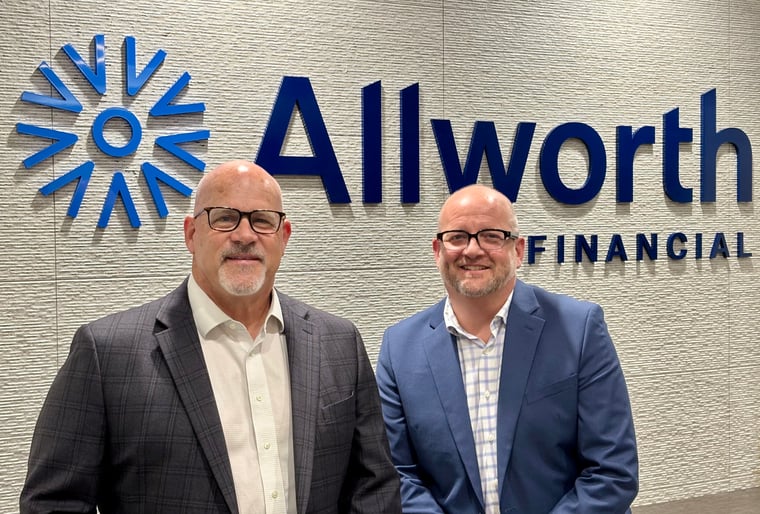
On this episode of Simply Money, Bob and Brian break down why your portfolio may not be falling—even when scary headlines suggest markets are in turmoil. They explain the disconnect between media narratives and real investor experience, including why the Dow’s dramatic point swings don’t tell the full story and how proper diversification—especially with international stocks and small cap value—has quietly supported portfolios in 2026.
Plus, a surprising (and alarming) trend: high-income households earning $300K–$500K are more likely to feel “paycheck to paycheck” than those earning far less. Bob and Brian unpack the real culprit—lifestyle creep—and how even multi-million-dollar portfolios can be undermined by unchecked spending habits.
Download and rate our podcast here.
It seems to happen every single time. Something triggers the market to generate some short-term volatility up or down. People don't tend to mind it much when it goes up, but, boy, do people get nervous when it goes down. But savvy investors don't panic. Why? Because when you read a headline, it paints a picture that most of the time likely does not include you. Let's get into why, Brian.
Brian: What's happening out there in the background, generally, isn't what's happening in your foreground. So, there's the default, every time we have turbulence, Dow drops 800 points. Markets plunge, markets soar, Dow drops another thousand points on fears that the war in Iran is going to drag on all these different things. So, the Dow Jones is only comprised of 30 companies. Hopefully, that's not too big of a shock. We don't talk about it as much anymore. The S&P 500 is a much better thermometer of what's going on in the markets because it contains 500 companies, hence the name. The Dow doesn't say Dow 30, but it is only 30 companies, and it does tend to be a little more conservative than the S&P 500.
And by the way, if you only have 30 companies in your portfolio, that's a bit of an issue. You might have a diversification problem anyway. Most likely you don't. If you own exchange traded funds or mutual funds, which most people, that's the approach they've taken in the 401(k)s, the vast majority of wealth is already diversified. Maybe not properly, necessarily, but it's not all in one index. So, that's a big reason to ignore the noise over the Dow. It's just the oldest index that we have. And that's why we tend to focus on it so much.
Bob: Brian, don't you think one of the reasons for that is the media can jump on that topic because the index is valued so highly. So, when we could talk about a 1,000 point drop or a 967 point drop, it seems like the sky is falling, when in reality, generally speaking, we're talking about a 1.25% drop when the media might suggest everything's going haywire. Don't you think that's part of this? It can drive listeners. It can get people to watch these shows. And then unfortunately, some people panic and don't really understand what's really going on.
Brian: Yeah. And I think that thought swings the other way too, which is to say that the Dow gets so much more attention. We make a bigger deal out of it when it crosses milestones. Wasn't that long ago, the Dow Jones was at 50,000. And then, ultimately, that's meaningless. It just happens to be a number with a lot of zeros behind it. But we get excited about silly things because we're just human beings. We don't get as excited about the S&P when it breaks its various milestones because it's just a smaller number. At the end of the day, we're just a bunch of trained monkeys. We're more impressed by a bigger number. Dow is older, therefore it can hit 50,000. S&P 500 is in the 6,000 range, is in the mid 6,000 is right now, and it has been for a little while.
Both of them are near all-time highs, which isn't a major shock. That's the way the market works. People get spooked by that. Market's at an all-time high. That must mean it's about to come down. No, it doesn't. That doesn't mean anything because the market goes up, not down. Everybody has seen the long-term charts of the stock market. And we know which direction it goes left or right. So, that means the market is usually at an all-time high. That's nothing to panic about. And it doesn't mean we're about to go over the cliff.
I hear this occasionally as I'm sitting down reviewing financial plans with people, should we get more conservative? Market's at an all-time high. Well, that was three years ago. It was true two years ago. And had we gotten conservative, we would have left a lot of money on the table. So, let's just make sure we know what this specific pile of dollars is assigned to do, and then let it do its job. The way to be thinking about that, the types of things you are looking at these indices for should be your longer-term money. We're not worried about the shorter-term. We've addressed that another way if we're operating off of a well thought out plan.
Bob: Yeah, and just maybe to drive this point home a little bit further, as I was listening to you talk about this, I just pulled up a chart, a six month chart of the S&P 500. And believe it or not, we closed yesterday almost exactly at a valuation on the S&P where the S&P was sitting on September 19th of 2025. So, how many people were panicking during the middle of September that the market was going to tank? Not many. But here we are today. We've got headline risk. We've got, obviously, geopolitical risk in Iran, which we're not making light of whatsoever. But I think from a valuation standpoint, it is important to drive home here. We're sitting right at levels that we were at in the middle to the third week of September. This thing has not fallen out of bed at all.
And meanwhile, the fundamentals of the market, provided that we get this oil stuff under control... And you and I talked about that yesterday with our chief investment officer, Andy Stout, we're not making light of the Strait of Hormuz situation. We've got to get oil and natural gas moving through there. It's about 20% of the global supply. But the markets seem to be pricing in that this is going to get resolved here sooner rather than later. Meanwhile, we just came out of an earnings season where earnings results surprised to the upside, analysts upside. Estimates, we're looking at 12-year earnings estimates up about 13.5% for the S&P 500. So, if we can get this thing under control with petroleum prices, the overall economy looks pretty good. And I think that's why you have not seen markets tank here. The other thing that I want you to walk through here for a few minutes is what a true diversified portfolio, not just piling it all into tech stocks or the S&P, how that's benefiting investors so far in 2026, just like it did in 2025.
Brian: Yeah, that's an important point. And the other thing I want to make sure that people are aware of is we have had a shift, a significant shift in what the market is paying attention to, what investors are looking at. And what I'm specifying there is for a long time, and I've heard this from a lot of people over the past 20 years, I don't need anything but the U.S. market. I just need the S&P 500. That's it. Nothing else matters because the S&P 500 dominates everything. And that's been a true statement. And even within that, within the S&P 500, it's been the seven big technology stocks. That has been true for a couple of decades now. But it's not been true for these last couple of years as the United States has repositioned itself in how it wants to be perceived by the rest of the planet.
The rest of the planet has decided that, "Hey, maybe we can work with each other and not rely on the United States for absolutely everything." So, we are seeing the international stocks are continuing to outperform U.S. stocks. And that's for a logical reason. They're simply forging new business relationships, and they're finding new profit opportunities among each other. I don't know that this is necessarily a bad thing. It's just a reshuffling of the deck. A properly diversified portfolio should have a good chunk in international anyway because the market will occasionally abandon what it's become accustomed to and move elsewhere where it finds a better deal. And that's kind of the whole point of the thing.
So, make sure that you have those international allocations. If you are somebody who abandoned everything, but the S&P 500 years ago, you're going to want to log into that 401(k), log in those investments that maybe you haven't looked at for a while. Make sure you've got a good balance of things in there. We're also seeing small cap value outperform. That's not something that happens all that often. So, make sure you've got a decent chunk on those sides, too. Really this is a story of rebalancing. Things move in different directions at different times. But a lot of times, we can get lulled to sleep and not pay attention. The last three years, that's exactly what it's been. The last year, not so much. Need to be paying attention and make sure we're balanced across all these different choices.
Bob: Yeah. The other thing I think that's been going on here, and you and I have been talking about this for months, going back into late summer, early fall of last year, we talked it seemingly almost every day reminding people to not get over allocated to these big cap tech stocks, the Mag Seven stocks. And looking at the performance of international, small cap, what have you, different asset classes, eventually, money's going to move to a perceived valuation, risk and reward scenario. So, even in the S&P, I mean, 40% of the sales of S&P 500 companies comes from outside the United States. So, it is a global economy. We are all dependent on one another. Even though the company's domicile in the United States, a big chunk of sales happens overseas.
But back to that international argument and the small cap value argument, I mean, it was just on a valuation basis. These things were ignored for several years, and were relatively inexpensive to large cap growth stocks. And that's a rotation that we've seen, Brian, forever throughout our careers, both of ours, and we'll always see that. You're eventually going to get a little bit of a rotation when things are perceived to be overly expensive. And I think that's what's happened last year and so far this year in this international and small cap space, and it's probably going to continue. Money is always going to move to where it's treated best.
Brian: Yeah, I couldn't agree more. And again, the moral of the story is make sure you have a plan. That's why there has to be a plan behind this. There's only so many things you can control about your own financial situation. You can control, or at the very last, be aware of your spending. You don't have too much control over social security, but it tends to be fairly reliable. Pensions tend to be fairly predictable, of course, barring crises. Those things you can all have good, solid knowledge of. The market, no, nobody gets to know what's going to happen next. That's just not how it works.
So, you have to build that into your plan. That's why we talk about stress testing so much. Run your plan as if nothing bad ever happens again, everything's wonderful. And then do the same thing again, and maybe knock down your financial assets by 20% or so. That's going to make you feel much more confident in the event of some kind of market downturn at the worst time, which is right after you've retired, you've made that decision, you've pulled the trigger, and then the market decides to kick you around a little bit. That does happen to people, but if properly planned out, if properly stress tested, it shouldn't be too much of a shock because you don't want to have regret over that decision. That is a huge decision and you'll question it anyway because it's a stressful one, but it really is more difficult when the market doesn't want to cooperate with us. So, just make sure you understand what that can look and feel like.
And then also reflect on the fact that it's one thing to play with numbers in an online calculator. It's another thing entirely to live with it because if it does happen to you... And it can, it doesn't mean you made a mistake. It's just life. Because you'll be surrounded with scary headlines and friends and family who are panicking and telling you, "You're not panicking enough. How could you possibly retire in this type of a market?" So, on and so forth. So, just remember the numbers are one thing, the emotions are another entirely.
Bob: I think you make a great point here, Brian. Dovetailing an actual financial plan, and you really need one, with stress testing, is what gives people peace of mind. Case in point, when we're having meetings with our clients right now, and I've seen you do this with clients, you'll go ahead and knock the portfolio down 18%, 22%, what have you. Even though that's not what's going on right now, we will do it on paper or on that computer model and just get people's reaction. Are you really going to be upset or want to change your whole life or allocation if we do get increased volatility?
And it's great to have those discussions before it happens rather than after the fact. Because after the fact is when people can make these emotional, fear-driven decisions from which they sometimes can't recover from. Here's the Allworth advice, your portfolio is not just one index. Focus on a good, diversified portfolio and a comprehensive financial plan to go with it, not just daily headlines. Coming up next, the silent wealth killer that can sabotage high earners, and most importantly, their sense of financial freedom. You're listening to "Simply Money", presented by Allworth Financial on 55KRC, THE Talk Station.
You're listening to "Simply Money", presented by Allworth Financial. I'm Bob Sponseller along with Brian James. If you can't listen to "Simply Money" live every night, go ahead and subscribe and get our daily podcast. Just search "Simply Money" on the iHeart app or wherever you find your podcast. Are your investments actually working, or are they just expensive? And when it's time to reduce risk, what's the smartest move and smartest way to do that? We're going to break all that down straight ahead.
There's an article making the rounds that really did catch our attention. And this surprised me, Brian, it suggests that households earning, catch this, between $300,000 and $500,000 a year are more likely to report living paycheck to paycheck than households living on $50,000 to $100,000 a year. This comes straight from a Goldman Sachs survey. It seems, you know, flat out insane to me, but let's break it down. I guess maybe I shouldn't be surprised.
Brian: Well, yeah, I mean, again, this kind of thing keeps us employed, I think, doesn't it? Making sense of things that don't from a financial perspective. Yeah, so let's review what Bob just said. Households earning between $300,000 and $500,000 a year are more likely to report living paycheck to paycheck than households earning $50,000 to $100,000. That's completely counterintuitive, right? It must be the other way around. Well, that's not the case. This is not an income problem, right? This isn't all these poor people making $300,000 to $500,000 a year need to have more income. Not necessarily sure that would solve it.
This is more a problem of lifestyle creep. It's a behavioral problem. So, lifestyle creep is what happens when you're spending, basically, goes straight up with your income. Soon as you get that raise, the house gets bigger, the car gets a little nicer, you sell the business, and then all of a sudden, your fixed costs multiply. And it isn't the boon that it seemed like it one day would be way back when you thought about, "I can sell this business, I grow it to X, and I'll sell it for Y, and then all my problems will be solved." Well, you'll have all the same problems if you allow your spending to expand to fill the space that it's in, right?
So, I always think of spending as kind of a gas versus a solid, right? Remember high school chemistry when you learned that a gas is something that expands to fill the space that it's sitting in? That's what spending can be if it's not properly babysat. As in all of a sudden, your social circle, you're paying attention to what other people are doing. Then you come into a windfall, sell the business and inheritance or something like that. And rather than that getting added to your capital stack of things you can live off for the rest of your life, it gets invested into something that gives you a somewhat shorter term boost in your own self-confidence and things like that. So, the private schools, country clubs, all those types of things can quickly consume that windfall money.
Bob: Brian, as I listen to you talk, this reminds me of a story. I'm going back now 25 years ago when my wife and I bought a house out. And this is back during the build out of all the McMansions out there in the northern part of Mason, which is where we raised our three sons. And I got home from work one night around 6:00. I'm just taking the dog for a walk and trying to relax a little bit. And I'm walking through a newer part of the subdivision. They're actually building, bricking, and roofing homes. Actually a bricklayer, he's getting ready to pack up his truck and go home. And I'm walking down the street. And he's like, "Hey, can I ask you a question?" And I said, "Sure." And, I never forgot this, he said, "How come none of these houses have any furniture in them?" And I just laughed out loud.
Because he and I stood in a driveway, and we looked at a couple houses on the street. And they got twin, you know, five series, brand new BMWs and just paid, you know, a healthy chunk of change for a new house and they were maxed out. They had no money to even buy a dining room table or kitchen table or put drapes on the windows. And this guy who, you know, was probably in that, at that time, $30,000 to $50,000 a year category, it just rocked his world. He did not understand that. And I bet you he got in his truck, you know, after we talked and he drove home to his family, probably sat down with a family dinner with actual silverware and plates and curtains on the windows and had a nice evening. Meanwhile, all of us out in the McMansion, you know, territory out in Mason are stressing about how to make the BMW and mortgage payment. I never forgot that. I thought it was both funny and sad at the same time.
Brian: Yeah. And then I bet that truck was paid off, too. You know, it doesn't matter how much you earn. It doesn't matter how much you earn. It doesn't matter how big your pile is. What matter is how much you spend. I have, you know, some clients that have $10 million and they're not going to make it because they live like they have $25 million. Also clients with a half million dollars who were just fine because they live within their means. So, the pile is irrelevant, the spending, the stream of income that needs to come out of it is extremely relevant.
So, let's walk through a quick example here. You know, for example, let's say you've accumulated $4 million, right? On paper, you're wealthy, but if that lifestyle requires $350,000 a year after taxes to sustain, we're talking spending, not income, so we got to create income higher than that to pay the man, that's not freedom. Using a conservative 4% withdrawal framework, that $4 million can only support about $160,000 per year before tax. That's a pretty big gap.
So, what's the result here? What do people do? Well, they sometimes stay in that job longer than they wanted to, right? They don't get to call their own shot as to when they're going to retire. Sometimes they'll take more investment risk than they should to try to make ends meet, delaying transitions, you know, rationalizing concentrated stock positions, "Well, this Amazon," or this Apple or whatever the thing is, "has done so well. I'm just going to sit on it and rely that it's going to continue to do that." And then all of a sudden, the market decides that it's going to not cooperate with you and you've compounded the problem. You know, overextending in any kind of deal, just chasing high returns. And this is all to support a lifestyle that maybe they don't need in the first place. And this is not to wag our finger in anybody's faces, but if you're going to be stressed out by your own financial situation, you're going to be stressed out by the headlines, then we're perhaps relying a little too much on the overall capital markets and less on what we can control, which is our own personal spending habits.
Bob: And this is an important reminder here, is while you're building out your "lifestyle" and fixed expenses, before you build all that out ahead of time, sit down with a good fiduciary financial advisor, another set of eyes and ears that can be objective, and look at your long-term goals in, you know, the long... I heard this phrase as soon as I got in this industry 35 years ago, make sure to pay yourself first. Meaning, get those savings plans, those 401(k) contributions in place first before you just go out and spend every dime that you have and then wake up in your mid 40s and wonder how this is all going to work. It's really hard to dig out of that lifestyle creep if you don't get a plan in place, you know, at the outset here.
So, here's the Allworth advice, don't let your lifestyle rise faster than your financial freedom. Protect your optionality of your money first, upgrade your lifestyle second. Why is it important to update estate planning documents? Even if you think your situation and wishes really haven't changed? We're going to dig into that next with Allworth's estate planning expert. You're listening to "Simply Money", presented by Allworth Financial on 55KRC, THE Talk Station.
You're listening to "Simply Money", presented by Allworth Financial. I'm Bob Sponseller along with Brian James, joined tonight by Allworth senior estate planner in our private client group, Mr. Paul Schwarz. Paul, I know you're a very busy man. Thank you for making time for us tonight. And we want to ask you to just, you know, cover, I think what to us is kind of a common sense thing that we seem to be running into more and more often when clients come in, either new clients or existing clients for review meetings, and it's the old discussion about estate planning documents.
And you know, more often than not, they'll come in and say, "Yep, I had these things done 12, 15, 20 years ago. I don't see any reason to change them. Nothing's changed with our objectives, with our family. Everything's fine, so we can check that box." And I know Brian, when you and I, you know, get under the hood here a little bit and start asking the kind of questions that need to be asked, sometimes we find that ignorance is bliss when it comes to estate planning documents. Paul, walk us through what you see, because you're the one that ends up having to deal with these situations and talk to clients and get things properly updated. What are most of the common things you see when people come in and say at the outset, you know, "Everything's fin. We don't need to touch it. Blah, blah, blah," and we're sitting with 15-year-old documents.
Paul: Well, what I always tell people is please review your documents every two to five years. And it doesn't have to be because of a major life event, you know, it could be because of a new birth or adoption. It could be because of the death of a spouse, the death of maybe your primary executor, your successor trustee, even one of your agents on a durable power of attorney or a healthcare power of attorney. And maybe there are financial changes that occurred over the years that, you know, you might want to change some of your documents because of that. And then the final reason always is because the law changes. And the law always changes. And because of that, maybe we just want to make sure that what you have currently in place is pursuant to consistent law the way it is today and your intentions of today.
Brian: Paul, what about what about moves? So, if I wrote my will 20 years ago when I lived in Ohio, and now, I'm a snowbird down in Florida, what kind of challenges can that bring if I've changed my residence?
Paul: It can bring big changes. But it especially brings changes, not necessarily with your revocable trust or your wills. Every state recognizes the other state laws. But where I see it really impacted is on your healthcare power of attorney and your durable power of attorney. Because not all hospitals or doctors or financial institutions are going to necessarily accept an out-of-state durable power of attorney or healthcare power of attorney or living will.
Brian: Is there a way to have one written in a more general manner that I can rely upon, or should it just always be something that I take care of? As soon as I move, I need to turn on the electric in the new house, and get my new healthcare power of attorney updated to the new state. Is there any way to keep that a little simpler?
Paul: I think it's important to get it up to date. It doesn't have to be the next day that you move, necessarily. Hopefully, there's no emergency or something doesn't happen necessarily that quick. But, yeah, I always think it's a good idea to have it reviewed and to speak to a local attorney that could give you better advice on whether you need new estate planning documents or not.
Bob: Paul, on that power of attorney topic, Brian talked about where people move to a different state. But again, when we're talking about these 12, 15, 20-year old documents, correct me if I'm wrong here, but a lot of times when these documents were drafted, the client's children are minors. They can't serve in a power of attorney capacity either for healthcare or financial. So, isn't a second reason to get these things updated in addition to maybe moving to a different state. Or even if you didn't move to a different state, is just to take a look at... Most people want one or more of their kids, correct me if I'm wrong here, to serve as a successor power of attorney in the event that their spouse can't serve in that role. Is that right?
Paul: You're exactly right, Bob. And that's probably the most common thing that I see, is the kids are grown now. They had named either a friend or a brother and sister as the backup executor, successor, trustee, or agent for power of attorney. And now that their kids are in their 20s or even younger 30s, they do want to name one of their children as that successor to them.
Bob: Hey, Paul, talk about asset titling. Because I know Brian and I run into this all the time.
Brian: Just yesterday, in fact. Thanks for bringing it up, Bob.
Bob: Yeah. Well, people spend good, hard-earned money to sit down with an attorney and get great documents drafted. And, yeah, Brian and I were in a meeting yesterday with a client and he asked the question, he's like, "Hey, tell me which assets today are owned in this trust that you had drafted." And we both got a deer in the headlights coming back at us, and the answer is nothing. So, do you find that often, Paul, in your work where, hey, getting the documents done is just step one of this whole thing, then you got to take a look at how your assets should be titled, update beneficiaries accordingly? The job is really not finished until that part of the estate plan is updated as well, right?
Paul: Getting the documents done is only 50% of the work. How your assets are titled and designated is probably just as critical. If you have a revocable trust and you do not fund it correctly, your revocable trust will act just like a will and go through the probate process. So, yes, it is so important to look at all your beneficiary designations, whether it's the title to your house, whether it is retirement assets like a 401(k), IRA, 403(b), and whether it's your brokerage accounts, whether it's your bank accounts like your savings, your checking, your money market, your CDs, all of those need to be reviewed along with the beneficiary designation or the transfer on death or pay over on death designation to make sure that your intent...and to follow through with avoiding probate, and make sure that those assets pass according to your wishes.
Brian: So, yeah, and matter of fact, Bob reminded me, I actually had two meetings yesterday. There was the one you and I were both in, and then I met with another client on my own that had the exact same problem. And Paul, I swear, it's probably three out of four meetings where we uncover the fact that there is a trust and people are kind of confidently saying, "Yeah, I got my stuff done. I'm an adult. I got all this. I got all of my documents arranged." "Well, what does the trust own?" "Huh?" Nobody do what you're talking about. So, yes, obviously, I think we've beaten that horse to death.
But the other thing I wanted to get your thoughts on was real estate. How hard is it? And it's one thing for me to go to my bank and set up a TOD or a POD, payable on death, transfer on death for my investments, my financial accounts. That's easy. It's usually a piece of paper. How does it work when I'm dealing with the deed to my house? Is that a hard process? How do I jump through those hoops?
Paul: Usually, you need to get an attorney involved, and they'll need to file what's called a quit claim deed. So, it's just a deed that transfers from you or you and your wife as joint tenants into your revocable trust. It's a pretty simple process. It's a two-page document where you'll get a new deed. The deed will be in the name of your trust. And then the deed gets filed in the county recorder's office where you live. It's a pretty simple process and a pretty inexpensive process also.
Bob: All right. Lots of good stuff tonight. Paul, thank you for spending time with us. You're listening to "Simply Money", presented by Allworth Financial on 55KRC, THE Talk Station.
You're listening to "Simply Money", presented by Allworth Financial. I'm Bob Sponseller along with Brian James. You have a financial question you'd like for us to cover, there's a red button you can click while you're listening to the show right on the iHeart app. Simply, record your question and it always comes straight to us. All right, Brian, Len in Mason says, "Our bond funds have similar yields, but very different durations." Great question. "How do I decide whether shortening duration actually reduces risk or just shifts the risk?"
Brian: Well, this is a great question. And first of all, I think that we need to kind of define some terms here. So, a lot of times we think of duration as well. That simply must just be the time frame of the bond fund that I'm considering. And that's not really the case. Duration is actually a specific metric that combines the velocity of the income that's coming out of it with the time that's left in that bond. So, for example, if there's a bond out there with a good credit quality and a decently high or higher than average interest rate, duration matters less than something that is lower credit quality or has a lower income stream coming off of it.
So, anyway, so in that case, you know, duration, that sounds like a technical detail, but it's really a proxy for what kind of risk you're choosing to take. So, let's throw some numbers at this. Again, duration is not just a word that refers to time. There's a couple of things. A bond fund with the duration of 2 is going to lose roughly 2% if the rates rise 1%. A fund with a duration of 7 loses about 7% under the same move. So, these are approximate numbers, but it does give you an idea for the scale of what we're talking about here.
Therefore, shortening duration clearly does reduce that interest rate risk, but it doesn't eliminate it. It simply reallocates it. You're simply trading price volatility for reinvestment risk. Short duration funds, they don't move around very much, but they constantly mature and reinvest the things that are inside them. Rates drop, your income drops. If you've got longer duration bonds, they're, of course, locking in those higher yields for a longer time. Don't just look at the yields. That yield similarity can be misleading as you're comparing your investment choices.
Longer duration, that means more volatility today, but more certainty of income. Shorter duration means more stability today, but less certainty of future yield. So, just think, you know, your shorter-term high yield savings accounts, money market funds, well, those are going to have a shorter duration, you know, more stability. You're not going to watch them move up and down very much in the shorter run. But at the same time, just think of where they were a couple of years ago versus now. They're still better than, you know, the 0% rates we had not long ago, but we're down from the 5%-plus yields you used to be able to get your checking account. So, hope that helps. A great question there. So, we're going to move on to Alex in Hebron. Alex's question is, he's trying to understand whether their portfolio's biggest risk is really related to the market or is it liquidity risk? What's the difference between those, and how do you make decisions?
Bob: Well, Alex, the way I'd answer that question is it depends on your financial plan. And most importantly, you know, it all comes down to, what does your money need to do for you and when? And here's what I mean by that. Market risk, if you own something in your portfolio that could drop, you know, 20%, 25%. Well, most people psychologically in their mind, that's now a liquidity issue because you're not going to sell at a 20% to 25% loss. That can feel the same as owning an illiquid investment like a rental property or a private credit or private equity-type investment where you do have liquidity lockups.
So, I always go back to, you know, as you're constructing your financial plan, time horizon is so important. Again, you want to know, which portions of your portfolio need to do what and when? So, the key here is to make sure in the short-term, and I'll define for investment risk purposes, you know, maybe a three, three-and-a-half year time horizon, make sure you have enough liquidity in your portfolio to weather a storm, whether it comes from market risk or lock up in some of your investments, meaning have other investments available in your portfolio to do that shorter-term job for you. And that way, hopefully, you know, if your risk is spread out and you've got a good financial plan, you can really mitigate both of those risks, you know, if you've got money to work with in the short-term. All right. We got time for one more. Emily in Loveland says, "We've added some alternative investments to diversify, but I don't fully understand what job they're supposed to be doing." How do I think about that?
Brian: Well, first off, I love the fact that she's kind of differentiating between the jobs of these various piles of money, right? The different things that you own, everything has a different job, and its job is not always to be outperforming everything else. The recognition that everything has a different job to take care of is a great sign of an understanding of the importance of diversification. So, let's talk about the different jobs that exist first of all.
You know, growth, if you want your money to grow, obviously, that's an important component of any portfolio. That's going to be your stock market, of course, stock and type investments. Stability, we need that when the growth isn't working out, those are bonds. Liquidity would be cash and short term bonds. And then a fourth job that tends to come up is inflation protection. And that's things that tend to hold value when purchasing power starts to fall apart, such as a real estate, for example.
So, as we get into alternatives, what are we talking about here? Well, we're getting into private equity, venture capital. That's something that's all in the growth category there. So, that's going to enhance your long-term returns over time beyond the public markets. You are definitely trading liquidity and transparency, though. That's the private part. You're not going to see inside these black boxes very well. There are also hedge funds and absolute return strategies that are looking to deliver equity-like returns, but with lower volatility. That's still in the growth category, but it dips a toe in the stability side of things.
Real estate, private real estate transactions, those are alternatives as well, and those can behave in a manner that offsets, like we said, inflation. And then, of course, you've also got commodities, managed futures, and those kinds of things. Each of those exist to hedge inflation and outperform when the market undergoes stress. And again, I would put that in the same category as we refer to as real estate. Each of these has moving parts beyond what you're accustomed to. Make sure you understand before you invest.
Bob: Coming up next, we got one more listener question that we receive that I think is such a great question. I think it's worth spending a few minutes on. So, we're going to dive into that one next. You're listening to "Simply Money", presented by Allworth Financial on 55KRC, THE Talk Station.
You're listening to "Simply Money", presented by Allworth Financial. I'm Bob Sponseller along with Brian James. Well, Brian, we received another listener question that we didn't have time to cover in the last segment, and I thought it was such a good one that it's worth diving into this for a few minutes. And the question came to us from Paul in Columbia, Tusculum, and he says, "Hey, I'm trying to understand whether lowering risk should come from changing our investments or changing how we spend. And how do you compare those two?" And I love that question because this goes right to the heart of what a true financial planning process and ongoing dialog should be.
Brian, I feel like we've talked about the term stress testing three or four times on tonight's show. And I think Paul's question goes right to the heart of this. I think it's great to sit down with people, because I think people have a couple of things in mind. They want to be able to spend and enjoy their money to the extent that their plan will allow, but they also want to be able to sleep at night, you know, depending on how much volatility we have in the markets. And I think it's great to just run different scenarios. And this is what you and I do all day long for clients to just show them, "Hey, here's what can happen to your long-term financial plan if in the early years of retirement, we get hit with a down market or a health care scare or something like that," and just have a dialog.
And I think the other thing to keep in mind is this does not have to get etched in stone in year one, meaning set it and forget it financial planning. This is why we do, at least, an annual review, comprehensive review with everyone to talk about these exact things. Because your financial plan and your risk tolerance, most of the time can and will evolve as you just navigate through life and go through different market scenarios, health scenarios. You know, you deal with grandkids, you deal with lifestyle changes. This, to me, gets to the heart of why comprehensive financial planning is so important for people, and why it's critical to have a good fiduciary advisor walk you through that discussion. I know you do a great job in this area. Any thoughts you would add to this question from Paul?
Brian: Well, I did. First off, I want to commend Paul for realizing. He's obviously been looking at things and he's realized that there's far more to financial planning than simply throwing it all in the stock market and just letting it ride there. I look all the time, there are Reddit sites out there that talk about financial planning, online forums, all these kinds of things, or the Bogleheads site, for example. All these are valuable resources. But the drumbeat is always just throw it in an index fund because that's cheap and that's all you'll ever have to do. Well, I don't really mind that for the first 20, 30 years, might be a little long, but for the first several decades. But eventually, you're going to face some decisions. You have to make decisions. And if you haven't prepared for how you will make decisions, let alone the decisions themselves, then you're going to be kind of left out in left field winging it. So, I'm glad that Paul has recognized it's not just about growth, growth, growth. There are other decisions to be made, many other factors to pay attention to.
Bob: Thanks for listening tonight. You've been listening to "Simply Money", presented by Allworth Financial on 55KRC, THE Talk Station.
Insights for Complex Wealth Decisions
Join our email list for exclusive commentary from our Chief Investment Officer, early access to expert-led webinars, and your complimentary Wealth Planning Checklist for Complex Portfolios.
We take your privacy seriously and respect your privacy choices. By submitting this information you agree to our Terms of Use Agreement, Privacy Policy, and to receive important notices and other communications electronically.