
The Hidden Gap Between Building Wealth and Feeling Secure
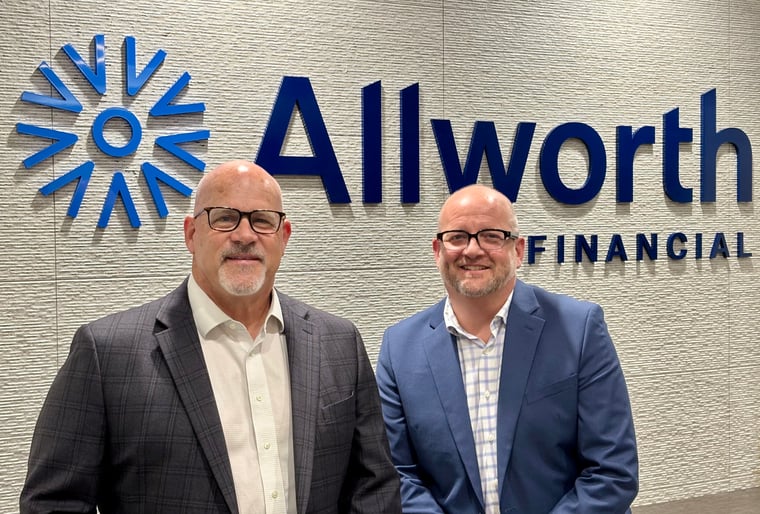
On this episode of Simply Money, Bob and Brian break down why so many people who have done everything right—saved, invested, and built significant wealth—still don’t feel confident about their financial future. They explore the difference between passive decision-making and intentional planning, the two factors that truly move the needle, and why “hoping it all works out” can quietly derail even strong portfolios. Plus, why a financial windfall can be a risky moment if you act too quickly, how AI is starting to influence financial decisions (for better and worse), and answers to listener questions on managing concentrated stock positions, coordinating income across accounts, planning for market downturns, and making sure your financial life is prepared for the unexpected.
Download and rate our podcast here.
Tonight, we're going to talk about a group of people, Brian, you and I run into from time to time. They don't feel broke at all, but on the other hand, they don't feel very secure about their long-term retirement plan. And a lot of these people have done a lot of things right. They've saved, they've invested, they've built a net worth of, say, a million dollars or more. And yet the question still lingers out there, is this actually going to be enough to allow me to retire with the lifestyle with which I've become accustomed? It's an issue from time to time.
Brian: It is. And here's where things get uncomfortable, Bob, because when you're in that in-between stage, it's really, really easy to start drifting into this quiet version of a victim mindset, "This is happening to me. I have no control." But at the same time, things just aren't working out. This is a little different. It's not obvious. You're not saying, "I can't make ends meet," but it's just something more subtle, kind of throwing up your hands and saying, "I've done everything I can. The market's going to just do what it does, I guess, and I just hope this works out."
Well, this is where personal responsibility takes on a bit of a different meaning. Because earlier in life, for your 20s, 30s, 40s, something like that, the advice is pretty simple, save consistently. Just get started. Build your momentum. Don't make a mess of your credit. Don't make irresponsible decisions. But eventually, when you get to an older stage, that responsibility makes it look like those intentional decisions about what you've already built are where it's all at. And this is where people make a critical mistake, when we make that shift from a good idea versus a bad idea. It's a good idea to save, it's a bad idea to spend more than I have. That's a pretty easy decision. But when you get to a point where you've built something, you've got something to protect, now those decision points are pretty critical.
And it won't be as obvious. It gets a lot harder when you've given yourself options, because you have to pick one. You have to understand, I have option A, B, and C. They're all kind of good-ish, because I've built something that I can rely on, but now, I have to understand the pros and cons of each one of those and pick the right one for me. And it's never black and white. This is where I always say, if there was a 10-step process to financial planning that worked for everybody, then we would all be following a TikTok video that walked us through those steps. It's different for absolutely everybody out there based on the resources you have and the goals you're trying to achieve.
Bob: Yeah, I would say, just to break this down and keep it even simpler, Brian, to me... And feel free, by the way, to disagree, that's what makes life interesting, is having good, healthy dialogue. But we talk about, all the time, the issue of optimization. We talk about Roth conversions and income strategy to minimize taxes, subtle changes to your asset allocation strategy. Yeah, those things will move the needle. They will make things more optimized and efficient. But Brian, we all know the two things that really move the needle are the year in which you decide to retire, meaning you're shutting off your earned income and replacing that with whatever you've built. And then the elephant in the room sometimes is how much are you going to actually spend?
And this is where these people that are kind of, we'll call these in-between category, people that have some money, but yet don't feel very secure, they just make a default decision on one or two or both of those decisions, "The year in which I retire and how much I spent." They just make a decision and then just hope it all works out. And that's where we try to counsel people to do a little bit more planning before you pull the trigger on those decisions. And I can think of clients right now as I'm talking about this that have just made these decisions, and then they want us to work our magic and make it all work, and it just doesn't work that way. Do you run into the same thing?
Brian: Yeah. I think there are people out there who have sort of these preconceived notions of how things should work, "And by God, that's what I'm going to do. I'm going to make those decisions based off of what I was taught 30 and 40 years ago." And I think it's interesting, I mean, I've mentioned this before, I thought a lot about the different generations and how they were raised thinking about money. Some of these preconceived notions come from, the generation that is now retiring has a set of parents who retired in a whole different frame of mind. Because that older group retired, worked hard for pensions, "You just stick with this job and we'll make sure you're okay for the next 20, 30 years into retirement."
But that's very different. That changed in the late '70s, early '80s to a situation where, "Well, we're not going to worry about you. As the employer, we're going to give you a 401(k) and let you invest in it. And you're going to retire with a big pile of money as opposed to an ongoing stream of income." And that makes it harder to make decisions. So, nobody has really been trained, yet. That first group that had to retire in a 401(k), which we're kind of in the middle of those folks now, those folks were trained that the '80s and the '90s were normal. The market just goes up and there's nothing bad ever happens. Well, this second wave we've got has now been kind of trained the opposite. That's just nonstop chaos the way it's been for 25 years. Both of them are doable.
But what we really have is we've had the last two generations have seen the extremes. A whole bunch of nothing happening, you know, nothing bad at all in the '80s, '90s, frankly, and then a whole bunch of chaos. And now we've got this third generation of retirees coming up that is really kind of having to choose what reality is. So, these preconceived notions don't match their parents and they don't match their grandparents. So, there's an awful lot of strange conversations, I think, that happen at dinner tables around, how did you do this? And what is it that we can do? Why does this feel so much different than what I've heard in the past?
Bob: All right, well, let's get into a couple of hypothetical examples here. Let's take two people, same situation. Both are 55 years old. Both have about $2 million saved. And both are thinking about retiring in, let's say, 8 to 10 years. Person A, this is the positive path. They take some ownership. They sit down and ask, "What does retirement actually cost me?" Meaning, list out what you're planning to spend, what all your fixed expenses are, what are your want to expenses, you know, vacation, second home, remodeling the basement, you know, replacing vehicles, all those kind of things. "What is that all going to actually cost me? And then what are my biggest tax risks?" Factoring taxes, depending on how this money and where it was accumulated? And then how should the portfolio shift as they get older?
So, they make a few key decisions. They do start doing some Roth conversions during those lower income years. They adjust their portfolio to balance growth and income. They get clear on their spending. What matters, what is not essential. Nothing drastic, just being intentional. And then like you and I talk about all the time, stress testing this whole plan to make sure it's going to hold up, at least, cover all the essentials, you know, regardless of the market situation. Fast forward 10 years, they can retire with confidence, not because the market was perfect, not because something didn't go wrong in these intervening 10 years, it's because they built a plan, they constantly monitored it, and they were in a position to make the plan work. That's what we're talking about tonight. Brian, walk us through the alternative, the person B that just throws up their hands and says, "Well, we hope it all works out."
Brian: Yeah, what we've done for the last 30 or 40 years, that's gotten us here, so that must be the right thing to do, and let's just pretend that really nothing changes through retirement. So, they'll say, you know, "I think we're fine. Let's just leave things as they are. It ain't broke. We don't fix it. So, we'll adjust later if we need to." So, the result of that is that they don't revisit their plan. They don't adjust for taxes. Not really don't adjust or not only don't adjust, but aren't even paying attention to how taxes are changed. You know, these are the kind of folks who miss out on those little deductions.
You know, there's one now for senior citizens of a certain age where if your income is arranged a certain way, you'll get an extra bit of a deduction. But if these folks aren't paying attention to how the rules have changed because they're in kind of their pattern of how they manage their finances, they're just acting passively. So, they don't really talk about, what does enough look like? What is it that makes us us? And how do we know when we have enough so that we don't have to worry about, you know, things more? This isn't reckless behavior, it's just kind of too passive. Just, you know, letting things float along and results, oftentimes, in missing opportunities.
So, let's fast forward 10 years on both of these folks. The markets were okay. Not great, not terrible, but, you know, just decent enough to make things work. But all of a sudden in this situation, taxes are a little bit higher than expected. This makes the withdrawals feel a bit uncomfortable. Feels like money's getting tighter on a month-to-month basis, which results in uncertainty around spending. And then that's where we have the difficult discussions at the dinner table where one person wants one thing and the other is getting a little antsy about what the outcomes might be. But the biggest problem here is that they no longer feel in control.
So, you know, it doesn't matter how much you make. This can be people making $300,000, $500,000, even more every single year. They've built real wealth, but they get stuck in this gray area. Simply not confident enough to pull the trigger and retire, not intentional enough to accelerate things. And so, they wait and they just hope and really don't take any action to make things work out the way that they want to. That is letting the market decide. And let us be very, very clear here. The market itself, that's not a financial plan. Simply sitting and watching and taking whatever happens, that's not a good plan for everybody.
So, the whole point of financial planning is to make sure you understand, again, what are my resources? What am I trying to do with them? And what can I expect in the good times? More importantly, what should I expect in the bad times? And if I can build a plan that's going to float through all of those, then that'll be okay. But it's not set and forget it before you leave the dock. It is making adjustments along the way based on the conditions you see ahead of you. It's really kind of never over, Bob.
Bob: Yeah, and again, going back to my prior point, most of the time when these plans don't work, it's because there's a spending problem, whether it's lifestyle creep, because you have a million or a million and a half dollars of assets on paper, you feel rich. Therefore, you maybe allocate too much of your money towards, let's say, your kids or grandkids, college education costs. I can think of people right now, Brian, where when will we run their plan, they have about an 8% probability of being able to retire, but yet they are taking out loans and writing big checks to send their kids to non-state schools. I mean, spending $30,000 to $40,000 a year. This is money they don't have. And they just throw their hands up and say, "Well, this is what we've decided to do, and somehow, it's going to work out."
And what I see on the back end of this sometimes, you know, again, Brian, you and I both been doing this for over 30 years, what can happen is you get into your mid to late 80s and you start running out of money. And, yeah, you are all well intentioned, but what ends up happening, you now become a burden from a financial standpoint to exactly the same people you were trying to help when they were in their 20s. And that's why a reality check here with a good fiduciary adviser that does not have any emotion in the game can hopefully get out in front of some of this stuff, mitigate it before it becomes a longer-term problem.
Brian: So, here's the shift that we think everybody should be taking here, if you find yourself at this crossroads of, "Here's what I want to do, but I'm not sure I can get there." So, shift the question. It's a very stressful situation, but change the question. Stop asking yourself, "Is this enough?" Because that's going to cause a lot of stress and anxiety. Start asking yourself, "What do I need to do to make this enough? Here's what I have. And it needs to do this, this, and this. How do I make that happen? What are the steps I can do today so that I get that outcome in the future?" One question creates anxiety. The other creates action.
Bob: Here's the Allworth advice, and it really is quite simple, don't just drift and hope. Be proactive and build a plan. Coming up next, we'll talk about a moment that sounds great on paper, but can quietly go very wrong if you're not careful. You're listening to "Simply Money", presented by Allworth Financial on 55KRC, THE Talk Station.
You're listening to "Simply Money", presented by Allworth Financial. I'm Bob Sponseller along with Brian James. Hey, if you can't listen to "Simply Money" live every night, subscribe and get our daily podcast. And if you think your friends or family could use some financial advice, tell them about us as well. Just search "Simply Money" on the iHeart app or wherever you get your podcasts. When your wealth is spread across multiple accounts, your income fluctuates, and markets don't quite cooperate, how do you actually build a plan that holds up in real life? We're breaking down the blind spots even experienced investors sometimes miss straight ahead.
Tonight, we want to talk about the good, old financial windfall. Maybe it's a big bonus payment. Maybe you just sold a business. Maybe it's a large inheritance. And suddenly, there's a large amount of cash sitting in your bank account. Now, here's the part most people don't expect, and this is very counterintuitive, that moment right after that money hits when you feel great is actually one of the highest risk moments in your financial life if you're not careful. Brian, let's get into what we're talking about with the highest risk moments. You would think the opposite, "Hey, I just got a big cash bonus or inheritance. Life is good." What do we need to watch out for here?
Brian: Yeah. And a lot of people out there say, "What's risky about a big pile of money falling out of the sky? That seems to reduce the risk." Well, it's all about opportunity. And so, your instinct is going to be to do something. Got to get this invested. We're going to pay something off. We're going to go buy the thing that we've always wanted to buy. And it's always about moving quickly. Sometimes that instinct is where the mistakes happen. So, if you're acting too quickly, that means you're feeling the pressure. Like, "Okay, we got this big pile of money there. It's sitting there doing nothing in the bank. Interest rates, they're not as terrible as they used to be, but they're not great either. So, I need to put this to work. I don't want to miss any upswing in the market," and so forth. "I should be doing something smart right now, but I don't know what the smart thing is, so I'll just do nothing."
So, really, but the way to think about this though is there's really never a penalty for waiting and thinking about what needs to happen. And oftentimes, this cash, this type of windfall comes along with a lot of moving parts itself. Perhaps if you're the one settling the estate or if you're the one who is selling the business, all of these are significant amounts of work unto themselves before you get to the point where you decide what you're going to do with the proceeds or whatever this transaction is. So, you do not have to rush to do anything.
And, you know, I'd also say that you also should consider the idea that there's almost never one idea that is the most obvious that you should throw it all at the one thing. Perhaps there are several things in your life that could use some financial attention. So, the first step here is before you do anything after one of these transactions, just pause, let it go for a little bit. Park that money in a high-yield savings account, somewhere you'll get a decent amount of interest on it. You know, maybe hopefully 3%, something like that. And then give yourself a month, two months, maybe even three months before pulling the trigger on any major decisions.
Because you're not buying yourself yield, you're buying yourself clarity. Worry first about, "How will I clearly understand which of my financial moves, my financial things that need attention will make me feel the most confident if I execute on it." That decision is not going to be clear on day one of that money hitting the bank. Your head's going to be spinning. But if you let it percolate for a few weeks or a few months, then you'll have a good feeling about what's going to feel the most impactful to pull the trigger on.
Bob: Yeah, Brian, what tends to happen here when we're talking about a large amount of money hitting your account in the short term is there's a motion attached to that. And there's very different emotions involved depending on who we're talking about. For some people, it's greed. Well, not just greed, but just fear of missing out, "Man, if I don't get all this money invested today, I'm going to miss out on a big market move and I didn't make any money on that windfall." The other side of that is fear. You know, "I'm afraid to get this money deployed because it could drop in value."
So, depending on the temperament of each person, different emotions can drive these short-term decisions. This is why in a perfect world, it's good to sit down... Again, like we talked about in the last segment, working with a good fiduciary advisor is going to get a different set of eyes and ears and whatever on this thing that are not emotionally attached to the decision, and then dovetail this large financial windfall with a long term financial plan. And like you just said, it might be a combination of things. This is an opportunity to build an emergency fund and adequately fund it. If you don't have that in place, invest some of it. Do some different things where some cash is needed, like a Roth conversion, let's say. So, sitting down with an advisor and taking that big lump sum and factoring into an overall strategy is the right way to go here, especially if you're someone that's prone to just make short-term, emotional decisions.
Brian: Yeah, and I would say, you mentioned that emergency fund thing, a lot of people sort of make a decision by default by not doing anything with it. Oftentimes, we'll have somebody come in, and all of a sudden, we hadn't seen him in a while, and they've got a quarter million dollars sitting in a bank account. "Well, where did that come from?" "Oh, that we inherited that from Mom and Dad. So, that's our emergency fund. We don't want to do anything with that cash because that's our emergency fund." "Okay, did we calculate? Did we put some thought into what the emergency fund should be?" "Well, no. It was cash when we got it, so we're just going to sit on it like that that way."
That's a missed opportunity, though, when that happens. Because that $250,000, that could be two years' worth of spending for somebody. And if they're not actually going to take advantage of it, then it's not really helping them at all. So, let's make an educated decision, maybe 6, 9, 12 months, and then declare that you have accomplished the emergency fund goal. So, if your emergency fund is $50,000 or it's $100,000, when you are at that dollar amount, declare that to be 0. Anything above that gives you the freedom to go tackle one of your other goals. And it doesn't have to be investing. It can be paying something off. It can be taking the family on that trip you've always wanted to do, whatever.
But don't just designate a pile of cash to be the emergency fund because it is just a pile of cash. Figure out what you need, and then rearrange your portfolio accordingly so that you can take advantage of the assets you've been given. Your parents, your family members who loved you and gave you that money wanted you to use it for their benefit, not refuse to look at it and pretend it doesn't exist.
Bob: Well, and I don't want to be a killjoy here, but you and I, Brian, have both seen people, you know, when we're talking about this large lump sum, people suddenly redefine what emergency fund means. Sometimes people say, "Well, that's our emergency fund. We don't want anything to happen to it or touch it." When really what they're talking about is they're going to spend it on a bunch of stuff, and they don't want us as their financial advisor to know about it. It could just become very interesting. Here's the Allworth advice, when you receive a windfall, don't rush to invest it or spend it. Plan, pause, and use the moment to make smarter, long-term decisions, especially around taxes.
Half of Americans are already using AI in some form or fashion for financial advice, but just because AI can manage your money, should it be doing that? Next, we'll give you our couple of cents here on where it helps and where it can seriously hurt you if you jump in the pool too far here in terms of AI managing your money. You're listening to "Simply Money", presented by Allworth Financial on 55KRC, THE Talk Station.
You're listening to "Simply Money", presented by Allworth Financial. I'm Bob Sponseller along with Brian James. Let's talk about something that's quietly working its way into your financial life, whether you realize it right now or not, and it's artificial intelligence. It's in your banking app, it's in your email account, it's in your investment account, it's showing up in advertisements promising to find tax savings, automatically cancel any of those unwanted subscriptions you might have, and even optimize your investment portfolio. Basically, take over and run your whole financial life if you'll let it. And Brian, apparently, a lot of people are starting to buy into this whole concept.
Brian: According to a 2025 JD Power study, 51% of consumers have already used artificial intelligence for financial advice, and another 27% can say they're considering it. But the real question isn't really whether AI is useful. It's when you should actually trust it with your money and when should you not. So, let's break this down a little bit. AI actually does make sense. It can be an incredibly powerful tool. We use it ourselves here. I refer to it as Google on steroids. Not only will it find the information that I need, perhaps on the newest tax codes or whatever, but it'll also tell me how different structures, different techniques can work within those tax codes, and how they used to work, for example. That's a good way to... That helps me help my clients understand, what are the changes? Why are we talking about this now versus five years ago? "Well, because things are different and here's why."
So, for financial planning, you can have AI stress test your retirement plan with a little bit of data. You can ask it, "What happens if I retire five years earlier? What are the tax implications of selling this business? And where are the potential weak spots in my strategy?" That's where AI shines. But it's only going to give you the factual information. What it can't give you is, how have other people dealt with this? What's it going to feel like when I go through this? Where are those points where it's one thing to identify, here's the facts behind this decision, but it's another thing entirely to talk about, what is it going to feel like? What's going to scare me to death about this kind of thing? And that's where I still feel like...
Bob: Brian, I got a question.
Brian: Yeah.
Bob: You're 10 or 11 years younger than me and you're very experienced in this business. How many people that you're talking to right now that come into your office are walking in and saying, "Hey, I ran this scenario using ChatGPT. Here's what it spit out for me. Please comment on that." Are those conversations actually starting to happen where clients or potential clients are walking in actually having used AI for some pretty complex calculations? Are you actually seeing that at this point in your career?
Brian: Complex, I think is the difference. I think I've heard that one time where somebody had taken their entire financial situation and spent the weekend arguing with ChatGPT over what they should do and that kind of thing. But the lack of trust was definitely there because they brought it all back into me and said, "Well, here's what this says. And we probably agreed with half of it, and the rest of it we were really not super comfortable with, and we just kind of found another way to attack it." So, I think there's still a little bit of suspicion about that there's not a human being on the other end of this. Not that the information is wrong, but people just have a hard time pulling the trigger without looking somebody else in the eyes that they trust and saying, "Is this a good idea for me or not?" I don't think we're ready yet to have a laptop substitute for another human being across the table saying, "Yes, that's a good idea," or, "No, here's how you should probably tweak it. "I think we've got a little ways to go before we get there.
Bob: Yeah, I totally agree from where I'm sitting. I haven't had people come in and have all this stuff spit out. But like you, I use ChatGP all the time. I think it's wonderful. And I also tell clients all the time, the best client is a more informed client. So, the fact that people will go out and do some research, run some numbers, look at some historical numbers on investing and inflation and taxes, those are all good things. That makes for more informed people walking in the door. And then to the point I think you're making, if people walk in and they've already run some numbers and it created sometimes more questions than answers, that's what makes for a wonderful planning environment with a good fiduciary advisor to really put this whole thing together and help people actually make confident decisions with their money. And that's why I'm a big fan of AI, but I think it has its limits, at least, right now as we speak.
Brian: Right. Now, let's talk about what's coming with AI, right? We just talked about the Google on steroids version, just ask it questions and it'll find information and then you make decisions and you, the human being behind all this, still go off and do what you do. But now, there's something called agentic AI, where AI is acting as your agent. It's not just telling you what you should do or sharing facts or things like that, but it's actually going out and doing it for you. This means moving money, placing trades, filing your taxes, reallocating portfolios. And this is where things go from helpful to potentially dangerous because you're making commitments to your banks, your financial institutions, the IRS. That things are happening without you actually pushing the buttons and pulling the lever.
I think we're a ways away from this. I know it's out there. I know it's on the horizon. There's going to be products coming that purport to do all these things for you, but I really just don't see a situation where people are going to be so willing to take their eyes completely off the ball. So, the risk here isn't just bad advice, it's real financial consequences. We've already had some warning signs.
So, in 2025, the Federal Trade Commission did file a complaint against a company called Air AI for over-promising what its autonomous systems could do. And this included concerns about unauthorized actions, not being authorized to actually move money around, and that cost their customers money in terms of penalties and just different things that didn't go the right way. So, that's the issue here. These tools are being marketed like they're absolutely flawless and we know they're not. Automated driving cars and those kinds of things have their issues, too. We see them hit the headlines all the time. I think we're going to start seeing headlines about machines being allowed to move people's money around, and then somebody getting a nasty gram from the IRS because they weren't paying attention to what their robot had gone down the wrong path for whatever reason.
Bob: Here's something else that doesn't get talked about, and we came across a recent study. I found this very interesting, Brian. And this is a study with folks that deal with an actual advisor. It suggests that using AI the wrong way can actually damage that relationship. And they had actual data saying people that walked in, sitting down with you, Brian, as their advisor, that it had actually done some work on AI, it caused the advisor to get frustrated and damage the relationship. I don't subscribe to that at all. Like I already said, I think an informed client is a better client, but it was a very interesting study. Advisors don't seem to like AI being involved in any way, shape, or form. I found that interesting.
Here's the Allworth advice, use AI as a tool to ask better questions, but continue to rely on thoughtful financial planning and good advisors to actually make the decisions that will shape your future. From bucket strategies to unpredictable income to adjusting spending in volatile markets, what happens when your financial plan meets the real world? We're diving into the cracks that can actually derail even strong portfolios. You're listening to "Simply Money", presented by Allworth Financial on 55KRC, THE Talk Station.
You're listening to "Simply Money", presented by Allworth Financial. I'm Bob Sponseller along with Brian James. You have a financial question you'd like for us to answer, there's a red button you can click while you're listening to the show right on the iHeart app. Simply record your question and it will come straight to us. Tom in Hyde Park leads us off tonight. Brian, he says, "I've been holding off on selling some investments because of the tax hit, but now, they've grown into a bigger and bigger part of our portfolio that I'm comfortable with. At what point does managing risk outweigh managing the taxes?"
Brian: Well, when your investment falls apart, that's when the taxes should no longer wag the dog there. So, the way to think about this though is, this is one of the more common situations that longer term investors face. It's not really a math problem, it's a behavioral one. So, you've got to reframe what's actually happening. If the stock did well, well, that means it silently changed your portfolio's risk profile. Maybe a 5% to 10% position turns into 20%, 30% sometimes more. At that point, you're no longer diversified. You're making a concentrated bet whether you wanted to or not. So, separate the tax pain from the risk decision. A lot of people freeze because selling triggers capital gains. People generally don't know how capital gains work. They just know it's going to be a tax that they don't have a lot of experience with, necessarily. And that's terrifying and they don't want to accidentally do something that's going to cause them a million dollars in taxation.
But the real question is, if you had fresh cash today, would you put that much into that same stock? Would you hang on to these positions? Don't think in all or nothing terms. Get the portfolio back to where it's... The important thing is, or the risk here, really, especially if it's way out of whack, don't worry so much about the level of the taxes that are going to happen. Taxes are going to be what they are. You need to worry, first and foremost, about the things that could absolutely sink your ship. So, I think we should be focusing on that a little more.
So, let's move on to Dan and Coleraine. Dan says, "We got some money in different buckets, IRA, brokerage, some cash." It sounds like we're talking about tax buckets here. "But when it comes time to actually use it..." And he's not sure how these pieces are supposed to work together. Bob, what would you say there?
Bob: Well, Dan, this is a common challenge that most people run into when we move from what we call the accumulation stage to the distribution stage. Meaning, "Hey, we've built these piles of money. Now, it's coming time to actually use the money. What's the best way to use it?" And this is where it really does make sense to sit down with somebody, a good fiduciary advisor, if you're not comfortable putting all these pieces together on your own. Because there is an investment risk component to this, and also, a tax efficiency component to this. And like I say all the time, the important thing with financial planning is telling your money what it needs to do for you and when in advance. That's what a financial plan is.
And it's not like we're magicians over here and we pull a rabbit out of the hat. We've got good tools to work with where we can model different scenarios on what the best way to take an income stream is from these different buckets of money. So, I would encourage you, if you're not somebody that's comfortable and have the tools and the inclination to want to do this yourself, now is a great time to go find a good fiduciary advisor and explore that relationship and see if you could come out of here with a confident income plan as you head into retirement. Great question, Dan.
All right, let's move on to Tammy in Lebanon. She says, "Our plan assumes we'll adjust spending if markets get rough, but I've never actually had to do that before. How do you build a plan around something you've never practiced?" Love this question and it's good that Tammy is getting out in front of this. I think this is great anticipation on her part.
Brian: Yeah, these are good thought experiments because these types of solutions aren't easy. So, what you're describing, that's a gap between a theoretical plan and a behavioral plan. So, on paper, we'll just cut spending. That sounds real simple, right? That's just a solution. We will pull that lever and everything will be easier. But in real life, that lever is very, very tough to pull. So, the goal should be, make that adjustment predefined. Figure out what it is you will spend less on, right? This boils down to understanding the different categories where you spend money. Some things are going to be fixed costs. For example, you can't choose to pay less on the mortgage. That's going to be an issue in the longer run. But you can choose to spend less on eating out or something like that. But in order to get there, you got to know where those dollars are going in the first place.
And also, I would say, figure out not only what the decision will be, but figure out when you need to make it. Don't just say, "When the market goes down, then we'll adjust our spending," or whatever your solution is. Figure out what that means. So, that might mean, if our portfolio comes down 10%, and this is assuming you've already done the stress testing to understand the impact to your situation when the portfolio moves this much. Portfolio down 10%, here's the areas we're going to focus on. If it comes down another 20%, well then we know we're going to put out these. Maybe we planned on finishing the basement or whatever, doing something to the house next year. But maybe we'll put that out a couple of years because that's definitely a discretionary thing. So, it's not only the decisions themselves, it's the timing of them. But again, I think that the point here is to put concrete numbers to it, not just, if the market goes down, we'll do this. Figure out what this is and figure out how much down means.
Moving on here to Rachel in Blue Ash. Rachel says she's starting to think more about what's going to happen if one of us passes unexpectedly a little earlier. So, does that mean the investment strategy needs to change depending on who's left managing things, Bob?
Bob: Well, Rachel, I would answer it this way. Your question said, who's left managing things? So, that poses a question for me is what does management look like today? And what I mean by that question is, oftentimes, Brian and I talk to folks who are "self-directing" their whole affairs and their portfolios. And what tends to happen, especially in a married situation, one spouse loves this stuff, eats, sleeps, and drinks it, wants to be very involved. The other spouse could care less. They just want to make sure there's enough money there. And if that's your situation and if the person who's quote unquote managing things today suddenly passes away unexpectedly, you're left without a plan. You're left without a management strategy. So, my suggestion is talk to your husband about this and have an honest conversation about what would happen if one of us was no longer here. And the answer might be starting to develop a relationship with a good fiduciary advisor to fill in that gap now just so the family is prepared if and when something unexpected happens.
Coming up next, I've got my two cents on the importance of managing and monitoring your older life insurance policies sometimes that have a ton of cash value built up in them. You're listening to "Simply Money", presented by Allworth Financial on 55KRC, THE Talk Station.
You're listening to "Simply Money", presented by Allworth Financial. I'm Bob Sponseller along with Brian James. Well, Brian, tonight, I want to talk about the importance of not just putting those old life insurance policies, especially those permanent policies with a bunch of cash value in them that people have contributed to for years. Don't just put those in a drawer and forget about them because they could become really great tools if you update your financial plan and use those resources accordingly or appropriately or optimally.
And then also, I'm running into this more and more with folks that are now in their 80s. And I had a meeting with a gentleman yesterday. He still did not understand completely how his life insurance policy worked, the risks involved with it, how much the performance of the policy was dependent on market performance. And we had a fairly long meeting just getting him up to speed on how all these things worked. He really appreciated the meeting, but it opened his eyes in a lot of areas because he really had forgotten that market performance in these policies matters a lot on how this policy is going to actually perform.
And I know we can get in the weeds here pretty quickly, but a lot of times when these policies are sold, they have a lot of moving parts to them. Especially these index-based policies, they have cap rates on the upside, they got a little bit of protection on the downside. And people barely understand these things sometimes when they buy them. And then as time goes on, they understand less and less and less about how they actually work. And when someone like us comes along and actually starts to explain this thing in plain English, sometimes people are very surprised about what they actually own. It was a very interesting conversation yesterday. The good thing is we were able to pivot and make some changes here. But again, I just bring this up especially for people that have these 20 to 30-year-old permanent life insurance policies. They do need to be managed like everything else in your overall financial plan.
Brian: So, if I can ask, was this a case where we would...? What happened when you talked about the need for death benefit? Was it still a strong need there for that to maintain, or...?
Bob: It wasn't a need, it was a very strong want. In this situation, this is a large death benefit, and it is a cornerstone of this person's financial plan. Come hell or high water, he wants to make sure his kids get that money. So, it then became a case of talking about, all right, what do we got to do to make sure that we've stress test, so to speak, we use that term all the time and it's appropriate, we stress test the performance of that policy for what happens in the market between now and when he passes away.
And in this case, we actually made the decision to take a little bit less risk with the cash value in the policy. Because this person is in their mid-80s, they probably have about a 10-year lifespan, and there's no reason anymore to try to balloon this cash value. We've kind of already "won the game", now we can move into protection mode a little bit. And the good thing is we're able to do that now before we have a potentially big downturn in the market, which eventually will come. So, again, important to review those policies. Thanks for listening tonight. You've been listening to "Simply Money", presented by Allworth Financial on 55KRC, THE Talk Station.
Insights for Complex Wealth Decisions
Join our email list for exclusive commentary from our Chief Investment Officer, early access to expert-led webinars, and your complimentary Wealth Planning Checklist for Complex Portfolios.
We take your privacy seriously and respect your privacy choices. By submitting this information you agree to our Terms of Use Agreement, Privacy Policy, and to receive important notices and other communications electronically.