
What Oil Shocks Mean for Your Investment Portfolio
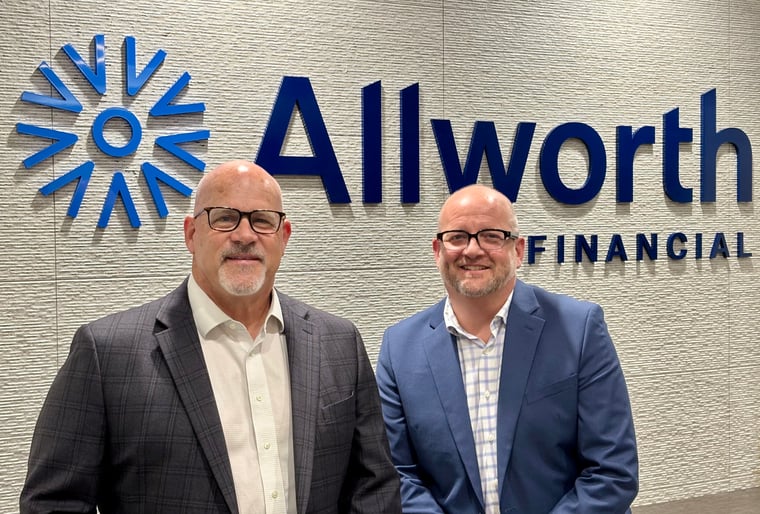
On this episode of Simply Money, Bob and Brian break down the stock market volatility tied to escalating tensions in the Middle East and the critical Strait of Hormuz, where roughly 20% of global oil flows, looking back at the 1973 OPEC oil embargo, stagflation, and how markets have historically responded to geopolitical shocks.
Plus, they answer listener questions on adjusting stock allocations amid global conflict, calculating emergency cash when income fluctuates, and whether to lock in gains early in retirement or simply rebalance and stay disciplined.
Download and rate our podcast here.
Well, how often have you been checking the headlines this week? How about stock market numbers? How about consuming, I don't know, media pundits on television? If you're anything like me, you can only take so much of that, and then you just got to turn your attention to something else. And in my case, watching my 30-0 Miami RedHawks continue their undefeated season last night. Brian, it was a nice diversion from all this war talk and pundits on cable news.
Brian: Well, I hate to burst your bubble, Bob, but they are now headed to Athens, Ohio to face my vaunted 14-15 Bobcats. And we'll see about that perfect season, sir. Oh, yes, we will.
Bob: I've watched enough MAC sports in Miami and Ohio University rivalry games over the year. It will not shock me at all if your Bobcats go in there Friday night and take them down. It'll be fun to watch. All right. Let's...
Brian: It might shock me a little bit. But I will be there. I will be there in person cheering them vociferously.
Bob: Are you, really?
Brian: Yeah, we're going to go. My son is going to be matriculating there in the fall, and he's kind of gotten into the sports scene. So, we're going to go check it out. It'll be a good time there at the convo. I used to live in the convo back in the day, and this will be the first time I've been in it since I graduated. So, this will be fun.
Bob: Well, that'll be fun, especially being there with your son. That's good stuff. All right, back to reality on the ground here. Let's remind you of exactly what is causing all this volatility. And it's the fact that roughly 20% of global oil and liquid, natural gas flows through that Strait of Hormuz adjacent to Iran where all the bombing is taking place. And that's really... You know, the Strait of Hormuz is constricted, you know, keeping all that oil flow going through. And Brian, I have seen, you know, one of the causes among many is insurance companies. Let's face it. When you try to take a ship, an oil liner through there, you know, we're talking about millions of dollars' worth of, you know, property and contents. And insurance companies are basically saying, "We're not going to insure the damages here while bombs are being dropped."
So, you know, that's the conundrum right now, is when can we get that Strait of Hormuz opened up? And obviously, if the shipping opens up quickly in the near term, this is just likely going to be a little volatility blip. If on the other hand, Hormuz remains disrupted, now, we start to shift, you know, what happens to inflation, policy constraint perhaps by Congress, tighter financial conditions. In other words, sustained high oil prices and gas prices can decrease global demand, and that starts to impact the U.S. economy. Brian, take us back to the early 1970s where we had a prolonged disruption in the supply of oil to the United States.
Brian: Yeah, before we get into that, my fact checkers are informing me that my OU Bobcats are actually 14-16 now because they lost a UMass last night. So, there, now that we've got everything up to date last night. So, anyway, yeah, let's look at the history. You know I love to look at the history, what looks kind of like what we're going through now so that we can get a feeling for what it might look like. History doesn't always repeat, but it does kind of rhyme sometimes.
So, worst case scenario actually occurred during the '70s, you know, or at least, what we've had so far. 1973 OPEC oil embargo. This was Egypt and Syria launched a surprise attack on Israel. The U.S. came down on the side of Israel, similar to what we're doing now, and that included military aid supplies and so forth. And in response, OPEC, which was led by Saudi Arabia at the time, decided to cut oil production and ban oil exports to the U.S. and whoever was supporting Israel. This was also the Netherlands and a few of the Western allies.
Impact of that, again, was similar to what we might be seeing now. Oil prices quadrupled in just a few months, and that was followed by gas shortages. Lines formed at U.S. gas stations. Whenever you Google what happened in the '70s to the economy, you will see pictures of 1970s cars all backed up at gas stations with people standing outside of them looking grumpy. That's the lasting image from the oil embargo back then. It lasted from October of '73 to March of 1974. So, that's a six month period. I was born about three months after that, so I can't say I have direct experience with it. But those price effects hung around for years.
And then, of course, that all led to inflation, more commonly known, what we referred to back then as stagflation, because we had inflation without a growing economy. The CPI, the Consumer Price Index, hit about 11% in 1974, peaked at 14% to 15% in 1980. That wasn't a spike. It hung around for a long time. It was embedded by the oil shocks, and also, some looser monetary policy earlier in the decade that was triggered by President Nixon wanting all the voters to be happy in the run up to the campaign. And that led to what we now call stagflation.
The answer to that was some extreme Fed policy. We often hear the name Paul Volcker and the Volcker Rule and so forth. Well, this was his time to shine. So, he dramatically raised interest rates in 1979. That got the federal funds rate near 20%, '80 or '81. You might remember your own mortgage or your parents mortgage being somewhere in the ballpark of 16% to 18%, something like that. All of that eventually worked.
Bob: I was in high school back then, Brian. I was in high school back then, and I can remember my dad being very grumpy during that time. But please continue now.
Brian: So, I wasn't around, of course, at this point, but I've had clients talk about it. And the interesting thing they always bring up is they always talk about how they wish they had bought CDs and things back then. Because, yes, you could get a CD for 15%, 16% guaranteed by the federal government. However, nobody had the money left over to do that because of the inflation and because of what they had to pay for mortgages. So, it's interesting, we remember the painful stuff, and not necessarily the good stuff.
Bob: Yeah, and that's kind of a worst case scenario. And I was looking back, Brian, at how much oil was domestically produced here in the U.S. back in the early '70s versus today. You know, we throw around the term energy independent all the time. I mean, the U.S. is not 100% energy independent. We still do import quite a bit of oil from the Middle East and those OPEC nations. But on the other hand, we produce a whole lot more oil domestically than we did back in the early '70s.
This is a good time to remind folks that a majority of these Middle East events or conflicts do not end up with these worst case scenarios. Case in point, going back to the Gulf War in 1991, the S&P 500 was up 32% over the next 12 months. When Russia invaded Ukraine, the S&P was down about 6% over the next 12 months. But on average, the average intra-year drop and we do talk about this all the time, Brian, is about 14% on the S&P, even in good years like what we had last year. So, a 10% to 15% drop during the year, intra-year is very common. And the market usually finishes positive in most of those years when we have that intra-year drop.
So, I don't know about you, Brian, and this is where I am not going to get into the guessing game. You think guessing the short term direction of interest rates is hard. Try guessing when Middle Eastern conflict is going to end. I think on the one hand, this is not going to be a Venezuela 2.0 where we just rolled into Venezuela in a few days, took out the leader, and oil started moving. And it's kind of yesterday's news at this point. Over there in Iran, it's very easy to just start dropping bombs and blowing things up everywhere. The United States, historically, has been very good at doing that. The key is going to be, how do the pieces get put back together, and how long does it take? And I think it's going to be a complex situation.
On the one hand, one thing I think we can all agree on is pretty much everybody in the world right now, except Iran, wants that Strait of Hormuz opened up and the oil flowing. Most of all, China. They had been getting 17% of their oil from a combination of Venezuela and Iran. We had sanctioned the, you know what, out of Iranian oil, and 95% of that oil that was flowing was going to China. So, we're in one of these rare situations where everybody wants the oil to flow through that Strait of Hormuz and natural gas too, including our biggest enemy, China. So, now, how long it's going to take to be able to get that done, who knows? I don't think this is going to be over in three days or one week or three weeks. It's just going to be interesting to watch.
Brian: Yeah. So, let's talk a little, let's pivot a little bit. So, what should you do? I don't think it's going to come as a shock to anybody that neither Bob nor Brian is going to say, you should run outside and look up the sky, wait for it to fall, and run around in a circle with your hands over your head screaming. But we want to make sure that this is why you would have done some of the stuff that we always recommend, which is, did you take care of things? Did you arrange this? Did you prepare for craziness before this kind of stuff happened? Now, the market isn't down very much so far. We're just saying, if this does hang around and people get a little more panicky, we could be in for a bumpy ride if we're not already.
We saw this, you know, last April, just under a year ago with the initial panic over the tariffs, the market dropped about 20%, and that hurt and it was scary. Then we got used to the news and we kind of moved on from it. And that is usually what happened. Bob, you're exactly right, what I described earlier was worst case scenario. Most of the time, these middle East conflicts come and they go, and there isn't a very long, lasting economic impact. So, let's focus on the history there that doesn't work that way.
But regardless if you are wanting to react to this, hopefully, you've already taken these steps. If not, might be time to take a look at it again. If, you know, let's say, you're spending $300,000 a year or something like that, do you have a couple of three years of cash or short-term bonds set to the side, that way, we've already prepared. The bills that we know are coming due, let's make sure we've got that money set aside so that your ability to pay those bills is not hindered by whatever the market's doing, and your emotions that are going to be happening at that time. So, these are the kinds of things that, you know, once you've done that, then you're free to really worry a lot less about the market.
So, for example, you know, if you're sitting at 80% S&P 500 index funds, well, that's not diversification. That's basically, huge concentration in large cap growth stocks, when underneath that, a bigger concentration in technology stocks. You want to make sure that you've got some international and emerging market stocks out there. Those have both been trouncing the U.S. markets for the last couple of years now. And I would envision that continuing as long as we're going to maintain this current stance of a kind of smacking our customer base around a little bit. Doesn't mean the world's going to end, but it does mean that investors are looking in different spaces than we have done in the past for returns.
Bob: Yeah, Brian, excellent point. And I think that's really the point we need to focus on tonight because volatility has always happened, it always will happen. What we don't know is the source that's going to trigger the volatility, whether it's a middle Eastern conflict or a blip in large cap tech earnings or federal reserve policy or COVID, you know, a virus. You know, so there's always things that can trip up the market and cause volatility. And to the excellent point you already made, you want to prepare yourself in advance for, you know, if, but when volatility occurs and make sure you've got your financial ducks in order.
Here's the Allworth advice, build your financial boat in calm waters, so when the storm inevitably comes, you don't have to panic, and then redesign it, you know, while the waves are flowing wildly at sea. Coming up next, a surprise move from a major insurer and a century-long bet from big tech, what it all means for your money, next. You're listening to "Simply Money", presented by Allworth Financial on 55KRC, THE Talk Station.
You're listening to "Simply Money", presented by Allworth Financial. I'm Bob Sponseller along with Brian James. If you can't listen to "Simply Money" live every night, subscribe and get our daily podcast. Just search "Simply Money" on the iHeart app or wherever you find your podcasts. What if your income tends to swing from month to month? How much emergency cash is really enough to keep on hand? And if markets are strong early in retirement, should you lock in those gains, or just let them ride? We'll answer those questions and more straight ahead. Well, State Farm, the largest auto insurer in the United States just announced it will return a historic $5 billion to its auto insurance customers this summer, Brian. That is welcome news. Why is this happening?
Brian: Well, State Farm is a dividend-paying insurance company, and this is the largest policyholder dividend they've ever paid, as you mentioned, in their more than 100 years. This is because their auto business was pretty strong and a lot stronger results in 2025 than expected. In other words, put differently, they may have overshot on the premiums they charged.
Bob: They overcharged us.
Brian: Because where else would this money come from? Average payout expected to be about $100 per vehicle. So, if you've got multiple cars out there and a State Farm policy, then you might be looking at a nice check in the mail here soon. Exact amount of those is going to vary, of course, by state because the rules change depending on where you are and how much you paid in those premiums.
Bob: All right. Alphabet, which is Google's parent company, is making a statement about how long it believes it will dominate the future of artificial intelligence. That's a pretty bold statement, Brian.
Brian: Yeah, so Google is known for being bold and they don't seem to have any concerns about their future viability. So, what we're talking about here is they have issued a 100-year bond, which is known as a century bond. Go figure. And that locks in their borrowing costs for an entire century. Investors who buy it, of course, aren't going to get their principal back until the year 2126. This isn't a 5-year note, it's not a 10-year note, not even a 30-year treasury. This is Google basically saying, "We're so confident in the long-term future, especially in AI, that we are comfortable locking in our debt for the next 100 years."
Can you picture, Bob, being so confident in your financial situation that you are going to mortgage your house for a century? That's effectively what they're doing. These have happened before. Century bonds do happen out there, but it's ultra stable. The oldest of the old, biggest of the big, governments, blue-chip-type companies who have reason to believe they're going to be around for generations. It wouldn't shock us if some of the old school companies that have done this. This is one of the first ones to do it in the technology space, which of course, is well established, but still fairly new according to history.
Bob: Well, hey, good for Google for issuing a 100-year bond and locking in debt at current rates. That's great. I got no problem with that. My question to you, Brian, is, would you have a client buy one of these things? Because my answer to that is, no. I want to be much more nimble than having a 100-year bond in the portfolio. Have you seen any indication of what kind of demand there is out there, institutionally and otherwise, from buyers of these 100-year bonds?
Brian: This isn't something that's going to be marketed to the general public anyway, although there's really nothing stopping anybody from getting involved. But they're not looking for the retail investor on this type of stuff. They're looking for other generation-skipping type of trusts, dynasty trusts, things that are going to be around forever because they were designed to be that. So, yeah, don't look for this at a bank or a broker near you any time soon.
Bob: All right, let's move on to topics that are probably more relevant for us and our listeners. We've told you time and time again that Social Security could face a significant cut in benefits as soon as early 2030s, say, 2033, 2034, unless Congress acts. But apparently, most Americans don't even realize that this scenario is headed toward them in under 10 years now.
Brian: So, yeah, and I want to push back on this a little bit. Well, maybe redirect a little bit. So, the survey is saying, one in five Americans are aware that there's a looming reduction in Social Security or that changes are afoot. I would say, there's a lot of people out there who think that it's going away entirely. So, it seems like either we're completely unaware, or we're convinced that, absolutely, Armageddon is going to happen. So, let's talk about the reality here first. The only way for Social Security to completely, 100% go away, is for Congress to eliminate FICA taxes, which happen on the top half of everyone's pay stub, yours, mine, everybody who goes to work on a daily basis. I do not anticipate that happening anytime soon. They're going to continue to collect payroll taxes to fund Social Security and Medicare. So, that means those aren't going away entirely.
But the issue is, the way that the demographics are working out and the way the different generations are aging and dying off, the problem in the early 2030s will be that we don't have as much flowing in as we used to. Right now, as we're sitting here, there's a surplus. There's more flowing into the system than needs to flow out. That gap closes just a little bit every year, and it's impacted by the decisions we make, the fiscal policies we have, the deficit, all those other kinds of things. So, if nothing changes, then what we've been recommending people for a long time, anticipate your Social Security report, whatever that number is on there for your full retirement age, knock off 20%, maybe 30%. If you drop it by that much, that's roughly what will be available from then current payroll taxes being pulled out of paychecks to pay the beneficiaries of Social Security, which is very, very, very different than zero.
Bob: Brian, wouldn't you agree that this is just another stress test to run for your long-term financial plan? I mean, we stress test volatility on inflation rates all the time. We stress test volatility of investment returns. And I think now, this is just another one where you run a couple of scenarios stress testing, what happens if your Social Security benefits drop by 10%, 20%, 30%? How will your long-term plan work under that scenario? Not that we're predicting it's going to happen, but to give people peace of mind that do want to plan and get out in front of this. It's just another stress test that we can run in a financial plan. That's pretty much how you're handling it with your clients, right?
Brian: Absolutely. And it's just another resource. We have to... What we normally do is, let's run the hunky-dory outcome, which means everything I'm doing right now never changes, nothing bad ever happens again. Now, let's do it again and let's eliminate a source of income or reduce it. Maybe we pretend that our piles of money take a hit. What if the market drops 20% in my first year of retirement? That's a rare event, but it does occur. Happened to anybody who retired in 2021. That's very important to take those actions to stress test and make sure your ship can still float after it takes a few shots.
Bob: All right, spring is almost here. It certainly doesn't feel like you're looking out the window this week, but it is right around the corner. Is now the time to put your house on the market? We'll talk about that next. You're listening to "Simply Money", presented by Allworth Financial on 55KRC, THE Talk Station.
You're listening to "Simply Money", presented by Allworth Financial. I'm Bob Sponseller along with Brian James, joined tonight by our good friend and real estate expert, Michelle Sloan, owner of RE/MAX Time. Michelle, it's always great to spend some time with you. And, hey, with gray skies out there in a rainy week, I can tell already by talking to you before we went on the air, you're super pumped about the real estate market. We could all use a little bit of excitement today on a Wednesday. Give us an update on the local real estate market in greater Cincinnati. It sounds like spring is almost here.
Michelle: No, spring is absolutely here and I have a giant smile on my face because the real estate market has opened up wide. Over this past weekend, March 1st must have been a day of reckoning in the real estate market because I hosted an open house, and I had real buyers walking in the door, getting excited about their home search. And so, a lot of buyers are just starting their home search, but I'm happy to see people out there getting excited, looking at properties. I mean, it's what I live for, so I'm very, very happy about that. Plus, I have an extra, added bonus, mortgage rates have dipped below 6%. So, not much below and it's sort of fluctuating right around 6%, but we hit a 5.98% this week for a 30-year fix, the lowest level since 2022. So, a lot to be happy about in my world.
Brian: Great to hear. Hey, I'm curious, Michelle, what kind of stories are you hearing? When people call you and say, "Hey, we want to look at such and such property," what kind of stories are you hearing? Have they been pent up? Are they waiting to pull the trigger now? All of a sudden it's time, or why are the floodgates opening now?
Michelle: Yeah, it's interesting. It's just people... You know, I'm just going to take, for example, because I'm not going to name names or anything like that, but one person has lived in the area since 2021, and has sort of been looking on and off. But now, his wife is pregnant and they already have a little one, so they're outgrowing the rental that they're living in, and they want to buy a home. So, lifestyle and life changes always has a little bit of a push in the real estate market. The second people that came into my open house, they had two little girls, just adorable, and then they had twin babies on their arms, and they said, "We need more space."
So, again, really exciting situations. And it's always situational now. People don't move just to move anymore. People are moving because there's a reason for it, whether it's a job change, a family change, either. You know, maybe you downsize because there's a death in the family, or you just are to the age that you just don't need as much space. And I talked to so many people in their 60s, early 70s going, "I don't need this huge two story home. Let's take a look and see what's out there and what's available to me, and let's get the process started." So, I do think there's a ton of pent up demand. And now is the time to get yourself started. Spring market is here. And don't miss out because things will change very rapidly, and before you know it, it'll be July and, you know, that that prime time season will be ending. So, now's the time to get on board.
Bob: All right, now, Michelle, last time we had you on, you talked a little bit, you know, correct me if I'm wrong, there was a little bit of a different demand for, let's say, the starter home market, maybe the $200,000 to $300,000 market and the above $500,000 to $600,000 homes were not moving as quickly. Now that we're getting into the spring, are you seeing any change in the way of demand for certain price points in the market?
Michelle: A little bit. I do think, because the open house that I had this weekend and some of the homes that I am listing in my office and other agents that I've talked to, we are seeing more showings. I think, in Cincinnati, we're coming out of the winter. It's just been a such a tough winter with the cold and the snow, and everybody's thawing out and getting ready and tired of being cooped up in the same old house. And I do think that, especially, with the lower mortgage rates, we're going to see some of those higher-priced homes start to move as well.
Brian: So, Michelle, the thing that's been a challenge for the better part of a decade now, if not longer than that, is just the overall, not only the price of homes, but higher interest rates, just putting younger, newer buyers in a situation that hasn't been seen in a very, very long time. I mean, there are a couple of generations got to avoid that. You have to go back to the '70s to see the challenges that people have right now. So, what kind of things are you hearing as to how people have overcome that and are back in the saddle able to buy and less impacted by these things? Is it different from the last couple of years?
Michelle: Not really. I mean, affordability is always an issue and it has been an issue and it will continue to be an issue. Affordability for younger buyers is very, very difficult. Because having some money for a down payment, having 20%down payment on a home is difficult for a lot of younger buyers. So, how we see that change is, first time homebuyers are older than they have ever been before. The average age of a first time homebuyer is in their early 30s rather than their late 20s. So, we're seeing, you know, certainly the skew of the number of people able to buy being a little bit older, a little bit older as we move from year to year because of affordability, because of the availability of saving money and the debt. The debt to income ratio, meaning the amount of money that you have to spend on a home, it takes longer to build that up. So, I don't think that's going to change anytime soon. I think the change is really age and time. And those kinds of things are really impacting our industry.
Bob: Michelle, from where you sit, what would you say are the reasons why this affordability is an issue? We know that this generation of first time homebuyers, unlike prior generations, is saddled, in a lot of cases with a ton of student loan debt. Is it that, or is it more just the overall inflation rate in general coming out of the COVID crisis, or is it a combination of the two?
Michelle: I definitely think it's a combination. And it's what every person who wants to buy a home has to deal with. They have to deal with, you know, "How much money do I make? How much money do I want to put into a home? Do I want the maintenance that comes with buying a home in addition to utilities and upkeep and all of those things?" The smart buyers are taking everything into account, and that's where the affordability really is a challenge. Plus, we've seen, since COVID, the numbers go up, the value of homes has increased so dramatically. It's almost impossible for a young person to keep up. If you're seeing anywhere between 5%, 10%, 15% markup on these homes since COVID, you know, you're not making that much more to be able to keep up. So, it's a combination of things, pricing. And we don't expect pricing to go down really anytime soon.
Bob: All right. Great perspective, as always, from our real estate expert, Michelle Sloan. You're listening to "Simply Money", presented by Allworth Financial on 55KRC, THE Talk Station.
You're listening to "Simply Money", presented by Allworth Financial. I'm Bob Sponseller along with Brian James. Do you have a financial question you'd like for us to answer? There's a red button you can click while you're listening to the show. If you're listening on the iHeart app, simply record your question and it will come straight to us. Brian, get ready for another Brian who lives in the East End. He says, "Hey, I figure this situation in the Middle East is going to last for a while. So, I'm thinking I should adjust my risk tolerance from 70% in stocks to maybe down to 60% in stocks." What are your thoughts on that?
Brian: Well, I mean, the first I would say, you're reacting in a very human way, which is, "There are bad things out there. I should probably do something to put myself in a better position. Stop touching the hot stove because it hurts." That is normally good advice. But when it comes to the market, usually by the time it becomes real, the market tends to take it away before you have time to really do much of anything about it. Now, we're not at that stage right now as we're sitting here. But the problem is, remember, this is always going to be a two part decision. It's not, should I get conservative now? It's going to be, am I going to get conservative now? And then the second part is, when do I get aggressive again?
So, you know, let's just go through a little history. Markets have survived wars, oil embargoes, terror attacks, financial crises, regional conflicts, and all this other stuff. You know, the initial reaction is usually sharp and short-term. And I would assign that to everything. That's not just a war thing. Whenever there's crazy news, some kind of catalyst, the herd tends to stampede. It gets spooked. And then over time, markets will typically refocus on earnings, interest rates, economic growth. What is underlying this?
You can even look at the World War II years. It might be a good exercise for people to understand what the market did during World War II, which is a good example of what happens when a country, you know, kind of changes its goals for the short-term. The market doesn't stop being the market just because there's something crazy happening out there. People go to work, products are bought and sold. The wheels keep turning. And that means the stock market and the economy can still exist. It just exists a little bit differently than what we might be accustomed to. So, just make sure you understand what that is.
And I would also say, I'm glad you're not you're not talking about going from 70% stocks to 0% stocks. That's a little different. You're simply turning down the dial. I would say, though, that you're going to be far more worried about the headlines, then then you will notice the difference in a 70% stock portfolio versus a 60% stock portfolio and the bumpiness. It's going to be there. It'll be bumpy no matter what. I'd say, let it ride and just make sure that you've got your needs covered in the short run so that the dollars you've exposed are not the ones you're going to be paying your bills with in the short run anyway. Hope that helps. Laura in East Walnut Hill. So, Laura is similar lines to what I just hinted at. She's asking, "How do we know how much emergency cash to have on hand if our monthly income can change dramatically for months to months?" How do you calculate that, Bob?
Bob: Well, first of all, Laura, good for you for even thinking about this and getting out in front of it, which leads me to believe you probably keep pretty good records on what your actual monthly spending of your household is. I'm going to make that assumption. So, I would first go back and look at that. Even with a volatile income stream in terms of earned income, what you can do is go back and look maybe over the last one, two, three, four years and say, "What is the monthly nut that we have to cover in our household to make the trains run on time irrespective of what our current income is?"
So, once you got that number, you know, the bottom line answer is, when you have a non-regular income stream from earned income, you do want to up your emergency cash balance a little bit because you want to make sure you do two things. You want to avoid being in a situation where you're paying 25% to 28% interest rates on a short-term credit card balance. Always, always, always keep yourself out of that situation. And then secondly, because of what we're dealing with right now with some potential short-term volatility in the markets, you don't want to use your stock or investment portfolio as an ATM machine to supplement the income needs that you're going to have to buy groceries next week.
So, I would say, calculate that number, and then make sure that you have enough emergency cash to cover. You know, as a business owner, I'm again, assuming you want to be different from somebody who has a regular paycheck coming in, and up that emergency cash balance to make sure you've got maybe 12 months' worth of reliable, nonvolatile cash on hand to get you through, you know, any uncertainty that would come up in your business or in the economy at large. Hope that helps, Laura. And good on you for getting out in front of it. Greg in Mount Adams, he says, "Hey, if markets are strong early in retirement, should we be locking in those gains somehow after we get the night's run or just let it ride?" Brian?
Brian: So, it sounds like you're in a good situation. I'm going to go out on a limb and guess maybe that you retired two or three years ago, and the markets have been, of course, really strong ever since the dip we took in 2022. So, what you're referring to there is sequence of returns risk. When do the good markets happen, and when do the bad markets happen? And that really is the biggest structural threat in the first 5 to 10 years of retirement. When Bob and I and all of our other advisors do financial plans for clients, that's the scariest part. So, we can come up with a plan that just works like clockwork, runs like a well-oiled machine, but then we have to make sure it can still do that when the market decides to go the wrong direction.
So, here's how to think about when the good part of it happens. Because sometimes, like you just asked, we can have good markets at the beginning, too. Well, does that change anything? Well, the first thing I would say is rebalance, don't speculate. If stocks surge and suddenly your 70/30 portfolio is now more like 80/20, well, you've already got a built in mechanism to lock in the gains. Just rebalance them. And if you just stick to your original allocation, you're doing exactly what you asked. Rebalance that back to the target. And now, you're selling off stocks that have gone a little higher and you're buying things with the proceeds that haven't done as much. That is not market timing at all, it's simply risk control. Also, use this time to refill your safety assets. We talk all the time, and we've done it today, about, make sure you've got the money in the bank to cover the bills that you've got coming due. And this is a great time to do it when the market's doing really well. If you take those couple of steps, I think you'd be a happy person.
Bob: Coming up next, Brian has his bottom line on, potentially, taking advantage of opportunity zones. You're listening to "Simply Money", presented by Allworth Financial on 55KRC, THE Talk Station.
You're listening to "Simply Money", presented by Allworth Financial. I'm Bob Sponseller along with Brian James. And tonight in Brian's bottom line, he wants to educate us a little bit on how to, potentially, take advantage of opportunity zones.
Brian: We're talking about qualified opportunity zones, Bob, or QOZs. These are the one of the more misunderstood tax incentives that exist in the U.S. code. They were created under the Tax Cuts and Jobs Act of 2017. So, you know, almost nine years, almost a decade ago now, during the first Trump administration. It was pretty straightforward. We want to encourage long term investments in economically-distressed communities by offering capital gain tax benefits. This is not a deduction, not a credit, it's a capital gains deferral and exclusion strategy. Really only works if you've already realized the gains.
So, here's what happens. First step, you sell an asset. This could be anything with a capital gain. Can be a portfolio of stocks. It can be a business, real estate, maybe it's crypto. Boom, you've triggered a capital gain, you've got to pay taxes on it. Second step, now you've got 180 days to roll that gain, not the full proceeds, just the gain into a qualified opportunity fund or a specific investment. There are ways to do this. You can do one, individual, specific investment, or there are funds out there that will do this as well. That fund then invests in those types of projects that are designated as opportunity zone properties or businesses. These are not publicly traded things that you're literally looking at a ticker symbol and just clicking buy a few shares. This is very different. So, it's a lot more complicated than that.
But there are over 8,700 census tracts in the U.S. So, there are there are maps out there created by Housing and Urban Development to tell you exactly where these opportunity zones are. And they can be areas in urban cores out there in rural communities. But again, the original point of this was to defer the capital gain, "I sold something to raise the assets to make this investment, so therefore, I have capital gain. But if I'm going to reinvest it in something that qualifies and I hold that business or whatever that is for, at least, five to seven years, I'm going to defer my original capital gain. And I don't have to pay taxes on it in the year that I sold it from that original fundraiser. I will wait until maybe 5 to 7 years if that's the life of the next one, or it's a permanent exclusion of the new gains if I hold it for more than 10 years."
So, this can be a way to defer gains on assets you're sitting on right now, and also, potentially, avoid capital gains entirely if you hold that new investment for, at least, 10 years. So, that's really the big thing. Any appreciation on that new investment is completely tax free at the federal level, right? So, again, we're not talking mutual funds, stocks, bonds, that kind of thing. These are actual opportunities. Because the goal of this is to generate economic activity, lasting economic impact in areas that need it. So, if you're willing to put your money into those types of places, then there are powerful, really, really strong tax benefits to be had.
Bob: Brian, I have to ask, is this something you're thinking about in Athens, Ohio? Because after all, the home of the Ohio University Bobcats, you know, by default is already an economically-depressed area.
Brian: But a beautiful economically-depressed area, and one of my favorite places on earth.
Bob: You know I'm joking. It's beautiful. It's beautiful.
Brian: Athens, Ohio is an oasis in a sea of nothingness. So, yes, can't wait to get there in a couple of days.
Bob: All right. Thanks for listening tonight. Go, Bobcats. You've been listening to "Simply Money", presented by Allworth Financial on 55KRC, THE Talk Station.
Insights for Complex Wealth Decisions
Join our email list for exclusive commentary from our Chief Investment Officer, early access to expert-led webinars, and your complimentary Wealth Planning Checklist for Complex Portfolios.
We take your privacy seriously and respect your privacy choices. By submitting this information you agree to our Terms of Use Agreement, Privacy Policy, and to receive important notices and other communications electronically.