
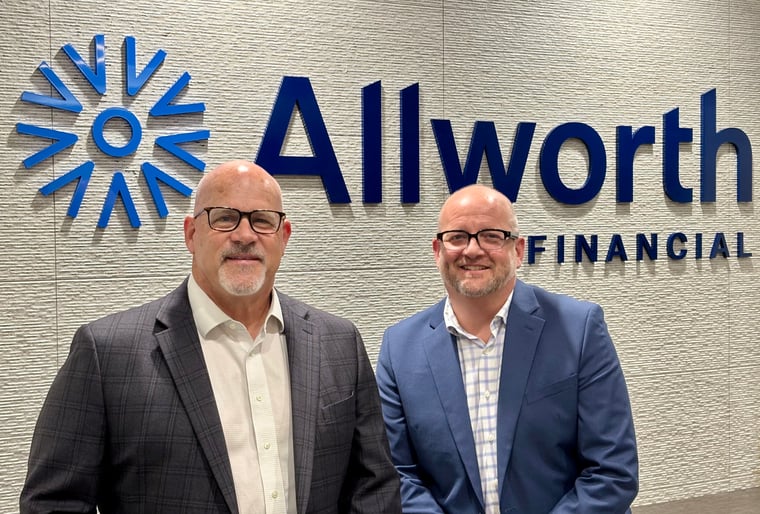
Market Noise, Portfolio Strategy, and Smarter Investing Moves
On this episode of Simply Money, Bob and Brian break down three conflicting market predictions making headlines right now—and why reacting to any of them could derail your long-term plan—while also diving into the dangers of turning your 401(k) into a betting platform, whether a “too balanced” portfolio could actually hurt your growth, how appraisal gaps can impact what you really pay for a home, and smart strategies for high-net-worth investors including direct indexing, managing large IRA balances, and planning for long-term care without over-insuring.
Download and rate our podcast here.
Part of the preparation we do for you on this show is to scan the headlines, determine whether there's something out there floating around in media world that we need to debunk in order to protect you or try to protect you, our loyal listeners. And tonight, we found three of those such items, all just inches away from one another on the good, old, World Wide Web. Let's dig into this tonight, Brian.
Brian: Good, old MarketWatch. MarketWatch is a pretty common website. Used to be part of CBS a long time ago. Now, it just seems to kind of gather headlines, some of which are useful, some of which are not. So, let's talk about some of the more, I don't know, head-turning headlines and we'll see if we need to think about these things. So, first one here, pension and rebalancing and other red flags suggest a stock market pullback is nearing according to Goldman Sachs. Well, good, Bob, we finally have that that blinking red light that says, "Everybody out of the market. It's not a safe time to be there. And we'll let you know when it's time to get back in, all right?" Well, that's not what is that's not what this is about.
What they're saying is that they're pointing to hedge funds moving to more cash positions. The second warning flag is based on that massive amount of stocks that pensions are getting ready to sell. Supposedly, Goldman says April month and pension rebalancing points to a sell estimate of more than $25 billion in U.S. equities. That ranks among the 15 biggest sales totals ever recorded since 2000. So, if you take out the quarterly expirations, it's the biggest monthly sell estimate ever. So, here we go. Like I said, this is our big, blinking red light that we like to have that tells us exactly what to do, when to do it. Right, Bob? I know I feel better. How about you?
Bob: Well, I think, you know, it all depends on how people define this word pullback. I mean, oftentimes, Brian, you know, 300, 400 point move in the Dow to folks that have been investing for decades, it can freak them out. Because it feels like a large number, but in percentage terms, it's just a blip on the screen. And in terms of rebalancing, you know, newsflash, everybody rebalances if you're managing portfolios responsibly. I know we do that over here. Our team does that here at Allworth.
And so, yeah, when you've got a lot of volatility going on, like we've had in March and April, and we're back at all-time highs here in the market, yep, people are going to responsibly rebalance. And in a "pullback" in result, that, to me, is a healthy thing. It means people are responsibly managing money, you know, tending to their knitting in terms of proper asset allocation and risk control. It's just a normal ebb and flow that should go on with responsible money management. Not a reason to sell and go to cash and try to time the market getting back in. But the headlines can make you believe otherwise.
Brian: Exactly. And that's what drives people. Fortunately, I'll say there is a good thing to this kind of stuff, it does get people to stop and at least take a breath and look at things. And as long as you don't react to these headlines and it triggers you to kind of look at your situation, "Do I need to do anything?" Maybe this headline isn't that meaningless or isn't that meaningful. But have we sat down and looked at what our overall plan is? Have we sat down and looked at whether we're going to make our goals, and so forth? If it gets your attention to trigger that kind of behavior, then, hey, I'm all for it.
So, about three inches below that one, and we know because we measured with a ruler right on the screen, is this headline. So, why JP Morgan is telling investors to keep buying the dips even as the market hits new highs? Well, this sounds slightly different than Goldman Sachs. Their hunch is that unlike 2025, those Magnificent Seven stocks, those are the big technology companies. The biggest of the big that drive the S&P 500 we frequently talk about, the cap weighted S&P 500. Basically, the bigger the stock, the more of an impact it has. Mag 7 is Facebook, Amazon, Apple, so on, and so forth. While those Mag 7 stocks may not set the pace in a rebound, the leadership may be more broad-based. And so, the team at JP Morgan predicted international markets, and especially emerging market stocks are going to outperform the U.S.
Now, that's not that great of a leap on that last point there, because that's been happening for the better part of about a year and a quarter, really since it became clear what the Trump administration was going to be doing with regard to tariffs. And that has driven investors to decide that international markets might be a better place to be, be a better opportunity. Not that the United States is a bad place, but there could be more growth available in international markets as those participants seek out new relationships with each other. And that has kind of held true, the international and emerging markets. Hopefully, you've allowed your diversification to maintain some global positions out there because those have done really well, up 20% and 30% over the last 12 months.
Bob: Brian, I'm going to go a little bit contrarian on you here. Point number one, the rebalancing thing in this second point about buying the dips, to me, that is the same exact advice. And, you know, I do watch different money managers and different economists get on and talk about the markets. And to me, these are one and the same thing. You know, every time you get a pullback in the market, say 2%, 3%, 4%, 5%, that's usually a great buying opportunity, rebalancing opportunity, if you will, for long-term investors.
So, when I read the JP Morgan headline and the Goldman headline, to me, they're one and the same. But again, based on how these websites package all this stuff in terms of clickbait and how they package the headline, it can lead people to draw two different conclusions like, "Hey, why are JP Morgan and Goldman Sachs on completely opposite pages here in terms of where the market's heading?" I would argue that they are not.
Brian: I'm going to go contrarian against your contrarian.
Bob: Sure, do it. Make this fun.
Brian: And I think the articles are actually what is accurate. The headlines are really just kind of two sentences that could come out of the same advisor's mouth, for example. So...
Bob: No, I'm agreeing with you. I'm agreeing with you. You know, 85% of the people only read the headline and never read the article. And a lot of people that read the article don't even understand what the article is saying. I think you and I are on the same page here. Go ahead.
Brian: We are. We are. We are. I just wanted to point out the contrast there because it is a conversation we have all the time. So, Goldman Sachs is coming in and saying, "Hey, here's a bunch of things that we think are going to drag the market down." JP Morgan says, "Hey, cool, the market's coming down. We should buy the dip." And I bet if you read deep into Goldman Sachs, they're not telling any of their clients to liquidate and go to cash because of this. They are doing the opposite. But that's a boring headline, Bob. Nobody wants to read the same, old advice. I don't need to eat my vegetables over and over and over again. That's not entertaining for me.
Bob: Well, speaking of eating your vegetables, good, old Morgan Stanley came out.
Brian: Not to be left out.
Bob: Hey, and this is how it should work. This is just eating your carrots and broccoli. Morgan Stanley sees little possibility of a stock market retreat. This article posted by their guy, Mike Wilson, in his weekly warm up research note, said that, "Hey, guess what? Earnings are strong in the S&P 500, and it's exhibiting very good earnings growth so far in this reporting season, and expanding Capex cycle, the ongoing adoption of AI. And the fact that having been buffeted in spite of these geopolitical headwinds, passive investors are now essentially under risk." Brian, meaning stay, in the market.
You know, I talked about this on the show, I think just 7 or 10 days ago, there's still $7 trillion in cash equivalents sitting out there. Money market, bank accounts, all that, $7 trillion dollars. A lot of people sitting out there waiting for a "better time" to enter the market. I'm in alignment here with the good, old, boring, and steady Morgan Stanley saying stay invested. It's a great time to be invested in stocks.
Brian: Yeah, $7 trillion is an awful lot of dry powder, but that's the kind of thing that drives the market. When the market gets massively overextended, that means we have really high PE, ratios, people are way too excited about stocks, and there's not much cash sitting on the on the sidelines. Well, we have the opposite right now. Plenty of scary headlines out there. No doubt about it. That's not stopping anytime soon because that's how a lot of people maintain power and get paid. That's just reality nowadays. But underneath all this is still a pretty stable economy. So, I'm not worried too much about it. It's not fun to ride the roller coaster every day after day. But I think unfortunately that's just reality right now.
Bob: Yep. Hey, speaking of clickbait, something else we're following tonight. There's talk that prediction markets could soon be making an appearance inside your retirement or 401(k) account. Let's get into that a little bit, Brian. I'd love your take on this.
Brian: Let's talk about terrible ideas, right? So, prediction markets, these are these platforms where you can, basically, bet on everything under the sun. It's not just about sports anymore. It's about what a politician might do or say or, you know, it might be which country might attack another. It's just anything. It's a question out there. You can find somebody to take the other side of that bet. Elections, inflation, data, Fed decisions, you know, all the super exciting stuff that people get out of bed just waiting to see what happens.
Bitwise, Roundhill, and GraniteShares, stalwart names of the financial institution industry, I will say, that sarcasm there, but they've all filed applications with the SEC to offer these event contracts as exchange traded funds. You're going to be able to bet on this crap and have it look like something you would normally invest in. Exchange traded fund being a very popular way to get access to diversified access to chunks of the market. And those, of course, if it's registered with the SEC, it becomes a security, and henceforth, available within accounts such as self-directed IRAs or any other investment accounts.
So, for example, they want to offer a Democrat president ETF or a Republican president ETF, which is essentially an investment in who wins the White House in the election come November 7th, 2028. So, this is an exchange traded fund. Purportedly, those are normally things we associate with a long-term hold. This thing needs to exist right up until the election, and then it either pays off or it doesn't. All this is doing is it's taking a garbage you can bet on within obscure apps and it's sticking it into, it's putting it right in front of the faces of investors who apparently will just fall for anything at this point. This is not something we will be jumping on. I have no belief that there's going to be any useful amount of this that goes into a diversified portfolio. This is literally another new way to gamble in your underwear at home.
Bob: Brian, question for you, how many of your clients or future clients have come into the office asking about how to position their IRA or 401(k) in Kalshi bets or Polymarket bets? I bet the answer is zero.
Brian: Let me think one, two, three, four... Zero, zero, Bob. Zero clients have come to me and asked for this. Matter of fact, when this kind of stuff hits the headlines, they call and they say, "Hey, let me know if we're doing any of this because I really super don't want it." I hear that about crypto every now and then. People are worried that crypto is sneaking its way into portfolios. And that's not the case here. Maybe that has a role somewhere, but not for somebody who just kind of wants to keep things on the simpler end and not ride the wave so much.
Bob: Well, it's going to be interesting to see if any of this garbage, as you appropriately called it, ends up getting into actual 401(k) retirement plans. I know we're in the middle of getting a new...
Brian: I had worse words for it, Bob.
Bob: I got it. I got it. But I know we're getting a new labor secretary at some point here. And this, you know, the last I heard, we're still in a public comment period on some of this stuff. I really hope ERISA does not approve this stuff for 401(k) plans. And I'm not trying to be big brother or dad here, but the last thing young people getting started need in their plans is to be distracted by, you know, gambling in their 401(k) plan, but that's...
Brian: I think that's a great point. And I'll add to it this, and the reason that's important, Department of Labor and ERISA, that's basically everything that governs your 401(k). And those are the decision makers on what's allowed there. If you do this stuff inside an IRA or 401(k) and it goes south on you, you don't even get so much as a deduction. You have lost your money. It went poof.
Bob: All right. Here's the Allworth advice, if it feels like a bet instead of a plan, it probably doesn't belong in your retirement account. Can a portfolio be too balanced, Brian? We'll answer that specific question coming up next. You're listening "Simply Money", presented by Allworth Financial on 55KRC, THE Talk Station.
You're listening to "Simply Money", presented by Allworth Financial. I'm Bob Sponseller along with Brian James. Worried you might leave too much money behind instead of enjoying it? Plus, what to do when most of your wealth is trapped in traditional IRAs, and how to handle a highly concentrated stock position with a massive tax bill lurking. All of that is straight ahead. For decades now, the gold standard in investing has been that classic 60/40 portfolio, 60% stocks, 40% bonds, simple, diversified, time tested. Well, Bank of America's chief investment strategist has an idea, and he calls it a portfolio designed to help investors "sleep" like a baby, Brian.
Brian: Yep. So, instead of 60/40, that's the traditional common 60% equity stocks and 40% in fixed income otherwise known as bonds. Instead of that, what they're suggesting is 25/25/25/25. One fourth of your portfolio in stocks, one fourth in bonds, one fourth in cash, and another fourth in commodities. Equal weighting across all four of those. So, first thing that jumps off the page to me is this portfolio is half stuff that's going to be an anchor on any kind of growth. It's half cash.
And before we even get to the commodities, that's really the new player here, half bonds and half cash, I can't imagine wanting to be anywhere near that. But anyway, currently according to the Bank of America, that portfolio is on track for its best year since 1933, and it's returned 26% annualized so far this year. That's also the best outperformance of the 60/40 model, excluding 1946 and 1973. That's fun to talk about, Bob, but that doesn't really get me going. I don't really care about something that has been extremely quiet except for a handful of years out of the last '75 or '80. This is not inspiring me all that much.
Bob: Yeah, and in fairness to this gentleman from Bank of America, I don't think he's actually suggesting that everybody run out and do this. He's doing what chief investment strategies should be doing and just modeling different asset allocations just to experiment with things, call it out. And, yeah, to your point, heck, yeah, it's been a great time to be in commodities. We're at war with Iran right now. Oil's up, gold's had a couple of good years, so, yeah, you can model this stuff for any 12, 24, 36-month period and make these numbers sing according to the point you're trying to make.
And again, in defense of this gentleman, I think he's just really calling out. And I think he might be correct here that in those traditional portfolios, commodities have typically been underrepresented in portfolios for a long time now. The thing I really want to talk about is, I think the reason people are looking for these alternative asset allocation strategies, and it's because the relative drag that bonds have started to have on portfolios in comparison to what bonds have been able to do for you for a long time now.
And Brian, I did a little research. I know you love history. I love history. I went in and ran a plot of the 10 year treasury. It's not meant to be representative of the entire bond market, but I think it gives you a pretty good indication of what interest rates have done on the intermediate term spectrum going back a long time. And I think the reason bonds did so well from about the early '90s to when COVID started, is we had a gradual trend down in interest rates. So, I think a lot of people, at least, can understand this. When interest rates trends down, the cost of your existing bonds goes up. So, people have gotten used to that 6%, 7% total return on bond portfolios because they've held them in a declining interest rate environment.
And ever since COVID, and then we all know we had that rough year in bonds and stocks and everything in 2022 when the Fed had to come back and raise interest rates after so much stimulus went into the economy after COVID, bonds did horribly. And ever since that time, everything's just been kind of sitting there. I would say, since 2023, inflation's been pretty stable. The 10-year treasury has been pretty stable. But, you know, hey, you're back there getting your 3%, 4% yield on a bond and that's not going to give you that 6%, 7% long-term rate of return that a lot of people got used to over a 40-year time period holding the 60/40 portfolio. So, I think that's the main reason why people are out there searching a little bit for, "Hey, is there a better way to skin the cat here?" I know I went a little long winded there, but what's your take on that?
Brian: Well, I agree with that. And I think people are looking from a standpoint, too. People just have a different viewpoint on risk. I have, and I think it's got everything to do with what bonds have done, a lot more people have said, "Well, the heck with it." If everything can get beaten up and as you said earlier, bonds got smacked around in 2022, there was really nowhere to hide that year. We don't think of '22 as one of the worst market years we've ever had because it didn't come along with terrifying headlines. We don't really even associate it with COVID even though that was kind of the trigger because of the interest rates, is the way you mentioned it. But that was one of the five worst years we've ever had.
And I think people have kind of come to a conclusion of, "Well, the heck with it. If life is just chaos anyway and things go up and down, then I may as well just take a lot more risk and just be willing to ride the waves." I have people that, if I could picture these same people earlier in my career, 20, 25 years ago when we had just a different mindset about all this stuff, these are people who wouldn't be this aggressive. But I think people are just looking at it saying, "Now I get it. At the end of the day, this is a society that is extremely supportive of its investable assets, publicly traded markets, its corporations, so on and so forth, good, bad, or indifferent. And that's a trend that has been in place for hundreds of years. We are just one of the friendlier places to do business on the face of the earth. And so, therefore, if that's where all the focus is going to be and there's risk built into it, I'll just learn to deal with it."
So, I have different conversations with people. Now, instead of worrying about, "What are my bonds doing?" It's, let's make sure that I'm in a position where I only need to pull on my stock portfolio in the good times, and I have other assets, other resources I can depend on in the bad times. Very different mindset than what I was trained on 30 years ago, Bob.
Bob: No, and I think that's a great mindset. I think you make a great point. I think, if we're really are going to try to get growth in a portfolio, we have to expect a little more volatility because it's going to require a little bit heavier allocation to stocks to get the job done. But then to your point, you do have to mind the store here and make sure you got enough short-term capital pulled out of the market and available for short term needs. I think that's spot on, what you just said.
Here's the Allworth advice, investing isn't about chasing the hottest trend. It's about building a portfolio that can weather different environments. Coming up next, we tackle a nuanced part of the home selling process that could end up fetching you far less than you might think when you go to sell your home. You're listening to "Simply Money", presented by Allworth Financial on 55KRC, THE Talk Station.
You're listening to "Simply Money", presented by Allworth Financial. I'm Bob Sponseller along with Brian James, joined tonight by our real estate expert, Michelle Sloan, owner of RE/MAX Time. Michelle, thanks for making time for us tonight. And I know you want to talk about an important topic right now, how to handle this whole situation we run into when buying a home. And that's the appraisal. How to handle the whole appraisal situation.
Michelle: Absolutely. I'm going to start with the sellers first, because the seller always wants the absolute highest price for their home. They want a million dollars for their home, right? But that's not often reality. So, when you're pricing homes, you want to price it to a valuation that an appraiser will value the home at that price. And if you're willing to pay more, and this is the question that I have to have with my buyers is, if you're willing to pay more, you may have to come out of pocket if an appraisal is short of the actual contract price that you agreed to.
So, I mean, that's kind of a lot to soak in. But you have to understand that if you are getting a loan, the bank wants to make sure that the appraisal of that property is the same price or higher than your contract price. If it's not, you either have to renegotiate or the buyer has to bring that extra to closing. And we are seeing a lot of buyers that have some of that extra cash, bringing an extra $10,000, $20,000, that's over and above the valuation that an appraiser has given you for the home. Does that make sense?
Brian: It does, Michelle. Thanks for that. So, the thing that's occurring to me is, okay, what you're saying is if somebody finds themselves in a situation where the appraisal didn't come in at the right amount, they need to throw more cash in ostensibly to make sure that their down payment is at the right level. Are you aiming for it? What's happening nowadays? Because what I'm getting at is if I make a 20% down payment, I get to avoid the extra insurance payments.
Michelle: PMI, yeah.
Brian: PMI, yeah. Are people normally, when you're doing these transactions, are they coming with 20%? Are you seeing a lot in between 5% and 20%? What does it look like nowadays?
Michelle: It's a mixed bag. It absolutely is, Brian. The interesting thing is that we have buyers all over the board. So, I'll give you a quick example. I had a listing. We had eight offers. Of those eight offers, we had one cash, one that was willing to pay an exorbitant price over list price, but they weren't willing to give any appraisal gap coverage, is what we call it if they're willing to put down a little extra. We have people that are just putting 5% down, 10% down, and then the 20% down.
So, your down payment is not going to change unless you want to mess around with that with your lender. The down payment is not necessarily going to change, but it's the amount of cash that you're going to bring to closing could change. So, as a listing agent, I'm always looking for buyers who have the cash to be able to make up the difference if needed during the appraisal process.
Bob: Michelle, as I listen to this whole topic, I mean, to me, this just screams of, make sure you are working with a skilled, experienced real estate professional like yourself because there's a lot of variables at play right now based on what you're talking about. What I mean by that is if the banks are coming in and appraising these properties at a little bit less than the "sale price" or offer price, I know they're trying to protect themselves.
Michelle: Absolutely.
Bob: You got a buyer that's really emotional and wants to get involved in the home. You got a seller sitting there saying, "Wow, I've got eight offers coming in. I can just keep jacking up this price." At some point, somebody needs to run the numbers and give good advice on how to play this game here. I can imagine it's just a box of chocolates for you trying to balance buyers and sellers and actually go in with an actual strategy on how to make sure you get the home you want, but you're not overpaying or doing something irresponsible.
Michelle: Absolutely. I mean, there are some duds in your box of chocolates. I'll tell you, some of those nasty, cream-filled ones, don't want that.
Brian: I was going to say the cherry filled ones.
Bob: There's very few things I would not eat that are wrapped in chocolate, but we won't go... But go ahead.
Michelle: Okay, good. Well, yeah, we're really going off on a tangent. I like the chocolate talk, though. I really do.
Brian: Hey, Michelle, so I do have a question. You were talking about cash before. Are we still in a situation where sellers are more willing to accept a lower cash offer instead of the highest one that still needs to be underwritten? Are people willing to be patient, or they just want it done at this point?
Michelle: Okay, so that's also honestly a really good question. And it brings up a conversation that we have to have because you hear the old saying, cash is king. But let's just go. Let's just say the house, you have a sales price of $300,000, and the cash offer is $300,000. But we have a financed offer with, let's say, a guaranteed appraisal gap of $320,000. Are you going to wait an extra two or three weeks for an extra $20 grand? Heck, yes, you are. Because if we know and they can prove that they have the money to pay that appraisal gap, then that's the offer I'm going to recommend that the seller take.
And so, it really does come down to, you have to look at all of the minute details. Because in that same scenario, if someone offered $400,000, and that's the highest price, and you look at that with dollar signs in your eyes, but you know what? That's not a real number, because when the appraisal comes in at $300,000 or maybe $310,000 guess what? That's what you're going to end up with, not the $400,000. That's that pie in the sky. That's the rainbow. That's the chocolate, whatever your favorite chocolate candy is, that you can accord yourself with. Because you know what? That $400,000 is not realistic. And I have agents who get really angry with me because they're like, "But my offer was the highest." And you have to think about that. And that's where I think you do have to work with an experienced agent because your offer may have, on paper, been the highest, but is it really? No, it really wasn't.
Brian: Well, I think there's a lot of...
Bob: Sorry, Brian. This comes down to very similar things that we deal with. And what I'm talking about here is dealing with emotion and patience. And those two words are things that certain people don't want to hear. And that's really where, at the end of the day, a good advisor more than pays for themselves. I don't care whether it's on the investment side of things or the real estate side of things. You really do need to have a seasoned pro that can help balance out the emotion and inject a little patience into the situation. Right, Michelle?
Michelle: Absolutely.
Bob: All right. Well, hey, great stuff as always, Michelle. Thanks for making time for us tonight. Thanks also for being the only adult in the room tonight.
Michelle: I need some chocolate now.
Bob: All right. Bring it. I'll eat whatever you got. You're listening "Simply Money", presented by Allworth Financial on 55KRC, THE Talk Station.
You're listening to "Simply Money", presented by Allworth Financial. I'm Bob Sponseller along with Brian James. Do you have a financial question you'd like for us to answer? There's a red button you could click while you're listening to the show if you're listening on the iHeart app. Simply record your question and it will come straight to us. All right, Brian. David in Kenwood says, "I keep hearing about direct indexing. Does it actually make a meaningful tax difference for someone with a $3 million to $4 million taxable portfolio?"
Brian: Well, that's a great question, and it's one we are hearing more and more often. Gee, I wonder why, Bob. We talk about this pretty frequently, so we may be playing a role in what they're hearing out there. All right. So, first, what direct indexing is really doing, instead of owning an S&P 500 exchange traded fund or a mutual fund, you literally own those 500 different positions. So, yes, you get a big, fat, gigantic statement that shows those 500 different positions that you actually own individual shares of.
That allows you to harvest those losses throughout the year, even when the market's up. That's the key tax lever. The market can go up. If 450 stocks, the S&P 500 are doing well and 50 are sucking wind, well then your overall S&P 500 is up, but those 50 are giving you the opportunity to possibly take some losses there. Now, at that level, three to $4 million, you can generate real tax value. In a typical year, a well-run, direct indexing strategy might harvest losses equal to 10% to 20% of the portfolio in volatile markets. That doesn't mean you're losing money. Simply means you're capturing these temporary dips across individual stocks.
And you can start to treat those scary headlines. When the market's down a couple of percentage points, you can kind of go, "Oh, well, the silver lining is my direct indexing strategy, is doing behind the scenes work harvesting those losses." So, what you can do with those, you can offset capital gains elsewhere. That's an unlimited amount. If you've got a bazillion dollars in capital gains and a bazillion dollars in losses, guess what? You broke even. If you have more losses than you have to offset gains, you can offset up to $3,000 of ordinary income. So, it can actually even be a bit of a deduction for you. If you don't use losses, right, if you max out that $3,000 and you still have losses after you've also offset your capital gains, that carries forward indefinitely. That's what your tax preparer means when they say, "Hey, do you have any tax loss carry forwards?" That means the loss you incurred in the past that you have not used to offset any taxes more recently.
So, here's the big thing. You're not eliminating taxes. You're deferring them. Remember this, as you harvest those losses, you're also lowering your cost basis. So, way down the road when you liquidate, there could be a bigger tax bill waiting. There is a break even period out there. It's pretty far out there, still worth it on the front end where once the market you're in portfolio has grown so much, there may not be any losses left to incur. So, great strategy for a lot of people to learn about. Definitely at $3 million to $4 million, you are in the wheelhouse. I would learn more about that. Talk to your advisor. So, let's move on to Sarah in Villa Hills. And Sarah says she's concerned about leaving too much money outright to her kids. I hope her kids are not listening right now. She's wondering what structures should they consider to maintain some control, but still be fair?
Bob: Well, I'm going to take a guess here, Sarah, and try to interpret what you're asking here. First of all, I want to congratulate you and your husband, it sounds like, for even getting out in front of things and being proactive to even think and plan around this topic because far too many people don't. I think what you might be alluding to here is, hey, you might have a few kids. One of them could probably handle taking over your inheritance outright. Maybe one or a couple kids are not. You don't feel good about them being in a position to handle a lot of money all in one lump sum all at once when you and your husband pass away. I hope I have that assumption right.
If so, I think you're a perfect candidate to sit down with a good estate planning attorney and have a revocable living trust drafted. Revocable means changeable. You're not engraving in stone your plans and wishes today. You're just putting something in place, and that could be changed. Because I can tell you, as the father of three adult kids now, things to change. And my wife and I have discussions around that all the time.
So, here's what you could do in that trust. You can put some protection around your kids, and you're still being "fair", as you say, but you're protecting them. And that could be a great structure to use in particular when the kids are younger, getting started, and you are not so confident that they can handle a large sum of money if it falls into their lap all at once. The one caveat on that trust, and I think most estate planning attorneys know to do this now, make sure if you lead your IRAs to a living trust as a contingent beneficiary, make sure that trust is RMD friendly so it doesn't trigger an unnecessary tax burden all at once. So, hope that works. Sit down with a good estate planning attorney and maybe map out a good, responsible living trust. All right, we've got time for one more, Brian. We have Brad in Anderson who says, "We have significant assets in traditional IRAs. Should we be thinking about life insurance as a tool to offset future tax burdens for our heirs?" Very interesting.
Brian: Well, yet another question where the first thing we'll say is congratulations for giving yourself this good problem to have. Obviously, you put a lot of effort into your career and you've stacked up a lot of dollars in your traditional IRAs from, basically, working your rear ends off. So, good thing to have, but at the same time, if it's pre-tax, you've never paid taxes on those dollars. And so, what Brad is referring to here is when his kids inherit these assets or whomever they've donated them to, then most likely, they're going to fall under what's known as the 10-year rule. That means somebody has to pay taxes on these dollars, and you've got 10 years to do it if it's pre-tax. That essentially means you don't have to liquidate these millions of dollars or whatever it is all at once on day one, but you do have to start paying taxes. And he's asking what should they do to avoid this?
Yes, you could use those dollars to buy life insurance. Now, this assumes, I'm sure you're not in your 20s if you've built up significant assets and you're having these thoughts. So, life insurance is going to be maybe a little more expensive than you might be thinking of. And if there's health problems maybe that have cropped up, you might wind up with something a little more expensive than you're anticipating.
What I would suggest, go get the quotes and see what that looks like, and then figure out what the premium is or will be over time for you to truly make this pay off. Remember, you're talking about a permanent life policy. Term won't do it here. You need permanent to make sure that it's in place when the taxes actually come due on these things. So, what you might consider once you've figured out what that premium for a permanent policy is, run the numbers again and use those premium dollars to convert your IRAs to Roth. That will make it tax free. It'll protect you at RMD time, and your heirs will get a bonus, 10 years of tax free growth. They too, Roths also have that 10-year rule, but it's still not taxable. You can let it grow for another full 10 years, completely tax free. So, good opportunities there, and good on you for putting yourself in that spot.
Bob: Coming up next, Brian and I have a few thoughts for folks with significant assets on how to think about this whole long-term care cost conundrum, how to build that into your financial plan. You're listening to "Simply Money", presented by Allworth Financial on 55KRC, THE Talk Station.
You're listening to "Simply Money", presented by Allworth Financial. I'm Bob Sponseller along with Brian James. Brian, let's talk about long-term care planning. I know you and I have folks come into the office all the time, and one of the biggest fears they have, especially people even with significant net worths, is they're afraid to maybe take that expensive family vacation or buy that car or do something that they're wondering if they can "afford" because they're worried about that looming, potential cost out there called long-term care planning. Let's get into whether long-term care insurance makes sense for these kinds of folks.
I'm talking about people with multimillion dollar net worths. We typically do not advise buying insurance because of how expensive it can get, and self-insuring that risk instead, but it all comes down to everybody's individual financial plan. And I don't know about you, Brian, but I find that once people see us model what this real financial risk is and is not based on inflation assumptions and costs of care and all that, a lot of folks walk out of the office feeling a lot better that, "Hey, we have stress tested the plan for long-term care. Our plan will weather that storm, and I don't need to worry about this nearly as much as I thought I did." Do I have that about right, or are you finding different results with folks?
Brian: No, I see the same thing. The first thing I like to do is, first of all, let's set the table. What are we talking about? Well, a decent, long-term care, of course, we're talking end of life care, right? Alzheimer's, Huntington's, Parkinson's, that's a whole different conversation. You could be a decade or more if that's in the family. That's a very different conversation. But we're talking about your standard, end-of-life stay. Average length is about two and a half, maybe three years. And the average cost is something with somewhere around $120,000 per year in this area in today's dollars for a nice home, for a place you don't really have to question quality and so forth. And so, if we're talking $360,000, $720,000 if you're looking at two people for a married couple.
Now, of course, that is all. People get wound up that, "I have to layer that on top of my other living expenses." No, you don't. You're not going to grocery store anymore. You're not traveling anymore. You're probably not paying electric bill anymore because you may have sold the house. So, people get very concerned that, "I have to ensure completely an extra $720,000." No, it's going to be a much smaller fraction of that. Run your numbers and see what your hunky-dory outcome is if nothing ever goes wrong again, and then tack on a few more expenses. But be realistic about what exists and what is already getting duplicated that way.
Bob: Good advice. Thanks for listening tonight. You've been listening to "Simply Money", presented by Allworth Financial on 55KRC, THE Talk Station.
Insights for Complex Wealth Decisions
Join our email list for exclusive commentary from our Chief Investment Officer, early access to expert-led webinars, and your complimentary Wealth Planning Checklist for Complex Portfolios.
We take your privacy seriously and respect your privacy choices. By submitting this information you agree to our Terms of Use Agreement, Privacy Policy, and to receive important notices and other communications electronically.