
The 5 Key Times to Call Your Financial Advisor
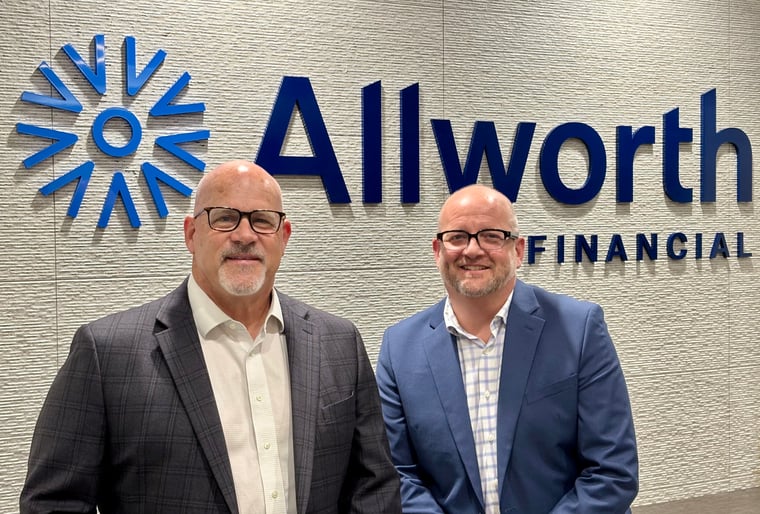
On this episode of Simply Money, Bob and Brian break down the key life moments when calling your financial advisor can make—or cost—you thousands. They also tackle a surprising trend: why retirees with millions saved still feel financially insecure, and how shifting from pension-style income to managing a “pile of money” has changed everything. Plus, insights from CIO Andy Stout on how tax-efficient investing strategies like tax loss harvesting and direct indexing can add real after-tax returns, and practical advice on gifting strategies, insurance gaps, and why not having a power of attorney could create major problems for your family.
Download and rate our podcast here.
It seems obvious that when major things happen in life, you should probably get in touch with your financial advisor. But sometimes people walk into our offices for a review and we find out that they've already acted on some pretty major financial decisions, or in some cases, have not acted on some things they should have acted upon, and were left in the dark and have no clue about it. And then we try to clean it up after the fact, Brian, and that can sometimes be a problem. Let's get into some of these tonight because this might surprise some folks.
Brian: Yeah, and these aren't necessarily bad things. And it's not that your financial advisor is smarter than you, but your financial advisor probably has seen a whole bunch of stories that look like you and has seen the pros and cons and the unexpected outcomes and all that kind of thing. So, it's always good to just kind of get some arm's length away, what do you think of this type of advice? And again, so let's start with a good one. We suddenly discover that we've got more money coming in than we did before. And a lot of times this happens, you know, obviously, we work hard. We got your nose to the grindstone. And you're not really paying attention to the finances too much.
But then eventually, somebody notices that, "Hey, we've got a little money piling up here." Maybe there's an inheritance or whatever. And all of a sudden, you know, that prompts a conversation. You know, it might, maybe it comes up at dinner where one spouse says to the other, "Hey, we got this extra money here. What do you think we should do with it?" "Well, we can do kind of whatever we want." And then we start going down the rabbit hole, "Do we want to get a nicer car? Maybe buy a new home? Well, maybe that's not the right idea. Maybe we should do something a little longer term. Maybe we should convert our, our pre-tax IRAs into post-tax," or something like that.
Or, "Maybe we should pay down the mortgage," or whatever. There's a million different things. And all of a sudden, both spouses are down a rabbit hole of, "I want this and I want that," which is a good thing because at least the communication is happening. But at the same time, there's still a decision to be made here. And what is ultimately good news can sometimes become a negative thing. "We've got more money," that's an opportunity, but what is it an opportunity to do?
So, the role that a financial advisor and a financial plan will play for you is to help you understand, here's the 15 different options you have. There's pros and cons with every one of them. But you have to understand the impact of those. And it will be up to you to choose the right combination of pros and cons because this is a good problem, right? Good problems are good. We like those, but at the same time, it's still a problem. And what I mean by that is it's something where you've given yourself an option, right?
If you're beyond the stage of life where financially, everything is a terrible decision versus a good decision, right? Those are fairly easy to get through. It's a good idea to save your money in your 401(k) when you're in your 20s. It's a bad idea to buy a $60,000 car just because you can. So, that's an obvious decision. But however, should we pay off the mortgage? Should we put more away for retirement? Should we put something on 529 for the kids, or whatever? All of those are good things. One of them will be the best. And that's the point of a financial plan.
Bob: Yeah, Brian, I think you'll agree here. This isn't about Bob and Brian trying to control everyone's life and to, you know, tell people what they must do with their money. You've already said this, it's about having choices and about, you know, optimization strategies. And that's why that good, proactive communication can really pay off at certain times. I don't know about you, but I tend to see, when this money comes in, big chunks of money, I tend to see two extremes. One, it just sits in a bank account earning 0.12% and just sits there. Or they come in and say, "Yeah, we got this big check or bonus or whatever, and we have already spent it on X, Y, or Z when it might've been worth a couple of discussions relative to the long-term financial plan. So, again, you've made the point, proactive communication usually, in most cases, works to the client's benefit when they just talk to us.
Let's talk about another situation. You know, you get a new job, a new career, or unfortunately, if you're forced to retire before you'd like to retire. This is a great time to sit down with your advisor about whether to transfer your 401(k) plan to your new employer's plan, look at additional investment offerings, such as the health savings account, access to company stock, a higher or lower 401(k) match with the new position. Do you have access to a pension, you know, lump sum versus, you know, just taking the pension income? There are a lot of moving parts here when people change jobs, companies, or careers. And oftentimes, people just walk on by that and miss out on some really nice planning opportunities.
Brian: Yeah. And so, there's actually a lot to unpack in this category, right? New job, career, you know, that's one category. And then being forced to retire, that's not necessarily a bad thing. A lot of times that comes along with a big, fat check, and it can be a good thing. You just didn't see it coming. But the thing I want to hit on, we've talked about this a lot lately, is the new job, and "What should I do with my old 401(k)?"
The usual kind of knee jerk response is to roll to an IRA to take control of those dollars. And that's usually a reasonable answer, but there are two reasons that you wouldn't, that you would want to be careful. First is the rule of 55. So, what the rule of 55 is, and again, we've talked about this before, at age 55, you are able to tap into your current employer's 401(k). If you retire from that employer, you're able to tap into that 401(k) penalty free note, not tax free, right? That's never a thing if you're talking about pre-tax dollars, but you can avoid the early withdrawal penalty of 10%. So, if you are of a mindset that you want to retire before age 59 and a half, which is when IRAs other 401(k)s otherwise become penalty free, then you may want to hold off on rolling those assets to a 401(k).
On another note, if you are somebody who...if you are contributing to a Roth IRA and you've hit those income rules that force you to use the backdoor Roth contribution plan, which basically means you make a non-deductible traditional IRA contribution, and then immediately convert it to a Roth, and hence you have a Roth contribution, even though you make too much money. But if you're in that situation, then you're going to want to avoid having a traditional pre-tax IRA in the mix because there's something called the pro rata rule that will basically wipe out a lot of the benefit of making those backdoor Roth contributions. So, just something to think about. It's not always, "Yes, roll to an IRA." if you're in those couple of situations.
Bob: Hey, let's get into another situation that should almost always involve your financial advisor. And that's if you're about to get married or if you're about to get divorced. Because let's face it, these are very emotional times. Emotions are running high here in either of these, you know, points in time life decisions. If you're about to get married, we should be talking about, which monies or investment accounts, if any, should you blend for tax purposes? Which accounts you should keep separate? Discuss whether you even have a prenuptial agreement in place, or does that make sense in your situation?
Will you change your retirement account beneficiaries? And how will you do that based on that new marriage, you know, coming down the pike, and do those decisions, if you make them, do those supersede, you know, some decisions maybe you've already made in your will? And if so, does your will need to be updated? And what happens to your personal property outside of all your investment accounts? There's a lot of things to talk about before you get married and let's face it, Brian, for good reasons. People are thinking about a lot of positive things in this moment, other than managing your finances.
Brian: Yeah, and these are the kinds of things that can start fights. So, let's kind of lay some things out, some questions you should ask yourselves, you know, when you have this situation. So, it's not a requirement of mine. I'm sure it's not of yours, or really of financial planning in general that a married couple must make everything joint. You don't have to do that. It has to be whatever is comfortable for both spouses as long as the communication is happening. It doesn't matter to me if I'm building a financial plan for people who prefer to live separate financial lives. It does matter when they are clearly hiding things from each other because I cannot build a plan for a shared household where both sides only know half of the situation. I can't help in that situation.
But otherwise, as long as it's just, "We're just comfortable keeping our finances separate, but we're fine with each other knowing about the situation." That's fine. We can work with all of it. Just remember, you're going to have to be super careful. You're kind of duplicating the tax reporting you're going to have to do in a lot of cases. And you're duplicating the amount of beneficiary changes and things you're going to need to keep up with. So, if one spouse wants to change something in one direction, the other spouse wants something different. Obviously, everybody can do exactly whatever they want. That's the American way. But it can cause arguments and true confusion later among, you know, your children when things don't go the way they expected, you had a good reason, but maybe they didn't understand. So, just make sure those lines of communication are open.
Bob: And that's what we're trying to avoid, that conflict down the road through lack of communication. Let's touch on the divorce topic, Brian, because, again, emotions run high for completely different reasons. When we see a divorce coming down the pike and there's a lot of decisions that need to be made in that situation when assets are about to be divided between what are soon to be former spouses. And a big one, Brian, that I've run into from time to time, one spouse really wants to keep that house and that's going to get offset with parting ways with more liquid financial assets.
And one thing we got to dig into is, can you really afford to keep the house and take care of the upkeep, maintenance, taxes, and all that? You know, it's great to "feel like you won that fight to keep the house." You might end up with an asset that you can't afford and really find that you really don't want. So, another reason to have a financial advisor with no skin in the game, no emotion in the game to just walk you through what really makes sense based on your personal goals and wishes.
Brian: Yeah, that house is always an interesting topic when it comes to splitting up the assets in a divorce. Usually, one party wants it, one doesn't. And the party that does, oftentimes winds up down the road a little bit weaker financially because that person will have basically...you know, for good, bad, or indifferent, it's not a bad thing, of course, to have a house, but that person will basically have said, "All of our assets are here. I want the house. So, I will take less liquid financial assets. You take more. And now, we split it down the middle."
And that's all fine. Except what does that do to the nest egg, the retirement nest egg for that person who owns a house? And that's a good thing, but real estate is not a great investment, quite honestly, especially just some residential property that you can't really ever sell or create money out of. Again, not something that... We're not poo-pooing the idea. We're not making a blanket statement that everybody should just sell the house and split the proceeds. Every situation is unique. But the person who wants that house should recognize that that is tying up a lot of your own net worth in an illiquid asset that's not going to grow very fast and has property taxes and repair costs associated with it. So, just bear in mind what that will do for your individual financial plan.
Bob: And I think the last one we really need to touch on, and sometimes, Brian, we got to get clients, you know, basically kicking and screaming to really have an intelligent conversation with us about this topic, is how much financial support is appropriate for those adult kids? And Brian, it gets emotional. We want to see our kids succeed, we want to help them out, but we've got to make decisions within the context of an overall financial plan so that we don't help the kids today and jeopardize our own retirement security down the road. It's a touchy subject and one, again, where you want a dispassionate, non-emotional advisor in the mix if possible to just help you make intelligent decisions that you're not going to regret down the road.
Here's the Allworth advice, don't just call your financial advisor when markets get a little scary. Reach out during major life changes, big financial decisions, or any time your plan needs to perhaps evolve a bit. Well, new data suggests that those who retire with more money than previous generations, believe it or not, often feel less secure. We'll explain why and reveal the lessons to be learned from that coming up next. You're listening to "Simply Money", presented by Allworth Financial on 55KRC, THE Talk Station.
You're listening "Simply Money", presented by Allworth Financial. I'm Bob Sponseller along with Brian James. If you can't listen to "Simply Money" live every night, subscribe and get our daily podcast. Just search "Simply Money" on the iHeart app or wherever you find your podcast. Well, some might be crossing the $3 million net worth mark and wondering, "Are we there, yet?" Well, some smart ways to gift to your kids and what to do with a portfolio of rental properties. All of that's coming up straight ahead. So, you've built the wealth, you've seemingly done everything right, so why are so many people still working into their late 60s or even early 70s, Brian? The answer may not be what you think. And Brian, this is a topic you and I have experienced together quite often. It's very fascinating to have these discussions with folks.
Brian: I want to talk about Bud Witte. Somebody just out there just recognized that name. That is my grandfather, and he was the facilities guy for CG&E way back before Synergy, way back before Duke, back when it was called CG&E. He basically ran that building down there from a physical standpoint. And I remember when Grandpa Bud retired, me and all my cousins and my sister would fight over who got to mark the red X off on his calendar. Because he had his 30 years in, and he, basically, was working toward his pension. That was a huge moment in my family, and that was very formative for me. Thinking back, this is 40 years ago, longer than that, probably, actually 50, I think.
But anyway, long time ago, different world, right? People don't generally retire with pensions anymore. Some do, of course. If you're a public employee, teachers, hospitals, governments, that kind of thing, then, yes, there are pensions in the mix there. But most people working for public companies such as CG&E was at the time, and still is today as Duke, most people do not have pensions anymore. That changes the retirement decision.
I'm fascinated with this lately, Bob. You've been hearing me talk about this a lot, this kind of history of how the generations have been taught of how to retire. For a long time, it was simply, you've got a pension coming in as long as you work until this date. And that's what we did for Grandpa Bud, XXX. And then he was able to retire and, basically, have a paycheck still coming in because he had a pension. Ever since then, in the late '70s or so, pensions started to go away and the whole shift went to 401(k).
"Here are your own dollars. We, your employer, are not going to manage a pension for you, but we're going to give you your own dollars and allow you to make investment choices on your own completely. And then you'll be able to take advantage of the stock market, bond market, however aggressive you want to be. But you got to do it yourself." Which that put the onus on the employee. Those who took advantage of it are the ones who are today retiring with millions of dollars because the stock market has definitely cooperated over the past several decades. At the same time, it's sort of a self-fulfilling prophecy. Of course, the market cooperated because all those dollars that used to flow into pensions, which are largely treasury bonds and extremely conservative investments, all those dollars have since flowed into 401(k)s.
But that means that you were taught by someone who had a pension, that was their retirement decision, but you yourself have a pile of money. Very different decision. Now, but if it was handled right, then, yes, you can retire at a higher level of lifestyle, but you do have different decisions and different risks. I would also say something that occurred to me this morning, Bob, I think this is what's driving a lot of the real estate prices too, because there's an awful lot of money out there that didn't exist from prior retirees. This generation of retirees has a much bigger pile of income and a much smaller stream of guaranteed...sorry, pile of assets, and a much smaller guaranteed income stream. And some of that has landed in real estate. And that's, partially, why we are looking at such elevated real estate prices today. That's my thought. What do you think?
Bob: No, I agree with that last thought on the real estate. I mean, that really got blown out here during COVID. I mean, you know, people, high net worth, high income people had a boatload of money laying around. They could work remotely. And it's like, "Hey, let's buy a second home somewhere where we'd really like to spend time." And voila, you've got a lot of people with second homes now. It's no surprise that we have a housing shortage in this country. I think that's one of the reasons why.
But I want to get into some of these emotional decisions people make about why they insist on working longer when they can, "afford to retire," or whether they're just afraid to spend their money. I've got a couple of thoughts on this just based on, you know, 35 years of doing this. I think people are living longer. And one of the biggest fears that people have when they walk into the office is making sure they've got enough money to cover a long-term care or health care surprise down the road so they don't become a burden to their kids. And I think some of that is kids are spread out all over the country now. And I think people know, "We're not going to be able to count on our kids to come over and take care of us in a lot of cases." So, this health care scare, you know, coming down the road, combined with people living longer and longer. I think that has people holding on to some of this money.
And then I think market volatility has a lot to do with it. Shoot, Brian, just let's go back over the last 25 years, we've seen the tech bubble where the market sold off 50%. We saw the housing crisis where the market sold off over 50%. We had COVID. I mean, there's been a few real whoppers of roller coaster rides here. And I think that gets people a little spooked on, you know, "Hey, what happens if my net worth drops by 50%?" So, a lot of things combined along with what you've already said about, and you talk about this all the time, you know, shifting from planning from streams of income to piles of money. It's a lot of things for people to think about. It's not easy.
Brian: Yeah, it really is. And I really think what you're talking about there, that delay in the decision. Well, people who... You know, again, decades ago, my grandpa and that generation who retired with those pensions, that was their financial plan. They already had. You know, you would get a letter once or twice a year saying, "Here's what your benefits look like now, and here's what they'll be on such and such date." And the mindset then was, "Okay, I guess that's when I'm retiring. And here's the dollars that I have to fit my budget into."
Bob: It's really simple, and there's not a lot of decisions that need to be made. Yeah, go ahead.
Brian: Exactly. Lots of flexibility now, but you got to figure out your own number.
Bob: Here's the Allworth advice, if you're afraid to spend, it's probably not a savings problem, it's a planning problem. Build enough guaranteed income into your plan so you could stop working and actually start living with confidence in retirement. Well, coming up next, Brian spent some time with Allworth's chief investment officer, Andy Stout, about some strategies for investors out there who want to be super tax efficient. That's coming up next. You're listening to "Simply Money", presented by Allworth Financial on 55KRC, THE Talk Station.
Brian: You're listening to "Simply Money", presented by Allworth Financial. I am Brian James, and I'm joined by Andy Stout, chief investment officer for Allworth Financial. And contrary to the music we just heard, or in parallel to the music we just heard, he is the best around. Today, we're going to talk about something called tax alpha. There's a lot of words and catch words and phrases and jargon that gets thrown around in the investment industry. And there's a whole bunch of Greek letters attached to them. So, sometimes you run across something called beta, which is just comparing an investment to a benchmark, and it has a beta of 1.2 or 0.9 or whatever. And that's just kind of relative to a specific benchmark.
Alpha is slightly different. Alpha is something that we look at in terms of managing a specific management strategy and whatever the unique factors are around that strategy that causes it to outperform an index or underperform. What are the reasons behind it? So, specifically, we're going to talk about tax alpha, which has... What is the after-tax impact of an investment strategy? So, Andy, tell me a little bit about, how can you control the tax alpha of an investment strategy?
Andy: Yeah, that's a great question. And it might sound confusing, oh, tax alpha, 1.2%. What does that mean? Well, let's just take a step back even from that. Let's say you own two stocks, Procter & Gamble and Kroger. Let's say, one of those stocks you bought has $1,000 gain, one of them has $1,000 dollar loss. Without tax planning, let's say you happen to sell the one that has $1,000 gain and you keep the one with $1,000 loss, what happens is that you owe taxes on that gain. So, you might end up paying 300 bucks. But if you had some tax aware planning or did some tax loss harvesting, what you would do is you would also sell stock B, the one with the loss. And essentially, the loss would offset the gain, and you would owe no taxes. And your portfolio value overall would still be the same. So, tax alpha is really just the extra investment returned by minimizing taxes just through smart planning strategies.
Brian: Okay, so is this something I would be doing with my mutual funds or my 401(k)? Where are the specific places that this is impactful?
Andy: Yeah, that's a great question. It's really impactful in taxable accounts. You don't want to do it in your 401(k) because it's not even possible from the IRS's perspective, so don't worry about that. But what you want to be focused on is if you have a trust account or a joint account or an individual account, those are the accounts. Typically, there are others, but those are the main ones that where you can employ these tax alpha strategies to. Essentially, reduce the amount of money you pay the IRS. I mean, that's what we all want to do anyway.
Brian: Okay, so that's starting to make some more sense. But it sounds like this is something where really, if I have a diversified portfolio of mutual funds, I may or may not be able to benefit too much from that, even if it is in a taxable account. Is that right?
Andy: Well, no, if it's at a loss. Or if you have a gain in the mutual fund, you could possibly, if you want to get out of that, sell that and look for losses in other areas, or maybe that mutual fund has a loss. It's really just whether or not that investment has a gain or a loss in how you can offset that in other areas. Well, you know, we like to focus on a lot our tax loss harvesting strategies where you're looking at individual positions. Those could be mutual funds, could be exchange rate of funds or ETFs. It could also be individual stock or individual bonds as well. Really any security that's in a taxable account.
And we're looking specifically at those investments, and sometimes what's called a lot levels because you could buy maybe Procter & Gamble on one day and then buy it on another day. You could sell from those specific lots. If one of them happens to be a higher cost basis, meaning you might have a lower or an increased loss, you could sell from that specific one. And it's really just being laser focused on the ability to target specific securities and specific lots to harvest losses, and here's the key Brian, while still maintaining your overall investment exposure and not deviating from your broad strategy.
And so, by harvesting those losses, we can offset gains in other areas, allowing your portfolio to grow in a tax-free way. And if you do take on more losses than gains, you have a couple of other options, which is really great. One, you can take, basically, $3,000 and use that to offset your income overall to lower that. But probably more importantly, is you can carry over as many losses in one calendar year and use them in the future. So, if you happen to have banked maybe tens or hundreds of thousand dollars of losses, you don't use them all in one year, you can use them in another year. You just got to keep track of it.
Brian: Okay, so this sounds like... I don't want to root for losses, but since they're kind of inevitable and they happen from time to time, it's almost sounds like this is kind of a silver lining. It stinks to go through that kind of thing. But at the same time, as long as I know how the tax code works, it can be kind of beneficial. I think, you know, it seems like there are other things involving charities. Are there other ways that I can add some positive tax return to my portfolio?
Andy: Yeah, there's a few things you can do. Let's just say you have a bunch of individual stocks and you're charitably inclined, instead of donating cash, look for the stocks that have the highest appreciation, so with the largest gains, and you can donate those. You get a tax write off, and then guess what? You didn't pay any taxes on those gains and you're still in the same position you were. Whereas if you would have donated the cash and then you sell the stocks later, all of a sudden, you're paying taxes on those gains. You can avoid that altogether just by donating your most appreciated stocks.
So, that's another really good strategy. You combine that with tax loss harvesting. And you can do that through a variety of methods. One's called a direct index, which, basically, tries to match an index return, but provide that tax alpha. So, when you marry those two things of the charitable donation with the active tax loss harvesting, it's a really powerful tool that you can have in your tool belt to lower the amount that you pay the IRS.
Brian: That's great. That's fantastic information. None of this is new. This is just the tax code. This isn't financial products or anything like that. This is just how the tax code works and understanding how to apply it to your portfolio. So, super helpful information from Chief Investment Officer, Andy Stout. I'm Brian James, and you've been listening to "Simply Money", on 55KRC, THE Talk Station.
Bob: You're listening to "Simply Money", presented by Allworth Financial. I'm Bob Sponseller along with Brian James. If you have a financial question you'd like for us to answer, there's a red button you can click right there on the iHeart app if you're listening to the show from the app. Simply record your question there, and it will come straight to us. Dan in Amberley Village says, "Hey, we're in our late 50s, and we want to start helping our kids buy homes. What's the most tax-efficient way to help the kids do that?" Brian?
Brian: All right. So, a lot of moving parts here. This is always, not only mathematical, it's also emotional, because you're helping your kids out, but at the same time, somewhere in the back of your head, you know you've got to help yourself out too. So, what can I get away with? I think that's part of this question, but also, we have the element of, is there a tax-efficient way to do it? So, let's figure out the way to deal with this. First off, you definitely will not be saving. This is not about saving taxes at all. You're not going to give your kids money and get a deduction. That's never going to happen. But so, I think what we're talking about is, how do I not step in something that I didn't expect with regard to taxes?
So, first and foremost, currently, you have the annual gift exclusion, which is $19,000. I'm saying that slowly looking at Bob's face. That's $19 this year, right?
Bob: Yes.
Brian: I think so. Am I stuttering and stammering correctly? $19,000, he says confidently, per individual, per husband and wife. What that means is you can write anybody a check, including me and Bob, if you see us on the street, $19,000 during any year, there is no reporting, no harm, no foul. And if you're married, that means you can give $38,000, one check from each person. So, if you are married and your kids are married, then you can give $38,000 to each of them or $76,000 if it's done properly. $19,000 to your son from dad, $19,000 to daughter-in-law from dad or son-in-law, however that works. And then same thing from the second spouse.
So, there are no harm, no foul. If you're talking above that, now we get into what's called the annual gift exclusion. Once you have completed the... If you've done your $19,000, now, we have the lifetime exclusion. That's currently... Basically, it just means you have to start keeping track. Any money you give over and above those dollars, you have to start keeping track of that for the way down the road. Now, there's a tax form you'd have to file here to track that over time, and it will stay connected to your tax record. But again, I would say, if you're really looking at the dollar amounts that high, get a tax professional involved because you're going to need somebody to kind of help out with that. You can also give your kids loans and treat it like an investment, where you become the bank, they pay you interest. A little bit complicated, but those are things you can look into. I don't know many people who have done that and are happy with the outcome.
Bob: But those loans rarely get paid back, Brian.
Brian: Exactly. And they're usually...
Bob: Loans tend to turn into gifts when it comes to kids.
Brian: Family discount on the interest rate and all that. But anyway. But, yeah, lots of things to look into. But again, don't look for deductions on that, of course. So, Laura in Milford, Laura says they've crossed $3 million in net worth, and they've decided that they're underinsured. Well, this is good. I'm glad you're thinking about this. Most of us just focus on the pile and not the risks. And she wants to know, what types of insurance gaps do people in their net worth range typically overlook? That's a great question.
Bob: Well, Laura, two areas come to mind. One is... And you want to sit down with your property and casualty insurance agent and have a thorough insurance review. It's wise to do that, especially as your net worth grows. But two things that jump out to me is, look at whether you have replacement cost on your home. When people are younger and getting started out, they'll tend to try to save money anywhere they can on their property and casualty homeowners policy. And the deductibles get larger, and maybe you don't buy replacement cost insurance because you want a lower premium. Well, as people get older and have more net worth, you know, correct me if I'm wrong here, but most people are just looking to eliminate surprises in their life. And one of those surprises would be, "If my house burns down and my insurance policy doesn't cover completely the cost to make me whole and build me a new house." So, I'd look at that.
The other big one is make sure your liability umbrella policy keeps pace with your net worth. Because the other surprise none of us like is getting sued. And let's face it, plaintiff's attorneys are always going to be looking for people to sue that have money. And the more money people think you have, the higher the likelihood is that you might get slapped with a lawsuit. So, make sure your umbrella liability coverage keeps pace with your net worth. Those are the two that jump out to me based on your question, Laura.
All right, let's move on to Frank in Marymount. He says, "We're debating whether to gift assets to our children now, versus leaving them at death for the stepped up cost basis." How do you weigh that decision? Brian, you kind of already covered some of that in answering Dan's question. But when we look at this stepped up in basis situation, that adds another factor in the gift decisions.
Brian: Yeah. And I think these are good opportunities to speak to something that you know. Maybe we've talked about this a lot, the step up in cost basis, but there may be people tuning in for the first time who have maybe heard of those words, have no idea what it means. Effectively, for a non-qualified asset, which is basically not an IRA, not a 401(k), just some kind of money that's exposed on an annual basis to taxes. You get a 1099 on it. Maybe it's a joint account, individual account, or a trust, something like that. Those assets, of course, if you bought stocks, bonds, mutual funds, you have a purchase price for those things. You hope to sell them at a gain, which is usually what happens given enough time. And the gain is taxable, right? That's called a capital gain. And if you sell that while you're alive, you're going to pay 15%, maybe 20% based on what your income level is.
But what the step up is, is that if you keep those assets until you've passed away, and your children or whoever inherits them, they get what's called a step up, which means that your purchase price has gone away. It's as if those beneficiaries purchased it on the day that you died. So, obviously, there's a pretty significant time. We have a lot of people holding Apple stock or P&G that they've had since the dawn of time. And they don't really consider it a financial asset for themselves because they have no plan to sell it. They want to get it to the kids tax efficiently.
So, what you're asking, though, and I realize I'm getting kind of windy here, you asked, what about giving now? So, yeah, you absolutely, of course, can do that. They will not get a step up if you're going to give them shares of a company or something like that. They will inherit your cost basis. And that means that when they turn around and sell those investments, which they probably will, if you're trying to help them now, then they probably want the cash, not the asset that they can sit and watch grow, if that's the case, then keep it. Let them inherit it if they're going to hang on to it anyway. Otherwise, you've robbed them of that cost basis of the step up because you gave it during life.
Bob: Well, unless the kids are in a really low tax bracket, Brian, it could all work out. But anyway, yep.
Brian: True. But remember capital gains. And I know you know this, Bob, but just to clear it up, capital gains also will push your bracket up a little bit. If you have a couple hundred thousand, you're not going to be in a zero bracket.
Bob: All right, coming up next, the one legal document a stunning amount of people need, but do not have. You're "Simply Money", presented by Allworth Financial on 55KRC, THE Talk Station.
You're listening to "Simply Money", presented by Allworth Financial. I'm Bob Sponseller along with Brian James. We don't want to scare anyone out here, but let's just start with some stark reality. Bad stuff happens, and sometimes, it happens very suddenly. So, let's hit you with a statistic that should get your attention. Brian, you're probably going to hear me get on my high horse about this one because I talk about it all the time with people. Only 1 in 10 Americans have a financial power of attorney in place. That is shocking to me. We've got a new study out from a latest study from Trust & Will based on their 2026 national estate planning survey of about 5,000 U.S. adults. So, this is a pretty broad survey, and the results of these surveys seem to never change. People are not getting the message here how important this is.
Brian: Yeah, and oftentimes, you know, again, it feels like job security for us sometimes because, you know, sometimes people will come in and will say, "Okay, well, tell us about you. We're done talking about the income planning, all these other all these other stuff, how do we deal with the debt, all the things?" "Tell me about your estate plan?" "Oh, I got a will. I got a will. We're good. Got a will. Don't need anything else. We just wrote a will last year." The answer to that is, "Cool. Do you know what that will covers? Because it doesn't touch anything that you have named a beneficiary on directly, your 401(k)s, your IRAs, and so forth."
So, anyway, that's a typical question that comes up. But what we're talking about today is the more complicated stuff. It's one thing to have a will that says, "Here's where all my stuff goes." It's another thing to name beneficiaries. That's relatively easy. Most people have a pretty clear picture of that. But the tougher part is the power of attorney, because now, I am deciding, which of my relatives and friends and whoever I trust to make decisions when I will no longer be able...? They might not even be aware that it's happening.
And also, I'm making this decision, I'm designating this person at a time now, which is well in the future, probably, of these events happening. And will I still trust that person? Will they still be in my life? Will they still be alive into...? Will I still be confident in their ability to make those decisions? This is harder, so people tend to drag it out because I'm really trying to predict the future. In a lot of cases, trying to make decisions, dividing up my assets in a one-time estate settlement procedure. That's fairly easy to do. You know, that's not always easy, but it's a lot easier than deciding who makes the decisions going forward. So, people just tend to drag their feet on it.
Bob: Brian, I'm going to take the opposite view on this. I think it's way more difficult than deciding how to divide your assets into whom and when during dying than just make a relatively simple decision today is, "Hey, if I have a stroke or if I become cognitively impaired for today, who's the right person to step in and make decisions for me if I can't make them?" To me, that is a lot easier decision to make right now. And yet people are afraid to pull the trigger and make it. And then to make matters worse or better, these financial powers of attorney are largely form documents. They're not very expensive to get done. They just need to be executed and notarized.
And I've got, Brian, many clients now, where I've been working with the families for over 35 years, and I'm dealing with powers of attorney right now. And this stuff happens. And you got to have a plan in place, because what you don't want is to get the invariable phone call from the kids saying, "Hey, you know, mom or dad got ill or they can't make decisions, and we need to do X, Y, and Z." And my response legally is, "I can't even talk to you about this stuff because I don't have a power of attorney." So, you know, I get a little wound up on this and for good reason. And I don't force my clients to do anything, but they see and hear me get a little animated about this topic because it's something that can easily get done. And then, yeah, if things change, to your point, this is why we want to, at least, review this stuff, you know, every two, three, five years. You can always change it and change it very easily and inexpensively.
Brian: So, I'll add my quick thought on that.
Bob: So, I'm I old face here, Brian.
Brian: Nine out of ten people think this is a bigger decision than it is, I think is what we're saying.
Bob: Yeah. So, any further thoughts based on your experience in this area, or you...?
Brian: No, I think we were pulling the load. It's not a big decision.
Bob: All right. Here's the Allworth advice, do not wait for a crisis. Put your power of attorney and health care documents in place now so your family can act immediately when needed, not fight through the courts when it matters the most. Thanks for listening tonight. You've been listening to "Simply Money", presented by Allworth Financial on 55KRC, THE Talk Station.
Insights for Complex Wealth Decisions
Join our email list for exclusive commentary from our Chief Investment Officer, early access to expert-led webinars, and your complimentary Wealth Planning Checklist for Complex Portfolios.
We take your privacy seriously and respect your privacy choices. By submitting this information you agree to our Terms of Use Agreement, Privacy Policy, and to receive important notices and other communications electronically.