
How to Turn Financial Success Into Personal Freedom
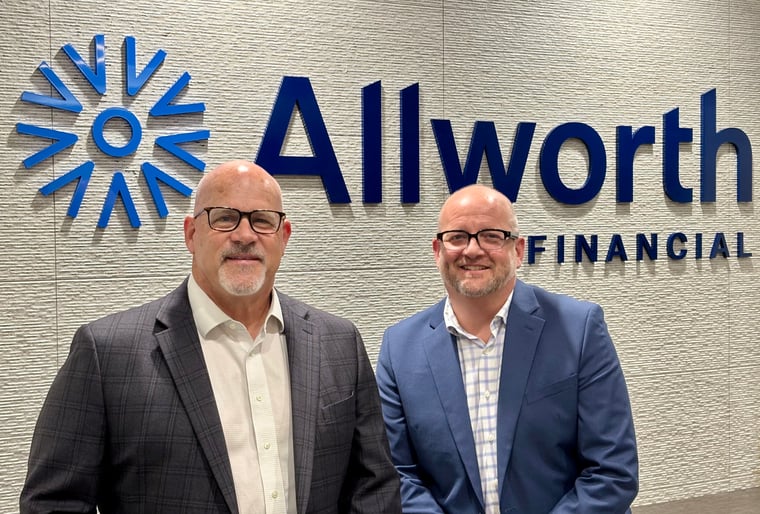
On this episode of Simply Money presented by Allworth Financial, Bob and Brian break down the modern midlife crisis—and why so many high earners are making more money than ever while feeling more trapped than ever at the same time. They discuss the rise of “golden handcuffs,” lifestyle creep, delayed retirement decisions, and the emotional realization many successful professionals face when they discover they could have stepped away years earlier.
Plus, they dive into costly inherited IRA mistakes families are making under the Secure Act, strategies for managing taxes on retirement accounts, whether direct indexing is worth it for affluent investors, when municipal bonds may actually hurt your returns, and how to thoughtfully transition into retirement without losing your sense of purpose.
Download and rate our podcast here.
Well, the modern midlife crisis looks a lot different than it used to. It's not just some guy buying a red Corvette convertible and disappearing for the weekend anymore. Now, it's someone, man or woman, sitting in their car, perhaps in the Kroger parking lot after work wondering how they're making more money than ever, but somehow they feel more trapped than ever, too. Let's talk about the contributing factors, Brian, that lead to what this new midlife crisis is looking like, unfortunately, for a lot of folks these days.
Brian: Yeah, the first example I want to take us through, Bob, is that of golden handcuffs. This is one of the biggest drivers. It's something we talk about all the time because people could retire, but they feel like they're walking away from a great opportunity. Am I right, Proctoids? Procter & Gamble is really, really good at this. A good company, of course, but they make it extremely hard to want to walk away in terms of the compensation that's provided and, of course, what the stock has done. It's a stock like any other, so it can move in any direction, but of course, it's really attractive to continue to get those bonuses and as long as the stock is doing what it's doing.
And also, so something I've kind of realized over 30 years, the other thing they do is they're extremely generous with those bonuses, and you can make an enormous amount of money in your 401(k), but there's generally not a ton left over outside of the 401(k). So, people can have literally $3, $4, $5 million tied up in that 401(k) in the profit sharing trust, but maybe $50,000, $100,000 outside of it. And since that money is, basically, kind of in a vault, people just keep working. I think it can be a struggle to pull the trigger if you're in that case. Again, not a bad thing. Nobody's going to feel that badly about having millions of dollars, but it does make you think twice about walking away early. And so, people wind up hoping for that pink slip wave to come through and give them a package. But I'm not picking on P&G, that's just something, that's a common conversation we have with those folks.
Other companies too, the other ways this is done, stock compensation, deferred compensation, "We're going to give you a big pile, but you got to hang around for another five, six, seven years." Bonuses, pension incentives, you know. Or maybe there's healthcare concerns. Maybe you have to stay employed not because the company is making it too attractive, but because life is making it unattractive to leave. For example, if there's a healthcare issue out there and you need to make sure you maintain outside insurance, not old enough yet for Medicare.
Or, you know, honestly, sometimes golden handcuffs are just because you have a lifestyle that requires an enormous paycheck every month, and your nest egg is not yet ready to cover it. This can come from, you're buying the bigger home, and then the kids are in club sports, all these things we didn't think of when these kids were newborns, for example. You got the travel teams, private schools, vacations, now the kids are old enough, they need a second car. All of a sudden, that fixed, monthly lifestyle is huge compared to what you thought you were going to be, and all you're doing is living your life. That, unfortunately, is kind of just a sign of the times right now, Bob.
Bob: Yeah, I agree. And what you just outlined there are two kind of opposite ends of the spectrum, and here's what I mean. You use the P&G or corporate executive example, where maybe the take home pay right now isn't massive, and people are living with a very responsible budget, so to speak, but the carrot being dangled is these huge pile up in long-term benefits and the retirement plan and all that. What you just outlined here with the whole lifestyle creep thing is people that are literally bringing home gobs of money and a paycheck every month, and that's where you could get into some problems.
Because people could come in sometimes and say, "Well, we just don't really feel like we spend a lot of money on extras. This is just our normal stuff." But when you look under the hood, as you just said, they bought the huge house. They'll say it's because the kids need more space, but really it's maybe a keep up with the Joneses kind of thing. I've gone through the whole club sports thing with the travel related to it with my wife and I with all three of our kids. That's an enormous amount of money spent on all that. Some people get enamored again, keeping up with the Joneses on the private schools, the expensive vacations, the second home, and then just what seems like normal, everyday expenses, is this lifestyle that we've created, and you're not in a position to replace that paycheck because you haven't thought about where that money is going to come from if and when you ever do retire. And that's a completely different conversation that we have with folks.
Another thing, Brian, and we've talked about this often on this show is, this is a generation of folks right now, and we call it the sandwich generation for a reason, there's a lot of things going on at once. Getting, you know, kids educated through college, and then aging parents or relatives, caregiving. Sometimes having to write checks, you know, to take care of Mom and Dad, Grandma and Grandpa. There's a lot of financial responsibility going on at once for folks, and they can be very overwhelming at times.
Brian: Absolutely. And of course, some of the things that I described were more like wants versus needs. What you're describing is things that are just life. We got to do these things. You can analyze it to death, but the expense is still going to be the expense, and it's usually a pretty scary one. And all of a sudden, you're chained to that plow. You can't get away from it. And I think another concept that comes up too that all of this leads to beyond really truly the financial thing is the psychological impact. And sometimes we like to call that delayed living.
These are people who are constantly waiting for permission to enjoy things. So, basically, "I was going to retire this year, but then the company had a really good year. And if I stay until March, then I'll get that bonus." And then so, what that does... I'm going to put my conspiracy hat on just a little bit here. One of the things, I don't think this was intentional, but what that does is that pushes you since the whole bonus structure works, "You got to be there through New Year's Eve, and we're going to pay you your bonus in March."
Well, by March, you'll have a feel for what the company is doing. And if they're having yet another good year, you might go, "You know what? I'll squeeze one more year out." And before we know it, we've worked three, four or five years longer than we originally intended. And maybe we didn't even have to. There's always going to be an opportunity to gain a little more money, another couple months or years' worth of matches in the 401(k), but it may not be necessary. That kind of thinking can lead you working till you're literally in the grave.
I want to tell my quick story here about the lady who fell apart because we took her through a financial plan. She and her husband had literally millions of dollars, no debt, two pensions with inflation built in. It was old school GE, General Electric pensions. We put her through the plan and she fell apart crying because... That happens because people are relieved and they're happy. She was legitimately sobbing because she realized, she knew in the back of her head, she could have retired six or seven years ago earlier when her grandkids were babies. She was not thinking of the future. She was thinking of the past that she missed out on.
This is so important to me, Bob, that people truly understand what they can get away with, what they've already built for themselves. I honestly can't remember the last time somebody sat in front of me and I had to say, "You know what? You've got nothing. You're going to have to work until you die." That is simply not the case for most people. But most people have no idea of the machine that they've built for themselves.
Bob: No, that's a powerful story, and it reminds me of a situation that I'm going through right now with another couple where, thankfully, they are getting out ahead of this. And they've become first time grandparents. The wife is not working outside the home. She's spending a lot of time helping out the kids, caregiving with the grandkids, making frequent trips an hour and a half, two hours away to do that.
And she's a former CPA, so she knows how numbers work. She knows how financial plans work. She's had me run the numbers. And to your point that you just brought up, the numbers say, "Hey, we could retire yesterday." Yet, you know, to the other example you brought up, the husband has been working his tail off. He's finally at a point now where he's getting these huge bonuses. He's running a large organization. He sees the runway over the next two to three years on how successful this company is doing under his leadership, by the way. And he's seeing these future paychecks come down the pike. And, you know, he's saying, "Hey, two more years, three more years. Let's do it. This and that." And there's a little bit of tug and pull going on right now with this, just deciding when we can comfortably retire.
Brian: I think this has to do a lot with people are realizing what I've been talking about a lot, which is that, when you retire with a pile of money versus a stream of income, that can give you more opportunity, but you've got to understand how it works. It's a lot easier if somebody tells me, "If you work until this date, you'll get a pension that looks like this and your Social Security look like that. Cool, now I got a budget, and I can clearly say, Here's what I can get away with spending. And it's a lot more predictable."
However, since most generations now are retiring with piles of money instead of streams of income, we have to understand what kind of income stream can that pile reliably give me when combined with my sources of income, which could be a tiny pension nowadays, but Social Security and that kind of thing. But I also have to reflect the fact that I'm going to invest it in things that either aren't going to move very much at all. If I'm going to insist on guarantees, then I'm not going to be able to keep up with inflation as well. Or I'm going to put it in things that can move up and down. And I've got to account for that and understand market history.
So, it's just different. Our forebears did not teach us how to think that way, and so, everybody's getting used to it. So, now, in terms of redefining success, it used to be just, "I just want a bigger title, bigger paycheck, and a bigger house, and I'll define myself successful." But increasingly, people are saying, "I want more control over my time." One measure of success is somebody who gets to decide what they do on a daily basis rather than punching a clock. So, that means people are intentionally downshifting their careers. They're taking lower level positions and lower work for those last few years. Maybe they're consulting part-time instead of continuing the grind or sabbaticals, working remotely or just plain retiring earlier than planned.
This is where financial planning really gets interesting, of course, Bob, as you are well aware. Maybe the goal isn't to retire at 65 anymore with the biggest pile of money. Maybe now, the goal can be creating enough flexibility at age 52 to take a step back and breathe a little bit. That is a very important mindset shift. We no longer have to be grinding away at the factory until we got our 30 years in to get that pension. Independence isn't just about not working, it's about having given yourself options.
Bob: No, and speaking of options, Brian, I mean, I'm going through, right now, a perfect example of what you just talked about. And this is a couple. You know, he was a very successful orthopedic surgeon. They have been planning for years to be in a position to retire in their early 50s. And this guy makes a lot of money right now. He's been responsible about it. And their goal all along has been to move down to Texas, work part time in more of a ministry service capacity, you know, as a doctor with a couple of nonprofit Christian charities. And they're doing it right now because they planned ahead. They communicated as a couple. They knew exactly what their life goals were in the timing and money needs around those goals and they're executing on it right now. It's been fascinating to watch it evolve over the years. And it's very rewarding as an advisor to actually see this, you know, manifest itself over the next year or so.
Here's the Allworth advice, money should create flexibility, not trap you inside a life you no longer even enjoy. A lot of families think inheriting an IRA is a financial windfall until they realize the IRS may be their biggest beneficiary. Coming up next, we break down the costly mistakes families are making with their inherited retirement accounts. You're listening to "Simply Money", presented by Allworth Financial on 55KRC, THE Talk Station.
You're listening to "Simply Money", presented by Allworth Financial. I'm Bob Sponseller along with Brian James. Is your obsession with avoiding taxes actually costing you money? We'll break down when taxable bonds can outperform municipal bonds, whether direct indexing is really worth it at the end of the day for high earners, and more.
One of the biggest misconceptions people have is that when you inherit an IRA, you can just kind of leave it alone forever and just let it ride and continue growing tax deferred. But we're seeing families make six-figure level mistakes because they just don't understand how these inherited IRAs rules and some of the recent changes actually work. Brian, we spend a lot of time on this show talking about strategies to avoid taxes. I think this is a good time to just peel it back a little bit and just reacclimate, or for the first time, acclimate folks to how some of these IRA rules actually work now under the SECURE Act.
Brian: Yeah, so the SECURE Act is something that went into effect in 2020, and then COVID immediately hit, so we all started ignoring it because we thought we were going to die. So, this is new to a lot of people. And so, for a long time, if I inherited an IRA or a 401(k), a pre-tax retirement asset, there's 403(b), those kinds of things as well, if I inherited something like that, then I had to pay taxes on it. It can't just stay deferred forever, but there was never a rule that I had to pull it all out at once. I could spread it out over the remainder of my lifetime.
So, normally, people inherit those types of assets when they themselves are in their 50s and 60s when their parents pass on. And so, that means that they might have 30, 40 years to stretch out the taxes on those distributions, which means it wasn't all that impactful. The SECURE Act basically compressed that time into 10 years. Now, I still don't have to pay taxes all at once on those pre-tax inherited IRAs, but I got to liquidate the whole thing within 10 years. So, that means 10 years from the day to death, every nickel has to come out of that tax shelter and be taxed.
So, for example, if I inherit a million dollar IRA, that means there's nothing stopping me, right? I can take those dollars right now today. I can take them all on day one if I want to. That means I'm going to pay income taxes on an additional million dollars on top of whatever my normal income is from my salary, my spouse's salary, any other resources of income that I possibly have. So, that's not a good idea. The opposite extreme is I don't have to touch it. There's a minimal amount that does have to come out, but I can mostly leave it there for 10 years and pull it out all on day 3,650. So, therefore I had nine years of wonderful, very minimal taxes on it, but now, that million dollars has probably doubled, if not more than that. It could be two and a half, $3 million depending on what's invested in. Now all of a sudden, I have a huge amount of money that's going to come out in year 10, and I've basically compounded the problem that I could have also had in year 1.
So, what's the answer to this, Bob? Basically, the most common way we recommend is space it out. The easiest way to think about it is divide the original principle roughly by 10, take out about 10%, maybe 12% every year to account for growth, and spread it out over time. And also, look at your situation. You may have years. Like I said, we're normally in our 50s and 60s when we retire. If I've only got a couple more years I'm going to work, then maybe I don't take anything in those first two years after I inherit, and I'll backload it into the final eight years. That's the most common conversation I have. What about you?
Bob: No, I agree totally. And I'll use the term you use often with clients and on this show, you know, people are retiring nowadays with piles of money rather than streams of income, meaning a, you know, defined benefit pension plan. So, you know, depending on how surgical people want to get with their proactive tax planning and income strategy, it's literally sitting down and looking at what your combination of piles of money and streams of income are. And you can literally select from those piles of money based on how they are taxed, and maybe take a little bit from here, a little bit from there.
I'm talking about taxable accounts, maybe Roth, you know, maybe these inherited IRAs, regular IRAs. And you could craft a tax efficient income strategy and keep you under, you know, the next highest marginal tax bracket, hopefully, keep you out of paying that dreaded IRMAA tax on Medicare. There's a lot of things you can do if you sit down and plan ahead a little bit and be tactical and surgical with regard to where your income is going to come from. I love the idea of spacing it out. Don't just divide by 10 and put it on autopilot, you know, be a little more strategic than that because it can really save you thousands of dollars over time.
Brian: Yep. One thing we should clarify to hear, what we're referring to right now, what we've been talking about is pre-tax IRAs, 401(k)s, 403(b)s, etc. Those are the most common and that's where, by far, the most money is because those have been around since the '70s. So, we're 50 years into people piling money into those. Roth 401(k) and Roth IRA is also affected by the SECURE Act, but it's actually in a good way. So, Roth assets have that same 10 year clock. However, that basically just gives you a bonus 10 years, an extra 10 years of tax free growth.
So, when I have clients who have inherited Roth IRAs...which I'm just now starting to see, because the people who set those IRAs up over the last 20 years are now passing on. And I've just in the last five years, I'm starting to see people inheriting these things. My advice to them is unless there's something screaming for money in your current situation, if this is really just money that we're going to put with your other assets, then the best thing to do, leave it, let it grow aggressively. Leave it in some kind of aggressive portfolio and let it grow another 10 years because that's the best asset you're going to have. Roth IRAs, 401(k)s do not have Required Minimum Distributions while we are alive, as well as for the beneficiaries after we have passed on. So, take advantage of that gift that's given to us. Take those 10 years and let the thing continue to run.
Bob: Here's the Allworth advice, an inherited IRA is a tax strategy waiting to happen. Plan early, and your family keeps more of what you've worked so hard to build. Well, you've made your money, you've built your success. Now what? Coming up next, how to build a personal brand that keeps you relevant even after you've built all of your hard-earned success. You're listening to "Simply Money", presented by Allworth Financial on 55KRC, THE Talk Station.
You're listening to "Simply Money", presented by Allworth Financial. I'm Bob Sponseller along with Brian James, and we're joined right now by our career expert and our good friend Julie Bauke, who's going to talk to us today about building a personal brand as you start to wind down a very successful career, but you're not quite ready yet to get completely out of the workforce. Julie, I'm sure you are counseling a lot of people in this area right now. Tell us what that looks like out there.
Julie: You know, when we start to get to that point where we have to really think about what's next, we see the end of the road work wise. The most important thing to do is start building your post work life while you're still working. Because the, "I'm going 80 miles an hour, and then I'm going to throw the brakes on fully," is really jarring. It is not the healthiest way I go about it. And it's why, over the years, many people who have poured everything into their careers die soon after retirement, because they've lost their sense of purpose. And so, you don't wait until the last day to start thinking about your next day. Do think about it before so that you're actually retiring to something instead of just from something.
Bob: You talked about high achievers, and we deal with a lot of those here at Allworth. You know, you're going 80 miles an hour, to quote what you just said. It's very hard to be going 80, 90 miles an hour, and then hit stop and come up and say, "Well, now what do I do?" What are some of the biggest challenges you face as you counsel folks when they're trying to rewire, so to speak, instead of just retire?
Julie: So, the people that have the hardest time with this transition are people who solely or mostly identify with their careers. So, we see this in Washington with politicians hanging on both sides way too long. And that happens in the private sector as well. And so, the more you identify as Joe Blow from the Jones company as your primary source of your identity, the harder that moving away is going to be. And so, moving into thinking about, what do you want to be known as after you retire? So, it could be you could be a thought leader on something. You could have an area of expertise that served you well in your career.
So, it's switching that mindset from, "I'm the person in charge, to, "I, potentially, am going to coach and mentor and be an example for those in charge." And we overstay our welcome because no one really recognizes. It's like your parent never recognizes themselves when it's time to give up driving. But everybody around you sees it way before you do. And so, it's really important to have those people around you that help you think about, how can I take what I've accomplished in the last 40 years, take a piece of that that really, really lights my fire, and then how can I build around that so that I'm not necessarily stopping all work after I retire? But maybe I'm drilling down to the stuff I'm best at, and I focus on growing that while I'm also doing other things I'm interested in.
Brian: One of the things that we almost always come up with when helping someone figure out how to retire is we discovered that they've spent almost no time thinking about what life is going to be like, you know, kind of what you were just hinting at. What will life be like when I'm not the big person in the room anymore? And they start to think, you know, a lot of people kind of get distracted by the idea that, "I'm just exhausted. I got nothing left to make the finish line." And they start to think about, you know, "I just want to be done." And then we point out there's an awful lot of time, you know, that you're going to have to spend doing nothing.
And one of the things that they'll start to think is that, "Well, I can work on an arrangement. I'll work less hours doing the same job." That always seems to end badly, in my opinion. That's why I'd like, to your opinion, because, you know, the people still dump the same amount of stuff on your desk because you are determined to be that person. You are the person who does the things and nobody cares that you're only working 20 hours a week nowadays. So, my advice is to go somewhere where you can use your skills, but still be the dumbest person in the room in terms of not being that person. Does that make...? Am I giving good advice there? Do you ever run across that situation?
Julie: No, you absolutely are giving great advice. We absolutely do not give enough attention to how to make that transition. And everybody I know over 60 says, "This is way harder than I thought it was going to be. Because I really thought that I was just going to go sit on the porch somewhere." Well, after a few weeks of doing that, at most, you realize that by 7:30, 8:00, you've had your coffee, you've caught up all the things you'd like to read in the morning. Maybe you can play golf a couple of days a week, but that's not probably going to be enough.
And so, starting to imagine how you're going to spend your week, and start to say, you know, "Maybe I might like to work. I might like to try something new or I might like to take a section of what I've done in the past and really build maybe a practice around it where I only say yes to the things that I'm absolutely going to love and look forward to." And I think at this stage of life, there's a really big question. You have to understand the difference between what you can do and what you want to do. And there's a real big difference, because you get really caught up in, "Oh, I can do this, or I could do this." But the truth is, you don't want to do all those things equally.
So, getting really clear around, "If I'm only going to spend two days a week in active work related to what I did in the past, what would I do during those days?" What would I do? And what would I avoid? What would I say yes to? What would I say no to? And then how am I going to fill the rest of that time?" If you don't actively plan how to fill your time, then you will fall back what you know. And it gets to... I said earlier, if you don't have a good relationship with your partner, and home is not a place where you want to spend more time, or you don't have anything in the community you're involved in in any way, if you've been 100% work person, retirement is going to be very, very painful for you.
And so, instead of taking the can down the road and waiting until the day when it's become obvious to everyone, maybe except you that it's time for you to go, you have to start thinking about your graceful exit. And then, what do you most firmly want to do in this last section of your life? Because really, that's what it is. My recommended book, "Wisdom at Work", "Wisdom at Work" by Chip Conley is the best book I've read to help you go through that and figure that out. How do you transform yourself into a wise mentor instead of a doer?
Bob: You're listening to "Simply Money", presented by Allworth Financial on 55KRC, THE Talk Station.
You're listening to "Simply Money", presented by Allworth Financial. I'm Bob Sponseller along with Brian James. Do you have a financial question you would just love for us to answer? There's a red button you could click while you're listening to the show. It's right there on the iHeart app. Simply record your question and it will come straight to us. Joe in Coleraine leads us off tonight, Brian. He says, "Our portfolio is heavily tilted toward municipal bonds because we hate paying taxes." We've never heard that before. Right, Brian?
Brian: Nope.
Bob: "But I recently heard some investors are actually better off owning taxable bonds in certain account structures. Is that true? Is that the case?"
Brian: Yeah, it absolutely can be. We tend to take the label tax-free and declare at the end-all-be-all, you know, a golden chalice of everything we've ever wanted. But a lot of times I'll run into it, tell me if you've heard this one before, the little, old widow who's living off of nothing but Social Security, but has millions of dollars, literally in, like, a 7% or 8% blended tax bracket, but has a huge pile of money in tax-free bonds. So, here's the thing to think about. Tax free bonds do not pay the exact same interest rate as taxable bonds and CDs and things like that. They're cheaper, right?
So, if I'm looking at a corporate bond portfolio that's maybe paying 4.5% to 5%, then I'm probably going to be looking at an equivalent municipal tax-free bond portfolio that's more in the range of 3.5% to 4%. So, the interest rates are lower. Remember, you're a taxpayer of a municipality somewhere, probably. That municipality or state can issue its own bonds. I don't want it paying any more interest than it absolutely has to. So, on one hand, we want to root for lower interest rates on our public debt. On the other hand, we want investors to buy it. So, it's got to be somewhat attractive. That's the reason for the tax-free nature.
However, because there's a sacrifice, if I can get 4% in a taxable portfolio, but only 3% tax-free, now I got to figure out something called tax equivalent yield. That basically means, what's the after tax yield of both of these? For example, I'm going to overly simplify things, let's say, in that example I just used, if I'm in a 25% blended bracket between my state and federal income, that means that 4% bracket is going to be...I'm sorry, that 4% corporate bond portfolio is going to be 3% after taxes to me, which is exactly the same as what I could get tax free.
But let's say I'm in a 35% bracket. Now, that 4% taxable portfolio is only going to net me about 2.5%, thus making the 3% tax free better. Don't just subscribe to the tax-free label. That is not all that matters. There's a lot more going on here with these types of portfolios. So, be sure you understand what you're doing. Also, never, never, never buy a municipal tax-free bond inside of an IRA or a Roth IRA. You're not getting any benefits and you're sacrificing that income stream. Hope that helps.
Let's move on to Keith in Loveland. Keith is a physician, hello, Dr. Keith, earning high income, and he's been told that, "Direct indexing could help lower my taxes." Keith has not been listening to our show very much because we talk about this all the time. But we'll honor Keith's question here. What level of wealth or taxable investments, Bob, does that direct indexing strategy actually make sense? When does that kick in?
Bob: Well, I don't know exactly where Keith is headed here, but one thing, you know, direct indexing is not going to do, it's not going to lower the taxes on your high-earned income. That's not going to get accomplished with this. What we're talking about here is the opportunity to really, you know, put tax loss harvesting in a taxable account kind of on steroids. You know, a lot of people are familiar with tax loss harvesting strategies, with ETF portfolios. They've been around for a while. What's really starting to come in vogue now, and you asked about the level of wealth, I would say, at about the $0.5 a million level. If you've got a taxable investment account and you really want to make this thing hum from a tax efficiency standpoint, or you want to blend it with some appreciated stock positions that you want to gradually diversify out of, that is where direct indexing really works.
What does it really involve? Instead of buying an index fund or an ETF that, you know, invest in an index, you actually own the individual stocks themselves. And so, you know, as we talk about all the time, and I think most people understand, there's a lot more volatility between individual stocks than an index. And that works to your advantage if you've got a strategy in the background when certain stocks zig and other ones zag, you want to capture that short-term loss, harvest it, use it to offset future gains. So, that's really how this works and where people are using it.
And Keith, you know, at about $0.5 million level is where I think it starts to make a lot of sense, you know, when you factor in all the expenses and fees and complexity involved and make sure you can really benefit from this kind of strategy. All right. We got time for one more. David in Amberley Village says, "Our estate planning attorney recommended a SLAT, S-L-A-T strategy. But it feels strange to transfer assets into an irrevocable structure while the laws could change again in a few years. How do affluent families evaluate whether these super sophisticated estate planning strategies are actually worth the complexity?" Brian?
Brian: Okay, so before we get too neck-deep in the jargon here, SLAT, S-L-A-T stands for Spousal Lifetime Access Trust. This is an advanced estate planning strategy that gets used primarily by affluent people who want to reduce their future estate taxes. Don't we all? But still preserve some indirect access to those assets. So, the whole point is one spouse creates an irrevocable trust. That spouse transfers assets into the trust. Could be cash, investments, business interests, real estate, that kind of thing. The other spouse is named as the beneficiary. And then also, children and future descendants are beneficiaries, too. Because those assets are put into an irrevocable trust. They are then removed from the taxable estate of the spouse making the gift. That's the tax benefit.
But currently, we're talking about estate taxes where you really need to have $11 to $12 million each before these are truly things that you really want to get into because of the sacrifices you just mentioned. This is irrevocable. You can't change it if we get to a point where maybe they bump it up even higher. I know 25 years ago, the limit was $600,000. And there were a lot of trust put in place that all of a sudden, when the when Bush two came in, that administration started significantly increasing the amount that could pass. And all of a sudden, these trusts that were set up became no longer necessary.
So, these are real concerns. So, I'd say, think about it. If you're not in a super... You know, if you really are in a $20, $30 million frame, hopefully, you got attorneys guiding you on this, and listen to their guidance. But don't get too hung up on this if you are closer to that free. I think it's too much of a sacrifice. But again, you really need an attorney, and probably a CPA, to help you decide whether this applies to your family.
Bob: All right, coming up next, there is a vast variety of different retirement plans out there, depending on whether you're in the for-profit or nonprofit sector. Brian's going to spend a few minutes breaking down some key differences, pros and cons between those different retirement plan options. You're listening to "Simply Money", presented by Allworth Financial on 55KRC, THE Talk Station.
You're listening to "Simply Money", presented by Allworth Financial. I'm Bob Sponseller along with Brian James. A lot of different retirement plans out there, Brian. And you're going to take a few minutes to break down some of the key differences and pros and cons. This will be a good segment. A lot of information to unpack here.
Brian: Yeah, Bob. So, we talk about, all the time, about things that begin with 4, 401(k)s, 403(b), the 4% rule on and on and on. The number four is a very common theme in financial planning and retirement planning. But there's another category out there. Those are just the common things most people are used to. Though some of you out there have things called 401(a)s and 457s, keeping with the 4 theme. They sound similar, but they do work very differently in a couple of critical ways. So, I wanted to kind of highlight. A lot of people ignore this stuff until they actually have to retire, and then they're forced to fill out forms, and make decisions.
So, let's kind of go through what the difference between all these things are. So, 401(k) is typically offered by a private sector employer, right? 403(b), that's nonprofit, public schools, hospitals, kind of state-run, government-run entities. Structurally very similar. You contribute from your paycheck, you get an employer match often, and there are penalties if you pull it out before 59.5. That's mostly common knowledge.
Deferred compensation programs, however, are designed a little bit differently. A 457 is most common with government workers, police officers, firefighters, teachers, state employees, doctors of public hospitals, and so forth. Some nonprofits offer non-governmental 457s as well. Those can be riskier and more restrictive, but they do exist. And then you got a 401(a), not (k), but (a). That's often employer directed. These are universities, hospitals, government systems. Sometimes the employer decides the contribution rates or there's mandatory participation, vesting schedule, that kind of thing.
Here's where the differences come in. Biggest advantage of a 457 on the governmental side, you can separate from service and access those dollars before 59.5 without the normal 10% early withdrawal penalty. That is huge for the FIRE community, financial independence, retire early, if you've ever heard of that. Somebody retiring 52, 55, that can become that bridge that gives you income that is not penalized before your traditional pre-tax accounts get to that point at 59.5.
So, if your employer offers both a 403(b) and a 457, you may be able to max them out both separately. You cannot do that with a 401(k). This is for people out there who have had two jobs in one year. You've learned that you have to be careful. "I put so much money into my first employer's 401(k), then I quit that job, and now, I have to be careful I don't go over the limit in the same year." That is not the case for 457, 403(b). So, if you've got these plans in your world, see if they can benefit you. If you've got the cash flow to support it, you might be able to put a lot more away, and potentially, even retire a little bit earlier.
Bob: Good stuff, Brian. Thanks for listening, everyone, tonight. You've been listening to "Simply Money", presented by Allworth Financial on 55KRC, THE Talk Station.
Insights for Complex Wealth Decisions
Join our email list for exclusive commentary from our Chief Investment Officer, early access to expert-led webinars, and your complimentary Wealth Planning Checklist for Complex Portfolios.
We take your privacy seriously and respect your privacy choices. By submitting this information you agree to our Terms of Use Agreement, Privacy Policy, and to receive important notices and other communications electronically.