
You're Wealthy. But Are You Really Free?
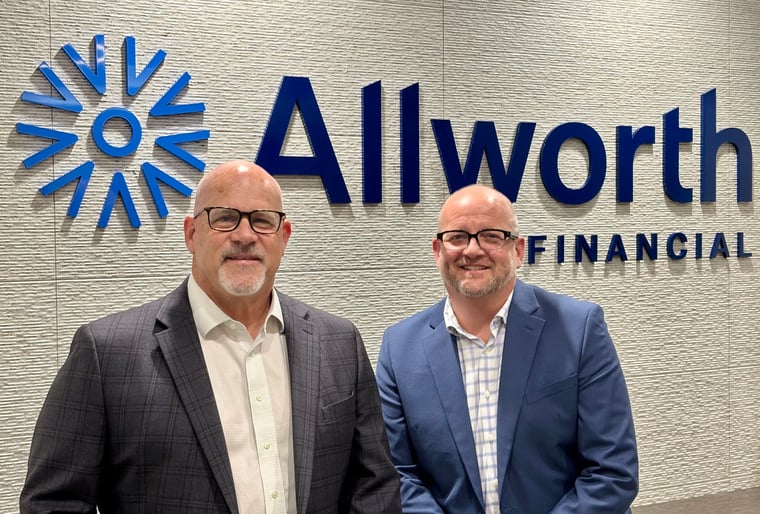
On this episode of Simply Money presented by Allworth Financial, Bob and Brian explore what financial freedom really means beyond the size of your portfolio, why retirement spending may actually increase instead of decrease, and the important money conversations you should have with your children before it's too late. Plus, they tackle real-world retirement questions involving a $3 million nest egg, vacation properties, and concentrated company stock—and explain why you should start practicing retirement before your last day on the job.
Download and rate our podcast here.
Well, Brian, tonight, we're talking about something that does not show up at all on our account statements, but might matter more than any number at all, and that's a number that defines what freedom looks like. This is a great topic. I'm excited to get into it with you tonight.
Brian: Yeah, I think a lot of times, we focus way too much on the dollar amounts and not enough on what the dollar amounts actually mean. So, new survey shows that affluent Americans are kind of rethinking what they actually want their money to do for them. Now, there's a lot of people out there whose sole purpose in life is to update that spreadsheet on a daily basis. Here's what P&G closed that and here's what Kroger closed that and do the math on a manual basis and that's just their sole reason for existence. But that's not everybody, yep.
Bob: Yeah, and I'm going to interrupt you there real quickly, and this is not meant to judge anyone. I mean, freedom is a great thing, which means we're all free to evaluate life however we want. But I have a question for you as a long-time advisor, because you and I both have clients that stare at those spreadsheets all day. And my question to you, Brian, is how fulfilled and happy do those folks tend to be when they come in and meet with you, honestly?
Brian: You know, there's two categories of them, Bob. There are the ones who are doing it on a daily basis and wind up upset or annoyed more often than not because of the headlines, because they're still in that phase. And then there are the other people who have been doing it that way for so long, and this is kind of sad, have been doing it that way for so long that that's their only personality. There are people out there like that, that this is just what they do day in and day out. It's all, what did this price close at? And what's this tax rule? And that's just all that they do. Those folks are happy, but in a sad way. I have a handful of those, but, yeah.
Bob: So, t's kind of their reason for existence, right?
Brian: Exactly. In other words, everything else faded to the background, and now, it's all about, "What does my pile of money look like today?" And they don't even have... I only have a handful of them, but these are the folks that really don't travel. They don't really go out and do anything. They don't seem to have much family interaction. It's just what they do. We talk shop, and then we meet again and talk shop. I have no idea what happens to them in the interim. But anyway. So, they...
Bob: Well, hey, I interrupted your train of thought, and forgive me for that. So, let's get into what freedom really could look like for those that are willing to go there.
Brian: That's right. So, in this survey that we're talking about here, the question is, what am I really buying with this effort and all this investing? These are folks, like I was just hinting at, they've probably done most of the heavy lifting already. There's plenty of money. It's not about, "Am I able to do what I want?" It's a question of intentionality. Now that I can do what I want, what do I want to do? And this is a cold water shock for a lot of people. Many of us focus so much on reaching financial stability that we don't focus at all on what we do immediately after we cross that finish line. What does it mean?
So, we'll go through some different components of this decision here. First off, where does your health buy your freedom? Well, the first most obvious one is time. Money buys back your hours. You're not showing up and punching a clock anymore. You're not sitting in meetings or providing the TPS reports and all that stuff. Maybe you're retiring earlier than the crowd. That could be a good feeling, to be among our peers. We certainly want our friends and family to be happy, too, but it can be a good feeling to know that, "Okay, I'm here and I'm not looking up at the rest of the crowd. It's already done some things I'm wondering about." Time can be saved because now you can outsource stuff that you don't want to do.
I do have this discussion a lot of times. There are people out there who love their houses, but hate the maintenance, and have grown tired of dealing with all the things. And it ends up being a conversation of, look, you can very much afford to pay someone to mow your lawn. And people get hung up on, "But I don't want any of my neighbors to see me hiring somebody else. That means I can't do it anymore." But those types of decisions have nothing to do with finance. It's just a matter of... And sometimes, in that particular example, that's the difference between, "I really like my house. I don't want to move, but I don't want all this responsibility anymore." Fine. Find a middle ground. Start paying somebody using the money you've built to take care of these for you. So, that's the time component. There's a lot of ways you can buy back time when you've got financial freedom.
The second one is your decision-making power. So, wealth gives you the luxury of, first off, walking away from the job. That gives you that you're holding the ball. You can do what you want to do with it. If you're done with the meetings and you're done with your boss, then you can walk away from that toxic work environment. Maybe it's a bad business partnership you want nothing to do with anymore, or just the day-to-day grind. Maybe it's an okay job, but staring at that windshield up and down I-75 every single day has just gotten to you. Well, that freedom is the ability to make that decision.
Bob: Yeah, and speaking of freedom, a third opportunity here is the ability to finally say yes to that once-in-a-lifetime, perhaps, trip with your family, investing with one of your kids in a business they want to start, or support a cause that really lights you up later in life, excites you for the final 20, 25 years of life. Just something different that really gets you out of bed excited about the day. That's a good thing, but that takes a little time to think carefully through those things and not just make rash decisions. Somebody told me years ago, Brian, and I've never forgotten it, you know, sometimes this comes down to the ability to say no to a lot of good things to free up the time and the mental space to say yes to the best things. And I think that's good advice.
Brian: That really is. It's important stuff there. And I think another big one is just plain, old peace of mind. Meaning, your first step does not have to be worry or panic about things. I've got the ability to cover an emergency. If the car dies, it's no big deal. I'll just write a check and I'll grumble about it, but then I'll... I call that the grumble and swipe method. I'm mad about it, but I can afford it, so I'm going to swipe the credit card anyway. Same thing happens at the grocery store nowadays.
But paying for healthcare, funding long-term care without derailing everything else, that's a discussion for people who have built wealth. They tend to worry a little more about long-term care than they have to, I think, because they've just never looked at, "Do I have the ability to self-fund that?" Not everybody, but a lot of people do and just haven't stepped back to take a look at it. That's something you can actually feel, the ability to say that really not much can happen that's going to... I don't have many risks that I can't afford. Big ones are insured anyway. Insurance Company is going to cover my house if it burns down. I've got health insurance through Medicare or something else. I'm assuming these things are a place, of course.
But it's the little things, the little things that can drive us nuts. It's really not a big deal. If the air conditioner dies in June when it's 105 degrees out, ask me how I know this one, the ability to just say, "You know what? This stinks, but I can fix the problem and I can move on with my life," as opposed to, "We have to sweat all summer long because we simply can't afford it." So, that peace of mind, that really, really is huge. But, Bob, there are places where money doesn't get the job done. Tell us about that.
Bob: Well, speaking of fixing the air conditioner, yeah, we'll get into some mental clutter here that does not result in freedom. Just because we have more money doesn't mean we worry less. The more, I would say, stuff you add to your life... And you and I both have second homes. I just returned last week from mine out in Colorado and what did I spend time doing? Making sure the gutters got cleaned out, making sure the sprinkler system got shut down and the air blown through the system for the winter. We had to replace an air conditioning system.
So, while I was out there "enjoying" myself, I had chores to do, appointments to keep, contractors to watch over. It's a balance because there's certainly some mental clutter there the more stuff you add to your life, and it's certainly something to consider as you approach. Again, what does that freedom really look like? Because it's awfully nice to go to that second place, walk around in the mountains, breathe the air, be out in the sunshine, but it comes with, depending on how you do that, some additional clutter. I know you and I, it sounds like, are going through similar things right now.
Brian: No, for sure. Another example, this one I'm not going through, but where I've seen it happen, we shared the example earlier. Maybe you can invest in a business with your kid or help your kids start a business. That's a good thing on the surface, but there's a lot of depth to that because this is going to force conversations that maybe you don't want to have with your kid, especially when dollars are involved. So, the freedom to do it...
Bob: That doesn't sound like freedom to me.
Brian: That sounds like the opposite. We all worry about our kids anyway. Then we tie dollars to it, and all of a sudden, now we have family dynamics and emotions and conflict and all that stuff coming. I mean, that's not a bad thing. I'm not trying to talk anybody out of it, but just eyes wide, wide, wide open on that.
Bob: Eyes wide open, yeah.
Brian: Exactly. So, wealth doesn't address, doesn't solve that family conflict. It actually, like we're saying, it can actually make it worse down the road. And again, these aren't bad things. These are just the eyes wide open types of things. Inheritance questions, who's in charge? Who gets what? Earlier this year, Bob, I had a conversation with a client who had a couple of kids that were successful business. One child was involved in the business directly and that was the plan from the beginning. The other child never had any interest in it. And so now, the family is thinking about... And we're still decades off from an actual inheritance occurring.
But mom and dad who have now retired are thinking about, "How does this all go?" And one of the brief decisions that they thought about was, "Maybe we could let the first child have the business." That's obvious anyway. The second child doesn't even object to it, but that business is not liquid. So, how do we compensate that second child? And the answer briefly was, "Let's let that child own the real estate where the business is." And that second child, first of all, had never been a landlord, really never been directly involved in business. Sharp person, but never done any of this. And now all of a sudden, was going to be their sibling's landlord for business standpoint. Now, it looked great on paper. It was a nice, queen-lady divided, but man, was that going to make for some weird Christmas gatherings, holiday gatherings for that family. They came up with another solution, but, yeah.
Bob: Yeah. You took the words out of my mouth, it looks good on paper. And speaking about all those inheritance and family dynamic issues, we're actually going to be doing a separate segment on that here in a few minutes with our estate planning experts. So, it's a very, very important topic that unfortunately a lot of people don't get to until too late in life. Let's get into one more thing. And speaking of simplification, and that's, a lot of times people just have, as they try to get their affairs in order, again, with this spirit of creating freedom in our life, we could discover that we've got too many accounts, too many properties, too many moving parts, too many people giving us "advice" in our ear, and that can make us feel weighed down. So, simplification of financial accounts and all that can work out very well, too, Brian, right?
Brian: Yeah, yeah. And I think that's a huge step forward because a lot of times, we feel like over the years, we convince ourselves that diversification means I have to have accounts all over the place because... But really, we talk about this frequently, if you've got multiple advisors, then you are the advisor because you have to take in information from both of those people and decide who is right. And they might not even be telling you different things. It just might sound different from two different perspectives for the big picture. And so, people end up going down rabbit holes that way. So, eventually, yes, I think one of the ways to address the freedom issue here is by just consolidating, simplify things, fewer 1099s, fewer requirement distributions to deal with on an annual basis. And that's a huge step toward freedom.
Bob: And a big thing along with all this we're covering here tonight is talk about it, communicate. Communicate with your spouse, your advisor, your adult kids. The more alignment you have, the more your wealth supports your values, not just the net worth on that spreadsheet. Here's the Allworth advice, wealth can buy you time and choices, but real freedom comes from using it with purpose. Well, there's a big lie about retirement that most people unfortunately still believe. We'll tell you what that is coming up next. You're listening to "Simply Money", presented by Allworth Financial on 55KRC, THE Talk Station.
You're listening "Simply Money", presented by Allworth Financial. I'm Bob Sponseller along with Brian James. Are you really ready to retire with $3 million? What if too much of your wealth is tied up in real estate? Those are just a couple of questions we'll be tackling coming up here shortly on our Ask the Advisor segment that we do here every night. All right, one of the most common assumptions we hear from people approaching retirement is this, "Oh, I'm going to definitely spend less money when I'm retired because after all, we've got less commuting, no need for work clothes, the mortgage might be paid off, so naturally, expenses go down." Right, Brian?
Brian: Yeah, you betcha. No, reality shows many retirees actually spend more in the early years of retirement, not less. So, this is research coming from the EBRI, Employee Benefit Research Institute. We use a lot of their information, quote them all the time. They've been tracking this, and the conclusion they've drawn is that for the first five to ten years of retirement, spending often rises. Now, you ask any advisor, we can say, of course, this is what happens because people are finally knocking some things off the bucket list because they can. So, that's for sure.
You know, this is when you're at your healthiest and most energetic, ready to really do those things you've been dreaming about forever. Sometimes that's fun stuff, trips, things with the family. Sometimes it's household projects that are actually work, but they feel like fun because you've been wanting to do it forever and maybe enjoy that kind of thing. You know, all those types of things. And a lot of people, you're just celebrating the fact that you are not on somebody else's schedule. You get out of bed today, and today, you're going to go do the thing you want to do as opposed to the ten things somebody else wanted you to do, and you'll do your thing in the evening when you're exhausted and really don't want to feel like doing anything at that point.
Bob: Yeah, here's another statistic from JP Morgan. They did a separate study. And this showed that nearly 6 in 10 retirees spent the same or more in the first 10 years of retirement compared to their final working years. And that does not factor in unexpected medical costs that may pop up later. So, you know, just driving home the point you've already made, Brian, here's the takeaway. Retirement spending doesn't go down in a smooth line. It comes in phases. You know, and we can label those any way we want. Some people call the first few years the go-go years. You know, that's when you're active, traveling, spending, you know, remodeling the house, all those things that you listed, Brian, that you've been waiting to do for years.
Then you hit something we'll call the slow-go years where you settle down a little bit, and then you eventually enter those no-go years where you can't be running around, you know, the country or overseas or all that because your health starts to decline, at least to the point where you've got to factor that in. And then healthcare might be the biggest line item on your budget. So, you definitely have to talk about that, hopefully with an advisor. You know, build a plan that actually takes into account the likelihood of these three phases of your retirement years. And again, like we talk about all the time, go in with your eyes wide open and plan ahead so you don't have any surprises down the road.
Brian: Yeah, and it's sort of a budgeting conversation. A lot of people cringe when they hear the word budget, but this isn't about, we need to stick to, you know, 250 bucks at restaurants every single month. For some people, yes it is. But for people who have built wealth and have a lot of flexibility around, then it's simply a matter of, "Let's put price tags on the things that we might want to do." Even if you don't do them, set aside the fact that maybe it's unlikely. Maybe we either will decide that there's not enough value in this or we'll decide it's just too expensive or whatever. Don't worry about that. If you're thinking about, "Maybe we want to do this. We've maybe always wanted to do this worldwide thing or get on one of those cruise ships for a year," whatever the crazy thing is you've always talked about. That's fine. All we're doing at this stage is throwing spaghetti at the wall anyway. Put a price tag on it, and then let's look at where the assets are.
If you're about to retire, say, this year, and you know within the next 12 to 24 months, you're going to take this big trip or do the thing to the house or whatever it is, let's figure out what that price tag is, and then you can talk about, where should it come from? For example, there's a lot of employees out there who have maybe a deferred comp plan that's going to unwind and a bunch of cash is going to drop on your head anyway and be taxed. You can't do anything about it. Well, maybe we carve those dollars out for the big thing because it's kind of sort of found money. Or perhaps you're selling a business and that's your trigger to retirement. Or maybe we keep a few hundred thousand dollars liquid in something safe while you decide whether you actually want to do these things.
But first and foremost, let's run your financial plan with those in place, with that spending in place, and just see if the ship floats in the first place. Because if it doesn't, if it's a ship sinker, okay, great. We identified that right now, and you don't have to spend time thinking about it. Or you can pivot to something that maybe is a little more financially affordable. Or if it is, if you can do it, now you get the big test of, how serious are you? And that can be the hardest decision ever, is when I can't afford the big thing, do I really want to do it? "I've been talking about it for decades and now I know I got the money. Can I pull the trigger?" That can be a really, really hard hurdle for somebody to get over.
Bob: No, 100%, Brian. And all joking aside, I mean, I've watched you do this with clients, and you do a great job of it. And, yeah, the spreadsheets matter, the financial planning software is great because it can run these different scenarios. But as you said, once you know that the ship is going to float, so to speak, from a basic budgeting standpoint, now's the time to dream a little bit and communicate with your spouse. Have your spouse in the same room and say, "Hey, what would really matter to us if we start to deploy some of this money in different ways?"
And as you've already indicated, the spreadsheet might work, but in terms of adding actual value to your life, into your marriage, into your family, being in alignment with your spouse on these things in advance, having these discussions could really be an eye opener on where, as a couple, you might have to do a little bit more work in terms of aligning or prioritizing different values. And that's where, I think, these financial planning discussions get really fun and really exciting when we have an opportunity to dream a little bit and strategize with our spouse.
Anyway, here's the Allworth advice, plan for a retirement that matches your lifestyle, not just a formula or a spreadsheet. Coming up next, why keeping your finances a family secret could leave your loved ones with an absolute mess you never intended. You're listening to "Simply Money", presented by Allworth Financial on 55KRC, THE Talk Station.
You're listening to "Simply Money", presented by Allworth Financial. I'm Bob Sponseller along with Brian James, joined tonight by Allworth's senior estate planning specialist, Paul Schwarz. Paul, thanks for making some time for us tonight. And boy, do we have a loaded topic for you to cover. One that's very important, and we see this come up all the time with folks that we plan for, and it's this very open-ended, but loaded question, what should you tell your children before you die about your money?
Paul: Glad to be here, Bob. And that is a loaded question. I think there's different aspects to that loaded question. The first is the practical. And what you should be telling your children, and especially your executor and your successor trustee if you have a trust, is if something happens to you, where to find your documents. And for most folks, that should be in a fireproof safe somewhere in their home. And they should let them know where to find the key. And with those documents should be your wills, your healthcare power of attorneys, your durable power of attorneys for finances, and then also your living wills. And then with that should be a list of all your assets, along with any passwords that you can go in for digital purposes. Now, the... Go ahead, Brian. Sorry about that.
Brian: Are there digital tools that...? You know, because a lot of people are looking online these days to kind of get access to things, or, "My kid lives across the country, and I'd like them to have access to that." Have you seen any of those types of tools that are reliable? Is that a safe thing, or is that something to be avoided?
Paul: Well, unfortunately, I'm pretty old school, Brian, so we would have to ask maybe some of the younger generation. But I think there are tools that you can do with your Apple phone or with your Android phone to secure all that stuff. But I always tell some of the older folks to have a list of passwords where all of your assets are and all your different things, because you have to keep track of bills when you pass away. So, they have to know what's going to be coming out of your account on an automatic basis, everything like that. So, kind of keep a list of everything with your estate planning documents.
Brian: What's a good read? Like, if I want to track those bills, what's a good way to just get a list of them in the first place? Because I guess I'm thinking of things like, if I make sure my kids have access to my credit card, my checking account, then they, at least, can see the ins and outs and they can track it down from there. Is that good advice?
Paul: Yeah, I think that's great advice. I think that, you know, a lot of us pay our bills online. So, we have access to all that stuff. And just letting the kids know where we bank, where we pay our bills, what comes out automatically out of the checking, out of the savings, that's all important information that they should know.
Bob: All right, Paul, let's move beyond just, you know, accounting for the passwords, the spreadsheets, the life insurance policies, the account statements, all that. We got all that locked up, communicated in a safe. We know where all the stuff is. What are the conversations or the communication that should take place in advance with our family members prior to us passing away? What do you think are some of the big ones that people avoid having that, boy, after the fact, wish we would have sat down and communicated certain things?
Paul: Yeah, I think there's a few things. I think when you talk about personal property, that is one I think that has an emotional carryover when people pass away in terms of the kids wanting different things. I think that should be talked about. I think that memorial instruction should be discussed because, you know, whether, you know, your intentions are to have a casket, whether you want to be cremated, those should be discussed. I think the financial conversation in terms of inheritance, responsibilities, expectations, that is more personal and is kind of a little bit more difficult on whether people really want to talk about what their kids are going to inherit.
I have seen folks do a memorial or a family manifesto where they talk about family history, they talk about values, and they talk about what they would like to see done with this money. But I think there are hard conversations sometimes in there, especially if you talk about maybe unequal distributions going to certain children. I know that's probably come up with you two in terms of some of your clients where they're giving unequal distributions and whether to disclose that to their children or whether it gets disclosed, basically, after they pass away.
Brian: Actually, I think that's a great topic. Can you kind of maybe walk through an example of how you helped clients deal with that from an attorney, from a legal standpoint? Because that is a tough question to answer. It'd be great if we can just divide our piles of pennies exactly 50/50 or 33% percent apiece, but it doesn't work that way. So, in your experience, how have clients gotten through that and avoided the conflicts that can happen?
Paul: Well, some would prefer to avoid the conflicts, Brian. That's just the reality of it. And they just expect their kids to deal with it, even though there are unequal distributions later in life.
Bob: So, punt the conflicts.
Paul: Yeah, some decide to punt and figure it out. Some will decide to sit down with their children one-on-one and explain the rationale behind giving unequal distributions to each, and whether it's because of the financial needs are different, whether it's they're in a current blended family, whether there's child estrangement, whatever the reason, whether it's geography. What I've seen sometimes in these unequal distributions is the house goes to one child because they live closer and maybe the other children live out of town. So, I think explaining that, and sitting down with the children to explain that, I think it can go a long way, but the family dynamics kind of control whether you should do that or not.
Bob: What about in a family business situation? I've seen this come up more than a few times where there's one kid that is definitely involved in the business and the parents, oftentimes for good reason, want that kid that's involved and competent and knows the day-to-day of the business to get the business. But then there becomes that "equalization" conversation. How do I make it fair for the other children? What's been your experience with that conundrum?
Paul: I think they try to make it as fair as possible, but the reality of the situation is that the family business is worth a lot more than their other assets. So, making it fair is not necessarily going to be the best idea. And so, what they have to think about is what is going to keep the business running, and what is the best way to keep the business running for the family into the future? And that usually involves giving either a majority interest or the voting shares to one child in favor of the other children.
Bob: All right. Hey, in a few seconds, we've got left any other parting advice here, Paul, for things to talk about with your children before you leave this earth?
Paul: Yeah, I think the final thing is, every family situation is a little different. So, you kind of have to gauge that. And I would always suggest having your advisor be part of some of those conversations, because they usually do know the family and they know the situation and they can provide a lot of input with those conversations.
Bob: All right. Sounds good, Paul. Thanks so much for your time and expertise tonight. You're listening to "Simply Money", presented by Allworth Financial on 55KRC, THE Talk Station.
You're listening to "Simply Money", presented by Allworth Financial. I'm Bob Sponseller along with Brian James. Well, it's time for our Ask the Advisor segment. Brian, we've got Greg in Blue Ash leading us off tonight. He says, "My wife and I are both 61. Between our 401(k)s, IRAs and brokerage accounts, we've got a little under $3 million invested, plus a paid off house worth $0.5 million. We spend around $130,000 a year. Everyone tells us we're in great shape, but I'm nervous about retiring before Social Security kicks in. How do we know if we really have enough?"
Brian: Well, here's the thing, you may have enough to retire, but those numbers you shared obviously deserve a little more analysis, which is why you're asking the question. So, the key is whether your investments can cover that spending gap through a 35-year retirement. I don't know how you feel about your longevity, how you felt when you woke up getting out of bed this morning, but I usually tell most people, you've got plenty of money to die young. That's not the risky part. It's outliving it. That is the concern.
So, let's do a little math here. $130,000 divided by $2.7 million, that's about a 4.8% initial withdrawal rate. If that $130,000 doesn't include income taxes or the cost of replacing your employer's health insurance, then those withdrawals can actually be higher. So, make sure you're capturing all those expenses out. And I would also separate the years before Social Security from the years after it begins. So, think about this as an illustration. Your combined Social Security maybe eventually provides $60,000 or so today's dollars. That cuts your $130,000 spending gap to about seventy thousand before accounting for taxes. Now, all of a sudden, the puzzle pieces come together a little bit better. So, make sure that that $130,000 has everything.
We talked about health insurance, that gets its own line. And there's also other things out there. If you've got a mortgage in the mix, that probably has an expiration date on it. So, make sure you're not permanently counting that in your spending. Because, again, the question is not, are we going to run out of money this year? The question is, are we going to run out of money in 20 to 25 years? And so, if you have a mortgage in the mix, then make sure that you're not just assuming a baking it into the spending because it will go away at some point.
And then, of course, test all this stuff, right? So, we talk about stress testing all the time on these airwaves. So, the idea here is run the plan the way I just described it, and then run it again, except instead of $2.7 million, pretend you have $2.2 million. Somehow you lost close to 20% of your assets, and make sure that ship still floats. That is to address the concern that everyone has that, "What if I retire into a storm like 2008 and I don't see it coming, or 2022?" That does happen to people. It's not that it's not that common, but it is possible and it's not going to make you happy if it does. So, make sure you have tested out and modeled out what that might look like and you can retire confidently.
Rebecca in Fort Thomas, Rebecca says they've got a net worth of about $3.5 million. About $1.4 million of that is tied up in their home and a vacation property. Okay, so really what you're saying is, "We got $2.1, liquid." And she says, "We're approaching retirement and don't want to sell either of these properties." So, how do they figure out whether they have enough liquid assets to support that lifestyle? Bob?
Bob: Well, Rebecca, I'd say, listen closely to the way Brian just answered Greg's question, because he's definitely on the right track there. There's a lot of good information to digest there. I'm going to break this down a little more simply because I get to follow Brian. You may or may not like this advice, Rebecca, because I'm going to use that dreaded B word for budget. Sit down and actually categorize what your family's expenses are completely separate from both homes. In other words, what are your true lifestyle expenses, needs and wants, irrespective of whether you own a home, or in your case, whether you own two homes? And then do a separate budget for your primary residence and the vacation property. What are we spending on those two homes?
Because, you know, without knowing your entire financial situation, it sounds like you guys probably have enough money to pull this off. But pulling it off really isn't the question. It's, you know, what are the tradeoffs if we continue to have two homes and pay for the upkeep, maintenance, property taxes, all of that? And once you run a financial plan with those different assumptions broken out separately, you and your husband might make some different decisions here down the road.
So, you know, once people can go in with eyes wide open on what these two homes are actually costing you, sometimes, not always, but sometimes they come to the conclusion that, "Hey, our overall quality of life might be better if we don't own a vacation property." And maybe you might come to a different conclusion. We're willing to sacrifice in these different areas of our life because we value that time at that vacation property so much that we want to keep it. So, you know, I create those separate budgets and actually count the cost of what's involved with having both properties. Hope that helps.
All right. Time for one more, Brian. Ron in Anderson says, "I worked for the same company for 30 years, and the stock I've accumulated is now worth around $700,000. Our total investment portfolio is $2.5 million. The problem is that my cost base is incredibly low on that company stock. How can we reduce the exposure without giving a huge chunk to the IRS?" We get this question about once a week.
Brian: Yeah, absolutely. So, you got about 28% of that investment portfolio tied to one company. There might be emotional attachments as well. But that 50% decline, well, that might cost you $350,000. All of a sudden, you've lost 14% of your portfolio simply because the CEO did something he shouldn't have been doing or the company missed earnings or whatever. And the market decided all of a sudden, it was time to punish it. And the market does not care about your retirement plans, of course.
So, here's how I would think about this transition. Figure out where those shares are held. If some of that company stock is inside your employer's retirement plan, have somebody evaluate what's called net unrealized appreciation. That might mean you can pull it out under some more efficient capital gains taxation instead of income. But there's some moving parts to that. You're going to want an advisor or a tax person on that with you. If it's brokerage shares, think of it, maybe consider a deliberate selling schedule, meaning these are taxable whenever you sell them. Don't sell everything all in one year. Look at all the other moving parts in your tax situation and find the right time to do it to go ahead and take those gains.
You know, and you can also, if you give to charity, use some of the shares to do that, right? Your problem already is that you have too much of one thing. And if you're already charitable inclined giving money away, then those can be a great resource, those appreciated shares. And that keeps cash in your checking account to be spent on other things while you're still benefiting the charity by giving them those appreciated shares. Now, remember that that means don't sell them. Give the shares directly to the charity. And I guarantee you, the charity knows how to do this. Just ask them.
Bob: All right. Well, if you're planning to retire in the next few years, we've got a firm recommendation for you coming up next. You're listening to "Simply Money", presented by Allworth Financial on 55KRC, THE Talk Station.
You're listening to "Simply Money", presented by Allworth Financial. I'm Bob Sponseller along with Brian James. Brian, here's something I've always found interesting. People will spend decades preparing financially for retirement. They'll save in their 401(k), meet with their financial advisor, run the numbers, do the spreadsheets, all that. But there's one thing they almost never practice, and that's actually being retired. I think this is a fascinating and very important topic to talk about tonight.
Brian: Yeah, because we get out of practice on living our lives just being ourselves. You spend those 40 years working, and then one Friday afternoon, you turn in your laptop and your badge and clean out your desk. And that Monday morning, you're supposed to, all of a sudden, know how to live an entirely different life after a single weekend. Well, for some people, especially for those who had really demanding careers where every minute was scheduled, all of a sudden, that is a huge adjustment. And like we say all the time, many people focus much, much more on the financial side than the time side of this.
So, here's a suggestion for you. If you find yourself within a few years of retirement, start practicing now. So, not talking about a two-week vacation necessarily. That's not retirement. You're not going to live at the beach for the rest of your life, I don't think. But that's really a vacation. We're talking about just figuring out what a normal Tuesday looks like when you don't have to go to work. I always tell my clients, picture it's Tuesday morning and it's 10:30. You've had four cups of coffee and you and your spouse are staring at each other from either end of the couch, what will you do with the rest of that day?
Bob: So, in other words, a staycation in Kenwood, let's say.
Brian: Exactly, right? What better place to hang around a little for a week and not do a whole lot. So, who knows? Maybe you're thinking right now you're going to play golf four days a week. Cool, go do it. See how you feel after that fourth 18. Was it worth it for that week? Is that really your thing? And who knows? And maybe it is. Well, the point of this is confirming it. But you also might find out that it's really not your thing because maybe it gets a little redundant or you're seeing that same course too much. Or maybe you're just a terrible golfer and you haven't realized it until you play a little bit more. If you're married, this is absolutely...
Bob: That comment hits a little too close to home, Brian, but go ahead.
Brian: I know, I tried to move past it quickly before you were able to dodge the bullet there. But for our married folks out there, this is really a conversation you need to have with your spouse, because all of a sudden, absence makes the heart grow fonder. Well, what does presence do? Think a lot about what it's going to be like when you're both in the house and you both have more free time because that can be a challenge for a lot of couples as we've seen.
Bob: Yeah, and if you are married, this is definitely a conversation you must have with your spouse because your vision of retirement might look very different than your spouse's. You might picture the two of you traveling the country, let's say, in an RV. Your spouse might picture you traveling the country in that RV by yourself while she takes care of the grandkids once or twice a week. I've seen that meeting happen several times. All joking aside, the communication in advance with your spouse really needs to happen because you literally are doing a reset in terms of what day-to-day life looks like as a married couple. Here's the Allworth advice, don't wait until your last day on the job to figure out what retirement actually looks like. Start building the life you want to retire to while you're still working. Thanks for listening tonight. You've been listening to "Simply Money", presented by Allworth Financial on 55KRC, THE Talk Station.
Insights for Complex Wealth Decisions
Join our email list for exclusive commentary from our Chief Investment Officer, early access to expert-led webinars, and your complimentary Wealth Planning Checklist for Complex Portfolios.
We take your privacy seriously and respect your privacy choices. By submitting this information you agree to our Terms of Use Agreement, Privacy Policy, and to receive important notices and other communications electronically.