
The Most Expensive Money Mistakes Successful People Make
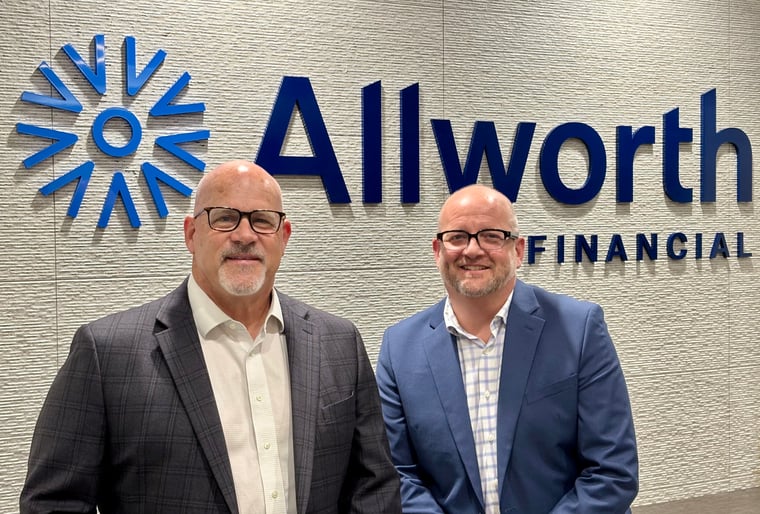
On this episode of Simply Money presented by Allworth Financial, Bob and Brian reveal the costly financial mistakes even successful investors can make, from concentrated investments and poor tax planning to holding too much cash and lifestyle creep. Plus, they explore the life decisions that can shape your wealth, explain when it’s time to review old insurance policies, and answer retirement questions about Roth conversions, Social Security, and leaving an inheritance your heirs can handle.
Download and rate our podcast here.
Well, if you've accumulated, say, a few million dollars, you've clearly done plenty of things right. You've saved, you've invested, you've built a nice career or closely-held business, and made plenty of smart decisions along the way. But now, the stakes are higher, and the biggest mistakes at this level usually aren't the obvious ones. Brian and I are going to walk through a few of those mistakes or decisions that successful people can sometimes easily overlook.
Brian: Yeah, so successful people who have reached that level of wealth and stability didn't do it, it didn't happen overnight, and it took a lot of blood, sweat and toil. And that oftentimes can lead to something we call letting one investment become your identity. So, you work for that company for 25 years. You believe in the company. Maybe you own the company, maybe you created it from the ground up, and it's done really, really well. And you look at your portfolio and realize that 30% or 40% of your net worth is tied up in one stock. So, you think about, "That's a problem. I've got to do something about that." Selling it though, that feels disloyal. Or maybe it wasn't even company stock, maybe it's your own company.
So, whatever that is, the investment that helped make you wealthy can eventually become one of the biggest risks to your wealth. So, at some point, you're going to have to realize that, "Maybe this thing that has become literally a part of me is now more of a risk than a benefit. Because now that I'm trying to step back and take the foot off the gas a little bit, it's going to do whatever it does. And maybe I've left the right people in control, or maybe I'm not convinced that I've done so, and therefore, I'm never really going to be able to step away. So, maybe I need to take some extra steps."
The first thing that we run into when we tend to think of this situation is, "If I do anything at all, I'm going to face taxes, and therefore, I don't know how that works." This is how this decision goes frequently. "I don't know how that works. I'm not sure what the taxes are going to be, but they're going to be significant probably. Therefore, I'm just not going to think about it this year. I'll just keep plugging away." And then years go by in that same mode. So, you might be looking at a significant capital gains tax bill. That's okay. That's a good thing.
If you had a deductible loss, then you will have wasted your life creating a failed company. Capital gains are a sign of success. We don't like them, but they're not necessarily avoidable. They can be mitigated. You need professional help to sort that out. But you don't want to tear the Band-Aid off and just dump it tomorrow either. You need a strategy. That can mean selling gradually. It can mean offsetting those gains with losses you've got elsewhere. Maybe it's charitable giving or, again, if it's real estate, you can look at 1031 exchanges. There are a lot of different ways to exit businesses without simply tearing the Band-Aid off and paying a bunch of taxes.
Bob: You mentioned that tax word easily a half dozen times, Brian. It's so important to do actual tax planning. That leads to mistake number two we run into all the time, and that's treating taxes like an April problem, meaning tax preparation rather than tax planning. And there's a big difference between those two ways of looking at taxes. Think about two people who each, say, have around $5 million. One has most of it sitting in traditional retirement accounts. The other has money spread among Roth accounts, taxable investments, traditional retirement accounts, maybe a small business, maybe a concentrated stock position as you just talked about. Same net worth on paper, potentially very different flexibility and results on an after tax basis.
And this becomes especially important as retirement approaches, and we have to turn, as you always like to say, these piles of money into streams of income. Coming up with an income plan. Brian, I find that so much of the value add that a good fiduciary advisor brings to the table has to do with this tax planning area. And unfortunately, not enough people are looking at the opportunities available to them by doing some actual tax planning, figuring out which accounts and which sources to take their income from. It's a great opportunity to do some planning and really change the game long term in terms of what you have, in terms of after tax income, and then what you've got left at the end of your life to leave to your heirs.
Brian: And so, the next one I'm thinking of here is, you mentioned piles of money. That's one of my favorite comparisons as you're well aware. Sometimes those piles of money are in cash. And this is a good problem to have. Who would object to having too much cash, right? If I got to have a problem, that would be a good one. It usually comes from a good place. It came from somewhere. You worked hard for it, you built it, you survived all the ups and downs economically speaking over the decades. Maybe you inherited it. So, it's a windfall because somebody who cares about you sent it your way after they passed on. Having that, you know, $250,000, $0.5 million sitting in cash, that feels good. A lot can happen, a lot of bad, stupid stuff can happen to me before I really have a problem. Or maybe it's even a million dollars, right? Some people are in that situation.
And I'm not saying that cash is bad. Everybody needs liquidity. You need an emergency reserve, but a lot of times, the piles of cash that we see people come in with do not come from a place of an educated, informed decision. What I mean by that is, "Here's what it costs me to live every single month. Here's my simple most basic bills. Here's the big things I have coming up. I've got college tuition. A couple of more payments worth of that. Got to do this addition to the house. We've always wanted to take this trip," those kinds of things. "All those things we're going to do in the next 12 to 24 months plus the emergency fund." Even if it's several hundred thousand dollars, that is a good, educated, informed decision to leave that money sitting in cash in a high-yield savings account or something that's generating a little, but is not exposed to the market.
However, what I normally see is people walk in with this giant pile that came from a windfall. They sold a business or they inherited something and they just declared that, "That pile, that exact pile that I inherited is my emergency fund because it happens to be cash right now." There's no education there. Somebody with a half million dollars sitting in cash and maybe they got a house worth that much and no debts, all paid off, you really need to sit down and figure out where your risks are. Everybody has that brother-in-law or that long-lost cousin or the neighbor's long-lost friend or something who has had some kind of ridiculous situation that cost them enormous amount of money. But those types of situations are truly, truly rare.
The risks that we face that can cost that much are generally insured. You've got insurance on your house, you've got fire insurance, you've got health insurance, you got a deductible, so work that into your emergency fund. But figure out what really could actually cost you whatever sum of money, and then see if you can insure it. Insuring it and paying a premium to insure those risks is going to be a lot cheaper than letting those dollars sit on the sideline. Because 5, 10, 15 years from now, those dollars can be even more if you do something different. But it all starts with an educated decision on, "Here is the exact pile of cash that I need," not, "I happen to have this pile of cash, therefore it is what I need."
Bob: Yeah, Brian, and as I listen to you talk about the whole cash conversation, I think sometimes people think that cash is just kind of their mad money where if they make some one-off decision, making a gift to kids or grandkids or buying a more expensive car or a really expensive trip, something like that, somehow that spending doesn't count. It's not part of the financial plan because we had a pile of cash to pay for. And I guess that leads me to talk about mistake number four, assuming that you don't have to worry about tracking your spending anymore once you become wealthier or retire or what have you.
And this is one of the strangest things that can happen when people retire with a lot of money. They stop paying attention, not because they're irresponsible, because they know deep down if they are responsible with their money, they have enough money. But what can happen is that somewhat nicer vacation becomes the really nice vacation. The $60,000 car becomes the $100,000 car. Then there's potentially the second home, the club membership, helping the kids. You start to pile a few of these decisions, you know, one on top of the other, and you feel at the time like you're making one decision to reward yourself. And before you know it, you have built a continuing lifestyle creep situation, where you haven't tracked it, and you don't know whether your assets and your financial plan are going to sustain it long term. We sometimes run into that problem. And again, I've said this many times on the show, I'm shocked at how many people come into the office and have no idea what they spend every month or every year. It's something we got to track. Go ahead.
Brian: Bob, I think back to high school chemistry, actually this is probably grade school, and learning the difference between a solid, a liquid, and a gas. And I remember one of the unique properties of a gas is that it expands to fill the container that it's in. Without a financial plan in place, our spending expands to fill the container that it's in. Meaning if it's in my checking account, I can spend it because I don't have a plan. So, that doesn't mean you can't, but it does mean you have no idea when you have a problem, you may not have a problem right now.
And this is almost the more dangerous one. People who are living paycheck to paycheck are precisely aware of what the budget is and what they can spend this month, that month. People who have not had to have a budget, that's not a bad thing, right? That's kind of a moment of success when you get past the point where you got to really worry where the bills are getting paid. However, especially if you're on the younger end, if you're living without a budget, that means you're probably not paying a whole lot of attention to what it costs you to be you. And more importantly, what's it going to cost to be you 5, 10, 15, 20 years from now when inflation will take a hold of everything as we're all well aware of the past five years.
But also, you'll have to start spending money on things you didn't plan. Healthcare, maybe long-term care down the road, you never know what's coming in terms of maybe you'll have kids that you need to help out, those kinds of things. And making sure that you're carving out money, or at least you understand. You don't have to necessarily put money in envelopes for each of these goals, but I think it's good to walk down the path of, "Here are the different things that are costing me money right now. Here are the things that could cost me money, and therefore, do I have the resources to cover it, not only now, but in the future?" And that's what a financial plan helps everybody to do.
Another one that comes out of the blue is helping your kids without a strategy. I kind of hinted at this a little bit. This becomes a big, big scary one for when we don't pay attention to it. So, it can become one of the biggest blind spots for successful families. The kids were raised with financial success, they haven't really known want, if you will, and we want them to kind of be able to carry that forward and to even have better lives than we've had. Daughter wants to buy a house, son wants to start a business, there's tuition coming from the grandchildren. You can help, and so you do. And there's nothing wrong with that, but if it doesn't come with a budget, then we won't know when we've stepped into that danger zone of too much outflow and not enough inflow. That is just as important in retirement as it is during our working and family-raising years, making sure we match up the resources with the goals.
Bob: Yeah, and as soon as you start helping one kid or one set of great kids, if you have multiple kids, you know, you better make sure you know that your family members are keeping score. So, you start to do one thing for one kid, you're going to end up doing it for all of them in most cases. So, yeah, as you said, you need a plan for that. All right, here's the Allworth advice, the more wealth you build, the less your success depends on finding that perfect investment, and the more it depends on avoiding these few big mistakes that can potentially undermine everything you've worked so hard to build.
Well, sometimes the biggest financial decisions don't look financial at all. Coming up next, the life choices that can quietly determine how much wealth you ultimately build. You're listening to "Simply Money", presented by Allworth Financial on 55KRC, THE Talk Station.
You're listening to "Simply Money", presented by Allworth Financial. I'm Bob Sponseller along with Brian James. If you can't listen to "Simply Money" live every night, subscribe and get our daily podcast. Just search "Simply Money" on the iHeart app or wherever you find your favorite podcasts. Straight ahead, your retirement questions such as, how much income should you create before Social Security and Required Minimum Distributions? When it makes sense to claim Social Security, and how to make sure an inheritance doesn't become a family financial mess. Well, ask successful people about their best financial decision, and they may point to an investment or a tax move. But oftentimes, the decisions that truly shaped their wealth weren't financial at all. They were career moves, relationships, and those big life choices. And there's a pattern worth paying attention to. Brian, I think this is a fascinating topic to get into.
Brian: Yeah, there are, of course, major milestones, huge pivot points in our lives that have financial impacts, but also beyond because everything is connected to everything else. So, one of the things, the first one I want to start with here is that job that you left. And you might remember that moment, the role, it looked great on paper. This is the dream job, the title, the compensation, the stability, "My ship has come in. I finally made it." At some point though, despite the very reasonable arguments you had for staying, you left anyway. And it felt reckless at the time. After all, that income was real, and so was the uncertainty on the other side. Nobody around you, not really anyway, could really tell you with any confidence that was going to work out, but you did it anyway.
That's the part though that doesn't get talked about enough. That decision to take that dream job, that paper dream job that didn't work out so well, it wasn't made with good information. It was made with good instincts. You saw some of the things that were what you were looking for, and you did have the courage to act on them before the evidence was truly, truly conclusive as to how this was going to go. And then what followed was that business you built, the career you redirected, the work finally aligned with what you were actually good at. It turned out to be the highest returning decision you ever made. Not because leaving stability is always right, that's not the case, but because you trusted the instinct.
You know, you said, "This ceiling, where I'm at right now isn't worth the comfort of staying under it. I can't grow anymore. I might be safe right now, but I can't. But this is it. I'm never going to get anymore. And I have to get out of here if I'm going to do something else." And because you moved before that window closed, right? So, it's one thing to find the opportunity, it's another thing entirely to take advantage of it and pull the trigger. That can be terrifying, but a lot of you out there are probably nodding your head and saying, "Yep, that was me." And for some of us, that was the job we just left. For some of us, we've just come to the realization that we need to be thinking this way.
Bob: Yeah, another big one, Brian, and you and I see this all day, every day when we meet with successful couples is the life partner we chose. I mean, obviously this show is not a show about relationship advice. We're just simply making an observation here.
Brian: I would argue with that. I think often it is about relationship advice, but yes.
Bob: All right, all right. Well, along with that, the decision that we make, who our life partner is going to be, really tends to shape our financial future more than almost any other decision we make, not because of what that person earns or inherited or what they bring to the table financially, but it's because of what you built together with your life partner and how you built it. In other words, financial compatibility in marriage isn't really about agreeing on every single decision number. Rather, it's about having the same relationship to risk, the same willingness to make sacrifices for a longer term goal that's important to you as a couple or maybe just to one spouse individually.
That same ability to stay steady when things can tend to get uncertain in life, or to ask the hard question when the other person is too close to the actual situation to see something clearly that the other one doesn't see. In other words, those couples who built lasting wealth, they do tend to share one trait that doesn't show up in any financial plan. They make each other better at the decisions that truly matter, not by agreeing on everything, but by being honest when it truly counts.
Brian: That's right. From that point, then we move on to the day you decided to take your health seriously, right? This isn't the January gym membership that you're going to take seriously for about six weeks maybe. These are the real decisions, the ones where you realize that, "You know what? I've had fun not really taking care of myself both physically and mentally. Maybe it's my diet, those kinds of things. However, I know this is going to have a problem." A lot of successful people, that decision came later than it should have. Because if I'm successful, then that consumes time and energy, and I can easily say, "You know what? I can't hit the gym today because today's just been too busy. I got to make this phone call, fire off these last few emails, and I just won't have time for it."
Well, then all of a sudden, we get that doctor's appointment where we get the test results that go a little differently than we're inspecting or appear, didn't make it to the retirement, or worse, did retire and didn't get a year out of it. Most of us have a story like that. So, what followed after that, that's not dramatic. Think back on these decisions for those of you who have gone down this path. You wound up with, maybe you need better sleep, or maybe you've got more tolerance for sustained stress. Willingness to actually use the time this wealth was supposed to buy. That's where you should be once you've made these small decisions. That doesn't show.
These aren't financial decisions. These are ways that affect your finances because of your thinking differently about the results that you got and now you need to just turn the ship in a different direction. So, you know, I think the point of all this here is just to get everybody to stop and just take a breath and realize that the decisions you've made in the past, think back on the ones that were successful and have led you to the happy spot you are now, or think back to the ones that maybe made you think twice, and figure out how you cannot make that mistake again.
Bob: Here's the Allworth advice, your biggest financial decisions often do not involve investments at all. They're the life choices that determine what you're able to build. Coming up next, why now is probably the best time to review your insurance policies. You're listening to "Simply Money", presented by Allworth Financial on 55KRC, THE Talk Station.
You're listening to "Simply Money", presented by Allworth Financial. I'm Bob Sponseller along with Brian James. Well Brian, you know, insurance comes up a lot during our financial planning conversations, and we always recommend taking a look at these old life insurance policies that we have all tended to accumulate over the years. Tonight, we've got the big gun in to help us out. Jodee Deutsch, Allworth's Director of Insurance. Jodee, you've got some very good, practical reasons why we should be regularly reviewing those life insurance policies. Walk us through it.
Jodee: Thanks, Bob, and thanks for having me. There are lots of reasons to review your insurance policies. Some come to mind easily. But you typically buy an insurance policy to mitigate your risk and to protect your family. But things happen and things change down the road. So, as life changes, we need to review your policies to make sure you still need them. You know, don't assume that doing an insurance review or analysis is you have to run out and buy a new policy. Many times it's, you can stop your premiums or let that policy go.
So, some of the key things we like to look at are, does the policy still protect the people and have the same goals today that you planned on when you bought the policy? So, we like to look at the age of a policy. An older term policy might be nearing the end of its level term period, and we want to get in front of that instead of you automatically getting charged a higher premium. Permanent life insurance policies that build cash value need to be reviewed to make sure they're either performing as expected, or sometimes you can walk away with the cash with no tax implications and repurpose that cash into gifting or investments. Also looking at beneficiary designations. I have reviewed so many policies where a client will say, "Oh, my ex-spouse is the beneficiary, and that's not required in the divorce decree. We should update that." So, we should regularly look at that.
Brian: That makes for some awkward meetings. Yeah, some awkward estate settlements.
Jodee: It does. And so, reviewing beneficiary designations as, if you really want your kids to get the money and they're now adults, you can make those changes. But really looking at the beneficiaries to make sure they're in line with your overall financial plan, and who's supposed to get what?
Brian: Jodee, I want to drill into one of the quick options, right? So, here's how this goes for those of you who haven't been through this. Oftentimes what happens is, during the course of a financial planning relationship with an advisor, eventually a client will get a statement in the mail from their ancient insurance company, and they'll realize that, "You know what? We don't need this anymore. Darn it all, we didn't die. And the kids are fine and the mortgage is paid off, and shoot, what is this for?" And then they bring it in, and we'll do a review on it. And then what we really want to look at, the first thing everybody says is, "I don't want to pay these premiums anymore for something I don't need. What are my options?"
One of the very first things, you know, if the cash isn't needed out of it, right, because there can be some tax complications there. And I promise there's a question behind this. One of the very first things that we look at is, can we get what's called, and you hinted at this before, a reduced paid up policy? Which simply means, "I want to still have this policy. I just don't want to put any more money into it because I don't really need it, but I also don't want to deal with the taxes." So, Jodee, can you give us an idea for... And I know this is a loaded question, it depends on the age and the dollar amounts and all that kind of stuff. But can you give us an idea of, percentage wise, how much does a death benefit drop when we stop paying premiums on a policy? That's kind of an unfair question. I'm throwing it at you anyway.
Jodee: It's a question I get a lot though. It's not unfair. So, for a whole life policy, we can ask the insurance company to calculate a reduced paid up. And the older the person is, the less the reduction in death benefit. And reduced paid up is just a fancy term for you stop paying premiums and you get to keep this policy. So, it's really a win-win. You save money, and when you pass away, your beneficiary gets an income tax free death benefit. I can't really put a number on it because it depends, but what we can do is help our clients coordinate with the insurance companies to get these numbers for these different scenarios that they can make an informed decision.
So, you're not just calling asking for an action. We help to coordinate getting the pieces of information to decide, do you keep it as is? Do you make changes to it, including that reduced paid up? Or maybe you walk away from the policy if there's not a taxable event and take the cash. And then sometimes, if you're healthy and you have a different need, possibly long-term care, we might be able to transition the dollars in one policy to a different policy that covers different needs. So, it really depends on the type of policy, the client age, the client's need. But we want to look at it from a perspective of, what are your options? And then based on your goals as a client, really will direct you to choosing that right option for you.
Bob: Yeah, Jodee, as I listen to you talk about this, I want to pull this back at a 30,000 foot level here a little bit. I think it's just a unique and incredible opportunity to be able to sit down and actually have a fiduciary review your insurance portfolio. Here's what I mean. Brian, you and I came up in this industry where if you had a conversation with an insurance person, it was going to lead to one thing, a sale, a sales presentation of an insurance policy or an annuity. Having watched Jodee sit down with folks and actually do an integrated plan, taking a look at insurance policies, truly integrated on a fiduciary basis into a comprehensive financial plan, it's just been very refreshing to watch a professionally done review of an insurance portfolio. Jodee, talk a little bit about what kind of reaction you get from people when they've spent a couple hours with you reviewing their policies, dovetailing it with a good financial plan. Can I look at you like, "When's the sales pitch coming?" Because this has been an incredible opportunity to sit down with you.
Jodee: I think that they're surprised that we're not out there just to sell insurance. Now, if there's a client that needs insurance, we can absolutely do that, but that's not the idea of a plan. It's to figure out how do their current policies fit in to their plan. And the other thing it does is it helps to bridge the gap. Sometimes clients haven't really talked to their kids about their goals for legacy, and insurance is a great way to start that conversation and to bring their kids into the loop so that they start to understand when something happens to them, these are the wants and needs for their overall investments, their assets, and their insurance policies. So, I think clients are appreciative, and you also see a weight lifted off their shoulders because they're like, "I didn't know what to do with this policy that's been sitting in my drawer for 22 years."
Bob: Fantastic. Great advice, Jodee. Thanks for carving out some time for us tonight. You're listening to "Simply Money", presented by Allworth Financial on 55KRC, THE Talk Station.
You're listening to "Simply Money", presented by Allworth Financial. I'm Bob Sponseller along with Brian James. You have a financial question you'd like for us to answer? If so, there's a red button you could click while you're listening to the show if you're listening on the iHeart app. Simply record your question there and it will come straight to us. All right, Brian, Laura in Milford says, "I'm retiring with several years before Social Security and RMDs. How do we figure out how much income to intentionally create each year without wasting that lower tax bracket?"
Brian: This is one of my favorite time periods in the whole financial planning arc for everybody, right? Because financial planning is boring for the first 30 years of your life. Invest aggressively, don't panic when the market wobbles, and don't make a mess of your credit. Do that for 30 years, and then you will get to the point where you've given yourself options. And these folks, Laura, you've reached one of these milestones. So, you're not earning a paycheck anymore. Social Security and Requirement Minimum Distributions haven't kicked in yet, and therefore, you're at the lowest bracket as possible.
But that's not the goal. The goal isn't to create as little taxable income as possible, because eventually, this window is going to close and you will have probably the least control over your tax bracket that you'll ever have for the rest of your life. And you'll be stuck in that situation because there's Requirement Minimum Distributions and Social Security and all that. Those aren't bad things, but it's just the way that our tax code works.
So, I would start with a multi-year projection, not just this year's return. Figure out the ordinary income each year between now and Required Minimum Distributions. That's going to include any pension income you might have, interest off your bonds and savings accounts and CDs, dividends off of stocks in taxable accounts. Maybe there's rental income, part-time work, any IRA withdrawals. All that's going to be classified as ordinary income. Then project what happens once Social Security kicks in, and then especially, this is the Whopper, once Required Minimum Distributions begin. That's going to be either age 73 or 75, and it's going to be roughly 4% to 5% of whatever your IRA is worth at that time. Remember, you've just retired. You've got a ways to go. So, if you've got 10 years, there's a reasonable chance that IRA could double by that timeframe. So, it's going to be bigger than you think.
So, what did we do about this? Now that I have this figured out, what you want to be looking at is not celebrating the fact that we're sitting in a 0% bracket and not paying the IRS anything. The primary tool here is a Roth conversion. Roth conversions were not attractive in your final years of working because you were in the highest bracket you'd ever seen. Now you're in the opposite situation where you're in the lowest brackets that you'll ever have for the rest of your life. Yes, your brackets are going up from here once those Required Minimum Distributions kick in, and they're going to go up even if you do the Roth conversion.
However, you do have a window here until you hit that age where you can start paying income taxes and get those tax dollars changed from a pre-tax to tax-free forever, including yourselves and including your heirs, and do it at the lowest bracket you'll ever have. So, that's really what you want to be looking at this time in life. Marty in trivia. Marty says, "We don't need Social Security to live on." He's asking, "Does that automatically mean we should wait until age 70? Is that a black and white answer? Or are there situations where taking it earlier makes sense?" Bob?
Bob: Brian, what is our favorite answer to every question on this show?
Brian: On the count of three? One, two, three. It depends.
Bob: It depends.
Brian: Catch up, Bob. Come on. I gave you... Yeah, that came from a mile away.
Bob: You gave me plenty of time and I still blew it. All right, Marty, Brian just walked through answering Laura's question, all of the things that go into building an actual retirement income plan. And I'm not going to repeat all of that. But the reason we say it depends is we want to take a look at things like your investment risk tolerance, how all your assets are set up, whether they're in after-tax accounts, Roth accounts, pre-tax IRA accounts. So, you want to look at your investment risk tolerance, how much growth is probably going to be coming from the portfolio, or whether you're a super conservative investor, and then where your income's going to come from.
I'd say the situation where taking it earlier definitely makes sense is if longevity is not really a thing in your family, or if heaven forbid, you're staring at a terminal illness or some kind of debilitating illness that's going to reduce your life expectancy. That's where you want to definitely pull the trigger and take it earlier. Obviously, you get an 8% pay raise every year you don't take Social Security. That's not necessarily a reason to not take it either. So, that depends answer really comes down to building a financial plan and optimizing different claiming strategies based on your personal goals and the composition of your various assets and income sources. All right, we've got time for one more tonight. Mark in Terrace Park says, "I'm more worried about my heirs mishandling an inheritance than I am about estate taxes. What planning tools address behavior rather than taxes?"
Brian: Yeah, and I think this is an important point. I want to put one thing to bed real quick. Unless you're, as an individual, worth $11 million or more as a married couple, $25 million, maybe it's even higher than that, whatever, estate taxes are probably not going to be the big, scary thing that you really have. I think what we're talking about here, people go down that rabbit hole and get stuck. Mark is past that. I think that's a good thing. Mark is thinking about the things that actually directly affect him.
So, for heirs where there's more serious concerns, this can be because maybe they're a little spend thrifty, maybe they're in a relationship with somebody who is, they've got creditor problems, or heaven forbid, drug, alcohol addiction, that kind of thing, or just kind of never got control of their money. You might want a trust with an independent trustee who that can be a corporation, it can be a friend of the family, it can be a lawyer, whoever, who is going to make those decisions when you are no longer here and able to make them. That's what a trustee does. The heir has to go there and say, "Hey, I've got this bill. I want to go back to college. I want to get this degree." Cool, that's probably going to be approved. "I want $10,000 to go on a bender around the world." That's probably not going to get approved. That's what the trustee is for.
You can also build incentives into a trust, but you have to do this carefully. It's not as easy as it sounds. You can encourage education, employment in a certain sector, something like that, or savings, charitable giving. You can basically build into the trust the things that you want your kids to be doing, but avoid making it too rigid that only rewards certain salaries or certain career paths. One might be a teacher, another might be a successful business person, those kinds of things. You don't want to corral them, especially if they're on the younger end. So, make sure that you understand exactly what you want. And have a lawyer walk you through these. Lawyers are fantastic with stories of how they've helped people in similar situations.
Bob: Do you think you're doing the right thing with every one of your paychecks? Well, you might be able to take it a bit further in terms of optimization. We'll explain what we mean next. You're listening to "Simply Money", presented by Allworth Financial on 55KRC, THE Talk Station.
You're listening "Simply Money", presented by Allworth Financial. I'm Bob Sponseller along with Brian James. Well, here's a statistic that caught our attention. According to a Finance Buzz survey, 71% of Americans say that when their paycheck hits, they immediately move some of that money into savings. We think that's a good statistic, Brian, but let's talk about a couple other things we could be doing with our paychecks.
Brian: That's right. That's a good thing, but sometimes we can overdo it. So, that paycheck hits, and you're being diligent before that money disappears into expensive restaurants or a bunch of brown boxes on the porch, vacations, whatever else. You're automatically moving a portion of that towards your future. That's great. That's great, but once you're in that habit, that's just step one. Step two is making sure you understand where that money is actually going. If you're still building an emergency fund, then absolutely some of it belongs in cash.
But the key word there is building, meaning I have a plan and I will know when the building is complete. We don't build skyscrapers infinitely. We know in advance how many floors they need to have based on whatever purpose they're supposed to serve. Treat your emergency fund the same way. "I need to get it here. It needs to be 3 months of expenses, 6 months, 9 months, maybe 12," something like that. But when you get there, check that box, allow yourself to celebrate that you've accomplished a goal. That emergency fund goal, that can go back to the bottom of the list of priorities. You've accomplished it. There's no need to continue thinking about it.
So, then what do I do? Well, now maybe we can bump up the 401(k) contribution. If you're eligible, consider an IRA or a Roth IRA on the side. Remember, even if you've determined that you make too much money to do a Roth IRA, you don't make too much money to do a back door Roth IRA, which is, basically, taking advantage of, I won't even call them loopholes anymore because the IRS has, basically, approved this stupid process, make a non-deductible IRA contribution into a traditional IRA, and then immediately convert it into a Roth. But why we leave that in the tax code, Bob, instead of just removing the income limitations? It's kind of like we have a locked door on the front and some people stop there, but then other people realize that there's a door around the side that doesn't even lock on it. That's how the tax code works when it comes to Roth IRAs.
Bob: Yeah. Well, the important thing, we're talking about automation here. So, I think what could tend to happen, Brian, is people do a diligent job, like you said, of building that emergency fund, getting it into cash, and then they come either to us, or they try to make a decision on their own at the end of the year, "All right, I got a bunch of cash. What do I do with it?" I think what you're saying here is automate the investment part, too. I think for some people, it gets a little cumbersome, because if you automatically put your savings into one of these high interest-bearing money market funds, something has to be sold, a trade has to be made to liquidate those funds.
So, it's having, as you said, a couple of different buckets working here simultaneously, and adjusting whether it's your payroll to up your 401(k) contributions, or set something up, let's say, a Roth IRA account with your advisor, something that's automated every month so you're not thinking about it and not having to make one huge decision rather than dollar cost averaging over the course of a year. Here's the Allworth advice, automate your saving but also automate your investing and make building wealth one of the first things your paycheck does, not the last. Thanks for listening tonight. You've been listening to "Simply Money", presented by Allworth Financial on 55KRC, THE Talk Station.
Insights for Complex Wealth Decisions
Join our email list for exclusive commentary from our Chief Investment Officer, early access to expert-led webinars, and your complimentary Wealth Planning Checklist for Complex Portfolios.
We take your privacy seriously and respect your privacy choices. By submitting this information you agree to our Terms of Use Agreement, Privacy Policy, and to receive important notices and other communications electronically.