
The Investing Mistake That Can Wreck a Portfolio
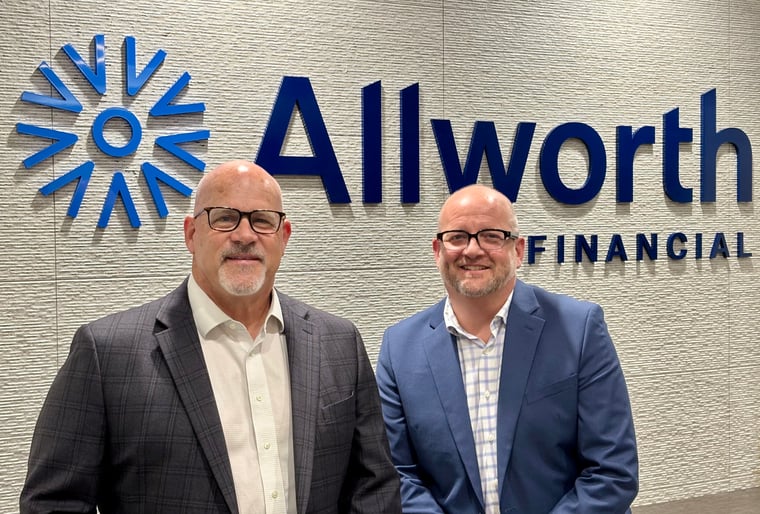
On this episode of Simply Money, Bob and Brian explain why even great companies can become terrible investments, what earnings season could reveal about today's AI boom, and why some high earners are rethinking the advice to max out their 401(k)s. Plus, a financial makeover for empty nesters, smart ways to help adult children financially, what you should expect from a wealth advisor, and why planning for retirement means more than just managing your money.
Download and rate our podcast here.
Brian: Yeah, that's exactly right. And because the whole point of all of this stuff, everybody who gets out of bed and trudges to work, whether that's across the hall into a work-from-home office, or into the car to go sit in traffic, we are all simply trying to earn more money than we spend. That's it, period, end of story. Or at the very least, earn exactly what we have to spend, which isn't a great outcome, but it's better than bankruptcy. So, companies think the same way, and we measure them by profits. And, 'tis the season, it's profit season. So, next couple weeks, we're gonna start to see profit results from some of the biggest companies in the world. Really, the ones we focus on, of course, are the ones who make up the S&P 500, which is the stock market as we know it, and that index is more concentrated than ever before, but as we always wanna remind during this season, if some of these companies report these just ridiculous gangbuster numbers, we always wanna be careful of pouring dollars in that we set aside for retirement into these companies individually, and overweighting your portfolio, because the future doesn't always end up rosy. You know, past performance is no indicator of future results, as the time-honored disclosure goes. So be careful getting too excited about anything. And remember, oftentimes these reports, they aren't super relevant for the future. They're simply confirming or denying whatever we thought was going to happen. The important things to listen to are what does the company say about what the near future holds for their situation. Are they feeling good about it? Are they feeling conservative? That's the real details that are useful here.
Bob: Absolutely. For example, you could get a great earnings report for the third quarter, but if they put out estimates for the fourth quarter of this year or the first quarter of next year that disappoint whatsoever, even after we've had this huge run-up in stocks, you will see individual stocks or the markets as a whole start to sell off, not because of what just happened, but what's being forecast for what's about to happen in the coming quarters. It's so important. Brian, give us...we're gonna go through a little bit of a history lesson on how this has really worked here. Give us a little bit of a history lesson. Exhibit A, Cisco stock.
Brian: Yeah, you know I love my history. So, this goes back to the beginning, the first internet wave, when we were first talking about how whether this internet thing was really gonna be a thing, or is it just gonna go away. So, this is the beginning of 2000. Obviously, we know the stock market has exploded in the last quarter-century, but, let's let that go for the moment. Pretend we don't know anything about what's about to happen. There's a company out there called Cisco. They're basically selling the infrastructure that makes the internet work. Who wouldn't have loved to be in that position 25 years ago, but that's not the point today. Everybody knows the internet is gonna change the world, by the way, which of course that was completely correct. So let's go through the timeline that Cisco went through here. So, February of 2000, they report their quarterly earnings, and sales are up about 53% from a year earlier. Cisco sells networking equipment. This is way back when we were first starting to just literally connect stuff to the network. And Cisco was at the center of all that. So, their pro forma net income was up 49%. In other words, it's one thing to increase your sales by 50%, but are you being profitable? And the answer was a hard yes for Cisco. Actual net income goes from $282 million to $825 million. These are ridiculous numbers. Remember, this is 25 years ago. Now it's no big deal to talk about billions. We're even talking about trillions now, but this, a quarter century ago, nearing a billion dollars was an awful lot of money.
Then, few months later, Cisco reports another quarter. Sales up 55%, net income up 58%. And then by the time we get to August, now sales are up 61%, net income up 69%. The whole fiscal year, Cisco sales are up 55%. So, what's not to like about this? This is all good stuff, right? That's kind of the point. You're looking at a company that appears to be absolutely crushing it, in what everybody believes is gonna be the most important technological transformation of our lifetime, and investors, well, yeah, they poured money into it because of it. And that made Cisco briefly one of the most valuable companies on the face of the Earth, with its market capitalization climbing over $500 billion, which is a mid-sized company nowadays. But anyway, that's not how the story ended, Bob. What happened after that?
Bob: Well, obviously, the story changed. Cisco stock absolutely collapsed after the dot com bubble, because the company was hit by a dramatic slowdown in technology and telecom spending, just as customers realized they had built more network capacity than they needed, leaving Cisco with billions of dollars of excess inventory. Brian, this sounds awfully familiar here as we move into data center land, and this extraordinary multi-trillion dollar build-out of data centers and AI. I'm not saying the market's gonna crash or go down, or this is not gonna be extremely successful, but I will go out there and say we're gonna see volatility in this space, because we are not gonna get tech spending, capital spending, earnings and revenue growth at the pace we're seeing it right now, unabated forever. And you only have to go back 25 years to see this exact thing unfold, during the onset of the dot com era. It's just a reminder that history doesn't always repeat itself, but it certainly does rhyme. And that's why you don't wanna just pile in and over-allocate to what's working right now, because things do change, stocks can get priced basically to perfection, and boy, at the first sign of earnings and revenue slowdown, this stuff can roll over hard, and lose people a lot of money.
Brian: That's exactly right. And that's exactly precisely what happened to Cisco. They were down about 90%, peaked at 80 bucks a share in March of 2000. By October of 2002, it was about $8.60. Now, obviously, some things happened in there that had nothing to do with Cisco. That contains September 11th, as well as the recession related to that. But that was also the letting out of the air from the original technology boom. And that happened. Cisco still exists, still a good, solid networking company. But that's the point. Any company can go through this stuff, and it's not too much of a...
Bob: Well, and Brian...and Brian, not to interrupt, but you made an excellent point a few minutes ago, when you said that long-term, if people look at this networking equipment and the internet and all that, people could sit there and say, "I'm gonna throw a ton of money at this stuff and just hold it forever, because this is the future." And you know what? Those people could be right. But in the interim, your portfolio could go all over the place, declining, as you just said, by 89%, because the price of these stocks can change. You can be right on the emerging technology. Boy, can you be wrong about what the price of these stocks are gonna be over a 3, 5, 10-year period. And that is so important to remember, as we look at companies like SpaceX, or an IPO for a company like Anthropic, which, you know, it sounds like that's gonna be coming, the IPO, sometime next month, in all probability. Just a reminder of what can happen here, and what has happened. You know, even if you're right about the emerging technology, you better be careful about the price you pay for the stock in these companies.
Brian: Yeah, investors are human beings, and public companies are run by human beings, and human beings have, of course, urges that they, to profit and make money, that, you know, obviously can lead to certain decision-making. So, if I'm an investor, then I wanna know I'm with a company that I think is gonna win the race. If I'm a company, then I am encouraged to do everything I can to make it look like I'm going to win the race. That's where the overspending comes from. Gotta be the first to finish. We saw that, again, in networking with Cisco, and we're seeing it now, with the data centers and the AI companies that are just trying to be the biggest out there. Matter of fact, the OpenAI CEO, he basically said it not very long ago. If I wanna have a voice at the table, I basically gotta be the biggest gorilla in the room, so...
But, it's not limited, Bob, to technology. Another great example is General Electric, right? This used to be the safest company in America. I remember 30 years ago, as advisors, we used to refer to it as its own mutual fund, because it had a little bit of everything. They had insurance, they had light bulbs, washer/dryers, and, you know, electrical, electronic, industrial clip and all that stuff. In 2000, GE reported record revenues, records all over the place, right? Revenue was up 16%, up to $130 billion, earnings up to $12.7 billion. And then 2001 hit, came along with the recession, of course. We were just talking about that. So, how did GE react to that? Another year of record earnings and cash generation. It was just one of those companies that became reliable, you know, that people are always gonna need the products it sells, so therefore, earnings go up another 11%, to about $14 billion then. So, but at that point, weaknesses inside that company basically just got too big and too spread-out, those became much clearer, and GE spent a lot of time getting hammered for the following decade, maybe 15 years. And since then, of course, the answer, it's been a very positive company, but the answer has been to get smaller. So, again, the excitement, the thrills of reading...what was his name? Jack... Help me, Bob.
Bob: Jack. Jack. Jack Welch.
Brian: Thank you. Jack Welch wrote that book, that I'm also not gonna remember that either. Doesn't matter. But, that was at the heyday of General Electric, that everybody had to understand. How did he do it, how did he make it so great, and how can we do it elsewhere? Well, it worked in that era, for that company, and then that company had to make a major pivot to continue, frankly, to continue to exist, and along the way, got dumped out of the Dow Jones. So, anything can happen to any company.
Bob: Brian, the whole GE thing was one of the most shocking things I've ever seen in my life. It hit really close to home, too. I mean, my dad worked there for 35 years, retired for the company. A lot of my clients, coming up in the business, and even still, are GE executives. And I can remember going to them, and these are people that had a bunch of stock options, so, you know, you wanna talk about people that get upset. It's one thing to own the stock, but it's another thing to be sitting on, you know, millions of dollars of leveraged stock options. And I remember going to them, begging and pleading, "Please take some of this stuff off the table. You don't have to own these options to expiration." And they're like, "Nope, nope. GE's not going anywhere. It's not going..." And boy, did the bottom fall out of this stock. I remember the engineers over there at GE Aviation. They were right, by the way. You know, why do we have to take GE and turn it into an insurance company, the whole GE Capital thing? Why don't we just stick to making aircraft engines? They were right. I mean, you look at that company today? That company just keeps humming along. Those people over there in Evendale, and all over the country, that stuck with aviation, wonderful business. The company decided to wander off into, you know, the whole capital balance sheet manipulation land, and a lot of people lost a lot of money that they didn't need to lose if they had just diversified at the right time. I can go on and on about that one, Brian.
Here's the Allworth advice. Great earnings can tell you a company is thriving today. Diversification protects you from betting your retirement that it will stay that way forever. Well, you've been told for years to max out your 401(k). But what if you're a high earner? Should you still be doing that? We'll talk about it next. You're listening to "Simply Money," presented by Allworth Financial, on 55KRC, THE Talk Station.
You're listening to "Simply Money," presented by Allworth Financial. I'm Bob Sponseller, along with Brian James. Well, should you gift your kids $100,000 now, or wait and let them inherit it 20 to 30 years from now? Does joint ownership actually make sense for a $3.8 million estate? And if you're paying 1% advisory fees on a portfolio of, say, $4 million, what should your advisor really be doing for you? We're gonna tackle all of those items, straight ahead.
Well, there are certain pieces of financial advice that have been repeated for so long that we almost treat them like biblical commandments. For example, "spend less than you make," "have an emergency fund," "don't carry credit card debt." And here's another one, "max out your 401(k)." Brian, there's an interesting trend happening right now, however. Some higher-income workers are saying, "maybe I don't need to do that anymore."
Brian: Yes, conversation I'm having more and more frequently with people, as we're kind of sneaking up toward that end goal of retirement. So, the headline here is the percentage of high earners that are actually maxing out their 401(k)s has been dropping. So, these are people that are earning about over $150,000, who have a Vanguard retirement plan. This research comes from Vanguard. And among those people, about half of them maxed it out last year. Back in 2018, that same group, earning more than $150,000, was more like 60%. And then from people who are in between, a little bit less than there, $100,000 to $150,000, that drop has been even bigger, from 22% down to only 10%. So, you know, is this spending? Is it people choosing to, you know, live high on the hog, and not save? Well, you know, some of it is simply math. Contribution limits have gone up, so, along with the cost of living. So you gotta save more to technically max out.
Max, right, so let's talk about what we're meaning by max out. Max out means you are hitting the IRS limit for your financial plan. Right now, that's $26,500. That means those are dollars that are not hitting your checking account. Just because that's the limit doesn't mean people can squeeze that out of their income, so... But that's part of the problem. Some high-earnings aren't saving less. They're saving differently. Meaning, instead of automatically saying every dollar that I don't need is gonna go into the 401(k), they're basically saying, is that still the right answer? Once I've maxed out what the match is gonna be, do I really want everything sheltered behind a wall, where it's gonna be taxed as ordinary income? And maybe I should do some other things to give myself some flexibility outside the 401(k).
Bob: Yeah, Brian, there are a lot of reasons why I think these max deferral numbers are dropping. Let's get into some of the more common ones, and reason number one is, as you've already stated, I have seen you walk through with clients this whole concept. And it does make a lot of sense. You know, for somebody that's very successful, and very responsible with their money, let's say you've been maxing out your 401(k) for 20, 25, 30 years. The markets have been good to you, obviously. Maybe you have $2 or $3 million sitting in a tax-deferred retirement account. At some point, you might look at that and say, do I really need every additional dollar going into that same free-tax bucket? And I know you're a big fan of having multiple buckets of assets from which to draw from at retirement, because, as you correctly point out, you could be selective on where your income is gonna come from during retirement, and manage taxes more effectively. For example, it might be good to have some in Roth, good to have some in an after-tax account. You know, obviously good to have some in pre-tax. Having options is a good thing, from a tax standpoint, as you get into retirement, and get into required minimum distributions, and that's why more and more people that already have these huge piles of pre-tax money are taking a look at doing a few things differently during their last few working years.
Brian: Yeah, that's right. And I think the other conversation I'm frequently having, and honestly, I think this is, but Bob, tell me what you think, but I think this is somewhat behind what real estate prices are doing. The stock market has grown so much over the last quarter century, and it hasn't been, this isn't the '80s and the '90s, where basically nothing bad happened for 20 years, and I don't even count '87 anymore. But we've had three of the five worst years since the Great Depression have happened in the last quarter century. And yet the stock market is still way, way up. And I think people are just concluding that I've got all this money, what am I gonna do with it? And if I keep sticking it in the 401(k), then I don't really have the option to do other things. Maybe I do wanna buy a second home somewhere. Maybe I do wanna, you know, my kid's going off to college. Maybe I wanna buy a home out there and put some money into that, and maybe make it more of an investment, rather than paying rent somewhere, and those kinds of things. And, again, the conclusion comes from I can't do that easily if I've got all my money piled into my 401(k). So maybe I'm gonna think differently, so I can make some different investments, that are not stocks, bonds, and mutual funds.
Bob: Yeah, I'm gonna go off the reservation here a little bit perhaps, Brian. Going back to that Vanguard study, you know, the number that stood out to me is those folks earning between $100,000 and $150,000 a year. That's where the drop-off has been big, from 22% completely maxing out, down to 10%. And I'm gonna guess here, Brian, and I'm gonna say a few things are going on here. You know, if you're making $100,000 to $150,000 a year, and you've got kids in college, or approaching college, or...you know, you're, with inflation up as much as it's been, cumulatively, since COVID, people just need some of that money to spend, you know, to help pay for their kids' college education and all that. So, you know, I heard a statistic this morning, I think, again, from Vanguard. Not a few, if you look, not at the average, but at the median 401(k) balance in America, it's only $44,000.
Brian: Wow.
Bob: You know, sometimes we can get lost with averages. If you look at the midpoint, it's only $44,000. So, again, we could talk about these people that have $3 million, $4 million, $5 million, $8 million, but there's a whole lot of people just trying to get by and pay the bills every month. I think that's why you've seen this drop-off, not being able to max out, because they can't afford to do it right now.
Brian: Yeah, that's frightening. $44,000 is roughly the cost of an average car, an average new car, without all the bells and whistles these days. And that is someone's entire nest egg on average.
Bob: All right. Here's the Allworth advice. Maxing out your 401(k) remains one of the best ways to build retirement wealth. But as your wealth grows, make sure you're building flexibility outside of that pre-tax account as well. Coming up next, we've got the money makeover for all of you empty nesters out there. You're listening to "Simply Money," presented by Allworth Financial, on 55KRC, THE Talk Station.
You're listening to "Simply Money," presented by Allworth Financial. I'm Bob Sponseller, along with Brian James. Well, there's this moment every parent hits. It's usually after the last kid moves out, when you walk by that empty bedroom, and it just hits you: Oh, wow, it is quiet in this house. And right after that, you start thinking, okay, what do I do with all this space? And, possibly, what do I do with all this discretionary money, Brian? I know my wife and I are empty nesters now. We've gone through this phase. I can just say, you know, you think they're gone. They're never permanently gone. They always come back, and they come back needing money, but I digress. Let's go through some of the adjustments we need to make as empty nesters.
Brian: Yeah, this is basically me. I'm living this dream right now. As of about a month ago, the youngest moved out to college, and occasionally somebody shows up and wants to do laundry or eat out of the fridge. We did just get a comment. We were gone for the weekend, and one of the kids came home to help take care of the dog, and the question we got was, "What do you people eat? There is no food here." And I thought, "You're exactly right. There's no food here. And that's the way we like it." Anyway, so...
Bob: Well, and your wife, if she's like mine, I mean, she was being responsible. Let's not leave a bunch of perishable food items in the refrigerator, and my answer, always, to my kids in that situation is, "You know where Kroger is. Go there and buy yourself some food. It's not your mom's job." But again, I digress for a second time.
Brian: I gave you a car, and I've given you the family credit card. You'll feed yourself. Solve the problem.
Bob: yes.
Brian: So, yeah. Definitely hit this place where, you know, we, you've been, you're in the routine, pouring cash into groceries, and sports, and car insurance, and college tuition, all this other stuff. All of a sudden, it's gone, and sometimes this comes along with maybe the mortgage being close to getting paid off. Feels like you got a raise without a promotion. All of a sudden, we have the empty nester money makeover, so let's start with the house here. The structure is the same. It's still standing. There's just plastic bins in the old bedrooms, full of stuffed animals and clothes that don't fit anymore, and one day you're gonna get around to emptying, again, I'm speaking of myself here, we're gonna get around to emptying this and giving it away, taking it to Goodwill. That day is not gonna be today or this weekend, but one of these days, Bob.
So, but anyway, the money works the same way as the house. When the kids move out, it's like you just cleared a big room in your checking account as well. So, what goes there next? Well, the first thing we wanna think about, you know, we wanna think about reclaiming that cash flow, right? If we don't reclaim it and think about it, it's gonna get swallowed up. I would say this is almost a little bit kind of like a mini retirement. There are extra dollars around, and the term, in terms of retirement, we have extra time. This is a brief period of time where we have extra dollars. If we don't learn how we're gonna use them, we're just gonna waste them. That goes for dollars as well as time. So, you know, be thinking about what this looks like. Maybe you'll...for that first month, go out to eat more often. Let that fridge get empty, like I just talked about. You've got the time. You're not cooking for anybody else. Go celebrate a little bit. But then figure out what in your life, you know, spend those steak dinner times figuring out what in your life is screaming for money, and what should be addressed. Maybe it's making more payments on the mortgage. Maybe you're funding catch-up contributions in a 401(k), or maybe you need to start an investment, like we were just talking about a little bit ago, start an investment outside the 401(k), so you can have some, you know, it's a little more liquid cash to handle differently in those earlier years before 59 and a half. And remember, learn about the, back to that 401(k), learn about the catch-up rules. There are different rules, based on the age it starts at when you're over 50, but there are now some rules in place for additional savings over 60. I will also throw out there, if you truly have expendable cash, and there's nothing else screaming for obvious financial attention in your life, look into the mega backdoor 401(k). This can allow you to put up to 70-some thousand dollars into your 401(k), a good chunk of it tax-free forever. So, give that some thought too, for that extra cash.
Bob: Brian, that sounds horrible. If I've got all that extra money, not spending it on my kids, I wanna spend it on a golf membership, not some mega super backdoor Roth IRA. You're taking all of the fun out of my empty nesterhood. But hey...
Brian: You're supposed to have done it in the first month, Bob. You do the fun things first, then be responsible.
Bob: All right. Thank you. All right. Another thing to do is maybe do a insurance review. If your kids are really off the payroll, and living their own lives now, you might be overpaying for coverage that no longer fits. Check your car insurance. If they've got their own car insurance policy, make sure to drop them from yours. You know, review your life insurance, too. Brian, you know, this car insurance thing is hitting close to home. I told my wife, I'm giving our youngest son one year warning. And that one year is actually coming up here in about 10 days. He is getting dropped from the family insurance plan, and he's gotta go out and buy his own coverage. I can't wait. I can't wait for this to happen. Real life is setting in on our youngest son. But anyway.
Brian: Unceremoniously dropped, a boot in the rear, off the car insurance. That's in the future for me.
Bob: Grow up. We're passing the baton, brother. Have at it. All right. Look at your life insurance, too. The reason you originally may have taken out those life insurance policies, protecting dependents, protecting them in their childhood, funding college, all that, might not be the same as it is right now. And while you're at it, good time to update those beneficiaries as well. Brian, we remain amazed at how many times people come in for an insurance review, and they still have a ex spouse, or some distant relative listed somewhere, that they had no idea were still on their insurance policies. And then, Brian, people look at their home. As soon as they're staring at those empty bedrooms and the size of that big house, some people start to ask, should I downsize or rightsize, or stay right where I am?
Brian: Yeah. And this is a big, emotional one. This is one to definitely think about, but do not rush into it, right? So, obviously, having a five-bedroom house when there's only two people in it, or one person, doesn't make any sense, any financial sense for sure. You're not gaining any financial benefit from it. You got taxes, maintenance, utilities for that larger house. But if you love where you are, and it's affordable, then it's not the worst idea to stay put at least for now. I've got clients, and actually, relatives who went through the process of assuming it was gonna be time to move, and they did move shortly after the kids packed up and moved out, and they wound up not being happy. And so, now they're two and three homes past that original one, and on occasion, it occurs to them that, you know what, we really kinda liked it there, and it was paid off, and we really kind of regret having made that move. So, definitely think about it, but don't put it first on the list. Just because it looks obvious doesn't mean it's the right thing to do immediately.
Bob: Here's the Allworth advice. An empty nest is your chance to refill your retirement future. Well, you've got questions. We've got answers. Coming up next, out "Ask the Advisor" segment. You're listening to "Simply Money," presented by Allworth Financial on 55KRC, THE Talk Station.
You're listening to "Simply Money," presented by Allworth Financial. I'm Bob Sponseller, along with Brian James. Do you have a financial question you'd like for us to answer? If so, there's a red button you can click while you're listening to the show, if you're listening on the iHeart app. Simply record your question there, and it will come straight to us. All right, Brian. Ken, in Hyde Park, says, "We're worth around $3 million, and we wanna give each of our kids $100,000 toward a house. Is it better to gift the money, loan it to them, or wait, and let them inherit it?" Brian, the let them inherit it piece doesn't help them get the house today. We're seeing this come up more and more in review meetings with our clients.
Brian: And this came up so quick. I [inaudible 00:28:17] doing this 30 years, and I swear this is really only the last three or four years that people are thinking this way. But, so, yeah, if your retirement is secure and you don't need that money back, an outright gift can be the simplest way to help. Loan makes sense when repayment serves a purpose. Maybe you do want the dollars back. Nothing wrong with that. You're just being the bank, instead of forcing them into the banking industry. That's kind of a halfway step for yeah, I'll help you out, but you do need to have some responsibility. And the responsibility can be the purpose. Some people just want to put their kids in a position where yes, we'll help you get this done, but you're gonna have the same stress, because now you owe me, and you have to make eye contact with me occasionally, as opposed to the faceless bank that you'll have to make payments to. But either way. So, figure out what you can afford, and that's not just your net worth. Just because you have...if you have $3 million, as you say, but you live like you have $10 million, then you might not be able to afford to do this for your kids. And the danger part here is not now, right? Obviously, you could give each of your kids a half million dollars, and still have money left. That's not the question you're trying to answer. The question is, if I do this now, where does it leave me in 10 or 15 years? That is the real question. And that's the same question every person with a financial plan needs to ask themselves. I've built assets, but I need to still live within that container, and therefore, what is that container? A lot of people don't know what that question is, so... One quick thought here. Don't worry too much about gift tax rules, right? Gift tax rules have the word tax in them, but it's gonna be pretty hard to accidentally stumble into actually getting taxed because of these things. So, 2026, each parent can give $19,000, under the annual exclusion. So, if you're, in this example, if you're trying to help your kid out, it's the fourth quarter, so you could get, if your kid's married, you can give the kid and the spouse $19,000 apiece, from each of you, you and your spouse. And then you can do it again here in about two and a half months, in January. So, you could quickly get $76,000 to that couple without even having to report. So, gift tax is not a major concern there.
All right. Let's move on, before I start talking about that forever, which I already have. Laura in Westchester. Laura's got about $3.8 million, and she says almost everything is titled jointly. Now, that's interesting, because that implies that there's not a lot of retirement assets out there. That's not something we see very often, this size money without a 401(k) IRA in the mix. But their question, Bob, are there estate planning reasons that they should own some assets separately?
Bob: Well, Laura, there really aren't any estate tax planning reasons, you know, to do anything real complicated here. There used to be, back when the unified credit amount was significantly less than it is today, so you really don't need to worry about Ohio or federal estate taxes. The thing you wanna be thinking about are two things, probate at the second death. So, at the first death, between you and your spouse, if you have everything jointly titled with right of survivorship, you're going to avoid probate. It's gonna be very simple. The assets are just gonna go to the surviving spouse. It's at that second death, of the surviving spouse, where those jointly-titled, now jointly-titled assets, if you don't do something different, will be subject to probate. So, what can you do there? If you have kids or other heirs that you wanna leave the money to, you can put contingent beneficiaries on those joint accounts, or, depending on how complicated or not complicated you wanna make things, in terms of where these assets go, and when they go down to your heirs and kids, that might be a reason to have a joint trust involved, for probate avoidance, and to get more specificity on where those assets are ultimately gonna go, and when. So, you know, no problem today, but be thinking down the road, to make sure you don't get into a probate situation. All right. Last question, Brian. I think this is a great one to kick around. Beth in Blue Ash says, "Our advisor charges us around 1% a year to manage our roughly $4 million portfolio. At this asset level, what should we expect to receive beyond simply investment management?"
Brian: Oh, at that asset level and that fee, Beth, I would hope that you are rarely talking about the investments, right? So, the investments are important. That's where most of us start. And that's where a lot of advisors, of course, focus on. But at that level of fee, you should be getting comprehensive financial planning. You should be getting proactive advice, and someone to help you coordinate all the major financial decisions you've got coming up. So, what I would want that relationship to deliver, figure out my spending plan. Help me understand what my budget looks like, and that for somebody with a lot of assets, frequently don't really know where the money goes, because they haven't had to pay attention, therefore they've got no idea. Doesn't mean that ends don't meet. Doesn't mean they're being irresponsible. Just means the picture's not clear. I would also expect tax planning throughout the year, for, at certain times of life, there's things you're gonna wanna be doing. When do I do Roth conversions? When do we sign up for Social Security? What impact will that have on the back end of all these things? And also, creative ways to do things, right? If you wanna help your kids buy houses, that doesn't necessarily mean you have to sell a bunch of stuff, incur a bunch of taxes, and give them cash. There are 15 different ways you can get that done. Somebody with experience should help you come up with creative solutions, to get those goals accomplished. But yes, if your advisor is only talking to you about what the market did last quarter, and what they think it's gonna do next quarter, which nobody knows anyway, then you're wasting your money. There are a million other questions that they should be asking on your behalf.
Bob: Do you have a plan for retirement? And we're not talking about your money. The troubling consequence that could emerge if you don't plan ahead. You're listening to "Simply Money," presented by Allworth Financial on 55KRC, THE Talk Station.
You're listening to "Simply Money," presented by Allworth Financial. I'm Bob Sponseller, along with Brian James. Well, there is a sobering, unintended here, trend happening with alcohol in America right now. Adults between 50 and 64 are drinking more than ever before. Brian, I'm hearing data in the other direction for younger folks, which is really fascinating to me. The 50 to 64-year-olds are drinking more. The 20 to 35-year-olds are drinking less alcohol. What is going on here, Brian?
Brian: Yeah, that's the first thing that occurred to me when we saw this study here. Because the bigger headline is that, yes, kids don't drink like their parents did, but their parents are apparently picking up the slack. So, this is coming from USC and Keck Medicine. They studied 114,000 adults. Overall alcohol consumption has started coming down from its pandemic-era highs. However, even since then, among Americans between ages 50 and 64, "heavy drinking" has increased more than 36%. So, by the way, that's defined as five or more drinks in a day. Wow, 15 or more a week. Maybe those people should get off the surveys, and maybe talk to somebody about what the habit is. But women, four or more in a day or eight and more in a week. So, there are reasons behind this, right? Grief, loneliness, health problems, chronic pain. These are all things that come along with this time of life, 50 to 64. And it's also, like we talk about, this is when people start to picture what retirement has looked like, and that brings along with it questions of our own mortality, not to mention probably doing at least something to help out mom and dad, and that is definitely gonna get your attention in terms of what your mortality is. So, all of that is driving some of this. But obviously, people in their 50s and 60s do think about different things than people in their 20s and 30s.
Bob: Well, and let's face it. The 50 to 64-year-old, and I'm not making an excuse or promoting drinking, by the way, but they got a lot going on. They're trying to plan for their own retirement. At the same time, a lot of these folks are still supporting their kids, either in college or post-college. And then as you pointed out, their parents are getting older, and needing care. I've got a good friend right now who had to come up from Florida to take care of her aging mother. It's a complete disruption to their family situation, to say nothing of all the medical questions and issues and... There's a lot going on for this age group. And again, drinking is not the answer, but I can certainly understand why people in this cohort are feeling a little bit of stress. And that's before you start to think about what am I actually gonna do when I retire, with my time and energy and all that. We spent decades thinking retirement is gonna solve all our problems. No alarm clock, no commute, no meetings. Hey, just maybe play more golf. But there's another side of retirement that doesn't get nearly as much attention. You suddenly lose a lot of that structure in your life that you've had for 30 to 40 years and you lose that structure all at one time, along with everything else you're dealing with. That might explain some of this behavior right now. Here's the Allworth advice. A successful retirement plan shouldn't just give your money a purpose. It should give you one as well. Thanks for listening tonight. You've been listening to "Simply Money," presented by Allworth Financial, on 55KRC, THE Talk Station.
Insights for Complex Wealth Decisions
Join our email list for exclusive commentary from our Chief Investment Officer, early access to expert-led webinars, and your complimentary Wealth Planning Checklist for Complex Portfolios.
We take your privacy seriously and respect your privacy choices. By submitting this information you agree to our Terms of Use Agreement, Privacy Policy, and to receive important notices and other communications electronically.