
The Most Dangerous Years of Retirement
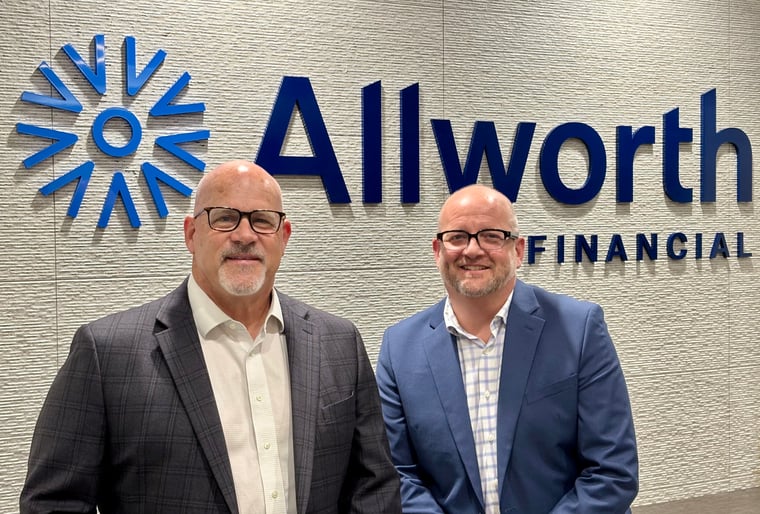
On this episode of Simply Money, Bob and Brian explain why the first five years of retirement can make or break your financial plan, how a rising market can quietly increase the risk in your portfolio, and why having enough money to buy something doesn’t necessarily mean you should. Plus, they tackle tax-loss harvesting pitfalls, managing concentrated company stock, and why today’s mortgage rates shouldn’t be the only factor driving your decision to buy a home.
Download and rate our podcast here.
Well, think about how much financial planning goes into those years leading up to retirement. We all think about things like, "Hey, have I saved enough money? When should I take Social Security? Is the house paid off? What's my 'number' that I need to have saved and invested?" But we often spend way less time talking about the five years after retirement actually hits. And financially, Brian, those may be some of the most important years overall of your entire retirement journey.
Brian: Yeah, Bob, let's look at this with a hypothetical couple here. A married couple, 65 years old, accumulated, let's say $4 million. They've got Social Security coming in, maybe a small pension from a past life, and they know they need another $120,000 per year from those investments to support what they want to do in retirement. So, that's a pretty good feeling, you know, that they know what they want, they know their resources are there, and they should feel good about that.
But now, you know, let's say, two years into retirement, stocks drop about 25%, right? This is kind of a rare situation, but it does happen. There are really only 5 years in the history of the market over the last 80 or so where stocks have dropped 25% and stayed that low. We've had some peak to trough moves. But, you know, this is like a 2000. 2022 wasn't quite that bad, '08 was a little worse, and so forth. So, not frequent, but these are the ones that can really change the course of things for.
So, what we're talking about here is something called sequence of returns risk, which is really, really important. But I don't want to make this sound like, you know, some kind of complicated Wall Street concept. It's really simply, when do we get the bad years, and when do we get the good years? Bad returns can hurt when they happen early in retirement than when they happen later, right? So, if I'm 65 years old and my portfolio takes a 20%, 25% hit, that's going to hurt a lot. If I'm 90 years old and it takes a hit like that, I probably made it a little more conservative anyway, and it's not like I'm trying to stretch it out a little 30 more years if I'm being honest. So, yes, bad returns early in retirement tend to hurt a lot more than when they happen later.
Bob: And Brian, isn't that because, you know, in your example, if you lose 25% of your stock portfolio very early on in retirement, we're talking about, for a lot of people, a 35-year retirement period of time. If you're spending money out of those stock accounts that go down 25%, those assets are permanently lost, and you never get that money back when the market ultimately does recover. That's unlike what people experience when they're still working. They don't care as much about those declines because, "After all, I'm still working, I'm still contributing, and I've got time on my side." That's why things are different for that 60 to 65 year old retiree than they are for the person in their 70s and 80s because we don't have as many years left for that money to take care of us, right? Isn't that conceptually what we're talking about here, and why it really makes sense to do a lot of stress testing of your portfolio and risk assessment before you move into retirement?
Brian: Yeah, I mean, I think the way to set the baseline is, let's figure out the hunky dory outcome. "Here's what I need. Here's what my resources are." And run the numbers as if nothing bad ever happens again, and use a nice, safe rate of return of 5% to 6%, something like that. Yes, that's conservative. The market has given more, but that's another way of stress testing by just assuming a lower rate of return.
And then right next to that hunky dory outcome, illustrate what we're talking about. Take a 0.25%, look at your resources, and knock them down by a quarter. And run all those numbers again, and see what comes out the other end of it. So, that's what we call a stress test and I think it's extremely important because we will all be stress tested at some point in our lives. We were stress tested in '22, we were stress tested in 2008. And of course, that's coming again, we just don't know when. One of the few guarantees I get to give is those markets are coming again. Yes, we're going to lose money at some point, it's going to happen, but it doesn't have to be painful. It doesn't even have to be nearly as stressful as it seems because we will have done all of this in advance and make sure we understand what it will look and feel like to go through that as a retiree. I think that's an important point.
A lot of people went through those years as workers. So, I was working in 2008. My 401(k) came down, and that stunk, but then it came roaring back. I left it alone. And matter of fact, I continued to throw money into it, and therefore, that money got a boost because it went in at the bottom of a hole, and then when the market came back, those dollars were some of the most valuable dollars I had. And then '22, the same thing. But now, when we go through that again, the next time we see it, a lot of people are going to be retired. And it will be extremely scary because you're not putting any more money in. That's kind of the whole point, "I'm retired."
It doesn't mean it has to sink your ship, but it will look and feel different for a few reasons. You're not putting more money into your nest egg. And I will say, the bigger one is psychological. You've got an awful lot of time to pay attention to it, to read the headlines, and to get yourself all wound up. And your sensitivity will be on 1,000 because you feel like you don't have the ability to rebuild. That doesn't necessarily mean you got to change the course, but we should illustrate this and try to experience it in advance.
Bob: Yeah, Brian. And on that point, we occasionally, not often, but we occasionally come across folks who just think holding any amount of cash doesn't matter at all. You know, you and I did a meeting with a client, you know, a week or so ago. And this is actually a widow who's almost 80 years old, has, you know, a pretty sizable portfolio. But you were running this portion of the meeting and you tried to talk to her about sequence of return risk, even identified some upcoming expenses in the way of vehicle replacement, home remodeling, things like that. Like, "Hey, the market's at or near an all-time high. Doesn't it make sense to replenish your emergency fund account at least a little bit." And we actually got some resistance.
And we get this from time to time thinking, "Hey, why should I keep any money in cash at all? It only earns me," depending on which institution and which account you're using, anywhere from 0.1% to, say, you know, 3.8%. "Why should I have any money in cash when you just shown me that I've been getting 12%, 13%, 14% out of the market over the last few years." People forget that markets can go down. And it's just an interesting, it's a fascinating thing to watch people's risk tolerance change and vacillate from time to time based on the most recent trend in the stock and bond market.
Brian: Yeah. I think that the case that happens sometimes, I've had a couple of these meetings, you know? Tell me if you've heard this before. I've had a couple of these in the past couple of weeks. You know, that, that $5 million retiree who doesn't feel like cash matters at all. Because, you know, that's a big number. Obviously, that's something to be proud of. That's quite a machine you've built for yourself. And they think, "I've got plenty of money. Why would I keep that much in cash? That's not how I got here. I want every dollar working for me." But the purpose of cash and retirement isn't to maximize your return. It's to be oil in the engine. And sometimes, its job is to prevent you from making a bad decision on some other topic.
So, you know, maybe here's what a lot of people are looking for, right? So, everybody's kind of keeping an eye on the real estate market, waiting for things to pull back. You know, and I've been hearing this for years. I don't think it's anywhere near reality right now. But, you know, "Wait, I want to buy that farmland out in Indiana or Kentucky" or whatever, "Maybe the condo out down in Florida." I'm hearing that less and less, but regardless, "I want to buy something and I'm waiting for it all to come down." Well, cool. If you don't have any cash available for that big, opportunistic purchase and the market comes down, guess what? Real estate's probably coming with it, right? Because if we take a huge downturn like that, everything's going to move in a downward motion. But if you don't have any cash, then you're not going to be real happy. You will have, basically, missed the opportunity to buy because the money you were going to use to buy also came down, too. So, everything that, yes, the price of the thing you wanted to buy came down, but so did your resources.
So, if this is really something you want to do, or things like, "Yeah, you know what? We want to add onto that. We're going to spend $50,000 doing this thing to the bedroom or got to do the bathroom," whatever, "Things we're going to do to the house, but we're not going to be ready to do that for a couple of years. Let's leave it all invested. Let's not really plan ahead." That's really going to make you mad because you had the money to do it. And if the market comes down and then you kind of have to, or God forbid the HVAC dies or whatever, and you've had it all in market, well, now, you don't have a choice. The market could care less about what's on your mind. It simply is going to do what it wants to do whenever it wants to do it. And you'll simply have to take that loss in order to get done the things that you could have taken better control over.
Bob: For sure. Hey, switching gears here just a little bit. You know, there's another discussion that needs to at least be looked at or happen or, you know, run some numbers. And that's the order or which pile of money. We always talk about, I know you like to talk about this all the time, Brian, where in retirement, we're dealing with streams of income and piles of money. And oftentimes, we need to look at which pile of money to pull income from first. You know, there's that old rule of thumb that says, "Hey, spend all your taxable money first. Then your tax deferred money. Then your Roth money, which is never taxed." There are certainly situations where that can make sense, but it's not a hard and fast rule we should just blindly follow because every family's tax situation is different and different spending goals happen from time to time. And those spending goals and events warrant using different money from different piles at time to time, even though it's going to be taxed a little bit different. Walk us through an example of how that works.
Brian: So, first, before I do that, that you said streams of income and piles of money, for the first time, I got called out on that because, I guess, I've been talking about it too long. I'm not going to stop. But I had a meeting the other day where I started to go down that path and the client stopped me and said, "Yeah, yeah, yeah, I know, streams of income versus piles of money." "Oh, you do listen to the radio. Awesome." But, yeah. So, yeah, I thought that was a funny story. And, Bob, it made me completely forget the question you asked me because I was thinking about that whole interaction.
Bob: No, walk through an example of where it doesn't make sense to just follow that old rule of thumb that we should always spend our taxable money first, then the IRA and then the Roth IRAs. That makes a lot of sense from a tax standpoint if everything stays equal throughout every year of retirement. But as we all know, things change and opportunities come up where we need or want to pull some money.
Brian: Yeah, and I think that's a great question. And sorry, I was giggling about myself and not retaining what you were asking about.
Bob: You're allowed to have fun. You're allowed to have fun on the show, Brian. Try to pay attention.
Brian: I'll make a note. But, no, yeah, so a lot of times, you know, a good example of that is sometimes the best way to control taxes or reduce taxes is actually by paying them, believe it or not. What I mean by that is if we if we simply spend every liquid dollar, if our goal is, "Right now, in this year, I want to minimize my taxes." If my only goal is, "In this current year that I'm in, I want to minimize taxes as much as possible." That means I'm going to drain my taxable assets, meaning my non IRA, non-Roth, non-retirement stuff. I'm going to spend all of that. Eventually, I'm going to be left with nothing, but my IRA, my pre-tax stuff. And that can be a significant amount. That can be millions of dollars.
But if I've never touched it, then it's going to continue to grow. And not that that's a bad thing, but it does also increase my Required Minimum Distributions, at which point, I'll have no choice because I have to take those dollars out. And I'll be doing it anyway because I got to pay my bills and that's the only resource I've got left. But I will now need to take significant distributions from that IRA and pay taxes at age 73 or 75. And then from that point on, it's kind of set. I don't really have much control because there really aren't any deductions anymore for the average person who doesn't own a business.
Bob: Here's the Allworth advice, don't just build a plan that gets you to retirement, build one that could carry you through retirement, especially those first five years, because the market doesn't always cooperate in the short term. Well, your portfolio can become riskier without you making a single trade. We'll show you how to spot portfolio drift and fix it without creating an unnecessary tax headache. That's coming up next. You're listening to "Simply Money", presented by Allworth Financial on 55KRC, THE Talk Station.
You're listening "Simply Money", presented by Allworth Financial. I'm Bob Sponseller along with Brian James. Well, you've got some company stock to sell, but which shares should be sold first? It's one of several questions we'll answer for you straight ahead. Here's something investors don't always think about. Your portfolio can actually become riskier without you buying a single thing. You build a portfolio, let's say 60% stocks, 40% bonds, your typical balanced portfolio, Brian. What can happen after that? What could possibly go wrong?
Brian: What could go wrong, Bob? So, well, let's say, stocks have a strong run. That could go wrong, right? That sounds like a problem. We hate that. One of these stupid, strong runs anymore. What a pain in the butt. But no, let's say you've got a 60/40 portfolio and the stock market goes on run, as we have seen over the past several years. So, a few years later, you look under the hood, that 60/40 portfolio, well, it isn't 60/40 anymore. It might be 68/32. And your gut goes, "That's kind of cool. I guess it's maybe a little out of whack, but that's okay. Everything's fine."
Maybe it's up to 70/30. That's great when stocks are going up. Nobody really ever complains about that. When the market is going up, we're making money, so who cares? But the problem is you did choose 60/40 for a reason. You did the analysis. You did the work on yourself and you understood the market history and what your plan requires and you determined 60/40. The market has quietly turned you into a 70/30 investor and you're on your way to being 80/20 if you let it continue to run. This is this is reality, right? This does happen.
You know, so let's put some math behind this. If I got $2 million, that means we'd start off with one point two million in stocks for 60/40 portfolio, about $800,000 in bonds. Stocks significantly outperformed bonds over the next several years. I haven't made any decisions. I'm just going about my business, looking at my statements and checking online what it's worth. I haven't decided to be more aggressive. I haven't decided I want more risk, but the portfolio did. So, you know, if I'm 45 years old and maybe still in accumulation mode, actually, I would start with why were you 60/40 in the first place? If that's the case. But that drift wouldn't bother you very much if that's the case. But if you're 62 and you're looking at retirement next year, you're about to start pulling money out of that portfolio. Well, now, all of a sudden, it matters, because the risk you thought you owned may not be what you currently have.
Bob: Yeah, Brian, and this goes back to the segment we just covered, you know, those first five years of retirement, that sequence of return risk, which nobody thinks about while they're building their portfolio. That's what we're talking about right here. And very few people, you know, think about this risk when the markets are going well and the portfolio just keeps going up. So, the question shouldn't just be, "Hey, did I make money when stocks have been performing well?" You know, especially as you get close to turning on that retirement income stream, rebalancing can feel completely backwards.
In other words, why would I want to sell anything that has been trending higher for the last few years? Well, because we might want to use some of this money either for regular monthly income during retirement, or as you talked about earlier, you know, replace the deck or, you know, redo the bathroom. There might be things coming down the pike where we're going to need cash to do that. And we want to recalibrate the risk in our overall portfolio so we're not forced to sell things, you know, in a down market, which eventually always comes, in order to pay the bills each month or to take care of some of those bigger spending events, vacation, home improvements, car replacement, gifts to kids, all those kind of things.
And again, this is a harder discussion to have and for people to understand and go along with when the markets are going along very well. But people are very glad that this is being done for them, either through an automatic rebalancing program or a rebalancing program, you know, dovetailed with some tax loss harvesting. This is why you want to have some things running in the background here on autopilot, so to speak, in the way of good, sound portfolio and risk management.
Brian: Yeah, so let's talk about what we can do, right? If I find myself in this fortunate situation where, darn it, all the stock side of my portfolio has run so much, now I'm out of whack. Well, first off, if you're thinking about, maybe you've got new money you want to throw, and maybe it's the IRA contributions or maybe you've got a chunk from a bonus or an inheritance or something like that. If you're thinking about adding money to the portfolio, well, don't just spread it across the existing holdings, rebalance with that new money. Buy more of the stuff that has taken. Don't worry about whether, you know, in this example, we'd be telling you to buy bonds. Remember, the objective is not, what's going to be great right now? That's not what you're trying to accomplish. You're simply looking to get your portfolio back in the balance that it was supposed to be in. So, that's one option.
Second is use a little charitable giving, right? If some of this is a taxable portfolio, obviously, and the whole point of this conversation is we're talking about gains in stocks, if it happens to be in a taxable account and you were planning to give $25,000 to a charity this year. Well, do yourself a favor. Instead of writing a check, donate those appreciated securities on the stock side, the equity portion of your portfolio. And so, what you're doing there is you're going to dodge the game, right? The last thing anyone should ever do is sell stocks, move that money to the checking account, and then write a check to charity. You have simply incurred capital gains for the for the benefit of giving a charity money that doesn't owe any taxes at all.
And if you truly have a bunch of cash, you can use that cash to purchase whatever. Maybe you're happy with it being out of whack, right? Maybe you're perfectly fine with the balance of your portfolio. You can use that cash to replace the securities that you just gave away. And you're, basically, virtually, you're just putting back into place and resetting the cost basis at a higher rate without having to pay the capital gain, and you've still got those same positions. Third option, of course, you can look for losses somewhere else in your portfolio. If you've got something sitting at a loss position, then you can rebalance, but possibly without taking any capital gains.
Bob: Here's the Allworth advice, a rising market can quietly change how much risk you're taking in your portfolios to regularly compare the portfolio you actually own with the one your financial plan and your emotional tolerance for risk says you should own. Well, having enough money to buy something doesn't mean it's worth buying. We'll show you the three questions that can lead to better decisions with your wealth coming up next. You're listening to "Simply Money", presented by Allworth Financial on 55KRC, THE Talk Station.
You're listening "Simply Money", presented by Allworth Financial. I'm Bob Sponseller along with Brian James. Hey, if you can't listen to "Simply Money" live on the radio every night, subscribe and get our daily podcast. Just search "Simply Money" on the iHeart app or wherever you find your favorite podcast. Well, once you've built significant wealth, the can I afford it question isn't always the right question. Often, you obviously can. The better question is, what am I giving up? And will this actually make my life better if I spend this money on the various thing or experience or both, Brian? These are the questions that we often ask and should be asking our clients. It doesn't get asked often enough. You know, hitting the pause button and actually think about what we're trying to accomplish.
Brian: So, let's look at this in terms of, you know, one of the different things that people talk about. So, you know, one of the one of the most frequent things is the vacation home, right? Maybe you love Hilton Head. You're a huge fan of the salty dog. Or maybe you like sweat and infernos. Maybe it's Florida, right? Lakehouse somewhere, just a few hours to Cincinnati that you rented for years. Well, regardless, eventually, you start thinking, why are we bothering giving somebody else this money? We should just buy a place. And if you got $3, $4 million net worth, could you afford a $750,000 vacation home? Yeah, probably. You know, of course, that comes back to what we always talk about. Let's make sure we're not outliving our resources. But we're kind of assuming that this is a stable financial plan in terms of getting the bills paid to keep the ship afloat in the short run. And then there's plenty of resources left over.
So, that's where the conversation needs to go beyond the purchase price. Because the better question is, what does owning this house change? Because now, I got property taxes. I got to deal with insurance, maintenance, furniture, utilities, maybe even HOA fees. You know, it's interesting. Whenever we hit hurricane season, I know I'm going to get calls from somebody that says, "Hey, we had to cancel our vacation." You got to go down to Florida and put a tarp on the roof again, because that just seems to be what's happening down there.
And whenever that happens, I know that those people, we're going to be having a discussion in the future about upping that bucket of money or that identified spending item that has to do with the cost of owning a home. I think too often, we look at the cost of owning a home and think mortgage, mortgage, mortgage. But there's way more than that. You've got all these other things. If you own a property in another state that you're not going to be in, there's a lot you have to pay attention to, you know, because you may be replacing a roof someday. There's other costs that don't show up right on the spreadsheet.
Bob: Insurance.
Brian: Yeah, exactly. That's a big one, right? And that goes up every year. They move that water line thing behind your house instead of in front of it. Now, all of a sudden, you've got a budget item problem. But, you know, so if the thing is you... This is a conversation I'm having more and more often. If you love traveling and you like traveling to different places, then I think owning that home becomes an anchor really, really quickly, because you're always going to feel obligated, "Shoot, we're putting so much money into this place. Let's just go down there again for a week." "Fine, whatever. Maybe we'll do something different later."
You know, it really works for people who truly like that routine and can truly go back and forth kind of indefinitely. But for people who have that more of a sense of adventure and need some change, it really can be an anchor. So, I would encourage to think twice. Maybe take the dollars that you were willing to spend on that, and just be willing to pay up a little more for a different Airbnb in a place you've never been before. Besides that, you're never committed to that anyway. Do that for a few years and see how you feel.
Bob: Yeah, and that that whole timeshare dilemma comes into play here, too. These timeshare companies do a great job. Just about the time you're sitting at breakfast, looking at your visa bill of how much money you just pay to rent a hotel room, you know, for this wonderful vacation and meals and everything else, you know, we could get trapped into thinking, "Hey, let's buy a timeshare. We could come back here every year. Our costs will magically go down." I've seen fewer and fewer people, you know, really no one, Brian, in the last, I'd say, 15 years talking about timeshares. But we deal with a lot of people that have had them and had them for 30 years. And the cost of those things keep going up, too. Let's talk about the car purchase, Brian. You know, the person that says, "Wow, I've got $4 or $5 million. I can afford $100,000 car or $150,000 car. I need to go have one of these, because after all, everybody at my golf club or neighborhood has one."
Brian: Well, you know, if this is if this is a car you've just been in love with since you were a kid or whatever, you're going to enjoy driving it every day. And if it doesn't compromise your other goals, well, then great. I mean, the cars like this that we're talking about here can sometimes be an investment. You know, I wouldn't say the newest model of the whatever that just happens to be expensive. That's just now the $100,000 is almost just now the cost of the highest end luxury, but still daily driver type of a car. But if you're looking at, you know, a classic car or something like that, that can be an investment.
Yes, and I'm only bringing this up because this is how some people justify it to themselves. Yes, if you take care of it and it holds its value, perhaps even goes up, then absolutely, it's just a store of value. You're just putting your money into an illiquid asset. On the other hand, if it's just the top-of-the line one, off the luxury brochure at your local dealership, you're going to get that over the curb discount. So, just make sure that you really, really want this. And remember, if you're taking it to the golf course, make sure you park it far away from the driving range, because it's going to get dinged sooner or later. But if you're using it as your daily driver, it's going to start to look like a daily driver one day. And you need to make sure you still like it after that actually happens.
So, you know, if that rings a bell and you start to question yourself, then maybe shift what you're thinking is. Yes, it's okay to spend. We're not saying don't spend money. Just make sure you're getting the value out of it that you want. And for some people, that might mean experiences instead of stuff. Maybe you've always dreamed about taking the whole family to Europe. Kids, spouses, grandkids, everybody, you want to pay for all of them. That can be $40 or $50,000. The instinct, even for somebody with several million dollars is, "Oh, my gosh, that's a lot of money for a vacation." But if you've truly got $3, $4 million, you can have that in the span of a couple of weeks, just by the way your portfolio moves.
$50,000 dollars is not a lot of money when we're talking about a pretty big pile to begin with, which, not everybody, of course, more and more people have out there. And I frequently have conversations just, again, begging people to spend their own money. Yeah, it's a lot of money, but gone are the days of the $2,000 condo in Myrtle Beach for one week. That ship sailed, stuff that's just more expensive, but so are resources. You might be able to afford it the same way you could the beach house.
Bob: Yeah, let's talk about what's really the biggest purchase of all, whether we realize it or not, our time, how we use our time. Let's take someone who's 58, 60 years old. They've accumulated $6 million. We've run the numbers. They can afford to retire, but yet they won't pull the trigger. You know, and the question becomes, what are you really giving up by continuing to work? Maybe that's five summer vacations with the grandkids. If you wait, you know, to retire for another five years because you want to see that $6 million turned into $8 million. What is that really going to get you in terms of life quality, quality of life during those retirement years?
It's a discussion we're having more and more with people. And, you know, because our time and our health are our two greatest assets. Here's the Allworth advice, once you've built significant wealth, stop asking whether you can afford something. Ask whether the tradeoff moves you closer to the life you really want. Well, tax loss harvesting can sometimes come with a big tax surprise. We'll explain the rules around that coming up next. You're listening to "Simply Money", presented by Allworth Financial on 55KRC, THE Talk Station.
You're listening "Simply Money", presented by Allworth Financial. I'm Bob Sponseller along with Brian James. Do you have a financial question you'd like for us to answer? There's a red button you could click while you're listening to the show if you're listening on the iHeart app. Simply record your question there and it will come straight to us. All right, Brian, Don over in Chevy, it says, "Our advisor wants us to use my municipal bond portfolio for tax loss harvesting, but some of the bonds are trading at significant discounts. Could selling them create ordinary income issues because of the market discount rules?"
Brian: Well, yeah, actually it can, believe it or not. And so, let's set the table a little bit here. So, bonds go up and down, right? We hear that every day. The bond market pushes interest rates around. People can buy and sell bonds just like they buy and sell stocks. That market moves too, just not as dramatically. So, yeah, you can have a capital loss in a bond, just like you can have a capital gain in a bond. They do get priced every single day. That's what a market is.
So, you know, I think a lot of people look at bonds and they simply say, "Well, I'm lending money to a government," in the case of a municipality or something like that, "They're going to pay me back, so there's little risk. I'm going to get my principal back." And that's mostly true. That's what credit ratings are for. And anything can go bankrupt, of course. So, there's that little bit of risk there. But yes, it is programmed in that you're going to get your principal back and you can see the day that that's supposed to happen. However, if it's publicly traded, which most bonds are, then, yeah, you're looking at the ability for the price to change minute to minute, day to day.
And so, to Don's point here, to his question, so for any municipal bond bought after April 30th of 1993, which I'm going to say is all of them, you know, any gain attributable to an accrued market discount is count as ordinary income, not capital gain, right? So, that market discount is really the difference between what you paid and the bonds redemption value at maturity, right? So, you do. There's two ways to make money in a bond. That pricing come up and you can receive the interest.
So, really, before tax loss harvesting, I would suggest having the advisor go through the entire bond portfolio and make sure you see the tax lot purchase price and the purchase date, any adjusted tax basis, and including in your case, you're using the big fancy words, you started this, Don, any municipal ordinary income discount adjustment, whatever the remaining purchase maturity is a purchase, discounts, and all that, and then also expected ordinary income recapture instead of capital loss. So, you know, there's a lot of moving parts to that, but you're asking some pretty big questions. Have your advisor put this whole table together so you can understand what your tax exposure really is.
Rob in Terrace Park. Rob's got taxable accounts spread out all over the place. Three different custodians. Each one of them has a... Oh, this sounds dangerous, Bob. Each one of them is harvesting losses independently. How do we make sure we aren't accidentally creating wash sales across accounts or even with purchases inside our IRA? I feel like we're walking into a minefield with this one.
Bob: Well, this is an excellent question. I'd have to say, Brian, one of the best questions we've seen from a listener in a long time. So, kudos to you, Rob in Terrace Park. I'm going to do my best here to answer the question. First of all, I'm going to say, this is going to become more and more of an issue with people out there, because all these tax loss harvestings, tax smart programs, they're becoming somewhat ubiquitous among different custodians, as Rob said, or money management firm. Everybody wants to do tax loss harvesting in their taxable portfolios.
But if you've got money spread out all over the place at three different advisors or three different custodians, there better be some coordination here. Because, yeah, you could very quickly and easily run afoul of the wash sale rules. Which means, you cannot take that short term loss if you go back and repurchase that same security within 30 days after the loss sale. Well, when you've got independent custodians or advisory firms running these programs, you know, the one firm obviously doesn't know what the other firm is doing. And that's where you can get some surprises at tax time.
So, this is an important question. And I'd say take a look at how each of your portfolios are being run. And then this is a good time to sit down with your CPA, take a look at the last year's actual activity. How many of these losses that were purposely recognized were disallowed in the first place because of the wash sale rule? And if you're starting to see that crop up, you need to make some changes in your strategy.
Another great part of your question, Rob, that you raised was, you know, "Does this impact my IRAs?" A lot of people think, you know, incorrectly that the wash sale rules do not apply to IRA accounts. And that is not the case. And I'm willing to bet, Brian, very few people even know how that rule works. You know, let me go through it quickly. You know, selling an investment inside a traditional or Roth IRA at a loss does not create a deductible capital loss. Everybody knows that. I think most people do. So, there's generally no wash sale deduction to disallow.
But here's the catch. If you sell a security at a loss in a taxable brokerage account, and then within 30 days before or after the sale, buy that same security in your IRA or Roth IRA, that taxable account loss is disallowed under the wash sale rule. A lot of people don't know that. And that's another reason why you really need to take a look at all of your accounts. And if you've got some overlap here on some of these well-designed for good reason tax loss harvesting programs, sit down with your advisor, with your CPA, and make sure we're not creating problems out of a program that was meant to provide tax benefits. Great question, Rob. We've got time for one more. Brent in Columbus, Brian, says, "I have RSUs, non-qualified stock options, and incentive stock options from the same company. If I want to reduce my exposure, what type of equity compensation should generally be dealt with first?"
Brian: Well, this is giving me fond memories of my CFP exam. You got all the flavors of tax going on in here. So, there isn't one universal order. These are all very different tax animals. But if the goal is reducing risk of having too much wealth tied to one company, I'd start with the shares from those vested restricted stocks. Once they vest, that value has already been taxed to his ordinary income. And now, it's just like you bought it like any other stock. So, at that point, keeping those shares, that's really a fresh decision to buy and hold more employer stock, right? You know, because think of it this way. If I'm sitting on cash, would I buy these shares? So, quick answer to your question, sell the restricted stock first. That's going to give you the best tax treatment. And you've got the most freedom to work with those anyway.
Bob: All right. Coming up next, we talk all the time about not letting the tax tail wag the dog when it comes to investment strategy. I'm going to put a little different spin on the home purchase. In other words, saying let's not let the mortgage rate tail wag the dog when we're looking at buying a home. You're listening to "Simply Money", presented by Allworth Financial on 55KRC, THE Talk Station.
You're listening "Simply Money", presented by Allworth Financial. I'm Bob Sponseller along with Brian James. Well, Brian, it seems like mortgage rates are in the headlines almost all the time right now with that pesky 30-year mortgage rate just hovering right around that 7% mark. And it's very difficult for first time home buyers to get into the market because, obviously, those monthly payments go up. But I took a look, Brian, at the 50-year average of the 30-year mortgage rate. And believe it or not, mortgage rates right now, and they've been hovering this way since about 2023, they're still sitting below the 50-year average rate on the 30-year mortgage, which is right around 7.64%.
Why do I bring this up? I think too many people are focused on these mortgage rates not realizing that they may not come down by a lot anytime soon. And when they do come down, it's usually because we've gone into some type of a recession. What people are not focused enough when evaluating the purchase of a home are a few other things like, hey, you really need to try to make sure that you're going to be in this home for at least five years before you buy it. Because if your situation changes and you need to move out of that home, because of paying a broker to sell your house, you're 6% behind the eight ball before you even get started. And that's assuming you didn't overpay for the home.
I'm seeing a lot of first-time home buyers. I've watched my kids go into the housing market, two of our three kids over the last few years. And it's just interesting the things that they think about and what drives their decision-making. And I've seen a couple of them have some successes and a couple of them have some failures. Again, my message here is, don't base this on the mortgage rate, base it on other things like possible foundation repairs, major home repairs that you didn't factor into your budget.
And I think, Brian, what's making this tough for a lot of younger folks today with the uncertain economy, AI becoming ubiquitous, which is going to potentially make people have to be more mobile in where they work, both geographically in each company or at which company... There's a lot of factors that come into play, and you just can't treat buying a home like you would renting an apartment or buying a washer and dryer. You know, there's a lot of components that go into this that can give you, you know, some bad results here if you're not really careful.
Brian: Yeah, I would agree. It's just something you got to stay on your toes and understand what rates are doing. And just pay attention to, I guess, we always start, know what your budget and your cash flow looks like so you can make a good decision.
Bob: All right. Thanks for listening tonight. You've been listening to "Simply Money", presented by Allworth Financial on 55KRC, THE Talk Station.
Insights for Complex Wealth Decisions
Join our email list for exclusive commentary from our Chief Investment Officer, early access to expert-led webinars, and your complimentary Wealth Planning Checklist for Complex Portfolios.
We take your privacy seriously and respect your privacy choices. By submitting this information you agree to our Terms of Use Agreement, Privacy Policy, and to receive important notices and other communications electronically.