
Can I Retire With $5 Million? Planning the Next Chapter
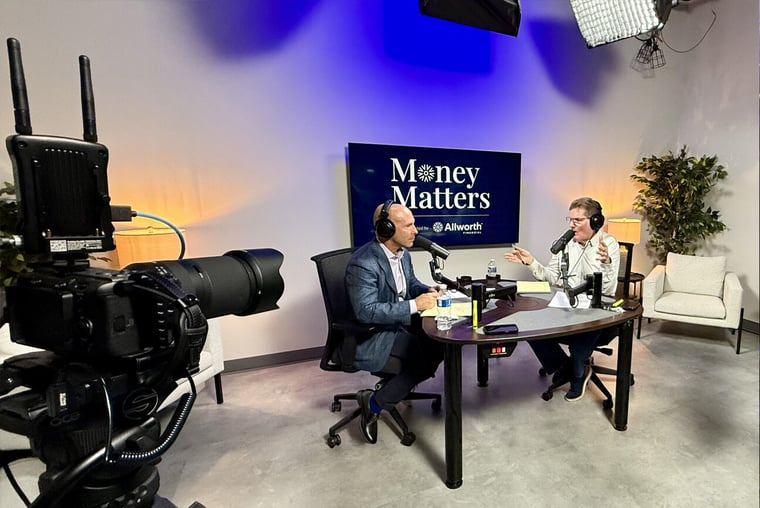
For many investors, the big question is whether $5 million is enough to retire—and this real-life case study shows how to answer it. With Pat out this week, Scott is joined by Allworth advisor Mark Shone to walk through a $5–6 million household navigating retirement while raising kids, funding college, and managing a second marriage. Scott and Mark break down what really matters when asking if you can retire with $5 million—and how to make that decision with confidence.
Plus, a physician with $6M+ asks if being all-in on the S&P 500 is a mistake—and what to do instead.
What You’ll Learn:
- How to evaluate if you can retire with $5M
- How to fund college without derailing retirement
- When sequence of returns risk actually matters
- Smart withdrawal strategies for complex situations
- Why diversification goes beyond the S&P 500
Join Money Matters: Get your most pressing financial questions answered by Allworth's co-founders Scott Hanson and Pat McClain live on-air! Call 833-99-WORTH. Or ask a question by clicking here. You can also be on the air by emailing Scott and Pat at questions@moneymatters.com.
Scott: Welcome to Allworth's "Money Matters". I'm Scott Hanson. Pat McClain is on some sort of extended vacation, at least, that's his excuse. He's gone, I think, three weeks in Asia, so he is not going to be joining us, but we still have got a great program lined up, taking calls, talking about things in the market. And because Pat's not here, and maybe I was too afraid to do this by myself or too inept, or just because I felt like having a guest with me, I've got Mark Shone with me. Mark's been a guest on this program in the past. Mark's been a financial advisor for decades and one of our partners here at Allworth. So, Mark, thanks for taking some time to join us.
Mark: Good to be here, Scott.
Scott: Yeah. Hey, so this show, we're airing this show...excuse me, we're recording this show on the 8th, which is Wednesday, which is the morning after Trump said he was going to obliterate Iran and send them back to the Stone Age or whatever he said. Then said, "Ah, we're just kidding. We're going to postpone." And the market's up 1,300 points out of the gate.
Mark: Yeah, 2%, 2.5%, depending on the minute.
Scott: Yeah. So, this... And who knows,? I don't know where things are going to finish up or where the markets are going to be by the time this thing airs, but we clearly have some volatility in the market as of late. And you're kind of in the trenches in the fact that you have a lot of clients, you're still taking on new clients, you're hearing from lots of people on a daily basis. What's in the mind of your typical client right now?
Mark: Yeah, so I think this one's a little different. I mean, we've been in conflict in the Middle East for decades.
Scott: Yeah, big surprise.
Mark: Yeah, yeah. So...
Scott: Fighting over oil, that's a new one.
Mark: Yeah, and that's been going on. But it does make people nervous. And I would just say, in these environments, it's louder than it normally is, just the news source. But I did have an interesting call that I think kind of puts this all into lights yesterday. It wasn't with a client, but somebody was just kind of searching for some information and they were talking about, you know, "When you get in environments like this, shouldn't you just take some money off the table until things calm down?" And I said, "Well, that's market timing. And nobody's good at it." And I said, "I could sit here and tell you that's something that we do, but we don't." And he said, "No, I'm not talking about market timing. I'm just getting out of the way for a while."
So, I played it out with this person. I said, "Okay, let's assume that we were working together. And a few weeks ago, bombs started flying, and we took a higher position and kind of got to the sidelines." I go, "Here we are. It's 3:00. Tonight at 8, supposedly, we're going to go and obliterate the world if things don't..." I go, "So, what do we do right now? What do you want to do? Do you think markets are gonna...? How are markets going to react? What are we going to do?" And it was a real life example. And he was like, "I don't know." And I was like, "Yeah, that's the point, we don't know." And then we know what happened after that. And you get markets recover.
So, you know, it just I don't have a ton of people that are coming at me and saying, you know, "I want to get out of the way or get to the side." But it is unnerving, and I think it keeps people from taking some action. But we just focus in on kind of the long-term stuff. And, like, you're owning stocks for six years or longer, not six weeks, and take a look at some historical perspectives. But it's unnerving. It's unnerving.
Scott: Yeah. And I think to your point, it's times like these, sometimes people don't take that step forward that they need to be taking. Whether it's even addressing their current 401(k) allocations or they knew they've been thinking about reducing the exposure to that one particular stock.
Mark: Yeah, I think I think it freezes people more than people saying, "I want to go sell." People who are already invested, it's not that, but it's, "I'm just going to sit and wait until I have more clarity," which is not always the best the best idea.
Scott: Yeah. I mean, if you came into this with the right kind of, excuse me, the right kind of financial plan, right kind of diversification, then, yeah, maybe you can just say, "I'm not going to even pay attention to this. This is all noise." But if there were some imperfections in your plan going into this, and things that you knew that you should address, I don't think it's helpful to wait.
Mark: No, no. And there's some things that you should do. Any time you get these environments, you get these 10% sell-offs, 15%, what have you. I mean, we had it. You have to look back very long. You know, last year, tariffs, I mean, a huge sell-off. So, there's some things you should do. If you have brokerage accounts, you know, you get very aggressive about tax loss harvesting, the gift that keeps giving to take advantage of the volatility. So, there's things you're doing. But sometimes, taking no action doesn't mean you're not making any decisions. You're making an active decision to not lower your exposure to stocks or to rebalance into stocks when you get this kind of volatility. But it's just it's just uneasy, happens all the time. You know, you and I have seen the charts for years about, you know, it tells you 10 times a year not to invest.
Scott: But, you know, essentially, you brought up this point about tax loss harvesting. There's quite a divergence in some share prices. Although, the S&P 500 for the year, depending on the date, I think the first quarter was down just over 4% or something. Not even a 5% downturn in the first quarter.
Mark: Correct.
Scott: But there were some stocks that got hit pretty hard, particularly some software stocks, and maybe for someone who allocated some capital, maybe even a year ago. The portfolios up nicely because the S&P 500 has done nicely, but there's probably dozens of stocks in their portfolio that are down right now.
Mark: Yeah, yeah. There's a lot of divergence going on now. So, some tech stocks have been hit really hard, particularly software has been hit hard.
Scott: I think like Oracle's about half its value or something like that.
Mark: Yeah. Well, it had a day, what was...
Scott: I don't follow that.
Mark: I don't know the number. Oracle was up 70%-something one day last year after it posted some AI article. It just, you know, a rocket ship, and then it's sold off from there. But Salesforce, I mean, Salesforce is down 46% over the last year. So, you know, there's some stuff there.
Scott: You know, you mentioned something like that. So, it's down 46% the last year, right?
Mark: Yeah. Right in there.
Scott: Yeah, okay. And someone could have had an argument with you a year ago because you have these conversations every week, right?
Mark: Yes.
Scott: Maybe they were retired exec or maybe their current exec or just an employee that's been around for a long time and their stock has become worth quite a bit. And they're like, "Well, why do I need to diversify because it's done so well for me?"
Mark: Yep. Yeah, it is when the stock's doing well, just human nature is you don't want to sell it. When it's going down, you know, there's fear, there's regret. There's all kinds of behavioral things around it. I have a little personal... My son actually works for Salesforce. So, yeah. So, we've had the discussion.
Scott: Darn right.
Mark: Yeah, yeah. But, yeah, you get it. It's really good till it's not. As it's running up, you're like, "I don't want to sell because it's doing great." When it goes down, it's like, "I'll wait for it to recover." But we all know stocks don't have a memory. You know, think about people who did that with GE, Microsoft for years.
Scott: For a long time.
Mark: Very long time. And then, obviously, that's kind of turned around. But, yeah, it's all about balance in the portfolio. There are risks in portfolios, just make sure you're getting paid for them. Check for balancing, that you don't have a huge overweight to tech stocks or not underweight for that matter.
Scott: Or whatever.
Mark: Yeah, or whatever it's going to be. S&P was down four in change, small-cap were actually up in the first quarter a little bit. So, you know, diversification works, as I like to say, over time, not every time.
Scott: Yeah. Well, diversification is not a technique you use to enhance wealth. It's a technique you use to preserve wealth.
Mark: Correct.
Scott: Right. So, if you started your job at Apple 25 years ago and sold your stock, made sure that was never more than 4% of your portfolio, you would probably quit Apple out of embarrassment from your peers.
Mark: Correct, correct, correct.
Scott: As they're all well financially and you're... So, from a wealth building standpoint, typically, smaller bets are going to help you, but that's a young man's game, young woman's game. And as we get further in life, most people are concerned about protecting what they have, number one, and growth number two. And that's where diversification really plays.
Mark: Yeah, yeah, that's exactly right. Now, I remember having a discussion with somebody who was a Netflix employee and they said, "Yeah, you should come over and see my $15 million house sometime." Because he sold Netflix to buy the house. And, you know, so...
Scott: It wasn't a $15 million house then.
Mark: No, it was like $3 million, but it cost him $15 million in appreciation, yeah.
Scott: Yeah. Well, we can all look... If one's goal is to die with as much money as possible, rent a little, cheap apartment somewhere, one-bedroom apartment somewhere and invest everything else and never go out to eat and...
Mark: Yeah, life isn't a spreadsheet.
Scott: No, it's not a spreadsheet, thankfully.
Mark: Yeah, exactly.
Scott: Anyway, let's take some calls. Again, Mark Shone has joined us as Pat McClain is...I think he's in Asia. I think he was doing, like, a two-week cruise in Asia, followed by some other trips somewhere in Asia. Which I'm glad. McClain had four kids within five years, Irish twins. And they just didn't travel much at all when his kids were younger. And now, he's at that stage where he's of retirement age, but doesn't want to retire, but it's like, "I'm not going to be working 70 hours a week like I used to. And so, I'm going to take advantage of it." And so, that's where Pat is. We've got Mark Shone filling in for him because Mark doesn't do any travel, he just works.
Mark: That's right.
Scott: So, we're talking with Lynn in New Hampshire. Hi, Lynn, you're with Allworth's "Money Matters".
Lynn: Hi. Hi, Scott and Mark.
Scott: Hi.
Lynn: Nice to meet you.
Scott: By the way, Mark is much brighter than Pat, so it's your lucky day.
Mark: Oh-oh.
Lynn: Excellent. I'll take advantage of anything I can get my hands on.
Scott: All right, good.
Lynn: I'm a new listener of yours. I think maybe two months.
Scott: Oh, good. How did you find us? Just out of curiosity.
Lynn: Well, so my husband's about to retire, and I've been kind of digging for podcasts and learning. And in lieu of him doing it, I'm sort of digging in. And I found you guys through Spotify doing a search on sort of higher wealth.
Scott: Good for you. I think educating yourself is really important. That's when good decisions are made, when you have the knowledge.
Lynn: Yeah, I hope so. Well, and I was in London at the time, and so, I associate your podcast with Hyde Park because I downloaded a few of your podcasts as I did my walk around Hyde Park.
Scott: Oh, look at that.
Mark: That's very fancy.
Lynn: So, there you go.
Mark: That's a good association.
Scott: That is a good... Yeah.
Lynn: And so, my questions, and I have, like, all my data written out. Listening to your podcast, I know what you guys need really have somewhat to do with volatility of what's going on now. But my husband's looking to retire in the next six months. He's 63 right now. He'll be 64 when he retires. I'm 55. We both work. And I'm trying to understand sort of the current market and thinking about sequence of returns and being really anxious about retiring or, at least, part of us retiring right now. And then also thinking about, well, when do I retire? Because I'm 55 and have, obviously, a longer runway. Part of this equation is this is a second marriage, and I have younger kids. I had kids late to begin with, and I married somebody who's a bit older than me. And I have a 13-year-old and a 16-year-old who I'm looking out for. So, I'm kind of in...
Scott: And do they live with me full time?
Lynn: Yes, they do. Oh, yeah, they live with me full time, and I'm pretty much... I get child support right now. But after 18, for both of them, I think I'll pretty much be on my own at that point.
Scott: Okay. And so, your husband's going to retire, and is he going to be driving the 13-year-old to school? I mean, it's... I have a 15-year-old at the house still. So, like, retiring and when there's kids in the house, isn't quite the same as like a traditional retirement.
Lynn: No, absolutely. Well, and that's why I can't find that podcast. So, I'm like, "Where's my podcast for that story?" So, it's kind of unique. And he had some health issues. And I just sort of feel like, you know, he's ready, he wants to, I'm supportive of it. I want to try to make it all happen. And I'm not exactly sure what it looks like. But, you know, he can figure out his retirement piece and how he spends his time. But, yes, he needs to drive the kids and he needs to cook and he needs to go grocery shopping and all those things, so...
Scott: And how many years you've been married?
Lynn: Not even a year.
Scott: Okay. Congrats on that.
Lynn: So, we're newlyweds. Thank you. So, my financial picture looks like this, and I'll just kind of run through the numbers if that's helpful.
Scott: Perfect. Yes, thank you.
Lynn: So, I've got a 403(b), traditionally invested at $1.5 million. Part of that 403(b) is in Roth about $250,000. My husband has his own traditional 403(b) and it's $800,000.
Scott: Are you guys in education or in healthcare, or...?
Lynn: Education. I've also got a brokerage account worth $1.4 million. I have an inherited Roth account from my parents, that's worth $900,000.
Scott: Wow. When did you inherit that?
Lynn: Three years ago.
Scott: That might be the highest Roth IRA inheritance I've heard thus far. I mean, I've talked to people with larger Roth IRA balances, but...
Mark: That's unusual to inherit that.
Scott: Correct.
Lynn: Yeah. Well, I thank my father for that because he, in the late 90s, decided he was just going to go all in on Roth, and converted a lot of money. Probably, from a tax perspective, didn't make a lot of sense for him, but he decided to do it. So, this is actually inherited, and each, my brother and sister, inherited an equivalent amount.
Scott: And this was one year ago, you said?
Mark: Three years ago.
Scott: Three years, okay.
Lynn: Three years ago. So, it's grown quite a bit because it's been invested for the last three years, but I think it was around that.
Scott: And you haven't taken anything out of it. You're going to wait till the end of 10 years.
Lynn: Correct. I also have an inherited IRA that's around $300,000. I have my own personal Roth that's about $175,000. I've got a Sallie Mae... I'm sorry. Well, I guess it's Sallie Mae, but it's like savings and cash between a couple of accounts that's $70,000. And I've got a 529 for my kids that's $155,000. And then I also have a HSA that's small, around $20,000.
Scott: And what's your annual income just for you?
Lynn: Just for me, it's around $150,000.
Scott: You've done a great job saving.
Lynn: Thank you. I feel lucky that I also have parents who... And this is part of my vision for my kids, is I kind of want to pay it forward. Like, I feel like I...
Scott: You still have $1.5 million in your 403(b) that's your savings. That's not inherited dollars.
Lynn: Yeah, and after a divorce, which never helps anything.
Scott: Correct. Yeah, usually that's just... I mean, it's always bad financially, as you know, always been. And so, is your husband gonna have a pension at retirement?
Lynn: No, he's going to collect Social Security, which will probably be about $3,000 a month.
Scott: And what does he earn today?
Lynn: He earns around $175,000.
Scott: And do you guys own a home together?
Lynn: We do. We own a home that's probably valued around $1.2, and the mortgage on that's $140,000.
Scott: And did you guys do any estate planning or prenuptial planning prior to the wedding?
Lynn: Yes, and yes. mostly on my side, we did have a prenup. And also, I have a trust for my kids...
Scott: Okay, good.
Lynn: ...to make sure that they're going to get their bit of that.
Scott: Yeah. Because sometimes otherwise, particularly a second marriage, it's important to have some of these things structured, which sounds like you've got all those things.
Mark: Is the home owned by you jointly, or is it one of your husband's, yours, how about that?
Lynn: So, it's my house. And we've basically taken it as a joint asset at this point. So, we're both paying the mortgage, we're both investing in it, we're both doing all the things. And I'm sort of giving him half of that.
Scott: And your biggest concern right now, the reason you're like, "Oh, I better get up to date on this," is it mostly about just where things are in the economy, the markets, and like, "What if this is a bad time for him to retire?" Is it about, "Oh, his income's going from 175 to 36, what's that going to look like for my family finances?"
Lynn: Yeah. I mean, so we've done a lot of work on budget. Like, neither of us really want to deal with the budget because we haven't for a long time all that much, but we think we need to live on around $210,000 a year. So, we need to build it all up to reach that amount, which is fine. And I know we can do between my salary and the assets that we have. I think my biggest concern is coming back to this, you know, I'm 55, he's retiring. I've got a 13-year-old and a 16-year-old. And one of the things I really want to do is put my kids through college and let them go to college wherever they want to go. And the price tag on that is enormous.
And in my mind, I've sort of almost budgeted about a million dollars of my assets to go towards education for them. And it's still... I think part of this is, like, just the nerves of switching the dial and going from save mode into spend mode when I have these huge expenses ahead of me. And I'd like to retire before 65, so I've been also thinking about health insurance, and it's so hard to nail that down. So, I'm just looking kind of for reassurance that I'm doing okay and my plan is going to work and we're going to make it through.
Mark: When you say your plan needs to work until...or retire 65, a little bit before 65, is there a desire to retire earlier if you could?
Lynn: Yes, absolutely. So, I, in my mind, so I'm 55, I would like to get my younger daughter through high school, which is five more years after this year. And so, maybe retire around 61. And just because, you know, it would be nice to be retired together with my husband.
Scott: Yeah, no, I totally understand that. I'm just thinking through that. It's funny, I was...
Lynn: But I can't do much of anything with kids at home anyway, so it's like I know it's not like retiring.
Scott: No, I understand.
Lynn: Pat knows that.
Scott: My 18-year-old's coming back from her freshman year at college for the summer, and I'm just telling my wife, "I don't know how I'm going to be able to handle this. We'll see what this is like." Well, from a financial standpoint, just from a high-level overview, unless you've been accustomed to living off other family money over the years, so I don't know if your parents gave you money on an annual basis.
Lynn: Mm-mm, no.
Scott: Okay, so you just inherited some money a few years ago, but you've done a good job saving yourself. If it's been primarily you've been living off your own wages, there's no reason you're not in a position to be able to retire and maintain that standard of living.
Lynn: Yeah. I guess, I have the hardest time believing that, especially when, you know, I know all the sort of long-term, it'll all pan out. But when, you know, things are going on in the market that goes so volatile and I think about the sequence of returns when we're going to start collecting in on some of this money in the short-term, it's just, I think, it's like I can't believe it. Like, I just keep questioning that.
Mark: There's one thing that you said that might be putting a little bit more anxiety into your mind than has to be. You gave a really big number for college expenditures.
Lynn: Yeah, I know.
Mark: So, you're talking about modeling out ultra, you know, the most expensive schools in the... You know, the Boston colleges, I mean, I know those are pretty expensive.
Lynn: Yeah. Like, you know, my daughter is a junior this year and I don't think she's looking at a school that costs less than $80,000. And I won't qualify for financial aid.
Scott: No.
Mark: Nope.
Lynn: Her father isn't going to be helping for college. And what we used to think is...
Scott: Have you thought about earmarking that inherited Roth for those dollars?
Lynn: I have. Well, that's part of what I, you know, I was wondering like... So, I have a financial advisor and I really appreciate him. And it's funny, I feel like I'm sort of cheating on him by talking to you guys. He's kind of reassured me, and we've talked about earmarking money, but I don't want to tie his hands either. Like, I really feel like if the money's there, the money's going to be there, and it doesn't have to be set aside in a separate entity. But I wonder if that might alleviate some of my anxiety.
Scott: Well, that's what I'm just asking. Because from just a kind of a quick glance, high-level overview, I think you're fine financially. If you said you were going to retire today, I think you could make that work. Not sure that would be the best thing for the family and all that, just from an all life... But that desire to say, when your youngest is off in college, you're not having to check into work every day so you can spend some time with your husband, that's real, and that's important, right? Like, that's primary to the finances. And odds are, he's going to predecease you, right? So, when you're kind of looking at your future, it's like, "What chapter or chapters do we have ahead of us that can be for us?" And you're in a unique position there. Yeah.
Mark: The other thing that jumps at me is, with the inherited IRA, so you have to do Required Minimum Distributions from there each year, and then it has to be emptied within 10 years given the timeframe that you inherited it.
Lynn: Correct.
Mark: You, you know, taking the net proceeds after tax of that and funding the 529s a little bit more aggressively might make sense. It's already taxed dollars. And 529s have some pretty good tax advantages, right? If you used for education, and if your strong indication is that it is going to be used from education, take some of those distributions and start funding 529s a little bit more aggressively because it's after tax anyway instead of just going to your brokerage or what have you.
Lynn: I think part of what that money might go towards is actually just filling the gap for when my husband doesn't work.
Scott: What about taking a withdrawal on his 403(b)?
Lynn: I think we want to do... Like, so it's a little tricky, right, when it's a second marriage while you have a prenup.
Scott: Correct.
Lynn: So, like, how much do you take from his account? And I feel that...
Scott: So, I'm going to talk to you like you're my sister, my little sister. And I'd say, Lynn, make him take his retirement income from his retirement account.
Lynn: Yeah. Yeah, I don't think he can totally afford to do that, but he can mostly do that. But there's some amount that I know that are...
Scott: Well, he can take some distribution from that.
Lynn: Absolutely. He can take...
Scott: Five percent a year or something.
Lynn: Yeah, I think something that he thinks is somewhat sustainable, right? Like, I think in his head, worst case scenario, it's like, what if we did ever get divorced? We just got married, so no one likes to think that, but we all know it happens.
Scott: If I'm your older brother, I'm protecting my little sister. That's what I would be thinking.
Lynn: Yeah, I get that. That makes sense. Well, yes, so he will be taking distribution.
Scott: So, 5% distribution off. Maybe takes another 3,000 bucks a month off that. So, he's got 3,000 Social Security, 3,000 from there. And I like Mark's concept of this Requirement Minimum Distribution. We have to pay the tax on it, but then just throw it in the 529. And the 529 for one in junior, in high school, I would be pretty conservative with that one right now. Because your time horizon is very short. I wouldn't have that in stocks.
Lynn: Then I guess that's why I was wondering if it even made sense to put additional money in there considering there isn't much time for it to grow, and if it even really mattered a whole lot.
Mark: Even in 529 plans with the fixed allocation or giving you a pretty decent rate of return, you might as well keep it off your tax return, right?
Lynn: Yeah.
Scott: Yeah, even if it's in a bank earning 4% or whatever, treasury bills, or something.
Mark: And there's a few more rules. So, let's just say it's scholarship and you're not going to go through all of the 529. You have two, so you can change beneficiaries. I'm not sure. Do you have two separate 529s, or is it just in one of your...?
Lynn: It's two separate 529s, but again, they're not... I mean, one's, you know, $50 and one's $100 or something like that.
Mark: Yeah. Gotcha. So, yeah. So, you could fund those. There are some outs now that didn't exist a few years ago. So, if there's excess money, it can convert to Roth for that. I mean, there are some other things that can happen there, but I would think that would make sense just to earmark, you know, the expenses coming. So, I think it would kind of use your mind a bit.
Scott: The sequence of returns, Lynn, the markets are never good when you're retiring. Because they're either doing well and then you're like, "Oh-oh, they're high right now. What happens if I retire and we have another downturn? Because clearly we're due for some sort of pullback." Or we're in the midst of a downturn and like, "Oh, crud, I don't want to retire now. The market's down. I need to wait until things are up." And I know there's some academic studies out there that talk about sequence of return. First of all, you're not both retiring right now, he is. It's a small percentage of your overall asset allocation is in his retirement account. I wouldn't even worry about the whole sequence of return things. You're going to go through bear markets in the future. There will be other nasty downturns between now and the time you die.
Mark: Yeah. I don't think you have to be prepared for downturns financially. You might have to prepare for them emotionally because it's very different when you're retired and you have a downturn. That's a lot more painful than when you're working and have a downturn because you're like, "Oh, I'm just putting more money in my 403(b) and that's fine. I'm buying low and you're like, "Wait a minute, I'm not investing any longer." So, emotionally it's a little bit more difficult.
But you know, just some general guidelines of rules. When I look at the income you're trying to generate with the assets that you have and, you know, this is not the way that I would do it, but there's some broad kind of 4% withdrawal rates, those kinds of things. Those numbers all check out for you. And when you talk about safe withdrawal rates, that assumes all of that market volatility in there. So, it assumes that you're, you're going to have volatility like we always do. So, Scott was saying, the market volatility is not something I would be concerned with because very long timeframes and you'll get those returns over time. And it might be a little bit painful, but given the way you've saved and the assets you have, I would try to sleep a little better knowing that you're in good shape.
Lynn: Yeah. That makes sense. That makes sense. Quick question just in terms of, I feel pretty lucky, and the diversity of investments that I have just seems like it gives me all sorts of tools to play with in my path.
Scott: And it sounds like you have a good advisor that you have a good relationship with and he or she's doing a good job for you, so that's good.
Lynn: Yeah, absolutely. So, well, thank you. I appreciate it. I will sleep better tonight, I promise.
Scott: And by the way, appreciate the call, Lynn. And I don't think you should feel like you're cheating on your... I mean, I've had the same physician, family physician probably 15 years. And if I had some change in my life, I would get another opinion and I wouldn't feel like I'm cheating on Kristine Burke. She's a great doctor, and I don't think she would feel that way anyway. So, I don't think you should feel like you're cheating on your advisor. Any good advisor would be more than comfortable with you asking other professionals their opinion. So, anyway, glad you called then. Let's continue on here. We're talking with Chathan. Chathan, you're with Allworth's "Money Matters".
Chathan: Hi there. Thank you very much for taking my call. I very much appreciate it.
Scott: Yeah, how can we help today?
Chathan: So, my question is essentially about my asset allocation over the next decade of time and whether or not my plan is a reasonable one or if I should be changing it.
Scott: All right, perfect. Tell us a little about yourself.
Chathan: So, I'm 47. I'm a physician. I've been working now for about 14 or 15 years. And my assets are essentially in retirement accounts, brokerage accounts, and are primarily just in S&P index funds, in both of those.
Scott: Do you work for a large medical group, a smaller group, or your own practice?
Chathan: I work for a hospital system, a large hospital system.
Scott: All right.
Chathan: And then my second assets are, I do have some real estate beyond my primary residence. And I'm happy to go through the details if that would be helpful.
Scott: Yeah, yeah, please.
Chathan: So, you know, the real estate is I essentially have my mother's condo that she lived in that doesn't generate any income, that I have about $300,000 in equity. I have a townhouse with $400,000 in equity that essentially pays off the mortgage, maybe a little bit of income. And then I have a mixed space building as part of a group that has equity of about $700,000 that makes a little bit of income and pays off the mortgage.
Scott: And do you have a personal guarantee on that?
Chathan: I don't know what that means.
Scott: That's why I brought it up. And I've seen other professionals who make good money, they go into a building like some sort of mixed use or some of their opportunity. Anytime there's a loan, the lender is going to want as many guarantees as possible. So, typically on something like this, they'll have everyone who's a part owner in the partnership, I'm assuming some sort of partnership, sign a personal guarantee, which means that if for whatever reason, the rents aren't able to be paid and the mortgage isn't going to be paid, they're going to come back to Chathan and say, "Hey, Chathan, you're on the hook here."
Chathan: Yeah, I'm assuming I do. I am responsible and on the hook for it.
Scott: So, as we're continuing this discussion, I would just say, advise you, as you move forward, be really careful of those. If there's one thing that can derail you in your finances, it's getting into some sort of project that sounds good, that you've got debt and a personal guarantee. If you don't have a personal guarantee, I'm going to throw out Donald Trump for a minute because we all know who he is, whether you like the guy or not like the guy. And there's some people pointing to him, well, he's had these, he's lost people, billions of dollars on these partnerships. Well, that's because every project he has is a new partnership. He doesn't have any personal guarantees, the investors. Most of the partnerships do fine. The ones that don't, he lost a little capital, but he's not having to bail everybody out. So, just give that a consideration.
Chathan: Okay. Understood. And then I have my primary residence that I have about a million dollars in equity. And in my retirement accounts, again, those are all this S&P index funds. There's $1.3 million in those. And then my brokerage accounts, I have 1.2 million, which is essentially a mix of just VTI and some of those magnificent seven tech stocks. And then my Roth, I have 270 that again is just essentially VTI or VOO and a little bit of cash. My plan over the next 10 years was kind of just to continue saving the way I am, leave the retirement accounts the way they are. I'm maximizing both the 401(k) and the 457(b). And then I save into the brokerage account every quarter and just buy more VTI.
My plan is to just do that for 10 years or so when I hit 57. And at that point, kind of partially retire. And looking at how much I have saved at that point, work as much as zero months to eight months a year, giving me the ability to travel. And then once I hit the amount of money that I think I need to retire with, hire someone to rebuild an asset allocation to kind of work me through retirement. So, I guess my question is, is that a reasonable plan, or should I be changing my asset allocation now over the next decade?
Mark: Let me ask you, is there any type of pension in the hospital system as well that's accruing?
Chathan: No, it all goes into the retirement account.
Mark: Gotcha. Okay.
Chathan: They match the 401(k).
Scott: What do you have as far as cash reserves should something happen?
Chathan: I have $200,000.
Scott: Okay. I mean, I've always personally been aggressive in my savings. Particularly at 47, you've got another decade. If you go over history, there's not been too many decades where stocks have lost money. I mean, they've always...not always, but 98% of the time or whatever, I've made money in those decades. The one thing that I would think about doing a little bit differently is, like in your retirement accounts, you're all S&P.
Chathan: Yeah, sure, 100%.
Scott: But you're missing out on some mid-caps and some small-caps and some international. So, I mean...
Mark: Yeah. You have VTI, which is Russell 3000, but you said most S&P. Scott, that's...
Chathan: The retirement accounts are all S&P. And then the brokerage accounts are all...
Scott: The retirement accounts are easy to make changes because there's no tax consequences. So, that's why I made that one first.
Chathan: Yeah, exactly. The brokerage accounts are VTI.
Mark: Yeah. That's where I was going to go, is broadening some of that exposure. So, as Scott said, 10 years that I look at, there's been one timeframe where the S&P was negative over 10 years, but there was a catch to it as well. It was 2000 through 2010 and it made all the headlines. It was the dot-bomb deal and all of that. So, it was negative. However, if you were more broadly diversified by market cap and international... And that one actually had a little bit of bonds as well. A fully diversified portfolio was up about 8% a year when the S&P was flat. So, I just think the level of concentration... Because you said in brokerage, it's VTI, then kind of Mag Seven, that kind of thing. You have a lot of concentration in just tech. Broadening that, like Scott was saying, to mid-cap, some international, diversifying within equities. But, I mean...
Scott: And in your brokerage, I would seriously consider your next investment slug to use a direct indexing approach as opposed to buying the index.
Chathan: Can you explain what that means?
Scott: Yeah. So, a direct... And this is relatively new because, if you think about, not that many years ago, if you wanted to make a trade, you had to pay a ticket charge to make the trade. And so, now that you can buy and sell stocks for nothing, and there's technology that can do things today that even five years ago made a little more challenging. I think you understand the concept of how an index fund works. A direct index is essentially, you build your own index. So, use the technology, it'll go out in your brokerage account and purchase maybe... Let's say you're trying to mirror some sort of index. I'll just speak for myself.
Mark: Do VTI. VTI is Russell 3000, like you could... As a direct indexing, yeah.
Scott: Yeah. So, I have a direct indexing. My approach is 80% Russell 3000, 20% international. And I'm able to get a super-high correlation with about 300 securities. It's 300 to 400. The technology goes out and buys these individual securities rather than just the index. You pay a little bit more. It's not 0.002 basis points or whatever it is. So, you're paying a little bit more for the technology, but it gives you the ability to do some tax loss harvesting. So, my guess is you're in a higher income. The next decade is probably your highest earnings years, right?
Chathan: Yes.
Scott: So, it gives you some opportunity to do some tax loss harvesting, which means that if you've got some other positions that maybe you want to reduce out of a bit, but you don't want to pay the capital gains, it can build up some losses for you to help with those opportunities. It can be pretty powerful. And it gives you a lot more flexibility even at 10 years from now when you go to retire and it's time to generate some income, it gives you a lot more flexibility as opposed to saying, "Well, I'm going to sell 200,000 of my index fund." Now you say, "Well, I've got these 300 securities, I need $200 grand. What's the most tax efficient way for me to get that $200 grand?
Mark: Yeah. And it's a way to take advantage of the volatility. So, we've had some recently, and we had some back in tariff Liberation Day, coming out of that. And how that works, if you own VTI, it goes down. You're a smart investor, you hold on, it recovers. That's a good outcome, but a great outcome is to own the direct indexing and say, "The market went down 18%." Harvest losses. Sell some of those individual securities. Sell one security, and immediately buy a like kind. I always use the same example. It's like, you know, if you own Home Depot and it goes down, you sell Home Depot and you buy Lowe's, right? So, you have the same exposure, but you've booked a capital loss that you can carry forward for a number of years.
Scott: Indefinitely.
Mark: Indefinitely. And utilize that when you start to use the capital, say, 10 years from now if you retire or what have you. So, it's just a different approach.
Scott: Yeah, that's one thing to consider. And do you have any children?
Chathan: I do. I have four kids.
Scott: And are you doing any 529s for them?
Chathan: I do. I have about $700,000 in those. Also, primarily, an S&P index fund.
Scott: You've done well as far as... You're a good saver.
Chathan: Yeah, I'm definitely trying.
Scott: No, you are. I mean, it's not easy being a physician either. You spend so many years in school, and then you start making some decent money. And as you know, some of your peers like to spend a lot of it.
Chathan: Yeah, that's true.
Scott: And you don't build up wealth except by living below your means. So, you've done a good job.
Mark: Yeah, I even think, 529, you said, you know, that's mostly S&P 500. I'm not sure how old your kids are.
Chathan: I moved my 16-year-old over to the target date fund.
Scott: Perfect.
Mark: Gotcha. Okay.
Chathan: And then I have a 14 and 11 and a 7 that I've left.
Scott: I would not use a target date fund because there, again, you don't have the ability to choose what you're going to sell. You've got to sell the whole basket. So, what grade is your oldest kid in?
Chathan: Tenth grade right now.
Scott: I would probably have something like 30% equities, 70% in cash or cash equivalents, short-term bonds.
Mark: Yeah. Depending on what 529 plans you have, you can do age-weighted as well that automatically adjust as they get closer as well.
Scott: Yeah. Is that an age-weighted, or is that a target date you're using?
Chathan: I think it was a target date. Can I ask the direct indexing and, you know, all of what you guys talked about, the tax loss harvesting, is this relatively easy for, you know, individual investor to pull off on their own, or is this the reason you go hire a profession?
Scott: It's relatively easy. All the firms have it now, and every year they get cheaper. The technology becomes... It's a commodity now.
Chathan: Okay. Just wondering, how easy.
Scott: You just say, "Hey, I want to do," whatever the number is, "$200 grand of my brokerage account. I want in this strategy." Maybe you probably will set up a separate account for that as opposed to having it in your... I know it's one more brokerage account, but I think you'd appreciate it.
Mark: Yeah. If you look just the math. So, you know, Scott was talking about expenses, you know, VTI is three basis points, right, 0.03%. Direct indexing is going to, depending on, you know, somewhere around 17% to 20%, 0.17%, 0.20%, but your tax alpha, the amount that you're saving on tax...
Scott: It's gonna win.
Mark: ...it was like 2% a year, has been historically. So, price versus value is there for you.
Scott: Well keep up the good work.
Chathan: Thank you so much. I definitely have to research that. Okay.
Scott: All right. Appreciate the call, Chathan.
Chathan: Thank you very much.
Scott: You know, it's interesting. I have no idea what it... Physicians, by and large, don't have the same kind of money they had. I mean, their pay might be the same as it was 25 years ago for the specialty, right?
Mark: Yeah.
Scott: But the worst case I saw, maybe it was sometime in the '90s. A couple came to us, they're both physicians, and they had about $700 grand in their retirement accounts, had nothing else in savings. Their home was mortgage to the hilt. And they wanted to see how they can get money out of their retirement account to use to travel. And like, "We heard about the 72(t) distribution. We can take a distribution before age 59 and a half." And I'm thinking, "Oh, my gosh, you guys are making a million bucks a year, you only have $700 grand saved, and you're trying to figure out how to spend that." Yeah, not good.
Mark: No, you always say, when they don't have brokerage outfits or brokerage accounts and those kind of things, and it's all in retirement, I refer to that as you become a tax taker. So, someone says, "Hey, we're going to go to Europe and it's going to be $30 grand." I'm like, "Great, we'll take $50,000 out of your IRA, send $20 of it to the IRS, here's your $30." And they go, "What?" So, yeah.
Scott: Yeah. Hey, before we wrap up here, I want to let everyone know about our April webinar, Engineering Income for the Next Chapter. It's wealth distribution and tax strategies for $2 million-plus investors. Quinn Carlsen's one of our great advisors, certified financial planner. He's got a lot of expertise in both income and distribution planning for people with complex financial lives, and he advises a lot on some high net worth clients on tax sequencing, some withdrawal timing, investment coordination, and that sort of thing. So, you're going to learn why the 4% rule is only a starting point for complex portfolios, not a strategy. I think it's exactly what you said.
Mark: Yeah, that's correct.
Scott: How tax sequencing and withdrawal timing interact and why getting them in the wrong order is one of the costliest mistakes you can make during this phase. How to factor some concentrated holdings, if you've got those, and charitable intent and legacy goals, all without sacrificing some income flexibility. And why siloed advice across investment taxes and income planning, oftentimes, leaves money on the table. So, again, it's Engineering Income for the Next Chapter, April 15th, 16th, and 18th. It's about 40-minutes long in length. And you're going to want to register for that, allworthfinancial.com/workshops, again, allworthfinancial.com/workshops.
If you found this session here particularly useful, and maybe there's someone you think, "I have a friend I think could really benefit from this," do us a favor, forward this off to your friend, share it with a friend, and also give us a little rating on that, if you would. So, appreciate that. That's all the time we've got. It's been fun being with you, Mark. Thanks for taking the time to join us this week on Allworth's "Money Matters".
Mark: Good to be here.
Automated Voice: This program has been brought to you by Allworth Financial, a registered investment advisory firm. Any ideas presented during this program are not intended to provide specific financial advice. You should consult your own financial advisor, tax consultant, or a state-planning attorney to conduct your own due diligence.
Insights for Complex Wealth Decisions
Join our email list for exclusive commentary from our Chief Investment Officer, early access to expert-led webinars, and your complimentary Wealth Planning Checklist for Complex Portfolios.
We take your privacy seriously and respect your privacy choices. By submitting this information you agree to our Terms of Use Agreement, Privacy Policy, and to receive important notices and other communications electronically.