
Concentrated Stock Positions: How to Avoid Big Taxes
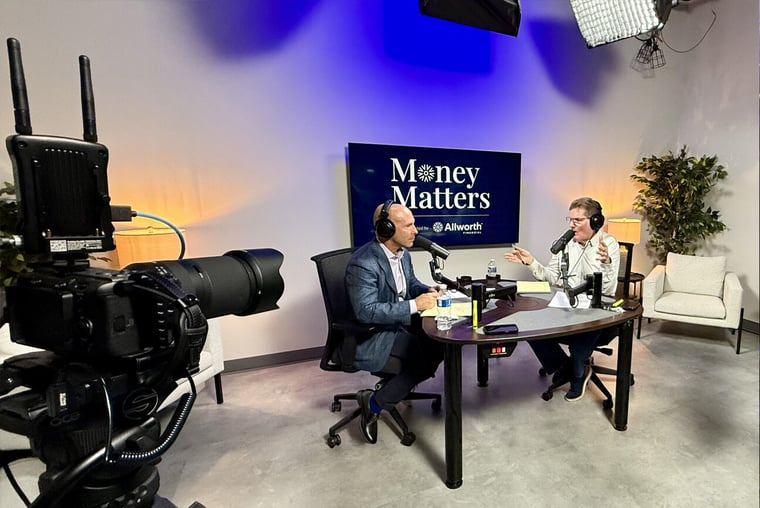
How do you manage a concentrated stock position without getting crushed by taxes? In this episode of Money Matters, Scott is joined by Allworth advisor Mark Shone, who steps in while Pat is away to break down smart, tax-efficient strategies for handling highly appreciated stock positions. They use a real-life case of a recent retiree with nearly $2 million in Apple stock to explore how to reduce risk, diversify, and balance income and legacy goals. Plus, they touch on private credit and real estate trends shaping today’s investment landscape.
What You’ll Learn:
- How to reduce risk in a concentrated stock position
- Strategies to diversify without triggering large capital gains
- Tax-efficient ways to manage highly appreciated stock
- How to balance income needs with long-term legacy goals
Join Money Matters: Get your most pressing financial questions answered by Allworth's co-founders Scott Hanson and Pat McClain live on-air! Call 833-99-WORTH. Or ask a question by clicking here. You can also be on the air by emailing Scott and Pat at questions@moneymatters.com.
Scott: Welcome to Allworth's "Money Matters." Scott Hanson here. Pat McClain is off. He is on vacation with his wife, and enjoying himself, I hope. I'm assuming he's enjoying himself. But we've done the show 30-some years, and he's hardly ever missed. So, we're giving him permission to miss. And we've got Mark Shone joining us. Mark was with us last week. Mark's one of our partner advisors here at Allworth. Been in the industry a long time. And Mark, thanks for taking some time with us.
Mark: Good to be here, Scott.
Scott: Yeah. And Mark, you're also a practicing advisor. You have clients today.
Mark: Yes. Yep.
Scott: And I think you also help kinda vet some potential new clients, and help align them with some other advisors on the team, right? So, you...
Mark: That's also correct, yeah.
Scott: So, you end up talking to lots of people...
Mark: Yep.
Scott: ...as a result. And we'll take some calls in the program and stuff, but I thought before, I wanna talk a little bit about some private assets, and a couple different areas. One, real estate, private real estate. But before that, let's talk about the private credit. And the reason I'm bringing it up, it's been in the news a lot, particularly if you watch CNBC or you read "The Wall Street Journal," that's... And so, maybe we can just kinda talk about what the heck these things are, how they're structured, the good and the bad, and that sort of thing.
Mark: Yeah, yeah. So, private credit, it's definitely been in the news. You know, companies, that...Blackstone. The biggest name that's been in the news is Blue Owl, that's happened there. So, private credit filled a void where banks couldn't lend into private companies for a period of time, so...
Scott: This, thanks...the, government oversight, right? [inaudible 00:02:16]
Mark: Yeah, yeah. Yeah. So, they do that. So private markets...
Scott: After the financial crisis, yeah.
Mark: Yeah. And private markets came in, and they're making loans to companies. The reason it's getting a lot of attention is, you know, surprise, surprise, AI, right? So, AI has made software companies, and with the subscription models, what's happening is companies are going and they're programming their own products, essentially, within the thing. So, I'll take something like Salesforce. Right, so, Salesforce has a platform, for CRM, largely, but they have hundreds of products. And they'll come in and they say, okay, we have a product. I happen to know it. It's called Agentforce. And what it can do is use AI. It sits over the top of all your data, and gives you an idea, like, what's the next best action we can take as an organization, what have you. So, they can sell that product, and add onto a subscription model, but a lot of people with AI, with Claude or what have you, can program themselves. So they don't pay the Salesforce software company, and they do it themselves, so it's cost savings to the company.
Scott: It's funny. Little side note. Yesterday I had breakfast with a friend of mine. He...technology guy. He had a tech company he had built and sold. And then the last handful of years, he's devoted to the nonprofit space, so he helps all these different nonprofits. And he was telling me, he's just enamored and in love with AI. He's so excited. But he says, yes, he says, "Scott," he says, "last week," and he was, this nonprofit he was helping out, they had all these different grants. And every grant's different, and you gotta apply for the grant every year, and then the whole process, and what kind of reporting. And then typically, there's specific funding, to fund for this particular thing, so the organization has to keep track of all that. And he says it was taking this person, he said, like, a month, at the end of each quarter...
Mark: Yeah.
Scott: ...to reconcile and close everything out. And he said he, in an hour, he built an app. He said this, it would have taken a month prior to build the app. In an hour, he created an app. Well, now it'll take the person about an hour a quarter.
Mark: Yeah. Right. Right.
Scott: So, whatever company, in the past, that would create that app, what's the value of that now if it can be done in an hour?
Mark: That's right. That's right. So, and what happens? So, private credit, they've made loans to these software organizations, and this is kind of what started it. And they're saying, "Well, how are future cash flows gonna look for those organizations?" So, the creditworthiness of those companies are, come into question. So, the difference is, I mean, there's a couple different layers of this. So, the headlines are getting from actually the public stock at these companies, the Blackstones, the Blue Owls. The public stock of those organizations has been hit really hard, you know, 20% to 30%. The underlying investments that you're making in private credit have not had that kind of experience, so...as of yet, is what you can say, so...
Scott: Yeah.
Mark: So, when you look at it and you look at some of the numbers...
Scott: And it hasn't been the institutional outflows as much as it's been retail investors. They tend to be higher net...they have to be accredited investors.
Mark: Yes.
Scott: Tend to be higher net worth. Typically, it's a small portion of one's portfolio.
Mark: Yes.
Scott: But these individual investors saying, "Wait a minute. I don't know if I want to keep my money here."
Mark: Yes.
Scott: And they say I want my money out.
Mark: Yeah. So, you start, you're seeing higher redemptions, which, these companies have met those redemptions thus far. They've done that. The price has been marked down a little bit, but, you know, these are, these private credit funds are yielding, you know, 9%, 9.5%. If you look at it, you say 20% of their portfolio's in software, so if you look at where's the big risk, that's 20% of those loans, you say 20% of it's there. Let's say that you get defaults. Let's say all 20% of that gets defaults. So, then you look at what's the recovery rate of somebody like a Blackstone or a Blue Owl or what have you, you know, industry-wide at 65%. Blackstone is above 90%, I believe, 90%, 93%.
Scott: What do you mean by recovery rate?
Mark: Recovery of capital, of the capital that they invested. So, BKs, they're pretty high in the credit stack.
Scott: Oh, got it.
Mark: Yeah. So, it's, you know...
Scott: From those companies.
Mark: From those companies. So, if you get 93%, you do all the math, it's, like, 30 basis points, off of a 9.5% yield, so now you're 9.2% instead of 9.5%, and you're like, "okay." Yeah. So, there's just a different, you know...is it an issue? Yes. Could it be worse than that? Yes. But, you know, you start doing the math and you look at it, it's not like, for clients that were investing, that were not investing in the parent company stock, were investing in underlying, you know, business development, core, BDCs, or LPs or what have you, of private credit, so the math is just a little bit different there.
Scott: I think what's a little different this time around, it's that there's these products that have been created, and I've actually been a fan of this concept.
Mark: Yes.
Scott: How do we take these private products, and have them available to the average investor?
Mark: Correct.
Scott: Right? And so, these products have been created over the last number of years. And typically, if you invest, like, if you invest in, let's, we, a bunch of people pull some assets together, and then make direct loans to companies, we're not buying bonds, publicly-traded bonds, right?
Mark: Right.
Scott: These aren't traded. We are making loans to these companies. We pool our money together, we make these loans, and then we get our money back, we get our interest, and then when the loans come due, maybe they're amortized, maybe they're not. When they come due, then we can pay people off. So, the way these products are typically structured is when you invest in it, you can't just say, oh, I want all my money out tomorrow, because, well, your money's all been loaned. It's all been loaned out to all these different organizations. So, if you wanna take some money out, these pools typically will limit to, say, 5% per quarter.
Mark: Yes. Correct. And as of recent, so...
Scott: And if you think about the structure of these, it makes sense. How else could...you couldn't do it any other way.
Mark: Well, it's not that...
Scott: [crosstalk 00:08:47] liquid.
Mark: It's like a bank. You have daily deposit, you know, daily liquid at the bank. Then what do they do with your money when you deposit in the bank? They go out and make loans, that are 5-year loans, and 10-year loans, and 30-year loans. Well, if everybody goes to get their money, they don't have it, because it's loaned out. You know, that's the typical "run on the bank."
Scott: Yeah.
Mark: So, it's the same type of lending structure, right? You have committed funds, and so you have to limit what you can take out from redemptions. And those redemptions, so, it's 5% of the total value. They've had redemption levels higher than that, and they've met them. So that hasn't been an issue so far. But that's part of...they've gone... I'm not saying individuals are down-market, but it's gone from institutional to retail client. Retail clients are a little quicker...
Scott: These are individuals or families?
Mark: Yeah, yeah. It's a little, you know, timeframes are a little shorter. And so, you know, it creates a little bit more volatility in cash flows. So, it's...
Scott: And it's been a bit of a run-on-the-bank concept, so people are like, "Oh, what's going on here? Maybe I should get my money out before I can't get my money out."
Mark: Yeah. Yeah. And the thing is that the headlines have been... So, you know, there's some realness in the headline. I'm not...you know, and we've talked about it, software, people doing it themselves and subscription models, what have you, you know, so it's not, you know, fake news, so to speak, on this. But the difference is, it's gone a little bit down-market, and people are, you know, you can get some of that kind of run-on-the-bank stuff. But the headlines have been more about the parent companies and their exposure. It's hurt those stocks. It hasn't hurt the funds that investors are investing in. So, you know, they're like, "Blackstone, here's the stock. Uh-oh. What's happening to my private credit fund?" Well, it's two different entities. It's a separate company. So, we'll see. Still moving parts. But, you know, when you do all the math, it's a little bit reduction in [crosstalk 00:10:46]
Scott: And a typical investor that has some money in private credit, what percentage of their overall portfolio?
Mark: Well, I mean, if they're being guided by advisors, you know, I have clients that have, you know, in alternatives, typically the alternatives are capped, at most, you know, and this is private credit, private, you know, private real estate, private equity, the whole thing, at maybe 20% of equity exposure.
Scott: So, a very small percentage [crosstalk 00:11:10]
Mark: Very small percentage.
Scott: ...for the typical investor.
Mark: Yeah. Yeah.
Scott: So, do you think that the people that are doing the withdrawals are ones where they have maybe 20% of their portfolio in that one particular...?
Mark: Yeah. My...I don't know that the answer to that is...
Scott: Yeah. That would be my guess.
Mark: ...but my sense is people that have pretty large exposures.
Scott: Because if it's 1% or 2% of your portfolio, like, why would you need to...
Mark: Right. Right.
Scott: What's the rush to cash it in?
Mark: But what happened, you know, the [inaudible 00:11:38] is, you know, people look at... These are, it's...the investment world's about total return, and they just see income at 9.5%, and it's, you know, you kinda go crazy. You're like, "Oh, that's great. I want more of that, and less of something else." So...
Scott: When I first started in this industry, my manager had a plaque thing on his desk, "TINSTAAFL." It's a acronym. There is no such thing as a free lunch.
Mark: Yeah.
Scott: So, if it's paying 9.5%, there's risk. What is that risk? We're getting compensated for something.
Mark: That's right.
Scott: Right? Because...
Mark: That's right.
Scott: ...the banks pay me 3%. Like, you're gonna pay me 9%. What's the risk here?
Mark: Yeah. And the risk in private credit... So, most of the time, bond investors, one of the risk is interest rate risk. That's not really as much the case with private credit, that, their duration, which is a measuring of interest rate risk, is very, very low.
Scott: Well, they typically have floating-rate...
Mark: Yes. It's all credit risk. It's credit risk.
Scott: Yeah. Because the rates float, typically.
Mark: That's right.
Scott: So, you're protected, as far as that kind of volatility.
Mark: Yeah, yeah.
Scott: Yeah. I mean, there still can be attractive investments for the, in the right time and for the right amount...
Mark: Oh, yeah.
Scott: ...for people.
Mark: Yeah. No, it's, the investment philosophy, and implementation, is still really important and valid. Like every asset class, you go through some difficult times, and thus far, not very difficult.
Scott: Yeah. Well, and I also wanna talk about real estate. Let's take a call here first, and then we'll go talk about real estate, so...
Mark: Sounds great.
Scott: Cathy's been holding. Cathy, you're with Allworth's "Money Matters."
Cathy: Hi.
Scott: Hi, Cathy.
Cathy: Thanks for taking... Hello. Thanks for taking my call.
Scott: Yeah. You've got Mark Shone with me today, not Pat, so, hopefully you're okay with that.
Cathy: Yeah, I'm fine.
Scott: Okay, good.
Cathy: Thank you.
Mark: Thanks, Cathy. Thank you, Cathy. I appreciate that.
Cathy: What if I say no? No, I'm just [crosstalk 00:13:35]
Scott: Yeah, it's too bad.
Mark: I'll just mute and you can talk to Scott.
Cathy: I can take all the help I can get. Okay. I recently retired, at, this year. I'm 68. I have a total, I guess, portfolio of money that I can spend in retirement of about 6.3, 6.5, depending on the day in the market. My call today is about a high stock concentration, that I have been warned about, that is a high risk, and I didn't really look at it that way. Anyway, I have about, $1.9 million in Apple stock, and this is in my brokerage account, not... The 6.3 to 6.5 number is the total IRAs, as well as Roth, SEP, and a brokerage account. What kind of thought, and I don't really, this may sound naive, don't really have a thought about how I want to donate money. I never really thought I had this much money. And so, I'm not...I'm really not sure what to do.
Mark: Yeah.
Scott: It sounds, I'm almost getting the sense you wanna be good stewards...you have more assets than you thought you were gonna have, and you wanna be a good steward with these assets. Is that fair?
Cathy: Yes. Yes. But I also wanna keep as much as I can, and, you know, if I [crosstalk 00:15:19]
Scott: Well, that might be a good steward right there, so, I mean... I don't mean a charitable steward. I just mean a good steward of these assets that you've got.
Cathy: Yes, yes, correct.
Scott: And did you work for Apple?
Mark: That's what I was gonna ask. Yeah.
Cathy: I did not.
Scott: Okay.
Cathy: I did not. It was, it's a total fluke, and I'm embarrassed to say it, but [crosstalk 00:15:40]
Scott: Embarrassed? [crosstalk 00:15:40]
Mark: I wouldn't be too embarrassed.
Cathy: One day, I heard that stock was good. So, I love CNBC, just because I just like that part of the world, and I heard that Apple stock was gonna split. So, on the way to work, I called my sister, who is smart, and said, "Hey, do you think...well, this is a good investment." She was like, "Are you kidding me? Do you know who Apple is?" I'm like, "Ehh..." not...this is in 2010. Like, "I'm not really..." and she's like, "Okay. If you have any money, buy what you think." And so, I went and called Schwab, and said, you know, "Buy this." And I don't really remember what I bought, truthfully, and because it's split so many times, when I called, when they said I was gonna be on the show, I thought, "I better get some more information." So I called, and they said that my cost, that my purchase price was $8.76 that day. And it wasn't. It wasn't. I mean, it was more than that. But anyway.
Mark: Yeah.
Cathy: So, all of a sudden, I... And I've just kind of watched it. So, I'm with a big bank, as my advisor, money advisor, last couple of years, and they're the ones that are telling me that this is a big stock risk. But they keep wanting to sell it. And I keep saying, "No, it'll go back up if it goes down," and so, and I, now that I'm retired, now I'm like, "Oh. I see how this feels now. This is different," than saying, "Well, I've got a check I can..." you know, an income check that I can...
Mark: Yeah.
Cathy: ...live on, and now I don't. So, now I'm like, okay, I'm not really sure. And there, I feel like this, the people that I'm with are more about making my money grow, which I like. But I need to do some, I think I've realized that I need to manage this stock concentration.
Scott: And tell us a little bit more about yourself. Are you married?
Cathy: I'm not married. I have no children. I have one nephew, and a mother age 91, and that is really my family.
Scott: And what is your plan with these dollars when you eventually pass?
Cathy: Well, I have one nephew, and so anything I would have left would probably go to him. But I realize I can do other things, but I, again, I'm just trying to think about that now, as people [crosstalk 00:18:04]
Scott: Yeah. Well, you're retired now too. So, how long have you been retired?
Cathy: Did I what?
Scott: How long have you been retired?
Cathy: Since the end of January.
Mark: Ah. Couple months now. What do you have in brokerage? What's the asset level you have in brokerage, outside of the Apple stock?
Cathy: Apple?
Mark: Yeah.
Cathy: So, my total brokerage is about 2.9.
Mark: Okay. So, 900-ish outside.
Scott: And what was your salary before, or, total earnings before you retired?
Cathy: Last year was around $380,000. So, I didn't always get $380,000 but I, the last several years. I mean, you know, I was in sales, so it was, kind of went up and down.
Scott: So, and what do you figure you need... What income would you like in retirement?
Cathy: For retirement?
Scott: Yeah.
Cathy: So, I'm...somewhere between $200,000 and $225,000 maybe. I won't spend all that, but I just, you know, I don't think I'm gonna like somebody else having control of all my money. I think I want a little, you know, a little cash out there, so I can do what I want with it. So, like, I'm gonna... I feel like I [crosstalk 00:19:14]
Scott: Well, you might as well. What do you mean? Now's the time.
Cathy: [crosstalk 00:19:16] Yeah. I feel like I want my own savings account, so I can kind of do what I want. My expenses are probably... So, I have two homes. But even with two homes, my expenses are, like, $150,000 a year.
Scott: And are your homes paid for, or small mortgage?
Cathy: My homes are paid for. They're paid for.
Mark: How do you feel about the concentration?
Cathy: I guess I never was too nervous, except that... I mean, I feel really good about Apple. I might feel better about Microsoft, given what I'm reading lately, but...because of the AI piece. But I do, I probably think I have a little bit too much in there, and I really don't know how to get it out without paying a whole lot of income taxes.
Mark: Yep.
Cathy: And I may just have to do that. But, I've heard Simone speak on your podcast.
Mark: Yeah.
Cathy: Somehow I got hooked onto that, and, you know, she talks about different things, but one of the things that she also talked about, I think was with you, Scott, was, you know, having donor-advised funds, and, you know, and then there's the whole Roth thing, that I won't get into with all this, but...
Mark: Yeah.
Cathy: Which I didn't know anything about, really, until recently, last year, probably, I started listening. So, how do I feel about the stock? I mean, you know, if my cost basis is $8.76, I feel pretty good about it.
Mark: Yeah.
Scott: Yeah. So, like, [crosstalk 00:20:59]
Cathy: It's still a lot of risk.
Mark: Yeah.
Scott: Well, yes and no. So, part of it is, like, is, can you afford to lose these dollars? Right? So, that's one way [inaudible 00:21:10] So, you've got six...
Cathy: Yeah, it's half of the money that I have, I guess, about.
Scott: Little less. Less than that.
Cathy: No, it's a third. It's a third of the money that I have.
Mark: It's a third, yeah.
Scott: So, at $225,000 I'm not even thinking about Social Security for a moment, at $225,000, at $6.5 million, that's about a 2.5% distribution, so you need to earn about 2.5% on your money in order for you to take $225,000. Extremely conservative. If we back out the Apple, we're still at about a 5% distribution rate. So, even if that Apple fell to $500,000 from $2 million, you're still fine. Now, so, you can afford to lose it. The question is, is it worth you taking that risk of one individual stock?
Mark: Yeah. So, I...
Scott: At this stage.
Mark: Yeah. So, got it. So, I do a lot of work with Simone, as well, as an advisor, so we partner up quite a bit, so I know her well. I also have a lot of ex-Apple employees as clients, and people with Apple concentrated stock. So, I'll get to kind of the, end on, you know, can you diversify without paying tax? And the answer to that question is you can, to an extent. There's some things that you can do, and don't wanna get too prescriptive here. But essentially, you can exchange out a percentage of that Apple stock. I think right now, it's about 65% of that stock, and you can exchange it for a broader index. You know, S&P 500, you know, small company index. You can exchange that without taxation. So there are some strategies that you can use to do that.
Scott: Your money's locked up for seven or nine years?
Mark: No. No, no, no. So, there's... So, there's...
Scott: I was thinking the exchange fund.
Mark: You're thinking exchange fund. So, you know, how do you reduce the concentration? You can sell the stock and pay a bunch of tax. Okay, that's a no. Not gonna do that.
Cathy: Right. [crosstalk 00:23:10]
Mark: The second thing is you can do an exchange fund, like Scott, like you were just talking about, exchange fund. You pledge your shares to an exchange fund.
Scott: It's pretty tough to do with Apple, though, right? [crosstalk 00:23:19]
Mark: Yeah, because everyone's trying to do it. All right, so, you exchange it for a broadly-diversified portfolio, that would have Microsoft in it, by the way, highly likely. So, you do that, but it, you know, it's pretty expensive. It's locked up for seven years, then you can take the shares back. It's expensive, it's...it has a timeframe. There's a better way now. The third way you can do it is what's known as exchange replication. Exchange replication, essentially what you're doing is you're shorting Apple stock. Let's just use 65%, and I can explain why it's only that amount.
Cathy: Okay.
Mark: You short Apple stock at 65%, using options, puts and calls, right?
Cathy: Mm-hmm. Yep.
Mark: Then you go long the S&P 500, using puts and calls. So, you've essentially not paid any tax, and you've...
Scott: Diversified.
Mark: You've diversified. So, you can put that trade on. Hate to talk all financial talk. I hate that. But you can put that trade on today, and you're like, "Eh, I don't wanna do it anymore" two weeks from now, you can take it off. I mean, it's really not...you know, that's how flexible it is.
Cathy: Okay.
Mark: So, you can diversify that position. And, which is one of the reasons I asked, you know, what is the other brokerage money, right? So, as you're recreating your paycheck in retirement, you're trying to create that $225,000, it's like, all right, if I go get SEP or IRA money, that's ordinary income. If I go get brokerage, it's capital gains, you know, so, I wanted to make sure you had other brokerage assets to be able to recreate that paycheck.
Cathy: Okay.
Mark: But just pure diversification on Apple, that can be done. The other thing is, if you have some charitable desires, I mean, donating appreciated stock makes a lot of sense. Apple's a perfect place to go, to go do that. And then, what you try to do with your...
Scott: And you could say, "I wanna test the waters. I'm gonna take $10,000 of my Apple stock and transfer to a donor-advised fund." They'll liquidate it the day that they have it, and then you could say, I wanna, I'll give these to these few charities, or... I mean, yeah, you don't have to...it's, like, not all or nothing.
Mark: Yeah. That's right.
Scott: It can be whatever amount you want.
Cathy: Okay.
Mark: Yeah. But if you do that, so, I mean, one of the questions [inaudible 00:25:31] like, what if I wanted to diversify 100% of the Apple stock? The IRS doesn't let you do it, because they say...
Cathy: Oh.
Mark: They say, "You've essentially sold the stock, so you owe us the capital gain."
Cathy: Oh.
Mark: So, that's why it's, depending on the market, 65% or 70% of it that you can diversify, and do that...
Scott: On the exchange replication, you're talking about.
Mark: On exchange replication, yeah.
Cathy: Okay.
Mark: There also is another, there's another strategy that people use. It's a long/short, separately-managed account, where you go in, you sell, you would sell the, you know, all the Apple stock, and then essentially create a U.S. total market separately-managed account. And you're booking losses to offset the gains right away. And if you do that early enough in the year, you can essentially offset that. So, you can have a diversified portfolio, you essentially keep the unrealized gains in place, but you're actually selling the stock. So, with a lot of people, it's a combination of those things. You know, it's kind of dependent on how everything else in your life is coming together, you know?
Scott: That's right. Well, there's also a charitable remainder trust.
Mark: Yep.
Scott: You can take some of those assets and exchange it for an income.
Mark: But it used to be you're just stuck, which is why we started with the question, did you...well, you told us you were retired, but, you know, people who are working at Apple, you can't do some of those strategies...
Cathy: Okay.
Mark: ...but you're kind of free [crosstalk 00:26:54]
Scott: And if you called and said this was all of your savings...
Mark: Oh, yeah.
Scott: ...we would be screaming that you need to diversify, right?
Mark: Yeah.
Scott: So that's why I kind of like, can you afford to lose it? Yes.
Mark: That's right.
Scott: Do you want to lose it? No. Apple's not gonna be the dominant player forever. No company ever is, right.
Cathy: No, it's not.
Scott: They never are.
Cathy: Yeah. Mm-hmm.
Scott: So, we just don't know when they're, when they will begin the sunset.
Mark: Yeah.
Scott: They will sunset...
Mark: Yeah.
Scott: As every company.
Mark: I tell clients, I say, we're gonna diversify a little bit away from this concentrated position, and you're still gonna root like heck for the stock. [crosstalk 00:27:26] Because you still own it. We're still rooting.
Scott: But I, you know, I think a bigger question, Cathy, is, you know, you're recently retired, so now you're gonna be reinventing yourself, of what's life look like for you now.
Cathy: Yes.
Scott: But these dollars, I mean, you're the one making the decisions what's gonna happen with them. You can choose to be one of those stories you read about in the newspaper, where this woman dies, and no one knows she had a dime, and she left $10 million to the local library. Right?
Cathy: Mm-hmm.
Scott: Or, leave it all to your nephew, or spend some, give some. Find some cause that you think you can make an impact in, that's near and dear to your heart.
Cathy: Mm-hmm. Okay. Hmm. This [crosstalk 00:28:17]
Scott: You don't have to make any of these decisions today, but as you, and my guess is, if we're having a conversation five years from now, my guess is you are gonna be having, there's gonna be some charitable giving, of something that is of real meaning to you. And maybe that's something where you're actually giving some time to as well.
Mark: I tell clients that, you know, there's four things you can do with your money. You can spend it, you can give it to charity, you can give it to relatives, or you can give it to the government. No one ever wants to give it to the government.
Scott: That's right. [crosstalk 00:28:47]
Mark: Right. So, you decide how you want the first three to play out...
Cathy: Yes.
Mark: ...and how cash flows, and assets make their way to those three entities. Then you design around, how that works. And one thing is, you know, with Apple, let's just say you still have, you know, 35% of the value of Apple there, you know, and if part of that is, you know, I'd like to have my nephew to have that, then you hold that portion of the stock, and get a step-up in basis, you know, at your death, and they get, you know... So, there's just different ways. It's all about cashflow, where the assets land, and taxation all along the way.
Scott: And what is it you're trying to accomplish?
Mark: What are you trying to do? You spend money, not returns. What are you trying to do?
Cathy: Okay. I might've been confused. Well, I probably was, but I thought you said I couldn't sell all of it, but then the government wouldn't let me, but then in this one strategy, I thought that you said I kind of could.
Mark: Yeah, yeah. So, the exchange replication, you're not actually selling the shares. You're synthetically...
Cathy: Oh, okay.
Mark: You're synthetically creating those.
Cathy: Okay.
Mark: There is another strategy with a separately-managed account, where you actually do sell the shares, and you book losses on the other side of the ledger.
Scott: But you book that gain too, so...
Mark: Yeah, yeah, yeah. Well, you keep an unrealized... Yeah, you book the gain, and then you aggressively take a bunch of losses, to offset. It's just a, it's a little bit different strategy there.
Cathy: Okay.
Scott: All right, Cathy.
Cathy: Thank you very much. [crosstalk 00:30:25]
Scott: Yeah, congrats on your retirement, and congrats on your financial situation here too. It's a good place to be.
Mark: Yeah, yeah. Thanks, Cathy.
Scott: Much better to be shocked about being lucky. Better... Luck counts too, right? Like...
Mark: Hey, that was a great drive to work. That's what I say.
Scott: Yeah, no kidding.
Mark: Calling into Schwab. [crosstalk 00:30:40] nicely done.
Scott: Yeah, yeah. So, I remember, this was 30-some years ago, when Steve Jobs was not part of Apple.
Mark: Yeah.
Scott: The guy from Pepsi was running it, whatever it was, right?
Mark: Sculley came over.
Scott: Okay, that's right. So...
Mark: John Sculley. Yeah.
Scott: And I'm, I remember I was on a flight to Chicago, and I was chatting with the flight attendant, young, and she was asking, "Oh, you're in..." She's, "What should I do with this Apple stock?" And I'm, at the time, I said, "I'd sell it." [crosstalk 00:31:07] But I've never forgot that conversation, because I have a feeling she looks back to that flight, to that young "financial advisor" who told her to sell the Apple stock. That was me.
Mark: Yeah. She's like, "Seat 4D, curse you." But yes.
Scott: It wasn't 4D back then.
Mark: Oh, yeah, yeah. Sorry. First class?
Scott: 34B, [crosstalk 00:31:27]
Mark: Yeah. Gotcha. [crosstalk 00:31:28]
Scott: ...back in the... Hey, I mentioned earlier, because we started talking about private assets, real estate. And you recently had a conference for private assets, and there was an article in "The Wall Street Journal" a week or two ago that talked about some of these towers literally trading for 10 cents on the dollar of what they traded for a decade ago.
Mark: Yeah.
Scott: So, these properties that were maybe a $40 million building, trading today for $3.5 million, or $5 million.
Mark: Yeah. Yeah, I was in, I was at a private markets conference, and real estate was obviously a pretty hot topic, and it goes, like every asset class, it goes through difficult times. Global financial crisis one, savings and loan, where you've had real estate really get pummeled. And the last one was really 2022. And you think about what happened with interest rates, and you essentially had a lot of borrowers that had to refi at much higher rates, and...
Scott: Combination of COVID, which changed the work environment.
Mark: Yes. COVID. They had to refi, at that moment, and that combination just pummeled values. What I found kind of interesting is, in these cycles, you've looked, and the bottom of this cycle was really the end of 2024, and you're just starting to see recovery, but we looked at markets kind of all across the country, and the worst three are all out here on the West Coast. It was San Francisco, Portland, and Seattle were the worst commercial real estate markets in the country. Worse in housing, kind of multi-level housing, was Austin. It was kind of the buildup people. COVID people can work remote, move anywhere. Yeah.
Scott: So, office, the downtown areas of San Francisco, Portland, we know what that's all about. [crosstalk 00:33:22]
Mark: Yeah, exactly. No, that's exactly right.
Scott: Last time I was in Portland, I'm like, I hope to never be in this downtown again in my life. It was disgusting.
Mark: Yeah, yeah. Yeah.
Scott: Just the, what they allow to happen on the streets, and...
Mark: Yeah. Those are the worst...I mean, they were off, at the time, you know, they were off 20-plus percent, kind of, the occupancy level was in the high 20s, and this was just talking about occupancy. The rest of the country was 8 to 10, which is really high, but those three markets were the worst.
Scott: And of course, the challenge, let's say you're the owner, and maybe you got a loan-to-value originally at 50 cents on the dollar.
Mark: Mm-hmm.
Scott: You've got a covenant to have a certain amount of rent roll.
Mark: Correct.
Scott: Right? So, if you don't have that rent roll, you're in violation of the covenant, and then you need to, [inaudible 00:34:06] to have a certain amount of equity.
Mark: Right. And you had four and five-year loans, that were at 2%, and they were coming due in '22, and rates went to, you know, [inaudible 00:34:19] 5%, 6%. As they say, "the math wasn't mathing," and it created problems.
Scott: Yeah. So, what's the opportunity for the individual investors, accredited investors, but individual investors?
Mark: Well, I think if...
Scott: [crosstalk 00:34:31] you're not gonna go, probably, go out and buy an office tower that you've... If you've never managed commercial real estate, I would not advise going out and...
Mark: No, no. But if you find the sponsors, as they're called, that are doing these real estate, private real estate, and they've been positive cashflow over those periods, they're now putting money to work at pretty attractive yields. So, the opportunity is recovery in these markets.
Scott: Who are the good operators?
Mark: I mean, you've got...
Scott: No, I'm not asking you a question.
Mark: Yeah, [crosstalk 00:35:02] I'm sorry. [crosstalk 00:35:04]
Scott: Not to name name... No. It's the, and every market's gonna be unique...
Mark: Yeah.
Scott: ...because they tend to be quite regional, but...
Mark: That's correct.
Scott: Like, who's done a good job operating.
Mark: Who's done a good job operating, and what are the cash flows into those private funds? Because that makes a difference. If you have a bunch of people that have been in redemption, they're selling assets at discounts, and now they no longer...you know, so, [crosstalk 00:35:26]
Scott: And you gotta be careful in that game too, because oftentimes, the developers, or the investors, they'll take the cream for themselves.
Mark: Oh, yeah.
Scott: Right?
Mark: Well, so, that market's improved a lot. They were awful. I mean, I can't tell you how many people, you know, would transfer money. You know, I start working with them and they're like, "Okay, well, I have this real estate fund in here," and, like, you can never get out, and, you know.
Scott: Yeah.
Mark: Then all of the incentives were not properly aligned. They've become much more institutional, and, you know, they're better-run today than they were back in the day, so... These are always changing.
Scott: Yeah. [crosstalk 00:36:01] I mean, it's best to look for the, sometimes, you know, where they're great opportunities.
Mark: Yeah.
Scott: Not the stuff that's just done well.
Mark: Yeah.
Scott: It's usually the stuff that's bloody, and nobody wants it anymore.
Mark: That's correct.
Scott: Like office buildings in Portland.
Mark: Or office buildings somewhere.
Scott: Just somewhere. I don't know about one of them in Portland either.
Mark: That's right.
Scott: Anyway. Hey, Mark, thanks for taking the time to be with us on the program today. And, if you've liked this show, and think it's helpful, give us a rating. Just go... By the way, follow us, or subscribe to our show. Follow us on Apple or Spotify or wherever you do it. And also, if you haven't been on the YouTube channel, our YouTube page, you get...we'll have full shows there. There's also some just short videos, where we do some, solving some challenges, and more. So, it's our Allworth YouTube channel, and subscribe to that. I think you'll find it helpful. And enjoy the rest of your weekend. We'll see you next week. This has been Scott Hanson and Mark Shone, of Allworth's "Money Matters."
Announcer: This program has been brought to you by Allworth Financial, a registered investment advisory firm. Any ideas presented during this program are not intended to provide specific financial advice. You should consult your own financial advisor, tax consultant, or estate planning attorney to conduct your own due diligence.
Insights for Complex Wealth Decisions
Join our email list for exclusive commentary from our Chief Investment Officer, early access to expert-led webinars, and your complimentary Wealth Planning Checklist for Complex Portfolios.
We take your privacy seriously and respect your privacy choices. By submitting this information you agree to our Terms of Use Agreement, Privacy Policy, and to receive important notices and other communications electronically.