
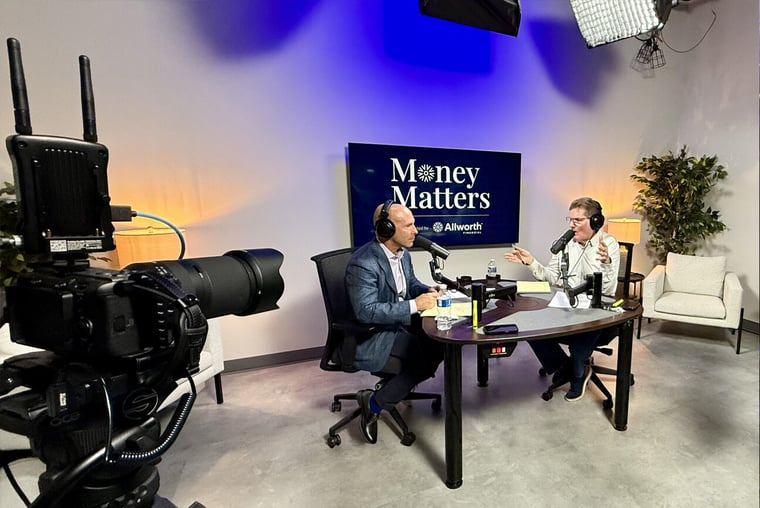
Tax Strategies for Larger Portfolios: Direct Indexing, Estate Planning & What to Avoid
In this episode of Money Matters, Scott and Pat react to a listener being pitched a complex direct indexing strategy using margin, while another wrestles with whether setting up trusts for their grandchildren is worth the hassle—breaking down what actually adds value and what doesn’t.
They expand into tax strategies for larger portfolios, including when more sophisticated approaches create more cost and complexity than benefit. You’ll also hear practical guidance on estate planning, gifting, RMDs, and charitable giving through QCDs.
What You’ll Learn:
- When a direct indexing strategy using margin may do more harm than good
- How to approach tax strategies for larger portfolios without overcomplicating your plan
- When trusts make sense for gifting—and when they don’t
- Smarter ways to handle RMDs and reduce taxes with QCDs
- Why some strategies are driven more by firm incentives than investor outcomes
Join Money Matters: Get your most pressing financial questions answered by Allworth's co-founders Scott Hanson and Pat McClain live on-air! Call 833-99-WORTH. Or ask a question by clicking here. You can also be on the air by emailing Scott and Pat at questions@moneymatters.com.
Scott: Welcome to Allworth's "Money Matters". Scott Hanson.
Pat: Pat McClain. Thanks for joining us.
Scott: Yeah, glad to have you with us. We're talking about financial matters and all that kind of fun stuff.
Pat: Just because of the date, around this date, I've got a number of clients that...
Scott: The date, which date? The date that's...
Pat: Tax, tax, tax. It's just...
Scott: Okay, okay. I'm like, what date are you going with?
Pat: Tax date. A lot of people that pay quarterlies don't really need to pay quarterlies. All they have to do is change their withholdings on some other form of income.
Scott: Yeah, oftentimes, Social Security is delivered without any sort of...
Pat: Taxation, and you can actually change your withholdings on your Social Security so that you don't have to mess with filing quarterlies or on your IRA distributions or even on a distribution from a brokerage account if you do it on an ongoing basis.
Scott: I don't like filing quarterlies.
Pat: I don't.
Scott: For one, the dates aren't... It's not once a quarter. It's January 15th, April 15th, September 15th, for whatever reason, and then January 15th.
Pat: And it's a pain. It's a pain.
Scott: Yeah. And by the way, if you haven't done your taxes yet, I would file an extension.
Pat: Yes. And the reason being...
Scott: There's nothing wrong with filing an extension. It's an automatic. You just file the extension, you've got until October 15th.
Pat: I can't remember the last time I didn't file an extension.
Scott: And if you are self-employed, you can fund your SEP IRA up until the time you...
Pat: Pay the tax.
Scott: And if you have a Solo-K, you can fund that Solo-K, if you've already set it up by the end of last year, you can fund that up into the time you file your taxes.
Pat: So, just remember, to make it simple, if you have a SEP, the rule is up until the date you file your tax return, not an extension. But if you have a Solo-K, which looks almost identical...
Scott: You can do an extension with a SEP as well. You don't have to have one established. You can establish it on October 14th.
Pat: I know. That's my point. My point is, but a 401(k) has to be established in the previous year.
Scott: That's right.
Pat: Although they look and act the same, a completely different set of rules surrounding them, just to make things simple.
Scott: Yes. And one is subject to ERISA and one is not.
Pat: Just again, to make things...
Scott: None of this stuff is designed to make things simple. Look at our tax code. Look how complicated our tax... And by the way, if you're an investor and you've got several K-1s and you don't like getting the K-1s, before you invest in another private investment that's going to deliver a K-1, ask yourself, is this worth dealing with one more K-1?
Pat: Oh, and especially if it happens to be in a state in which you don't reside and it requires you to file a tax return in that particular state.
Scott: Do you have one of those?
Pat: I did years ago in a real estate investment.
Scott: Oh, gosh. Yeah, what a pain to think about that.
Pat: Yeah, yeah. But this little real estate thing that produced almost no... It wasn't even that big of an investment. It required me to file a Colorado tax return. And I thought, "This was just stupid. I shouldn't have done this." But I hadn't been thinking about that when I actually made the investment. It was just like, "Oh, well." And I was much younger and...
Scott: Anyway. So, be it.
Pat: But it's behind me now.
Scott: Next time. But do think, if your tax return's getting more and more complex because of your investment allocations, at some point ask yourself, what are you trying to accomplish
Pat: ? Is there excess returns here? Is there excess returns for the complication you're creating?
Scott: I just remember years ago, Pat, I'm at a conference. Talk to this guy. He had sold this business. This is, I don't know, 15 years ago. He said, "I put 100% of my proceeds in the Vanguard S&P 500 Index Fund." He said, "I don't know if it was the right decision or the wrong decision, but it's the decision I made. It's been a number of years now, and it seems to be working out just fine. I live off the dividends." And I thought to myself, in some ways, that's a brilliant strategy. Super simple.
Pat: Super simple. Maybe...
Scott: Maybe too simple, but he had way more than he needed.
Pat: Yeah, and he could live with the volatility.
Scott: He had way more than he needed.
Pat: And he could live with the volatility.
Scott: In part because he had way more than he needed.
Pat: Which makes it easier.
Scott: It makes it easier, right? If you only need $2 million and you have $40 million, if your $40 million falls to $30 million, that's unfortunate, but it's not going to change your life. So, if you find yourself with clearly more than you think you'll ever spend, then ask yourself, do you really need this complexity in your portfolio?
Pat: Is it creating any value? Exactly.
Scott: So, anyway, we're going to take some calls, and then I'm doing an interview with Simone Devaney. She's our chief wealth... Why do I know what her title is? You'll know when I interview her later what her title is. She's a big shot.
Pat: Advanced wealth planning, or...?
Scott: She's a tax attorney, part of our Allworth team. So, let's take some calls here. Let's start off here. We're talking with Janet. Janet, you're with Allworth's "Money Matters".
Janet: Hi, Scott and Pat. Thanks for taking my call. I've been listening to you for years.
Pat: Oh, good.
Janet: You guys are amazing. I love hearing about your kids. They all sound like they're doing well.
Pat: Well, thank.
Scott: For the most part.
Pat: Do you have children?
Janet: You're a success. My husband and I are here and we have a two-part question. The first part is regarding enhanced direct indexing. The second part of the question is regarding IDIT, the Intentional Defective Irrevocable Trust.
Pat: Ah, okay.
Janet: So, I'll start with our first question. We have financial advisors that we're very, very comfortable with. We've had them for years. They're upstanding citizens like your firm. We met with them recently. We're high-net worth individuals. And they introduced a concept that is very new to us and we just want to get your feedback on it, which is this enhanced direct indexing. And they were suggesting that we take a mutual fund that we have in the Vanguard Total Stock Market that has lots of gain. We have a low basis with lots of gain. And we use that to fund this enhanced direct indexing, use it as margin or collateral, and then they would do tax loss harvesting off of that mutual fund, and...
Pat: Okay, so...
Janet: Go ahead.
Pat: So, they wanted to take, let's just say, okay, there's a million dollars in this...
Scott: And use that as collateral.
Pat: ...in the Vanguard, and then they wanted to borrow 50% up to the margin limit of, let's say 50%, so P0,000, and then take that money and use a direct indexing. So, they're actually... But then would they put stop losses around it, collar it?
Janet: Well, I mean, this was just introduced to us, so we haven't got into the weeds on that.
Scott: So, it's taking an existing fund, let's say, that Vanguard's got a million dollars, to your point, in Total Stock Market, which it's reasonably tax efficient, could have been more tax efficient, probably, you don't want to just sell it and pay the capital gains tax, because that's...
Pat: Right. Obviously.
Scott: So, instead you use that as collateral.
Pat: And a lot of the enhanced things actually will do direct indexing and then they collar them using options on the long and the short in order to...
Janet: Exactly.
Scott: I just don't know how the cost...
Pat: I don't know if that's right.
Scott: It would seem to me that the margin cost would offset whatever benefit's going to be derived. That's just my first thought.
Pat: Yeah. And the idea being...
Scott: There's no such thing as a free lunch.
Pat: Well, the idea being that if I could collar these things, I'm creating this synthetic index that basically... Well, how do I feel about that? I think it's a lot of work. I don't know how...
Scott: I mean, I'd love to see it modeled out, and I'd love to see it modeled out in, say, a 30%, 40% bear market, maybe even a 50% bear market.
Pat: Do you...?
Janet: They were talking... In terms of the cost, it's around four to five basis points.
Scott: Yeah. But there's a margin cost.
Pat: To borrow the money against the portfolio. So, the assumption is, you have to lead with this assumption, so if I pledge a million dollars in my brokerage account and they're going to charge me 6% or 7% on that money, which they have to, to get to half of the portfolio of $500,000, and they charge me 7%, my returns have to exceed that 7% in order to stay into the positive. Let's say...
Scott: Let me ask you this question.
Pat: Why?
Scott: Does this individual work for an independent shop or is it one of the big banks?
Janet: You mean our financial advisors?
Scott: Yes.
Janet: They're associated with one of the big banks.
Pat: Yeah. It's... Yeah, I don't...
Scott: Here's the reason I ask. This is... I'm actually a little angry.
Pat: I can see it. Scott Hanson gets a...
Scott: So, I'm a broker at one of the big firms, a financial wealth manager at one of the big firms. In order to get the top payout, I'm required to have a certain amount in margins or security backed lending. I'm required to have a certain amount in whatever the firm is trying to make a profit off. So, the problem is, they can't be objective. You may love them. I think from this, I don't understand why this is going to benefit you. It seems bizarre. That's why I asked, does he work for a big company? Because this is a profit center for the company, and he probably is forced to push a handful of these. I've talked to these guys. They don't like the pay grid, it's called.
Pat: Yeah, it's the grid. You have to hit...
Scott: Some have to do credit cards. They have to have a certain amount of credit cards.
Pat: Anyway. So, Janet...
Janet: Yes, so it sounds complicated.
Pat: Scott is passionate. You can tell when... I got to tell you, Scott Hanson. When Scott Hanson gets mad, his upper lip, right below his nose...
Scott: I tell you what? You know what it is? It gets me damn passionate about continuing to grow this business.
Pat: I know. His upper lip goes completely straight. And I just saw that. So, no, it makes no sense.
Scott: I don't see how it makes any sense.
Pat: It makes no sense.
Scott: I love the concept of direct indexing. It works phenomenal. But you need cash.
Pat: Yeah, we're talking, you've got margin and it needs cash, so I would leave that alone. Okay, you had another question for us. We answered that one.
Janet: Okay. Okay, thank you. That was kind of our feeling. It seemed really complicated. And generally, our theme is if you don't understand it, you probably shouldn't do it.
Pat: We understand it and I wouldn't do it. Because they talked about the upside, but there is downside.
Scott: There's a cost.
Pat: Which is, anytime that that...
Scott: Pledge securities. And what happens in a massive bear market?
Pat: Yeah. Let's say, that the market goes down by 20%, then...
Scott: Let's say a massive bear market.
Pat: ...30%....
Scott: The last 25 years, we've had two 50% drawdowns.
Pat: So, what happens is they have to start selling positions, and so, you don't need that. Okay, so second question.
Janet: Okay. Second question. The second question is regarding these IDITs. So, we were thinking of setting up an IDIT and it's regarding gifting to our grandchildren. So, if we wanted to transfer the same Vanguard funds into an IDIT and be managed by our trustees, so we kind of get out of the game of the kids coming to us to ask us for the money. We kind of want to mimic what would happen if we weren't around to do it while we are around.
Pat: How old are the grandkids?
Janet: They're in their 20s.
Pat: And how much money are we talking about?
Janet: Well, we haven't started the gifting yet, but...
Pat: Let's just say that we were going to start next week. How much do you think you'd give each one of the grandkids?
Janet: We would probably do up to the limit that we could without filing a gift tax return. So, $38,000 in each of the kids' accounts.
Pat: How many are there?
Janet: Three. And then we would do that every year.
Pat: I understand. So, tell me about the grandkids. Would you just give them $35,000 or $40,000 a day? One granddaughter calls up and says, "Hey, I'm going to buy a new house. Can you help me out?" What would you do?
Janet: Help her out.
Pat: Okay. And would you do it without restriction?
Janet: To buy a house?
Pat: Yes.
Janet: Yeah. I mean, if she needed to buy a house, yeah, like if it was for down payment or...
Pat: So, here's why I'm going with this. I have four children between me.
Scott: And no grandkids, yet.
Pat: And no grandkids. And the ages of my kids are 25 to 30. So, we had them pretty much... And my wife and I have been married for 40 years. And so...
Janet: Yeah, same as us.
Pat: Yeah, right? As these kids mature, you get to see how the kids are, right? And so, that drives a lot of the decision-making for the children, which is... And so, when you're talking about these complicated tax structures, I think you're just making it more difficult than it needs to be, right? So, if you're close to the maximum for estate taxes, and I don't know that, so this year it's, what is the maximum, so $30 million, then you might want to do it. But if you're not at the $30 million, then you're like, yeah, when the kid goes to buy a house, you know, I'll lend them...
Janet: Well, I think that was the driving force around the suggestion because we're getting to the threshold.
Pat: Okay, well, then why not just gift it to them outright? Why do you have to set up all these defective... You're creating places... And what a great way to test run this, right? You give each one of those kids $38,000, and then little Billy shows up at Thanksgiving in a red Corvette, you're just like, "Little Billy, you're not getting a lot of this estate when we die," right? That's a great way to test drive it, right? Or little Billy goes and lives in Ibiza.
Scott: No one's named Billy as a kid. It's Trevor or Eden.
Janet: So, in what circumstance would you set up an IDIT then?
Pat: Like, a defective trust that had restrictions on that, if I was worried about how the child would spend the money or if there was a disability that would require either qualification for benefits, and/or I was uncomfortable with how the money would be spent. And then you'd even have to, at that point in time, if there was qualifications on how the money spent, then you got a question whether it should be going there at all, right? But we could... Look, financial guys can make things really difficult.
Scott: Yes, we can.
Pat: I could talk and I could create the most complex thing you could possibly imagine. And then at the end of the day, you're like, "What for? What's the point?" And if the money is there to help the child, then make the money available to help the child. And I've been gifting to my children for years, and they do not touch it. Mostly because I told them.
Janet: They do not what?
Pat: They don't spend it.
Janet: Oh, they don't spend it.
Pat: Just tell them.
Scott: Well, because they know they're going to get cut off from anything in the future if they do.
Pat: That's easy enough. There might be a lot more to come if we like what you're doing with it today. They're not stupid, right? And so, you don't need to make it super difficult. That's my point.
Janet: Okay. And I guess, my only concern would be I just wouldn't want it to be a replacement for maybe what their parents should be doing for them. You know what I'm saying?
Pat: Well, that's a discussion you actually have to have with their parents, not with the child.
Janet: Mm-hmm. Okay, I mean, that's good advice. Yeah.
Pat: Okay. Or you could just set up an irrevocable trust and fund the trust today and shrink the size of the estate, and then it goes to those kids at your death. You could do that as well. But quite frankly, rather from a warm hand than a cold heart. Or warm heart from a cold hand. Warm heart from a cold hand.
Janet: Yeah, we knew what you meant.
Pat: Okay. All right, thank you. All right. Take care of yourself, Janet.
Janet: Okay, thank you very much.
Pat: Bye. All right, we wish you well.
Janet: Bye-bye.
Scott: A lot of emotions involved in money. We're talking now with John. John, you're with Allworth's "Money Matters".
John: Hi there.
Scott: Hey, John.
John: I wanted to find out. I'm turning into dreaded 73 this year, and the RMDs are kicking in. I wanted to find out the best suggestions to try to reduce that income that the RMD is calculated on.
Scott: How much is your...
John: And in particular, if a QLAC might be a good vehicle to do that.
Scott: Is that the long-term annuity contract?
Pat: Yeah.
Scott: How much is in your qualified retirement accounts?
John: I have a couple different accounts. Their total is about $800,000, but the annuity account is about $500,000.
Pat: Well, when you... Wait, wait. Slow for a second here, John. When you said the annuity account, an annuity account is not a qualified account unless it's in an IRA.
John: Yeah, I'd have to check into that. But anyway, I should follow up.
Scott: Where did the money come from?
Pat: Where did the money come from to buy the annuity?
John: That was a purchase through Fidelity, one of their...
Pat: Where did the money come from originally?
Scott: Did the money come from an employer plan, or did it come in from contributions to new an IRA?
John: No, just post-tax or post-taxes.
Pat: So, how much is in that annuity?
Scott: $500.
Pat: And then you've got $800,000 in IRAs.
John: Yes.
Scott: No. I'm confused now. You have $800,000 in IRAs plus a $500,000 annuity, or you have $800,000, of which $500,000 is an annuity and $300 is in an IRA?
John: I would say the latter.
Scott: Got it. Okay. And how much is your Required Minimum Distribution this year?
John: I just got this statement from Fidelity that says it's about $48,000.
Scott: That doesn't add up to me.
Pat: Yeah, yeah, this is all of the annuity. The whole $800,000 is annuity.
Scott: The annuities must be...
Pat: Inside the IRA.
Scott: It has to be.
Pat: How old are you?
Scott: Seventy-three.
John: I'll be turning 73.
Pat: Yeah, and if the RMD is $48,000, then the annuity is inside the IRA.
Scott: Unless they're wrong. It could be. I would double check to see where those dollars... If you truly think they came from after-tax savings and they were paid not any sort of employer plan or IRA, that you don't want to be taxed twice on those dollars, they shouldn't be subject to Required Minimum Distribution unless it's a qualified account, meaning... You can look just on the statement, it'll either say qualified or non-qualified.
Pat: It will say IRA on that account. So, what's your question for us? The qualified...
John: I just wondered whether purchasing a QLAC might be a good way to reduce my RMD income that the RMD is calculated on.
Pat: What's the longevity like in your family? How long did your mother and father live to?
John: Well, they lived into their early 90s, but I've just recently had some heart surgery, so I may have 10 to 15 years.
Scott: Then I would definitely not.
Pat: Yeah, it doesn't make any sense for you.
Scott: I definitely would not buy that. The amount of tax you have to pay on the RMD is going to be much less than the odds of you losing quite a bit of money on the purchase of a qualified lifetime... What do they call it? What's that stand for again?
Pat: Lifetime annuity contract. Qualified longevity...
Scott: Longevity, that's what it is, yeah. And it kicks in at age 85 or whatever.
Pat: That's right. It kicks in at 85. So, that wouldn't be a direction I go. What's the overall income for the family right now?
John: I'm single and it's just my Social Security, a small pension and a small...
Scott: John?
John: ...different annuity.
Scott: Go enjoy the RMD.
Pat: Enjoy it. Come on, let's go. You just had heart surgery. Let's go. Where are we going?
John: Go spend it then.
Pat: Where are we going?
Scott: Go spend it.
Pat: Where are we going?
Scott: Maybe spend even a little more.
John: A little more marlin fishing maybe?
Pat: Oh, let's go marlin fishing.
Scott: Whatever you want to do.
Pat: Yeah, spend it.
John: Okay.
Pat: Now, truly, truly, who's it going to go to when you die?
John: Relatives.
Pat: Okay, look, these guys have not been that good to you over your lifetime.
John: Yes, I agree.
Pat: Just spend it. Spend it. Enjoy. Of that 800,000...
John: But as far as trying to reduce the...
Pat: No, don't worry about it.
Scott: No, go spend it.
Pat: I wouldn't even worry about that.
Scott: Go spend it. I'd send you the money now.
Pat: Spend it. Hey, look, I was telling this to a friend the other day. You know, I said, "If you don't buy luxuries with it, your kids will." I said, "They will, absolutely." Look, if this lands on one of your relatives, you think they wouldn't go marlin fishing, right? They'll be out there drinking their Coors Light, giving a little toast to you.
Scott: I can tell you how most beneficiaries spend their money.
Pat: Yeah, actually we're going to start a reality show called "Watch This". I mean, I used to be shocked. I'm no longer shocked.
Scott: Oh, my.
Pat: The worst was when the kids stopped by on the way to the funeral home to see how quickly you could get the money.
Scott: Not to bury mom.
Pat: That was the worst.
John: Unless you have another caller right behind me, how about charitable giving...
Pat: Oh, sure. Wonderful.
John: ...some of that money from either a DAF or QDC? Do you recommend?
Pat: No, you can have it come, yeah, a qualified... You can list... The qualified charitable distribution, which means money coming directly from your retirement, your IRA, 401(k), directly to a charity, that's a phenomenal way to gift because those dollars never even flow through to your tax return. Otherwise, you'd have to withdraw it, take the RMD, withdraw it, pay the tax, and then it could trigger other things, phase-outs on your tax return, ERM, those sort of things. So, it's a phenomenal way to go. The one downside is you can't use those dollars to put money in a donor advised fund. You have to list to the charities directly. But if there's some things that you'd like to give to, that's a great way to use those dollars. And you might say, "Yeah, Pat, I appreciate the comments about fishing. I think I'd feel better if I had these three charities I gave to."
Scott: Yeah. And you just do...
Pat: That's a wonderful way to think of it.
Pat: Perfect. You do it at the beginning. In fact, I just got an email from a client that said, "These are the charities we're giving that to. We talked about it last week. So, just give me the names and we'll arrange it." So, it's easy. Just that, and then you change it...
John: The use of a DAF only if I have a substantial capital gain so that I can take that deduction.
Scott: That's exactly right.
Pat: Thank you. But I would still push everything in the QCD, the qualified charitable distribution before I did a DAF.
Scott: A hundred percent. A hundred percent.
Pat: And don't be afraid to name a charity as a beneficiary of your IRA either.
John: Gotcha. Okay. Thank you.
Scott: I appreciate it. By the way, on a beneficiary, you could name a donor advised fund. You could name a donor advised fund and have specific directions to say, "I want these dollars. I don't want them distributed all in one year. I want you to distribute them over the next..." You can do this with Fidelity. I'm sure Schwab does too. Distribute it over the next 10 years to these number of charities. It's like having a family foundation without any of the cost or hassles of it.
Pat: Or people being able to identify that you're actually in charge of the foundation.
Scott: That's exactly right. I don't want to...
Pat: Because if you had a family foundation, it has to file a public tax return.
Scott: But, you know, it's interesting, in this conversation, Pat, we were talking about, oftentimes, if you've got assets, it's because you've been frugal. The majority of the time.
Pat: Or lucky.
Scott: Okay. But the majority of time you've been somewhat frugal.
Pat: That's right.
Scott: And to your point, the beneficiaries are not going to have the same values of the dollar as you do. They might wait until after the funeral before they start thinking about it, but they're going to spend it differently than you spend your dollars.
Pat: I just saw one recently where I thought, if his father saw what this kid did with that money he would flip.
Scott: What did he do?
Pat: Just bought a house on the coast of California within months. I thought, "His dad would just have gone ballistic." Just...
Scott: Dad lived a very modest lifestyle?
Pat: Yes. Good saver, hard worker. Worked until he was in the 70s. Kid seen him. I always thought, "Man, these kids are young." And then all of a sudden, boom, money comes, and there it goes. I thought, "Dad would be so mad."
Scott: What's so bad about a house on the beach, on the coast?
Pat: I didn't say it was bad. I just said dad would be mad.
Scott: Oh, got it, yeah.
Pat: I wasn't passing judgment. I just thought...
Scott: Oh, yeah, yeah, yeah, the values.
Pat: Yeah, yeah. "If dad had seen this, it would have freaked dad out." You know, have a house on the coast. I don't care. Do whatever you want with your money. But I was just thinking about how bad would have...
Scott: Well, I think that's something people will think through. Either you spend the money or you give it. There's no other options, right? Your death, those are your only options. And they haven't developed a cryptocurrency we could use in heaven.
Pat: Not yet. And/or other places.
Scott: Before we have Simone on, we've got our April webinar is coming up. It is Engineering Income for the Next Chapter, Wealth Distribution and Tax Strategies for $2 Million-Plus Investors. And one of our great advisors, Quinn Carlsen, a certified financial planner, he's going to be doing the webinar. He's got a lot of experience and expertise in income and distribution planning for people that have complex financial lives. He advises a number of high net worth clients on the tax sequencing, withdrawal timing, and investment coordination that sustainable income often requires.
Pat: How do I make sure the money comes in every month?
Scott: And how do I make sure I'm paying the least amount of taxes, not just this year?
Pat: But at life's end.
Scott: At life's end, what's...?
Pat: At life's end. Yeah. How do we maximize the dollars we have?
Pat: Yeah. And if you're really good at it, the upside is that they'll increase the tax rates for everyone else.
Scott: So, you're going to be looking at why you don't want to just pay attention to the 4% rule, tax sequencing, and withdrawal timing, why they interact, and what that means to you and how getting it wrong could be costly. How do you deal with it if you've got some concentrated holdings? Like, maybe you've worked for one employer for years and that's a large thing. But how do you factor that in if you're going to have a charitable intent and some legacy goals, like leaving money to the kids and all that, without sacrificing some income flexibility. And why siloed advice across investment taxes and income planning often leaves money on the table? So, that's what you're going to be hearing and learning. The date for this, April 15th, April 16th, and April 18th is when the webinars are going to run. It's going to go about 40 minutes or so. Quinn could be a fast talker, but he might go a tad long. So, 40 to 45 minutes.
Pat: Forty to... He's actually... Have you seen him speak?
Scott: Yeah. Oh, no. He's good. That's why he's doing the solo. He's a good presenter.
Pat: Oh, that's a good point. How many advisors? There's 300 advisors?
Scott: I highly doubt. There's a little under 200, I think, advisors.
Pat: Is there?
Scott: We have a bunch of associate advisors, too.
Pat: Okay. So, Quinn has been called up to the big leagues.
Scott: Well, Quinn's not a kid anymore. We have actually a great program at Allworth. We have internships.
Pat: He started with us in college. Did he not?
Scott: Yeah, I think he started as an intern, I don't know, 8 or 9, 10 years ago, something like that. I don't know.
Pat: He's not a little kid anymore.
Scott: No. And he's kind of a rising star in the organization, I think. Here he is doing these webinars. I better watch out for my job.
Pat: Well, here he comes.
Scott: But we weren't invited.
Pat: I know.
Scott: So, again, April 15th, April 16th, April 18th. To register, go to allworthfinancial.com/workshops. I've got a great segment right now sitting down with Simone Devenny, who's our Allworth's head of private wealth strategies. And really, the discussion is on families and estate planning and how to think through issues when you discover that you have more assets than you need.
Pat: Oh, that's interesting.
Scott: And we're all going to leave something. I know people joke like, "I hope my last check bounces."
Pat: Oh, yeah, we hear that a lot.
Scott: Most of the people, that's not going to happen to, right?
Simone: So, you know, I think it's a great topic. And let's start with, and it's kind of funny, Scott, it's what you and I were talking about right before we came on here, but most people don't think they have more than they need.,
Scott: So true, yeah.
Simone: And so, it actually first starts with, when does that realization happen? At what point does someone say, "I have more than I need?" And that's actually...
Scott: Money is such a strange thing, right? Because I bet everyone who's listened to this has way more than they ever thought they'd have. Even if you bring it down to, like, whatever dollar, say, when they originally had their first goal, right? Like, "Hope I have a million dollars," or whatever the number is. Like, it's bigger than you thought it was going to be. And odds are it still doesn't feel like quite enough. You'd feel a little more confident if you had just a little bit more.
Simone: Well, there's someone I read a long time ago, they called it "Living in the Gap". So, always trying to get to the next level. You get here, you want to go to the next level. Or they talk about things like lifestyle creep. And so, there is sort of this psychological, like, the constant pursuit, right? I'm pursuing more, I want to win more. And so, it is sort of unusual for someone to come to the, let's call it, self-realization that they have more than they need, because people don't usually think that way unless they're prompted to.
Scott: That's exactly right.
Simone: And so, a lot of times... Oh, go ahead.
Scott: And sometimes it's just even through the planning.
Simone: I was gonna say the planning process.
Scott: Even if someone has a relatively large lifestyle, it's like you still, oftentimes, like, maybe have a lot more than you really need.
Simone: Right. And I think once people realize that, often through in-depth conversations with an advisor or through looking at a financial plan that projects out, like, numbers that they never imagined seeing, things like that, the conversation then becomes, "Well, now what? what's this for?" And actually, I've spent most of my career having the conversation with people about, what's it for? It's not anymore, is it enough? Or will I be okay? But it's, what do I do with all this? And what impact is this gonna have, positive or negative, on the people and the causes that I care about?
Scott: Right. And I have these dollars, does that mean I'm supposed to have a bigger lifestyle? Maybe I don't want a bigger lifestyle, right?
Simone: Absolutely.
Scott: And if my kids end up with all these dollars, what's it gonna mean to them? Do I give it to these charities? But what if they don't use it the way I want them to use it? All those questions.
Simone: Well, it becomes almost a responsibility.
Scott: For sure.
Simone: I would say it is a responsibility. Some people accept the responsibility, and some people... I used to often hear, well, we've gotta do some estate planning, and I used to be an estate planning lawyer, and they'd say, "Well, I don't care, I'll be dead." Or, "I want my last check to bounce." Or something that put them in a position where, "I just don't wanna deal with this right now. This isn't a pleasant topic. I don't wanna think about it." But when that realization comes that, "Wait a second, if I don't deal with this, either somebody's gonna have way more money than they need and it could have really unintended outcomes that aren't positive." Or, "Someone's gonna go through a really difficult process of trying to figure out what I would have wanted." So, I mean, I think the thing is, when you come to the realization that you have accumulated more than you will spend, let's say, in your lifetime, how do you wanna design how that looks? And how can this actually help you enrich your life through that process?
Scott: Let's start with family. Years ago, my wife and I, I think it was for my 50th birthday, we did a trip to France.
Simone: How many years ago, Scott? I'm just kidding.
Scott: Nine years ago. We were in France and we went to this restaurant that specialized in truffles. And there's black truffles and white truffles. I forget which is the expensive one. Is it the white one, or...?
Simone: I don't know. I don't like truffles.
Scott: I don't know. One is 50 times as expensive as the other ones. And the reason I'm telling you this story is the week before, the Walton family was there. Not Sam, who died decades ago, who drove around the same pickup truck forever trying to bring low prices to every man, but his heirs, kids... And they said the only truffles they would eat were the white truffle, whatever the expensive one was.
Simone: The expensive ones.
Scott: The expensive ones. The ones that were $2,000 an ounce, not $100 an ounce, or whatever the numbers are.
Simone: That's a fascinating story. And a great...
Scott: It stuck with me.
Simone: And it's instructive. Yeah, absolutely.
Scott: It stuck with me because I don't waste my money on that kind... I'm not gonna spend $2,000 an ounce for anything that I'm gonna consume. I don't care. But the last thing I'd wanna do is to see my savings, whether someone's got $500,000 or $50 million or $500 million or whatever, most people don't wanna see it just squandered like that.
Simone: And that's actually a great point. So, when you realize you have more than you need, what does that mean? That means that you're going to be leaving something behind, almost whether you like it or not. So, this gives you then the opportunity to choose how intentional, how deliberate, how thoughtful you wanna be in how you leave that behind. And that means, to the one extreme you can be... Sorry. On the one hand, you can be extremely thoughtful and prescriptive about it. You can create trust that basically say, "I don't want one penny of this squandered. This money is here only for very specific purposes, only for education, only for philanthropic purposes, only if somebody is engaged in full-time, gainful employment. And only in that case can they access it." So, that would be one example where you really are trying to preserve this legacy and to actually tie some meaning to it. So, that would be one, again, extreme.
On the other hand, you could say, what I was mentioning before, "I don't care, I'll be dead." In which case, on the far end of the spectrum is if you do nothing, then that goes to a probate. If you don't have a will, an intestate probate. And the state that you live in decides where those assets go after a lot of fees. And then the people who inherit are generally able to do whatever they want with it, which may or may not involve $2,000 an ounce truffles or whatever, choose your pick of what somebody considers to be more luxurious...
Scott: Wasteful.
Simone: ...than they would have. Yeah, prodigal, let's say. But this is all so specific to a person. I remember saying... When I was in law school, we were taught about how to do trusts to protect assets for heirs. And the conversation was always, you know, most people, you know, if they were to pass away suddenly, wouldn't want their 16-year-old to go out and buy a Ferrari. That actually just means most people. Because maybe even someone who's listening today, I used to use that example all the time.
Scott: That's correct.
Simone: Would you want your 16-year-old to go out and buy a Ferrari? And then I realized that that person already has a 16-year-old who actually has a Lamborghini, for example, that they've given to that 16-year-old. So, we can't always assume that people have the same objectives. But I think the point is, thinking about, when you have more than you're going to use, what are your objectives? Reflect on that. Really spend time understanding yourself and what you want for the causes and the people that you care about. And then set that up in a way that ensures that that's going to happen.
And this means setting up different types of trust. There are trusts for heirs that result in protection from creditors, protection from divorce. A lot of people say, "I want what I've built to stay in my bloodline," for example. They don't want it to go in the event of a divorce. So, trust can help with that. But there are also much more sort of, I would say, philosophical and values-based things that people care about. When you talked about being prodigal or wasteful, some people are very concerned about making sure that this stays well-stewarded within the family. Some other people say, "I have more than enough and my family has more than enough, far more than enough. But you know what? There are causes that I really care about. I want to see a better world. I want to see a cure for a rare disease that I saw someone suffer through." And so, that's actually where there is some incredible opportunity to explore even philanthropic causes and how to do that in a very, very meaningful way, not just sort of ad hoc.
Scott: And there's some ways, really, you can rally a family behind a particular cause.
Simone: Absolutely.
Scott: Where these dollars could be a blessing to that next generation.
Simone: Absolutely.
Scott: And not have the temptation where they're going to use it to buy a Ferrari or whatever the...
Simone: Right. And we've seen a lot of situations where families will, in fact, rally together around a cause. A lot of the family foundations, if you go out and look around in the world or in your community, and you look at whether it's the arts, whether it's the hospitals, whether it's anything that has been funded through philanthropy, a lot of times you will have multiple generations of that family still very involved with the cause that became central to who they perceive themselves to be as a family. And so, that's where actually having more than you need is actually more than you may need personally, more than your family may need economically. But actually, it allows you to bring so much good into your community if that's something that you choose to do and to really build the legacy around that.
Scott: And a couple of things to note. One is you need to be careful of mission drift. So, be pretty clear on what the objectives are if there's a family foundation. But you don't need to have $100 million either to have a family foundation.
Simone: No.
Scott: Or you could use donor-advised funds to accomplish some of these other objectives.
Simone: Yeah. There are a lot of ways. There are a lot of ways. The donor-advised fund is an excellent and simple, streamlined solution that allows people to give those charitable dollars to, essentially, an account that then becomes their charitable giving account. And that can be given out over a person's lifetime or even given to the next generation to give out to charity. So, private family foundations are still excellent as well in the right circumstances.
Scott: And I've seen trust situations for the children where it's an income matching. So, you can get a dollar from the trust when you earn a dollar. Or you can get $2 from the trust when you earn a dollar, or whatever.
Simone: Yeah. So, inspiring them to do the things that you as a family feel are the right things. And making sure... We hear a lot about people worrying... You've heard the expression, "I don't want my kids to be trust fund kids." Well, what does that actually mean? For most people, that means they don't like the idea of their very, very hard-earned legacy to be wasted or to be spent extravagantly if that's not in the family's value system.
Scott: And they don't wanna see that these dollars are a hindrance to the growth of their child.
Simone: That's right. To take away their motivation. And I think that for most families... And we always refer to children, but this could be other beneficiaries, nieces, nephews, friends, anybody who will be the beneficiary of your estate. The idea that we want to leave something behind that is going to help someone live a more rich and meaningful life. Not something that will result in them feeling no sense of purpose, feeling that they have access to capital for their needs, and so therefore, they've lost any desire to go out and be productive. And we're talking about from a financial standpoint.
Scott: Yeah. But one of the real beauties of this, though, it could be that you leave some assets to a child that can pursue, maybe they wanna be a social worker, or some cause where they're just not...where they couldn't afford to do otherwise.
Simone: Yeah. And I think that's a great point. That's where these kind of conversations become really fun. You can be very creative with it, and you can really start to marry your philosophy and your worldview with the financial well-being of your heirs. And that's right. A lot of these, especially altruistic pursuits, whether it's teaching or social work or things that are really doing a lot of good in the community, oftentimes, as we know, those are not necessarily the most financially lucrative.
Scott: So that you can't afford housing.
Simone: Exactly, exactly. And we see a lot of families where the sudden realization that, "Wait, we have more than we need, and now, we can allow for the people that we care about to pursue the things that they care about and alleviate some of that financial pressure for them."
Scott: What do you think about, let's say, someone's got three children. One has got a career that's making tons of money. One's a teacher, whatever, right? And how do families think about, how do I be fair and equal to everybody?
Simone: So, this is probably the greatest challenge in estate planning, and I would say, in the human condition too for anybody who's a parent. How do you look at your multiple children, if you have multiple children, or multiple nieces and nephews, whatever, however we want to characterize that, and say, "I want it to be totally fair to everyone," while at the same time recognizing that really nothing in life is totally fair?
Scott: Oh, definitely.
Simone: And let's start with, it's not totally fair that one is so different from another. It's not totally fair that one had a very easy time in school and is now making a tremendous amount of money because they chose that pursuit, and the other one had a learning disability that prevented them from pursuing that type of a career, but now, they're very happy doing their art, or they're a creative person. What about, let's go even to the next level, which is, in many, many, many families, we have special needs children. We have one sibling who is actually unable to perform the same kind of paid work, let's say, as another.
So, these are issues that actually get to the root of the challenges of being a human being and being a parent, right? And we can't solve for that. There's no perfect solution for that because we're dealing with an imperfect world. What we can do though is we can do our best to try to create a structure that in our own understanding is fair. And that may mean providing more financial assets for the person who is unable to earn at the same rate. But guess what this sometimes does? That might look like a perfect solution, but it's not. Nothing's perfect. You know why? Because maybe the child who can and is and who's working so hard...
Scott: Becomes resentful.
Simone: ...they're resentful. "Why is it that my sister can just do her art while I have to go and work really, really hard and miss out on my family and do all these things just because I can?" So, these are the types, this is the tension that can arise. Now, so how do we actually solve for this?
Scott: Yes, that's...
Simone: So, from a structural standpoint, you can solve by saying, "I'm going to provide more economically for one over the other." The worst outcomes are the ones where this is never discussed. And most of the time, it's never discussed, because guess what? This is a very awkward and uncomfortable conversation, that in families who are trying to stay united, this is not something they're willing to do. They don't want to sit down, mom and dad, at Thanksgiving dinner, and tell one of the children that, "You are going to receive less when we pass away because we're taking care of the other two." I mean, now, in certain cases, look, there are always exceptions, right?
Scott: For the most families, they don't have that discussion.
Simone: Most families. And even if they do, and even if it seems to go well, those resentments can linger and fester, and then by the time mom and dad have passed away, those resentments are there and this can create what we always think is the worst outcome, which is estrangement. I always describe the worst outcome in a family is estrangement. So, what is a family to do? What is an individual to do to ensure that this doesn't happen or to do their best? I think the most important thing is to communicate very, very often, to communicate very clearly, and to be willing to have those difficult conversations as often as necessary until people become comfortable.
Scott: Yeah. That's the loving thing to do.
Simone: It is the loving thing to do.
Scott: Yeah, it really is.
Simone: And it really...
Scott: And it's the hard work.
Simone: It's the very hard work. But this is also... There will be tears and there will be anger and there will be all of these things, but people will have the chance to process that while mom and dad or aunt and uncle or whoever the case might be are still alive. And so, if the best outcome is, we may not have agreed at the outset, we may not have understood the motivation, we may have... But somehow, you can work your way through that. This actually can be a beautiful outcome in terms of the family and the legacy and the meaning.
Scott: Yeah. And it's not just for billionaires.
Simone: This is for everybody.
Scott: For everybody.
Pat: It's for everybody.
Scott: It's for everybody. Well, appreciate the conversation. Really, really quick, where does somebody go...? Someone's listening to this like, they think, "Who can I talk to about these sort of things?" Is the typical estate plan attorney well versed in these conversations?
Simone: So, estate planning attorneys are very well versed in these conversations. Now, well, like anything, it depends. Some estate planning attorneys really enjoy this aspect of sort of... I used to practice in estate planning, and when I set up my first website for my law firm, I remember I called it Counseling-based Estate Planning. And because that for me was extremely important. This isn't about creating documents or avoiding taxes. This is a very different conversation. This is about...
Scott: Like what we were just talking about.
Simone: Exactly. What we're just talking about. So, I think, excuse me, in looking for an attorney, look for an attorney who really has the skill to mediate some of these conversations, offer ideas around what other clients have done. But also, you can go to your financial advisor oftentimes. There are people who can help with things like family conversations, helping you write up a family mission statement, legacy values, exercises, all of that type of work. But it certainly helps to have a professional at your side who can guide you through what can often be difficult conversations with beautiful outcomes.
Scott: Yes. And sometimes it's good just to have that professional point the finger, too, so...
Simone: Always.
Scott: Thanks for taking some time.
Simone: Thank you so much, Scott.
Scott: It's been fun.
Simone: Thank you. I appreciate it.
Scott: Hey, that's all the time we have. Great being with you. This has been Scott Hanson and Pat McClain of Allworth's "Money Matters".
Automated Voice: This program has been brought to you by Allworth Financial, a registered investment advisory firm. Any ideas presented during this program are not intended to provide specific financial advice. You should consult your own financial advisor, tax consultant, or a state-planning attorney to conduct your own due diligence.
Insights for Complex Wealth Decisions
Join our email list for exclusive commentary from our Chief Investment Officer, early access to expert-led webinars, and your complimentary Wealth Planning Checklist for Complex Portfolios.
We take your privacy seriously and respect your privacy choices. By submitting this information you agree to our Terms of Use Agreement, Privacy Policy, and to receive important notices and other communications electronically.