
Case Studies: Protecting Your Legacy from IRA and Insurance Traps
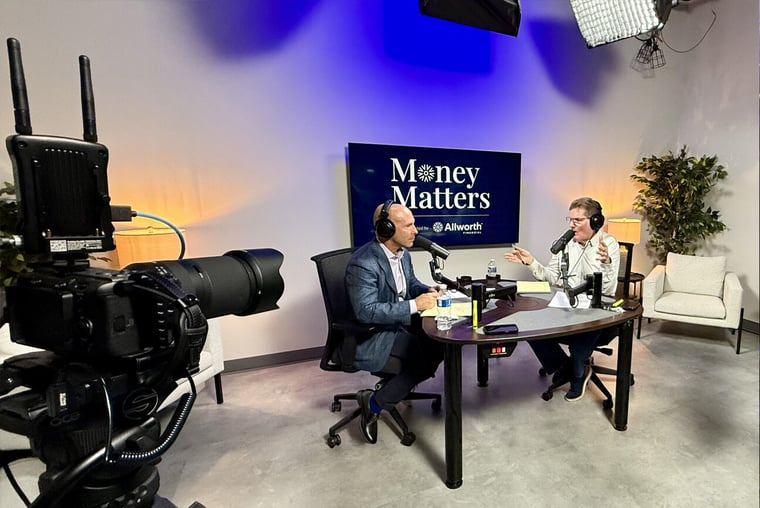
In this episode of Allworth’s Money Matters, Scott and Pat take a deep dive into two real-world case studies that highlight the critical difference between being sold a product and receiving fiduciary advice. First, they talk with a caller managing a $4.5 million estate who has been pitched a complex whole-life insurance strategy. Then, they address a $1.4 million retirement dilemma involving inherited assets and the "liquidity gap."
What you’ll learn in this episode:
The Whole Life Red Flag: Why insurance "leverage" strategies often benefit the advisor more than the client.
Inherited IRA Mastery: How to manage large inherited accounts without triggering unnecessary taxes or penalties.
The Truth About Bonds: Why your current bond allocation might be creating a "liquidity trap" for your early retirement.
Fiduciary vs. Commission: How to tell if your advisor is building a plan or just making a sale.
Join Money Matters: Get your most pressing financial questions answered by Allworth's co-founders Scott Hanson and Pat McClain live on-air! Call 833-99-WORTH. Or ask a question by clicking here. You can also be on the air by emailing Scott and Pat at questions@moneymatters.com.
Scott: Welcome to Allworth's "Money Matters". Scott Hanson.
Pat: Pat McClain. Thanks for joining us.
Scott: I think we have a good program lined up for you today. We've got a couple of good calls.
Pat: As usual, it's going to be exciting.
Scott: Yes, we're hoping. We're going to do our best.
Pat: Exciting show.
Scott: We're going to do our best. We thought this program, before we go to the calls, most investors know the importance of having some fixed income in their portfolio. Our experience has been, very few people really understand how bonds work.
Pat: We had a call last week, and we dug into it a little bit about bonds work, but we didn't really spend any time on it. We just touched the surface. And so, we thought we'd spend a little time at the start of the program just talking about the underlying mechanics of a bond, and why interest rates, when the interest rates move, why the value of your bond will fluctuate, and why a bond that you purchased 20 years ago may not make sense for you to keep today, even though it had a high coupon. I'll give you a prime example.
So, years ago, this is back in the '90s, the telephone company Pacific Bell on the West Coast had this retirement offer, where the way it was worked, someone could take a pension lump sum, turn around and buy U.S. treasuries that were yielding about 8% of the time buy U.S. treasuries, and have an income equal to what a joint survivor pension would have been through the company while preserving the principle and having the cash to boot, right? So, otherwise, you take the pension from the company, when the last spouse dies, there's nothing there. So, you both get killed in a car...
Scott: You could buy 30-year treasuries, 8% higher monthly pension, when you die...
Pat: Yeah. So, we had like 25-year treasuries. And it didn't take a lot of convincing. Take the lump sum, we'll buy treasuries. Sometimes it made sense to do things other than just that. But I particularly remember one client though, super conservative. Well, what happened with rates as time went on? They went down, down, down. So, suddenly, rates are very low. And someone who went out and bought a bond in that market, rather than get an 8%, would get 3% on a longer term bond. So, I went to my client and I said, "Hey, I think we should sell those bonds that you own." And he's like, "What? Are you out of your mind? They're paying 8%." And I said, "Well, no, they were paying 8%, but right now, the market has bid up the value of those bonds."
Scott: So, they were paying 8% on the principal invested, but what they're currently paying is whatever the current yield is on a new issue bond of that maturity.
Pat: That's right. So, let's say it was $100,000 bond that was going to mature in 4 years, 5, whatever the timeframe was. That bond today might be trading for $130,000. So, each year, yes, you get 8% off $130,000, but that $130,000 is going to decline to $125,000 to $120,000 to $100,000 at maturity. So, yes, you get that higher coupon twice a year. You get that interest payment, but you're also seeing the value of that bond decline. So, I remember running through the numbers, explaining exactly how it's going to work. Was it a really steep yield curve at that point in time, Scott? Do you recall?
Scott: I think it was.
Pat: I think it was. I think it was. Okay.
Scott: Because we got some longer bonds.
Pat: Yes. And so, I said, I tried to explain, look, your yield of maturity at this point is, it's about 3% because of the value of the bond today. But he couldn't quite understand it. And so, I'm like, all right, your $1.4 million account is going to drop to $1.1. And you know it. It's just going to happen because...
Scott: We know it's going to happen because you're going to lose that premium.
Pat: Yes. So, how does this affect... So, go to the next thing about when people are viewing their bonds, how should they think about it?
Scott: Well, and think of it this way. So, let's say interest rates today, 5-year government bond is 4%. It's about where it is, I think, somewhere today, right, 4%. It's kind of a five-year note. So, let's make it longer. Let's make it a 10-year. Okay, paying 4.5%. So, I go and take $100,000. I buy a U.S. Treasury bond yielding 4.5%. Every year, I get $4,500 in interest. And at the end of the 10 years, I get my $100,000 back. That's how the bonds work. Pretty simple, right?
So, let's say I go and buy this. I'm happy with it. I'm getting $4,500. And it's a year from now, and interest rates have gone up to 5.5%. And Pat goes out and buys a bond for $100,000. And instead of getting $4,500 a year, he's getting $5,500 a year and his $100,000 back at the end of 10 years.
Pat: So, I'm buying the same bond, but...
Scott: It's a higher interest rate. And so, I'm holding the $4,500 a year and I'm thinking, "Shoot, I would rather have $5,500 a year, not $4,500 a year." So, I'm thinking, "Why don't I sell my bond that's only paying 4.5%, and I'm going to go buy the same one that Pat just bought at 5.5%?"
Pat: Brilliant, Scott.
Scott: Except the market will price that bond in, which means that $100,000 I paid in my cash for the $4,500 may be only worth $90,000 today. Because in order to get that 5.5% return...
Pat: Current yield.
Scott: ...I'm going to get $4,500 a year, or what the market's going to do, plus an increase in the value so that over time that $90,000, a current value, is going to go back up to the $100,000 upon maturity. That's why there's this teeter-totter of as interest rates go up, bond values go down, and as bond values go down, interest rates go up.
Pat: And when people are saying a bond is trading at a discount, it doesn't mean like you're getting it below market. It just means...
Scott: That's right. It's not on sale.
Pat: I've had, in my career, four or five people say to me, "Well, this advisor is getting me these bonds at a discount." I'm like, "Okay, there's no discount bond store. The discount bond store is no longer in existence."
Scott: Just the dollar store for bonds.
Pat: Right? All it means is that they're paying less than face value.
Scott: Which means your coupon, your stated interest rates, will be lower than what the market would be.
Pat: That's right. So...
Scott: Because part of your return is going to come from that discounted value, the increase of that by the time the bond goes down.
Pat: And what happens with bond prices? There's many things that affect bond prices. One is the credit quality of the issuer. So, let's say I went out and bought WorldCom when it was the premier company, or Enron when it was the premier company, and it was an AAA-rated bond.
Scott: At the time.
Pat: At the time. And then all of a sudden, it wasn't a good company anymore. And the likelihood that it would actually pay back all the money that I lent it...
Scott: Which is a bond, a loan.
Pat: Which is a bond. There's loanership and there's ownership. Loanership is lending or a bond. My bond would fall in value. So, it's credit quality. And you see this in everything. You see it in municipal governments. You see it in governments, world governments. You see it in corporations. You see it in special districts. So, that's credit quality. The second thing is what the bond market is doing itself.
Scott: Where rates are.
Pat: Yeah. If interest rates go up and you've got a coupon, your bond value will fall. If interest rates go down, your bond value will go up, and has nothing to do with the credit quality.
Scott: And oftentimes it makes sense to match maturity. So, if you know, for example, if that your plan is to retire in three years and go buy a lake house for $500,000 or whatever. You're like, "Oh, I know I need to do this in three years." You might say, "All right, I'm going to take $500,000, buy U.S. Treasury that matures in three years. You know exactly what's going to happen. But if you bought a 30-year Treasury, thinking, "Oh, I want Treasuries, they're safe." Thirty-year Treasury, three years out, you might be up twenty percent or down twenty depending on where interest rates are at that period of time. So, it's important to match those maturities.
Pat: So, individual bonds or not?
Scott: If you've got a large enough portfolio to have a great diversification, then they can make some sense. Otherwise, you have 5 bonds or 10 bonds?
Pat: It's not enough. Do you remember early in our career we would buy individual non-government?
Scott: Pat, I remember back in the financial crisis, I had a client. He was insistent upon having a bond ladder. I think about... I don't know what he had total. Maybe a million bucks or a million and a half or something like that. Not enough to really build a huge... Because there is a cost when you buy these bonds. Although you don't see it, there's a spread there that you... So, the less money you have to invest in a bond, the bigger that spread typically is going to be. So, maybe he had 8 bonds or 10 bonds. One was Ford Motor Company. Ford went bankrupt during the financial crisis. The bondholders got wiped out. It was an investment-grade bond going in.
Pat: Yeah, and his buyer.
Scott: And he would have thought Ford would go bankrupt.
Pat: Yes. So, that was... Look, well, early on in my career, I used to think, you know, "You get enough in there, you'll be okay." But that's not the case.
Scott: Enough what?
Pat: Enough bonds. If you have a big enough portfolio where you could get dozens of bonds. I mean, not 10, not 20, but dozens. Because if your yield is only 5% and you've got 20 different...you're done. I mean, it's just like...
Scott: You have 20 bonds and one goes bankrupt.
Pat: You just took the whole theory out of it, right? You took yourself out. Anyway, you know...
Scott: There's our bond lesson for today.
Pat: Yeah, welcome back. Let's take some calls and then I want to talk a little bit... While we're talking about bonds, I want to talk about private equity, buying life insurance companies that issue annuities, fixed annuities. And if that doesn't want to make you stay and listen, I don't know what will.
Scott: All right. Well, let's go to calls. Anyway, if you want to join us, we'd love to take your call. The best way to schedule a time... And we record every couple of weeks. We'll sit in the studio, take calls, so that we can schedule a time that's convenient for all of us. Just send us an email, questions@moneymatters.com, again, questions@moneymatters.com. Now, let's chat with Brad. Brad, you're with Allworth's Money Matters.
Brad: Hi, guys. How are you?
Scott: Never better.
Brad: Good to hear. Yeah, so my dilemma. Hope you guys can be the deciding factor for me on this.
Pat: All right. That sounds like a lot of responsibility, but we're up for the job.
Brad: I love it. Yeah, recently started working with a new advisor. Right out of the gate, he's recommending a whole life policy for me, leveraging inherited IRA money. The problem is...
Scott: Leveraging an... How does that work?
Brad: I'm sorry?
Pat: How's that work?
Scott: What do you mean leveraging an inherited IRA?
Pat: I think I could actually describe it for you. He wants you to take the money out of the inherited IRA, pay taxes on them, take the remaining amount, buy a whole life insurance policy so that at some point in the future, it is multiple times that of the IRA you inherited. Does that sound right?
Brad: That sounds exactly right.
Pat: There we go. I've got the pitch down. I started in life insurance sales.
Scott: I did as well, but they didn't have Roth IRAs back then, or inherited.
Pat: Scott, I was curious to hear what the... Or inherited IRAs, yeah. Okay. So, tell us about your overall financial situation, Brad.
Brad: Overall, so I just turned 50 this year, yeah. What do we got? Between my wife and I, we got about three mil in IRA. We've got about $600 in Roth. We've got about $780 in our brokerage. And then in the inherited IRA, I have about 75k. So, he's looking to leverage that for a $75,000 policy.
Pat: Yeah. What? Wait, wait. Stop, stop. He wants you to... You inherited 75. You take the money out. You pay taxes on it. There's probably about 40 left.
Scott: Because you can't... You can't own a life...
Pat: You're gonna pay taxes on it though. So, he wants you to buy a single premium whole life policy?
Brad: Yeah. And I'm gonna butcher this, but it's a $65,000 base with a $10,000 blended term, $75,000 permanent life insurance.
Pat: How old is this guy?
Brad: I think he's around my age. Yeah.
Pat: Does he work...?
Scott: Let me ask you this, what did he recommend on your brokerage account?
Brad: To be honest, he's just running it. So, I think I'm in 65% equities on that.
Scott: And what do you have in the IRA?
Pat: So, out of curiosity, he came up with a solution for part of your assets, but not all your assets?
Brad: Just for that inherited IRA. That one, he was kind of stickler on. Like, "Oh, this should be better appropriated for whole life insurance policy." So...
Pat: He meant to say, "Into a large commission for me." That's what he meant to say.
Brad: That's the rub.
Pat: This is terrible. Well, first of all, do you have any children at home?
Brad: Two at home, yes.
Pat: And do you have life insurance now?
Brad: We have term, yeah.
Pat: How much term do you have?
Brad: I think we have a mill for both me and my wife.
Pat: And what is your income?
Brad: We're at about $350.
Pat: Each?
Brad: Combined.
Scott: And did he recommend you increase your term life insurance?
Brad: Coincidentally, he did. He recommended we use some of the profits from the brokerage account to pay for additional term.
Pat: Term insurance or universal life or whole life?
Brad: Additional term. But, yeah, just pitching the whole life with the inherited.
Pat: Does he work for a life insurance company?
Brad: Northwestern Mutual.
Scott: Okay, well, that's your answer.
Pat: Oh, there we go. There we go. You go to Sears, you get Craftsman. That's an old... You're old enough to understand that.
Brad: I am. Yeah. Just a parking lot now.
Scott: So, I have an inherited IRA.
Pat: Did you leverage it, Scott?
Scott: No.
Pat: Okay, thank you.
Scott: My wife has an inherited IRA.
Pat: Did she leverage it?
Scott: No.
Pat: Okay.
Scott: And an inherited....
Pat: You got an inherited from your dad.
Scott: Uh-huh.
Pat: Kind of a hitter.
Scott: Wasn't very big, but...
Pat: I wouldn't expect that your... I expect your dad enjoyed most of it.
Scott: But I just... You just inherited this, Brad?
Brad: About a year and a half ago, two years ago.
Scott: So, you've got to distribute it within 10 years.
Brad: Correct.
Scott: And is that why he said, "Let's put it here, that way, we can protect it," or something?
Brad: Yeah, he just thinks it's a better investment.
Scott: Yeah, it's a terrible word.
Brad: But, I mean, for years I was listening to Dave Ramsey, and I know he just berated callers whenever they brought that topic up, so...
Scott: Here's when whole life's important. When you need life insurance for your whole life. Which there's only a couple of times I can see where that's needed. One is, let's say there's a pension that's dependent upon you that's going to cease upon your death, and you need that to be replaced. Maybe there's an age difference. Then whole life would make some sense. Because that income will cease upon your death. For most people, they get to a point where they either have financial independence or they retire on some sort of... They're not working forever.
Pat: It makes sense for estate planning and in some situations...
Scott: And then in estate planning.
Pat: Which would include special needs for a child or a relative. Those are the only times. I think this is a terrible idea. And by the way, did he recommend bond in the IRAs or the Roth IRA?
Brad: Yes, he's moving actually a lot of money into bonds right now.
Pat: Okay, well, this is...
Scott: Moving a lot of money into bonds. That's not what you asked.
Pat: So, you've got seven... Oh, that's what I asked.
Scott: I know, but...
Pat: But he's got bonds in the brokerage account.
Scott: But Brad, you're 50. What percentage of your portfolio is in equities versus bonds?
Brad: I think 65%.
Scott: And he wants you to reduce that?
Brad: To be honest, guys, I kind of just let him run with that.
Scott: Here's my... Well, look, I think you know, you've got the wrong advisor. I hate to say it. And Northwestern, there's nothing wrong with the company. The problem is, you work for an insurance company, there's an expectation that you sell insurance. That's what the company exists for. That's what they're in business to do.
Pat: We have a division inside our company that actually sells insurance. But the advisors refer...
Scott: And they don't get paid a dime on it.
Pat: Correct.
Scott: And we try to do fee-based insurance whenever possible.
Pat: If you had a need for insurance, they would refer you internally into the insurance. When I tell you we have a division, I think it's one or two people. But it's just really small for those needs. So, at the very beginning, I think your equity, if it's 65%, you should be more weighted equity. And you shouldn't have any bonds in your brokerage account whatsoever. All the bonds should actually either be the Roth or the IRA. You're a great saver. How old are the kids?
Brad: Thirteen and ten.
Pat: And you're funding the 529 plans?
Brad: We are, yes.
Pat: Okay. How much are the 529 plans?
Brad: We got $320 in that.
Pat: $160 each?
Brad: $160 each, yeah.
Pat: That's pretty fully funded. That is fully funded. I would actually take that money out of the inherited IRA. And you're obviously making...
Scott: I'd spread it out over the next 10 years, though.
Pat: Yes, correct. And then, yeah, you might need a little bit more term insurance, but I don't think you should... You don't need to buy it attached to a whole life policy. Just go online. Just go to selectquote.com or something like that and buy some cheap, inexpensive... They're 10 and 13, I'd buy a 10-year level term for both you and your spouse.
Brad: So, do bump up the term.
Pat: Yeah. Oh, absolutely bump up the term, but don't buy any whole life.
Scott: I wouldn't do the whole life.
Pat: You have no need for it. And I wouldn't use this advisor.
Brad: Okay.
Pat: It's just flat out.
Scott: Well, no, the thing is, look, I asked you what's his recommendation on the brokerage account, he's still working on it. So, the first thing he leads off with is a product sale of which he earns a commission. The very first thing he leads off with. At least if he was a decent salesperson, he would have done the planning first and slipped it in after you're really excited about everything else.
Brad: True, true.
Scott: I'm just being like...
Pat: Well, Scott, you don't even know this guy.
Scott: So, he's not even a good salesperson, he's not even a good life insurance salesman. You don't even know what you're buying. You don't even know you're buying until after you're sold.
Brad: Yeah, it did seem hasty to me, so that's why I was calling you guys.
Pat: No, no. And you want to get a little bit more aggressive in the portfolio. And like I said, that brokerage account should be managed really aggressively and tax efficiently.
Scott: Yes, very tax efficient.
Brad: Okay, due to my age or just...?
Scott: Your income.
Pat: No, well, first of all, your income. And the second of all, is you want something in there that actually generates almost no income and capital gains whatsoever. And it's easy to do because you've got so much room on your IRAs side. You could get to a 70/30 portfolio and have this thing filled with nothing but super tax efficient equities, I mean, super. And then you layer the rest of the portfolio, the bond in the IRAs and the Roth IRAs. So, again, it's asset location, not asset allocation.
Brad: Gotcha.
Pat: Yeah. And the kids, 529, you're a great saver. Holy smokes.
Scott: Yeah, you are.
Pat: Great saver. Great saver.
Brad: Yeah, it's funny you say that because my niece and nephew are both going to school out of state, but God, the out-of-state tuition is ridiculous, like 75 per, so that's why...
Pat: Well, what state do you live in?
Brad: We're in California.
Pat: All right. So, look, I'll tell you what I told my kids. I'm like, well, I don't know if you want to take parental advice from me. I don't know. Let's just start with that.
Scott: Your kids did turn out pretty well.
Pat: Well, let's just start with that. My kids toured Boulder, Colorado School, which is a state school in Boulder. And I said to them, I am not paying out-of-state tuitions for an in-state college. If you want to go to a small private college with small classrooms that has a distinct product, I can see that's different than a state school, I will be more than happy to pay for that. But you're not going to Chico State just because it's located in Boulder.
Scott: Which is probably a pretty good equivalent.
Pat: Right. So, the kids understood that.
Scott: And one planning... So, Brad, my son went to Boston College, which I think they prided in themselves on, like, the third most expensive university in the nation at the time. And I actually planned, almost to the penny, my 529 plan. What I didn't factor in was the cost to go visit him. We live outside of Sacramento, there's not a lot of shopping. Then when we were in Boston, my wife wanted to go pop through a couple shops. And with all that, I did not factor in that additional cost. And I don't know if the 529 would have funded that anyway.
Pat: I don't think so, Scott.
Scott: I just like to remind myself.
Pat: But, you know, it's interesting, your kids are young enough, Brad, that by the time they go to college, the 13 year old, in 5 years, I suspect the pricing of college is going to look significantly different in five years than it is today. Just because of what's happening in the colleges.
Scott: It's a tale of two colleges right now, right? Like, there's the high end colleges, the prestige colleges, what, 5% acceptance rates or whatever. And then there's these other colleges that are closing. They can't get the enrollment. But anyway. All right. Appreciate the call, Brad.
Brad: Appreciate your time, guys.
Scott: Listen, I would talk to a couple other advisors, "Here's my situation. What would you recommend?" I bet no one else is going to recommend this leveraging...
Pat: Leverage.
Scott: Leverage.
Pat: You gotta give them that.
Scott: Yeah, "All right, he's an okay life insurance salesman." No. So, Pat and I, this is 35 years ago, we both started... That's where we met, it was an insurance company. We didn't last there too long. But every problem, the solution was life insurance. Saving for kids' education? Oh, a universal life insurance policy. Whatever it was, life insurance. It was life insurance, life insurance, life insurance.
Pat: Yes. If all you have is a hammer, the big easy. Remember that?
Scott: Oh, my.
Pat: If all you have is a hammer, everything looks like a nail.
Scott: Yeah. We're talking now with Jessica. Jessica, you're with Allworth's "Money Matters".
Jessica: I'm currently 58, and I had an unexpected surgery last year, so I cannot work. And my portfolio is over a million. And I think I'm going to start distribution right now.
Pat: Have you applied for a Social Security disability or state income disability?
Jessica: No.
Pat: And why?
Jessica: The disability is so complicated and no doctor wants to finish the form. So, I wanted to start distribution. And my question is, what would be my best option?
Scott: Wait until 59 and a half.
Pat: But you could do it... Is it an IRA or a 401(k)?
Jessica: IRA.
Pat: It's not in a 401(k). You've rolled it out of your employers into an IRA.
Jessica: Yeah. I have three accounts in my IRA. Inherited...
Pat: How much is in the inherited IRA?
Jessica: Inherited is about $830 something.
Pat: $830,000, when did...?
Scott: When did you inherit that?
Jessica: 2017 from my late husband.
Scott: Got it. Sorry about that.
Pat: Okay. Did you move it into your name or did you keep it in his?
Jessica: It's my name.
Pat: Okay. All right. What else do you have?
Jessica: I have rollover and Roth.
Pat: And how much is in the rollover?
Jessica: Rollover was $430, $450. I don't remember.
Pat: Okay. And how much is in the Roth?
Jessica: Roth is only two years of conversion, a little over a 100k, I think.
Pat: Okay. And then what else do you have investable, like in a brokerage account or savings or anything like that?
Jessica: I have a brokerage account and that was mainly to cover my mortgage, which is matured. It's going to mature in 2028.
Pat: What do you mean mature?
Jessica: A little over 50k. It's very small.
Pat: 50k in the brokerage account. And what do you mean by mature? Does the interest...?
Jessica: The mortgage is going to be done.
Pat: Oh, it will be paid off in 2028.
Jessica: Yes.
Pat: Okay.
Pat: And the reason we ask is...
Scott: And did you have a 401(k) at your employer when you had your surgery?
Jessica: I think I had a Roth. That is also a very small account, about $3,000.
Scott: I mean, through your employer, did you have a retirement account, 401(k)?
Jessica: It's a Roth. You know, it's through IHS. I was taking care of my mom.
Pat: Okay, okay. So, and the reason we asked this question is because getting at qualified plans or...
Scott: IRAs, 401(k)s, Social Security.
Pat: That sort of thing. Is mostly driven by age, right? When you can get at them with penalties or without penalties, and when you're required to take distributions on are driven by age. So, this inherited IRA was in your husband's name, but you moved it into your name.
Jessica: My name.
Pat: And so, here's the rules around this, if you're 59 and a half or younger, you cannot get at those dollars with the exception of the Roth, and then you can only get at some of it prior to age 59 and a half. Unless you actually do a series of substantially equal payments over five years, and we would have to take into account the rollover and the inherited IRAs of that.
Scott: When do you turn 59 and a half?
Jessica: I'm 58 right now, so...
Pat: I know. Fifty-eight and what?
Jessica: ...another one year and a half.
Pat: And the other way around there is if you're on Social Security disability, you could get at these IRAs without penalty whenever you're age. So, when you said that...
Jessica: I thought inherited is no penalty.
Pat: Well, you moved it into your name. It was your spouse's IRA. Scott?
Scott: That's right.
Pat: It was your spouse's IRA and you moved it into your name, so it became your IRA.
Scott: Had you kept it a beneficiary IRA...
Pat: We'd have more flexibility here. And I've got to check myself on that.
Scott: No, you don't.
Jessica: But what do you mean? If I'm the beneficiary, I need to first...?
Pat: Well, you moved it. I understand he died, and then you moved it into your name. It doesn't have his name on it anymore, correct?
Jessica: Well, yes, I assume.
Scott: What it makes it is a big distinction.
Pat: Well, it makes a big difference. I would check that.
Scott: My guess is she rolled it into her account.
Pat: That would be my guess.
Scott: But she wasn't planning on retiring at 57.
Pat: So, you stated earlier that a doctor wouldn't fill the form out for you to go on state disability or Social Security.
Jessica: Yeah, apparently it's a complicated procedure because, you know, I didn't think... I was expecting myself to work after the surgery. Even not right after the surgery, but at least a few months later, I thought I could work. But my eyesight is not very good.
Pat: When was the last time you were employed?
Jessica: I was under IHS until my mom passed away in February.
Pat: Okay, all right, I understand. So, you want to use that Roth IRA. You could pull your deposits out.
Scott: They're not deposits, conversion.
Pat: It was a conversion.
Scott: Yeah. So, it's...
Jessica: It was conversion, yeah. But so, the inheritance...
Scott: That will be subject to penalty. That would be subject to penalty.
Jessica: So, the inheritance is not...
Pat: You put it in your name.
Jessica: I mean, it's still penalized, you think?
Pat: Yes, if you put it in your name.
Scott: It depends. If it's listed as a beneficiary of, and then it's got your deceased husband's name on it, then it's classified as a beneficiary IRA. But the way it's structured now, you waived that option when you chose to transfer it into your name.
Jessica: Even though it says inherited IRA?
Pat: What does it say on it? Do you have a...?
Scott: That's why we...
Pat: Tell us what it says on the statement.
Jessica: It just says inherited IRA.
Scott: All right. Well, if it states that on the statement, then...
Pat: Then you can get at it without penalty. So, that's where you get your income from.
Scott: Yeah, until you're 59 and a half.
Pat: And then you could move it all into one IRA and do whatever you'd like with it.
Jessica: Early?
Pat: Yeah. But if it's an inherited IRA, which means it has his name on it.
Scott: Somewhere on there.
Jessica: Maybe somewhere, but I mean, it's under my statement, so I assume it's mine.
Pat: Understand, understand, understand. But if it said decedent IRA, beneficiary IRA, something along those lines, then you could get at it without penalty.
Scott: I would check with the custodian of that account prior to that.
Pat: Otherwise, I would wait all I could until you're 59 and a half. I'd use up all that brokerage account, I'd use whatever I could until 59 and a half, rather than start a 5-year distribution.
Scott: Even a home equity line of credit, if you could.
Pat: I would do that. Before I started, I did a series 72T, which is a series of substantially equal payments.
Scott: But you got to do it for five years once you start it.
Pat: For five years once you start.
Jessica: Yeah. I know that rule, but apparently, you know, distributing at a certain amount for five years, it does not seem so flexible.
Scott: That's not. That's exactly how... It's not flexible.
Pat: That's right. That's what we're saying that you want to avoid it at all costs. So, you want to make sure that that IRA that you inherited is called a decedent IRA. Check with the trustee. If not, spend down. If you can't get to that 72T, use a home equity line of credit, credit cards, brokerage account, anything you can do to get you to 59 and a half.
Scott: I don't know about credit cards, but...
Pat: Well, probably not credit cards. All right.
Jessica: Well...
Pat: What's that?
Jessica: ...like I said, I have a brokerage account that I can use. It's just that I was told by one of the advisors that inherited account does not count.
Scott: That is great. We 100% agree with you.
Pat: We agree with you, but you have to make sure that you didn't convert it from an inherited IRA because this was your spouse. And you can move an inherited IRA out of its classification of inherited IRA into your own IRA.
Scott: That's correct.
Pat: If it was a non-spouse, you couldn't do that, but you can as a spouse..
Scott: So, we don't know.
Pat: So, we don't know what it's registered for. So, your advisor might be right or they might be wrong.
Scott: I would check with the custodian, whoever the financial company is behind that inherited IRA to find out, if you take a distribution, will this be classified as an inherited IRA distribution, or was this, in fact, now based upon your own IRA and subject to those penalty?
Pat: And we don't know that unless we actually look at a statement. So, appreciate the call.
Scott: Yeah. We wish you well. Sorry.
Pat: So, as we talked about bonds early on bonds have become more exotic in the last 20 years. There's tranches of bonds.
Scott: That's right. Different packages.
Pat: Different packages of the bonds that go to default last.
Scott: They're tied to these derivatives. Okay, yeah. Sliced and diced into many different ways.
Pat: Into many, many pieces. We saw this during the mortgage crisis, where they were dicing them.
Scott: Collateralized mortgage obligations.
Pat: Loan obligations or mortgage obligations.
Scott: Yeah, that's right.
Pat: So, the big private markets, and these are things, you know, if you listen to the show at any point in time, you know that we've talked about how the private markets are taking up a larger share of the capital markets, and then they have historically, and the public markets are actually shrinking. And therefore, that's actually, those things are being offered to investors.
Scott: It's the same thing in the fixed income market where companies used to issue all these bonds. Now, there's all this private credit where it's like, it doesn't go through the typical bond route.
Pat: And they lend to smaller and smaller companies and they don't issue bonds.
Scott: And many of these are also floating rate, which means that as interest rates go up and down, the borrower, their interest fluctuates, their payment fluctuates. And as the owner of that, your coupon, your interest, income will fluctuates.
Pat: And if the credit quality of the borrower drops too, the interest rates can go up, which has a compounding effect.
Scott: That's exactly right.
Pat: It has a spiral effect, right? So, imagine, like, if you've got a credit card and all of a sudden, you're borrowing it 15%, and then the credit card company goes, "Hey, you..."
Scott: You miss a payment. Like, "Well, you missed the payment. Now, it's going to be 25%, not at 15%."
Pat: Yeah. Or you lost your job, "I know you're still making the payment, but you lost your job. We're going to raise the interest rate."
Scott: That's exactly how a lot of these work. That's exactly right. Different than a bond.
Pat: Much different than a bond. The issuer has more claws. They can dig in deeper. So, what the private equity has kind of discovered is that, because of banking...
Scott: Which is actually private credit, but...
Pat: Okay. But often times...
Scott: Private firms.
Pat: Private firms. Thank you, Scott. Because you'll see big firms like Ares or... That's just an example.
Scott: KKR.
Pat: KKR. That they're both in the private equity and private credit markets of it, sometimes in the same companies. But because of the regulations in the banking, a lot of this stuff has moved away from banking, the lending, and it's moved to this private credit. And so...
Scott: Particularly after the financial crisis, they got clamped down, "Well, we're going to make sure this doesn't happen again."
Pat: And so, one of the areas that is not as regulated as banking is insurance, especially life insurance companies, which have massive amounts. I mean, you talk about how much bond life insurance companies own, it's a lot. They own a lot of bonds. Well...
Scott: And we talked earlier in the program about matching maturities. That's often, they look at, "What's our actual area of risk. One of these people are going to die who owns whole life policies. Some are going to trip and quit paying the premiums," and all that. "But there's certain percentage that'll own these till they die. And then we have to pay out these death benefits. Let's make sure we've got our portfolio set and structured so that we've got something that we can turn into cash the day we have to pay these."
Pat: Yes. So, that's life insurance. And then there's people that buy life annuities, fixed life annuities, where they take a lump sum of money and they buy a stream of income that will last till their dying day and their spouse's dying day or for a fixed period of time.
Scott: Immediate annuities.
Pat: So, private equity has been buying life insurance firms, and then stuffing the bonds from their private credit into that particular life insurance firm.
Scott: What could go wrong?
Pat: Well, we've seen this movie before in the savings and loan crisis. This movie's been played before because this is exactly what happened in the savings and loan crisis...
Scott: Back in the late '80s.
Pat: ...where many of the developers or pension funds did exactly this. And the reason I bring this up is, if you're looking at a fixed annuity, we're not talking just a short period of time. We're talking, oftentimes, you're in that investment for 15, 20, 25 years. You have no idea, especially if it's a life annuity. The highest yielding ones, the ones with the biggest payout, why do they have to have such a high payout, right? Because they're attracting capital, right? And how do they pay back that capital? Well, they pay it back with riskier assets and...
Scott: There's no other way. Obviously, it has to work that way.
Pat: And why are they doing it in insurance, Scott?
Scott: Because it's murky regulations state by state by state.
Scott: And it changes much slower than it does in publicly...
Scott: There's no Securities and Exchange Commission over insurance companies.
Pat: Correct.
Scott: It's a different regulatory scheme. They scheme on purpose.
Pat: And we've seen this where companies actually sell their pensions to annuity companies, too.
Scott: Oh, yeah. No, Pat, so I remember, one of my early clients, she'd retired from one of the airlines that went bankrupt a long time ago, Pan Am or one of those. And they had taken her pension and bought an immediate annuity with Executive Life. Was that the name of the company?
Pat: Oh, yeah, that's great memory.
Scott: And Executive Life loaded up on junk bonds.
Pat: Yeah, Michael Milken.
Scott: It was all a circular thing, very similar to this, right, very circular process. And her pension got whacked. Her annuity got whacked dramatically.
Pat: Because it was underwritten by Executive Life.
Scott: That's exactly right.
Pat: So, the reason I'm saying this is that, oftentimes, fixed insurance products are sold as, "Oh, they have no risk." They have no risk until they...
Scott: Have risk.
Pat: ...have risk. And normally when you notice the risk is when it's really, really bad, really bad.
Scott: And if you're buying an immediate annuity, you've just given up control of your principal. You've given it to the insurance company in exchange for a series of payments.
Pat: So, what do you do? One is you probably don't reach for the highest yielding one because that's an indication that they're able to pay that. It means that they've probably got things that are less than investment grade in the portfolio. And the other thing is you might want to spread those monies out in multiple immediate annuities.
Scott: Particularly if it's a large sum that you're talking about. I would agree with you on that. What a great discussion we've had today. Talking about bonds, annuities. We are a financial show. Hopefully, it was beneficial. If you found this beneficial, do us a favor and forward it on to somebody you think could also benefit from this. Give us a rating. And if you're not subscribed to our YouTube page, we would encourage you to do that. You can see our show. We do the whole show there. And there's also, we've got some videos where we solve some planning challenges and more. Sometimes it's little shorts and stuff. That's on our YouTube page. Anyway, this has been Scott Hanson and Pat McClain of Allworth's "Money Matters". See you next week.
Automated Voice: This program has been brought to you by Allworth Financial, a registered investment advisory firm. Any ideas presented during this program are not intended to provide specific financial advice. You should consult your own financial advisor, tax consultant, or a state-planning attorney to conduct your own due diligence.
Insights for Complex Wealth Decisions
Join our email list for exclusive commentary from our Chief Investment Officer, early access to expert-led webinars, and your complimentary Wealth Planning Checklist for Complex Portfolios.
We take your privacy seriously and respect your privacy choices. By submitting this information you agree to our Terms of Use Agreement, Privacy Policy, and to receive important notices and other communications electronically.