
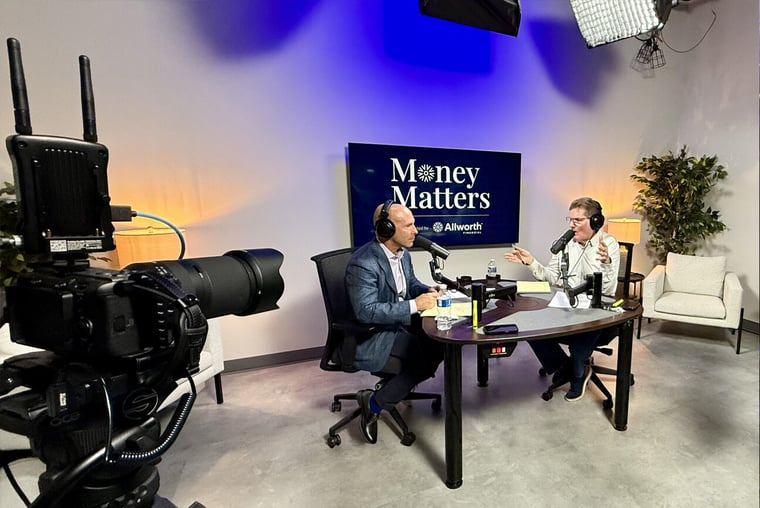
$3M+ Retirement: Long-Term Care, Early Inheritances & The "3 C's" Strategy
Are you prepared for the complexities of a high-value retirement? In this episode of Allworth’s Money Matters, Scott and Pat break down real-world case studies for a $3M+ retirement, specifically focusing on the math behind long-term care, the tax implications of early inheritances, and a powerful framework for tax efficiency known as the "3 C's."
In this episode, Scott and Pat discuss:
The Long-Term Care Dilemma: They analyze a $3.7M case study where the caller is retiring abroad. Does she actually need long-term care insurance, or can she "self-insure"? Scott and Pat explain the "elimination period" strategy that could save thousands in premiums.
Managing Early Inheritances: Using a $3.3M case study, Scott and Pat explore the pros and cons of buying a home for your children. They discuss how to manage early inheritances without creating family "real estate wars" or triggering unnecessary IRA taxes.
The "3 C's" Strategy: Allworth partner advisor Ben Abraham joins the show to reveal a strategy for maximizing tax efficiency by balancing stock concentration and charitable giving to fuel massive Roth Conversions.
Join Money Matters: Get your most pressing financial questions answered by Allworth's co-founders Scott Hanson and Pat McClain live on-air! Call 833-99-WORTH. Or ask a question by clicking here. You can also be on the air by emailing Scott and Pat at questions@moneymatters.com.
Scott: Welcome to Allworth's "Money Matters". Scott Hanson.
Pat M.: Pat McClain. Thanks for being here.
Scott: Yep, we've got a great program lined up for you today as we talk about financial matters in this hot August.
Pat M.: Yes. And then we'll take some calls and then we're going to talk with one of our advisors in Indianapolis, Ben Abraham.
Scott: Yeah. About the three Cs of his planning technique.
Pat M.: So, that's a tease because we're not going to tell you what the three Cs are. You're going to have to stay and wait, or you can just fast forward
Scott: Pat and I, we've been doing this program since 1995, summer of 1995. And we started a little radio station, it was little at the time, Talk 650, in Sacramento. Then we moved to the bigger station in Sacramento, KFBK.
Pat M.: The Flamethrower of the Central Valley.
Scott: The same station where Rush Limbaugh created his program before he moved to New York.
Pat M.: Morton Downey Jr. was there at one point in time as well.
Scott: I recall the name, but I can't...
Pat M.: He was a...
Scott: Now, we're really dating ourselves.
Pat M.: We are.
Scott: This is an awful long little segue to talk about, they would encourage us to do these teases.
Pat M.: Oh, yes.
Scott: Right? To get people to stay through the breaks, so you do a tease. It's the same like if you watch news, they do a tease, "Coming up in tonight's program, I got this." There's these teases.
Pat M.: Like, "Oh, stay tuned. We've got a cat that chases a dog." That sort of thing. Yeah, so they did. We took some classes on radio etiquette, if you will.
Scott: I don't know. Yeah, I guess we kind of did.
Pat M.: Yeah, it was radio.
Scott: You know, the irony is we're not even broadcast on radio anymore. How much things have changed. It's just podcast now.
Pat M.: Yeah, in which case, you need no etiquette.
Scott: And I don't listen to terrestrial radio. I don't like the commercials anymore. I can't do it.
Pat M.: I listen to it. I listen to it. There was some people that I like that I would listen to.
Scott: I don't listen to anything anymore because you can get it all on podcast.
Pat M.: Yeah, I know. But there's some that I do, actually. But most I don't.
Scott: But whoever you're listening to, you could also, that afternoon, I imagine, get the podcast.
Pat M.: Really?
Scott: Really? All right, enough chit chat on this garbage. Why don't we just go to some calls here. If you'd like to be part of our program and have one of your questions answered, simply send us an email, questions@moneymatters.com, again, questions@moneymatters.com. We'll schedule time to get you on the air. We're starting out in California to talk with Stephanie. Stephanie here with Allworth's "Money Matters".
Stephanie: Hello. How are you?
Scott: Hi, Stephanie.
Stephanie: Trying to make a decision about long-term care insurance. Our assets seem to be right in that spot where it's not very clear if it's a good idea or not, so I could use some help.
Pat M.: Oh, I hate these questions.
Scott: Well, you're in California. It's like, "How do I get fire insurance on my home right now?" It's like it's so expensive. So, how old are you, Stephanie?
Stephanie: So, I'm 57. I'm married. My husband is 65. So, the age gap was one consideration that I thought might weigh into it. The other factor is we don't have kids. So, I know it's sometimes positioned as a way to protect assets for a guaranteed inheritance, but that's not a priority for us. We're trying to spend all our money.
Scott: Okay. Do you have any pension income, guaranteed income that comes in regardless of what's happening?
Stephanie: You know what? Social Security at some point at about $5,500 a month and some small pensions that add another $1,500.
Scott: And then what do you have in retirement savings as far as IRAs, other mutual funds, bank accounts?
Stephanie: So, I made a list here. I got preferred comp, is at $1.3 million, IRA, 401(k), $1.7 million, $70,000 in a Roth, about $100,000 mutual fund and $500,000 cash. We kind of have that reserved for a retirement home that we're building in Japan.
Pat M.: Wow. So, you have approximately $3.7 million.
Stephanie: Yes.
Scott: And then what was the preferred? What was that, the $1.3?
Pat M.: Not preferred. You meant deferred comp.
Stephanie: Yeah, deferred comp.
Scott: Okay. I'm like, this is...
Pat M.: Is it in a 457 or is it from a private company?
Stephanie: It's a private company, executive plan.
Pat M.: Okay. An executive deferred comp. Okay, $3.7. And do you own a mortgage?
Stephanie: House is paid off, $600,000.
Pat M.: And when you build this home in Japan, will you sell your house in California?
Stephanie: No. No, we'll use it. There's some resident restrictions over there, so we've had hold on that.
Scott: And have you priced into some long-term care? Because it's primarily, I'm thinking, you're concerned primarily, I would guess, is that your husband, something happens to him, it's many years, and it drains your financial assets.
Stephanie: Yes. So, I was looking if there's a strategy, does self-funding make sense or is there a strategy with insuring one of us, that might be a little more reasonable, that provides some coverage? I know it's hard to tell who might get...
Scott: So, I would look at... Have you shopped it at all?
Stephanie: No.
Scott: Okay. Do you know if he qualifies for long-term care insurance?
Stephanie: He should qualify. Yeah, but I mean the window is getting small.
Scott: Yeah, I get it. I understand.
Pat M.: So, I'd look into it. You can afford it. You can probably... You could go either direction on this.
Stephanie: That's why I'm calling
Scott: Yeah. Well, here's what you want to look at. And we don't know the cost because... I mean, there is 10% of the number of long-term care insurance policies written today than there were 25 years ago.
Pat M.: Because so many people have exited the market. The insurance companies have exited the market because they lost so much money on this for two reasons. One is low interest rates, which is how they reserve. And the other is because of adverse risk selection, oftentimes having to do with massive employer plans.
Scott: And the reason there's not many people buying them today, a lot of companies have exited, and people go to shop and they're like, "Oh, my gosh, how much do you want to charge for this? I think I'll just take my own chances." So, that's why I think it'd be important to look at some. I would look at two different types of policies. One is a standard policy that has a long...they call it an elimination period. Is that what they call it?
Pat M.: Elimination period.
Scott: Yeah. Think of it like a deductible on your car. You probably don't have a $250 deductible on your car, would be my guess. You have a higher deductible because you're like, "I'm only going to wait until something really major." It's the same kind of concept. So, considering that most long-term care needs are shorter, I mean, I think the concern is it's like a 10-year something. That's where it's a real problem. Most are shorter. So, if you self-insure for the short and then say, "Then I want a policy that's going to pay a lifetime benefit should something happen, my husband gets Alzheimer's and lives 15 years with Alzheimer's or dementia."
Pat M.: So, as an example, I go into a long-term care facility. The insurance doesn't kick in until day 366 or 730.
Scott: Depending on how long the waiting period is.
Pat M.: Which is the elimination or a waiting period, right? So, I've self-insured myself for a specific period of time and then after that, then the insurance company kicks in. The premiums, it pushes the premiums down because they know, the insurance company knows that most long-term care stays are less than nine months.
Scott: Less than nine months for men and, whatever, less than two years for women.
Stephanie: Okay.
Scott: So, the second kind of policy you could look at, think of it like a single payment policy. And they're essentially life insurance policies, like a universal life. I don't know if whole life has it as well, I would imagine. Universal life insurance policy where you put in a chunk of money, let's call it, maybe it might be $150 grand, $200 grand, depending on how much benefit you want to buy. And it's in a life insurance policy. If you need long-term care, they essentially start taking your money first, and when you've exhausted your dollars, then the insurance kicks in. And if there's never any long-term care needed, then when someone passes away, there's a death benefit equal to the amount of the life insurance, the amount you...
Pat M.: The downside to these is the fact that...
Scott: We have to put the money up.
Pat M.: You put the money in, you're going to have that money tied up forever. But they have plenty of money. You've got that money in the deferred comp that's actually going to be pushed out when your husband severs employment.
Scott: Is it a 457 plan, or is it a deferred comp from an employer?
Pat M.: It's an executive deferred comp.
Stephanie: It's on a 10-year annuity pay.
Pat M.: See? So, that's being paid out. So, you can buy these things. And you have money in a brokerage account, you said as well. You can buy these things lump sum. What happens is my cash never grows in there. So, if I put $150 grand in there...
Scott: Twenty years now it's worth $150.
Pat M.: ...it's worth $150.
Scott: Opportunity cost.
Pat M.: What the insurance company does is actually takes that money, the interest it earns, and uses it to fund their reserve for the long-term care. So, essentially, these life insurance policies do exactly what Scott just described with the elimination period. The difference is you know the outcome. The bad thing is most of them are not indexed to inflation either. So, those are the two places you could go. I would probably, in your situation, if I had a choice, I'd probably buy the life insurance policy, if I bought one at all. But you can self-insure.
Scott: But until you know the price...
Pat M.: You can't make a decision. But you're fine to self-insure. I mean, if your net worth was $2 million higher, I'd say, "Ah, don't worry about it."
Scott: Yes, exactly.
Pat M.: Don't worry about it. If your net worth is $2 million lower, I'd say, "Don't buy it."
Scott: Because you can't afford it.
Pat M.: Because you can't afford it. But that's why I hate these calls, is because you're right... And you...
Scott: We don't hate the... It's just... There's certain things in life that are really hard to... That's a really challenging plan for financial because the cost can be so great that it pretty much says, "If you want to put your retirement plans on hold, we can get you insurance so that if you need long-term care, you don't have to worry about anything." But then you have no quality of life until that point. So, you're essentially saying, "I'm not going to have any quality of life the rest of my life."
Pat M.: Which is why I'd actually buy the life insurance one because I know the outcome and when it comes. The downside is that they have no cost of living adjustment on it. But you've got plenty of money that you could tie it up and you could reverse it at any time if you wanted to.
Stephanie: Would you do one of these policies on one of us, which is sort of like making the middle decision and sort of hedging our bets, but not over-insuring.
Pat M.: But some of them will cover both of you as well.
Scott: Yeah, I'd look at that. But I don't see the need for you having long-term care. You've got plenty of assets.
Stephanie: Right. Yeah. Okay. Good. Now, that really helps. Thank you for taking the call.
Scott: Yeah, glad you called. Wish you well, Stephanie.
Stephanie: Appreciate you, guys.
Scott: That's The only one I've talked to who is saying they're building a vacation home in Japan. That sounds kind of cool.
Stephanie: All right. Well, now it's going to be pretty amazing, so...
Scott: Oh, good. We'll come visit.
Stephanie: Okay. You're invited.
Scott: Thanks.
Stephanie: Thank you.
Scott: Actually, I went to Japan a few years ago. I climbed Mount Fuji with my daughter and a couple of friends. I love Japan. We had a phenomenal experience. It was just a great experience. I'd like to go back to Japan sometime.
Pat M.: Okay. That's nice.
Scott: But I have no intention of building a vacation home.
Pat M.: How high is Mount Fuji?
Scott: It's like 11,000 or 12,000.
Pat M.: And how long did it take you to climb it? It's not like rock climbing. You're hiking it, correct?
Scott: You're hiking, yeah. We started at the base of the mountain, which most people don't.
Pat M.: The base of the mountain is not at sea level.
Scott: 2,000 feet or something. I don't know. It took us 8 or 10 hours or something.
Pat M.: Sounds miserable.
Scott: It was awesome. I had a great experience.
Pat M.: That absolutely sounds miserable.
Scott: It was fun, actually. Let's talk now with Pat. Pat, you're with Allworth's "Money Matters".
Pat: So, I have a couple of questions. So, I guess the first question is kind of a scenario I'd like your feedback on. And the second has to do with some decision I have to make in that scenario. So, the scenario is this. My wife and I are going to be buying a house to help one of our children. So, you guys have talked about opportunities to give the kids their inheritance early. So, this is kind of one of those scenarios. We've got some kids who are, financial situation isn't nearly as good as ours. They're really never going to make enough money to buy a house. But they'll inherit. Twenty years or so from now, I will turn 70 in April of next year. They'll get way more than enough in an inheritance to buy a house outright right then. But why would...?
Scott: I mean, look, the reality is home prices in many parts of the country, if you're looking at a median home price of $800,000 or something for a little, tiny...or even worse in parts of the country. Even if someone has a phenomenal job making great wage, husband and wife both making great wage, you're in San Jose trying to buy a median house at $1.9 million or whatever the price, it's going to be very difficult. It's almost impossible without the help of a family member with a down payment. So, what's the scenario look like?
Pat: Yeah, so we have about... So, look, you always ask all these things. I've talked to you guys a couple of times on the phone. And, Scott, you and I actually met and had lunch once back in the '90s at a men's conference up at Tahoe. You probably don't remember me. But anyway, I remember you very well.
Scott: If I saw you, I would, but I don't recognize your voice.
Pat: Well, you and I are both...
Scott: Good looking?
Pat: ...follicly challenged.
Scott: Is that a challenge?
Pat: You know what I mean?
Scott: Oh, it's a blessing.
Pat: Follicly challenged. What do they say? God made some people with hair and others with perfect heads. I don't remember who said that.
Scott: Only bald people say that, by the way, Pat. But anyway.
Pat: There are lots of bald jokes. I'll avoid them for now. But so the scenario, so we have about $3.3 million in our IRAs. And I say IRAs, I have a traditional IRA and a SEP IRA. These are all pre-tax IRAs. You know, $100,000 or so in a brokerage account. I make about $260,000 a year. I've got a $40,000 a year or $50,000 a year Air Force pension. And I'll start collecting Social Security in April between my wife and I. My wife actually doesn't qualify, but she gets half of mine. And so, we'll both take Social Security starting in April when I turn 70, and that'll be $80,000 a year. And I'm going to cut back at that point to halftime and work three more years. So, I'll be making probably around $150,000, $160,000 a year for those next three years. So, that's kind of the working scenario.
We have two homes right now. We have a primary residence in the Sacramento region that is worth about $1.2 million. And we owe about $550,000 on it. And we have another home that was the home we had before we moved into this one that we have other kids living in in Roseville, California. And that one is worth about $720,000, and I owe around $380,000 on it. And so, in the current situation with kids in the one house, we're getting a couple thousand months' rent well below market. And that's the same kind of scenario we're going to sort of create for these other kids, or we're going to buy a house, and...
Scott: And really quick, the $2,000 a month, does that cover the mortgage payment and the taxes and insurance?
Pat: It basically covers the mortgage and my taxes, insurance, expenses, pool service, all of that kind of stuff.
Pat M.: How many children do you have?
Pat: We have four. We have two that are doing very well. Got good education, both husband and wife, they have good jobs. And we helped one buy their house by helping them with the down payment, but the other one didn't really need any help. But they're both doing very well. And we got two that make like $22 an hour kind of jobs, and both husband and wife, and so, they need more help. But the whole equity thing is one of those challenges, but the kids aren't equal. They don't all have the same needs. But at the end of the day, we'll try to be fair to everybody. That is one of those challenges.
Scott: And so, I'm just curious, how are you calculating that?
Pat: Yeah, yeah. So, one of the question was...
Scott: I mean, if you're really trying... Because you give someone $100 grand, let's say, as a down payment for a house. I'm just throwing a number out. And you leave another $100 grand in your IRA as a beneficiary, they're two totally different things because of the tax structure of it.
Pat: True. That is true. So, we kind of will have two parts to our inheritance. That's one of the hard things. When you start talking about this, you start talking about, well, you got to do some math and like, "When do I think I'm going to die?" So, you got to get the actuarial tables out and go, so my wife and I got, "Well, we're going to get like a 20-year time horizon planning. And so, what age will our kids be?" And all of that kind of stuff? Of course, I could get by hit by a car in my fat, little, red Miata any day now. You just never know what really is going to happen.
Pat M.: Wait, wait, hold one second. Wait one second. A bald guy driving a Mazda Miata? That's a look. That's senior.
Pat: I've seen some imagery that is very [inaudible 00:19:14.993].
Pat M.: That is a look. That's a look.
Pat: I'm sure.
Pat M.: You're getting hit on a lot?
Pat: I wish I had. I wish I had. Like, hit on a lot. That is really, really never happening.
Pat M.: Well, you don't need to worry about getting...
Pat: My wife and I have been married for 37 years and there's no hitting on going on anywhere.
Scott: Well, okay, so what's your question here? What's question?
Pat: Yeah. So, one of the things is, with the house that we already have that kids are living in, we have, like, this great... You know, we have a $2.25 mortgage on our current house. We have a $3.5 on the rental, you know? And so that's all fine. We can let that ride. Everything's fine. But buying a house in this day and age at 7% interest rates and non-owner occupied and all of that is a whole different scenario. So, what we're looking, you know, because our kids will never be able to afford the house payment.
Scott: And, Pat, do you have any cash? Because you have $3.3 million in retirement accounts and $100,000 in a brokerage account.
Pat: No, not really. And the brokerage account is really more for home repairs, emergency fund, for vacations, all of that.
Scott: Pat?
Pat: So, we're gonna... So, here's the take. Oh, sorry.
Scott: So, exactly what scenario are you thinking of doing?
Pat: Yeah, so we're going to take out $165,000 or so out of our retirement account a year for five years, pay the tax on it so it works out to be about $120,000 to buy this $540,000 house and buy it. So, we're going to take out a short-term, you know, a $300,000 loan. And that's the kind of the plan. And then the kids will be paying us, so we'll have at least some income off of that. So, in other words, we're transferring that pre-tax part of our estate to an after-tax part of our estate over the next five years. And then that'll sit there as a growing asset house that the kids will pay some rent on that will help us have some income off of that.
Scott: And have you run the numbers, the taxes to see if four years makes more sense than six years, or...?
Pat: Yeah, one of the big... Yeah, I've got the spreadsheets. I'm a crazy person on spreadsheets, but...
Pat M.: Which one...? So, you know, you can make this work, but the scenario that I worry about for you is, there's some favoritism going on among the children. And unless your children are complete socialist and believe that outcomes should be 100% equal regardless of inputs, this probably is going to create some disharmony in the family.
Pat: Yeah, we've been...
Scott: Yeah. And the way to address that... So, example, what I did with my own family. So, my oldest daughter, I gave her some money for a down payment on her first house. The friends that she knows that owns house, she says every one of them had some assistance from their family, every one of them. And so, what I told my son, "Look at a couple of years when it's time for you, I'll do something similar." And the amount that I gave my daughter, I'm increasing by inflation every year until it's time for him to buy a house.
Pat M.: So, there's equity.
Scott: So, let's say I gave $10 grand, I would give $10 grand plus whatever the inflation was. So, maybe $11 grand down the road. So, that way, it's the same dollar that they were given.
Pat M.: So, you might want to think about this a little bit differently creatively, right? You can put in the money, and maybe they should own the homes, and that they actually have a note to you so that when you die in 20 or 30 years, it's paid out of the estate, the note is paid back out of the estate, very similar to how a reverse mortgage would work.
Scott: Because you own the other house that your kids are in, right?
Pat: Right.
Pat M.: And you're subsidizing. So, look, and I gotta tell you, I mean, you learn a lot from meeting with clients. And I met with clients... Oh, he and she, the husband and wife, been clients for years and years and years. And he was one of five children and father did pretty well, but he did very, very well. But when mom finally died, his mother finally died, he was given less money because he didn't need it. And it was a blow to him. Like, it wasn't that he needed the money.
Scott: No, I get it.
Pat M.: It's just that in his view, he was like, "Wait, wait, I'm not equal to my other siblings because they didn't work as hard as I did or sacrifice as much, or..."
Scott: My wife, her father had made some mention that he was thinking about not including her, he's 80 some odd, not including here in the will because she doesn't need the money. And it really bothered her. And we had conversations about it. And she's not about the money. It's just about...
Pat M.: Yeah, what they consider fair. So, you can afford to do what you're doing. The thing, if I was your advisor sitting in a room...
Scott: I like your idea, Pat, where Pat, the caller, owns the house. There's no reason you need to give it to the kids. You own the house.
Pat: Yeah. Well, one of the things is there's always drama, right? You guys got to know that, there's always drama.
Scott: Yeah, we have kids. We understand.
Pat: Yeah, yeah, exactly. So, my oldest is 45. This is the youngest. She's 38. But part of the drama is they're in a situation, without wanting to go into any details for their privacy sake, but it wouldn't be good for them to have a large asset that somebody else might come after.
Scott: So, you're going to own it anyway.
Pat: So, I'm going to own it until later on. But my intent is, frankly, they get the upfront benefit of low rent, and then at the end, they inherit it. The other houses get sold in the... That gets split between the other kids. And also, the retirement accounts, our assumption is, based on planning the RMDs and all of that, that there's a substantial portion left so that their share of the IRAs has been already given to them in the house. So, we're taking them off of the beneficiary list on the IRAs in order to do the math and make it all as close to equitable without getting down to the many different things.
Pat M.: Okay, so now, in saying all that, you can make it work. You have the financial resources to do it. And I like the fact you're owning it, not just gifting them.
Pat: Yeah. Well, because you don't know what's going to happen with these kids.
Pat M.: That's right. But one of the things that you should consider doing is sitting down with all four of their children without their spouses there and explaining it to them.
Pat: Yes, yes. Well, we're heading on that. We have talked with each of the kids about this whole situation and everybody's getting their own benefits here and there, and they're all on board. So, we have kicked that one in the butt.
Pat M.: Okay. You're good, but, Pat, just do it as a group too, individually and as a group.
Pat: Oh, we haven't done that. We haven't tried to do that as a group. I don't know about that.
Pat M.: Yeah, I would do it individually in this group. So, my four children, and we discuss their finances individually, and then we discuss whatever little bit that I'm not going to blow, my wife and I, what they get to do with it.
Scott: So, I appreciate that. Yeah, I wish you well, Pat. Well, hey, we're going to talk now with one of our Allworth partner advisors, Ben Abraham. And Ben joined our firm a few years back. He was already part of another firm that joined Allworth. A lot of Allworth's growth has come from finding phenomenal advisors in different parts of the country and having them become part of Allworth. Hence, part of the... We used to be called Hanson McClain. We said, "Why don't we drop our names? Let's really focus on building something highly client-focused." I think we were before, but...
Pat M.: But using greater technology and spreading those costs over...
Scott: And we discovered, the only way you're going to get good talent is not... They're not looking for jobs, right? They're partners, so they become partners. And so, Ben Abraham became partner with Allworth a few years back. Ben, thanks for taking some time to join us.
Ben: Well, it's my pleasure. Thank you for having me.
Pat M.: And you're working out of our Indianapolis office. Is that correct?
Ben: That is correct. The wonderful city of Indianapolis. And we're very excited to be working here with Allworth and partnering with Allworth. And, yeah, it's been a great venture so far.
Scott: Well, someone floated this up to me and I thought it was interesting, so I'm glad. And something about your three Cs strategy that you used with somebody. The three Cs, according to what came to me, concentration, charity, and conversions.
Ben: That's correct.
Scott: So, I'm assuming it's not religious, concentration.
Pat M.: That's what I was just saying, in the context of money.
Scott: Concentrate, be charitable, and have a religious conversion. So, tell us.
Ben: I try to be a full service financial planner as much as possible. That's probably outside of my scope.
Scott: So, tell us about a client you were working with.
Ben: Yeah. So, that's a great segue. But, yeah, we were working with a client who, like a lot of the clients that we're working with, are really kind of dealing with multiple things that they're trying to accomplish. And this particular client, like many of our clients, and probably like a lot of people that you know, have been a victim of their own success. And they have some names that became relatively concentrated in their portfolio. And you can probably figure out what some of those names are that have had that tremendous growth over the last several years.
So, they were dealing with the fact that some of those names had grown so much that that had become a little bit of a concentrated or outsized part of their portfolio, a little bit more than they were comfortable with. And while they were kind of wrestling with that, they were also wrestling with the fact that they know that they wanted to be charitable, and they were kind of trying to figure out, you know, how can they fulfill some of their charitable goals, while at the same time, possibly helping themselves, and possibly trying to mitigate some of the, you know, situations they may have with a concentrated stock from a tax standpoint.
And then on top of that, they were also kind of thinking about, from a tax standpoint, you know, how do we potentially start to do, again, not some religious conversions, but some IRA conversions to mitigate some of the ongoing tax obligation that they were going to have. Because they were entering into retirement, they've been very successful, their IRAs have grown quite large, and certainly, are very focused from a tax standpoint. So, it's kind of an interesting situation where they were trying to accomplish three things at once.
Pat M.: And, Ben, did they bring up the fact that this over concentrated portion of their portfolio in individual stock, did they bring it up the risk, or did you bring up the risk?
Ben: I would say that we really brought up the risk. I mean, we try to be very thoughtful in doing, you know, a very detailed, full analysis of their portfolios. So, I think that they were somewhat aware that these positions were rather large parts of their portfolio. But I don't know if they truly appreciated how much that particular position had grown. So, you know, as a part of really providing, you know, a full service look at their entire situation, that was one of the things that we wanted to bring to their attention. But they were somewhat aware of it.
Scott: Yeah. And also, I mean, when you're years away from retirement, it's not as important, right? But when you get to the point where like, "I'm not going to have any more income from my labor. I'm going to have to rely upon my nest egg here to provide my income." And suddenly if you're like, "I've got 40% of my net worth tied in this one particular company," at some point in time, all companies stumble, and they never remain market leaders in perpetuity, so...
Pat M.: Scott, I was talking to my neighbor, and he's been at Intel for 30 years. That stock didn't move?
Scott: You didn't need to tell him.
Pat M.: So, what percentage of the portfolio was this concentration, 30%, 40%, 50%?
Ben: This one particular part of their portfolio was somewhat around 20% of their portfolio. So, not as concentrated as say, you know, 40%, but still a 20% concentration. And, you know, a name that's grown that much, it's grown that much for a reason. And to your point, you know, I think if you look at the number of the top stocks, let's say 20 years ago, and see how many of those names are on the same list today, I think you'd see a big difference there. So, of course, it's just, we wanted to kind of try to reduce that for him a bit to be more thoughtful. Because to your point, he's entering retirement, and frankly, his, you know, safety factor, if we do see a major stumble in that stock, he just doesn't have that same type of timeframe to recover from that.
Scott: And so, how did you reduce the stock exposure, the concentration without triggering the owner's taxes?
Ben: Yeah, well, shockingly, like probably a lot of clients that you've talked to as well, he wasn't super keen on just saying, "Hey, let's sell that stock, and let's trigger a bunch of capital gains." And he was of the mindset that he wanted to try to minimize those as much as possible. So, again, you know, when really having some thoughtful conversations with him about, what are some of the goals that he has, and really what's important to, you know, he and his spouse, again, this charitable component really kind of came to the forefront. And one of the things that we discussed with him is rather than just selling that stock and forcing a lot of those capital gains, I wanted to really kind of figure out, how had he been doing charitable giving in the past? And he had really been giving to charity, kind of out of his pocket, out of cash flow. He really didn't have a cohesive strategy around that.
So, one of the things that we presented to him was the concept of, firstly, a donor-advised fund, where that allowed him to, you know, be much more thoughtful with his giving. And he and his wife had, like I said, had given over the years, but, you know, they didn't necessarily have a cohesive strategy, and they weren't exactly sure who they wanted to give a bunch of money to. They just know that they wanted to be charitable to some extent. And a donor-advised fund really allowed them the opportunity to give money away to this fund, that they weren't forced to make a decision on where those funds were going to go to in the first year.
But rather than gifting to that donor-advised fund in cash, you know, I really presented to them the idea, why don't we take some of that concentrated stock? Why don't we gift that concentrated stock to the donor-advised fund? Take advantage of a larger deduction in this year. Reduce some of that concentration risk. And rather than you bearing the taxable consequence of selling down that stock, let the donor-advised fund sell down and reallocate that stock where there's no tax consequence. So, that really allowed him to kill two birds with one stone, but also, made him feel more comfortable to gift more over to charity, because it wasn't coming out of his cash flow. So, it really helped to accomplish quite a few things for him, and it was a really favorable strategy for him.
Scott: And then the donor-advised fund, it's almost like a family foundation without the cost and complexity of a family foundation.
Pat M.: And...
Scott: Private.
Pat M.: ...it's private, so people can't see if you set up your own family foundation.
Scott: Like, oh, this guy's got a million bucks or 20 million or 500 million or whatever the numbers.
Pat M.: It becomes public information and you can see it. So, I've sat on many boards where we have a list of all the local foundations, the family foundation. Which makes perfect sense to bunch donations into a donor-advised fund. Did you look at a charitable remainder trust in this situation, or was it just going to be too complex?
Ben: We did. We did look at that. I mean, frankly, after kind of consultation with the client and consultation with his tax advisor, it was something where, you know, everybody just kind of was of the mindset that the donor-advised fund was a little bit of an easier path for him, at least initially. That's not necessarily precluding him from doing some more of these, you know, let's say, more sophisticated strategies, like a charitable remainder trust or charitable lead trust in the future. But frankly, he was just kind of getting into retirement, so lots of different things that he was trying to solve for all at one time. And he just wasn't of the mindset that adding that extra level of complexity is something he wanted to do at this time. And the donor-advised fund was really something that, you know, they were able to comprehend very well.
Scott: And for the deductibility for our listeners here, you can deduct up to 30% of your adjusted gross income, and if you exceed that, it gets carried forward. So, you can use it for both the current year and then the next subsequent five calendar years on your tax return for a charitable deduction.
Ben: That's absolutely right.
Pat M.: Does it dissolve at death? I don't know.
Ben: Yeah, and that was one of the things that we were really able to show him by using some of the tools that we use with our clients. We were really able to model several different scenarios with him so he could see kind of side-by-side what the impact of that donor-advised fund would look like. You know, how much in taxes would he save? What are some other strategies that he could potentially look to pair with that? And really, without being able to see those things side-by-side, it was difficult for him to really understand the impact. So, some of the tools that we're able to use are just incredibly valuable, in my opinion, so people can actually see that bottom line number.
Scott: Yeah. And then this gave you the opportunity for Roth conversions, right, because you've got the charitable deduction.
Ben: Yep, that's right. So, you know, we've talked about two of the Cs, and of course, that third C was around Roth conversions. And this particular client is very concerned about trying to mitigate and provide more flexibility around his tax situation, not only today, but also in the future. They're very thoughtful clients in that regard. And of course, the price of admission for clients to do those Roth conversions is they have to pay the tax today. And, you know, like I mentioned earlier, these clients aren't particularly super thrilled about paying any more taxes than they have to upfront.
So, what the donor-advised fund really allowed them to do is, again, we were able to model out several scenarios, whether it was filling up specific tax brackets, we modeled filling up the 24% bracket, filling it to the 32% bracket, and really showing them the differences with that. But that's exactly right. What that really allowed for them to do was allow for them to reduce their income through the donor-advised fund with that charitable contribution that allowed them to have a lot more room within those tax brackets to do conversions. And when we kind of did a comparison of what it would look like, their tax situation may look like, if they didn't do anything at all, you know, versus combining this donor-advised fund, and also, being able to convert up to the 32% bracket, it actually saved them money. It actually, you know, reduced their federal taxes somewhere around $10,000, while at the same time, reducing that concentration, allowing them to do a conversion, and again, fulfilling a lot of that charitable goal that they had.
Pat M.: It's a beautiful thing about how you present it, is you can present a before and after picture or multiple scenarios all at the same time.
Scott: Multiple scenarios real time.
Pat M.: And I actually, Ben, I agree with you, the charitable remainder trust is...
Scott: They can be very complicated.
Pat M.: ...very complicated, and...
Scott: I mean, it's easy to liquidate and transfer publicly-traded stocks. A little more complicated where you got a building or something.
Pat M.: Yeah, but then some of these donor-advised funds that are actually not through the big brokerage firms will allow for even real estate now, right?
Scott: Yeah, private companies.
Pat M.: Yeah, correct. And it's gotten much easier than it was in the past.
Ben: And these particular clients were already planning to do, you know, these types of charitable gifts over a period of years. But again, this just allowed them to kind of bunch those together, because of course, as we all know, you don't want tax necessarily to wag the dog. You want to make sure you have that charitable intent before you do this. So, this was just a great way to kind of continue what they were already planning to do, but do it in a much more strategic and focused way that kind of fulfilled some of their overall planning goals.
Pat M.: Yep. Perfect, perfect.
Scott: Well, Ben, thanks for taking some time to be with us today.
Pat M.: And thanks for being part of the Allworth team.
Ben: Well, I appreciate it very much, gentlemen. Thank you for allowing me to be here. And, you know, again, we're super excited and proud to be partners with Allworth. So, thank you very much.
Scott: Ben is doing a webinar for us. And I mentioned this last week, but this webinar, it's called the $5 Million Plus Wealth Optimization Case Study. And just kind of how he went through a little kind of a case study here, he's going to do a similar kind of case study and go a little more deeper and kind of the high-level we talked about. But what it actually looks like by combining the...he talked about our in-house tax experts, our planning tools, and how we deal with this. He's going to kind of lay it all out so you can see a case study.
Pat M.: Including the estate planning.
Scott: Yeah. Wednesday, August 19th, Thursday, August 20th, Saturday, August 22nd. And you need to register for that webinar, but the webinars go to allworthfinancial.com/workshops to register and you'll learn something.
Pat M.: Yeah, pretty confident on that.
Scott: Promise. Yeah, confident about that one. If you don't subscribe to our YouTube page, we'd highly encourage you to do so, so you can see us.
Pat M.: Have you looked at it?
Scott: Every once in a while.
Pat M.: I have not.
Scott: You've never even glanced at our YouTube. So, I'm guessing Pat's not a subscriber to our YouTube page. I, honestly, I don't spend a lot of time on YouTube.
Pat M.: I do.
Scott: You do?
Pat M.: Yeah, yes.
Scott: YouTube TV or YouTube?
Pat M.: YouTube. Like, you watch fascinating things, truly. It's like agricultural things, fishing things, manufacturing things.
Scott: I was on YouTube this morning because my wife... My hearing's going. I turn 60 next month, and like a lot of old dudes, my hearing's going.
Pat M.: Well, you punctured an eardrum...
Scott: That's correct. I blew one out. Wakeboarding.
Pat M.: ...years ago wakeboarding.
Scott: And I had surgery.
Pat M.: Which is why I don't wakeboard.
Scott: Anyway, so my wife, she's talking to me from the other room, which I can never hear. And I will joke to her like, "I am not the $6 million man." So, this morning, she's kept talking. I'm like, "The door's closed. How in the world...?" So, on YouTube. I got the opening from the $6 million man and the whole song at the start of the show.
Pat M.: Really?
Scott: And played that for her.
Pat M.: How'd that go?
Scott: We both got a big kick out of it, kind of fun.
Pat M.: Oh, she did. She took it positively.
Scott: Yes.
Pat M.: Okay. That was nice. I don't know how my wife would have taken it.
Scott: So, that was my latest YouTube.
Pat M.: Do you think that has to do with your hearing or the fact that... Like, I'll be running the garbage disposal, doing the dishes, and my wife's talking to me, and I'm like, "I cannot hear you because there's too much ambient noise." Well, she'll be in the other room.
Scott: Oh, talk to me.
Pat M.: Did you understand her 30 years ago, or...?
Scott: It was selective hearing then.
Pat M.: Okay. Now, I know what you're saying. Anyway, where were we going with this?
Scott: That's it. That's all we got. So, subscribe to our YouTube page. And also, if you don't follow us wherever you get your podcast, follow us and give us a review if you haven't done so.
Pat M.: If you liked it at all, please, because it will help our struggling careers on radio or podcast.
Scott: Yes. It's the latter part of summer here. And it seems that a lot of people have taken the summer off when it comes to their financial planning, because we haven't got as many people asking to be on the show. So, if you would like to talk with us about something going on in your financial life, like you listen to all these other callers, we'd love to have you on. It's a good time to do it right now, because, like I said, we haven't had as many inquiries as we typically have, so we've got some time. So, if you're interested, just send us an email, questions@moneymatters.com, again, questions@moneymatters.com. We'll schedule a time.
Pat M.: And don't worry whether the question is too simple or too complex. Favorite part of the show is actually talking to the callers.
Scott: Yes. And by the way, we don't do any sort of research or anything before the calls. The calls just drop and...
Pat M.: We answer.
Scott: ...we answer, and you can see kind of real time financial planning there. So, again, questions@moneymatters.com.
Automated Voice: This program has been brought to you by Allworth Financial, a registered investment advisory firm. Any ideas presented during this program are not intended to provide specific financial advice. You should consult your own financial advisor, tax consultant, or a state-planning attorney to conduct your own due diligence.
Insights for Complex Wealth Decisions
Join our email list for exclusive commentary from our Chief Investment Officer, early access to expert-led webinars, and your complimentary Wealth Planning Checklist for Complex Portfolios.
We take your privacy seriously and respect your privacy choices. By submitting this information you agree to our Terms of Use Agreement, Privacy Policy, and to receive important notices and other communications electronically.