
Protecting Wealth: Taxes, Concentrated Stock and Risk
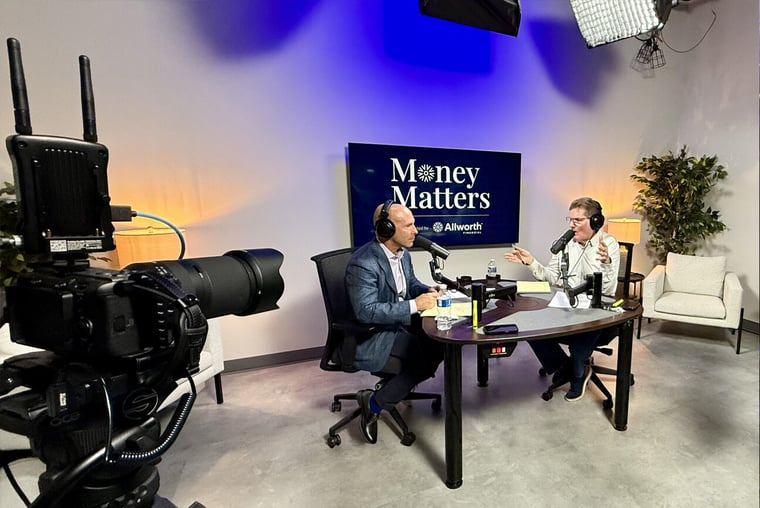
How do you protect a lifetime of savings when tax laws and changing life goals shift your priorities? In this episode of Money Matters, Scott and Pat explore wealth preservation, from managing concentrated stock positions and real estate decisions to sophisticated tax planning.
In this episode:
The $5.6M Property Test: Scott and Pat analyze a caller’s plan to carry three homes in retirement. They discuss “carry risk” and why even a $5.6 million net worth doesn’t automatically justify expanding a real estate portfolio.
Savings Trade-Offs at 52: A caller asks how to balance college costs for two children with the long-term goal of maximizing 401(k) contributions and Roth IRA savings.
Managing Concentrated Stock: Tom Kaiser, Allworth’s Director of Equity and Option Management, explains how options strategies such as collars can help protect concentrated positions without immediately selling appreciated stock and realizing capital gains.
Step-Up in Basis: Scott and Pat explain how this powerful tax provision can reduce or eliminate unrealized capital gains on inherited assets—and why it can play an important role in wealth preservation and estate planning.
For investors who have accumulated significant assets, wealth preservation isn’t simply about avoiding risk. It’s about understanding the trade-offs between taxes, spending, investments, and the legacy you ultimately want to leave.
Join Money Matters: Get your most pressing financial questions answered by Allworth's co-founders Scott Hanson and Pat McClain live on-air! Call 833-99-WORTH. Or ask a question by clicking here. You can also be on the air by emailing Scott and Pat at questions@moneymatters.com.
Scott: Welcome to Allworth's "Money Matters". Scott Hanson.
Pat: Pat McClain. Thanks for being here.
Scott: Yeah, as always... I shouldn't say always, sometimes we have bad shows. Today's going to be a good show, and you're going to be glad you listened. I mean, I imagine over the 30-some-odd years, there are some that are duds.
Pat: Oh, absolutely. Some of them have been absolutely terrible. The one time around Christmas when you were out, and then the producer pretended he was Santa and...
Scott: That was the first year of the program.
Pat: ...I did a financial plan for him on the air.
Scott: Yeah, you interviewed Santa.
Pat: And he talked like Santa. And that was pretty bad.
Scott: That was pretty bad.
Pat: It was really bad.
Scott: We were finding our way.
Pat: That was 30-some-odd years ago.
Scott: We were finding our way back then.
Pat: I was like, "Let's not do that again."
Scott: We're not doing that today. But today, we are going to have an expert in talking about options and when they make sense to use in a portfolio, how you should think about them. Like most financial products, they're neither good nor bad. It's dependent on how they're used.
Pat: Yes. If they're used appropriately. And if they've exposed you to risk or actually mitigate risk or a combination of the two. They can be used fabulously, and they can blow people up relatively quickly.
Scott: Yeah, and some of it is just minimizing your risk. I mean, the same way you hear about pork belly futures or whatever, and most people think, "What in the heck is that all about?" Well, if you were a farmer raising pigs and you didn't know what the price of your pigs are going to be.
Pat: You knew what your inputs cost.
Scott: Yes. You might choose to sell them in the futures market. Someone else might have an option to buy those or an obligation to buy those depending on the structure of the contract. That's how a lot of these things originally began. And now, there can be structures about just about anything.
Pat: Yes, and they make sense. You know, Scott, I was thinking about it earlier today about how things... In fact, I think I talked about it last week about why we have summers. I don't know. Maybe just getting old there, going through my head like, well, why do we do certain things? Why? What's the point?
Scott: You're just getting old.
Pat: Maybe I'm just getting old. I was talking to a friend the other day and I said, "I don't understand why we have a step up in basis now, why that still exists. Why?"
Scott: Well, you know who the commander in chief is. There's no way he would sign a bill that's going to get rid of that.
Pat: All right. Well, then I didn't take it that far. But the...
Scott: Same thing with all these exchanges you can do with real estate that you can't do with other types of assets.
Pat: Okay. And why is carried interest for private equity different than...?
Scott: Strong lobbying.
Pat: Right? Should we explain what any of these things mean?
Scott: No. What's the point?
Pat: We should just talk about them? No, but, well...
Scott: The step up basis, let's talk about that because that's a real issue. And that...
Pat: And we use it in planning all the time.
Scott: Of course.
Pat: I was on the phone the other day with a 90-year-old client, and he's like, "Well, I'm going to..." I go, "No, no, we're draining your IRA before you ever touch any of that." He said, "Well, why? I have to pay taxes on the IRA." And I said, "Because someone's always going to have to pay taxes on the IRA. No one's ever going to..."
Scott: Have to pay a capital gain on those assets.
Pat: "On these assets, especially if they're managed tax efficiently. And that will go on without tax." And he's like, "Oh."
Scott: Because of the stepped up basis.
Pat: The stepped up basis.
Scott: So, when he passes, all of his assets that he owns or still has control over, maybe in a revocable trust, anything he still has control over, the heirs will receive those assets with their cost basis for tax purposes. Like what they paid for it, stepped up to the fair market value. So, if he paid 5 bucks for a stock and that stock's now $100 a share, that $95 of gain, well, whoever's going to inherit that will receive that $100 share with their cost basis just like they paid $100 for it. So, if they sell it the next day, there's zero capital gains.
Pat: So, then let's take this into the big world, right? So, we talk about like this... In California, they're talking about a wealth tax. But I read an article about Larry Ellison from Oracle, right? He owns a tremendous amount of Oracle stock, and unfortunately, hasn't been doing well for him recently. But he's borrowed millions, if not hundreds of millions of dollars, against that stock. He has pledged that stock...
Scott: His own stock.
Pat: ...as a security, his own that he owns, Oracle stock, and he has borrowed against it so that when he dies, no capital gains will ever be paid on that stock.
Scott: Why would he ever sell a share?
Pat: Correct.
Scott: Well, that's the argument with the... There is something to be said about the way the tax structure is, when somebody can create a company, become a billionaire through that company, the cheapest form of capital is not for them to sell any of this stock, it's just to have a loan. And if your stock's worth a billion dollars and you take a $50 million loan, well, you don't have any risk of a capital call. You don't... I mean, that's like...
Pat: That's right.
Scott: Right? So, I don't think Mark Zuckerberg is worried about a capital call. I don't know what his situation is. My guess is he has substantial loans on his stock because that's how...
Pat: But it goes back to this is, is how people actually use it. And that's our job. But the whole idea is, as we go forward, it should become easier and less complicated. And...
Scott: It's becomes more complicated.
Pat: And it favors...
Scott: And what do you bet? I would... If I were a betting man... Well, I guess I do bet a little bit, not monitored.
Pat: Kalshi?
Scott: No, I don't go with Kalshi market. That step up basis will be reduced, whether it's more mean spaced, some limits to it. There's been enough talk about it. And you look at what's happening in the political environment right now, whether you get some far left people, socialists, that believe all capital should be confiscated. I just think when you're doing your planning, your client's 90 years old.
Pat: This is pretty easy.
Scott: Standard life expectancy for 90 year olds is not 20 years, right?
Pat: Yes.
Scott: So, it's pretty clear. You're 39, much, much different situation.
Pat: Well, actually, it's interesting. We'll go to the calls here in a second, but it is interesting, Scott. He did say, "He asked me not to retire until he died." And he's 90. And I said, you know...
Scott: "Hey, how long are you going, buddy?"
Pat: That's what I said to him. I said, "You could live till you're 110, and then I'll be your 83-year-old advisor giving you advice." And he said, "That would be okay, Pat." I said, "Okay, John."
Scott: My neighbor's grandma just died at 109.
Pat: Really? What'd she die for?
Scott: I don't know. What'd she die for? Such a shock.
Pat: We were all taken by surprise.
Scott: Okay, if you want to join us on the program, love to take your call, questions@moneymatters.com. That's the address to send us an email, questions@moneymatters.com. Let's start out here in North Carolina talking with Tom. Tom, you're with Allworth's "Money Matters".
Tom: I really appreciate your show, and it's a privilege to talk to you guys. I have a question. I've been retired for about a year and a half, although my wife is continuing to work. We're both 57s. And if I may, I'd give you a kind of a...
Scott: Please.
Tom: ...snapshot of our overall assets. Pre-tax, $1.8 million, Roth, tax-free, $1.8. Brokerage 800k. We also have two homes right now, both paid off. So, our net worth is about $5.6 million. And getting to the first big decision in retirement. And I've looked at it in a number of ways, and I like your opinion on that. And the decision is, should we buy another house down in Florida where we spent a number of years, months at a time? We really like the area. And we're looking at a potential purchase of a $500,000 house on that.
Scott: Okay. And you said you own two homes already.
Tom: Right.
Scott: Are you consuming both those homes? Is one a vacation home and one you live in, or is one a rental, or...?
Tom: We're consuming both. We don't rent either out. In fact, my son is in, what I'll call, the mountain house now. He's going to school in Western North Carolina.
Scott: Got it.
Tom: And then we have the city house where we live. And kind of the idea is maybe in three to four years we would sell this particular house, but we've been looking...
Scott: The city house.
Tom: Yeah, the city house, right. So, we've been looking down in Florida and, you know, as I kind of piece this together, there would be a two or three-year period where we'd be carrying three houses, which I don't like, but...
Scott: What income sources do you have?
Tom: So, I'm retired. My wife is still working. She's at about a 100k a year. So, we've been kind of back and forth from North Carolina and down to Florida. Every time we see a house we like, we go down and check it out.
Pat: And you received no pension.
Tom: No pension.
Pat: All right. The reason that you're not selling the mid... Your son is staying in what you called the mountain house, which sounds beautiful by the way.
Scott: North Carolina, yes.
Pat: In North Carolina.
Scott: Been to North Carolina only a few times. I think it's a lovely state.
Pat: Is the reason you're not doing this now is because your son is living in the mountain house? Because why are you waiting? Why wouldn't you just sell the house you're in now and buy the house in Florida and spend your time between...? You said you're going to do it in three years. What are you waiting for?
Scott: His wife still works.
Tom: Well, it would make a lot of sense, right, to go down to two houses. Well, my daughter's still here and she's in university and she'll be graduating in two years. So, in two years, she...
Pat: And your son is staying at the mountain house and you don't want to stay up there with him.
Tom: The mountain house is sort of like a legacy place, where...
Scott: Are you taking any income from that brokerage account, dividends, or do you tap into it?
Tom: No, no, not so far. Eighteen months in and we're kind of living off of what we had in the bank and her salary.
Scott: And what's the city house worth?
Tom: $750.
Scott: Okay. So, if the plan is, take $500 grand from the brokerage account, buy a house in Florida, three years from now, roughly, sell the city house, as you call it, and move to Florida, I don't see any problem.
Pat: I don't see, other than that you've got market risk in that trade right now.
Scott: Yeah, but...
Pat: And you've get the hassle of actually owning three houses. But those...
Scott: Tom's retired. Give him something to do. He can go...
Pat: No, I agree with Scott. The inherent risk or market risk in the real estate market.
Scott: And how much longer is your wife planning on working?
Tom: Yeah, probably two to three years, I guess, is the answer.
Pat: So, if you're asking us to opine on that, I think you'd be okay.
Tom: Yeah, you know the...
Scott: Yeah. I mean, you've got an additional element of risk here and additional expenses, obviously, with insurance and whatnot. And the risk is, to what Pat had mentioned that, let's say the real estate market is in the doldrums when you want to sell.
Pat: When you go to sell, and you bought at a, you know, a higher valuation, and then you sell at a lower valuation. But the spread there is $250 grand, so I think that you could actually take that risk.
Scott: Yep, I would agree.
Pat: Right? And then the other risk is just the carry risk, which is now, "I'm carrying three houses." And, you know, the only thing was...
Tom: I'm a little bit concerned about, you know, the overall withdrawal rate goes up if, you know, I can sort of finance part of this house, which would be...
Pat: What's the point.
Scott: Why would you finance part of it?
Pat: What's the point. There's no point in financing part of it. Just use whatever's in the brokerage account. How much gain do you have embedded in the brokerage?
Tom: There's probably 50% gain in that number.
Pat: All right, well, then you might want to finance some of it. I mean, that's an analysis you'd have to do.
Scott: What was your, what was your income when you were in the marketplace?
Tom: $250.
Scott: Yeah, so, I mean, when I started looking at the numbers and thinking, let's assume your wife quit working today. I mean, we can pretty much replace her salary, but you're not going to get back to where you once were.
Pat: Yeah. You see, look, in the perfect world, in the perfect world, you would not carry three houses on the books at any point in time. That's just flat it. You know, you would sell one and buy the other. And, in fact, you'd sell the one you're in, and then you wouldn't buy the new one until the other one is sold.
Tom: Sure, yeah.
Pat: Right? And so, you can swing it, but there's inherent risk in this that you may or may not want to take. And quite frankly, if you were sitting in my office, I'd say, "I don't understand what the hurry is."
Tom: Well, whether it's today or in two years, we're only going to buy, you know, if this house in Florida checks all the boxes.
Pat: Understand.
Scott: I mean, this will set you back in retirement income because you've just taken some money out, whether it's a loan. I mean, I certainly wouldn't want to pay 7% on money to go buy a...
Pat: I wouldn't. I'd say you can do it, but I would wait until the stars are perfectly aligned. And that means...
Tom: And then in terms of source of funds, we've talked about the brokerage account, which I guess is kind of the default, but...
Pat: Is there no cash analysis there?
Tom: ...I've done the analysis where, you know, "Can I take some out?" Well, you know, rule of 55, I can take out some 401(k) for this as well, because eventually, that's going to have to be converted to more Roth.
Pat: When the rule of 55?
Scott: He was 55 when he left.
Pat: Oh, got it, got it, got it.
Tom: That means I just have access to 401(k).
Pat: Oh, yeah, I absolutely understand it. That isn't the issue.
Scott: I think my concern is, like, a couple of years ago, you had a household income of $350 grand.
Pat: Now it's 100.
Tom: Yep.
Pat: And you want to actually increase your expenses. And what I'm saying is, look, you're 57, don't buy the house in Florida until you sell the city house. Just flat out. Just don't.
Scott: Yeah, I would agree with Pat.
Pat: Just don't do it. And look, you'd say, "Well, I could do this and this and this." I've seen it work, and I've seen it not work, right?
Tom: Yeah, that is a big risk, right, yeah.
Pat: Yeah, you'll be fine. Why take the risk? Heck, you know, the hard part is done. You're 57. You're retired, right? Just wait.
Scott: I think that the... And when we say... The impact it would have on the family finances...
Pat: If it went bad.
Scott: ...could be significant.
Pat: If it went bad.
Scott: That's right. It really could be.
Pat: Yeah. And not only that, you think you're going to go down out, buy a house in Florida and you're just going to let it sit. You're going to be in there. You're going to be repainted. "Let's rip this wall." And your wife's gonna...
Scott: The furniture.
Pat: ...do the bathroom, this, that. You've got three assets you're sitting on. You've seen the movie.
Scott: You'll pay for insurance.
Pat: You've seen the movie.
Tom: I figure it's $50 grand a year to hold that house.
Pat: See? That's why you wait. Because you can't afford both the city and that for any period of time. I'd wait.
Scott: I'd wait. All right.
Tom: Very good. Thank you very much.
Scott: Hey, glad you called, Tom.
Tom: I appreciate your time.
Scott: No, it's good. And you're wise for getting another opinion. Maybe you want to get another opinion after us as well. But I think it's prudent, particularly before you do something along those lines to run it by somebody.
Pat: It's brilliant. The problem is, is that the income will go from $350,000 to 0 in a relatively short period of time. And it sounds like a lot. You know, when you add up the money, it's like, "Well, there's $3.6 million in IRAs and Roth IRAs, and then there's another $800,000 in brokerage. So, we're at $4.5 million." But you're replacing $350,000 a year in income. So, we're looking at an 8% distribution to replace all of it. Just too high for a 57-year-old.
Scott: Yeah, for sure. We're talking now with Sam. Sam, you're with Allworth's "Money Matters".
Sam: I just got a really quick question. I need some good, sound advice. So, at my employer, I currently have a 401(k) and they have a 5% match. And I am currently investing 11% of my earnings, so essentially, I guess, I'm getting 16%. Would it be beneficial for me to lower my contribution down just to the 5% match and take that additional 6% and open up a Roth IRA? And I'm 52, so I'm just worried about if I'm going to have enough time to actually get any kind of gain out of that, or should I just stay the course?
Pat: So, are you spending all the money that comes in after your contributions? Are you living on that?
Sam: Am I spending? No.
Pat: Are you saving any money on an after tax basis, on an annual basis?
Sam: Yes, sir.
Pat: How much?
Scott: Well...
Sam: I probably have, like right now, my nest egg in cash is about 45k.
Scott: And are you married and kids and all that?
Sam: I am married, yeah. And my wife has a great job. I mean, she's in the government, so she's contributing to her TSP. I've got two children, one 15, one 18. The 18-year-old is getting ready to start college. So, that's another expense that we're going to be incurring.
Scott: And what's your home worth and mortgage balance?
Sam: Home worth right now is about $485, $490. I think we owe about $260 on it. And as far as income, we're probably close to $200.
Scott: And when your wife retires, what percentage of her income will be made up by her pension?
Sam: I don't know.
Pat: We assume she works for the federal government.
Sam: That is correct. Yes, sir.
Pat: So, about half, I think, right?
Sam: I am not sure on the percentage.
Pat: Yeah, it depends on... So, here, the answer to the question is, you should probably...
Scott: Well, how much do you have in your retirement accounts? 401(k)s, IRAs?
Sam: So, this is my second job with my 401(k). My first one, I've got about $500,000 in it. And this new one, I just recently started the job about five years ago. I got about $70 in it.
Scott: And what does your wife having in hers?
Sam: I don't know, about maybe $400,000 maybe.
Pat: So, the answer to the question is, why not do both?
Sam: Oh, no, I'm planning on doing both. I just don't know if I'd be able to keep the 16% in there and add an additional, say, $5,000 a year into a Roth.
Pat: Oh, you certainly can.
Sam: Okay.
Pat: It's just choices.
Scott: Yes. If you say you never want to retire and maybe you'll retire at age 70, okay.
Sam: Oh, it better be before that. My body is breaking down.
Scott: Well, there's a direct correlation between your financial independence and how much you save.
Sam: Sure.
Scott: So, that's just basic math. I think it would be helpful for you, Sam, is to do even just kind of a basic financial plan, either you find a program online, or you work with an advisor and maybe just pay an advisor fee just for a financial... You've got roughly a million dollars in investments that who knows if they're allocated perfectly or not, and you're trying to figure out how much you really need to save. And so, I think if you got a picture of, all right, if you're saving at this level, here's what retirement would look like for you at age 65 or whatever age you want to look at. And if you saved at this other level, here's how that's going to impact. And there's trade-offs. And then you could make the decision, "All right, I'm going to lower my contributions, and here's what it's going to mean to me, my future self. Here's what it's going to mean as far as my retirement. I'll have to work another year or two or whatever."
Pat: Scott, that is exactly what I was going to say is, he needs a financial plan. Because you're asking a specific question about a tax strategy without... So, the answer is, yes, save as much as you possibly can. That's the right answer. But you may not have to. We don't know. It depends on what kind of pension your wife's going to receive, how soon will the home be paid off, how aggressive are your investments, what are the expected returns. If you were my little brother, and you had hesitancy to actually have a financial plan done, I would pay for it to have done. I've done it for other relatives where they come to me with these...
Scott: That's how confident you are in the benefit of a financial plan.
Pat: Yeah, whether it's with our firm or another firm, hopefully it's with ours. And it's easy to engage a financial planner today versus 10 years ago because you can do it all digitally. You could do it on a Zoom meeting. They'll send you a list of questions and what documents they need to look at, and then you just go to a Zoom meeting and then they'll give you a completed financial plan. You're in the perfect spot right now. Because let's just say you wanted to retire at 62, we, and I hope many other firms, would be able to tell you what your financial plan, with a financial plan, with high degrees of confidence, what your income would look like and your standard of living at, let's say, 62 or 65. But the answer to your question is you can do both. So, without doing a financial plan, I would tell you to increase your 401(k) to the maximum and do a Roth IRA.
Sam: Gotcha. Okay.
Pat: I mean, because that's the right answer. The more money you save, the sooner you're gonna be able to...
Scott: Well, it might not be the right answer. He's got two kids, one going to college, another 15-year-old coming up. Your expenses for your kids are gonna be pretty high right now, the next few years.
Pat: Well, I don't know, Scott. I don't know. I don't know what kind of... How much did your parents pay of your education?
Scott: $400 a month for two years.
Pat: Did they?
Scott: Yeah, yeah. I have $400... No. Yeah, it was $400 a month for two years. I'm very grateful.
Pat: So, $9,600.
Scott: Yeah.
Pat: It was $9,600?
Scott: It was $400. It did not cover all my expenses back then.
Pat: That's right. Just... Wait, wait. Correct, correct. So, I don't... You're correct. The trade-offs. That's what a financial plan will actually tell you.
Scott: Because you can't have everything. You can't have a low contribution and early retirement.
Pat: Yes. And maybe the kids, you help them out, maybe you don't. I mean, that's entirely up to you and your relationship with the kids.
Scott: And this, I mean, by doing the plan... It's not like maybe 25 years ago, financial plan would be to go see someone, they give you a big bind of all these printouts. It's a dynamic approach where you can sit down with an advisor and do some what-if scenarios. All right, what if we contribute this much to our child's college costs, what impact is that gonna have on our current lifestyle or our retirement or both? And so, you can make informed decisions. Then you might go to your kid and say, "Hey, we're gonna pay X dollars. You're gonna have to get a job and get a loan or both" or whatever, right? So...
Pat: But the answer to your original question was yes, make the maximum contribution to the 401(k) and do a Roth IRA for both you and your wife.
Sam: Now, are you talking the maximum to their match or just whatever I can just throw at it?
Pat: Yeah, whatever the plan allows.
Scott: That's the answer in a perfect world.
Pat: In a perfect world, save as much money as you possibly can, which is the maximum in the 401(k), and then... But that's what the financial plan will tell us whether...
Scott: But then you're like, "Well, then I don't have a good enough lifestyle right now." So, "Okay, well, there's a trade-off then. I'm going to not contribute the maximum, and that's going to have an impact on my future. What is that impact?" And then you make those decisions.
Pat: But that's the point exactly, which is that you actually know what the cost benefit is with the financial plan.
Scott: That's right. That's exactly right.
Pat: Right? You're just like, "Oh, well, I'm just going to continue like I am." Okay, well, then you work till 67.
Scott: Or 70.
Pat: "Oh, but if I increase this," you work till you're 62, and then you make the decision. And because you make the decision, it allows you to stick to the savings objectives that you've set for yourself. Because if you don't know where you're going, you don't know how to get there, right? You don't know how to actually start on a journey and said, "Okay, we're going to go on vacation. We don't know where we're going. We're just going to get in the car and drive." Like, what kind of vacation is that?
Scott: I don't know. There's part of me that would like to do that sometime, though.
Pat: Have you though?
Scott: No, of course not. But it does sound kind of thrilling. Let's just go.
Pat: Have you known anyone that ever has?
Scott: Till the first time I'm trying to find a crappy motel late at night, and I'm like, "I'm never doing that again."
Pat: But that's the idea behind a financial plan.
Sam: Got it. All right, guys.
Pat: And you're looking for a financial plan where someone is actually really trying to help, not sell you a product.
Scott: Yeah, yeah, yeah.
Sam: Sure.
Scott: Just do it.
Pat: Which is why you might be...
Scott: Certified financial planner.
Pat: And maybe you start with a fee for service, which is you pay for the financial plan.
Scott: Wish you well, Sam. And enjoy that first one heading off to college, sounds like heading off to college, Sam.
Pat: I never lived in a dorm. Did you live in a dorm?
Scott: No, I never lived in a dorm. I lived at home for a couple of years after... I didn't have a lot of options.
Pat: There weren't?
Scott: There was no, "Hey, Scott, what school would you like to send you to?"
Pat: You didn't have that conversation?
Scott: And the federal loans were different back then. They weren't as large. I don't think I would have had an option of borrowing enough money to go and live in a dorm somewhere. Were they?
Pat: I think I got student loans. I think they were $2,500.
Scott: I mean, like now, you can get a student loan to cover your dormitory and your meal plan.
Pat: What was that? It was $2,500.
Scott: Probably some mental health breaks.
Pat: I had... Mine was...
Scott: Yoga class.
Pat: $2,500, was it a semester? All I know is I actually took that money and I had a brokerage account at the Dean Witter.
Scott: I mean, I didn't qualify for student loan because I made too much money in my summer job. If you made like over $9 grand, you couldn't get a student loan. And I remember I had friends that would quit working...
Pat: To get the student loan?
Scott: ...to get the student loan. Like, this was 30-some years ago, almost 40 years ago. This stuff doesn't make any sense whatsoever. It was 40 years ago, I think 41 years ago. And I mean, we don't even want to get into the issue of the student loan crisis, clearly crisis. You can see you can see what happens when the government gets too involved in one area.
Pat: Yes, yeah. When capital chases an asset that causes the price to go up. Think about the mortgage crisis when they would, basically...
Scott: Yeah, that's caused by the government getting back in every loan.
Pat: Every loan, every loan.
Scott: And the same thing when you have all this money flooding the universities, because it's essentially free when you're 18. "What? I just sign this thing, and I don't have to pay? I'm going to get a great job making a ton of money when I graduate with my whatever studies degree I've got." Government created the problem.
Pat: Yes.
Scott: Well, anyway.
Pat: I'm not going to go any more there.
Scott: I don't think there'd be many people disagree with you.
Pat: Government actually solves a lot of problems, too.
Scott: That is correct, yes. But we like to point out the things that play a crucial role in society.
Pat: It's dynamic.
Scott: Yes, correct.
Pat: Religion helps a lot of people, it can hurt a lot of people as well, depending upon where you are on the spectrum.
Scott: All right, we've got a good guest on right now, Tom Kaiser. And Tom is Allworth's director of equity and option management. And we're going to have a little lesson on some options here. So, Tom spends his time... He's really not only looking at different investment opportunities, but helping our advisors and helping clients with some of their investment decisions and using options to... Well, he can explain what he does. So, Tom, thanks for taking some time to join us.
Tom K.: Happy to help.
Scott: Yeah. So, maybe we can kind of back up, like...
Pat: We've always been curious here at Allworth, what do you do?
Scott: There's a big...
Pat: We sit in those meetings and like, "He seems like a nice enough guy. What does he do?"
Tom K.: Active management. That's what I do. The small part of Allworth, those active managers on the equity side and then options. And that's, I guess, what we're here to talk about today.
Scott: Yeah. And maybe you can give us a little background, like, just really briefly, why they exist, and some of the misconceptions about them. And then really, when should someone consider using some options?
Tom K.: Sure. So, options are a great tool to kind of express an opinion without a direct ownership change. So, if you currently own it, but you want to try to make some income or you're scared and you want to protect it, you could use options to change your opinion on it without actually changing your ownership stake. People might also think options are generally pretty scary and risky and just for gambling or speculation. And they certainly can be for that. But I would think, for our clients and most people, they're a good tool to kind of change your risk return profile. And you're not really trying to gamble with us. We're trying to build around what you already have and what you're trying to do.
Scott: And can you give us an example of how we've employed these with clients?
Tom K.: Sure. So, kind of a basic strategy is a cover call strategy, and that would be selling calls on your stock. So, if somebody owns, hypothetically, Apple, which a lot of people do, you could sell calls to generate a little cash flow. The catch is, is you have to pay for that. What do you give up for your goal? And that's really kind of the name of the game of options. So, if you're trying to make a little bit of income cash source, say, from that call option, what are you giving up? You're giving up the upside. If Apple rally is quite a lot, then that option might be a little bit of a loss. You're in danger of it being called away and there's a lot of other complications there. But what are you giving up for that cash flow upside? And that's one way. Another way would be pairing that with a protective put to create what's called a collar. So, therefore you're protected if Apple goes down. So, you're giving up some of the upside to prevent downside. And those would be some of the most common use cases of options across the board.
Pat: On a collar scenario where you're selling a call and buying a put, is there a delta or difference between those two that will actually generate income in the portfolio normally?
Tom K.: Maybe a little bit, but we try to keep it pretty close to neutral. So, you get a good amount of protection and you're not leaving upside on the table per se. So, trying to be neutral to slightly positive. But if people are going into a collar, they're not really going into a goal. You're going into it for a protection goal.
Pat: Got it, got it. So, you would use this collar situation if you had highly concentrated positions that you weren't either RSU's or things that you couldn't sell? Do you have people do these on...
Scott: Sometimes you're prohibited.
Pat: Yeah, for restricted stock units or stocks that you can't particularly sell?
Tom K.: It's possible to do it, but depending on your employer, a lot of employers don't allow you to trade options on those. So, that's more of a case-by-case basis. But it's really if you're a concentrated stock and you're worried if it goes down without having to realize capital gains on the full thing, right? If you're worried, take some of the semiconductor stocks that have flown through the roof lately. If you want to try to protect it, if it comes back down earth, you could put a collar on and kind of delay any realization. You guys were talking about step up in basis a second ago. If you're at a certain point, you could just put a collar on and keep rolling a collar out until maybe there's an event and you get a step up in basis. Another thing would be if you have a plan B, it's down... Yeah, go ahead.
Scott: Yeah, so with that, essentially, you'd buy that call back before the stock was called away, right? So, you can...
Tom K.: Correct.
Pat: Yeah. So, you still have...
Scott: You're still own the stock.
Pat: You're still own the stock, you just put a collar around it. It couldn't get too far off the leash.
Tom K.: Right. It kind of narrows the band of how much the stock could move. But if you're trying to, either because you're worried or maybe you're match funding something, if you're planning on retiring a year from now, you don't want to sell anything now, but you could start taking, realizing some of the gains in a year or two. There's a number of people looking to build houses, and so maybe you want to cover part of your portfolio until the house is done, at which point then you could start selling it down to pay for that, right? So, there's a good way to kind of match fund asset liability scenarios with a collar.
Scott: All the strategies we've been talking about, they're all risk. What you've discussed so far, it's all risk reduction.
Pat: Except for just selling calls, which is a generation of... Without buying a put at this time.
Tom K.: Yeah, first is just risk... I would more say it's a pure risk reduction that's really altering your risk return profile.
Pat: Got it.
Tom K.: That's a little bit more of a compliance way of putting it.
Pat: You know, I was thinking about years ago, I had a friend that was a big developer that sold to major home builders in Northern California in Nevada. He was major. And this was before the financial crisis, and he was telling me he really was worried about the whole market. And so, we ended up buying puts on a bunch of the home builders. And it wasn't his company, but they were surrogates, all right? So, they acted like... Because he knew that if these companies, which were buying his product...
Scott: Yes, they all flow together.
Pat: Yeah. So, if I owned a dealership, a Ford dealership, or a Chevy dealership, and I was worried about that particular brand, I could actually use financial instruments in my own business in order to protect me against the downturn in a market for... So, it doesn't necessarily actually have to be a particular stock.
Scott: That's exactly right.
Pat: It could be a representation of an industry with particular stocks.
Tom K.: Yeah, absolutely.
Pat: Right? It's a...
Scott: And what are some common mistakes people make with options?
Tom K.: I would say, especially if you're putting an option on your concentrated stock, is once you attach an option to it, you have to kind of realize that is one joint position. And so, people, they see them listed in accounts as two separate line items. And they are, in fact, two separate light items, but how they move and behave really needs to be viewed as kind of one.
Pat: They're tied together, which is the whole point.
Tom K.: They're very tied together. So, if you sell a call and cap your upside, all of a sudden, and the stock goes really high. Then you're going to have a nice, large liability on that call option, and it's going to be a pretty big drag. But your underlying stock went up quite a bit, right? And so, when you put them together, your overall portfolio went up, just not as much as if you did it without selling the call on it, right?
Pat: Got it, got it.
Tom K.: And so, it's a joint case of what's going on in your account, and it's not really two separate pathways.
Scott: This is from experience of clients saying, "Whoa, what happened? Why is this...?"
Pat: Why is this a position down?
Scott: And you're going, "Wait a minute. This was designed to do something here. Let's look at how that..."
Pat: Has performed.
Scott: "...one was supposed to go up and one was supposed to go down. It was designed exactly what it was supposed..." Let me ask you a question, which is, I ran into a firm, and this guy, across every one of his clients, in order to generate revenue on their accounts, he sold call options on all of their positions in the portfolio in order to generate consistent revenue. And I thought, I said to him, "You're just adding an expense. You're making it more complicated than it would be and actually you're giving up some return over time." Was I wrong in thinking that?
Tom K.: No, I think you're in the right space. Especially if the type of stocks you have in the portfolio are very strong and that could, all of a sudden, come back against your cap in your upside, you might be forcing a lot more realizations on taxable events. And if you're very bullish on a name over long-term, you could be giving up a lot of upside and/or forced selling some of those shares. So, it's certainly not for everybody, nor should it be a blanket across the board.
Pat: Yeah, got it.
Scott: Well, Tom, thank you for both taking some time to be with us today and also for all you do for Allworth and our clients. And these aren't for everybody, but they're definitely times when having some option overlays on a portfolio can make some sense.
Pat: Yeah, yes. It's another tool. And to make sure it's used correctly, we have people like Tom on our team.
Scott: Thank you, Tom.
Tom K.: All right. Take care.
Scott: All right. Again, that's Tom Kaiser, Allworth's director of equity and option management.
Pat: And it was good to finally find out what he did here at Allworth.
Scott: I do remember. It's a joke. I can be very transparent. This was a long time ago. And it was right during the financial crisis and we're trying to figure out like, "Oh, my goodness." Like most companies, you kind of tighten the belt and like, all right. And there was an individual who worked remote. This was before remote work was common.
Pat: I remember this.
Scott: And so, we're trying to figure out like, "What does Jane do?" And the typical response was, "Well, I'm not quite sure, but I hear she does good work." I don't know what she did. Anyway, we drop this broadcast every Saturday. So, if you haven't subscribed to it, subscribe to it and you'll get it.
Pat: Yeah. And as we say almost every week, please subscribe to our YouTube page, so...
Scott: You can watch this, too. Yeah, all right. We'll see you next week. Scott Hanson and Pat McClain of Allworth's "Many Matters".
Automated Voice: This program has been brought to you by Allworth Financial, a registered investment advisory firm. Any ideas presented during this program are not intended to provide specific financial advice. You should consult your own financial advisor, tax consultant, or a state-planning attorney to conduct your own due diligence.
Insights for Complex Wealth Decisions
Join our email list for exclusive commentary from our Chief Investment Officer, early access to expert-led webinars, and your complimentary Wealth Planning Checklist for Complex Portfolios.
We take your privacy seriously and respect your privacy choices. By submitting this information you agree to our Terms of Use Agreement, Privacy Policy, and to receive important notices and other communications electronically.