
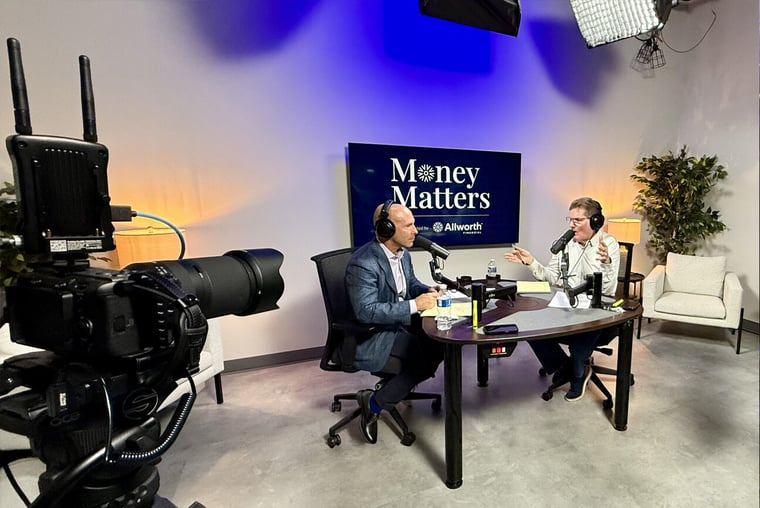
Early Retirement: Mega Backdoor Roths, Direct Indexing & Private Equity
Can you retire early with private equity, direct indexing, and a mega backdoor Roth? In this episode of Money Matters, Scott and Pat help one investor weigh big decisions—from helping adult children buy homes to managing portfolio risk—before an aggressive retirement. Then, they follow up with a high-income saver who put their "mega backdoor" advice into action and is now looking at direct indexing for better tax efficiency.
From choosing the right advisor to making smarter investment moves, early retirement planning means getting the details right. Because a secure retirement isn’t just about how much you’ve saved—it’s what you do next.
Join Money Matters: Get your most pressing financial questions answered by Allworth's co-founders Scott Hanson and Pat McClain live on-air! Call 833-99-WORTH. Or ask a question by clicking here. You can also be on the air by emailing Scott and Pat at questions@moneymatters.com.
Pat: Welcome to Allworth's "Money Matters". Scott Hanson.
Pat: Pat McClain. Thanks for joining us.
Scott: Yeah, we're talking about financial stuff. Pat and I sit in the studio here, have a good time.
Pat: You know what I'd love to talk about? And if this...
Scott: Yourself.
Pat: Okay. Well, dead early in the show. You're going to start on this, already? I'd love to talk about...
Scott: Yeah, uh-huh. So, easy.
Pat: Thank you. And the hits just keep coming.
Scott: Yeah, yeah, yeah.
Pat: Taxes.
Scott: Texas?
Pat: Taxes, taxes. What it looks like...
Scott: Ah, it's an interesting time.
Pat: Well, look, the Democratic Socialists of America, right? They've been around since Eugene Debs back in the day, right?
Scott: I didn't know anyone who's actually members of them until recently. You're seeing these primaries.
Pat: They give themselves that label, but I don't know how organized the coalition is, much like when...
Scott: Well, we do know they're socialists.
Pat: Correct. But much like no one really knew what MAGA meant until it was mainstream, right? It didn't, you know...
Scott: Fair.
Pat: So, my thought is it very could be likely that the Democratic Socialists of America remake the Democratic Party in such a manner as Donald Trump remade the Republican Party.
Scott: You mean so much power?
Pat: I don't know if it's Mamdani, but if a leader emerges...
Scott: AOC?
Pat: Who knows? If a leader emerges that becomes a figurehead of that party and can bring all these, coalesce all these different people into a common mission, it will change not only the way we live, but how we pay for it for years and years and years.
Scott: Well, I mean, if you look, Pat, we just crossed the U.S. government debt of $40 trillion. It's like $380,000 for every man, woman, and child.
Pat: Crazy. Under a Republican administration that...
Scott: Well, they're no different from their spending.
Pat: Historically, they haven't...
Scott: Particularly, any time one party has all the power, they just keep spending and spending.
Pat: Mortgages the kids' future.
Scott: Yeah. They both spend like crazy.
Pat: Yeah. Well, the difference is the Republicans don't tax as much as the Democrats.
Scott: I don't know.
Pat: Okay. So, your thoughts?
Scott: So, we passed... Like, that, I think it's gotten longer than most people would have ever thought. We can get to a point with this much debt and still not have any major issues. But you've looked at long-term interest rates, government bonds, the U.S. and in other parts, particularly Europe, Japan even, those long-term interest rates have risen dramatically the last two months. And quite alarmingly so in many ways. So, we're seeing these long-term interest rates go up. As that happens, our cost of financing the debt...
Pat: Because it's short-term and it rolls, the debt constantly rolls over.
Scott: So, much of it is short-term. Yeah. I mean, the challenge is if the Federal Reserve thinks, "Oh, oh, it's time for us to raise rates to keep inflation in check," in some aspects, it just makes it even worse for government borrowing because now the cost of money goes up even higher.
Pat: Goes up. Significantly.
Scott: So, I think there's this confluence of these socialists that really want to remake the economy into something more equitable or whatever. And you've got these overnight billionaires, multi-billionaires, right? You read about these startups that the company's valued at $8 billion and there's two kids that are 19 years old or whatever. And we've seen a lot of that, and yet most of the younger population feels like they're not part of this economy. They graduate with their sociology degree and they're working at Starbucks and something like that.
Pat: Well, they can graduate with a business degree and it won't make much difference in their eyes because they are as easily replaceable as AI, engineers, computer scientists.
Scott: Throw all of what's happening with artificial intelligence on top of it, and there's a strange confluence going on. And so, from an investment standpoint, when I look at down the road, I think we're going to navigate through this, whatever this next period is going to be. AI is probably going to drive the economy much faster than... It's going to give us a huge productivity boost.
Pat: And it will continue to make this K-shaped recovery much larger, which is, if you own assets, you're doing great. If you're working for a wage and own no assets, it's not going super well.
Scott: That's correct. And if you look at people with assets, the last decade has been spectacular.
Pat: And the people without assets?
Scott: Their real wages haven't changed much.
Pat: Not much. They've gone up a little.
Scott: Not much. And the reason we're having this conversation is what impact will this have on tax structure? Income taxes, other kinds of taxes.
Pat: How you add tax, state taxes.
Scott: Excise taxes and just flat out wealth taxes.
Pat: We'll see in California whether the wealth tax flies or not.
Scott: That's coming up.
Pat: Well, you see that there's been some proposals, which is, by the way, if you're a politician and you're in California, the easiest way to fight this is to actually ask for a national wealth tax.
Scott: That's what's happening.
Pat: That's what I mean. I mean, it's brilliant. Not that I agree with it. Not that I think it's good. It's that if you're a politician, rather than fight the wealth tax, if you actually say, "Well, there should be a national wealth tax rather than on state taxes," then it makes the playing field even more level. So, what do you do about it, Scott?
Scott: Well, I think it's all the more... I mean, we've talked a bit about asset location, like those equities, the stocks. Where do we house? Are those in our brokerage account? Are those in our IRA, our Roth? That whole asset location, I think, is going to be more and more important. And the whole tax planning around our wealth is going to become even more important as time goes on. Because my guess... And maybe the income tax rates themselves won't change that much. My bet, though, is we're going to see some other stealth wealth. And we saw this even a couple of years ago with the way the reduction on... When was this last, maybe it was in the big beautiful bill even, charitable contributions weren't valued quite the same.
Pat: That's correct.
Scott: Right? So, they got a little bit of an adjustment to that.
Pat: Well, but, Scott, think about how Social Security has been taxed for years and years. It was never indexed to inflation. This 50% taxable on incomes over $25,000 and 85% tax on incomes over $34,000 for individuals, that was never indexed for inflation. How long has that been around? Over 20 years. That's a stealth tax. Because as inflation goes up, it actually, if you don't index it, it hits more and more people as a percentage of the population.
Scott: That's right. Or this whole Irma tax, which is essentially you pay more for your Medicare if your income's above certain levels. Which is, it's not just the wealthy it's hitting.
Pat: Understood. So, a large part of this is actually based on this premise that there's a step... Asset location is based on the premise that the step up in basis will continue.
Scott: It's based on lots of things. That's one, for sure. But there's talk now, if you have over $10 million in your Roth, then you have to take that out. There's a bill that was introduced in Congress for that. $10 million, $5 million, $4 million.
Pat: Whatever that number is. Wow.
Scott: We don't know and nobody knows.
Pat: What we do know is this, Scott, what we do know, if you view it from both sides. So, if you're listening to this and you're saying, "ell, this is McClain, he's a socialist. He's crazy."
Scott: He's a socialist. Looks like a socialist.
Pat: No, if I argue their point, if I can argue the point of the socialist, which is, why is it that some of the richest people in the world pay a lower marginal tax rate on their income?
Scott: Because they borrow against their stock instead of selling it because it's cheaper than the capital gain tax they have to pay and they lose control of their business.
Pat: And it utilizes a step up in basis at death, so no taxes ever paid on this. So, as a general rule, the argument actually makes sense from their standpoint. Our tax system is supposed to be progressive, right? So, a progressive tax system...
Scott: What do you mean supposed to be? By design.
Pat: By design, right? Which means the more income you make...
Scott: The higher percentage you make.
Pat: The higher the percentage you make.
Scott: And the top 1% pay roughly half the taxes, 42% or something like that.
Pat: But as a percentage, they pay it lower than the average as a percentage of their income. No.
Scott: Some do.
Pat: Okay, correct. Or the...
Scott: The billionaires, for the most part, do.
Pat: Understand. That was my point exactly. That's who...
Scott: That's the multimillionaire, the billionaire.
Pat: Yeah, that's who the socialists are holding up as examples.
Scott: Because if your lifestyle is 2 million bucks a year and you're worth 5 billion, you're not going to sell the stock, you just take a little loan against you. And you don't pay any taxes when you do that.
Pat: Yeah, and then you get to step up on basis and you actually don't pay anything on unrealized gains. So, there's going to be major changes in the tax code.
Scott: In the next decade. I could put money on that.
Pat: And one of the things that I got to tell you, I talked to wealthy... No, I was on this trip a couple of weeks ago, and I ran into a family that has a family business in the south that does river, something with petroleum.
Scott: What do they do? River petroleum. They dump the oil right in the river.
Pat: That's the easy way to transport it. Suck it up at the end.
Scott: They already have the canal built. Who needs a pipeline?
Pat: River transport of petroleum products. She said the company's worth hundreds of millions of dollars. And there's been, she was telling me about her parents, no estate planning whatsoever, none, zero. She said they finally got her dad to do a will in his 80s. And I thought, that's the craziest thing ever. I mean, this is... If you're worried, here's someone that spent his whole life... Think about this. She said he started with nothing. He started with a little boat and grew this big business.
Scott: That's most businesses.
Pat: Right? And I said, "How's he feel about taxes?" He said, "He hates them." And I said, "Well, he just laid himself up for the largest tax bill that he could ever imagine."
Scott: Yeah, his estate tax.
Pat: His estate tax. So, if you're of high net worth or even medium net worth, you should be looking at this exemption amount for estate tax right now because it's the highest level it's been in 50 years, 60 years.
Scott: And whether you pull the trigger now, be ready to go for when that might... There's a number of these factors, right? So, I think some of the things to focus on today, what can we control? One is really pay attention to the way things are structured, and do you have things in the right areas? Two, is your tax strategy as diversified as your portfolio strategy?
Pat: Correct.
Scott: It should be. Because we don't know, we talked about a number of things that could happen, we don't know which ones are actually going to be implemented. So, if you've got some diversification there, you can navigate through those times much better.
Pat: And you should certainly actually be doing things that you actually know today. One of the things you know today is that your IRA will be taxed at some point in time, either by you or your heirs.
Scott: We know that 100%.
Pat: We know that. What we do know today is that your brokerage account will not be taxed at your death because of a step up in basis. And so, how many times do you see people actually not spend their brokerage account?
Scott: They have their IRA, mostly stock because it's long term money, and their brokerage account and more conservative stuff.
Pat: That generates income.
Scott: Should be the opposite.
Pat: Exactly. And that they're deferring taking money out of their IRA because tax deferral, tax deferral, tax deferral, and they'll spend the money in the brokerage account because it makes them feel good today. But if you do an analysis and you go out 20 years, assuming that someone in your family inherits this money, it's exactly...you couldn't be more backwards. You could not be more backwards.
Scott: Yeah, but every situation is unique.
Pat: But some are just damn wrong.
Scott: I agree with you. Like, doing the planning, running the numbers, doing the what-if scenarios, that's where you're going to get to make the most informed decisions of the uncertainty that we have ahead of us when it comes to taxes.
Pat: Let's wait and watch what the Democrat socialist of America do in the next... I mean, this is running away from the Democratic...
Scott: Well, it's bizarre when you look at the percentage of young people that have a negative view of capitalism.
Pat: That's right.
Scott: So, do they not teach...
Pat: Scott.
Scott: ...communist history in their schools? Do they not learn? Maybe not.
Pat: Understand. But, Scott, look at what they went through. I mean, obviously, look at '08 when the banks got bailed out, right?
Scott: The government did get repaid on all those.
Pat: Understand, but that wasn't the headline.
Scott: That's not the narrative. Yeah.
Pat: That was in the headline, right? Look at the fat cats, right? You know, the contrast is so great between Jeff Bezos and this incredible wedding.
Scott: It is bizarre. There's a book out there. I've got the audio book, which in the first two chapters were great. I can't say the rest of the... Because I actually felt like he changed, added something onto the book, and changed the title in the first... But the title of the book, "The Haves and the Have Yachts." And it's about these mega yachts and the families behind these mega yachts, 300 foot, 400 foot. They're ships worth tens of billions of whatever. They're so expensive. And it's just like this race. It's a strange contest.
Pat: Everything is relative, right? I mean, everything is... We considered someone rich in my neighborhood if they were able to buy a new car, not used. When I was growing up, you're like, "That guy, they're rich. They bought a brand new car."
Scott: It's somewhat relative. If you can't afford a decent car and it breaks down your way to work and you lose your job as a result, or you can't afford daycare for your kids, all those things. So...
Pat: Correct.
Scott: That's the contrast.
Pat: There's wants and needs.
Scott: That's the contrast.
Pat: That's the contrast. That's so large. It's stark. That's why the democratic socialists are actually catching on. It's like, "I live like this and you live like that."
Scott: I also read an article, it was an interesting essay, about these way colleges are structured. You go to some nice school, let's say, you go to an elite college, it's like a dystopian dream socially. You don't pay for anything. It's all kind of included and your government loans covered it all. So, you go to the gym, it's free. The cafeteria is free. Everything's covered. You don't have to... There's no cost-benefit analysis.
Pat: Oh, so that's your worldview.
Scott: Yeah, I thought it was an interesting point. Anyway, enough about this. It sounds depressing.
Pat: All right. Well, I'm going to share it.
Scott: But "The Have and Have Yachts", I actually found it quite entertaining.
Pat: Is it?
Scott: Yeah, and it says, if you're ever invited on one of these ships, you're the entertainment. Just be clear, like, you're there to entertain the guests of whatever that might be.
Pat: Really?
Scott: And there's musicians and stuff. They fly them in to play, famous musicians.
Pat: Like they do at the camp up in Guerneville.
Scott: What are you talking about? I don't even know where Guerneville is. What camp?
Pat: The rich-people Camp.
Scott: What's a rich-person camp?
Pat: It'll come to me. I'm getting old. I don't remember the name of it. What's it called? The club, the Bohemian Club. They bring in entertainment.
Scott: They do on these yachts. They fly them in. Like top name artists.
Pat: Like Seals and Crofts or Linda Ronstadt.
Scott: All right. Let's...
Pat: Jealousy.
Scott: Let's go to the calls here.
Pat: That's all the artists I know.
Scott: All right. If you want to be part of our program, you want to join us with your questions regarding your finances, the best way is send us an email, questions@moneymatters.com, again, questions@moneymatters.com. Let's talk here with Rob. Rob, you're with Allworth's "Money Matters".
Rob: Hi. Good afternoon, Scott and Pat. How are you guys?
Scott: Good. How you doing, Rob?
Rob: Doing pretty well. I would like to say, I'm a long time listener, but I've really just discovered the podcast about six months ago during daily walks, and I'm almost caught up all the way through today. I've been back in some COVID era discussion.
Scott: Oh, my goodness.
Rob: Something like that. But there's things that are applicable and things that aren't. But anyway...
Scott: I appreciate that. You can see how right or wrong we were on our feelings of the future. But anyway.
Rob: Absolutely. So, I have a few questions for you and I don't know if you want me to start out with a profile first and...
Scott: Yeah, fire away.
Rob: So, I'm 51, spouse of 51. We have three children, two of which are out of college and starting their careers and on their own, one that has a couple of years left. But 529s take care of that, so I'm not too worried about college bills and things. But traditional IRA held with a big box firm of 720k. Roth IRA, this is combined for both of us, at 270. We have an employer pre-tax 401(k) between the two of us at 753, and then employer Roth 401(k) at 242, 1.3, setting in a brokerage account. Now, there are a couple of nuances. Because I was at the age of where early on the company offered a pension in '99 or '98 when I was just getting out of college and military. And so, early on, but those kind of went by the wayside. So, I would say, I do have some pensions, the money that at age 65, it kicks in and it's...
Scott: 400 bucks.
Rob: ...yeah, $735 a month, right? But then also, I have a VA benefit that's tax-free that pays me $1,208 a month. And that's getting that today through life with the COLA adjustment. And then also...
Pat: Is that taxable or tax...?
Rob: No, that's not taxable, which also includes basically medical for myself is all...
Pat: So, you went out on a disability?
Rob: Yes, yes. And so, then I've done our social security calculations. I plan to take those at 62. And it'll be around $4,000 a month. We live in a paid off home for $400,000 right now. And have a combined income of about $300,000. So, I think that kind of laid out the profile.
Pat: You have listened to the show because you hit every question we ask.
Scott: Has your family income been in that $300,000 range for many years or is it...?
Rob: No, probably just the last four or five. Before that, it was probably closer to the $200,000 range.
Scott: Okay. And how much longer do you plan on working?
Rob: We both plan to retire at 55. And I know that's aggressive. There's probably a safety net that I haven't talked about, which is likely inheritance. And when I say likely, I know you've asked folks before, what's likelihood? Is it 50, or...? It's 99.9 because my wife's an only child. And we're in the Midwest, and so, this would consist of about $2 million in cash and about $3 million in farm ground, which has an income source, of course, every year on a cash rent basis, right? So, would expect that with mother-in-law already in a home and father-in-law has already passed away. So, anyway.
Scott: Okay. And have you received any inheritances or family gifts or anything?
Rob: No, no, not from that side. Part of how we got our brokerage to where we did...
Scott: Yeah, that was my question.
Rob: ...we did get $200,000, of course, probably over the course of years from various great-aunts. Surprising this is in Midwest German farm families, but there were of the great-aunts and uncles, only two of them had kids. And so, you had all these old maid type of aunts. We were fortunate enough to have that.
Scott: Can you still say that?
Rob: And of course, I invested back in 2010 timeframe, and everything just grew from the 2008 crash or whatever. So, I looked like a genius, but it's really probably not that. But anyway.
Scott: And what's your question for us?
Rob: Well, so as I mentioned, two kids that are out of college, they're buying their first houses. Houses are much more expensive, even in the Midwest. I mean, in Midwest, we're looking at an average house price, the basic, basic starting house price is around $250,000. That's for something that is a good starter home, right? That's actually more than what I paid for the house that my kids grew up in 25 years ago. But I'm very, I would say, heavily leveraged into equities, large cap, mid, even small combat, a lot of stock. Not much of a bond ratio whatsoever. So, I've been thinking about the potential, my kids are getting rates like 6.5%, of giving them a 6% loan, selling out of maybe the brokerage account and doing those kind of self-funding of mortgages to basically do an income generation for 30 years. And if they want to pay more and reduce that rate, fine too. But doing something like that over then, you know, just to, one, help them with an extra half percent rate. That's what's gotten me into more of something that's closer to like a bond type of structure for income. So, what are your thoughts about it.
Pat: What did you say the value of your home was?
Scott: $400,000.
Rob: $400,000.
Pat: And what do you owe? And you owe nothing on it, correct?
Scott: Zero.
Pat: Okay.
Rob: Nothing. Nothing. Yeah.
Pat: And how much are you thinking of? Are you just lending them for a down payment or are you thinking of lending them the full amount?
Rob: Well, we've already gifted actually for down payment to get them under PMI for one of them. So, he's now, basically, going to be 220, I think is what is actually around.
Pat: Can he afford the payment?
Rob: Yeah, yeah. Both my kids, one's an accountant, good job. The other one's computer science, works in defense industrial base. And so, both have... Oh, can he afford the down payment? The down payment or the house payment?
Pat: The house payment at 6.5%.
Rob: Oh, yeah, he can afford it.
Pat: I got to tell you, there's two things here, one is asset location. So, you can use an IRA to do this, but you'd have to have a third party. And then...
Scott: You can't do an IRA with your own kid, though. Can you? It's been an arm's length.
Pat: I don't know if it's considered arm's length. I would have to...
Scott: I don't think so, but I could be wrong.
Pat: But you'd use the brokerage account. And you just said you'd sell out some of your equity positions in order to fund it, so you'd be recognized, I assume, a capital gain in there, right? And then you'd be putting, essentially, a bond inside your brokerage account where, in fact, it should be owning equities, because it would receive a step up in basis. And you have enough money in your IRAs and Roths and pre-tax.
Rob: I have a friend who, he did a franchise out of his 401(k) and set up either a C-Corp or an LLC. And I know there's way to...
Scott: Yeah, it's got to be a C-Corp, I believe, yeah.
Rob: Yeah, I think it has to be a C-Corp, but then you get into double taxation.
Together: That's right.
Rob: There's ways to do that out of your IRA, I believe.
Pat: I wouldn't bother. Actually, if they can afford it, if you give them a 0.5% or 1% interest rate, it's not...
Scott: Something around there. Rates may come down in the future.
Pat: Yeah. You're making it more complicated than it needs to be.
Scott: I would agree. If you had $30 million instead of $3 million...
Pat: Then it's completely different.
Scott: And if you said, "I don't ever want to retire," that'd be a little bit different as well.
Pat: And maybe when you inherit the $5 million, you just gift it out to them and let it be done, right, at that point in time. But what we're talking about here is a $250,000 loan.
Scott: And it gets complicated for you, because now, where do you come up with the cash?
Rob: And out of the brokerage account, I could move around things where I probably wouldn't have to take a whole lot of that as capital gains.
Pat: Still wouldn't.
Rob: But, yeah, it was just something I was thinking about.
Scott: Yeah, I know. That's why you're called. I appreciate it.
Pat: Yeah, no, I get it.
Rob: With dedicated income, right?
Pat: Look, but I get it. I helped two of my children get into homes, and I carry a note on both of them, right?
Scott: I helped my daughter carry a note on that.
Pat: Yeah. So, I get it. But financially, you're, you're solid, right, and 100% solid. But you're not so solid that you should be lending this money to them at that big of a... You know, it's a small, minor discount. And no one knows what the future is. And then...
Rob: It was more about this kind of a dedicated income than what it was really, helping them. Because he can afford that. He's got... He's actually close in. And now, by the time I put in the question to now he's going to get a closing. So, we'd be looking at doing this after closing now.
Pat: But just continue to gift. Just continue to gift, yeah.
Rob: Yeah. And I've already wired him for the gift for that, I mean. So, I basically gave him $30,000 as a gift.
Pat: What's his income?
Rob: A little under $100,000 a year. But he's 23, so...
Scott: Well, yeah, good.
Rob: And again, we're in Nebraska, we're in the Midwest, you know, very reasonable price of living here, I guess.
Pat: Yeah, we've been...
Rob: In California a $100,000 might not... On paper, isn't as much, but...
Pat: Actually they can't build the homeless, what they call small houses for $100 grand.
Scott: Oh, gosh. It cost a fortune here to build anything in California. My son just moved back to California. He's a pilot and had an opportunity to be in Arizona or Nevada. And he chose to come back to California for lifestyle reasons. He figured it costs him about $30,000 a year, is what he told me, as he planned the difference in housing. And he says, "What I didn't factor in is how expensive everything else is. The energy costs and..." Yeah, very expensive in California.
Rob: So, that was the easy question. I actually had a second question, and maybe third depending on if you have time.
Scott: All right, fire away.
Pat: Sure, fire away. It's a podcast. There's no... We can spend all day here.
Scott: The listeners might get bored after a while.
Pat: I got nothing going on.
Rob: I've been with a big box investment firm for 20-plus years. A few years ago they went through a merger as they often do. They've changed names number of times over the 25 years. And my primary wealth advisor left and he just, and he couldn't tell me where he was going because he had non-compete. Basically, that non-compete has then ended. And he is basically started a boutique, a fee-based firm, you know, as far as advising. And, you know, he's a certified, you know, with all the fiduciary and everything, right? He doesn't hold any assets. He's a fee-based firm, but he's managing around $800 million right now. He reached out to me and...
Scott: And by the way, that's a very common approach, and you'll see more of that as time goes on. Someone works for the big bank brokerage divisions. If they just choose to retire there or whatever, then all that, the value of that, of their book of business as they call it, stays with that firm. If they leave and create their own investment advisory firm, they might fight with their previous employer for a while. But enough clients come over, and then suddenly, they have a firm that's that they own that they can sell at some point in the future. So, you're going to see more and more of this, my opinion.
Rob: Yep. And I was with him for, you know, 10, 15. I think he set me up on the path, you know, to where I'm at today. And so, he reached out. I had my initial meeting with him. And it's a boutique firm, of course, the rates are going to be much different, right? You know, at the big box, I'm paying a blended rate right now on my brokerage. I have about 0.04 of a percent I'm paying annually, mainly because they're doing some things. Like, I'm kind of leveraged. And I have a bunch of these Rydex 2X funds that I'm Like, of that I have $800,000 and gains, and then I'm trying to figure out how to do some things with. But...
Pat: How long have you owned the Rydex 2X?
Rob: Since 2010.
Pat: You've owned it the whole time.
Rob: Yes.
Pat: And how much of your portfolio is in that?
Rob: A lot of the... Probably about a million of the million three. So, well, actually, there's only about $800,000 in it right now of that, sorry. Because we went through all the lots that were lower, that had a lower basis. And that's part of that what they're helping me manage right now, is getting out of that just because it's a... And so, I'm paying about a 0.04. And then in the IRAs and the Roth IRAs with them, I pay about a 0.07 fee. Now, if I go to this boutique firm, they're going to manage everything, 1.3% annually, but they're also going to, you know, bring in, you know, insurance planning, which I don't really need. You know, I'm a term guy, right? And so, you know, it'll all expire when I'm 60, and by that time, I don't need an insurance from a life insurance stand standpoint, but estate planning, and things like that.
It's more of that full stop shop provision. And the other thing, their big selling point is, basically, they say they can give me access to private equity markets. Specifically we've been talking about step the step stone private venture and growth fund. It's called Spring. And they're like, "We can get you in at a lower threshold than big box stores."
Pat: Okay. All right.
Rob: So, anyway.
Pat: Okay. They have a special answer entrance.
Rob: And then I'm thinking whether or not to go from big box back to this boutique, and you know, it's going to cost me more annually, but supposedly, they have, you know, some, you know other options that I might not have to pay.
Pat: And how much is he recommending you put in the private equity?
Rob: No more than 20% of the portfolio.
Pat: You know, here, I don't think I actually have a problem with it. That the problem I have is if you look at that layer, that with your Rydex 2X...
Scott: That is really aggressive.
Pat: It's super aggressive. And if one of them lived in isolation, I can say, yeah, it's an aggressive portfolio. So, right now, you have $800,000 in the Rydex 2X, which is twice the risk of the market, of the underlying index. You've got $3.3 million of investable assets.
Scott: $1.3 seems pretty high.
Pat: No, no. No, of a fee that this old broker wants to charge at 1.3%.
Scott: Seems pretty high for $3 million. No?
Pat: Yeah. Well, I thought the same, but let's not go to the fee yet because the fee is all relative to the value that the person adds and whether Rob actually perceives the value or not, he gets to decide. But let's look at the underlying portfolio of whether we... And we'll get to that, Scott, but when you look at the percentage of money that he wants to put into private equity, and you layer that on top of that Rydex 2X, those two combined scare me a little bit. And by the way...
Scott: They're four years away from retiring, not that you're going to spend all your money your first year, obviously you won't. But my guess is you wouldn't want to be one year from retirement, and suddenly, we have another major downturn, which we will have again.
Pat: In the private equity, there's nothing wrong with private equity. I own private equity. Scott owns private equity. We offer private equity to our clients.
Scott: It's just a structure. There's good and there's bad out there.
Pat: There's great parts of it and there's bad parts of it.
Scott: Typically, the best ones aren't looking for retail investors.
Pat: And just because they have an offering that the big box doesn't, doesn't make it any better or worse. If you put this Rydex, $800 grand, like if you came into my office today...
Scott: It's not that common.
Pat: ...and you told me what your life goals were, and obviously, you're a fairly aggressive investor...
Scott: I don't own any... I'm not margined at all, which that's what that is margin of investment.
Pat: Yeah, packaged.
Scott: They just use... Package, yea.
Pat: Yeah, package. I wouldn't add private equity on top of this. If you brought this Rydex 2X down to $400 grand, I'd consider 10% or 15% of the portfolio in private equity, but not on top of each other. Has he talked about those two layered?
Rob: No, we haven't. In fact, but for the private equity, the big push that they're giving is that it's actually less volatile than, you know, the other...
Pat: Of course it is because it doesn't price.
Scott: It's because you know what it is worth.
Pat: Naturally. Look...
Scott: They live in the same business environment as publicly traded companies. The difference is there's no exchange.
Pat: There's no change, so you don't know the price. The argument that it is... Look, I have a pen in my hand, right? I could go buy this pen, same pen at the store and it sells for $4, but maybe that price goes up by 50 cents or down by 50 cents or it goes up by a dollar down by dollar. I can argue that because this pen is in my hand, that there's no public market for the pen in my hand, that the value is stable, and that the price of what it goes up in the store is irrelevant. But it's not irrelevant. I can make that argument, and people can choose to believe it, but...
Scott: And that's what the private markets are.
Pat: And that's what the private markets are in. And it isn't good or bad. It's just the way it is. So, they, the argument doesn't hold water that it's less volatile. You just don't know the volatility.
Rob: Got you. So, throw out the private equity, then I'm just looking at the additional, potential benefits from, like I said, the niche firm and what they offer.
Pat: Do you like the advisor?
Rob: Yeah, I mean, I liked it.
Scott: Who's going to guide you the best when things fall apart? They will. They have in the past. They will again. It could sooner than later. We have no idea. Historically, we have a 20% decline about every 3 years, some last years.
Pat: If you like the advisor, and if you think you're paying too much, tell them you want to pay less, and see what happens. I mean, they get to decide what they want. But back to the private equity thing, I wouldn't buy private equity.
Scott: And the $1.3 doesn't include the fees at the private equity.
Pat: Well, that's correct.
Scott: There's a 2 in 20 most likely there.
Pat: By the way, he should have a larger menu than a single private equity fund to offer you.
Rob: Yeah, that was just one that we talked about. Oh, now, he also said they have their own hedge fund, and that was something I wanted to stay away from.
Scott: Thank you.
Rob: But, you know...
Scott: Okay, wait a minute. So, they're manufacturing their own product. They're conflicted. That's a profit center for them. So, they might have this fiduciary mindset. The beauty of just a pure fee-based advisor is there's no conflicts. Well, there's still some conflict. There's minimal conflicts of interest between your outcomes and their outcomes. They are aligned. When a firm starts having their own investment products where they charge separate fees and it becomes a profit center, now they look at things, and maybe not consciously, but, "Do I keep robbing this one particular strategy, or do I move them into this hedge fund? Because look what a great job we've been doing. Oh, and by the way, it does add a little more to the bottom line."
Pat: Actually, if I were in this space right now and you're moving advisors, I would actually interview two or three. I'd open up the aperture to look at other firms.
Scott: Yeah, you're obviously quite well educated and well versed in this space.
Pat: Yeah, and the only story you're hearing is this one, and I wouldn't actually share this story with anyone. I would just go into advisor, run...
Scott: What do you think?
Pat: ...say, "What do you think?"
Scott: What would you do for me? I agree with you, Pat. I think I agree with you.
Pat: I mean, I would.
Scott: All right, Rob.
Rob: And I wasn't unhappy where I was at.
Scott: No, I understand.
Rob: You know, like I said, he reached out and he did good by me early on. So, it's just one of those relationship things.
Pat: I get it. All right. And just be careful with that much leverage. Just be careful.
Rob: Yep, absolutely.
Scott: Yeah. All right. I appreciate the call, Rob.
Pat: Appreciate the call.
Rob: All right, thanks.
Pat: Scott, speaking of leverage, this kid, the 24-year-old kid that blew up.
Scott: Aschenbrenner or whatever his name is.
Pat: Oh, my gosh.
Scott: "Situational Awareness", Unawareness.
Pat: It's just astounding.
Scott: No, it's... Pat, I don't want to spend much time on it because...
Pat: Well, give the backstory if you will. Whiz kid. Graduates college at, like, 19.
Scott: At valedictorian at 19.
Pat: Valedictorian, right? Goes to work for Sam Bankman-Fried. Becomes an ultra-something or other where they believe that they're gonna...
Scott: And he wrote something on AI a couple of years ago, that strong opinion, and he somehow positioned himself as being this clairvoyant...
Pat: Nostradamus of AI.
Scott: Yeah, right. And raised billions of dollars.
Pat: From big firms like Jane Street who almost never puts money in an outside firm. It's all done internally.
Scott: And lost billions.
Pat: Blew up spectacularly. Just unbelievable. And the vultures were on him the day it was happening. Everyone knew. They were watching him because they knew there was so much leverage there. The reason I bring that up...
Scott: Smart money went after him.
Pat: ...that's leverage.
Scott: And it's behavioral finance where people get confused because they want to believe something.
Pat: Yeah. And look, the markets go up over time, right, over time. And you have to actually stay in it over time. Time for our Money Matters House Calls. And if you've been listening to this show at all, you know these house calls are where we follow up with someone that has called our show, gotten our advice. We just want to see what happened. Like, what was the outcome? Was it a nice outcome? Was it a car wreck?
Scott: Were car wrecked.
Pat: Like, how did we do?
Scott: Was our advice spot on or was it way off?
Pat: Or did you just ignore it completely?
Scott: Yeah. Last year we spoke with Flo. He's not an Allworth client, but he wanted to know the best place to invest RSUs and some other bonuses that come in throughout the year. Here's a clip from that original call.
Flo: So, high level, I'm 41, my wife's 39. Our annual gross is 532k. My wife and I each make about 170k a year, and then that remaining 192k is essentially RSU's I invest throughout the year that I just sell upon investing and bonuses. And then in joint brokerages, we have 456(k). My wife's 401(k) is 600k. I have a 401(k)...
Scott: Hold on, you're going a little fast, $450,000, in a brokerage account. How much in your retirement accounts?
Flo: My wife has 600k. I have 545k. And then in IRAs, we have about 248k, and that's a combination of traditional and rollover and Roths.
Scott: And did you say you have children?
Flo: We have two children, 5 and 9.
Scott: And so, what have you been doing in the past?
Flo: Yeah, so right now, what I do is we have about 120k in savings, right? And I feel like my emergency fund is probably where it should be, if not, maybe too much there. And so, what I've done is every month, I invest about $3,000 in VTI or a combination of that, right? So, your Vanguard ETFs. We max out HSAs, 401(k)s, 529s, and then we save about $1,000 each month as well just for savings. We don't have any debt aside from our home. Our mortgage is about 420k. The house is worth about $1.2. And then we have a 30-year, 2.75% interest rate. So, that's what we've been doing is just, you know, $1,500 every two weeks.
Scott: And do you still have quite a bit in stock in your employer?
Flo: No, I still work for Amazon, and I just essentially when those RSUs vest, I just sell them immediately.
Scott: And have you done any direct indexing with your portfolio?
Flo: I have not. I've looked at it. I've looked at some of the pros and cons. It felt a little intimidating, but I haven't. I know you mentioned it, but I haven't looked at it too closely.
Scott: Because I think, for you particularly, triggering some tax losses strategically could be beneficial to you, because of particularly the high income you've got. And neither you or your wife, do you guys both work for Amazon?
Flo: No, no, she works for General Mills.
Scott: Okay, very different kind of companies.
Flo: Yeah, yeah. And she's actually got a pension, which they closed it after 12 years. So, she'll get some, maybe between 3k or 4k is the projections when she retires there, but we're not...
Scott: Really? When did they close it? That's amazing.
Flo: Oh, yeah, they closed it probably, I want to say, at least five years ago.
Scott: I know, but usually, most of these companies closed them in the '90s.
Flo: Oh, yeah. Oh, no, no, we were very lucky in that sense. Yeah, it's not that long ago. But there was enough where she got at least 10 years of work there before she was shut off. And you can't accrue anywhere.
Scott: Your brokerage account, how is that allocated?
Flo: So, I think, I want to say, it's pretty aggressive. I'm at, I would say, 90% large cap, and then another 10% international. I don't have the numbers off the top of my head. I'm getting my screen to load here, but it's fairly aggressive.
Scott: And all index funds?
Flo: Just because I figured I have time. Yes, yeah, all index funds. Yes.
Scott: And how much do you have in your 529 plans?
Flo: Right now, we have 20k and 50k. So, 20k for the younger 5-year-old and then 50k for the 9-year-old.
Scott: Yeah, I'd recommend rather than continue to add to your S&P 500 index fund... VTI is that total stock market. I forget the symbols and everything.
Flo: Yeah, yeah.
Scott: It's total stock market, right? Rather than to continue, I would use a direct indexing strategy. Because there, right now, it used to be, it's just a few years ago, there was transaction costs on buying individual securities that made it almost impossible, particularly for smaller amounts. Today, there's no transaction costs. You can get technology that'll do this pretty inexpensively. And it's a way for you to help manage your overall tax burden.
Flo: And if I were to do that moving forward, I just...
Scott: And by the way, you can dial in how aggressive or conservative you want to be on any sort of tax loss harvesting. Because as you do some tax loss harvesting, over time, your portfolio ends up with a lower and lower cost basis for the same portfolio. So, like, eventually, you're kicking the can down the road, but the same kind of concept, you're kicking the can down the road with your 401(k) as well. Like, the longer we can defer some of this stuff, the better.
Flo: Got it. Yeah, because right now my challenge is just, like, for taxes, there's tax strategy. I really haven't been able to do much.
Scott: And you can do much.
Flo: And my concern with direct indexing is, or the part that I don't know enough about is that, like, do I direct index, like, a new set of dollars? Or would you say, "Hey, it's direct indexing all my brokerage." So, if I can figure out, how do I keep track of that?
Scott: No, well, the problem is you'd trigger some tax gain, so it wouldn't make sense. Probably the majority of your current brokerage account, you're going to have to maintain where it is. There might be some... I mean, if you've been investing on a monthly basis, you might be able to take some losses, even on some contributions you made in the last six months or whatnot.
Flo: Got it. So, the idea is I essentially open up a new account with one of these new firms. I guess tons of folks are doing this now.
Scott: Almost everybody.
Flo: But it's actually, the new dollars going in, which is... So, like, for example, I have, you know, 40k that are investing in RSU's. I can dump those into a new account, and those 40k moving forward would be direct indexed, however, I please. Is that the idea there, and keep the rest?
Scott: Yeah. And there might be some minimums that could be higher than $40,000 depending on the firm, so I'm not sure.
Flo: Got it. Sure.
Scott: But just about any major brokerage firm or investment house is going to have a direct indexing strategy. And there's a number of different technologies out there that essentially do the same thing. And whatever the cost is now has come down considerably from even a couple of years ago. And I think it will keep getting lower. It's a commodity now, right? Like it's a...
Flo: Yeah, yeah. And just the final kind of thought here. I do have a mega backdoor option available to me, but I don't know if that would ever make sense for me at this point.
Scott: Why wouldn't it?
Flo: I'm just wondering, so it's available, they auto convert it. It's very painless.
Scott: Yeah, I would do that before I did the direct indexing.
Flo: Okay, okay. Yeah, because that's the other thing that my... You know, Fidelity is our provider, and they're like, "Hey, by the way, it's here. You click this box and we all transfer it. You don't do anything. It's very painless."
Scott: Yeah. So, what ends up happening throughout the year, you're contributing on the before tax basis to the maximum, and then you go above that on an after tax basis, right? And then at the end of each year or whatever, the different 401(k) providers, actually, it's the company plan that specifies this, it gives you an opportunity to take those after-tax dollars and convert them to a Roth.
Flo: Right, exactly. So, that's available as well. I just hadn't been doing that because I just wasn't sure if that was prudent.
Scott: I'd rather you have to do that before you do the direct indexing, because the Roth, that's all tax free down the road.
Flo: Okay, perfect. Yeah.
Scott: And you can always have access to your contribution. So, those after-tax dollars that you would contribute before you did the back, those dollars are always free to you without any penalties. It's only the earnings and growth that you got to wait to retirement.
Scott: Flo's back with us now. And welcome back, Flo. Glad you are... We're curious, you're with us now, if you ended up looking at the mega backdoor Roth and any other advice you might've taken.
Flo: Yeah. Yeah, thanks, Scott. Yeah, so I did end up taking your advice. And so, previously there was about 3k that I was essentially investing in ETFs or Vanguard. So, what I did is every month, I put about $2,000 to $2,500 in the mega backdoor. So, that's worked out well. I've been able to manage that. And so, I know we had talked about...
Scott: And how often does the company convert that for you?
Flo: It happens automatically. So, it's through Fidelity. And so, that just click a box and that automatically converts itself.
Scott: Like immediately, essentially?
Flo: Yeah, it's hands-off.
Scott: Isn't that amazing?
Pat: Wow.
Scott: Every company is different. Not all companies allowed this, but it happens immediately.
Pat: How easy?
Flo: Yes, it happens immediately.
Pat: It's free money. Well, it's not free, it's part of the job.
Scott: It's one of those loopholes in the tax code that someone drove a truck through.
Pat: It's crazy.
Scott: But it's fine. That's how it works.
Flo: Yeah. So, that's worked out well. And I think I did have a follow-up question that's kind of a two-in-one tie to this, where it's like we still have about $1,000 a month that we invest in VTI, VOO. So, total stock market, S&P ETFs. But we talked about this kind of last time where the whole concept of, should I be looking at direct indexing? And the feedback was like, "Hey, the mega factor is probably a better bet at this point." But what I was looking at is right now we have about 175k in savings and then another 60k in Vanguard, Treasury, and Money Market. And so, that's about 235 in cash and cash equivalents. And where I was thinking about...
Scott: Yeah. I think you should use direct indexing versus index funds.
Pat: Yeah. And I'd let the cash go a little bit low. I'd let the cash go a little bit low and probably walk in with $200 grand and replenish that cash with that $1,000 a month, right? Does that make sense?
Scott: Yeah. Or you can probably start with less too.
Pat: I understand. But he's such a good saver...
Scott: I know.
Pat: ...that I would just go with the 200 and then not worry about it for a year or two and let the cash bill back up. And maybe you got a little exposure there, but you got tons of credit. You can borrow against your 401(k) if the world falls apart. You're such a good saver, I would just go in with the 200k on the direct index.
Flo: So, my question with the direct indexing, because I kind of looked at Fidelity and Vanguard and others, obviously everyone's offering this now, but would the idea be that it's a new set of dollars and those are direct indexed?
Scott: Correct.
Flo: To avoid touching some of the other funds that have high gains?
Scott: Correct.
Pat: Well, you might be able to use some... it's all planned together. So, you might structure this pretty on an aggressive tax strategy where they try to generate as much loss as possible, and then use those losses to help offset some gains in some other areas of your portfolio that you'd like to trim those.
Pat: But you would start with the $200,000 in the direct index and do that post.
Scott: Yeah. Correct. But if you did this today, by the end of the year, they'll generate some short-term losses.
Pat: Yes.
Flo: Okay. I think that was my biggest bet, is after the last call, I did some more research. It looks like it's the way to go.
Pat: Yeah, I like them.
Flo: But so far, I'm starting with the mega and then switching over to direct indexing. We can't find any other losses as W-2 employees...
Pat: Correct.
Flo: ...aside from that.
Scott: But you're a great saver. Well, call us again in a year, Flo, with this.
Flo: Okay. Thank you, guys.
Scott: All right, good connection with you, though.
Pat: All right. And so, Amazon, my wife and I were talking about this the other day, how many times it saved our marriage.
Scott: For it's quick. You could just have it there. You forgot to buy something and it's there four hours later.
Pat: Yes.
Scott: It's incredible how quickly it get things to you.
Pat: It's unbelievable.
Scott: Yeah, it's unbelievable. Anyway, thanks so much, Flo.
Pat: Appreciate the call.
Scott: Hey, I want to let... Before we know, we've got a couple of things. One is, we've got this monthly newsletter, and the newsletter is some timely market commentary and some analysis from our chief investment officer, Andy Stout. So, that's what's partly in our monthly newsletter. Also some insights from experts on some of the key planning considerations that come with managing some complex portfolios, and a "Money Matters" podcast to throw in there. One of these podcasts.
And if you sign up, you'll also get the wealth planning checklist for complex portfolios. Kind of like the call we just took. To sign up, go to allworthfinancial.com. Just scroll to the bottom of the homepage. You'll see there, it's all free, but we encourage you to do that. And also, if you would like to be part of the program, want to ask a question to us, we'd love to answer your call. We have two hours that we're setting aside in the studio just for phone calls. It's Wednesday, September 16th from 11:30 to 1:30 Pacific time. And essentially, it's for those with a million dollars or more in savings that want to do some planning, want to run into something by us, we'd love to take your call. Again, Wednesday, September 16th, 11:30 a.m. to 1:30 p.m. Pacific time. Sign up by sending an email at questions@moneymatters.com, questions@moneymatters.com or 833-99-WORTH. All right. And that's all the time.
Pat: Thanks for being with us. And we will catch you on the next podcast.
Scott: Yep. This has been Allworth's "Many Matters" with Scott Hanson and Pat McClain.
Automated Voice: This program has been brought to you by Allworth Financial, a registered investment advisory firm. Any ideas presented during this program are not intended to provide specific financial advice. You should consult your own financial advisor, tax consultant, or a state-planning attorney to conduct your own due diligence.
Insights for Complex Wealth Decisions
Join our email list for exclusive commentary from our Chief Investment Officer, early access to expert-led webinars, and your complimentary Wealth Planning Checklist for Complex Portfolios.
We take your privacy seriously and respect your privacy choices. By submitting this information you agree to our Terms of Use Agreement, Privacy Policy, and to receive important notices and other communications electronically.