
Roth IRA Strategy, High-Net-Worth Moves, and Building Wealth with $6M+
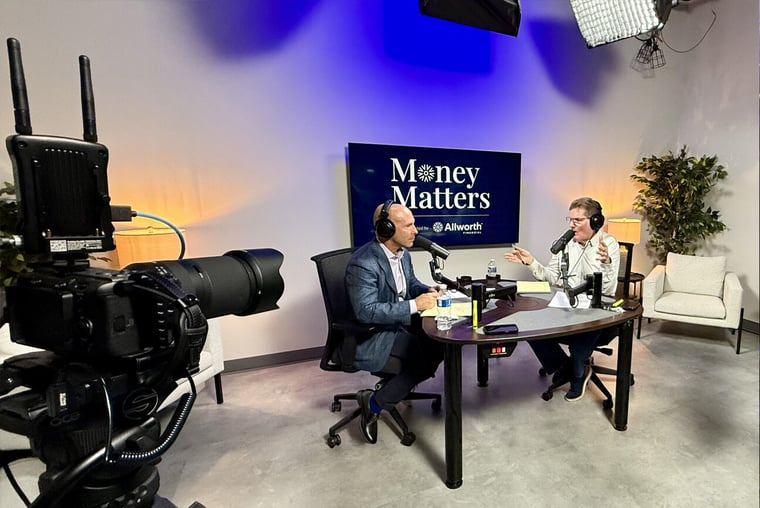
What would you do with over $6 million? In this episode of Allworth’s Money Matters, Scott and Pat take a call from a couple in their early 60s with a net worth exceeding $6 million. The big question: should they use funds from their Roth IRA or brokerage account to cover a major expense? The conversation explores smart strategies for managing cash flow, deciding which accounts to draw from (Roth IRA vs. taxable), and why proactive tax planning is critical.
Plus, the guys break down the concept of defined contribution plans and when they make sense—especially for high earners weighing long-term tax benefits against immediate priorities like home purchases or lifestyle flexibility.
Finally, Allworth advisor Mark Shone joins to share expert portfolio strategies for navigating market volatility, from tax-loss harvesting to charitable giving with appreciated stock.
Join Money Matters: Get your most pressing financial questions answered by Allworth's co-founders Scott Hanson and Pat McClain live on-air! Call 833-99-WORTH. Or ask a question by clicking here. You can also be on the air by emailing Scott and Pat at questions@moneymatters.com.
Scott: Welcome to Allworth's "Money Matters", Scott Hanson.
Pat: Pat McClain. Thanks for joining us.
Scott: Yeah, glad you're here with us as we are coming into Christmas time, the end of the year. If you haven't done your financial moves by now, it's probably...
Pat: Pretty close to too late.
Scott: Pretty close to.
Pat: You can still do a few things.
Scott: Yeah, you can still do a few things.
Pat: You can set up a 401(k).
Scott: Yeah, we already talked about that. That was in last week.
Pat: Yeah, we did all that a couple of weeks.
Scott: We're not gonna anymore.
Pat: Yes, yes.
Scott: We've got fresh stuff to talk about today and taking your calls.
Pat: Oh, that's right.
Scott: By the way, one of the favorite things that we do in the program is taking calls because it gives us a chance to... When we were younger advisors, we took on new clients. And that was always, I think, a thrilling time just because it's interesting. We enjoy the calls because they're interesting, they're challenging, the questions are throwing at us. By the way, we don't do research ahead of time. We show up in the studio and see who's scheduled to call, and do kind of a very rough financial planning, quick with our callers. So, if you're dealing with something financial, maybe somebody is recommending something and you want a second opinion or you've got an advisor that you're thinking, "Is this gal or guy really... Is this really the best kind of advice I'm receiving?" You want an opinion on that. Or maybe just do things on your own and you're thinking, "Well, I should run these by some other folks." Love to take your call. The best way to get on the program is simply send us an email, questions@moneymatters.com, again, questions@moneymatters.com. Or you can call us, 833-99-WORTH. That's 833-99-Worth. Numerically, it's 833-999-6784. And you can leave a... You can call that number and schedule a time to get you on.
Pat: Message and we'll schedule time.
Scott: And I would enjoy doing that.
Pat: Yes, actually, it's my favorite part of the show. Yeah, I still have clients and still work with them, but I've been working with them for so long that there's not a lot to fix. Normally, it's the first two to three years of a relationship with a client where you're really kind of getting to know the client and then kind of cleaning things up, right?
Scott: Yeah. You know, it's interesting, Pat, in this industry... And if you've listened to this podcast for any length of time, you know that a lot of our growth has come through partnerships with other advisors. Many kind of retirement age. Some have joined us, and then their staff stayed, and then the principal retired. We've had a handful of those.
Pat: Pretty normal.
Scott: Also, but many have just stayed and utilized our services.
Pat: And actually, they do a lot. They have a lot of reasons to do it. One is they want some liquidity of their largest asset.
Scott: So, diversification, yeah.
Pat: Estate planning purposes. And three is actually to simplify life so that they're no longer managing people on a day-to-day basis.
Scott: Well, and to be able to provide modern services. And I think one of the kind of dirty secrets of our industry is there are a lot of advisors that kind of retire without telling anybody.
Pat: Oh, yes.
Scott: They retire in place.
Pat: And don't tell anyone.
Scott: No, they don't tell their clients. And what I mean, maybe they're not fully retired, but they no longer paying that close attention to what's happened in the markets. They haven't adopted the newer technologies. They're kind of mentally checked out. They're spending more time traveling and golfing or whatever hobbies they'd like to do. Maybe they still have a small staff that answers the phones and schedule time. But the reality is oftentimes, the clients are not given the level of service that they need. And the clients are loyal. They might've been working with this advisor for 30 years. So, the client doesn't want to change, and they don't know that they're missing out on some of the services that can be provided today.
Pat: Well, the services are evolving on a monthly basis. I didn't say daily, it was on a monthly basis just in our industry. In fact, you see a lot of the robo advisors, these self-help robo advisors that came out 10, 15 years ago that were going to service people, they've actually been remanufactured to actually help advisors service people now.
Scott: Well, because they're not advisors, they're robo asset allocators. It's just an asset allocation tool for most of them anyway. But anyway, that's why you're seeing a lot of consolidation Allworth, I think we were in the, what? Top 20 firms according to...?
Pat: I don't know.
Scott: Barron's, probably.
Scott: Was it Barron's?
Pat: The Barron's?
Scott: Yeah, we were number 11. Okay, were we number 11?
Pat: Yeah. That's how we came on the motto.
Scott: On the latest ranking?
Pat: We're number 11. We try harder.
Scott: Yeah. Once you've gone through the first top 10 and you still haven't found a good advisor.
Pat: We're your people.
Scott: My point is, I think if you look at all those...
Pat: By the way, Scott, I'm sorry, 11 by size, not by quality. We think we're much better than that by quality.
Scott: And if you look at the top 20, 18, 19, if not all 20 have grown through some sort of consolidation by partnering with other advisors, acquisitions, for lack of a better term. So, we're seeing that play out dramatically in this industry. And large part is because the complexity of financial planning has increased dramatically. The kind of services that we can provide to clients are much greater. And that's why I think...
Pat: Well, the market is much more competitive as well in terms of the services you offer for the same price. You have to get to scale. You don't have a choice. If you want to provide those services... We have estate planning attorneys on staff, which when we were managing $2 or $3 billion, you could never really justify the expense. But when you're 15, 20, 25, I think we're 30 some odd billion now, you could absolutely justify the expense.
Scott: Yeah. State planning professionals, tax professionals. I mean, just about every kind of...
Pat: 401(k) specialists, yeah, across the board.
Scott: We've got charter financial analysts, certified financial planners, certified...
Pat: And us.
Scott: ...exit planning specialists, and all that stuff.
Pat: And Scott.
Scott: And then us, a couple of guys that come into the studio and do the show. So, anyway...
Pat: Join our show. Join our show.
Scott: ...we will take some calls today. And also, one of our... I shouldn't say one of our favorite advisors, because we've got roughly 200 advisors, and they are all our favorites. Kind of like when I say I've got a favorite child, but clearly, a quality advisors joining us.
Pat: I'm going to say one of my favorites. I've known him personally for over 35 years. I do things with him socially. So, yeah, I'm going to say one of my favorites.
Scott: Okay. Fair. Mark Shone will be joining us later in the program.
Pat: But before... Let's take this call. And then I want to talk about the adoption of 401(k)s. Especially, this time of year because, if you're in your 50s or 60s and you have adult children, it's the time of year where actually it comes up in conversation where people will start asking about money. It just happens, right? And we're talking about 401(k)s and how they're being used. I can tell you, over Thanksgiving, we had some relatives over, and money comes up. I was chastising them because they don't like to travel because they said that they love to go to Japan and international places, but they said they hate the air travel because it's so uncomfortable. And I said, "I think I have a pretty good idea what your net worth is. I'm just going to suggest to you that you could actually afford to fly a business class." And they said, "Well, that's so much money." And I said, "Listen..."
Scott: It's the classic. How old are they?
Pat: 66, 67.
Scott: Yeah, it's so common though. That's why they have the money. Understand. Have they been traveling business class their whole life, they wouldn't have this network.
Pat: I try to explain to them. And I thought to...
Scott: It's hilarious.
Pat: So, I suggested to them...
Scott: I think we talked about this a week or two ago.
Pat: Yeah, I know. But I suggested to him, is that, "Your advisor should actually send you a monthly check so you're more comfortable spending.
Scott: I'm going to also throw out a little dirty secret of our industry. Advisors typically get paid based on assets that they manage. So, someone's got a couple million dollars with an advisor and they say, "Hey, can you send me $50,000 because we're going to do a couple of big trips this year, and we want to go first class on it all." Ethically morally, from a fiduciary standpoint, they should automatically do that. But there's always that part like, "Oh, oh, the clients want their money back." And the kind of the dirty secret in the industry is, the best clients are those that are afraid to spend a dime
Pat: Because they amass more assets with you in how your revenue is generated. It's a conflict.
Scott: Hopefully, good advisors don't think that way, and are really working in the client's best interest. But that is one conflict that does exist in our industry. Anyway,
Pat: So, after we take a couple calls, we're gonna talk about this.
Scott: And you're looking forward to Christmas to have additional conversations about financial matters.
Pat: I got to tell you, my family's traveling this Christmas without...
Scott: Over Christmas day?
Pat: Oh, yes.
Scott: Good for you.
Pat: Christmas, couple of days from now, we're going to Australia for a long period of time.
Scott: Yeah. Australia. Good for you.
Pat: Yeah. Not flying business class though.
Scott: Okay. You're not?
Pat: No, I am.
Scott: I was gonna say... All right, let's...
Pat: I don't think my kids are though.
Scott: I read an article. Why did I read this article? That was chastising people for flying in business class and having their kids sit in the back, and I thought...
Pat: Oh, I've done it. So have I. I'm like, "Hey, it's my money. I earned my way here. You can earn your way."
Scott: They chastise people for that. I read this article about that. I'm like, "Hey, sorry kids. You don't have to go." You can stay home. And I don't always fly business class.
Pat: Well, it's when I make my kids eat at the restaurant next door because it's a quick serve, my wife takes it down to a full meal. That was a little much.
Scott: "I'll let you get three things at the Taco Bell menu."
Pat: "Your mother and I will be next door at the tablecloth."
Scott: Nice. All right. Let's talk with Dan. Dan, you're with Allworth's "Money Matters".
Dan: Hey, guys, thanks for taking my call. I've been listening to your show for quite a few years, and this is actually the second time I've got to talk to you.
Scott: Oh, good.
Dan: So, I'm excited.
Scott: Good.
Dan: And the timing is perfect. I may have to shift some money around before year-end, and I got in under the wire, so I'm pretty happy about that part.
Pat: Okay. Oh, perfect.
Dan: Well, let me first tell you, I have flown first class twice.
Scott: I don't know how topic came up.
Dan: Well, yeah, both times on points. I didn't pay for it out of my own pocket. So, that'll kind of...
Scott: Points add value though. It is a currency.
Pat: Yes.
Dan: Yeah, exactly.
Scott: You just feel bad about it.
Pat: You could have actually picked up that magazine inside the airplane and bought some Godiva chocolate with your points.
Dan: Well, let me tell you, I got a question, and it's all going to kind of have to do with paying off a mortgage early. But let me kind of throw some background at you.
Scott: Perfect.
Dan: And I'll try to give you as much information as I can...
Scott: Thank you.
Dan: ...in a concise way that it helps this thing flow. But I'm 62. My wife is 61. We've both been retired about four years now. Our finances, we've got a brokerage account. It's got about $2.4 million in it. Of that $2.4 million, $330 of that is in cash. And when I say cash, I mean, I think I've got one CD, and a lot of it's in money markets.
Pat: Cash equivalents.
Dan: Yeah. And it's earning, I'd say, about 3.8% right now. So, it's still not too bad. And that's about four years of expenses. We don't spend a lot of money. We can easily get by on $70,000 a year. But we're also making almost $40,000 in income in that brokerage account through, you know, through the interest as well as dividends and that kind of stuff. So, we're technically not even really spending $70 grand a year because we're making that money on the cash. So, that's the brokerage account, $2.4. The IRAs, we've got $3.3 million. About $3 million of that is in equities. And then another $300,000, same thing. It's still in that cash equivalencies.
Scott: And the brokerage account, how much of that is equities?
Dan: Oh, probably 80%, I think.
Scott: Okay.
Dan: And then in the Roths, unfortunately, I haven't been able to put money into Roths while I was working. I just had a hard time doing that with income limits. But our combined Roths are at $450,000. And that's, that's $100 equities. I'm not going to spend that, yet. But the total is about $6.15 million. A couple things that you need to know before you tell me about this mortgage... Well, let me tell you, I got a mortgage. It's on a second home. We've got no debt on our primary residence or anywhere other than...
Scott: What's the value of the primary?
Dan: Primary, about $400,000, I suppose.
Pat: What's the value of the vacation home?
Dan: Probably $375.
Pat: And do you use it as a rental at all?
Dan: No, no. Everyone asks us if we're going to do that, and I'm like, "Eh, I don't know." Because we'll be there probably four or five months a year.
Pat: Well...
Scott: And you can afford not to.
Pat: Yes. And the question is whether you want to have some of that...
Scott: If your net worth was $1.15, we would say, "You better rent that thing out when you're not there." But anyway.
Pat: And what's the size of the mortgage?
Dan: It's $74,000.
Pat: And what's the interest rate?
Pat: 6.625. So, it's, it's about $4,800 a year in interest. And I hate debt, and I hate...
Pat: And why haven't you taken any of that cash or cash equivalents out of the brokerage account and paid off the second mortgage?
Dan: Well, that's kind of what I'm contemplating. I could do that. I just kind of want to have a little more cash... I don't want to take that out of there and drop my cushion, but I...
Pat: Why?
Dan: I don't know. I'm just kind of like that. It's kind of how I'm wired.
Pat: Well, it makes it... So, here's what the cost is to you. So, you said, you're earning 3.8%, and the cost of money is six what?
Dan: 6.625.
Pat: Okay. So, it's costing you...
Scott: Let's call it 3% spread.
Pat: Yeah, it's a 3% spread, so it's costing about $2,220 a year. approximately. And you're probably taking a standard deduction, my guess.
Dan: Yeah, yeah.
Scott: They're not getting the tax right off.
Pat: So, for that pain, and you decide whether it's worth the pain or not to bring your cash down by $74 grand, but you're paying $2,200 a year for the luxury of paying the bank. If you borrowed the money from the same institution that you actually deposited it in, all you've done is enrich someone else by recycling your own money. If you think about it, my guess is that in your cash and cash equivalents, you probably own some Ginnie Mae or Fannie Mae, some short term.
Scott: You might actually have loaned yourself.
Pat: Yourself.
Dan: Yeah, yeah.
Scott: But with a net worth of $6 million, if you say, "It's worth it to me for $2,200 a year," and that difference in spread, then keep it.
Pat: But the reality is the house is worth $375,000. It's not like the house is ever going to go back.
Scott: That's right.
Dan: Yeah.
Pat: It makes absolutely no sense, Dan, to have that second mortgage.
Dan: How about this? Now, I've got three places I can pull it from. I can pull it from that cash equivalency. I could pull from the IRA, which I don't want to do, because I don't want to be cashless.
Pat: All right. So, we're going to talk about the IRA in a second. Scott just looked at me. We're going to talk about the IRA in a second. We're just going to address the mortgage. Or you could pull it from your brokerage account. Those are three places you could pull it from, right?
Dan: Okay. How about...?
Pat: And the thing that... Or how about what?
Scott: What was the other one you said?
Dan: How about the Roth?
Scott: No, I wouldn't do that.
Pat: Yeah, you could pull from the Roth. The three places you could pull from are the Roth or the IRA.
Scott: I'll throw one more. You can get a primary mortgage on your existing house, maybe even save a tiny bit, and use that to pay it off. The fourth. Or a credit card. You could probably get a credit for $74 grand.
Pat: The place it makes most sense for you to take it from is the brokerage account. And the reason is that Roth, that Roth, you want to save the Roth for large purchases to dry... So, if all of a sudden, you have a purchase coming up, that's $150,000, $200,000, and you say, "Okay, well, if I take it all from my IRA or my brokerage account..." You're going to die with that Roth intact though.
Scott: Most likely. Do you have kids?
Pat: Yeah, two grown kids. They're going to get it all.
Pat: That Roth, you will die with that Roth 100% intact. So, what other income do you have? Do you have a pension?
Dan: Nope. Nope.
Pat: Social Security?
Dan: That's coming in a couple of years, and that's probably $50,000 a year. So, yeah.
Scott: And have you done a Roth conversion for 2025?
Dan: We haven't. And the only reason... Now, here's the last thing. I should have brought this up earlier. I need to keep my income at that $70,000 to get the ACA tax credit.
Scott: Yep, yep. That's right. That's right.
Dan: It's like $17 grand.
Pat: No, that's worth it.
Scott: No, no, no, we understand it. We understand it. We do it all the time. We do it all the time. So, because you're under the ACA, which is just, I find when they're arguing in Congress about this all the time now, you just shake your head and you think...
Pat: It's maddening.
Scott: ...you just miss so many red flags.
Pat: Our medical system, what are the nicest looking buildings that keep popping up? They're all medical buildings. The nicest. Do you ever wonder why they're building them close to your house, Scott?
Scott: Anytime the government gets involved, it's not efficiency. But anyway.
Pat: Yeah. Correct. So, it's...
Scott: So, take advantage of the opportunity.
Pat: Yeah. But then as soon as possible, as soon as you go off the ACA, you want to start looking at Roth conversions. And you might even have a little bit of room in the Roth conversions now, but not a lot.
Dan: Yeah, not much. Because I know I'm gonna... I just kind of calculated this. It looks like it's age 75 when I'm forced to take that money out. I'm going to have a tax bomb. And I want to get that money out of there. Because I know that the kids, when they inherit all this, they're taxed prior to any bill.
Pat: Ten years.
Dan: Oh, yeah.
Pat: And they got to drain it in 10 years.
Scott: Yeah. And they're not going to have to use points to fly business class.
Dan: They'll just have to, yeah. I don't want them to have to cash in $700,000 a year, you know.
Pat: No, understand that. But it's good that that's on your radar. But absolutely, like, tomorrow, you should take that money out. you look pretty good. You might be a little bit overweight equities.
Scott: I think then, Dan, perhaps the re the reason you're reluctant is you're viewing this cash as this is, if the markets go down, or I should say, when the markets go down, you're not forced to sell any stocks. You can just live off this cash for a number of years.
Dan: Yep, 100%.
Scott: And that's your concern, right? So, maybe the idea would be to look, in the brokerage account, is there something you can sell to replace the cash, the $74 grand to pay off the mortgage?
Pat: Yeah, do you have any loss in the brokerage account?
Dan: No.
Scott: Or, I think you're over...
Pat: Scott, he's grossly overweight equities.
Scott: I think you're really high equity. Another way to do it is reduce a bit inside your IRA equities. And I know you're like, "Well, how can I get to that cash?" But let's say we have a big downturn, you could always then sell something of your brokerage account, and in the same day, repurchasing your IRA to keep that equity position intact.
Dan: The allocation, okay.
Scott: Yep, yep.
Pat: So, what you told us is in your brokerage account, you were 80% equities and your IRA, you were 90% equities, and then your Roth, you were 100% equities. So, when we actually weight that number, you're actually about 85% equities across the whole portfolio. And you're overweighted equities.
Scott: Maybe, maybe not. On $70,000 a year income, it's very aggressive.
Pat: Okay. Well, maybe, yeah. I think it's overly aggressive. I don't think you... First of all, I don't think you need to be that aggressive.
Scott: I would agree with Pat on that because, if your lifestyle was much larger, then you're like, "I am aggressive. I need to have a higher return, and I'm going to take a chance," which some probably there's some possibility that you may not be able to maintain that lifestyle. But the point you're at now, you could be as aggressive as you want or as conservative as you want, and you're not going to have a problem maintaining your lifestyle.
Dan: Yeah. Okay. Yeah. The only reason I really didn't want to pull anything out of that brokerage account on the mortgage other than the cash was, I don't have any losses. There's a couple of index funds that have forever...
Scott: So, the way to do it is do it inside your IRA. You're best off having your equities in the brokerage account anyway, because they have favorable tax treatment, and the dividends are qualified dividends, tax on a much lower rate.
Pat: Yeah. So, you should have almost no equities in your... I'm sorry, you should have 100% equities in your brokerage account and all your bonds in your IRA.
Scott: Yes, I would agree with that.
Pat: But the overall portfolio should be at the most, in my opinion, 75% equities.
Scott: But let's say there's a downturn, a prolonged... Let's say we have another... And if you look at the last 25 years, twice, we've had the markets fall roughly 50%, right? One time, 45%. The other time just slightly over 50.% So, will that happen again in the next 25 years? I don't know, but I'd plan for it, right? So, if we're planning for it, if you reduce your exposure in your IRA, and the markets go through a prolonged bear market, and your cash is getting low in the brokerage account, at that time, you wouldn't have the same kind of gains that you would have today, right, because markets are down, to give you an opportunity to sell something probably at a loss. And if you didn't want to sell during down markets, which we certainly wouldn't recommend selling down markets, at the same time, you do, you increase the equities in the IRA by a subsequent amount, so essentially, are maintaining your position.
Dan: Okay. Okay. Because I could live off of the cash in my brokerage account until we're off the ACA subsidies.
Pat: That's right.
Dan: And then...
Pat: And top it off with a distribution from the IRA as well. So, the funny thing is...
Scott: At 65.
Pat: Yeah, at 65. The funny thing is, is that people think about their IRAs in the brokerage account in a perfect world, your IRA would be empty by the time that you actually die and nothing would go to your heirs, and the brokerage account under current tax law, you would never have touched a dime of it. But, people look at it and they say, "Well, I have to pay taxes on my IRA." And you're like, "Yes, you do. But so will your beneficiaries unless it's a charity." And so, when I go into retirement, I know exactly how I'm going to do it. I will start my IRA the first day of retirement. And I will spend that knowing that I'm going to spend it down in my lifetime, and the brokerage and the Roth will be the last thing that's touched for me to live on.
Dan: Okay. Okay. Yeah. I'm going to... The nice thing is when I started doing those... Now, on those conversions, I planned on starting as soon as I'm on Medicare. And maybe up to the 24% tax bracket, which I think that effective rate would be about 22% if I do $300,000 a year.
Pat: Yeah, but I would say, even above that, live off the IRA, and do the conversions all at the same time.
Dan: Gotcha. Okay. So, that would be... Okay, okay. And then I figure, I can do that until I die, can't I?
Scott: That's right. At age 75, your Required Minimum Distributions may be higher,
Pat: But by that point in time, if you do it right, that your Required Minimum Distributions won't be that large. So, we are so conditioned to think about tax deferral that we actually forget, you know, if the goal is for your beneficiaries to receive as much money as possible, sometimes it's better to pay the tax early, especially with this 10-year rule.
Scott: Yes. I mean, it used to be, but until a couple of years ago, you can stretch these distributions out over... A child inherits an IRA, a 401(k), they could take the distributions out over their remaining life expectancy. Now, you have to take the distributions out over 10 years. And if they inherit the money at the point where the decedent had already begun Required Minimum Distributions, they can't even wait till the 10th year. They have to start taking distributions from the year one.
Dan: Yeah. Okay.
Scott: All right.
Dan: Yeah. It's mostly just, I know that they're going to be in their higher earning years when some of this money starts going to them. And I just,
Pat: That's not the brokerage account. The brokerage account comes to them tax free under current tax law.
Dan: And that's what I wanted to get out of you all.
Pat: So, when you get off this call with us, you're going to actually pay that second mortgage off, by trust.
Dan: Pay that thing off?
Pat: Yes.
Dan: Okay.
Pat: Unless you want to spend $2,200 a year for nothing. And you don't sound like that type of guy.
Scott: $50 bucks a week.
Scott: Or you can take a $50 bill each week and go out in the back and light it on fire and watch the embers.
Dan: Yeah. I wouldn't want to do that either.
Pat: That's right. Well...
Dan: That's some good insight. I think I got all that good information today.
Pat: All right. Well, appreciate the call.
Dan: Okay. Well, thanks a lot.
Scott: All right. Thanks, Dan.
Dan: Have a good one.
Pat: Appreciate it. But the rules have changed. Because, when we started doing this show 30 years ago, I would have never told someone that you should start your IRA as soon as possible. You're like, this will be the last thing that goes because of how...
Scott: Well, not too many people end up at $62 or $3 million in their IRA. People who've maximized their contributions really from day one. A lot of people that listen to the show probably.
Pat: Yes, they do. That's right. And there's a lot more people that don't listen to this show because we have absolutely no value to add.
Scott: That's correct. So, hey, before we go to the next call, we're going to talk about 401(k)s.
Pat: Oh, yes, yes, yes. And so, it's called... This goes back to it, meaning a generation of moderate millionaires. And this came from an article in "The Wall Street Journal." And I thought it was pretty interesting. I was actually kind of surprised that numbers were so low as they were... But going back to the call we just had.
Scott: Dan.
Pat: With Dan. He's 62. He's got $3 million in his account. As of the third quarter of 2025, there were $654,000 people in Fidelity that had about...
Scott: And Fidelity has got about half the market. Don't they, in 401k?
Pat: Huge amount, huge amount.
Scott: Massive.
Pat: Had, at least, a million dollars in their Fidelity IRA...excuse me, 401(k). That doesn't include their IRAs. It's just their 401(k), the work sponsor plan. And about 3.2% had $3 million or more.
Scott: Three percent is all?
Pat: Yeah. That had $3 million or more.
Scott: Oh, $3 million or more.
Pat: Yes. But the number of...
Scott: Okay, then that's goes back to what I was just talking about.
Pat: But this is what I thought was the best part of this whole article, was that 88% of the money allocated in 401(k)s is in equities. That is up dramatically from where it was.
Scott: We talked about when we started in the industry, up dramatically.
Pat: That's right. That's right. Yeah. I thought it was a good sign. And that number of people that are actually participating versus 10 years ago has gone up by about 8%. This is good. It's a good sign.
Scott: Well, a lot of employers now have that automatic role, automatically increase your contributions.
Pat: Yeah. You have to actually work against it.
Scott: Yeah. Which is good. And the best thing about the 401(k) for most Americans is not the tax benefits. It's the fact that it gets sucked out of their paycheck before they have a chance to spend it. Because most people have a hard time savings.
Pat: Yeah. There's lots of competition. Really, when you're raising a young family there, what's the competition, a minivan, a new shoes, a trip to Disneyland. That's lots of things competing for your resources.
Scott: A pair of cleats and a dues to play in the soccer club or whatever. Not necessarily just trips. It's like basic. And most people live to whatever their paycheck is.
Pat: Yeah. So, I thought it was a good sign. So, expect that. And more important than ever, and I mentioned this at the beginning that, you know, when you're together with your family, if you have young children, and say young, young adult children, to say, this is a good thing to do.
Scott: I sent a little note to... My daughter's dating this guy, my oldest daughter. And he had asked me some...
Pat: Tell us more.
Scott: I'm not going to talk more. But he had asked me something about his business, and I got a kind of an idea of what his income as he has no employees for 2025. And so, I sent him a little note about the Solo(k). I said, "At least, put $1,000 bucks into this year if you don't know what you're going to do, because you've got until the time you file your taxes next year to make a massive contribution of roughly $60,000, $70,000 bucks."
Pat: And did he respond, "Thanks dad?"
Scott: They haven't been dating that long. I was one of those things like, "Is this a bit much for me to say that?" I thought, "I'd be remiss as a financial advisor." Considering I've learned something about you, not to state something here.
Pat: Yeah. And did he respond at all?
Scott: Yeah. He's going to look into it and he'll circle back with more additional questions.
Pat: Oh, very nice.
Scott: I said, "Thanks son." Unfortunately, some of my daughter's friends probably listening to this.
Pat: Well...
Scott: It's a relatively a new relationship. It may go nowhere. I don't know.
Pat: ...the nice thing is, whatever your daughter hears will be taken out of context.
Scott: Yeah. All right. Let's continue on. Let's talk with Frank. Frank, you're with Allworth's "Money Matters".
Frank: Hi, Scott and Pat.
Scott: Hey, Frank.
Frank: Thanks for taking my call today. I have probably a good problem to have, but I'll ask the question, and then, you know, give you the stats if you need them. So, my wife and I, through my wife's employer have the ability to contribute to something they call like a defined contribution plan, and then do an in-service rollover to a Roth in the same year. And we're trying to weigh whether or not we should be saving in that DCP, and then moving it to the Roth, or if we should be saving up for a home because we don't own a home, yet. And so, trying to weigh those and figure out which one is gonna pay out the best for us in the long-term.
Pat: Oh, got it. Got it. How old are you? Um,
Frank: I'm 30 and my wife is 32.
Pat: And tell us about your incomes.
Frank: We make a $360 combined, $180 and $180.
Pat: And children?
Frank: No children yet, but we do want some children. And that's what complicates this a little bit is, once we have children, we want to sort of transition my wife to staying home with the kids, and then maybe, eventually, you know, a decade later, go back into the workforce part-time or something.
Pat: And do you have money saved outside of your 401(k)s or IRAs towards the purchase of a home?
Frank: Yes, we have $160,000 saved already.
Pat: And it's in a high-yield money market account?
Frank: Yeah, it's in a money market, yes.
Pat: And any investments outside that $160, outside of the pension plans?
Frank: We have a... So, like a 401(k)?
Pat: No, outside of 401(k)s or IRAs.
Frank: Oh no, we just have that $160 there.
Pat: And how much do you have in 401(k)s?
Frank: $210,000 combined.
Pat: And when do you plan on purchasing...
Scott: How much are you saving? What percentage of your pay right now are going into your 401(k)s?
Frank: So, for me, I maxed out my 403(b). And my wife uniquely has a 403(b), a 457(b), a pension and the DCP. And we max out the 403(b) and the 457(b) for her.
Scott: And how much would a home cost you?
Frank: We are also thinking about leaving the state of California. So, we're thinking somewhere in the, like, $400,000 to $500,000 range.
Scott: You guys are great savers. Holy smokes.
Pat: That is what I was thinking.
Scott: Good for you. How long have you been in the workforce?
Frank: About seven, eight years now.
Scott: Good for you.
Frank: Then most of that...
Scott: I wouldn't recommend doing the extra contributions and converting into a Roth.
Pat: I agree.
Scott: For a couple of reasons. One is what you've got on the horizon here of looking to buy a house. I mean, your age, where you're at in your career. Like, there's always kind of a bit of balance between saving for the future and dealing with current needs that we've got today, and considering you're looking at buying a home. Secondly, if you're thinking about leaving the state of California, you'd want to take a tax deduction on things as much as possible, and not necessarily use a Roth.
Pat: That's correct. That is correct. Because there's a very good chance that you will move into a lower tax state.
Scott: Unless you're going to Hawaii.
Pat: Or New York.
Scott: Or New York City, you're going to be in a lower tax rate. My guess is you're not moving to Hawaii nor New York city.
Frank: No, no, definitely not.
Pat: I would save anything extra. I would even question whether, at this point in time, I would actually do the... Your wife is maxing out both the 457 and the 403(b)?
Frank: Yes.
Pat: You got a lot going into savings.
Frank: Yeah, we really do. We're a little bit frugal. But I guess, the way they described the defined contribution plan was that it's already like, it comes out of our check, it's after tax, and it can just be rolled right over. So, would it really be a savings if we moved and take it out later? Because we're already taxed on it, I guess.
Pat: Yeah, well, I mean, you could make a... If we were going to go that way, we could actually just direct some of your 401(k) into a Roth 401(k), which I would not do, which I would not do. It isn't... You're focusing on, you know, this defined contribution that you could convert to a Roth. And what we're focusing on is the purchase of a home.
Scott: Yeah. Yep.
Frank: Okay.
Pat: And so, I would have a tendency... And by the way, not only the purchase of the home, there may be a good chance that you decide to move to another state and only one of you gets a job to begin with. You did...
Scott: Or your income's not quite the same.
Pat: Or many, many other things that happen. So, I wouldn't do any of those. I even question whether you should be maximizing the 403(b) and 457, and not putting any more money...
Scott: But they've got plenty of money.
Pat: 160.
Scott: Yeah, if it gets the downside.
Pat: Yeah, you're fine. So, I would not be doing that.
Scott: I wouldn't bother with it right now.
Pat: I wouldn't. And I assume you both have some term life insurance on yourselves?
Frank: Oh, yes we do.
Pat: Okay. Yeah, you're doing a great job.
Scott: They're doing a great job.
Frank: So, with like, you wouldn't be worried about, like, if she does leave the workforce and then, you know, I take a job in another state making less that, you know... Obviously, I guess, I've we've been saving at such a high level that that in itself becomes scary because then it's like, we're not going to be able to get to maybe where we need to be. You wouldn't worry about that at all. You just worry about sort of what's right in front.
Pat: That's right.
Together: You're going to get...
Pat: Say it Scott, you say it.
Scott: Frank, a lot of people we worry about the long-term because they don't have the discipline to save. You do not lack in that discipline. You are not worried about that. Not at all. You'll figure out how to make whatever work.
Pat: Yeah. Yes. So, remember money oftentimes revolves around the psychology of the people that are actually making it, saving it, and spending. Not oftentimes, all the time, all the time. So, if I were you, I'd be thinking, "Okay, where do we really want to spend the rest of our days?"
Scott: Or at least, this next season of life. You're talking about having a family and stuff. Where do you guys want to be?
Pat: What does our economics look like? What do the economics look like when my spouse leaves the workforce? And you're fine. And so, the more money you have in that high-yield money market before you make the move, the more comfortable that move will be. Because, you know, you move out of state, you move to... What state are you thinking of?
Frank: Oh, we're in between a few of them, but, like, Texas, Tennessee, Virginia.
Pat: There we go. Well, Virginia, I wouldn't have called, but Texas and Tennessee were on my list, and I would have thrown in Arizona as well.
Scott: And Nevada.
Pat: And Nevada.
Scott: That's where all the Californians are moving. A few make it to Florida, but usually it's those.
Pat: Yeah. Don't do that at all. Just continue to save more money into the money market for the move.
Frank: Okay.
Pat: All right. And you're always going to worry about it by the way, so that's never going to leave you. You show me someone that doesn't. It's just the way it is. It's just the way it is. Someone that, show me someone that doesn't worry about money, and I'll show you someone that doesn't have any, you know. I could retire tomorrow comfortably. I still worry about money.
Scott: I still worry about money as well. I'll wake up in the night afraid I'm going to run out of money.
Pat: I'm not that bad. I'm not that bad. I'm not that bad.
Scott: Not quite.
Pat: So, you're fine. You're fine. And listen, you know, if that move is on the horizon, you've really got to be intentional about it. You can't just kind of wait for things to line up. You have to be intentional. It is a big move to move. Did you grow up in this area and the area that you live now?
Frank: Yeah.
Pat: That's a big move, right?
Scott: You've got family, I imagine.
Pat: You've got family and friends, and you're going to go out and create a new life.
Frank: All my family already left the state.
Scott: That makes it easy. And in what period of time did they leave the state?
Frank: They left, my brother left in like 2014, and then my parents left during COVID.
Pat: Where'd they go?
Frank: They went to Texas.
Pat: Okay. Yeah. All right.
Scott: Frank, appreciate the...
Pat: Be intentional. Have great intentions about the move.
Scott: All right. Like we talked about at the beginning of the program, Mark Shone is going to join us. Mark, thanks for taking some time.
Mark: Yeah, actually it's good to be here. How are you doing, Scott?
Scott: Good. And Mark is one of our certified financial planners in San Francisco Bay Area.
Pat: Bay Area, some of Sacramento, and Nevada.
Pat: Like, most of your stuff you said you do remotely now, correct?
Mark: I do. Yeah, yeah. Most of it is remote, but there's still some in-person things. But, yeah, it's probably 90% remote.
Pat: Wow.
Scott: Well, it's interesting how... I mean, I think the pandemic changed a lot of our behaviors, mine included. And there's... Like, you think about long-term clients that would come in periodically for whatever their reviews are. And then now, it's like, "I think I'm good. Let me just do this." I mean, if I can go to the dentist remotely, I'd certainly choose that rather than driving all the way across town to see my dentist. And that's the same thing. Number one. Number two, just with, we've got experts, a variety of different expertise that are in different parts of the country, all over the place.
Pat: And they come in, they drop into meetings all the time.
Scott: Yes. And so, whether if maybe a client's in the office with an advisor, and we have a big monitor behind that person pops in, or it's all remote. And that's sometimes much...
Mark: Yeah. I mean, it's a better client experience. Think about it. They hop in their car, drive 30 minutes to come to see you, spend an hour there, drive... It's a two-hour event that can be handled efficiently in an hour.
Scott: Yeah. Not only that, if you want a portfolio specialist, they can pop in the meeting briefly or an attorney or a CPA or insurance expert. Anyway, Mark, you have a story for us. Is this correct?
Mark: Yeah. I have a story of just some tactics around more some things that you can do when you get market volatility.
Pat: Okay. And before you tell this, I got to tell you that... You were on the show a while ago and you talked about Silicon Valley Bank and how you had put these collar around executives so that they were protected from a downside. And I've thought about that about three or four times. And how hard it is for a client to do that with a stock that's doing so well, right?
Scott: And think of it like insurance, there's a cost, you pay a premium for those guarantees. Right.
Pat: How hard it is for that particular client.
Scott: Protections, like you said.
Pat: But then after they live through it, and the person in the next office didn't do those techniques and changed their life irrevocably forever, right, it's chilling.
Mark: Yeah. Not only premiums, but sometimes, you know, it's actual tax that you have to pay. I mean, there are some pain points, and it's against a stock that you are generally pretty excited about. You know, you upgraded your lifestyle, all the things. There's all kinds of emotions around it as well.
Pat: Yeah. And you only do it with stocks that are doing really well.
Mark: That's right.
Scott: That's the only ones that you have a concentrated position.
Mark: We don't have that problem.
Pat: So, anyway, I want to thank you for that last conversation because I have thought about it. In fact, I thought about it this morning driving into the show. I have thought about it no less than three times, about just how actually, like, at the end of it...
Scott: That's why it's important for people to step back and say, what are they really trying to accomplish in their life? And most people get to a point where they're more concerned about not going broke than they are about becoming wealthier. And we get confused because we get excited.
Mark: You spend money, not returns, is something that I often say to clients, right? So, if you're not worried about headed to the cocktail party and, "My portfolio did X and yours only did Y." You spend money. It's capital. It supports your lifestyle, so you just have to think about it in a more broad sense. And you have to have the passion to get your clients to do the right thing. I mean, if you didn't have conviction and they didn't have the courage, we're having extremely different conversations today than we had. So, it's important stuff. So, that helps to kind of live through some of those things, introducing more passion.
Scott: It's interesting. We've had communications training with our advisors. I mean, sometimes, the best people with numbers are not always the ones that are also the most outgoing and connecting well with people. And so, part of the interesting about this profession, it's the people that can do both, that are both good with numbers and highly interacted with people. And to your point, Mark, you've got to have the conviction, and then you need to be powerful. You need to be skilled enough to help guide that client down the journey to where they end up with that conviction and they're thankful for it. So, your techniques today, you're going to share a couple with us.
Mark: One of the talk about just a client that I have that when we saw market correction, what kind of things do we do? And there's essentially, three main things that can happen. One broad case thing, we talked a little bit about direct indexing. You've talked about it on the show here. And that's the ability to tax loss harvest. Even when markets are going up, you have the ability to do that. Well, that puts you in a position to do some things that are as simple as rebalancing a portfolio when markets start to get very volatile, and to rebalance a portfolio without causing any taxation. So, the decisions that you make and the planning work that you do years in advance help you be more proactive in an environment like this. So, the first thing is just allow to do rebalancing without taxation. Now, that was the biggest thing.
Pat: And Mark, that's just because you've got loss carry forward that you've actually just kept dry.
Mark: That's correct. That's correct.
Scott: Or rebalancing retirement accounts.
Pat: Or rebalancing in retirement account. Yeah, correct.
Scott: And maybe trying to look at the overall portfolio, let's say, you've got half your assets in taxable, half in retirement accounts, you might actually end up tweaking it a bit where you do a further rebalance in the retirement account and little in the taxable to avoid triggering a tax bill.
Pat: To get to the target state of the portfolio.
Mark: That's correct. That's correct. And I do have some clients, you know, we harvest these losses. And you could do this while the market is trending up. So, most people, you know, thinking, "Wow, why are we creating a bunch of losses?" It's something that you can do while the market is appreciating.
Scott: Well, you're doing it because you're smart.
Mark: It's helpful. And then they're like, "Should we use some of those losses? Do you think we...?" I've always been asked, "Should we use some of these losses this year?" I was like, "We're going to utilize the losses when there's a purpose." And that purpose is going to be to rebalance, to take cash out to do something. So, you just want to be thoughtful about that.
Scott: And there's no time limit. We can carry forward realized losses indefinitely.
Mark: That will be towards 40.
Scott: Except to our grade. You can't.
Pat: You can't. But you don't really need them to your grade because they step up in basis.
Scott: Forever.
Mark: That's correct. Yeah. Well, you also don't want to carry losses into your grave as well, because you get a step down on basis. So...
Pat: Yeah, yeah, that either.
Mark: Yeah.
Scott: That's just so bad.
Pat: That was really bad.
Scott: That was bad.
Pat: Thanks, Scott.
Mark: But the other thing that you could do in these environments is sometimes it's a good time that if you have things that have held up pretty well in this environment, you'll do charitable giving with appreciated stock. So, those are some of the things either to reduce and get your portfolio back in balance. So, growth stocks have done really well over a really, really long period of time. If we're going to be doing charitable things, instead of selling to rebalance, we'll use charitable giving to gift away those highly-appreciated positions.
Pat: Did it last week. Did it last week. Did it last week after a conversation. The exact conversation was, you know, now's a good time to do this. And by the way, not only are you doing it because, you know, we're going to do a lump sum. Rather than every year, let's do it every three or four years so that we actually get as much benefit out of it as possible. And the other is, just for the record keeping, bookkeeping, the ease of actually gifting to charities, a donor advice fund...
Scott: To a donor advice fund, yeah.
Pat: ...makes it so easy.
Scott: Well, Mark, as always, appreciate you taking some time to be with us. Mark Shone, CFP Extraordinaire.
Pat: And Mark, how's the band going?
Mark: It is going well. We played after the last time I was on with you. All was well. Our hits on YouTube went way up. I will tell you that.
Pat: Don't get too famous out there. You're going to end up quitting Allworth being a rockstar.
Scott: No, wait, stop. How old are you, 59?
Mark: 59, yeah, that's right.
Pat: You're a rockstar.
Scott: 59. Wait, stop for a minute.
Mark: There's a real big, heavy demand for 59-year-old drummers out there.
Pat: When you said the hits on YouTube went way up, like, they doubled, so now you got 10?
Mark: Oh, no, 17.
Pat: That's funny.
Scott: That's funny.
Pat: Thanks, Mark. Thanks, Mark. Appreciate it.
Scott: Well, that is all the time we've got today. It's been fun being with you. Everyone have a great Christmas holiday break. This has been Scott Hanson, Pat McClain, Allworth's "Money Matters".
Automated Voice: This program has been brought to you by Allworth Financial, a registered investment advisory firm. Any ideas presented during this program are not intended to provide specific financial advice. You should consult your own financial advisor, tax consultant, or a state-planning attorney to conduct your own due diligence.
Insights for Complex Wealth Decisions
Join our email list for exclusive commentary from our Chief Investment Officer, early access to expert-led webinars, and your complimentary Wealth Planning Checklist for Complex Portfolios.
We take your privacy seriously and respect your privacy choices. By submitting this information you agree to our Terms of Use Agreement, Privacy Policy, and to receive important notices and other communications electronically.