
Tax-Savvy Income Strategies, Stock Gains Without Selling, and Insurance Insights
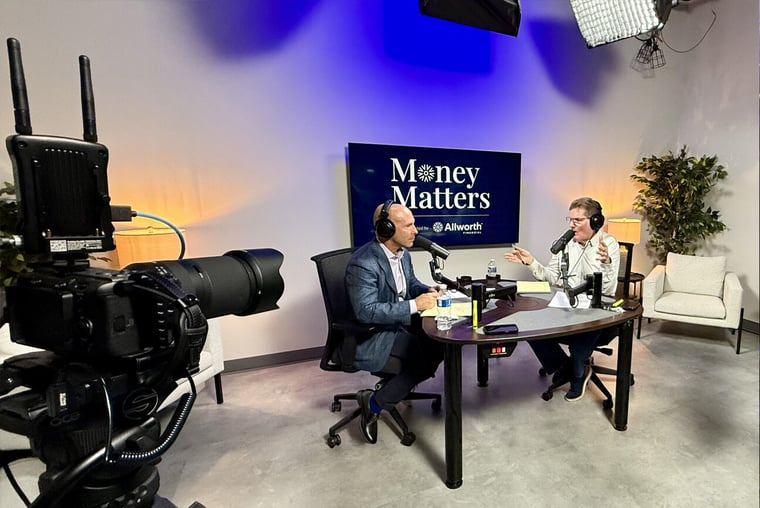
In this episode of Money Matters, Scott and Pat tackle real-world financial planning questions that could save you thousands. They cover key tax-savvy income strategies, help a caller decide whether to cash out a $350K whole life insurance policy, and clarify the confusing tax rules on after-tax IRA contributions.
You’ll also hear how one investor turned a concentrated stock position into $90K in annual income—without selling a single share. This smart use of covered calls shows how modern income strategies are evolving beyond traditional methods.
And yes, they weigh in on the latest hype around gold investing—and why it’s often a distraction from sound long-term planning.
If you’re thinking about insurance, taxes, or smarter ways to turn assets into income, this episode is packed with insight.
Join Money Matters: Get your most pressing financial questions answered by Allworth's co-founders Scott Hanson and Pat McClain live on-air! Call 833-99-WORTH. Or ask a question by clicking here. You can also be on the air by emailing Scott and Pat at questions@moneymatters.com.
Automated Voice: Would you like an opinion on a financial matter you're dealing with? Whether it's about retirement, investments, taxes, or 401(k)s, Scott Hanson and Pat McClain would like to help you by answering your call. To join Allworth's "Money Matters", call now at 833-99-WORTH, that's 833-99-W-O-R-T-H.
Scott: Welcome to Allworth's "Money Matters", Scott Hanson.
Pat: Pat McClain. Thanks for joining us.
Scott: Right. Glad you are here with us. We love taking calls, answering questions you throw our way, so if you want to join us, you send us an email at questions@moneymatters.com. And we've got some good calls lined up today. We'll be talking about... Before we do that, Pat, gold, I want to talk about gold for a bit. We don't talk about that very much on the program. It's the strangest thing.
Pat: Well, I read an article last week or the week before about Costco limiting the number of gold bars you can purchase in the store.
Scott: How big of a gold bar can you actually purchase at Costco?
Pat: I have never been to the gold bar section of the Costco. It's not near the free sample section, so I've never hit it.
Scott: How many thousands of dollars are we talking about? You come out of Costco with a couple hundred grand worth of gold?
Pat: I have no idea. I don't know what people are buying, but I thought, this is kind of a strange...
Scott: Do they have their normal markup? Because Costco is like a standard 8% markup or whatever it is, 7%, 8%.
Pat: It's 14% on non-products and 15% on their house brands.
Scott: Thank you, Pat, for remembering that.
Pat: We just thought it's a fascinating way to actually run a business. So, I just remember reading this article about Costco. But your point about gold.
Scott: It seems like whenever gold prices go up, then we start... More gold companies are out there. Seems like every talking head, whether it's a podcaster or a radio, they've all... I don't watch TV, but I'm assuming there's TV ads promoting gold.
Pat: Promoting gold.
Scott: Right. It's not that I don't really... I just don't care for TV. So, it's not like I'm against TV, but I've tried. And it's harder every year because I don't even know where to start, so I just don't bother.
Pat: I've given up.
Scott: Every once in a while I watch a series. Anyway, the things they state about gold are not factually correct.
Pat: Yes. That's right.
Scott: Like it's a hedge against inflation.
Pat: It's not. It can be. It has been.
Scott: And it has not been.
Pat: That's right. That's right.
Scott: Depending on different times. And it doesn't always go up when stocks go down, right? But the thing about it, two years ago, gold was roughly $2,000 an ounce. If you wanted to own gold, wouldn't it have been better to buy it two years ago as opposed to today? And if suddenly, you believe it's an important asset today, what has changed in your feelings and your beliefs?
Pat: Other than that you saw the price go up and you missed out on it.
Scott: Yeah, it didn't do well during '22 when the market was down.
Pat: Yes. But Scott, at the end of the day, the price of gold is dependent on the cost of getting it out of the ground, refined, and known the marketplace over the long-term. Over the short-term, anyone's guess. No different than in stocks. The price of the stock is based on the earnings of the company over the long term.
Scott: I mean, I was in South Africa a number of years ago and there was this amusement park that they built on top of a gold mine. And I was talking to someone about that. There's still tons of gold down there. But when gold prices fell, it was no longer profitable for them to mine the gold. So, they had this land and then someone decided, "Why don't we build an amusement park?" So, they built an amusement park on top of the gold mine. But to your point, it's like, there's lots of gold still there.
Pat: Oh, yes.
Scott: There's plenty of gold still to be mined.
Pat: That's it, yes. And there's actually new technologies which will actually be able to find gold in different places. They're gonna take...
Scott: And if you want to own a couple percent in gold...
Pat: Go for it.
Scott: ...or feel better about having gold...
Pat: Go for it.
Scott: ...a few coins in your safe at home. Hopefully you have a good safe, and one that they can't lift and carry out of the house if that's what you want to do. But I don't know. I just find it... I don't really consider it an investment. Well, it doesn't produce anything. It produces nothing. It doesn't pay you interest, doesn't produce anything.
Pat: It doesn't produce anything.
Scott: So, anyway, all right. We're gonna take some calls here. Again, if you want to be part of our program, questions@moneymatters.com or you can call 833-99-WORTH. Let's head to New York City and talk with Charlie. Charlie, you're with Allworth's "Money Matters".
Charlie: How are you?
Scott: Fantastic. How you doing, Charlie?
Charlie: Good, thanks. My question is, when I was... Some 25 years ago, I needed insurance, so I took out a term insurance and I converted a portion of it, and I converted $350,000 to whole life. So, there's $2 million policy, $350 whole life, $1.65 this term. I still have the term. I think that's all I need.
Scott: Is the term...? Is it a level...? And so, how old are you today, Charlie?
Charlie: I'm 53.
Pat: And this is on yourself or your spouse?
Charlie: It's on me.
Scott: Okay. And the term, does it go up in price every year?
Charlie: No, no. The term... I took out a new term policy maybe 10 years ago.
Pat: Okay. That's what we were looking for. So, you converted part of this, but then you rewrote the term policy 10 years ago. How's your health today?
Charlie: What?
Pat: How is your health today?
Charlie: Fine. Fine.
Pat: Okay. So, what's your question for us?
Charlie: What to do with the whole life policy? I mean, I stopped... Maybe also about 10 years ago, I stopped paying the premiums on it. I'm using the dividends and surrendering additions to maintain it. So, I have about probably $70,000 or so that I've contributed over the years. I think I have cash value of about $115. So, my question is, so I just keep doing that?
Pat: How old are you?
Scott: No, I wouldn't.
Charlie: I'm 53.
Pat: You're 53. And do you have a need for insurance?
Charlie: What?
Pat: Do you have a need for insurance? Are people...? Could you retire today comfortably?
Scott: With no... Well, then there's, if you have a pension. If you died today, who's relying upon you for income?
Charlie: My wife. My wife. My wife and right now, I have two kids who aren't working, yet.
Pat: Okay. All right. You have a need for insurance.
Scott: The thing about the whole life can... There's a place for whole life. My opinion, it's typically for very large estates and you can use it as a way to pay estate taxes. It can be pretty interesting in that situation.
Pat: But then you're starting to use irrevocable trust.
Scott: Extremely, yes. And it's used for that specific purpose. Other than that, most people don't need life insurance their whole life. They need insurance when they've got kids. They need insurance while they're working. Maybe the only thing they need is enough money to have a funeral and bury you in the ground. So, most people don't need whole life insurance for their whole life. And which is one of the reasons you don't see it sold as much. And it used to all be sold. The reason people owned it is because it was sold to them. And that was how all life insurance was sold
Pat: So, when you think about this, you have a cash value of $115,000, and you actually have insurance of $350,000. So, the difference between those two numbers is $235,000. That's what you're paying... You're buying insurance for that still. You're still paying on that. The way the contract is. You could cash out that $115,000, right? And that's how we come up with the number. And that's what... Basically, the term I use is called pure insurance. So, you're buying $235,000 worth of pure insurance.
Scott: Have you been paying attention to what's happened to that cash value on a year-by-year basis?
Charlie: It hasn't gone up very much I think because I stopped funding the policy. But, yeah.
Pat: Well, you got to... So, what happens is, if that cash value stays the same, as you get older, the risk of you dying actually increases. Therefore, the cost of that pure insurance goes up. So, what we know what will happen based upon the facts you just gave us is that we'll start to see this cash balance actually drop. So, you've got three options. One is, ignore it and keep it like it is. I guess we have four options. That wasn't one of my options.
Scott: I mean, you could.
Pat: And the other option is just cash it in.
Scott: In which case, you'll pay some tax on that.
Pat: Yeah, because you said you put in $70,000 and the cash value is $115,000, so there's going to be a taxable event. The third option is you can roll it over into an annuity without any tax consequences, and you could buy a variable annuity if you wanted with that, make it much more aggressive investments.
Scott: The downside with that is that it'll be taxable at your death if you never spend the dollars.
Pat: And the fourth option is you could just lower the face value of this, and even to the point where you turn it into what's called a modified endowment contract or a MEC, modified endowment contract. You could lower the face value of this to say, $200 grand.
Scott: What would you do, Pat?
Pat: I would either roll it into an annuity or I'd actually downsize it to a MEC. I wouldn't cash it in. And part of it, I guess, would be based on what the...
Scott: I don't know.
Pat: What's your overall net worth?
Charlie: Including the house, the mortgage, I think, and the retirement account.
Pat: Yeah, about there.
Charlie: That's somewhere about three, three and a third.
Pat: I might cash it in.
Scott: I wouldn't leave... Investments are based upon timelines, right? So, I like fixed, safe assets for money that I need to spend, or I may need to spend in the next couple of years, right? So, I like money in the bank. I like nice security. But for money that I'm not going to spend for years, I want them invested in long-term assets that are going to appreciate.
Pat: Well, by moving it into a variable annuity...
Scott: What I'm just saying, the challenge with this life insurance is it's a fixed asset.
Pat: Yeah, it's really low interest rate.
Scott: When you're talking... And your odds are you're not going to die for, who knows?
Pat: Look, I have a policy on myself that I bought years ago, a variable universal life, which is similar to what you own, but it invests all in stocks and mutual funds, what they call sub accounts, but essentially, mutual funds inside of it. And I have quit funding that thing five, six years ago, but it's aggressively invested and it continues to grow.
Scott: I have a similar kind of policy.
Charlie: Yeah. I think mine is tied to the general account.
Pat: That's right. That's right. It's a fixed account because this whole life. I'd either cash it out. I have to get $3 million, $115 grand, pay the tax, move on, make life easy.
Scott: That's what I would do.
Pat: Yeah, I'd cash it out.
Scott: That's what I would do.
Pat: I'd cash it out. I'd cash it out.
Scott: And I might want to get a physical first.
Pat: Yeah. If you're uninsurable, you could apply for another policy.
Scott: I wouldn't do it until I have my annual physical.
Charlie: Okay. So, cash it out, pay the tax.
Pat: Yeah.
Scott: That's what I would do.
Charlie: And put the money...
Pat: Or put the money where?
Charlie: And put the money on high-yield savings account in case I need it for, I don't know, to make a wedding or something.
Pat: Yeah, that's up to you how you want to invest it. The source of the money shouldn't drive the investment. Just because it came from a fixed account doesn't mean it needs to go into a fixed account. The source of the money, as long as it fits in with your overall goals, that's where it should be directed.
Charlie: Okay.
Pat: Yeah. And look, these policies, I tell you, they're complicated, right?
Scott: Super complicated.
Pat: Yeah. You can pretend they're not complicated. Most people, the way they're sold is they're not complicated. They're complicated.
Scott: Yeah. Because one option, Pat, is to move this to either a variable whole life policy or a variable universal life policy.
Pat: Re-underwrite it?
Scott: And if you bring the face value way down, it loses some of the tax benefits, and it becomes a modified endowment contract, but the death benefit still remains tax-free. But then you're basically saying, "I'm going to take this $115 grand and I'm planning on never spending it in my entire life and dying with it."
Pat: Well, I did it with a client recently, but their net worth was over $10 million, and they were never going to spend it. And so, that was the right thing to do.
Charlie: Yeah, I think I'd like to spend this money.
Pat: And a lot of the rules changed in '80s.
Scott: If you'd like to spend the money, then I'd cash it out.
Pat: Yeah, I'd cash it out, yeah. And a lot of the rules changed in the 1986 TEFRA.
Scott: Thank you, Pat, for bringing up the tax law from 50 years ago.
Pat: Holy smokes, it's been a long time, huh?
Scott: It has been. Appreciate the call there, Charlie. Life insurance... Well, first of all, there's not enough life insurance in force today. There are too many young families that don't have life insurance.
Pat: It's not sexy.
Scott: And say what you want about the insurance industry. At least, when these good salespeople are out selling policies, people have life insurance in force. Probably better than nothing, right? And a lot of people have nothing today. And term insurance is so inexpensive if you are young and in good health, it's almost...
Pat: It's feasible.
Pat: They're not sexy though. It's not sexy. But you go up to a beautiful house that's just gorgeous, no one ever asked how the foundation was built, right? And that's what insurance is, the foundation of every financial plan, every financial plan, whether you want to talk about it or not.
Scott: Insurance is.
Pat: Homeowners insurance, liability insurance.
Scott: And all of it is getting expensive.
Pat: Yeah, homeowners insurance...
Scott: All of that is going up in price, by the way.
Pat: ...liability insurance, disability, life insurance. It's not sexy though. I'd much rather no one ever...
Scott: All right, I don't want to talk about insurance anymore.
Pat: I want to.
Scott: We're done with insurance.
Pat: Okay.
Scott: And let's go other side of the coast. California, talk with Doug. Doug, you're with Allworth's "Money Matters".
Doug: Hello.
Scott: Hi, Doug.
Doug: Good morning. Hi.
Scott: Good morning.
Doug: Hey, I've been fighting a situation since last year. Over the years since 1986, I've been doing IRAs. But through the years working, I've had pension. So, those years, obviously, I couldn't contribute, or at least, I couldn't take the pre-tax deduction. What I'm fighting, what I'm trying to figure out now is, and I'm talking since back in 86, over the years, my IRAs have been merged with my pre-tax versus post-tax contributions. I filed an 8606 form with the IRAs back in 2010, which was my last year of working. And I've got about $35,000 in post-tax or after-tax contributions to that IRA. And my total is about...
Pat: I'm sorry, say that number again. How much?
Scott: $35,000.
Pat: Okay, 35k.
Doug: $35,000, yeah, out of a total of $368,000. Okay. How or what can I do to avoid paying RMDs? Or can I take that money out of that traditional IRA and say, put it in a Roth? Or how can I remove excess funds? I'm just trying to figure out how is this...? I've talked to a tax advisor. She couldn't help me. I went to the IRS. The guy was an idiot, I'm sorry to say, but he could not help me. I knew more than he did. And I called one guy, a CPA, and he said, "No, you just need a tax advisor." So, I'm really confused.
Scott: Isn't that a CPA?
Doug: I'm sorry?
Scott: Isn't a CPA a tax advisor? No, not at all, some of them.
Doug: Well, yeah, but I asked him if I need a tax preparer, I guess. I don't know. But he said I did not need a CPA.
Pat: So, how old are you?
Doug: I'm 73.
Pat: And you're no longer employed. Do you have a 401(k) anywhere?
Doug: No, I pulled them all out when I retired.
Pat: So, the way the rule works, Doug, is if you take, let's call it roughly 10% of your IRA balance is after tax money, right? So, $35,000 of $368,000, let's just call it 10%. It's roughly 10%, $35 of $360. So, 10% of your IRAs you've already been taxed on because you contributed with after tax dollars. And you memorialized that every year with your 8606 for your tax return. So...
Doug: Okay. Now, a question on that. The last year I worked was 2010. Am I required to send a 8606 every year since that time? Because I haven't.
Scott: I believe.
Pat: I do. I do. I don't know whether you're required or not, but I did every year until I was able to fix the problem. I fixed my problem a little bit differently than we're going to tell you to fix your problem. But there's no downside. Scott, I remember asking this question.
Scott: You still might file the 8606. I have no idea.
Pat: So, the accountant said, he said, "Even if it doesn't require, why wouldn't you?" It's the same form every year. Your basis never changes.
Scott: Yeah. So, right now, if you took out $10,000, or wait until your requirement of distribution, let's just say you took out $10,000. Of that, $9,000 will be taxable and $1,000 will be tax-free, roughly 10%. And I assume that's how you're doing it. You haven't taken much on that.
Doug: Okay. Haven't done anything, yet. That's why I'm calling.
Scott: So, one option is just to say, "It is what it is. When I take my Required Minimum Distributions, whatever that number is, roughly 10% of it is already taxed." And it's just a pro rata formula. It's based upon what percentage of your IRA assets have been taxed versus what percentage haven't been. And that portion comes out tax-free, and the rest becomes taxable. But you need to do the calculations because your IRA provider is not going to have it.
Pat: Yeah, you do the calculation. Now, I'm going to answer a question that's going to come to you after you hung up this phone call, which is, why can't I just take that $35,000 and convert it to a Roth IRA? Because you can't. Because that takes place on a pro rata basis as well.
Scott: Yes. So, if you said... Let's assume you even had the account separate. Let's assume that when you set up those IRAs at the bank, which I'm sure you did back in the '80s because interest rates are high, you set them up at the bank at $2,000 per year. You were not allowed to take a tax deduction. Let's assume that was still in an intact account. Even if you took that and converted to a Roth, when it comes time to doing your taxes, they're going to say, "No, no, we don't look at it like that. We look at all your IRAs. Now, if you were still employed and had access to a company 401(k), you could say, "I'm going to transfer 90% of my IRAs to my current employers 401(k), and leave behind just $35,000 in an IRA."
Pat: Which is the after tax amount. And we're answering this for the rest of the listeners. This doesn't apply to you, unless you want to go back into the workforce.
Scott: And by the way, it's murky on whether this is permissible or not. Because I've heard different tax opinions on it. Because you can put money from IRAs into 401(k)s. It's the whole sort... And I've heard different tax...
Pat: It's the sourcing of it that's questionable.
Scott: But it doesn't apply to you, anyway.
Pat: For you, you don't have any choice. You're going to have to pay taxes on it. It's RMD. You can't convert it toa Roth.
Scott: And if you say, "I want to convert $20,000 to a Roth this year," whatever the number is, great. Ninety percent of that is going to be a taxable conversion and ten percent will be tax free because of your cost basis in your IRAs.
Pat: Which may actually be the right thing for you to do, is to convert to a Roth.
Scott: Probably not. At $368, if this is your retirement...
Pat: How much income do you have?
Doug: I'm sorry?
Pat: How much income do you live on every year?
Doug: Oh, man. Probably close to $100,000.
Scott: Yeah, it's probably not.
Doug: You know, between me and my wife.
Scott: Yeah.
Doug: Yeah. I mean, your Requirement Minimum Distribution...
Scott: It's pretty low.
Doug: Yeah. Well, the Requirement Minimum Distribution came out to about not quite $14,000.
Scott: That's right. Yeah.
Doug: For this year.
Scott: Yep, yep. And of that, roughly $1400 is going to be tax free and the rest will be taxable. So, that's the answer to your question.
Doug: Now, exactly that... Is that something that's on the IRA form to clarify the difference between taxable and post-tax?
Scott: I don't know how the forms work. I don't file my own taxes, but that's the rules.
Doug: Okay.
Scott: That's the rules. So, yeah, you don't have to call anyone else.
Doug: Okay. It's very frustrating. Trying to find stuff out is very difficult.
Scott: Well, hey, tell you, one portion of our show, we're going to be talking with Victoria Bogner. She's Allworth's head of wealth strategy. She's going to share with us a story about how she helped somebody navigate in somewhat complicated situations.
Pat: These are my favorite part of this show. It is funny. I was thinking the other day, like, we should do more of these, like, little kind of more narrow. Because our phone calls... I mean, I enjoy the parts when people call in the show. But sometimes, there's these stories that are the intricacies are a little more interesting that they don't pop up in your everyday, but our advisors work with them on a daily basis.
Scott: Which is actually why... I'm from a creative standpoint. When I hear these stories, I always think, "But I have approached it the same way." So, let's talk with Victoria.
Pat: Yeah. So, Victoria, thanks for joining us.
Victoria: Hi there. Yeah. I would be interested to hear if you approach it the same way, too.
Pat: Thank you.
Victoria: There's more than one way to get a cat, right?
Scott: Well, that is true. I think one of the benefits about working in a large organization on complicated matters, we are very collaborative and talk with other advisors and get others opinions and then have the CPAs come in and collaborate.
Pat: Sign off. Yes.
Scott: Yeah. Anyway, so tell us about a situation you worked with the client and what they're trying to accomplish and what happened.
Victoria: Yeah. So, we recently had a client. She held about $1.2 million in a very popular tech stock. And she had been a long-term investor in this position. So, her cost basis was impressively low. And this particular stock didn't really pay much of a dividend. It was like 0.73%, which amounted to about $8 grand per year for her. She really needed...
Scott: How much was this of her overall net worth? So, I mean, if she's $10 million, maybe it's not a big deal having a million dollars in stock. If her net worth $1.5 million, then it's problematic having $1.2 in one stock.
Victoria: Yeah. Her overall net worth was about $3 million, so this was a significant portion of her net worth.
Scott: And how old was she, is she?
Victoria: She was only in her 50s, so pretty young, yeah. So, she needed more income because she had kiddos.
Pat: Pretty young. Is 50s young?
Victoria: Who doesn't? I think it's young.
Pat: Yeah, like, old they get, the younger it is.
Victoria: Just trying to make her feel good today. Yeah, but she needed some income to pay for college expenses for her kids, but she didn't want to sell any of the stock shares because, of course, she'd have to pay some capital gains tax. And also, she had been in this stock a long time. She was emotionally invested in it. She thought they had great long-term prospects. So, essentially what we did is...
Scott: And did you...?
Victoria: ...we explored a covered call strategy. Oh, go ahead.
Scott: So, I'm interested to hear how you built the strategy. But had you considered just gifting some portion of the stock to the child and then having the child sell, and assuming that...
Victoria: That was a strategy that we looked at. But out of everything we analyzed, this strategy I'm going to tell you about ended up being the best outcome.
Scott: Good. That's why I'm... And it's to finish down that strategy. Because this is the right thing in some situations, right? You can transfer some assets to a child. The child sells them. The child has low income. They're college student. They may have no job, let's say. And you avoid capital gain tax or you pay at a very low rate. That's another strategy.
Pat: A lower rate. Yeah, correct, that is a strategy. And you do it over multiple years.
Scott: Yes. That can work sometimes.
Victoria: Yep, that can work.
Pat: But that's not what you did. You did a covered call strategy.
Victoria: That's not what we did, right. Because she didn't want to sell the stock. She wanted to keep it. You know, she had bought this stock, you know, let's say, something like 30 years ago, like, "What is this fruit going to do?" And then lo and behold, she, she caught onto a huge winner, as we all know today. So, we did a covered call strategy. Essentially, we used the shares, but she already owned to sell option of contracts that gave someone else the right to buy the stock from her at a price about 12% higher than it was trading at.
Scott: Okay. So, if that's the...
Victoria: So, those are structured over a rolling four to six months.
Scott: So, let's assume the stock's priced at $100 bucks a share. And so, she went into these contracts that gave someone the right to buy the stock for $112 a share in the next four to six months. Is that right?
Victoria: Correct. And we added a provision to make sure her stock wasn't actually sold if the price did go up more than 12%.
Pat: So, you put a full...
Victoria: So, that's the provision that we can add.
Pat: Okay. So, you collared it.
Victoria: We didn't collar it. We just did a covered call strategy because she wanted income. So, no floor on it.
Pat: Oh, God.
Victoria: And it generated about $90,000 a year in income from those call premiums without having to sell any of the stock.
Scott: Okay. And...
Victoria: Go ahead.
Scott: So, this strategy, she was comfortable with the risk, assuming the stock price could fall from the situation $150 or whatever. She was comfortable with the downside. She's trying to figure out, "How do I get some income?" So, essentially, she sold a right for someone to buy the shares at a price 12% higher than they currently were.
Victoria: Right. And these particular ones we bought, it covers the next 120 days. So, the stock goes up more than 12% over the next 120 days. Then she's capped out basically at that 12% growth.
Scott: Got it.
Victoria: But in exchange for that, she got money cause she sold this option to somebody, and in exchange they paid her money. And this will end up being about $90,000 a year of income for selling that option. So, yes, it... Go ahead.
Scott: So, what if the price of the stock went to... And I know you don't know the number off the top. But if the stock shot up to $140 a share.
Pat: Well, they had a provision in there where she actually still got to carry the stock. There was a cost to it though.
Victoria: Correct. Yes. So, she would basically have to buy that option back at a higher price than she sold it for to close out the original option. That's what would happen.
Scott: Right. So, I just wanted to bring this because there's never a free lunch, right? There's no such thing as a free lunch.
Victoria: There's no free lunch. Correct, there's no free lunch.
Scott: Yeah, yeah. She's gets $90,000, but some phenomenal report came out, stock suddenly shut up from a hundred to $140, it's going to cost her a big chunk.
Pat: Yeah. It might cost her $150,000 to buy herself out of that position.
Victoria: Well, she would still get the gain of that first 12%.
Pat: Oh, the first 12%.
Scott: Got it.
Victoria: She, basically wouldn't be participating in the gain above 12% for whatever length of time is left in that options contract.
Pat: Yes. Yes, yes.
Victoria: Is basically how it works. So, that's why we structured these over about a four month window. So, it's not 12 months if it goes up 12%, it's only 4 months.
Scott: So, I'm just trying to get some clarity for her listeners here. The stock goes from a $100 to $140. It's not costing or anything. The only cost is she wasn't able to enjoy the appreciation of the stock above $112.
Victoria: What is costing her is that she capped it. She capped that growth in that four month period to just 12%. But she's also getting the options premium, right? Which is, ends up being about another 8% of income per year on top of the 12%.
Scott: Which is what she needed.
Victoria: Which is what she needed, yeah. So, she's participating in growth. She's not triggering any capital gains tax and she didn't want to sell the stock, so it worked out great. And it's a great example of how we align the strategy with the client's goals. And we didn't fight her preferences, right? We worked with them, that option that she is...
Scott: Right, because you...
Pat: And you don't have to do this forever. It's not forever. Well, the kid graduates from college in seven years with a bachelor's. You could quit doing this.
Victoria: Correct.
Pat: You could just let the stock fly naked.
Victoria: That's right. And now, an obvious question might be, why not just sell $90,000 worth of Microsoft stock to generate that income?
Pat: But she didn't want to.
Victoria: Because she didn't want to first of all. But let's say that she was okay with that. Well, we ran the math on that as we do. And because, you know, she still had the underlying stock and it was left intact to grow, basically, you're just skimming some income off the top because of that option premium you're receiving. So, that means you still have that underlying stock that's growing and you're getting income. So, when you do the math, you're coming out ahead by using this strategy as opposed to just selling tranches of stock as you go.
Pat: But we should point out that there is more risk in this than selling a tranche of stock. Because you sell a tranche of stock...
Victoria: That's correct.
Pat: ...you know the outcome, the outcome is defined.
Scott: Well, and she could also have used some contracts to give her downside protection.
Pat: Correct.
Victoria: That's correct.
Scott: She could take some of the...
Victoria: If she was worried about the risk, mm-hmm.
Scott: She could take some of the $90,000 she receives from the other contract to use this for a protection, have that call.
Victoria: Yep. And that's the strategy we use a lot for people that have a huge stock position. They don't want to sell it because of the capital gains. So, what we can do is sell that option, you know, like in this example, to get some premium, and then take that money to buy the option to sell the stock at a specific price.
Scott: You know what? And this works well...
Victoria: So, we're basically creating a floor.
Scott: Yeah. And that strategy can work really well with someone who their net worth's tied up in one particular company. They're getting it later, and they know they need to diversify. They don't want to diversify in one year because the tax are going to clobber them. They might have a strategy to diversify over the next several years, and they use this as a way to reduce the risk.
Pat: You know what's happening?
Scott: Or eliminate the risk even.
Pat: Family offices services are coming to the middle class. This is exactly what's happening.
Victoria: Yes, they are.
Pat: With technology.
Victoria: Exactly. A lot of these things that used to be exclusive to ultra-high net worth, now the regular investor, for lack of a better term, can get behind that velvet rope as well.
Pat: That's right. And when you say, well, what is middle class? Maybe it's not. It's upper middle class, but it's not family office. Where a family office, you might $100 million to actually be in part of a family office and you get these exclusive services, which by the way, were quite expensive at one point in time. But because of technology, the cost associated with it is coming down significantly.
Scott: Yeah, someone with a million dollars of a particular stock.
Pat: Yeah. Where before, you wouldn't employ this unless you had maybe $5 or $10 million ten years ago. And so, what happens is if you have an advisor... I was sitting with a friend of mine who had sold his business and he kept giving the money to the same advisor. And I said, you know, "What kind of tax strategy is this guy using on your new money? Because it's new money and there's lots of..." And he said, "Well, he just make sure we don't pay a lot in taxes." I said, "That's not a strategy. That's not a..."
Scott: But there's no excuse anymore.
Pat: That's right.
Victoria: And, you know, tax planning, that's such a huge lever that you can pull. So, it's imperative that your advisor be talking with you about a tax strategy if you have anything more than $2 million in net worth. Yeah.
Scott: Yes. Well, thanks for taking the time.
Pat: Well, Victoria, as always, thanks for being part of the team.
Victoria: Yes, absolutely. Glad to be here.
Scott: Yeah, it's interesting, Pat, when...
Pat: How much...? I just think, even in the last five years, the technology that... You know, we talked about it on the show, what, a couple of weeks ago. It's mind-boggling. It truly is mind-boggling.
Scott: But I write an opinion piece for Investment News every few weeks. None of our listeners would be reading it because it's for the industry. You would be bored quickly because most of it, it's all about industry stuff. But my article, the premise of it was that the small advisors is going away. And three years ago, if you would ask me, "Scott, do you think the small independent advisor..." And most of these independent advisors started out at some larger firm. They didn't like the conflicts of interest. They started their own little shop, fee-only, fiduciary, line interest. There's maybe two people and a couple of assistants. Like us. That's how we started. And two, three years ago, I would have said, "Oh, there'll always be a place for those small advisors."
Pat: I would have said the same thing.
Scott: And I don't believe so anymore. And the reason, technology has made it so that we can do so much more, so quicker, for so much less money, that it's going to be impossible for a small, independent shop to keep up. I mean, you think about...
Pat: There will be companies that fill the void by trying to actually bring almost like franchises where they actually bring a platform to these companies, the small advisors. There will be companies that...
Scott: But they're going to have to be part of some other team that provides... I mean, I just think about our own organization, Pat, the team on our technology team. And what is technology department anymore? Like, what does that even mean? Because everything's technology. It runs through everything. And they're really business applications, right? When you think about it. But there's so many different business applications that we're looking at. So, much of it is client-facing. And you've got to figure out, what are the best ones out there today? How do they communicate with everything else? How do we do all this planning? And it takes a team to bolt all these things together. That's why I think, how in the world is a small...?
Pat: Well, but the reality is, if you've had the same advisor for 10, 15 years, and you like he or she or they, you know, don't be afraid to ask for more services. And if there's other ways they can do it, they might have the ability.
Scott: Well, and Pat, there are some firms that literally state, they state right on their website, "We do not provide tax advice," which is crazy. I'm like, "Well, how do you make an investment decision without taking advantage of the taxes?"
Pat: Yeah. But if we all get so good at not paying taxes, won't we all end up paying more taxes?
Scott: We gotta stay one step ahead.
Pat: Exactly.
Scott: There's no way to avoid. I don't know. It's funny because you're gonna pay taxes. The question is, how do I...?
Pat: Part of it is, there's some taxes... I realized that I need to contribute to society in some... So, the concept of paying tax doesn't really bother me. Some of the programs the government does, I obviously wish my money wasn't going there. But yet, I still wanna pay as little as I can. And as do almost every client I've ever met.
Scott: And if you don't, then we're probably not a good firm for you. Go ahead and send extra money to the IRS if you'd like. So, if you like this, make sure you follow us on Apple or Spotify or wherever you get your podcasts.
Pat: And rate if you wish.
Scott: Yes, we'd appreciate that. So, enjoy the rest of your weekend. We'll see you next week.
Automated Voice: This program has been brought to you by Allworth Financial, a registered investment advisory firm. Any ideas presented during this program are not intended to provide specific financial advice. You should consult your own financial advisor, tax consultant, or a state-planning attorney to conduct your own due diligence.
Insights for Complex Wealth Decisions
Join our email list for exclusive commentary from our Chief Investment Officer, early access to expert-led webinars, and your complimentary Wealth Planning Checklist for Complex Portfolios.
We take your privacy seriously and respect your privacy choices. By submitting this information you agree to our Terms of Use Agreement, Privacy Policy, and to receive important notices and other communications electronically.