
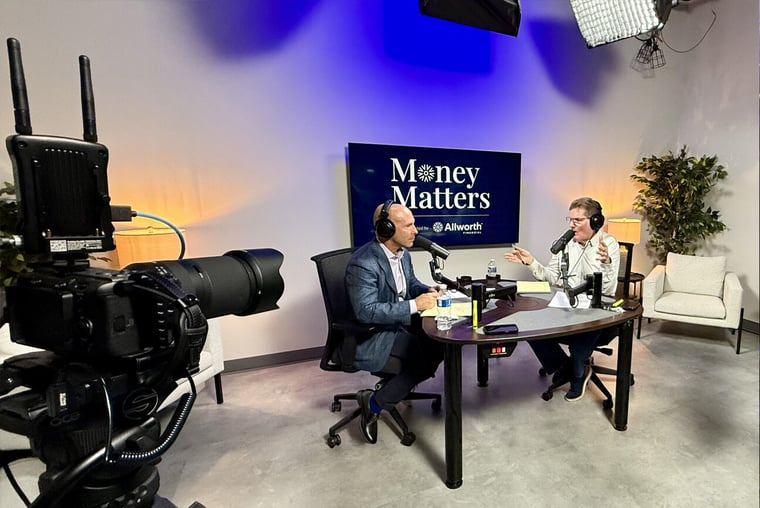
- Introduction to Money Matters 0:00
- Bitcoin, Blockchain, and Why It Still Doesn’t Make Sense 1:13
- Lending Market Shifts and Private Credit Risks 6:20
- Caller: Consolidating Accounts for Simpler Finances 14:55
- Caller: What to Do with a $1 Million 401(k) 35:35
- High-Impact Financial Planning Strategies 50:19
Financial Planning Strategies for Freedom, Flexibility, and Smarter Investing
On this week’s Money Matters, Scott and Pat help a caller streamline her financial life by consolidating accounts — discussing key differences between IRAs and 401(k)s, asset protection considerations, and how annuities can fit into a broader financial planning strategy for long-term freedom.
Next, they talk with a caller navigating what to do with a $1 million 401(k) after a career transition. Scott and Pat break down the pros and cons of rolling funds into an IRA versus keeping them in an employer plan, with an eye on long-term tax flexibility, investment control, and strategic financial planning.
Finally, Allworth’s Head of Wealth Strategies, Victoria Bogner, joins the show to share powerful financial planning insights — including strategies for handling stock options, Roth conversions, tax-loss harvesting, donor-advised funds, and how business owners can better position themselves for lasting financial flexibility.
Join Money Matters: Get your most pressing financial questions answered by Allworth's co-founders Scott Hanson and Pat McClain live on-air! Call 833-99-WORTH. Or ask a question by clicking here. You can also be on the air by emailing Scott and Pat at questions@moneymatters.com.
Scott: Welcome to Allworth's "Money Matters", Scott Hanson.
Pat: Pat McClain. Thanks for joining us.
Scott: Yes, we're glad to have you with us as we talk about financial matters. We're nearing the end of the year, which is good, I guess, 2025. It's funny, Pat, the other day I was entering something on the date, my date of birth. The date, for a long time it was four digits, you had to do the four digits because of the Y2K thing, the 1999. It's been 25 years since the whole Y2K thing.
Pat: Do you remember...
Scott: Of course, I remember all of that.
Pat: ...how the world was going to come to an end?
Scott: I remember the calls we had on this program, "You guys don't get it."
Pat: Yeah, we didn't get it.
Scott: Well, I don't know. No, it seemed like a lie.
Pat: There's many things I don't get as I get older. One of them, I don't really get Bitcoin. It kind of seems like how banks used to issue their own currencies back in the day before all the banks closed down. It just kind of seems that way to me. You can say whatever you want about limited supply or not limited supply or about blockchain.
Scott: Let's talk a bit about... Well, blockchain, it used to be an argument that I'd ask like, "Why is Bitcoin so valuable?" And they would give me this argument of how the blockchain is going to replace things. Like, okay, the blockchain is technology that is used to create these...
Pat: Ledgers.
Scott: ...digital currencies. But it doesn't mean that just because it's on the blockchain that it's phenomenal.
Pat: So, you mentioned a couple of weeks ago the book, "1929".
Scott: Yes. Did you read it?
Pat: I'm about three quarters of the way through. But it reminded me of the syndicates that used to get together before the reporting in stocks.
Scott: Yeah, pump and dump.
Pat: And because you didn't have to report if you took a large position. But people would say, "Well, on the blockchain, you know who owns." And you're like, "No, you don't." Because one person can have seven different personalities on a blockchain. You know, it's really hard to search back to the owner of the block, right? It's hard to do.
Scott: Yeah, I guess. I don't know. I don't own any cryptocurrency.
Pat: Well, my understanding is...
Scott: I wouldn't be opposed to buying a 1,000 bucks worth just to see the experience of what it's like. Not that I think that would be an investment. It'd be more of an experience.
Pat: Anyway, so I don't know how we got off on this, of the things we don't understand.
Scott: Well, no, the thing with Bitcoin, and the reason I think it's good that we talk about it right now it's, the volatility has returned.
Pat: What do they call a winner? Something winner. A digital winner. Something like that.
Scott: Winter?
Pat: Winter.
Scott: Oh, I think you said winter, winner.
Pat: Winter.
Scott: Is that what this is? Just a digital winter?
Pat: They call it a digital something. There's a name for it.
Scott: But when you've got a currency that fluctuates from 125,000 to 80,000 in the matter of a couple weeks, few weeks, that's pretty tough to store your wealth. Particularly for a currency, which is supposed to be something you can readily convert to cash, convert to a payment system.
Pat: It's not a currency though. It's used as a currency, but it's not really a currency. Some people use it as a currency.
Scott: Well, it's a currency as much as the vodka was in the fall of the Soviet Union.
Pat: Fair enough, right? Most people aren't aware of that. But it was what they
Scott: were paying people's salary for the vodka.
Pat: Well, if you go to parts of the former Soviet Union, there's Pepsi in all those places. Pepsi would take vodka out of the Soviet Union and ship in their product. And that's how they got the currency, converted it to dollars. So, I guess that's true, I mean, it's as much as vodka was.
Scott: Yeah, it's just... The company's micro-strategy, now they switched its name to strategy. Which is just levered crypto. I don't understand that one at all.
Pat: But you can lever lever. You can double lever.
Scott: Well, you can buy strategy on margin.
Pat: You could buy options on strategy.
Scott: That's right. I mean, that's part of the reason that the price moves so quickly. Is because of that. People had to unwind positions. They were forced to sell to unwind positions. Because they were highly levered.
Pat: It is a dangerous game. It is a dangerous, dangerous game. And this micro-strategy... Well, in fact...
Scott: Micro-strategy to me...
Pat: Or strategy.
Scott: Strategy, they changed the name to strategy. What this company does, I'm no expert in the company, I just think as I read on it. They're doing really nothing, but own crypto.
Pat: And they borrow money and issue shares.
Scott: And they borrow money to buy more crypto.
Pat: But their NAV, the net asset value of the shares is worth more than the underlaying asset.
Scott: Is worth more than the underlying asset.
Pat: Which makes no sense to me. They did say that one, when they can no longer make the preferred payments, right, the stockholders, and the bond payments, that they would begin to liquidate their Bitcoin positions.
Scott: I think they did liquidate. They had to raise a billion and a half or something like that in the last week.
Pat: They said that they would continue to liquidate positions if they couldn't borrow any more money. Who's lending them money though? You must be getting an incredible rate of return to lend money to these guys. Or it's all tied to the... It's a strange...
Scott: Moving off the digital currency stuff. Call it what you want, crypto. On your point though, Pat, on lending, the lending market has changed quite a bit since the financial crisis. So, a lot of loans now are not done through banks. There are these private companies that...
Pat: It's a massive market. With companies like Aries Capital Management, Blackstone...
Scott: KKR.
Pat: ...KKR. Massive.
Scott: They've all got some fixed income lending.
Pat: Yeah, massive.
Scott: And if you look at... And the reason I'm bringing this up, you look at all the AI spending that's going on, right, and I think a lot of us, most people are like, "Is this a bubble?" I don't know if it's a bubble. But is this really going to make us all that much more efficient so that companies are going to be willing to pay the price to pay up? To get this AI for the efficiencies? And then the AI companies are actually going to make money? That's what everyone's betting on.
Pat: Is it real? And is it going to be a chase to the bottom where they're just wanting market share so much that they're just going to discount the price to the point that there's no profit left for anyone in the AI?
Scott: Well, if you think like when Uber first came out, it was so cheap to take an Uber. Waymo, the driver's taxi, for a round in San Francisco was 6 bucks. You could take it with 6 bucks, 6, 8 bucks, something like that. It was nothing. Almost...
Pat: Product adoption.
Scott: Yeah, product... And so, that's your point. And then maybe... But why I'm mentioning this is, in your fixed income portfolios, if this is something you're concerned about, make sure you don't have overexposure to that AI side of things. All these data centers they're building and all that. There's...
Pat: You're going to have some exposure. You're going to have some exposure. There's almost nothing you can do about it other than individual bonds. And even then you might have some exposure.
Scott: Well, I mean, that's the kind of thing that we as a firm pay attention to in our fixed income portfolio.
Pat: Well, we want some exposure to it. We just don't want overexposure.
Scott: That's right. But if you're looking for the highest yielding fixed income vehicle right now...
Pat: Careful.
Scott: ...whether that's a fund or an ETF or a...
Pat: Careful. Careful. And some of the biggest firms out there are just buying them, just buying it all up and redistributing it to their investors.
Scott: Yeah. It's exactly what they do.
Pat: It's exactly what they do.
Scott: Yeah. They raise...
Pat: Which I'd say makes sense.
Scott: Think of it as like the private equity market, right? They raise capital. They go out and find private companies to purchase to own. But there also fund just like that that raise capital to go out and make loans. Sometimes those same companies.
Pat: Yeah, the same companies. But not only that, they'll take a single issue, which is let's say, you know, Anthropic wants to sell a billion dollars in bonds. A big institution might go to them and say, "Look, we'll give you $950 million for your billion dollars in face value. And then they take the whole lot and decide what they're going to keep on their balance sheet, and then redistribute parts of it to other organizations, which might be another private equity firm, it could be a mutual fund, it could be any amount of people. And the way they make money is on that spread. You know, they lent $950 million to the face...
Scott: This isn't how it always... This is relatively new because it used to be investment bankers.
Pat: Oh, it's all new.
Scott: The banks would do this. Now, it's not the banks any longer.
Pat: They can't have it on their balance sheets. And in fact, some of the companies, big ones, huge ones, Amazon, they're doing these off balance sheet projects, which are just really interesting. That kind of reminds me of, like, MCI WorldCom, I hate to say it.
Scott: Well, you know, there was that...
Pat: But these are discuss.
Scott: ...auto parts company.
Pat: Massive.
Scott: I forget the name, but it was a privately held company, massive company.
Pat: Massive. And just levered everything through the portfolio multiple times.
Scott: On these off balance sheets where it looks like the auditors didn't even know what the heck was going on.
Pat: Multiple times. They pledged the same asset multiple times. I pledge it to you, X, Y, Z, "I'm going to borrow money against this. I'm going to pledge it to you."
Scott: That's like getting eight mortgages on your house. Then no one knows. They don't know that you already have a mortgage on it. Is the same concept.
Pat: Same concept.
Scott: Yeah, same concept.
Pat: Does it work?
Scott: It did. It worked for a little while. For a little while. Works for a little while.
Pat: So, when you reach for yield, remember, there's a reason. There's a reason.
Scott: Yep, don't get excited.
Pat: There's no such thing as a free lunch.
Scott: Don't get too excited.
Scott: We're also going to be... We'll get to calls here in a moment, but we were having a conversation earlier, Pat, before we actually started the show, about commercial real estate. And there's some hot spots in the country, but for the most part, commercial real estate is in a depressed market right now.
Pat: Yes, including multi-family. Multi-family, retail's got some bright spots, but it's far.
Scott: Depending where it is, very much location driven. But there are some opportunities..
Pat: Office. Yeah.
Scott: And it doesn't mean you have to own it directly. I mean, you could go through some sort of fund. There's some opportunities that they give.
Pat: Yeah, but the cap rates are, the higher the cap rate when you buy real estate, it's the lower the rate of return that you're willing to accept when...
Scott: Well, it's the inverse.
Pat: I said that wrong. It's the inverse. If you're selling, you want a low cap rate. If you're buying, you want a high cap rate.
Scott: That's right. Cap rates are high.
Pat: It's on high, relatively speaking if you look at them, what they were four or five years ago?
Scott: And some of these things, things you can't lose, like self-storage, some of those are having a disaster of a time.
Pat: Oh, they're just grossly overbuilt.
Scott: They overbuilt them because it looked so easy. It looked like, what an easy way to deal with this? You don't have to deal with tenants. Once people put their stuff in self-storage, they never take it out.
Pat: Scott, do you think part of this is driven by the lack of capital that now comes from Russia and China into the real estate market that we saw five years ago? Do you think that...? I know there's...
Scott: Well, I think it's a variety of things.
Pat: But there was a lot of Russian and Chinese money coming into the real estate market, and why real estate?
Scott: Well, they were buying the penthouses in Manhattan.
Pat: No, and they were buying other...
Scott: Yeah, I know.
Pat: I mean, mid-level Russian bureaucrats were buying things. Because the Russian government can't really come to Iowa and take that house away from you. It's very difficult.
Scott: Yeah. Worst case, you flee the country and you end here.
Pat: You've got a place to live in Iowa.
Scott: Well, there's a number of factors, obviously. And the lockdowns from the pandemic certainly had an impact on commercial real estate. I mean, it's an interesting thing. And it's one of those... It's always a reminder, like... Actually, it's funny. I don't hear many people saying, "Scott, I really want to buy some commercial real estate property right now." Prices are depressed. It's probably a great time to buy.
Pat: It is. There's some activity there. There's some activity. Some of them just from large asset pools that are actually trying to unwind positions.
Scott: Yeah. And the problem with a lot of these, and we spoke to this on the program before, if you've got a loan on it, it's not like you have a loan on your house where you put 20% down, you have 80% loan to value. As long as you make the payments, the bank doesn't care. Commercial property, you've got lots of covenants.
Pat: Yes. You have to show, "Look, this is how much income it's generating."
Scott: And you have to have a certain amount of equity in the property.
Pat: Or you have to write a check-in.
Scott: Or you have to write... Maybe you can't charge rent below a certain amount.
Pat: Which makes it difficult.
Scott: Yeah. So, that's part of the reason the depressed prices, because there's a lot of properties that were structured this way, and they were forced...
Pat: But for the long-term, it's not a bad asset class.
Scott: No, that's why I was mentioning it. Anyway, we should take some calls. We're talking now with Laura. Laura, you're with Allworth's "Money Matters".
Laura: Hey, gentlemen, how are you doing today?
Scott: We're fantastic. Thank you.
Laura: You sound fantastic. I have a question about a 401(k), but I've got two kind of separate questions that tie into each other. I'm finally going to be consolidating my IRAs. And I didn't want to, because I like both of the companies. But to make it easier for my husband, if I go before he does, or if I become doolally or something, and I'm less reliably able to navigate complicated financial configurations. So, I want to have less accounts...
Pat: Makes sense.
Laura: ...both myself and him. So, that being said, the IRAs are an easy target. Done. We're in the middle of that. But you mentioned a couple times that the 401(k)s might want to be retained because of...
Pat: That's right. How old are you?
Laura: I'm 65.
Pat: And are you currently employed?
Laura: No, just recently not.
Pat: There's no reason for you to retain that 401(k).
Laura: You mentioned something about if there was a lawsuit, then the 401(k) can't be touched. You talked about, who was it? The guy who didn't fit the glove. That's how he was able to...
Scott: OJ Simpson?
Pat: If the glove doesn't fit, you got to quit, or something?
Laura: Yeah, yeah, yeah. And that's how he kept his money. So, I agree. I believe what you just spoke.
Pat: But there's still protection to IRA up to a million dollars.
Scott: Was it back then? Back then, there wasn't, there wasn't. But now the courts have... And we're going to say a couple things, but then you can read competing on both sides. Some courts have said that that coverage will follow the asset.
Scott: So, it is technically what's called an ERISA plan. These are ERISA dollars, Employee Retirement Income Security Act, whatever, ERISA. And those ERISA provisions will follow those dollars even if they're moved to an IRA. And you can look up that. Correct, Pat, that's correct?
Pat: That's correct.
Scott: Some argue, "No, it's protected," others argue that it's not.
Laura: If you wanted to look it up, I wouldn't be calling you guys.
Pat: Okay, well, fair enough.
Scott: I guess my point there is it's not fully decided. But you can deal with this just through some low cost umbrella insurance.
Laura: And I have some. We have... Well, it's actually umbrella insurance isn't as easy to get as you see.
Scott: I understand.
Laura: What the pain in the ass?
Scott: And not as cheap either. It used to be simple, cheap.
Pat: And it depends on what state you live in, too.
Laura: Yeah, this last contract, what do you call it, coverage that I got, it's like from, you know, umbrellas or us, and some random person who only deals through the mail. It's pretty scary, but at least, I think I have it. In any case, the other ones... Thank you for answering that.
Pat: Wait, wait. So, slow, slow, slow. You said something there. Your primary insurer is not also the umbrella? The homeowners and auto and all that?
Laura: Yeah, not any more.
Pat: They wouldn't write it?
Laura: Not any more.
Pat: Would they not write it?
Laura: That is correct. And they are one of the ones that are left in the area. It's a...
Scott: I have two. Because they wouldn't give me enough coverage, I had to bid a second company. But I had an insurance broker that helped me find it. But to your point, it's not as cheap and as easy to get.
Laura: Oh, and the insurance broker is actually the one that did hook me up with it.
Pat: Okay.
Scott: Okay, perfect.
Laura: So, that's kind of why I feel sort of okay about it.
Pat: But so, that is the one reason, but the ERISA rule follows that particular money. So, the idea of actually... You know, if in a perfect world, right, when your last day happens, if we're talking about liquid-traded accounts, I think about this all the time, is I'll have a Roth, I'll have a Roth IRA, I'll have an IRA, I'll have a brokerage account, and then I'll have a cash management account that I pay bills out of. And there will be four accounts that exist.
Scott: In a perfect world.
Laura: Yeah, right now...
Pat: And maybe a life insurance policy somewhere.
Laura: I have eight right now with the life insurance policy. So, though, if I take this...
Scott: That's just you not counting your spouse?
Laura: That's the two of us. That's the both of us.
Pat: Okay. Well, yeah, it's reasonable. So, it's for each person, right?
Laura: No.
Pat: Well, not for each person. So, there should be a Roth, you know, if you both could have contributed, for both of you, so that's two. An IRA for both of you, that's two. So, we're at four. A brokerage account, as long as the money was actually brought into the marriage through marriage and not inherited or gifted to. That's five, right? Because you're going to share that. And then a cash management account, so, that's six. And you have eight now?
Laura: Yeah. I've got two inherited IRAs.
Scott: Okay, now we have...
Pat: Okay, 9, 10, 7, 8. Yeah, you can...
Scott: There you go.
Laura: And a 401(k), two separate IRAs, some miscellaneous little IRA that I don't know.
Pat: Yeah, you've got to move...
Laura: You don't label these things. It's grid.
Pat: Yeah, that's right. You move all. Everything in an IRA should be in one IRA in your name.
Scott: It just makes life easier.
Laura: Even the inherited?
Scott: No, you can't.
Pat: No, you can't.
Laura: Okay, and then...
Scott: And I'm assuming you're taking Required Minimum Distributions off those.
Laura: Yes. Yeah. My husband... Although it's weird, they... Yeah. Yes. Let's just say yes. So, one weird account that I have on here is what my second question's about. And do you remember, of course you remember, cause you say it all the time, when the ducks quack feed, feed them?
Scott: Yes.
Pat: It's an old Wall Street saying.
Laura: Well, meet one of the ducks.
Scott: Okay. What did you own?
Laura: I owned an annuity. I believe that's what it was. Just a straight annuity that got me, nailed me into a seven-year hell where I made virtually nothing and he got $25,000 off the top.
Pat: How much is in the account?
Laura: I'm sorry?
Pat: How much is in the account?
Laura: How much? Duh, duh, duh. Where is that?
Pat: I'm going to assume there's...
Laura: $387.
Pat: I was going to go $300 to $400. And how long have you owned it?
Laura: Well, I've had it where it is for a couple, three years. Since the moment the seven year timeframe came up I transferred it, and now, we're getting into the place that I don't understand, I just have the words for it, it was a 1035 exchange into a different kind of annuity, a deferred annuity.
Pat: Okay. You own a deferred annuity the first time, too. And was this sold to you, or did you go out and find it in the marketplace?
Laura: I was definitely a duck. I said, I really...
Pat: No, the second one, the second annuity. The one you did the 1035 exchange in.
Laura: No, I happened to have fidelity as my...
Pat: It was sold you.
Laura: My 401(k)was in it, so I was talking to him. It's like, "How can I get out of this?" And he said...
Pat: And there's a surrender...
Scott: Is there a surrender charge on this, too?
Pat: Yes, there's a surrender charge on that.
Laura: Nope. Nope. No, we moved it into something that doesn't have a surrender charge.
Pat: And now, they charging you a fee on it?
Laura: I don't think so.
Scott: Or it's their own product and the investment management fees.
Pat: Yeah. So, the Fidelity has both, by the way, they have ones where they'll charge commissions and ones where they don't.
Laura: I think this is...
Scott: What's your question on this?
Pat: Are you taking income?
Laura: No, no.
Pat: What are you living on?
Laura: Pensions and golden handshakes that I got a while back, but pensions. And then I just stopped working in July, so there was that bit of money that I got.
Scott: What's your question on this?
Pat: Okay. So, what's your question on the annuity?
Laura: Does it have to stay in the way it is? Or can I transfer it into an IRA, so that now, I would only have... Instead of having three IRAs and this, I just have one IRA.
Pat: Is it in a...?
Scott: Where did the money come from originally?
Pat: To put into the annuity.
Scott: The 300 grand or whatever you'd use.
Pat: To put into the annuity.
Laura: Oh, gosh, that's an interesting question.
Pat: Was it in an IRA? Was it an IRA that owned an annuity, or was it just a straight annuity?
Laura: It was my savings money that I had saved from my work, my time at work.
Scott: Not in a 401(k).
Pat: Not in your 401(k).
Laura: Not into my 401(k).
Pat: Okay. That cannot be moved into an IRA.
Scott: That's right. How much did you contribute to it originally?
Laura: I think $250,000, $240,000.
Scott: And it's worth $380 now?
Laura: Yeah.
Pat: So, here's what I would do with that. When I went to take income, I would probably annuitize that first before I actually started taking distributions from the IRA.
Scott: The problem with these, it's, that tax deferred just continues to grow and grow and grow.
Pat: And it has to be recognized at death or while you're living. Where an annuitization of it actually just pays it out over a period of years, so we're deferring some of that recognition of that as a narrow income.
Scott: But the right decision is going to be based on a retirement income plan.
Pat: That's right.
Scott: Which means, figuring out what's Laura's life look like over the next 25, 35 years?
Pat: Laura, what did, what kind, what did you do for a living? What kind of work?
Laura: Sales.
Pat: Okay. I'm a sucker.
Scott: You fall in love with the sales people, right, not necessarily with the product, and I speak from experience there.
Pat: I think you need to go and...
Scott: Get a good financial adviser.
Pat: ...get a financial advisor.
Scott: And do a financial...
Laura: I have a really good financial advisor, but I wanted to ask you guys.
Pat: Oh, good. So, what did they tell you to do with the annuity?
Laura: I was going to wait to find out what you tell me.
Pat: I would probably annuitize it.
Scott: Well, if you were a client, we would say, we'd put it into a no load product and then we'd manage it appropriately. And then we would figure out, "What are we going to do with this? Are we going to spend it down during Laura's lifetime?" If so, maybe we look at annuitizing over the years.
Pat: Where's the money going at your death?
Laura: Hopefully, there won't be any. I mean, there's no luggage racks on a hearse, right? Where did I hear that.
Pat: Yeah. Well, that's a...
Scott: So, you could... So, the problem right now is, right now, if you just start taking income, with annuities, your taxed last dollar in, first dollar out. So, your last dollar in is the interest or growth or whatever. You put in $250, it's worth $387, right? So, you have $137,000 worth of gain. That's going to be taxed as ordinary income when you withdraw it. So, if you said, "Oh, I'm going to start taking a thousand bucks a month out of this," or whatever, it's just going to be all that interest. You're never going to get to your principal, and it's all 100% taxable.
Pat: But if you set it up as a stream of payments, then...
Scott: And annuitize it.
Pat: ...and annuitize it, you can annuitize it for 5 years, 10 years, 15, you could annuitize it for life.
Laura: Okay. So, we have some...
Scott: And you can even do a variable annuitization. So, I like my stocks inside there. You can even do it that way. From a tax standpoint, that's how I would do it. So, you have a...?
Laura: We have a couple of big trips coming up, and so, I need to figure out where the money is going to come. There's many, many places the money can come from, and...
Scott: That's what a good plan should do. Because right now, we want to minimize... Your biggest partner in all this is the tax man.
Laura: Right. That's exactly what I'm trying to avoid, making stupid mistakes.
Pat: So, Laura, you're 65. Is your spouse retired as well?
Laura: Yeah, he's 79.
Pat: Okay. So, look, and you like to travel? Does he like to travel?
Laura: Yes, very much.
Scott: Yeah, now's your window.
Pat: If you're lucky, you have 10 years.
Scott: Now's your window.
Pat: If you're lucky. You said he's 79. If you're lucky, you've got 10 years.
Laura: Yeah, I don't think it's that...
Pat: What you need to do... Well, yeah, you go to the, your advisor and say, "These are assets."
Scott: "This is what we want to do."
Pat: "For the next 10 years, turn it on, and model out for me. Let's do this."
Scott: "And minimize the taxes as much as possible."
Laura: Okay. Because this is in the one I'm moving things away from. Can I move this into another? Like, under my fiduciary account?
Pat: Yeah.
Scott: Yeah, they should be able to. I mean, like firms like us, we were talking earlier about the benefit of the large, like, we have we have no load annuities for this exact purpose. No load, meaning there's no surrender charge, no commissions paid.
Pat: Yeah. But Scott, but even if someone came into us with a brand new variable annuity that...
Scott: Even with surrendered charges, we would still model the whole thing out, of course.
Pat: We would model. And in fact, we could become a fiduciary for that without charging a fee on that particular annuity until it makes sense to move it out of that annuity.
Scott: That's correct.
Pat: Yes. So, the answer is, yes.
Scott: My guess is you're going to annuitize this.
Pat: Yeah. That was my guess, is it's going to be a 10 year annuity. As little as I know about you with what you just said, "We want to travel. My husband's 79." I'm like, "Let's go. Let's go."
Scott: Let's get the cashflow. Let's get it so that at the end of each month, you're like, "Man, we still have cash, and what do you guys want to do?"
Pat: Yeah. You're like, "Let's go to Spain and let's go to Italy."
Scott: Or whatever.
Pat: "Let's go to the Antarctic. Let's go to our aunt's house in Milwaukee."
Scott: Stay in the basement.
Laura: One of the things that we've got planned is really luxurious. And he's going down the list. He's like, "Why are we paying so much? Why are we going to such an expensive..."
Pat: Because to your point, you can't take it with you. You've got the assets. Now's the time.
Scott: Are you doing the Ritz-Carlton cruise, or...?
Laura: We're having a... It's a custom cruise designed by a high-level luxury travel agent.
Scott: Good for you.
Pat: Yep. Look.
Laura: I mean, the Fairmont, the Ritz-Carlton.
Pat: There you go. You've earned it. You've worked it. But the answer to the question is...
Scott: On this one, my guess is you annuitize this.
Pat: Over 10 years. But you can't do it in a vacuum. You know what's weird, Scott, is I feel bad about...
Scott: Right, because there's conversations, suddenly we find out your husband's 14 years older. It's like, it changes things.
Pat: You know what's weird? I feel bad about this because about a third of the time, our answer is you need a great advisor. And doesn't...
Scott: Well, we can't figure... I mean, it's not fair for us to say, "But my guess is you're going to annuitize this over 10 years."
Laura: Okay, let me tell you something. Let me give you a commercial, right? you guys have been kind of building up to it and surrounding it with your words. The other person that's where this is right now, wonderful, wonderful guy. No question. But he's not the fiduciary, okay? he doesn't come to me. He doesn't look at my whole thing.
Scott: He's a great guy.
Laura: Yeah, great guy, truly.
Scott: That is a great guy.
Laura: But he doesn't do what my fiduciary...
Scott: Look, if I was having heart surgery...
Pat: And Scott, wait, wait, wait. So, what I just heard in all that is he recommends product without any sort of scope.
Laura: Well, they don't do... It's Fidelity. It's one of them, obviously, because that's where it's sitting, right? Fidelity is great, but they're limited. They don't offer about taxes.
Scott: But Fidelity also has relationships. You know, fidelity also has relationships with independent advisors.
Pat: That they refer people to.
Scott: That they refer people to in situations like this. Well, think of it that if...
Laura: Well, I was just saying that an individual a company who can do all of it, like the taxes and, you know, look at this. I mean, if this was in the other account, that my person would have looked at this and said, "Hmm, what do you want to do with this? Because this is just by itself, it's going to end up a problem later on.
Pat: But, Laura, that wasn't their job at Fidelity. Their job was to actually get assets in the door.
Laura: Well, I'm moving on.
Pat: And it's not either good or bad. I have an account at Fidelity.
Scott: And well, we use them a lot, Fidelity. We have a good working relationship.
Pat: Yes. I have an account. I have an advisor very similar to the one that you have at Fidelity, right? And the reason I have it there is it's mostly cash and I don't want everyone that I work to know everything I have, right?
Scott: That's because it's an interesting, yeah. Unique situation.
Pat: But they make recommendations, but very rarely do they ask like, "What other things do you have going on in your life?"
Laura: Right. Exactly.
Pat: And look at this. Money's a tool. It's a tool. You have stored your labor. Your husband has stored his labor. How did you store the labor? You store sort it with money. That's how we do it in modern times. You now want to exchange this labor for recreation. How are we going to do that? We're going to do it with money. Who's your biggest partner in taking the money out of storage? The U.S. government.
Scott: And your state in California. Newsom doesn't have enough. He would like a little more.
Pat: A good advisor has to understand the tax side of it, because if they don't, they're not helping you.
Laura: That's why I'm making this move.
Scott: Yeah, you know, so... And he might be a great guy. If I was going to have a heart surgery, I would care less about how much I liked the surgeon. I would want the best surgeon.
Laura: Well, I'm actually moving towards a great surgeon and a nice guy.
Pat: Okay. All right. Well, listen, appreciate. Enjoy that over the top trip that you have planned with your husband. You know, I got to tell you, many times when my wife and my daughter will plan a trip, I ask them intentionally not to tell me how much things cost.
Laura: That's a great strategy, and I don't know how he saw the package.
Scott: I mean, it's interesting because the reason we have these dollars is because we're concerned about the future. We're frugal. We save. He's 79. Can't take it with you.
Pat: Enjoy your last.
Scott: You either spend it or give it. There's two options.
Pat: Anyway, we need to go here. Thank you, Laura, for the call.
Scott: Yeah, I appreciate the...
Laura: Thanks for all the information.
Pat: Appreciate the call.
Laura: Take care. Bye-bye.
Pat: So, we talked about... Was it...? I don't remember what show it was, but we talk about how in relationships, sometimes it's the man that manages money, sometimes it's the woman. Normally, both have strong opinions about it, but someone is normally driving the decision-making.
Scott: We're talking with Sabrina. Sabrina, you're with Allworth's "Money Matters".
Sabrina: Hello.
Scott: Hi.
Sabrina: Hello. So, my main question is I was with a company for 22 years and I got laid off, and so, I have my 401(k) that I've had with them. And now, I since have got another job, but I'm just not sure what to do with that. I have a lot of other things of just trying to diversify, whatever that means. So, yeah, I'm really basic in my knowledge of how to prepare for my future.
Pat: Sabrina, how old are you?
Sabrina: I'm 47.
Pat: Okay.
Scott: Do you like your new job, by the way?
Sabrina: I love it.
Scott: Oh, good. I'm glad to hear that. And it's good to be laid off as...
Pat: Is it paying the same, or more?
Sabrina: More.
Pat: Oh, good for you.
Scott: It's all worked out then.
Pat: Do you like it more than your old job?
Sabrina: I do. I love it.
Pat: Oh, good for you.
Scott: Oh, good. This is a good story. Thank you.
Pat: How much is your 401(k)?
Sabrina: It's like a million.
Pat: Okay. And do you have any IRAs anywhere else?
Sabrina: I do.
Pat: And what do you have in IRAs?
Sabrina: I'm not sure. I want to say like $30, maybe $40, not more than $50, for sure.
Pat: And what's your approximate income?
Sabrina: Well, I am married as well. And we have a business as well. But my income, like...
Pat: What's your family income?
Sabrina: I'm not sure. Like, my husband... I don't know.
Pat: Okay. We're going to answer the question and then we're going to talk further. Yes, you should roll this into an IRA.
Sabrina: Okay.
Scott: And hire an advisor to help you structure all this.
Pat: But...
Sabrina: I guess the other problem that I'm having too is like where is the best place to go?
Pat: So, here... I'm going to take this, I'm going to walk this back a little bit. You might want to roll it into your existing 401(k), and then that way, you can make non-deductible IRA contributions, and then convert to Roth.
Scott: Sure. And he has $30,000 to $50,000 in IRAs.
Pat: And that might be one of the ones that you actually convert to a Roth IRA. I did it in my own portfolio as soon as Roth IRAs came out. And you have a choice. You can move that money from that IRA back into your company 401(k) if they will allow those to happen. So, you're asking us a question like... It's really hard to answer the question because I could give you, "Oh, yeah, move it to an IRA because it has more options. You could purchase more in different things. You can get better diversification.
Scott: But that may or may not be a good thing for you.
Pat: Correct. Because for tax considerations... So, she's 47. Is your husband of a similar, or your spouse of a similar age?
Sabrina: Yeah, he's in his 40s as well.
Pat: And how many...? Does he have any employees in his company?
Sabrina: Well, actually, we're in the process of purchasing another company which will be expanding and will be taking on employees.
Pat: Does he have any employees now?
Sabrina: No.
Scott: And have you had a financial advisor in the past? You've accumulated these just by saving, and then you've got your business. You've created some equity in your business, I'm imagining.
Sabrina: Yeah, so like I said, I have, I don't know, like Roth or IRA accounts. I didn't know there was a difference, and they're with the financial advisor right now.
Pat: A person from the bank?
Scott: No, they're from an investing institute. I don't know.
Scott: Well, if you're my younger sister, I would say, "Sabrina, get yourself... This is a lot of money. You've done a good job saving that. 47, you got a million bucks in your 401(k). Good for you." Seriously. You should feel really good about that. Because that million dollars by the time you're 65 is going to be 4 million bucks. Keep saving. But you also want to make sure you're making the right choices with these dollars. Invested the right way for the long term. And the million dollars, it might go to 1.1 next month and it might drop to 850 next month. So, it'll likely bounce around. But if you have the right kind of advisor helping you out, like what's this really look like for your retirement? How should these dollars be allocated? How do we think about the business? Is there... do we look at having some sort of pension set up for the business, this new business now? It all needs to be taken into consideration.
Pat: It's interesting because, Sabrina, you've used the word I, him, and we all in the same conversation.
Sabrina: Interesting in what way?
Scott: Well, because you're not... You and your husband...
Pat: Are you recently married or has this been a long-term marriage?
Sabrina: Yeah, I've raised my husband. No, I'm just kidding. It's a long-term marriage.
Pat: So, there doesn't seem to be any unification of a strategy.
Scott: Maybe there is.
Pat: But by the language itself where you said, "I have in my 401(k)," I get that. Then you said, "Well, he has." And then at one point in time you use the word, "We in the business."
Scott: It's our assets, not mine and his because you're in the state of California community property state. You've been married a long-time. Unless someone came into the marriage with the substantial assets, it's all our asset.
Pat: So, the best thing to do would be to move it into IRA. But then what that does is it kind of locks you down for some of the strategies that we may want to use or employ at some point in time. Which is why I might be inclined if they have a decent selection in their 401(k).
Scott: If she had a good selection in her new 401(k), yes.
Pat: That's what I said, if you had a good selection in the 401(k). Because I have no idea whether this is a good time for you to be doing non-deductible IRA's. I have no idea what the cash flow looks like in the family. Whether your husband should have a defined benefit pension plan. If I was your advisor today, I most certainly would actually open a qualified Unikay before the end of the year in case we wanted to fund it next year. You don't have a financial advisor, by the way.
Sabrina: I mean, he just does my IRA stuff and, like, as far as looking at the business and things like that. Like, I don't have anybody to guide me through the financial side of that. And, you know, for the most part, I've kind of taken the lead for all of the financial decisions that have brought us this far. And I'm kind of like stepping into a new space in life where I don't know what to do at this point.
Pat: That's right. So, the simple answer is move it into your 401(k) as long as it has lots of choices. If it doesn't have a lot of choices then move it into an IRA. And when I say a lot of choices...
Scott: And how are your dollars allocated currently in your 401(k)?
Sabrina: So, at my previous company, I had a 6% match and I had maxed out the amount that is allowed. I can't remember what that amount was. And then currently, I'm not doing anything. But if they have a 3% match with my current company, but I just literally accepted that I'm going to start contributing to the 401(k) with the new company that I have.
Pat: And how is it allocated?
Scott: What percentage is it?
Pat: Like, is it all stocks or bonds or real estate or do you know what the allocation internally is?
Sabrina: Yeah I don't.
Pat: Did the advisor that's managing your IRA ask to look at this account statement and give you an allocation inside of it?
Sabrina: I don't recall on top of my head. I don't know if I missed something.
Pat: No, you didn't miss anything. That's your advisors issue. The advisor would do it just because it's the right thing to do. They won't get compensated on giving you an allocation inside of it, but it's the right thing to do.
Scott: But a good advisor should be looking at...
Pat: ...looking at everything that's going on in your financial life.
Scott: Yeah. So, move it into an IRA. If you want an easy answer, move it into the IRA. But if you want the real answer...
Scott: Get an advisor.
Pat: Get a real advisor.
Scott: Do the financial plan. Like what are we trying to accomplish the next 10, 15 years?
Pat: Get a fiduciary with a background that at least has access to a tax team.
Scott: Credentials.
Sabrina: Do you have any recommendations?
Pat: Yeah, of course, Allworth. I mean, we're the...
Scott: We don't pitch ourselves off.
Pat: No, but of course Scott. Barron's called us the 11th largest firm. There's 10 other firms that are bigger than us in the United States.
Scott: Independent Welsh management.
Pat: Independent Welsh management. There's 10 others. Or you could just stick with number 11. We try harder.
Scott: Number 11.
Sabrina: Yeah. Well, you definitely have a solid sales pitch there.
Pat: We do. That's funny.
Sabrina: And I'm in sales, so, yeah, I would definitely like to have a follow up conversation to the conversation.
Pat: You're in the 209 area. So, we have offices throughout California.
Scott: But this show's not really about trying to pitch our wares.
Pat: But I'm not going to tell her someone else.
Scott: Of course not. Because you don't think anyone's better. There's other...
Sabrina: You've earned it. You've earned it.
Pat: Oh well thank you. But there are a couple firms that I would use in the United States.
Scott: Yeah. Kick the tires. Talk to one of our advisors and see if you connect well, and then see what the value proposition is and if it makes sense to move forward. All right, but you've done a great job saving.
Sabrina: Sounds great.
Scott: Great job saving.
Sabrina: Thank you.
Scott: All right, thanks, Sabrina.
Sabrina: Yeah. Thank you so much for your time.
Scott: Good luck, I should, say on the new business.
Sabrina: Thank you so much. I appreciate it.
Scott: Yeah. Hope it works out well. It's kind of exciting.
Pat: Scary.
Scott: But, yeah, I know we don't pitch our firm much. But I got to tell you, I was talking to somebody. Was this yesterday or the day before? And they were asking me... Because Pat and I were co-CEOs for years. Two years ago we stepped aside, brought in someone who had a lot of experience managing much larger organizations in our space, in wealth management space. And he's done a great job leading the company.
Pat: Fabulous.
Scott: And I was just telling this person just about how good I feel about Allworth with the breadth of services that we provide, with the quality advice that we give to our clients, with the type of people that we've got on the team. I mean, we've got about 500 employees now. We've got some phenomenal.
Pat: And then they said, "I'm just here to take your order. Thanks." I think it was probably a friend of some. Was it the IHOP? You go, "I'll have the big and tutti fresh and fruity."
Scott: "Let me tell you about my life for a moment. You feeling good?" But what's happening in our industry, not just about Allworth... Because you kind of joked around us number 11. There's 10 that are larger. There's about 20 firms, I don't know the exact number, that have grown quite a bit through consolidation. But what it's enabled these independent firms to do is just offer a variety of services, financial planning services that weren't available a decade ago.
Pat: And to bring in super-high quality senior advisors that mentor a younger generation of advisors and provide the tools.
Scott: Because if you're trying to grow a financial advice firm, the best advisors are not looking for a job.
Pat: Very hard to... Seasoned.
Scott: They're not looking for a job.
Pat: You'll get some young ones every once in a while, but a good, seasoned advisor.
Scott: So, most are growing through some sort of partnership. They're partnering together and that's... We've grown. We've had 40-somewhat partnerships.
Pat: Forty-four.
Scott: That have contributed to Allworth. Like, there are other... And to your... You said you're not going to refer to some of them, but there are some other good quality firms out there. I think that the independent, small firm, they're going to have a tough time going forward if you look the next decade.
Pat: It happens in every industry.
Scott: And I think the typical individual family looking for advice when they look at what a small firm offers versus a larger independent... I say independent, they're not tied to any particular bank. They have one job, is to serve the client.
Pat: But there'll be a room. There's room for everyone in the marketplace, and the marketplace decides who's the winner and losers. It's happened in every industry. I shouldn't say, every, but in most industries. When you were growing up, there was stationary stores, 25 in each city. And now there's three.
Scott: Three? There are not many stationary stores, are there?
Pat: No, Office Depot is a stationary store. They call it something else, but it's a stationary, which used to be your stationary store.
Scott: What was I reading? Was it Barnes & Noble's that's putting more brick and mortar stores together?
Pat: Well, because they're making it more of an experience. They put restaurants and high-quality food in there. We eat the Barnes & Noble's. There's one down the street.
Scott: Across the street from our office. Yeah, there's good food there.
Pat: It feels pretty good.
Scott: I don't know if I've ever bought a book from them. Still got Amazon, but that's what they want to hear. I'm just thinking. I don't think I've ever bought anything other than dining in there.
Pat: It's fun to meet. Okay, let's go.
Scott: Little kids there. Let's continue on.
Pat: So, I'm excited, Scott, about having Victoria back to talk about the smart money moves for year end.
Scott: Yeah, Victoria Bogner, who's our head of wealth planning here at Allworth.
Pat: And the thing that people forget is there's two types of way to look at taxes. There's tax preparation, which is where you just say, "How much damage has been done to me, and who do I owe money to?" And there's tax planning. And unfortunately, a lot of tax planning has to take place in the calendar year in which you're paying taxes on. After December 31, it's gone. I mean, the ship has sailed.
Scott: Almost everything.
Pat: There's nothing you can do about it. There's few things.
Scott: Very minor.
Pat: But most things need to be done.
Scott: And that's what Victoria's covering for us.
Pat: Yeah, looking forward to it.
Scott: Welcome, Vicky.
Victoria: Thank you. Great to be back. I'm going to highlight just a few, especially that are the most impactful for high-net worth individuals because, you know, thresholds change. There are different tax phases. And like you said, if you miss that December 31st cut off, you're probably locking in some suboptimal results, especially going into 2026. And this is more than just, you know, maxing out your IRA. It's about optimizing, among multiple dimensions, of your financial plan, right?
So, the first thing I'm going to talk about is actually something that we talked about on a podcast a couple of weeks ago. And that is, if you have employer compensation in the form of incentivized stock options or employee stock purchase plan or something of that nature, then it's really valuable for you to get your arms around what all of those benefits are. Because if you fall into a certain bracket in a particular tax year, that can help you to decide, "Should I go ahead and exercise some of these stock options this year, or should I wait until next year?" And those are really important decisions to make, because generally, when you're receiving an employer compensation like that in the form of restricted stock units, RSU, things like that, they build up over time. So, they just become this ticking tax bomb...
Scott: Tax bomb.
Victoria: That gets bigger and bigger and bigger if you ignore it. So, is that point...
Scott: Assuming the stock goes up, assuming the company that employs you does well and the stock goes up.
Victoria: That's right. I'm assuming...
Scott: If it goes the other direction, you might not have a tax problem at all.
Victoria: Fortunately.
Pat: There's techniques you can downside to that as well.
Victoria: Fortunately, knock on wood, we've been in a rising market environment this year. But that's one of the most important things that gets missed at year-end, is make sure you're figuring out, "Should I exercise some of these stock options or not in my employer compensation plan?" The other thing that's really important is to think about, "Should I be doing Roth conversions?" And the cutoff for that is December 31st. This is a great time of year to look and see, "Do I have some room in my current tax bracket," especially if you're in like a 22% tax bracket. "Can I go ahead and take some of my IRA money, convert that to Roth assets in a lower income tax bracket, so I'm getting to choose the tax rate I pay instead of waiting till future where I either have to take distributions for my living expenses, or I have huge Required Minimum Distributions, and then I'm in like the 32% tax bracket in the future." So, that's extremely impactful and a huge tax planning piece can save you hundreds of thousands of dollars if you set it up right, and especially coordinating with your financial advisor and your tax professional on that.
And the last thing I'll leave you with, because there are so many things I could talk about, but year-end is a great time to go ahead and look at your asset allocation, especially if you have taxable assets, you know, like a taxable brokerage account that you have a whole bunch of holdings and figure out, "Okay, the stock market has done well. Am I now out of alignment with where my risk tolerance is and where my assets should be? Have my equities really outpaced my fixed income so I need to get that back into balance." And it's not just reallocating and rebalancing, it's also thinking about, "What is the tax impact of selling some of these things at a gain? Do I have some things at a loss that I could sell to offset that gain?" So, doing some intentional tax loss harvesting, which we do for our clients, if you're a client of Allworth. But if you're doing this on your own, something good to pull up and make sure that your investments are in alignment, but also tax loss harvesting in order to make that big positive impact on your tax return.
Scott: One, I like give strategically, not just generously. And some things for business owners like setting up a solo K before the end of the year.
Pat: Oh, which you have to. You don't have to fund it, but you have to set it up. Which is just every year they talk about making tax compliance easier and it just never. It seems to go in a 100% the opposite direction. And that's because people have political agendas that...
Scott: That's how the tax field work. Politicians.
Pat: Yes. Yes.
Scott: Yep. Yep.
Pat: Well, thank you.
Victoria: Yes. I love that you pointed out the give strategically, not just generously. There's so many clients that just write very big checks to charity while they have these low-basis stocks sitting in their brokerage accounts.
Scott: Victoria, I'd say, even people that write very modest amounts...
Pat: The donor advice funds.
Scott: ...there's still big ways to...
Pat: Everyone I've ever introduced to a donor advice fund has said to me, "I can't believe I went through all the hassle before of how I did it." They're so easy to administer. They're so easy to administer.
Victoria: It's so easy.
Pat: Even if you put cash in it, it makes sense.
Scott: I've used one for a decade.
Pat: It's just because it's so easy.
Scott: You want to get to these three charities, click, click, click. And if the charity is not listed, they'll find it anyway, and they'll...
Pat: Yes, ask.
Scott: And then you don't have to deal with... When you donate, you get one thing to report in your income tax return, not several.
Pat: It's so easy. Anyway, it's always Victoria. What's that?
Victoria: Yes. And you can make a ton of contributions into the donor advice fund in one year, but then you can string out your gifting over multiple years.
Scott: Yeah. So, people with modest income, they might have even large assets with modest income that aren't able to take an itemized deduction. They get bunched their giving. Give three years with a given or whatever in one year.
Pat: Yeah. And you can choose your own investment allocation inside the donor advice fund. That's not all just sitting in cash. In fact, I just reallocated my donor advice fund, much like we tell clients to do with the rest of their portfolio. I did it on my donor advice fund, reallocated it.
Scott: I've about depleted my donor advice fund. Have you? I thought I had more years of giving.
Pat: You bunch too. Like I assume you, I bunch by giving for multiple years. Anyway, that's our own situation. Victoria as always, as always, love talking with you.
Scott: Thanks.
Victoria: Yes. Same. Thanks for having me.
Scott: Really quick on that note, Pat, I remember years ago, I contributed to the capital campaign. I'm not going to get into what it was, but it was a five years. "Can you make this contribution over a five year period of time?" I said, yes, I believed in the cause. I'm going to... And year two I get a call from the institution, "Hey, we're a little short on cash..." and I have money in the donor advice fund, "Any way you can accelerate those contributions to just this year. Any way you can make that happen?" I said, "Let me tell you my reluctance. My reluctance is I do this, and 18 months from now, you come back asking for more money. And I have a finite amount of money to give." Like, so, "Oh, no, Scott, I won't do that. I promise." And 18 months later, needless to say, I never gave a dime to that organization again, and I cut ties with that individual. Like, it just felt like...
Pat: Maybe it wasn't a fundraising problem. Maybe it was an operational problem, so...
Scott: Hey, we've got a great webinar this month. This is a case study in multimillion dollar portfolio optimization and Benjamin Abraham, one of our phenomenal advisors out of our Indianapolis office, he's one of our partner advisors. He's going to be doing the webinar. But during this webinar, what you're going to learn is, you're going to actually get some behind the scenes breakdown of how our in-house experts and some industry leading tools helped a high net worth couple do several things. First, eliminate costly capital gains with some tax smart restructuring, kind of stuff that we talked about periodically. Build confidence through retirement income modeling, helping them like, "All right, I'm going to be fine if I make it to 90," or whatever. And refine their portfolio to unlock some long term flexibility just so they'll have some overall flexibility. So, this is really designed for those that have more than $2 million of investable assets. And if you'd like to join Wednesday, December 10th at 10 a.m. Pacific, Thursday, December 11th at noon Pacific, Saturday, December 13th at 9 a.m. Pacific. You can register for free at allworthfinancial.com/workshops. We'll see you next week. This has been Scott Hanson and Pat McClain of Allworth's "Money Matters".
Automated Voice: This program has been brought to you by Allworth Financial, a registered investment advisory firm. Any ideas presented during this program are not intended to provide specific financial advice. You should consult your own financial advisor, tax consultant, or a state-planning attorney to conduct your own due diligence.
Insights for Complex Wealth Decisions
Join our email list for exclusive commentary from our Chief Investment Officer, early access to expert-led webinars, and your complimentary Wealth Planning Checklist for Complex Portfolios.
We take your privacy seriously and respect your privacy choices. By submitting this information you agree to our Terms of Use Agreement, Privacy Policy, and to receive important notices and other communications electronically.