
A Common Tax Mistake Wealthy Investors Overlook
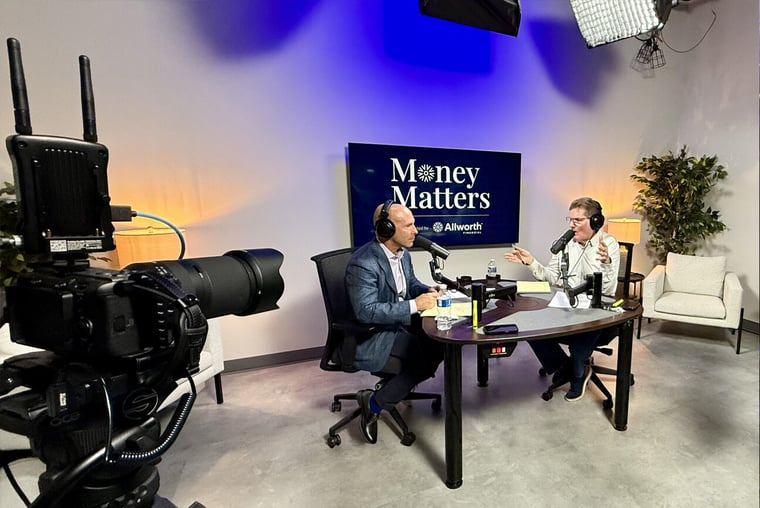
In this episode of Money Matters, Scott and Pat take calls from high-net-worth listeners who uncover the same wealthy tax mistake, despite very different financial situations. From retirees with most of their money in IRAs to investors weighing Roth conversions and income strategies, the conversations show how easy it is to pay more in taxes than expected. They explain how this wealthy tax mistake often comes from tax-deferred concentration, why paying taxes from retirement accounts can shrink cash flow, and how poor timing can quietly turn into a long-term wealthy tax mistake. If you’ve built significant assets and want to protect your income and flexibility, this episode offers clear, practical insight.
Join Money Matters: Get your most pressing financial questions answered by Allworth's co-founders Scott Hanson and Pat McClain live on-air! Call 833-99-WORTH. Or ask a question by clicking here. You can also be on the air by emailing Scott and Pat at questions@moneymatters.com.
Scott: Welcome to Allworth's "Money Matters". Scott Hanson.
Pat: Pat McClain. Thanks for joining us.
Scott: Yeah, glad to talk about financial stuff. Helping people make good choices with their finances.
Pat: Yes, yes. Trying to leave politics out of it.
Scott: Is there anything going on in the world politically? I don't know, Pat. Everything seems so calm and normal.
Pat: But again, since this administration, again, I'm amazed on how sometimes the market reacts, which means people voting with their dollars about buying and selling, react negatively on some news, and then on very similar news, react positively. Which it reminds me, I'm I...
Scott: Now, you're getting frustrated.
Pat: I just don't understand.
Scott: Well, it doesn't necessarily move one way or the other. The markets move, and then the news reporters, they spit out some sort of excuse of why the markets did that.
Pat: Yeah. Oh, that's right.
Scott: They ask some expert, and the expert gives an opinion. It doesn't mean it's actually why it happened.
Pat: Yeah. It's earnings. It's earnings, earnings, earnings. Future earnings. That's right.
Scott: It's all... The prices of assets today...
Pat: Over the long term. But prices on a day-to-day basis. Well, you see when companies come out with their earnings, and all of a sudden, the stock will either bump up or dive. And I always...
Scott: And the people are perplexed, "They exceeded their earnings. Why did their stock fall 14%?"
Pat: Well, it's because they thought they were...
Scott: Because people thought the future earnings were going to be better than that.
Pat: Yes. And it's industry and management that actually matters. Economic environment, industry management.
Scott: And you think about the challenge of picking individual securities, right? So, like the old school stockbroker, that model is dead. Maybe there's still a few that exist. But the idea that you've got some broker that you're going to call and he or she...they're almost all he back in the day, he's going to tell you, "Oh, these are the good companies to buy. You should own these companies and let's sell this and buy that." Or even if you're an individual, I mean, Charles Schwab, they first began as a discount brokerage firm.
Pat: With individual stocks.
Scott: It used to be that commissions were regulated. And then in 1976 or '97, there's deregulation of commissions, and Charles Schwab said, "Hmm, I see an opportunity here. People like trading stocks." Made to have a discount brokerage firm, and that's how Schwab got started. But it was still trading, and then individuals trying to pick the best stocks. And then we went through this period where it was, "Let's go to mutual funds because maybe I don't have the ability, but I can hire these managers." It's a nice way for the everyday man to hire these professional managers to go and find the best companies to own. But then as time went on, we saw that most of these professional managers are not outperforming just the...
Pat: The broad indexes.
Scott: ...broad baskets that they're trying to mimic. And then hence the rise of the index funds and then the ETF to kind of...
Pat: But active management still makes sense on certain asset classes.
Scott: I would agree with you, particularly in the fixed income arena.
Pat: A hundred percent.
Scott: It's much larger and it's not nearly as efficient.
Pat: The bond market, yes.
Scott: Yeah, in the fixed income market. But even on the... And if you're going to try to pick these stocks, think about the rotation within the S&P 500 of companies.
Pat: Well, it's constant.
Scott: The Magnificent Seven, how many of those existed 20 years ago?
Pat: Well, they were in some form or fashion, but how many people knew about them?
Scott: And how many other companies were the darlings of the day 20, 25 years ago that don't even exist anymore today? And if you look at the changeover that, so WorldCom, some biggies.
Pat: There were some big ones.
Scott: Enron, Lucent. Lucent Technologies, you remember that? Remember that. Enron, we haven't seen a big blow up like that in a long time, have we?
Pat: It's been a while. Maybe because the auditing firms that actually audited them blew up as well, and that the regulators actually came down on the auditing firms.
Scott: That's exactly what happened.
Pat: It wasn't the companies. It was the auditing. The regulators came down.
Scott: They were all part of it.
Pat: Oh, and then the auditing firms were held financially responsible for the losses and it blew up. Arthur Andersen, just blew the firm up. That was Enron. I believe that was Enron.
Scott: Enron, yeah. They were both at the same time though, NCI WorldCom.
Pat: NCI WorldCom, which was a crazy one where they are actually expensing leased phone lines. That was something. That was creative. There was some creative accounting going on there.
Scott: Well, what's interesting is, so there's been this tremendous regulatory burden that companies... And maybe in good measure, right? And so, so many companies aren't going public anymore. Companies that were public are going private. The private markets have exploded, and there's a push now on the regulatory side of things to get some of these private assets in 401(k)s. There's a big push right now to get private equity, private fixed income, all inside 401(k) plans.
Pat: Which actually, you could tell what's going to happen over the long term.
Scott: Well, it just seems to me like, what if that effort was instead to make it easier for these companies to use the public markets?
Pat: Understand, but if the private markets come into the 401(k)s, the regulatory burden on the private markets would come very much like the public markets.
Scott: Of course, yeah.
Pat: In which case, there will be...
Scott: That will go to the Department of Labor after a while.
Pat: Yeah, you got the DOL in there, right? And then companies that sponsor these into the 401(k)s...
Scott: The regulatory burdens that.
Pat: ...will fall into them.
Scott: Yeah, it's interesting.
Pat: The pendulum has a tendency to swing, does it not?
Scott: These are the kind of things that we find fascinating. These are the things that we talk about throughout the week.
Pat: Oh, you should have lunch with us. It's amazing.
Scott: It's so great. All right, let's take some calls and talk about some everyday issues that people deal with.
Pat: Why do I have no friends?
Scott: If you want to be part of the program, if you've got to run a financial question past us, we'd love to take your call. Send us an email at questions@moneymatters.com. And we're starting off with Nancy. Nancy, you're with Allworth's "Money Matters".
Nancy: Hi, thanks for taking my call. I have a question which I'm sure you've been asked many times, but Roth conversions really confuse me. So, when I retired from the phone company, I rolled my pension and my 401(k) into an IRA, all pre-tax. And then I took a glorious six months off, and then I came back to work at a little job because I told myself I was going to work till 65. So, I'm ready to retire this year.
Scott: How old are you today?
Nancy: 64. Yeah. So, in July, I'll be 65, so I'm retiring August 1st.
Scott: Wow. All right.
Nancy: And just... So, I have about $2.2 in my IRA now.
Scott: And let me ask you a quick question. When did you leave the phone company?
Nancy: In December 28th, 2021.
Scott: And what was the $2.2 million IRA today? What were the values of those, probably a couple of different accounts, your pension, your 401(k)? Do you remember what it was worth when you retired?
Nancy: My pension was like $20 shy of $1 million. And then my 401(k) was $650.
Scott: Oh, okay. And have you taken any distributions off that?
Nancy: Yes. My first six months...
Scott: Okay, good. Because I'm thinking, huh? All right.
Nancy: Yeah, my first six months, I was just living off that when I retired because I wanted to have some time off. And then I kind of kept taking it when I started working because I wanted to give my daughter some money for her wedding. I thought that was easier to take a little bit at a time. Yeah, so I did some things. And then I kind of moved my financial advisor because I didn't like the way that she... The original one, had it invested. I wasn't making any money. She had too much in bonds, in my opinion. So, I transferred to this guy. And this guy is doing really good in my investing. But now that I'm looking at it, and I listened to your podcast, I listened to a lot of financial podcasts, and a lot of people, especially your show, talks about, oh, you should or should not start rolling some of that to a Roth because then my RMDs are going to be really high when the time comes. So, in 10 years, right?
Scott: Yes.
Nancy: So, I was wondering, if I...
Scott: And we talk about it a lot because it's one of the main planning tools that people with some assets have available of controlling their taxes.
Pat: So, when you retire, do you plan on starting an income off this IRA?
Nancy: Yes.
Pat: And how much?
Nancy: I thought $5 grand a month minus the tax. I take home $4 grand. That's fine.
Pat: Okay, so $60,000. So, about a 2.85% distribution right in there.
Scott: And what did you take out of that recount in 2025, ballpark?
Nancy: Oh, I take $2,500 a month. So, I take home $2,000 a month now.
Scott: And what did you earn in wages for 2025, ballpark?
Nancy: $5,200, probably $5,200.
Pat: Okay. And you're going to start Social Security at 65 as well?
Nancy: Well, I wasn't...
Pat: And are you married?
Nancy: No, I'm single. And he was talking about just waiting until 70 to collect it. And he goes, "Well, you know what? If it doesn't work out, then just start collecting it. It's totally up to you, but we suggest you wait until 70 to get the biggest bang," is what he said.
Scott: And what do you feel about that?
Nancy: I feel if I could support myself on my IRA, I'm willing to do it. But in two years when I'm 67 and I reach my max, then I might change my mind. You know what I mean?
Pat: Okay. So, do you have any money outside of IRAs?
Nancy: No, all my money's in there, except for my little savings account I have.
Scott: And has your advisor run any scenarios over the next several years of what your tax situation's like? What's going to happen at age 75, the Requirement Minimum Distributions? Have you done any of that analysis?
Nancy: Yeah. When he gave me my plan, that's where I saw how big my RMDs are going to be and how much taxes I'm going to pay. And then I'm listening to Medicare webinars and stuff, and it's like, "Oh, my God," the IRMAA thing came in mind. I'm like, "Oh, my God, I'm going to be paying up the yin-yang for medical in my retirement as well." So, that's what I was thinking, if I... And I talked to my tax person the other day, but she really wasn't that up on Roth conversion. So, I thought...
Scott: What do you mean she wasn't up on it?
Nancy: Well, about how to pay my taxes. Because I said, well, if I want to roll $50 a year to keep me under 105, if I want to do $50 a year, how do I pay those taxes?
Pat: You actually have to take... Because there's no money outside, you hit the key here, right? There's no money outside the IRA. You actually have to use the IRA money to actually pay the taxes on it. So, it's a push.
Scott: You got to gross it up.
Pat: Yeah, so it's a push.
Scott: It may be a push, maybe not a push, depending on...
Pat: The marginal tax rate. The biggest question to me is, would I start Social Security at 60.
Scott: The plan you have now, if you're going to suddenly take a $5,000 a month distribution, you're going to go backwards in your standard of living. Because right now, you've been making $5 grand a month in your wage and taking $2,500 a month. So, you're making...
Nancy: Oh, well, I take home, yeah, $3 grand a month after taxes.
Pat: And you're taking the money from the IRA, $2,500.
Nancy: Yes. My mortgage is, like, $18 something, so I wanted that to go out to pay the house.
Pat: Yeah, you know...
Scott: A little bit more.
Pat: ...I think you should take more out of the IRA. I would take a 4% distribution.
Pat: How much do you owe on your house?
Nancy: I owe about $125.
Pat: And the interest rate is super low?
Nancy: 2.85%.
Scott: You know what I'd recommend? I would take whatever amounts needed to pay that mortgage. It's $1,800 a month, gross that up a bit. And so, I would take maybe $200,000 of that IRA, and I'd put it in a separate account. I'd invest it conservatively, and I would have it send you a net $1,800 a month each month.
Pat: So, you're going to match maturities?
Scott: Correct. You've essentially paid off your mortgage by doing that. I have more than $125 because you've got to gross it up for taxes. And then figure out how much you need on a monthly basis. Because the plan that you just laid out to here, it sounds like you're living way below your means. You're going to go back... And you've got $2.2 million.
Pat: Yeah, and you have the ability to take... How's your health? You have the ability to take Social Security.
Nancy: Good.
Pat: Your health is good.
Nancy: Yeah, uh-huh.
Pat: Yeah, you need to take a little bit more money out of the IRA or start Social Security.
Scott: And I personally like the idea of taking... Because one way to model it, there's the 4% rule or some of those things. And you've got $1,800 a month mortgage payment, right?
Nancy: Right.
Scott: So, if we can carve off just a little bit of your nest egg to set it aside to pay that... Essentially, we're paying off the mortgage, but we're doing it in the most tax-efficient manner, and your interest rate, we haven't asked you, but I'm sure it's very low, is less than what you're paying.
Pat: We did. She said it's sub-three.
Nancy: 2.85%.
Scott: Okay. I wasn't listening. My apologies. I was thinking. And then we could say, all right, of $2 million, we take even a 4% distribution. That's $80,000 a year. And you might say, "I don't need that. My mortgage payment's already made. I don't need that much money." And say, "Okay, we take a little bit less than that." But depending on how you want to live your life, but the plan you have now...
Nancy: Well, I was thinking...
Scott: ...your lifestyle is going to go backwards, and you're going to be a very wealthy, old, lady.
Nancy: Well, see, that's my thing. So, I thought if I kept it low, and have the ability to convert and still keep me below...
Scott: So, what's the objective?
Pat: Why?
Scott: So, it's $10 million when you die?
Pat: What are we trying to achieve here?
Scott: Yeah, what are we trying to achieve?
Nancy: I'm trying to achieve... Okay, so if I'm going to be able to pass on money to my daughter, I kind of want it to be Roth money, and me spend my IRA money and pay taxes on it. What's your thinking?
Scott: And how much do you want to leave to your daughter, $2 million, $5 million, $10 million?
Nancy: Well, I don't think it's ever going to be that big. But I mean, if I leave her $1 million, that'd be great.
Pat: Well, you'll leave her $1 million.
Nancy: Oh, you think so?
Pat: Oh, yes. Oh, yes. Yes.
Nancy: Okay. So, you don't think I need to do Roth conversions then?
Pat: I wouldn't.
Scott: That might make sense for a little bit.
Pat: I wouldn't.
Scott: Your first year retirement, I'd kind of see...
Pat: You plan on staying in the state of California?
Nancy: Yes, uh-huh.
Pat: I wouldn't.
Scott: You wouldn't.
Pat: Oh, why?
Nancy: It's not worth that...
Scott: Because of the Requirement Minimum Distribution. I tend to disagree with you on that. I think you need... What I'm more concerned with is you having enough income to live the lifestyle that you're used to.
Pat: But, Scott, her Requirement Minimum Distribution will be... If she starts a 4% distribution today, if she carves out the same amount...
Scott: That would be $200,000.
Pat: That would be the same amount, right?
Scott: It would be the same amount.
Pat: Yeah. If she carves out $200,000 in a match maturity, right? Well, hold on one second. And then she starts a 4% distribution, right? And we adjust it to inflation, which would be my hope every year. And then the time retired, Requirement Minimum Distributions kick in at age 75.
Scott: It's the same number. It's slightly less.
Pat: The RMD might be lower.
Scott: Than the distribution amount.
Pat: That's why I wouldn't mess with it.
Scott: I would agree with you on that.
Pat: The biggest question I would do is, if the objective was to leave as much money as possible to my child, and we'd have to run this through the calculation, you probably... And you assume a 7% or 8% growth rate on the portfolio, depending on how it's invested, maybe it might make sense to start Social Security earlier.
Nancy: At the 67.
Pat: At the 65.
Nancy: Oh, really?
Scott: Well, let's make sure you're gonna be retired. Take a year off.
Pat: Yes, actually. Take a year off and then look at it at 65.
Scott: You're my sister. Because if my sister, then I can really pound on her like, "This is what you need to do." So, if you're my sister, I'd say, "All right, Nancy, what we're gonna do is we're gonna take, actually, not $125, we'll take $175 grand. We're gonna carve a separate IRA. And we're gonna have the gross amount of 2,200 bucks a month or whatever it is, and you're gonna net $1,800 a month. That's gonna cover your mortgage." Then we're gonna take the rest, the $2 million, and say, "Let's take a 4% distribution off that. You don't wanna go that high, 3.5% distribution. But a 4% distribution is $80,000." And if we find ourselves a year, two years from now with money accumulating in the bank, then we'll say, "You know what? Let's take a little less and let's do a Roth conversion with that differential." The plan you have seems to me that you're gonna be living a much lower lifestyle than you could afford.
Pat: Or what? For what? And by the way, the decision you make the first day you start this can be changed.
Scott: Changed, absolutely.
Pat: It can be changed.
Scott: Exactly right.
Pat: The Roth rollover cannot be changed. So, I'd play... I wouldn't be in a hurry to do a Roth, but I'm not ruling it out forever. And I kind of like Scott's idea of just, like, carving this money out. And what you're doing there is you're matching maturities. You're saying, "I have, essentially, the mortgage paid off. I've got this money invested in a higher yield than the cost of money on my mortgage. And I'm matching those maturities," basically.
Nancy: I see. Okay. I didn't think about that.
Pat: It will help you psychologically because you, essentially, have paid off your home. You've just got it. You could actually go back in individual bonds and get a higher yield than what you're paying on the interest there. And then...
Scott: And that way, because that account, it'll get smaller each year just because you're paying the mortgage off, right? It's not just the interest. And the reason I like, in this particular situation, to carve it out, is that way you're not seeing a heavy load on the $2.2 million. You're seeing a light load on the distribution of the $2 million, and a little heavier than the other account. And you understand psychologically, "Oh, we're going to match maturities. We're going to invest in conservative. It's going to pay my mortgage off over the number of years."
Nancy: Okay.
Scott: All righty.
Nancy: Okay. Sounds good. Okay, thank you.
Scott: And I would consider Social Security rather than what you...
Nancy: Considerably.
Pat: Yeah, I would too. But look at the...
Scott: 2023? When's it coming up?
Pat: Here's actually... Your financial advisor asked them to model what happens if you start... "In 30 years, how will I have the most money? In 30 years from now, if I start Social Security at age 65, or I start at age 70?" And they can model it and tell you exactly what your account... Well, exactly, using their models and assumed rates of return.
Scott: That's if you reduce your IRA distributions by the commensurate amount.
Pat: That's right. That's right. But they could play with that. So, okay.
Nancy: Okay. Sounds good. Thank you. I appreciate it.
Pat: Thank you.
Scott: All right, Nancy. Wish you well. That was a fun one. Let's talk with Stacey. Stacey, you're with Allworth's "Money Matters".
Stacey: Hi there.
Scott: Hi, Stacey.
Stacey: How are you?
Scott: Fantastic.
Stacey: Hi. Good. So, I am flying by the seat of my pants on my financial situation. I'm 60. I'll be 61 years old. I have $7 million in my 401(k) and about maybe... I've got other investments that are small. And what I'm getting told now by people is that I need to start investing in assets that spin off investment income. So, I should be buying into real estate and things like that. And my attitude is, if I have $7 million...
Scott: You could do whatever you want.
Stacey: Right. So, why am I getting into these complicated structures of these real estate deals that will give me money, they'll give me cash flow every month forever, or...?
Scott: Does someone want you to go out and buy, personally owned rental properties, or commercial buildings or something?
Stacey: I have bought into two high rise buildings in New York City where I'm part of a limited partnership, or a limited liability.
Pat: You've done this already? You've done this already?
Stacey: Yeah.
Pat: You bought into an LLC?
Stacey: Yes. So, I've done two deals, $100,000 each deal.
Pat: How long ago?
Stacey: One was about six months ago and one was about a year ago. So, the one is a Manhattan apartment building. It was redeveloped. It's giving me 10%. I'm getting $850 a month in income right now on the $100,000. They say that when they refi the building, then I get my investment back and I continue getting the cash flow.
Scott: Assuming everything works out and they're able to refi the building.
Stacey: Exactly.
Pat: And by the way, that distribution you're receiving may or may not have anything to do with the earnings of the investment.
Scott: So, look...
Stacey: It could be like a return of capital.
Pat: Thank you.
Scott: And the $7 million, that's a lot in a 401(k).
Pat: I know. Were you self-employed at some point in time?
Scott: Or did you work for a hot company?
Stacey: No.
Pat: Like Cisco or something?
Stacey: I'm 38 years with a public company. And when the financial crisis hit and I saw my 401(k) go down to $200,000, I moved it all into the company stock fund that had dropped from $68 to $0.98.
Scott: Holy smokes.
Stacey: At that point, I was blacked out for two and a half years from being able to move any money out of the stock fund. So, by the time I was able to move money out of it, the stock was trading at $12.
Scott: Please tell me you're diversified since then.
Stacey: Well, everything's in my 401(k).
Scott: I know. I understand, but you got rid of the company stock.
Pat: That reduces them.
Stacey: I maintain $500,000 in company stock.
Scott: Beautiful. You know what, Stacy? This is hilarious.
Pat: Oh, my God.
Scott: I mean, this is not that much different than going to Vegas and saying, I'm going to put everything on Red 27. And it paid for you, right?
Pat: What a great story.
Stacey: Right, it did. I got lucky. I realize I got lucky.
Scott: Luck counts, too.
Pat: Yeah. What a great story.
Scott: The reality is, this is where you are today. You got $7 million.
Pat: You're 61. Do you have a spouse?
Stacey: No. I'm single.
Pat: What were you...? Are you retired or are you still working?
Stacey: No, I still work. Last year I made $445,000. But mind you, of that money, first of all, I fully contribute to my 401(k). I do all of the flex spending and the medical. So, my paycheck is low. And most of my... I'm making about $190 on base salary. So...
Pat: You said your overall income was $445 last year. And your...
Stacey: Yeah, because I get stock.
Pat: Got it. How much money do you have outside your IRA?
Stacey: So, I have $7 million in my 401(k), I have a $350,000 IRA, I have the $200,000 investments in real estate, and I have $100,000 in mutual funds. And then whatever's in my house.
Pat: So, back to the original question, do you like owning these partnership interests in these buildings?
Stacey: No, because they make me very nervous.
Pat: Well, then don't...
Stacey: You know, they're sketchy. To some extent, I think they're a little sketchy. But the people that I'm working with, I have a lot of confidence in. I mean, I've actually asked them if they're Bernie Madoff.
Pat: Bernie Madoff didn't tell people he wasn't Bernie Madoff.
Scott: So, I'll tell you a story. This was a number of years ago. I was on a panel, Barron's, the publication asked me to speak on a panel. And there was, I think, three of us, different kind of wealth managers or whatever on this panel. And there was one gentleman that I think his account minimum was $50 million. And he talked about that his average client had 14 different accounts, not investments, different accounts. Most of them, LPs, LLCs, you know, where you get the K1s, you're waiting until October, "Where's my K1s," all that stuff, right? 14 of these. And I thought to myself, "These poor clients." Most of them were business owners. They got lucky, businesses, hard work, whatever. Anyway, at some point in time, they hit the payday. They've got all these dollars. And this guy just made their life so complicated. And they had enough money to have life simple.
Stacey: The question is, I am stuck with all taxable income in my retirement. And is there anything that I...? Am I just...?
Scott: No.
Stacey: My attitude is if I get 8% return a year, and my account goes up by 8%, so what? I pay the taxes on it.
Pat: That's right. That's right. That's right.
Scott: There's no way to avoid it.
Pat: Back to your original premise where people have told you... And I don't know who these people are, that told you that...
Scott: Someone is selling the products.
Pat: ...you need to diversify these different sources of income. Look, there's very little you can do with this portfolio. There's very little.
Scott: No, no, no.
Pat: No, no, no, in terms of taxation.
Scott: That's exactly right.
Pat: There's lots you could do with this. I wouldn't mess with any of this stuff.
Scott: And you can own a real estate investment trust that specializes in newer high-rise apartments if you wanted to.
Pat: But don't, don't. You're absolutely fine. You're absolutely fine. I wouldn't mess with... Look, what you're interested in is total return. And it's pretty simple in your portfolio because most of your assets are in this IRA.
Scott: Tax deferred. Which has some benefits because you can do all kinds of transactions without incurring any tax bills.
Pat: But total return is dividends, capital gains, and interest. Can I add anything else to that?
Scott: I don't think so.
Pat: It's dividends, capital gains, and interest. So, when people talk about diversifying their sources of income, you can do that, which is... That's an investment allocation, which is, "Hey, I'm going to put a traded REIT, Real Estate Investment Trust, in my IRA, a traded 401(k). And because you're over age 61, you've got this menu that you actually live inside your 401(k). But you're over age 59 and a half. You can take most, if not all, of your 401(k) and move it into an IRA, and your menu of investment options has expanded...
Scott: Dramatically.
Pat: ...like 50 fold.
Stacey: Here's the other thing. I have no debt. I owe about $180,000 on my house that's worth about $550. But in looking towards retirement, I'm anticipating having to spend a million dollars on a house. And how do I leverage my 401(k) to do that? Do I just say, "You know what? I'm going to take $10,000 a month and that's going to pay the million dollar mortgage." Or do I take...
Scott: That's what you're going to have to do.
Pat: Or had you called us prior to investing in these LLCs in the New York high rise, I would have said, you should actually just hold those in treasuries until you actually buy this house, and you have $100,000 in mutual funds and maybe we use that. But you should not be making any...
Scott: The challenge is, it's a good problem, but you've got $7 million in this tax shell. Think of it like, there's this shell around these dollars, and to get money out, it's got to come out of that shell. And when you pull it out of the shell, your silent partner, the tax man is going to grab some. And the more you take out in any particular year, the more they're going to grab. So, if you pulled out a million dollars, you're going to be at the top tax rate.
Stacey: Being in 47%, yeah.
Scott: Yeah, which...
Stacey: Part of the problem is also though, is that it's like, do I start using some of that money now, or...?
Scott: No, you're making a...
Pat: No, wait. No, absolutely not. You do...
Stacey: I'm the poorest rich girl I know.
Pat: I understand. You're the woman with a ham under her arm, pleading hungry. So...
Scott: So, if you quit working today and you took a 4% distribution on that $7 million, that's $280,000 a year.
Pat: Yes. But if you wanted to buy a house, like a million dollars a house, what I would do is I would actually have you go get a loan, what's called a 30 due in 5, right, or a variable interest loan. One of those two.
Scott: And pay it off in a short...
Pat: And have you pay...
Scott: Well, you got to run the numbers, model it all.
Pat: Yeah, I'd have you pay it off in a relatively short period of time. But the mistake you made is that you actually said, "Well, I'm going to need this money to buy a house," but you acted contrary to that by making these investments.
Scott: You just took cash. Because I'm assuming that those $200,000...
Stacey: Yes.
Pat: Were after tax. So, you acted contrary to your best interest by that, because if we wanted real estate exposure, we could have actually gotten it inside the IRA.
Scott: Inside the IRA.
Pat: And by the way, the people that pitched you on the New York high rise didn't actually ever discuss, they might've asked how much money you had in an IRA.
Scott: They did a tremendous disservice to you. Before you mentioned that, I'm starting to think in my mind, with her situation, they took her liquid cash, which is a little...
Pat: They were selling a limited partnership, Scott. They didn't care about her. You need a financial advisor, is what you need.
Scott: And run the numbers.
Pat: You need a financial...
Scott: Gain more confidence.
Pat: And you're going to look and say, "Well, why would I pay for a financial advisor?" If for no other reason than to stop you than making these investments in that? Because these investments...
Stacey: My guy tried. My guy actually tried.
Pat: Oh, he did?
Stacey: Yeah. But the people that my father introduced me to and the concept I just... I was like, "Okay, I'll give it a try. I have this cash laying around."
Pat: Well, you should...
Stacey: And then I'm worried about RMDs. One of my thoughts was to take more out of my 401(k) on everyday...
Scott: I'm actually not worried about RMDs. You've had gross income of $445,000. Okay, maybe you're maximizing your 401(k).
Pat: You're living on that.
Scott: But it's still over $400,000.
Pat: You look pretty good. Is that $445,000 been pretty consistent over the years?
Stacey: Average. Through, I would say the last, like, five years has been about the same.
Pat: So, are you in software sales, would be my guess?
Stacey: No, insurance.
Pat: Okay. So, sales of some sort to make that kind of money.
Stacey: No, I'm not even in sales. I do regulatory. I do regulatory.
Pat: Wow. Well, look...
Scott: All right. Well, you're very good at your career, obviously.
Pat: ...you need to listen to your financial advisor.
Stacey: They're conservative. They also wanted me to do a Roth conversion. And I'm like, "I make $400,000 a year. If I do a Roth conversion...
Pat: Well, then get another financial... You're paying...
Scott: Here's why I wouldn't do a Roth conversion. Because you quit working today, and you're like, "I need to replace $400,000 of income." Well, that's a five or 6% distribution on the 401(k), which is much greater than what your Requirement Minimum Distributions are going to be. And maybe you don't plan on retiring for a number of years, but regardless, like to replace that $400,000 a year, which is, when you back out what you're paying into Social Security, Medicare and your 401(k) contributions, that $445 goes about $400. That's going to be greater than your Requirement Minimum Distribution.
Pat: So, the Roth is the wrong thing. And by the way, if your portfolio is being managed too conservatively and your advisor won't move on that, then get another advisor.
Scott: Then get a different advisor. Yeah. So, hey, Stacey, I appreciate the call. And congrats on making that good move. I guess, I have one thing, had you made that move with money outside of the retirement account, it'd be a very different situation.
Pat: In terms of?
Scott: Taxation.
Pat: Yes.
Scott: But then it'd be harder to diversify though as well. It wouldn't be $7 million because the taxes you'd have to pay to diversify. Let's talk with Kyle. Kyle, you're with Allworth's "Money Matters".
Kyle: Yeah. Hi, Scott and Pat. Thanks for taking my call. Love your show.
Scott: Thank you, sir.
Kyle: I've been listening to it for the last five years or so.
Scott: Oh, good. Thanks. How could we help?
Kyle: Well, my question is we're going to be closing on a new house in two months, and we're currently in escrow with our existing property. And just wondering on the possible funding options for the new property.
Scott: And the new house, is it a brand new construction, or just new to you?
Kyle: It's brand new construction.
Scott: And are you going to have to do the backyard landscaping, windows, and all that, window treatments, everything, and furnishing?
Kyle: Yes. So, probably going to need an additional $100,000.
Scott: And this is a primary residence?
Kyle: Yes, primary residence.
Scott: And are you trying to figure out a way to make the swing without having a contingency?
Kyle: Yeah, I'm just trying to figure out, with the three buckets of money that we have right now, what is the most efficient way for cash flow and tax efficiency?
Scott: And is your thought that, are you going to be closing on your new house before you close escrow on your existing house?
Kyle: No, we're going to be closing on our existing house in two weeks, three weeks. And the new house will be in two months.
Scott: Oh, okay, good.
Pat: So, walk us through the numbers on the existing home that you're selling. What's the value? Is there a loan that needs to be paid off, and what's the net?
Kyle: No, the house is paid off. We will walk away with approximately $750,000.
Pat: All right. And what's the new house?
Kyle: And the new house is going to be, it's $970,000, but with the extra, so just call it $1.1 million.
Pat: Okay. All right, tell us where the bucket are.
Scott: And is the extra, is that the landscaping and that sort of thing?
Kyle: Correct, yes.
Pat: All right, tell us about the assets.
Kyle: So, our assets, right now, we have in our traditional IRAs, we have $2.8 million. In our Roth IRAs, we have $1.5 million. A brokerage account is $500,000, which includes about approximately $190,000 in cash. Inherited IRA of $200,000, and a HSA of $125,000.
Pat: All right, so brokerage account, tell us the amount again. $500,000, how much is in cash, $180,000?
Kyle: $190,000.
Pat: $190,000. And then tell us about the inherited IRA. How much is it, and when did you inherit it?
Kyle: It's about a little over $200,000, and it was back 15 years ago.
Scott: Okay, so you're just doing Requirement Minimum Distributions on that?
Kyle: Correct, yes.
Pat: And then what other...?
Scott: Over the life expectancy.
Pat: And then there was one other asset, what was that?
Kyle: And that was just the HSA, $125,000.
Scott: And how old are you?
Kyle: I'm 66, and my wife is also 66.
Scott: How's your health?
Kyle: Good health.
Scott: And where's your...? Are you retired now?
Kyle: Yes, I've been retired for about six months, and my wife's been retired for a little over a year.
Scott: And are you moving to a new area?
Kyle: We're currently in the Phoenix area. We're moving approximately 150 miles north to get out of the heat.
Scott: Oh, beautiful. Good for you.
Pat: So, the idea is, where do we come up with this essentially $360,000?
Scott: Where's your income coming from now?
Kyle: Right now we're just living off of cash. We had a cash buffer before we retired.
Scott: And what was your annual income while you were working, the two of you? Go back a few years.
Kyle: About approximately $285,000.
Scott: And have you started Social Security, yet?
Kyle: No, actually today is my full retirement birthday, 66 and 10 months. But I'm planning on waiting until 70, and then my wife will start taking hers in October of this year.
Scott: And did you do any Roth conversions in 2025?
Kyle: I did. Back in April, I did $100,000.
Pat: Okay. And you're not taking any money from the IRAs this year in 2026?
Kyle: No, we haven't touched anything, yet.
Scott: What's your plan?
Pat: And when you said this buffer, was that the buffer in the brokerage account, or is this money that you didn't...?
Kyle: Yeah, we've been living off the cash in the brokerage account. And we did use some of it because we had to put $90,000 down for earnest payments for the new property. So, we used about $60 in cash out of that.
Scott: All right. So, the new house $1.1 million, it's essentially a million because you already have $90,000 down, right?
Kyle: Right.
Scott: What do you think you should do?
Kyle: Well, I was thinking, since we have a large chunk of our money in the tax deferred, you know, the traditional IRAs, I was thinking of using the money, the proceeds of the house to add to the brokerage account, and then possibly, you know, maybe use $200,000 from the brokerage account, $200,000 from the traditional IRA, and possibly, another $100,000 from the Roth for, you know, maybe that's close to about 60% down. Carry us, you know, $300,000 to $350,000 to $400,000 mortgage. And then pay it off. You know, if the market's good, just take some money out of that traditional IRA.
Scott: What's the interest rate on a loan today?
Kyle: Well, through my brokerage account, I can use their bank, and with our assets, right now it's anywhere between 4% and 3.25% and 5%.
Pat: That's a variable rate.
Kyle: Yeah, for seven year.
Scott: And that would be limited to, my guess is, 50% of your brokerage value.
Kyle: Yeah, it's based on the assets we have.
Scott: Yeah. And you can't pledge your IRA or your Roth IRA.
Pat: So, here, here's my thought on this. I think, first of all, you want to start draining those HSA accounts so that they're empty within four or five years.
Kyle: HSA accounts?
Pat: Yes, the HSA.
Scott: Why do you say that?
Pat: Just because of how they inherited. And what's the point? I mean, if he's got the expenses, obviously, he hasn't been using them for his co-pay.
Scott: Anyway, start using the expenses.
Pat: Yeah. So, start using the...
Scott: I actually started on mine. I'm 59 and I started running the numbers and I'm like, "I've got a problem." Because they're horrible to inherit.
Pat: Yeah. They're paid out.
Scott: They work fine with a spouse, but after that, it's all taxable in that year. Even if you give it to charity, it's all taxable.
Pat: So, you want to start draining those HSAs, so that...
Scott: Just using...
Pat: Yeah, yeah, correct, correct. That was my point. So, that's it. I'm just going through the checklist of things that I would actually do. I would pay cash for the house. I would use the $190,000 in the brokerage account.
Scott: Or at least, some portion of it.
Pat: I think I'd use all of it.
Scott: If this were you.
Pat: Yeah, correct, correct. And then I would actually make up the shortfall with the inherited IRA and the Roth and a combination of those two. I wouldn't actually take a loan on this at all. I'd pay cash for it, 100% pay cash for it. So, we're just looking for $250,000. So, I would use part of the inherited IRA. And you want to actually drain that inherited IRA before you start on your regular IRA. And that's just for simplicity's sake. Just know this, is the inherited IRA yours or your spouse's?
Scott: It's mine.
Pat: Okay. All right. Well, just know that it comes from the...
Scott: I would do it exactly the same, Pat. Of the cash, I'd leave some cash in there, but let's take $150,000 cash. I would take money from my Roth. Because you need about $250,000, right? So, you take $150,000 from the brokerage, take $100,000 from your Roth, and you're thinking, "Oh, but I don't want to..." Maybe later in the year, we convert some of that IRA to a Roth.
Pat: But he's going to have to start taking IRA distribution because he's been living on this cash. So, you're going to have to start IRA distributions. So...
Scott: You're going to have to have income come from somewhere.
Pat: That's right. So, first of all, if you were my brother, I'd say, hire a financial advisor because you've got some great planning opportunities, and this is the time to start cleaning things up. So, that's why you were going to drain that inherited IRA.
Scott: In my guess 2025, we could have done more than $100,000 in Roth conversions.
Pat: You think? Yes. So, don't use any debt. Don't use any debt.
Scott: I wouldn't use debt. You're not going to earn more. The interest rates are higher now. If I were in your shoes, the last thing I'd want to do is pledge my relatively small brokerage account to pledge those assets.
Pat: Just what happens is you get a call on that. And then you're going to end up...
Kyle: Well, no, this is not a pledged asset line of credit. This is an actual loan.
Scott: And what's the interest rate?
Kyle: Say 5%.
Scott: Yeah. What do you make in the bank? Less than 5%.
Pat: Yeah. And you're pledging collateral.
Kyle: No, there's no pledge.
Pat: Okay, whatever. I don't care. I wouldn't take it.
Scott: Wait, wait, wait, stop. This is a personal loan?
Kyle: No, it's through a mortgage company. It's through Rocket Mortgage.
Pat: Oh, it's a mortgage on the house, not on the asset.
Kyle: Yes.
Pat: I still wouldn't do it.
Kyle: Right, on the house.
Pat: I still wouldn't do it.
Kyle: Yes, mortgage is on the house.
Scott: You can't earn... My CD's not paying 5%.
Pat: Yeah, yeah. The like-kind risk is you're paying for nothing because...
Scott: It's going to cost you to have the loan.
Pat: ...if I looked inside your portfolio, you have things that are fixed income that are paying less than what the cost of money is.
Scott: The money in your, your $190,000 cash is earning less than 5%.
Kyle: Right.
Scott: Right? So, what's the point? That's how we would... In your situation, Pat and I are on the same page exactly. I would pay cash for this. Last thing I'd want is a mortgage. You got plenty of assets. It's going to cost you to have a mortgage. There's no economic benefit at all.
Pat: So, I would actually... And I'd look at taking Social Security for both you and your spouse, and then I'd start a monthly distribution on the money that I didn't use in the inherited IRA. I'd start until that was drained, and then I would kick over to my regular IRA and start a monthly distributions, and I wouldn't mess with the Roth conversion. And I...
Scott: Well, you might at the end of this year, but you don't need to worry about it. We're in February of 2026. See where the cash flow ends up.
Pat: But he needs to start a monthly... What are you living on now? How much a month is it costing you now?
Kyle: We're living, it's about $12,000 a month.
Pat: Yeah. So, you need to start that.
Scott: Right. Yes. So, what's...? I'm assuming at some point in time you're planning on starting a distribution from that IRA, right?
Kyle: Yes, correct.
Scott: Yeah, I would do it now.
Pat: All right. So, just to make sure, we're going to use the cash in the brokerage account to make up the difference. We're going to use the inherited IRA first. And then we're going to turn around and we're going to start a monthly distribution on your IRA. And then I'd probably start taking Social Security.
Scott: I would take $150 grand of cash from the brokerage account. I'd take $100 grand out of the Roth. And you're like, "Oh, I don't want to take it out of the Roth." You can always convert later. It just gives you... Right now, you're in the middle of this transaction, and get the deal, get the house done. And I definitely would not have a mortgage on this. Having that extra payment's going to...
Pat: And if you were my brother, I'd tell you to get a financial advisor. Anyway.
Scott: Anyway, wish you well. Thanks so much for calling. That's about the time we've got in the show. And real quick as we're wrapping up here, I want to let people know about our upcoming webinar. We try to do these webinars, I don't know, every couple months. So, this is February's webinar. It is Strategic Moves for Volatile Markets. I'm hosting it along with Victoria Bogner, our head of wealth planning here at Allworth. It's really designed for those that have got $2 million or more in savings, portfolios with $2 million or more.
And what you're going to learn doing this, it's about a 45 minute webinar, we're going to talk about some tactical Roth conversion strategies that can turn some down markets into long-term tax advantages. We're going to look at portfolio refinement techniques to help reduce some downside exposure and some hidden risks that could exist. Take a look at some smarter diversification tactics for today's really ever changing shifting market. And some liquidity planning along with some behavioral guardrails, you've heard us talk about some of those things on the program over the years, that support some decision making when things are under pressure. And the dates for these webinar, February 19th and February 21st. And to sign up, go to allworthfinancial.com/workshops. That's all the time we have in this program. It's been great having you guys with us. We'll see you again next week. This has been Scott Hanson and Pat McClain of Allworth's "Money Matters".
Automated Voice: This program has been brought to you by Allworth Financial, a registered investment advisory firm. Any ideas presented during this program are not intended to provide specific financial advice. You should consult your own financial advisor, tax consultant, or a state-planning attorney to conduct your own due diligence.
Insights for Complex Wealth Decisions
Join our email list for exclusive commentary from our Chief Investment Officer, early access to expert-led webinars, and your complimentary Wealth Planning Checklist for Complex Portfolios.
We take your privacy seriously and respect your privacy choices. By submitting this information you agree to our Terms of Use Agreement, Privacy Policy, and to receive important notices and other communications electronically.