
Roth vs. 401(k), HSA Withdrawal Strategy & Pension Rollover Advice for $2M–$10M Portfolios
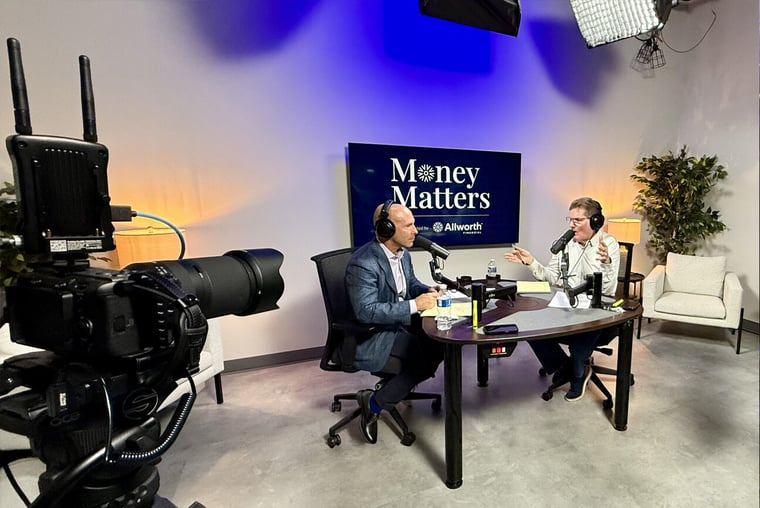
In this episode of Money Matters, Scott and Pat walk through smart decisions around Roth vs. pre-tax savings, pension lump sums, and when it actually makes sense to use your HSA. They help a high-earning family think through life insurance gaps and special needs planning, guide a soon-to-be retiree through a $1 million pension decision, and revisit a multi-million-dollar couple debating whether to spend or preserve a large HSA. From tax diversification to retirement income strategy to how certain accounts are treated at death, this episode shows the difference between surface-level investing and true financial planning for $2M+ portfolios.
Join Money Matters: Get your most pressing financial questions answered by Allworth's co-founders Scott Hanson and Pat McClain live on-air! Call 833-99-WORTH. Or ask a question by clicking here. You can also be on the air by emailing Scott and Pat at questions@moneymatters.com.
Scott: Welcome to Allworth's "Money Matters." Scott Hanson.
Pat: Pat McClain. Thanks for joining us.
Scott: Yeah. Because we are chatting about financial issues. Talking about...
Pat: What else?
Scott: It's mostly finance. It's not, you know what, it's not even finance. It's funny because, like, we're in the... What do you wanna call our business? Right now, the latest term is wealth management, right? We've been doing this long enough. We were financial advisors. We're investment brokers, financial advisors, financial planners. Wealth management is the latest term.
Pat: And those are only the good terms people use for us.
Scott: Right.
Pat: And for our industry.
Scott: But, I think, from the outside, it's like, "Oh, you guys just investment...you're investment guys, right? What do you, like, find the best investments, pick investments?"
Pat: That's the question you get. "What should I buy?"
Scott: Yeah. Or you just try to save money on tax or whatever. But it's so much deeper than that, because money is an interesting tool. Jesus warned that the love of money is the root of all kinds of evils, right? So, if, like, that's your number-one pursuit, it's probably gonna lead to a lot of problems in your life. You're gonna ignore everything else. And the fact is, whoever loves money never has money enough, right? There's never... If that's your quest. So, there's just a strange balance, where you've got, "All right, I don't wanna be greedy, and I don't wanna have money be my god." But you can't ignore money, right? You can't say money's evil because then you starve to death, right? It's a tool that we use to transact, and it's a way for us to store capital, that we can deploy at other times.
Pat: Which, for most people, is just to store labor.
Scott: For most people. It can provide...gives us options, gives us power, gives us freedom.
Pat: Gives you influence at high, high levels.
Scott: It can. So, most of what we do is help people who have accumulated some assets, or even maybe even the process of still accumulating some assets, get clarity on what they want in their own life, and then design the finances in such a way to help them accomplish what's important to them.
Pat: Drive to their goals.
Scott: To their goals. And everyone's different. Families are different, marriages are different, individuals within marriages have different opinions on this. And it's really trying to... And whether it's a modest estate or a very large estate, it still manage putting things together in such a manner to accomplish one's objectives. And sometimes it's just to help them get clarity.
Pat: Do you think that's why inherited wealth goes so quickly, versus earned wealth?
Scott: I was listening to a podcast yesterday of Arthur Brooks. He's, like, the happiness guy, happy...
Pat: Sounds depressing.
Scott: I just stumbled across his podcast. I'd read a couple of his books. And he was interviewing Codie Sanchez. You know, she's the big on buying small businesses, the entrepreneurship through acquisition, ETA.
Pat: I'm not familiar with her.
Scott: Oh, this is... Are you familiar with the ETA thing? A lot of business schools have this course now. It's kind of funny because it teaches you how to go buy a business, an existing business, and then run it.
Pat: And what's ETA stand for?
Scott: Entrepreneurship through acquisition.
Pat: Never even heard of it.
Scott: But you're buying out the entrepreneur.
Pat: Okay. That's a good point.
Scott: The fact that you're buying the business, you are, by definition, are not the entrepreneur.
Pat: Everyone calls themselves entrepreneurs now. My gardener calls himself an entrepreneur.
Scott: Right. Self-employed. He's a businessman.
Pat: Yeah. Everyone's an entrepreneur.
Scott: Anyway. But they were talking about inherited wealth, and wealth that you have not earned does not provide nearly the same sort of satisfaction as money that you have earned. And just how you feel about the money, how you feel about yourself when you spend the money. The studies have shown.
Pat: Because it lacks effort?
Scott: You haven't done anything...
Pat: Purpose?
Scott: At least, look, if you... Your gardener works hard. I'm assuming, right?
Pat: I did find some empty beer cans in the backyard.
Scott: You did not.
Pat: I did.
Scott: Did you?
Pat: Yeah. When they came to trim some bushes, there were a bunch of Coors cans.
Scott: If I was 59, still gardening, I might be drinking too. Just kidding.
Pat: It was in the corner of the... It was the guys that work for them. I found three Coors cans.
Scott: Okay. Let's take that.
Pat: And they weren't...
Scott: Let's take... But even that. A modest profession, with modest income, there's some pride in ownership for most people.
Pat: Yes.
Scott: Right? And the life that he provides for his loved ones, there's some pride in that, he feels good about that. It's a result of his labor. Different than... I dated a gal for a while and after... She dumped me. We were young at the time.
Pat: She dumped you?
Scott: I dated her for a long time. And then we kind of maintained some relationship for a while until... Not like that, like a friendship, I should say.
Pat: Oh, my.
Scott: This is going poorly. I was, like, 19, 18, whatever.
Pat: All right. Is this when you had an earring and purple hair?
Scott: Right around that time. Yeah. But the guy she dated after me, she dated for about a year, he was very wealthy family. This was back in the day. They lived in a Hollywood Hills, big mansion. And his allowance was $25,000 a month.
Pat: Really?
Scott: This was 30 years ago.
Pat: Wow.
Scott: Thirty-some years ago.
Pat: And young kid?
Scott: Yes.
Pat: Wow.
Scott: Early 20s.
Pat: That is a recipe for disaster.
Scott: She said it was the strangest thing. She said, if you wanted to buy something super expensive, like an expensive car or something, she said he would call some number. And she said about 10 minutes later, they'd call back with a yes. That's how it worked.
Pat: Oh.
Scott: But she became disenchanted with the guy because he had no motivation in life. She says all's he want to do is smoke pot and play his guitar. And she ended up leaving him. But it was just interesting, just when you talk about inherited wealth versus money.
Pat: Earned wealth.
Scott: Earned wealth, it's usually, you, a feel about, the way you think about them is a little bit different.
Pat: Yes. You have to be... In order to make it work, you've gotta be pretty well grounded in yourself if you're gonna inherit money. You have to have purpose.
Scott: That's right.
Pat: You have to have purpose.
Scott: That's right. I'll be real transparent. My wife and I are in the process of revisiting our estate plan right now. And we've got four kids. The oldest is 30. The youngest is 15. They all look at money a little bit differently. And it's like, how do we structure things, should something happen to us today, to ensure that this money's a blessing and not a curse?
Pat: That's always it. It's always a struggle. Especially at that age. If the kids were in their 40s, 50s, you'd have a pretty good view of it.
Scott: I don't want it to be demotivating to them.
Pat: But at the same time, it could be a blessing.
Scott: It could be a tremendous blessing, you know.
Pat: Or you could leave it to your business partner.
Scott: Your business partner. Hey, before we take some calls, we were chatting, Pat, before we started recording, on the run-up in gold.
Pat: Oh, it's crazy. This last year's been crazy.
Scott: We haven't seen a rise like this since the late '70s, right? Just this...
Pat: And we talked about it a couple weeks ago, about how it's hit... So, I was thinking about this, because naturally, you'll have clients now starting asking, "Should I have gold? Should I take gold?" So, I started doing a little research. And I went back 20 years, and if you parse things, you know, at any point in time...
Scott: The last 12 months, you should not have been in stocks. You should have been in gold.
Pat: Correct.
Scott: If you're a clairvoyant.
Pat: Yeah. Over the last 20 years, it would have been fairly close to a push.
Scott: So, gold and stocks have brought... And you were talking about stocks that brought [crosstalk 00:08:56.225]
Pat: In the S&P 500, including reinvested dividends.
Scott: Has done about the same performance as gold.
Pat: Correct.
Scott: The last 20 years.
Pat: The last 20 some-odd years. But if you go back 50 years, gold has underperformed stocks with reinvested dividends. Because you can compare apples to apples, reinvested dividends. It actually performed at about 25% of the rate of the broad stock market.
Scott: Last I'd look, and this has maybe been a year ago, so maybe it's adjusted a bit, but gold has essentially just kept pace with inflation. That's it.
Pat: Yeah. It's about 3.9%, over the last 50 years. Which makes sense.
Scott: You might as well buy TIPS, Treasury Inflation-Protected bonds.
Pat: And the reason it makes sense is the reason... Look, gold is a historical asset. And it continues to be treated like it's a historical asset because of the fact that it was relatively easy to carry, easy to consume. We're going back hundreds, if not...
Scott: That's right. Thousand of years.
Pat: ...hundreds and thousands of years. It was hard to get, and it was recognized by most civilized societies as a form of currency, right? So, it's got this historical context behind it. But in today's modern world, you can get more of it. So, does it not become a commodity?
Scott: And I was listening to this historical podcast a week or two ago. I think it was the... I don't remember if it was the Aztecs or the Incas. They had so much gold that it was like we're...
Pat: They just...
Scott: Oh, they're trying to trade something with the Spaniards, and like, "Oh, here's a couple. How much gold do you want for that?" Because it was of little value to them.
Pat: It was everywhere. It was everywhere. So, anyway...
Scott: And I'm no historian if I spoke off slightly [crosstalk 00:10:56.160]
Pat: Don't get too caught up with the gold. Don't get too caught up with the gold. Or for that matter, digital currencies, which is just another form of trading. It just...
Scott: The last five years have not been a good place in digital currencies, by and large. If you were a really early buyer of Bitcoin, you scored. You did well. If in the last five years you decided to get on the bandwagon, it probably has not worked out well for you. Hey, before we take calls, I wanna let everyone know about a webinar that we've got coming up next month. The title is "Advanced Strategies for $2 Million-Plus Portfolios." And this webinar is done by Laurie Ingwersen. She's one of our partner advisors out of the Boston area market. She's very talented, very charming, and I know you'll enjoy her. Here's some things you're gonna learn. The webinar is about 30 minutes long, and you're gonna learn the most common places tax drag hides, and why it often goes unnoticed, particularly at higher levels of wealth. We're gonna talk about how even good tax moves can compound into meaningful long-term costs when made in isolation, if you're not careful. You think you're making a wise choice, ends up costing you in the long term.
Pat: Which is what we talk about all the time on this show, is asset... This has a lot to do with asset location.
Scott: That's right. Why coordination across investments, tax, estate, and income planning is essential to generating tax alpha over time. Alpha is just kind of the extra you can get. She'll be discussing the difference between reactive tax moves and intentional, forward-thinking design. This isn't, like, a checklist webinar. It's more of a framework discussion, for those who already know some of the basics, but want to think several moves ahead. So, if you are in a position where you've got a couple million dollars or more in investable assets, and particularly if you tend to lean on your own education and knowledge in making decisions, this would be a great one for you to join. Because hopefully it'll stretch your thinking a bit.
Pat: It will not be a waste of your time.
Scott: No. So, March 11th, March 14th, March 19th, and March 21st. These are the dates it's going to be distributed. If you'd like to take part of it, go to allworthfinancial.com/workshops. And it'll be good. And you'll enjoy Laurie.
Pat: Yes. Yeah. And her father, unfortunately, he won't be on there.
Scott: Roger, 84?
Pat: Eighty-three? Eighty-five?
Scott: Eighty-four? He's still an active advisor.
Pat: Oh, he's great. He's great.
Scott: He's still an active advisor with us.
Pat: He's great. He's great. He's great. I talked to a advisor...
Scott: And by the way, just the way we structure things, because no one gets out of here alive, right? So, the older we get, the closer we are to our departure date. His clients also have a younger certified financial planner on the team.
Pat: That knows the person's situation.
Scott: Yes. And knows the client. So, that's how we do things.
Pat: Yeah. And actually, most of our advisors over the age of 55, 60, work on kind of these team things. I have a...
Scott: Yes. You get the older experienced advisors, it's kind of a win for everybody.
Pat: But Roger... But I talked to another advisor, Scott, with the firm, and he told me he was gonna work till he was 85. And he's 70 now. He said, "Nah, I'm gonna work till I'm 85." And I said, "Good for you, right? That's what you wanna do."
Scott: Yeah. I was listening to Dan Sullivan. He coaches entrepreneurs, and he's 83. And he says his ambition has never been as large as it is today. His future's bigger than his past. He also says he's gonna live to 156.
Pat: That seems to be an arbitrary number.
Scott: No, there's a reason he picked it. But he says... And one time he kind of confessed, "I'm probably not gonna live to..." But he says, "The fact that I put that out there, it caused me to make decisions, to give me a better chance of living longer." Anyway.
Pat: Interesting. All right. Let's go to the calls.
Scott: But to that point... And I think Roger could afford to retire at 83 or whatever, right?
Pat: That's his purpose.
Scott: Correct.
Pat: His lifestyle.
Scott: And he's great. I mean, he's got five decades of experience or whatever it is, and he's super helpful to people. Yeah. And he's a great mentor to younger advisors, you know, like people in their 60s.
Pat: I had a neighbor that was...he was actually an old-school stockbroker. He went to the office until he was 90.
Scott: I remember I had a friend, he said this family stockbroker's 93. And I'm thinking, this is a long time ago, there might be a time when, like...
Pat: When it's just day trading?
Scott: All right. Let's take some calls here. Again, if you wanna be part of our program, you can just send us an email, questions@moneymatters.com. We're talking with Tommy. Tommy, you're with Allworth's "Money Matters."
Tommy: Hi, Scott and Pat. Thank you. Thank you for taking my call.
Scott: Yes, sir.
Tommy: I really appreciate your time. Hopefully, I'm not wasting it, and I apologize if so. I got a few questions. One, is there anything that my wife and I can do better? And then two, more specifically in the future, if we keep going the way that we're going, do I need to start planning anything around pre-tax, post-tax, and RMDs? And then, lastly, we have a very special 2-year-old that has two congenital heart defects. So, I just wanted to ask if you guys... Anything that we're not doing for him that we could potentially do in the future. Just wanna make sure we're on the right track of taking care of him.
Scott: How many kids do you have?
Tommy: We have three kids, 7, 4, and 2.
Scott: And how old are you?
Tommy: I just turned 36 last week, and my wife's 33.
Scott: And do you both work out of the home, or just one of you?
Tommy: Just me. She's a full-time stay-at-home mom. Appreciate everything she does. And now, she is the keeper of a bunch of doctor's appointments.
Pat: So, family income, approximately?
Tommy: My base salary's $175,000.
Pat: How much additional medical costs are you incurring each year?
Tommy: So, we...
Pat: Medical, travel to specialists, all that stuff.
Tommy: Yeah. So, luckily, we have a great children's hospital at Cincinnati. So, that's right in our backyard, where we live, so not a lot of travel expenses, but we do hit our out-of-pocket max. And we are taking advantage of, and we're very appreciative for Ohio Bureau of Medical Handicaps. He does qualify for some coverage under that. So, we're taking advantage of that as well.
Pat: And realistically, will he have significant medical costs in perpetuity?
Tommy: Yes. So, he gets echocardiograms right now, every three months, which are not cheap. And then he's got aortic stenosis and coarctation of the aorta. Not to go too far into details, but at some point, he will have to have that aortic valve replaced, which will be some type of operation. And it's kind of kicking the can down the road as far as we can right now, with all these echoes, to figure out when that time's gonna be.
Pat: And unfortunately, I have a fairly good understanding of this. I had a daughter that was born with a congenital heart defect, that was very, very serious. And the plan was that she was gonna have surgery at the age of 18 months, 7 years, and around 15 to 16 years of age. Because the valves that they replace them with don't continue to grow, but the heart does.
Tommy: Right. Yeah.
Pat: So, I expect that you're on the same path.
Tommy: Yes, he had a cath procedure at two days old, and then again at three months.
Pat: Yeah. Wow.
Tommy: And he's been doing great. So, it's just kind of kicking the can down the road, but it's amazing what they're coming up with.
Pat: Oh, it's crazy. It's absolutely... It's mind-boggling where... In fact, now they can do in vitro surgery on many of these hearts, which is just... Yeah. Every time people actually talk about the cost of health insurance, I just have to remind myself of some of the benefits.
Scott: Yes. Right.
Pat: Right? Well, God bless you. Take care of him, obviously. And it's a road, it's a road. So, I assume you have a trust set up.
Tommy: Yeah. So, I can go through all the, I guess, [crosstalk 00:20:02.455] and the metrics.
Pat: Okay. Fire away.
Tommy: I'm a finance nerd, self-proclaimed. So, we'll see how well I do here on this quiz. So, 401(k), I have $316,000. Roth IRAs, I have $135,000. Brokerage, I have $173,000. Cash, I have $43,000. 529s, between all 3 combined, is $134,000.
Scott: Wow.
Tommy: HSA is $14,000. And then our home is fully paid off. Market value estimate is $283,000. And then we do have some money in brokerage accounts for the kids, total of $36,000.
Pat: Did you inherit any money?
Tommy: No, no. My mom and my parents, and we both have great parents, which we're very thankful for, my mom had a savings bond when we bought the house. So, I had at least $20,000 to put down. But, yeah. But no, we have not. Sorry. Long-winded answer.
Pat: How much life insurance do you have on yourself and your spouse?
Tommy: I don't have any on my life. That's probably one thing I should get on. She says she's not worth anything. I say she's priceless. But I have $1 million through USAA and then $500,000 through my employer, so $1.5 million total.
Scott: I would suggest bumping that up.
Pat: I would double it.
Tommy: Double it? Okay.
Scott: I've never seen anyone die with too much life insurance.
Pat: Yeah. It's not that it... It's not...
Scott: It's particularly because the special child you have, the extra care it requires.
Pat: And your wife, I would take out a $1.5 million life insurance policy on your spouse.
Scott: It's cheap when you're young. Unless you have some health problems, it's cheap.
Pat: Get, like, a 10, or 15, or 20-year level term.
Tommy: Okay.
Scott: I'm 59, and my 20-year level term just came up this month. And my premiums went up from, I think I was $1,200 for a year, for a $2 million policy, and now it'd be $12,000 a year. But I don't need the...
Pat: Well, that's because they're afraid of adverse selection. And so, once...
Scott: Of course. And one of the reasons I'm keeping it is if I couldn't get insurance anymore.
Pat: That's right. So, you wanna move yours to $3 million and your spouse to $1.5 million. Do you have disability insurance through your employer?
Tommy: Like, nothing special, I guess. I don't sign up for anything that I'm aware of, proactively.
Pat: You wanna buy as much disability insurance as your employer will sell you. Do you work for a large company?
Tommy: Small private.
Pat: How small? How many employees?
Tommy: About 400.
Pat: Oh, yeah, you should have some.
Scott: They should have disability. If not, you should browbeat your employer to getting a disability plan.
Pat: Yeah. It doesn't cost them anything.
Scott: Group disability insurance is pennies compared to private.
Pat: Yeah. You wanna buy as much disability insurance that they will sell you.
Tommy: Okay, okay. And I might already have that. I'll go back and double that.
Pat: You'd pay extra for...
Scott: It's not that much.
Pat: Normally, they give you a base amount, a little bit of a base, but you wanna buy as much as they will absolutely sell you. And you wanna buy as much life insurance from them as they will absolutely sell you. And you do have a trust in place. I know I asked that question before.
Tommy: Yeah, yeah. We have a living trust. And I also have $1 million in umbrella insurance as well, if that helps with anything.
Scott: Yeah. You might wanna bump that up a little.
Pat: Yeah, a little. [crosstalk 00:23:40.316]
Scott: It's funny, I was driving this weekend, and there was this billboard, I don't know if Cincinnati's like that, but a lot of cities now, every billboard is an attorney.
Pat: Accident attorney?
Scott: Personal injury attorney. And it said $15 million, a $15 million settlement. And I thought, "Well, I certainly wouldn't want a $15 million settlement against me." Like, what happened with some sort of accident?
Pat: Yeah. You're doing great. Actually, I assume your wife worked for many years.
Tommy: No, she was a school counselor for a few years, and then stayed home when we had our second child.
Scott: I mean, it seems like you've got every...
Pat: Oh, my gosh. This is really impressive.
Scott: I know.
Pat: How can we help you? I don't know, 36?
Scott: No, seriously.
Tommy: So, I don't know if there's anything special I could do for him, that we could set up. And then my other question is, if we keep going on the way that we're going, is there anything that I need to consider as far as...and I know this is a frequently asked question, but the Roth IRA versus 401(k)? I haven't thought too much. It's been in the back of my mind, but do I need to worry about required minimum, thinking about required minimum distributions at some point [crosstalk 00:25:07.688]
Scott: Who knows what the tax law is gonna be 30 years from now, 40 years from now, in 40 years.
Pat: You're doing everything right. So, I think about, okay, so, if I was his age,...
Scott: Well, you...
Pat: ...I might buy some more term life insurance above the $3 million, and set up something inside the trust, to provide...
Scott: He's got plenty of assets, so I don't think... In your living trust, do you have something that would create a special needs trust for your 2-year-old?
Pat: That's what I was thinking. And you would fund it with the life insurance policy.
Scott: You don't need to set it up now. Just, like, if something happens, you and your wife both get killed today, for some, like...that you can have a special needs trust, where... And the purposes for this is so that there's assets there that can provide some additional income. But also preserve some of the government benefits that he qualifies for. That's essentially the purpose of it right?
Pat: But this... Yeah. Yes.
Tommy: Okay. Yeah. I can definitely [crosstalk 00:26:12.219] before.
Pat: No, no. But you'd fund it. The question, Scott, is, is the difference between the cost...
Scott: It's the life insurance.
Pat: ...of the $3 million and the $4 million will be negligible in life insurance? You'd fund it through life insurance. You could.
Scott: Well, his estate, it's not as that large, you mean?
Pat: Yes.
Scott: But something happens to you, you get killed today, and, like, your wife's lifestyle's changing.
Pat: As is your children's. I gotta tell you, I think I would put a special needs trust inside of my trust. I'd increase the insurance...
Scott: That gets set up upon your death, so you don't have to go through the hassle of setting up today.
Pat: That's right.
Scott: You can spell out your objectives during that.
Pat: Right. And then I'd increase the insurance from $3 million to $4 million. The cost will be negligible.
Scott: Yeah. As long as you've got good health, it's not that... It's pretty cheap.
Pat: Yeah. And then, it would be funded, the special needs trust would be funded, in case of your death, at that point in time. And then come back and revisit it in when your child's 15, 18 years of age.
Scott: I mean, it seems like everything else you've got, like...
Pat: Oh, my gosh.
Scott: I mean, we talk about...
Tommy: Thank you.
Scott: ...diversifying your tax strategy, and it looks like you've already done that beautifully.
Pat: It's impressive.
Tommy: Thank you. Yeah. And then, one other follow-up on that. I don't know if I mentioned this, but our home is fully paid off.
Pat: Yeah, I saw that.
Tommy: So, I don't know if that, does that impact any of the life insurance coverage that we get.
Pat: No, no, no, no. You're not getting a $10 million or a $20 million policy.
Scott: And with term insurance for a specified term period of time, right? Which, the idea is, you're not gonna need as much insurance 20 years from now, when your kids are grown and stuff, and your assets have grown and accumulated. And your chances of dying in the next 20 years are so slim. But if something happens, I mean, that's a big hole.
Pat: Yeah. That's the thing, though. Yeah. Otherwise, you got a perfect score.
Tommy: Okay. Thank you.
Scott: All right.
Pat: Appreciate the call.
Scott: Thanks, Tommy. You know what's interesting, Pat, there, last study I looked at, there's half as much life insurance death benefit, it's a strange name, but, you know, the true insurance amount, there's half as much life insurance death benefit enforced today as there was 30 years ago.
Pat: That makes sense. Smaller population as a percentage...
Scott: What?
Pat: The people in the age group that would actually buy life insurance.
Scott: There's not half as many people.
Pat: Well, and understand that. And there's not as many people selling it.
Scott: There isn't. Yeah.
Pat: Right.
Scott: And it's not discussed that much either.
Pat: No. I mean, you look at this, this guy got a perfect score except for this gaping hole.
Scott: I know. So, now we're giving him a D. It's not quite perfect. Got the red marker. So much for that A plus. A minus.
Pat: You're familiar with Ds.
Scott: I never got any Ds.
Pat: I didn't get Ds.
Scott: I meant on papers and stuff, perhaps.
Pat: Not in the classes.
Scott: Cs.
Pat: You were smart enough.
Scott: I was... Yes. I wasn't stupid. If you get a D, you have to retake the class. You get at least a C.
Pat: Just, like, the most minimum amount of work that I can do.
Scott: Pat, I don't understand. I look back when I was... Like, I had a trigonometry class in high school. I'm good with math, and I enjoy math. I had trigonometry class in high school, and the first day, he puts up his grading key, and I look at it. I'm a math guy, right? I look at it, and like, "This guy is a fool." Because if I get an A on the first exam, I can get an F on everything else, and he has to give me a C. And that's exactly what I did. I never turned in another... I didn't do my homework.
Pat: Which is, you were...
Scott: I look back, I was just, like, a punk. I don't know what...
Pat: This is why people leave the profession of teaching, is because people like you...
Scott: Oh, my gosh.
Pat: ...where they looked at you and said, "This kid has so much potential, but he is so lazy."
Scott: I don't know what it was. And once a year, they'd call me into the office, because they use aptitude tests, and they're like, "Scott, you're here in the aptitude, but your GPA, you're down here." Like, "What's the disconnect?" And I don't know. Fortunately, my kids, none of them followed that same pattern because it would have driven me crazy.
Pat: You never told them what you did.
Scott: You know what? I had contempt for the teacher after I first saw his grading key. I'm like, "If you can't be smart enough to figure out how a high school student can scam the system here..."
Pat: It was his fault. I can see that. I 100% see that, Scott. It was the teacher's fault.
Scott: By the way, if you've got a kid, a similar kid, don't worry. I've got some friends, I'm like, "Let me tell you my teen years." So, they're not... And I wasn't a bad kid. It wasn't like I was into drugs or anything bad like that. It was just... I don't know. I don't know why I even mentioned that. I don't know if this is helpful for my reputation or harmful, but there it is. Let's talk now with William. William, you're with Allworth's "Money Matters."
William: Hi. I'll be retiring this April. I have a pension and I'll be rolling it over, because I'll be 72 this April, into an IRA. What's the best IRA I could put it into?
Pat: Do they give you a choice between a monthly pension and a lump sum?
William: Yeah. But my dad died when he was 76. So, I...
Scott: Got it. Go on.
William: ...just take the monthly income. I don't know how long. I'm just going by how long he [crosstalk 00:31:54.229]
Scott: Are you married?
William: No, sir.
Pat: And by the way, you beat us to the next question, which was how's your health?
Scott: And tell us about the rest of your financial life. Is your home paid off?
William: No, it's not. Two divorces, and the housing crisis. Yeah. I bought another home in 2017, a townhouse. So, yeah, I have a 20-year mortgage on that.
Scott: And do you have any money in 401(k)s or IRAs today?
William: Yes, sir. I do. I have about $300,000 in a 401(k), and I got, like, 3 annuities. I took the money out just before the market crashed, and put it into three different annuities.
Pat: And what's the value of those?
William: I put it, so I wouldn't lose it.
Pat: What's the value of those?
William: They're about $200,000.
Pat: Each or combined?
William: Altogether about $200,000. I got $300,000 in the 401(k), I got $200,000 in annuities, and I'll be getting approximately $1 million in the pension. What's the best way for me to put it into IRA to make some money, at the same time, not worry about losing it?
Pat: Yeah. And what's the value of the home? The condo?
William: It's about $750,000.
Pat: And what do you owe on it?
William: I owe $400,000.
Pat: And what's the interest rate?
William: Two and a half percent.
Pat: I assume you're taking social security now. Is that correct?
William: Yes, sir. About $4,400 a month.
Pat: And how much do you earn at your job?
William: Well, like I say, I'm retiring this month. I earn about $180,000 before taxes.
Pat: [inaudible 00:33:53.909] is doing a IRA.
Scott: He said, what's the best kind of... So, an IRA, think of an IRA as just a wrapper, right? So, it's a wrapper, and inside that wrapper, you can own just about anything you want. So, you can be very aggressive. You can say, "I just want it all in United States Treasuries," super conservative, or CDs, super conservative, or a combination of whatever. So, you've got a lot of flexibility with it. And odds are you're gonna want something that's on the conservative side, just based on what you've told us thus far.
William: Yes.
Pat: Yeah. I'd put a portfolio together that would be 50% equities...
Scott: No way.
Pat: ...and 50% fixed income.
Scott: Much less equities.
Pat: No, really?
Scott: What's gonna happen the first downturn?
Pat: Oh, yeah. Good point. He has this $200,000 in annuities.
Scott: Yeah. How's your 401(k) invested?
William: I got it all invested in stocks. I was really aggressive with that part.
Pat: And why did you move this money to annuities? You said you did it before the market went down or did you do it after the market?
William: Before the market went down.
Pat: How long ago?
William: Well, when did the market go down? 2008? 2000... Yeah, when the market...
Pat: Oh, that market decline. The Great Recession. And how was it invested prior?
William: Well, it was all in equities. But I did see that downturn coming. And I said, I better pull it out and put it in these annuities, so I don't lose anything.
Pat: Okay. All right. I'd put together the portfolio. I stand by my 50-50, Scott.
William: Fifty-50?
Scott: No, no, no, no.
Pat: Yeah, that's my opinion. What, you think it should be 30-70, or... He is 72.
Scott: Maybe I would probably have 20% in stocks.
Pat: On his?
William: But the funny thing is, used to be when the stocks go down, bonds go up. But they've been going the same route, all down. So, I don't know.
Pat: Well, that's not 100% true.
Scott: Do you have kids?
William: Yes. I got a 26-year-old and a 43-year-old.
Scott: I mean, my one concern on this entire thing is, what happens if you live much longer than your father? What happens if you live 20 years?
William: I do understand that. That's why I still wanna generate income for that reason.
Pat: Yeah. So... Yeah, yeah.
Scott: You know what? I'm gonna throw this out there. You know what might make the most sense for you? Is an immediate annuity, with some sort of guarantee on it. So, the problem with the pension, you're looking at, I'm like,"W, I take the pension, it's worth a million bucks. I die tomorrow, and it's gone." Right?
William: Yes.
Scott: You can go to an insurance company, commercial insurance company, and buy an annuity with either, like, a period certain, like, guaranteed for 15 years or whatever.
Pat: Or 20 years, or 30 years.
Scott: Like, life expectancy with a guaranteed minimum.
Pat: Or a cash back. Which means it pays your heirs a certain percent if you were to die prior to a normal life expectancy.
Scott: Because given your risk profile, it's like, if your company said, "Hey, William, we have another option on the pension. Instead of just the monthly, you take a slightly reduced amount, and we're gonna guarantee that it's paid for the next 15 years, should you die early. Would that be of interest to you?" And my guess would be, yes, that would be of highly interest to you.
Pat: Because what you don't wanna do is leave any on the table. You want it to go to your heirs. I'm gonna agree with you, Scott. I think that's a good idea.
Scott: You're gonna get a much... You'll get a better yield than you're gonna get in CDs.
Pat: And what we're gonna do is not... You sense a risk tolerance here that's pretty low.
Scott: My concern, low risk tolerance, and what happens if you live 20 years?
Pat: Yeah. I'm gonna go with that.
William: You're gonna go with... Yeah. [crosstalk 00:38:03.315] annuity.
Pat: I'm gonna agree with Hanson on this one.
Scott: An immediate annuity with some sort of guaranteed...
Pat: Like, a period certain on there. And a good advisor will actually be able to put you in that. All right.
Scott: That's what I would definitely... I would definitely look really strongly at that.
Pat: Look at this.
Scott: You know, it's funny, because we often bash annuities.
Pat: Often talk negative about annuities.
Scott: Because they're misused so often. But there are times, and this is one, to me, like, it seems like...
Pat: That's interesting.
Scott: Because my older brother, that's probably what I would tell him to do. Hopefully, it was my older brother who'd be listening to me over the years, and his risk tolerance would be slightly different. But who knows.
Pat: How about the two ex-wives? What would you have said to him about that?
Scott: I don't know. Maybe third time's the charm.
Pat: Maybe that was a good decision to get out of those. Oh. Hey, Scott, my favorite part of the show. We call it "House Call."
Scott: A favorite?
Pat: Yeah. It is my favorite part of the show. Because we get feedback. We call this segment "House Calls." This is where we revisit someone that called us in the past to see whether the advice that we gave was worth the time and energy.
Scott: Yep. And last November, we spoke with Tim and Rita. They're not Allworth clients, but at the time, Tim and Rita had differences of opinion on how they were gonna handle their well-funded health savings account. So, here's a clip from that original call.
Tim: Rita wants to leave the money in the accounts, and grow it tax-free and take out a big lump sum at a later date. And I wanna take it out yearly to pay for Medicare Part D deductibles [crosstalk 00:39:38.630]
Scott: How old are you?
Tim: Seventy-one.
Rita: Sixty-nine.
Pat: Okay. And when you say big lump sum, everything's relative.
Scott: Let me take a step back. My guess is that whichever path you take is not gonna have any impact on your lifestyle the rest of your lives. Maybe I'm wrong, but, like... So, part of it is...
Pat: Why? Because the fact that their HSA is so overfunded, it probably means the rest of it is overfunded?
Scott: That would be my guess. Yeah. So, tell us about your financial. You're 71 and 69.
Pat: So, how much is in the HSA?
Tim: About $309,000.
Pat: Okay. And what else do we have?
Tim: We have $1.9 million in our brokerage account. Rita has $1.1 million in her IRA. I have $5 million. Rita has $820,000 in an inherited IRA. I have $514,000 in my Roth. Rita has $141,000. We've got about $40,000 in the bank. Our home's paid for in Indiana. We have a condo in San Diego, which we owe $250,000 on. And Rita's got some farmland in Illinois.
Scott: And have you guys been married for a long time, or is this a second marriage?
Tim: No, we've been married for 45 years.
Pat: So, about $7 million in qualified money, both Roth and non.
Scott: And how many children do you guys have?
Tim: Four.
Pat: Are you gifting?
Tim: As 529s.
Scott: Your estate today, should you die today, what happens to that? If you both get killed in an accident today, what happens to your assets?
Tim: We have a trust, and it goes to our children, 25/25/25/25.
Pat: Okay. And tell us the idea behind not taking the money out, and taking it out in a lump sum. So, Rita advocates for taking it out in a lump sum at a later date, and you're advocating to, actually using it to pay for medical expenses, correct?
Tim: Correct.
Pat: All right.
Scott: What happens when you die with an HSA, Pat?
Pat: It becomes a complete taxable event.
Scott: That's what I thought. Immediately?
Pat: Immediately. It goes to the beneficiary, and then it becomes a taxable event. So, this is why you wanna use that up, for medical expenses now. Right? It's because, if you die, it becomes a taxable event. If you use it while you're living, it is not a taxable event. It actually goes...you're paying for that medical care tax-free. So, in a perfect scenario. What's that, Scott?
Scott: Had you said your estate is 20% for each of the four kids, and then the remainder goes to some nonprofits, we might say, well, let's just have the nonprofit be the beneficiary of this HSA, and continue to let it grow.
Pat: And at that point in time, it wouldn't matter whether it was the HSA or an IRA.
Scott: Then we would say, let's look at the rest of the stuff. Yes.
Pat: Right. So...
Scott: But it's probably the worst asset to inherit.
Pat: Thank you. Thank you.
Scott: Because at least an IRA, you can spread it out over 10 years, the taxable. You have to distribute it over 10 years, a beneficiary would. A non-spouse beneficiary would.
Pat: So, you wanna use... In a perfect scenario, that HSA is completely used up by the day you die. And as it pains me to say this, Rita, Tim is right.
Rita: We do have a charitable trust though. So, we can put...
Tim: I guess you have us... I mean, thinking about something else that when you talk about it, going to a charity, or can we send it to multiple charities?
Scott: Yeah.
Pat: Yes. Yes.
Scott: So, this is where it all starts getting a little complicated, right? Like, sometimes something seems... It's funny. I, like, I read an article the other day about Roth conversions, and...
Pat: Why you shouldn't do them?
Scott: No, it basically said... I don't even remember. It was some academics did this study. Everything was in a silo. It's like, that's the only thing they had in their life, and then what's the point? Like, I thought the article was a waste of time and was...
Pat: Yeah. And Roth conversions oftentimes depend on what the tax rate...
Scott: So many things.
Pat: ...of the beneficiaries are. So, tell us about the charitable trust.
Tim: Yeah. It's just a charitable trust through Vanguard.
Scott: Okay. They're a donor-advised fund.
Pat: They're donor-advised funds.
Tim: Yeah, correct.
Pat: Are you using that money out of the donor-advised funds to actually make gifts?
Tim: Yes.
Pat: You are. Okay.
Tim: Yes.
Pat: Because I've seen people stock donor-advised funds full of money, and not actually use it.
Scott: And you could structure the donor-advised funds. You can say, "Hey, Vanguard, I would like, when I die," if you allocated some portion of your estate to that, you could say, "distribute this over the next 5 years to these charities, or the next 10 years, to these charities. Or you could have a combination like that, and then you could say, "I would like my four children, or one of my children, to decide how these dollars go to which nonprofits." It's almost like, it's...
Rita: Right.
Scott: I mean, I use a donor-advised fund. Like, setting up a family foundation, there is a few reasons to do it, but there's a gazillion reasons why you'd wanna use a donor-advised fund.
Pat: Oh, a lot, a lot.
Scott: Yeah. I mean...
Pat: Number one is, I've sat on many a board.
Scott: Simplicity.
Pat: Number one is, I've sat on many a board where we actually just searched the local tax... We searched because it's all public information to see how his money...
Scott: Of course.
Pat: Then we go to them and ask them for money for the charity.
Scott: Yeah. Anyone in the community know this guy or this guy? Oh, yeah.
Pat: Yeah, yeah. And then we go in to ask them for money. So, your HSA, you should start using it now. Well, why?
Scott: Yeah, I would...
Pat: Sixty-nine, 71. What's the downside that they end up using some of the money for IRAs for medical care? There's no.
Scott: It's such a rounding error. It's not even a rounding error. I mean, it's a...
Pat: And 100% tax-efficient.
Scott: I would probably... Yeah.
Pat: See, you wanna use that HSA.
Scott: So, I'm 59, and I've had the same exact mindset you guys have had, putting money...maximize my HSA, invest in the HS... And literally, this year, I'm starting to question, like, at what point do I need to start spending these dollars, and stop contributing? I'll contribute because the tech, but at what point do I need to start spending these dollars? Because I don't wanna accumulate a large amount and end up dying with it.
Pat: And the HSA is invested in equities, I assume?
Tim: It was until recently. I have a lot of mine in the money market now.
Pat: Okay. Perfect, perfect. That was my next recommendation, is to start moving it away from... And I would encourage you to... I assume you're spending everything you want. When you fly from Indianapolis to San Diego, do you fly first class?
Rita: We drive.
Pat: Okay. Nice. Good, good. When you fly, do you fly first class?
Rita: Well, once we have. We listened to you, so we finally bought a first-class ticket. Yes. But we bought... We only bid up on it when they came up with a bidding part.
Pat: Okay. I'm getting...
Scott: That's why they have the money, Pat.
Pat: I understand, but Scott...
Scott: That is why they have the money.
Pat: But they've increased their lifestyle since they first...
Scott: There's no way you can spend all this money in your lifetime.
Pat: That's right. That's right.
Scott: That's right.
Pat: They don't have the ability to. But I would encourage you to fly first class. You know why? When your beneficiaries get that money, they probably will. Right?
Tim: Yep. All right.
Pat: I mean, you worked... Think about it. When you entered medical school, you guys were poor as church mice. My guess.
Tim: Yeah.
Pat: Right?
Tim: Poor.
Scott: Poor.
Pat: So, you know, you've changed your habits since there. You never imagined you'd own a house in San Diego, I guess, when you started your practice. My guess was you never imagined I would have a second home in San Diego, right? So, you are capable of changing some of your habits, right? And if it makes you happy to fly first class, or eat in a nicer restaurant, or stay in a nicer room, the things that you consume, you have the permission. You should give yourself the permission to do that. That's the reality. And it's...
Tim: Yeah. Rita can change her habits. I'm always gonna live like a resident.
Pat: Okay. Hey, Tim and Rita, thanks for joining us. We appreciate the call, and we wanted to follow up and see, did we resolve this conflict at all?
Rita: Oh, yes, yes.
Pat: Who won?
Rita: Oh, Tim and you guys did. Yes.
Scott: Because oftentimes it's like a lot of calls, you call on one specific thing, and then other things.
Pat: It leads to other things. So, what changed in your financial world as a...
Scott: Result of...
Pat: ...result of this conversation that we had?
Rita: Well, we took the money out of our health savings account, and then...
Pat: Not all of it, correct?
Rita: Not all of it. Just what we could... We started. We just started with, like, one year, of withdrawals that we had accumulated through...
Scott: Got it. I'm gonna have full disclosure here. Your call got me thinking about my own HSA, because I had never taken a dime out of it, just like you guys. I had invested in equities. I've had it 20 years, however long I've been doing my health savings account. Never spent a dime. And after your call, I started thinking about, "Huh." And I started running some numbers. I'm like, "This could be a problem. I might have too much in my health savings account." And so, in January, I got a debit card to my health savings account, and have been using that for any medical expenses I've had thus far in 2026, and plan to use as much as I can. But yeah.
Pat: And on your debit card, do you use it for...is it for over-the-counter medicines and...
Scott: There are some. Yeah. There are some over-the-counter medicines. You can get really detailed about it, and there's websites you can go to that'll... And you can capture each receipt. If you wanna... Like, the way I'm looking at this, if I get audited, and they wanna spend time on my HSA, spend as much time as you'd like.
Pat: That's right. It's a good day.
Scott: That's where we're going. So, from the way I look at, like, just all the major stuff, any prescriptions, pay for that with prescriptions. But if I'm at the grocery store, and I'm throwing in a bottle of Advil with my shopping, I'm not gonna take the time to say, "Here's my $4 of Advil," or whatever. Technically, you could.
Pat: How often do you go to the grocery store to go shopping? That's the question. Often?
Scott: What do you mean? Yeah, I go every few weeks or whatever to the grocery store.
Pat: Yeah. And your wife trade off, or...
Scott: I get a list.
Pat: Okay. Tim and Rita, did you get a debit card with your HSA?
Rita: Yes.
Pat: Okay. Perfect.
Scott: Yeah. Simple.
Pat: Perfect, perfect, perfect. Yeah. I like it. Any other changes based on this?
Rita: No.
Tim: No.
Pat: Are you actually... Have you bought any plane tickets recently?
Rita: No. We're in California though, but we drove here, so...
Pat: Okay. All right. Well...
Scott: All right. Well, enjoy.
Pat: You're down in San Diego. Go to George's at Top of the Cove or something like that.
Scott: Okay. Here we go. Pat moves. Pat showing [crosstalk 00:51:36.655]
Pat: I only know that because my friend waited tables there. I can go to fancy places like that.
Scott: That's right, your friend. All right. Wish you guys well. Thanks for joining us today.
Pat: Yeah. Have you ever been to George's at Top of the Cove?
Scott: No, I don't even know what you're talking about.
Pat: It's where the rich people go. He was a waiter there.
Scott: Where rich people go. You know, you mentioned that comment about first class. It really depends on how much the delta is between a coach fare and first class.
Pat: Yes, yes. But it's still a mindset.
Scott: It's still a mindset. It's a mindset. And it is the challenge. Oftentimes, people get later in life, they've accumulated massive amounts of capital because they've been very frugal. You can't take any of it with you. You've accomplished what you've probably set out to accomplish, probably 20 years earlier, which was having financial security. And now it's like, "Hmm. Do we enjoy some? Do we give some?"
Pat: Do we give some to charities? Do I give it to my children now?
Scott: Yeah. Well, hey, it's been fun being here with you, Pat. If you don't follow this program, we suggest you follow it. So, wherever you're getting your podcasts, just go... And sometimes you gotta click through a few times to figure out how. But just click, figure out how to hit the follow button, hit the follow. While you're there, give us a rating. We'd appreciate it.
Pat: And before we go...
Scott: I already did that part.
Pat: I understand that, but I wanna do it...
Scott: You're gonna promote it again?
Pat: I wanna be a reminder, Scott. The ABC, always be...
Scott: Closing. Are we closing? Oh, gosh.
Pat: I mean, we have a manager that used to say that back in the day?
Scott: Pat and I both started... We started with a life insurance company.
Pat: Everyone's a suspect.
Scott: They're not a prospect until you qualify them. So, everybody says, "Oh, you pay attention."
Pat: Personal observation, pay attention.
Scott: That's it. POPA, personal observation, pay attention. Everyone's a suspect. Oh. And then you learn a little more, then they become a prospect. And I remember, Pat, going to those classes and thinking, "That is not how I wanna live my life where everyone in my life is a suspect, that I could sell them something." That sounds miserable.
Pat: It sounds like you wouldn't have a lot of friends.
Scott: Don't know why I didn't last there.
Pat: So, anyway, on our website, you can find out about the Advanced Tax Strategies for $2 Million-Plus Portfolios, March 11th, 14th, 19th, and the 21st. So, we mention this at the beginning of the show, we mention at the end of the show.
Scott: That's great. That's good.
Pat: I promise you, it would be worth your time to attend.
Scott: allworthfinancial.com/workshops. See you next week.
Announcer: This program has been brought to you by Allworth Financial, a registered investment advisory firm. Any ideas presented during this program are not intended to provide specific financial advice. You should consult your own financial advisor, tax consultant, or estate planning attorney to conduct your own due diligence.
Insights for Complex Wealth Decisions
Join our email list for exclusive commentary from our Chief Investment Officer, early access to expert-led webinars, and your complimentary Wealth Planning Checklist for Complex Portfolios.
We take your privacy seriously and respect your privacy choices. By submitting this information you agree to our Terms of Use Agreement, Privacy Policy, and to receive important notices and other communications electronically.