
When Roth Conversions Make Sense—and When They Don’t (Plus IRMAA Traps to Avoid)
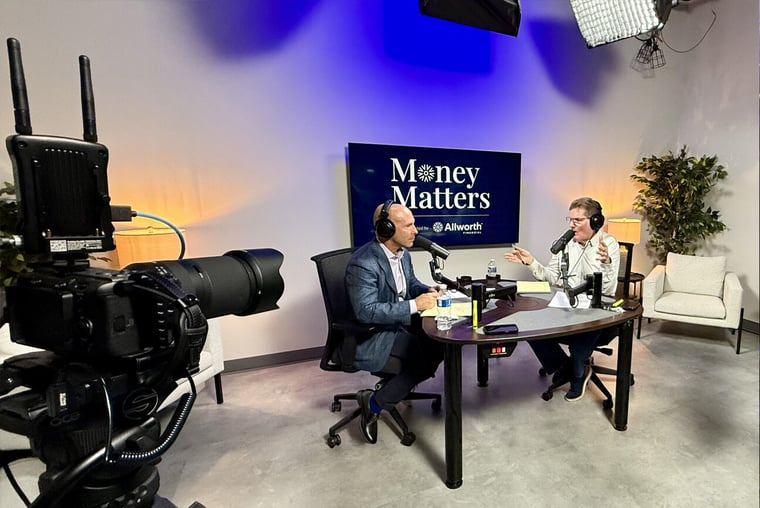
In this episode of Money Matters, Scott and Pat answer listener questions and explain when Roth conversions make sense, when they don’t, and how taxes, IRMAA Medicare surcharges, and market volatility can change retirement outcomes. They discuss strategic gifting to adult children, helping fund Roth IRAs, 401(k)s, and HSAs without killing motivation, and walk through a real call from a retired teacher debating whether converting his accounts is worth it. Along the way, Scott and Pat break down the math behind Roth conversions, explain how pensions and Social Security affect the results, and why paying conversion taxes from retirement accounts can wipe out the benefits. If you’re retired or nearing retirement and considering Roth conversions, this episode offers clear, practical guidance to avoid costly mistakes.
Join Money Matters: Get your most pressing financial questions answered by Allworth's co-founders Scott Hanson and Pat McClain live on-air! Call 833-99-WORTH. Or ask a question by clicking here. You can also be on the air by emailing Scott and Pat at questions@moneymatters.com.
Scott: Welcome to Allworth's "Money Matters". Scott Hanson.
Pat: Pat McClain.
Scott: Glad you are with us today. This is an exciting day for us, Pat, because we started this program almost 31 years ago, over 30 years ago, on the radio. Last week was our last week that we aired on terrestrial radio. We're now 100% podcasts. And what is great about that for us, for years, when you're at radio, there's four stops you'd have to do, middle of the hour, bottom of the hour...
Pat: A quarter of the hour, bottom of the hour, three quarters of the hour.
Scott: Yes. And on the post-strike, you had to hit it, right? So, you're talking to somebody and you're looking at the clock, you're talking to somebody, you're looking at the clock, you're trying to wrap it up because you gotta shut up at 45. And then remember, we cut a deal with the radio, say, "Look, we're only gonna do it at the bottom of the hour. So, no commercials at 15 and 45. Now, we don't have to worry about any of that.
Pat: I didn't notice it. That's why the clock doesn't count down.
Scott: Yeah, no countdown anymore.
Pat: Why do we have it at all?
Scott: Just to give us an idea how long we're talking, I guess, we start boring everybody. So, some weeks we might have podcasts that are 35 minutes, and others we might have some that are an hour and it depends on...
Pat: Sometimes we'll drone on for a lot longer.
Scott: Yeah. So, anyway, if you're listening, we're glad you're listening.
Pat: Thank you for listening.
Scott: I appreciate the... And we're recording this on Thursday, February the 5th. And I couldn't help but notice, the last week, there's been wild swings in Bitcoin and other of those tokens to the negative, and then gold and silver can on fire, and then blew up and back stabilization and...
Pat: Yeah, just to put it mildly.
Scott: Crazy.
Pat: Yes, yes. I gotta tell you, do you believe that because it's anonymous, and you don't have the regulations...
Scott: Who's anonymous?
Pat: Bitcoin's anonymous. That people are manipulating the market in cryptocurrencies?
Scott: Well, the smaller ones' easy to do.
Pat: Very easy to do.
Scott: Yes, of course. Of course, I believe that.
Pat: Yes. But even in Bitcoin, could groups of people be manipulating the market? Well, it's doing false flag trades, moving the share price up by selling back and forth to each other to move the price up, and then actually then liquidating at the top. Because if you see the history of it, it seems to be pretty consistent with these run ups and drop offs, run ups and drop offs. And if you were a regulated security, anytime you took more than a, what is it, 5% stake in it, you have to disclose the SEC. But none of this exists in these market prices.
Scott: That's correct. So, who knows how many people are... Who knows?
Pat: Right? I mean, it could be...
Scott: Maybe big players.
Pat: Well, people would say, "Well, they have their wallets," but one person could have more than one wallet. You could have 50 wallets or 100 wallets or 1,000 wallets. So, I was with my children this last weekend and I had this discussion with my boys because they used to play in this crypto, and I was saying, "Did anyone think that this could be happening?" "Well, we don't know." And you have no way of knowing, right?
Scott: We have no way of knowing what the ultimate value of crypto is going to be, bitcoin. I don't care the fact that there's supposedly some limited number of tokens. It doesn't mean it's of any value. I mean, at least, gold, silver, they're used in commercial applications.
Pat: Well, at the end of the day, gold and silver's price is based on the cost of what it takes to get out of the ground. You could argue with me all day long about it, but it's a commodity just like any other.
Scott: There might be a short-term blip...
Pat: Oh, correct.
Scott: ...because it takes a while to build mines and all that.
Pat: Yeah, and over time, it should keep up. But silver hit, you know...
Scott: By the way, we are broadcasting from... We're in the town of Folsom in Northern California, which is pretty much the heart of the gold rush. And you go outside here in the fields, you see the piles of stones where they turned up the soil.
Pat: They're tailings.
Scott: I don't know why I brought that up, just because we're talking about gold.
Pat: Yes. In fact, we have a conference room called the Gold Rush Room, so there you go.
Scott: But to your point, it all comes down to...
Pat: It comes to... Look, digital currency, I completely get it. For transnational payment systems, there is nothing more efficient. Yeah, nothing, right? But it's open for manipulation.
Scott: Well, there's obviously lots of different coins.
Pat: Oh, and the black market. Oh, the black market. And the stablecoin.
Scott: Well, the stablecoin makes some sense for international trade.
Pat: Oh, yes. And there are some stablecoins that are actually audited so that they actually hold something behind them. But it's been interesting. Silver is... You haven't seen things like this.
Scott: If I were an investor saying, I believe that this is, for example, stablecoins have a future, I would invest in those companies.
Pat: Like Coinbase, or...?
Scott: Not that I'm recommending any of that stuff.
Pat: That's right.
Scott: So, I'm just stating.
Pat: But we haven't seen fluctuations like this since the Hunt Brothers in the what? The '80s.
Scott: The silver market. Yes.
Pat: And the silver market's tried to corner the market.
Scott: The Hunt Brothers. That's exactly right.
Pat: The Hunt Brothers, yeah.
Scott: Late '70s, early '80s.
Pat: Not the same as the Ketchup family, different Hunts. Just to clarify.
Scott: Well, I mean, I look at... And we've been doing this so long. I just remember other times when gold's on fire. The clients never bring it up when gold's down. They bring it up when gold's had a big run up, "What do you think about gold?" And look, if you want to have a couple of percentage of your portfolio in gold, have a couple percentage of your portfolio in gold. But it doesn't produce anything. It's a pure speculative bet. And if your speculation is that this country is going to fall apart, that we're going to have civil war, and it's going to be regime change, and all that stuff, you better be a good leader with a lot of young people with a lot of guns. I mean, I hate to say it, gold's not going to be your solution if that comes to that.
Pat: Honestly, yeah. Food becomes more important.
Scott: So, I don't know. Anyway, let's take some calls because that's the best part of our show. So, we think so. And to join us, you can email us at questions@moneymatters.com. We're starting here with Todd. Todd, you're with Allworth's "Money Matters".
Todd: Hey, guys. How's it going?
Scott: Great.
Todd: So, I've been listening for several months and I always enjoy your banter.
Scott: Thank you.
Todd: So, I've got a couple questions today. I'll start out with the questions, then I'll kind of backfill the information as you need it.
Scott: Perfect.
Todd: So, my wife and I are in our 60s, and I've been mostly retired for about a year. And we've got three 20-something children. And the question I have is kind of philosophical about that. We call it strategic gifting. As they're getting started, we help them with Roth accounts, help them with 401(k)s, help them with HSAs accounts. And we do it so that we can, hopefully, maximize that, whatever those opportunities are for them. Because they can't do it on their own because of their income level right now. And for us, we have enough to retire on, so...
Scott: You mean their income's too low and so you're helping them?
Todd: Exactly, right. Right. They couldn't maximize those accounts, and the income is...
Scott: I get it. I get it. It's hard in your early 20s.
Todd: Exactly. And so, instead of kind of waiting to inherit stuff later, we say, "Well, this is strategic gifting." And we try to do it in a way that it's always an investment and there's always a tax advantage, potentially, if they can. And we try to pair it with financial education. So, my question about that activity is, what's your experience with clients when they do that with children in their 20s? And how much is too much of that? And, you know, like what are the pitfalls for doing those activities?
Scott: It runs the gamut.
Pat: It all depends on the child. I mean, I've seen it in the same family where, "Wow," and, "Wow, that's pretty exciting. This kid did incredible things with it. This person just did a terrible job."
Todd: Right. Well, as my dad would say, I've got one of each, so my three kids. Now, to their credit, they've all kept the money in the accounts. So, none of them have taken out money of the accounts, and they look at it as long-term money so far.
Pat: Okay. Well, I'd call that a success.
Scott: Yeah. I would as well.
Pat: I would call that a success.
Todd: Right. So, we're about two, three years into it. So, it looks like they're going to kind of hold fast and not take money out of the accounts to spend it on, you know, lifestyle stuff.
Pat: Okay. So, the...
Scott: And I like to think of it as matching their efforts. And I stole this line from somebody else, but it resonated well with me. Because my oldest daughter's 30, I've got kids, and I struggle with the same issues, but matching their efforts. And because you want... Money as a tool and it's a magnifier. And sometimes that tool can be used for great, beautiful things, and sometimes it can be used for disastrous things. And it's like the last thing you want to do is demotivate a child.
Todd: Exactly, yeah. That's what I'm worried about is trying to write that line of helping them and making sure that they understand the power of it, but not demotivating.
Pat: Well, I think you're a great job.
Scott: It sounds like a perfect way to do it.
Pat: Yes, yes. And so, one of the ways to think about it is, if the money goes into a Roth, right, it's pretty protected, right? They understand what the idea behind it is and that it's for the retirement. And the other thing that actually, I've done it with my kids, and I have had clients that have done it all the time, which is when it comes to the purchase of the first time home, is a loan to the child, typically 20% to qualify so that they get below the PMI payment mortgage insurance on a down payment. And then forgiveness of that loan on an annual basis based upon the gifting levels. So, you and your spouse can each...
Todd: Now, the issue is to figure out...
Pat: ...gift towards $18,000.
Scott: $38,000.
Pat: Is it $19,000 this year?
Scott: $19,000 a year.
Pat: Something like that, so $38,000. And actually, nephews and nieces where we're like, oh, okay, you've got the resources and you can use it, and then you charge a market rate. And you do have to have a loan agreement in place.
Todd: Yeah, I know how that works. I won't... You know, that's another story.
Scott: I mean, the good thing, Todd, you're in your 60s, right? So, you're relatively young. Odds are one of you are going to be alive in the 90s, maybe both you and your wife. So, you've got a lot of time here. And I like the fact that, I don't know what your net worth is, but it's not like you say, "Oh, kid, here's a million bucks, hopefully, you do well with it." You're helping them out on some very long-term financial investments, right? When you talk about the Roth and 401(k), those are really for their old age. And then as you see them progress in life, and if they seem like they're doing well, then you can do more and you can help them with the house. I mean, the reality is a lot of places, homes, they're so dang expensive that, you know, you got a kid living in San Jose or Silicon Valley, there's no way they could afford a house.
Pat: Even a small two bedroom, one bath.
Scott: Yeah, is more than a million dollars. So...
Todd: Oh, yeah, well, I think it's true in a lot of other markets, too.
Pat: Absolutely.
Scott: That's correct. Correct. But to me, it sounds like you're doing a good job. And if you worry about it, the first few years I actually was gifting my children, I got copies of their statements of their brokerage accounts.
Todd: What we do is when we do taxes with them, we go over their accounts.
Scott: Oh, perfect.
Todd: They show me the accounts, and I help them figure out how to monitor it. And one of them is using Monarch Money, you know, to look at her cash flows.
Scott: Perfect.
Todd: And she's got an Etsy business too, so that's kind of educational.
Pat: And what are their educations? Are they formally educated, your children?
Todd: Yeah, my oldest, political science major in college.
Pat: Oh, I'd watch for that. I'm joking.
Todd: Well, yeah, I know.
Pat: I'm joking. I'm joking.
Todd: We're working on the marketplace.
Pat: I'm joking.
Todd: My middle son's a union electrician. He's doing very well.
Scott: Perfect.
Todd: He didn't require any debt in that whole process.
Scott: Nice.
Todd: And my, my youngest is in college and she's in her senior year. And she's got a pretty good Etsy business going.
Pat: Oh, nice. Awesome, wow.
Todd: Kind of a nice surprise.
Pat: If you're open and...
Scott: She's got a little business in college making money.
Todd: Yeah, she's doing it much better than... She was profitable in the first year.
Scott: Oh, good. Good for her.
Todd: And legal.
Scott: That's wonderful.
Pat: And it's okay to sit down once a year with the kids, it sounds like you do, and have a family like, "This is what mom and dad have, and..."
Todd: We're kind of sitting, probably every three or four months. And it's almost to the point I have to be careful. I don't want to bug them too much, you know, because I don't want to make every conversation about money, you know.
Pat: Yeah. Well, it's okay to have some.
Scott: You know, I recall a story, Todd. This was years, I don't know, a long time ago, but it resonated with me. Because this gentleman, I think he was probably late 50s, 60s. We're doing his retirement plan and we're talking about his kids. He had three kids. Two were very responsible, had good career, saving. He's trying to help them. And then I'm like, "What about the other kid?" "Well, that one, he's somewhere in South America. We're not quite sure where he is today." And I said, "What do you mean?" He said, "Well, he'll work somewhere for three or four weeks, save up enough money so he can just travel around, and then he won't work for three or four months somewhere down in Latin America."
And they're telling me this story and I said, "Maybe he's the one who's got this figured out. We're all working our butts off, planning all this complexity, and he's just enjoying life." But the reality is you have three kids, they're all going to be different. And some families are really careful about making sure whatever dollar amount they give to one kid, give it the same amount. And if they give one kid a certain amount in one year, they'll keep track of inflation to make sure that they give the next kid the same amount. Some people do. Other people are like, "Well, this kid needs more than the other, so I'm going to help this person in a different way."
Todd: We're staying roughly equal.
Scott: But it's your choice how you want to handle all that.
Todd: Exactly.
Pat: But the reality, if you're sitting down with them once or twice a year and going over the finances and you're pretty open with it... And look, you know, I have found that the ones that it works best with, this is based on my experience with my clients, is the kids that actually understand that this money didn't land on mom and dad. That mom and dad actually worked for this money, and that it was important to mom and dad, all right?
Todd: Oh, yeah. They understand that because I'm a first generation college graduate, and they know all that story.
Pat: Yeah, perfect.
Todd: And my wife and I both paid for college.
Pat: Perfect, perfect, perfect. And you paid for a lot more college. You paid for three more college degrees as well.
Scott: One's an electrician.
Pat: Oh, one's an electrician. Anyway.
Scott: Making more than the others.
Todd: He paid for his.
Pat: Anyway, appreciate the call.
Together: All right. Thanks, Todd.
Scott: Everyone looks a little bit differently.
Pat: Yeah. I've seen them where kids inherit money and one invested it all and the other was gone in six months.
Scott: My wife and I typically, once a year, we do a cycling vacation. On our 10 year anniversary, we took a trip with a company that does active travel. And we said, "Let's try to do one a year." And that's what we've pretty much done for the last...we've been married now 33 years, so you can do the math. I mean, this trip we're on two years ago, there was a family that their kids were probably, I don't know, 15 and 18, somewhere right in there. And he was telling me that... And he hadn't worked for years. He came from something. Like, his early twenties, the family business was sold and he hasn't really had a job since.
When his grandpa died, he left all those grandkids a trust so that when they reached age 23, they'd get a million bucks or $2 million, I mean, I think it was $2 million. But his kids were born after grandpa died and weren't included. And he said to me, I'm glad they're not receiving it. And I said, "Really?" So, he said, yeah. He says for some of the grandkids, it's been a blessing, but he says... And then he starts naming this kid and this kid like, "Doesn't do anything. All he does is surf all the time. Has no career motivation whatsoever because he's thinks he has plenty of money." It was just interesting the fact that he's like, "I'm glad my kids aren't getting 2 million bucks."
Pat: Because the roll of the dice said it could have ruined one of their lives, in which case, it wasn't worth it.
Scott: Well, you have enough kids.
Pat: Scott, I had this friend in high school and college that got a settlement because he lost an eye in a BB gun accident. And he was so much fun to hang out with till the money ran out.
Scott: Until the money ran out. Then you weren't friends anymore?
Pat: No. I would see him tangentially, but he was always having big parties and it was great.
Scott: Until the money ran out. All right, let's continue on. We're talking with Max. Max, you're with Allworth's "Money Matters".
Max: Hey, good morning. It's great to speak to you.
Pat: Well, thank you.
Scott: Yeah, thank you.
Max: Before we start, I just wanted to thank Bob Brinker, Jonathan Pond, Tom Sullivan, and especially Dave Ramsey and Pat and Scott.
Pat: Well, thank you. I'm glad we made that list.
Scott: Thank you. We're all in the list.
Max: For the wisdom and education and motivation that you changed my life.
Pat: Oh, well, thank you. Thank you.
Max: Because of you, I think I made some really good decisions. And my question today is regarding Roth conversions. I think I want to convert all my retirement accounts to Roth ASAP. Thinking to go to the top of the 24% bracket. I have all my numbers for you.
Scott: All right. How old are you?
Max: Because I'm 65. I'm married. I'm a retired teacher. My wife is a retired state worker and she's 61. I have two adult children. No debt except my house. And I have all the other numbers for you if you're ready.
Scott: And you mentioned Tom Sullivan, so I'm guessing you live in Sacramento region.
Max: That is correct.
Scott: And do you plan on staying in California the rest of your life?
Max: I think so. It'll depend a little bit on what happens with my kids.
Scott: How old are your kids?
Max: One is 25 and one is 21.
Scott: And are they still in California?
Max: They are. They're still in my house.
Scott: You know, it's funny, my older two kids both live outside the state and both have plans to come back to California.
Max: Well, I don't think my wife and I could ever agree on a place to move to. So, she wants tropical, I want Utah. I don't think we'll ever agree. So, we'll probably die here.
Pat: Okay. So, what's your family income?
Max: So, I was looking at that. I have two pensions, Social Security, and I'm doing some subbing still at the district. And my wife gets PERS and she's going to start Social Security when she turns 62 in May. So, our total monthly income at that point should be about $15,744.
Pat: Okay. And how much money do you have in IRAs?
Max: I have a total rollover IRAs between me and my wife, we have $647,677, and total in Roth is $398,300.
Scott: And what do you have outside?
Pat: And in brokerage accounts and cash? That's still...
Max: Well, that's very low. I have $3,000 in emergency fund and about $3,000 in my checking account. That's it.
Pat: And are you living comfortably on the $180?
Max: Yes, I've never... I've only made one distribution, and that was to buy a truck from my Roth.
Pat: Got it.
Max: Other than that, we're living on our income without touching the retirement account.
Scott: And the money you took for the truck, did you pull it out of your traditional or your Roth account?
Max: My Roth, because I didn't want to mess around with taxes for that.
Scott: At the time you did it.
Max: And the funny... Well, anyway, so my question is, how do I do this?
Scott: Well...
Max: How do I pay the taxes? How do I move forward?
Scott: Yeah, the challenge you have is you don't have a lot of money outside of retirement accounts. So, in order to pay the tax on a conversion, you're going to have to withdraw extra, right? So, if you're going to convert $20 grand, you're going to have to pull out $30 grand, right?
Max: Yeah, I understand.
Pat: So, you think about it, it's for naught.
Scott: Why do you state that?
Pat: Well, because look, if you take $30,000, right? And I invested for 10 years and it grows at 7.2%, if tax rates don't change...
Scott: It's irrelevant what you do.
Pat: Thank you. Thank you. I was going to go through the math, but you're more succinct, which is the numbers the same on an after-tax basis, whether you do a Roth or an IRA. The only benefit of doing the Roth IRA is when you pay the tax from an outside source, not the IRA itself. If tax rates, this is what the premise of tax rates. But here's the thing, Scott, that comes into this is, well, what happens if when Required Minimum Distributions come out, you actually start doing Qualified Charitable Distributions out of your Required Minimum Distribution. There's no more tax advantage ways of giving money to a charity than a Qualified Charitable Distribution.
Scott: If that was your intent.
Pat: Well, I'm going to ask him, is it your intent to give any money to charities?
Max: It's not clear to me to do that.
Pat: And then the other is, if your children end up in a lower tax bracket than you do and they inherit the money, or they live in a state that has no income tax and they inherit the money, then the advantages is to keep the money in an IRA. I could not think of a compelling reason for you to actually convert to a Roth IRA.
Scott: Well, yeah, you can if he believes tax rates are going to go up.
Pat: And he's going to pay, and/or...
Scott: If you had the money outside, if you had a substantial amount and savings, brokerage account, that sort of thing in order to pay the tax and the conversion, it makes a lot more sense than having to pull the additional money out of the IRA to pay for the thing.
Max: Well, what I've been doing, I bumped up my withholding quite a bit on all of our income to try to cover some of that. And then I...
Scott: Why would you want to do that?
Pat: Wait, wait, wait. So, so, so...
Max: And I believe I'm going to have a bit of a...we're going to inherit a little bit of money.
Pat: Okay. Well, that would be the time.
Max: Okay. Well, that could be this year.
Pat: Okay. That would be the...
Scott: I don't know if I... So, the risk in your situation here, if I look at it from a plan, I mean, you're in great shape because of your pensions, right, your pensions, Social Security, but it's inflation that's the concern, right? So, those pensions 20 years from now aren't going to have as much purchasing power as they do today. That's where your a little over a million bucks sitting in retirement accounts can help with that. But by having additional withholdings to pay for a Roth conversion, you are essentially sacrificing current lifestyle today, which maybe that's what you want to do.
Pat: I wouldn't.
Max: Well I...
Scott: You're 60.
Max: I guess my response is that I'm pretty happy with my lifestyle.
Scott: Maybe you're going to live till 90, maybe you won't, right? Like, I mean, you're retired.
Pat: What's your response?
Max: Oh, I was saying that I'm pretty happy with my lifestyle.
Pat: Okay. Well, then look at that. I wouldn't... Look, if you inherited a couple hundred thousand dollars, and you had the ability to pay for the tax...
Scott: Then it's a good time to do it.
Pat: ...on the Roth conversion from outside, right, from a third party, from an outside source, not in an IRA or a Roth IRA, then it's a good time to do it. But unless we thought the tax rates were going to go up appreciably. And they may or may not in the state of California. I mean, you know, who knows? Or in any other state for that matter. I mean, even...
Max: The things that I'm thinking about that I'm not really sure that, and I've been listening to you guys forever, that you've ever really addressed is, in the IRA, I'm paying taxes when I withdraw, but I'm also paying taxes on all my earnings. And every day I earn, you know, I've been earning money, and that's more going to taxes. And that's why I feel like I should go to the Roth as soon as possible. What I did find out, as I'm looking into this, is IRMAA, MAGI, and I think I'm losing my temporary senior deduction that Donald gave me. So, I don't know what your response is.
Pat: All of those...
Scott: But the Roth conversion is just going to bump that up and make your IRMAA worse.
Max: That's what I'm talking about. That's what I'm talking about.
Pat: Yeah, understand. So, there isn't... We're not talking about a $5 million IRA, right?
Scott: With a ticking time bomb on the Required Minimum Distribution. That's not what we're referring.
Pat: We're not talking about that. And so, at $647,000, you don't have to start Required Minimum Distributions until you're 75. You've got 10 plus years, 10 years in there. There's no tax... Unless we think tax rates are going to go up appreciably, there's no benefit. Because, look, if...
Scott: I'll go through the math.
Pat: Unless, but if you believe income taxes in the structure we have today are going to go up considerably for someone at this income level, then it makes sense to convert, I think. But when you balance all the... We don't know, nobody knows what the future is going to bring. We do know that our system is not sustainable. The U.S. government can't print money forever. We can't. The subsidies, the direct transfers, they can't continue forever. At some point in time, something's gonna give, right? Can't pay off as many benefits, something's gonna give. And whether that's gonna cause tax rates, income tax rates to rise, that's one thing I don't know. There could be a number of other taxes. Scott, would you do it?
Scott: No, I wouldn't do it.
Pat: Yeah, I wouldn't do it. So, I'm gonna go through...
Scott: Just to be clear, I wouldn't even... Because you can build a financial model and it's all based on assumptions and the assumptions, you can build it to state whatever you want. If I were in your position, I would not do it.
Pat: Yeah, and let's just quickly do the math, right, can we? If I have $100 in an IRA and it grows at 7.2% for 10 years, at the end of 10 years, I have $200. I'm in a 30% tax bracket. Let's say state and federal, just gonna throw that out there. I take that $200 out of the IRA, how much do I have after taxes? $140, right?
Scott: Thirty percent getting into taxes.
Pat: Thirty percent goes to taxes. I today say, "Well, I'm gonna move it into a Roth IRA. So, I have $100 and I move it to a Roth IRA and I'm in a 30% tax bracket, how much did I move in to the IRA to the Roth IRA? I moved in $70."
Scott: Because you had to pay 30%to taxes.
Pat: "If it grows at 7.2% for 10 years, how much money do I have at the end of 10 years?"
Scott: $140.
Pat: $140. Tax-free, tight?
Scott: Same number.
Pat: It's the same number, right? So, whether you pay the tax on the beginning to the end, the idea of this Roth conversion really only works efficiently if you pay the tax with outside money. So, when and if you inherit money, that is the time to actually address.
Scott: And further, the tax brackets, your largest income comes from pensions. Do you have any cost of living adjustment on those?
Pat: He's got a PERS pension in there.
Max: I do. I have a 2%...
Scott: Two percent.
Max: ...on the STRS, automatic 2%, and then the PERS one, it adjusts. But they both have cost of living.
Scott: I mean, the tax rates are going to rise based upon CPI under the current structure.
Max: And also, based on listening to you guys and believing that things are only going to get worse, I took my Social Security at 62, and my wife's going to take hers at 62 also. Because we're fat cats.
Pat: If you wanted to convert some now, convert some if it makes feel better.
Pat: You have converted. You're already in pretty good position.
Scott: Yeah, you've got it well-balanced.
Max: The thing I'm just finding out is that I get dinged in different ways.
Scott: That's exactly. So, you got to run the numbers, right? And there's programs out there that can do what ifs. You can play what if scenarios. So, like our advisors, we have tools that we, literally, take someone's tax return, we upload it into the software system, and then we can do what if scenarios. Like, "All right, what if we converted 40,000? How's that going to impact our taxes this year?"
Pat: I'd wait.
Scott: "What's it going to look like in the future? What's houses going to impact? Are we going to have phase out of our deductions? Where else are we going to get hit?" Because there's phase outs. There's lots of phase outs.
Pat: How much money do you think you'll inherit?
Max: I think it's going to be probably around $200,000 or a little more, maybe.
Pat: Wait till then. Wait till then. Wait till then.
Max: But if I could get to...
Scott: Because if you can use outside money to pay the taxes, it makes a difference. huge difference.
Pat: A I would wait. I would wait. In fact, at that point in time, I don't see a reason you wouldn't do it.
Max: Okay. That's a good use of those funds?
Pat: Oh, yes. Absolutely.
Scott: I would agree with Pat on that.
Pat: I would wait, and at that point in time...
Scott: The thing that's a big no to us is there's not a lot in cash to pay the tax.
Pat: Yeah, you could do it, but it's for naught.
Max: I think I understand.
Scott: All right. Well, I appreciate the call, Max.
Pat: Thanks for...
Scott: And it's all based upon the future that none of us know what the future is going to bring. Yes.
Pat: And if you notice, we are no longer on the air in Sacramento.
Scott: I'm glad you're listening to us on the podcast.
Pat: So, listen to us on the podcast.
Scott: Interesting though, as we're talking about... We're in California. And I think this has now become a national news of this proposition to have a one-time wealth tax on billionaires.
Pat: Oh, yes. One time.
Scott: What I find fascinating about this is, are they going to be able to put the genie back in the bottle, so to speak? Because we're seeing some billionaires have already left. And some people probably think, "Good riddance. We don't like you anyway." Well, okay.
Pat: Well, they paid 40% of the tax.
Scott: The top 1% pay 40%.
Pat: The top 1% of California earners pay 40% of the state income tax.
Scott: Top 1%. Yes. And just based upon the number of the billionaires that have left already, we can already have a hit. But now that this is in discussion and Elizabeth Warren had brought it up years ago when she was running a wealth tax, I think at 50 million. And other European countries have attempted this and most of them have retracted. I think there's one or two that still have this wealth tax. The interesting thing about this, if they start at a billionaire for billionaires, it's soon down to those with 100 million, then 50 million, then 10 million, then 5 million, then a million, then... Right? That's a slippery slope.
Pat: Yes. The difference between federal government and state income tax is that billionaires are highly mobile with their capital, highly. as we have seen.
Scott: That's because buying a $5 million house in Austin or in Florida is no big deal.
Pat: Up in Incline, one of the Google's guys just bought a $48 million house in Incline. And I thought, "I wonder if he even looked at it." Do you think he actually even walked through it? Did he send a team? Did Sergey Brin just send a team?
Scott: He sent a team.
Pat: I wonder if he even saw the house before they bought it.
Scott: Well, the challenge like the Google founders, Alphabet founders, the way this thing's written, it's not based upon the market value of the securities that you own, it's what you have voting rights over.
Pat: Which is, so there's classes of shares. And they've got them...
Scott: And they've got huge voting rights. And so, literally, it could bankrupt. Paying them a 5% surtax could wipe them out.
Pat: Because of the amount of capital they control, not the amount of capital that they actually have.
Scott: Yeah. But it's interesting when you look at... It's an interesting political environment right now in a lot of states. And we're starting to see some of the wastes. And regardless of what aisle you're on the political side, I think a lot of people now, there's been this kind of flashlight into this amount of government waste. And a lot of these tech people have been very large Democratic supporters. And they're all kind of saying, "Wait a minute, why are we gonna continue to raise revenue? Why don't we clean up our books here?" They're all business people. They know how to manage expenses. And I'm thinking, "Why are we wasting all these dollars?" We've had people that have supported these causes a few years ago that are now stating, it's time for something to change. I just find it interesting. And you look at California and you look at some of these people that are leaving, and you wonder if it's just like... It's so hard to do things in California that... It's just kind of rung the dinner belt to enough people like, "I've had enough here." And it'll create a spiraling effect on the state.
Pat: Oh, yes. Which means...
Scott: I mean, the pension obligations we have, we're in debt. There's no way we're gonna get back into a positive. We're not gonna get a budget surplus without cutting a lot of expenses in the state.
Pat: If people that are making the payments leave, it's like your client base left, but the expenses still sit there.
Scott: And continue to grow.
Pat: Yes. It's interesting. Well, in many businesses, there's inefficiencies. And obviously, the government agencies that need to act on actually measure key performance indicators better for dollar in, dollar out. So, every charity I've ever sat on, charities have a tendency to bloat themselves as well. And every board I've ever sat on and there's a charity, I say, "Well, let's start with our key performance indicators. What are we doing?"
Scott: You know, it's funny.
Pat: What's the objective and what's it costing us per... You know, the Sacramento Food Bank, we measured every dollar, what it costs per pound of food, and what type of food was actually being delivered to figure out whether we were actually efficient or inefficient.
Scott: I was on a board call this morning. I'm being interviewed to this board, a large organization.
Pat: Are you on the board?
Scott: No. I'm a candidate.
Pat: Congratulations, buddy.
Scott: They asked why I'm interested. I said, "I don't really know if I am," in so many words. Like, it's a big responsibility. It's a very large organization. And one of the questions that they brought to me is, how would I manage the tension in the marketplace? The bottom line is the bottom line. It's pretty easy. You've got money to measure whether you're successful or not, right?
Pat: In a business.
Scott: In the marketplace. A business, either your customer likes your product and service and they pay you and you make enough margin, you're making some money, or they don't, and you eventually fold and go out of business. So, they said, "How do you think about this in a nonprofit?" And to your point, Pat, it was, what are those KPIs? I said, "We need to measure. I don't care what we're doing. If we're heading down a path, what are we trying to accomplish? And what are those steps that we're going to take to achieve that objective?" And it doesn't matter what we're doing, there's always some sort of measurements on our activity. Because we can't measure that activity, then what's the point? How in the world do we know if we're successful or not?
Pat: Yeah, because the inputs could go on forever.
Scott: Which is the problem with so many government programs.
Pat: Right. That's correct. And look, the problem we have talking about this on the show is that we come off as fat cats. Like, "Ah, you guys don't care."
Scott: I moved to Sacramento, Pat. I moved to Sacramento in 1991. I rented a bedroom out of this house for 300 bucks a month. There were months I did... And I was a "financial planner" at the time. But this is the path I wanted to go down. Like, I saw a future here. I thought, "I think I can make a difference in people's lives in this particular industry." There were months I didn't have the 300 bucks to pay the rent, and I had to get cash advance on my credit card to make it happen. So, yeah, maybe it's okay today, and I can go out and spend 300 bucks on dinner with my wife and not worry about it, but I clearly remember being very broke. I wasn't going to starve in the United States. I could always go to the Sacramento Food Bank if I needed a meal.
Pat: But now that you have it, right, your capital is mobile. And in the states that get into this problem. I mean, look at the exodus out of Northeastern high tax states into Florida, it's staggering. It's mind boggling. And a lot of that is driven by weather.
Scott: Yes, "Gee, I haven't seen the sun in three months."
Pat: Weather and tax rates. Anyway.
Scott: Hey, I want to let everyone know about our February webinar that we've coming up. The title of it is Strategic Moves for Volatile Markets. Seems kind of timely. And I'm going to be hosting along with Victoria Bogner, who's Allworth's head of wealth planning. And it's really designed for those that have a portfolio of $2 million or more. If you're fortunate enough to be retired with these large pensions and don't have as much, you've got a huge net worth, but it's not necessarily liquid type. So, this is really for people with portfolios of $2 million or more.
And I think some of the things you'll learn, it's about a 45-minute webinar, but you're going to learn how tactical Roth conversion strategies, which we talked about earlier, how it can turn down markets into long-term tax advantages. So, there's an opportunity there. Portfolio retirement techniques to help reduce downside exposure and uncover some hidden risks. Some smarter diversification tactics for today's ever-shifting market environment, and some liquidity planning, and really some behavioral guardrails that support decision-making when you're under pressure. So, those are the things we're going to... All in 45 minutes.
Pat: Well, but Scott, a lot of the people that listen to our program like to do it themselves.
Scott: I get it.
Pat: I would encourage all of those people to attend this.
Scott: Absolutely.
Pat: Because you don't know what you don't know, and especially a downside protection and tax loss harvesting and putting those in the bank to carry forward. Oh, they're beautiful. And many people don't do it because they're like, "Well, what's the point? But if you could tax loss harvest and you've got this..."
Scott: Particularly, if you know you're... Every situation is different.
Pat: That's okay. Fair enough.
Scott: But so, this is our Strategic Moves for Volatile Markets webinar, February 11th, February 14th, February 19th, and February 21st. That's when it's happening. You're going to sign up at alworthfinancial.com/workshops. And consider we don't have a radio telling us when we have to end, when we don't have to end, I think we're going to wrap things up today. So, if you find this program helpful or useful, a couple of things, one, forward it to somebody in your life that you think about.
And look, like you said, Pat, a lot of our listeners do it on their own, and they spend a lot of time educating themselves and they're knowledgeable and they're wise and they make good choices for themselves. And if that's you, great, and we appreciate you listening, but there's probably people in your life that you love dearly that don't have the financial acumen you have that could benefit from this program. So, if you can think of a name or two, forward them, whether it's this episode or one that you think that's germane to their situation. We would appreciate it. And also, make sure you follow us wherever you get your podcast. If you just hit the follow button, you get it delivered automatically. And if you're there, if you haven't given us a rating, give us a rating as well. So, that's all the time we've got. This has been Scott Hanson and Pat McClain of Allworth's "Money Matters".
Automated Voice: This program has been brought to you by Allworth Financial, a registered investment advisory firm. Any ideas presented during this program are not intended to provide specific financial advice. You should consult your own financial advisor, tax consultant, or a state-planning attorney to conduct your own due diligence.
Insights for Complex Wealth Decisions
Join our email list for exclusive commentary from our Chief Investment Officer, early access to expert-led webinars, and your complimentary Wealth Planning Checklist for Complex Portfolios.
We take your privacy seriously and respect your privacy choices. By submitting this information you agree to our Terms of Use Agreement, Privacy Policy, and to receive important notices and other communications electronically.