
Money Strategy, Roth Questions, Tax Brackets, and Solving a 35 Investment Account Mess
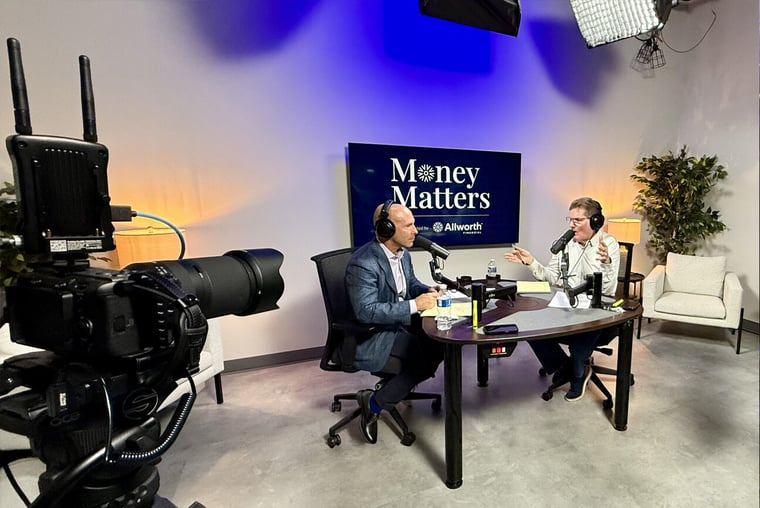
In this episode of Money Matters, Scott and Pat talk with listeners about decisions around Roth conversions, tax brackets, gifting to kids, and when to start taking money from retirement accounts. One caller is trying to figure out how to simplify things after working with five different advisors. Another wants to use savings to travel without getting pushed into a higher tax bracket. Plus, Allworth’s Head of Wealth Planning, Victoria Bogner, joins the show to share a case where someone had 35 investment accounts—and how the team helped clean it up. It’s a good reminder that sometimes the best financial move is just getting organized.
Join Money Matters: Get your most pressing financial questions answered by Allworth's co-founders Scott Hanson and Pat McClain live on-air! Call 833-99-WORTH. Or ask a question by clicking here. You can also be on the air by emailing Scott and Pat at questions@moneymatters.com.
Scott: Welcome to Allworth's "Money Matters". Scott Hanson.
Pat: Pat McClain. Thanks for joining us.
Scott: Yeah, we are glad to be with you talking about financial matters as...
Pat: You know what I did this week, Scott? I took some of my own advice and I did my Roth rollovers, my non-qualified this week for both '25 and '26. And then...
Scott: You did it or your wife did it for you?
Pat: I did it.
Scott: Oh, look at you.
Pat: I sent an email to my client service representative at Allworth Financial and said, "Hey, can you do this?"
Scott: This is the concept of if you don't have any other IRAs...
Pat: Other than Roth IRAs.
Scott: If you don't have other...and you can't qualify for making a Roth contribution, you contribute to a non-deductible IRA, and then you immediately convert that to a Roth IRA.
Pat: That's correct.
Scott: And because you didn't take the tax deduction, the money that you put into the IRA has already been taxed, and so therefore, when you convert it to a Roth, it doesn't trigger any additional tax bill.
Pat: Up to your 100% of your earned income, not to exceed the maximum. I point that out because my daughter had been doing it for years, and then when she went to law school...
Scott: Oopsies.
Pat: ...she can't do it. I think under my advice, maybe, I had forgotten she didn't have income, and then she did it and we had to back it out.
Scott: Oh, in one particular year.
Pat: Yeah.
Scott: But I do it and I think... I've done it, but it's very funny. I was almost wondering if it was worth the hassle.
Pat: You know, I did it this year, but then I realized...
Scott: And the reason you did... So, Pat did it for the calendar year of 2025 and calendar year 2026, which he has up to April 15th to make a contribution for 2025, convert the due. And then you don't have to worry about doing this next year. You do it every two years.
Pat: Every two years, yes.
Scott: In the springtime.
Pat: That's right. That's right.
Scott: As you're doing the planting, the garden, doing the spring cleaning, and you do the Roth stuff.
Pat: And then checked our insurance limits. We balanced the portfolios. And then I was asking my wife about subscriptions, like, what do we...? And we realized that they had moved some of the subscriptions up, the price on them up.
Scott: You're kidding. I had no idea they would do such a thing.
Pat: They just do it. They just do it. I had to get on the phone and tell them, I told the machine I want to cancel, and miraculously, someone talked to me and they said... It was quite funny. I was actually traveling with my kids in the car and I had them on the speakerphone. I'm going to get this done while I'm driving. And the lady said, "Well, we can move it to $24.95." And I said, "Well, that's just way too much money. I don't want to spend more than $4.95 a month." And she said, "I'm going to put you on hold. I'm going to check with my team." This is for a newspaper subscription. They have a huge team, apparently, they run by.
Scott: "Hey, let's gather up. Pat McClain's on the phone. He doesn't want to pay 25 bucks a month. Should we allow him to do it for $5?"
Pat: For $4.95. I used the same numbers. And then she came back and I said to her, "What did the team decide?" And she said, "The team decided that we're going to let you have it for $9.95." And I said, "Well, perfect. Thank you."
Scott: She just put you on hold for a minute. She's highly trained.
Pat: I know.
Scott: Keep the customer at all costs. It's just a digital subscription, right?
Pat: Yes.
Scott: So, zero cost to them.
Pat: That's right.
Scott: So, any revenue is better than no revenue. Fifty cents a month would be better than nothing.
Pat: That's right. That all goes to the bottom line.
Scott: And now, you just shared across our whole listenership how to get a discount on their newspaper.
Pat: Well, remember to thank the team.
Scott: I have a feeling I know which newspaper it is. I don't think it's "The Wall Street Journal".
Pat: No. But anyway. Anyway. And the reason I mentioned that out is because it's early in the year and we have mentioned this and I try to get through all this stuff.
Scott: It is time. Like, if you've got a 401(k), you want to max it out.
Pat: Oh, I did. I increased my contribution because there's an increase in contribution.
Scott: Max up the 401(k).
Pat: My pay didn't go up. But...
Scott: You didn't get a merit increase?
Pat: No.
Scott: I got the same merit increase as the year prior and the year before that, too.
Pat: No merit increase for Pat or Scott. The team decided.
Scott: The team. But those sort of things, the FSA, if you qualify for that, any of those, HSAs.
Pat: Yeah. But I had to set a deadline for myself because I've lived with myself a lot of years, and if I don't have a deadline, I will not get it done, so rather than wait until February or March.
Scott: Yeah. And we've talked about this recently, but it was interesting. This has to do with Social Security. And I think if you've been a listener to this program for a while, you know that our thoughts are, if you've done a great job savings, you in a retirement with substantially more money than the average American, there's a chance that there'll be a reduction of benefits to you in the future.
Pat: Yes, because their choices are limited.
Scott: Yeah. And this next election cycle, the senators that are being elected are going to be forced to deal with this. That's how quickly it's coming. Seven years from now or so, the Social Security trust fund becomes insolvent. And currently there's an across the board reduction in benefits of 20 some odd percent.
Pat: Which you can say, it's never going to happen, and you'd be right. The reason is, it's a welfare program. It wasn't designed to be a welfare program, but it has become a welfare program, which means, what you put in and what you get out don't have to align. And so, the new group that's coming in, the Congressman, they have to.
Scott: Senate.
Pat: Oh, I'm sorry. They have to. They have to. And so, we talk about a time...
Scott: It'll be interesting.
Pat: All the time.
Scott: There's a good article in the...somewhere.
Pat: "The Wall Street Journal".
Scott: Yeah, beginning of the year. It just talks about... And a variety of different senators were weighing in and, like, everything's going to have to be on the table, increasing payroll tax, which right now, it's $180,000 some a year.
Pat: But remember they...
Scott: The benefits are capped.
Pat: Yeah, but the benefits were kept on Medicare taxes years ago and they made those.
Scott: There's no cap on that.
Pat: Yeah, Medicare. That's right, there's no cap on that. And it used to have a cap on it, though.
Scott: And I would argue that Medicare is now means tested.
Pat: Correct.
Scott: In that the higher your income is, the more you have to pay for your part B.
Pat: Means testing, yes. It's not same benefit across the board. So, if you're applying for Social Security, if you don't need the money, take Social Security because it's the benefit that if you don't need, you're the one most likely to lose.
Scott: Average Americans should wait till age 70, your typical American.
Pat: But that's exactly the opposite of really how it works. If you look at the statistics, the people that don't need it typically wait longer because they look at the economics, and it's not just driven by economics, it's driven by policy.
Scott: Right. That's exactly right. And you're making a bet on policy. We all are if we delay our Social Security. So, anyway, it'll be interesting to see what happens, and we'll look at it as time goes on. We're going to take some calls here, but if you want to be part of our program, we love taking our calls and questions from you, our listeners. To join us, send us an email, questions@moneymatters.com, again, questions@moneymatters.com. Or you can call 833-99-WORTH, and we'll get you scheduled on. But let's start in California talking with Susan. Susan, you're with Allworth's "Money Matters".
Susan: Hello.
Scott: Hi, Susan.
Susan: Hi, Scott and Pat.
Scott: Hi.
Susan: Thanks for taking my call. Love the program.
Scott: Thank you.
Susan: Whether it's podcasty or whatever. Okay. So, I don't hear a lot of talk about this kind of stuff because there's a lot about saving up for retirement. There's kind of... But I'm looking at seeing if I have any good ideas about tax efficiency now that we just recently completely retired. And we had partially retired, but still had money coming in all the time, and then we augmented the part-time, and now, we're completely done. So, now, I think about this more. And I'm...
Scott: How old are you guys?
Susan: We're both 69.
Scott: Okay.
Susan: And I'm also factoring in this go-go, slow-go, and no-go aspect, too, because this is the whole thing. Okay. So, we will... Do you want me to give the details things first?
Scott: Yes.
Pat: Sure, please.
Susan: Okay. So, we will have $110,000 annual income, of which $2,600 is pensions, and $6,300 is Social Security. It's your lump of stuff together. And then we have a little bit of stuff that comes in and that's what makes it to $110,000. We are going down in tax bracket from where we were, which is nice. Currently, we're living just on stuff we had saved up and that kind of thing. So, this year, we're only going to be about $93,000. And then because I started taking my Social Security, I got my first check in April. And so, anyway, so that's where we're at with that. So...
Pat: How much money do you have in IRAs?
Susan: Well, all those kind of things, 403(b)s, all that junk, about $1.2.
Pat: And how about brokerage accounts?
Susan: Zero. I don't even have a brokerage account. That's part of this question.
Scott: All right. And then...
Pat: How about savings? Cash in the bank.
Susan: Savings about $100, about half in cash and half in I-Bond, CD, you know, savings accounts.
Pat: So, the $110,000 in income is made up of Social Security and pension income. Is that correct? And you said a little bit...
Susan: Yes, and a little bit of... Yeah.
Pat: And a little bit of what?
Susan: We're in a real estate group that we've been in for a while. I don't know what it's called. It's a private thing. And anyway, we get about 300 bucks a month from them on a quarterly basis.
Scott: Okay. And what's your question for us?
Susan: Okay. So, these are the...
Scott: And your home is paid for, I'm assuming?
Susan: Yes, our home is paid for. We have no debt. So, some of the ideas I was wondering about... Because right now, we're traveling and that's why we only have $100,000. Anyway, but we're having a good time. Every year, we should, at least, pull out enough from our $1.2 thing to come up to the end of the 12% tax bracket.
Pat: Yeah, you're right about there. I think you're going the right direction. When you said, "Take the money out," I would convert it to a Roth IRA.
Scott: No, I would disagree with that.
Pat: Why?
Scott: Because...
Pat: Would she spend it?
Scott: Yeah, I think you should spend it.
Pat: Oh, that's a good point. I mean you're talking about traveling.
Susan: And also... Yeah.
Pat: You're just retired. You're 69. I mean, what would not make sense is saying, "Oh, let's defer that trip till next year. Let's defer that trip to 2026. Let's defer that trip to 2027." And it won't And it won't be that much, 20 or 30...
Scott: Correct.
Pat: Yeah, well, that's a lot of money. I don't want to...
Scott: No, no, but if you took it... Let's say you started with a 3% withdrawal on this.
Pat: And started spending it.
Scott: Yeah.
Pat: I'd be okay with that. We're getting to the same place. The Roth conversion...
Scott: I mean, if you were my older sister, that's exactly what I would tell you to do.
Susan: Okay. I have...
Scott: Either that, or you just let your retirement accounts continue to grow until then you have Required Minimum Distributions.
Pat: But then that's when you would do a Roth conversion for a little bit.
Susan: Yeah, but that also means I'm not go-going. I might be into slow-going, but then, I mean, obviously, it's only four years away, but...
Pat: No, that's right, that's right. That's Scott's point exactly, which is, start the distribution and spend it.
Scott: Look, even if you said we want to do extra travel in the next 24 months or whatever the timeframe is, and we want to spend a little more than we typically would, I have no problem with that either. I mean, you save these dollars for this stage of your life. The reality is...
Pat: You're here.
Scott: Yeah, we're here. You're 69. I mean, odds are, at least, one of you is going to be alive into the 90s if not both. Statistically, at least, one of you will be alive in their 90s, so we need to make sure we have income for that. But you've got Social Security and pension and you've got quite a bit saved relative to the amount of income you already have coming in.
Pat: And by the way, it's the pension income that makes you comfortable saying, spend this.
Susan: Sure, because it's like that net, whatever, present value that I learned from you guys, too.
Scott: That's right, yeah. And the Social Security.
Susan: But can I ask you my quick four things so that... Because what my plan was, was to not go into the 22% tax bracket very much because I don't like to do that. I'd rather do other things like...
Scott: Well, you're going to be in a 20% in a couple years now, you'll be forced to be in that bracket, and then the rates are going to...
Susan: Exactly. That's why I thought it's good now to take some out because, at least, it'll be a little less. Yeah, no, I know because, yeah, we're going to be way over, well, by the time we get there.
Scott: That's right. That's right.
Pat: That's right. So, it wouldn't be the biggest driver. It's good if you could stay out of it. But if you said, "Hey, I want to go to the Amazon, but I'm not going to do it because it drives me into a 22% bracket," I'd say that's a mistake.
Susan: Okay. But can I ask you these three things? You can go look these through.
Pat: Sure.
Scott: Yeah.
Susan: Okay. So, I have a question about tax loss harvesting. I'm guessing there needs to be more churn because your cost basis is what determines whether you have a tax loss harvest, correct?
Pat: It doesn't. All your money is in the qualified plan. There's no such thing as tax loss harvesting that you can qualify.
Scott: Unless you have a mutual fund or stock that you hold in outside of your retirement accounts.
Pat: Outside of it. If it's inside the retirement plan, you can't do any tax loss harvesting.
Susan: Oh, that's beautiful. Okay. And then so, it'll only count once we start taking the money out and putting it in the brokerage account that I'll start.
Pat: Thank you. Yeah, thank you.
Scott: Yeah. One of the downsides of retirement accounts is, everything is taxed as ordinary income. So, if you bought NVIDIA stock and Apple stock 20 years ago in your IRA and you made a killing on those two stocks, rather than having a capital gains' tax when you sold them, or even a step up basis if you held it to death, it's all going to be taxed as ordinary income either while you're living or at your death.
Susan: Beautiful. Okay, so then if I have a brokerage account, then if I have a loss, then I can do that. Okay, that's one. Second thing is gifting to children. When you do that out of a retirement account, that's still taxed as ordinary income, correct?
Scott: Yeah, unfortunately, you... Again, if you owned a stock and you said, "I want to give $10,000," or whatever amount of stock to your child, you can gift that stock. There's not any tax consequences for the gift if it's under the limits. And then your cost basis would just carry forward to theirs. With a retirement account, unfortunately, you say, "I want to give my kids $10 grand," when you pull the $10 grand out, that $10,000 is going to flow through on your income tax return. It has to be included on your tax return, and then you gift the proceeds to your children. So, it's not necessarily ideal.
Susan: Next one is qualified charitable distribution accounts. If we were going to go above too much into the 22%, could I use that much and put it in that and start a qualified charitable distribution account or is that, again, pulling it out of retirement, paying money on it, then doing a qualified charitable distribution?
Pat: So, that only takes place once you qualify for your RMDs, Required Minimum Distribution, so you can't do it now.
Scott: I think you could do it seven and a half still.
Pat: That's right. That's right. Thank you. But they still can't do it now, and it goes directly to the charity. It can't go to a charitable trust, then you distribute.
Scott: Yeah, it can't go to a donor-advised fund. It has to go directly to the charity.
Pat: It has to go directly to the charity.
Susan: Oh, that's why I was thinking about donor-advised.
Scott: Are you giving money to charities now?
Susan: Yes.
Pat: Okay. Well, then it would be...
Scott: Well, then once you... At seven and a half, it would make sense for you to have, let's say, you give money to your church or March of Dimes, whatever it is, like, if you just did that once a year and had the money come directly from your IRA, would be more beneficial to you.
Susan: A good idea. Okay, finally, as we move along and, you know, hopefully, we're just going to keep sailing through and all die when we're taking a nap when we're 95, but that might not happen.
Scott: Yeah, that's exactly what's going to happen, Susan. You and your husband, when you're 95, are going to go take a nap.
Susan: That's what I hope for, yes.
Scott: You're going to finish watching reruns of...
Susan: And then the great grandkids are going to come up and say, "Grandma, grandma." That's what's going to happen. Anyway. But my last one is, is there any reason we should do a QLAC, Qualifying Longevity Annuity Contract as we move along? Is that something you do within your IRA, any stuff like that?
Pat: You're talking about longevity insurance. I wouldn't because the size of your pension and your Social Security.
Susan: Okay. That sounds beautiful.
Pat: Yeah, and insurance is always a cost to insurance. So, as long as we don't spend down that IRA and have that IRA continue to grow... So, if you take, say, a 3% distribution off it and you're, say, relatively balanced portfolio, you should have growth above that. I mean, historically, stocks have done about 7% points above that of the rate of inflation. So, if, let's say, your 50/50 portfolio, maybe some real estate or whatever, if you can plan on, say, earning 3% to 4% points above that of the rate of inflation, that means you can pull out 3% to 4% points every year and...
Scott: Still keep up with inflation.
Pat: Yeah, yeah.
Scott: Then just leave them.
Susan: So, then...
Pat: I mean, obviously, on an annual basis, your account's going to float all over, but over a long period of time.
Susan: Yep, and I can start right now this year, but once we get to RMDs, we'll be getting so much money, then I shouldn't take a 3% anymore, right?
Pat: But you just talked about the qualified charitable distribution is, too. So, you don't have any choice. You have to take it out.
Scott: It's going to be about 3.5% once you get at age...
Pat: Yeah. So, you don't take what we're telling you now and the Required Minimum Distribution. We're just saying you can start taking money out.
Susan: For right now.
Pat: Yes.
Susan: So, yes, 3%.
Pat: So, appreciate the call. Congrats on the full-time retirement.
Susan: Thank you.
Scott: Yeah, we wish you...
Susan: Hey, thank you so much. I appreciate you a lot.
Pat: All right. Thanks, enjoy.
Scott: We wish you well. We're now going to Colorado and talking with Renee. Renee, you're with Allworth's "Money Matters".
Renee: It's fun to be able to talk to you guys. I listen to you on your podcast, but it's very fun to actually talk than just listening.
Pat: Oh, thank you. Yeah, what can we do for you?
Renee: Well, I'm a really nice person. I just want to tell you that.
Scott: Okay. Now I'm suspect because of...
Renee: I have a hard...
Pat: Do you think the pope says, "Believe me."
Renee: Well, I have a hard time saying no to people.
Pat: Okay. Well, that's something different.
Renee: Okay. That's where my nice...
Pat: You're easily sold.
Renee: Yes. Okay, I have five different financial planners, and I need to know how to get it down to one. How do I do that? And then are there going to be penalties if I change accounts into one. All five of them are in different companies.
Scott: So, first of all, the term financial planner can mean lots of different things.
Pat: You probably have...
Scott: So, if you had five fee-based, independent financial advisors, certified financial planners, that's where you should be able to consolidate these without really any cost whatsoever. If you have five financial salespeople who sold you annuities and non-traded investments and that sort of thing, then you could have substantial penalties fees by transferring.
Pat: And you didn't have a fiduciary financial advisor, you had a salesperson that said they were a financial advisor. So, let's break it down. It's going to take us about 10 minutes, but let's break it down. What's the first financial advisor, and what product did that person sell you if you...?
Scott: You will call him financial planner A.
Pat: A.
Renee: Okay. It started when my husband and I first got married and put us in, like, some Roth IRAs. We're retired teachers. And so, we started there, okay?
Scott: And how are they invested in this Roth IRA?
Pat: Is it in an annuity?
Renee: No, no. Most of these are 70/30.
Scott: All right. And where's the account held? Is it held at Charles Schwab? Is it held at some mutual life insurance company?
Renee: I think it's Invesco. So, he used to be with Kansas City Life, and then something happened and he changed, and so, we went with him, but some of our Kansas City accounts had to stay. And so, that's going to be person number two. And same thing, 70/30, all of our things are about there. And then person number three, my parents died, and so, I kind of inherited that person through my parents' financial records. Person four is through my in-laws after they passed away. And then the last person, a family friend just said, "This guy is a really good guy and he just does some annuities, little stuff," maybe a little traditional IRA, not much with him.
Scott: Nice. So, number five is out as a contender.
Renee: Yes. Okay. That's good to hear.
Pat: And number two is probably out as a contender because they work for a life insurance company.
Scott: So, they've got conflicts. They're there to sell the life insurance company's products.
Pat: Number one may be out. Is the firm that they work for, is it a fiduciary fee-based firm? Do they charge you a fee on an annual...
Scott: Quarterly fee?
Pat: ...or quarterly basis in order to manage the money?
Renee: No, the only one that does that is number four.
Pat: Okay. Well, there we go. That's where we'd start.
Scott: That's where I would start. Are they a certified financial planner, or another similar designation? Do you know?
Renee: Certified financial planner.
Pat: Okay. And we'll tell you why we would start there. The other ones... First of all, our business is filled with inherent conflicts of interest. So much so that if someone comes into the office and they have a mortgage of $200,000 and they have $200,000 to invest, if I say to them, "Take this $200,000 and pay off your mortgage," I will not receive any sort of a fee for doing that, even though it's in the best interest of the client. And so...
Scott: Which is why sometimes advisors will just take the money. And matter of fact, oftentimes, they'll encourage people to take loans on their securities because they make money, make big doubling up.
Pat: Right. Or take a mortgage out of your house in order to invest it. It's an inherent conflict. That's just an inherent conflict. Then you have a conflict of, do I sell products, or do I get paid as a fiduciary to manage the money in your best interest?
Scott: And a fiduciary is just one who has a legal obligation to put your interest above their own.
Pat: Versus someone that is a commission salesperson has a, what do they call it, best interest.
Scott: And then if I go to the Ford dealership, I'm expecting the salesperson to try to sell me a Ford. If I go to the Chevy dealership, I'm expecting the Chevy dealership to sell Chevy. Someone who's purely independent, who works for nobody is going to say, "Well, what are your needs?" And try to find the best... Kind of a similar situation.
Pat: And that's why out of all of them, the only one that you had in this list of fives is that. So, what you want to do is go to that person and bring them all of the contracts and statements that you have for all of these people. I've been an advisor for over 30 years. I don't take on... At one point in time, I had lots and lots of clients. I have 30 now that I've had for... The newest one's been with me for 20 years. One of them comes in two weeks ago, calls me up, says, "Pat, I am the trustee of my sister's estate." She has things from everyone that blew by her house that stopped and sold them something. So, there was annuity from this. There was a mutual fund from this. It was this, this. They come in with a...
Scott: So, like a Kirby vacuum cleaner as well??
Pat: Scott, it was individual stocks that were worth $500. An annuity that had $160,000 in it. All these things. So, we sit in a room, client service person with me, we go through each one of the files, "Sell this. Roll this one over. Liquidate that. This, that, this." Looking at all the surrender charges and tax implications in any of the moves. "Keep this one until she dies. We'll see if it step up in basis." It took us over an hour to go through all of the statements, and that isn't even starting the paperwork. The paperwork will take 15 hours.
Renee: Wow. Okay.
Pat: You need to do that.
Scott: It'll make your life so much simpler once it's done.
Pat: You only have to communicate with one person. You know that they're going to charge you a fee. How much have you added all this up? How much money would there be in all these accounts, approximately?
Renee: Probably $800,000.
Pat: Okay, so you can expect that they're going to charge you between 0.9% and 1.25% of that on an annual basis. That's what you're going to be charged. They shouldn't be charging you any transaction costs, anything like that. And they should be telling you how often they're going to meet with you. They should. You should ask for a full financial plan to make sure that you know how to take the money out over time. What are the things you're missing? Should you pay off mortgages? Should you be gifting money to kids? That sort of thing. So, ask for a full financial plan from this person. And if you want, just take the podcast, when you hear this on podcasts, and bring it into them and say, "Just do what these guys on the radio, on this podcast say." That way you don't even have to explain it.
Renee: Sure. Okay.
Pat: All ready?
Renee: That makes a lot of sense. Yeah, it'll be a lot less more complicated than I want it to be, so that's good.
Scott: And when you said you're a nice person, I was afraid you were sold a bunch of garbage.
Renee: No.
Scott: You weren't, it just happened to be, there were different situations occurred in life.
Pat: Yeah, actually there was a couple in there that I'm like, "Yeah, you'd have to dig into that."
Scott: Only one you kind of bought just out of a relationship or something.
Pat: Yeah. And there may be surrender charges on some of it and the advisor will say, "Well, maybe it makes sense to hold this for another two, three, four years, and then move it over," or maybe it makes sense for you to pay the surrender charge. But it's not that big of a deal. You've done fine. The important thing you did is that you saved money and you didn't make some terrible mistake.
Renee: Right. Yeah.
Pat: All ready?
Renee: All of them are nice people. I just, you know, hate to say no to people that are friendly and nice and have done okay for us. But it is getting more complicated.
Scott: Yeah, yeah, yeah. Your life will be a lot easier.
Pat: You want to make it easy. Most certainly, you want to make it easier on your heirs.
Susan: Yes, okay.
Scott: Oh, big time.
Pat: That is the big time. That is the big time is when if something happens to you and your spouse...
Scott: Then they're trying to figure out where everything is.
Pat: And then they're trying to figure it out.
Scott: A mess.
Pat: Yes. So, I appreciate the call.
Scott: Yeah. Thank you, Renee. I wish you well. Well, hey, we want to take a moment, not have a call, but talk to one of our... She's more than advisor actually. She's our head of wealth planning. And Victoria Bogner, we've had her on...
Pat: Many times, yeah.
Scott: ...probably three times or four. And she joined us through one of our partnerships. We've talked about our partnerships in the past. And she joined us through one of our partnerships. She was CEO of an organization. Now, she is our head of wealth planning, and basically, makes sure all the advisors have the tools that they need, the resources they need. And I think she's part of a team also when there's very complex cases. Our advisors have a team of experts.
Pat: Specialists.
Scott: Specialists on different areas. Like, here's this client with all these things going on, there might be three or four different specialists in the organization that they turn to get some additional advice on the planning.
Pat: And Vicki runs that. And she's a CFP, CFA.
Scott: Etc.
Pat: Etc. Thank you.
Victoria: Too many letters.
Scott: Victoria, thanks for joining us today.
Victoria: Yeah. It's great to be back. Thanks, guys. So, we're digging into an interesting story today that is very common. And a lot of times, we think of our clients as being older, and so, they're asking us to help them with their kids. But a lot of times, we also have clients that ask us to help with their parents. And that was this particular situation. We had a client who...
Scott: Oh, I tell you, it is so common, right?
Victoria: Yes.
Scott: And a lot of people are getting squeezed both ends. They got kids in college and they got parents that they're dealing with. And sometimes, the parents have the financial assets, but aren't necessarily making the best choices or having some cognitive issues. Anyway, what's your...?
Victoria: That's absolutely right. So, in this situation, it was a client of ours that are in their late 50s and their parents are in their early 80s. And so, they're seeing a little bit of the handwriting on the wall to say, "Okay, well, while our parents do still have their wits about them," and also having the conversations of potentially, "Do we need to start thinking about assisted living," things of that nature. That their parents have been the classic do-it-yourselfers. This particular client, her dad has managed all of their assets himself. But getting to the point where... And I've seen this a lot throughout my double-decade career of parents pass away and it's an absolute jumbled mess because they didn't think ahead of, "What is the impact of all of my assets and how they're structured on my kids when I pass away?"
Scott: I talked to someone last week. The husband passed away. There was, was it 18 or 19 bank accounts at different banks? Just bank accounts. Just the bank accounts. I mean, he was...
Victoria: Just the bank accounts.
Pat: It makes no sense.
Scott: No, it made no sense, but that's...
Pat: It makes things more complicated. But anyway.
Victoria: So common. And so, what's great is that we love working with the other generations, whether that's kids or it's the parents. So, we finally were able to have a meeting with the parents, with this particular client involved, and later, we were able to get the other siblings involved, which was great. But what's so interesting about these cases is that first of all, they had a trust, actually two, because they had set up their estate plan prior to 2011.
Scott: Okay. Wow.
Pat: Wow.
Victoria: So, you know, if any listener knows this, 2011 was a pivotal year when it came to estate planning because something called portability didn't exist prior to 2011. Meaning that, first of all, the estate tax exemption was very low. And if you had a spouse pass away, you didn't necessarily, automatically get to use up all of their estate tax exemption. So, you had to do a lot of finagling with, you know, setting up two trusts and having a bypass trust and all of these different things to be able to use up the total estate tax exemption of that first spouse.
Scott: Vicki, that's really interesting you bring that up. And a lot of these trusts, particularly, like you say, before 2011, and if you go back even a few years before that, the state exemption was a million...
Pat: $600, but it was 20 years ago.
Scott: $625,000.
Victoria: Yeah, $600,000 or something. Yeah.
Scott: So, I've seen a lot of old trusts that mandate this bypass, which is what you're talking about here, right?
Victoria: Yes. So, first of all...
Scott: And so, trust are that old, they need to be revisited.
Victoria: Correct. So, if you've made trust prior to 2011, please talk with an estate planner or your estate attorney. They desperately need to be updated. And it's not like... You know, I've had people ask, "Well, yeah, but what would happen if you didn't?" Well, it's like driving a 1991 Honda Civic. You know, it might get you there, but it depends, you know. So, the other...
Scott: I recall dealing with the client years ago. They hadn't updated their trust. There's an automatic bypass. Wasn't necessary at the time. And we actually had to put a portion of the primary residence in it because there wasn't enough other assets to fund this.
Victoria: Yeah, because you want to fund it right up to that exemption.
Scott: Right. And we had this just, like, what's...? Which is the worst kind of asset, because whatever goes in that bypass trust doesn't receive that step up basis upon death.
Victoria: Correct. Yes. So, nowadays, we have something called portability, meaning that you don't have to jump through a bunch of hoops to use up that estate tax exemption of the first spouse. And you can do things like QTIP trust where, you know, if it's a blended family, you can make sure that you're using the total exemption, but you're able to have your assets go to, say, your kids if you're in a second marriage, but your spouse still gets to use distributions from those assets. So, there are a lot of really cool things you can do with estate planning these days, but they're totally different than what you would do in 2010 or earlier. So, that was an important component.
And of course, they have kids and grandkids now that were not a part of the trust in any way, shape, or form. And this particular gentleman, bless his heart... And this is more common than you would think. So, if you're a listener and you're thinking, "Wow, that is me," just know you're in good company. But you want to do it yourself. So, he thought, "Well, if I want American funds, mutual funds, I'll open an account at American funds. And if I want Vanguard, I'll open an account at Vanguard." And so, he had...
Pat: Oh, my. How many accounts did he have?
Victoria: Okay, you're going to fall out of your chairs. He had about 35 accounts.
Pat: Oh, my, oh.
Scott: Oh, no.
Victoria: Oh.
Scott: I made the comment about 18 or 19 bank accounts. This is worse.
Victoria: Yeah. So, this is...
Scott: This is 2025. Wow.
Victoria: Exactly.
Scott: So, do you think about how hard his taxes are every year? Forget when he dies.
Pat: 2026, you forget. I always forget the wrong way. Beginning of the year.
Victoria: Yes. Well, you know, some of them are taxable accounts. Some of them were 401(k)s from employers from eons ago, you know, that he should...
Pat: Was he missing his Required Minimum Distributions?
Victoria: Well, no. So, all of those, I think, were taken care of. But he did have... You know, you've got your Roth, your IRA, your taxable accounts, your old 401(k)s that are strewn all over the place. So, as far as we could tell, RMDs were being taken care of. There were, you know, a couple of old 401(k)s and a couple of IRA, the different custodians. A lot of them were taxable accounts that were spread just all over the place. You can imagine the 1099 nightmare this person must have had.
Scott: Oh, my gosh.
Victoria: Their poor CPA. So, what we did is like, "Okay, first things first, let's consolidate these and clean them up, okay? So, let's get them with a common custodian." We picked Fidelity. "And let's just make sure all of these accounts, we just have one Roth. We have two Roths, one for each spouse, two IRAs. We'll move over the old 401(k)s. Get those consolidated. We have your taxable brokerage that we will put in the trust once we get that fixed. Make sure the trust is funded." And that's the other component to this is, as a side note, if you have a trust, please make sure it's funded. So many times, we see that you went through all of the effort to do this estate plan that's wonderful and beautiful, and then you never fund the trust. If you don't fund it, it's useless.
Scott: And by funding it, it means you're changing the title from, say...
Victoria: Correct.
Scott: ...joint to the trust, the revocable trust.
Victoria: To the trust. The trust owns it.
Scott: And the property.
Victoria: Or the trust is the beneficiary. Correct. You need to retitle your properties to be in the name of the trust. So, that is incredibly important. So, first, we cleaned up all of these accounts so they're just in one custodian, which is beautiful. And we upgraded them to the beautiful world of exchange traded funds. So, we were able to formulate a plan to sell out of some of these mutual funds in a tax-efficient way because he did have low-cost basis in many of them. But get them changed over to something that's way more tax efficient, which is just the exchange traded fund kind of structure over a mutual fund.
Scott: And much less expensive, too.
Victoria: And much less expensive, yes. So, the next step is going to be, "Okay, now that we've cleaned this up and it's going to be so much easier for your kids, let's talk about legacy values. What do you want to see as the through line? What do you want to leave as your legacy?" Because they have about, you know, $12 million in assets. So, they're not in danger of violating the estate tax, you know, exemption. That's about $15 million in 2026 per person. So, $30 million for a couple. But that's still substantial assets that you want to make sure are passed on in the way that you want to see them used. Your values are still intact. And so, talking through what matters to them.
And then also, a very important piece of this that I think is often overlooked, and I've seen this happen more than a handful of times, is that they forget about their other assets that are family heirlooms. So, just recently, actually, I had a good friend whose grandmother passed away. She had jewelry that she had inherited from her great grandmother, grandmother all down the line. And this woman who passed away had three daughters. And after she passed away, she never communicated who got what piece of jewelry.
Pat: Who gets what. What a fight.
Victoria: Guess what? They are not speaking to each other anymore.
Pat: That's right. What a fight. That's a fight.
Victoria: Yeah. So, even more important...
Pat: I hate...
Victoria: ...to realize, you have these family heirlooms, people care about them, and they have in their head what they're going to get. And so, putting in place something that details out, you know, this person gets this. And it can be a legally binding document. But now...
Pat: Yeah. And you can actually take pictures of them and reference that particular item.
Victoria: That is absolutely right, which is the best way to do it. But then have the conversation with your kids while you're still here to say, "I'd love for this child to get this for this reason." And I'm telling you, it will save so much headache.
Pat: And by the way, if you can't do that, then what you do is you make equivalent value of the jewelry if there's three children that are going to receive it, and then you actually use a lottery to actually decide who gets what pile of jewelry. And I've done this with clients. So, we write three equivalent. These, we believe, are all the same values. One, two, or three draw straws. You get those. They can trade among themselves, but it removes the parent from actually favoring one child over the other. It is all random.
Victoria: Oh, that's a great suggestion.
Pat: It's all random.
Victoria: I have not heard that before. That's something new.
Pat: Then they fight over, is it straws, or is it Rochambeau?
Scott: Well, that actually... And that's why my family has never collected any family heirlooms.
Pat: There's no heirloom in my family.
Scott: We never got the Astor gene. Let me ask you, so...
Victoria: The sapphire brooch or that, yeah.
Scott: ...we talked about kind of the financial complexity here, but oftentimes, people are quite private, right? And as we age, particularly private people, they've aged, they've got assets, oftentimes, they've never disclosed to their kids what their net worth is. How did that conversation come up? Because I'm sure a lot of listeners podcasts have a similar situation where they don't know what the estate plan is that their parents have because their parents have been private about it. And it's not the kind of thing you really want to pry your parents about. But at some point in time, sometimes it becomes necessary. So, how did this conversation come down?
Victoria: This came about because the parents being in their early 80s, they were starting to have that conversation of, "If we need to put mom and dad in assisted living, then what is that going to look like?" And, you know, it's necessary then to see, what kind of assets do they have that could pay for this, potentially? So, being able to...
Scott: So, someone broached mom and dad and started having these conversations.
Victoria: That's right. And then when they realized, "Holy cow, there's a lot going on here, and dad's done it pretty much himself," you know, they were just seeing the handwriting on the wall of, if something happened to mom and dad, this is a tangled web, and we need to get this untangled while they're still here and cognitively able to think through it.
Pat: That's right. And Vicki, at the end of it, how did mom and dad feel about the whole process?
Victoria: Well, you know what's really great? And I'm proselytizing my team a little bit because I love them dearly. My team is so professional, but at the same time, so kind that for these particular assets or for these particular clients, they spoke with one of my estate planners. And by the time they left, they were hugging her and telling her how much they appreciated her, that she took the time to just sit and listen...
Scott: I heard that could happen.
Victoria: ...to them as they spoke. And they sent a letter to the advisor afterwards thanking them profusely specifically for her and how kind she was and her gentle suggestions on what to think about, never making them feel badly about their situation at all. I mean, they've done a great job building up assets. I mean, amazing job.
Pat: Oh, I mean, look, they don't spend any money. The parents probably don't spend any money.
Victoria: That's correct.
Scott: Of course.
Pat: You've seen these clients a hundred... We talked about it last week.
Scott: Yeah, we have them on the show all the time. Well, thank you, Vicki. It's a...
Victoria: Yeah, it's always a pleasure.
Scott: And they're not easy subjects to talk about often times.
Victoria: No, they're very personal.
Scott: Particularly, you get a really strong parent that's very private and, "It's none of your business. Go out and create your own life for yourself," and all that.
Pat: Yeah, but it makes sense to have the conversations. And if you did nothing other than actually take all those accounts and move them into a single brokerage account...
Victoria: That should be fair.
Pat: ...if you did nothing other than that...
Scott: That would be a great start.
Victoria: Yeah, that's absolutely right.
Scott: But then redoing the trust is super important though, too.
Pat: Oh, that's correct. That's correct.
Scott: Bypass trust.
Victoria: Yeah, that was very important. So, if you find yourself or your parents in that situation, it's a good idea to get some help.
Scott: Well, thanks for taking some time to join us, Victoria.
Victoria: Thank you, both.
Pat: All right. Thanks, Vicki.
Scott: Yeah, thanks.
Victoria: Bye.
Scott: We're talking with Bill. Bill, you're with Allworth's "Money Matters".
Bill: Hi, guys. Thanks for taking my call.
Scott: Yes, sir.
Bill: I am 70 years old. I've been retired for six years now. And what came in the mail was the 457(b) statement, which has a big pile of money in it, which we don't need to use. And so, I'm 70. I'm thinking RMDs down the road whenever that comes up. It's like 72 or 73 now. I keep getting confused. And my first thought is, when the time comes, just bite the bullet and pay the taxes and go on with our life. But I got a lot of money.
Pat: How much is...? Is it in a...? You said 457(b). Is it a 403(b) or 457? Which one?
Bill: It's a 457.
Pat: Okay, thank you. And how much money is in it?
Bill: $580,000.
Pat: And how much money do you have in IRAs?
Bill: Like, that's something I never, ever... We never, ever did in IRA, never, ever.
Pat: Okay, that's fine.
Bill: I got a defined pension. And our combined pension is about $103,000 a year. And we also... Because we didn't need it, we, of course, took Social Security at 67 and 66. So, that's $61,000 a year rolling in. We don't have any house payment. That houses paid off. And we got other money in the banks, $174,000 in banks and credit unions. And then I inherited a brokerage account of $113,000 that for my mom a couple years ago, so that's just sitting there. So, I'm running up against the... I got to do something, I suppose. What do you suggest?
Scott: Well, you don't have to. I mean, so your Required Minimum Distribution is going to be roughly $21, $22 grand, something like that, if you had to do it today. So, let's assume you're 73. It starts. Your options at that point is, one, you can say, "I'm going to have this go to a charity or charities," if that's the case, it's not taxable at all to you, the Required Minimum Distribution. You could do up to $100,000 a year doing that. Option B is you pay the taxes, send the IRS their tax money, and you do whatever you feel like doing with it. You can stick it in your brokerage account, stick it in the bank, you can spend it.
Pat: Or you could convert some now to a Roth IRA prior to, but it's not going to make a bit of difference.
Scott: I wouldn't do any of that. I wouldn't do that.
Bill: Yeah, I've kind of thought about that because I've listened to you guys a lot and I go, "Well." It's kind of... I'm not waffling, it's just that it's...
Pat: It doesn't make any difference for you.
Bill: No.
Pat: It doesn't. It won't move your tax bracket one way or the other.
Scott: No, if you did any Roth conversion. Though you're doing well.
Pat: Yes. It's not going to move... It's not going to do anything one way or the other. So...
Bill: Okay. Pay them now or pay them later.
Pat: That's right. Actually, I got to tell you, I wouldn't go through the hassle of converting to a Roth.
Scott: No, I wouldn't. I wouldn't. And if you give any money to charities at all, you want to do it out of your RMD.
Pat: Yes.
Bill: And can I also start education accounts for my grandkids?
Pat: You can, but it's not going to help you tax wise.
Bill: No, but it makes me feel better.
Pat: Yes.
Scott: Yes. No, that would be great.
Bill: Okay.
Scott: No, that would be a wonderful thing. Because, you know, you're in a situation, and this is a great place to be. And obviously, you've worked hard to get to this place, but you're 70. Most of your life's behind you. Hopefully, you've got a couple more decades. Nobody really knows.
Bill: Yeah, exactly.
Scott: But you and your wife are like, "We've got more assets than we need." What a wonderful opportunity for you to say, "I want to help with my grandkids," however you feel like helping them.
Bill: Yeah, exactly, I'm going to set up...
Scott: And there's something to be said about doing it while you're here and can watch it and enjoy it as opposed to...
Pat: Better from a...
Scott: ...being super tight with the buck, and then the kids inherit a bunch after your death.
Pat: Yeah. Better from a warm heart than a cold hand.
Bill: No kidding. We've lived so long on the save, save, save mode that it's hard to get into the spent a little bit mode.
Pat: It is.
Bill: Although we did redo the bathroom finally.
Pat: Oh, and I'm glad to hear that, Bill. I do have a question for you though. I do have a question for you. On the brokerage account, when you inherited, did you reallocate it, or did you leave it just exactly what it was?
Bill: Pretty much where it was. It's gone up a little bit, but not much.
Pat: You need to reallocate that. You need to reallocate it. You should have done it the day you received and inherited it because there was no tax implications in doing it. So, you need to just scrub that thing down and...
Scott: Ninety-nine percent confident of that, unless it came from some other bypass trust that didn't receive a step up basis. But that will be less than 1% of the time.
Pat: And I'm 99% confident that you would benefit from a reallocation of that if you're like anyone else that inherits money. And the money in the bank, the $174, do you have it in a high-yield money market account?
Bill: Yeah, pretty much. One is in the bank, sometimes in the credit union. It's kind of spread out.
Pat: All right. Yeah, you should be getting 4% to 5% on that right now.
Bill: Yeah, that's what it is.
Pat: Perfect, perfect, perfect. The only thing I'd look at is the brokerage. And I love the idea of funding the 529. In fact, keep it in your name. If you keep it in your name, then if the kids need to qualify for a benefit at some point in time, and you can actually name your children, the grandchildren's parents as a beneficiary on it when you die so that they can take over it, all right?
Bill: Perfect. Yeah, thanks a lot, guys.
Scott: All right, Bill. Appreciate it.
Pat: Thanks. Appreciate it.
Bill: Bye-bye.
Scott: Hey, before we wrap up, I want to let everyone know about a webinar we've got, our January 2026 webinar. It's Inside a Multimillion Dollar Portfolio, a Case Study and Advanced Planning for 2026. So, essentially, this is a case study webinar where we take you behind the scenes to take a look at how we helped one couple find some of their blind spots when it comes to their wealth strategy. And then we refined that approach for growth, for tax efficiency, and for long-term confidence.
So, this is being presented by Davis Blomquist. He's one of our certified financial planning practitioners and a long time cornerstone of our education efforts. You might've seen him before. I've done some things joint with him before over the years, which is kind of fun. But he's engaging, he's got an informative approach, and I think you'll find him not only educational, but somewhat...I shouldn't say entertaining, but similar to this program, it's like some of those financial topics can get dry, and so, he's pretty good about keeping things engaging.
But during this, what you're going to really learn is how we connected investment strategy, tax planning, and retirement planning into one coordinated plan designed to support some forward-looking decisions. Also, the tax efficient tactics that households with kind of multimillion dollar portfolios often overlook, and how they can help optimize results over time. And the pivotal mindset shift that this couple made that really changed how they evaluated risk, opportunities, and the year ahead. So, we're offering this workshop, two more chances here, Thursday, January 22nd, and Saturday, January 24th. You do need to register for it. Go to allworthfinancial.com/workshops.
Well, that is all the time we've got today. Hey, if you like this program, we're just going to ask a couple of things. One, make sure you follow us. Hit the follow button. That way, you'll automatically get it each week. So, you make sure you get it in your inbox. And while you're there, do give us a little rating and review.
Pat: You don't have to write a review, but you can. Or you could just give us a rating.
Scott: Give us a rating.
Pat: So, at the minimum, please, just do the rating because our marketing people tell us that we're really close to the tipping point.
Scott: Another 20 years and maybe we'll hit that.
Pat: We will be an overnight success in less than 20 years.
Scott: Yes. And if there's some time you... A program that's particularly interesting and you think a friend could benefit, forward it onto them as well. So, anyway, we'll see you next week. This has been Scott Hanson and Pat McClain of Allworth's "Money Matters".
Automated Voice: This program has been brought to you by Allworth Financial, a registered investment advisory firm. Any ideas presented during this program are not intended to provide specific financial advice. You should consult your own financial advisor, tax consultant, or a state-planning attorney to conduct your own due diligence.
Insights for Complex Wealth Decisions
Join our email list for exclusive commentary from our Chief Investment Officer, early access to expert-led webinars, and your complimentary Wealth Planning Checklist for Complex Portfolios.
We take your privacy seriously and respect your privacy choices. By submitting this information you agree to our Terms of Use Agreement, Privacy Policy, and to receive important notices and other communications electronically.