
$8 Million Decisions & Mom’s Nest Egg: Real Talk for High-Net-Worth Families
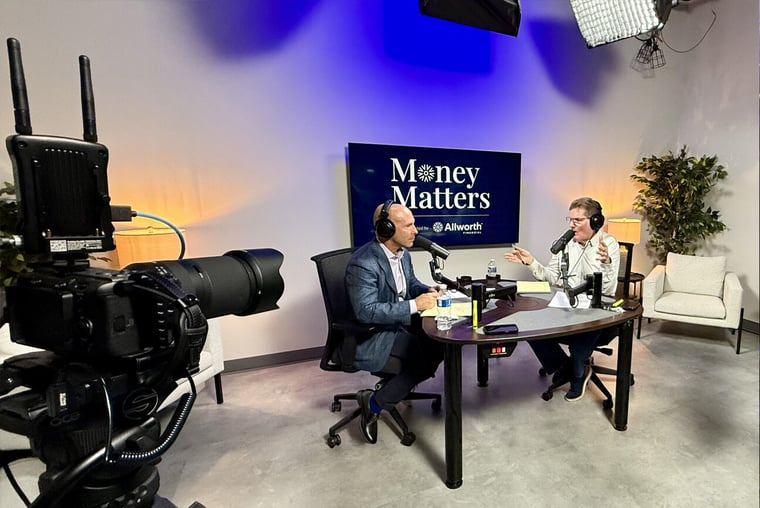
In this episode of Money Matters, Scott and Pat dive into real-world financial decisions faced by high-net-worth families. One caller seeks guidance on managing his 87-year-old mother’s $1 million nest egg, while another—with $8 million saved—is questioning whether a QLAC is necessary.
The $8 million decision opens the door to meaningful conversations around trust planning, emotional risk tolerance, and why simplicity often beats complexity—especially when family is involved. You’ll also hear insights on gifting strategies, changes to Social Security rules, and what to consider when planning for longevity.
Whether you're managing $1 million or $8 million, this is the kind of real talk every high-net-worth family should hear.
Join Money Matters: Get your most pressing financial questions answered by Allworth's co-founders Scott Hanson and Pat McClain live on-air! Call 833-99-WORTH. Or ask a question by clicking here. You can also be on the air by emailing Scott and Pat at questions@moneymatters.com.
Scott: Welcome to Allworth's "Money Matters". Scott Hanson.
Pat: Pat McClain.
Scott: Happy New Year. This is our first day back in the studio in 2026.
Pat: It is.
Scott: So, I guess it was. We only missed one, and it was kind of a best-of. So, excuse us for taking some time off during the holidays, but we're back.
Pat: And it's exciting. And what a week. What do the markets do for the week?
Scott: We hit a new high on Friday.
Pat: Yes. Oh, that's right.
Scott: This Friday afternoon was important.
Pat: Yeah, but what was the percentage? You know what the whole percentage?
Scott: It was...
Pat: But if you're listening to this show at all, I will constantly shout, you cannot time markets because you can never predict how markets will respond to... Which means individuals will respond to certain global or economic events just amazingly.
Scott: Well, and Pat... So, I'm trying to look it up. It doesn't really matter. A couple... It was a big... The fact is we finished at a record high yet again in the S&P 500, the first full week of the year.
Pat: Yeah. And I was reading an article today that 63% of the time, how January goes through the year.
Scott: Yeah, I saw that.
Pat: And I thought, so goes January, so goes the year, is the old saying.
Scott: Yeah, since 1915, I thought...
Pat: It doesn't mean anything.
Scott: ..."I don't think that means much."
Pat: No, none of it.
Scott: We try to find some patterns.
Pat: Yeah, right.
Scott: Yeah. I also saw some stats. After three calendar years in a row, what are the odds of another positive? And I thought, you flip a coin, you hit heads three times in a row, what are the chances of it? Well, it's the same. It's just a lot of things they try. But I must say that what's driving this though is not just momentum, there are underlying earnings are growing.
Pat: Not only are underlying, it's starting to cycle away from the big seven too. Which is what we talked about months and months ago, which was, look, the big seven isn't the only thing that drives the market. The magnificent seven?
Scott: Yeah, yeah, yeah. You can rename it. It'll be something different in three years from now.
Pat: Yeah, the fabulous four. I remember the days.
Scott: Yeah, it will be something different.
Pat: So, it will cycle through.
Scott: But from a... I think just about anybody who has any savings, it's like you look at, whether it's your IRA, 401(k), portfolio, your... Whatever. You go online and look at your numbers, it's just like, the last couple of years have been so good.
Pat: Crazy. Crazy.
Scott: Yeah. I don't know, but...
Pat: The sun doesn't shine forever. Just remember that. Don't get too far over your skis. We talked about it a lot over the last month. Don't be afraid to rebalance your portfolio. No, now is the time. Don't be afraid to rebalance your portfolio. It is okay to actually stick to your investment thesis, even though, emotionally you might think, "Well, why am I selling something that's done so well?" Well, because everything is risk-based.
Scott: Well, you know what really did well last year is international stocks. Roughly 30% increase in international stocks.
Pat: And how long has that been?
Scott: The U.S. market was great. I think 16% or so on the S&P. The international was... But how patient did you need to be with foreign markets?
Pat: How long?
Scott: Because they had a couple of years prior were kind of ho-hum, and last year was...
Pat: And in part, that was in part driven the decline of the dollar. But it doesn't matter. In the United States, we use the dollar.
Scott: I understand. But one of the added risks, I might state, in owning any sort of foreign investment, foreign asset, is that you've got currency fluctuation. So, you could own stock in a great company that is up 10% throughout the year, but if the dollar rallies 10% throughout the year, you essentially break even.
Pat: Yeah, you've got nothing out of it. But it was a week. It was a week.
Scott: And even with... And we try to... Like, there's been so much in the news, whether it has to do with fraud, government fraud.
Pat: It's just in the news. I don't think most people were surprised by it. It was in the news.
Scott: But is starting to get to the point where it's thinking, it might be harder for politicians to say, "We need to raise taxes," when the average taxpayer is saying, "Well, how much have you just wasted here or sending overseas?
Pat: Scott, but think, we had that report. We had Venezuela this week. And anyone from Venezuela that's listened to this is pleased as can be. A little nervous about what the next few years are gonna look like.
Pat: Well, not everyone from Venezuela. One husband and wife are not too pleased. Just want to point that out when you use the word everybody.
Scott: We've talked about Venezuela over the years. So, it's like, in 1900, it was the fourth largest economy on the globe.
Pat: And actually, I was just, on the way to the studio today, listening to a podcast about what caused. And it was the manipulation of the currency against the U.S. dollar that caused this... Well, one of the causes of the complete collapse.
Scott: The recent collapse.
Pat: Yes. And fraud. And fraud associated with that.
Scott: It was the march towards communism that...
Pat: Well, that too.
Scott: ...got them to where they are, yes.
Pat: That and, I mean, I guess we're just hopping on oil tankers as a government. But depending upon what article you're reading, they think 17% is the last one I read. I've read as much as 30% and as low as 8% of global oil goes through these phantom tankers, uncharted tankers, re-flagged tankers.
Scott: Isn't that amazing?
Pat: It is just...
Scott: I know you see some of the photos of these are all rusted out. Like, that thing is actually cruising the around and stuff, but...
Pat: Yeah. Where are the environmentalists there?
Scott: That's exactly what I thought. I saw the same thing. I don't think that would take that big of a rock to puncture the side of that rusted tanker. I don't think they're double hauled. Maybe not.
Pat: Yes. Anyway, interesting.
Scott: Or the rubber. Don't they put some rubber thing inside of...?
Pat: I don't know. I don't know. I did know at one point in time because I was in Valdez, Alaska, and I read a lot about the Exxon Valdez. But that was a long time ago and I have forgotten. But...
Scott: Yeah, Valdez. That was in the 80s, I think, wasn't it?
Pat: Yeah. Yeah. That actually is really nice. They put a lot of money into the infrastructure up there. But so, we will watch what happens. And this is a direct poke. This is a direct poke at China and Russia, this Venezuela. That is what it is. You can talk about the oil. You can talk about the narcotics, but it is...
Scott: Yeah, I know. I actually... Whatever. I think most people, they're a little concerned with this whole approach.
Pat: I think you should be.
Scott: But the financial markets don't seem too spooked is my point.
Pat: No. No.
Scott: They don't seem... The average investor seems kind of excited. Things continue to march forward.
Pat: Yes, no response whatsoever. And, yeah, and the downside is, look, if it brings the oil prices way too low, there's... Not everything has an upside.
Scott: Oh, I know. Now, there's worried... I'm thinking, I actually think it's good for all of us to have lower energy prices. If it hurts a few... That's like saying, let's keep prices artificially high because we don't want to harm a producer or any sort of product or service. Well, that's ridiculous.
Pat: What lobbyists are for.
Scott: Oh, gosh. All right. We had to take some calls here because it's actually one of our favorite parts of our program. And as we're going into the year, if you would like to join us on a show, we'd love to take your call. You can send us an email at questions@moneymatters.com. We schedule time to be in the studio to record the program. We schedule time for you to join us. It's super easy. It can be fun. Questions@moneymatters.com. We'll get you on. Let's start off here with Derek. Derek here with Allworth's "Money Matters".
Derek: Hi, Scott and Pat. Thank you very much for taking my call. So, yeah, my question has to do with how my 87-year-old mom should invest her assets. Let me give you a few details. So, my dad passed away a couple of years ago, and my mom decided to continue living in the house independently until recently. She is in good health, but has taken a couple falls recently. And so, now, it's just time for her to move in with my sister, and she's there now with my sister. She just sold her house for $800,000. In addition to the proceeds from the house, she has about $200,000 in CD and high-interest savings, which she's been living off for the past couple of years. And she spends roughly $40,000 to maybe $50,000 at the high end per year. She's got no debt.
Pat: Is this...?
Derek: I'm sorry.
Pat: As she's living with your sister, how is she spending that much money?
Derek: Well, that's what she has been spending the past couple of years. It may be a little less now, but still she gets to charity. I think for planning purposes, I would think I'd rather be conservative, you know, and go from past.
Scott: Derek, how many siblings are there? It's you, your sister, and...
Derek: There's six of us.
Scott: Oh, six?
Derek: Okay. And a whole bunch of grandkids too, about 30 grandkids. And so, yeah, because of that, right, she's a generous woman. She's got a big heart, lots of grandkids. A million seems like a lot of money, but that's her entire net worth. So, really, I want to make sure that we help her with ensuring that lasts her for the rest of her life. Her dad died, I think, in his 50s, but her mom lived to over 100.
Pat: What income does she have coming in now?
Derek: Well, now, really, the only income she has coming in is from the 200K and the CD and high interest savings. The proceeds from the house, which was just a couple weeks ago...
Scott: No Social Security?
Derek: Oh, she does get just a little bit in Social Security, but it's just like $300 or $400 a month.
Scott: Okay. And no survivor pension or anything like that?
Derek: That's correct, right.
Pat: And how is it...?
Derek: My dad was a... Sorry, go ahead.
Pat: Oh, no, your dad was a...?
Derek: He was a teacher and so didn't have accrued Social Security, and the pension was not good.
Pat: Wait, wait, wait.
Scott: There's that change that occurred last year.
Pat: It got rid of the income...
Scott: Windfall and elimination provision.
Pat: Yes.
Scott: She may be entitled to more Social Security.
Derek: Oh, okay.
Pat: I would most certainly... Because her Social Security... did she work outside the home? She did not. So, her Social Security was dependent upon her husband's Social Security, and based on that, her husband would have been eligible for increased benefits because of the legislation that was changed last year.
Scott: Most likely, yeah.
Pat: The husband we know would have.
Scott: Yeah. Windfall, well, then she would have as well as a survivor.
Pat: Well, I don't know that for certain, but that would lead me to... I would bet on it that she actually has significant more Social Security income coming to her because of the change with the elimination of the windfall elimination provision. So, you want to reach out to Social Security administration.
Scott: Do a little research online and learn about it a bit.
Pat: I think that'd be hard to find.
Derek: Would that be the case? Even though I don't believe my dad was... Yeah, I'm sure that Social Security was not being withheld from his pay check during his teaching.
Scott: That's correct. That's correct. That's correct.
Pat: But he had 40 quarters from somewhere. Or your mother wouldn't be receiving it. So, it was a change. The windfall elimination provision actually didn't pay that as much of a benefit because they were receiving a teacher's pension.
Scott: Yeah, they said you can't double dip.
Pat: But then that was repealed last year. Was it last year?
Scott: Yeah, last year. Last year and The One Big Beautiful Bill.
Derek: Oh, okay. Well, thank you. Yeah, I will do some research on that.
Pat: That's the first place I would look for increased income.
Scott: That's one thing. So, what are your thoughts on how to...? At first, did your dad manage the finances before?
Derek: He did, yes.
Scott: And was there always in bank CDs?
Derek: Let's see. So, actually, there was a life insurance policy, but not for much. I think it was Whole Life or something like that. It was for like $100 grand. And so, they really didn't have investments. It was just his pension that they were living off of.
Scott: And did your mom asked you to help with the finances amongst the six siblings? How are you the designated one?
Derek: She did.
Scott: Okay.
Pat: She asked.
Derek: Yeah, she did. Yeah, I've been helping her the past couple of years ever since my dad passed away.
Pat: And the other siblings are fine with this?
Derek: They are, yes. Yes, no problems there.
Pat: Okay, good. What's your thought?
Derek: So, what I... I actually called you guys a couple of years ago, shortly after my dad passed away. And I invested. We put her money into a CD. And that's all, just the CD and the high-interest savings. But that was only... I think it might have been $250,000.
Scott: That's right.
Pat: That's right. It's different now. It's different now.
Derek: Yeah. And so, I didn't know if we should continue down that path, or...? Anyway, that's why I'm calling you. Back then also, she was under the FDIC limit, so...
Pat: Yeah. Actually, she probably owns it in a trust, I assume.
Derek: That was another question. Not at this point. They just created a trust, and my sister helped her with that. So, we kind of have a distribution of responsibilities. She created the trust last year, but I don't... In fact, I'm sure that her million dollars in net worth is not in that trust. It was just a quick trust they created.
Scott: Okay. Well, you'll want to make sure that gets in there. Otherwise, it could be subject to probate. But do you know how the beneficiaries are? When she passes away, how are these dollars gonna get split up?
Derek: Yeah, it's just all split up evenly among all the siblings.
Pat: And do the siblings get along?
Derek: We all do, yes. I guess that's sometimes...
Pat: Well, it matters. I mean, the reason it matters is there's gotta be trust among you. And even if you don't get along, there can still be trust. It just makes it a little bit more difficult.
Scott: I mean, so if the plan is to, "Let's design this in case mom lives to over 100," because you believe there's a reasonable possibility that that will occur, that's a certain kind of an investment strategy. But the risk tolerance isn't necessarily just your mother's, it could be all six siblings. And what I mean by that, let's say you decide, "All right, we're gonna keep half of this in very secure CDs, treasury bills," whatever. "And then let's take half of it and invest in a portfolio consisting of some of the growth type assets." Let's just say it was all stocks, just for argument's sake. And everyone's all fine with it. And then we enter a bear market. And that $500,000 drops to $350 or $300. And you might be thinking, "Well, that's fine. These dollars are for when mom's 97, not 87, so we can live through that." But the other siblings might be thinking differently about it. This is the struggle here.
Pat: And the inverse is true, which means if you keep it all...
Scott: And the inverse is true.
Pat: And the inverse is true, which is if you say, "Oh, we need to keep this super conservative because we need to make sure mom has enough money forever," which she may or may not, but the scenario you gave me, it looks like she does. Then you might have some siblings that say, "Well, that's silly. You should have some growth assets in there." So, there's a balance. And look, this is experience speaking from sitting with multiple grown children about their parents' portfolios.
Scott: And my own experiences with having loved ones pass away and dealing with siblings and my wife's siblings and stuff.
Pat: You bragging that your parents had money?
Scott: It wasn't much. That's why people are so upset about.
Derek: Yeah, I think she's very conservative, low tolerance for risk, so I think that's probably the best approach.
Pat: Okay. Well, we didn't give an answer. We didn't give an answer. But that leads us someplace, which is, how heavily is she involved in these decisions? How closely does she monitor them?
Derek: Not very closely, but she still does care. She asks questions every now and then, but some of the accounts she doesn't even log into. So, you know, kind of...
Scott: If this was like a blind trust...
Pat: It'd be easy.
Scott: ...it'd be a lot easier, but it's not. We've got mom, she's at a stage of life that's not exactly that much fun. She lost her husband two years ago. Now, she had to sell her house. She's living with her daughter.
Pat: She was married to a man that was, apparently, based upon what we know about him so far, was very, very conservative. He was a school teacher. He had all his money and pretty much had fixed investments in life insurance policies. My assumption was that life insurance probably was probably a pension max, would have been my guess, which was...
Scott: Yes. Someone told your father to not take a survivor benefit on the pension and still get life insurance.
Pat: So, I think I would actually move to a...
Scott: It rarely works.
Pat: I would push towards a 30% to 40% allocation in equities. Scott, would you even bother?
Scott: I wouldn't bother.
Pat: Just because you're like, it's not... She has enough money now. She has enough money to live forever. It's going to generate that $40,000 a year. She's got six kids that love and care for her. If she comes up short, I'm sure they could scratch around. And the emotional turmoil that it could cause, you just don't think that it's worth it?
Scott: I'm just thinking about... Derek, I've got three siblings. My mom's 86. My stepdad's still alive and quite healthy, and she's reasonably healthy. And I think about my own situation. All of my siblings were all in different places financially and whatnot. They look at me a little differently because I've been in this wealth management space forever. But I'd still probably just say, "Let's just take a conservative approach because what do we have to gain versus what do we have to lose?" Because we could run the numbers and say, "Let's keep this in very conservative investments and there's going to be enough money to take care of mom the rest of her life."
Pat: But imagine going back to your mom and her asking one day, even if we did a 30% equity and the markets are down 30%, she's now down $100,000.
Scott: $100,000.
Pat: And she says, "What happened? I had a million dollars six months ago and now I have 900,000?" And I don't know if I'd want to have that conversation with her explaining the long-term, especially with an 87 year old, because she might be thinking, "I'm not even buying green bananas," right? I mean...
Derek: Right, yeah.
Pat: So, I think I would err on the conservative side.
Scott: And if the feds continue to cut rates, like some believe they will, the market's kind of pricing that in a bit, the interest is going to get lower. But what you don't want to do is if interest rates go down, then suddenly when interest rates are down, you say, "Well, now, we have to go chase yield somewhere else," because that's a risky approach.
Pat: So, what would you buy, Scott? CDs?
Scott: I think I'd probably keep it in CDs and maybe some treasury bills. But they pay about the same.
Pat: They do.
Scott: And probably ladder a CD portfolio.
Pat: Yeah. And by the way, if it's in the trust, you have FDIC insurance for that. It's up to a million dollars if it's in the trust.
Scott: I mean, you can make an argument, she can probably get a little bit better yield, maybe some other fixed income products. They're either subject to pricing swings... Well, they're all subject to pricing swings. So, they've got pricing swings, but then some of them could have some sort of lockups in them as well, which she doesn't need.
Pat: And by the way, let me clarify that FDIC. It's the owner times the number of beneficiaries not to exceed four beneficiaries. So, for her, it would be a million dollars. So, you can put it in one institution and not worry about the FDIC.
Derek: Got it.
Pat: As long as it's in the name of the trust. But I like the idea, the little we've heard about it so far. I think the advice we gave you when you called in a couple of years ago was excellent.
Derek: I think so too.
Scott: Well, in retrospect, we could have said, "Look, put it on the S&P 500."
Pat: Of course we could have.
Scott: "Or the magnificent seven or NVIDIA or combination of NVIDIA and Bitcoin."
Pat: We would have been... You would have been...
Scott: But we've got to remember whose money it is. And all the emotional. There's enough money for mom to live the rest of her life. You could put it in the Folgers coffee can and bury it in the backyard and take money out as needed. There's going to be enough money because her expenses are almost nothing.
Pat: Yeah. And you don't want...
Scott: And maybe she pays some rent to your sister.
Pat: In the mere fact that she's asking about it, if she would certainly, if it was inequity, she would pay a lot more attention to the stock market, which would create maybe some angst that isn't worth it.
Scott: Maybe you mean like when she's watching the nightly news and the stock market tanks, and then they have the interview, someone that talks about it's going to go to zero, and...
Pat: And then she calls Derek and says, "How's my account?" That? Is that what you're talking about?
Scott: Yes.
Derek: That would likely happen, yeah.
Pat: We've seen it. Of course, we've seen people that tell us they like risk until it happens. And risk is always there.
Scott: Had your mother...? You said, no, she's got these stocks that she's had forever. It'd be a little different because then she's someone who's used to having things go down in value. Lived experience is different than just having an education from a reading a book or watching a webinar, right? I mean, it's different. So, I'd be conservative. Appreciate the call.
Pat: Yeah, appreciate it.
Derek: Yeah. Thank you. Thank you very much.
Pat: Scott, that's kind of reminds me, which is, when you see these stock picking contests... Like my son was... I was with my three of my children's the last couple of weeks on vacation, and my third child who has a degree in economics, it's great talking to him about different things. And he was talking about how he was in a stock-picking club. And now, he invests his own money and he says, "You know, dad, it's a lot different than when we were just picking things." And I said, "Well, explain the difference." He said, "Well, look, he goes there. You got no glory if you're number one, so we just took flyers on everything. Either we were going to win..."
Scott: Well, it didn't matter.
Pat: Yeah. He said, "Either we were going to win or we were going to lose." And he said, "We were out of the running in about a week."
Scott: I remember, this was in the late '90s.
Pat: Oh, in the Bee?
Scott: Yeah, the Sacramento Bee. I was in the stock picking contest. They called me and I'm thinking, I didn't want to do it, but I'm like, what's the old saying? The only bad publicity is no publicity or whatever it is. So...
Pat: That's just a saying, by the way.
Scott: But I remember thinking, it's a 12 month period. You might as well get a dartboard. And I picked whatever the stocks I picked. And the third quarter, I was number one of, like, four or five of us. And they had a big piece in it with my photo. And at the end of the year, I don't know if I was number two or three. I certainly wasn't the top.
Pat: You weren't allowed to trade in the portfolio, or were you?
Scott: I don't remember.
Pat: Oh, okay, you were just...
Scott: I just remember the time, but I did not win. But it was a small story kind of buried in the back, so...
Pat: You were like, "I'mma do it."
Scott: I had people afterwards tell me how I crushed that stock-picking competition.
Pat: Yeah. Actually, so when we ask these questions about the emotion, people are, "Why are they spending so much time on the emotion?"
Scott: It's all the emotion.
Pat: That's what drives decision making. It's why people get married. It's why people have kids. It's why people get divorced.
Scott: We do a lot of things that aren't good for us financially.
Pat: Yeah, they're completely...
Scott: Having kids, not great financially.
Pat: Yeah, completely, at times, irrational.
Scott: Right. We go out to dinner. Have someone else cook for us and do the dishes for us. Obviously, it costs us something to do that. So...
Pat: Anyway. But while I'm on the subject of my son, we were talking about digital currencies, and he pointed something out to me. And by the way, so I was overseas and we were paying an exchange rate. And I thought, "This really kind of makes sense for a digital stable currency," because you get rid of a lot of that exchange rate risk. He had played some Bitcoin and he had done it earlier. He said, you know, "I don't understand how a currency, you could call something that moves around that volatile."
Scott: Currency. So, is it the role of a currency to be relatively stable? Like if you had a country and you had a currency that had 30% swings over a 12-month period, your economy would be a wreck.
Pat: It'd be catastrophic. But a stable, something that is pegged to an underlying index kind of makes sense for international trade, especially if you're doing it illegally.
Scott: Especially then. That's right. No one to track it. We're talking with Mick. Mick, you're with Allworth's "Money Matters".
Mick: Hi. Thank you very much for talking to me, Scott and Pat. I've listened to your show since it was a radio show. I'd sit in the Davis Farmers Market when my wife was shopping and listened to you even back then.
Scott: Oh, good.
Pat: Nice.
Mick: In the '90s. So, I've learned a lot.
Scott: Oh, good, good, good.
Mick: Because I listen to you, I think I'm in a better place to retire than I would have been, that's for sure.
Scott: Well, I don't know. You could have found a better financial program and been a little further ahead. But anyway.
Mick: Well, I listened to your radio station at a national guy on, I think his name was Bob Brinker.
Scott: Oh, yeah, yeah.
Pat: Oh, Bob. I used to listen to Bob when...
Mick: Yeah, I used to listen to him, but I was always kind of upset at him because he was always kind of curt with the women. You were always very open to whoever calls you, whether they were women or a young person or a senior.
Scott: We used to joke, "Bob, I'm so smart. You're so dumb Brinker." We referred to him as...
Pat: That's what we used to call him.
Scott: He seemed quite condescending to people, but anyway.
Pat: He was very condescending.
Mick: That would be the word. But I learned a lot from him too. But I felt more like I could trust what you were saying because he didn't seem...
Pat: And I hated... He used to call Alan Greenspan Mr. Green Jeans. And I just thought, it's just crazy.
Scott: Anyway.
Pat: Anyway, your question.
Mick: So, in 2026, I want to buy some QLAC. I'm 69 years old. My wife and I both are 69 years old. And I have been making conversions from IRAs...not from IRAs, from either our 403(b) or 401(k) into IRAs and then into Roth IRAs for years now. And we have a lot of money. We have about a million dollars in Roth IRAs now out of a total of about $8 million saved for retirement. And...
Pat: So, stop for a second. How old are you?
Mick: 69.
Pat: And how much do you have in IRAs?
Mick: A million.
Pat: The Roth IRAs a million.
Mick: Between the two of us.
Pat: And what about the traditional IRAs, 401(k)s?
Mick: About $4.7.
Scott: And how much do you have in brokerage?
Mick: About $2 and a third.
Scott: And where's your income coming from?
Mick: Right now, my wife is still working, and she's a serial entrepreneur in Davis. She's in ag biotech.
Pat: Oh, okay. I remember you called us before.
Mick: Yes, yes, you were very helpful.
Scott: That's hilarious.
Pat: I absolutely remember. Yes, yes. And I know exactly who your wife is. And she is absolutely the definition of a serial entrepreneur.
Mick: Yeah, she's on her fourth company now at 69. And this one's a little bit different. It's less about ag and more about the environment. But I think it's got a good chance of working, so, that's good. I'm a retiring clinical social worker. So, I have my one last gig. Will probably end at the end of this academic year.
Pat: You said you're looking at these longevity annuities? Is that what you're looking at?
Mick: Yeah, the QLACs. The ones that are longevity annuity.
Pat: Why?
Mick: My wife has incredible longevity. And I'm looking at the people that we've decided in our trust to take care of us in the event that one of us was, like, in a nursing home or a memory care center, and neither of them are particularly strong on anything financial. So, I want to make everything easy for them if it gets to that point. And I think, you know, there's nothing easier than just getting a check coming in.
Scott: Is it kicked in after age 85, or...?
Mick: That's the maximum, I think. I think the range can be between 80 and 85. I haven't done it, yet.
Scott: I've actually never recommended one.
Pat: I don't know if I...
Scott: And I don't think if I know anyone who's actually bought one. I read about them.
Pat: I remember when you wrote the column for the Sacramento Bee, it would answer questions about them.
Scott: That was a long time ago.
Pat: So, tell us the structure you're looking at and why.
Mick: I'm thinking, my wife is probably going to live past 100, given her mom's already 99 and her aunt is, like, 97. I don't know how long I'm going to live. I had prostate cancer. My dad died at 62. But I'm in pretty good health other than that. And, you know, science has advanced and all this other stuff. So, I was thinking my QLAC might be like a QLAC ladder between 80 and 85. Her QLAC rate started at 85. And then...
Pat: I'm sorry, Mick. Out of your total portfolio today, how much is in equity and how much is in fixed income?
Mick: Sixty/forty.
Pat: And how much are you withdrawing from this portfolio each year?
Mick: We're withdrawing to invest in my wife's business, not to live. She's making a full-time income. And of that, that's about $200,000 a year, that the guy who gave the most amount of money said, "This is my expectation of what you're going to be thrown into."
Pat: Okay. And how much did you say you had in brokerage account?
Scott: $2.3. Mick, the $8 million is going to be worth $10 million, then $15 million, then $20 million.
Pat: Yeah. And if you're worried about asset management, there's two things that you should be worried about. One is, what's the fiduciary that's going to manage your money if you're incapable of managing the money? And then who is going to administer the estate if you are alive and can't administer it yourself? And both of those can be solved through the use of a well-designed trust.
Mick: Yeah, I have a trust, and...
Pat: Have you named a fiduciary in the trust?
Mick: Well, my sister is a pediatric nurse practitioner. So, for the medical stuff, we feel we're really well covered. And my niece on my wife's side is a lawyer who has dealt with bankruptcy law and business law and stuff like that. But when I talk to her about things like investing for retirement, she doesn't know the difference on Roth IRA and a traditional IRA.
Pat: But, Mick, you could actually name a firm like us as a fiduciary in...
Scott: Well, a fiduciary firm. Not every firm has a fiduciary department and it's a division of that. That's right. But, yes.
Pat: Correct. Correct.
Mick: I'm fairly confident that when we're both dead, we're going to have a lot of money left over. And most of that money is going to go to charity, except for the Roth money that will go to family.
Scott: So, this longevity annuity, how much...? I mean, you could afford to do it if you want.
Pat: Yeah, but it probably doesn't make economic sense for you. Because you're transferring risk to...
Scott: And I haven't dug into under the hood enough of these to see how...
Pat: You know how they work.
Scott: Well, I was just going to say insurance companies, for every $2 they take in a premium, they pay out a dollar's worth of benefits, give or take. And it's probably not quite that bad when it comes to a product like this, but there's an actuarial pool. And look, if you're the chief actuary of the company... It's not like they've been around so long, and I don't think they're medically underwritten. So, if they're not medically underwritten, you're the chief actuary of thinking, "Well, the only people who are going to be buying these are healthy people who are going to assume that they're going to live to a long age." So, you're using an actuary table that's not for the general population at large.
Pat: And wealthier people, by the way...
Scott: Live longer. So, now you're thinking, "All right, they already have money, so that means they're going to live longer. They want to buy this product."
Pat: But they're not designed for someone of your net worth. They're designed for people that are worried about running out of money.
Scott: Where it's a real concern.
Pat: Where it's a big, big concern.
Mick: Okay. It's only like 2.5% of my net worth to get a full QLAC.
Pat: Okay, if you feel good about doing it, go for it. You could take that 2.5% and you could...
Scott: If you feel good about going and buying a Lamborghini, buy a Lamborghini. You can spend your money either one of those ways.
Pat: You could take that 2.5% and go to Vegas for the weekend.
Scott: There's lots of things you can do with it. So, I think...
Mick: But then my question is, I've been doing Roth conversions. And to protect myself from that pro rata rule, I don't have any money in an IRA. Everything's in our 401(k)s or 403(b)s.
Scott: Yeah, perfect.
Pat: Perfect.
Mick: And if I do this QLAC thing, my understanding is it would have to go to an IRA and then to the insurance company to become a QLAC. And then that money would not be a part of the 403(b).
Scott: Well, you can buy a non-qualified. You can buy a non-qualified.
Mick: Within the 401(k) or the 403(b)?
Scott: No, take money, cash, or to your brokerage account. It doesn't have... You are correct, though, unless you used your Roth IRA for it.
Mick: No, I have no interest in using my... I mean, yeah.
Scott: Okay. Well, then you are exactly... That is of...
Mick: I mean, I see my Roth IRA as money going to my family when I die.
Scott: I would not recommend that then.
Pat: Mick, if you were my client, I would argue with you.
Mick: Good. That's why I called you, guys because you're paid for that.
Pat: If you were my client, I'd say, "What? Are you out of your mind?" What do you...? You're insuring yourself against a risk that doesn't exist. You're not going to run out of money. It is designed, the product is designed for people..."
Scott: If you add $800,000 to your name and you're taking an 8% distribution or whatever.
Pat: I'd say let's go.
Mick: Okay. I hear what you're saying, that I have enough money to live on, probably, most probably, unless something terribly goes wrong with our economy and stuff like that.
Scott: By the way, if it went that bad, the insurance company may or may not be solvent enough to pay out. It happens.
Mick: That would be bad.
Scott: I'm just saying.
Pat: No, it happens. If someone with $8 million saving for retirement, they can't make it financially.
Scott: What's your annual income, earned income, without the Roth conversion?
Mick: Not much, because when Pam starts up a new business...
Scott: Oh, got it.
Mick: ...it's a very low income. And then I'm retired. So, it's about $225,000 plus whatever dividends we get.
Scott: You called for our opinion?
Mick: But we live on less than that. But just out of curiosity, what happens with paying the taxes? If I decided to do it...
Scott: No, you're exactly right.
Mick: ...and I still want it to do the Roth.
Scott: If, let's say, you put $100,000 into a Qualified Longevity Annuity, whatever they're called. So, now, it's an IRA. So, you go to do some conversion and they look at all your qualified accounts and that comes into question.
Pat: Yeah. It would be, basically, a net present value of the expected... There would be a value they'd have to give to it, because it has economic value.
Mick: And do they have to report that every year, or do they...?
Pat: Yes.
Scott: You do. No, they... I don't know.
Mick: So, I [inaudible 00:40:17.138].
Scott: I have never recommended one. No, like I said, nor have I seen anyone who's actually purchased one. I would assume... And some of these annuity contracts that have these living benefit riders, sometimes the Required Minimum Distribution amount is a different formula because it's based upon the annuity contract rider provisions as opposed to just the account balance. So, if you want to keep doing Roth conversions, I would highly discourage you from using qualified money to buy this longevity annuity. If you're still set on buying the longevity annuity, I would use after tax dollars. That's not a great thing... But then it's all...
Pat: Yeah. And in saying all of that, I would suggest you not buy one at all.
Mick: Okay.
Scott: Yeah, you're right.
Pat: There's our answer, Mick.
Mick: I hear you loud and clear. I hear you loud and clear.
Pat: You got our opinion. All right. And listen, I have followed your wife's career for years and years. For the people that are listening national, his wife has started multi-biotech companies and has sold them and... But, you know, I've started many companies and you only hear about the ones that have done well.
Scott: Hey, Mick, glad you called. Wish you well. And I think this is one of these examples, Pat, that there are financial products that are not necessarily good or bad. It's all how they're used and, what are you trying to accomplish with them?
Pat: That's correct.
Scott: All right, let's continue on here. We're talking with Janet. Janet, you're with Allworth's "Money Matters".
Janet: Hi, how are you doing?
Scott: We're good. How are you doing, Janet?
Janet: Oh, just fine. I enjoyed the emotion thing.
Scott: Oh, thank you. It's real.
Janet: It is definitely real. And I'm 77 and when I think about all... I mean, if I was planning my life around money, boy, it would have been different, way different. So, I called you because I was vastly amused. A lot of times you talk about things that make...well, it's not that they don't make sense. They're really deep financially and I don't understand. But I'm still interested in listening. But I was tortured by this call you got from a physician. And it was a conversation about $15 million. And a lot of twists and turns about too much gifting, which just made me laugh. He didn't want to spend, I think, or gift. And his wife says, "Come on, we're never going to spend this." And I'm a retired nurse and I thought, a doctor could know anything could happen to you at any time. And you don't need to make this all so difficult, so I just thought I'd share what I do. I am married, and my husband's not remarkably enthused about this, but...
Pat: I'm going to use that line. Next time my wife and I get in a little bit of a tiff, I'm going to say, "You don't seem remarkably enthused."
Janet: Right. And that's a delicate way for me to put this. So, I decided in 2024 that I wanted to gift each one of our families with money. And we have two sons, but we have three households because... Well, and one son has a lot of money. And then the second son has had an adventurous life. He is still married, but he hasn't lived with his wife for 15 years.
Pat: Hence the three households.
Janet: Hence, yes. So, that first year, we sent them $2,500 each, and they were each thrilled. It was so amusing. The son with the money says, "This is great. I can get those garage doors." And the younger son was pleased and grateful. And all this is, is a money order sent in early November and in a fancy envelope with a nice card.
Pat: Very nice.
Janet: An expensive card. And I just text them and tell them to keep their eyes out for them. So, that was your number one. And I had actually... In my mind, I was planning on increasing this $1,000 every year, but since my husband wasn't remarkably enthused, he agreed to adding $750, so this year it was $3,250. And I thought, you know, there's nothing wrong with mixing this up. So, I sent that off and our oldest son, this year, called laughing saying, "You know, I've always wanted a sugar mama," and his wife was on the line.
Pat: That's funny.
Janet: And he says, "And now I've got one."
Janet: And...
Pat: Well, do you have the ability to give to this?
Scott: Financial ability.
Pat: Financial ability?
Janet: Oh, I could give them whatever I wanted.
Pat: Both of you and your husband?
Janet: That's why I'm referring to my husband.
Pat: Do your account balances grow every year?
Janet: Oh, yeah.
Pat: So, by a significant number?
Janet: Yeah, yeah, it's all fine.
Pat: And so, what prompted this call? Are you having a challenge with the...?
Janet: Well, no, I was just thinking, giving money to children should be so much easier. I mean, you could just make it really easy. And it doesn't have to be a big amount to be appreciated. And I would increase this more each year were it up to me?
Pat: Was your husband happy with how they spent the money? Did he comment ever on how the money was spent?
Janet: Yeah, he didn't have any problem with that.
Pat: Okay. All right. So, I don't particularly remember the call where we talked about this. But I had a client who has subsequently passed away. And when I first started working with him, he wasn't gifting to his children and his account balances were growing on an annual basis. But he was paying for the grandkids, some of their private school tuition. They have plenty of assets. And I said, "You know, your account balance grows by so much every year. They're going to end up with the money anyway."
Scott: That's right. We're all going to give our money either while we're living or at our death. We can't take it with us.
Pat: So, it's going to go somewhere. It could be charities or it could be family members or strangers or the government. But he would always say to me after we started doing it, he got really into it, and then was actually using up part of his exclusion amount above the annual gifting. And he would always say to me, "Rather than from a warm heart than a cold hand." And I thought, if you're happy with how the children are spending it, I would share that with your husband, talking about emotions again, and then make reference to the warm heart versus a cold hand. And if your accounts are increasing on an annual basis by, you know, I don't know...
Scott: Whatever.
Pat: ...whatever amount, and you're not worried about the future... Because there comes a point in time that you can't travel anymore. You don't spend. You very rarely see any marketing other than for medical programs.
Scott: There's a reason.
Pat: Anyone over the age of 70... I mean, there's three places that they market to people over the age of 70, right? It's long-term care insurance, burial insurance, and it has something to do with medical. They're not trying to sell you big...well, maybe a little bit vacation here or there, but they're not trying to sell you a lot of new cars. So, I would just lean into that.
Janet: Well, and I did want to share with you that what happened with the other two children, because it was unexpected. Our daughter-in-law gave her 19-year-old daughter the money. And that was pretty astonishing. And so, I got a text from her saying, "Grandma, you are so generous. Thank you so much." And she's coming down to spend a week with us next week and I'll find out her plans with the money.
Scott: Okay, good, good. Because money is a tool that goes... Finish the second story.
Janet: Well, and then our son, who doesn't think money is important, texted that I have no idea how many people this is going to help. And I found that quite amusing. And he has a partner of five and a half years, and they just made some changes that have worked out really well for...
Scott: Oh, perfect.
Janet: ...the two of them and her two girls. So...
Scott: Well, it sounds, Janet, like you're enjoying the blessings of the giving and your husband's not quite on the same page there, but we appreciate the call. And it's interesting, Pat, how money is a strange thing. Like the one said, "You have no idea how many people this is going to help." And it's funny, my dad was always quite liberal growing up. He was just in the 60s, he was involved. So, he was quite liberal and I'd hear the liberal stuff. And then as he got older, he became more conservative. And then he'd say things like, "Well, how's money going to make anything better? How is taking a tax dollar and just transferring it to that issue, how is that going to change anything?" Well...
Pat: Your dad maturing in front of your eyes.
Scott: But I think the thing about if you're at a place where you know there's no way you're going to spend these dollars, you can either wait and die... And you read these stories about someone who lived in a little apartment, no one thought they had any money, and they die and leave $8 million bucks to the local library or whatever. That's one way to go. Or you can participate in some aspect and see what happens. Sometimes money does not help things.
Pat: Oh, that's right.
Scott: My 18 year old daughter is home for Christmas and well, "You better get yourself a job and you need gas. Well, no, I'm not going to give you..." And I told her a week ago, "You better have a job at school to pay for all your incidental stuff because," I said, "from now on, there's no more no more money from dad coming. Merry Christmas." I had it all written out in a nice box for Christmas morning. Everyone else is opening up gifts. She opens a box, "Thoughts from dad."
Pat: "Thoughts from dad. I'm cutting you off."
Scott: My hope and prayer is that she matures, has a great life, and then one day I can come alongside and say and match her effort like, "You're doing great here. Let me help you out along with some finances."
Pat: Your point being...
Scott: Money is not always helpful.
Pat: ...by giving her money is not going to help.
Scott: Would not help things for her. Not help in her... Anyway, enough of that stuff. How was your Christmas? I got thoughts from dad.
Pat: That's funny. Sorry about that. I didn't mean to make fun of your family.
Scott: Oh, we had some weird drama on Christmas. I think a lot of us did. I'm not going into it.
Pat: Oh, we didn't have any this year. It was great.
Scott: I can't even share on the air the drama we had.
Pat: I went on vacation with three out of my four children. So, we were not around for Christmas. We went out for dinner, exchanged light gifts.
Scott: Should I share what happened on Christmas?
Pat: I don't know. No, if you're thinking about it, then don't.
Scott: I'm not going to.
Pat: Yeah. Because this is a public forum.
Scott: It was something...
Pat: You're going to share it anyway.
Scott: I do want... Now, people think it's going to make us much worse. Okay, let's just say it has to do with, I think there was theft in the household. So, I'm going to leave it at that.
Pat: Is that right?
Scott: Uh-huh.
Pat: It wasn't part of a game or anything.
Scott: Oh, no.
Pat: Okay. All right. Okay.
Scott: We did do the gift exchange and it had to do with a gift card.
Pat: Oh, yeah. That gift exchange. My wife's family does it. It can be fun.
Scott: We had 17 people over. It's better than having to buy 17 unique gifts.
Pat: Well, that's true. Yeah, but it takes too long.
Scott: You do the stealing and all that.
Pat: Yeah, it just takes too long.
Scott: You don't expect somebody to go into a bedroom and lift the gift card. I think that was another way of saying, "Hey, thanks, Hanson family." We want to let you guys know about a webinar that we've got coming up. It is the Inside a Multi-Million Dollar Portfolio, a case study in advanced planning for this year, 2026. So, what this webinar is about, it's a case study webinar. So, this is a client that we worked with. Obviously, we changed some of the facts and names and stuff. But it takes you behind the scenes, kind of take a good look to reveal how we helped this one couple find some blind spots in their wealth strategies. Some things they thought they had pretty well organized, but they had a couple of blind spots here. Then we refined their approach for growth, for tax efficiency, and really, for also long-term confidence.
Davis Blomquist is one of our advisors here at Allworth. He's really been part of our educational efforts over the years and have done some workshops with him and stuff over the years. But I think you'll find him really helpful as we do this workshop. But some of the things that you're going to learn is how we connected investment strategy, tax planning, and retirement timing into one coordinated plan designed to support forward-looking decisions. We know that retirement looks different for different people and that whole word means different things, but it's really about being in a complete position where exiting the workforce or selling a business, getting all that timing right.
We're also going to learn some tax efficient tactics that households with multi-million dollar portfolios often overlook, and how they can help by optimizing results over time. And also, the pivotal mindset shift this couple made that changed how they evaluated their risk, their opportunities, and the year ahead. So, we're serving this up four different times, Wednesday, January 14th, Saturday, January 17th, Thursday, January 22nd, and Saturday, January 24th. So, you'll want to register for this. And if you've got a few million bucks or more saved, I think you'll find it helpful. Simply go to allworthfinancial.com/workshops. That is all the time we have. We'll see you again next week. This has been Scott Hanson and Pat McClain of Allworth's "Money Matters".
Automated Voice: This program has been brought to you by Allworth Financial, a registered investment advisory firm. Any ideas presented during this program are not intended to provide specific financial advice. You should consult your own financial advisor, tax consultant, or a state-planning attorney to conduct your own due diligence.
Insights for Complex Wealth Decisions
Join our email list for exclusive commentary from our Chief Investment Officer, early access to expert-led webinars, and your complimentary Wealth Planning Checklist for Complex Portfolios.
We take your privacy seriously and respect your privacy choices. By submitting this information you agree to our Terms of Use Agreement, Privacy Policy, and to receive important notices and other communications electronically.