
401(k) Roth Rule Change + Balancing Pensions and Roth IRAs
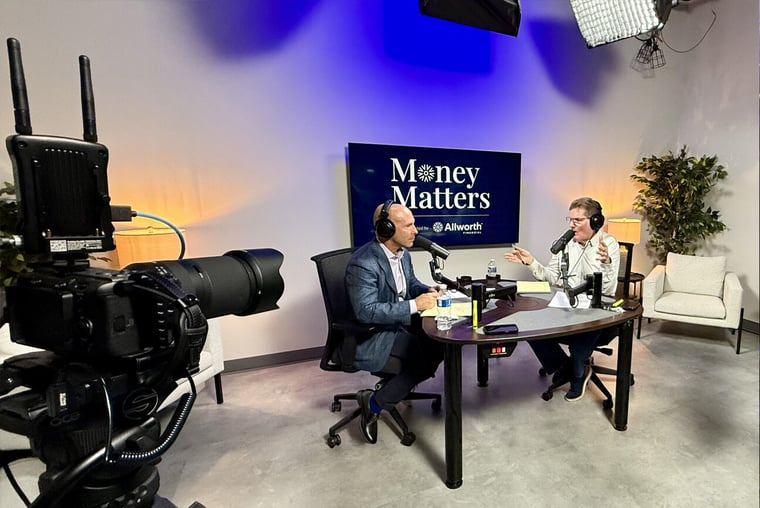
In this episode of Money Matters, Scott and Pat break down a big shift for higher earners: the new 401(k) Roth rule that changes how catch-up contributions work. If you’re over 50 and earning a solid income, this could seriously affect your retirement plan.
They also cover smarter tax strategies and take listener calls. A recent retiree wonders if buying a rental property makes sense. Then, Scott and Pat help a man from Virginia with a textbook example of how to balance pensions, Roth IRAs, and tax diversification as retirement nears.
Whether you're saving, converting, or rethinking your retirement goals, this episode brings clarity, strategy, and a dose of straight talk.
Join Money Matters: Get your most pressing financial questions answered by Allworth's co-founders Scott Hanson and Pat McClain live on-air! Call 833-99-WORTH. Or ask a question by clicking here. You can also be on the air by emailing Scott and Pat at questions@moneymatters.com.
Automated Voice: Would you like an opinion on a financial matter you're dealing with? Whether it's about retirement, investments, taxes, or 401(k)s, Scott Hanson and Pat McClain would like to help you by answering your call. To join Allworth's "Money Matters", call now at 833-99-WORTH, that's 833-99-W-O-R-T-H.
Scott: Welcome to Allworth's "Money Matters". Scott Hanson.
Pat: Pat McClain. Thanks for joining us.
Scott: Glad to have you with us. It's the end of January. How are you doing with all those New Year's? You don't do... You know, most of us have some sort of goals, that sort of thing.
Pat: I used to when I was... I forget when I quit doing New Year's resolutions.
Scott: Well, when it comes to finance, planning, investing, taxes, that sort of thing, if at the beginning of the year you're thinking, "This is the year I'm going to get my living trust updated. This is the year I'm going to meet with an advisor, get my retirement plan in place. This is the year I'm going to take a good look at my 401(k) and see if it's allocated. This is the year I'm going to see if my brokerage account could be managed a little better so it's not spending off so much taxable income and causing my tax rate to go up." If you were thinking about this at the beginning of the year, it's now January 31st.
Pat: Probably get on it.
Scott: Get on it.
Pat: Yeah. It's kind of a pain. It most certainly is a pain, but it's part of life. It's part of being a grown up.
Scott: Yeah, there's lots of things in our lives that... Most people don't love dealing with their finances. And some hate it. Some hate it with a passion. They can't stand dealing with it.
Pat: Well, I love someone that loves dealing with their finance, so...
Scott: Your wife's an accountant. I like the... I don't like the nuts and bolts of the stuff. I like the...
Pat: General concepts.
Scott: The general concepts. I like watching the financial markets and see how things does go.
Pat: The financial planning. Well, it's good that you like that sort of thing since you voted a good portion...
Scott: Well, some of it is a bit of a puzzle because so much of planning is navigating the tax code.
Pat: And it changes. And it's not getting any easier, by the way.
Scott: It's getting more complicated. So, part of it is like, what's our objective? What are we trying to accomplish? Then how do we navigate through the tax law to give us the greatest possibility for success? That's really what it comes down to. Financial markets are just one piece. Navigating the whole tax code is a complete other thing.
Pat: Which is, I was thinking about this the other day, why do they let part of your Required Minimum Distribution code directly to charity as a qualified charitable...
Scott: Why? You're putting questions to the tax...
Pat: But why part of the RMD? Why not before the RMD? Why can't you do it when you're 65? Why do you have to wait till your Required Minimum Distribution? My guess is, in our lifetime, they are going to change the tax code so that you can actually give away part of your IRAs to a charity prior to Required Minimum Distributions.
Scott: Or they won't allow it anymore. I mean, when you're from a... Or my bet is, in my lifetime, the money you leave in a 401(k) or an IRA to a charity will be somewhat taxable. That would be my...
Pat: All right. We'll wait and see. But the point being is the tax code is ever changing.
Scott: We'll wait and see. So, when you do your planning, part of it is, what is the current tax code? And part of it is, what's your best guess on what you think the future is going to be? And how do we mitigate against that? And if you would have asked people 10 years ago, 15 years ago, if you thought tax rates were going to be where they are today... I shouldn't have said it. I know this because I've had conversations with people, "Tax rates are only going up, so let's plan this and that." They haven't. They're lower today than they were 15 years ago.
Pat: The only thing that's going up is the deficit.
Scott: Correct. Which can't... They'll hit a tipping point.
Pat: We've been saying that for years. It will hit a tipping point though at some point in time.
Scott: So, one thing that hits us... And we're talking about the tax code here. And we'll take some calls here in a moment. And this impacts anyone who's 50 and older who's still working and contributing to retirement accounts. So, I think you probably saw this provision, Pat. A new rule requires any workers making $150,000 or more to put a portion of their 401(k) contributions into the Roth, not a pre-tax.
Pat: Saw that.
Scott: So, they're limiting on how much...
Pat: Your deduction.
Scott: And this went into effect January 1st of this year. And so, not all 401(k)s offer Roths, most do. But going now, the catch-up contributions, if you're making $150,000 or more, it must go to the Roth.
Pat: So, my point, things become much more complicated. The idea of simplifying the tax code is absolutely out the window. No one even talks about it anymore.
Scott: This applies to 401(k)s, 403(b)s, 457s. So, if you're over 50 and you've got the $8,000 extra you can put in as a catch-up, then you can no longer get that tax deduction.
Pat: It has to go into the Roth side. I wonder what happens if you have multiple plans. What if you have...
Scott: You're still limited.
Pat: ...a 401(k) and a 457, you're still limited.
Scott: It's the catch-up contribution.
Pat: It's just the catch-up provision.
Scott: But if you have three employers, you can't maximize the 401(k) in each of... The annual limits are the annual limits combined.
Pat: The annual limits. But not the 457, 401(k).
Scott: 457 is because it's not a salary deferral. It's not quite the same.
Pat: Not a qualified plan.
Scott: Yeah, it's not... That's exactly right. What the heck is it then? Looks like a qualified plan. Acts like a qualified plan. But we call it something different so it has different rules. But this is... Yeah, so, I mean, anyone who's over making...
Pat: Your employer will actually notify you of that though. Your plan administrator will.
Scott: Yeah, but it's just one of those things that...
Pat: This is one more. Where last year it would actually lower your taxable income, and this year, it will not.
Scott: So, there's a couple ways why... I mean, there's some things that have hurt higher income people this year. That's one. The second is on charitable contributions. You no longer get a full deduction. You're limited... It's a 0.5% of your adjusted gross income, somewhere right there. It has to be above 0.5% of your adjusted gross income before you start getting the deduction. And then it's capped at... The tax deduction is only at, what is it 35% instead of 37%? Which they monkeying with you. It's negligible.
Pat: It applies to very few.
Scott: It's negligible.
Pat: But it's there. No, it applies to anyone. No, no, understand that the cap isn't gonna affect that many people.
Scott: That's correct. But those that... Where most of the charitable dollars come from, that's...
Pat: Rich people.
Scott: Okay, whatever. You call them whatever you want. I don't know. Is a rich person someone making $160,000 a year that can no longer put the catch-up provision to their 401(k)?
Pat: That is not.
Scott: Well, according to this, they're rich. Which is why you hear us talk about things like, when doing your planning, don't expect that the current tax law... Here's some things that could change. We could see a Roth withdrawal be somewhat taxable. We could see an excise tax. When I entered in this industry, they had excess withdrawals.
Pat: You could see a consumption tax.
Scott: You could see a... Yeah, it could be...
Pat: Which would be regressive. We could see a value-added tax, consumption tax, and a reduction in income taxes. That's a possibility.
Scott: There's a lot of possibilities.
Pat: That's regressive, and our tax code has a tendency to be progressive. That would be a big change.
Scott: It's not on... But they do it in Europe. You have both. You have both. So, in your planning...
Pat: So, you have a regressive side of the tax, which is a consumption tax, and then you have an income tax, which is progressive. You have both of them in Europe. Parts of Europe.
Scott: That's right. I think all the EU has the...
Pat: I can't speak to all of them.
Scott: I don't really care to be the expert on... Bit they'd have the value-added tax. I don't know if there's much value added to the tax. And here we have, in California, this proposition where they want billionaires to take 5% of their net worth.
Pat: One time.
Scott: A one time.
Pat: I'm sure it'll only be once.
Scott: And you see how it's calculated. It's not necessarily on your net worth. It's voting shares. So, you're a founder of some large company. You have to calculate your net worth based upon what percentage of the company do you have for voting shares. So, like the founders of Google, maybe they own 3% or 4% of the company, but their voting shares are 30%. So, if that hit them...
Pat: Oh, Scott, that's not going to fly in court.
Scott: They saw the founders left California at the end of last year.
Pat: The tax could be actually more than their net worth.
Scott: Correct. In this case, it would be half their tax.
Pat: Look, we're not beating on the system that got them rich. They should pay taxes. The question is, should they pay taxes in a manner that allows them to continue to pay taxes in the future?
Scott: Or are we going to have a tax now where we start confiscating people's wealth?
Pat: Yeah. I spent some time in Norway and I have some relatives in Norway, and they have a tax where they tax you on unrealized gains so you borrow the money from the banks. I have a niece that works for a bank.
Scott: To pay your taxes.
Pat: To pay your taxes. And so, that's why startups leave Norway, is because once they're up and running, the tax structure is such that...
Scott: Anyway.
Pat: Anyway. All right, let's go to the calls.
Scott: The point is, when you do your planning, we got to pay attention to current taxes. And then when we start thinking 10, 20, 30 years, we have to run a lot of these different what ifs, and make an informed choice. And in a perfect situation, you get down the road and you've got money saved in different types of buckets, different areas, it gives you flexibility when it comes to your planning. Someone moves into retirement today, they have three million bucks in their 401(k), a paid off house, and nothing else, there's not a lot of planning to be done there. And when it's time to buy a new car, they got to take the money out of their 401(k), pay the taxes on it, sometimes push them into a higher tax rate. If instead you enter retirement, you've got a million bucks, $1.5 in your 401(k), $500,000 in your Roth, a million in brokerage account, or maybe $500,000 in brokerage, $500,000 rental house or whatnot...
Pat: The more diversified the asset location, the more choices you have in the distribution.
Scott: And the better planning. Anyway. So, why don't we take some calls, because you're probably...?
Pat: How do you join the show?
Scott: Send us an email, questions@moneymatters.com is the best way to join us. And speaking of that, we're going to take this call in a second, but if you want to join us, Pat and I are taking two hours sitting in the studio just to take phone calls.
Pat: No chit chat. You don't hear about our personal lives or anything that's of interest to us.
Scott: Not whining about something, complaining about this.
Pat: It's all about you.
Scott: Yes. That's what we should call it.
Pat: It's not all about you.
Scott: The All About You Phone Bank.
Pat: Well, a lot of the podcast is about us as well.
Scott: So, we're two hours in the studio, just taking calls, giving you our opinion on what you're bringing to us. Thursday, February 5th. So, it's Thursday, February 5th, we're going to be in the studio. It's noon to 2 p.m. Pacific time. All right, 3 to 5 Eastern time. We're in the studio. If you want to join us, one, block it off your calendar, two, let us know. Send us an email at questions@moneymatters.com or you can call 833-99-WORTH, and we'll schedule a time and we'd like to chat with you. So, let's talk now with Cindy. Cindy, you're with Allworth's "Money Matters".
Cindy: Hello.
Scott: Hello.
Cindy: So, I have a question about whether or not I should buy a rental. My husband and I both have IRAs, which we've started to do Roth conversions on just this last year and we have pensions.
Scott: Are you retired?
Cindy: We are retired, but both of us are working just part time for probably a couple more years.
Scott: Okay. And your pensions, when did you both retire?
Cindy: 2022, and 2012 for my husband, but like I said, he took a little time off, but is still working part time.
Scott: And how much are your pensions on an annual basis or monthly?
Cindy: Combined, about $220.
Scott: Those are hefty pensions. And how old are you?
Cindy: 58 and 64.
Scott: And what's your outside family income of your part time jobs?
Cindy: Oh, it depends how much we work, but probably about $65,000 or $70,000.
Scott: Combined or each?
Cindy: Combined. And we do have a kid in college still also.
Scott: Are you eligible for Social Security?
Cindy: Not yet.
Scott: Will you be?
Cindy: Yes, we will be.
Pat: Well, the 64-year-old is eligible.
Cindy: Yes.
Pat: He's working.
Scott: Correct.
Cindy: Yes.
Scott: And what do you have in 401(k)s, IRAs, that sort of thing?
Cindy: Okay, so IRA combined about $1.6. And then cash, we have a little over about $140.
Scott: And what's your home worth?
Cindy: About $1.3.
Scott: And do you owe anything on it?
Cindy: We did take a little out, about $120 out to do, like, some fixing up.
Pat: And what's the interest rate on that?
Cindy: I think it's like 5.8% or 9%.
Scott: Okay. And why do you want to buy a rental?
Cindy: I just feel like it'll appreciate and it might be a good investment. And the rent will pay for most of the mortgage.
Pat: Have you ever owned a rental?
Cindy: No.
Scott: I just got rid of my last rental December, so just know.
Pat: And where would this rental be?
Cindy: Well, hopefully, in a desirable neighborhood that people want to rent in. Or I would even consider buying a fixer-upper and flipping it.
Scott: And how do you plan on financing this?
Cindy: Well, that's my question. Well, we would finance it, and then have to pay the mortgage, but the rent would pay part of that. Or we could move out of our primary and move into the rental and all the rent from the primary would pay for the mortgage on the other one.
Scott: Cindy, Cindy, Cindy. What are you trying to accomplish? What is the end goal here?
Cindy: I guess diversification, I guess, instead of...
Pat: Cindy, Cindy, you guys have done so well.
Scott: You got massive pensions.
Pat: When your Social Security kicks in for both of you, we're looking at income of around $260,000, $270,000 a year.
Scott: Or more.
Pat: And that's not even taking distributions from your IRA. If you were sitting in my office, which I've had this conversation... And by the way, I had it with a gentleman in '07, where he told me, "I didn't understand, Pat. A real estate is going to go forever." And he bought five homes in Florida. Fortunately, I stopped them, asked them nicely not to use any of their IRA money because when they lost all the homes, they still had that. Because they ultimately lost all the homes. And I'm only an advisor. I'm not a dictator. So, I couldn't... I just looked at it and thought, "This is crazy." But you and your spouse have done so well. It's unbelievable. Like, when you were growing up, did you think you'd ever amassed this much money? And by the way, your net, that $220,000 a year, if I did a net present value of that based upon your life...
Scott: 4 or 5 million bucks.
Pat: 4 or 5 million, it's like having $4 million in an account. You've done so well. Did you ever imagine you would have done this well?
Cindy: No, but I am a little bit of a saver. I don't like to spend.
Pat: That's another reason you should not buy a rental house.
Scott: So, if you said, I've got $2 million from the bank, I'm trying to figure out, and we think, we want to buy a rental. Okay, now, you're talking about deploying some capital you have. But right now, you've got $100 grand in the bank.
Pat: And actually effectively you owe $120,000 on a... So, you have $140 grand in the bank and you are $120,000 on a loan that's 5.9%, and the money you have in the bank is probably earning less than 4%. My recommendation is...
Scott: Pay off the mortgage.
Pat: ...take the money from the bank, pay off the home loan at 5.9%.
Scott: And if you want to invest in real estate, you can always use some of your IRA and allocate it to a real estate investment trust that specializes. If you love primary residence, then do it in primary residence.
Pat: A traded REIT, traded. We preface that with the word traded REIT, not a non-traded REIT. I would say, absolutely crazy. You've never owned one before. You have no idea what it's like. And Scott, how did you feel after you sold your last one?
Scott: I was so happy.
Cindy: Well, I feel like my concern is my kid is not going to be able to afford a home later. So, buying one now might...
Pat: Okay.
Scott: Okay, that's a different story. That's not diversification.
Pat: That's a family.
Scott: That's family planning here.
Pat: Yeah. And my answer to that... How old is your child?
Cindy: 18.
Pat: Okay. And we have no idea where your child's going to land, right?
Cindy: Right.
Pat: Look, I have four children. One lives in LA, two live in San Diego, and one lives in Colorado. And they all grew up in Sacramento, and somehow they just had this incredible desire to get away from their mother and myself.
Scott: My daughter's been in Denver for years. She's moving back to Northern California, so hallelujah.
Pat: So, when that occurs, when that time occurs that that child needs help, it's highly usual. In fact, pretty common for people with a higher net worth to help their children purchase their first home.
Scott: My 30 year old daughter says she has... Of her friends that own a home, this is age 30, age 30, the friends that own homes all got help from their parents. She says, "I don't know anyone who owns a home that didn't have a helping hand from a parent."
Pat: So, when that time comes, when that time comes, then we should address it. But you're not really... The home values, although they've risen significantly in the last couple of years in most of the United States, it won't be like this forever. It won't... So, I appreciate the fact that you're worried about your child, but you have the means to help them when the time comes.
Scott: When the time comes.
Pat: But I would not... If you want to ruin a nice quasi-retirement that you guys are enjoying, buy a rental house. And better yet, if you want to put some pressure on a marriage, buy a flipper, a fixer up. If you just want to test how good your relationship is, where you actually get an argument over what kind of linoleum. And the problem actually with flip houses, for people that have never owned them, is they want to improve these houses to the quality of the homes that they live in, which oftentimes doesn't make economic sense. That's just the reality of it. But you're doing great. But our advice to you is to take that money out of the bank and pay off that home loan.
Scott: Otherwise, you're going to take $100 grand out and buy a, I don't know, what's what price house. And then the air conditioner goes kaputs and you got to put a new air conditioner in. That's $25 grand or whatever. That's our opinion.
Cindy: Okay. I thought my husband would be happy.
Pat: Yeah, please don't. I just...
Scott: Please don't.
Pat: Please don't. You've done great. By the way, you guys, you're in the top 1% in the United States in terms of income...
Scott: Their pension.
Pat: ...and net worth at your age, top 1%.
Scott: Huge pensions.
Cindy: Okay. All right. Well, that makes me feel good. Thank you.
Pat: All right. Thanks.
Scott: All right. It's interesting, Pat. Look, if you are in the real estate management business, great. Maybe owning residential properties is a phenomenal place for you to be. But my personal experience, so I've owned duplexes. I've owned single family residences, commercial buildings, but on the personal side of things. So, I've owned duplexes in not the most desirable neighborhood. Actually, they did very well, capital appreciation on them, but there's still just... You can imagine the issues that happen with duplexes, even when you have a property manager, right? Even when you have property manager. I've owned homes in retirement communities.
Pat: You owned a home in a college community, didn't you?
Scott: I owned home in a college community. That was my last one I just got rid of. It's funny, I'm telling a little personal story here. My daughter was in college having trouble somewhere to live. I looked at the real estate market. I'm like, "These homes are cheap here." I bought with the 100% intent on, what's the best rental?
Pat: Zero lot line. No swimming pool.
Scott: Yeah, there's not even a patio cover. And this was in Portland area, so you could not go outside because you get rained on.
Pat: No one goes outside.
Scott: No. And I think it was five bedrooms and like a den. So, we ended up... It was six bedroom. So, when she was in college, we had six college girls living there. And then I rented it out after she left. And this is about 10 years. I calculated the return. I did a simple calculation, a Jet Gpt, calculate the return for me just out of curiosity. And it did roughly 10% a year. I wasn't able to get the tax deduction because there's limits on income stuff. So, I wasn't able to get that. Same thing Cindy wouldn't have been able to do.
Pat: You would have been better off just buying a traded REIT or equity or...
Scott: The same thing. And to me, the final thing is just... And I had a great property manager, but, "Scott, we need to get a new toilet. We need..." And then they'll even during escrow it was, "Oh, there's some rat infestation in the attic. And then so, the buyers are trying to come..." You know how that happens sometimes, right? You're in escrow and then there's still a contingency. And so, it's not done until it's done. And then they've got a little leverage.
Pat: They're pushing back.
Scott: They're pushing back. And then I'm sitting there thinking, I've been in escrow for these people with almost 30 days.
Pat: You didn't try to tell them that they were pets and they came with a house.
Scott: It's a habit trail. Didn't you see? We've got tubes all over the house. One giant habit trail. They could have easily brought me down even further because now it's vacant, and I'm selling a vacant house in a different city.
Pat: In your own contract.
Scott: If they were smart, they would have got another $5 grand out of me or something, right? Because what am I going to do? Put it back in the market and hope someone buys it in the next two months.
Pat: Yeah, the carry alone.
Scott: And I did an exchange using the Delaware statutory trust, DST into a...
Pat: Perfect sense.
Scott: I actually put it into a senior living thing that someone else managed it. I managed nothing. And my monthly checks the same.
Pat: So, Scott, in fact, I had clients.
Scott: No management any more.
Pat: They went to retire and they came to me and they had 20 rental properties.
Scott: And did they have someone working full time managing them?
Pat: No, his wife did not work outside of the home, so she managed it.
Scott: She was very busy managing that.
Pat: She was extremely busy. And so, he talked about how he was going to retire, and that they were going to travel. And...
Scott: She's not traveling.
Pat: That's what I said to her.
Scott: She's got a full... She's not...
Pat: I said, "You can quit your job, but your wife can't travel with you like that because she works full time." Said, "She doesn't work outside the home." I said, "No, if you actually tracked her hours, I assure you she works 30, 40 hours a week on this." And she did. And so, they got the portfolio down from 20 homes to about 5 over a 5-year period. And the economics, you know, look, they use leverage. I said, "But in retirement you don't really want to use that much leverage. That's not the time for leverage in your life. It's not when you add risk, it's when you de-risk in retirement."
Scott: And I imagine the homeless were around the region where they lived.
Pat: That's right. And they could see them all.
Scott: And they lived where, in California?
Pat: Yeah, they lived there.
Scott: Okay. They lived in the right place. There's other parts of the country they would have had a very different experience.
Pat: Yes, yes, yes. And it happens. So, anyway.
Scott: There's nothing wrong with rentals, just...
Pat: Just don't know what you're doing. You gotta...
Scott: You know, you gotta realize that it's not a passive investment, even when you have property manager.
Pat: Talking to the guy that was on the phone with our insurance agent.
Scott: Let's continue on. We better take some calls because we're rambling on for too long. We're in Virginia now talking with David. David, you're with Allworth's "Money Matters".
David: Hello, Scott and Pat.
Scott: How you doing, David?
David: Doing great. It's great to be on the show. I'm a big fan and a long time listener.
Scott: Well, thank you.
David: Been listening to you guys for about two weeks now.
Scott: Oh, two weeks?
David: But a big fan.
Scott: Well, good.
David: Really grateful to find you guys.
Pat: Two weeks. All right, what can we do for you?
David: Thank you so much. I was hoping to ask you a question. My wife and I are five years from retirement. We have a defined pension plan with the state of Virginia. And we probably need to do some making up.
Scott: You both work for the state of Virginia.
David: We do.
Scott: And you both have pensions.
David: That's right.
Scott: And what percentage of your pay will the pensions make up when you retire?
David: That's a good question. Together the combined at today's rate about a little over $11,000 a month. We make right now $260 between the two of us. We both make right around $130. So, I'd have to do the math real quick.
Scott: No, that's fine. No. So, you're essentially making roughly $20,000 a month and your pension is going to be $11,000 a month.
David: Yep. I think it's about 60%.
Pat: Or $21, so...
Scott: Yep. Okay. So, what's your question for us?
David: Well, a little bit of background might help. I come from a family where finance education wasn't a big part of our family. I was told two things in life. One, don't rent a house, buy a house. Thought that was good advice. I followed that. And the other one was, never invest in the stock market.
Scott: Really?
David: Yeah, it really was that. And so, I kind of had to learn the ropes through the finance world a bit. And it was a little bit bumpy. It was really hard to find a good financial advisor. Fell down a couple of traps. But now, after working for a company for almost 30 years, we're getting close to retirement, and I'm trying to figure out... I've heard you guys as of recently. I've listened to, I don't know how many podcasts in the last two weeks, but I have completely enjoyed listening to a lot of the back ones. There's something called a backdoor Roth IRA.
Scott: Roth. Okay.
David: And I started to look up some of the guidelines for when you can get tax deductions for your Roth IRAs. And I'm not sure how it applies to me. I can tell you what we have.
Pat: That's perfect. That's what... You obviously have listened to the show. You know, I got to... I'll share this with you. It's kind of off topic. I had a meeting with clients earlier today. We're taping this on a weekday and I had clients earlier today. And he wanted to know if we prep the listeners for the calls, he said, "Because they normally come prepared, and oftentimes, will answer questions before you ask them. So, is that you prepping them?" And I said, "No, no, that's people that call the show that listened to the show because we have a tendency to ask all the same questions time and time again." So, answer whatever questions you think we're going to ask.
David: Okay. So, I think you may ask what we currently have in our retirement plans.
Scott: Yes.
Pat: Correct.
David: So, I'll run you through the list.
Scott: Perfect.
David: And my question for you is, do you want me to combine my wife and mine, or do you want us to do it separately?
Together: Separate.
David: Okay. So, I have in a Roth roughly $160,000, and I have in a 403(b) roughly $586,000. And then I have something called a 401(a). Quite frankly, I'm not certain I know what that tax code is, but I have $147,000.
Pat: How much?
David: $147,000. And then embarrassingly, not being the financially educated at home, I didn't know what an HSA was until this year. So, we started contributing to that and I have $5,200 in the HSA. And then $17,000 and a 457, which I also realized, had come to find out that we have something called a 457 available to us in addition to our 403(b), which I didn't realize, and so we started contributing to that. So, we'll be maxing out our 403(b)s and our 457s and our HSAs from here on out for the next five years.
Pat: And what does your wife having her name?
David: She has less. So, she has $150,000 in Roth IRAs. Pretty close, a traditional for $99,000. Let's see. Her 403(b)...
Scott: A traditional what?
David: She has just a small traditional IRA.
Scott: And how much is in that?
David: $9,000.
Scott: Okay.
David: And her 403(b) is, let's see, I got to add this up, it looks like $510,000. And she has a few thousand and also in a 401(a), which is $3,700.
Scott: And that's typically money that your employer contributes on your behalf is what the 401(a) balances are.
Pat: It's the other side of a 401(k). It's employer contributions.
David: Okay, great. And then an HSA of $6,000, and $26,000 in her 457.
Scott: And what is it you're trying to do? So, right now, you say you're going to maximize both the 401(k) and 457?
David: Yeah.
Scott: So, how much on an annual basis are you putting into the combined accounts?
David: Well, I've been putting in about $20,000 to 25,000 every year for a number of years in mine. She's been putting in less than hers. But we actually have another income of about a $50,000 to $100,000 a year on top of our income at our jobs. So, we have plenty of money to put away right now.
Pat: What's the source of that income?
David: Mineral interest, royalties.
Pat: So, it's not earned income, it's passive income.
David: It's passive income, yeah.
Pat: Okay. And it's something you inherited?
David: Yeah, that's right.
Scott: Okay. How old are you?
David: I'm 58.
Scott: And your spouse?
David: 57.
Pat: And by the way, you are an incredible saver. I don't care what advice you got growing up. I'm glad you didn't listen to the one not. You wouldn't have 160 K in your Roth if you didn't invest in the stock market. That's just fact. Yeah, what great savers, great savers.
David: Thank you. That makes you feel better. Because it's been a bit bumpy. I can tell you some stories.
Pat: Oh, no, look, look, I don't care what the path look like, where you ended.
Scott: Yeah. I'm going to take a little issue with that, Pat, to be honest. What David's got going for him, he and his wife, they have a pension, but if you backed out the pension, if they had no pension and we're making $260,000 a year and had this saved, you'd say, "What the heck's wrong with you? You don't have nearly enough saved."
Pat: I stand corrected.
Scott: But...
Pat: I stand absolutely corrected.
Scott: You factored in what his shortfall is. And looked at his savings compared to the shortfall, and you're like, "You are in great shape."
Pat: "You are in great shape." Correct.
Scott: You're in great shape. You picked the right career path and saved enough.
Pat: You risk tolerance, my guess is, at least, in life was relatively low. I assume the home is paid for.
David: We have two homes. We've already bought our retirement home, and they both paid for.
Scott: Okay. And what's your question for us?
Path: A Roth IRA. Back to a Roth.
David: I should probably tell you I have about $100,000 in the bank and I have roughly $80,000 in a brokerage account in addition to that. But I'm trying to understand the tax implications of it. I've heard you discuss with other callers. And I just don't know if I understand how our 403(b) tax implications and 457 tax implications work when we're contributing now at a maximum. Is that considered a back door Roth IRA kind of situation, or...?
Scott: No. Are you contribute on the before tax or an after tax traditional basis?
David: I'm contributing before tax.
Scott: Why don't we describe what a backdoor Roth is? What this enables you to do is, it doesn't matter how much money you've gotten going into a 401(k) or 403(b) or 457, as long as you have some sort of wage income, earned income, at least, equal to the amount that you're going to contribute to the IRA, traditional IRA, you can do this. And this really impacts those that the income limits are such that they can no longer contribute to a Roth IRA. So, you contribute to a traditional IRA.
Pat: Non-deductible.
Scott: Correct. Non-deductible traditional IRA. And then you immediately convert that...
Pat: To a Roth IRA the very next day, the very next day,
Scott: What happens when you convert, you don't just look at that one IRA that you're converting, you have to look at all of your IRAs. Now, you don't own any other IRAs, so if you...
Pat: So, you're fine.
Scott: But my recommendation, since you have five years, is to go ahead and just convert your wife's traditional IRA, this $9,000, into a Roth IRA. Just do that tomorrow. You're going to pay taxes on that, right? So, that's nine grand. It's going to show up as taxable income. And then every year after that, you're just going to do a non-deductible IRA.
Scott: Including right now. And then I'd try to maximize your contributions to the 403(b) and 457s.
Pat: Why, Scott?
David: Yeah, that's what we were planning on doing. So, we don't have any other expenses without any house mortgage.
Scott: Just because their income's going to drop quite a bit once they retire.
Pat: I don't think so.
Scott: Well, then convert on a Roth basis. I mean, contribute on a Roth basis.
Pat: But we're going to go out and grow this. They've got five years to retire. So, you've got five years of growth on this. I mean, you'd have to do the numbers. It looks to me that they're pretty dang comfortable. I don't know if I would push into both the 403(b) and the 457 is my point, to the maximum.
Scott: Is your income much higher today than it used to be a couple of years ago?
David: Yes, it is. It's much higher. After the pandemic, we both kind of got promoted and we got some higher paying job.
Pat: Okay. All right. Okay. I'd make the argument that maybe you actually use both of them as well. You're used to living on a much lower income than you're making today, correct?
David: That's right. And we're very comfortable where we're at.
Pat: And you haven't had lifestyle creep. You didn't go out and buy a $7,000 barbecue.
David: No, I didn't do that.
Scott: Did he sell 7,000 barbecue?
Pat: Yeah, but you did buy a $300 smoker, the Smokin' Joe's down at the Costco?
David: Wow. I couldn't get myself to buy a $7,000 barbecue. That will just not work for my...
Scott: I know. I was just thinking about that, $7000...
Pat: Oh, it happens.
David: For most of our life, we bought cars under $1,000 and just drove them until they died and then bought another one for $1,000. And then recently, now that we have more money and a little bit more dependence on our cars, we went and just bought two cars. But we...
Pat: All right. Yeah. Yep. I would do what Scott says. I'd put...
Scott: I'd run the numbers just because you might be able to have... Well, you know, money's a funny thing, right? So, my guess is when you were young, just like most couples, it wasn't that much coming in. You really had to scrimp and save and cut corners where you could, and it was not easy to save. But you're at a time now, my guess is if you maxed out both the 403(b) and the 457s...
Pat: You're going to have too much money.
Scott: Yeah, you're going to end up down the road. You're going to have way more money than your lifestyle requires. And so, then it just creates another issue like...
Pat: Yeah. And my guess is it's maximize the 403(b) and probably 50% of the 457. You could still use them both, but you don't have to max them both. And I would do that. And you've done... You're good. You're good. But you are a good saver. I mean, you're not the greatest saver, but you're a good saver.
Scott: Well, considering the income just lent to the level it's at, that makes a big difference, too.
Pat: Yeah. Great job, great job.
Scott: You're in phenomenal shape for retirement.
Pat: Hey, do us a...share that podcast with your friends. We're trying to... Our marketing people tell us when we get a certain number...
Scott: Once we get 100 listeners.
David: No, it's okay. No problem.
Pat: They see, like, 100,000 or something, we hit the tipping point, and then everything goes viral or something and I get to go on Oprah. She's still around? She still have a show?
Scott: I don't know.
David: You can count on me.
Pat: Not on television. Is Oprah still on television? Do you know, David??
David: I shouldn't say this on public air. I've never watched Oprah, but I think...
Scott: I don't think she's on the air. I think she has her own channels. She has her own universe now.
Pat: Oh, I don't know. Anyway, share that podcast if you will and give us a rating and we'd appreciate it.
Scott: Yeah. And that's I think I've watched Oprah before. I can't say that I've never watched.
Pat: I have watched Oprah, "You get a car, you get a car, you get a car."
Scott: I missed that one.
Pat: "Everyone gets a car."
Scott: My mother-in-law was a huge Oprah fan.
Pat: Was she?
Scott: Oh, yeah. Oh, yeah.
Pat: Scott, before we go, we talked about this, we had a whole program about the third chapter years ago, what people do in retirement.
Scott: Well, and this is about 10 years ago. About 10 years ago, we did this offsite and some... And we looked at, like, what is it that really gives us satisfaction as...? Like, kind of the why of why we do this. And we all came back to, it's the people. It's not the planning or the numbers, it's the relationships with human beings, families, individuals as they're navigating their life. And most good advisors, that's why they are in this business.
Pat: Yeah, they have a personal interest in the outcome of their client.
Scott: Yes. And understanding what drives their clients, helping their clients make the best choices in their life, and having their wealth and their finances used as a tool to help their clients have a fulfilled life.
Pat: Which goes back to the first call today with Cindy, which is, she was talking about wanting to buy a rental home. You're like, "Well, you've got it. You figured it all out. Don't complicate it now." But...
Scott: Unless you really want to manage a rental house.
Pat: There's not a big line for people wanting to really manage a rental house. But so, I came across this article in "The Wall Street Journal" called The Retirement Crisis No One Warned You About. And it talks about mapping financial security and physical well-being is certainly important. But the problem that people actually have in retirement is...
Scott: Now what?
Pat: Yeah, correct. And not being seen. So, they want to be useful, capable of making a difference in the next chapter of their life. And a full 30% of people that go into retirement don't think about this. And it's especially hard on people that a third of people experienced oppressive symptoms, especially if they were forced into retirement by layoffs or mandatory exits or illness. So, a third of the people that are forced into retirement through no fault of their own, it didn't come as planned, and this was, they interviewed 3,000 retirees, experienced depressive symptoms because of how they found them. And this is irrespective of money. In fact, there may be a negative correlation. With the more involved you are at the work and the more successful you were pushed into retirement actually leads to...
Scott: It really depends on your profession.
Pat: Correct.
Still: Some professions lead to phenomenal part-time work, consulting, whatever, some professions don't at all.
Pat: Yeah. And if you were the person calling the shots at work every day, and then one day you're not noticed.
Scott: Well, you were part of a team doing strategy, all that stuff, and then it ends.
Pat: They call it a SAID, S-A-I-D, seen in essential, appreciated, so valued for your contribution, invested in, you were supported and cared for by an organization or a group of people, and dependent upon you needed to be there. They call it SAID.
Scott: The whole dependency. I've seen studies that how important it is to be needed to have responsibilities where your people count on you for something, whatever it is.
Pat: So, there was a study by the Canadian journal on aging that found that less than half of the people actually gave consideration to this...
Scott: Were they working?
Pat: ...what their lifestyle looks like after.
Scott: So, Pat, we've seen people in their 50s that have had a career at a company, their careers' going well. They're like, "I'm going to run the rat race for another five years, then retire. That's my option here. Just keep running..." They say, "I'm going to take it off ramp, do a different career, make a little less, but something I can do well past 60, 65," or whatever.
Pat: Something that they really are invested in. So, the reason I...
Scott: Which might be managing rental properties. As we talked about before. Depending, right? I mean, whatever.
Pat: But the reason I bring this up is, having worked with hundreds and hundreds of clients, I've seen people that retire really, really well. And I see people that retired not so well. And a lot of it comes back to this SAID, S-A-I-D, right?
Scott: Last night, my wife and I were at dinner, I ran into a guy I'd met 35 years ago. He worked in the same building. And I'd run into him before. I ran into him. He said, "This year has been 20 years since I sold my business and retired." He said, "I was 49." He's 69. And I said, "What are you doing?" He's he plays golf three days a week. That's what he does with his time. And he left and I told my wife, I said... And maybe that's the best thing for him. I'm not knocking him. For me, I said, "That sounds like a nightmare to me."
Pat: Right. Why I don't golf. But you think about it. You think about it. So, I would implore you if you're in your 50s to give consideration. And if you're retired and you're feeling depressive symptoms because of the change, go get help. Get some counseling. There are answers. I would implore you...
Scott: Or there's various kinds of coaches where you can be with peers. And then this day and age, you know, a lot of us can be on a lot, but you can be in a peer group that are all going through the same stuff together.
Pat: And see what comes of it, but don't ignore it. Don't ignore it. It's a dangerous thing. It's not good for your mental health. So, anyway...
Scott: Look at things like gray divorce and increased alcoholism during that stage of life.
Pat: Oh, yeah, we've all had clients that have fallen into a bottle.
Scott: Yeah. Hey, I want to let everyone know about our webinar that we've got coming up. And if you've been a listener a while, you know that we are focused on education and we've got a variety of different things. And then we have these webinars periodically on different things. This one we've got coming up is titled Strategic Moves for Volatile Markets. And during this webinar, we're going to reveal advanced strategies that investors that have $2 million or more, what they're using right now to combat some of the swings in really any market, but this market, and also any market.
I'm doing it along with Victoria Bogner, who's our head of wealth planning. And so, you might've heard her on some other webinars. She does a phenomenal job, much better than me. But during this, you're going to learn some smart diversification strategies, some downside protection methods to protect you in the downside, and some tax efficient tactics. This webinar is going to be broadcast on four different times, Wednesday, February 11th, Saturday, February 14th, Thursday, February 19th, Saturday, February 21st. To get all the information and to register it's allworthfinancial.com/workshops, again, allworthfinancial.com/workshops. Anyway, we'll see you next week. This has been Scott Hanson and Pat McClain of Allworth's "Money Matters".
Automated Voice: This program has been brought to you by Allworth Financial, a registered investment advisory firm. Any ideas presented during this program are not intended to provide specific financial advice. You should consult your own financial advisor, tax consultant, or a state-planning attorney to conduct your own due diligence.
Insights for Complex Wealth Decisions
Join our email list for exclusive commentary from our Chief Investment Officer, early access to expert-led webinars, and your complimentary Wealth Planning Checklist for Complex Portfolios.
We take your privacy seriously and respect your privacy choices. By submitting this information you agree to our Terms of Use Agreement, Privacy Policy, and to receive important notices and other communications electronically.