
$2.1M Gifting & Business Exits: Estate Planning Case Studies
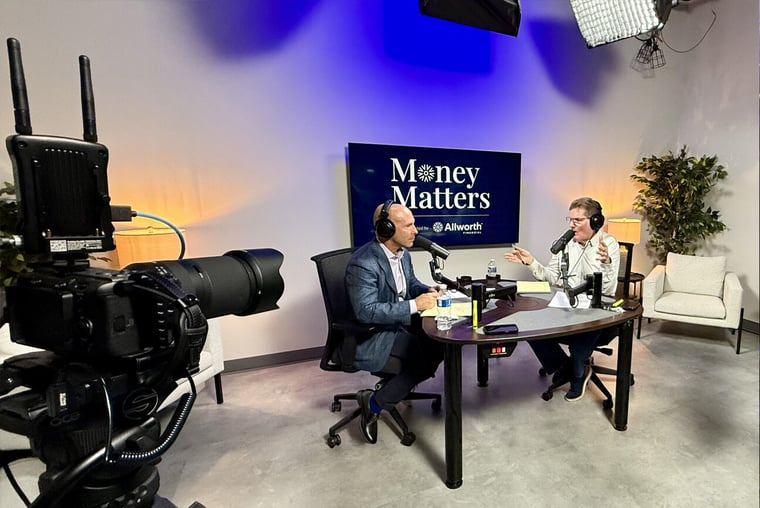
How do you turn a "jackpot moment" into a lasting family legacy? In this episode of Allworth’s Money Matters, Scott is joined by partner advisor Richard Del Monte (while Pat is on vacation) to tackle the complexities of wealth transitions and family gifting.
Through a $2.1 million case study, the team discusses how to support adult children through "giving while living" without creating family conflict. Then, Simone Devenny, Allworth’s Head of Private Wealth Strategies, joins to share a masterclass in succession planning for business owners. Using a multi-million dollar business exit as a guide, she breaks down the financial planning techniques needed to minimize taxes and protect your legacy during a major liquidity event.
Highlights include:
The Gifting Dilemma: Managing "warm hearts vs. cold hands" in a $2.1M portfolio.
The Business Exit: Estate strategies for multi-million dollar sales.
Family Transparency: How to mentor the next generation on wealth.
Tax Strategy: Sophisticated ways to protect your business proceeds.
Join Money Matters: Get your most pressing financial questions answered by Allworth's co-founders Scott Hanson and Pat McClain live on-air! Call 833-99-WORTH. Or ask a question by clicking here. You can also be on the air by emailing Scott and Pat at questions@moneymatters.com.
Scott: Welcome to Allworth's "Money Matters". Scott Hanson. And Pat McClain is off today, but Richard Del Monte he is joining us. Richard is one of our partner advisors here at Allworth in the Bay Area. That's where you...
Richard: Walnut Creek.
Scott: East Bay of Walnut Creek, and part of our great Allworth crew. And those who joined last week, you learned quite a bit about Richard's history and his viewpoints and stuff. But anyway, we're going to have fun today. I don't know where Pat is. Pat's
Richard: Somewhere around the world. Where's Waldo?
Scott: Well, and I know he shared on this program before, he had a health scare in the last year. He's relatively young, he's 62 or 63. But he had this health scare and afterwards he's like... One of his things he wanted to do is see lots of the world, and so he's been taking some time to...
Richard: Good for him.
Scott: Yeah, absolutely.
Richard: Absolutely.
Scott: And good for me, because I get to spend time with Richard instead of Pat all every week in the studio. We're going to take calls as normal. And if you'd like to join us, you can send us an email questions@moneymatters.com. We're also going to be joined by Simone Devenny. And Simone is one of our... Well, she's the head of our private wealth strategies here at Allworth. She's an attorney. She's been on the program before, she's brilliant, and she always has good things to talk about, so she'll be joining us as well. And we'll be talking a little bit about kind of the overall markets. And Richard, I thought it'd be kind of fun to talk about some of the latest fads right now. Because it's interesting when you look at where money is flowing, and it's often it's the individual, it's the retail funds, right?
Richard: Yes, for sure.
Scott: Not the institutional stuff. The retail money is flowing in some pretty crazy areas. And one is these levered ETFs.
Richard: Oh, man. They started out as 2X, two times whatever the... In other words, every day, they're going to do two times whatever the market does that day on whatever index is tracking. So, it used to be, when they first started, it was the S&P 500, NASDAQ.
Scott: Two times.
Richard: Yeah, right.
Scott: And the problem with that, even on a two times, there's costs associated, right? So, they use options contracts, and so, if the market goes up, you don't get quite 2X. And when it goes down, you get...
Richard: More.
Scott: ...more than 2X down. And now, there's some of these that are 3X.
Richard: 3X. And they have 2 and 3X negative inverse ones. I mean, it's just crazy.
Scott: And based on all kinds of crazy indexes, not the broad indexes. You can get super specific. Semiconductor index or manufacturing index, whatever index you want.
Richard: Or one stock. They have 3X NVIDIA.
Scott: An ETF?
Richard: Yeah. 3X NVIDIA and 3X NVIDIA inverse daily. People think those are great. As long as it's going up, it's great. But man, it goes on the other side. I had clients during the... We talked last week about the dot-com era. I had people that had a two times NASDAQ. It wasn't ETFs then. They were mutual funds. And when the NASDAQ went down, like, 70% or whatever it did in that period, these people lost 95% of the value of their account. And they still have not gotten even. It's been 25 years. People don't realize the actual risk you're taking with these things, they are massive.
Scott: But there's billions of dollars flowing into it.
Richard: Well, yeah, because it's a bull market. People, they don't think about the downside, like, for sure.
Scott: I look at them and I think, this is insane.
Richard: It kind of is. How much money do you have to make? Is it worth? Is the risk return actually there? I don't know.
Scott: I think a lot of people don't really think about it that way. I remember, this is right around the year 2000 as well, I had a client. He had been a client for a number of years. And he had a home in California and a home in Alaska. Spent the majority of his time in Alaska. Loved it up there. Did a lot of fishing. And so, he said, "Scott, I just have a feeling about the NASDAQ."
Richard: I have a feeling?
Scott: This was like right at the peak. He wanted to take half his portfolio and put it in the NASDAQ. Literally, 50%. And I said, "Well, look, here's the deal, Bill." I said, "If you're right about this, maybe your fishing boat, I don't know how big a fishing boat you have, maybe you have a 25-foot fishing boat, you can trade it in for 35-foot fishing boat. Get a little bigger fishing boat, maybe some fancy electronics on it. If you're wrong, the fishing boat's gone and so is the place in Alaska." So, I brought it back to, here's what it means to your lifestyle.
Richard: That was smart.
Scott: It's not just a number. These dollars are there for a purpose. And although he had a good lifestyle, there wasn't hundreds of millions where he can afford to lose half his portfolio.
Richard: It's potentially life changing here.
Scott: Yeah. And I think the challenge is we see, whether it's with things like levered ETFs or options, a lot of young people are... Options, it's a zero sum game less the trading cost. It's no different than going up to the casinos.
Richard: Yeah. But it's exciting. It is like a casino thing. It really is. This is like gambling for them.
Scott: Well, and then there's Polymarket and those, right, you can bet on anything.
Richard: Anything.
Scott: And now, you look at the big investment houses, Schwab, and I don't know, Fidelity as well, they've announced...
Richard: Schwab, for sure. They're embracing it. It's coming right. It's going to be, I guess you're gonna have your bets in your brokerage account. It's crazy.
Scott: Sometimes people will say, well, the stock market's just a big casino. But I say, no, the stock market is a place where you can take ownership in companies that you didn't start. Somebody else started, someone else has run it. You can take an ownership stake in those companies. That's very different than betting on something like Polymarket.
Richard: Yeah. Who's going to win a game?
Scott: What's Trump gonna say tomorrow?
Richard: Or what's going to happen in Iran or whatever. Yeah, exactly.
Scott: And then there's like a Strategy, the company. It's not really a company. They're just a Bitcoin. That's kind of imploding. The strategy behind... It was MicroStrategy. I think it was... Yeah, it was Micro Strategy. That whole thing's kind of imploding.
Richard: Yeah, and it does every three or four years it implodes, you know? And you look at the stock market, everybody thinks that's risky. It implodes once every 25 years on average, maybe three times in our lifetime so far. But these things are doing it every couple of three years, Bitcoin.
Scott: Yeah, Bitcoin.
Richard: And I still... How do you establish value in Bitcoin? There's no earnings, there's no dividends, that pays no interest. It's just a thing. So, how do you know if it's worth $1,000 a coin or $1,000,000 a coin?
Scott: It's only worth what someone else is willing to pay.
Richard: Yeah, it's the greater fool theory.
Scott: Of course.
Richard: Yeah, that's all it is.
Scott: Who's to say there's not another crypto that's going to come out to replace Bitcoin?
Richard: Like the Trump one? Trump one worked out great, didn't it, for those poor people? He made billions and they lost at a scam. That was too bad.
Scott: At a scam.
Richard: But crypto, you know, a person from one of the investment firms that we work with here, one of them, said, he characterized crypto as a fraud within a fraud. So, not everybody agrees with that, but if I can't establish the value, I can't recommend it to people.
Scott: Well, how is it an investment? It's a store, it's a currency which would be not invested by definition.
Richard: Yeah. I mean, how is it any different than Beanie Babies and baseball cards? That's what I don't understand. It's just a thing you can collect that doesn't do anything. The Beanie Babies. Remember those? Everybody was getting them and they were making money.
Scott: I had a client, took an early retirement offer. Not a sophisticated investor, just got kind of lucky, right company. And I had a specific... Like, we did the planning and all that stuff, now they're retired. I have a specific meeting just to talk about investments where I want to spend some time educating them. And a lot of it, as you know, as a financial advisor, is preparing them for the downturns, preparing them from when things in the portfolio are not going to go well. And if you're diversified at any particular time, odds are there's a piece of your portfolio that's not performing well.
Richard: Something is sucking at all times.
Scott: And what always happens, not always, but the vast majority of the time, investors look at not those things that are doing awesome, it's that one or two things that aren't doing so well. "Hey, Scott, you big idiot. What's that?" Anyway, so I had this whole meeting scheduled, presentation materials, and stuff. And they said, "We only have about 10 minutes because," I kid you not, "there's a Beanie Baby convention." And they would rather go spend their time at the Beanie Baby convention thing. And I just thought, I can't care about your money more than you care. I mean, if you don't care about this, how can you expect me to really care? It was really kind of... I felt bad for them. I obviously did the best job you could as an advisor, but...
Richard: But we're just prone to manias. That's just how it is. And there's a lot of manias going on right now.
Scott: Well, the IPO market for the big companies, it's pretty hot right now.
Richard: Pretty hot. And people want to get it at the outset. And I don't know if you... I talk to clients and, "Should I buy it the first day?" And I think people don't understand that the odds are, I think the number is 60% or maybe 70%, that the stock is lower...
Scott: Is worth less a year later.
Richard: ...six months after...
Scott: Yeah, almost always.
Richard: ... the IPO because the insiders are starting to be able to sell. So, when they start selling, the price goes down.
Scott: I think also, it's important to look like something could be phenomenal, but there's probably a cap on what you're going to be willing to pay for it. So, my wife and I have been in the same house 22 years. We built it. We like our house. I wouldn't pay $10 million for my house. And if someone came by and said, I'll give you $10 million for it, I'd probably say, "Honey, it's time to move." Nor is it worth $50 million or a billion dollars. And so, I'm just throwing it off like, Elon Musk is a brilliant entrepreneur, brilliant.
Richard: Without a doubt.
Scott: Right? And if anyone... I don't know if you read his book, Walter Isaacson.
Richard: Reading it actually right now.
Scott: It's great. I feel sorry for Elon in a lot of ways. He's a troubled man. But anyway, what you think about his personal life, he's been a brilliant businessman. But is there some cap to what SpaceX would be worth?
Richard: Of course. Yeah, there's a price. Of course, there's a net present value value of that.
Scott: Right. So, some of these things are priced for... I think SpaceX, it's the Elon effect.
Richard: Yeah. I have a client that lives in the city, has a residence in the city, and they're waiting for people that are going to be newly minted, you know, Anthropic or OpenAI or SpaceX, employees that get a big windfall. And they said they're actually expecting to get an offer for their house of what it's going to be worth in 10 years so they can move in right now. That's where that market is. Because their houses are so hard to get in the city.
Scott: Yeah, I've heard the city's on fire right now.
Richard: People demand to live there. So, you're going to get, whatever the appreciation is over the next 10 years, we'll give it to you now if you'll move.
Scott: And the whole AI... That's really interesting. And look, earnings are doing well for companies. There's a lot that's going really well in the markets.
Richard: Yeah. But a lot of that, you know, all the build out of the data centers and all that stuff, at some point, it's going to slow down. But they're pricing these stocks as if it's going to go on forever and keep increasing. It may, but it may not. You know, so...
Scott: Time will...
Richard: We will see.
Scott: We will see. But I think it's always important to... If you want to bet on... If you say, "Look, I really think SpaceX is going to be great," and you don't care about... That's fine. Just make sure that whatever you put in it, you can afford to lose. Maybe it's 2% of your portfolio or 4% of your portfolio. It's not going to be 20% of your portfolio in any of these areas. Gold was on fire for a while, and we don't hear much about gold anymore.
Richard: Yeah. I mean, I was around when, you know, gold was peaking in the early '80s. I was a kid, but I knew that it got up really high, and then it took 30 years to get even again. But people forgot all about that, and they just think it's going to go to the moon.
Scott: They talk about this great hedge for inflation, and there's no...
Richard: It's the worst hedge that ever was invented.
Scott: If you do a graph and you look at inflation...
Richard: Terrible...
Scott: ...and the price of gold, like, where do people come up with this?
Richard: It's something that people just pass on. They think it's true because it's something their neighbor told them. A lot of that stuff, TikTok, I mean, people get their financial advice from TikTok. That's a problem, you know? Yeah.
Scott: Yeah, TikTok is a... As I watched my 19-year-old daughter, who's home for college, taking the dog for a walk this morning, she was so... I drove past her. She was so engaged in her phone that she didn't even know I was driving by.
Richard: Wow.
Scott: I get passed her and I'm thinking, this is not healthy.
Richard: Yeah, no, it's not.
Scott: You can't just go out and take a walk...
Richard: So, powerful.
Scott: Yeah, terrible. Anyway, now we're going to get too far in the weeds. Let's go to the phone here. Let's talk with Pat. Pat, you're with Allworth's "Money Matters".
Pat: Good afternoon, gentlemen. I forget, was it... One of you is going to be a grandparent pretty soon. Am I right?
Scott: McClain, Pat McClain, who's not here today. Pat's on vacation. Richard Del Monte is doing this today.
Pat: Congratulations. So, much fun. Anyhow, I've got two issues related to being a grandparent, being retired. First one is, how do you give away money to the kids? And the second issue is, how do you bring your kids in on your money situation as you get older and perhaps you're not as capable of seeing your finances are done properly? So, I'll start off first, just a little rundown. Sixty-seven and sixty-five. We make about $100, $510 in pensions, index for inflation. House, $600,000 paid for. We got about $2.1 liquid assets, 75/25, usual mix of index funds and cash. I've got about a million in traditional. My wife, about 375 traditional.
So, my RMD is at 73, hers are at 75. We got about $440 in the Roths. We got about $225 in old company stock, and I'm trying to capital gains harvest that away over the next few years. So, we never made more than like $180 in a year. So, this year, we take up 3%, 4%. We're kind of making what we always made. And now that we don't have kids to pay for anymore, we spend it on vacations and home improvements and we don't break a sweat.
So, we got three kids, late 20s, early 30s, hardworking, good kids, poor grandkids. So, what do you guys always say? Better from a warm heart than a cold hand. Sometimes you want to give the kids money while you're around, and I'm definitely thinking that way. We could easily give away 15, 20, I don't know, 30 per year, split it up three ways. But like, how do you give that money away? How much? Do you give them shares from a brokerage account, let them pay the taxes? But the sort of the financial side is this one thing, but honestly, what I'm most concerned about is money coming between us and our kids. They start to expect something. If we give them money two years in a row, we don't do it a third year, they're looking at us funny. I mean, all the money will do anything to screw up our dynamics of our very good family.
Scott: Yeah. And I mean, it's a very good point. If you start giving them money, you need to be very clear like, "Hey, this is what we're going to do this year. We're not sure about next year. It's going to be dependent upon our own finances and stuff. So, please don't expect this going to happen again next year." But if it's something that you do on an annual basis, odds are they're going to adjust their lifestyle to that. They're going to expect that. And they're going to expect that there's going to be some funds coming each year.
Pat: Yeah. And I mean, I guess my thought is I'd start off slowly, so to speak. I don't think $2,000 or $3,000 or $4,000 for each of them is going to make a big difference in their lives. Because again, they're well established and have good careers.
Scott: And do they own homes?
Pat: Yes, all three of them own homes and they've got grandkids. And they're fully functioning adults and kind of seem to be doing everything you should do at their ages. But I am also...
Scott: And what's your thought process about...? And when you said you had $2.1 on liquid, then you listed a bunch of different accounts. Is that $2.1, the sum value of those other accounts? So, if you added them all together.
Pat: That's everything, about $1.4 in traditional, $440 in Roth, maybe a quarter million in company stock. So, at $2.1, which is more money than we ever, ever, ever thought we would have. So, we kind of feel like we hit the jackpot in life.
Scott: But you've also said you're taking 3% to 4% a year out and enjoying it all, which is great.
Pat: Yeah. Heck, yeah. We go we do whatever we want to do. We don't think nothing of it.
Richard: That's great.
Pat: We take three or four trips a year. We go to Europe, we go to the West. We do whatever we want.
Richard: Perfect.
Pat: Don't even think about it.
Scott: That is perfect. If you start giving your kids substantial amount each year, that could actually have an impact on your lifestyle.
Pat: Sure, sure.
Richard: It could, yeah.
Pat: I get that. I mean, we gave away 15 last year. One of our kids who was in a position to need it for a very particular reason. And over the years, we've kind of done this with the kids, but we've we never let one kid know what we gave the other kid. We always tell them, "Look, this is between us." You know, we help each kid as we see fit as they need it. And again, we don't want one kid comparing with the other one because, frankly, I haven't kept the hard and fast accounting of it all. I've just kind of tried to do what's best as a mother and a father. But like I said...
Richard: My kids, they would have kept an accounting. They're probably comparing notes without telling me.
Scott: And talk, yeah. Of course, right. I do, yeah.
Pat: And again, we have good kids, but money does strange things.
Scott: So, you're 67, you're not 77 or 87.
Pat: Right, I'm 67, yep.
Scott: What's your motivation right now behind this? What's prompting you to think you want to be giving more to your kids?
Pat: Well, we're sitting at $2 million now, and, you know, the money just seems to be growing. And it almost seems like the rate we're going, it could easily be $3, $4 million. So, you know, we leave this earth in 15 years and there's $4 or $5 million dollars we leave behind. And, you know, did I get any enjoyment of watching them spend it or when they're 50s in their 60s or whatever, suddenly they got a big check to spend years after they could really use it because, you know, we know what it's like to struggle when you're raising a small family. We've been there. Can we help them sort of get through the difficult years? And we want to just be around to see them enjoy some of our money. So, I guess that's the motivation, really. Just the joy of seeing our kids and maybe being able to pay off their mortgage a little bit earlier or, you know, help buy a minivan for the extra kid, what have you.
Scott: Yeah. So, maybe the way to go about this is start maybe on a more modest scale. Maybe it's $5 to $10 grand a year. Right.
Pat: Right.
Scott: But I would probably have the intention of something, this is you're going to want to continue to do as opposed to...
Pat: Probably, yeah, all things, you know...
Scott: Yeah, all things being considered. But there will be some downturn, too.
Richard: Yeah, that's what I was going to say.
Scott: Some odds are there's going to be a bear market during your lifetime and your $2 million is suddenly worth one point five and you're not going to feel as flush.
Richard: You could also frame it as, we have a surplus this year and we wanted to share some of it with you, which implies that there might not be surpluses every year instead of putting it...
Scott: And then see how they do with spending it.
Pat: You know, we've told our kids, "Look, the last thing we ever want to do is be a financial burden to our kids."
Scott: Well, you don't have to worry about that.
Pat: We tell them, "Look, don't worry about mom and dad. We got it under control." And then they know how frugal we were when they were growing up, and now, they see us spending money. We go wherever we want to go. And like, "Oh, mom and dad must have done okay here." So, they have a little bit of a clue, but they don't know any of the details of exactly how much we have. But I guess is right now we are perfectly capable of managing all of our financial issues.
Scott: How many kids say you have? Three.
Richard: Three.
Pat: Three kids, three kids, smart kids, good kids. Like I say, very capable. But, you know...
Scott: You're looking and you're saying, odds are, we have more than we're going to need in our lifetime. And if there's a chance, rather than them get it all I'm dead, let's let them... And you can see how they do with it.
Pat: And my guess is, I'm also wondering, though, like, at what point do I sort of reel them in and say, "Okay, here's what mom and dad has. Here's what we want to do with the money," if and when we get to the point where, you know, we're just not with it anymore. Who knows how these things are going to work out. We could be sharp as tack till the day we die, or something is going to happen tomorrow.
Scott: So, if you said you had $20 million instead of two million, I would probably say, I would have that conversation sooner than later. And maybe even some gifting strategies sooner than later. But at $2 million, you might be you might be spending quite a bit of this. I mean, if we have a decade like we had in the 2000s, where your returns are next to nothing on your equities, you don't want to put yourself in a... You don't want your kids to start thinking, "Oh, I don't have to worry about saving for retirement because mom and..."
Richard: My dad's doing it.
Scott: "...my dad's got these assets I'm going to inherit down the road, so I don't really worry about it anymore." And then we find ourselves a decade down the road and it's a different situation.
Richard: Yeah. You have to be really careful not to create false expectations.
Pat: How and when do I bring them in and say, "Hey, look, mom and dad, we're getting older now. I don't know if we can manage our money is like we used to. Here's what mom and dad have."
Scott: I mean, you're relatively young. Are you having some health issues?
Pat: Not at all. Not at all. But you and I know, you probably know people in their 60s who were fine one day.
Scott: Of course. Yes, of course.
Pat: And I mean, I think we got this way because I was a planner and I'm looking at the future. And I mean, you know, my father was perfectly okay well into his 90s, and then he wasn't. So, I mean, sooner or later, you sort of have to expect that something might happen to either one of us. And...
Richard: Are you planning for...? Go ahead. Sorry.
Pat: ...frankly, I'm more tuned into this than my than my wife. And frankly, like, what happens if something happens to me, how she can handle all this, you know. As long as I have my wits about me, I think I can handle it, but on the other hand...
Scott: Are you are you the one who does the family finances in as far as the portfolio?
Pat: I know. I'm the NBA, I'm the math teacher. I'm the guy with the numbers. She simply runs the rest of our family. So, even the division of labor.
Scott: But, look, I mean, the longer you're married, people take different roles.
Richard: Division of labor, yeah.
Scott: Yeah, for sure.
Pat: Yeah, yeah, so...
Richard: Are you are you planning on being the...? Who's going to take over to manage your assets when you get to a place where you can't do it? One of your kids or somebody else?
Pat: My kids are smart enough to do it. My kids are smart enough to do it, but again, I'm worried about the family dynamic. You know, do they sit there and go, "Well, look at all the money mom and dad have, gee. Gee, am I going to wait till they die to get any of this?" So, you know, I think they would do the right thing. But again, the last thing I ever want to do is do anything to jeopardize the relationship between our kids and the kids among themselves, what have you. So, do I bring them in at a certain point and say, "The three of you, okay, guys, here's where mom and dad are at. Here's what we have. Here's what we're going to spend. Here are our priorities. And as we move forward in life, if you guys have to take over, here's what we want you to do." You know, when do we...? It's better to do that, I think, before you start to lose your whatever. But I don't want to necessarily do it today or tomorrow. It's not a very comfortable conversation. So, you...
Scott: I mean, some of this comes down to your personal desire here.
Richard: Yeah. But it's also an opportunity for you to mentor your children into how to handle wealth...
Pat: I agree.
Richard: ...you know, if they're not doing it. You can say, I mean, "I think I'm a big fan of transparency," and tell them, "This is probably what's going to happen in the future." Why prepare your kids for a life they're not going to have? You might as well prepare them for one they're going to have. And at some point, maybe they'll inherit $700,000 or something from you each.
Pat: Scott, do I dare ask you, you know, I think you have older children, and I don't know, you know, the reason I requested...
Scott: Yeah. We've helped our kids. I helped my oldest daughter buy a house and it wasn't the 20% down. It was the 80/20, was flipped. But I made sure she had a mortgage and some skin in the game and all that. And it was mainly because I was in a position to do it. And I waited till her career was on going fine and she was very self-supportive and all that stuff. And we're going to be helping our son with something. I've told him the same thing, "When it's time, we'll help you with a house as well." And we're actually having a family meeting the latter part of July with... We're still debating if we have the younger two or not, because they're essentially 16 and 19. But just to like, "Here's where the finances are."
Richard: Smart.
Scott: And part of it is just to see what kind of engagement they want to have with some of our philanthropy that we do and trying to get engaged with all that and try to figure out... You know, as time goes on, I'll turn 60 this year. So, I'm relatively young. Odds are I've got a few more years. And part of it, I want to see how they do over the next decade.
Pat: You are professional, but these are nerve-wracking issues to contemplate. Again, it's not about the dollar you intend...
Scott: Well, the funny thing is, you know, and Pat, this call is all out of love, right? You want to be you want to help your kids. And you don't want to do something that might be detrimental. And money is a funny thing. It's like a magnifier, right? It can make somebody more of what they are, somebody who's gracious and charitable, they become more gracious and charitable with more money. Someone who's stingy and nervous and maybe a little greedy, they could become more stingy, nervous and greedy with more money.
Pat: And we have no problem being generous with our kids. We absolutely... I mean, they're our lives. You know, we don't mind being generous with our kids and our grandkids, you know, but boy, oh, boy, I've seen it happen within my family how sometimes money just creates a strange...
Scott: Oh, it does.
Scott: I have a neighbor. He's an estate attorney. He does family litigation. That's his specialty.
Richard: Yeah, that's the saddest one.
Scott: I'm like, how could you have that?
Richard: Check your inheritance and sue each other.
Scott: I know. That's his whole job.
Richard: Yeah, it's terrible.
Scott: That's what he wakes up to every day. It's terrible.
Richard: It's terrible.
Pat: Yeah. Yeah. Well, I think what I'm thinking, I'm just going to start slow. Christmastime comes, everybody gets a couple thousand dollars.
Richard: Perfect.
Pat: That's very generous. So, I don't know about you, but I think giving somebody $2,000 makes a...
Richard: Is huge.
Pat: Giving these kids $2,000, that's a...
Scott: Well, most families, that can have some impact in their standard living. Like you said, buy a minivan or...
Pat: Yeah, yeah. And I'll just even tell them, "Okay, we had a pretty good year," so on and so forth. And then next year, maybe it goes to $2,500 or $3,000 per kid if all goes right. And, well...
Scott: But, Pat...
Pat: ...that's not life-changing money, but it's a mortgage payment for a month or pays off the car loan or, you know, put it in their Roth IRA or what have you. And it's nice bit of change.
Scott: ...it sounds like you do all the investments yourself, right? You don't have an advisor.
Pat: Yeah, yeah.
Scott: I would recommend having a relationship with some advisor in your back pocket. Something happens to you, you have a stroke today or something...
Pat: Yeah, yep. No, God forbid, yeah.
Scott: ...and your wife's going to freak out.
Richard: You got a backup plan, yep.
Scott: And having that relationship and maybe having your wife and have a meeting or two with that advisor, your wife's comfortable so you've got a plan in place.
Pat: It's hard. I know you guys are on the West Coast and I'm 3,000 miles away, which feels like...
Scott: We got we have offices in 40 states.
Pat: Ah, I didn't realize that.
Scott: We've got 600 folks or whatever.
Pat: I did not realize that. Okay, well, that's good to know because, boy, it's just hard to know.
Scott: And odds are, one of you are going to be around, at least at least one of you into, your 90s, statistically.
Richard: For sure.
Pat: Sure, sure.
Scott: So, we have many years ahead. But I like the concept of starting somewhat small, making sure that I don't expect it every year, and then see what they do with it.
Pat: And like I say, if I have a good year this year, and then next year, you know, we lose 30%, "Well, I told you, Mom and Dad had a good year. We all ate a little better. Mom and Dad have a bad year."
Scott: There you go.
Pat: Our kids are never spoilt. Our kids are never spoilt. So, it's not like they went to high life and they need to... You know, no, it's just we lived a modest lifestyle. You know, you hear about those quiet millionaires, you know, the people who just drive old cars and live in small houses.
Scott: That's most people that have money.
Pat: Yeah, which is why we have money in the bank and so many people we know don't have any money in the bank. And I just shake my head like, how did you go through life living like that? I don't know. It helps to start with little, I think, and have to work your way up. I don't know. That's what I think.
Scott: Well, Pat, appreciate the call, and your kids are fortunate to have you as a dad.
Richard: For sure.
Scott: Yeah. And look, everyone's got their own thoughts on them. Because there could be someone else says, "Scott, how can I plan so that my last check bounces?"
Richard: Yeah, that makes my heart...
Scott: Well, because you don't know when you're going to die, right? Of course.
Richard: I know. Because if it happen to be, you know, live an extra year, you have no money. So, yeah.
Scott: I'm going to share this story. It's not funny, but it's kind of funny. So, a client of mine, he comes to me one day and he says, "Scott, I've got terminal cancer. My doctor told me to quit drinking, live clean life." He says, "Screw that. I'm supposed to be dead in a year. I'm going to live it up." So, he spends almost all of his money. And then I get a call from like eight months later, "Hey." "Oh," I say, "How you feeling?" "Actually I'm doing really well. I'm wondering if you have an attorney recommendation for me." I said, "What do you mean?" Well, the files got swapped. He did not have terminal cancer.
Richard: Oh, my gosh.
Scott: And now he's 60 some odd and dead broke because he spent all of his money.
Richard: Because he spent all of his money. Oh, man.
Scott: I don't know why I just decided to share this. Because you talk about thinking you're going to do your last day, right? How terrifying that would be. It suddenly you realize...
Richard: Oh, my gosh, that's unbelievable.
Scott: Yeah. I don't ever know what happened to the...how it all worked out for him. Probably not well, sad story.
Richard: That's a probably pretty big settlement though with that hospital.
Scott: I would imagine.
Richard: Something for mental anguish and whatever else. Yeah.
Scott: I had an ankle surgery years ago and they're going to remove my screws in my right ankle. And, you know, they go through, if you've had surgery, they ask your name, and they double-check everything. "And we're going to remove screws from your left ankle." And I said, "No, my right ankle." She says, "Oh, very funny." I said, "No, I'm not joking. It's my right ankle?" She says, "You're serious." There's my paperwork says left ankle.
Richard: Oh, man.
Scott: Anyway. All right. Enough of that. I don't know why we get way off from tangents here. But we're going to now do a bit of a client story with Simone Devenny. And you've been listening to the program for a while or follow all our stuff, our educational stuff, you might know Simone. Simone, thanks for taking some time to join us.
Simone: Hey, it's me here. Can y'all hear me okay?
Scott: Absolutely.
Richard: Yeah.
Simone: Fantastic. Hi, Scott. Hi, Richard.
Richard: Hi.
Scott: Hey, real quick, Simone, for our listeners, give us, like, a 30 second background on your career.
Simone: You say 30 seconds hoping that I'll stay under two minutes. I know that. But I'll give you 10 seconds. So, a quick snapshot. I've spent the last roughly 30 years working with clients, both as an estate planning attorney and a wealth management professional. And lots of stories to tell just like the two of you have, which I've been happily listening to until it got to be my turn here. So happy to join the call.
Scott: Yeah. And you lead Allworth's private wealth strategies,
Simone: Right.
Scott: Right. So, with when advisors have some complicated matters or whatnot, they bring you in to help out with some things, correct?
Simone: I hope they do, and often they do, correct, yes.
Richard: She does an amazing job.
Simone: I'm complicated these days, isn't it? But absolutely. So, my role here is to help out on cases. You know, it's funny listening to your last caller. And I was on mute and it wasn't my turn to talk, but of course I wanted to chime in with all of you and say, "Have the conversation now. Have those conversations." I heard Richard say, you know, "Be open and disclose everything." Because, you know, that, in my experience, has been what I've seen are the healthiest outcomes in families as difficult as it is. But there's my two cents on that.
Scott: All right. So, you're going to share a client's story regarding, I think, a business owner, right?
Simone: Yeah. I'm going to share a client's story today. That's what I was asked to come on and do. And it's funny because we're transitioning a little bit from the last caller. And I think this is something. I'll share a particular story, which is around estate planning, I think today's topic. A little bit different from the vein that you were in earlier, but I think this is a story which can be impactful for a lot of listeners. And I think even the numbers don't matter, the concepts matter and here's what I'm going to share.
So, we've been working recently with a business owner. You know, Scott, you've built this firm a long time ago and you have a lot of listeners and a lot of very loyal, I would say, fans and clients. And many of these business owners who... You know, I heard the earlier caller talking about people driving ordinary cars, or we might remember that book about the millionaire next door, right? But we're in a really interesting time where these business owners... Doesn't matter what kind of business, right? A lot of times it'll be a landscaping company or something very sort of...manufacturing something, what we had previously considered to be simple.
And suddenly, these business owner clients of ours who are approaching retirement age and aren't really sure about a succession plan, they might be approached by a buyer. And we're seeing some pretty big numbers out there, even in situations that we would not have expected, you know, say 20 years ago. So, one example, existing client of ours who came to us. And some kind of an engineering company, consulting, and is approached about selling a business. And so, we had chatted with him, we chatted with him last year. And we were talking about, you know, "What are your plans for the future?" And he wasn't really sure. And next thing you know, somebody approaches about buying the business.
And now, you're looking at a deal, let's call it, in in the tens of millions of dollars, right? And I want to make sure that we're clear here. This is not to scare anyone away, because tens of millions or hundreds of thousands depends on your situation. Everybody's different. But this is meaningful money for this family, just like maybe hundreds of thousands would be meaningful money for another family.
But I think what's important here is that this client came to us and said, you know, "Looking at selling the business. I never expected to do this. What can we do here?" And in this case, we were able to help him, this is where the estate planning and everything comes in, look at, you know, what are the tax implications of this sale? And how do we make sure, number one, that we understand what's most important to you, right?
Some clients will come in and they'll say, "The most important thing to me is taking every penny I've ever made, making sure I don't pay any taxes, and giving it all to charity." Maybe it's doctors without borders for a doctor, which I heard recently, or maybe it's a cancer charity, or something like that. Or maybe it's ASPCA. Another client will come in and say, "Charity begins at home, and I want as much of, of the proceeds of this to go to my family members."
But in any case, this particular client said, "I want as much as possible to go to my family members. And I'd like to reduce the tax implications from this sale. And I'd also like to know, what does this look like?" Because this is, by any estimation, a huge amount of money that I never envisioned. And I'm actually really worried about like, how much is enough for my kids?" And so, we're sitting here saying, "Look, you can get $5 million to your kids and you can do this and you can do that."
And so, what we're able to do in this case for this client and for many others, right, is to look at it and say, "Okay, let's look at the deal. Let's look at the tax implications. Let's look at what's important to you and your family. And then let's structure this," even oftentimes prior to the transaction closing, "so that everyone achieves their objectives." So, in the case of this client, we actually help this client save, I would say, many, many hundreds of thousands, if not into the millions of tax dollars. But also, to create a framework for a legacy for his beneficiaries, in this case, they're his children, right?
And that's only step one. Because step one is like, okay, we just had this liquidity event or this business sale. And now, what comes next? So, what does our life look like now? And this is where I always say it's kind of that space between, right, that they often call it like a liminal space, between... You know, "I was a business owner all my life, and that's how I define myself. And now, I am a wealthy person with a giant portfolio and kids who will never have to work. But, oh, oh, I don't want kids who will never have to work. And what do I do now?"
And so, that's where a lot of the work that we do, which I consider to be the very creative and fun work that we do with clients... You know, we always talk about, you know, obviously, all of the professionals here at Allworth, and Scott, everything that you and Pat have built over these years, and Richard. I mean, this is about ensuring that the portfolio is actually the engine that ensures that you can continue to achieve your other objectives. But I think I heard, I don't know if it was Scott or Richard mentioned earlier, like, these are like life's big questions. You know, why am I here? What am I doing? What's it for? And so, that's where the real opportunity is.
So, I guess I would say, where we come in and help, and where I find the most personal satisfaction in my work, and I'm sure both of you and many of us, right, it's when you're sitting with someone who is about to have, you know, the most important, you know, jackpot moment...I heard the client say earlier, the caller, jackpot moment of their life, but it's like, "Where do I go from here? What do I do next? What do I do to ensure that this doesn't create a problem for the people I love?" And how do we get really creative and have this opportunity to turn this event into something that actually creates even more meaning in somebody's life. So, again, let me ask you about one client with a particular case, if I can share that.
Scott: Let me ask you this question, Simone. So, my guess is when, well, I know for a fact, people first have a conversation with you, it's really about the mechanics of it, right?
Simone: Yes.
Scott: How do we reduce taxes? How do I make sure much goes to my kids? At what point does that shift from the mechanics to, what is it we're really trying to accomplish? What are our hopes? What are our fears? And how do we ensure that this is going to be a blessing and not a curse?
Simone: I think that's a great question. And I think that's different for everyone, right? And I heard you saying earlier, you know, people are driven by different things. Like, what did you say? Somebody who's going to be greedy and whatever, it's only going to be multiplied by this, right, or whatever. But I think the shift happens. I think there are two points. One is, when we work with clients and we have, you know, our excellent planning team that will put together real illustrations with numbers. So, depending on, of course, who the client is. People are so different. Somebody's an artist and only wants broad strokes. Somebody's an engineer and wants to see...
Scott: Everything.
Simone: ...every line-by-line of every dollar that's coming in and going out. Okay, so totally different people. But I think that once we've done our work as advisors and shown a client, "Look, you have a 99% likelihood of not running out of money, even if there are bear markets," let's say, okay? When you have that moment of, "Okay..." And by the way, for some people, this will never happen. You can show them 99%, and they're going to tell you every reason why that means nothing and the math is bad and it's going to go wrong and the sky is falling.
Scott: That's right.
Simone: Totally depends on the person. But I would say, in many cases, where the shift happens is when we, as a group of advisors and clients, where the client themself comes to the realization that, "I do have enough and I'm not going to run out and my fears are at bay," let's say. Then comes the point at which we're able to say, "Okay, and what does this mean? What does it mean? What do you care about? What was it in your life?" Like I always take the position with no judgment of people who don't love philanthropy. I love to talk about philanthropy with people who want to do that. And I also very much respect, of course, that philanthropy begins at home for many people.
But when we get to say to somebody, you know, "What is it that you now have solved for that you can carry forward?" So, like you think about a lot of people, you know, people who grow up in financial difficulty. And oftentimes, we'll hear from these people, many entrepreneurs, in fact, come to us with this sort of a mindset where they say, "You know what? I saw my parents struggle. I saw my father lose everything. I saw my mother go to work. I saw whatever." And they say, "All I ever wanted was to be able to be successful so that I could solve everybody's financial problem in my family and buy everybody a house." You hear that all the time.
And so, it's like, okay, so once you've gotten to that point and you've done that, like, what comes next? What was the difficulty? I like to help introduce the idea that you're now in a position of the same drive that you brought to whatever built you this well. Whether it was discipline and investing, whether it was entrepreneurial spirit, whether it was just working hard every day, 9 to 5. You know, now that you've graduated, let's say, into this point of your own personal financial security, how can we take this and help you ensure that the people and/or the causes that you care about benefit from this? And I think that's where it's just such meaningful work. And I know that at Allworth, you know, we help people "live rich and meaningful lives." And I think that it's really all in that conversation.
Scott: Yeah. Well, it's really, I think that's one of the reasons we love this profession. People think, "Oh, you're a financial advisor, so what? You trade stocks and bonds or whatever?" And it's...
Richard: So much more.
Scott: No, it's mostly helping people, one, get clarity on what they want, because they don't always know what they want. And then it's helping put the plans together to help them accomplish those objectives.
Richard: And then helping them get comfortable with their new lives. Because that's a big deal. These people are gonna have a whole different situation. If you're scrapping, you're running a business and you have...
Scott: And there's a lot of people like that. They've lived very modest lives. They've given...
Richard: All the money is locked up in their business, and now all of a sudden, it's in their Schwab account. And it's like, whoa, this is a whole different world, you know, yeah. It's a big deal.
Scott: Well, thanks for taking sometime today, Simone. I always appreciate it.
Simone: It's always so much fun to talk to you, both. And I hope all of our listeners have gleaned something from this. I'm sure they always do, because you got a loyal group of them out there, Scott. So, thanks so much for having me. It's such a privilege.
Scott: I appreciate it. And it's always good having them. And Simone does some webinars and stuff for us as well.
Richard: She's great. And thank you for all the help you give all of us as advisors, Simone. It's just so wonderful.
Simone: And thank you for allowing me to. Thank you. It's my pleasure and my honor to work with all of you. All right, have a wonderful day.
Scott: Okay. Thanks, Simone. It's funny, you know, because she's a subject matter expert.
Richard: She is.
Scott: And we have several on different type of topics. That's...
Richard: That's great. You bring them in, and they make a huge difference.
Scott: Yeah. Anyway, great having everyone with the program today. Glad you are here. And if you haven't rated our show, give us a review or whatever, we encourage you to do so, whether it's Spotify or Apple or wherever you get in your podcast, just if you take a moment to, one, follow us, and two, give us a review. And if this show's been particularly helpful for you, and you think of somebody in your life that, "Oh, this person should hear this," pass this along. It would be helpful to them and helpful to us as well. So, thank you for taking the time to be part of our day today, and we'll see you next week. This has been Allworth's "Money Matters".
Automated Voice: This program has been brought to you by Allworth Financial, a registered investment advisory firm. Any ideas presented during this program are not intended to provide specific financial advice. You should consult your own financial advisor, tax consultant, or a state-planning attorney to conduct your own due diligence.
Insights for Complex Wealth Decisions
Join our email list for exclusive commentary from our Chief Investment Officer, early access to expert-led webinars, and your complimentary Wealth Planning Checklist for Complex Portfolios.
We take your privacy seriously and respect your privacy choices. By submitting this information you agree to our Terms of Use Agreement, Privacy Policy, and to receive important notices and other communications electronically.