
Roth Conversion Strategies: Should You Convert or Keep Your IRA?
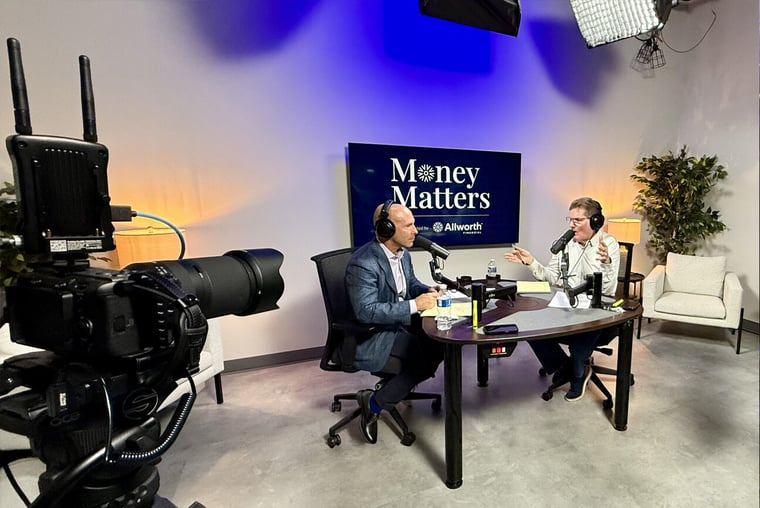
When does a Roth Conversion make sense—and when could it be a costly mistake? In this episode of Money Matters, Scott and Pat tackle one of the most common retirement planning questions: whether a Roth Conversion is the right move for your financial future. They break down a real-life caller’s situation involving IRAs, pensions, charitable giving, required minimum distributions (RMDs), and the tax implications of converting retirement assets.
The show also features an emotional conversation with Laura, a member of the “sandwich generation” who is balancing retirement planning while supporting aging parents and a special-needs child. Scott and Pat discuss pension decisions, reverse mortgages, life insurance needs, and how to navigate competing financial priorities without sacrificing long-term security.
Plus, they explore tax-efficient investing strategies, asset location, charitable giving through donor-advised funds, and why taxes may be one of the biggest threats to your retirement wealth.
If you've ever wondered whether a Roth Conversion belongs in your retirement plan, this episode is packed with practical insights.
What You’ll Learn:
-Roth Conversions & Retirement Tax Planning
-Tax-Efficient Investing Strategies
-Retirement Planning for the Sandwich Generation
-Reverse Mortgages & Aging Parent Care
-Charitable Giving, RMDs & Retirement Income Planning
Join Money Matters: Get your most pressing financial questions answered by Allworth's co-founders Scott Hanson and Pat McClain live on-air! Call 833-99-WORTH. Or ask a question by clicking here. You can also be on the air by emailing Scott and Pat at questions@moneymatters.com.
Scott: Welcome to Allworth's "Money Matters." Scott Hanson.
Pat: Pat McClain. Thanks for joining us.
Scott: We are gonna talk, of course, financial matters and take a couple of calls about financial matters.
Pat: Yes.
Scott: And we're gonna have a good time.
Pat: Do we still call it Money Matters?
Scott: Yes, it's Allworth's "Money Matters."
Pat: Oh, okay.
Scott: What do you mean, do we still call it Money Matters? Did they decide to change the name...
Pat: I don't know.
Scott: ...after 30 years...
Pat: Yes, long time.
Scott: ...of this program?
Pat: I'd like to talk about tax-efficient investing, and if that doesn't make you want to listen to the rest of the podcast, I don't know what does.
Scott: Okay.
Pat: Can we? Can we start on that?
Scott: Yeah. I want to talk a little bit about what I think is going to be one of the greater challenges that our society has faced.
Pat: U.S. society or world society?
Scott: Both. And really, it's with this AI boom, right? Like, there's talk... Can we start with this? Because I just...
Pat: Yeah, let's go with this. Yeah.
Scott: How do we then...?
Pat: Yeah, go with this. I'm interested in what you have to say.
Scott: So I listen to a lot of different podcasts. I listen to some podcasts from some tech people that are highly involved with AI and AGI and all that other stuff. And there's this talk about how technology is going to replace a lot of jobs. And you've seen some of these robots doing... I saw a video of a robot the other day changing a tire. Robot did the whole thing. So as time goes on, technology is going to replace more and more jobs. I know, historically, we've always had new jobs that have come about. Historically. And I'm sure when the wheelbarrow was invented, there were people that were frustrated because now it's not going to take as many laborers to haul the rocks.
Pat: I think, like, the big one was longshoremen. You know, 50, 60 years ago, if you pulled into a port, there was dozens and dozens of people that would pick up things and move them off boats and put them on trucks and warehouses before they went to containerization and ships.
Scott: And the big trains.
Pat: Yeah, the big containerization. But, I mean, the longshoremen fought that tooth and nail in order to keep their numbers, a highly unionized group of people. But having that, being a...you know, I had family that knew longshoremen. My dad knew some longshoremen, and I remember, when I was little, they'd talk about, like, "This is gonna be terrible for these people." And it was for those people. But it didn't wipe out huge sections of the economy all at once.
Scott: Right. So we're already at a point now where commencement speakers have been booed. Tech commencement speakers have been booed at colleges when they start talking about AI. We've got college grads that are having a challenging time getting jobs because a lot of these companies are like, "Well, we don't think we're gonna need as many white-collar workers. Why do we need someone to create spreadsheets for us and run numbers for us when a machine will do it all for us?" And then it's gonna be coming even for more labor-type work.
Pat: Yes.
Scott: It already has over time, but it's accelerating. With robotics, it's accelerating quickly.
Pat: They're starting to use them in more and more Amazon, not only just, "We're picking things," but sorting to the fine minutiae to replace people.
Scott: Yeah. And so the thing that...and here's what I find odd. These tech moguls, I'm gonna call them tech moguls, they talk about, "Well, what we're gonna need is universal basic income, and it's gonna be great because people have all this free time." And I've heard some of these guys talk about this. And Elon Musk is a big proponent. They're gonna have all this free time, and so you're not gonna have to work anymore. You'll just get a check from somewhere.
Pat: Where's purpose?
Scott: That's my whole point. That's what I'm getting with this. So here's this select few tech moguls that...
Pat: Deciding how everyone else should live.
Scott: Correct. That's exactly what it is. And you see Zuckerberg's big yacht came into Seattle a couple of weeks ago, and people were...as Zuckerberg had just announced that 8,000 people are being laid off from Facebook or whatever. I just think it's gonna be really interesting as a society, as we go through this transformation, if in fact we go through this transformation, but it certainly feels like we're going to, when you've got a very small handful who have gotten exceedingly wealthy beyond anyone's wildest dreams. I mean, there's people worth $200 billion, $300 billion.
Pat: Yes. I don't know where you grew up.
Scott: A billion's a lot of money.
Pat: Yes.
Scott: And yet, already, we've got this K-shaped recovery where half of Americans are not doing well. The consumer sentiment is at all-time lows. And so there's this whole, "Let's tax the rich." We got California that's this 5% wealth tax. And it's just gonna...I think this is going to be our major issue in the next few years.
Pat: Well, the concentration of wealth will most certainly be a major issue. The idea that a state is gonna tax the wealthy and actually fix that...
Scott: Correct. I know.
Pat: ...it's too portable. I mean, the money is too portable. I mean, Peter Thiel moved to Argentina. What did he do, PayPal and what?
Scott: A few other things. He's a venture guy now. Yeah. Very wealthy billionaire.
Pat: Super, super wealthy. But yeah, I agree. Because if people don't have purpose... There was an article today in the Wall...
Scott: And it's these same tech moguls that are working their crazy, working very hard right now. Elon Musk works non-stop, but telling other people they're not going to have to. They don't have to.
Pat: Well, they most certainly don't have to.
Scott: That's the irony, don't you think?
Pat: Yes.
Scott: They don't have to work. But they do because they think they have the answers for everybody.
Pat: Do you think it's power, or do they truly believe they love the game?
Scott: I think a lot of them have very good motives, but that doesn't necessarily mean that good is gonna come from that.
Pat: Yes.
Scott: There were a lot of highly motivated people during the COVID lockdowns that went to extremes that, in retrospect, were not such great moves.
Pat: Well.
Scott: And they did it with a big heart.
Pat: Yeah.
Scott: It wasn't out of greed or money.
Pat: They weren't trying to be malicious.
Scott: No.
Pat: Punitive. It's just their beliefs were so strong.
Scott: Well, it depends on how much they...
Pat: It depends on how much the political systems changed in the United States because of this. If you could buy elections, which it appears that you can.
Scott: Tom Steyer in California. If you live in California, Tom Steyer is in your face daily. Radio ads, television ads, online ads. He's spending...
Pat: Well, it was 200-plus million.
Scott: A couple hundred million already?
Pat: A couple hundred million.
Scott: A billionaire trying to buy his name.
Pat: What did I read last week? A hundred and seventy-four million was the... I read an article yesterday, 174 million.
Scott: I don't think he's gonna be successful in California.
Pat: I don't know.
Scott: We'll find out. One thing I do think we'll see a change in is a lot of these very wealthy people, they don't pay much in taxes, because you start a company, and suddenly, your stocks... Let's say you're an average business guy, and you have a company. Your company is worth $2 million, let's say, right? That's a lot of money. But the only way you're gonna... You can have a little bit of profits that you're gonna live off of, but you're gonna have to sell your business in order to monetize it. If you want to take a loan, you're gonna be... How much loan are you gonna want to take out of there? It's not worth that much. If your stock is worth 500 million, a billion, or more, like, why do I sell any? I'm just gonna take a loan for a couple million bucks.
Pat: Which is...
Scott: And it's tax-free by doing so.
Pat: And it's tax-free. And then private equity carried interest. So they're not gonna touch those, Scott. It's not being touched.
Scott: I do think you'll see something introduced for... If you've got... But loans against stocks being non-taxable, I actually think we can see some tax measures. But then again the tax change will be a creative job and make it...
Pat: Oh, have you been watching this Malta tax shelter?
Scott: The island of Malta?
Pat: Yeah, the island of Malta.
Scott: What do you mean watching it?
Pat: Oh, there's been a number of articles about how they created this. Because of how Roth IRAs work and that they have a reciprocal tax agreement with Malta that people were actually being non-residents of the country of Malta and actually converting...
Scott: Is this something that people are pitching?
Pat: Yeah, not only do they pitch, I just listened to an hour podcast about how the IRS came down on it.
Scott: I was gonna say, it's one of those...
Pat: It was great. It was great. It was great. It was great. But, look, it's gonna happen. We can talk about it all we want. It's gonna happen. So us, as a species, we'll figure it out, I hope.
Scott: Of course. I just think... Why am I talking about this on this particular podcast?
Pat: Because it's your podcast? I don't know. All right, we'll talk about...
Scott: Well, if you have a few dollars saved, I think not just taxes are going up, I think some of these tax havens that we've thought may not be such great havens. For example, the Roth IRA. If you have $100 million in your Roth IRA, you think you might be subject to, say, "You know what, we're gonna charge an excise tax because you have so much there." Or 50 million.
Pat: Yeah.
Scott: Which isn't...
Pat: Or 10 million.
Scott: And you're like, "Well, who has $50 million in their Roth IRA?" There are people with...
Pat: Because they...
Scott: Mitt Romney.
Pat: Mitt Romney had because he put...he used his Roth IRA to invest in one of his companies when it was a little...
Scott: He used the carried interest portion in the MIP, so it was worthless when he stuck it in.
Pat: Yeah. Unbelievable.
Scott: So I'm just... Anyway. All right. We should probably take some calls here.
Pat: And then we're gonna talk about tax-efficient investing later on.
Scott: Yes. So let's...we're starting off here with Laura. Laura, you're with Allworth's "Money Matters."
Pat: 1031 exchanges? Explain that.
Scott: Laura, you're with Allworth's "Money Matters."
Laura: Hello.
Scott: Hi.
Laura: Thank you so much for taking my call. I've been listening to the show for a few years now, and I absolutely love it.
Scott: Well, thank you.
Pat: Oh, good. Thanks.
Laura: So my situation is that my husband and I are deep into the sandwich generation phase of life. We're both helping parents and children, one of whom has special needs, and just finding that we need more time and support for them. And so I'm just really trying to, you know, keep all the balls in the air and looking for guidance on what a potential earliest retirement age may be feasible.
Pat: Got it.
Laura: I have a golden handcuff situation with a pension, and so it's very lucrative the longer I work, but balancing it against the situation.
Scott: You know, it's interesting. Oftentimes, those pensions work that way, right? So, do you work for government, or do you work for a private company?
Laura: University system.
Scott: University system.
Pat: Okay, there you go. It's just how they accrue.
Scott: How they accrue. And sometimes there's a gap until you hit a certain age.
Pat: And then it just gets on fire.
Scott: But you can't...if you leave before then, you leave so much money on the table. How old are you and your husband?
Laura: Forty-seven and 49.
Pat: And the handcuff's till age 50?
Laura: It starts at 50, yes...
Pat: Okay.
Laura: ...would be the earliest. And then, yeah, increases about... Based on my projections, it starts...it could probably be about 43,000 at that age and goes up about 10,000 every year after that.
Scott: Yeah. Yep. So, I mean, the difference between retiring at age 50 and retiring at age 60 is huge.
Pat: Right. So run us through the numbers.
Laura: Sure. Like, what we have saved?
Pat: Sure.
Laura: Okay. So my husband has a 401(k). It's about 1.2 million. I have a 403(b), just under 400,000, a 457, about 115. I also have a 401(a). That's about 75,000. We both have Roth IRAs. The combined amount is almost 375.
Pat: Wow.
Laura: And then we have a very small taxable account from RSUs of 7,000.
Pat: I'm sorry. What was the number on the RSUs?
Laura: Seven thousand.
Pat: Okay.
Laura: And a 529 at about 75,000.
Pat: And how old are the kids?
Laura: Nine and 12.
Pat: And have you done any estate planning with the special needs child?
Laura: We have done them, but before we realized, sort of, you know, we weren't quite sure what the extent of my younger child's needs would be. So I do have one set up, but we need to have a special needs trust most likely set up for him. So that's on our agenda to work on.
Pat: And how much life insurance do you have on each other?
Laura: My husband has about seven times through his work. I only have about two times through my work.
Pat: So, what is that number?
Laura: Oh, so probably about, for him, it would be...let me do that quick calculation.
Scott: What's his annual?
Laura: His is a little, like, 1.2. About 1.2 for him, and mine would be about 350.
Pat: Okay.
Scott: So you're at about 175 a year, and your husband is...what's his count?
Laura: About 185.
Pat: How much is it, 150?
Laura: About 185.
Pat: Okay, 185.
Scott: And you said you've got parents that you're supporting. Is that just a time thing, or is it finances as well?
Laura: Finances, yeah. So we have...
Scott: Both parents?
Laura: Both parents, unfortunately, yeah. So his parents, one has dementia, and we're helping pay for a caregiver to hopefully keep them in their house as long as possible. And then...
Pat: Okay, really quick.
Scott: Does he have siblings?
Laura: He does. One who was partially helping out but has decided to step back, and the other one is not in a financial position to do.
Scott: And have they done a reverse mortgage on the home?
Laura: They haven't, but that's likely gonna be the end result that we're thinking of because they have only about $200,000 left. And so once they're...you know, and then Social Security. So our thought was, you know, we'll help support them, and then, if it gets to a point where one needs to go into more care, that it would need to either be a reverse mortgage, or if one passed away first, then we'd sell the house to help support it.
Scott: I would recommend doing the reverse mortgage first.
Pat: That's right.
Scott: And then helping out. Because, otherwise, what happens is you're gonna be...you're covering these expenses there, which just means you're not saving for your own retirement or your kids, right? So you're helping paying for those expenses, and then, when they pass away, those assets are gonna be distributed three ways.
Laura: Yes.
Pat: Yeah. And not only that, you're delaying the time that they might be eligible for state care by actually supporting them. So it sounds harsh. When it comes out of my mouth, it sounds kind of, like, "Well, no, they own a home." Understand. What's the value of the home?
Laura: Probably about $700,000.
Scott: How old are they?
Laura: Ninety-four and 87.
Scott: And the house is paid for?
Laura: Yes, fully paid.
Scott: Yeah. I mean, you could get a huge reverse mortgage just to take care of them.
Pat: Probably $400,000.
Scott: Yeah. Okay, that's one parent. Those are his parents?
Laura: Yes.
Scott: And tell us about your parents.
Laura: On my side, they're divorced. One parent will probably be taken care of by my younger siblings. I've kind of bucketed it with them. And then the other one, mainly, I have been supporting partially just as needed. So right now, it's not a full need, but they really have no... The paycheck-to-paycheck, my father just retired and is living on Social Security. His wife works still. So they're living off of their salary. And I think when it gets to the point of her retiring, then they'll need more assistance. So it's just one off now.
Scott: And they own no home?
Laura: No home, yeah.
Pat: Laura, you are the definition of a sandwich.
Scott: I know.
Pat: Oh my gosh. I mean, holy smokes. I'm glad you called. I'm glad you called.
Scott: Because my first thought, "Oh, yeah, we're all part of that sandwich thing." And then...
Pat: Yeah. You're a little bit... So back to his parents. I wouldn't wait on a reverse mortgage.
Scott: I would not wait on the reverse mortgage.
Pat: I'd start it immediately.
Scott: Because, otherwise, you're going to be funding their expenses. They pass away. That $200,000, let's assume that's gone, but there's a $700,000 home that's going to be sold and split 3 ways. And then you're going to be, like, "Wait a minute, these checks we've been sending the last couple of years."
Pat: And bread that is eaten is soon forgotten. And so the siblings will say, "Well, what are you talking about? Well, this was left to all of us."
Scott: So you can just say you talked to your financial advisor, and your financial advisor said you can't afford making those payments anymore and look at a reverse mortgage.
Pat: Yeah. And truly, you're delaying the time that they would be eligible for state aid, which...look, that's what it's there for. You pay taxes, they pay taxes, the state aid. When they get to a point that they no longer can afford it, the state will step in and actually help them if they need to go to care. But if they have assets, it delays the amount of time it will take before that kicks in. So you need that reverse mortgage.
Scott: So your point is, because they're not spending down their assets and relying upon Laura's generosity, it still delays that.
Pat: That's correct. Your father, how much are you giving him a month?
Laura: It's not on a regular basis. It probably averages over about $10,000 a year. It's just sort of one-off things here and there. I pay for his Medicare supplement plan. And then, you know, as they have certain things that come up, car repairs or some items like that, then I'll help.
Pat: Any rents.
Laura: I haven't had to help rent, but it's possible that may be needed in the future.
Pat: Wow. Okay. So number one, both you and your husband need more life insurance.
Laura: Okay.
Pat: You've got a 9- and 12-year-old. I'd buy a 10-year level term. Your husband, I'd probably add another million to it, and for you, at least a million. That's number one.
Scott: It's pretty inexpensive, as long as you don't have any health issues.
Pat: You're good savers, though. Holy smokes.
Laura: We're trying.
Pat: You're really good savers.
Scott: How else can we help you? You say it's commiserating with you, I mean.
Laura: Yes. The one thing I've just been grappling with is really, you know, I've been trying to...yeah, thinking about, ideally, I had it in my mind. You know, ideally working until 55, a pension would be about 97,000. Then I actually get a little bit more if I had more salary increases. And that sort of feels like what our savings are and what they would grow to then we can kind of keep all the balls in the air. But the needs with my youngest son, they're really escalating and needs more time.
Pat: That's right. That's right.
Laura: And so just thinking through that thought process of potentially leaving at a much earlier age and taking that reduced pension. Is it too lucrative to give up, and should we just throw money at other supports for him to allow me to work longer?
Pat: Well, there isn't an all-or-nothing, right? You work for the university system. Does your husband have a pension coming to him when he returns?
Scott: No.
Pat: Nothing?
Laura: He does not.
Pat: Okay.
Scott: I said it just because there's RSUs. I'm thinking he works for a younger company.
Laura: Yeah.
Pat: So you can go to your employer and ask for an accommodation to work half-time, part-time, part from home. I mean, have you done that?
Laura: Yeah, I just had to use quite a lot of FMLA leave recently.
Pat: Okay.
Laura: And I plan to continue to do that as needed.
Pat: Yeah. And you could leave your employment. And if you go back to your employment in the university system...and you're in the state of California?
Laura: Yes.
Pat: Okay. It will bridge.
Laura: This is actually...
Pat: It will bridge.
Laura: This is the hard part that I'm in an old grandfather tier, that if I left, one, I would lose the subsidized healthcare option that would go until Medicare age, and then it would kick me into a less lucrative tier.
Pat: Well, you've done the research on that because it does bridge, but it bridges to the wrong tier.
Laura: Yes.
Scott: And so, is your heart's desire to leave the workplace so you can be home to care for your son?
Laura: Yeah.
Scott: These are tough decisions.
Laura: Yeah, it's...
Pat: How much of an accommodation will they give you at work? Or are they done with that?
Laura: I've only tried the FMLA so far. So it's possible. You know, I could see if I can work with them to see if there are any other options.
Pat: I would...
Laura: That's what I've used so far.
Pat: Look, you work for the university system in the state of California.
Scott: There should be...if there's any employer...
Pat: If there's anyone.
Scott: ...that should be forward-thinking on these things, it should be the UC system, yeah.
Pat: Anyone in California.
Scott: Yes.
Pat: I don't think you can afford to leave the workplace.
Laura: Okay.
Scott: Not until age 50.
Pat: And even then, my guess is it's going to be 55.
Scott: Well, their husband makes 185.
Pat: Okay. All right.
Scott: She could quit today if she wanted.
Pat: Oh, most certainly. Most certainly. But before then, I would look for an accommodation from HR.
Laura: Okay.
Pat: So, have you met with HR?
Laura: No, just not beyond scheduling the FMLA. So that isn't good.
Pat: Laura, if you were my little sister, I would say go to HR and show as much emotion as you possibly can and let them work it out for you. Right? Let them work it out for you. If you worked for, you know, a Fortune 100 company, it would be a little bit different story.
Scott: I mean, ideally, you get to age 50 at a minimum.
Pat: That's right. That's right. That's right. At minimum, age 50, so that...
Scott: Pension.
Pat: ...pension and probably health insurance as well.
Laura: Yes, there's always that minimum.
Scott: Look, you might choose to leave at age 50 and have a smaller pension, and your husband keeps working.
Pat: But, Scott, she should be able to live on that. But if there's an accommodation...
Scott: I totally agree.
Pat: ...and you can go to 20 hours a week, right, it's going to delay that a little bit because it's normally based on hours, right? It's going to delay that retirement a little bit because there's 2,080 work hours in a year, and they normally base it on hours worked.
Scott: That's right.
Pat: It will delay that a little bit, but it will actually give you some breathing room. So I would...if you were, like I said, my little sister, first of all, buy...
Scott: And you might find that if you didn't work at all and you spent 100% of your time taking care of your son...
Pat: It wouldn't be healthy either.
Scott: ...you might not...yeah.
Pat: So increase the insurance for both of you. A 10-year level term. Just go online, buy the least expensive, start the reverse mortgage on your parents...
Scott: I would do that immediately.
Pat: ...on his parents as quickly as possible. Oh, yes. Are you kidding? Just in minutes. The reverse mortgage and then go to HR. And you're good savers. I mean, you are good savers. And your son has a normal...your youngest child has a normal life expectancy?
Laura: Yes. Yes.
Pat: Okay. Well, that's good.
Scott: Yeah.
Pat: Obviously.
Laura: Thank you so much. I really appreciate that. Bye.
Scott: All right. Sorry, we didn't have...
Pat: Appreciate the call.
Scott: ...any better answers, but I think we had... That was a...life is hard. I found myself choking up there for a moment.
Pat: Life is hard. Yeah. Life is hard. It's not always easy. But if it was all easy, you wouldn't enjoy the really good parts either, would you? If there was no downside, everything looked like it was rosy, you'd have no base for comparison.
Scott: I know. And there can be sweetness and painful times.
Pat: That's right.
Scott: All right.
Pat: All right. Okay. Counselor Scott, let's move on to the next one.
Scott: Well, most of us have had...if you've lived enough years, you've had some challenging seasons. But that's pretty challenging.
Pat: Yes. Well, yeah, the parents add a layer of complexity.
Scott: And the special needs. Oh, yeah.
Pat: Yes.
Scott: When your dad can't afford to pay his car repairs, that's what she's dealing with. That's pretty challenging. All right, let's continue on. Now, we're all happy. We're talking with Sue. Sue, you're with Allworth's "Money Matters."
Sue: Hi, how's it going?
Scott: Oh, hi, Sue.
Pat: Sue.
Sue: Let me just preface the conversation by saying that I'm not a Roth conversion perfectionist, okay?
Pat: Okay.
Sue: Okay. I have $1.5 million in pre-tax IRA, $1 million in Roth IRA, $1.2 million in brokerage account. And my question is, does it make sense to do a strategic conversion of, like, $20,000 from pre-tax to Roth, and the remaining, I should make a withdrawal, pay the tax to the IRS and just put in the brokerage to reduce my RMD when I'm 75?
Scott: How old are you today?
Pat: Oh, wow.
Sue: Sixty-five. So I'm thinking about doing 10 years of Roth conversion.
Pat: And are you married?
Sue: Single.
Pat: Okay.
Sue: I have no legacy goals.
Pat: Okay. No legacy goals whatsoever.
Sue: Yes, except for QCD and maybe DAF.
Pat: Okay.
Scott: For the rest of the listeners, a qualified charitable distribution and...
Pat: Distribution and a donor-advised fund.
Sue: Yes.
Pat: Okay. And one more question. Are you still in the workforce?
Sue: I retired in 2025. Okay. I have lifetime medical until I die, and I get a refund of my Part B Medicare.
Pat: Okay.
Sue: Medicare Part B.
Pat: And what kind of income do you have coming in?
Sue: I have $94,000 in annual pension and $36,000 in Social Security. It takes care of all my basic expenses for the year.
Pat: Okay. And what are you living on every year? Are you saving money, or are you spending all of this and then some? Tell us about that.
Sue: I saved, like, $3,000 last month. I don't know if that's good or bad.
Pat: Oh, are you happy?
Sue: I'm thinking that I'm living the life. It's just, I'm thinking that, I guess, I'm not fully invested on spending right now because I'm used to save, save, save, save, save.
Pat: That's right. That's hard. It's hard.
Sue: Yeah. It's hard to go ahead and take that mindset off.
Pat: Oh, yes. Yes.
Sue: Saving, yeah.
Pat: Yes. Yes, yes, yes.
Sue: I've been trying to save since, like, 35 years old.
Scott: And that's why you have the money.
Pat: You didn't need to tell us that. We could see that. The numbers actually told us that.
Sue: Okay.
Pat: So tell me what's inside the IRA and inside the Roth IRAs.
Sue: There's a mix of bonds, cash, and equities.
Pat: Okay. And what is in the brokerage account?
Sue: It's the same.
Pat: Okay.
Sue: It's equities, it's bonds, and it's cash.
Pat: And you're not taking any income?
Sue: Not at this point. I'm not taking anything from the Roth IRA and the pre-tax IRA and the brokerage account.
Pat: And so you're thinking about converting money from the IRA to the Roth IRA.
Sue: Yes.
Pat: Because of required minimum distribution.
Scott: But you also said you want to take advantage of a qualified charitable distribution, right?
Sue: Yeah.
Scott: Which is what? That's 100 grand a year? A little more than?
Pat: I think it's 120.
Sue: $108,000 this year.
Scott: A hundred and eight thousand.
Sue: Yeah, if you're 70.5. I'm not 70 yet.
Pat: No, we understand how it works.
Sue: Okay.
Pat: But it's indexed to inflation.
Scott: Let's just say, by the time you're 75, the 1.5 million is now worth $3 million. Let's say it doubles in the next decade.
Sue: Okay. So I don't have to go ahead and do a Roth conversion?
Scott: Well, no, I'm just talking through this. And so your required minimum distribution is going to be about $108,000, about what the qualified charitable distribution is.
Pat: And that's before indexing, Scott, because it's indexed.
Scott: Correct.
Sue: Okay.
Pat: I wouldn't do it.
Scott: I wouldn't convert anymore based upon your situation. If you said, "I have three kids, and I want to maximize my inheritance to those three," that's a different story. But you don't.
Sue: No. No.
Scott: You just said you have a charitable intent there. So I wouldn't pay any more taxes.
Pat: The QCD for this year is $111,000, for 2026.
Sue: Oh, okay. Okay.
Pat: And so...
Scott: And what that means is you can take money. Once you hit age 70.5, whatever your required minimum distribution would have been under the old rules. And then when you hit 75, your actual required minimum distribution, you could take up to $111,000...
Pat: And give it to charity.
Scott: ...and have it go directly to a charity. And it's a non-taxable event. It doesn't flow through your tax return at all. Doesn't impact things like your IRMAA and other things that could be hit.
Sue: Yeah, yeah.
Pat: But in saying that, I would rebalance these portfolios. I would take all the bond out of the brokerage account, all of the bond out of the brokerage account, and I have nothing but a tax-efficient portfolio built inside that brokerage account. I'd fill up the...
Sue: You're talking about... Okay, because I have bonds on my brokerage account, so put it on equities.
Pat: I know, I know.
Sue: Okay.
Pat: Yeah. You said that you had a similar mix between the IRA, the Roth, and the brokerage.
Sue: Yes, yes. More or less, yes.
Pat: That's asset allocation. Where the tax efficiency comes in is asset location. It's different than asset allocation. It's asset location. So you should have no bonds in that brokerage account. You're not spending any of it.
Sue: No. No, I'm not.
Pat: So you should have no bonds in the brokerage account. All the bonds should be in either the IRA or the Roth IRA.
Scott: IRA.
Pat: The IRA.
Sue: Okay.
Pat: Are you using a financial advisor?
Sue: No, not at this point. Because, you know what?
Pat: What?
Sue: I went to our first financial advisor. They were charging, like, 1% to 2% of my total assets. And they said I have to turn over all my assets to them. And I said, "That's, like, $36,000 to $72,000 if I do it this year."
Pat: You went to one?
Sue: Yeah.
Pat: Okay.
Scott: At 3.7 million, it should be under 1% at that point.
Pat: Yes, it should be under 1%. And they should add value.
Sue: Okay.
Pat: And so...
Scott: Right. And not just picking investments.
Pat: Yeah.
Sue: Okay.
Pat: They should have these conversations with you.
Sue: I thought that having $72,000 given to them is just too much.
Pat: No, I understand, but you went to...
Sue: Whether I make money or not.
Pat: No, understand, you went to one. They're not all the same.
Sue: Okay.
Pat: Right? There's a difference between Costco and Sam's Club. Just there is.
Scott: There is?
Pat: Yes, there is.
Scott: I have not been to Sam's Club in 30 years.
Pat: I have been to a Sam's Club, and I have been to a Costco. There is a difference.
Sue: I've never been to a Sam's Club before.
Pat: All right. See? You're one of those highfalutin...
Sue: There's no Sam's Club here in San Jose.
Pat: You're one of those highfalutin Costco ladies.
Sue: Oh, I see, I see. Okay. Probably so, yeah.
Pat: So you should sit down with a qualified advisor.
Sue: Okay.
Pat: And it should be less than 1%.
Scott: I would not be...yeah, I would not be doing... If I were you, I would not be doing any Roth conversions based upon the fact you have no kids and you want to have money go to charity.
Pat: What's the point?
Sue: Yeah. Yes.
Scott: And you have this pension. I mean, yeah, you've got... So your pension and your Social Security provide more than you need today, right?
Sue: More, yes. Substantially more, yeah.
Scott: And you've got $3.7 million in savings that you're not spending any of today.
Sue: No, no.
Pat: Yeah. And that pension has a net present value of millions of dollars.
Sue: And then make sure I get 2% cost of living allowance.
Pat: Understand. But what happens is if you looked at that pension and you said, "How much money do I need in the bank to provide me $94,000 a year for the rest of my life and that it accelerates at..."
Scott: About 3 million bucks, probably.
Pat: Yeah. It's probably north of 3 million.
Sue: Okay.
Pat: So you've got plenty of money. You need to clean it up around the edges, make it much more tax efficient, and then give it a goal. And then you need someone in your life that's going to encourage you to spend some money.
Scott: Spend or give. Otherwise, it's just going to keep growing.
Pat: What happens at your death? Where does this money go?
Sue: That's a good point.
Pat: Do you have designs for it? Who's the beneficiary on your IRA?
Sue: My siblings.
Pat: Okay.
Sue: I have eight of them.
Pat: Okay.
Sue: I'm sorry, my mom and my dad didn't have any contraceptives. We were Catholics.
Pat: Of course, wait, wait, wait, wait. Wait, I'm Catholic. But they were practicing. They were good Catholics. They were good Catholics.
Sue: Extremely good.
Pat: That's funny.
Scott: That's hilarious. That is good.
Sue: You probably know what, it's so funny, when my mother would volunteer to check nine kids total, including me, the next question was, "How many fathers did your children have in total?"
Pat: Oh, no. That's funny.
Scott: So here's, you know, what's interesting.
Pat: Well, Scott, let me have a question. So, are you giving money to charities now?
Sue: Yeah.
Pat: And how are you doing that?
Sue: Oh, I send it through my checking account.
Pat: Okay. Well, that's a mistake.
Sue: Yes. QCD would be the best.
Pat: No, no.
Scott: No.
Pat: A donor-advised fund.
Scott: Yeah. Some appreciated...
Pat: You're too young to use a QCD.
Scott: Appreciated securities.
Pat: You're too young to do it.
Sue: Oh, I see, I see. Yes, yes. A donor-advised fund, yes.
Pat: If I'd sat down with you or one of our advisors, I don't know how many advisors we have, a couple of hundred, if they sat down with you and said...
Scott: Or a lot of other good qualified advisors.
Pat: We're pitching Allworth here, though, Scott.
Scott: Okay.
Pat: So there are a lot of good qualified advisors.
Scott: Yes, yes.
Pat: You just got a bad pick with the one you met with the first time because they didn't add any value. They just told you how much it was going to cost.
Sue: Yeah. Whether do they make money on me or not.
Pat: Understandably, but you need to add... Look, this is the way capitalism works. You add value. If you add value, people are willing to pay for it. That's how capitalism works. It's the strangest thing. And our job is to add more value than others. So I'm going to encourage you because...
Scott: In addition to this, Sue, I don't know if you have any other family members that you would like to help out financially, some nieces and nephews, help with some college expenses or...
Sue: Yeah, that's a good idea. Let me think about that.
Scott: ...first-time car or whatever.
Pat: Well, she's probably got...you know, based upon the fact that she comes from a family of nine kids.
Scott: You give them $5 each.
Pat: So, no. But, Sue, so you do need to clean it up. You do need to clean it up, and you should be using the donor-advised fund. What you do is you take the most highly appreciated stock. You should never write a check to a charity again.
Sue: Okay.
Pat: And by the way, it makes it so much easier, and you might want to actually lump those, the giving into single years, like, every three or four years into the donor-advised funds, take maximum.
Sue: Donor-advised fund, okay.
Pat: Right? So you should never write a check. It is so easy to use a donor-advised fund.
Scott: There are times when it still makes sense to write a check because of the limitations and that sort of thing. But by and large, 98% of the time, you're best off giving some sort of appreciated.
Sue: Okay.
Scott: Just to throw it out there.
Pat: Because it's 30%.
Scott: Because someone is out there thinking, "Wait a minute, I wrote a check. They encouraged me to write a check." There are times.
Pat: Okay, Scott. It has to exceed 30%...
Scott: That's correct.
Pat: ...of your income, does it not?
Scott: That's correct. I don't think Sue's going there.
Pat: I don't think most people are going there. Okay. But you're correct. Sometimes you have to write a check. But, anyway. All right. Appreciate the call.
Sue: Thank you.
Scott: All right, Sue. We've had a couple of interesting calls today.
Pat: Wow.
Scott: And you wanted to talk about...now we've got to move to the fun topic.
Pat: Oh, the tax-efficient investing, which we talk about...we just talked about. We just talked about.
Scott: We did just talk about it.
Pat: Asset location.
Scott: But it's becoming...there was an article in "The Wall Street Journal" a couple of weeks ago by Jason Zweig. Zweig, Zweig, Zweig, I don't know how you pronounce his name. And I tend to like him. He's negative of a lot of advisors, as we are as well.
Pat: Fair enough. So his point being is that you won the battle on investment fees. Now you're losing the war against taxes. That's the name of the article.
Scott: Well, I mean, if you've been listening to the show for a while, you talk about...you know how much we pay attention to taxes. It's becoming now more mainstream, I think.
Pat: How many accounting firms have we actually bought and rolled into our company?
Scott: A lot.
Pat: Because...
Scott: It's your biggest partner.
Pat: Yes, it doesn't...and taxes don't...your investments don't live in a bubble. Your investments don't live in a bubble. So, like this lady Sue just a couple of minutes ago, you could look at this portfolio. I could almost guarantee, on this $1.2 million she has in a brokerage account, that I could probably save her...
Scott: A lot in taxes.
Pat: ...$25,000, $30,000 a year in taxes. More than anything she'd ever pay in a fee.
Scott: That's right. I think you're probably right.
Pat: In a minute, in a relatively... But sometimes the media sometimes makes it seem so simple that anyone could do it, but you don't know what you don't know. And asset location is part of it and the tax efficiency. So on average, if you went back to the 1980s, right, taxes have hacked away 1.6 to 1.8 percentage gains of the market. So over that time period, over essentially the last 45 years, the average performance of the market has been 10%. We all agree on that. We've talked about it on the show all the time. You know, some people say 9.9%. Some people say 10.1%. But it's about 10%. If your portfolios weren't managed in a tax-efficient, managed way, you lost between 1.6% and 1.8% of that in taxes because, oftentimes, it was asset location, and you weren't actually paying attention to the thing that matters.
Scott: And it's not only the 1099 you get today. It's the 1099 you get in 5 years from now or the RMDs you have in 5 years from now.
Pat: That's right. That's right. Or who you name as beneficiaries on what accounts and how, and how you're gifting. I thought this was a good article.
Scott: All right. Well.
Pat: You compound the difference over numbers of years, and it adds up to real money.
Scott: Well, that's why good quality...she talked about...the last caller talked about some advisor who was gonna charge her 2%, 1% to 2%, and obviously didn't show how they're going to make her the money.
Pat: Yes. You could pay for that fee and then some.
Scott: And if you're listening and you've got a financial advisor that doesn't do tax advice, you've got... A couple of weeks ago, I'm in a running group. I run with a group of runners. And someone came to me and said, "Hey, do you have a referral for a tax attorney?" And I said, "Yeah, what's up?" She says, "Well, we're going to be retiring in the next year or two. My husband's going to be retiring. We have a great financial advisor," at one of the big companies I'm not going to mention, but you can think of one of the names, "but he doesn't do tax advice. So we need...I was wondering if you knew a tax attorney."
Pat: Attorney? Did they say attorney?
Scott: They said tax attorney. And I said, "Well, we employ a lot of CPAs and attorneys as part of our overall financial planning and retirement planning. No, we have a good financial advisor." But the response was... And that's my point. I thought, I wasn't going to argue with, like, "Whatever. Okay. I'll have someone from my office call you, or whatever." But I'm thinking, like, if that's your advisor, you don't have a good financial advisor. I don't know how they're going to add value on their fee...
Pat: Without tax.
Scott: ...without fully integrating the tax planning part of things.
Pat: Just the way it works.
Scott: All right. Hey, we're going to take a moment here and speak with one of our partner advisors, Laurie Ingwersen. And I think we had Laurie on the show recently talking about some advanced strategies.
Pat: Yeah. Financial plan, tax mitigation.
Scott: Yeah, yeah. But we asked Laurie to talk about...here's two...
Pat: Old white guys.
Scott: Male, pale, and stale. Introducing Laurie with the Allworth Women's Collective.
Pat: Scott, do you not remember, we've been in the business 35 years, you and I commenting 30-plus years ago, we went to a conference, how homogenous the room looked?
Scott: Yes.
Pat: And how there was not a lot of...
Scott: I met my wife in a finance class in college.
Pat: And she's the only girl?
Scott: She was 5%. Yeah. Well, all the guys were after her, and somehow I got her. Like, you know, the one. No, they were, like, 5%.
Pat: What did you show her, a business plan?
Scott: It was my charm and my good looks.
Pat: Okay.
Scott: And my height, my stature.
Pat: Okay.
Scott: Laurie, sorry, we digress.
Pat: Back to you.
Laurie: Yes.
Scott: Yes. Thanks for joining us.
Laurie: Yes, absolutely. Thanks for having me. I'm excited.
Scott: Good. Tell us about the Women's Collective and why we should care.
Laurie: Absolutely. Well, so first of all, just to kind of take a step back in this industry, and women, especially in the advisor role, really represent...I think it's, like, something around 18% of all the advisors in the industry are women. And you know, one of the reasons why I love being at Allworth is because, out of the almost 550 professionals, women are representing 47% of our workforce. So that is so impressive. And 23% of the advisors are women, and 40% of the leaders are women in our company. So you know, we're ahead of the curve already. But what the collective is going to focus on are really three primary priorities.
One of them is going to be increasing Allworth's visibility among women investors, strengthening our referral networks, and accelerating the recruitment, advancement, and leadership of women or female advisors in our business. So I'm really excited about it. I'm excited about just to increase the visibility for us, too.
Pat: And is the idea that you open this to other firms, like, women in other firms, to just promote that industry-wide, or is it just to keep it inside Allworth?
Laurie: Well, I think, initially, it's going to be for internal, for Allworth, as far as the advisor growth. But externally, it is going to focus on some initiatives with our investors. So we want to be able to speak to the needs of the female investors who are going to be inheriting more and more wealth over the next decades to come.
Pat: I cannot tell you how many times that a husband and wife have come into my office, where, primarily, the man has been diagnosed with a terminal disease, and they are, at that point in time, like, "Okay, we want an advisor that's going to be here for the long run."
Scott: And you know what's interesting, there's still a lot of kind of old school families where it's the man who's been doing the investment decisions, right? And it's the old school financial advisors that have been speaking to the man and not to the woman and not developing those relationships.
Laurie: Absolutely, yes.
Scott: That's why you see so many...that when the husband goes, the wife goes and finds a new advisor, because that relationship was never developed.
Pat: Yeah.
Laurie: Yeah. And I mean, we see that typically. There's usually one financial driver in a relationship. So it's not unusual, you know, depending on maybe the age of the couple, that, you know, it would be the male that is the driver. But we want to make sure that everyone has the tools to be successful. And this is not about excluding anybody. I just want to make sure that that is thrown out there. This is really inclusive. Because a lot of times, I have couples come to me because the husband wants to have that succession plan for the investments and to make sure that their spouse is feeling secure in where they stand financially and that they have a relationship with an advisor.
So if something does happen to them and they have to take over that role, they're very comfortable with it, and they feel secure. Because, you know, it's a situation that already can create a lot of fear. You want to reduce that as much as possible. And so making sure everyone is on the same page, they know they're going to be okay if something happens, and they have that partner that is on their side to make any important financial decision or just to give them that peace of mind is so important.
Pat: Oh, good. Appreciate it.
Scott: We are glad that you are taking a leadership role in the Women's Collective.
Laurie: Yeah. Well, I'm excited. It's a great group of women, and we're really excited to keep the momentum going.
Pat: And are we growing the number of women advisors we have in the firm via either acquisitions, hires, or internship programs?
Scott: A lot of our interns...I think more than half our interns and associate advisors are female.
Pat: Are female?
Laurie: Absolutely.
Scott: Perfect.
Laurie: Yeah. And you see some of the fastest-growing advisors as well are women. So, yeah, it's really phenomenal. It's been an amazing place.
Scott: Yeah. Well, we've got a great program for these. We get interns in college. Then they come to work for us. It's a five-year plan. It's a five-year program, a lot of mentorship and that sort of thing for them to become advisors. But we...
Pat: Formal and informal education.
Scott: Yeah, it's really been good.
Pat: Well, thank you, Laurie, as always. We appreciate you.
Laurie: Thank you both for having me and allowing me to spread the word here. This is great.
Pat: All right. Take care.
Laurie: Thanks, you two.
Scott: You've been listening to Allworth's "Money Matters," Scott Hanson and Pat McClain. We drop every week, every Saturday morning. And if you don't follow us, start following us so it gets dropped automatically to you as well. And we'll see you next week.
Pat: Thank you.
Scott: This has been Scott Hanson and Pat McClain, Allworth's "Money Matters."
Announcer: This program has been brought to you by Allworth Financial, a registered investment advisory firm. Any ideas presented during this program are not intended to provide specific financial advice. You should consult your own financial advisor, tax consultant, or estate planning attorney to conduct your own due diligence.
Insights for Complex Wealth Decisions
Join our email list for exclusive commentary from our Chief Investment Officer, early access to expert-led webinars, and your complimentary Wealth Planning Checklist for Complex Portfolios.
We take your privacy seriously and respect your privacy choices. By submitting this information you agree to our Terms of Use Agreement, Privacy Policy, and to receive important notices and other communications electronically.