
$10M Retirement: The Tax Mistake High Earners Make
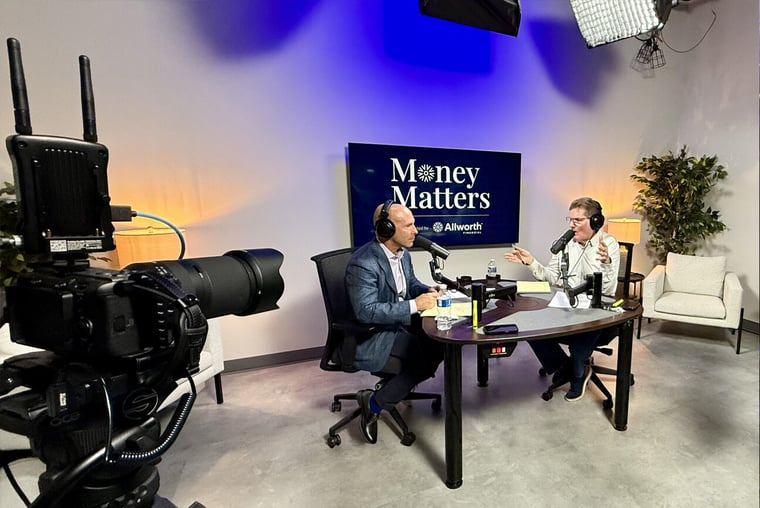
Can you support your adult children without derailing your retirement? In this episode of Money Matters, Scott and Pat dive into the financial realities of a caller with a nearly $10M net worth who is spending $75,000 a year to support his adult daughter. They break down the math on his retirement timeline and uncover a common "tax efficiency" mistake that could be costing him significant returns.
Also in this episode:
The "Shell Game" of State Budgets: How budget constraints in states like California could impact your long-term security.
Roth Conversions & Moving States: Why a move from California to Nevada completely changes the math on Roth conversions and RMD management.
The "Payroll" Pitfall: The hidden risks of putting family members on your business payroll for tax benefits.
Investing "Backwards": Why your 401(k) and brokerage account allocations might be working against each other.
Join Money Matters: Get your most pressing financial questions answered by Allworth's co-founders Scott Hanson and Pat McClain live on-air! Call 833-99-WORTH. Or ask a question by clicking here. You can also be on the air by emailing Scott and Pat at questions@moneymatters.com.
Scott: Welcome to Allworth's "Money Matters". Scott Hanson.
Pat: Pat McClain. Thanks for joining us.
Scott: As, you know, we're about halfway through the year. It's quite amazing. I sound like an old man saying that, "Time goes by so fast."
Pat: I know. When I was driving in this morning, I thought about this, and my kids are getting older, and, you know, my oldest is having a baby, and I thought, "You know..."
Scott: When's the baby due?
Pat: December.
Scott: That's pretty cool.
Pat: Is this public information?
Scott: It is now.
Pat: Okay.
Scott: Do we need to restart?
Pat: No, no, no. I think we're okay.
Scott: Okay. I think we're all right. I think we're okay. They've told enough. I ran into a guy on the bike trail, and he said, "Oh, I heard you have..." Okay. All right. It's public then. Now it's really public.
Pat: So, anyway, but I was thinking... You know, and we've been in business together for almost 35 years, so I thought, you know, some days took forever, but time flies. But some days just seemed like they would never end. Some weeks seemed like they would never end. But the whole, in totality, seemed to be fast.
Scott: I have two teenage girls in the house. There are moments that feel like they're never going to end.
Pat: Well, are they home for the summer?
Scott: Yes.
Pat: Wow. You were an empty nester for a little while.
Scott: Yes.
Pat: Yeah, and then you adopted some children.
Scott: Ten years ago, nine and a half years ago they became Hansons. One is turning 19 going on 12.
Pat: Excuse me.
Scott: And so, one's about to turn 16.
Pat: And she's going on 21 or 22.
Scott: Yes, 20. I've got two other.
Pat: Yeah. And they're biological sisters.
Scott: Yes. But I have two biological kids. They're quite different as well. It's just I wish... I'm just kind of complaining about.
Pat: Okay. Well, that's...
Scott: But there are moments that feel like they last an eternity.
Pat: Yes, yes, it's the...
Scott: I don't know why it's so difficult to clean the kitty litter box, but whatever. Apparently, as my father told me when he says, "Scott, you know how many teenage girls it takes to change a light bulb?" They don't change light bulbs. They just hold the light bulb and wait for the world to revolve around it. Anyway.
Pat: Well, that's your fault for getting animals. We have been animal and plant free.
Scott: You think it's my choice.
Pat: All right. You mean my cat that you have to inject fluid in its mouth every morning and evening and put some stuff in its ears, this medicine stuff. Was that what we're talking about here?
Scott: Yeah. My life is so hard.
Pat: I Just stare at him thinking... Well, anyway.
Scott: What are you going to do?
Pat: Well, Scott, I don't know. I was able...
Scott: I've been married 34 years and this is part of the program.
Pat: I lobbied the family about 20 years to go, plant-free inside of the house and animal free. So...
Scott: You've been successful there.
Pat: I have. It's turned out okay.
Scott: So, you can be gone for a couple weeks and not have to worry about anything.
Pat: That's right.
Scott: Anyway. But back to the show. We're going to take some calls here in a moment. But before we do, Pat, I wondered, the budgets of many states many cities, it's a real issue. Yes, California, Illinois, New York. It's like, I don't know where this all ends. I was riding my bike a couple weeks ago with a friend of mine who's...
Pat: Seems like she spent a lot of time riding your bike. Is it because of the animals in the...
Scott: It's a good time of year. The weather's great to get out early.
Pat: And you have two teenage girls at home.
Scott: Yes, sometimes they're busy out with friends and stuff. Sometimes it... Anyway. But he's worked for the Highway Patrol. And so, he was telling me... We were asking about pay. And, you know, as a friend. I'm really happy for the kind of generous benefits that they receive, that at age 50 you get 3% of your pay for the rest of your life. And so, he was telling me about, well, they didn't get a pay raise this year because the budget constraints. Because last year they got a 4.6% pay raise, but they didn't get one this year. So, what they happen instead is they got additional time off in compensation, additional hours per month that equal to 4.6%, right?
Pat: So, it was just a show game.
Scott: Correct. And so, he's telling me, and I said, "This happens at every bureaucracy in government agencies."
Pat: What happens in large corporations as well.
Scott: Fair, but large corporations, the shareholders decide what the values of these companies are. That's right.
Pat: And you can have back...
Scott: It's still much. They don't confiscate their citizens tax dollars to pay for these things.
Pat: That's amazing. That's just, it's a show game. It's a show game. And so...
Scott: And then you look at Social Security, they just had a week or two ago, and that's looks like it's going to be insolvent even sooner than we thought, 2032. So, they increase their vacation, and since you can accrue vacation, you can accrue vacation. He says, you know, "My best savings account, my best investment accrued vacation." He says, "My compensation is about 4x what it was when I was younger and I've saved that vacation. So, my retirement, they're going to pay me out on that based on my current wage."
Pat: That was my point exactly. So, you accrue vacation, and rather than storing money, you store hours that then they convert back to money. So, they just played this giant game of kick the can. They wrote an IOU. Wow, that's pretty smart.
Scott: That there was no headline number, no headline on that. There was no...
Pat: Yeah, we should worry. And they cannot issue bonds like the U.S. government. What they do do issue is general obligation bonds for capital projects and then they work the bullet around. But that's in California, but they do it in every... Anyway.
Scott: It's interesting. I've lived here my whole life in California. I turned 60 this year. So, I've been here 60 years. I don't want to go anywhere. I love the quality of life California has to offer. But I kind of look at things and I'm thinking, there could be a time when it just...
Pat: Well, you know, last summer, Scott, I was on vacation in Glacier National Park with the three of my children and we went to a rodeo. And this was in Whitefish, Montana.
Scott: How fun.
Pat: This was a roadie. And they started and they said...
Scott: I've been to Whitefish. I like that little town.
Pat: ..."Welcome. Welcome, boom, boom, boom. Everyone here who is from California, can you raise your hands?" And we raise our hands.
Scott: Did they boo?
Pat: No, they said, "Welcome to America."
Scott: Is that what they said? That must have been a fun show.
Pat: I thought that was fun.
Scott: I think I would have had a good time.
Pat: Oh, it was great. It was great.
Scott: Yeah, a couple beers in Wyoming watching a rodeo, well, sounds like a lot of fun.
Pat: Yeah, beautiful day, it was hometown. Anyway.
Scott: All right, let's take some calls. And to join the show, if you got a question regarding and you're thinking, "What are these guys talking about?" But we'd love to take calls regarding your financial situation if you'd like. So, you can send us an email, questions@moneymatters.com, questions@moneymatters.com.
Oh, a before we go to the show, want to let everyone know about a webinar that we've got. It's an educational webinar we do periodically. I'm going to be hosting this along with Victoria Bogner, our Allworth partner advisor. And Victoria's been on the program before. She's quite brilliant and quite lovely. You're going to learn, this is for investors with $2 million or more, primarily. So, during the webinar, you're going to learn how limiting downside risks with buffer ETFs can make some sense sometimes, accessing private markets for enhanced diversification, using option overlays to reshape returns, and navigating new tax laws with coordinated, forward-thinking tactics. And so, this webinar is taking place three times, Wednesday, July 8th, Thursday, July 9th, Saturday, July 11th. And you need to register if you'd like to join, allworthfinancial.com/workshops, again, allworthfinancial.com/workshops. We're talking with Owen. Owen you're with Allworth's "Money Matters".
Owen: Hi, guys. Nice to talk to you. Thanks for having me.
Pat: Thanks, Owen.
Scott: Thanks for joining us. What can we do to help?
Owen: So, I have, I think, what is a unique situation that I'd like to run by you guys. I'm 57. My wife doesn't work out of the home. So, if you want, I can run through numbers here and ask the question.
Scott: Please, sure.
Owen: So, brokerage, $3.6.
Scott: Do you work?
Owen: I do.
Scott: Okay. That's all right.
Owen: So, brokers, $3.6. My 401(k) is $1.8. My wife and I, through back doors for the past however many years, have 270k times 2 in a Roth. We have two homes. We split six months and six months, winter, summer. One is paid off and is worth about $1.1. One is worth $2.8 and has a mortgage of about $510. And I also own a third home that's worth $420 or so, and I'll explain what that is in a minute.
Scott: All right. Do you owe anything on that one?
Pat: Do you owe anything on that one?
Owen: No, no, that's paid. So, I have three kids. Two are self-sufficient, one is not, and that's where my question is. And I guess if you need my income, my salaries around $340, but my average AGI over the past 8 or 9 years or so is around $1.2, and that's because of you know bonuses and stocks and restricted stocks and stuff that have vested that I've sold. So, that's not guaranteed, but it's been quite consistent. So, my question would be around...
Scott: And how many more years do you plan on working?
Owen: That's part of my question to, you know, maybe four or five, I think. I mean, honestly, I don't mind it, so I would do it as long as I am well compensated as I am today. But four or five. And, you know, my hope, it would be that my average AGI would be around the same. I've actually calculated, like, a hard floor would be, like, $550, and that that's never happened. A stressed floor would be around $900 AGI a year and [inaudible 00:11:21.217].
Pat: Good for you. Yeah, I assume you're in some sort of tech sales, is my guess.
Owen: I am.
Pat: Yeah, look at that.
Owen: Yeah, I am. So, I've been very blessed and lucky.
Pat: Actually, we know lots of people like you. All right, so...
Owen: So, one thing, I'm a very nervous investor. So, I've sold everything that I've ever vested in and it's, you know, it's diversified properly. The only thing that's not is what would vest in the future. So, the question is, one of my children is 33 and is a single parent and has two kids under 2. And didn't get through college, fine, took their own path, and great member of the family. And obviously, love our two grandkids. And right now, we're supporting them quite a bit. And so, you know, she works, but quite honestly, the job, she makes about as much as we pay for a nanny, a full-time nanny just to take care of the kids while she works just at home.
Pat: And she's staying in that third home?
Owen: Yes, she lives in the third home, right? Because we love our grandkids, but we don't want to do it all day. They're very close. Like, they're all close.
Scott: No, no, we don't think it's the kids, they're not.
Pat: No, we get. And you owe nothing on that third home, correct?
Owen: Correct.
Pat: All right.
Owen: Correct, we owe nothing.
Pat: So, what's your question for us?
Owen: Now, it is, there are fees and stuff, townhouse fees and stuff. So, you know, I'm paying about, if you add it all up between the nanny and the fees, probably $75,000 a year, and I'm happy to do that. You know, that'll probably change when the kids are school age, but I really don't know when she will be able to command a lifestyle or salary or anything, you know, just in the situation. So, I guess my question is, with my plans to only do this for four or five more years, you know, how much longer can I realistically do that and still...? You know, I guess the last thing is, I know a lot of your callers, you know, people have some money, that they're not big spenders. We are, we spend a lot. Almost embarrassing to me, actually. We spend about $350 a year, and that doesn't include the 75k in assistance. So, if you add the 75k...
Pat: Yeah, but relative to your income, that is not a lot, I'm going to tell, relative to your income.
Owen: I mean, we save every year because of that income. My net worth is going up, and I think it's around $9.9. Pretty high in the markets right now.
Pat: Yeah. No, I get it. But output is relative to income, right? So, as I like to say, the gross family product in my house, I always say, "Well, there's only really very few inputs to the GFP, the gross family product. There's lots of outputs. Fortunately, the outputs are smaller than the input."
Scott: On your homes, do you spend equal time in both homes?
Owen: Yes, six months and six months. And one of them is, like, on a lake, you know in the summer. So, we...
Scott: It is a big percentage of your net worth. Which one is...?
Owen: It is.
Scott: Is it the $2.8?
Owen: We could sell it if we needed to. I'd like to keep it in the family. That's the one on the lake, the $2.8.
Scott: The $2.8 million. Okay, so that...
Pat: So, the question I would ask is if you were going to go into retirement...?
Scott: If you back out the mortgage, 35% of your net worth it's in real estate you consume. Which is fine, but as you know, you got to feed those beasts, too. They don't operate for free.
Owen: Yep, correct.
Scott: I mean, if you said, "I'm retiring today, I'm never going to work again." Then you kind of run the numbers and say, all right, well, can you afford another $75 grand a year after taxes to fund your...? But you're not retiring today.
Owen: Correct. I'm not. So, if I call it, five more years. Yeah, let's say when I'm 62.
Scott: And are the other kids fine? Is this curating the animosity?
Owen: Yeah. It doesn't. We've helped them a lot, too. The way we look at it is we help them when they need help. And I've listened to you for a long time. And I actually sat down with all three of them with a spreadsheet ...
Pat: Well, good for you.
Owen: ...and I'll showed them how it works and, you know, how it's going to work and how it's going to be fair. And they all are very appreciative and grateful.
Scott: Wonderful. Wonderful. That's wonderful.
Pat: Good for you. There was a great article in "The Wall Street Journal" a couple weeks ago about family, you know, dynamics and explaining to the kids what mom and dad have and why they have it. And it's important, and then when they get it, they shouldn't blow it.
Scott: So, what's the main question for us?
Owen: So, I guess the main question is...
Scott: If I were in your situation, I would keep doing it.
Owen: You wouldn't be doing it?
Scott: I would.
Owen: Oh, you would. Okay, yeah.
Scott: I would.
Owen: Yeah. Yep. And I guess, you know, I just want to know...
Scott: What else they're gonna do, your grandkids?
Owen: Yeah, no, I know. And it seems to me I can afford it for, at least, the next five years, I think. And then I don't know what happens when school, you know, that probably changes a bit, right? And so, I guess...
Pat: I wouldn't worry about it too much, right? At the pace you're going right now with these investable assets. Let's say it's five years...
Scott: It's going to keep growing.
Pat: ...it's going to keep growing. You know, historically...
Scott: You keep saving.
Pat: And you're going to keep saving. So, let's say, when you get out there to retirement, it's $15 million. In five years, 62, Social Security kicks in for both you and your spouse. The question that you're going to have when you come to that junction is, can you afford to keep both houses or do you want to downsize to one house? Or, you know, the house at the lake the $2.8 million house at probably, you know, Lake Tahoe or somewhere around there, is you're going to, like, "Well, maybe we either downsize that or we upsize."
Owen: Yeah, that's the trigger that we could pull if we needed to.
Pat: That's right.
Scott: That's right. You don't have to make that decision. Right now you can afford it.
Owen: That's right, yep.
Scott: And you're liking your job. It's not like you're saying, "I got to quit." Like, you're enjoying what you're going to... And you're relatively young. Like, you might be working 10 years from now and still having fun at the working stuff.
Owen: Yeah, I could be. Sorry, I forgot. I guess my second question is, other than just paying for what I'm paying for, should I be putting that money for this child and the kids somewhere giving it to them so they can pay... Like, is there some kind of tax advantage doing it differently, or just pay for it myself.
Pat: Thank you.
Scott: Well, I mean, you're limited on thirty $38,000 a year before there's a gift tax.
Pat: I know, but what tax benefit would that provide to him?
Owen: None, right?
Scott: Well, technically, Owen should be filing a gift tax return using a part of his lifetime exemption. Because he's exceeding the...
Owen: I just started it, so I will have to do that.
Pat: But you could gift to the...
Scott: Or you could gift to your other kids and they could turn around and gift to...
Pat: So, that's a good point. I mean, that is an excellent point, Scott.
Scott: There's the beneficiary. There's the grandkids though, too.
Pat: That's right. That's right. That's right.
Owen: That's how I could do it. It could be for each of the three of them, right?
Pat: So, all it does is, you're not following you're not following the rules of the law right now because...
Owen: I'm actually paying the employee directly, you know, the nanny, for example, as my employee, I guess, which, yeah, you're correct, I'm not.
Scott: But his net worth is not... So, you're under exemption.
Pat: Yeah, that's right. I mean, would you file the tax return? Yes, I would file the taxes that this was gift.
Owen: Okay. Okay, I'll do that.
Pat: Because you've got plenty of room and you're in for it.
Owen: There's no other way to do it with some kind of tax benefit. I couldn't think of a way.
Pat: No, no, like, can I pay them and deduct this in some form or fashion now? Yeah, it's not. It's not. But you are technically gifting her and you should probably be...
Scott: And the grandkids.
Pat: And the grandkids following the rules. So, just tell your accountant about it when they file that. And you're not going to use up part of your exemption amount.
Scott: And I think you're fine financially doing this. We've had other people that we've ran into over the years that I'm watching their financial life's become a wreck because they're supporting their kids or grandkids.
Pat: You're fine.
Scott: And you're not that at all. And I would...
Owen: I think about that a lot when I listen to you guys. And I listen to you guys a lot talk about this...
Scott: Owen, if I were in your situation...
Owen: ...and I think to myself, " I think I'm not following these guys' advice."
Scott: Well, I would do the exact same thing.
Pat: I would do the same thing.
Scott: I would do the same thing.
Owen: Okay. Yeah. Okay, that's gonna make me feel better.
Scott: Yeah. Now, every kid's different.
Owen: Yeah, for sure.
Scott: And I talk about my... I have four kids. I say, "I'll match your efforts." And I've helped out my oldest, helped her to buy a house. And at the same time, my college kid who was $3 overdraft on her checking account and she has to borrow some money so she should could avoid the late fee. I told her no. She's gonna have to learn how to manage her dollars whether it's $3 or...
Pat: How much did she incur late fees?
Owen: Of course, I'm not as you doing that.
Scott: No, I think because it's tied to my account, unfortunately, it didn't show any late fees.
Owen: Yeah, of course, of course.
Pat: No, Owen, you're fine. You're fine. And when you get closer to that, to pull the trigger...
Scott: and by the way, is this what the money's for?
Owen: Yeah, you're right. It is.
Scott: I mean, it's not what you would have obviously... Like, being a parent's funny because when they're little, you have these certain hopes and dreams, right? And then the teenage years comes you realize your hopes and dreams for them may not be their own hopes and dreams for themselves, right?
Owen: That's exactly right.
Scott: And then, like, this isn't your ideal situation, but this is the situation you've got. Fortunately, you've got the financial resources, so they're not living in some trailer somewhere. Yeah,
Owen: And she's a great mom, and that's my standard.
Pat: Well, Scott, I never had any hopes and dreams for my kids when they were young, so we've avoided all of that. All right, Owen, if you're a longtime listener of this show...
Owen: Thank you so much, guys.
Scott: ...I know you listen to this show quite a bit because you told us that, make sure that brokerage account is super tax-efficient. That brokerage account.
Owen: Yep, got it. I'm a very conservative investor. It's actually, I think it's 60/40 right now, so it's all about the muni that are tax exempt.
Pat: Okay. I know, but how much how much bond do you have in your 401(k)?
Owen: I think it's 80/20. So, that should probably be 100%, right, stocks.
Pat: No. Well, no, it's exactly the opposite. It's exactly... Because you have munis in your brokerage account. You have munis in your brokerage account.
Scott: So, you got a huge brokerage account relative to your net worth.
Pat: If we took a look at your brokerage account, if we took a look at your brokerage account, you've got muni, you're actually taking about a 25% to 30% discount on those bonds in order to keep them tax-free. And you have equities in your 401(k). I would switch those out. I would...
Owen: Really?
Pat: Yes, you should. Your401(k)...
Scott: Because stocks grow almost...
Pat: Tax-free, right?
Scott: It's just the dividends which are less than 2% on the S&P 500.
Pat: And so, you've taken a small...
Scott: And the dividends are qualified, so the tax are at a favorable rates.
Pat: So, you've taken a small...
Owen: So, it sounds like you're saying, make the 401(k) 60/40?
Pat: No, no, I'm saying make the 401(k) all bond and the brokerage all equities. And then when we have we add the two together, you look like you're about 60/40, right, but you have bond in both places.
Owen: Wow, I wouldn't have even...
Pat: Listen, can you do me...
Owen: And of course, my concern is, like, I need cash at some point to maintain the lifestyle, and I figured you pull it out of brokerage, can't pull it out of 401(k).
Scott: Okay, let's assume you do that.
Pat: That's because you did.
Scott: And all of a sudden you got fired because you couldn't sell anything anymore, right? Because you were just sort of straw it for some... And you said, you say, "Oh, no," and the market is down. You're like, "Oh, crap, what am I going to do now?" Well, we'll say, "You know what we're going to do? We're going to sell $200 grand worth of stocks in your brokerage account, and subsequently, we're going to buy $200 grand worth of stocks in your 401(k)." So, essentially, you've not reduced any stock, we've just shifted. It's almost like pulling the money out of the account.
Pat: You should have no muni bonds in your portfolio. And we can get to the same place without using muni bonds. You're giving up return for no reason. So, call our firm. Ask them to run a tax efficiency analysis on this portfolio.
Owen: I will.
Pat: And they will run what we call internally holistic plan, and it will just tell you, "This, this, this." And this is... It's the sorry you called, but you're going to have to listen to this rant. People all the time, like, otherwise, like, you make a lot of money, you have a lot of money, but you missed the last 15%. I mean, you were almost there. You were so close to having a just perfect, but the last 15% is where the alpha is, I mean, it's where the value is added. But if you call the firm just say, "Hey, I called Pat's show. He ranted and ranted." Well, it's Scott's show too, but really, Scott is just a...
Owen: I will. I have an advisor that I've had for a very long time, so I will have this conversation with him, for sure.
Pat: Perfect. Okay, an Allworth advisor?
Owen: No.
Pat: Oh, no. Okay, do what you want, but you would benefit...
Scott: Well, have a conversation with them.
Pat: So, your advisor, you've asked your advisor about this before.
Owen: Yep. No, I haven't. No, I haven't because I didn't even... I thought it was right the way it is. I didn't know.
Pat: Well, that wasn't your responsibility.
Owen: No, I know that. I get it. I get it. Yep.
Scott: Okay. All right. Appreciate the call.
Pat: Thanks.
Owen: Thank you, guys.
Pat: All right. See you.
Owen: Have a great day.
Scott: We're talking now with Ron. Ron, you're with Allworth's "Money Matters".
Ron: Okay. Hello, Pat and Scott. How are you?
Pat: Good, Ron.
Scott: We're great.
Ron: Hey, I got a quick question for you. So, I'm 68, spouse is 66. We both retired early at 59 and 60 respectively, both drawing full retirement age, Social Security, plus some rental income, small pension, and dividend and interest from our taxable accounts. Our income is about $100,000 before taxes, sometimes more, but ballpark-ish. We live comfortably, successfully paying very little to no taxes. Our last effective tax rate was 8%. We have $2.5 million in tax deferred accounts, maybe a little bit more thanks to the market lately, and about a million in brokerage accounts. I'm concerned about future RMDs and blowing through IRMAA tiers, pushing the Medicare premiums way too high.
Pat: You should be, yes.
Ron: Yeah, I should be. So, I want to give your thoughts on Roth conversions or any other methods to rebalance the portfolio to minimize taxes.
Pat: So, I have a quick question. Are you on speakerphone, or is this a flip phone?
Ron: I have it on speaker on my cell phone. Did it not come out clear?
Pat: Okay. Yeah, could you take it back.
Scott: Well, Ron, we're getting some feedback.
Pat: Take us off the speaker, please.
Ron: Yes, sure. Hold on.
Pat: Say you didn't spend any money on a phone.
Scott: Flip phone.
Ron: Okay, is that better?
Pat: Much better, yes. That's good problem.
Scott: That's okay, Ron, thanks.
Pat: You should be worried. You should actually start Roth conversions. In of this $2.5 million in the IRAs, how much is in yours, and how much is in your spouse's?
Ron: Let's see. Mine is about $2 million plus, and hers is a little less than a million or abouts.
Pat: Okay. Yeah, you should start.
Ron: Most of its in mind.
Scott: Yeah, what state do you live in?
Ron: I did live in California, but moved to Nevada.
Scott: Okay, perfect.
Pat: Yeah, even better.
Ron: That was my thought.
Pat: And this income, you said is around $100,000.
Ron: Yeah, that's Social Security. I get some income off my rental, small pension.
Pat: And how much do you have in brokerage accounts?
Scott: A million.
Pat: Oh, a million.
Ron: Brokerage accounts, we have about a million, a million or two.
Pat: How much in savings?
Ron: Maybe $100,000.
Pat: And how's the money invested in the brokerage in the IRA?
Ron: Let's see. I'm more heavily in cash than I need to be. It's about 25% stock, 75% high interest earning accounts.
Pat: In?
Scott: In the brokerage account.
Ron: In the IRAs, or not the IRAs, but...
Pat: The brokerage.
Ron: Yeah. Okay, the rollover IRAs sit in my Schwab account.
Pat: And how are they invested?
Ron: Those are the ones that are more heavily in cash, like 75/25.
Pat: Oh, got it. Got it. Okay.
Ron: The brokerage accounts are pretty much all equities.
Pat: Perfect, perfect. Yeah, you need to do some Roth conversions.
Scott: Yeah, and now that you're out of California, if you were in California, thinking of going to Nevada, we would say, don't do any Roth conversions, but you're in Nevada now. And if your income is $100,000, you can have... Your taxable income, this is after your standard deduction, which standard deduction is, what, about $25 grand for... No, standard deduction is $32,000 for a married couple. So, you could have income of $130,000 and still be in a 12% tax rate.
Pat: So, at a minimum, you need to be converting $30 grand, but you should push more than that because you Required Minimum Distributions are going to... Well, we'll have to do the numbers, but...
Scott: No, It'd be substantial. You have seven years, and all of a sudden, you got Required Minimum Distributions. And if your IRS's roughly $2 million now, let's say it's worth $3 million there, you're going to have over a hundred thousand dollars in Required Minimum Distributions.
Pat: No, understood.
Ron: You just wipe me out on camera.
Pat: Well, yeah...
Scott: I'm not going to wipe you out.
Pat: We'll get the guy with the ham under his arm crying hungry.
Ron: That's what my CPA said. You have a good problem, deal with it.
Pat: Yeah, but you definitely want to do conversion.
Scott: You want to try to minimize these guys, right? That's why you're called, obviously.
Pat: Yes. So, you would do at least 30, and then decide whether you want to go up into the top of the 22 bracket. I doubt you're gonna want to go that high.
Scott: And right now, for joint tax returns, its income above $218, is when you hit higher IRMAA. Yeah, Medicare Part B.
Pat: Yeah, so you've got room in there. The question is it's between $30 and $110, and we'd have to do the math to figure that out. But you absolutely want to do it. You want to do it this year.
Scott: I think the thing that might be helpful for you, Ron, is if you ran some long-term projections. Like let's look at our financial life for the next 20 years, with all of these factored in. There's some pretty sophisticated software programs now where you can do some good what-if scenarios. So, typically, you do this with an advisor and they'd say, "Okay, well, if we did some more conversions today, here's what it would impact in your taxes today, but here's what you look like 5 years, 10 years, 20 years from now." And so, you can make some educated decisions at that point on what you want to do.
Because nobody knows the future, we don't know the future of how much Medicare Part B is going to cost or what those limits are going to be. We don't know the future of if Social Security has become needs-based. We don't know the future of there's going to be excise taxes on retirement accounts like there used to be. Like a lot of things we don't know, right? But we can say, "This is what we do know today. And if we do these various scenarios, here's the impact." And then you can make an educated decision on what you feel is best for yourself.
Ron: Got you. Got you.
Pat: Okay, where'd you move to Nevada? What part of the state?
Ron: Outside of Las Vegas in Southern Nevada. I'm enjoying the golf course. I'm on the 18th tee box. Having a good time.
Pat: Oh, very nice. Enjoy.
Scott: Yeah. All right, appreciate the call.
Ron: Already. Thank you, guys.
Scott: Yeah, thanks. And Pat, my son's about to move to Vegas for work. He has to be there flying for JSX. He's captain now. Got promoted to captain.
Pat: But he didn't grow the little mustache though.
Scott: He has a mustache.
Pat: Oh, he does. So, he looks like a captain or a fireman.
Scott: He looks more like a fireman.
Pat: Is he all buff?
Scott: No, he doesn't look like a fireman. I take that back. He looks like... He's all tatted up, but you wouldn't know with his long sleeve shirts and long sleeve shirts.
Pat: Oh, and so, where in Vegas?
Scott: I don't know. I think he's renting a room from this... Pilots have these crash pads. And pilots will buy a rental house in a community and then rent out the bedrooms to other pilots that typically don't live there full time, but that's where they're based out of.
Pat: But he's going to live there full time.
Scott: No, he's not going to. That's where he's going to be based on.
Pat: Oh, and then he's going to live with you the rest of the time?
Scott: No, he lives in Scottsdale.
Pat: Oh, he's going to keep his place in Scottsdale.
Scott: Apparently so.
Pat: Well, it's kind of a hitter. Two houses.
Scott: Yeah, he's renting a bedroom out of the other one. And he was analyzing, but thinks he wants to come back to California. And he's running the numbers because he can either fly out of Vegas or fly out of Burbank, the airline. And he ran the numbers, what it would cost him an additional rent and income taxes. He said it would be about $30 grand a year for him to live in California.
Pat: He's his father's son. He did the math.
Scott: But I lived in California.
Pat: I know that. Chosen bite the bullet. Well, he did the math.
Scott: He did the math.
Pat: You did the math as well and decided, for quality of life...
Scott: That's correct.
Pat: ...you're not moving to Las Vegas.
Scott: I like where I live.
Pat: Yeah, and I'm tired of the buffet. It's just flat out.
Scott: Let's talk with Jay. Jay, you're with Allworth's "Money Matters".
Jay: How are you doing, sir?
Scott: Good. How you doing?
Jay: Good.
Scott: What can we do for you, Jay?
Jay: I have the same problem, money problem.
Pat: Okay. Too much, or too little?
Jay: Too much.
Pat: Oh, good. So, give us your situation.
Jay: I do have in 401(k), $2.5. Heavily invested in a stock market. I do have my personal brokerage account 300K. Okay. Maybe I have a saving of 50k to 60K. Medical wise, my wife work for the Senate Accounting Department. So, she does have a 457, 401(k), and her CalPERS will cover my medicals.
Pat: And how much is there in between all that?
Jay: She has about half a million.
Pat: And is she retired?
Jay: Well, yes. She is 55. I'm 57.
Pat: And how old are you?
Jay: Fifty-seven.
Scott: Fifty-seven.
Pat: All right. And what's your question for us?
Jay: How do I convert the money and my money will grow tax-free? I have to pay the tax one time.
Pat: Yeah, you're retired and your spouse is not retired.
Jay: I'm not retired. I'm still working.
Pat: What's your income?
Jay: My income, salary wise, I have a 65k salary. Investment in Arizona property, some apartments invested. I have a partnership in Oregon with the hotel, 10% partnership in there. Their income, like, last year was $36,000, net profit for me. Apartment is rolling on its own. So, I don't see no income because that's only two years.
Pat: Okay. And what's your wife's salary?
Jay: Over 100k.
Scott: So, your taxable income is over $200,000.
Jay: Kind of, yeah.
Pat: And when do you plan on retiring?
Jay: You tell me. My kids are still in the school. My two... I have two sons and one daughter. Daughter graduate from UC Irvine. She's waiting for med school and doing her preparation for med school. My son is also over there. He's going for the PT.
Pat: Okay. And are you supporting them?
Jay: Yep, both of them.
Pat: How much? To what level are you supporting them?
Jay: Financially, everything. Apartments, pay for apartment rent.
Pat: It doesn't sound like you could retire anytime soon with these. So, to tell you when you retired, if you didn't have that... And by the way, your wife works for the state of California. Is that what you said?
Jay: Yep.
Pat: Okay. So, she's going to receive a pension. So, that will actually drive, how much benefit? She will actually derive when you will be able to retire, and when your Social Security kicks in,. But based on this, you guys are good savers, right? You've saved $3-plus million, and then you have investments in some real estate. So, we're probably going to call it about $3.5 million.
Scott: Did you inherit any of those dollars, or is that just off from savings from your work?
Jay: It's a saving, saving and got lucky in a stock market last year.
Scott: Well, that counts, too.
Pat: Yeah. I mean, you did participate. You wouldn't have gotten lucky if you didn't participate.
Scott: So, you're family needs... Once your kids are self-supportive, assuming they will be one day, and assuming you will stop supporting them, just have a quick glance, it looks like your financial needs are not that great.
Pat: Yeah. And today, I would continue to make the contributions how you've been making them if you can afford to.
Scott: What state are you in?
Jay: California.
Scott: And are you going to retire in California?
Jay: Nope.
Scott: Where are you going to retire to?
Jay: Maybe Texas. My wife is from Texas.
Pat: Okay. Then I would not use a Roth IRA.
Scott: That's right.
Pat: Just do pre-tax, do not use a Roth IRA. And once these kids are off the payroll, then I would circle back to see whether you could retire at that point in time or not. But my guess is, it's probably highly likely. But there's too many unknowns right now with the kids on payroll. So, appreciate the call.
Jay: I also have a kid on my LLC. I put the kids on a payroll.
Scott: Are they actually working?
Pat: Yeah, do they work for you?
Jay: Yeah. It's my stock market. They manage my computers. I give them orders and they can put the orders on my computer.
Pat: All right. Well, I'm not going to touch that. You can't add someone to payroll just because you think there's a tax benefit to it.
Scott: There may or may not be when you get Social Security in there.
Pat: And by the way, once you get Social Security in there, the 15.3%, my guess is there's probably not a lot of tax benefit there. But that goes a little bit deeper. Because if they're not actually working, I mean, working, not doing things that a child should do for a parent, you're touching a gray area. So, I'd be careful with that. So, appreciate the call.
Jay: Okay. Thank you.
Scott: Well, Pat, as usual, it's been fun being with you. It's nice seeing you.
Pat: That's all the time we have today. And thank you for listening to our shows. If you've enjoyed this, even a little bit, just slightly, can you go to the platform that you're listening on and give us a review.
Scott: Not only that, if there's something that was helpful and you think, "My buddy so-and-so or family would could benefit from that particular call," forward the show after them.
Pat: Do you do that a lot? Every once in a while.
Scott: Yeah, I'll forward a podcast to somebody, but I think particularly, two, three times a year, I'll do it.
Pat: I'll do more than that for my children.
Scott: Oh, I was going to say, I've never got a podcast from you. Actually, I probably have. Now, I think about that.
Pat: But for my children, a lot.
Scott: How to be more respectful to your parents. Honor your father and mother. What is that, the third, fourth commandment, whatever? Fourth commandment. Honor your father and mother.
Pat: Mostly on either the financial stuff or listening to the "Hidden Brain" podcast, psychological stuff, motivation, why people do what they do. Which I think is a big deal if you're young and in the business world, you're trying to, like, navigate things. You got to remember there's other people involved.
Scott: Like, motivated employees and stuff?
Pat: Motivated employees, how to interact with other people when there's conflict.
Scott: Yeah, which is a lot of work. A lot of business?
Pat: I mean, a lot of business. Anyway.
Scott: We'll see you next week. This has been Scott Hanson and Pat McClain, Allworth's "Money Matters".
Automated Voice: This program has been brought to you by Allworth Financial, a registered investment advisory firm. Any ideas presented during this program are not intended to provide specific financial advice. You should consult your own financial advisor, tax consultant, or a state-planning attorney to conduct your own due diligence.
Insights for Complex Wealth Decisions
Join our email list for exclusive commentary from our Chief Investment Officer, early access to expert-led webinars, and your complimentary Wealth Planning Checklist for Complex Portfolios.
We take your privacy seriously and respect your privacy choices. By submitting this information you agree to our Terms of Use Agreement, Privacy Policy, and to receive important notices and other communications electronically.