
Tax Efficient Strategies for Million-Dollar Portfolios: Roth Conversions, AI Investing & Stock Risk Management
How do you make smart financial decisions after you've already built significant wealth?
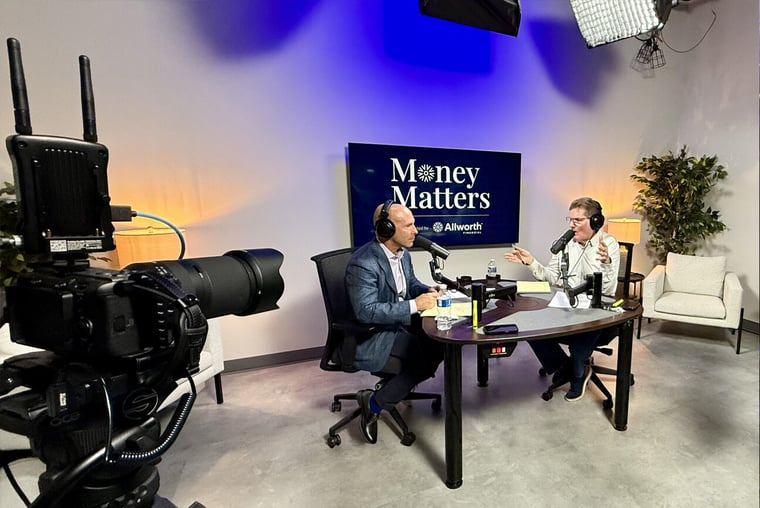
In this week's episode of Allworth's Money Matters, Scott and Pat help a retired couple with an $11 million portfolio evaluate Roth conversions, estate planning, charitable giving, and strategies to improve tax efficiency. Then they speak with a 52-year-old listener navigating uncertainty in the alcohol industry while balancing retirement savings, college expenses, and cash reserves. Should he use taxable assets to maximize his 401(k) contributions? Scott and Pat weigh in.
The episode also features Allworth advisor Laurie Ingwersen, who explains how investors with concentrated stock positions can reduce risk while improving tax efficiency. Laurie shares a real-world case study of a client whose portfolio was 70% invested in a single stock and the strategies used to diversify, manage taxes, and preserve long-term wealth.
What You’ll Learn:
• Whether Roth conversions still make sense for high-net-worth retirees
• How to improve tax efficiency through smarter asset location and portfolio design
• When it makes sense to use taxable assets to maximize retirement savings
• Strategies for reducing risk in concentrated stock positions
• How to balance wealth preservation, charitable giving, and legacy planning
Join Money Matters: Get your most pressing financial questions answered by Allworth's co-founders Scott Hanson and Pat McClain live on-air! Call 833-99-WORTH. Or ask a question by clicking here. You can also be on the air by emailing Scott and Pat at questions@moneymatters.com.
Scott: Welcome to Allworth's "Money Matters". Scott Hanson.
Pat: Pat McClain. Thanks for joining us.
Scott: Glad you are with us as we talk about financial matters. And as usual, we've got a great show lined up with...
Pat: We think so
Scott: ...a couple good callers and guests. We're talking about some stuff that's going on in the financial world.
Pat: But it's the first week of June.
Scott: I know.
Pat: You look at April and May, the market. And the whole time this was happening, they were on fire.
Scott: Market melt up, it feels like.
Pat: But you look at what was going on globally and you're like, is there a disconnect here or is there frenzy, or...?
Scott: Well, one of the questions is, do you listen to the headlines, or do you listen to what the market's saying? Because they're two completely different stories.
Pat: Completely different stories. Yeah. And AI, obviously, continues to propel this. And maybe we're in a bit of a bubble in AI, some of the AI stocks. Most of the AI stocks aren't even public, but they expect that they will be. Or are we really increasing earnings, because earnings have come up significantly, are really increasing earnings because of some of the AI efficiencies that are actually being brought to business. And I've read articles that said there's absolutely none, and then I've read articles that say there's all kinds of benefits.
Scott: And there's companies that are saying, "Whoa, we're spending too much on these tokens, and so, we need to cut back. We've got to cut our budget. We've already exhausted our budget for 2026, not even halfway through the year."
Pat: And then you see other companies say...
Scott: Who knows?
Pat: Yeah. It's a... But...
Scott: But I tell you what, you try to guess this market...
Pat: It's hard.
Scott: Pat, I was reading recently over the weekend. And it was a money manager in the late nineties who's like, "This dot-com thing, this is a bubble, this is a bubble, this is a bubble." But he left.
Pat: What did he write on his chalkboard when he left?
Scott: Tulips are for sale.
Pat: Tulips are for sale.
Scott: We both read the same thing. I think it was a Fidelity manager.
Pat: Pointing back to the TLO craze.
Scott: A bull market can last much longer than you could remain solvent.
Pat: But the best two months... Well, I don't know if this means anything, but one of the top 5, 2-months runs in the last 50 years.
Scott: We just finished.
Pat: We just finished. In the face of what? War?
Scott: Yeah, maybe global war.
Pat: Global, but we could be...
Scott: I mean, there's a couple of major. There's a few major skirmishes, right?
Pat: Increasing oil prices, consumer sentiment.
Scott: Consumer sentiment is like at all-time low.
Pat: Consumer sentiment down.
Scott: Yeah, tariffs.
Pat: Or lack of, who knows? It's hard to tell.
Scott: Yeah. And a president who's clearly losing his mandate. Coalition is beginning to crumble.
Pat: Yeah, but the market marches forward, which is, however you feel, the market doesn't care how you feel. The market, over the long term, is driven by earnings.
Scott: That's exactly right.
Pat: And People will buy stocks if they believe the earnings are going to increase.
Scott: It's all about future earnings. Not what's happening right now, not what happened yesterday, not what's happening next quarter, but what's going to happen years three, five, seven.
Pat: And do we believe that those stocks are going to earn money, and that I should own them for a period of time, long term?
Scott: Yeah. But if you try to... I just saw a thing the other day. It's just from 1995 or 1996 till now, the stock market was up, I think it was 9.9%. And that's really about the time... I mean, we started in this industry in 1990. We hardly had any clients the first couple of years. So, I was thinking about that. So, the stock market, we talked about historically, it's done about 10%.
Pat: Yeah, it was 9.9%.
Scott: It did about 10% with the dot-com blow up and with the great recession in there.
Pat: Yeah, it reverted to its average, strangely enough.
Scott: Strangely enough, which it will... Again, these returns aren't going to be like this forever. And it could end quickly.
Pat: Yes. Or it could run.
Scott: Or it could run. But money that you need within five years should not be in stocks. If you've got money that you set aside, you're going to be used for a vacation home or help a kid with buying a house or whatever it might be, don't have that in stocks.
Pat: Yes. Make sure that the portfolio is balanced to your needs, not to what you believe the market's going to do.
Scott: Absolutely. Anyway, if you want to join us, you want to be a caller on our program, we love taking calls, send us an email at questions@moneymatters.com, again, that is questions@moneymatters.com. We are in Tennessee talking with Cynthia. Cynthia, welcome to Allworth's "Money Matters".
Cynthia: Hello, and thank you so much for taking my call, gentlemen.
Scott: Yeah, glad you joined.
Cynthia: Well, I'll start with the questions first and then give you all of the backup. I'd like your perspective on the tax efficiency of our portfolio. Should we be or continue to convert to Roth? And then finally, exactly what you guys introduced the show with, your opinion on playing into a bit of the hype. IPOs against AI, covered call ETFs. Just your thoughts on that.
Scott: Yes. Well, there's an old saying on Wall Street, when the ducks quack, feed them. So, like you mentioned some of these ETFs with cover, there's all kinds of fancy ETFs that are being created right now to do some interesting strategies.
Pat: And the number is, I read an article a couple of weeks ago, the number was astounding. The number of...
Scott: New ETFs?
Pat: ...esoteric ETFs.
Scott: Yeah, yeah, yeah.
Pat: Esoteric ETFs.
Scott: They're expensive.
Pat: Yes, yes. So, tell us where you're at now. So, how much money do you have? How much is in IRAs? How much is in non-IRAs? And what are the asset allocations look like between those two asset locations?
Cynthia: Sure. So, I'm 72 and my husband is 69. We have no kids, no debt, no real estate other than owning our own home, which is valued about 800k. We've been retired for about 20 years. Our liquid net worth is $11 million. So, that's where we're sitting there. And we make $250,000 a year. And that's primarily from income coming out of the brokerage account. We have...
Pat: So, you have no earned income. You have no earned income because you've been retired for 20 years.
Cynthia: No, no.
Pat: Okay.
Cynthia: Right. So, we have $6.6 million in IRAs, $3.4 in traditional and $3.2 million in Roth. We have $4.4 million in a brokerage account, and that consists of 15 individual stocks. That values about $1.6 million. And those are driven towards a dividend. They earn dividends anywhere from above 4%. And they're all qualified. We have about a million in exchange traded funds/mutual funds, and all of the income from those gets reinvested. And then we hold about a million dollars in three specific bonds. We're going to hold them to maturity. They've got interest return of between 8% and 10%. Their maturity date is from 2030 to 2039.
Scott: Eight to ten percent?
Cynthia: Yes.
Scott: What are they?
Cynthia: Bought them years and years and years... I said years and years ago, but probably bought them close to 20 years ago when we retired. They're in Altria.
Pat: Okay.
Scott: Okay. So, yeah. You're not going to earn 8% between now and 2030 because the value is going to come down to the par value. They're trading at a premium, I would assume right now. That fair?
Cynthia: Well, we bought them pretty close to par. Certainly paid a premium for that type of interest. But so long ago, you could get bonds, fixed bonds for that amount and don't really fear of a default issue. And so, we're going to hang out with them for the next 10 years or until they mature. So, then finally, we've got cash of about $775,000. That's in money market treasuries and CDs, and then $190,000 in an HSA.
Pat: Okay. And what happens, I got two questions for you, inside the IRA, the Roth and the regular, what does that portfolio look like? Do you have bonds or stock or what do you have in there?
Cynthia: It's equities. It's all equities. Exchange-traded funds and mutual funds.
Pat: And what happens to this money when you two pass?
Cynthia: Yeah, good question. We don't really spend a whole lot, so we're not really digging into it per se. It'll probably go between charity and family.
Pat: And have you done any...?
Cynthia: The idea is to give all of the Roth to family. Again, those would be nieces and nephews so that they don't have to deal with the tax implication. They just have to consume it within 10 years.
Scott: Or distribute it, you mean. Hopefully, not consume it in 10 years.
Cynthia: Sorry. Right, right.
Pat: Well, maybe you might want to have a conversation with them about that. And so, of this $11 million, what do you think is going to go to charity and what do you think is going to go to family?
Cynthia: Let's say 50/50.
Pat: And have you done any estate planning around this?
Cynthia: Yes.
Pat: And so, you've already named the contingent beneficiaries on the IRA and the Roth as... I assume the IRA is going to go to charities and the Roth is going to go to family.
Cynthia: Sure. Exactly.
Scott: Okay. One of the questions you asked is should you continue to convert to a Roth? It really depends on your estate strategy here. Because you said you want your Roth to go to family and the rest to go to charity. So, if your objective is to have as much to go to family, then we would want to continue the Roth conversion strategies.
Cynthia: Right. And our adjusted gross income last year was over $600,000 and that was primarily due to over $350,000 that got converted.
Pat: Yeah. I don't know if... I don't know... There's a couple of things. One is, you want to drain that HSA over the next few years. That's just number one.
Scott: Because you can't avoid taxes on that.
Pat: You can't avoid taxes on that. So, a debt that's taxed. So, you want to... If you keep it until you die, then it's a taxable event. If you drain it before you die, then...
Scott: If you can.
Pat: If you can, it's not. So, you want to drain that HSA.
Cynthia: Well, and that can be done tomorrow simply because you can go back and claim premiums on Medicare and so on.
Pat: Sure, sure, sure. So, you want to do that.
Scott: Technically, you're supposed to keep receipts for those things.
Pat: So, that's number one. So, here's what I'm kind of confused about. I don't know why you have these bonds.
Scott: Why they have the bonds, or have them in the brokerage account?
Pat: Thank you. I don't know why you have the bonds in the brokerage account.
Cynthia: Primarily for income. We're getting under $74,000 on income. Obviously though, it's taxed as ordinary income.
Pat: That's right. And the distribution from the IRA would be taxed as ordinary income as well.
Cynthia: Correct.
Pat: So, if you had the bonds inside of the IRA and the equities tax efficient in the brokerage account, you're going to achieve the same objective. You're just going to leave more money to your charity or families at the end of the day.
Cynthia: Yeah. And that's probably going to be the case either way. The issue with converting to the Roth was that was going to reduce and significantly has my Required Minimum Distribution that I have to start taking next year.
Pat: I understand that. But so, you've got this million in mutual funds and you've got this million dollars in bonds. And I don't know whether that million dollars in mutual funds and ETFs are super tax efficient. I don't... It makes no... You asked our opinion, so you can take it or not take it. But the bonds should not be in the brokerage account. Your tax efficiency should actually all live in the brokerage account, which will be...
Scott: Brokerage and Roth.
Pat: And Roth. The IRAs should have all bonds in it.
Scott: In other words, whatever bonds and cash you have should be in that traditional IRA.
Pat: And I know you bought that with a big coupon on it of 8% to 10%, but the bonds price that in to current market. So, if you sold that and bought a lower yielding bond, you ended up at the same place financially.
Cynthia: I've absorbed that premium and then some. When I take a look at what we paid for these funds, and they're roughly equal, about $300 across all three of them, we've gotten enough return off of those to not only cover the premium.
Pat: Cynthia...
Scott: The history is irrelevant.
Pat: ...I understand what you're saying, but it's price that the yield on the face value...not the face value, but the market value...
Scott: Let's say she wants to keep those. It's non-negotiable. I would recommend moving those to the IRA, right? Even if it means you buy and sell them. The same exact bonds.
Pat: That's correct. Correct, correct. They should be in the IRA. The placement should be in the IRA.
Scott: Because it's a tax...
Pat: Even if you bought the same bond, thank you, Scott, we're going to get to the same place. I don't know if I'd mess with the... I would clean that up on the brokerage side and make it as tax efficient as possible. And then I'd start taking income from the IRA if need be. And I wouldn't worry about the Roths anymore.
Scott: And I would, Pat, I would... So, you take that million bucks and throw it in the IRA, right? Essentially you sell it, right? So, now you have a million dollars cash. And use a direct index strategy with the focus on generating some capital losses to help offset the gains that you've got in all these other stocks. And it provides you, particularly because you said you want to leave some to charity, like, you get the stepped up basis when the first of you passes away.
Pat: And then you can do anything you want with it. And I don't know why you have this much cash outside of the IRAs either. Because the Ivers are a hundred percent liquid to you and you're not spending that much money. You know how much you're spending. So, if you were my client, the first thing I would say to you is, you know, when you walk down the middle of the plane and you see those people sitting in first class that kind of look at you?
Cynthia: Yeah.
Pat: You're going to be those people from now on.
Scott: You always like to use this analogy, Pat. I don't know if it's good or bad.
Pat: No, because I...
Cynthia: We love the first class analogy.
Scott: All right, good.
Pat: There we go. So, you need to upgrade your standard of living a little bit. And it's hard. It's hard because you don't have this money.
Scott: So, you go out another decade, Cynthia, and now it's not $11 million. now it's $20 million we're dealing with.
Cynthia: I know. And you know, we have this discussion all the time, a second home, another... You know, where can you spend big bucks? And we just don't have the desire to do it.
Pat: I agree on the second home. I mean, the second home...
Scott: Just a pain too.
Pat: ...it's just something else to take care of. And I have a second home. At one point in time, I had a third home, and I couldn't wait to get rid of it. We did it because our children were living in different places and we thought this would be fun until you realized you didn't own the home, the home owned you.
Scott: And if your plan is you would like to leave half this to charity, maybe you guys spend some time looking at what that might mean to you today. And maybe you allocate a small portion today with something that aligns with your values and something that could bring you guys some joy, maybe greater joy than a second home.
Cynthia: Yeah. And we're starting to look at it because it's significant enough money. And we talked about wanting to set up a low-cost spay and neuter clinic in our County. It's not a very wealthy County. But just the whole...
Pat: Perfect.
Scott: That sounds fantastic.
Cynthia: ...nightmare of trying to administer it and then finding somebody to run it. You're right, that we've got to search for...
Pat: Oh, no, no, no. Wait, wait. Cynthia. I would step that back. I would go to the local SPCA and have them run it and you underwrite it.
Cynthia: Interesting, interesting.
Pat: Right? So, you just call the local SPCA and you're like, "Look, I've got this idea. What do you think about me giving you $30,000 or $50,000 a year for the next five years in order to Institute a low-cost or free spay and neuter clinic. And they're like...
Scott: That would be fantastic.
Pat: ..."Cynthia, we love you."
Scott: It's right up with... Yeah.
Pat: "We love you."
Scott: Whether it's them or some other organization similar
Pat: You don't want to start a charity and then run it. Unfortunately, I have done that as well.
Scott: My wife and I have a meeting set up in two weeks with an organization in the foster area. We have foster kids that we adopted, so it's near and dear to our heart. And it's about funding a program. I don't want to create a foundation and I manage it like it's a... That way, someone else deals with it.
Pat: They manage it.
Scott: Yeah, and they're experts at it.
Pat: And it has nothing to do with spaying and neutering, correct?
Scott: No, it doesn't. That's just... We won't go there.
Pat: Just wanted to check.
Scott: We won't go there, but...
Pat: Just wanted to check, Scott.
Cynthia: No, that's a great idea, and I'll have to do some research onto that. That's fantastic.
Pat: Yeah. But, but the easy things are, the easy things are, is the bonds you...
Scott: By the way, I would give you a 96% on a grade on this portfolio, right? So, we're right now talking about the last few percentage. The bigger issue is, what happens with these dollars? That's the big issue now. And what got you here was, was great. You've obviously done a lot of research and spent a lot of time doing this. That's why you've, you've got a phenomenal portfolio. We're just talking about the little edges right now. The big issue is, what happens with these $11 million that are going to become $20 million?
Cynthia: Perfect, perfect. Well, I appreciate that so much. One last thought of yours on, I'm wanting to play a little bit. You know, I never got in on the Amazons and some of that, and I know, again, you've got to be careful, but could I take, you know, and not a lot, I guess, in the scheme of things, a hundred to 250k and play with it with regard to some of this hype. I'd like to see is if I could...
Pat: It's the famous line in Wayne's World, party on Wayne, party on Garth. Absolutely. Take a $100,000 to start and do...
Scott: Maybe set up a separate brokerage.
Pat: Yeah, you want to do it in a separate brokerage account.
Scott: Or ideally, in an IRA. Peel off a small 100,000 bucks of an IRA.
Pat: An IRA brokerage account, right? Pre-tax, in that way, you don't have any tax implications on it. But, yeah, if that's what you want to do.
Cynthia: Okay, perfect, perfect.
Pat: And then you'll do it for a year or two, and then you're like, "Ah, okay." So...
Cynthia: It wasn't all that was cracked up to me.
Scott: Well, I mean, when you step back and you think, the average mutual fund manager can't outperform the markets. So, if they can't...
Pat: And you might benefit from sitting down with an advisor, but more importantly, I think, to Scott's point, is to decide what the intent of these monies are.
Scott: And, I mean, you're leaving this to your niece and nephews, like...
Pat: Are you sure?
Scott: And what restrictions are there going to be?
Pat: Is it in an irrevocable trust for the niece and nephews?
Cynthia: Yeah, yeah, yeah. And, you know, by and large, they're good, solid kids. You know, like I said, they're in their 30s now. And again, we may start even doling some of it out, although it won't get the tax step-up benefit before we...
Pat: Well, it depends on what you've got.
Scott: You can gift them the shares, or some of your RMD.
Pat: Especially if they're in a lower marginal tax rate, you could just gift them the shares.
Scott: And by the way, Cynthia, we were thinking about what you want to do with these dollars. I mean, that might be something you look at and say, or their have kids, and help set up 529s for their kids or...
Cynthia: Right, absolutely, absolutely.
Scott: I think you can find a lot of enjoyment with those sort of things, would be my guess.
Pat: Appreciate the call.
Cynthia: Well, thank you guys so much.
Scott: All right, Cynthia. Yeah, it's interesting how the challenges that we have with money change as the... When we don't have any money, it's a major challenge. How am I going to pay rent? How am I going to make pay my utility bills? How am I going to pay for gas? And then as we get to a point, "Okay, I feel pretty confident with my financial plan." And then we get...
Pat: Not all.
Scott: But sometimes we get to a point where it's like, "Huh, I have more. I've saved up more than I've needed," or, "My career has been extra kind to me," or, "I worked for the right company," or, "I inherited some..."
Pat: I know which one I like more. I just remember, as you're talking about this, Scott, 36, 37 years ago, I worked at a company and I left there to get into financial services. I had no money, but I had a company car, but all of a sudden...
Scott: You had no company car.
Pat: So, I go to a repo lot and I buy a repossessed, I think it was stolen and wrecked or whatever, but it was an old Hyundai. It was a Hyundai.
Scott: Salvage pink slip.
Pat: When Hyundai first came out. But it had been in a wreck and the front two quarter panels had been wrecked. And so, I went to, you know, a pick and pull lot and I found the same color. But they were different years, but they match, but the lights on the sides were different. So, one was really, you know...
Scott: Is this when you started in the financial services industry, right?
Pat: Correct, correct. And the lights... So, like, on the front right quarter panel, the light was real high. And then the front left quarter panel, the right was real low, but it was the same color. So, I bought one of each and I put them on there. And my wife said to me, "Well, you can't do that." I said, "You can't look at both sides of the car at the same time." Well, so... I don't miss those days.
Scott: And I remember renting a bedroom after college, and some months I didn't have the $300 for rent and took cash advance on my credit card, so I can pay the rent.
Pat: Your engine fell out of that Jetta.
Scott: And my engine... But look, most of us start this way in life. And I bet if we would have kept Cynthia on, I bet her and her husband started the same way. Most of us start out pretty broke in life. You know, if you're born in the 1% family, good for you, but most of us were not. And particularly back then... I guess the 1% still existed back then.
Pat: We just weren't... We never saw them.
Scott: I didn't know any of those people. Who knew, who were those people?
Pat: You knew some. You grew up in Palos Verdes, didn't you? Or close to that?
Scott: Torrance.
Pat: It was next to Palos Verdes, wasn't it?
Scott: Yes.
Pat: And so, you had rich...
Scott: You know, it's really... A quick story, and then we'll continue on. So, my parents divorced when I was little and they both remarried. And in fifth and sixth grade, I lived with my mom and stepdad who had acres of citrus trees and a nice kind of farmhouse.
Pat: In the Central Valley of California?
Scott: Yes, lower Central Valley of California. A little town called Terra Bella outside of Porterville, south of Tulare and Visalia.
Pat: Oh, everyone knows where that's at.
Scott: In the middle of nowhere. And one of my good friends was this Hispanic, his family were migrant farm workers. And I'd go over to his house and they had a dirt floor, like the tiniest little... With dirt floor, really poor. His mom cooked phenomenal burritos. And I would feel so embarrassed when he'd come over to my house because we looked like we're one percenters. To him, we were one... Like, it was unbelievable. Like, can a house...?
Pat: Everything's relative.
Scott: Correct. Then I moved to Torrance to live with my dad and stepmom who had a little 900 square foot house, the typical little house in Torrance. But we were right on the border of the Palos Verdes Peninsula, where there were a lot of very wealthy homes, very expensive homes. Chuck Norris lived about a quarter mile from us. So, a very different neighborhood. And then I had some good friends in that neighborhood. And I would feel funny when they'd come over to my house.
Pat: Oh, because it was exactly the opposite.
Scott: Now, hopefully, I've matured and don't really care much about those kind of...
Pat: Did you go to their houses?
Scott: Oh, I enjoyed going to their houses, yeah.
Pat: The swimming pools, horses, some had horses.
Scott: It was good to have those kind of friends growing up if you don't have money. We're talking with Mark. Mark, you're with Allworth's "Money Matters".
Mark: Hey, how are you guys? Thanks for taking my call. Appreciate it.
Scott: Thanks, Mark.
Pat: Thanks for joining us.
Mark: A long time listening. I love you guys.
Scott: Oh, good. Thank you.
Mark: I'm 52 years old. I'll just kind of give you my financial rundown here. I'm 52 years old. Divorced. I have a 20-year-old daughter in college. I have an 18-year-old daughter in college. My net worth is about $2.1 million. So, it's about $1.3 in a 401(k), about $266 in a brokerage, $245 in a Roth. And I'm sitting on about $140 in cash. I sold two real estate properties last year, and I've been slowly investing that money. But my main question is that I am maxing out my 401(k), and I'm subsidizing my lifestyle with the cash that I have.
Pat: Perfect.
Mark: Is that a good approach?
Pat: Perfect.
Scott: Probably.
Pat: Perfect. No. He obviously has a grasp on his finances.
Scott: What's your income?
Mark: Well, it went from $155,000 down to $130,000 because my company cut out bonuses last year, and I don't know if they're going to bring them back. So, I'm in a pretty volatile industry. I'm in the alcohol beverage industry.
Pat: Oh, yeah. This is rough.
Mark: I don't know if I'm going to be able to hang on for the next five years. It could be five years. It could be three years. I mean, they're doing layoffs every year because the business is so bad.
Pat: So, I like the idea. So, essentially, what you're doing is you're actually taking taxable money...
Scott: And are you in California?
Mark: No, I'm in South Carolina.
Pat: So, you're taking taxable money that you recognized on the sale of this property in capital gains, and you are actually then subsidizing your lifestyle so that you continue to make the maximum contributions to a 401(k), correct?
Mark: Correct.
Scott: That's perfect.
Mark: Capital gains is paid on both properties.
Pat: That's right. I understand.
Scott: I think based upon your savings at your age, I think that's the right strategy as well.
Pat: And remember this, if something happens at age 55, right, if you're 55 or older in the year in which you sever employment with this company, you can get at that 401(k) without penalty.
Mark: Okay, yeah.
Pat: It's 55 or older. If you rolled into an IRA, it's 59 and a half. But if you're 55 or older in the year in which you separate service from the company, you could get at that 401(k).
Scott: How much are you helping your daughter's college expenses?
Mark: So, I have... So, my youngest is on a half scholarship, so I only have to pay for another year of her. And so, all in, about $75,000 by the time they graduate.
Pat: Wait, your youngest daughter's 18.
Mark: Well, it's a long story. She's 17, and she started college early to play sports.
Scott: How?
Pat: How old was she, like, 12?
Mark: She was 17. No, she started college...
Scott: What is she playing?
Mark: Volleyball. She's a college collegiate volleyball player.
Scott: Must be pretty good, I'm guessing.
Mark: She's getting a two year scholarship. So, she'll get two years of scholarship.
Scott: Oh, got it.
Pat: Got it, got it.
Mark: But my other daughter goes to Georgia Tech, which is very expensive. And she's studying abroad and other good stuff. So, I still have about three years left with her, so all in $75,000.
Pat: And don't be afraid of the student loans. Don't be afraid of the student loans.
Mark: Yeah. It's kind of I was trying to help my kids not have debt when they graduate.
Pat: What's wrong with that? What's wrong with debt? I mean, truly.
Mark: Just because I had a lot when I graduated and I hated my parents for that.
Pat: Okay. Maybe they'll hate you. Mark, maybe they'll hate you whether they have debt or not. We don't know. We have no idea. But we shouldn't be afraid of a little bit of debt. I mean, as long as they're not reaching out in the hundreds of thousands, but if they graduate in $40,000 or $50,000 in debt, who cares, right? They're going to get jobs. There's nothing like a little bit of responsibility coming out of college to get you moving.
Mark: I do have 529 set up for them.
Pat: How much do you have in the 529?
Mark: I have $30 for the one that goes to Georgia Tech and about $30 for the other one, too. I'm almost there.
Pat: Okay. Perfect. I like the technique. Yeah, and your industry, do you think your industry is being affected by the legalization of marijuana, or do you just think it is a general trend in the consumption alcohol?
Mark: It's a combination of the GLP shots. People aren't drinking as much.
Scott: Oh, interesting.
Mark: Kids are not drinking. The 21 to 28 year olds are not drinking like we did when we were kids. And it's the legalization of cannabis and the THC drinks. It's all contributing to the decline of the industry. It's been... I work for Diageo, big company.
Pat: Okay. Yeah, huge company. Huge company. It's really interesting.
Mark: But I don't work for them, I represent them. I work for a distributor. So, part of them.
Pat: So, you actually push product for that particular company?
Scott: And it's the same thing in the wine industry.
Mark: And beer, yeah.
Pat: I have a friend that owns a Southern Wine and Spirits franchise, so...
Mark: Oh, okay. Yeah, yeah. I work for a competitor, Breakthrough Beverage.
Pat: Yeah, but it's rough. But I got to tell you the good thing about this, this off subject, in my opinion, the drop in alcohol consumption goes hand in hand with the drop in violent crimes in certain communities.
Mark: Well, that's positive, I guess.
Pat: Yeah. I mean, it's not good for you.
Mark: No, no, no.
Pat: But there is a direct...
Scott: Unless it's a violent crimes against him.
Pat: Correct, correct. But there's a direct correlation. All right, that's the answer.
Mark: That's the answer. Two more quick questions. Do you think I'm sitting on too much cash, $140,000 in cash?
Pat: No. No, no, no.
Scott: Oh, no. No, no, no, particularly given what you just told us.
Pat: If you said, "I work for the state and my job is never in jeopardy," I'd say yes. But given the scenario. Just make sure it's in a high yield account.
Mark: It is, yep, yep.
Pat: Okay, and what's the second question?
Mark: And my other thing is I have a mortgage of $290,000, which is not much. I mean, a house is worth $500, I have $290 on it. But I have a car payment that is like $1,100 a month, I owe $35,000 on it. The only reason I do it is that I can get the interest right off every year and it's a 3% interest rate, so I'm doing better than 3%. Is that good?
Pat: Okay. Yep, yep.
Scott:. If it's 3%, it doesn't make sense to pay that one off.
Pat: Yep, yep. Makes sense. Makes sense
Mark: Okay, all right. All right. That was what I wanted to know.
Pat: All right. Go sell something.
Scott: Go sell something.
Mark: Thanks, guys. Appreciate it. Appreciate it.
Scott: All right. Thanks, Mark.
Pat: It's interesting, Scott, the whole...
Scott: Yeah, I spent some time in Sonoma County, wine country, a few weeks ago.
Pat: Woo, woo, woo.
Scott: No, my buddy's got this house that is definitely woo, woo, woo.
Pat: Really?
Scott: Yeah. It's probably the coolest house I've ever been in.
Pat: Oh, I've never met this friend. Maybe one day.
Scott: Maybe, if you're lucky. But he's a big wine guy. Anyway, he built the place, I don't know, 10 years ago, and he's got this phenomenal vineyard, several acres. I don't know how many. But he can't sell his grapes now.
Pat: So, what's he do?
Scott: He's bottling some of his own, but it's a problem. He says, "So, now, I'm going to lose even more money on my vineyards."
Pat: So, do they have to pick the grapes? Can they let them rot on the vine?
Scott: I don't know. I mean, I imagine they can. I don't know what's the best for the vines long term.
Pat: I know. And did you have to drink some of this wine he made?
Scott: He's got a massive wine collection.
Pat: I know, but as he started making his own wine, have you been subjected to that, yet?
Scott: He gave me a bottle. He didn't sell me. I had to buy a case to come visit.
Pat: So, he makes his own wine. Is it good?
Scott: I haven't tried it. I got one bottle. He gave me one bottle. And I told my wife, let's wait until a nice time for dinner and let's enjoy this bottle of Pinot that...
Pat: And then you'll crack it open and it's just awful.
Scott: I doubt it. No, he's a true wine lover.
Pat: He's the guy.
Scott: And he understands his wine really well.
Pat: Is it like watching the movie "Sideways" where they talk about Pinots all the way all the time.
Scott: No.
Pat: I also have friends that have very modest homes, too. It's not like all my friends are...
Scott: Like, highfalutin.
Pat: No, not by any means.
Scott: All mine are. And I really don't care. Actually, I'd much rather stay in his house than any of my other friends' houses. I'm really honest.
Pat: So, the truth comes out.
Scott: It's pretty nice.
Pat: Is it nice?
Scott: Oh, it's spectacular. It's a really nice house.
Pat: What's the address?
Scott: We're going to talk with Laurie Ingwersen, who is one of our partner advisors in the Boston area. And she joined two, two and a half years ago.
Pat: Laurie, how long ago did you...? You know better than us. How long ago did you join us?
Laurie: Almost three.
Pat: Almost...
Laurie: Time does fly. Yeah, almost three, I'll be.
Pat: I met with you and your father in our Dallas office, and your dad is just one of the most charming, magnificent people. How old is he now?
Laurie: He is 84, and you're right.
Pat: And still a practicing advisor.
Laurie: He is still a practicing advisor. And I mean, he's such a good role model in so many different ways, but that's just one of them. I can't believe how sharp he is and how active he is. He just got back from Europe and he drove around Italy himself, a few thousand miles on the car.
Pat: Wow. And how many hours a week do you think he works? Like 20, 25 maybe?
Laurie: I would say, yeah, at least 25. Some weeks more, maybe some weeks less if there's a golf tournament he's participating in.
Pat: And how does he explain to younger clients long-term investing when he's 84?
Laurie: Well, because he's been doing it for a long time.
Pat: Getting ready for retirement, which is clearly not his vernacular.
Scott: Yeah, well, good for him.
Laurie: I know, I know. Yeah, yeah, I agree.
Scott: Well, Laurie, one of the things that you've heard us mention before is the growth of our firm. Like, the best way for us to find talent is through our M&A strategy by finding other great advisors and having them fold in and coming under Allworth and being part of Allworth. Which is why we've done roughly almost 50 transactions over the last decade or so. And because you get people like Laurie who would not be looking for a job, but she had her own firm and was doing very well. And now, we're fortunate to have her part of Allworth.
Pat: And we take away most of the administrative work and just lay resources on top of these offices and let the advisors be great advisors.
Laurie: Yeah, absolutely. I mean, it has just been such an amazing experience for our team. And the growth that we've had since coming over has been phenomenal. And a lot of that is because, like you said, we don't have to worry about kind of the back office work anymore. And all of the strategies that we have available to us, just the whole team at Allworth is incredible. And it's all so supportive to help advisors that want to continue to grow, grow.
Pat: Well, I appreciate that. When was the last time someone came to you and told you the coffee machine was broken? You know, the way I...
Laurie: Not for a long time.
Pat: Exactly.
Laurie: Not for a long time.
Scott: Oh, my God.
Pat: That was the stuff, right? When we started our small business owners.
Scott: Yeah, when you're small business owner, it's hard.
Pat: The coffee machine, you know, "We need a new coffee machine." "Okay."
Laurie: Yeah. Well, that is priority. Coffee, keeps things going in the office for sure.
Pat: Well, that's great.
Scott: So, tell us about... Laurie, you recently worked with a client that had a concentrated stock position. So, presumably a large portion of their net worth was tied up in one stock. Why don't you give us that story?
Laurie: Yeah. So, it was a client, a long-term client actually, and they had worked for a company in the Boston area, and had accumulated a lot of stock. And they had a lot of faith in this company. And they had done everything right over the years. They worked really hard. They participated in the company's stock plan. They held onto the shares as the stock grew. But then the problem grew when that one stock became such a large part of their net worth that, you know, their kind of future success was tied to a single company. And we talked about...
Scott: And how old's the client?
Laurie: Well, now they're in their 60s. And so...
Scott: Yeah. It's different when you're in your thirties or forties, right?
Laurie: Absolutely.
Scott: If something blows up, you've got time to make it up.
Laurie: Absolutely, yeah. I mean, this stock had helped pay for their kids' education. It funded their vacations and it created a lot of the wealth, but it also was creating a lot of risk for them. So, we came up with a plan to slowly reduce the position over time. And we reviewed... There are different strategies available to help us do this, but we wanted to not rely on that one company. So, we wanted to diversify and reinvest in, you know, all different segments of the market.
And, you know, it's definitely a mind shift for people that have relied on this company, not only for their income, but also, for their wealth. And I can, you know, remember, when we put in this, this strategy in place, there was a lot of conversations and, you know, just kind of handholding around it, which is understandable. And once we put the strategy in place and we started to divest it, you could see they were visibly less kind of stressed. And the best moment was when they told me that they were sleeping better now because they knew that, you know, their whole lives weren't tied into that one local company.
Pat: Yeah. Well, I mean, think about Enron and WorldCom and we could go through the list of Global Crossings, and the lucid technologies.
Scott: Or just companies that just did not perform well.
Laurie: Oh, absolutely.
Pat: When you started this program, what percentage of their net worth was in a single company stock, approximately?
Laurie: It was about 70% of their net worth.
Pat: Holy smokes. Wow.
Laurie: Yeah. So, they had some other assets. The position within their retirement plans, that was easy to diversify right away. So, we were able to do that without worrying about the capital gains. But it was the positions that were in their taxable, or the position rather in their taxable account that we needed to be more strategic with. So, we were, you know, kind of incorporating that. And now, we've managed to get that down to just about a 10% position of their overall net worth. Didn't happen immediately. Took us a little bit of time, but we were able to get that down to, like I said, something that now gives them a lot more peace of mind than it did before.
Pat: And what techniques did you use? Did you use a derivative program in order to create losses on one side to offset gains, or did you just slowly take the tax hit?
Laurie: Yeah. So, we actually used an option overlay strategy. So, we were able to also generate some income at the same time for them, and they needed to have that income, too. But so, we're able to use the option overlay. And then there's another strategy that we implemented for part of it as well that allowed us to diversify it, take the losses. So, using a tax loss harvesting overlay strategy. So, taking the losses and then reinvesting it into a more index-based portfolio.
Pat: And will you give us just kind of a thumbnail of what the options strategies looks like? So, you use two different strategies with the same client on the same position, but they both had different objectives. Well, they both had the same objective, but...
Scott: Reduced tax.
Pat: ...they operated in different manners. Give us a thumbnail of the options strategy.
Laurie: Yeah. So, we use specialists, or work with specialists rather who use an institutional style option strategy. And they will, basically, buy a put position against the underlying stock. And, you know, I don't want to get too complicated or in the weeds with it for this conversation. But basically, the goal isn't to predict the markets, it's to reduce the risk on the downside of the position. And then also, capitalize on some of the upside as well through the strategy.
Scott: So, you're using both puts and calls?
Laurie: Correct.
Scott: And you know it's funny, Pat, it's like so many people think that the only way to reduce a position is you slowly sell it over time and you take the capital gain over time, which that is a strategy.
Pat: Well, yes, and it actually used to be. It used to be these strategies we used it 15 and 20 years ago because these tools didn't exist and the cost of friction, the trade was so high, right?
Scott: And Laura just mentioned, it was institutionalized, you know, strategies here that are now available to even single digit millionaires, right?
Pat: It did take it, what? I assume that for the whole thing to play out probably took three years, maybe.
Laurie: Yeah, I would say we're probably in the fourth year of it right now. And with the option strategy, we're really kind of creating guard rails around the position. So, I think, you know, it offers some protection if the stock declines significantly, but it also creates that plan for gradually reducing it and being disciplined about reducing the position over time. So, yeah, I mean, right now, as I said, we're about 10% of that position in the fourth year. So, yeah, all together...
Scott: It's so important, particularly when you're in your 60s, if you've got that big of a position in any one company... I was just reading last night, it was a reminder to me in, in 2000, the top 10 tech companies at the time, only three of them are in the top 10 today.
Pat: Makes sense, right?
Laurie: Unbelievable.
Pat: Well, yeah.
Scott: And it's the same thing the next 25 years.
Laurie: Of course.
Pat: Did you use a donor-advised fund in some charitable giving in this as well?
Laurie: We have. In their overall strategy, we have done that actually. And we've also utilized the NUA strategy as well. So, it's a lot of...
Pat: Unrealized appreciation.
Laurie: This is a multi-layer approach that we're using with this client.
Scott: Basically, these clients, these are stocks that were held inside the 401(k). And rather than just transferring them to a different asset class within the 401(k) on a tax free exchange, you could certainly do that, you have the stock come out of the 401(k) plan, the stock themselves. At that time, you pay a tax on what your original value, the purchase price of those shares are. And then if you hold them for a year or longer, then you can sell them for long-term capital gains or utilize these other strategies you just talked about.
Pat: You move them into another strategy. And the interesting thing about that is, so if you're listening to this and you're like, "Oh, I'd like that," it has to be priced in share price, not in units.
Scott: Not every 401(k) plan does that.
Pat: And not every 401(k) plan does that. That is some odd...
Scott: Those are five or six different strategies she used.
Pat: And there's a team at Allworth at advanced planning that assists you in this, correct?
Laurie: Absolutely. And, you know, the important thing to think about is, whenever we are looking at these strategies for clients, we're really looking at it over a multi-year time period. And the impact that you have, not just on the individual years, but, you know, your wealth building over your lifetime by just layering these strategies is so impactful.
Scott: You are doing a June webinar, right?
Laurie: Yes, I am.
Scott: And the title of this is Finding Tax Efficiency for $2 million-plus Portfolios. Laurie Ingwersen, our guest here right now, is the advisor who's going to be doing this. And what are some of the things you guys are going to be discussing?
Laurie: Yeah, so I'm excited. A lot of it will be around these tax strategies. It's not going to be just about filing your tax return, of course. It's going to be about tax aware investing, Roth conversion opportunities, charitable giving strategies, and really this multi-year approach that we talked about earlier. And so, for affluent investors, taxes are one of their largest expenses, and it's often an area that doesn't receive a lot of proactive planning. And so, that's really what we're going to be talking about in this webinar.
Pat: And I see it all the time. It drives me crazy. Someone comes in from a wire house, and they have all...
Scott: Wire house is your old, traditional bank brokerage firm.
Pat: Thank you. A Merrill Lynch, Morganton, that sort of thing. And they have all stocks in their IRAs, all stocks, and then municipal bonds in their brokerage account outside. And I ask...
Laurie: Yes, so we go through that, too. What types of investments should be held in different accounts?
Pat: Yeah, it drives me crazy because it's like, this is relatively low hanging fruit. And I don't know if the average investor understands how valuable the tax mitigation is in investing.
Scott: Well, Laurie's going to be talking through all these things.
Pat: But wait, Scott, I'm on a rant here? Okay, Scott.
Scott: And this webinar is not like a checklist webinar. It's really about a framework discussion.
Laurie: Absolutely, yes.
Scott: And it's going to be on June 10th, June 11th, and June 13th. And to sign up, go to allworthfinancial.com/workshops. And it's going to be fun, Laurie.
Laurie: Yes. I'm excited. I think there's a lot of really great, useful information included in that. And it's really strategies for how you can improve the performance on your portfolios without adding any more risk.
Scott: Well, good. Thank you, Laurie, for being part of Allworth.
Pat: Thank you. Thank you. And tell your father, Roger, we said hello, as always.
Laurie: I definitely will.
Pat: I only get to see him at the annual conference, which is always fun.
Laurie: I know. That was a lot of fun. Yeah, this year was a lot of fun.
Scott: All right. Thank you, Laurie.
Laurie: Yeah, thanks for having me. Thanks for having me both.
Scott: Well, hey, thanks for taking some time to be with our program. We always enjoy having people listen to our show. I don't know if there's four people still listening to the end or two.
Pat: Do you listen to the most ends of the podcast you listen to?
Scott: Until the last... When I know it's over, then I stop. Usually the last minute.
Pat: I do too.
Scott: Yeah. And sometimes I listen at one and a quarter speed too just to...
Pat: Do you really?
Scott: Sometimes, depending on the host.
Pat: Doesn't that mess with your brain a little bit?
Scott: A lot of things mess with my brain, so it's just one more thing. Anyway, by the way, subscribe to our YouTube page if you haven't already, and you can get the show and some of the stuff there as well. And make sure you follow us on wherever you get your podcast. If you follow us, it'll be dropped to you each week automatically. And we'll see you next week. This has been Scott Hanson and Pat McClain of Allworth's "Money Matters".
Automated Voice: This program has been brought to you by Allworth Financial, a registered investment advisory firm. Any ideas presented during this program are not intended to provide specific financial advice. You should consult your own financial advisor, tax consultant, or a state-planning attorney to conduct your own due diligence.
Insights for Complex Wealth Decisions
Join our email list for exclusive commentary from our Chief Investment Officer, early access to expert-led webinars, and your complimentary Wealth Planning Checklist for Complex Portfolios.
We take your privacy seriously and respect your privacy choices. By submitting this information you agree to our Terms of Use Agreement, Privacy Policy, and to receive important notices and other communications electronically.