
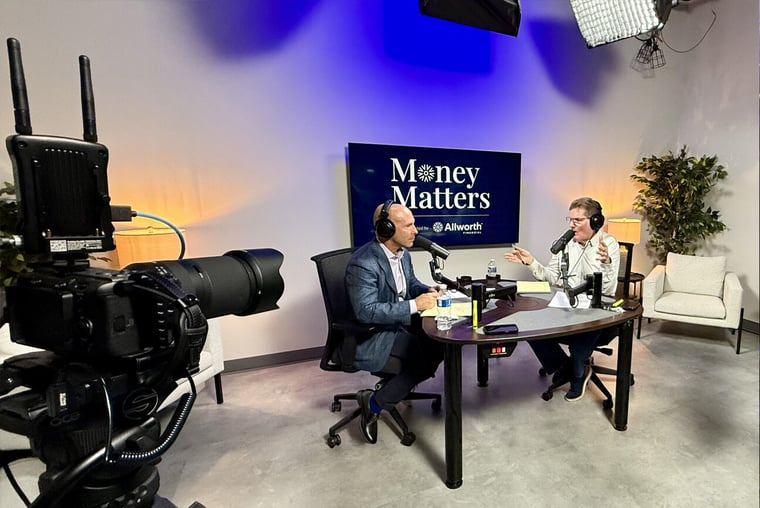
Roth Conversion & Direct Indexing Strategies
In this episode of Money Matters, Scott and Pat break down smart Roth conversion strategies for retirees who want to reduce lifetime taxes, manage future RMDs, and avoid costly bracket mistakes. A caller with $4+ million asks how much to convert each year — and whether moving IRA withdrawals into a brokerage account makes sense as part of a long-term Roth conversion plan.
They also discuss direct indexing, including how it works, whether low-cost providers are safe, and when direct indexing makes sense compared to backdoor Roth contributions.
Plus, a real client case study highlights asset location, ETF overconcentration, muni bond mistakes, and how coordinated Roth conversion and tax planning can potentially add six figures over time.
What You’ll Learn:
- How to structure a Roth conversion tax-efficiently
- When direct indexing makes sense — and when it doesn’t
- Why asset location matters more than most investors realize
- How to reduce future RMD and IRMAA surprises
- The hidden risks inside “diversified” ETF portfolios
Join Money Matters: Get your most pressing financial questions answered by Allworth's co-founders Scott Hanson and Pat McClain live on-air! Call 833-99-WORTH. Or ask a question by clicking here. You can also be on the air by emailing Scott and Pat at questions@moneymatters.com.
Scott: Welcome to Allworth's "Money Matters." Scott Hanson.
Pat: Pat McClain.
Scott: Glad you're being part of the program.
Pat: Yes. Yes.
Scott: As we are...
Pat: Well, you're not talking to me. We're talking to the listeners.
Scott: That's right.
Pat: Yeah. But I'm glad I'm part of the program as well, so, you got that going for me.
Scott: It's interesting, Pat. So, it's 35 years we've been doing... No, 30 years, 31 years we've been in this program. Almost 31 years.
Pat: Okay.
Scott: And you still enjoy doing it.
Pat: Mostly.
Scott: Mostly. It's definitely easier.
Pat: Well, the podcast format is much easier.
Scott: Correct.
Pat: I feel much more comfortable talking about things I wanna talk about on the podcast than I did on the radio.
Scott: And you don't have a clock that you have to look, count down to, and cut off the caller quick, early, and all that other stuff.
Pat: Yeah. And sometimes we talk about more personal things, because, like, when people can fast-forward, they don't wanna listen. Right? You have people...like, when I listen to podcasts, I fast-forward all the time.
Scott: You do?
Pat: Yeah.
Scott: I usually listen to us at 1.1.
Pat: Oh, do you really?
Scott: Yeah.
Pat: Oh, that's terrible.
Scott: Why?
Pat: Well, because it ruins the value [crosstalk 00:01:42]
Scott: What are you talking about?
Pat: Don't you find any joy in the way people speak?
Scott: Ten percent faster doesn't...I don't see the real...
Pat: You can't...?
Scott: I can slightly tell.
Pat: Look, I took a speed reading class years ago. I'm a pretty avid reader. I took a speed reading class, and then I did it for about three months, and I quit because it ruined the joy of reading for me. I was reading for content, and not for the joy of reading. And I feel the same way about podcasts, which is, when I try to go faster on them, it just ruins it.
Scott: There we go. I was just on the way to the studio this morning, I was listening to a podcast at 1.1. I didn't even know.
Pat: Oh.
Scott: Listening to Ray Dalio.
Pat: Ray Dalio. Yes. Interesting man.
Scott: [crosstalk 00:02:32] a lot of podcasts.
Pat: Interesting.
Scott: And I attempted, by the way, during this Lenten season, to have a news fast.
Pat: Did you?
Scott: I told my... Yes. Because I find myself just... I can get caught up in stories that are completely irrelevant to my life. And X is designed so they keep feeding up the stories, and the next thing you know, I'm like, "I'm wasting my life doing this stuff." So, I told my wife, "I'm taking a news fast. I'm gonna limit myself to just 10 minutes a day, unless it pertains particularly to my industry."
Pat: So when you click, like, on... I subscribe to X, but I never go there [crosstalk 00:03:10]
Scott: But even, like, "The Wall Street Journal," I'm buzzing through. Like, this is just...whatever.
Pat: Yeah. But then, the problem is is where, inside a "Wall Street Journal" article, you could click on another article, that leads you to another article, and the next thing you know...
Scott: Well then the problem there is a war broke out and [crosstalk 00:03:24]
Pat: Yeah, well, that's what's wrong with the fast.
Scott: Correct.
Pat: So you're not sticking to the...
Scott: Nah.
Pat: I get it.
Scott: I'm still not wasting my time on X.
Pat: [crosstalk 00:03:38]
Scott: Previously known as Twitter. Why am I talking about this?
Pat: I don't know. Let's go to the show.
Scott: All right. To join us, we love taking calls. Actually, having our guests is the favorite part of our program, because it feels like we can add, adding some value to people's lives, and it's much more interesting for us than to just sit and talk, regurgitate what we saw in the news recently, which is why we don't spend a whole lot of time talking about that. We figure if you want to know what the latest, and what happened to the stock market yesterday, you can...
Pat: You can look it up.
Scott: Yeah. And listen to plenty of other people. So, this is why we enjoy calls. So, if you've got a question, maybe you have an advisor and you're wondering, "is this the right kind of advice," or you've been doing things on your own, and thinking, "is there something we should be doing here?" Or you've got this certain, plan, strategy, and you're wondering if, well, just want a second opinion, give us a call...schedule a time to be on our program. And we're here in the studios at certain times, and we schedule...
Pat: Couple weeks in advance, and...
Scott: You can just send us an email at questions@moneymatters.com. Again, questions@moneymatters.com. Let's start off here with Sue. Sue, you're with Allworth's "Money Matters."
Sue: Hi, how are you doing?
Scott: Wow. We're doing great. How you doing, Sue?
Sue: I am doing good. Hey, listen. I wanted to have a spitball on what my situation is. I have $1.5 million in pre-tax assets. They were initially in a 457 plan, and was rolled over to a traditional IRA when I retired in 2025. What do you think of me using the IRS life expectancy factor, 22.9%, to come up with a $65,000 split between Roth conversion and withdrawal of $32,500.
Scott: How much Roth conversion?
Sue: $32,500, every year. Because I didn't want to go ahead and convert $1.5 million right away, because it would bump me up to...
Pat: Understand.
Sue: ...you know, [crosstalk 00:05:40]
Scott: Do you have any Roth now?
Sue: Huh?
Scott: You have money in Roth IRAs now?
Sue: Yes.
Scott: How much?
Sue: Since 1998.
Pat: How much?
Sue: I think it's $400,000.
Pat: How old are you?
Sue: 65, today.
Pat: Are you married?
Sue: No.
Scott: Kids?
Sue: No.
Pat: And if you did Roth conversions...
Scott: What's your income now? You retired. What's your income now?
Sue: It's $130,000.
Pat: Where's it come from?
Sue: From my pension of $94,000, and the remaining, Social Security.
Scott: Oh, good.
Pat: And [crosstalk 00:06:16] do you have any money outside of IRAs or Roth IRAs?
Sue: I have a brokerage account.
Pat: How much?
Sue: So, I was thinking about, you know, withdrawing the half of $32,500, and then pay the taxes, and then put the money on the regular brokerage account.
Scott: How much do you have in the brokerage account?
Sue: Probably $1.5... $2 million.
Pat: Did you inherit any of this money, or did you make it all in your lifetime?
Sue: I inherited half a million dollars, from an ex-boyfriend.
Pat: Ah, good for you. That's, something that came out of the relationship.
Sue: Yeah. But it's something I didn't expect, though.
Pat: I know, I know. But was he an ex-boyfriend when he died?
Scott: That's funny. [crosstalk 00:07:08]
Pat: Or did he become an ex-boyfriend?
Sue: Yeah, he was an ex-boyfriend.
Scott: Okay, perfect.
Sue: Because he said that he knows that I love him. So he said that he felt that... he felt comfortable giving me more than half of his assets...
Pat: Wow.
Sue: ...when he passed away.
Pat: All right.
Sue: We were together 12 years.
Pat: Oh, very nice.
Sue: They keep me. They keep me for a long time.
Pat: Okay. They keep you for a long time.
Sue: Yeah, they keep me for a long time, because you know what? They said I'm so nice. [crosstalk 00:07:36]
Pat: I believe that. Listen, Sue...
Sue: Uh-huh?
Pat: If, at this call, we're gonna post your contact information on our website...
Scott: No, I'm not.
Pat: ...and those that, they're looking for a date...
Scott: Okay. [crosstalk 00:07:49] All right. Let's get back [crosstalk 00:07:50]
Pat: This is hilarious. Yes.
Scott: Let me ask you a question.
Pat: How's [crosstalk 00:07:54]
Sue: Okay.
Scott: No, no.
Pat: Wait, are you gonna ask how much income the brokerage account [crosstalk 00:07:58]
Scott: No. If you could take money in your brokerage account and put it into a Roth IRA, would you do that? If you could take $200,000...
Sue: Like, why would I do that? Because I don't qualify right now.
Scott: Let's pretend like a magical...
Pat: Theoretically that you did.
Sue: Okay.
Scott: Like, if you could, would you?
Pat: The answer is yes.
Sue: In a sense that, with the Roth conversion...
Scott: No.
Sue: I could go ahead and take out money from the...
Pat: All right. So, let's go back to the question. How much money, income, does the brokerage account generate every year? Taxable.
Sue: To be honest, I don't know.
Scott: Okay...
Sue: But last year, I generated $455,000 from my overall account.
Pat: That's what, everything grew by $455,000. That's not what you [crosstalk 00:08:48]
Sue: Yes, yeah.
Scott: Okay, good. You didn't pay a...
Sue: Yes.
Scott: I would, I like the idea of doing some Roth conversion from the $1.5 million IRA. I would not take a dollar of it and put it in the brokerage account. Anything you wanna take out, I would convert it to a Roth. You have a very little amount in Roth relative to what you have in the brokerage account, and all that...every year, you get a 1099 from your brokerage company...
Sue: Yeah, I do.
Scott: ...that you have to report, and you gotta pay taxes on it.
Sue: I do. I do.
Scott: The beauty of the Roth, you don't get that. You never will.
Sue: Yeah, yeah.
Pat: Yeah. So, you wanna [crosstalk 00:09:21]
Sue: [crosstalk 00:09:21]
Scott: You wanna take money out, pay taxes, and stick it in your brokerage account.
Sue: Yeah.
Pat: And we're saying you're halfway... You were partially right. We're saying convert the maximum amount from the IRA to the Roth.
Sue: Maximum amount [crosstalk 00:09:37]
Pat: Who do you have named as a beneficiary on your IRAs? Please don't tell me an ex...
Sue: My sisters.
Pat: Okay, no ex-boyfriend, right?
Sue: My sister and my brother. Yeah. I requested them to go ahead and distribute to my other siblings, because it's, like, a...
Scott: Don't...
Pat: Oh, no, no, no, no, no, no, no.
Scott: No, no, no, no, no, no, no, no, no.
Pat: No, no. No.
Scott: List all, everyone you want. List them with the percentages.
Pat: Yes. Don't... Because you're creating...
Scott: There's limits.
Pat: And creating tax liability for them.
Scott: Yeah, because if they gift more than $19,000 to their sister, it's considered a taxable gift.
Pat: And...
Scott: Doesn't necessarily mean they have to pay the gift tax, but we all have a limit, and we don't know what they're gonna be in the future.
Pat: Yeah, and it's not only that, Scott, is that if it all goes to her, then she has to actually liquidate it, probably at a higher marginal tax rate over a decade [crosstalk 00:10:21]
Scott: Yeah, on the IRA. Yeah.
Pat: Yes, on the IRA. So, you wanna... Okay, so, let's start at the very beginning. So, you're gonna convert... We're gonna convert money from your IRA to your Roth IRA. And we don't know how much that is. It kind of depends on how much money is coming out of the brokerage account. So...
Sue: Okay.
Pat: ...we'd look at last year's tax return to determine what that amount would be, and then we'd run a pro forma, but it's gonna come from the IRA, and then the brokerage account, you're gonna take money out of that, and pay taxes on that conversion.
Sue: Okay.
Pat: Okay? And you're gonna do this. You said you're 65. You're gonna do this for another 10 years.
Sue: Ten years?
Pat: Yeah, you're gonna do it for another 10 years. Then you're gonna put a tax-efficient strategy on the brokerage account immediately.
Sue: Okay. Are you talking about QCD? I'm thinking about doing the QCD when I turn 70 and a half.
Pat: Well, yeah, but you're years away from that, but that's...
Sue: Yeah.
Scott: We're talking about just making sure that brokerage account is managed for tax efficiency.
Pat: Yeah. Are you giving any money to charities now?
Sue: Yeah.
Scott: Do you write a, you're writing a check, or are you giving appreciated stock?
Sue: I'm writing a check.
Pat: Okay. We're gonna set up a donor-advised fund from the brokerage account.
Sue: Okay.
Pat: You know, at the end of the... Look, you have, this is ripe with planning opportunities. This is... You would, by the way, you are an incredible saver. I mean...
Sue: Yes.
Pat: ...you know what surprised me most about this phone call is that you brought your ex-boyfriend out to a really nice dinner every year, because...
Sue: Oh, yeah. I did. I did.
Pat: I know, but what kind of surprised me is because, my guess was you don't spend a lot of money.
Sue: Oh, I did. I did spend a lot of money [crosstalk 00:12:03]
Scott: No, no. Not normally.
Pat: [crosstalk 00:12:05] on the dinners you did, but normally, in life...
Scott: That wasn't a weekly dinner.
Pat: ...you're a saver. You're a saver. You're a saver.
Sue: That's why I'm having a hard time right now with spending my money.
Pat: That's right. That's right.
Scott: Yes. I get it.
Pat: Yeah. You're a saver. You absolutely a great saver.
Sue: I have not spent a single amount of money from all [crosstalk 00:12:19]
Pat: I know. I know.
Sue: [crosstalk 00:12:21]
Scott: Well, right now, Sue, you've got millions set aside, right?
Sue: Yes.
Scott: Four million dollars plus, set aside.
Sue: Yes. Yes.
Scott: And you have a choice. You either spend it, you give it, [crosstalk 00:12:33] or the government gets a big chunk of it.
Sue: Oh, no. Oh, no, [crosstalk 00:12:37]
Scott: And you can give it while you're living. You can give it to your siblings, you can give it to charities, or you can spend it.
Sue: Okay.
Pat: Yeah, and your income's $130,000 a year, and that doesn't...that's...you're not even spending that, is my guess.
Sue: No, no.
Pat: You're saving that every month.
Sue: No.
Pat: Yeah, you...
Sue: [crosstalk 00:12:57] You know what? In retirement, I'm actually saving money.
Pat: I know that. I know that.
Sue: Okay.
Pat: I've worked with clients like you. I've actually been able to change their behavior. They now fly first class. They go on nice cruises. I'm just telling you.
Scott: [crosstalk 00:13:12] change their behavior. Yes, it takes time.
Pat: It takes time to change one's behavior.
Sue: It's true, yeah.
Pat: No, it's, look, the reason you have this much money is because you're very, very conservative with it. But this is it. You have done an incredible job. You have stored your labor, which is what you did over the years. You have stored your labor, through all these savings. Here's what I want you to do.
Sue: Uh-huh?
Pat: You...do what we asked you to do, and hire a financial advisor. And you're gonna say, "Well, how much do they charge?" And I'm gonna say, "Who cares?" Right? They're gonna charge market rate, if they're a good advisor, but you need... You're missing...
Scott: They'll pay for themselves.
Pat: Oh, 100%. But you're missing opportunity after opportunity after opportunity. And you're asking all [crosstalk 00:14:00]
Sue: What is the market rate right now, of [crosstalk 00:14:02]
Pat: On this size account, less than 1%.
Scott: Less than 1%.
Sue: Okay.
Pat: Less than 1%.
Sue: Okay. Yeah.
Pat: Yeah.
Sue: Because there has been somebody who has been pursuing me, 1% to 2% of my assets.
Scott: Two percent, no, no, no, no. Two percent?
Sue: That's too high.
Pat: Yeah, 2%? Yeah, yeah.
Scott: Holy moly.
Pat: Yeah. Yeah.
Scott: Probably more like 0.75...
Sue: And I said, "Oh, my god."
Scott: ...or somewhere in there.
Pat: Yeah, probably three quarters of a percent.
Sue: Okay.
Pat: Anyway, appreciate the call.
Sue: Yes. Thank you so much.
Scott: All right. Thank you, Sue.
Pat: Bye.
Sue: Bye-bye.
Scott: Good chatting with you.
Pat: How sweet was she?
Scott: Yeah. We're talking now with John. John, you're with Allworth's "Money Matters."
John: Oh, hi. Thanks for taking my call.
Scott: Yeah, glad you reached out.
John: The last couple years, you've talked about direct indexing.
Scott: Yes.
John: And I've been putting money in a high-interest savings account. But after listening, it seems like I'd be a good candidate to utilize direct indexing. And so my question is, there's a newer company out there, like, 2023, that is marketing to the average investor, specializing in direct indexing. They have substantially lower fees than the larger, traditional investment institutions. And they're a regulated fiduciary. They have third party that holds the assets...
Scott: Okay.
John: ...and member SIPC. But the amount of basis points is super low, so I'm, like, a bit skeptical, and I'm wondering if my investment would be safe if they ever dissolved.
Pat: It would be fine. So, they're holding it. They're holding it at a third-party custodian, right? So...
Scott: Fidelity, Schwab...
Pat: Pershing, Altruist, whatever. They're holding it there. And all they're doing is transaction trades on that platform.
Scott: They don't have access to the assets themself. They can't withdraw those funds. They have a limited power to make trades on it.
Pat: But not withdraw the funds or deposit funds. But, and by the way, with the advent of AI, well, which has been around for years and years, but... I shouldn't say the advent.
Scott: Whatever that means.
Pat: With the use of technology, it drives the cost down significantly with these.
Scott: Correct.
Pat: And what really made it possible is the custodial platforms, when they quit charging a fee to make a trade, where it used to be $20 or $30 10 years ago, they got rid of all that. So, that's what really drives the low cost in these. And today, you could build an index... Like, I was thinking about it yesterday, is, if I wanted to, I could... What's...
Scott: Funny. What were you daydreaming of yesterday, Pat?
Pat: I thought, you know, I could create my own index, using artificial intelligence, of only companies that manufactured...
Scott: Anything you want.
Pat: ...cars worth over $150,000.
Scott: You can create any index you want.
Pat: Yes.
Scott: But, the power of the direct index, you gotta continue to monitor that index against...monitor your portfolio against the index, which changes. Like, the holdings of the S&P 500 today are not the same as they were five years ago.
Pat: That's correct.
Scott: And then... That's part of it. The other part, of course, is the tax loss harvesting. I mean, that's...
Pat: And if you're charitably inclined, gifting. But that isn't what... So, that's all fine, but the thing that you said...
Scott: We have this...I guarantee we have the same thought.
Pat: What was it, Scott?
Scott: Well, it was direct indexing or high-interest savings. They're two completely different things.
Pat: You're comparing apples and tires.
Scott: It's not like, do I use this ETF or direct indexing? Do I keep my money stuffed in the mattress, or do I bet it on the future? That's kind of what we're looking at here.
Pat: That's that. So, give us your thinking behind where you went from a money market to a direct index. Because the risk levels are not even close.
John: Yeah, I mean, we're maxing out our 401(k). I don't qualify for a Roth. Have substantial savings built up. And so, you know, have a little bit of extra money every month, and just thought...
Pat: How old are you?
John: ...I'd like to... Fifty-two.
Pat: And are you doing a non-deductible Roth IRA, and then converting it to a Roth?
John: No. I'm not doing that.
Pat: And how much money would you put into this direct index a year?
John: Probably $20,000.
Pat: I would start with the non-deductible... Do you have any IRAs outside of 401(k)s right now?
John: Just an older Roth IRA.
Pat: Okay. Well, before I went to the direct indexing, I would actually... Because direct indexing works really good outside of an IRA. I would make non-deductible IRA contributions. Right? And there's still time. You could do it for 2025 and 2026. In fact, I just did mine a few weeks ago. What you do is you make a non-deductible IRA contribution, and then you convert it the very next day to a Roth IRA.
Scott: Yeah, you can do $8,000, because you're over 50, you can do $8,000 for 2025, and $8,000 for 2026.
Pat: And there's 16...are you, do you have a spouse?
John: Yes.
Pat: Okay, so you could do $32,000 right now. So I would do that before I jumped in [crosstalk 00:19:46]
Scott: Assuming she doesn't have any other IRAs.
Pat: Does she have any other IRAs?
John: No. [crosstalk 00:19:51]
Pat: And even if you do have other IRAs...
Scott: Does she have a job outside the home?
John: Yeah.
Scott: Yeah. Then...
Pat: Yeah.
John: Okay. Yeah.
Scott: I totally agree with Pat. That would be much better, because that's tax-free, as opposed to direct indexing. You're just managing the future capital gain taxes. And, you still have to pay taxes on the dividends, I'm sorry, yeah, the dividends that accrue each year.
Pat: Yeah. So, that's the first step you should take, is make non-deductible IRA contributions, then convert it to a Roth IRA. The rules around this is if you have an existing IRA, not a 401(k), but an IRA, not a Roth IRA, but an IRA, then, when you do that non-deductible, you have to do a pro rata conversion, which means... But that doesn't apply to you. If all you have is a Roth IRA. Easy. Easy, easy. But there may be a time in your life for a direct index, but now is not the time.
John: Okay. That sounds good.
Pat: All righty?
Scott: All right, John. Appreciate the call.
John: Thank you.
Scott: Wish you well. Really quick, Pat. I'm reminded of a... When I was in high school, my dad was not the handyman at all. I'm a little bit better, but not that much.
Pat: But your dad was so much fun to hang out with.
Scott: Okay. He was a riot.
Pat: He was.
Scott: And apparently, there was some sort of a nut that got loose on the garbage disposal. So he said, "How hard can this be? I'm looking for the low-cost option here," so he went and got a nut, did something, screwed it up, and then he wired something, blew out something in the electrical system, right? So, by the time he was done, this whole thing cost him probably 3X what it would have cost to begin with, with the electrical damages and stuff he did. [crosstalk 00:21:41]
Pat: Now you have to tie this back to financial.
Scott: Correct.
Pat: Okay.
Scott: So, there are certain people that are so focused on cost, and not to pick on John, but [inaudible 00:21:52] Like, he's looking at direct indexing, who's the absolute cheapest provider for direct indexing. A five-minute conversation with us, and we said, well, here's a couple planning opportunities that are much more valuable to you.
Pat: That's correct. Yes.
Scott: We would be more expensive than the couple, you know... The plumber originally would have been more expensive, but would have provided much greater value to my father.
Pat: Oh, that's correct.
Scott: Right?
Pat: Right? Yes.
Scott: Yeah.
Pat: Yeah, yeah. A hundred percent. Right? So, he called about one question, we answered it, and then said, "But yeah, it's the wrong question."
Scott: That was...yeah.
Pat: Right?
Scott: And I don't know what other areas of, in his financial life that would come before the direct indexing. My guess is there're probably a few other planning opportunities.
Pat: Oh, yes. I do have a question for you. How long did you go without a garbage disposal?
Scott: Oh, not long. But he ended up having to pay for two garbage disposals.
Pat: Is that right?
Scott: [inaudible 00:22:46] ended up getting a new one. That's, when he put the new one in, and that's when he...
Pat: Oh, it was the new one?
Scott: Yeah. So he ended up had to buy two new garbage disposals, because he blew that out, and did some electrical damage.
Pat: Was your dad a swear...did he swear when he was working on things around the house?
Scott: My dad always said, he would warn me as a kid, "Scott, you gotta save those words for when you really need them. Because if you're dropping F bombs all the time, what are you gonna have when you, like, really get hurt?"
Pat: And he used one when he was really sick before he died in the hospital, didn't he?
Scott: Yeah. Yeah, he did. He was, like, in a coma, comes out, "What the F?" I thought an appropriate time to use a word like that.
Pat: [crosstalk 00:23:22] And he meant it when he gave you that advice.
Scott: Yeah.
Pat: That's funny.
Scott: Hey, we're gonna have a segment now with Victoria Bogner, who's been a guest on our show.
Pat: A number of times.
Scott: A number of times. And give us a bit of a client story. So, Vicki, thanks for taking some time to be with us.
Victoria: Yeah, absolutely. Glad to be here.
Scott: Yeah. And I call her Vicki because I consider her a friend, but she goes by Victoria, so... I don't know what I'm supposed to call you on the podcast.
Victoria: My friends call me Vicki, so you're doing it right.
Scott: All right. I'm calling you Vicki.
Pat: We're calling you Vicki. I will have to call you Victoria, so...
Scott: And Vicki's out of our Kansas office.
Pat: Yeah, so...
Victoria: Yes.
Pat: Share a great...
Victoria: Good old Lawrence, Kansas.
Pat: Share a great story with us, please.
Victoria: Yeah. Okay. So, this is something we actually see quite often, but this is a particular client, they come to us from California.
Scott: Have they moved from... Just out of curiosity, did they move from California to Kansas?
Victoria: No, no. They're California clients.
Pat: Okay. Oh, so, Vicki, let's step back for a second. Tell us what role you play in the organization, that you would have interaction with a client from California.
Victoria: Sure. So, I am the head of wealth planning, so I lead our advanced wealth planning team. And it's a team of wealth planners, estate planners, tax planners, in which we come alongside the financial advisor, and we're the specialists that really dig into the complexity of some of these high-net-worth client cases. So, we're working with clients all over the place, all 50 states, right?
Scott: You know, it's funny. So, on a side note, when I started in this industry in 1990, I was hired by this company, and remember, they showed me this diagram, and as the financial advisor, you're, like, the quarterback, and you work with all these different experts to help whatever the client needs. And I was all excited as a new college grad. This sounds like it'd be a great place to work. Well, then [inaudible 00:25:20] after a couple weeks, I realized that none of those people existed. [inaudible 00:25:23]
Pat: Yeah, you were supposed to go find them.
Scott: Yeah, there were no experts to go and rely upon. And it's just so wonderful that here at Allworth, we're able to have [crosstalk 00:25:32]
Pat: So, the advisor identifies a situation, then brings it back to a team and says, "This is what I think." And then you guys dig in.
Victoria: Correct.
Pat: Okay.
Victoria: So, if it's a client that, you know, it's like, "This has got some hair on it. Would you guys take a look and see what you can do?" So, this is one of those cases where there are just, there are so many interweaving parts. And so, you might look at it on its surface and say, "Oh, this looks a little straightforward," but then when you start to dig into it, it's like, "Oh, my gosh. There are these repercussions and knock-on effects, depending on how you handle this."
So, let's dig into the case. We're gonna call them Jim and Karen. Okay, Jim and Karen, they're in their early 60s. They live in California. They recently retired. They actually have pretty low expenses. They live within their means. They have...they did really well saving in Roth IRAs, so they've got a couple million in Roth. They've got about a million in IRA assets, or $2 million, and they've got a million in just taxable brokerage. And so, something that we see quite often, and this might be the case for people listening, is that these clients felt that they were very well-diversified. They were do-it-yourselfers, up until this point. And they got to the point of retiring, and thought, you know what, we need to have a professional take a look at this and make sure we're doing this right. Well, within all of these accounts, first of all, so, there are multiple issues to take a look at, but the first one was something we call asset location.
So, within these accounts, they had a bunch of ETFs, a bunch of muni bonds, some corporate bonds. And what they didn't realize is that within these ETFs, they owned, you know, S&P 500 ETF, and the NASDAQ ETF, and then a large-cap growth ETF. And we find this often with do-it-yourselfers, because what are they using to determine what ETFs to go into? They're looking at historical performance, right? They're looking over the past one, three, five years. And when you do that, you're naturally leaning toward companies and funds that have outperformed, but now the valuations are a little stretched. And when you look [crosstalk 00:27:44]
Scott: Yeah, and when you look...
Victoria: Yeah.
Scott: ...those same funds that follow, subsequent five years, are rarely gonna be the top performers going forward.
Victoria: That... Yes. If you look back at the past decades of who, you know, was on top of the market as far as the top 10 companies, they're completely different every decade. A decade ago, it was GE and all the oil companies. And today, of course, it's the Googles and the Nvidias of the world. Well, also, the secondary problem is that all of these funds, when you look under the hood at the underlying holdings, what do you find? They're basically holding the same stuff. So, you think you're well-diversified, because you own all of these ETFs, but in reality, they all own the same top 10 stocks, right? So, when we pulled all of this apart, what we realized is they had 35% invested in just eight stocks, underneath the hood. And I'm sure you can guess what those eight stocks were, right? They were the huge tech stocks, the Amazons, Apples, Microsoft, [crosstalk 00:28:48]
Scott: Magnificent seven.
Victoria: ...those kinds... Yes, exactly.
Pat: So, Vicki, just as a point of reference, we have $4 million, right?
Scott: Five million.
Victoria: [crosstalk 00:28:57] we have $5 million, [crosstalk 00:28:58]
Pat: Oh, $5 million, right? And they have 35%, or $1.7 million invested in eight stocks.
Victoria: Well, they didn't have 100% of their money in equities.
Pat: Okay.
Victoria: So, the portion they had in equities...
Scott: Got it.
Victoria: ...was over-concentrated in these top stocks...
Scott: Okay.
Victoria: ...but they didn't realize that, because they thought, "Oh, we own all these ETFs." Well, these ETFs all hold the same stuff. And not only that, all that stuff, those eight stocks that comprise the majority of the equities, are all correlated in the same industry, so you have not only concentration risk...
Scott: That's right.
Victoria: ...in the stocks, but in...
Scott: That's exactly right.
Victoria: ...the industry as well. So, that was enlightening to them, to be able to pull back the hood on that, and actually look at the underlying holdings. But here's the other really interesting thing that it makes sense on the surface, but then when you dig into somebody's specific situation, you think, "Oh. Well, that's actually not the best way to do this." Okay, they actually happen to have very low taxable income, because they were very frugal, right? And so, when you looked at their effective tax rate, combined, between federal and state, it was 13%. Well, they're holding muni bond funds, California muni bonds, in their taxable account, and they're yielding 3%.
Scott: Better off to treasury bills.
Victoria: Exactly. So we said, you know what would be better is actually, if you hold treasury bonds that are yielding 4%, 4.5%, and you pay the federal tax, they're still state income tax-free, and your after-tax [inaudible 00:30:35] higher than holding these municipal bonds.
Pat: And put them in the IRAs, and put the capital gains stuff in the brokerage. That's where you're gonna go with this, correct?
Victoria: Yes. Asset location is so important, because what you have to understand is all these things are taxed differently. So, they had some stocks that they owned inside of their IRAs, that were qualified dividends, and then in their taxable brokerage, non-qualified dividends. And these aren't things that, you know, people typically think about. They just invest, and then they get their tax bill at the end of the day, and they think that's what they gotta pay. But there is so much more that's under your control, where we can put the not tax-efficient assets in the IRAs, the tax-efficient ones in the taxable brokerage, and the ones that are more aggressive, that are gonna grow the most over time, in the Roths, because that's where your tax-free money comes in. And then [crosstalk 00:31:31]
Scott: Yeah, because if you think about, say qualified dividends, which we don't really talk that much about on this program, but for a married couple, they can have over $100,000 in qualified dividends, that aren't taxed.
Victoria: Right. Because you're paying long [crosstalk 00:31:46]
Scott: If that's the only source of income, which isn't. But, I mean, that's why this planning makes so much sense.
Pat: So...
Scott: Because, like, once you go over that number, it hits 15% tax, so...
Victoria: Mm-hmm. That's right. It's just capital gains tax brackets.
Scott: And if you have it inside your IRA, you don't get that tax break.
Victoria: No, you're just wasting it. Right. So, it's really important to make sure you know why you hold what you own, and where you own it [crosstalk 00:32:11]
Scott: So, what did you end up doing with the brokerage account?
Victoria: So, what we ended up doing...
Scott: Because there's also some...
Victoria: ...is we reallocated...
Scott: ...you don't wanna pay too...
Victoria: ...so that they're actually...
Scott: ...much taxes on having to...
Victoria: Yeah.
Scott: Yep.
Victoria: Well, because their income was so low, we were able to do a few things. First of all, look at their actual cash flow of what they needed, to get them in their proper risk tolerance, because honestly, they were too invested in fixed income. They didn't need to be as invested as they were in fixed income, because their cash flow needs were very low. So, the way that we like to do this is we bucket it. So, the first five years of income you think you're gonna need, that's more moderate/conservative. The next five years, we invest moderately. And anything you're not gonna need for 10-plus years, we can go more moderate/aggressive with, right? So, we're looking across the spectrum to figure out your overall risk tolerance. And it turned out, hey, we can actually invest more in equities, and also, you're underrepresented in a lot of spaces in the equity market. You're overexposed to large-cap growth. So, we reallocated, to create true diversity, around industry sector, cap weighting, all of that. And then we made sure that they owned the right things in the right kinds of accounts to maximize their tax picture, as far as qualified dividends, treasury bonds, etc. And then we were able to pinpoint exactly where those cash flows should come out of to maximize their taxes, even leaving a little bit of room to do some Roth conversions that were very effective, even though they didn't have, you know, they had $2 million in IRAs, so we're thinking through to the future of RMDs. How is that gonna impact you? How can we stay underneath IRMAA brackets? Is that worth doing? Because we don't want the IRMAA tail to wag the tax dog.
These are all things that we do a deep dive into, to figure out what is the best way to structure this overall, not just for the next year, but for the next 15, 20 years, the rest of your life, to make sure that over your lifespan, your plan is not only adapting to the changes that inevitably happen, and the tax law and the geopolitical picture, I mean, we all are experiencing that right now, but also adapts to just your life. And those are all the things that a lot of do-it-yourselfers don't necessarily think about. Some of them are really good at it, and kudos to you if you just dig in there and learn all you can. But this is what we do day in and day out. It's so important, and makes a huge difference in the portfolio, over the lifespan of that portfolio, what they have left.
Pat: So, Vicki, I have two questions for you. One, could you quantify, in dollar numbers, out, the 20 years, had they had continued on the same path versus instituting your methodology, what the tax savings or dollar savings would be to them? Right. And I'm sure it's in the tens of thousands of dollars. That's my first question. So that you could quantify that this is the value to you by doing these changes. And then the second question is, what drove them to seek out a financial advisor after so many years of doing it themselves? Because, oftentimes...look, I have friends that they're like, "Oh, I do it myself. I don't really need an advisor," and I say, "Well, just meet with one, and see what they have to say," and then they come back and they're like, "Well, you know, this is great. This makes tons of sense." But then, it leads to the second question, which is, I love the information, and I love what you're doing, but I don't know if I wanna pay for it, because it's hard to quantify the value.
Scott: Yeah. And it's expensive.
Pat: And it's expensive. So, it just, when she was going through this and I'm thinking about it, I got a prescription the other day, and it was $963 for a month. Right?
Scott: Wow.
Pat: And so, because it's the beginning of the year, I haven't met my deductible, so it's out of pocket. And I thought, is this a lot or is this a little? That's what I thought to myself.
Victoria: Yeah.
Pat: And then I thought, "Well, this is a little, relative to that the doctor said..."
Scott: [crosstalk 00:36:22] that you're getting.
Pat: "...I would die if I don't have this," right? So, it comes down to value. And I think that, quite frankly, I'm worth $963 a month.
Scott: Not much more. It was $2 grand or something, it's be "Eh, we're gonna take our chances."
Pat: My wife's like, "We can't afford it. You're out." So, is there a way you could quantify it? And what drove them to actually visit with you in the first place? Like, why now?
Victoria: Yes. Well, on the first question, quantifying it, yes, we can, to an extent. Of course, we can't guarantee anything, because we can't tell the future. But as far as just rearranging things, doing some rough conversions to bring their RMD down, but also taking into consideration that we were able to decrease their risk and increase their expected return at the same time, because they were overweight in bonds, but then they were overweight in a concentrated bunch of positions too, without realizing it.
Pat: Yeah. And holding munis at their tax bracket is just kind of a no-brainer.
Victoria: Yes, exactly. So...
Scott: Well, that's a little insulting to [inaudible 00:37:32]
Victoria: Well, well, I mean, you don't know what you don't know, right?
Scott: [crosstalk 00:37:34] no-brainer.
Pat: Well, that's true. [crosstalk 00:37:37] That's... For a professional, it's a no-brainer.
Scott: Well, and they might have thought this is how we keep our tax, our income lower, by owning munis.
Pat: That's right. Okay. So...
Victoria: Yeah. Yeah, exactly. Like, duh, munis. But, you know, in their case, it didn't make sense to hold munis. So, yeah, I mean, we're looking at six figures of difference, by making these changes. And then, when you compare that to the fee that you're paying, which, you know, varies, anywhere from...
Scott: Not six figures.
Victoria: Not six figures. I mean, we're also factoring in that not only were we able to increase your expected after-tax return, and lower your risk at the same time, and give you some peace of mind, and then, at the end of your lifespan, your kids have more that they can inherit than they would have before, and when you net out the fee, they're still coming out, you know, what we're expecting, I can't guarantee anything, of course, is that they're coming out so much farther ahead by having somebody come alongside them, and be on their side, to help them determine the best way to structure all of this. It's, in my opinion...
Scott: And it's very dynamic, because every...
Victoria: Every year, it changes.
Scott: Yeah. Of course.
Victoria: Every year, you... Well, and even, you know, multiple times during the year, you're checking in, to see are these assumptions still correct? Do we need to make adjustments? If they're, you know, we're being proactive with the clients and their changes as well. So, it more than pays for itself, I guess is what I'm trying to say.
Pat: And this isn't just Allworth that provides this...
Scott: That's right.
Pat: ...type of... There are many firms.
Scott: Good, quality firms.
Pat: Yeah, good, quality firms.
Victoria: Yeah.
Pat: And so, tell us what you believe drove them to decide to seek out an advisor at this stage of their life. Was it just that they realized this account is quite large, or that they were struggling with managing it, or it just didn't feel right? What was...
Victoria: There were two things. First was the big life change that they decided to, you know, they were both then retired. So, they're in their early 60s, and retired. Part of their question was, "When should we take Social Security?" So, they were looking at that. And then the other question was, "Boy, the stock market sure seems high, and we just picked these ETFs because that's what everybody invests in, right, the S&P and the NASDAQ, and you call it a day, but we're starting to get a little bit nervous about these valuations, and we're not quite sure how to look at this or even think about it." So, those were really the three driving forces. And really, I think they did come in thinking, "Yeah, we're just gonna sit down for an hour and get some ideas, and then we'll just go on our merry way." But once we were able to actually show, "Well, you know, in reality, you have all of these incredible opportunities in your portfolio, to make a huge difference," the light bulb moment really happened.
Pat: Yeah. Perfect.
Scott: Well, good. I appreciate you sharing the story, Vicki, and this is the kind of thing that happens on a daily basis at Allworth, really, [crosstalk 00:40:25]
Victoria: Mm-hmm. That's right.
Scott: [crosstalk 00:40:25] thousands of clients, so...
Pat: All right. Thanks, Vicki.
Scott: Thank you.
Pat: Appreciate you being on.
Scott: Yep.
Victoria: Thank you.
Scott: Well, hey, I wanna let everyone know about our March webinar we've got coming up. The title of this is "Advanced Tax Strategies for $2 Million-Plus Portfolios." And Laurie Ingwersen, one of our partner advisors in our Boston suburb office, is the one leading this. And the webinar's about 30 minutes. Some of the things you're gonna learn are the most common places that tax drag hides, and why it often goes unnoticed, particularly at higher levels of wealth, how even good tax moves can compound into meaningful long-term costs when made in isolation. And Pat, I think we've seen this a number of times, particularly on things like Roth conversions, and it's like, you thought you were solving this problem, but here's what happens.
Pat: Yeah. And sometimes people do Roth conversions, and it makes no sense.
Scott: Why coordination across investments, tax, estate, and income planning is essential to generating tax alpha over time. The difference between reactive tax moves and intentional, forward-thinking design, and more. This is not a checklist webinar. It's really designed for those that already have some decent understanding of how all this stuff works, and wanted to increase their thinking.
Pat: But, [inaudible 00:41:40] Scott, she's gonna spend quite a bit of time on asset location. Right? Which is super important.
Scott: It's a 30-minute webinar, so it's gonna be... You're, I can't guarantee, but my bet is that everyone who listens, they're gonna come away with one piece of thought for their own financial life.
Pat: Oh. I would hope.
Scott: It's March 19th and March 21st. Sign up at allworthfinancial.com/workshops. It's been fun being in the studio here with you, Pat. I hope this was an enjoyable day for you. [crosstalk 00:42:13] Sometimes it's not.
Pat: It was incredible. Incredible.
Scott: Yeah. And if this particular podcast is helpful to you, maybe you think it's gonna be helpful to a friend or family member, just forward it on to them and say, "Hey, give this thing a listen." We'd appreciate that. Anyway, we'll see you next week. This has been Scott Hanson, Pat McClain, of Allworth's "Money Matters."
Announcer: This program has been brought to you by Allworth Financial, a registered investment advisory firm. Any ideas presented during this program are not intended to provide specific financial advice. You should consult your own financial advisor, tax consultant, or estate planning attorney to conduct your own due diligence.
Insights for Complex Wealth Decisions
Join our email list for exclusive commentary from our Chief Investment Officer, early access to expert-led webinars, and your complimentary Wealth Planning Checklist for Complex Portfolios.
We take your privacy seriously and respect your privacy choices. By submitting this information you agree to our Terms of Use Agreement, Privacy Policy, and to receive important notices and other communications electronically.