
Smart Tax Strategies for High Net Worth Investors
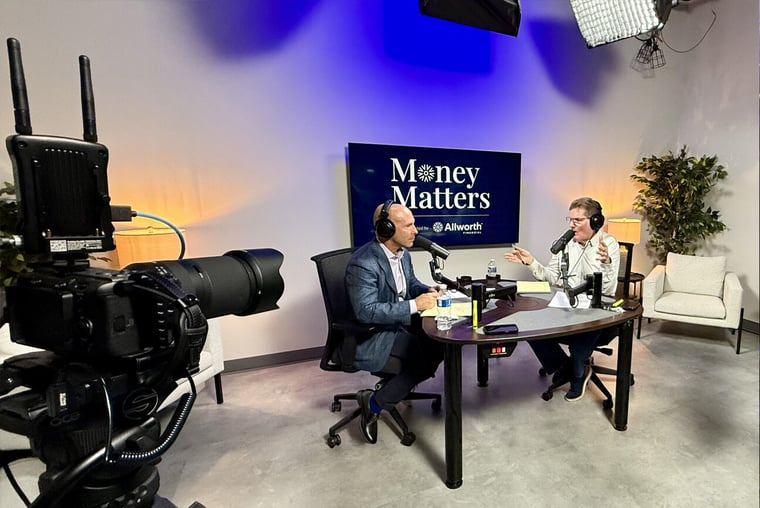
In this episode of Money Matters, Scott and Pat break down real-world tax strategies for high net worth investors dealing with multi-million dollar IRAs, brokerage accounts, and rising future tax liabilities. They walk through detailed listener cases—including a couple with over $18 million in assets trying to minimize RMD taxes, IRMAA surcharges, and legacy tax burdens—while sharing actionable tax strategies for high net worth investors.
Here’s what you’ll learn:
- How to handle upcoming RMDs on multi-million dollar retirement accounts
- Why Roth conversions may have limited impact at higher income levels
- How gifting appreciated assets can reduce your taxable estate
- When to use a donor-advised fund instead of giving cash
- Why you should stop reinvesting dividends in taxable accounts
- How tax-loss harvesting technology can improve portfolio efficiency
- The importance of asset location (and how mistakes can cost you)
- How to better prepare large portfolios for generational wealth transfer
- Why AI can assist—but not replace—real financial advice
If you’re serious about optimizing your wealth, understanding the right tax strategies for high net worth investors can help you reduce taxes, protect your assets, and build a more efficient long-term plan.
Join Money Matters: Get your most pressing financial questions answered by Allworth's co-founders Scott Hanson and Pat McClain live on-air! Call 833-99-WORTH. Or ask a question by clicking here. You can also be on the air by emailing Scott and Pat at questions@moneymatters.com.
Scott: Welcome to Allworth's "Money Matters". Scott Hanson.
Pat: Pat McClain. Thanks for being here.
Scott: Both myself and my co-host here, we're both long-time financial advisors, certified financial planner, chartered financial consultant, all that kind of good stuff. A lot of experience working with people, and love having this podcast where we can have people join us as callers and present their situations to us.
Pat: I like working with my clients as well. So, yes, that's part of the job.
Scott: The people? And the worst part of the job.
Pat: Yes. It's kind of like life, right? Everything would work perfect if it didn't involve people.
Scott: I You know, it's funny. I was talking to someone. What industry? It was professional services. And they complained, "If it just wasn't for the people." I said, "Well, that's the industry you're in. You don't have a factory that produces stuff by itself. Your industry is professional services. Those are all people." And the more I thought about it, I said, "That's the favorite part of my job." Yes, there's challenging people that you work with and challenging employees and challenging coworkers and challenging clients from time to time. But then there's also delightful people that add a lot of meaning and richness to my life.
Pat: Okay. Thank you. Thank you. Appreciate that. Anything else?
Scott: I was feeling quite grateful. I went through a list of gratitude this morning?
Pat: Are you on a gratitude tour?
Scott: I've got 43 things thus far.
Pat: Well, listen, just send me an email with all the things you're thankful about me.
Scott: I've tried. I didn't know where to start.
Pat: It just kept bouncing back every time. All right, let's go to the show.
Scott: All right. Let's go right to call today.
Pat: Wait, wait, wait, Scott, questions@moneymatters.com, questions@moneymatters.com, if you'd like to join the show at some point in the future.
Scott: And you're going to want to listen to the program because later on we've got Victoria Bognar joining us to talk. She was with us last week, but this week ,she's talking about AI. She's quite brilliant. And she's got a degree in mathematics, advanced math, something, and computer science, something like that. And she's a charter financial analyst.
Pat: She's smart.
Scott: We'll get into it. But I think you'll find this interesting. I think you'll find it interesting. She's interesting. So, you'll want to stick through with that. So, anyway, let's start off with Richard. Richard, you're with Allworth's "Money Matters".
Richard: Hi, thanks for taking my call.
Scott: Sure. Our pleasure.
Richard: This is exciting for me. I get to talk to the Laurel and Hardy of financial planning.
Scott: Okay. Thank you. I guess. I don't know if we've been called Laurel and Hardy before.
Pat: For anyone under the age of 40, Laurel and Hardy...
Scott: Or maybe 50.
Pat: One was a big, heavy man?
Richard: Oh, I'm sure it's just this audience. I'm sure it's this.
Pat: What can we do to help?
Richard: Well, I'll give you the details and then my question, and we'll take it from there.
Pat: Perfect.
Scott: All righty.
Richard: I turned 71 this month. My wife will turn 68 at the end of this year, '26. We'll both be retiring at the end of the year. We have tried to diligently save, and we've been able to accumulate some modest assets over time. And the question I'm really going to ask you involves tax mitigation strategies once we're in retirement. For sake of background, we have about $6.5 million in joint brokerage accounts, about $11.8 million in retirement accounts. Those are 401(k)s, IRAs, and an employee's savings plan account that my wife has.
Pat: Okay. And can you give us a breakdown of whose is whose, ballpark?
Richard: Yeah, I can. I have about $6.5 in my accounts, and she has about $5.1 in her accounts. And the only Roth that we have in our retirement, I have about $155,000 in the Roth component of my 401(k). Our allocation across all of those assets... Oh, go ahead.
Scott: What's your annual income from your work?
Richard: Well, for last year, our AGI was about $850,000, and I think it's probably going to be about the same this year.
Scott: Some of that was from your brokerage account. What was earned income?
Richard: Yeah, that includes dividend and interest income plus wages.
Pat: Yeah, what was your brokerage income? I'm just trying to get a handle on how much your wages are and what you're going to do to replace.
Scott: Yeah, wages, that's what we're looking at.
Richard: So, I think if we look at this, our wages are probably about $750 of that $850.
Pat: Got it. Thanks.
Richard: I think that's close. That's a ballpark.
Pat: Okay. Thank you.
Richard: And again, it depends on bonuses and that kind of thing, but I'm going to say about $750 would reflect the wages. In terms of asset allocation across all those accounts collectively, that's both the retirement and the personal money, we're about 77% equities and 23% fixed income and cash. We live in the Midwest. We have no debt. We currently own three residences. Our primary residence, a condo in the city where I work, which is about 250 to 300 miles away from my primary residence. And then another home in Southern California where our daughters, son-in-law, and grandchildren live that we purchased a couple of years ago.
Scott: Are you self-employed?
Richard: No, neither of us. The total value of those properties, those three properties is, I don't know, $3.5 million to $3.75 million, something like that, all total taken care of.
Scott: And will you sell the condo when you retire?
Richard: Exactly. I'll sell the condo. The condo is only worth 200k to 250k. But, yes, that would be the plan. I'll no longer need to travel here, so...
Scott: And how many kids do you have?
Richard: Just the one and two grandchildren so far.
Scott: And the house in Southern California, what's that worth?
Richard: About $2.7 million.
Pat: And do you stay in it ever or is it just your daughter stays in it?
Richard: Oh, no. No, no, no. This is ours. She has her own home there. No, we are...
Pat: Got it. Okay, okay, okay. All right. So, this is a vacation home.
Richard: Sorry, it's in the city where they live. It's not where they live. Sorry.
Pat: It's a vacation home.
Richard: It's a home that we're there probably monthly back and forth because we're both able to work remotely. So, we work from there a fair amount of the time. We have no cancer.
Scott: Okay. What state's your primary residence?
Richard: Midwest.
Scott: Okay, close enough. All right.
Richard: Right in the middle of it. Right smack dab in the middle of the country. We do have a state income tax.
Pat: Okay. So, what's your question for us? I think we hit probably most everything.
Richard: Just let me finish because this will complete the picture. So, I have started drawing Social Security since I just turned 70. And that's yielding about $60,000 or more a year. My wife's Social Security when she retires will be in the same vicinity, probably $65,000 to $70,000 at that point when she takes that at age 70. She hasn't taken any Social Security, obviously later. We have made consistent charitable contributions over the years, but I think we're going to be less inclined to do so going forward only because of the places that we've been giving money have changed directions. And unless we find a new source that we want to contribute to. I'm not sure that we're going to be as charitable in retirement in terms of our spirit of charity as we have been up to now.
So, obviously, I'm looking for anything that we might be able to do to minimize our tax liability going forward. In particular, recognizing what the RMDs are going to be when they kick in for me in '28 and then they'll kick in for her in 2031. And even if we make QCD charitable donations, assuming we might identify some worthy charities...
Scott: That's not much.
Richard: ...it seems to me that our tax liability is going to remain high. We're going to be subject, obviously, to IRMAA, especially with a two year look back in my case. So, even after we're fully retired, I also don't see even in retirement how we can do enough Roth conversions to limit our tax liability. Although that would be something preferable, from my perspective, in terms of having those kinds of accounts to pass on to our daughter and grandchildren.
Scott: The brokerage account, how efficient has that been managed from a tax standpoint?
Richard: It's pretty efficient. It's largely...
Scott: Against the tax lost harvesting at all, or is it positions you've held for decades?
Richard: Not yet. We haven't... Right. You know, that's been a buy and hold thing all along. We are going to have some losses, I think, to ride off this year because one of the holdings, it's not a lot, but it's maybe 4% to 5% of the portfolio, is in a specific company stock that has dropped over the course of the last six months or so. And for that...
Scott: Are you having any technology overlay on this account?
Richard: No.
Scott: I mean, that's one thing I would consider. I don't know. Without looking at the brokerage account. But there's some phenomenal technology solutions today that didn't exist even a few years ago.
Pat: And they're relatively inexpensive.
Scott: Yeah. That monitored on cost basis.
Richard: If you can educate me on those, that would be great. I mean, we've tried to do everything else. We've started 529s for the kids, and done that to the max to get the state tax deduction. And, you know, we'll spend some of our assets down, but it's not like we're not willing to travel and spend some of our assets. But I think our lifestyle is going to be fine. We don't have health issues. I just can't figure out what we should be doing. So, I'll listen to what you suggest.
Pat: Are you gifting to your daughter?
Richard: Not yet. But obviously, having listened to you, I know that's a strategy that we can use to get rid of some of that, yes.
Scott: So, I mean...
Richard: Up to the max that we can gift, yes.
Scott: One of the challenges, the biggest piece of your net worth is in your retirement account that has yet to be taxed.
Richard: Correct. Obviously. That's the problem.
Scott: Right. And there's not a lot you can do because when you take money out of that, it's taxed. Whether it goes into a Roth or you spend it or goes into a brokerage account, it gets taxed. And even if...
Richard: Again, the only thing I was trying to say, though, is obviously, our taxes will go down, will be, at least, in something of a lower tax bracket, I think, when we're fully retired.
Pat: Well, I don't know if that's a good idea or not.
Richard: Well, until... Oh, you need to do conversions before I have to do RMDs?
Pat: No, no, I don't know if it's a good idea to drive yourself into a lower tax bracket.
Richard: Oh. Oh, good. Well...
Pat: No, no. Wait, well, listen here...
Richard: ...when did you start waiting for the IRS? Are you with the IRS now?
Pat: Well, tell us about your daughter and her spouse. What's their income as a family, do you believe?
Richard: Their income is quite good. They're in the upper range. Not probably quite where we are, but reasonable. They own a home in Southern California, and they're both employed.
Pat: And they make a few hundred thousand dollars a year, I take it?
Richard: Correct. Yeah, between the two of them, yeah, several hundred thousand a year, yes.
Pat: Okay. So, here's...
Scott: The problem, you passed, you and your wife get hit in a car crash today, that $11 million is distributed out over 10 years.
Pat: Yes. So, here's what...
Richard: Right. I know.
Pat: The brokerage account, I believe, I agree with Scott, I would put a tax overlay on that, and then I would take the highly appreciated...
Scott: And depending on what you own in there, there may not be a lot to do. Even if you did a good job on creating some losses, they're capital losses, so they won't offset any of your withdrawals for you.
Richard: That's correct.
Pat: Are you reinvesting dividends and capital gains in the brokerage account or do you have it all go to cash?
Richard: Yeah.
Pat: You are reinvesting dividends in...
Richard: No. Absolutely, yes, of course. Yep.
Pat: Well, wait.
Scott: Of course, I wouldn't do that.
Pat: Yeah. When you say of course, why would you do that?
Richard: Well, over time, we did it because there wasn't any reason for us to be raising the cash off of that side.
Pat: No, no, I understand. But reinvesting dividends and capital gains says, "I got X, Y, Z mutual funds." So, you've had this for a long time.
Scott: Or stock. "And I want to keep buying more."
Pat: And then American funds, I'm going to say, there was an American funds or whatever in there that throws out a distribution, and then you automatically take that and go back and buy.
Scott: That's the thing I want to buy more than anything else.
Pat: Right? You want to stop that immediately. You want everything to go to cash, right? And that way, you can actually balance your reallocation. You get control over it. You didn't put it on set. I would also look at that portfolio. I'd begin gifting to your child immediately. Absolutely. And you and your wife can each gift $19,000 this year to each one of them, $38,000. And then you could give to their spouse, which would be $76,000.
Richard: Right, right. Correct.
Pat: And I would do that in highly appreciated assets out of the broker's account.
Scott: Yes.
Richard: Okay, okay.
Pat: So, I would take that. Then I would actually put an overlay over it. They're relatively inexpensive. You don't have to run the overlay forever, but you could try it for a year or two.
Scott: Well, I don't know. And we have no idea how these brokerage accounts...
Pat: Works in there. Yeah, I have none.
Scott: You don't, I have no. But if I would manage... The only thing, you've got a couple levers, not a lot here. One is that brokerage account. You can manage that for the maximum tax efficiency without giving up growth. So, that would be my strategy there. And which means that... And some of the stuff you probably have held for so long, the capital gains would be too high. You're never going to get rid of.
Richard: That's exactly right. The cost basis is horrible, yeah.
Scott: Yeah. But there might be stuff in there that doesn't have a horrible cost basis that you can...
Richard: I wish.
Scott: Yeah. All right. And then... Okay. I think, if I were a betting man, I bet there's ways to make that more tax efficient, without even looking at it, but...
Pat: Of course there would. It's just gonna be risky.
Scott: I'm not going to argue with you. No, it's not.
Pat: I know. But just because he feigns confidence doesn't mean it's true, Scott. So, you've done this long enough. You've done this long enough. When the clients say, "Oh, there's no better way to do it," and there are often times, better ways to do it. The other one... So, I would actually...
Scott: The second is how you manage that IRA. And when I say manage it, it's either current distributions or Roth conversions, or it's going to be a combination of the two. That's all you got.
Richard: That's right, Scott.
Scott: And then try to reduce your estate by gifting it to your daughter.
Pat: So, first thing I would do is I'd actually start gifting to the daughter, highly appreciated assets, I do that to the maximum every year, and you can gift it to her husband as well. Remember, they're separate gifts. They're not family gifts. So, you got to feel comfortable with the son-in-law or...
Richard: Sure. Of course.
Pat: However, you know, it's broken up.
Richard: Yeah. That's not it. That's not it.
Pat: And the other is I would actually take some of that broker's account, the highly appreciated assets, and I would actually use that to fund a donor advise fund. I assume you've been doing that because you have said that you've been doing everything...
Scott: But he doesn't know if he wants to be charitable.
Pat: Understand.
Richard: That's why I haven't done a...
Pat: But you've given money to charity in the past, but you haven't used a donor advised fund.
Scott: Have you given securities or cash?
Richard: We've given cash and just used it as a part of our itemization.
Pat: Okay, so that was...
Scott: Going forward, never give cash again.
Pat: Never.
Richard: Well, I get that.
Scott: Unless you're going to get more than 30% of your adjusted gross income in a year. Give securities, the most appreciated security you have.
Pat: And I would set up a donor advised fund and I'd actually fund it right now with $100,000 just to make it easy to give money to charity, plan for it.
Scott: And I'd pick the most highly appreciated assets you have, or something that's highly appreciated that you don't want to own any longer.
Pat: And then I would actually then start a distribution for... I don't know why you're waiting to take up income for your wife's Social Security either.
Scott: I would take that immediately.
Pat: Yeah. You said because she's working, but who cares? Listen, listen here, you called for advice. Here's why, your income is not going to be any lower in retirement than it is today.
Richard: Well, it has to be.
Pat: No, it doesn't.
Richard: Before we start taking RMDs, don't you think?
Pat: No, no. You have to start taking the money out of the out of the IRA right now, and...
Scott: As soon as you retire.
Pat: Or doing Roth conversions or the combination to the two.
Richard: Agreed, okay.
Pat: So, there's no reason to wait on Social Security, none, zero, makes no sense.
Scott: And if I were a betty man, I would bet that your Social Security is going to be reduced in the year 2032 or '33, whenever the...
Pat: Significantly. So, I would start her Social Security, donor advised funds $100,000. I hope you're writing this down.
Scott: Okay, let's do it again.
Pat: I think you came in with the idea that you've got everything perfect, but you called us for advice. Donor advised fund for $100,000. Start gifting highly appreciated asset out of the brokerage account, and then figure out where you're at in the marginal tax rate and do Roth conversions and IRA...
Scott: And hire a good advisor.
Pat: He's not going to.
Scott: You get 20 million bucks.
Richard: Oh, sure.
Pat: Are you going to hire a good advisor?
Richard: Oh, sure. Absolutely.
Pat: Really?
Richard: Yeah, I mean, I'm clear out of my league here. That's why I finally submitted this question to you because I know this is way too complicated for me to try to figure out.
Pat: Good for you.
Scott: Richard, you're my older brother. It's like, go interview three advisors. Here's the situation. Have them give you some sort of proposal on what they would recommend and then pick the one that feels right with you. Richard, what did you, a fee-based fiduciary advisor.
Pat: What did you do for your career?
Scott: He's still working remotely.
Pat: I know. What do you, what do you do for your career, generally?
Richard: Now, I'm a CEO of a nonprofit, which I've been for about 23 years. Before that I was in academics.
Pat: Wow. All right. Well, good for you.
Scott: Appreciate the call. Wish you well, Richard. We're talking now with Matt. Matt, you're with Allworth's "Money Matters".
Matt: Hi, guys.
Scott: Hey, Matt.
Matt: Hey I'm looking for some advice. I'm about six years away from having to take my RMDs. And when that comes on that combined with my... I got a bunch of money in CDs. When you combine that, my taxable income's pretty high, and I'm afraid I'm going to get, you know, stuck in the IRMAA column. So, I'm wondering what...
Scott: If you get stuck in the IRMAA column, how much does that mean? What are you looking at, increase cost?
Matt: For the IRMAA?
Scott: Yeah.
Matt: It's probably the second tier.
Scott: Okay. So, you have an idea of ballpark monthly. What is that?
Matt: Oh, it's about $405 per person.
Pat: Okay. All right. And how old's your spouse? So, I assume you're 69.
Pat: So, about doubles your cost on it.
Matt: No, I'm 66 and she's 65.
Pat: I thought you said you were just six years away from your Required Minimum Distributions.
Matt: Yeah. It's gonna start in 2032, right? Look how far is that?
Pat: Yours will be at age 75.
Scott: I believe age 75 for you.
Matt: Oh, well, that'd be looking better.
Scott: Got pushed out.
Pat: It got pushed out a couple of years ago.
Scott: And what's your ballpark net worth?
Matt: The ballpark net worth is about $5, but in qualified, I've got about $3, and then nonqualified I've got $2. I was thinking about just as those CDs come due, just pushing them into a brokerage firm, and just letting them go a legacy for my daughter.
Scott: How old's your daughter?
Scott: She's 30.
Scott: And are you working today?
Matt: No, I'm retired.
Scott: And where's your income come from?
Matt: My income, it's coming from, some from Social Security. I was taking a 40k distribution from my qualified funds, and then a little CD income, not all of it.
Pat: And you said you were taking money from your rival. Are you still?
Matt: Yeah, I am right now. I'm still taking that 40k distribution, but when it comes time for the RMD, that they're going to make me take about $116.
Scott: Yeah. And is your goal for all the $2 million in CDs for 100% of that go into your daughter?
Matt: Yeah, I'd like to maximize that. I think she's gone need it.
Pat: Okay. And all the money in your brokerage account of CDs, or is there any stocks or mutual funds or ETFs in there?
Matt: My brokerage account that I've got right now it's 90k of Chevron stock. There's not anything in there other that.
Pat: And where's the other $1.9 million? Correct. You said you had $2 million in after tax money. Where was that? Is that in bank CDs?
Matt: Yeah, that's all in CD.
Pat: Okay. And tell me what's inside your IRAs.
Matt: In my IRA, I've got the S&P. S&P is about $1.2. And then I've got, the rest of it is in a stable value income fund, which...
Scott: All right. So, here's what... This is...
Pat: And what do you spend a year? How much do you need income for the family?
Matt: No, we're very frugal. Probably $60 grand.
Pat: All right. So, Matt, if you were my client, I'd do two things right away. One is I'd increase your monthly distribution, and then I'd tell you that you couldn't return any of it to me so that you would spend it. And if that means that sometimes you get in the A seating on Southwest airlines because you paid extra for your seat, then so be it.
Matt: I was afraid you were going to say that. You know, it's hard for me to do that. We don't do anything. We're very frugal, very simple life.
Pat: Yes. I understand that.
Scott: That's why you have $5 million.
Pat: I understand that. I have worked with clients like you my whole career and I love them dearly. And it takes years and years and years to change behavior. And you don't change it a lot, but you change it in ways that they actually appreciate at the end of the day. Where they come back and say, "You know, Pat, it is much nicer in the front of the plane than it is in the back of the plane." And I'm like, "Yes, that's why they charge more."
Scott: That's just one example.
Pat: One example. But here's one of the things that you should... Your asset location is kind of messed up. And the reason being is that S&P 500 should...
Scott: You're saying in a perfect world, Pat, when we're all completely rational humans and our emotions never take over.
Pat: That's right.
Scott: So, just let's start with that.
Pat: Okay. So, you have this stock that is super tax efficient, super, super tax efficient, the S&P 500. And you've got $1.2 million of it inside of this incredible tax efficient vehicle called an IRA. So, you've got a tax efficient vehicle inside of a tax efficient vehicle. And you have that in your IRA, $1.2 million. And then you have $1.9 million in savings that has got no tax efficiency whatsoever, and it sits outside of a tax efficient vehicle. So, you're...
Scott: But he wants those dollars to go to his daughter.
Pat: Even more so, because we're going to show you how you could get a lot more money to your daughter when you die. And that is by replicating, taking that, putting an equivalent type of fixed income in the IRA of $1.2 million and putting $1.2 million, the S&P 500 in your brokerage account. And the reason here is because you don't get taxed on a capital gains that are deferred, and it receives a full step up in basis at your death.
Scott: Eliminate the capital gains and the dividends are taxed at a much favorable rate. Once they're outside of your...tax is qualified dividend.
Pat: This is one of the easiest, most productive calls I have taken in weeks.
Matt: Okay. Well, is that a whole lot different than I was thinking? That I should, perhaps just as those CDs come due, because that's all, I should just dump that into a brokerage, and let her receive the step up in basis.
Pat: Yeah. The brokerage doesn't receive a step up in basis if it's in CDs...
Matt: No, no, no. I was...
Scott: ...as it comes due. But we don't want to see your allocation of where stocks go necessarily higher.
Pat: Yeah. This is keeping the same allocation you have today. And by the way, you're underweighted in equities. You should be at a minimum 50/50. And so, it's the asset location and it's the asset allocation. I'm going to say it, you need an advisor. That's just flat out.
Scott: People really hate us. Don't they, our industry?
Pat: Well, they're...
Scott: Our industry has a bad reputation well-earned.
Pat: For good reason, but... What's that?
Scott: We've been screwed.
Matt: I've been scratching for every nickel, you know. It's hard to let go of. And it's money well spent, I know. And I should have been doing something different years ago with Roth and everything else, but...
Scott: But, you know what's also, Matt, though, it's interesting, because you brought that, as we get older, we learn more about ourselves. Do we not?
Matt: We do.
Scott: We become more introspective. There's parts of ourselves that we love and other parts of ourselves that, "Man, I wish that was different." But you realize after years of trying, things don't really change a whole lot. I get it. Like, we're all human. And the reason you have these dollars is because you've been very frugal over the years. Studies show that a good advisor will pay for themselves. And when I say good advisor, we're talking about a fiduciary advisor, independent advisor, someone who manages not just money, but that whole tax strategy behind it. So, the tax strategy oftentimes is going to be the biggest value add in a relationship than anything else.
Pat: And here it is 100%.
Scott: It is.
Pat: This tax strategy, it's...
Scott: And they can show you what your tax bill was for 2025 versus what it's going to be in future years just by doing some of these plans.
Pat: And then make sure you will was up to date. So, anyway, you needed advisor.
Matt: Okay. So, before we go, so what I'm hearing is I could do better for my daughter and my legacy if I was to hire a good advisor.
Pat: That is a 100%.
Scott: Yes, exactly right.
Pat: And I could tell you over the phone, but then you're going to call me back tomorrow and say, "Well, what was I supposed to do here or here or here?" And because I only come into record once every two weeks, it's really not efficient.
Matt: I hear you. I've been struggling exactly with what we concluded on. So, you kind of pushed me over the edge, I guess.
Scott: You've jumped in.
Pat: You did a great job saving, Matt.
Scott: For sure. Congrats. Kudos to you on that.
Pat: I grew up in that household where it was like, "Hey." In fact, I was in a parking lot the other day and...
Scott: I appreciate the call, Matt.
Pat: ...there was some change on the side of the thing. And then I walked over there. I was picking up these pennies in the parking lot. The lady goes, "How's that going?" I go, "Look how much money I just made. I made over four cents." And she just looked at me like it was a little bit crazy, like, I was bending over to pick up money, but money is money.
Scott: I don't think I would have picked up four pennies.
Pat: I did.
Scott: Four dimes? Yes. I couldn't help myself. Four nickels probably, yes. I don't think I would on four pennies.
Pat: I couldn't help myself. Last week we had Victoria Bogner on talking about a client story. And I think she did a good job anyway. Afterwards, we were chatting with her and we were talking about this article that she had written on AI and financial planning and thought, "Why don't we get her back on to talk about that?" And part of the reason, Scott, is because in our industry periodicals, the thing, at least once a week, you see a software company coming up with how they're now using, in the financial plan, AI to change the industry. And it certainly is that in productivity capabilities.
Scott: The question, is it going to replace...? That's our industry, like said. And then how much is AI going to be helpful to all of us?
Pat: At the end of the day.
Scott: And clients. So, Victoria Bogner, thank you for taking some time to be with us.
Victoria: Yeah, I'm glad to be back.
Scott: So, what is this article you wrote?
Victoria: Yeah. So, the article that I wrote, and you can find it on our website, it, I called it "Why a Real Financial Advisor Matters in an AI World".
Pat: You have an education, you have degrees in what?
Victoria: Well, I'm a certified financial planner, a chartered financial analyst, accredited investment fiduciary. My background is in mathematics and computer science. That's what I studied in college. So, this is very fascinating to me. I've done a lot of research on AI, not just in our particular industry, but in general. So, I felt compelled to write this because while it is my opinion, I feel it as an informed opinion.
Pat: Yes. And you have more initials behind your name than I have in my name. So, tell us about the article.
Victoria: Yeah. Okay. So, what I wanted to write about is how AI can be helpful in many ways, but there are things that AI, in my opinion, will never be able to do. And I think that we lose sight of that because all we hear about is how AI is just going to take over the world and humans aren't going to have anything left to do. And that...
Scott: It's really strange. It's both an exciting time and a scary time.
Victoria: Yeah, it really is because there's so much uncertainty around it. And it really is a revolutionary time. And to an extent, humanity is going to have to decide what we're going to allow and what we aren't, which is also scary. But getting into this particular article, I wrote it with the focus on the financial planning profession specifically. AI is an amazing tool and you might be tempted to say, "Hey, AI, how about you just be my financial planner for me? Why do I need to pay a human being to do this for me when I have AI?" That can be really tempting. But there are so many things that AI just can't do.
And what we also know about AI, and I apologize if I'm getting a little in the weeds, but AI tends to be pretty sycophantic, which means that it agrees with you. So, if you tell AI, I really want to retire at the age of, you know, 40, then it's going to say, "Yeah, that sounds like a great goal." AI is not the type of tool that's going to challenge you or your assumptions. Something else is that AI doesn't truly know your full picture, right? It's only so good at giving you an output based on the inputs you give it. And a lot of people that we talk with, they give us what they think is important, but then a good financial advisor will go beyond that.
Pat: All it's about.
Scott: And actually people listen to this program. They hear that just in the questions we ask the callers.
Pat: You know what's interesting? So, I think about this is oftentimes a question where people say, "My risk tolerance is pretty high." And then...
Scott: What does that mean?
Pat: ...our question is, "Well, what did you do in these time periods?" And we asked them how they reacted to previous market situations. I don't believe AI would ever ask that question. Like, if you say, "I'm a great athlete." And they don't say, "Well, how many hours a day do you train?" AI is not making those value judgments, right? Because it's a sycophant, they're just going along with whatever you tell them. They're not saying...
Victoria: Yes.
Scott: There was a gal who, I think, writing for "The New York times", "The Wall Street Journal", which one, who ran the Boston New York marathon, and 100% of her training was AI, 100%. And it was way off.
Pat: Was he?
Scott: She. Way off. Anyway, she's decided as a test, I'm going to follow that 100%, my training, my diet, everything. And the prediction for her was so far off of what she actually did.
Pat: Donald Trump beat her.
Scott: Totally.
Victoria: Yeah. And that is...
Pat: In the Boston Marathon.
Pat: That block maybe. A marathon?
Scott: Just stop. No political.
Pat: Okay. I'm sorry. I couldn't help myself. Just trying to picture Donald Trump running a marathon. He's got the bib on, the number on the back.
Victoria: You know, AI can generate that picture for you.
Pat: Okay. So, keep going.
Victoria: Okay. So, that's absolutely right. AI isn't going to challenge you when you say, "I have a high risk tolerance," or, "I can work within a budget of X amount per month," right? And AI is not going to challenge you on that. And that's one of the key aspects of having an advisor, that they can actually, you know, look beyond the words you're saying into your actual behavior and say, "Well, let's actually analyze this. Let's dig deeper into this to actually figure out what the answers to these questions are."
Pat: But Vicki, we shouldn't ignore the fact that AI... Like we use AI. we have to use closed circuit AI, basically, because...
Scott: We don't wanna trade secrets out there.
Pat: We don't want any of it out there. But AI, in terms of just doing analysis... Well, actually, I believe that it will, it will lead to better outcomes with a good advisor using AI...
Scott: For sure.
Pat: ...then not.
Victoria: It's a both/and, right? So, you can use AI almost like a para planner. So, you give input, it will give output, right? We know that about AI. But what AI cannot do is then make judgment calls. It can't make a decision for you. It can't understand tradeoffs. So, if you have... And we know, financial planning is very nuanced. It's not a black and white, do this and this will happen. Or if this is your circumstance, this is the right answer. It's very nuanced with judgment calls and give and take. And AI can't understand that nuance. It will give you the answer, but it won't tell you this is... Well, actually it probably will tell you, "This is exactly what you should do," whether that's right or wrong. And we also know AI has very high conviction whether it's right or wrong, but that's the other problem.
Scott: Might this change in the future?
Victoria: In my opinion, here is something that I don't think will ever change and I could be wrong. Maybe AI will become sentient someday. But AI does not care about you, right? AI doesn't care about anything. You can't have a relationship with AI. It does not have feelings.
Pat: People try.
Victoria: People try. It can emulate...
Pat: All are weird.
Victoria: ...those things, but it doesn't. We know that has actually really horrible consequences, unfortunately. But it can't navigate competing obligations. It can't figure out living with trade-offs. Because AI doesn't live with consequences and AI can't be held accountable, right? Accountability is structural to human systems, and AI can't be accountable. Someone has to be responsible.
Pat: Wait, just slow down. That was profound, right? Accountability is structural to what?
Victoria: To human systems. You must have accountability.
Pat: That actually sounded both porret, very, like, super like emotional, at the same time calculated.
Scott: Well, you know, it's interesting. So, I've said that... Bause, I mean, as a founder of a wealth management and financial planning firm, we should think about, "What's this going to do to our future?" And I think the tools are going to make it so that the advisors can show outcomes scenarios extremely quickly, right? Tools are going to do all the planning and stuff. But every option we go down, there's certain costs to that. And it's that... I think the point when I trust the machine more than, I would say, a marriage counselor, maybe that's the time when I'm going to trust the machine more. But my experience in 35 years as a financial advisor is the greatest value we add is keeping people from making mistakes from which they cannot recover, and it's being there in times of need. And the need is either some external force like a major market meltdown, or more likely, something happens in the family.
And I think back to this couple, I'm going to call them Bill and Stacy because I was thinking about this is what you started talking. He became a client in 1992. So, Pat and I were in business very short period of time. Became a client. He was an avid cyclist in great shape. And he came to us, he might've been 71 at the time, says "I have stage four lung cancer. I've got three months to live," or whatever. And he was the typical family where he took care of the investments, married to Stacy for 40-plus years or whatever, but she didn't pay any attention to it. And I remember sitting down with them and looking them in the eye and saying, "Bill, I've got Stacy's back. I assure you that we will watch over her till her dying day." And that was the last conversation I had with them. And funny, last week, I just checked in with the advisor, I asked him about, "How's Stacy? What's the latest with Stacy?" Because we promised to protect her.
Pat: Yeah, AI's not going to do that. But AI is going to make businesses more efficient, which can actually then lead to a lower pricing, which will then lead to more people actually using people like us.
Victoria: Yes. And I think that if an advisor's primary role, if you're viewing an advisor, it's just somebody that constructs a portfolio, does some rebalancing, does some tax loss harvesting, and surface level planning. AI can do that, right, the middle layer of financial planning.
Pat: Actually, there's tools already exist. Tools already exist to do those things, yeah.
Victoria: Those tools already exist. But what I believe is going to be even more important and more valuable, not less, is that, especially when you get to the higher net worth level, anything that involves judgment... And let's define judgment. Judgment is pattern recognition, plus lived experience, plus accountability. That's what judgment is. And the last two will never be software features. AI will never have lived experience plus accountability. So, that means, when anything comes down to human judgment, which is, you know, strategic tax coordination, business transition planning, how do you deal with intergenerational issues with legacy planning?
Scott: How much do we give to the kids? What control do we have, let them have? At what ages? What protections do we do future spouses?
Pat: And not only that is, do I give to the kids in different methods just because of the personality of the kids?
Victoria: Right. So, something that I've started to frame in my mind is decision architecture. I don't know, maybe I should trademark that. But the role of the advisor actually expands as complexity increases. And we know that complexity is not shrinking, right? So, the bottom line is that if AI ever eliminates human financial advisors, it'll be because clients no longer value human accountability and relational trust. And I find that a very difficult future to comprehend. I think that clients will always value human accountability and relational trust.
Pat: Well, I got to... On that, Vicki, we will always value you being on the program. After listening to you, I think you should be actually speaking at industry conferences. I think that you should stand up in a front of groups of financial advisors and remind them of what they do and why they do it.
Victoria: It's a very high calling, and it's more important now than ever.
Scott: I agree with you on that.
Pat: Yeah, yeah. So, anyway, I appreciate you being on the show.
Scott: Thank you, Vicki.
Pat: And we will talk soon.
Victoria: Happy to do it.
Pat: Yeah, see you.
Scott: Well, as usual, Pat, it's been good doing this program with you. And if you haven't given us a rating in a while, go on your... Follow that program. And, Pat, actually, I found... I was doing this for someone else the other day, and Spotify, it was kind of clunky trying to get back to, what do you call it, the home page or whatever. Yeah.
Pat: You know what? Drives me crazy that the stuff it feeds me after Spotify, after it... I listened to a podcast that I like, right, "Planning Money".
Scott: And then it gives you eight other options.
Pat: No, if you don't hit a button, it automatically will feed you some stuff.
Scott: And start playing automatically?
Pat: Yes.
Scott: Mine doesn't do...
Pat: Mine does.
Scott: Oh, I take that back. Well, let's move on. We are moving on. We're done. Anyway, it's been great being with you.
Pat: But so, the point being, hit the follow button on Spotify.
Scott: And give us a little... If you haven't... We have a lot more ratings on Apple than we do on Spotify.
Pat: I did not know that.
Scott: I looked at this last week. I was bored or something, "What I'm I going to do it with my day?" No, I'm kidding. I don't know. But I was curious to see how our show is doing.
Pat: So, yeah, if you could give us a rating, especially if you listen to us on Spotify.
Scott: It's been Scott Hanson and Pat McClain of Allworth's "Money Matters". See you next week.
Automated Voice: This program has been brought to you by Allworth Financial, a registered investment advisory firm. Any ideas presented during this program are not intended to provide specific financial advice. You should consult your own financial advisor, tax consultant, or a state-planning attorney to conduct your own due diligence.
Insights for Complex Wealth Decisions
Join our email list for exclusive commentary from our Chief Investment Officer, early access to expert-led webinars, and your complimentary Wealth Planning Checklist for Complex Portfolios.
We take your privacy seriously and respect your privacy choices. By submitting this information you agree to our Terms of Use Agreement, Privacy Policy, and to receive important notices and other communications electronically.