
Roth Conversion Strategy, Tax Planning and Wealth Transfer for High Net Worth Investors
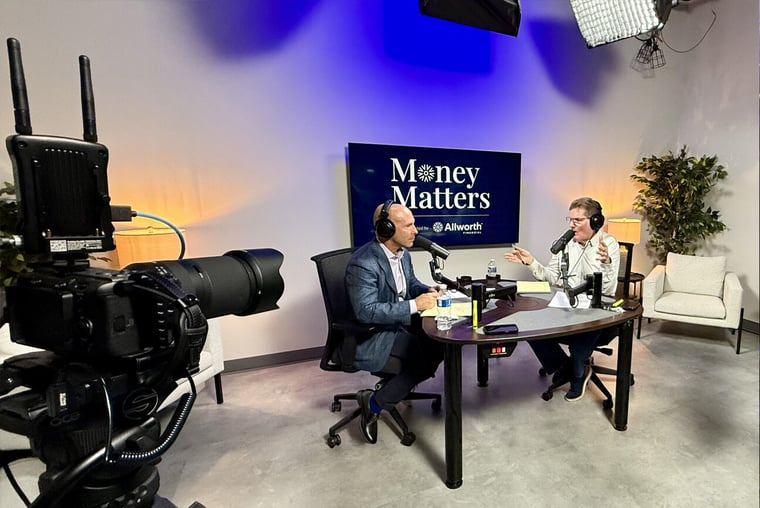
In this episode of Money Matters, Scott and Pat take calls from high-income listeners facing real financial crossroads—from deciding whether to return to work to navigating major portfolio and tax decisions. Along the way, they break down when a Roth conversion strategy makes sense, how taxes impact big financial decisions, and why timing and sequencing can have a long-term effect on wealth.
The conversation also covers portfolio risk, income needs, and how to approach leaving money to the next generation without overcomplicating the process. Scott and Pat explain how a well-thought-out Roth conversion strategy fits into a broader financial plan that balances flexibility, taxes, and long-term goals.
Join Money Matters: Get your most pressing financial questions answered by Allworth's co-founders Scott Hanson and Pat McClain live on-air! Call 833-99-WORTH. Or ask a question by clicking here. You can also be on the air by emailing Scott and Pat at questions@moneymatters.com.
Scott: Welcome to Allworth's "Money Matters". Scott Hanson.
Pat: Pat McClain. Thanks for joining us.
Scott: Yeah, glad to have you with us. Yeah, talking about financial matters. And we're recording this on what? Wednesday, March 25th in the afternoon. And the reason I mention this is because the markets can change dramatically in a day or two at post-recording.
Pat: Isn't it something? Scott, this last Sunday night, my wife and I were talking.
Scott: What are you baffled about with the markets?
Pat: Well, just how quickly things change. So, we think about Sunday, when there was... I remember what thread it was.
Scott: It feels like Trump is trying to control the markets.
Pat: I had a conversation with clients this afternoon and I said, "This president probably spends more time on Twitter, X." No, I didn't say that.
Scott: He does, of course.
Pat: He spends a lot of time watching these markets. He reacts to the markets, in terms of his...
Scott: Right. I don't know if that's, like, healthy or not.
Pat: I don't either.
Scott: For what we've got going on in the Middle East.
Pat: I don't know either.
Scott: Most Americans like to see resolution.
Pat: My wife and I were talking Sunday night and I said, "Man, it's kind of crazy what happens to the markets tomorrow if what happens over the weekend was going to come true, that we were going to start bombing..." Don't send me an email if I've got this wrong because it's hard to track
Scott: Whatever, yes. Some escalation or not an escalation. Deal or non-deal.
Pat: And then the next morning the markets are up.
Scott: Was that the day was up huge this week?
Pat: Yeah, Monday.
Scott: And it pulled back some before the...
Pat: And then Wednesday was okay. And just all over the board.
Scott: Well, it's barely off its highs considering what's going on in the world.
Pat: Yes, yes. And then the big AI threat, whatever that is.
Scott: And I think the markets are saying that this isn't going to be a prolonged war.
Pat: That's what the markets are saying.
Scott: That's what the markets believe. Otherwise, we would see some something different.
Pat: Yes, that's...
Scott: But you know what's amazing is, I don't know if you pay attention to the price of gold.
Pat: Yes.
Scott: I don't know if it hit bear market territory or if not, it's pretty dang close.
Pat: Did you find it...
Scott: From 5,500 an ounce to 4,500 an ounce in a matter of what, 12 days, 13 days, trading days, somewhere?
Pat: Did you find it perplexing?
Scott: No, it's how markets work.
Pat: No, no. Okay.
Scott: What was perplexing is how much it ran up so quickly.
Pat: How it ran up. And silver, how much silver went up.
Scott: Well, silver's... Yeah, they're both up just dramatically.
Pat: I think about that a lot, unfortunately. Why it's treated as a precious metal when it's really...
Scott: What, silver?
Pat: And gold. It's a commodity. But historically, it has been treated as a form of wealth.
Scott: As have a lot of other assets.
Pat: Well, salt was at one point in time. But we don't treat it like that anymore.
Scott: No, because it costs nothing.
Pat: It costs nothing. Like what other assets? I guess jewelry, paintings, historical documents.
Scott: Before it was fur. I mean, whatever you could trade with.
Pat: But why has gold stuck? It's essentially a fiat currency. Would it be considered a fiat currency?
Scott: I don't know. I mean, look, I don't want to spend a whole lot of time talking about gold. What I did find was interesting...
Pat: Wait a minute. But don't you think it's curious that that was the commodity that stuck as...?
Scott: I suppose now you put it this way, that could be a number of different things. That could be a commodity. It could be platinum or whatever, or diamonds.
Pat: Yes. I think in a historical context, we as humans continue to treat this as an investment, I guess, because it doesn't rot. You can't burn it.
Scott: I think it's probably pretty easy to tell if it's pure or not.
Pat: And it's pretty easy to tell if it's pure.
Scott: I mentioned diamonds. I'm no expert on precious stones, but I imagine there's quite a bit of difference in the quality of diamonds. Anyway, all right. But I did listen to a podcast with Ray Dalio, founder of Bridgewater. Bridgewater or something?
Pat: Yes, Bridgewater.
Scott: Yeah. And he was talking about gold, making a case for gold. But he had already made a big bet a year ago, made a bunch of money. Maybe put a third of it or something. And then when the market sold off, call me a skeptic, I'm thinking, was he out there selling? Was he pumping to the public and selling personally?
Pat: I listened to the same interviewer.
Scott: I don't mean any... I'm not stating that's what happened, or I mean I'm saying anything negative about Ray Dalio, but I just have to think those sort of things.
Pat: Yeah. Well, you are an investment advisor, so cynicism is probably a good trait to have.
Scott: With any sort of investment being pitched.
Pat: Right. Someone asked me, "Why are you so cynical?" I said, "You really want me to be a little bit cynical." I mean, I'll tell my wife that next time.
Scott: Oh, you would?
Pat: How do you think I was able to create the lifestyle for this family without being a little cynical? You have to be cynical. A good advisor, a good investor is cynical. So, we appreciate the fact that you questioned that.
Scott: Yeah. Let's... We'll take some calls. I do want to talk a little bit about private credit and the freeze in the markets. And we'll wait. We'll have a conversation later. Anyway, let's start off here. And if you want to join us in the program, love to take your call, questions@moneymatters.com. That's the email, the address to send us an email, questions@moneymatters.com. We are talking with Christine. Hi, Christine. You're with Scott Hansen and Pat McLean.
Christine: Hi, guys. Thanks for taking my call. I appreciate it.
Scott: Yeah, we're glad you called.
Christine: All right. So, my question has to do with a job career question for myself. I'm getting to the point where I'm not sure if I need to be switching jobs or not really just for a financial reason. So, I've been working very part-time since my kids were younger. They're a bit older now. They're both in high school. But I'm really happy with the part-time work that I'm doing. And my husband and I are just kind of wondering if I have to just so we can get to the point of retirement eventually, if I really need to go get a full-time job and make more money, or if we can really keep me doing what I'm doing and kind of work for our family.
Scott: That is such a great question. And I find, interesting, Christine. I know lots of women, very bright, highly educated, worked in the workforce for a handful of years, had kids, either didn't work or worked part-time, kids get older. And this question comes to mind, well, do I need to work to hit our retirement goals to have some financial independence? Then secondly is, how do I enter back in? And for years I thought, I don't know why there's not some program out there that helps these educated women that have been stay-at-home moms for years, that are going back into the workplace, to get them ramping back up into the skill sets for 2026. But anyway, maybe that's not...you don't want to go back to workforce, are you?
Christine: Well, I mean, I kind of feel stuck, honestly. I mean, I've kind of looked around a little bit, and I just really can't find an opening to get into. I've been out for 12 years. And I like to be busy, so I've always kind of been doing something. I worked at the kids' school and the preschool. Right now, I'm teaching fitness classes. And I really enjoy what I'm doing, but I don't really make any money doing it. But we've been surviving. It's just now we're looking down the line and saying, "Okay, these kids are going away to college. We're going to have to pay for that." We are going to want to retire before too long. We're 45, so it's getting closer. But so, do we need me to be contributing financially more? And if so, then I'll figure that out. But if not, maybe we can just continue down this track.
Scott: What's your husband think?
Christine: He wants me to be happy.
Scott: Okay, good. Well, good. So, it's not like there's not any rift here that you're getting some pressure to go back to working.
Christine: No. And we've talked about this too. He travels a lot for work, and so, he's gotten used to kind of having everything handled at home, and...
Scott: Taken care of. Yeah, I get it.
Christine: I'm fine with that, too.
Scott: My wife stayed home. She quit working when we had her first child, and it was very much a blessing and a benefit to me, I must admit. So, tell us about your family situation.
Pat: Yeah, tell us about your debt and tell us about your savings and income.
Christine: Sure. So, for debt, we still have a mortgage. We owe about $350,000 on the house. It's worth about $800,000. And then we have one car loan, pretty new. We owe about $35,000 on that. And then...
Scott: And what's the family income?
Christine: Family income, it's about $380,000 a year. And that's mostly my husband.
Scott: And what do you have saved in a 401(k)?
Christine: So, between... So, 401(k) is we have about $325,000, and then in traditional IRAs from old jobs, we have about $710,000. And then we've got about $75,000 in my husband's company stock, you know, that, like, employees stock purchase. And then we have about $25,000 in cash. And then also, we have our 529s for our kids. Between the two accounts, it's about $140,000.
Scott: And where do you think they'll go to...? You have two kids?
Christine: We do. They're both thinking and looking at out of state schools. But we've talked to our one daughter, she's very interested in going to medical school. And so, I've talked to her about, you know, I think it's real important that she graduate undergrad with no debt, and to kind of work within the parameters of what we can do with our savings. And then, you know, if we can cast a little of that, too. So, we're trying to keep their dreams realistic.
Pat: There we go. Thank you. As I reminded my kids constantly, the school doesn't graduate, you do. So, everyone puts a lot of emphasis on the school. And I'm like, "Look, I know lots of people that have graduated from Harvard who have just done okay."
Scott: Oh, yeah, I do too. From that particular school.
Pat: I know.
Scott: As of lots of other schools.
Pat: Yeah. And I know lots of people that have graduated from Chico State. But the biggest one, I'll just go on a little...
Scott: Harvard in the West. I'm I there?
Pat: Chico. Is when my son said, "Well, I want to go to Boulder." And I said, "Well, that's just Chico State and another state. So, it makes no sense for me to pay out of state to a party school.
Scott: For tuition.
Pat: And he said, "Well, why not?" And I said, "Well, because it's Chico State."
Scott:. Well, my son went to Boston College. I think at the time they prided themselves on being, like, the third or fourth most expensive school in the country, right? That was crazy. Fortunately, they want everyone to get out in four years, but he's a commercial airline pilot now.
Pat: Nothing to do with it.
Scott: He could have graduated from Sacramento State. It wouldn't have mattered.
Pat: It wouldn't have mattered. So, back to you, because you're the one that called with the question. We're talking about our own kids now.
Scott: Well, no, because it all...
Pat: It all matters.
Scott: It matters.
Pat: It makes a big difference on your retirement.
Scott: Yeah. You've got enough family income that if you plan well, you should be able to make everything happen. You're both 45.
Pat: How long has it been that your family income is about this range? Is it relatively new?
Christine: Just the last couple of years.
Pat: Okay, okay, okay. Yeah, because otherwise we're, like, why haven't you really saved in the past?
Scott: You haven't saved a lot. And do you think...?
Christine: Were also we're putting our kids through private high school, too. So, I mean, that's almost $40 grand a year that we've been doing the last couple of years since the incomes have been up. And it's, you know, I mean, yeah.
Scott: I get it. So, college is not going to be much difference.
Christine: Yeah, probably. Yeah, well, it's 40...
Scott: But if you went back to work, how much would you be earning?
Christine: I don't know. I mean, honestly, I can't... When I left the workforce 12 years ago, I was only making about $70,000, but that was 12 years ago, and so...
Pat: What kind of work did you do?
Christine: I was in sales management.
Scott: So, right now, you guys are in the you're in a 22% federal tax bracket, state, I believe you were in about 9%.
Pat: What state are you in?
Christine: Illinois.
Pat: Okay. All right. Then you're, like, in a 6% tax bracket, I think, right?
Scott: Plus, there's Social Security taxes when you go to good jobs, another 7.6%. So, we're at 35% in taxes automatically. So, one of the challenges, with the tax structure...
Pat: That income on top of it.
Scott: Yes.
Pat: So, for every dollar you make, you take home...
Scott: You personally.
Pat: ...yes, $0.65.
Scott: What do you think your husband's income is going to be over the next handful of years?
Christine: I mean, it's been slowly kind of... I mean, the last couple of years since he's kind of jumped up a little bit each year, it's gone up a little bit. But I mean, I would imagine it would continue to grow, I guess. I mean, he's kind of at a top end of where he's going to be. He's at a VP level. So, I don't know. I'm not really sure.
Pat: You need to save more for retirement because based...
Christine: I'm not sure how to do that or where we should do that when... He's maxing his 401(k). But other than that, I just don't know where else to do that.
Pat: You would do it in a brokerage account and non-qualified IRAs. Actually, but you have this $700,000 in IRAs already.
Scott: Yeah, non-qualified.
Pat: Yeah, you wouldn't.
Scott: Yeah, brokerage account.
Pat: You'd do it in a brokerage account.
Scott: Max out the 401(k) then a brokerage account.
Pat: Yeah, max out the 401(k) and then do a... And unless they offer him a non-qualified deferred compensation.
Christine: Yeah, I don't think so.
Pat: Yeah, you would do it in an after-tax basis.
Scott: He's 45. Odds are his best income years are ahead of him. I mean, as a professional, usually your 50s are some of your highest earning years. Kind of tend to be at the top of your game or highly efficient.
Pat: So, if I was 45 and I was making this income and my wife came to me and said, "Oh, I'm going to go take a job and it's going to pay $65,000 a year."
Scott: "By the way, I need you now to deal with all these things at the house that I've been dealing with."
Scott: I would lose my mind.
Christine: Yeah. Well, and, you know, if it was something I was passionate about, I know he'd make it work, but it really isn't, so...
Pat: Of course, but you don't sound like you're passionate about going back to work.
Christine: No, I'm not.
Scott: You should be able to. He's at the income level that you guys should be able to plan, set your, set enough cash aside for retirement that you'll be fine, get your kids through school. I mean, and think about this, it's not that many more years, your youngest is going to be out of college.
Christine: Right. Things will change a lot then. So, what do you think, like, this question of, how much do we need to be able to pull from the budget to put in a brokerage account to say you're doing it?
Scott: $50,000.
Christine: Per year?
Scott: Per year.
Christine: Per year. Okay.
Scott: You're just making a number on top of your head, which is fine. The way to do this...
Pat: You have to start somewhere.
Christine: Yeah. Right. Oh, I know, yeah.
Pat: It might be $70,000, it might be $80,000, but if you...
Scott: Or $40,000 or whatever.
Pat: It could be $40,000, but if we aim at $50,000 and at the end of the first year you've done $40,000 or you've done $60,000, we know how much tolerance that you will have to do that. So, you pick a target and you go $50,000...
Scott: I mean, to replace $380,000, you need $8 million, $9 million saved.
Pat: But then when we start subtracting the things back from it, right?
Scott: I understand. They're not really...
Pat: Well, I'm not explaining it to you, Scott. I assume that you understood. So, thank you for that. My business partner of almost 35 years does the same thing I do. My hope is that you're like, "Wow, that's a new concept." So, $40,000 a year, and you look at that on an after a pre-tax basis, because that's what you're paying for the kids' education per child.
Scott: It's about $60,000.
Pat: Is it per child, $40,000 a year?
Christine: No, it's $20,000 per child.
Scott: Yeah, but still...
Christine: And we're doing that, we're putting away for kids' college. I mean, as long as we get a lot of those expenses, our mortgage will be gone by the time we're 60. So, yeah.
Pat: Yeah. I mean, you could do a quick and easy to figure it out.
Scott: Yeah. Financial planning calculator online or hiring an advisor, to your point.
Pat: Yeah. You don't have to... You're 45. It doesn't have to be super scientific. But my guess is...
Scott: But if you said, "My husband's income was $140,000, then we would probably be like, yeah, maybe you should look at it, get back in their workplace, but you're not.
Pat: You won't be managing the fitness classes, you'll be managing the gym.
Christine: Right, yeah, exactly.
Pat: So, anyway, appreciate the call.
Christine: Thank you.
Scott: All right. Thanks, Christine. Wish you well.
Christine: Thank you very much.
Pat: Yeah. It involves people, money.
Scott: Well, money is just one goal.
Pat: Oh, Scott, I had a meeting today with some clients and it was an emotional meeting for them and a little bit for me, but I insist their kids live out of state. But they have a home close to where their children live, but they don't live there full time. I fought with them to move close to their children full time. I said, you need to get rid of the house you're living in now. You have no family here. You have to get closer to your children. Just because they've been going through so many medical issues in their late 80s. And he kept talking about money, and I was like, "This isn't about money. You don't have any money problems. Money is not the problem."
Scott: You can't take the money with you.
Pat: Yeah, I said, well...
Scott: You've got to save for this very time.
Pat: This is what it's about. They said, "Well, you know." I don't care. I said, "Can I call your children and talk to them? Because I don't think you're being fair to your children for not asking for help." It was pretty... Yeah. But it was always they kept focusing back on the money. We're not talking about money now.
Scott: Well, that's the balance. He has the money because he's had that kind of concern.
Pat: I did point that out. Well, I hope I did a good job as an advisor telling them what they needed to hear.
Scott: Well, you know, as an advisor, really our job is to help people get clarity on what's important to them, and then design the financial plan around that, which is I think that's exactly what you're helping them get clarity on what is really important to them. And you're in your late 80s with health problems.
Pat: Yeah. And she's shaking her head as I'm talking, and he's like, "Well, what about, what about, what about?" And she's just like, "Keep going, keep going, Pat, keep talking, keep talking."
Scott: And whether you've got $500,000 or $5 million or $50 million or $500 million, like what's...?
Pat: It doesn't matter. It doesn't matter. It's interesting. But then it just, you know, focuses back.
Scott: All right. Let's continue on. We're talking with Nick. Nick, you're with Allworth's "Money Matters".
Nick: Hi, guys.
Scott: Hi, Nick.
Nick: Yeah, this is like a throwback to the '90s. I used to hear you on radio and find your show on YouTube, so I thought of calling with my question.
Scott: Oh, good. Thank you. Good. Throwback. It's a throwback weekend here.
Pat: Our producer sent us an email last week that we're trending somewhere. Where did you...? I didn't really look it up.
Scott: On YouTube for some something that... I don't know. Whatever.
Pat: We were trending. Did you see us? Like, were we...?
Scott: Not, like, millions trending, Pat. Pat has been trending with millions on the bear encounter you had in Tahoe.
Pat: Years ago...
Scott: But that's another story.
Pat: ...I ran into a bear and someone was filming it.
Scott: You were both terrified of one another, and ran the other direction.
Pat: We ran in the other direction.
Scott: Anyway, Nick.
Pat: All right, Nick, what can we do to help? Again, we made this about us.
Nick: You gotta believe in the power of compounding, guys.
Pat: Black bear or grizzly bear? No, I'm kidding.
Nick: You got to believe in the power of compounding. You're at, like, 1,000 views, and before you know it, you'll be at 10 million.
Scott: There we go.
Pat: Okay. Thank you. What can we do to help you, though?
Nick: So, you know, I'm 57, and I think I'm trying to figure out if I should retire at 60 and still take out a mortgage on... We want to upscale our home, I guess. So, downsizing, we want to upsize. So, that's...
Scott: So, you're three years away from retirement and you want to buy a new house or improve the one you're in?
Nick: We want to buy a new house.
Scott: Okay. All right. We'll run through the numbers.
Nick: So, the private home is probably like $1.2 million. But I have a secondary home where my mom lives right now and that's about, I don't know, $600,000. And we want to like consolidate them and get a bigger one where we can have maybe two primaries, bedrooms, so that she can move in with us.
Pat: Okay. All right. So she can live under the same roof or in an in-law quarters or something along with that.
Scott: And what are the mortgage balances on these two properties?
Nick: On the primary home, it's about, like, $250. On the other one, it's about $100,000.
Pat: And what will the new house cost you?
Nick: Probably just shy of $2 million.
Pat: Okay. And what do your finances look like?
Nick: So, me and my wife, we make about $500,000 combined. And so, here's the question. So, we have significant amount in savings. It's almost $4 million in tax deferred and $1 million in Roth combined.
Scott: And how much did you have in savings?
Nick: Savings is not much. Maybe $20,000 outside in a brokerage account.
Scott: And do you have much in a brokerage account, or almost everything's in...? Okay. Everything's in your retirement accounts.
Nick: It's mostly in the retirement accounts. I have a brokerage, and that's about $20,000. But that's, like, working capital.
Scott: Any other debts that we should know about?
Nick: No. Both my kids are in college and they have fully funded 529, so they should be okay. They should be okay.
Pat: All right. And what do you want us to tell you?
Nick: So, what I want to know is that, because I'm getting conflicting advice on whether I should take out a mortgage. So, what I want to do is I want to sell the secondary and the primary home, right? And then whatever the amount is left, I want to take the secondary home and use that to kind of fund the brokerage and just take a mortgage on the primary. Because I feel like that would give me more flexibility. And I think that whether we want to do, I don't know, Roth conversions down the line or whether we want to, like, just have...
Scott: I would agree with you.
Pat: I don't know.
Scott: Well, first of all, as a percentage of your net worth, it's still relatively small. And the tax bracket you're in, I mean, you guys are in somewhere between 32% and 35% federal. What state do you live in?
Nick: California. I'm in the Sacramento area.
Scott: All right. Then you had state taxes. You're at about a 45% tax bracket. So, I mean, it's either you use a mortgage or you take money out of your retirement account, your Roth.
Pat: But he wants to retire in three years, and so, he's going to walk into this retirement. So, let's...
Scott: He could pay it down in retirement.
Pat: But he won't have enough income because the standard of living.
Scott: IRA withdrawals.
Pat: Understand, but he's only got $5 million in IRAs.
Scott: You're concerned that there's not...
Pat: That there's not enough savings.
Scott: What was your guy's salary? What was your income?
Nick: Wait, wait, wait. I didn't give you a piece of information there. When I said I retire, I retire with a pension of $120.
Pat: Okay. So, you retire with a pension of $120.
Nick: That's right. My wife retired and has zero.
Scott: Okay. You'll still be fine. You guys are maximizing your 401(k)s now?
Nick: I stopped. She is.
Scott: Well, figure, if you retired today, your $5 million can provide roughly $200,000 a year of income. Your pension is another $120, that's 320.
Pat: And then you're a few years from Social Security. And the key...
Nick: Yeah. And so, my thinking was, you know, if we get in trouble, it's in the brokerage, right? So, at worst, I'd pay down more, right, but it's not.
Pat: You don't have any money in brokerage.
Nick: Well, I'm going to take the secondary homes proceeds and put it in the brokerage, is what I'm saying.
Scott: Oh, why?
Scott: Oh, no, no. I would have the smallest...
Pat: So, that's why...
Scott: No, no, no.
Pat: Yeah, yeah. Correct. Correct.
Scott: I was confused.
Pat: So, when you walk away from this whole thing, right, when you walk away from the whole thing, the values of your home right now together are $1.8 million and you owe $350.
Nick: Correct.
Pat: And then let's assume that there's going to be approximately $50,000 in transaction fees, which would be a fair assessment. You're going to walk away with $1.4 million and you want a $2 million house. And so, that $2 million house, you were going to take a $600,000 mortgage on it. And let's say the mortgage is 6.25%.
Scott: Somewhere in there.
Pat: It's going to be $4,000 a month, ballpark. I would not take any excess. It makes no sense to take the proceeds and actually put them at risk, and then borrow money. Because let's just say this, today, let's say that you didn't want to do any of this. And I came to you and said, I want you to take a mortgage on your primary residence of another $400,000. And I want you to put that money in a brokerage account, and then I want you to invest it.
Nick: That's right.
Pat: But why don't you do it? Why didn't you do it before? Did you ever take money out of your home and invest it?
Nick: No. That's a good question. I think it's because I can use it for conversion to the Roth, so it'll sit in the Roth and grow without any taxes.
Scott: It doesn't do.
Pat: And your IRAs, are they 100% stocks?
Nick: They're 100% stocks.
Pat: Oh, they are. I still wouldn't do it.
Scott: No, I mean, I just figured there's some fixed income in there, but nothing at all in saving.
Pat: Yeah. I wouldn't.
Scott: You're already...
Pat: You've got enough exposure.
Scott: You're on the line, if you ask me.
Pat: Yeah, you've got enough exposure. I wouldn't.
Nick: I don't think I can be in a lower tax bracket if I just let it compound, right? And so, my concern was, can I take that secondary mortgage and use it to pay taxes and convert more to the Roth?
Pat: I understand what you're asking. I understand what you're asking.
Nick: Okay. So, that was my question. Is like, should I do that, or should I just have a smaller mortgage?
Scott: I would not. No, I would not have more of a mortgage.
Pat: Yeah. I wouldn't have more of a mortgage.
Scott: I would not increase my mortgage.
Pat: You've got enough risk in your portfolio. And the idea of actually then taking a balance in the brokerage account, then converting money from an IRA to a Roth IRA and taking the money out of the brokerage account, correct me if I'm wrong...
Nick: It's not a good idea.
Pat: ...and then using that to pay the taxes on the conversion from the IRA to the Roth.
Scott: I understand what your thought process is.
Pat: I think you're adding risk upon risk upon risk. I think that your portfolio is too aggressive right now. You're three years away from retirement. You've got 100% equity. You've got a timeline and you do have emotions. And if this market was off 40% tomorrow...
Scott: You wouldn't be retiring.
Pat: And you'd probably go back to work.
Nick: I think you're right. I think I need to go more into a cash position. So, I was thinking of doing that.
Scott: I don't think I'm going into a cash. That's like going 100 miles an hour to going 5 miles an hour. Like, there's somewhere in the interim there.
Nick: Yeah. I mean, like, going partially into...
Pat: Fixed.
Nick: ...fixed income.
Pat: Thank you.
Nick: That's what I mean.
Pat: Thank you. Thank you. Thank you. Yeah, when we use the word cash...
Nick: And my Roth would be completely still 100% because...
Pat: I would. Yes, I agree with that because...
Nick: Yeah. And I think I'd probably do it on the tax-deferred one first.
Pat: For sure. We would agree with that. But even still, your standard of living is going to take a little bit of a hit based on a 500...
Scott: No, no, no. He's got two kids in college. But of course the 529 plans are paying for them.
Pat: He said it's fully funded. He's making $500 grand a year.
Nick: Yeah. I don't know if we need $500 grand a year once I stop paying Social Security and Medicare taxes, right?
Pat: Well, that's not a lot of coming out of there. The Social Security is capped. Yeah, I'm just telling you that you can do it most certainly, but you're not going to be flush with cash like you were. I mean, but that's a choice that you get to make. I don't go to your job. I only go to my own. I don't know whether you hate your job or like your job, or whether there's going to be new opportunities that present themselves in the future.
Nick: That's a good question. I think the aim was to retire at 60 and travel, right? But neither one of us hates our jobs in that sense.
Scott: Do you hate your job?
Nick: No, we don't.
Scott: Can you work less and keep your job?
Nick: That is a challenge, but...
Scott: Did you ask?
Nick: ...I could get another job. I could do consulting on the side.
Scott: Okay. That's fair. And you might choose... You might actually want to... I mean, there's a lot of people that they've been in the same job for years, and like, "I just I'm done." Once they're done for a while, they're like, "Maybe I'll do something else here." They get to call their...
Pat: And then there's some people that have jobs and they retire and don't tell anyone, including their employer and their spouses. They just quit working. What I'm saying is that there will be a drop in a standard of living. You will notice it in excess cash flow. You might look at it in paper.
Scott: And even more so with an increased mortgage balance.
Pat: Yeah. You could look at paper and you could add it up, but then you'll realize you don't feel as comfortable going out to dinner or bigger vacations.
Nick: Okay, so would it make more sense if I pull money out from the Roth and pay it down to home? I mean, if that's what you're...
Scott: No.
Nick: Is that the issue?
Pat: No, no. Because, yeah, you have less money to draw in on the future. So, we're saying you could do it, but there might be a happy medium. There might be somewhere between no work and full-time work.
Scott: Or a $2 million house and a $1.5 million.
Pat: And a $1.8 million or $1.6 million, or...
Nick: Yeah, yeah. So, I think that's why it's a little uncertain. And like I said, we've decided 60 is retirement.
Scott: You know what? I mean, if you met with a good advisor and ran a financial plan, you could do what-if scenarios. Or if you can find the right software program online, you can do them yourself to see the impact. There's a trade-off with everything, right? So, you're talking about increasing your mortgage balance. What's that mean to you long-term?
Nick: Got it. So, it's not...
Scott: And even if you had no mortgage at all right now, I think Pat would still be saying, "I think your lifestyle might be changing."
Pat: I would say that. It would make sense for you to go through a financial plan, either do one yourself or pay an advisor to actually go through it and do a bunch of what-if scenarios to do this.
Scott: If you had $500,000 on a brokerage account, probably be like, all right, then you're saving some, but you're not saving a ton.
Pat: How old is the person that's living in your second house? I assume it's a relative.
Nick: Yeah, she's 85, 86.
Pat: Okay. Well, I would go through a financial plan.
Scott: Yeah, and do some what-if scenarios. I think it'd be worth your while. All right, Nick.
Nick: Okay. Thanks, guys.
Pat: I appreciate it.
Nick: Thank you, guys.
Pat: Thank you.
Nick: Good talking.
Pat: And I hope when I'm 80-some-odd, my kids are trying to figure out how to take care of me.
Scott: Do a house and bring me in.
Pat: My daughter has already told us that she would move back to Northern California to take care of us.
Scott: Really?
Pat: Yeah. That's why we're especially nice to her.
Scott: Well, I had a neighbor just pass away a week or two ago, a couple weeks ago, in 91. He worked until he was 85, and then he started having some dementia issues. But they had home care for, I don't know, maybe three years, like, every day. There would be a car every day.
Pat: And for some form of home care.
Scott: Yeah. Two different people. And it was one of those things, Pat, when we talk about... And you brought up your client earlier that you were saying, "Take the money and go live closer to your kids." And I don't know what kind of long-term care insurance they had or had not had. But I mean, I think for most people, being in that sort of position at that stage in life when you can afford to have some in-home care.
Pat: It's a choice, yes.
Scott: And he passed away as he was married. His wife was still there. But she's not 40 years old either.
Pat: Well, I have a friend that owns a couple of long-term care facilities. And he said the science behind where they actually put the long-term care facilities has more to do with not where the parents live, but where the oldest daughter lives. And the income and the sophistication of both the parent and the oldest daughter.
Scott: Interesting.
Pat: Yeah, I thought it was pretty interesting.
Scott: I want to talk about these private credit. Which essentially these are... Think of them like mutual funds that don't have the same liquidity as a typical mutual fund, right? And these companies will raise capital and then they go out and make loans to companies. Usually not massive companies, usually companies that are kind of medium-sized companies. They're still very large companies, but typically, they don't have the kind of same credit worthiness as say, Microsoft has, right?
Pat: And so, these companies that will be making these loans are, like, Blackstone, Ares, or... And they took the place prior to financial crisis, the big financial crisis.
Scott: The banks.
Pat: The banks would do this sort of thing, which is...
Scott: And then Congress instituted some new rules and created... It's always unattended market.
Pat: It created this new market, right? With unintended consequences, it created this new market. But even back then, Scott, the pricing of the private credit... So, let's just say it was what kind of business? Let's say we were talking about long-term care. It's a long-term care business.
Scott: Facility, okay.
Pat: And they own 25 of these long-term care facilities.
Scott: Memory centers.
Pat: Memory centers, since we're on the subject. They would go to these firms like Ares or there's dozens and dozens of them and say, "We want to borrow $50 million." What would happen from there? They want to borrow $50 million. Where does Ares or these firms get the money?
Scott: They go out and raise the capital from the marketplace.
Pat: And oftentimes, either pension plans or individual investors?
Scott: They could be just a fund that just goes to an institutional investor, or they could say, "Let's have an interval fund, kind of like a mutual fund. We'll let everyday investors..." I think they typically have to be accredited investors. "We'll let any accredited investor participate in these." And the interest rates are quite attractive. They tend to be a higher interest rate than you'd get on a typical bond. But the challenge with that is the liquidity. They're not liquid. You can't just sell it whenever because, just from your example, Ares raised $50 million to go and loan to this memory center, and the memory center's paying it back over a period of time.
Pat: They can't just go out and borrow the money from someplace else to pay it off. And they can't turn around and sell their memory center tomorrow to pay it off. It's tied up for a period of time.
Scott: No, it's probably in the contract. Then the covenants says that, "Oh, by the way, if the investors want the money back, they can call it at any time." Imagine if you had a mortgage, your home mortgage was that way, it could be called anytime, "Oh, by the way, if you pay your house off right away, we're going to come report."
Pat: And this lack of liquidity isn't either a good thing or a bad thing.
Scott: Correct. It just is.
Pat: It is what it is.
Scott: It's bad if you don't have much liquidity at all and you have 100% of your assets in one particular class that's illiquid, that's bad. But if in a broad, diversified portfolio, where it's 5% or 10% or something in some illiquid assets, it shouldn't be a problem. What's happening though in the marketplace, Pat, as you've seen, is some people started getting a little spooked at some redemption requests, is what they call it. And typically, these funds will say, "Look, we'll let you pull up to maybe 5% per quarter. We're not going to let you go above that."
Well, there's been some instances where it's been, it's exceeded that and they've had to tell their investors, "Hey, sorry, I know you wanted to pull out $50,000 from your investment. We're only going to let you pull out $22,000 because we're getting flooded with other..." But what has happened, it's a bit of a run on the bank right now.
Pat: Yeah, it is exactly that, right?
Scott: Yes. So, I'm thinking, here's these other individual investors saying, "Well, I better get out. What if I can't get out?" And I'm thinking, you're not doing yourself any favor by trying to get out at a time when no one wants to.
Pat: In fact, there are funds that are being put together to actually buy the stakes in these in order to bring liquidity because the prices have been beat down so much. But you know what I thought was really interesting, Scott, and this is just the nature of the investment itself, that each private equity firm... Let's say that in this long-term care memory center that we raised to $50 million, we went to five different investors and said, just five different shops that raise money from different investors, "Each one of you, I'm going to borrow $10 million from." So, presumably that $10 million, you should carry it on your books as the lender at the same price for each one of the $10 millions, presumably, right?
Scott: Presumably.
Pat: But that's not how it happens.
Scott: Every private equity firm has a different price on their books?
Pat: They price it differently. My son actually had a job as an analyst for a private equity firm, one of the ones I just mentioned, where he priced debt to investment advisory firms and financial services firms. And I would ask him, what metrics do you guys come up with if there's no known market for it? So, that's a problem, too. And look, each one of those firms has an interest in carrying it whatever price they can justify for that, right? Either because of their compensation or they want to keep some powder in the bank and they want to have it lower or they want to have it higher, which...
Scott: That's right. So, you have five firms on the exact same asset, you'll have five different prices.
Pat: Correct, correct. But I don't believe that there's...
Scott: But if you invest in this fund and you're holding it for 20 years, you don't care.
Pat: Yeah, what do you care?
Scott: They're going to be paying your... You bought it for the income stream.
Pat: Well, rule number one of obviously lending money is to get the money back first, and then worry about the return on the investment.
Scott: But most of these...
Pat: They're fine.
Scott: ...it's not the underlying companies.
Pat: Correct.
Scott: They're making their debt payments, no problem.
Pat: It's because that auto parts company, there was some malfeasance going on in there.
Scott: It's a spillover from that.
Pat: And it's a spillover from that. Which happened what? Two months ago, three months ago?
Scott: Four months ago, maybe?
Pat: I don't know.
Scott: Something like that.
Pat: Was it Fortune Brands? What was it? I don't remember what it was.
Scott: I never even heard of the company.
Pat: But I don't think there's anything inherently wrong with these investments.
Scott: No. And I think if you're looking for... If you as an investor have something and you want some liquidity, that'd be the last place I'd be looking for liquidity, is to try to cash out of something, particularly an asset class right now that already you are spooked on.
Pat: Oh, I think some of this stuff is really attractive now. It's really pretty attractive. When do you think that they're going to create a market where people that want to get out and are lacking liquidity...
Scott: Someone else that can...
Pat: ...can sell their shares to someone else?
Scott: Of course, yes.
Pat: I don't think there's a marketplace for that yet, but there will be.
Scott: Well, there is on the institutional side. Of course, there is.
Pat: Certainly is on the institutional.
Scott: You have a big enough asset base...
Pat: They'll make a tender offer.
Scott: ...someone will buy something from you.
Pat: They'll make a tender offer.
Scott: Everything's for sale for the right price, right?
Pat: Oh, 100%, 100%.
Scott: Yeah, but to your point, someone will come out with some sort of fund. Oh, you went out of the Ares fund or the Blue Owl fund.
Pat: Yeah. When you say everything's for sale that... Because my dad used to say that all the time. And when I moved away to college in the same town, but into my apartment, I came back two months later, and everything I had left in the garage, gone. He sold it.
Scott: What did you have?
Pat: I had a potter's wheel that I used to throw.
Scott: Oh, Sold your potter's wheel.
Pat: He sold my potter's wheel.
Scott: Did he tell you who's going to?
Pat: No, but I should have known because he said everything's for sale.
Scott: I should sell my kids crap. My 30 year old and my 20 year old still have stuff in my garage. And I'm like, "When are you going to get your stuff out of here?"
Pat: Really?
Scott: My son, particularly. He's got some old paragliders and stuff. There's even a... I did not complain about him. He's a great kid, but... All right. So, if you know anyone, guys in the podcast know anyone in the market...
Pat: Some used paragliders.
Scott: ...for some used paragliders. By the way, maybe something that you shouldn't buy used.
Pat: Just giving you.
Scott: Well, funny, ever since he was a little kid, he wanted paragliding lessons. Every Christmas and birthday. I want paragliding lessons. And so, all right, finally, when he was like 16, we got him paragliding lessons, and then he needed his own equipment. Well, to your point, it's not the kind of thing I'm going to go buy used. Look in that price for paragliding. What is the safest, best equipment out there?
Pat: You use safe and paragliding all in the same sentence, which is funny in itself.
Scott: Anyway, we're talking now with Gary. Gary, you're with Allworth's "Money Matters".
Gary: Hi. Thanks for having the call. So, yeah, my wife and I are recently retired. She is 61 and I'm 63 years old. About half of our net worth is tied up in a paid off home that's larger than we need and an out-of-town fourplex rental property that's also paid off. We have one daughter who's finishing up college currently. She has nostalgia for the home, her childhood home, but realistically, probably would never live in it. And she doesn't have the temperament to manage the rental. So, I'm wondering what considerations we should have for how to most effectively launch her and provide her with an inheritance while making sure that we have enough money to last.
Scott: And you say inheritance, you want to do some inheritance now or later?
Gary: Later is just what I'm thinking. I want to make sure that I'm not eating cat food along the way, but that we still are leaving something to help her out.
Pat: What's the total net worth, including the houses?
Gary: About $6 million.
Pat: Why are you worried about this?
Gary: Why I'm I worried.
Scott: That's why he has the $6 million.
Pat: No, but why do you understand why he has the money, but why...?
Scott: Why are you worried about your daughter?
Pat: Why are you worried about your daughter? That's something that might happen 30 or 35 years in the future?
Gary: Well, because we've worked hard and we want to give her all the benefits from our hard work.
Pat: Well...
Scott: How old is she?
Pat: She's 21.
Gary: Twenty-two.
Pat: Okay. So, you can gift her now. You can gift her money now. I don't know if I would do that. I would wait for the... The first big gifting opportunity will most likely come with the purchase of her first-time home. That's where we see it.
Scott: Or you might help. Like my son, he's into biking and he wanted a new bike, and I said, "I'm going to match you 50 cents on the dollar." This was recently. It's a very expensive road bike. Why are you looking at me like I'm crazy?
Pat: Your son probably has all kinds of money. He has a great job. You're just trying to be nice.
Scott: He's a commercial pilot. Now, they make you starve for the first couple of years.
Pat: Oh, he doesn't make that much money?
Scott: No, he doesn't make that much money.
Pat: He lives that highfalutin lifestyle.
Scott: He doesn't live that lifestyle either.
Pat: He's a pilot.
Scott: But my point is that you can look for opportunities along the way...
Pat: To help.
Scott: ...that are based on life events.
Pat: Yeah, and match her efforts on things.
Scott: She's still in school or she's in her first job?
Pat: She in school.
Gary: She'll finish up this year.
Scott: So, maybe her first job you help for her rent for the first couple of years or whatever.
Pat: And we don't know. I mean, this is a tough job environment to graduate into.
Gary: Oh, yeah.
Pat: It is. Even if she's got an engineering degree or an accounting degree, even if she's not a rec major, it's a tough job market.
Scott: Do you have pensions or anything to replace the income you had when you retired?
Gary: I'm on a corporate board that pays me about $72,000 a year. And I have two small pensions, one that'll be $300 a month, another will be $3,000 a month.
Pat: And what kind of income did you make while you were working?
Scott: Well, $3,000 is not small.
Gary: I made about $200,000.
Pat: So, now it's $100,000. So, you're probably going to have to start taking distributions on either the IRAs or the brokerage accounts. I wouldn't spend any time thinking about the inheritance at all.
Scott: Well, it's interesting because you're going through this. Now you're retired and you start thinking about your mortality already. That's just... The odds are, at least, one of you are going to be alive into your 90s.
Gary: Yes, hoping.
Scott: So, I don't know when the last time you updated your will or trust, but now is probably a good time. But also, keep in mind that this isn't your last time you're going to update it. The chance of you and your wife both dying at the same time is so small. But having some plan in place that in the unlikely event that that happens, what happens to these assets? Because you don't want your daughter to receive them... You both died today, you wouldn't want her to receive all the assets today.
Gary: Yeah, that's one thing we finally did get around to. We talked about putting a trust together for about 15 years, and finally last year, we did do that. And it does stipulate about how...
Pat: Okay, good.
Gary: ...money should be needed out to her so that she's not a 25-year-old getting a lot of money and blowing it.
Pat: Yeah. But there will be opportunities in life that come up in her life that will allow you to step in and help. And I would do it at that point in time, but otherwise I wouldn't spend a lot of time thinking about the legacy that will be left to her. Because based upon what you told us, right, it sounds like you're going to downsize your home at some point in time and probably get rid of that rental, and the rest of the assets...
Scott: And you're thinking the right thing. Just because she has an emotional attachment to the family home doesn't mean it's the right home for her.
Pat: Yeah, a home isn't a house or a house isn't a home. A house is not a home. I just wouldn't spend any time on it. I'd make sure that you were spending the appropriate amount of money in retirement and you were happy.
Gary: Okay. I can do that.
Scott: I would agree. I would agree.
Pat: And spend money.
Scott: She's going to have an inheritance. You're going to have opportunities along the way to help her match her efforts.
Pat: Yes, yes. So, appreciate the call.
Gary: Yeah, I like that. Match the efforts.
Scott: Yeah, match her efforts. Someone else told me that and it resonates really well with me. Match the efforts. Because you want to help her, not to hinder her.
Gary: Exactly. Exactly.
Pat: All right. Congrats on the retirement.
Scott: Congrats on the retirement.
Pat: Wish you well.
Scott: Yeah. Pretty exciting time.
Gary: Okay, thanks.
Scott: Exciting time of life. Hey, before we wrap up, I want to let you know about our April webinar. The title of this is Engineering Income for the Next Chapter, Wealth Distribution and Tax Strategies for the $2 Million Plus Investors. Quinn Carlsen, one of our certified financial planners, is going to be the one doing the webinar. He has an extensive extra piece. He really does. And income and distribution planning for investors with complex financial lives. Quinn advises high net worth clients on the tax sequencing, withdrawal timing, and investment coordination with substantial income requires. So, some of the things you're going to learn on this, why the 4% rule is only a starting point for complex portfolios, not a strategy. And sometimes you hear us talk about this. We were talking to someone for 15 minutes, right? She...
Pat: Yes. I think the caller in our program would kind of like do the plan. I could do the...
Pat: There's a negative review of our podcast that says we didn't know what the 4% rule, how stupid are we? I'm pretty sure we do know what a 4% rule is, but thank you for your opinion. And I love reading...
Scott: We don't know what it is. Yeah, I don't know why you read the negative review.
Pat: The negative ones?
Scott: I don't, but anyway.
Pat: It just kind of fuels me.
Scott: These guys are so stupid, they don't know what the 4% rule is. I just think, "Aha, yeah, 30 some odd years in the industry. Never heard of it." But you're going to learn why it's only a starting point. You're also going to learn how tax sequencing and withdrawal timing interact, and why getting in the wrong order is one of the costliest mistakes in this phase.
Pat: Big deal.
Scott: Yep. How to factor in concentrated holdings, such as you get a large position of one thing. Maybe it's charitable intent and legacy goals without sacrificing any income flexibility.
Pat: And maybe all three of those together at the same time.
Scott: Yeah, and there are actually some times when you can make a charitable contribution and it doesn't... Not very often, but sometimes it doesn't cost you time by the time it all works. And then also, you're going to learn why siloed advice across investments, taxes, and income planning often leaves money on the table. So, it's April 15th. Hopefully, you've either put in your extension or bet your taxes done by the time you participate. April 15th, April 16th, April 18th. It'll run about 40 minutes or so. To sign up, go to allworthfinancial.com/workshops. It's been great being here with everybody. Thank you for taking part in our program. You've been listening to Scott Hanson and Pat McClain of Allworth's "Money Matters".
Automated Voice: This program has been brought to you by Allworth Financial, a registered investment advisory firm. Any ideas presented during this program are not intended to provide specific financial advice. You should consult your own financial advisor, tax consultant, or a state-planning attorney to conduct your own due diligence.
Insights for Complex Wealth Decisions
Join our email list for exclusive commentary from our Chief Investment Officer, early access to expert-led webinars, and your complimentary Wealth Planning Checklist for Complex Portfolios.
We take your privacy seriously and respect your privacy choices. By submitting this information you agree to our Terms of Use Agreement, Privacy Policy, and to receive important notices and other communications electronically.