
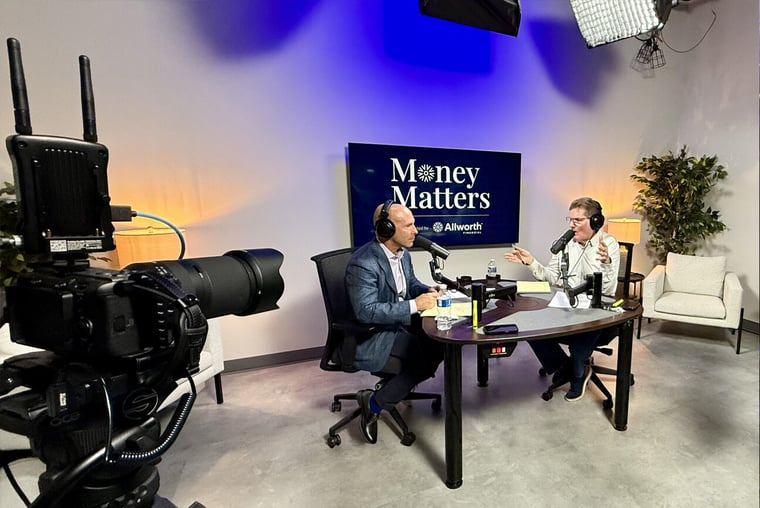
Smart Tax Diversification & Roth Conversions
In this episode of Money Matters, Scott and Pat unpack why tax diversification is one of the most overlooked strategies in retirement planning. From a 70-year-old investor with $3.6 million mostly in traditional IRAs to a 55-year-old looking to retire early and start Roth conversions, they explore how tax diversification can help reduce lifetime taxes and create flexibility in retirement income.
You’ll hear discussions about:
- When Roth conversions make sense — and which tax bracket to target
- How much cash and bond exposure you really need before retiring
- The realities of the 4% rule
- 401(k) vs. brokerage — and where bonds and equities should actually live
- How diversification protects your lifestyle, not just your portfolio
Join Money Matters: Get your most pressing financial questions answered by Allworth's co-founders Scott Hanson and Pat McClain live on-air! Call 833-99-WORTH. Or ask a question by clicking here. You can also be on the air by emailing Scott and Pat at questions@moneymatters.com.
Scott: Welcome to Allworth's "Money Matters". Scott Hanson.
Pat M.: Pat McClain. Thanks for joining us.
Scott: Yep, glad to have you with us as we talk about financial matters. We are recording this on March 3rd. So, a lot's moving right now. If things have changed between the time of recording and the time you listen. That's almost a guarantee.
Pat M.: Yeah, absolutely. Wow, I tell you, you know, over the weekend, right, obviously we move on Iran. Kind of saw that coming. You didn't know the buildup enforces, the negotiations. You kind of saw that coming. You didn't know when it was going to happen, but you kind of saw it. The prediction markets, which I think are actually just ripe for fraud and staff. They're actually really pretty good at predicting these sort of things when people put money on their beliefs. They have a tendency to...
Scott: Well, particularly when somebody has a little bit of inside information on it. That's true. That's true. I didn't think about it like that. It's kind of with access to the situation room or wherever these decisions are made considerably. But the prediction markets were pointing
Pat M.: this direction. And then Monday, it's just like the markets were... Like finished up again.
Scott: Yeah, it's just like, meh. Well, it felt like they almost waited till the markets closed on Friday. There was some... And then... Tuesday morning we're off what, 1,100, 1,200 points on the Dow? And as the time I look at this, we're off 600. Yeah, it's crazy. But we'll be there for weeks. But a couple of things. One is the number as the markets get higher, the numerical value is much larger. So, a thousand points in the market today is a little over a%, 2%. A thousand points 20 years ago was 10%.
Pat M.: Much more significant, yes.
Scott: So, I think that's... That's how numbers
Pat M.: and
Scott: Percentages work. I just recall, Pat, when we were... This was back... What was the Russian long-term capital? Yeah, long-term capital. This was in 1997 or 8. I'm sorry. Yeah, 1997 or 8. And we had some conference down in San Diego, some sort of a financial conference. That we were attending? We were attending, and the Dow was off 500 points that day. That was a time when 500 points was a big deal, because the Dow hadn't even hit 10,000 yet. 500, big day. And the planned outing, it was some sort of a networking thing, was at the Del Mar racetrack. I remember the two of us talked. We said, we cannot be at the racetrack the afternoon of the Dow falling 5% or whatever. Just a bad look. Yeah, it just didn't feel right. Like how could we be doing something like this when the markets go? Did we go? No, we didn't go. Oh. I remember the selection of it, apparently. None whatsoever. I don't know why I remember that. I've never been to the Del Mar racetrack. I've never been to a racetrack, for that matter.
Pat M.: Really?
Scott: I've never been to a horse race. A lot of dog races. I'm joking. I've never been to a dog race either.
Pat M.: I went to the Kentucky Derby. I remember you. It's one and done. It was like two trips in one, my first and my last.
Scott: You know, sometimes those big crowds, like the Super Bowl or the Olympics we just had, LA Olympics are coming up. A couple years. There are so many people that go to this. I tend to avoid all those major things because I don't like huge crowds. All right, so back to the markets. We lost so way already.
Pat M.: So, back to the markets. So, history tells us that after this sort of thing, as long as it's not prolonged, the markets recover relatively quickly, 75% of the time.
Scott: Well, it's because what drives the price of something? It's the future cash flow that that's going to produce, right? So, if it's a company, even if they're not profitable right now, if they're growing like crazy and you believe there's going to be profits in the future, you can develop a model that says, OK, these are going to be the cash flows in the future. You can discount that based upon where things should be priced today. The more uncertainty in that future cash flow, the less an investor is willing to pay. So, really what happens in times like this, it's the uncertainty. For the most part, people don't believe that Iran's going to win this battle.
Pat M.: That's correct. The question is, is if China comes in and that doesn't look likely and Russia doesn't have the means to. And those are the only other two powers that would actually appear that would support Iran.
Scott: I think what most people are looking at is how long is this going to take? What's going to happen to the price of oil and the humus straight? How long will that all that stuff? That's I think a lot of the uncertainty right now,
Pat M.: which is actually surprising that they haven't come out yet and said, don't worry about the oil. We're going to get it all from Venezuela. I've been waiting for the administration to say that. I've been waiting for that. But whether
Scott: you think this was a wise move or not move, it's irrelevant from an investor's standpoint. This is where we are. That's right. And we're not going to make comment on how we personally believe about things. It's more of a like this is where and this is
Pat M.: shocks like this have happened before.
Scott: So, yes, again and again and again and again.
Pat M.: Yeah.
Scott: Yeah. I mean, I still remember when the, um, the American hostages and I ran 1979 long time ago. I didn't feel that long ago. Yeah. Same regime. Yeah. It's wild. But here we are.
Pat M.: And we go life continues on and later on the show, Scott, and we have time. I'd like to talk about what is lurking beneath those calm stock indexes. And we talked about this a couple of weeks ago about the dispersion in the market. Yeah. Yeah. Yeah. Yeah. It's really interesting. It's really interesting. It's which is the argument for diversified portfolio. It is the argument. So, we got that to look forward to. Oh my gosh. If that wasn't a tease, I don't know what is.
Scott: Maybe they're going to want to hear us more about their racetracks. We did not go to. All right. If you like
Pat M.: to be a caller on how the conference is back in the day. I'm so glad I don't have to go to any of those.
Scott: You never went to them anyway. That was classic because if there's a conference and we would speak at conferences quite a bit. So, there'd be a conference and let's say the conference started at Tuesday at 5 p.m. and finished Thursday at noon. Pat would probably show up maybe an hour before we speak, two hours before we speak. If I was. And you had good intentions to stay through the whole conference. So, it has flight booked like that Thursday afternoon. But invariably you would leave as soon as you could. That's right.
Pat M.: I called it businessman's jail. You would leave as soon as you could. Oh, I hated those. People just sitting around talking about themselves. I just hated it.
Scott: I never forget. This was, I was young in the business and Franklin Templeton had this due diligence they would call them. In their quotes? Yeah, they were kind of. So, this was back in the 90s. And they were based in the Bahamas, Templeton was. So, they had this thing in the Bahamas. I thought, oh, I'm a young person, a free opportunity to go to the Bahamas. Why not? And so, honey, let's go to this due diligence. You brought your wife. That's where the story's going.
Pat M.: Holy smokes, what's wrong with you? I was young. I was inexperienced. Not, not, not that, let's just clarify, not so you could get out there and be like wild in the, in the world. You don't bring your wife because you don't want to have to subject herself to the people in our industry. That's my point. So, here's the story.
Scott: So, we're having dinner that night. It's a round table with mostly financial people and a handful, not very many spouses, but my wife's sitting there and there was one guy, he would not shut up about his house, how big his house was, his wine collection and his car or cars, whatever it was. He was just so full of himself. What a, and they seemed like the kind of guy that gives the industry a bad reputation because I think he was in the industry more because he loved big houses, wine and Ferraris than he loved serving clients. And I remember telling my wife at the end of the night, I am sorry, honey, I will never take you on one of these again. And
Pat M.: did you keep the promise?
Scott: I did. She never went to anything again. And people say, how come I never meet your wife? And I'm thinking, I'm not bringing her around anywhere. By the way, I haven't gone to one of those conferences since the nineties. Things have changed a bit in the industry and we've changed quite a bit.
Pat M.: So, all right, let's go to the call. Yeah. They wanted to join the show. How would they join the show?
Scott: Email us questions@moneymatters.com, questions@moneymatters.com. All right, let's start off here talking with Mike. Mike here with Allworth's "Money Matters". How y'all doing Scott and Pat? We're doing good, Mike. Glad you were joining us.
Mike: I've really appreciated your podcast. I've been listening for a couple of years and have gone back and listened to a lot of them. And I think I've gained just enough knowledge to be dangerous. Okay, well, good. So, I doubt it, but anyway, I have heard, I've heard that sometimes I believe it was a previous show that people in their mid-50s sometimes maybe should review and make sure that maxing out their 401(k) is actually a positive thing to do as compared to maybe in putting money into a brokerage account. And so, I wanted to ask you in my situation if that's something that I should be looking at.
Scott: Yeah, and I would say kind of as a rule of thumb, for those that have ample retirement savings, maybe even I shouldn't say overfunded, but have been big savers their entire career and have large balances in their 401(k) and plenty of retirement assets, they're more likely to say now's maybe a time to reduce our 401(k) deposits because odds are their income in retirement is going to be as large, if not higher than it was during their working years. But for the vast majority of Americans there in the fifties, that's your big time to save. Kids are gone like now are hunkering down. Maybe a spouse worked part time or didn't work during the kids' years. Now they're both spouses are working. It's a huge saving opportunity and for most Americans, their income is going to be lower, taxable income is going to be lower in retirement than it was in the fifties. So, anyway, that's our opinion on things. Give us your situation.
Mike: Okay, so I'm 57, my wife is 55, and we've got about 700,000 in 401(k) and IRAs. We've got a Roth IRA of 40,000. We've got a high yield savings account of 90, and then we've got a brokerage at 850. And we're actually considered high income earners right now. How is that brokerage account
Scott: invested?
Mike: So, the brokerage is 60% 500 index, 15% total international index, and 25 bond.
Pat M.: And how about the 401(k) and IRAs?
Scott: Are those just three funds in that brokerage account?
Pat M.: Correct.
Mike: They're all index funds with fidelity. All right.
Pat M.: And tell us about the IRAs and 401(k)s. How are they?
Mike: The IRA is a growth. I believe it's a growth and the 401(k) is a target date fund. So, I believe we've got 2035, I believe is what it's in.
Pat M.: Oh, okay. Well, we got some
Scott: help for you here.
Mike: Yeah, I know.
Scott: Good. Target dates are great for $7,000 accounts, maybe even up to $50,000 accounts, but every target date fund is managed differently. And
Pat M.: they're actually driven by calendars and not by economic environment, which means that based upon your age, they actually allocate the stock to bond. So, sometimes you actually find yourself actually selling off stock in a down market, which doesn't make any sense. Couple other questions for you. Will you be receiving or will your spouse be receiving a pension?
Scott: No pension. And what's your income right now? Salary total compensation?
Mike: So, last year was $740.
Scott: What's it been the last five years average? Is this like, was that an aberration or have you guys been in?
Mike: It's pretty consistent. Last year before was around $700 and before that it was in the $400s and so it's definitely increased over the last few years and I don't expect it to decrease very much. Are you self-employed? No, we work for a company.
Scott: Okay. And what state do you reside? Mississippi. And do you have any debt?
Mike: We have, I have one, I have a tractor that I, that I, 0% interest, so I don't know if I consider that. And then other than that, only my house. And how much do you own the house? We owe $145 on the house. It's on a 15 year, a 2.5 mortgage and I've got eight years remaining on that. I've actually been paying a little more than that. I'm kind of one of these people that don't like to have a payment and don't like to have a payment. But I'm not, I know that's probably not the wisest financial decision necessarily.
Pat M.: How much money did you make when you were 50? What was the household income in 50, when you were 50?
Mike: Uh, let's see, probably around, around 200. Okay.
Scott: Because, because you
Pat M.: stand there, we're looking like, wow, why has he got so little money?
Scott: I mean, if you were a physician who's making 740 and 20 years ago you were making 940, would be like, where'd all the money went?
Mike: A lot of it has been maxing out over the last few years. Okay. So, that's where a lot of it came from. Well, you definitely want to,
Pat M.: you definitely want to continue to fund that 401(k) and the IRAs, non-deductible IRAs.
Scott: I would fund, I would pre-tax, I would fund that 401(k) pre-tax at this rate.
Mike: And actually if it- I was wondering about the 8,000, isn't there something about a Roth that you have to have an 8,000 now in a Roth 401(k)? Oh, there's that limit. Whatever that is. Yeah. But your administrator will tell you what that is.
Pat M.: Yeah, you want to, you want to put as much in as they will possibly let you. Yeah. There was a change beginning in the beginning of this year. Was it over age 50? Yes. Yeah. So, you want to max that out and then your asset location is kind of messed up. Okay. And, and the reason being is you've got bond in your 401(k)s and IRAs and you have quite a bit of bond in your brokerage account. Let me think about this.
Scott: When do you, when what's retirement?
Pat M.: What's the goal here?
Mike: Well, I think it's kind of, I mean, we're, I kind of, I kind of am thinking like about 10 years or a little bit less. But I think it's kind of whenever we choose to. Well, not now. You can't choose, you
Pat M.: can't retire today. No,
Mike: no, definitely not.
Pat M.: Here's the problem in your, is we need to determine how much income you're going to need in retirement. Because you, $2 million now, let's just say we get it to 4 million before you retire. Right? Let's just say we, and your income is just $700,000 a year. If we get it to 4 million.
Scott: It's less than 2 million in savings.
Pat M.: Understand that. But let's say we get it to 4 million by the time you retire in seven, eight years, we get it to 4 million. Let's just say we start taking a 6% distribution. Which would be high. Which would be high. That's $240,000 a year. So, we went from an income of, you know, you're putting money into social security, but you went from an income of around $650,000 that you were living on. Maybe higher pre-tax to much, much lower, to $240,000 plus social security. You've got a substantial difference in your standard of living.
Scott: What did your brokerage account look like five years from now? Five years ago. I didn't have one. So, this
Mike: is something that's recent.
Scott: Okay, we're feeling better. Yeah,
Mike: we were very blessed with some generous family members that gave us the money. So, this wasn't savings.
Pat M.: So, here's what the problem is. This $2 million looks like a lot of money. In anyone's world they'd say, oh, he's got $2 million. This Mike, man, what a hitter. It's more like $1.6. Okay.
Mike: I do also have another home that we own outright. It's worth about $270,000. Is that rented? I have a family member that is kind of renting it. It's below market value, but it's more of just kind of a helping them out kind of a thing.
Pat M.: You need a financial plan. It's flat out. And the reason is that based upon your income and compared to your savings...
Scott: You have a major lifestyle change when you quit working.
Mike: And that's what I was wondering because we actually don't have a very high lifestyle. Oh, yeah, you do. That money goes somewhere. We're putting it into savings and into investing, but we're not spending it.
Scott: I don't think so. The numbers don't tell us that. If you said you were making as a family $150,000 and this is just kind of suddenly things have changed, that looks a little different.
Pat M.: From the numbers that you shared what your income is versus the savings, and we recognize most of it has taken place over the last five years, but the increase in the income, your savings levels would be much higher.
Scott: That's a bigger concern for how things are invested. That's the big concern that we have.
Mike: Gotcha. So, right now you would suggest that I just continue maxing out? I would
Scott: suggest you and your wife get a financial plan and have the projections run like here's what things are going to look like 10 years from now. And so, you get some clarity on what you need to do between now and 10 years to make sure you've got the financial security to maintain your lifestyle. Then you work backwards. Okay, in order for us to accomplish that, how do we need to have things allocated? We need contingency plans. What happens if we have a health issue and we can't continue to work another 10 years? But Mike,
Pat M.: my guess is, and we see this a lot, is all of a sudden your income spikes. You had lifestyle creep, right? You might have gone and got a new boat. Retractor? No, no. Barbecue. Well,
Mike: not a barbecue, but not a high end. Barbecue.
Pat M.: No, I remember. The reason I bring barbecue is I had these clients one day and I said, you know, people that have lifestyle creep oftentimes will be comfortable going out and spending $50,000. There's a $300 barbecue
Scott: at Home Depot and then there's a $30,000 backyard barbecue kitchen that people build. That's right. Or $60,000, whatever the number may be.
Pat M.: So, what,
Mike: you know. We did spend a few things. We added onto the home and a couple of things like that. We know. We could do that.
Pat M.: The problem is that you've had some lifestyle creep. It's a fixable problem. But it's 100%. You've got great income. And
Scott: I don't think you're spending all your income either.
Pat M.: That's right. But a financial plan will actually say, okay, this is how much we're going to save. This is the earliest we can retire. This is what our income will look like in retirement. And this is the latest we should retire. And this is what our income will look like.
Scott: And then, all right, here's how much we should be saving into the 401(k), to the Roth, to the brokerage account. Here's how we should think about allocating our dollars. And then from there
Pat M.: goes asset location, which is where you're a little bit messed up, which is you should have nothing but equities in your brokerage account. You should have all your bond in your IRAs and 401(k)s.
Mike: Gotcha.
Pat M.: Okay. Because of how the taxes currently, under current tax law, treat those different types of assets. And that's asset location. If you were my brother-in-law, heck, I did this with my brother-in-law. I paid for a financial plan for him. I knew the owner, so I was able to get a discount on it. But I would offer that to you. I would offer that to you that if you call Allworth, we will give you a free financial plan and walk you through it. What? Wow, that's amazing.
Mike: That's awesome.
Pat M.: You're really going to do that, huh?
Scott: Yeah. Okay. Am I not empowered? It's not an oven mitt or something. Like banks would give out. I'm empowered to do that. All right, I think I'm empowered to do that. Yes, I'm empowered to do that. This is... All right.
Mike: Thanks for calling, Mike. That would be very, very helpful, and I would certainly appreciate it. Okay.
Scott: That's what you need. What a guy, Pat. What? I'm not doing it.
Pat M.: Are you drinking this morning or what? No, but I'm not doing the financial plan. It's easy to give away someone else's time.
Scott: You mentioned your brother-in-law and financial plan. My brother-in-law, we did a financial plan for him.
Mike: I remember this.
Scott: And then like four weeks later, he calls and says, hey, can I get your opinion on? I said, sure. And he says, yeah, but this other financial advisor recommended this sort of allocation. What do you think of this allocation? And I said, well, didn't one of my advisors do a plan, an allocation for you? Yeah, but I thought I'd have someone else look at it too. So, I kind of want your opinion on this other person. You could just like... I said, well, we gave you my best advice, so I don't know what to discuss. Do you want me to change my advice? It was really bizarre. Yeah. But anyway. All right. I'm sorry. Fortunately, he probably doesn't listen to this show. I hope not. Well, it was a little insulting, frankly. I was a little miffed by it.
Pat M.: Well, yeah, I wouldn't... You got mad at a family member. That's strange.
Scott: Really odd.
Pat M.: It's super strange.
Scott: Who knew? All right. Let's talk here with Robert. Robert, you're with Allworth's "Money Matters".
Robert: Yeah. Hi. I have a question regarding retiring here in a few months at the age of 55 and taking care or taking care of utilizing this window to do Roth conversions. Okay. All right. Good. Tell us about your situation. Account wise, I've got $2 million in 401(k), $23,000 in an IRA. My wife has $300,000 in an IRA. Brokerage accounts, we've got $315 in brokerage, $115 in a managed brokerage account, $50 in what we call or I call a fun account, and $125 in T-bills. We've got an age... It's a long list. I'm sorry. That's all right. $20 in an HSA, $17 in the bank, and $20,000 in a 529 plan. Who's the 529 plan for? Grandson. And
Pat M.: how old is your spouse? 51. How old are you? 54. And one of you or both of you will be receiving a pension? No. Neither. What's your family income right now?
Scott: 80. And what do you feel you need in retirement?
Robert: Well, currently, so our homes paid off. Our expenses last year was $80,000. And how did you determine those expenses? Travel. How did you determine? Checkbooks.
Pat M.: Okay. All right. Doing the math. So, lots of times when we ask people, you know, what are your expenses, what they'll actually do is actually make a little list of their bills. But really what we're interested in is how much are you actually living on, which includes all the miscellaneous stuff that somehow doesn't seem to get counted. Gotcha. So, $80,000. And why do you want to retire so early or your spouse? How
Robert: do you see your life? So, you know, since COVID, I've had several coworkers actually pass away. And I just feel like if I can do this, I beat the game, frankly. Honestly, that's why. I've been with my employer for quite a long time. And I
Scott: don't think it's been possible. I mean, I think, look, if your expense are $80,000 a year, you can retire. I mean, there's always a choice. I've had this discussion with so many people over the years, like, look, here's what your financial life will look like post-retirement. And I've had some people say, well, I can't really live on that, so I can't retire. I've had other people say, I want to retire so badly. That sounds fantastic. So, is there a happy medium for you, if you consider that? Would your job allow you? Well, from a financial standpoint, let's just cover this real quick. So, if you think a 4% distribution, it's just a basic rule of thumb. There's some flaws in that rule of thumb, but I think it's a pretty good... The 4% rule says I'm going to take 4% withdraw from my portfolio day one, and then as inflation creeps up, I'm going to bump that up by inflation. What happens in the real world is people tend to adjust given the economic cycle. So, during the financial crisis, even people who could afford to live large, most people scaled back because they felt a little funny about spending money when their neighbors were broke. I mean, that's just kind of a... That's a bit of a reality. So, if you think about, you've got roughly $3 million, a 4% rule, that's $120,000 a year. Even after taxes, you should be fine to have net that $80,000. This is before your social security kicks in down the road too. So, I think from a financial standpoint, you can pull it off.
Pat M.: Yes, that's correct. The thing that you actually should consider though is when you retire over the age of 55 is how liquid your 401(k) is between the ages of 55 and 59 and a half if you do not roll it into an IRA. Right.
Robert: I do realize that and I wouldn't. And it is available to me at 55. Yeah.
Pat M.: Correct. And sometimes people will roll part of it into an IRA and keep part of it there. And that's what normally
Scott: what we would recommend. Look, I love the concept of doing some Roth conversions between now and the next several years. Yes. Yeah. Especially if you have the income to pay for it and you're going to be in a relatively low income. What you got going for you is you've got great kind of tax diversification with all of your different types of accounts. So, it gives you some flexibility. You can convert some. You can have income coming from somewhere else. So, here's the thing that in the
Pat M.: real world I would look to, which is people don't really want to quit working. They want control of their lives.
Robert: I would agree. For the most part. For the most part. I work from home and I feel like I'm on house arrest.
Pat M.: Oh gosh. You know, my first job out of college, I worked from home and it gave me anxiety because I felt like I never could leave work. I would get up in the middle of the night and actually go into the office and work at three in the morning. It was not healthy for me. Can you work part time? Could you go back to your employer and say, hey. Or maybe you just need a break
Robert: and figure out. Yeah, maybe. Sure. I don't think I would do that with this employer. I'd probably just pick up a contract or something like that. Okay. You've been good. You've been great savers.
Scott: You've been great savers. Right? I believe you when you say you can live on $80,000 a year. And maybe what you do is retire. In all seriousness, take $80,000 and stick it in your account and say this is what we're going to spend on. This is what we're going to spend in the next year. And start doing Roth
Pat M.: conversions.
Scott: And start doing those Roth conversions.
Pat M.: Does your spouse work outside of the home?
Robert: She did. Yes. For 15 years. And actually that was a big part of this. So, paid off a ton of debt. She doesn't anymore? Sort of propped up the accounts. No, no longer.
Scott: Alright. Yeah, you look great. You look great. Yeah, I love the Roth conversion idea during these years. Because you're... What...
Pat M.: I'm sorry.
Robert: So, which tax bracket should I sort of fill up? The 12%. That's another question that I...
Scott: I would do the 12%. Okay. Because you've got very little in taxable income. Your brokerage, again, it's been an awful little bit. Hopefully it's invested in such a manner that's not... And a little bit of interest. You see a very little of taxable income. And the 12% is, for a married couple, it's about $100,000 after the standard deduction.
Robert: Yeah. No, I wouldn't be looking at 12%. Would I be looking at a tax bomb at 75? I mean, I know I spent 20 years out, right? I'm trying to solve a problem 20 years from now.
Pat M.: Correct. By doing the Roth conversions, you're actually getting rid of any of the tax bombs. Yeah. And I wouldn't worry so much about that because retiring at age 55, you're going to end up taking income from both your IRIS and the other accounts as well.
Scott: Okay. Yeah. I think it's perfect.
Pat M.: As long as you're comfortable living on that income... And I can tell you from experience working with hundreds and hundreds of clients that have retired early because they could, many of them go back to work and find it some of the most satisfying work of their lives. Because they're doing it for two reasons. They're doing it for social reasons, right? They want to get out of the house. And they're doing it because they want to. They're much more picky about the jobs they will take after they retire.
Scott: But you've saved. Yeah, great. You've done a great job savings. You've hit this. If this is what you want to do, you can retire. So, maybe just take some time off and spend the next year thinking about what your next 25 years are going to look like.
Robert: 35 years. We've been talking about it. We're calling it recreational employment.
Pat M.: Oh, perfect. What a great name. Yeah. And it's good for a couple to stay away from each other sometimes, right? Not to be together all the time.
Scott: I get it. Oh, 100%.
Robert: Since COVID, we basically... This is like early retirement in regards to how we're going to behave as a couple in the same home for all this time.
Pat M.: You work full time out of the house?
Robert: Yeah. That's got to be hard. I didn't realize how social my needs to be social were, how big that was and not being around people.
Pat M.: I tell you, I joined a gym for the sole reason to go and bother people and talk to them while they're working out. I don't work out myself. I just go and talk to people while they're working out. Yeah. Yeah. All right, Robert. All right, thank you. Appreciate the call. Wish you well. You know, Pat, I
Scott: was thinking a couple of things I was thinking after this. One, I had a client who, he was in telecommunications, retired, and he was 71, 2, something like that, and worked at Google. And he was like the old sage. He had more fun, and I think he was like four days a week or something, but he had a certain wisdom that most of the young people at Google didn't have the age and experience with the same wisdom. Yeah, technology is different today, but people haven't changed much. People haven't changed a lot. Yeah, yeah. He just loved it. I was thinking, then this morning, as I went for a run this morning before work.
Pat M.: Wait, wait.
Scott: You follow that after I say I joined a gym. I do. But no, I was literally thinking about this this morning because I'm 59, right, and been in this industry a long time, and I've helped people retire younger than I am today. And I thought, I remember this one couple, they were like late 50s, and they said they were buying a new car because it was the last car they were going to buy. They had remodeled the last time they're going to remodel their house. And I remember thinking at the time, you're not that old. It's not like you're 85. But their mindset was, I'm done with work. This is retirement. And I guess this is nearing the end of my life. That's why I had to think this morning. And I contrast that with, I'm in this coaching program where the founder is 82, and he says he has more ambition now than he ever has in his life. And he's 12 years into his 25-year plan. And there's a difference in mindset. And I think as we were talking to Robert, I think your concern is like, if you don't have like a real good plan, you're young. If you don't have a really good plan, these retirement years are not going to be as enjoyable as you might think.
Pat M.: Oh, yes, yes, yes. I mean, yes, you have to have some sort of purpose, right? Yes. And the purpose can be needed. And commitments, which seem contrary. Yeah, but everyone's different. I mean, being needed by one person deeply is probably, for a lot of people, is more important than being needed by a bunch of people shallow. For sure. Right? To your point, we're all quite different. Yeah, everyone's a little different. I just want them to think about it. Yeah. Or buy a dog.
Scott: Buy a dog. My poor neighbors have five kids. And the neighbors that live next to you right now? Yes, five kids. What are their ages? The oldest is a freshman in high school and the youngest is, I don't know, second grade or something like that.
Pat M.: That's a family. I grew up with a family of five kids. I ran into a neighbor I grew up next to. He called my house the Lord of the Fly.
Scott: Anyway, a really sweet, I love the, they're great people, but they found the kids wanted a dog. Puppy. They had to give it back. No. Yes, they couldn't. It was too much. That was the straw that broke the camel's back, I guess. I went in, Valerie told me, they're keeping the dog. I'm like, wow, that must have been some puppy. They keep the dog. They take like five kids. Sorry, kids. We're taking the dog back. Holy smokes. The one kid, she's, I don't know, seventh grade or eighth grade, she really loves to, she comes over and helps our dog every once in a while and she gives her the. That's nice. Hey, before we go to the next call, I want to let everyone know about our March webinar that we've got. This webinar is advanced tax strategies for people with $2 million or more in their savings and portfolios. And this is one of our partner advisors, Laura Ingreson. She's in our Boston suburb area, been a phenomenal advisor for years and she's great. Anyway, so she's going to be doing this webinar and the webinar is about 30 minutes. And some of the things you're going to learn is we're going to, she's going to talk about the most common places that tax drag hides and why it often goes unnoticed at higher levels of wealth. So, kind of some of the actually come with things we were talking about earlier today. How even good tax move can compound in a meaningful long-term cost when made in isolation? Yes. Like, well, you think, here's your focus, Roth conversion or whatever the thing is.
Pat M.: Which is oftentimes you hear people say always never. And there's no such thing as always and never
Scott: for a good tax strategy. Yeah. And why coordination across investments, tax estate and income planning is really essential to generate some sort of tax alpha over time. Alpha is having a little excess there. And it's not like a checklist webinar, but it's more of a framework of discussion for those who already know some of the basics and want to think about the next several moves ahead. So, this webinar is March 14th, I'm sorry, March 11th, March 14th, March 19th and March 21st. Again, advanced tax strategies for $2 million plus portfolios. And to sign up, go to alworthfinancial.com forward slash workshops. Let's go next to Pat. Pat, you're with Alworth Money Matters.
Pat: Well, this is so exciting. Listen, you guys, I identified with the fellow who just talked about working from home. I've been working from home since Covid. Oh, wow. Miss the office kind of thing.
Scott: So, in the office really hasn't got back on. I don't think any company, not 100%.
Pat: So, I got to tell you, though, I got to tell you, though, so I'm in IT So, I've been working in cubicles my entire 50 year almost IT career. And so, I have the nicest office. I've ever had in my entire life.
Pat M.: But, you know, there's a great balance there between office and work from home. I mean, if you can pull it off. Right. No, no one wants 100%. I shouldn't say no one. Most people don't want 100% of both.
Scott: They like the flexibility of the.
Pat: Yes. Yes. Yeah. It's nice not having to commute to Sacramento. I live up in Rockland and in the area, you know, the greater Sacramento area where you guys are at. And anyway, I've called in before I've been listening to you guys since the 90s. And so, I really appreciate you guys a lot. But all of that frivolity, you know, let's move on, I suppose. So, I'm 70, almost 71. I'm still working a couple more years. I do contracting work for the state of California. So, I'm part time on a on a Medicaid project. But I've got three point six million in IRAs of only about 40 K of that is in is in Iraq. The rest of its traditional IRAs all been rolled in through various 401(k)s and that sort of thing over the years. Sep Ira as well. I own my own small business now. Sole proprietor. And are
Scott: you still funneling money into that, Sep?
Pat: No, I stopped this year because I think the last time I talked to you guys, I told you I wound up having a situation where we wound up buying another house to help one of our kids who is finding difficulty even renting in this area. And so, I took some money, started taking some money out to buy that house and that good that stopped my contributions, because, you know, no point in contributing while you're taking out. Right. So, OK, but it's kind of early. You know, I mean, it's like, OK, we got 20 more years, God willing. And then you'll then you'll inherit plenty of money to buy a house. But they actually need a house today. Yeah, that's right. That's right.
Scott: Well, there's just a study I saw the other day that in California, the percentage is 18% of home transfers are inheritances now.
Pat M.: Yeah,
Scott: because people can't afford to
Pat M.: buy them. I saw that same study, Scott, but I was questioning whether the people actually sold the homes, lived in the homes. It didn't tell us that. Whatever. But it's anyway, it's almost impossible for you. And I assume you're retired annuitant.
Pat: No, no, I'm actually a consultant. I was I was 22 years active Air Force, OK, retired and then went to work for a big company that got bought by a bigger company when I retired here in Sacramento. I leveraged my IT education and three degrees in software engineering in the Air Force into a nice, you know, into a great job. And I said I work for a small or local consulting boutique consulting firm. And then I just decided to stop paying them, you know, to cash the checks and went out on my own.
Pat M.: So, you're receiving a pension, though, from the Air Force.
Pat: I am getting an Air Force pension and I'm also obviously 70 years old. I started Social Security this year.
Scott: How much is the Air Force pension?
Pat: It's about, well, so I had two careers. I was enlisted for 10 years and an officer for 12. So, it didn't get up there very high. So, I got about 50K a year in gross in the Air Force pension and about 85 or so Social Security.
Scott: The pension, will that cease upon your death?
Pat: Yeah, we decided to go with the insurance option rather than survivor benefit. And then just health wise, we did the math on, you know, my life expectancy and it's a little bit different than normal. But anyway, I think we've done OK. So, she's taken care of it by if I get hit by a car tomorrow.
Pat M.: So, we understand the kind of the scope of it. What's your question for us?
Pat: So, I've been wrestling with, you know, like allocations. And one of the things that I never really been invested, except for one brief mistake, a few back in the covid era on bonds. And so, I'm about in that three point six million, I'm about 15% in our money market. I'm about five% in international and the rest of it's in U.S., U.S. equities. And so, that's 80% or so I'm taking about a four% distribution to buy this house. And then that will continue once I stop working to, you know, to supplement our retirement income. We're not that thrifty. So, and we have nine grandkids. So, we have a lot of giving going on, you know, through the year. So, the question, though, is I don't have really anything in bonds. And I have the cash sort of to cover three years of withdrawals so that if we have a downturn, I don't have to go sell something at a loss. But eventually you've got to sell right. I mean, if you're going to take distributions, eventually you got to sell something. And then you also have, well, what if it goes longer than that? What if we go back to interest rates are at zero again? You know, so my thought was that. You know, should I have part of my sort of my liquid position in in bonds so that I lock in a little bit higher interest rate than I can get, you know, in the high interest money market? Or kind of the other side of it is, should I take part of that 80% that's currently in equities and put some of that in bonds for the purpose of sort of cushioning, you know, a downturn? So, I have been listening, you know, and I'm trying to be educated and things like that. But still, it's like, OK, but I you know, I made I make you know, I did I've done pretty well. So, Pat, in the equity investment, do
Pat M.: you have any money outside of the 401(k)? Zero.
Pat: All in the houses. I got I got two extra houses for kids that I'm helping them. So, our outside money is a regular cash flow. I would allocate I
Scott: would allocate a little bit more money to. I think you're pretty high on equities. If you weren't touching these dollars, then it's fine. But the reality is, and I'm assuming it sounds like you're going to quit working at some point in time coming up or is that not?
Pat: Well, in theory. OK. At some point. Let me retire. Yeah. I understand. So, I
Pat M.: push that allocation to 30 or 35% bond.
Scott: Cash and bonds. Cash and bonds. Yes. Correct. I would agree with that, because you want more than three years of expenses, which I think you have anyway. But considering you've got 15% money markets, it sounds like more than three%. That's but because if you're taking a four% distribution, it's about. Yeah. Actually, probably about five years there. I would. But I'd move it to 30%. I would, too. And I probably have a little more international.
Pat: Yeah.
Scott: And five%. And even
Pat: up the international from five%. Oh, yes.
Scott: Well, this wouldn't. Yeah. I mean. Yeah. Yeah. I mean, I just think about the money that we manage at Allworth, we have more than that's about six% of the. Let's just give them a breakdown.
Pat M.: I'd put forty five% U.S., 15% international and a little bit more. A little bit more. You get more
Scott: money than if you had if it was three point three hundred sixty thousand. So, the three point six million, you get a very simple portfolio. Three point six million. You get a little opportunity for some other like these mentioned bonds. You're probably not going to want to just stick it in the total bond market index. Total bond index.
Pat M.: Yeah. I mean, it's in an IRA. So, you've got lots of choices. Yeah. You've got lots of choices. I mean, but the answer to your question is yes. Increase the bond exposure some.
Pat: And would you do like straight purchase of bonds and a fund?
Scott: I'd buy a fund. I had several funds. Yeah.
Pat M.: OK. Who manages your money?
Pat: I do. Well, I have an infidelity, so I have a. I'll ask you this. Is your...? I have an advisor that but it's not it's not a fiduciary advisor like you guys.
Scott: If you died today in a car accident, would your wife be able to manage these dollars? Does she have the same breadth of knowledge? I got to be really transparent with you. I have an advisor for you would pay for itself, not cost you. Just based on some of the things that we've just been looking at. That's our opinion. So, he called for our opinion. I
Pat: listen. I keep I've been toying with this. I had an advisor a number of years ago and I wound up letting him go because I just didn't I didn't care for the way that he was managing. OK, but so I just. But not all. You know that
Pat M.: all not all advisors are the same. I mean, obviously, I
Scott: know IT consultants are the same.
Pat M.: Yes. Yes. True.
Scott: Yeah. All right, Pat, we wish you well. Appreciate you listening to our show for. Yeah. And we agree with you on a good time to reduce that allocation a bit. So, glad you called.
Pat M.: So, it's really interesting the fact that these that they call stock dispersion. Which. Basically, the tech stocks have been getting just beat up by some of them. The software. Correct. Because of this vibe coding. But. The it's being displaced, right? So, you're not seeing the indexes fall because other stocks that have been out of favor are doing so well. Yeah, because their stocks and look at some big names like Salesforce and Oracle and Microsoft and Microsoft
Scott: just down quite a bit. But the overall indexes look just fine, which means the other stocks have been performing well.
Pat M.: Yes. Which is just the case for diversification.
Scott: Well, diversification is. Let's talk about dispersion a little more and the whole. It's an interesting time because I think investors are a little schizophrenic when it comes to A.I. Is it going to be this big productivity boost that's going to help companies be more profitable and make everyone's lives easier? Which would be a good thing. Or is it going to be this big job displacement thing? But it's not going to. Or both. I think investors don't know how to price. They don't know what the future is going to be. Yes.
Pat M.: But it's interesting. So, they're flocking to the companies that actually can protect against it.
Scott: Look at the people that build in data centers and stuff. That's way up. But if actually if the doomsday happens, then we're not going to need the data centers in the future.
Pat M.: Well, and the data centers, it seems to be relatively circular in terms of. Who's
Scott: investing in what? Correct. And what happens when we have chips that need 10% of the power and not. Or 3%. Or 1%. So, it's just a strange time. But to your point on diversification. Look, diversification is not a strategy to get rich. It's a strategy to keep what you have. It's a strategy to protect your portfolio and protect your lifestyle. So, if you ended up working for a company that the stock did phenomenally well over the years, great. And maybe during your career it made sense for you to keep a good portion in that particular stock. But if you're getting later in life, do you really want to bet the future on Intel? Which the stock got, I don't know, down 80% or something. And the reason was 25
Pat M.: years ago. The reason I bring that up is because being a financial advisor relatively close to a large Intel plant in the Sacramento area. I remember 20 years ago, people would say, why would I ever. Why would I ever sell Intel? Like, why would I ever? And because you don't want to be poor. Diversification is a way to protect your wealth. It's not going
Scott: to get you rich. Hey, it's been great having everyone with us. You've been listening to Scott Hanson and Pat McClain. And I'm glad you guys were with us. We'll see you next week.
Automated Voice: This program has been brought to you by Allworth Financial, a registered investment advisory firm. Any ideas presented during this program are not intended to provide specific financial advice. You should consult your own financial advisor, tax consultant, or a state-planning attorney to conduct your own due diligence.
Insights for Complex Wealth Decisions
Join our email list for exclusive commentary from our Chief Investment Officer, early access to expert-led webinars, and your complimentary Wealth Planning Checklist for Complex Portfolios.
We take your privacy seriously and respect your privacy choices. By submitting this information you agree to our Terms of Use Agreement, Privacy Policy, and to receive important notices and other communications electronically.